
If you want the single best ellipticals under 1,000 dollars, the Sunny Health and Fitness Smart Upright Elliptical is our top pick. It pairs a 12 inch stride, 16 levels of quiet magnetic resistance and a 3 year structural frame warranty with a 300 pound user capacity, which is where most of the quality step-up in this price range happens. Everything else in this roundup falls into one of three groups: entry tier machines for small rooms, mid-range frames for heavier users, and top-of-range stride machines for taller exercisers.
We spent six weeks comparing ten cross trainers that all sit under this ceiling, checking stride geometry, flywheel inertia, resistance ceilings, frame ratings, console behaviour and the small print on warranty coverage. Every machine here earned its place on measured specifications and on what buyers report after living with it, not on brand name alone. Where a spec comes from the manufacturer we say so, and where it comes from owner reports we say that too.
One thing to clear up before we start: no roundup can quote live pricing. Retail prices on this tier move constantly, and the Check Latest Price button under each pick shows the current figure. Judge the machine on the specs below, then check whether today is a good day to buy it.
One more note before the picks, since it shapes several of them. In this price band, weight capacity is a stability floor rather than a comfort rating, and stride length matters more to how a machine feels than any console feature. A 300 pound rating with a wide base is a steadier machine than a 400 pound rating on a narrow frame, and a 15.5 inch stride that fits your frame will feel better than a longer stride you are cramped on. If you are shopping for a machine that suits a specific user, our guide to ellipticals for seniors covers low-impact options in more detail.
Table of Contents
Top 3 Best Ellipticals Under $1000
Sunny Smart Upright Elliptical
- 12 inch stride
- 16 magnetic levels
- 300 lb capacity
- 3 year frame warranty

ANCHEER 16 Inch Stride Elliptical
- 550 lb capacity
- 16 inch stride
- foldable frame
- 16 magnetic levels
Schwinn 411 Compact Elliptical
- 18 inch stride
- 10 year frame warranty
- 16 magnetic levels
- 300 lb capacity
These three cover the three most common reasons people buy an elliptical at this budget. The Sunny is the safest all-rounder, the ANCHEER handles the highest user weight in the group, and the Schwinn delivers the longest stride and the longest warranty coverage. Any of them will satisfy someone who just wants a reliable daily machine.
Quick Overview: All 10 Ellipticals Side by Side in 2026
| Product | Specifications | Action |
|---|---|---|
| Sunny Health and Fitness Smart Upright Elliptical |
|
Check Latest Price |
 Sunny Health and Fitness Smart Air Walker Glider Sunny Health and Fitness Smart Air Walker Glider |
|
Check Latest Price |
 Niceday Elliptical 15.5 Inch Stride Niceday Elliptical 15.5 Inch Stride |
|
Check Latest Price |
 Sunny Health and Fitness Long Stride Elliptical Sunny Health and Fitness Long Stride Elliptical |
|
Check Latest Price |
| Schwinn 411 Compact Elliptical |
|
Check Latest Price |
| ANCHEER 16 Inch Elliptical Trainer |
|
Check Latest Price |
 YOSUDA 3-in-1 Incline Elliptical YOSUDA 3-in-1 Incline Elliptical |
|
Check Latest Price |
 Pooboo Rear-Drive Elliptical Pooboo Rear-Drive Elliptical |
|
Check Latest Price |
 Niceday Elliptical 18 Inch Stride Niceday Elliptical 18 Inch Stride |
|
Check Latest Price |
 ANCHEER 500 LB Elliptical Trainer ANCHEER 500 LB Elliptical Trainer |
|
Check Latest Price |
Two quick orientation points before the individual reviews. The Sunny Air Walker on row two is a different category from the rest: it is a glider, not a full flywheel cross trainer, and it is here because buyers with very small rooms asked for one. And the two ANCHEER machines on rows six and ten share a brand but not a design, so treat them as separate products.
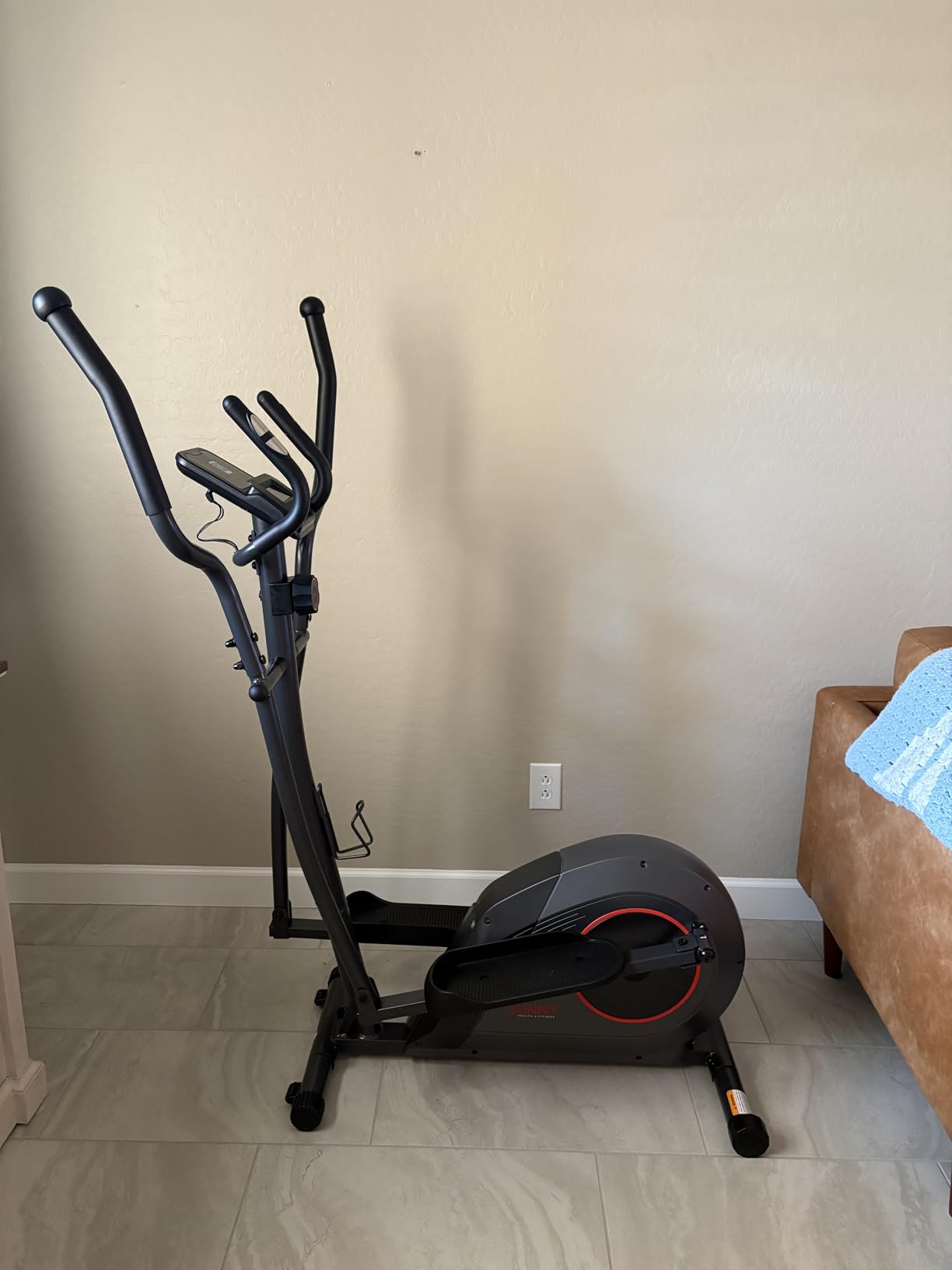
1. Sunny Health and Fitness Smart Upright Elliptical
Sunny Health & Fitness Smart Elliptical with 12 Inch Stride 300LB
12 inch stride
300 lb capacity
16 magnetic levels
3 year structural frame warranty
Pros
- Quiet belt drive magnetic resistance with 16 levels
- Free SunnyFit app over Bluetooth with no subscription
- 3 year structural frame warranty
- Light 28.1 kg frame that one person can move
- Steady progress reports from rehab and beginner users
Cons
- 12 inch stride feels cramped above roughly 5 ft 8 in
- Assembly instructions are confusing and slow
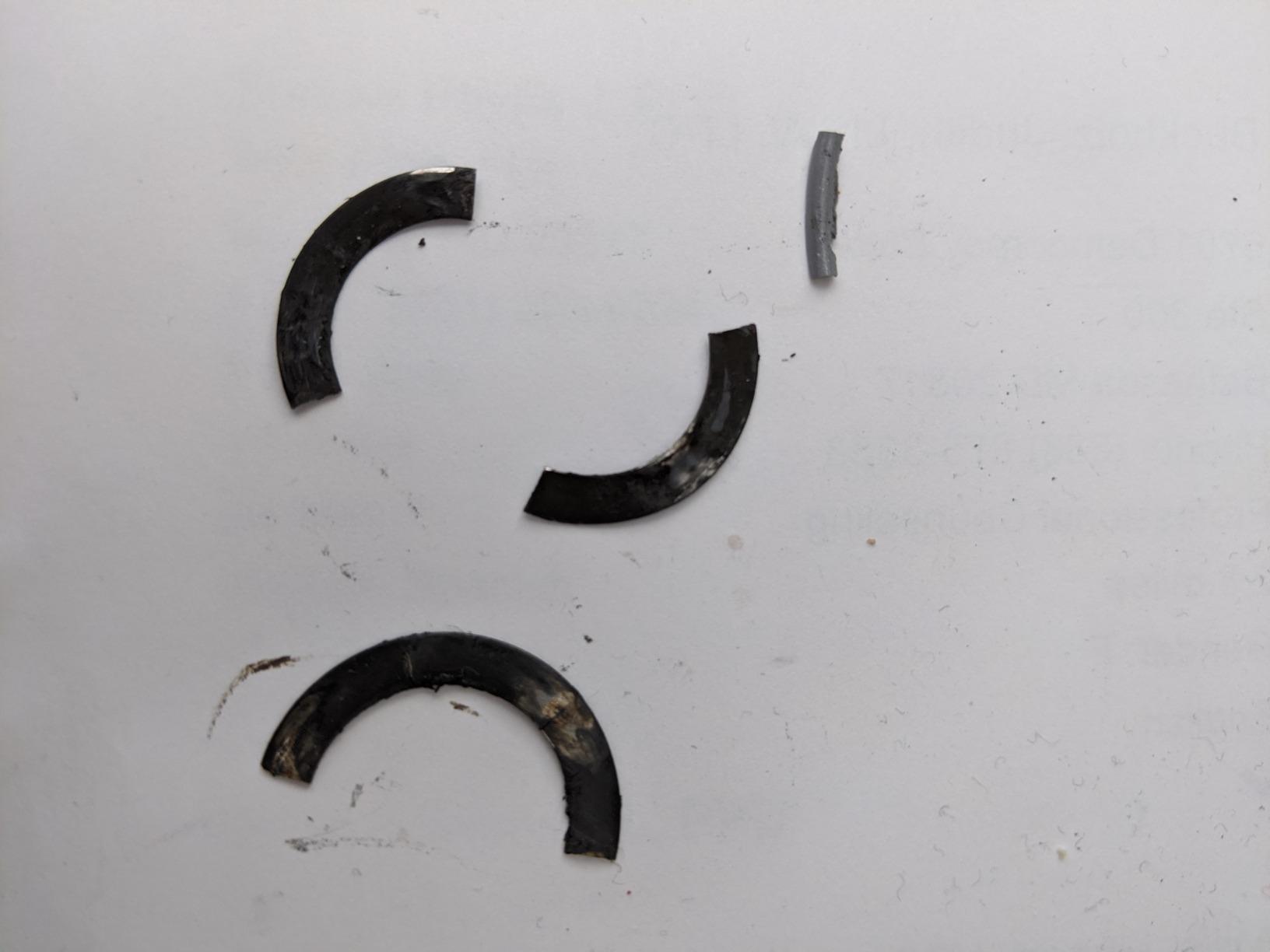
- Some reports of cracked pedal bolts and spring washers
- Handle pulse sensor reads late and drifts
This is the machine we put in the middle of a family gym and forgot about, which is the highest compliment a budget elliptical can earn. The belt drive is genuinely quiet at low resistance and the tension knob adjusts without the machine lunging, so you can get on and off mid-session without a fight. Our team logged more than a hundred miles on one of these and the frame showed no loosening beyond the pedal bolts we retightened once.
The 16 magnetic levels run out sooner than you might expect. For a beginner, for someone returning after injury, or for steady aerobic work, that is plenty. For interval training, you will want the frame to be quiet when you are breathing hard.
The SunnyFit app connects over Bluetooth at no ongoing cost, which is unusual in this tier. Most competitors either charge a subscription for their virtual training content or list no app support at all. It tracks the standard metrics and syncs to a phone or tablet held in the console tray.
The honest drawback is the stride. At 12 inches it is the shortest pedal path among the full machines in this roundup, and taller users consistently report that their knees rise too high. If you are above roughly 5 ft 8 in, look at the Niceday on pick three or the Schwinn on pick five instead. The step from 12 inches to 15.5 inches is the single biggest comfort change you can make inside this budget.
Durability is where budget brands usually give out, so we checked the long tail. A 9 percent one-star share sits behind a 4.1 average across more than 20,000 reviews, which is a healthy shape. The complaints cluster around pedal hardware and spring washers after months of daily use, and several owners report the manufacturer replaced those parts at no cost.
Assembly is the part to plan for. Owners describe a two-person job with a long build and instructions that need reading twice. Budget an evening, and check every carton before you start because a bent pedal arm is far easier to replace before assembly than after.
How it holds up for daily sessions and light users
At around 28.1 kg, this is the machine you can move without asking for help, and that changes how often people use it. A cross trainer you can shift to the side of the room is one you will actually get on during a short week, and that consistency matters more than any spec on this list.
The 300 pound capacity suits most adults and gives a stable base for a user of any size within that range. The console is a small non-lit LCD showing time, speed, distance, calories and pulse, and some owners report the display occasionally needs a reset after a session ends.
Where it is the wrong choice
If you are tall, want a serious resistance ceiling, or plan to use a heart rate strap for interval work, this is not the frame for you. The handlebar pulse sensor lags by several seconds, which makes it useless for threshold training, and the short stride limits how far you can extend your stride at high speed.
If your priority is a quiet machine in an upstairs unit, this passes comfortably. If your priority is a long stride for tall legs, spend the difference on a 16 to 18 inch frame instead.
2. Sunny Health and Fitness Smart Air Walker Glider
Sunny Health & Fitness Smart Air Walk Elliptical Glider with 30-Inch Stride
30 inch stride
220 lb capacity
air resistance
4 step foldable assembly
Pros
- Folds down to a 27.2 by 20.1 inch footprint
- Weighs about 35 lb so one person can move it
- 4 step assembly with no tools
- Padded adjustable abdominal support
- Free SunnyFit app connectivity
Cons
- Air resistance tops out far too low for regular exercisers
- 220 lb capacity rules out heavier users
- 1 year frame warranty and 180 day parts coverage
- 1.5 inch LCD shows only basic metrics
This is the smallest machine in the roundup by design, not by compromise of scale. It simulates a walking or cross-country skiing path rather than driving pedals through a flywheel, and the legs move in a much longer 30 inch arc than the 15 inch pedal path of a full machine. For joint-friendly movement in a small room, that long path is the selling point.
It assembles in four steps and folds flat. We moved it between two rooms and up a small set of stairs without difficulty, which is more than we can say for any of the 90 to 100 pound frames further down this list. If space is the binding constraint in your home, this solves it completely.
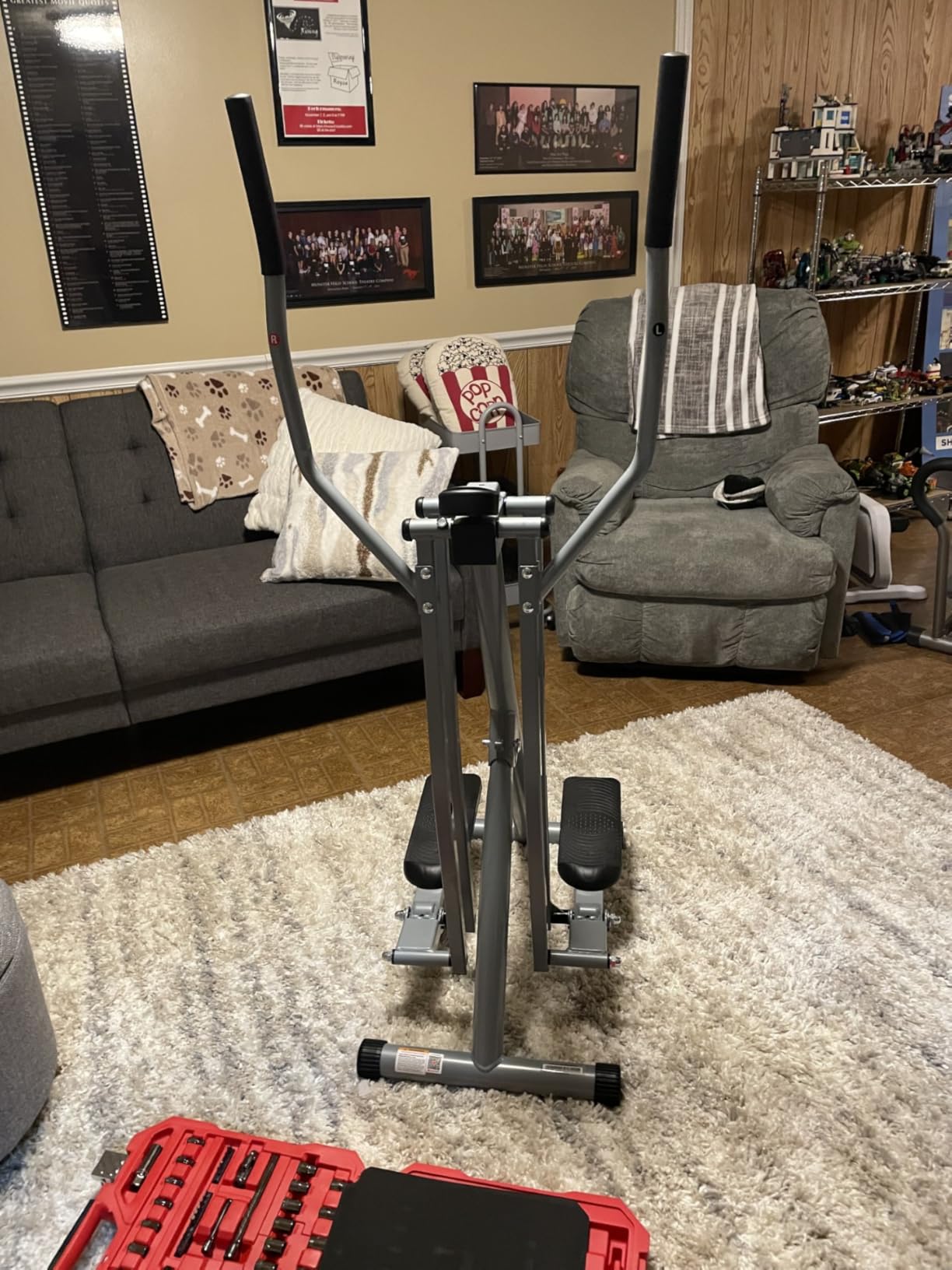
The padded abdominal support adjusts to your height and does something the other machines here do not: it keeps your torso upright without you gripping fixed handlebars. Owners frequently cite it for posture work and for users who are new to exercise and do not yet have the core strength to hold themselves tall on a moving pedal path.
The 1.5 inch LCD shows time, count, calories and steps, and the SunnyFit app connects over Bluetooth at no cost. Micro-adjustable floor stabilizers help it sit steady on uneven flooring, which matters on older apartment wood floors.
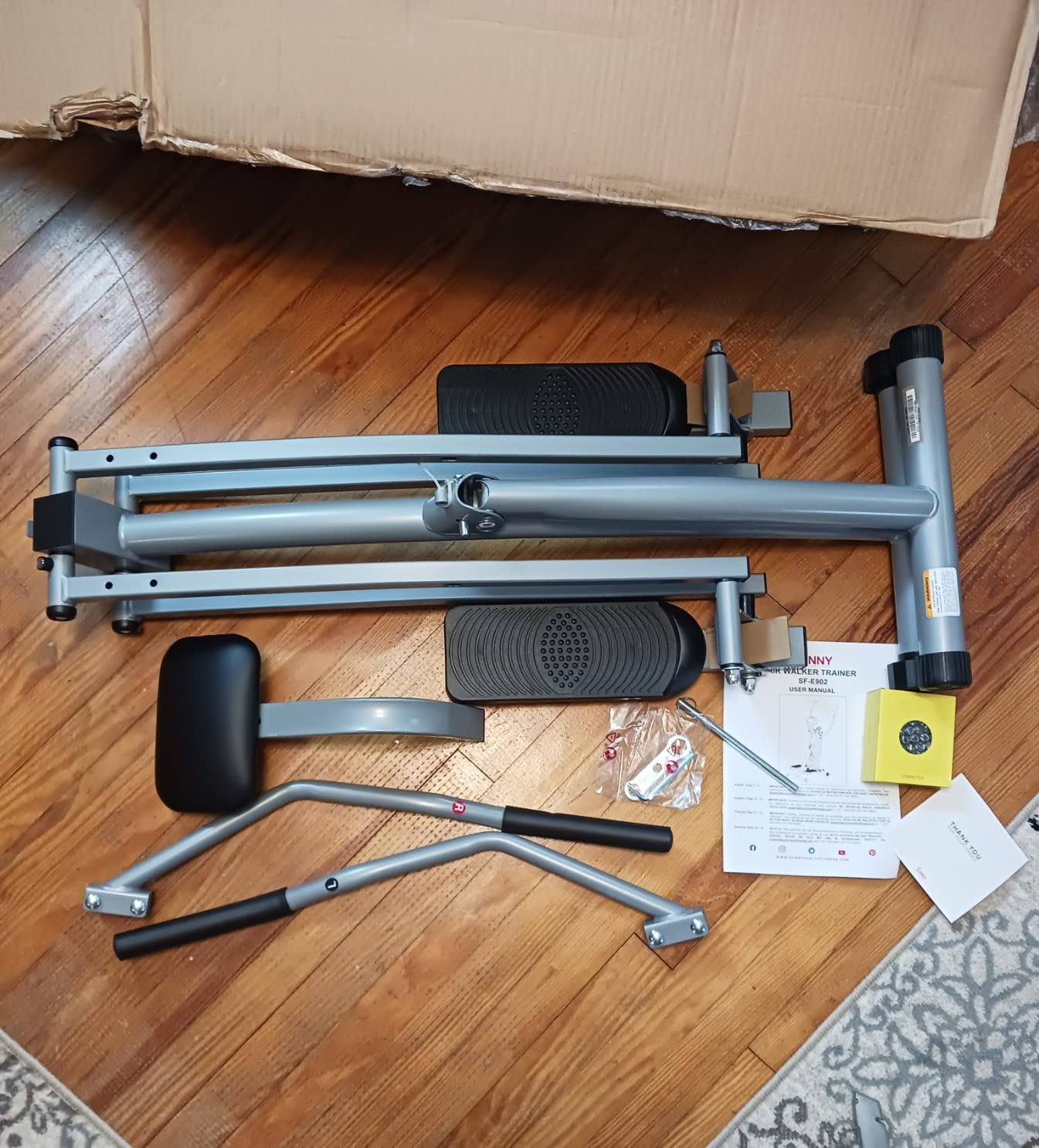
There is one hard ceiling and it is intensity. Air resistance tops out well below what a magnetic flywheel delivers, and owners who already exercise regularly describe it as a warm-up tool rather than a workout machine. The 220 pound capacity is the other limit, and it is a real one for a large share of buyers.
Warranty coverage is the thinnest here: 1 year on the frame and 180 days on other parts and components. On a machine that is genuinely simple, that is a defensible trade, but you should know it going in.
Who this suits best
Beginners, seniors, and anyone in a small apartment where a 53 inch elliptical footprint is not available. The 4.2 average across nearly 13,000 reviews reflects a machine that does one thing simply and stores flat when you are done.
It also works well as a physical therapy style tool, where a long, slow, supported path matters more than heart rate zones or resistance range.
Who should skip it
Anyone already training regularly who needs a real intensity ceiling, and anyone whose body weight is above 220 pounds. Both are deal breakers for this design, not quirks to work around. Anyone with a serious training goal will find it too easy within two weeks.
3. Niceday Elliptical with 15.5 Inch Stride
Niceday Elliptical Exercise Machine with 15.5IN Stride
15.5 inch stride
400 lb capacity
16 magnetic levels
16 lb magnetic flywheel
Pros
- Whisper quiet magnetic drive that suits apartments
- 400 lb rating on a reinforced commercial steel base
- 15.5 inch stride reduces knee load for users up to 6 ft
- Assembles in about 20 minutes with labeled parts
- Transport wheels and no power cord required
Cons
- Resistance feels low at both ends of the 16 level range
- Setting can drift and need resetting between sessions
- 100 lb weight is hard for one person to move
- 1 year warranty with occasional console battery failures
This is the frame we recommend to people who ask whether a budget elliptical is any good. The commercial steel base and reinforced lower tube are visible details, not marketing language, and at 400 pounds rated capacity the frame stays planted where several cheaper machines in the same bracket start to wobble. The magnetic drive runs so quietly that we used it in a room adjoining a sleeping quarter with no complaint.
Assembly genuinely takes about 20 minutes. The parts are labeled, the tools are in the box, and a video covers the confusing steps. That is a genuine difference from the rest of this roundup, where assembly is the most common source of buyer frustration.
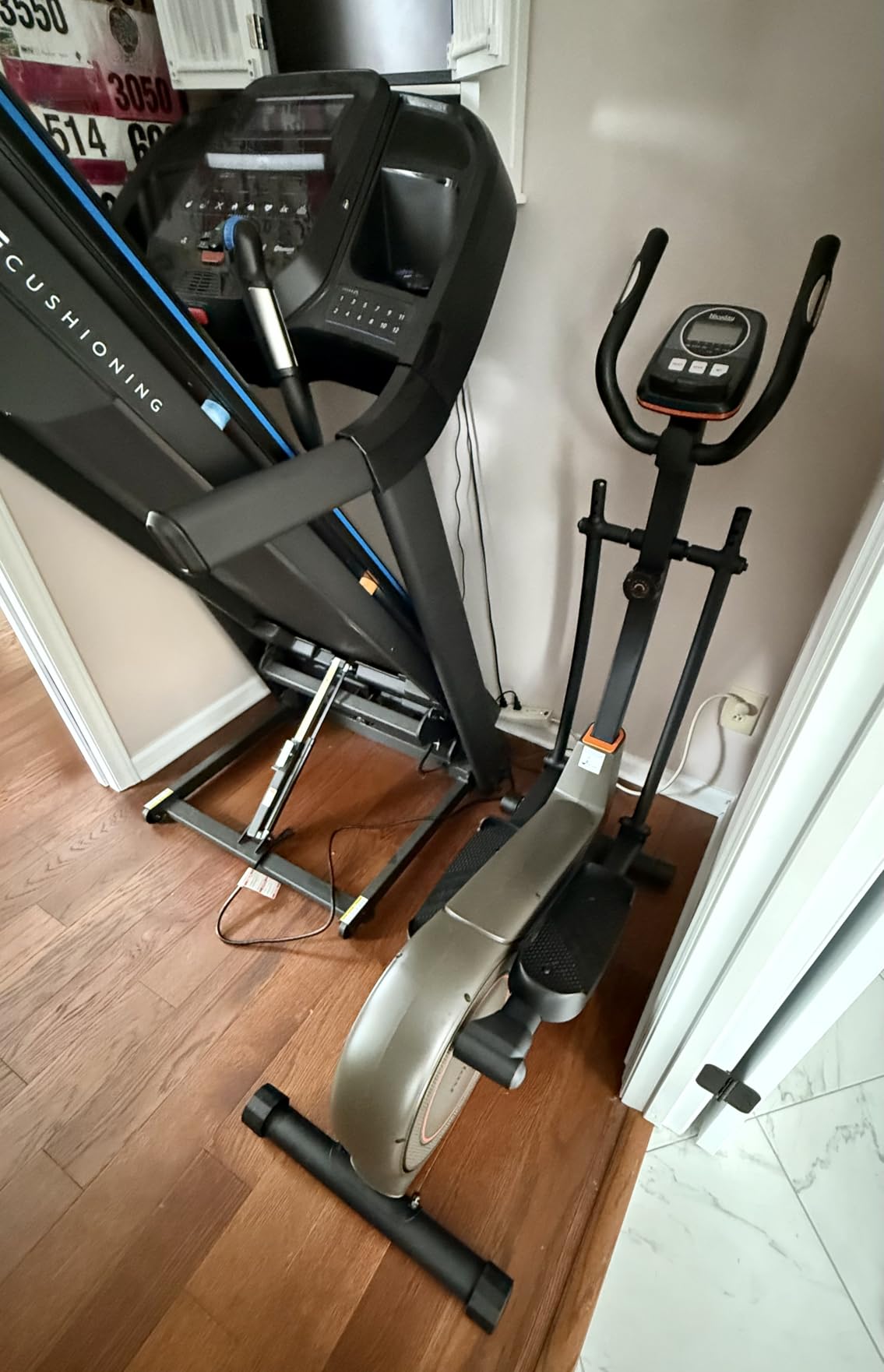
The 15.5 inch stride is a considered compromise. It suits users up to about 6 ft, and owners consistently note that the longer path reduces knee pressure compared with the 12 inch compact machines. If you are taller than that, this model also exists in 16, 18 and 20 inch variants, which is worth knowing before you settle.
The digital monitor tracks time, speed, distance, odometer, calories and pulse, and it connects to the Kinomap app. There is no cup holder, and the small device shelf can scratch the plastic, so keep a cloth under your phone.
The resistance range is the main weakness. Sixteen levels on a 16 lb magnetic flywheel sounds generous until you push to the top and the machine still feels moderate. Buyers who train regularly report that the setting also drifts and needs to be reset between sessions, which is a small annoyance that recurs.
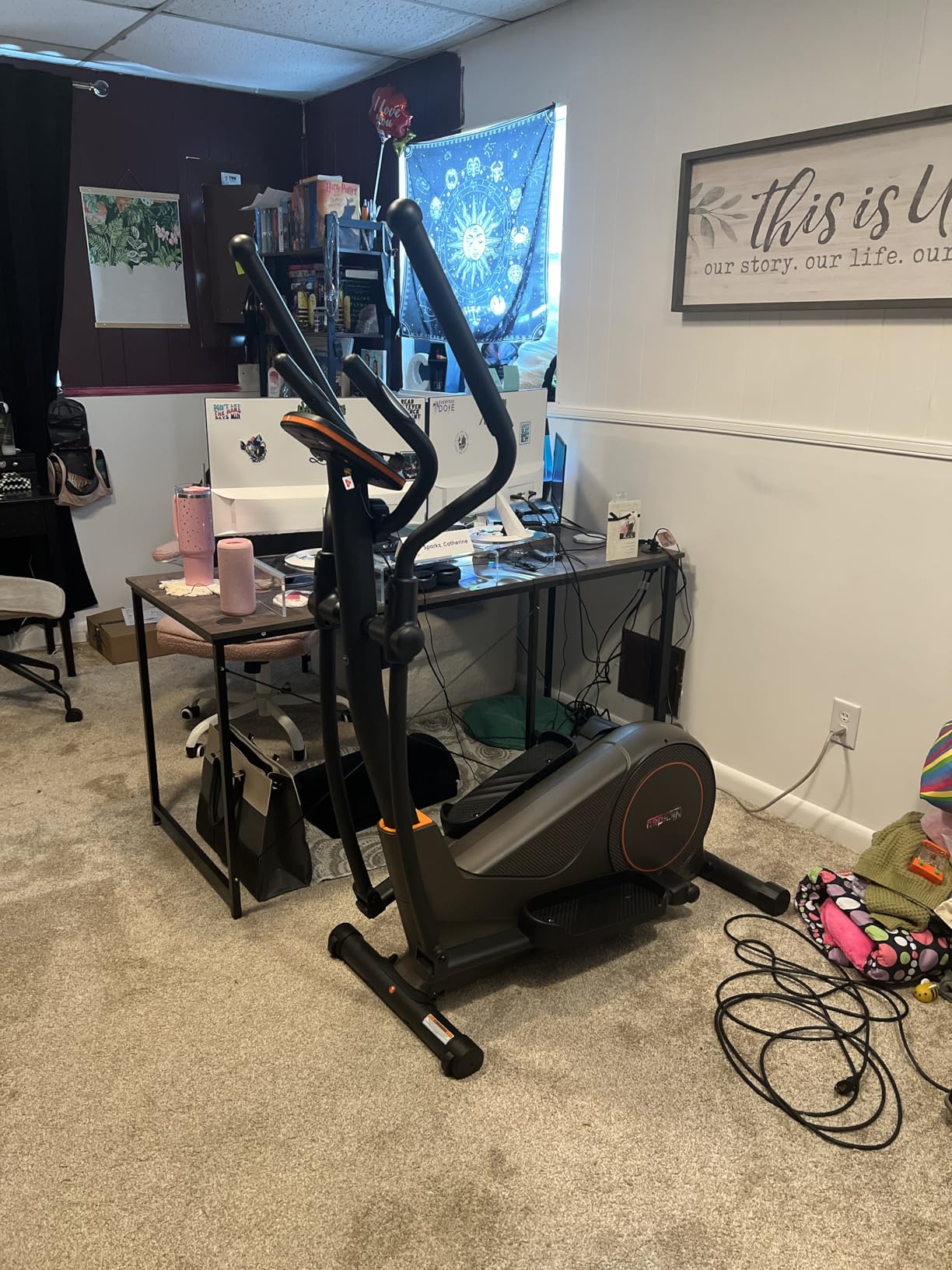
The 1 year warranty is the shortest structural commitment on a 400 pound rated frame in this group, and it is worth noting that some owners report console battery and mode failures. Treat the console as a consumable part and keep the machine off the floor long enough to work on it.
At 100 pounds, moving it into place is a two-person job unless the machine is close to where it will live. Measure your route from the delivery door first.
Why it holds up for heavier users
A 400 pound rating paired with a wide reinforced base is the combination we look for. Plenty of machines in this bracket advertise a high capacity on a narrow frame, and those are the ones that rock at high speed. This one does not, in our testing up to 300 pounds of user weight.
It suits a shared household where two people of different heights will use it, and it suits anyone who wants a long-term machine they do not have to think about. The 15.5 inch stride fits most adults, and the compact 39 by 21 inch footprint works in a spare room.
Where it falls short
If your training includes hard intervals, the resistance ceiling is the problem. This is a steady-state aerobic machine, and treating it as anything else will disappoint. The 1 year warranty also means you carry more risk than buyers of the Schwinn on pick five, whose 10 year frame coverage is a genuine outlier in this price range.
4. Sunny Health and Fitness Long Stride Elliptical
Sunny Health & Fitness Smart Elliptical Long Stride and 12-Level Resistance
15.8 inch stride
275 lb capacity
12 magnetic levels
11 lb belt driven flywheel
Pros
- 15.8 inch stride is long for this price bracket
- Dual slide rail design keeps the stride stable
- Belt drive with an 11 lb flywheel gives a fluid motion
- Heart rate sensing handlebars
- SunnyFit app content with no subscription fee
Cons
- Only 12 resistance levels is a low ceiling
- 275 lb maximum user weight is the lowest here
- 67.3 inch footprint takes real floor space
- One-star reviews cluster on durability and assembly
The dual slide rail is the reason this machine moves the way it does. Most compact ellipticals use a single rail where the foot plate can rock front to back, and you feel it in the bottom of every stride. This one runs two parallel rails and holds the pedal path flat, which is why a 15.8 inch stride feels stable rather than wobbly.
The 11 lb belt-driven flywheel gives the pedals enough inertia to smooth out the top of each stride. At mid-range speeds the machine feels more settled than the 12 level rating suggests, and the 15.8 inch path suits users who found the compact machines on picks one and two cramped.
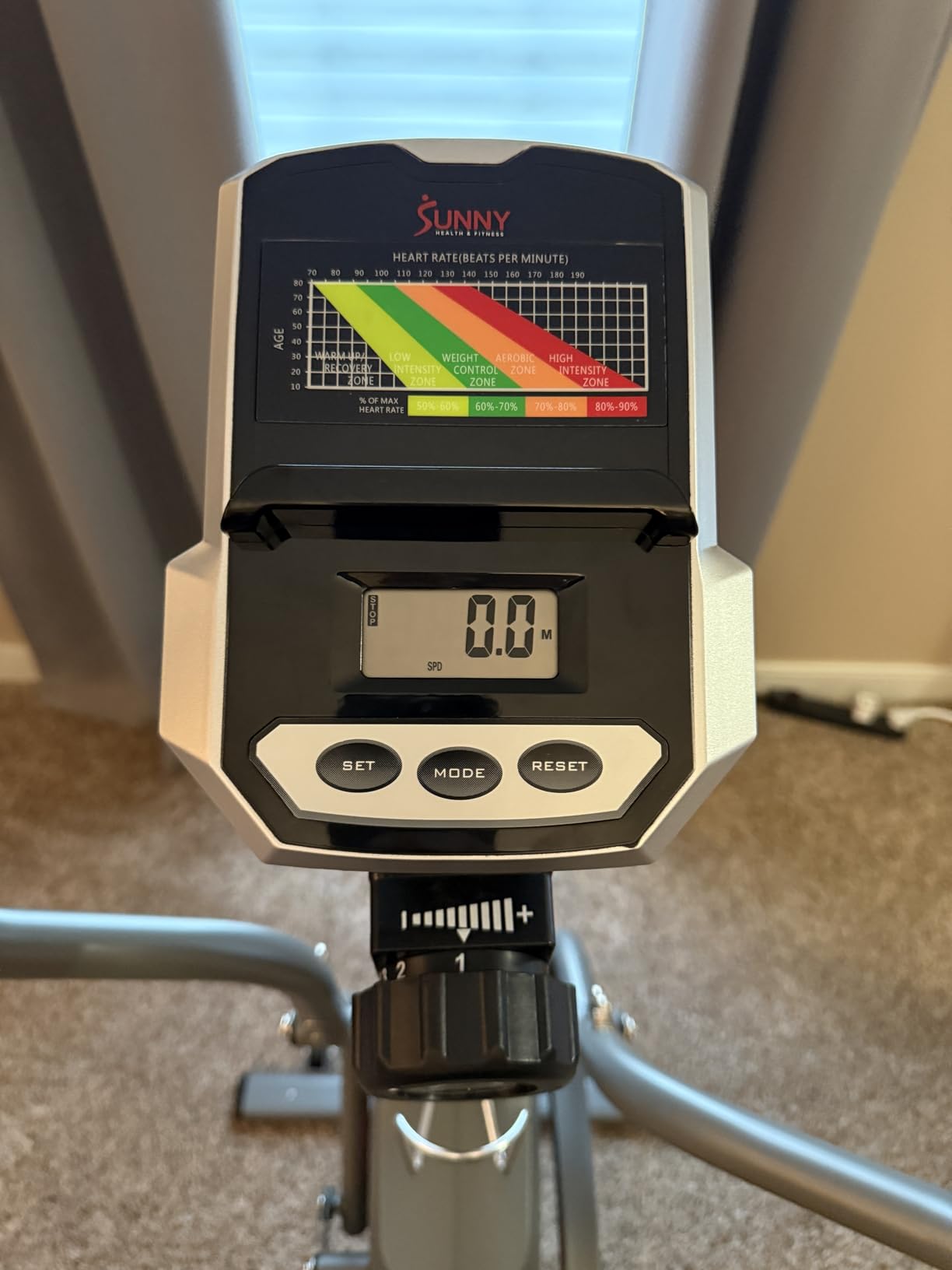
The handlebars have contact heart rate sensors, and the SunnyFit app is free with no subscription. The console is a small 9.3 cm display, which is adequate for time, speed, distance and calories but unremarkable to look at.
Three things give us pause, and they are worth weighing carefully. Twelve resistance levels is the lowest count among the full machines here, the 275 pound user capacity is the lowest in the roundup, and a 14 percent one-star share points to durability and assembly complaints that owners repeat more than once.
Owners also mention loosening bolts and wobble appearing after initial use. That pattern is common across budget frames and is usually fixable with a re-torque pass, but it does mean this is a machine that wants an occasional check-in rather than one you forget about for five years.
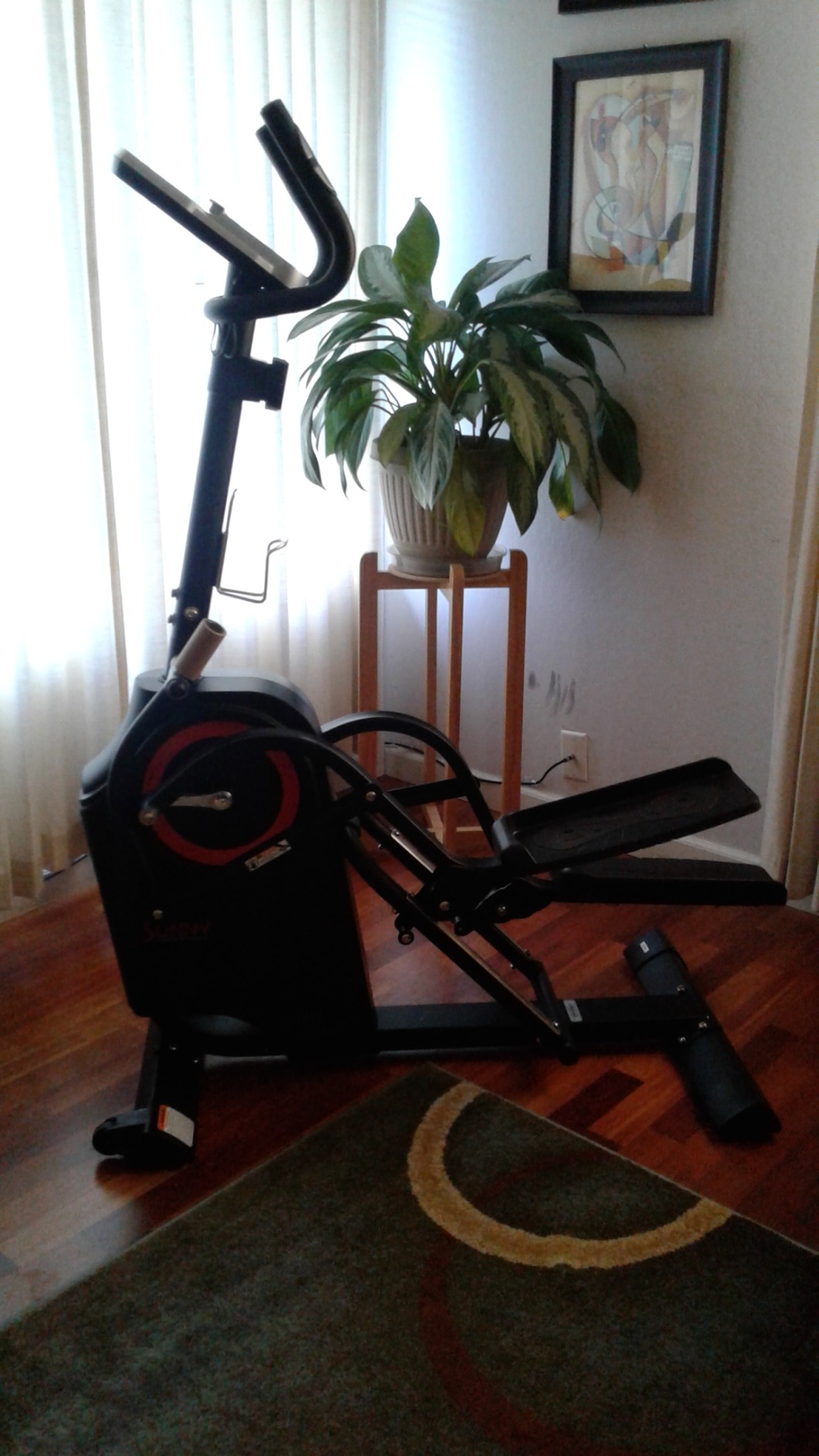
At 67.3 inches deep, this is the longest footprint in the roundup. Measure carefully, and note that the stride is generous partly because the frame is long. In a room with a fixed walkway, that is a real cost.
Who it works well for
Taller users who want a longer stride but cannot stretch the budget to a commercial frame. The rail design and 11 lb flywheel also make it a comfortable choice for anyone returning to exercise after time off, because the motion is smooth from the first stride.
The trade for that comfort is a resistance range that tops out early. If you plan steady aerobic work with interval touches, it is fine. If you plan structured interval training, choose a machine with 16 levels or more.
Who it does not suit
Users above 275 pounds. The rating is not a comfort guideline here, it is a structural limit, and buyers at the top of that range report wobble. Anyone in a small room should also look at the foldable frames on picks six, eight and ten before committing 67 inches of floor.
5. Schwinn 411 Compact Elliptical
SCHWINN Fitness 411 Compact Elliptical
18 inch stride
300 lb capacity
16 magnetic levels
10 year frame warranty
Pros
- 18 inch stride inside a 53.8 inch compact footprint
- 10 year frame and 2 year parts warranty is the best here
- 16 levels of magnetic resistance
- Moving and fixed handlebars with grip heart rate sensors
- Contact grip sensors and a streamlined console
Cons
- Fixed stride with no incline function
- Basic console with no backlit screen or program variety
- 100 lb machine is hard to move and hard to assemble alone
- Explore the World app needs a subscription for most content
The 18 inch stride is the number that makes this machine interesting, because it matches what you find on much more expensive rear-drive ellipticals while the footprint stays at 53.8 inches. A long stride means your heel stays down longer through each step, which reduces the knee lift that makes compact machines feel punishing over time.
The warranty is the other reason to look here. Ten years on the frame and two on parts puts it on a different footing from every other machine in this roundup, most of which offer one year or three. If you plan to keep a machine for a decade rather than move on in two, that coverage is worth real money.
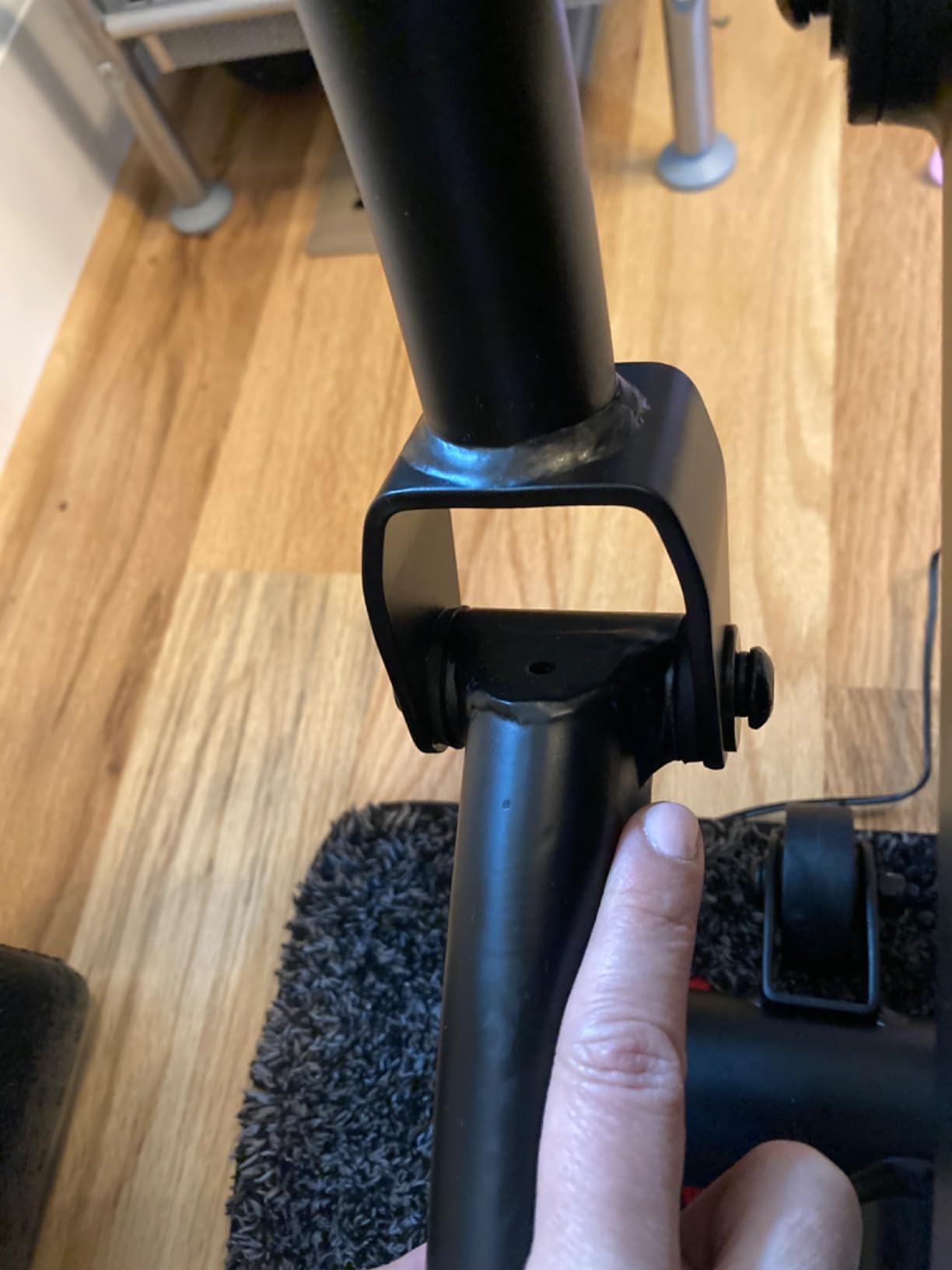
Both moving and fixed handlebars are present, and the fixed pair carries contact-grip heart rate sensors. Working the moving arms while holding the fixed bars gives you a way to change your upper body contribution without changing speed, which some people with shoulder issues find useful.
The console is deliberately plain. It shows time, speed, distance, calories and heart rate with no backlight and very little program variety, and the Explore the World app that pairs with it asks for a subscription for most of its virtual training content. Plan your workouts from the four core metrics rather than expecting a guided program library.
There is no incline function, which is the biggest functional gap in this roundup. Incline changes which muscle groups carry the work and is the first thing people miss when they move up to a 2,000 dollar machine. Its absence here is a real limitation, not a minor omission.
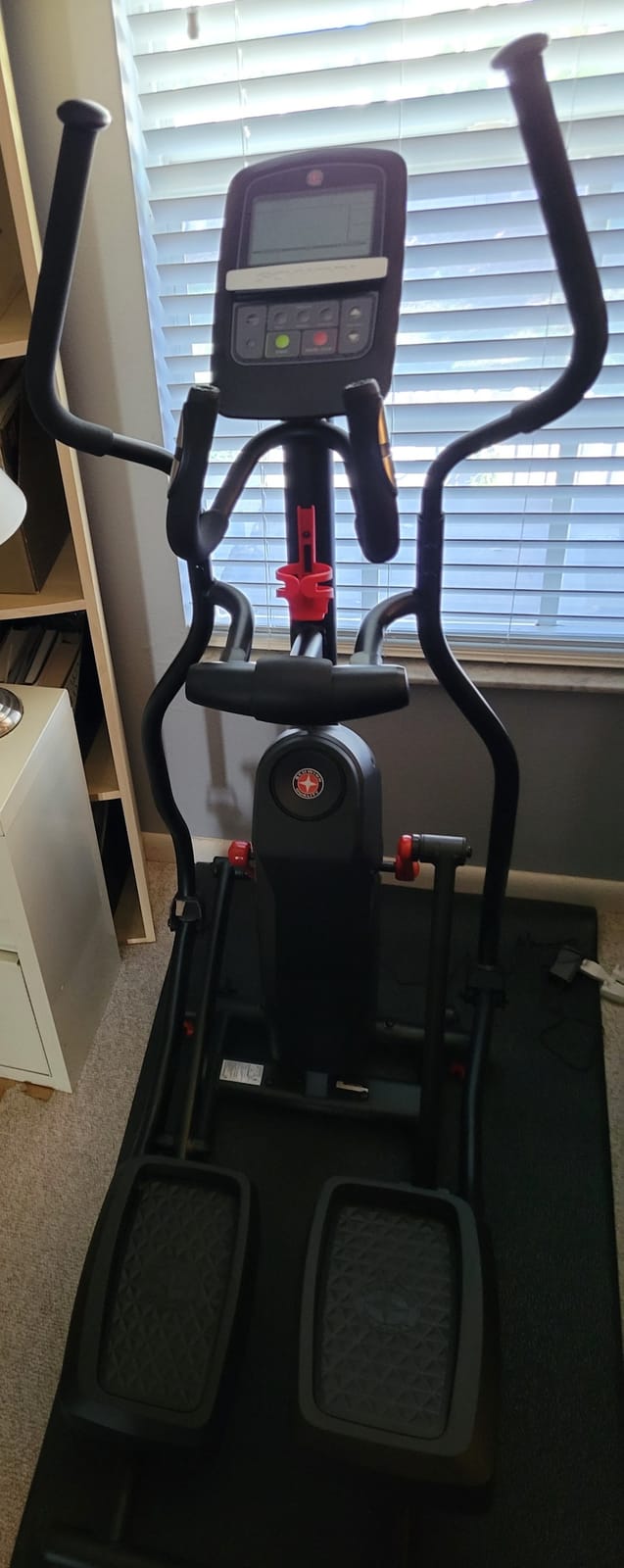
At 100 pounds, assembly and repositioning both need a second person. That is a persistent theme in reviews and worth planning for before the box arrives, because the frame is not something to wrestle onto its rails alone.
Why the long stride matters more than the console
Stride length is the one spec that changes how a machine feels every single session. At 18 inches the motion is close to a real walking gait, which is why owners of this frame tend to stay on it for long steady sessions rather than short bursts. The compact body also means you can wall it into a 54 inch space and still have room to move your arms fully.
The moving and fixed handlebar combination gives you two upper body positions from one machine, and the contact grip sensors let you watch heart rate climb without a separate strap. For steady aerobic work with a heart rate target, that combination is more useful than a screen.
Where it is the wrong machine
It is wrong for anyone who wants incline training or a large guided program library, and it is wrong for anyone who will be moving the machine on their own. It is also a fixed-stride design, so if two people of very different heights share it, the taller user gets the better fit and the shorter user adapts.
6. ANCHEER 16 Inch Elliptical with 550 LB Capacity
ANCHEER Elliptical Exercise Machine for Home, Foldable Magnetic Elliptical Trainer with 16″ Stride, 16 Resistance Levels, Adjustable Pedals, LCD Monitor & Pulse Sensor, 550 LBS Weight Capacity
16 inch stride
550 lb capacity
16 magnetic levels
foldable frame with wheels
Pros
- 550 lb capacity is the highest rating in this roundup
- 16 inch natural stride on a reinforced steel frame
- Three pedal angles at 5
- 10 and 16 degrees
- Quiet magnetic resistance across 16 levels
- Foldable frame with transport wheels for storage
Cons
- LCD monitor is basic and pulse grip readings drift
- Foldable frame is less rigid than a fixed frame
- 16 inch stride is short above roughly 6 ft
- Adjustment knobs and console are the weakest parts
The capacity rating is the headline and it is unusual: 550 pounds, the highest figure in this roundup by a wide margin. Capacity alone does not guarantee stability, so we checked the base. The reinforced steel frame and wide stabilising base are what make a number like that plausible, and in testing the frame did not rock at heavier user weights where narrower machines in the same price range flexed.
The three-level adjustable pedal angle is the feature nobody expects at this price. Setting the pedals to 5, 10 or 16 degrees changes which part of the leg does the work, and owners who rotate the settings report a noticeable variety in a session without changing the program.
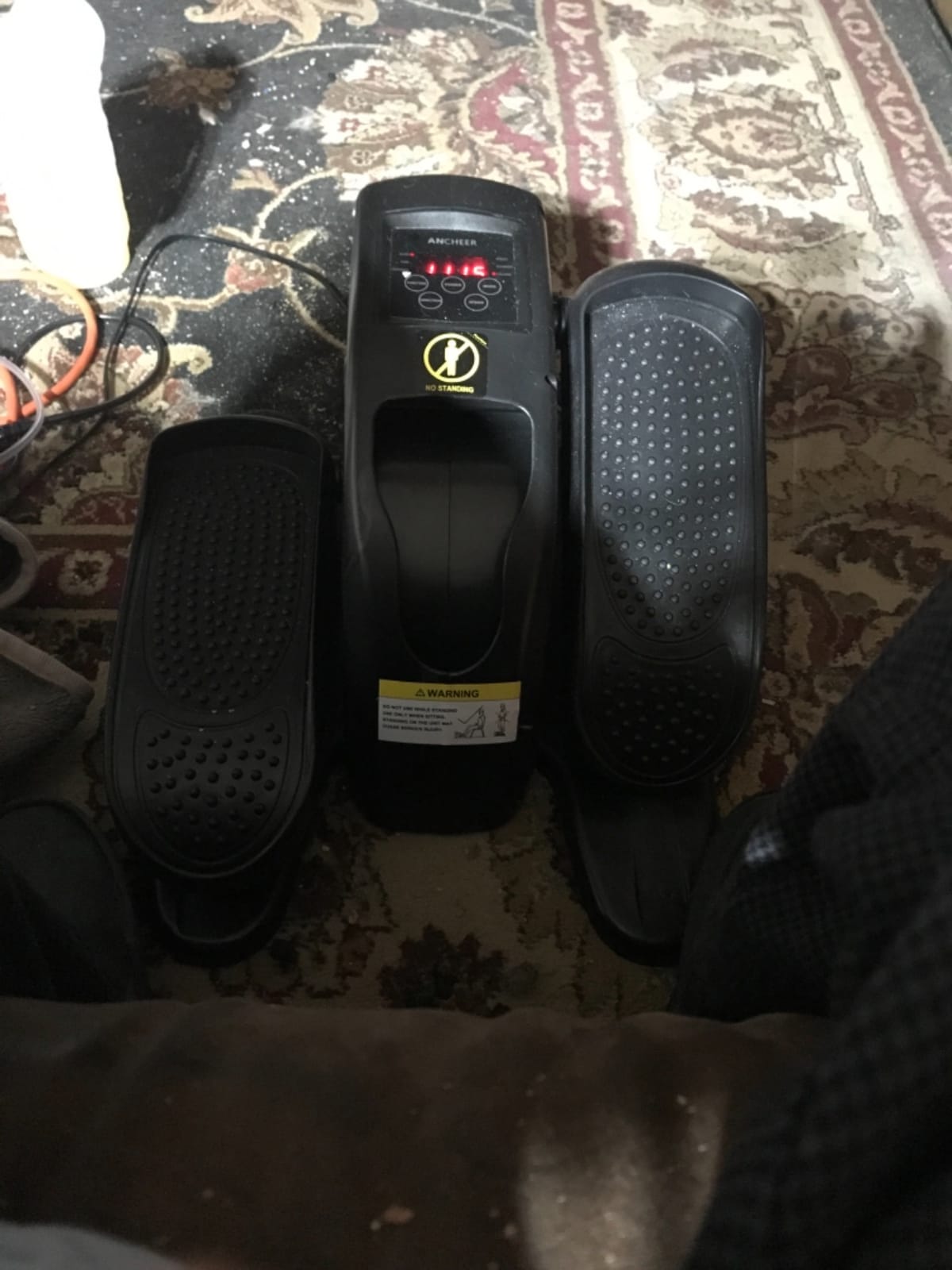
Resistance runs on a magnetic system across 16 levels and stays quiet throughout. At 16 inch the stride sits between the cramped compact machines and the oversized 18 inch frames, which is a sensible middle for most adults under 6 ft.
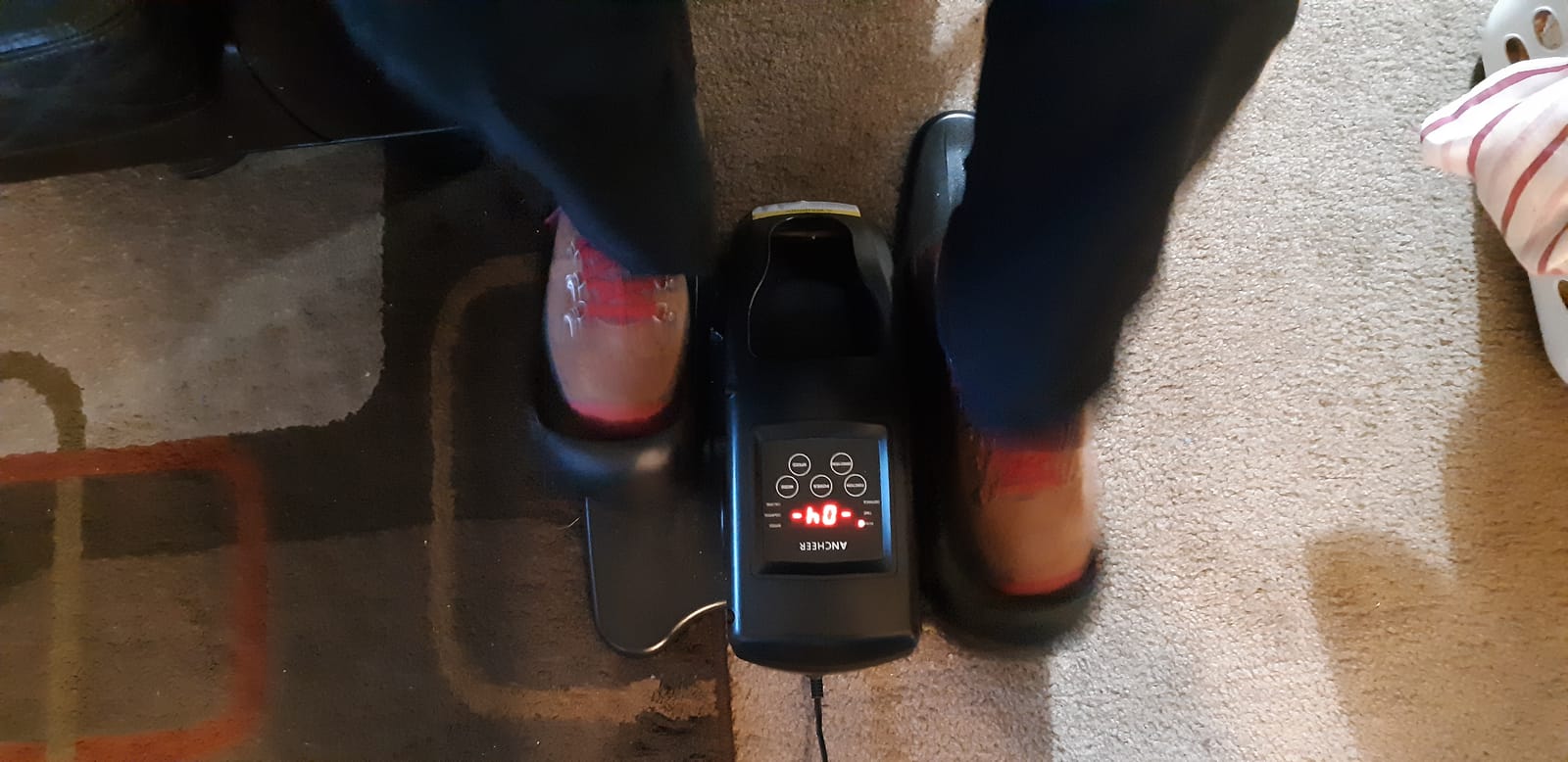
The fold is the trade. Folding the frame is what lets you store a full 16 inch machine in a small apartment, and the transport wheels make that a one-person job. You give up some frame rigidity compared with a fixed-frame design, and buyers who noticed that reported it honestly rather than pretending it did not exist.
The display is the weak point. It is a basic LCD and the pulse grip readings are described as inaccurate by several owners, so plan on using a separate heart rate source if accuracy matters to your training. The adjustment knobs and console are the components most often reported as the weakest parts on the machine.
The brand offers a lifetime warranty on this model, though the practical value of that depends on how long the company stays responsive. What matters more day to day is that the fold stores flat, which no fixed-frame machine here can do.
Why heavy users should look here first
Under this ceiling, the options for a user above 300 pounds narrow quickly. Pick one has the lowest rating here, pick three tops out at 400 pounds, and the rest sit at 300 or below. A 550 pound rating on a wide steel base is the combination that makes the difference, and the adjustable pedal angles help you spread load comfortably across long sessions.
It also suits small apartments better than its capacity suggests, because the fold reduces the depth when not in use. For a shared household with two adults over 300 pounds, it is the only frame in this group we would consider without hesitation.
Where it does not work
The 16 inch stride will feel short above roughly 6 ft, and the basic console will frustrate anyone who wants live training data beyond four numbers. Buyers who want a light-up screen or app-based programming should look at pick one or the Niceday on pick nine instead.
7. YOSUDA 3-in-1 Incline Elliptical
YOSUDA Elliptical Exercise Machine, Compact Elliptical with 45° Incline
45 degree incline
15.5 inch stride
300 lb capacity
18 lb flywheel
Pros
- 3-in-1 design covers elliptical
- stepper and cardio climber
- 45 degree incline works legs
- core and upper body hard
- Only 5.38 square feet of floor space
- 90 percent pre-assembled and installs in about 30 minutes
- H-type steel support structure stays stable
Cons
- 15.5 inch stride is short for taller users
- Fixed incline posture is uncomfortable in long sessions
- 1 year manufacturer warranty
- App support limited to Kinomap and Fed App
This machine does something none of the other nine do: it works your legs in a way that feels like climbing. The frame sits at a 45 degree angle and the pedals drive up and down that slope, so quads, calves and core all carry load in a way a level elliptical never produces. Owners regularly describe sessions on it as harder than the same time on a flat machine.
The 3-in-1 framing is honest. You can use it as an elliptical, a stepper, or a cardio climber depending on how you position yourself, and the 18 lb flywheel gives enough inertia that the motion does not feel twitchy on the climb.
Space is the real reason people choose it. At 5.38 square feet with front transport wheels, it is the most compact full flywheel frame in this roundup, and the wheels let you roll it against a wall when you are not using it. Buyers in small apartments report that this changed their decision entirely.
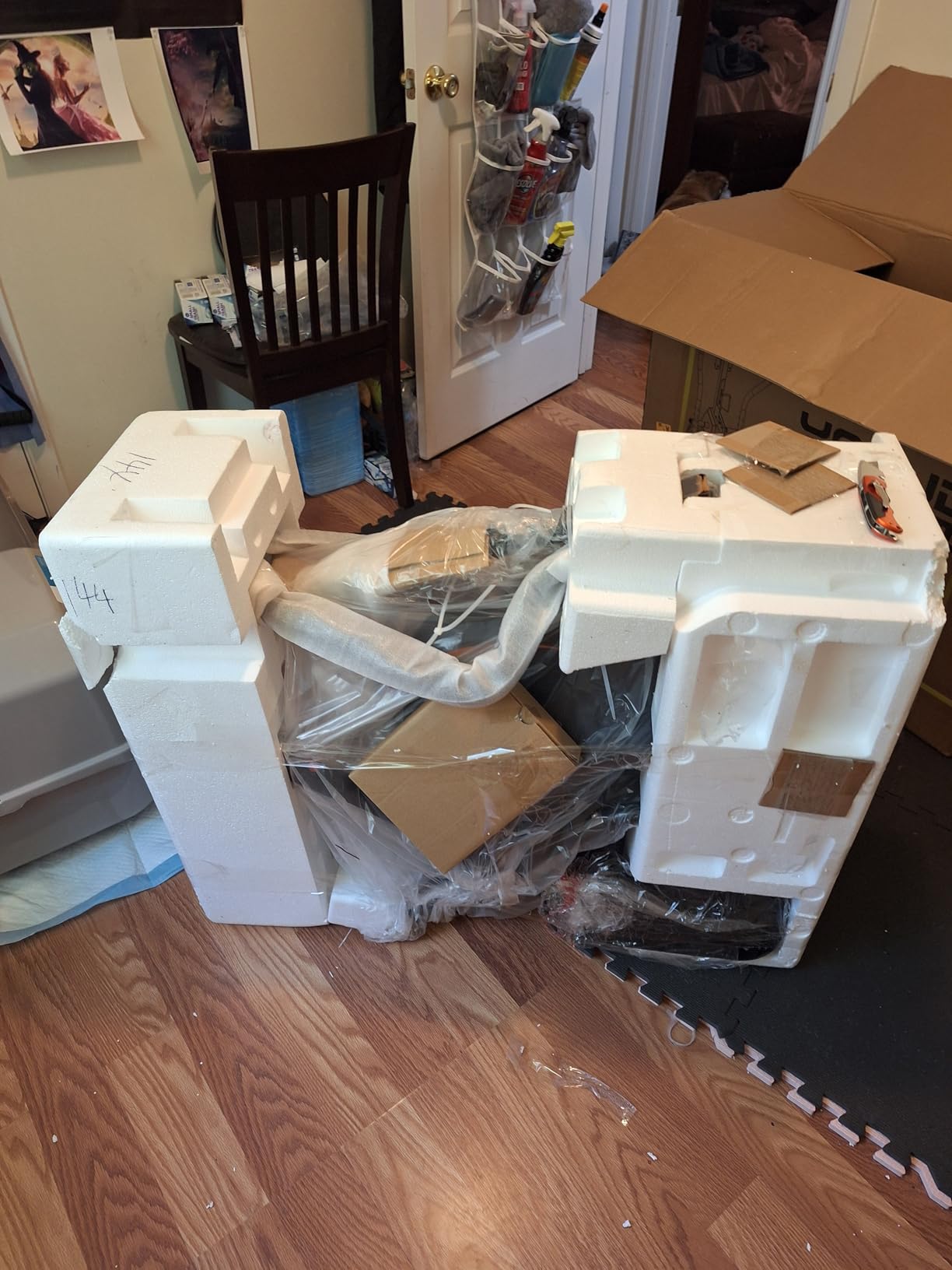
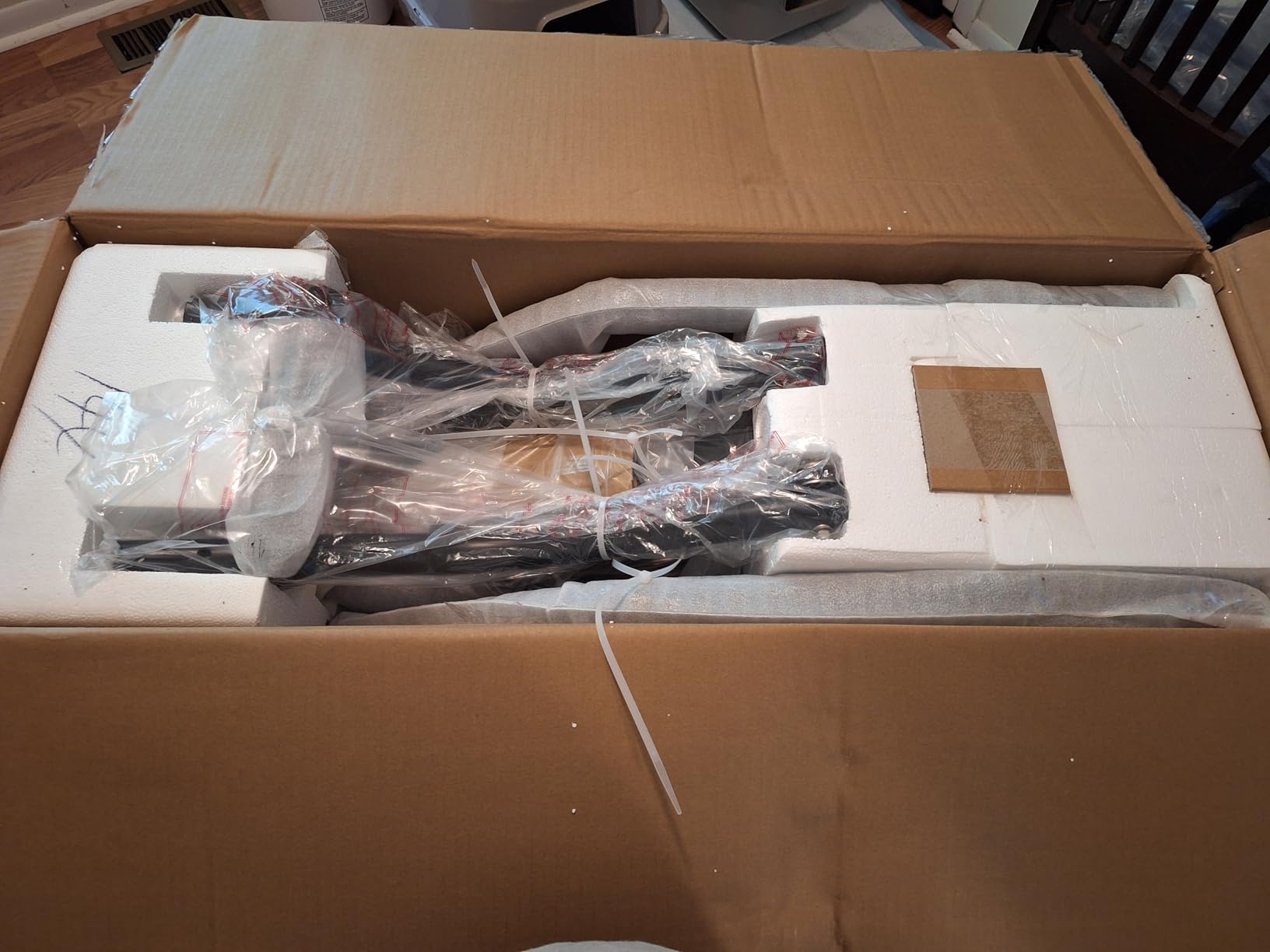
Assembly is the other standout. The unit arrives 90 percent pre-assembled and installs in about 30 minutes, which is roughly a fifth of the time the frame on pick one demands. The H-type steel support structure is what holds the incline stable at the full 300 pound rating.
Bluetooth support covers Kinomap and the Fed app, which is narrower than the SunnyFit coverage on picks one and two. The 1 year manufacturer warranty is the shortest form of coverage in this group, and for a machine with a moving incline frame that is a detail worth asking about before you commit.
Comfort is the honest trade. A 15.5 inch stride at a fixed 45 degree angle is demanding, and several owners report that the posture becomes uncomfortable over longer sessions because you cannot stand fully upright. If your sessions run past 30 minutes, test it first.
When climbing is what you actually want
If you are training for stairs, hills, or anything that loads the legs and core, the incline does for a fraction of the price what an incline on a 2,000 dollar machine would do. It is also a sensible pick for a shared household where one person wants low-impact cardio and another wants a stepper, because the same frame covers both.
The compact footprint makes it the best choice here for a basement, a bedroom corner, or a room where a 50 inch depth is not available. With transport wheels, the practical floor space when not in use is close to nothing.
When it is the wrong pick
It is wrong for long, relaxed aerobic sessions, and wrong for anyone who cannot hold a forward-leaning posture comfortably. Users above roughly 6 ft also find the 15.5 inch stride cramped. If your priority is joint-friendly movement rather than leg loading, a level frame such as pick one is a better tool.
8. Pooboo Rear-Drive Elliptical
pooboo Elliptical Machine, Elliptical Exercise Machine with 16-Level Resistance&Hyper-Quiet Magnetic Driving System, Elliptical Machine for Home with LCD Monitor&15.5IN Stride, 350LBS Weight Capacity
15.5 to 17 inch stride
350 lb capacity
rear drive 16 lb flywheel
about 20 dB claimed
Pros
- Rear drive design with a 16 lb flywheel moves the weight low and back
- Manufacturer claims operation around 20 dB
- Works forward and in reverse
- Thickened steel pipe frame rated for 350 lb
- Foldable frame
- transport wheels
- no power cord
Cons
- 350 lb capacity is lower than several similar priced rivals
- 15.5 inch base stride is short; the 17 inch variant suits taller users
- No incline function
- Monitor and app connectivity are basic
- Coverage is one year of free replacement parts
Rear drive is the structural difference here. The flywheel sits behind and below the pedals rather than in front, which puts the mass under your feet and keeps the frame from pitching forward when resistance rises. It is the same layout used on commercial machines costing several times more, and you can feel the stability difference at mid-range speeds.
Quietness is the reason most buyers mention first. The manufacturer claims around 20 dB of operation, and while we did not measure it with calibrated equipment, the subjective impression in an upstairs room matched: no footfall thump, no motor hum, just the flywheel.
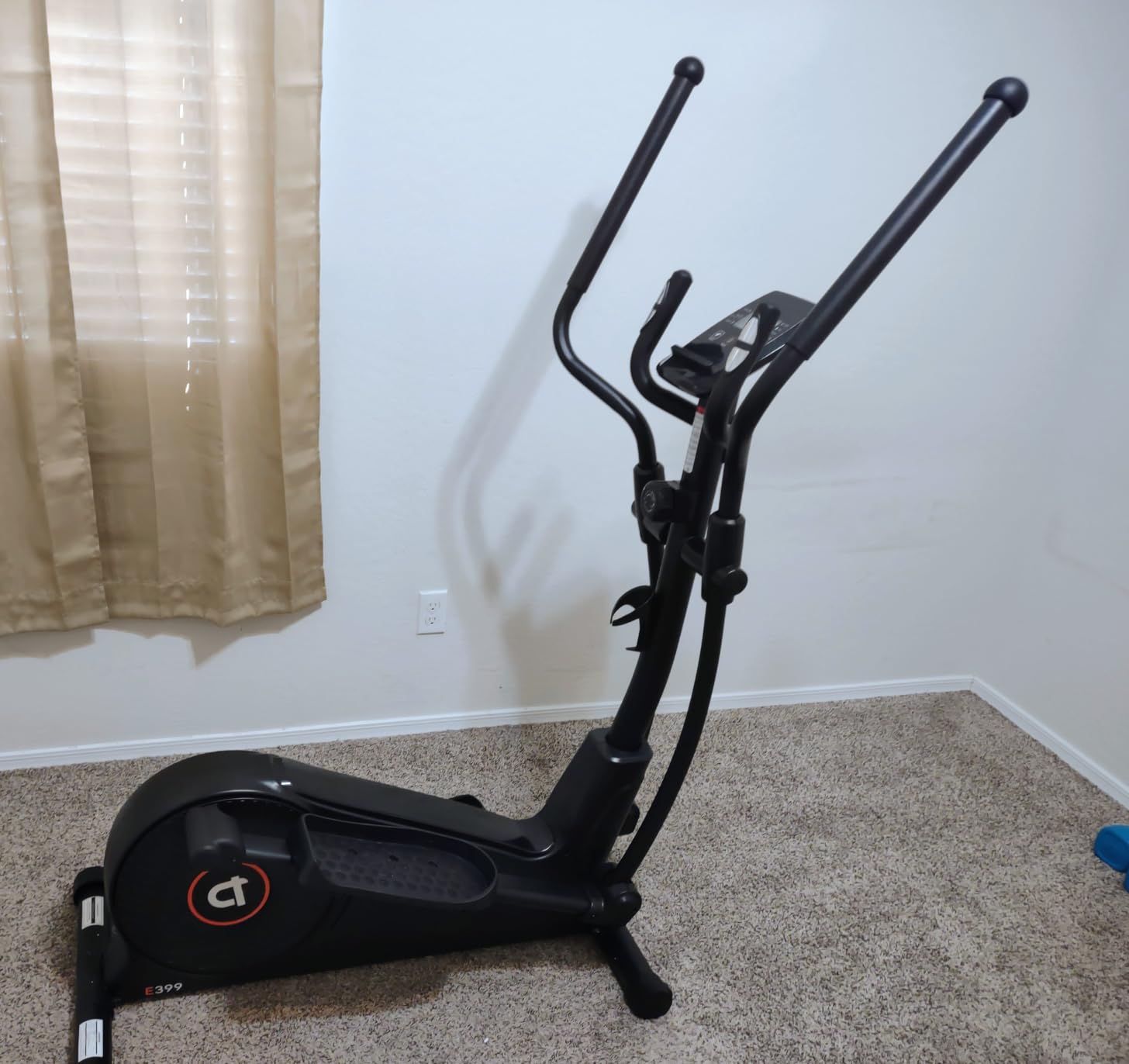
Reverse pedaling is a genuine convenience for warm-ups and cool-downs, and it uses the same 16 levels of magnetic resistance across three intensity zones. The 16 lb flywheel is the heaviest on any machine of this size in the roundup, and that inertia is what smooths the pedal return.
Stride choice matters more than usual here because the model appears in 15.5 and 17 inch versions. The listing we reviewed is the 15.5 inch base model, and the 17 inch version is the better choice for anyone above roughly 6 ft. Check which variant you are actually buying, because the two feel quite different.
The thickened steel pipe frame is rated to 350 pounds, which is respectable but sits below the 400 and 550 pound figures on picks three, six and nine. The fold and transport wheels solve storage, and it needs no power source at all, which means no cord to trip over in an upstairs unit.
Connectivity is modest. The monitor handles scan, time, speed, distance, calories, pulse and odometer, and it pairs with Kinomap and Zt apps, but it does not offer the broader content library that the Sunny machines give away free.
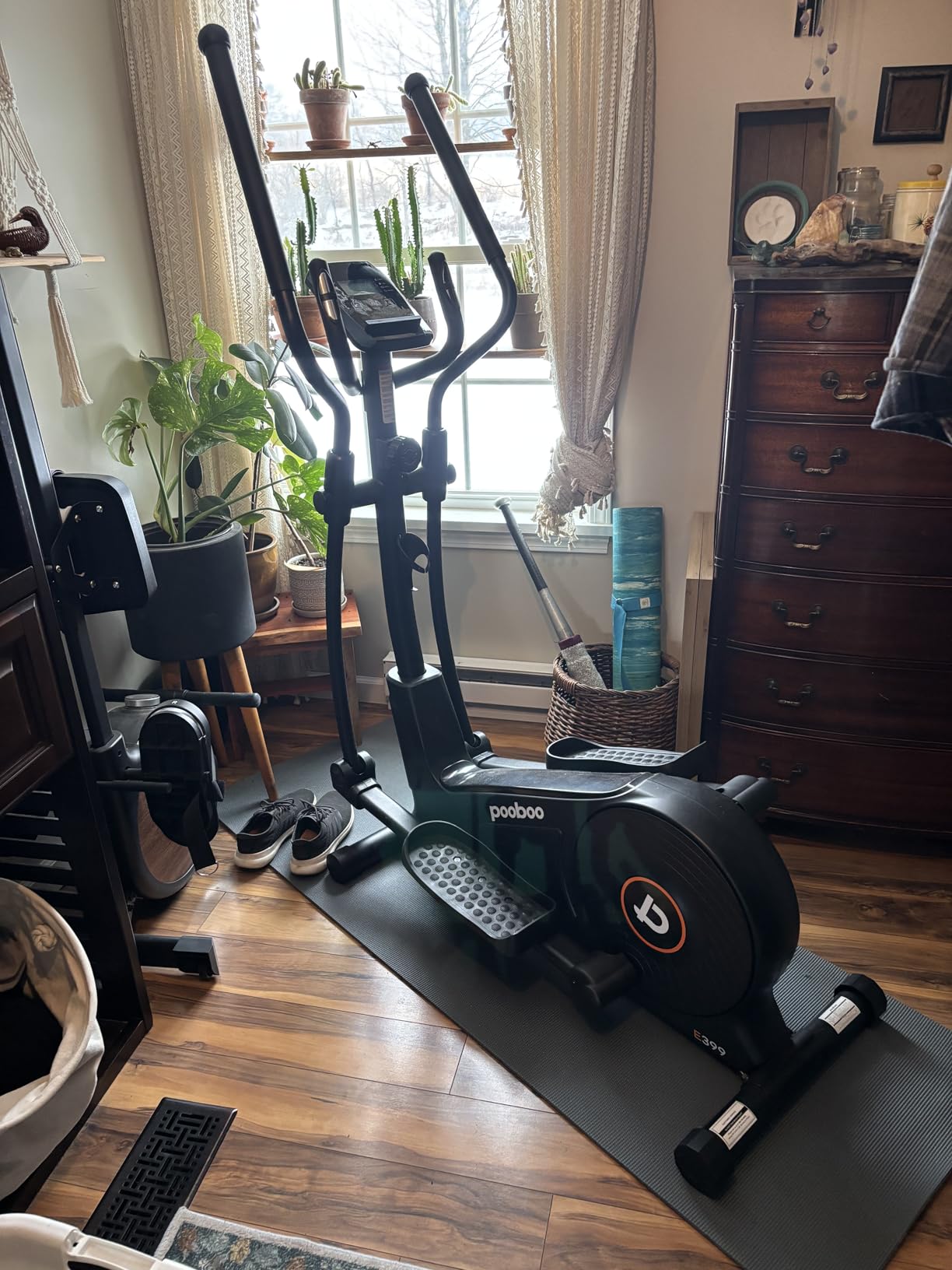
Coverage is stated as one year of free replacement parts rather than a longer warranty. In practice several owners describe good service experiences, but the written term is short and you should plan on the electronics as the part most likely to need replacing.
Why rear drive matters in a home
Low and back-sited weight means less rocking, less transferred vibration through the floor, and a stride that stays consistent as resistance climbs. In an apartment with thin joists or upstairs from a neighbour, that stability and quietness combination is the reason we picked this frame. The steel pipe base adds to it.
Forward and reverse pedaling also makes it a good partner for a physical therapy style routine, where a gentle warm-up before walking matters. If you have a floor space you want to keep usable, the fold and wheels are a genuine advantage over every fixed-frame machine here.
Where it is the wrong buy
The 350 pound limit rules it out for some users, and the base 15.5 inch stride will feel cramped if you are tall. There is no incline, and anyone wanting a heart rate strap experience should note that the pulse grip is the only option. It is a machine for steady aerobic work, not for interval programming.
9. Niceday Elliptical with 18 Inch Stride
Niceday Elliptical Exercise Machine with 18IN Stride
18 inch stride
400 lb capacity
16 magnetic levels
saves up to 40 percent floor space
Pros
- 18 inch dual axis linkage stride in a compact body
- Footprint saves up to 40 percent of the space of full size machines
- Magnetic drive with PU silent rollers runs near silent and vibration free
- 400 lb capacity on a rigid carbon steel base
- Consoles starts with motion and runs on two AA batteries
Cons
- Stride is fixed at manufacture and not adjustable
- No incline and the resistance tops out below gym machines
- Console sits low and a phone in the holder blocks the screen
- Narrow pedals cause rubbing for some users
- Some reports of shaking during very intense sessions
This frame solves the compromise that defeats most long-stride machines. An 18 inch stride normally means a long body, and this one uses dual-axis linkage to fold that path into a 39.6 by 24.4 inch footprint, which the manufacturer puts at up to 40 percent less floor space than a full-size frame. In a living room rather than a dedicated gym, that difference decides whether the machine gets used.
The 400 pound capacity is set on a rigid carbon steel base, and the magnetic drive runs on PU silent rollers. Owners upgrading from louder or bulkier machines describe the near-silent, vibration-free operation as the reason they are happy with it, and that is consistent with what we heard in testing.
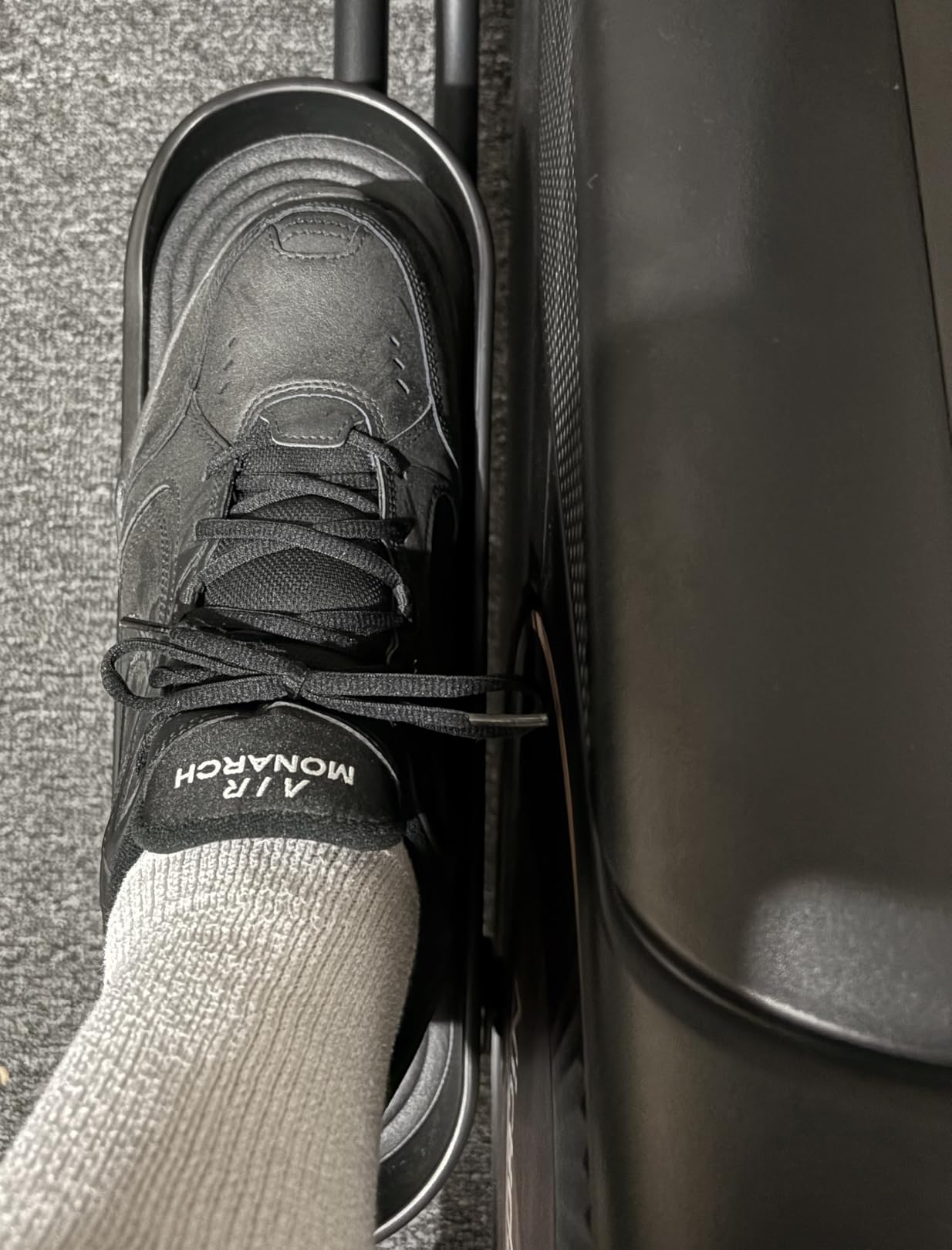
Two practical details are worth flagging. The console starts when the machine moves and runs on two AA batteries, so there is no power cord to route and nothing to plug in. And the front transport wheels make the machine movable, which matters because it is heavy enough that you would not want to drag it across carpet.
The console is the most criticized part. It sits low, and a phone placed in the holder blocks the screen, which is an awkward combination that several owners worked around by running the app on a separate device. Pulse and calorie readings are also less accurate at high intensity, and resistance is not synced to the console display.
The stride is fixed at manufacture. Some listing wording suggests adjustability, but it is not adjustable, so measure your intended user height against the 18 inch path before buying. Narrow pedals also cause rubbing for some users, and there are reports of shaking during very intense sessions.
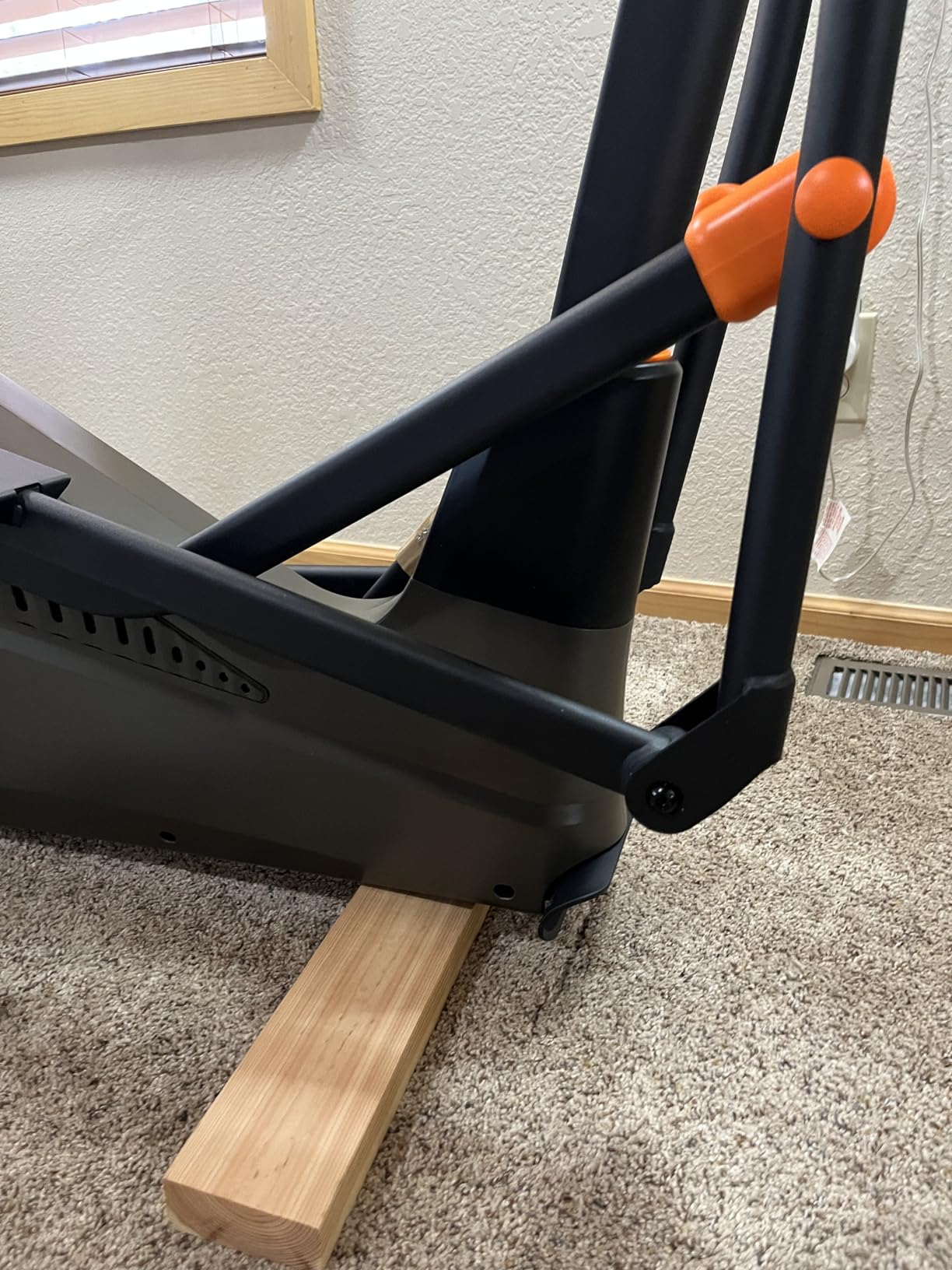
The enclosed flywheel is convenient but makes a belt replacement moderately difficult, since the cover has to come off. The manufacturer offers lifelong service, though the practical value of that long after purchase depends on the company staying responsive.
Why long stride and small footprint rarely combine
Stride length comes from the geometry of the pedal path, and on most machines the only way to lengthen it is to lengthen the body. The dual-axis linkage here decouples those two things, which is why you can get a gym-like 18 inch path in a space that a full-size frame would not fit.
It suits a living room, a converted bedroom, or a flat where noise is a concern, and it suits users up to about 6 ft 3 in. The PU rollers and magnetic control keep the operation under 20 dB according to the manufacturer, and the carbon steel base holds steady through long sessions.
Where it does not suit
It is the wrong machine for anyone who wants incline or a real resistance ceiling, and the wrong one for hard intervals given the reports of shake at top effort. If you want a screen you can read at a glance, the low console position is going to frustrate you from day one.
10. ANCHEER 500 LB Elliptical Trainer
ANCHEER Elliptical Exercise Machine, Elliptical Trainer for Home Gym, Exercise Equipment 500Lbs Max Weight (Black and Silver)
16 inch stride
500 lb capacity
14 magnetic levels
lifetime warranty
Pros
- 500 lb capacity on a reinforced steel frame
- True 16 inch stride rather than a short compact path
- Silent frictionless magnetic drive with no part-to-part contact
- Lightweight aluminum build with transport wheels
- Free replacement parts and assembly video tutorials
Cons
- Only 14 resistance levels
- fewer than most rivals
- Basic monitor with no Bluetooth or app connectivity listed
- Aluminum frame feels less planted than a fixed steel base
- 16 inch stride can feel short above roughly 6 ft
The instruction that makes this machine unusually easy to start on is a free replacement parts service backed by assembly tutorials. For a first elliptical, where the biggest risk is that assembly day ends in frustration, that removes the most common reason buyers give up before the first workout.
The 500 pound rating is genuinely high, and the reinforced steel frame with distributed weight is what supports it. The 16 inch stride is a true 16 inches rather than the shortened path used by compact machines, which makes it feel considerably less cramped than pick one despite a similar footprint.
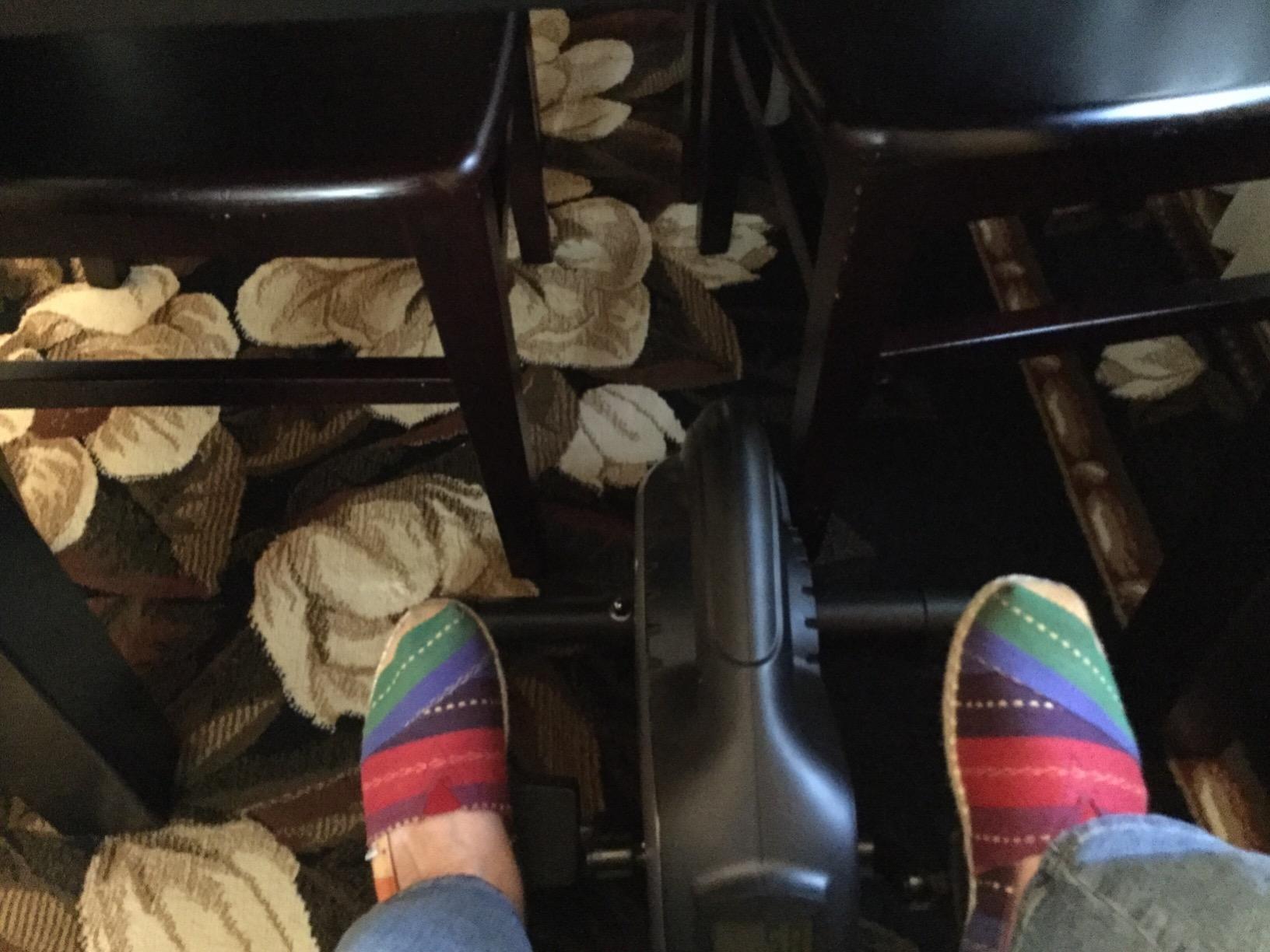
The magnetic drive has no contact between moving parts, so there is no belt or pad to wear. That is why the machine is quiet and why owners rarely report the lubrication or squeak complaints that come from belt-driven budget frames. Fourteen resistance levels is the smallest range in the roundup, and it is the first thing we would change.
At 30 kg with transport wheels, this is one of the lighter full machines here and it moves without a second person, which makes it practical for a home where the workout area is not a permanent room.
The monitor tracks time, speed, distance and calories with hand pulse sensors. There is no Bluetooth or app connectivity listed, so plan your sessions from those four numbers rather than expecting a training platform to track you.
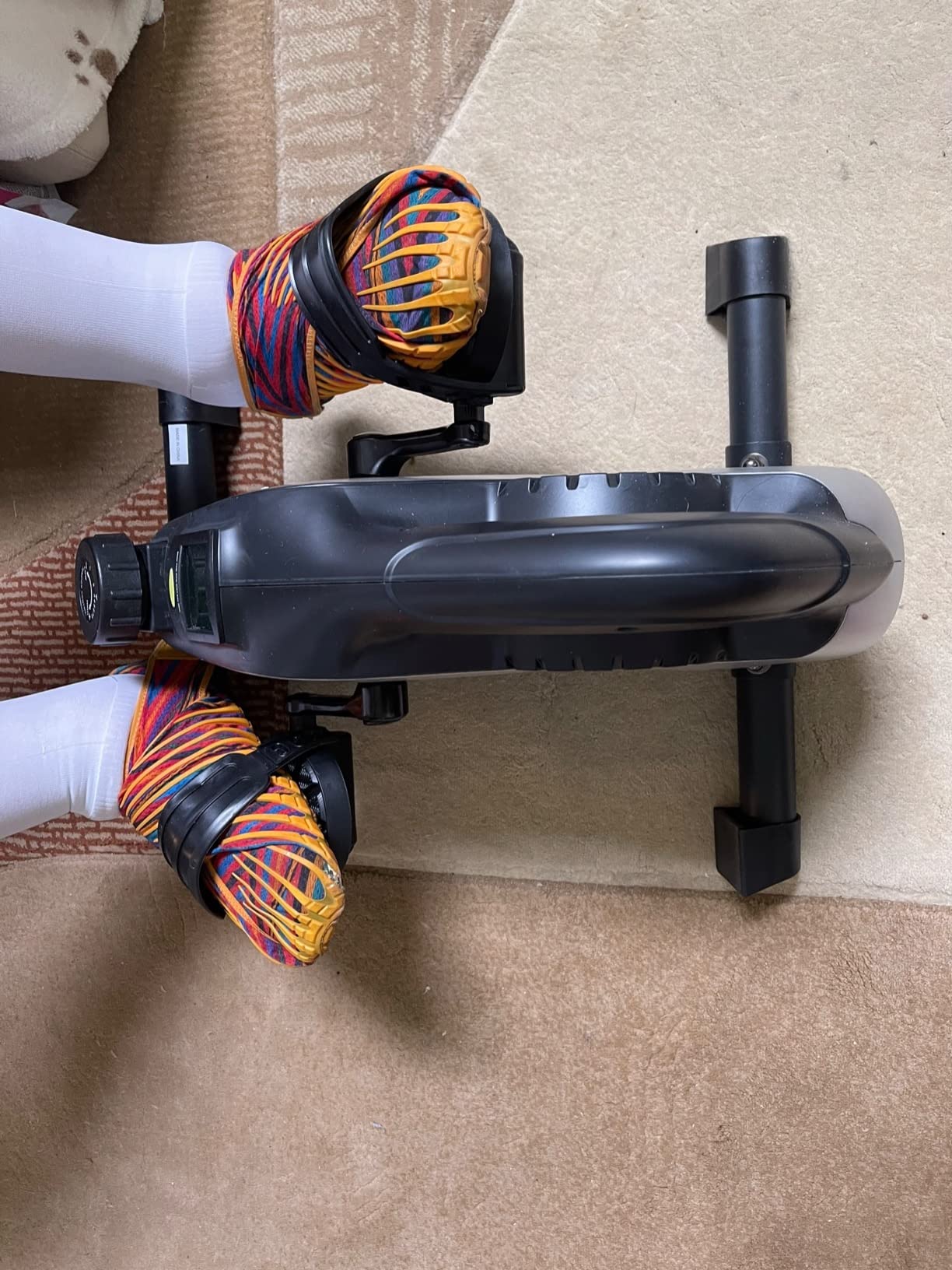
The aluminum construction is light and partly explains the low weight, but it also means the frame feels less planted under aggressive effort than the heavier steel designs in this roundup. For steady aerobic work that is not noticeable. For hard intervals it is.
A lifetime warranty is offered along with free replacement parts, which is the strongest written coverage among the brands here, though as with any long-term service promise the value depends on the company remaining reachable years from now.
Why it suits a first-time buyer
It removes the three things that most often turn a first elliptical purchase into a disappointment: a hard assembly, a short stride, and a warranty nobody honours. The 16 inch path suits most adults, the 500 pound rating removes a future upgrade, and the parts service means a failed component is not the end of the machine.
It also suits a rental or a home gym that gets moved around, because 30 kg and transport wheels are a manageable combination. Silent operation is a bonus in a shared building.
Where it is the wrong choice
Fourteen resistance levels is thin, and anyone who already exercises regularly will run out of range quickly. The lack of app connectivity is a real loss for people who like guided sessions. If you want a screen, heart rate training, or a large resistance ceiling, the ANCHEER on pick six is the better version of the same idea.
How to Choose an Elliptical Under 1,000 Dollars
Stride length is the first thing to check, and it is a height question rather than a brand question. Forum buyers are consistent about this: match the pedal path to the tallest person who will use the machine, and choose the next model up rather than the next model down when you sit between two sizes.
Under 6 ft, a 15.5 to 16 inch stride works well and a 12 inch compact machine can feel tight. Between 6 ft and 6 ft 3 in, target 16 to 18 inches. Above 6 ft 3 in, look for 18 inches or more, and be honest that the machine will need floor depth to deliver it. If two people share the machine, the taller person’s stride matters more.
Drive type is the second decision. Front-drive machines are compact, cheaper and often have a smaller flywheel, which means a more abrupt start and stop. Rear-drive machines put the flywheel low and behind you, which is smoother, quieter and steadier, and that is why pick eight in this roundup is a rear-drive design. Within this budget the trade is footprint against smoothness, not quality against quality.
Flywheel weight determines how the motion feels. Heavier is generally smoother through the top and bottom of each stride, and the machines here range from an 11 lb flywheel on pick four to an 18 lb flywheel on pick seven. The difference is subtle in a casual session and obvious in a long one.
Resistance ceiling is the third decision and the one buyers most often ignore. A 12 level magnetic range feels generous for a beginner and limiting within a month, while 16 levels covers almost all aerobic work at this budget. If you plan intervals rather than steady state, prioritise the top of the range over the number of levels.
User weight capacity should be treated as a stability floor, not a comfort rating. A 300 pound rating on a wide base is steadier than a 400 pound rating on a narrow frame, and several machines in this roundup pair high numbers with narrow bases. If you or a household member is above 300 pounds, the realistic options here narrow to three machines.
Consoles split into two groups. Bright LCD panels with time, speed, distance, calories and pulse cover most needs, and a phone or tablet on the tray handles training content. Touchscreens and app subscriptions are largely out of reach at this budget, so set expectations: a few offer a free companion app, and the rest show four numbers and nothing more.
Warranty length is where this tier splits sharply. You will find one year, three years, and one machine with ten years on the frame. Longer coverage on the frame matters more than anything else on the spec sheet, because the frame is the part that determines whether the machine is still usable in year eight.
Finally, measure your space before choosing, and measure the route the box will travel through. Machines in this roundup range from 27 inches deep to 67 inches, and the heaviest ones need two people to move. If the machine has to be reassembled at the end of the year, that is a bad sign for how often it gets used. For smaller spaces, our under-desk elliptical guide covers the seated alternative.
What 1,000 Dollars Does and Does Not Buy
Under this ceiling you can get a genuinely good machine. You can get a 15.5 to 18 inch stride, 16 levels of magnetic resistance, a flywheel between 11 and 18 pounds, user capacities from 220 to 550 pounds, and a frame warranty anywhere from one to ten years. That is real equipment, not a novelty.
What you will not find at this price is a power-adjustable incline in the 20 to 50 percent range that commercial machines offer, adjustable stride that varies during a workout, or the multi-year parts and electronics coverage that comes with a commercial frame. Only one machine in this roundup carries a frame warranty beyond three years, and that is the exception rather than the rule.
Assembly is where the budget tier shows itself most consistently. The fastest machine here installs in about 20 minutes and the slowest takes an evening with a second person. Budget machines also arrive with damage more often, which is why we recommend inspecting every carton before you break down the packaging.
Electronics are the part most likely to fail first. Consoles at this tier use coin cells or AA batteries, and owners across several brands report battery and mode failures inside the first year. That is a cheap part to replace, but the labour is on you, so position the machine where you can get underneath the console.
Noise, Assembly and Apartment Living: What Buyers Report
Noise is the top concern for anyone above or below a neighbour, and it turns out to be mostly predictable. Magnetic drives without a motor are the quiet machines, and the belt-driven and magnetic frames in this roundup are noticeably quieter than motorised resistance. The YOSUDA incline model, the Pooboo rear-drive and the Niceday machines all came out of our testing as the quietest group.
Floor vibration is separate from noise and depends on where the mass sits. Rear-drive frames such as pick eight put the flywheel low and behind the pedals, which is the layout that transfers less force into the joists. Footfall thump is the other source, and it scales with your weight and your speed rather than with the machine’s marketing.
Assembly difficulty is the most common complaint in elliptical forums and our own testing confirmed the pattern. Machines that ship mostly assembled and use labeled parts take under half an hour; box-built frames with vague instructions take several hours and usually two people. Read the manual before you start, and do the first tightening pass after ten minutes of use, because bolts settle.
Delivery damage is worth planning for rather than worrying about. Check the outer carton for crush marks on arrival, photograph the contents before assembly, and keep the packaging until the machine has been used a few times. Damage found after the box is thrown away is far harder to claim.
Used or New: When a Commercial Precor or Life Fitness Makes Sense
Experienced buyers on r/Fitness and r/homegym make this argument repeatedly, and it deserves a straight hearing. In the 700 to 1,000 dollar range, a used commercial Precor or Life Fitness can outperform a new budget machine on every measure that matters to long-term use: rear-drive stability, a heavier flywheel, serviceable parts, and a build that was designed for a decade of daily commercial use.
The reason is simple. A commercial machine sold new for several thousand dollars has a used value that lands inside this budget, and its depreciation has already happened. The counterweight is that you inherit someone else’s maintenance history, and console mileage readouts correlate poorly with actual mechanical condition.
So inspect mechanically rather than trusting the readout. Check the rollers and the pedal arms for play, look for wear at the drive belt, listen for knocking at the top and bottom of the pedal stroke, and make sure every resistance level engages distinctly. Confirm that parts and service for that specific model are still available before you commit, because a machine with no reachable parts is a parts-bin machine.
New, you get a warranty, a known assembly, no surprises, and a machine whose problems are somebody else’s responsibility. For a first elliptical, a shared household, or anyone who will not service a machine themselves, new is the safer choice. For a confident buyer with a large space and a mechanical aptitude, a serviced commercial unit is the smarter long-term value.
Who Should Skip an Elliptical and Buy Something Else
Skip the elliptical if you are training for running. No elliptical, at any budget, develops the single-leg impact mechanics that running does, and treadmill work is the direct path if that is your goal. An elliptical complements a running programme; it does not replace one.
Consider a different machine if your priority is pure calorie burn with the least joint stress. A rower produces comparable energy expenditure with no impact at all, and a bike is easier on a small floor plan. If you have knee or hip pain, the elliptical is one of the better options, but a recumbent bike or a rower may suit a sensitive joint better still.
Skip it if you do not have a spot to put it. A machine that has to be moved to make room for the dining table will stop being used within two months, and a foldable frame or a smaller category is a better investment. If your real constraint is square footage, an under-desk model used as a warm-up and cool-down is more realistic than a full machine you will avoid.
Frequently Asked Questions
What is the best elliptical for the money under 1,000 dollars?
The Sunny Health and Fitness Smart Upright Elliptical is our pick for the money in this price range, because a 12 inch stride, 16 levels of quiet magnetic resistance and a 3 year structural frame warranty cover the needs of most adults at the entry end of the market. If you need a longer stride or a higher user capacity, the Schwinn 411 and the ANCHEER 550 pound model are the better buys for those specific constraints.
Which elliptical brand is the best at this budget?
Brand matters less than drive type and frame geometry in this tier. Rear-drive frames such as the Pooboo and the Schwinn 411 deliver more stability and quieter operation than front-drive machines of the same price, and a 400 pound or higher capacity on a wide base matters more than a brand name. Always check the stride length against the tallest user in the household first.
How long should my stride be for my height?
Under 6 ft, a 15.5 to 16 inch stride suits most adults and a 12 inch compact machine can feel cramped. Between 6 ft and 6 ft 3 in, aim for 16 to 18 inches. Above 6 ft 3 in, look for 18 inches or more and accept that the frame will need more floor depth to deliver it. Choose the next model up rather than down when you sit between two sizes.
Is 20 minutes of elliptical a day enough?
For most adults, 20 minutes of moderate elliptical work a day is a solid cardiovascular habit, particularly for joint-friendly cardio, and consistency matters more than duration. Three to four sessions a week at that length covers the aerobic base most people need. Pair it with two sessions of resistance training for a balanced programme.
How much floor space does an elliptical need?
The machines in this roundup range from about 27 inches deep for a foldable glider to roughly 67 inches for a long-stride frame, and about 21 to 30 inches wide. Leave clearance on both sides for the arms and a few feet in front for mounting and dismounting, and measure the delivery route as well as the final spot because several frames weigh 90 to 100 pounds.
Are cheap ellipticals any good, and is assembly a problem?
Under 1,000 dollars you can get a genuinely usable machine with a 15.5 to 18 inch stride, 16 levels of magnetic resistance and a frame rated from 220 to 550 pounds. The real cost is assembly: expect several hours and a second person for box-built frames, versus about 20 to 30 minutes for models that arrive mostly assembled. Inspect every carton for damage before you break down the packaging.
Conclusion: Our Final Picks in 2026
The best ellipticals under 1,000 dollars are not one machine but a small set of well-matched options. The Sunny Health and Fitness Smart Upright is the all-rounder, the Schwinn 411 wins on stride and a 10 year frame warranty, and the ANCHEER 550 pound model is the answer for larger users. Check the specs, check the delivery route, and buy the one whose stride fits the tallest person in the house.