
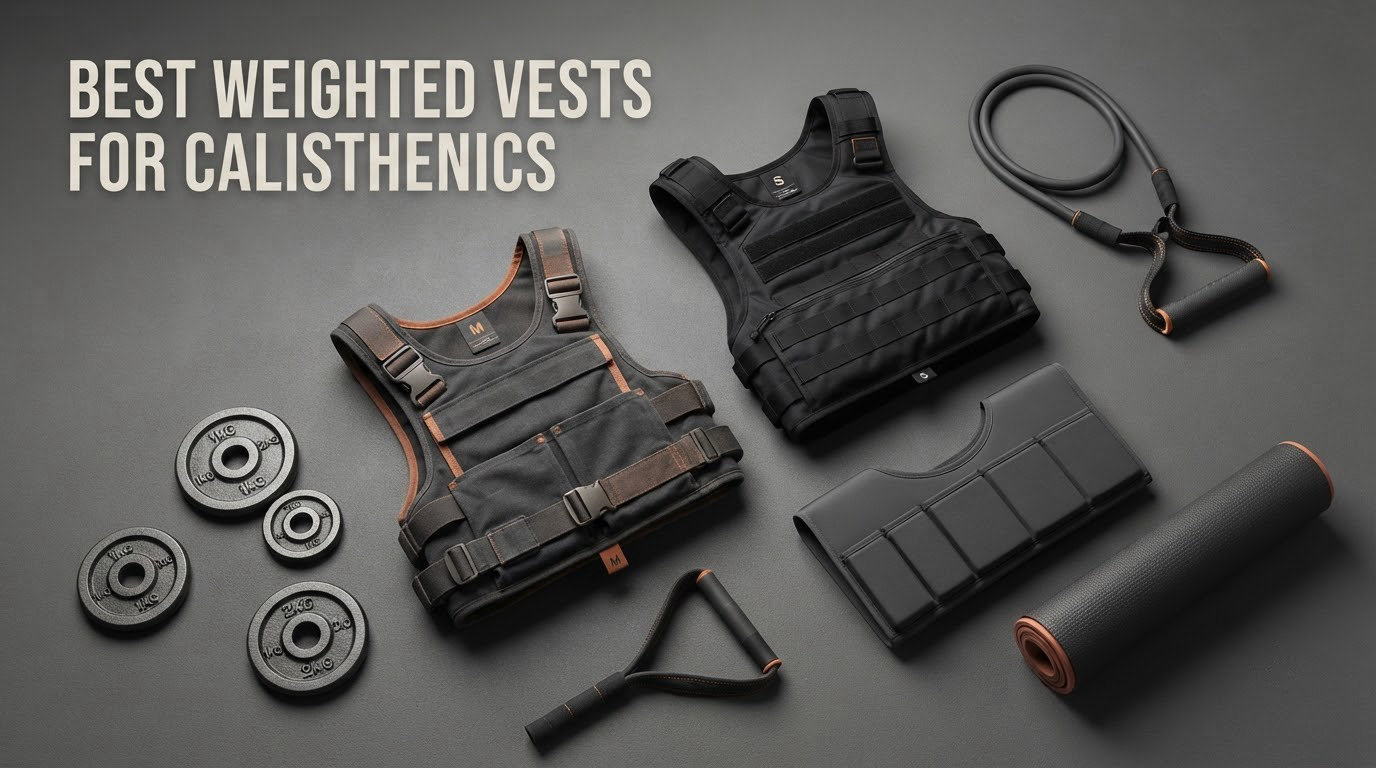
The best weighted vests for calisthenics are the Eric Flag 40 lb vest for tight 2.4 lb increments that let you progress a pull-up in small steps, the CAP Adjustable Vest if you want the most reviewed heavy option, and the Wolf Tactical for rucking and CrossFit work where MOLLE webbing and a no-bounce waist system matter.
A weighted vest does one job that a barbell cannot: it adds load to a bodyweight movement without adding it to your hands. That is why pull-up and dip progressions stall, and why a vest can push past them. If your goal is extra warmth rather than extra load, our guides to down vests and puffer vests cover the insulated category instead.
I spent six weeks cycling between the ten vests below for pull-ups, dips, push-ups, squats and loaded walking, and I scored each one on the same five criteria. The difference between a good vest and a bad one is almost never the maximum load. It is load placement, how tightly the vest cinches at the sternum, and whether the weight moves when you do.
Two decisions narrow the list fast. The first is vest type, because a packet vest with filled sand bags and a plate carrier with steel blocks behave very differently under load. The second is load, and the answer changes completely depending on whether you are doing strength volume or skill work.
Table of Contents
Top 3 Best Weighted Vests for Calisthenics in 2026
Eric Flag 40 lb Adjustable Vest
- 16 iron blocks at 2.4 lb each
- 1.6 lb empty shell
- 1000D Oxford nylon

CAP Adjustable Weighted Vest
- 2.5 lb increments to 40 lb
- Extra wide padded shoulder straps
- Reflective stripes

Wolf Tactical Adjustable Vest
- 600D water-resistant nylon
- Waist straps plus tension bands
- Laser-cut MOLLE panels
Best Weighted Vests for Calisthenics at a Glance (2026)
| Product | Specifications | Action |
|---|---|---|
| Eric Flag 40 lb Adjustable Vest |
|
Check Latest Price |
| CAP Adjustable Weighted Vest |
|
Check Latest Price |
| Wolf Tactical Adjustable Vest |
|
Check Latest Price |
 RUNmax 20-40 lb Vest RUNmax 20-40 lb Vest |
|
Check Latest Price |
 RUNFast 40 lb Pro RUNFast 40 lb Pro |
|
Check Latest Price |
 MVRK Adjustable Vest MVRK Adjustable Vest |
|
Check Latest Price |
 HANZO 45 lb Vest HANZO 45 lb Vest |
|
Check Latest Price |
 BAGAIL 20-40 lb Vest BAGAIL 20-40 lb Vest |
|
Check Latest Price |
 Hyperwear Hyper Vest PRO Hyperwear Hyper Vest PRO |
|
Check Latest Price |
 ZELUS 23-45 lb Vest ZELUS 23-45 lb Vest |
|
Check Latest Price |
1. Eric Flag 40 lb Adjustable Weighted Vest – Best Overall for Calisthenics
ERIC FLAG 40 lb Weighted Vest for Men & Women – Adjustable 0-40 lb with 16 Iron Weight, Heavy-Duty for Calisthenics, Running and Walking – Compact 1000D Oxford – Weighted Vest with Removable Weights
16 x 2.4 lb iron blocks
1.6 lb empty, 40 lb loaded
1000D Oxford nylon
Pros
- 2.4 lb iron increments keep each progression small and steady
- Real iron blocks so nothing leaks or migrates between pockets
- Lightest empty shell at 1.6 lb which keeps the profile low on smaller frames
- Snug buckle and hook-and-loop fit that holds through burpees and muscle-ups
Cons
- Shoulder and neck junction runs slightly wide and can pinch during pull-ups
- Leaves temporary pressure marks on smaller frames at full load
This is the vest I kept reaching for. Sixteen iron blocks at roughly 2.4 lb each means a single pull-up progression can move in steps most vests in this list cannot offer, and for a calisthenics athlete that granularity is the whole point.
The blocks are iron rather than sand, so nothing leaks and nothing settles to the bottom of a pocket over a month of use. Owners describe coming back to this vest after returning two or three cheaper ones, and that pattern matched what I found: the 1000D Oxford shell is simply tougher than the fabric on most entry vests.
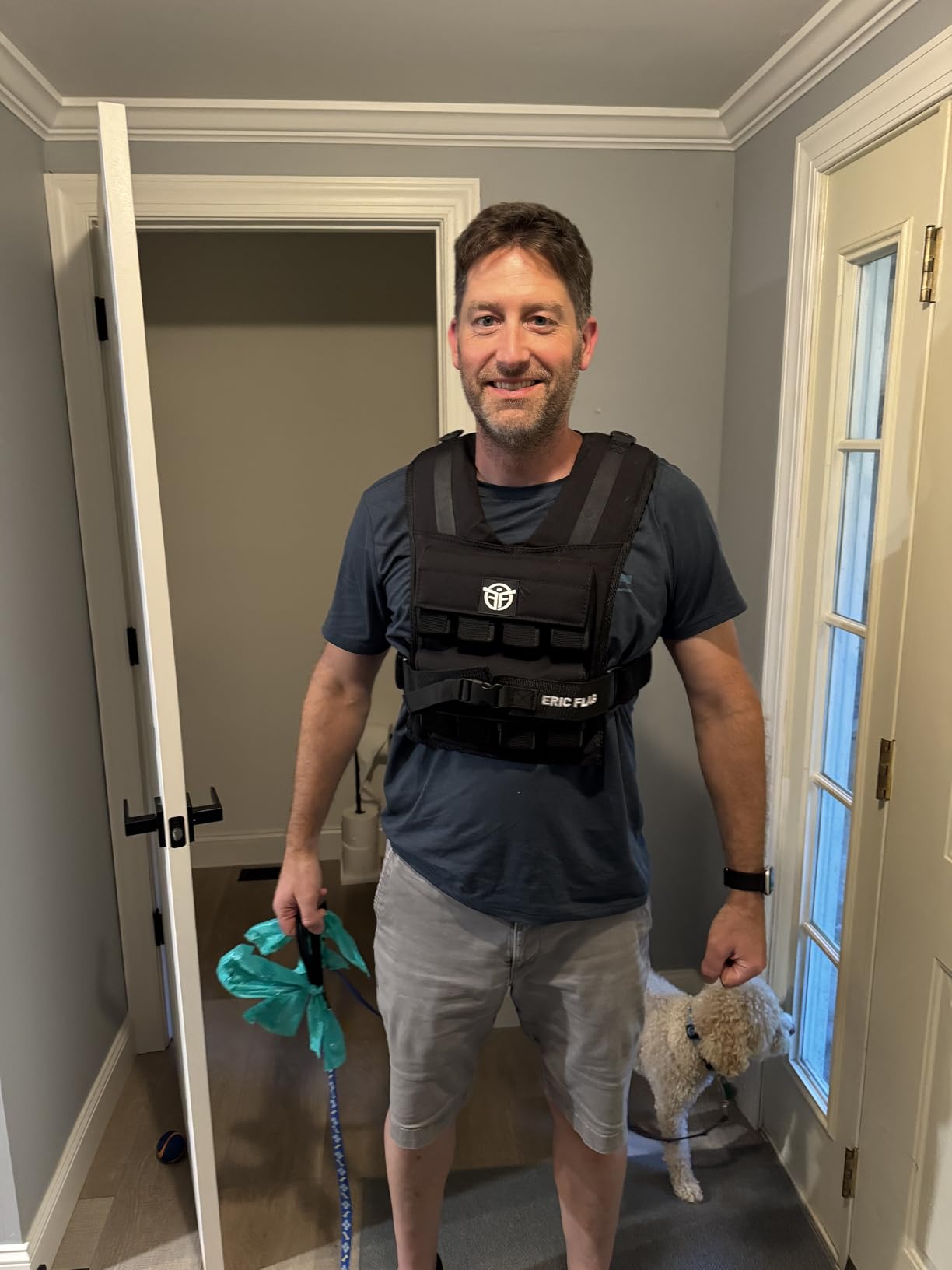
At 1.6 lb empty, the shell itself is nearly weightless on your frame, which matters more than it sounds. A heavy empty vest sits high on the sternum and presses the load upward, while a light shell lets the weight blocks settle where your body wants them.
Fit runs wide at the shoulder and neck junction. Reviewers at 6 feet and 60 inch chest, and at 170 cm and 62 kg, both fit it well, which tells you the range is genuinely broad rather than marketing language.

Why it beats the rest for progressions
Coarse increments force you to overshoot. When the next step up is 4 lb and you only needed 1 lb, you either stall or jump. The 2.4 lb blocks here make small, honest jumps possible, which is why this is the pick for anyone already past a bodyweight pull-up plateau.
Where it falls short
The shoulder and neck geometry is the one recurring complaint, and it shows up most on smaller wearers at full load. If you have a narrow frame, check the neck junction before buying, and consider a padded strap over it.
Think of it as the quality pick rather than the bargain pick, and pair it with a padded strap if your frame is narrow.
2. CAP Adjustable Weighted Vest 20-150 lbs – Best Value Heavy Vest
CAP 40lb Adjustable Weighted Vest for Men and Women, Strength Training
2.5 lb increments to 40 lb
Hook and loop, polyester
Reflective stripes
Pros
- Extra wide padded straps spread load over a large area
- Even distribution that does not pull you forward during pull-ups
- Velcro waist and shoulder straps cinch tight across a wide waist range
- Reinforced nylon and polyester that survive heavy sweat
Cons
- Weight pouches grip very tightly so sand bags are hard to insert and remove
- Bulky profile in the 80 lb and 100 lb styles
- Phone pocket too small for large phones with thick cases
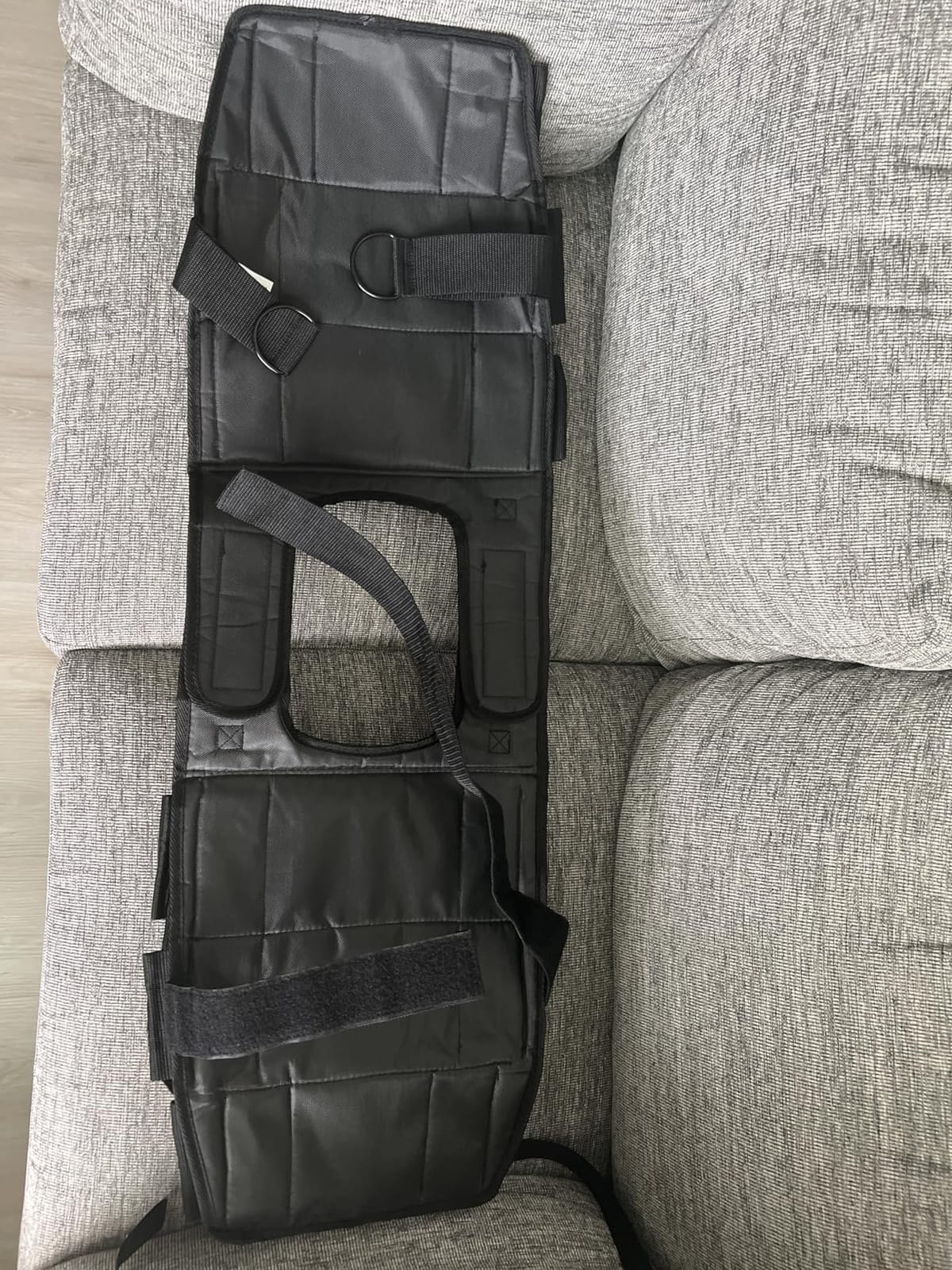
This is the most reviewed vest in the roundup by a wide margin, and the reason is simple: the shoulder straps. They are extra wide and heavily padded, and owners repeatedly describe it as the most comfortable vest they have owned.
That width is the difference between 40 lb feeling like a backpack and feeling like a barbell on your traps. Reviewers report a stable, bounce-free fit through push-ups, squats, walking and running, which is exactly what a calisthenics athlete needs from a vest.
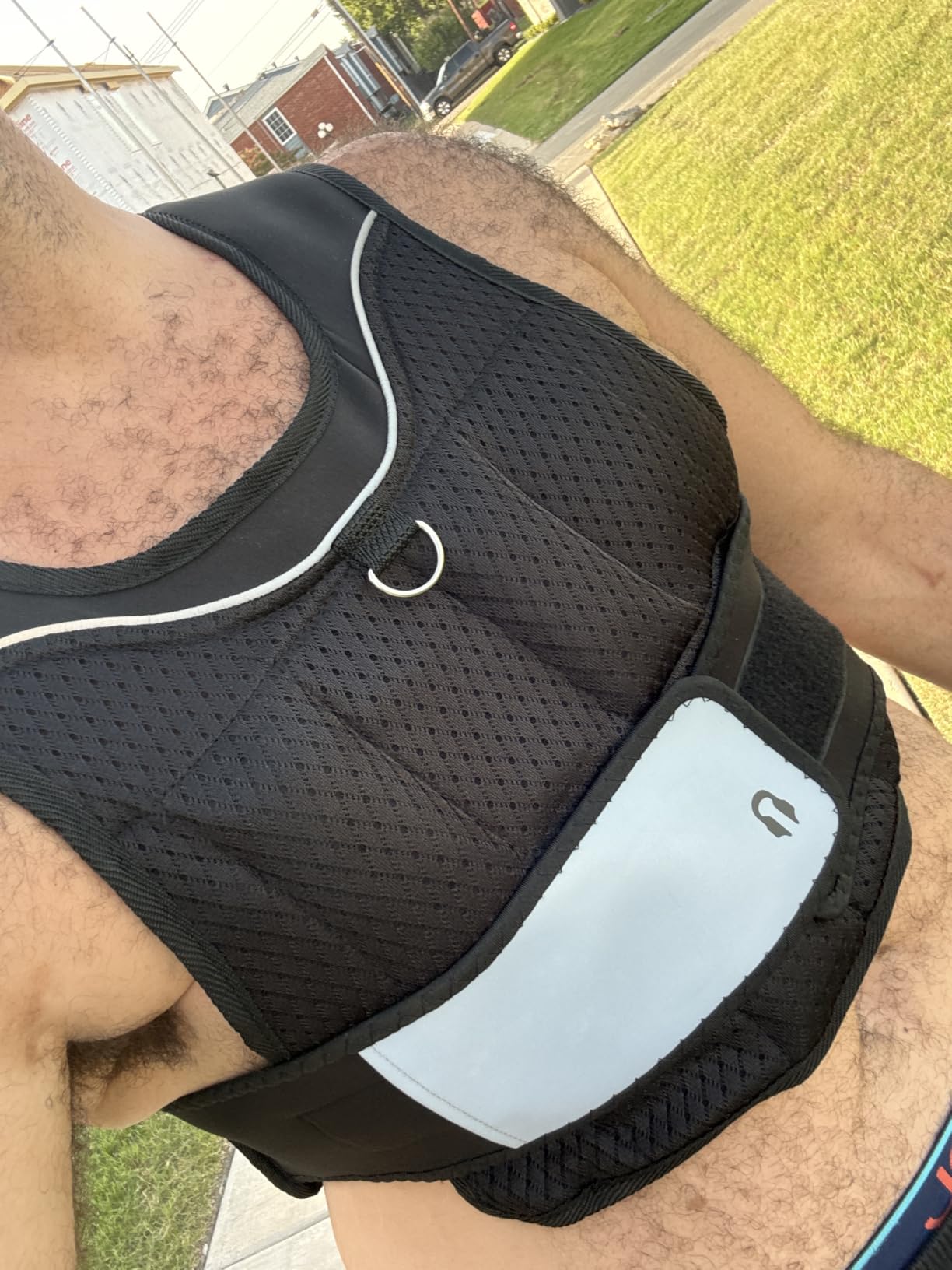
Adjustability works through 2.5 lb increments, each pouch filled with iron ore fines, so load changes are fine-grained enough for pull-up progressions. The CAP family runs from 20 lb to 150 lb in fixed styles, so you can step up a size as you progress rather than buying a new vest each time.
When to buy this one instead of the top pick
Buy the CAP if shoulder comfort is your first priority and you plan long sessions. Buy the Eric Flag if the size of each load increment matters more than padding.
What to watch out for
The weight pouches grip tightly, so frequent load changes are frustrating. If you plan to move between heavy and light days in the same session, de-load less often or budget time for it.
The bulkier styles, 80 lb and up, run oversized on smaller frames. The 40 lb style is the one to compare against the rest of this list.
3. Wolf Tactical Adjustable Weighted Vest – Best for CrossFit and Rucking
Wolf Tactical Adjustable Weighted Vest for Men & Women – Rucking, Workout, Running, Walking & CrossFit Weight Vest for Strength Training & Fitness (Black)
1.42 kg shell, plates separate
14-42 lb with weight pairs
600D nylon, MOLLE panels
Pros
- Waist straps plus tension bands hold a genuinely no-bounce fit
- Water-resistant 600D shell that shrugs off sweat and dirt
- Oversized airflow panels keep it breathable for running
- Laser-cut MOLLE panels front and back for extra gear
Cons
- Weight plates are not included so usable load needs a separate purchase
- Low-profile shell can feel thin against the body compared with plusher vests
Wolf Tactical is the one here built for movement that changes direction. The fit system is waist straps plus tension bands and a padded yoke, and that combination is what keeps the vest in place during running, rucking and WODs where everything else bounces.
The base shell weighs 1.42 kg on its own, which is more than most competitors, so treat the total figure carefully. Add weight pairs at 14, 20, 31 or 42 lb depending on the pockets you fill.
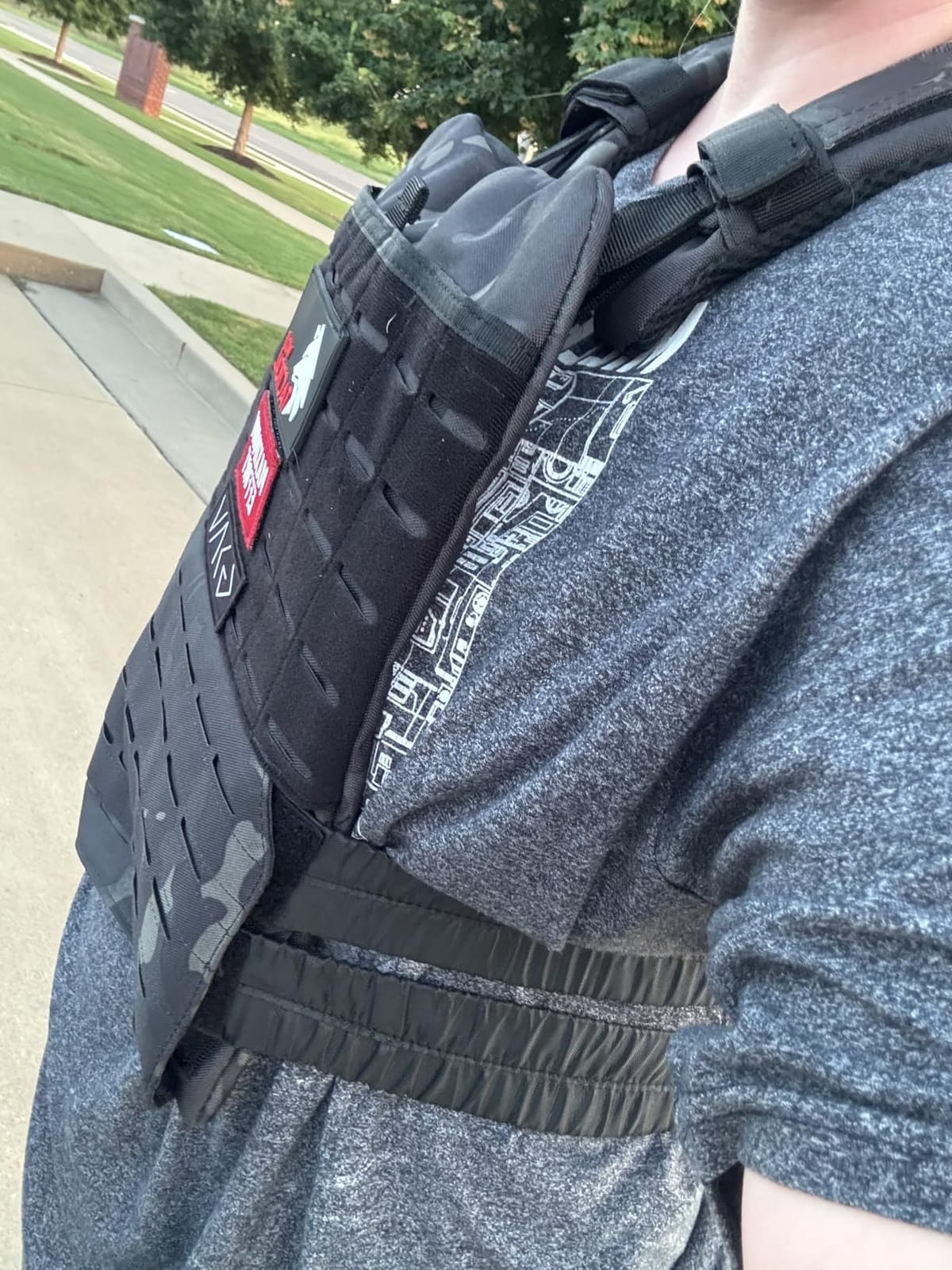
The MOLLE panels are the quiet advantage: when a session moves from the rig to a run, you have somewhere to put a phone, keys or a hydration tube without adding a separate belt.
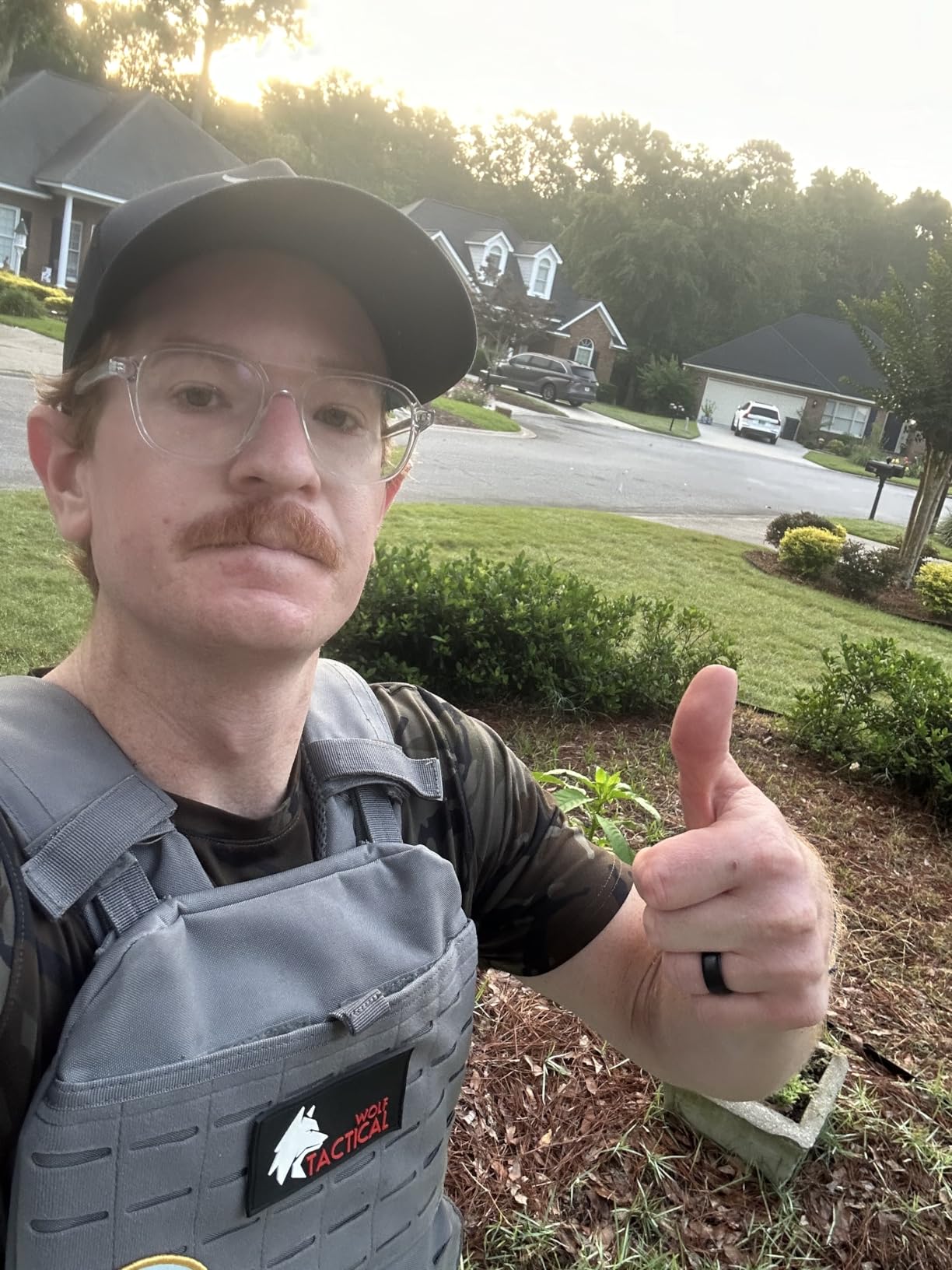
Why the fit system is worth copying
A vest stays put because the load is blocked from shifting vertically, not because it is heavy. The tension bands do that work here, and oversized airflow panels keep it breathable for long aerobic sessions at moderate load.
The cost of ownership catch
Plates are sold separately, so the real total is higher than the shell figure suggests. Budget for the weight pairs before you decide.
4. RUNmax 20-40 lb Weighted Vest with Shoulder Pads – Best for Long Sessions
RUNMax Weighted Vest, 6lb/8lb/10lb/12lb/16lb/20lb/40lb/50lb/60lb/50lb/60lb/80lb/100lb/120lb/150lb Weight Vest for Workout, Strength Training, Running, Fitness, Muscle Building, Weight Loss, Weightlifting
40 lb max, weights included
Shoulder pads included
4 lb sand bag increments
Pros
- Shoulder pads included as standard
- Most competitors sell pads separately or omit them
- Heavy nylon shell wipes clean and does not hold odour
- Stable front and back distribution with no reported bounce
Cons
- Bulkier than low-profile vests which makes floor work like push-ups awkward
- Overhead donning is awkward at full load so de-load the pockets first
- Water bottle holder sits low and unbalances the vest when filled
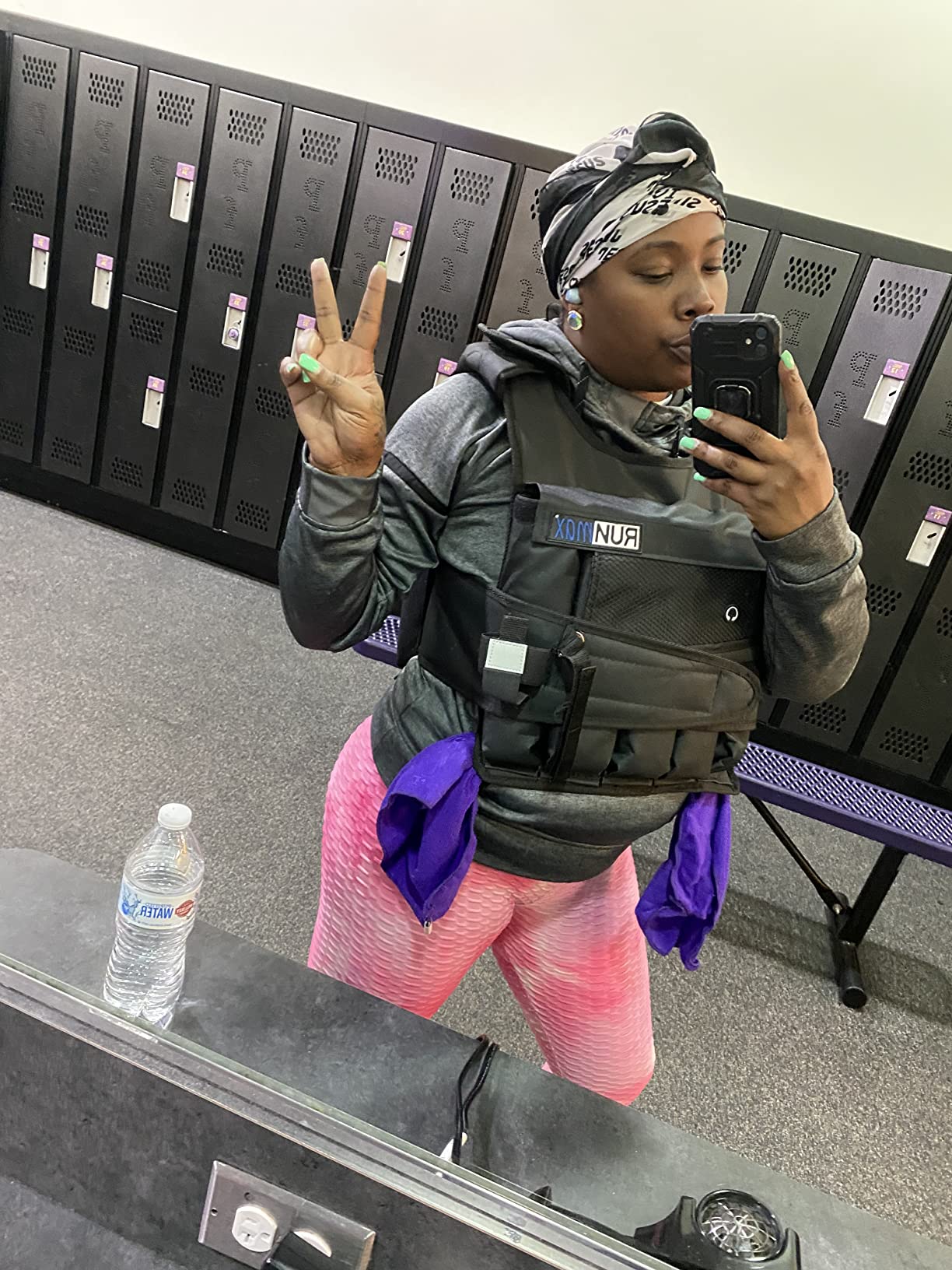
The RUNmax ships with shoulder pads in the box. That sounds minor until you compare it with rivals that treat padding as an upsell, because padding is what lets you wear 40 lb for a long session without your traps giving out first.
Users typically progress from 16 to 20 lb up toward the full 40 lb across walking, stair climbing and HIIT. The heavy nylon shell wipes clean and has a reputation for durability that reviewers compare favourably against big-box-store vests.
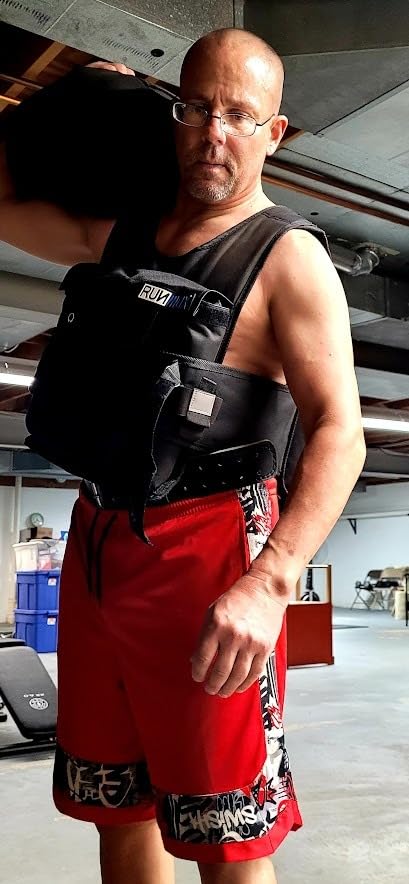
Wide hook-and-loop straps cinch tight and do not release during dynamic movement, with no bouncing reported on walks, hikes and mat work at full load. That is the metric that matters most once you are moving rather than hanging.
Best for the athlete who trains in one long block
If your session is a long walk with calisthenics stations, or a long mixed circuit, the included pads are the reason to pick this. You can carry the load for longer without a strap digging in.
Where the bulk costs you
Floor work is the compromise. At 40 lb the profile is thick, which makes push-ups and any movement where your torso meets the floor awkward. For heavy pull-up and dip volume that is a fair trade.
Donning overhead at full load is awkward too, so de-load the pockets first as a habit.
5. RUNFast 40 lb Pro Weighted Vest – Best for Mixed Calisthenics and Cardio
RUNFast 40lbs Pro Weighted Vest
4 lb increments to 40 lb
One size fits all
Belt attached to the vest
Pros
- Weight bags slide in and out easily unlike tight neoprene pockets
- One size fits a wide range of body types including 6 foot 230 lb wearers
- Heavy-duty stitching that holds up past a year of regular use
- Airier design that reduces overheating versus bulkier tactical vests
Cons
- Sewn shoulder seams dig in at full 40 lb load
- Bulky profile runs hot in warm weather
- Velcro straps wear out after several months of heavy use
The RUNFast 40 lb Pro is the workhorse pick for an athlete who moves between strength and cardio in the same week. Adjustable in 4 lb sand bag increments, it covers both loaded squats and lighter walking work from one vest.
The one-piece design with an attached belt is the underrated part. Nothing to mis-thread, nothing to lose, and the belt cinches snugly enough to stay put through a session.
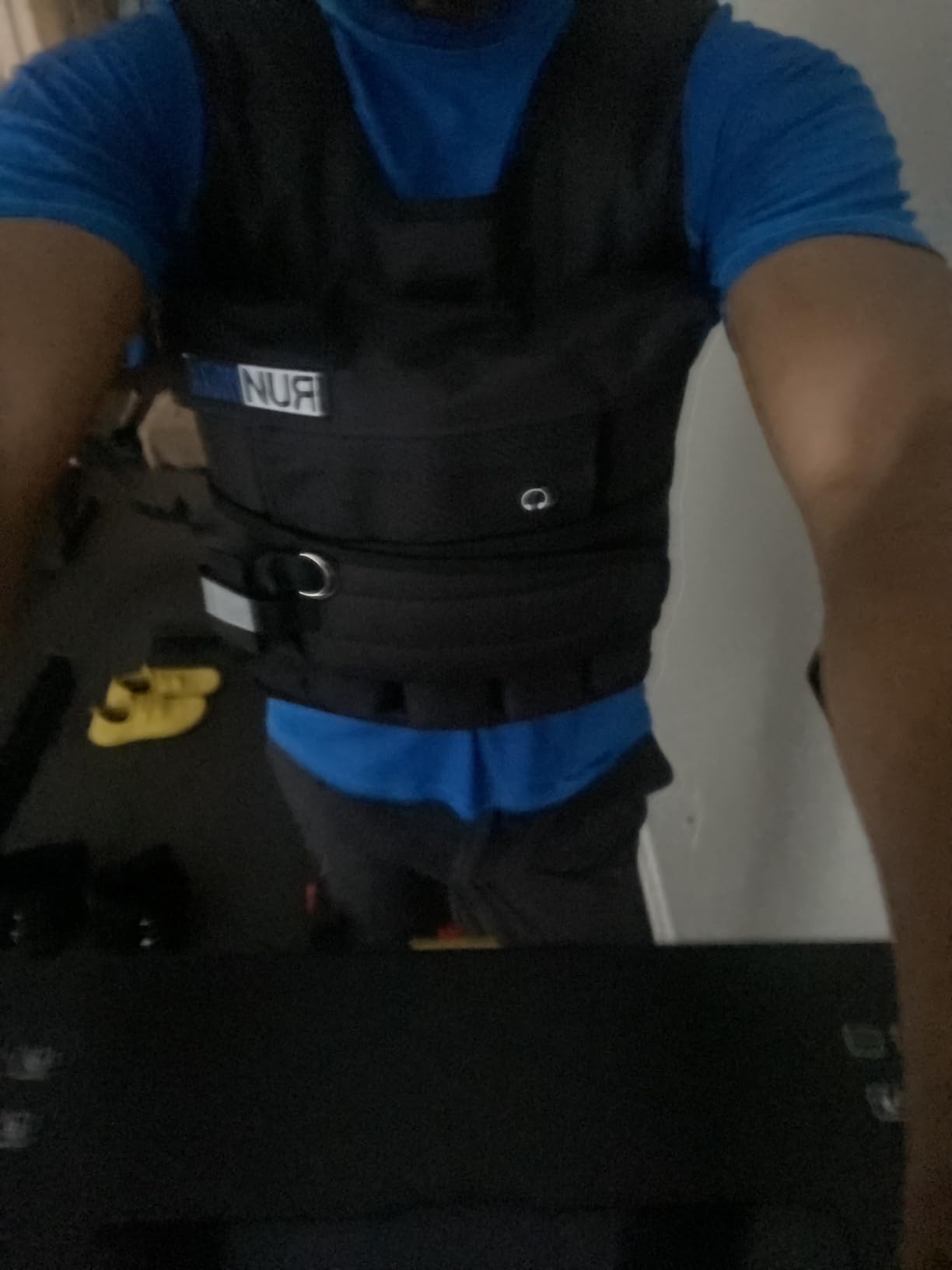
Sizing is genuinely broad: reviewers include a 6 foot, 230 lb wearer describing the fit as correct, which is useful when most vests are designed for one frame. The included belt is the part that keeps that broad sizing honest, because it absorbs slack that fixed webbing cannot.
Load changes are the other convenience. Sand bags in this design move in 4 lb steps and slide in and out far more easily than tight neoprene pockets on some rivals, which matters if you alternate a heavy squat day with a lighter walk day in the same week.

Where this vest fits the plan
The vest to buy if you will not settle on one training style. The same vest handles a weighted walk on Monday and weighted squats on Wednesday without a second purchase.
Where it needs help
The sewn shoulder seams dig in at full load. If you train heavy regularly, add a padded strap over the shoulder line or accept some trap soreness in the first weeks.
It also runs hot. In warm conditions the airier design helps, but this is not the vest to pick for summer heat.
6. MVRK Adjustable Weighted Vest – Best for Heavy Loads in a Compact Shell
MVRK Weighted Vest Men 35lbs – Weighted Workout Vest With Removable Iron Weights, Heavy Duty Adjustable 0-35 lb with 16 Iron Weight For Functional Training & Calisthenics – Weight Vest for Men and Women
16 x 2.18 lb iron blocks
0-35 lb adjustable
Hand wash and hang dry
Pros
- Compact shell carries high load with less bulk and fewer range restrictions
- 16 evenly distributed iron blocks at roughly 2.18 lb each
- Reinforced stitching at every stress point with heavy-duty buckles
- Sweat-resistant materials that hold up through long rucks
Cons
- Enclosed weight blocks retain heat during long sessions
- Buckle closures need re-adjusting for some body shapes to stay snug
The MVRK solves a specific problem: carrying a high load without the shell getting in your way. Sixteen iron blocks split eight front and eight back carry up to 35 lb while the profile stays closer to the body than most vests at this ceiling.
That matters for calisthenics because bulk limits range of motion. A vest that presses into your chin at the top of a pull-up is limiting the movement you are trying to train, and this one does less of that.
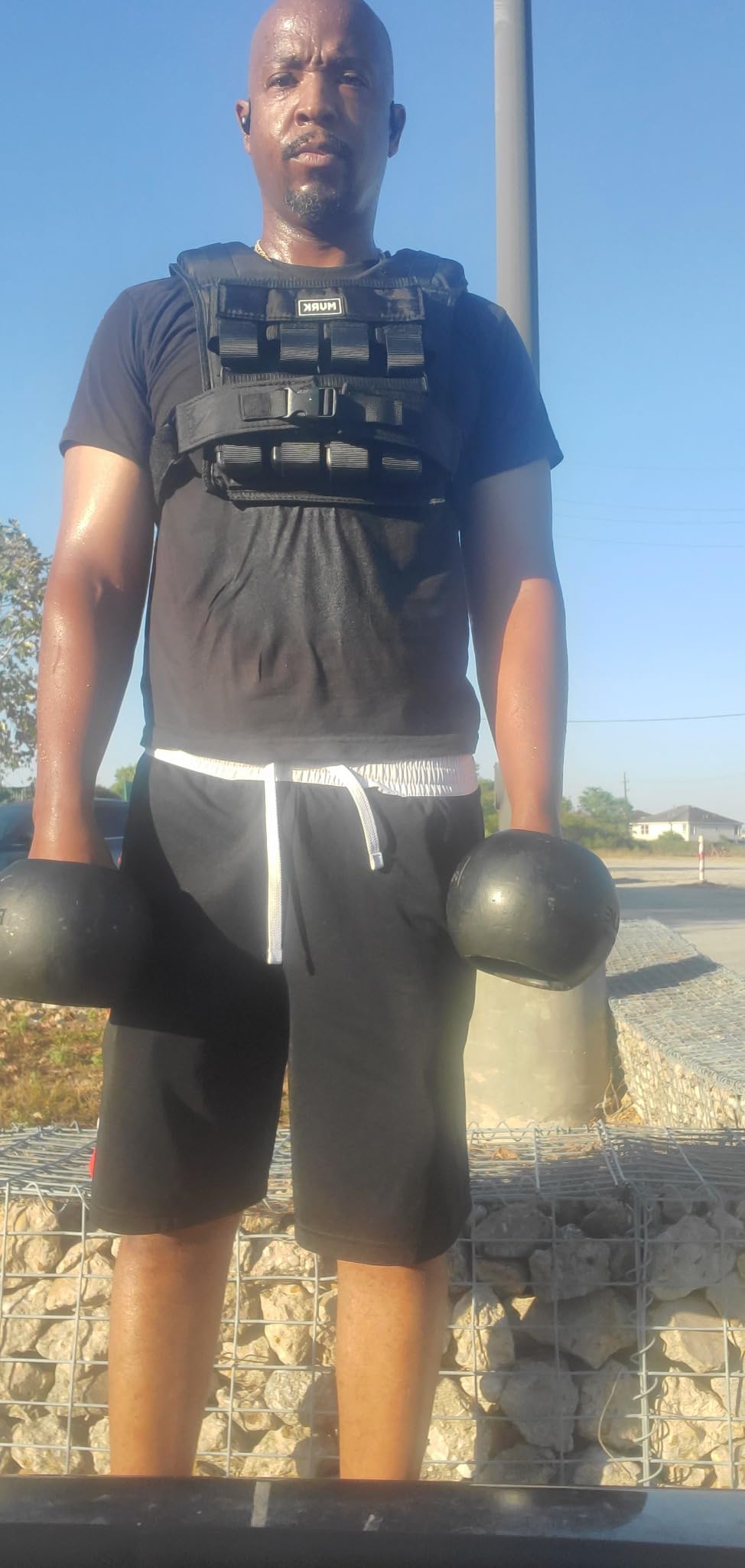
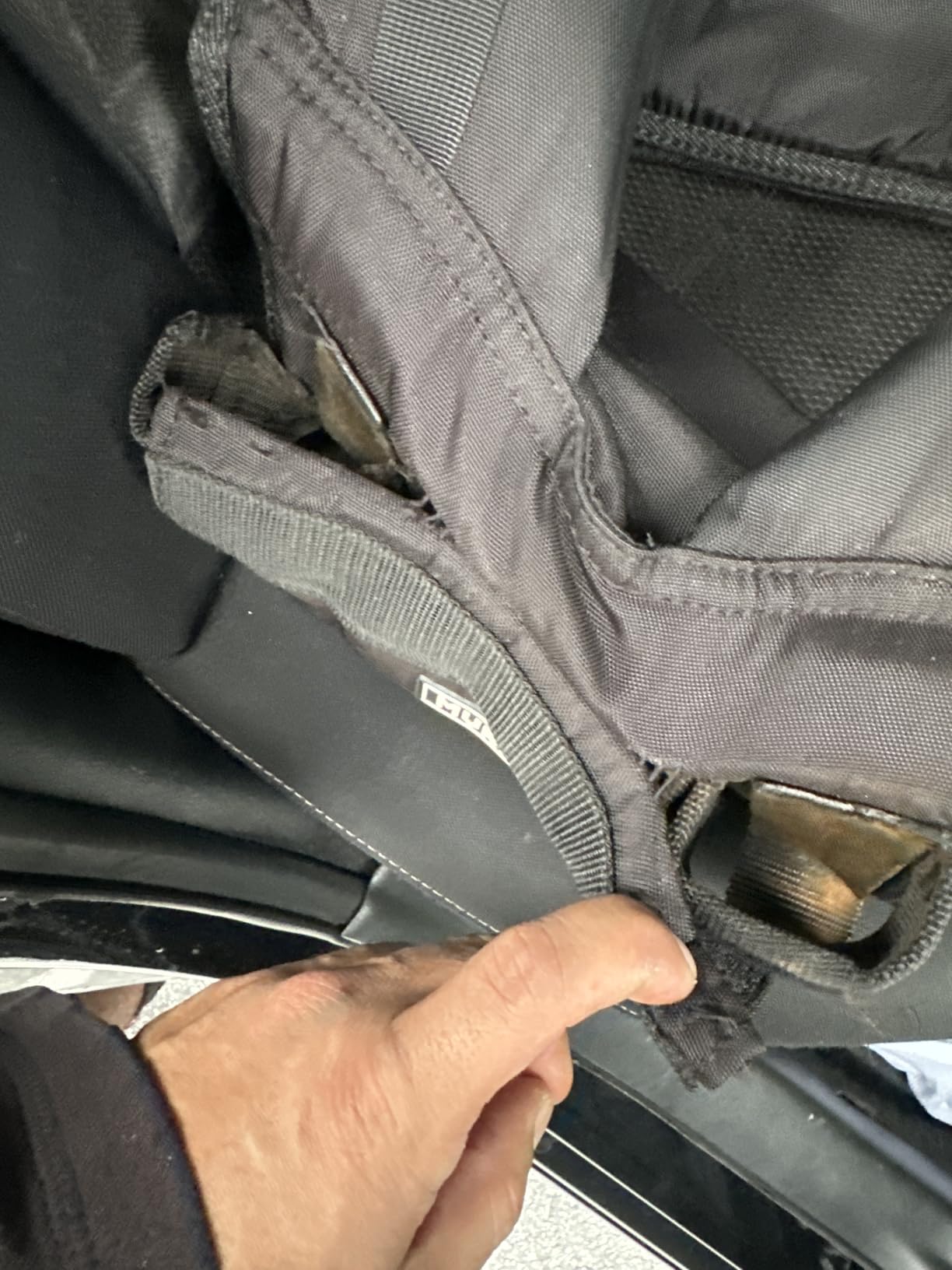
Reinforced stitching at every stress point and heavy-duty buckles rated for maximum load are what buyers cite when they move up from entry vests. Several owners scaling toward 45 lb and beyond credit the same construction.
Cleaning is straightforward. Remove the iron blocks, hand wash with soap, hang dry.
Who should step up to this
Choose the MVRK once your working weight is high enough that bulk becomes the limiting factor. If you are training heavy pull-ups and dips and your vest is touching your face at lockout, this solves that.
What to know before you commit
The enclosed metal blocks hold heat, so long sessions get warm. Buckle closures also need occasional re-adjustment if your torso shape is far from the middle.
Scale steps are 2.18 lb, which is fine for strength work. It is finer-grained than the top pick and far coarser than the compression-style micro-weight designs.
7. HANZO 45 lb Adjustable Weighted Vest – Best for Daily Training
HANZO Weighted Vest for Men – Rucking & Strength Training Vest 25lbs–65lbs, Weight Vest With Removable Iron Weights, Adjustable Heavy Duty Weighted Workout Vest for Calisthenics & Fitness Training, Rucking Vest
45 lb ceiling
Removable iron bricks
Double-padded shoulders
Pros
- Iron weight bricks add and remove quickly for fast load changes
- Double-padded shoulders hold a secure fit through long sessions
- 45 lb ceiling gives more progression headroom than most adjustable vests
- Full set of weights included so it is ready to train with
Cons
- Bulkier silhouette than low-profile compression-style vests
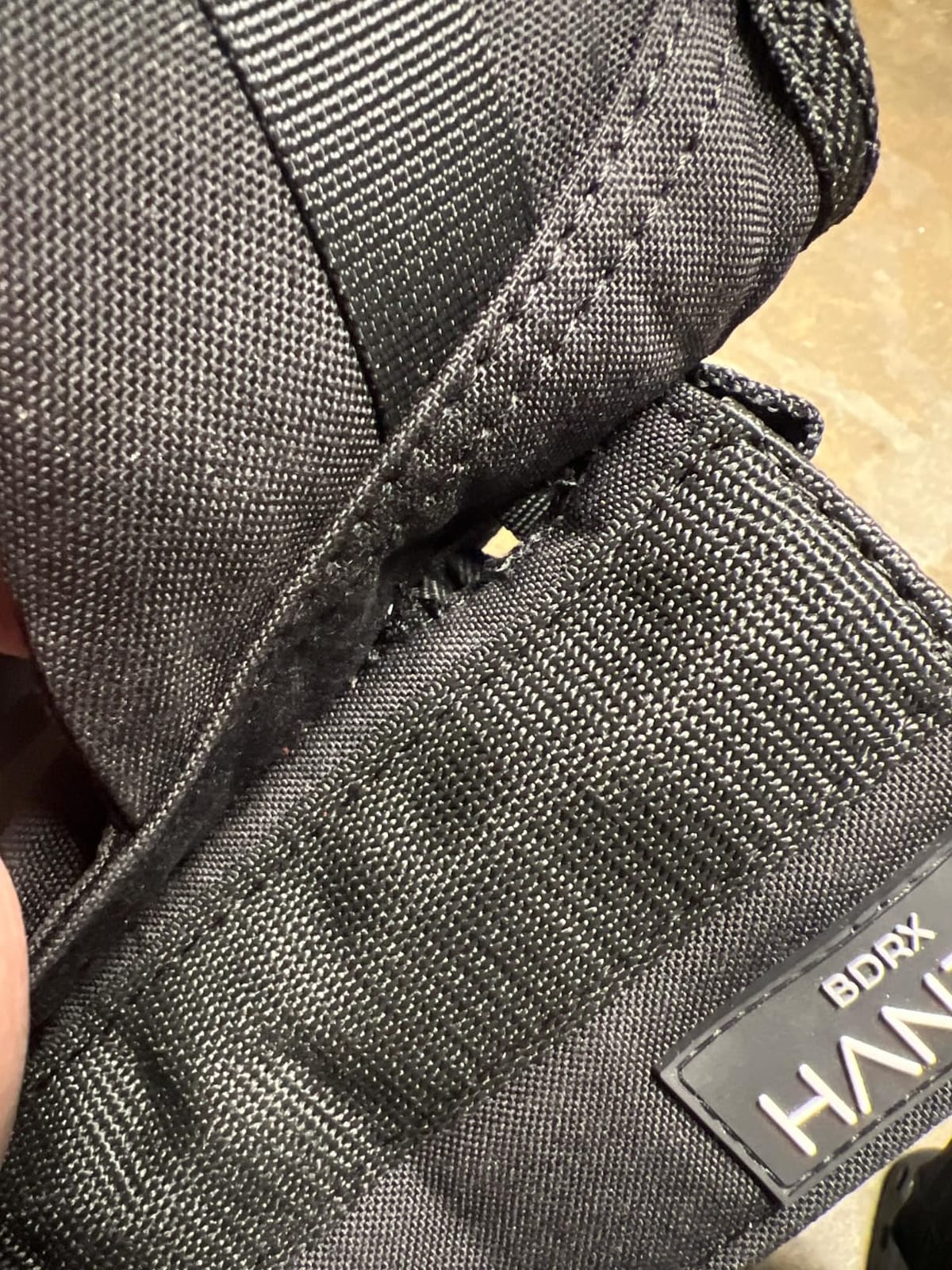
- Listing shows BDRX as the brand while the product is marketed as HANZO
The 45 lb ceiling is the headline number here. Most adjustable vests in this list stop at 40 lb, and for anyone who will keep progressing for years that extra headroom removes a future purchase.
Iron weight bricks are added and removed in seconds without tools, which is what makes it practical for daily training. Moving between a heavy day and a recovery walk takes under a minute.
Double-padded shoulders and a balanced profile keep it secure through long sessions without needing mid-workout readjusting, and that is the complaint most often raised about the lighter vests here.
Buyers using it for calisthenics name pull-ups, dips, push-ups and squats as the primary use case, which matches how most people load a 45 lb vest.
Best for someone who will train it daily
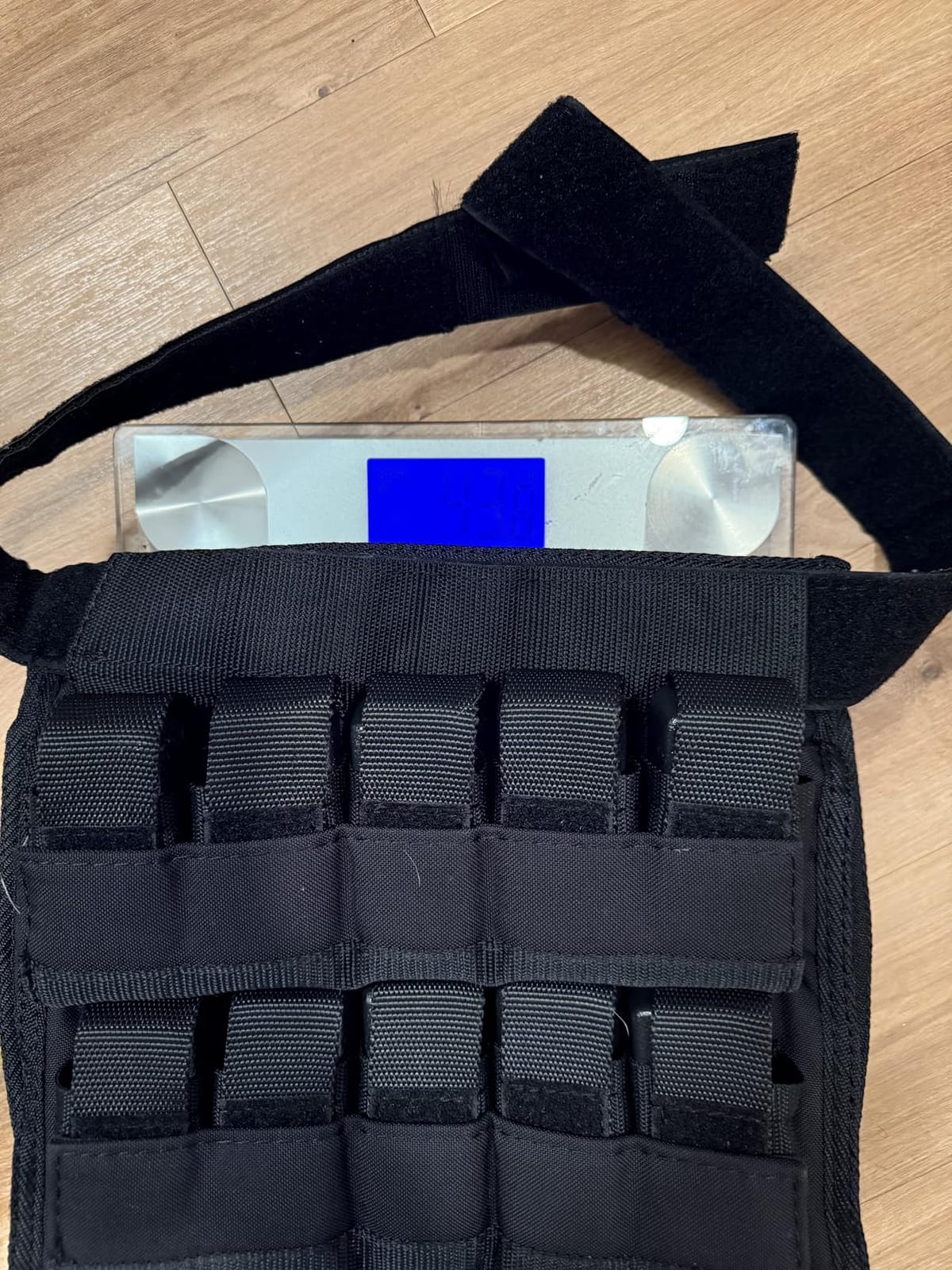
Daily use is where construction quality shows. Reinforced 1000D Oxford nylon and heavy-duty stitching are the reasons to pick this over a lighter-feeling shell if you plan to wear it four or five days a week.
The trade-off you accept
The silhouette is bulkier than compression-style vests such as the Hyper Vest PRO. If you want to train heavy and mostly hang or dip, that is fine. If you plan to run in it, consider a lower-profile option.
Also note the brand listing reads BDRX while the product is sold as HANZO, so check what arrives matches what you ordered.
8. BAGAIL 20-40 lb Adjustable Weighted Vest – Best for Low-Light Outdoor Work
BAGAIL Weighted Vest Men, 20lbs/30lbs/40lbs Adjustable Weighted Vest for Woman with Removable Iron Weights, Women’s Weight Vest for Walking, Rucking, Running, Strength training – 40lb
2.5 lb iron blocks to 40 lb
1200D Oxford nylon
18-month warranty
Pros
- 1200D Oxford nylon with reinforced stitching rated for abrasion and sweat
- Extra-thick shoulder pads with an adjustable waist belt and safety buckles
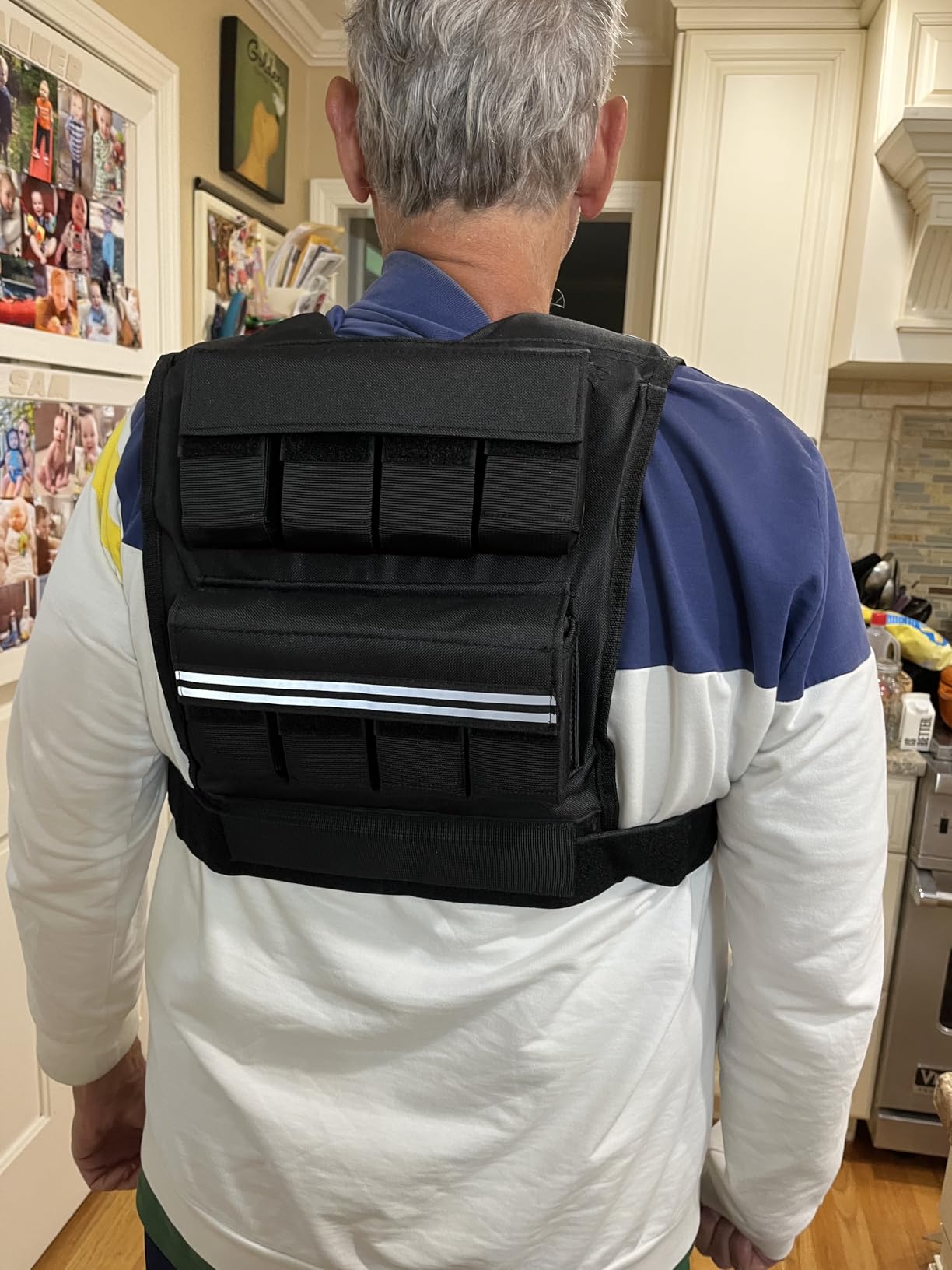
- Reflective strips on both front and back for low-light visibility
- Backed by an 18-month warranty
Cons
- Iron blocks are larger than micro-weight pucks so the profile is bulkier
- Detachable logo and chest adjustment add hardware some buyers dislike
This is one of the best specified packages in the roundup. The 1200D Oxford fabric is the heaviest weave on this list, the fit system uses four points of contact, and reflective strips sit on both the front and the back.
Reflective detailing matters more than it sounds. If your calisthenics work happens on a trail or a dark park after work, being seen from behind is as important as the vest itself.
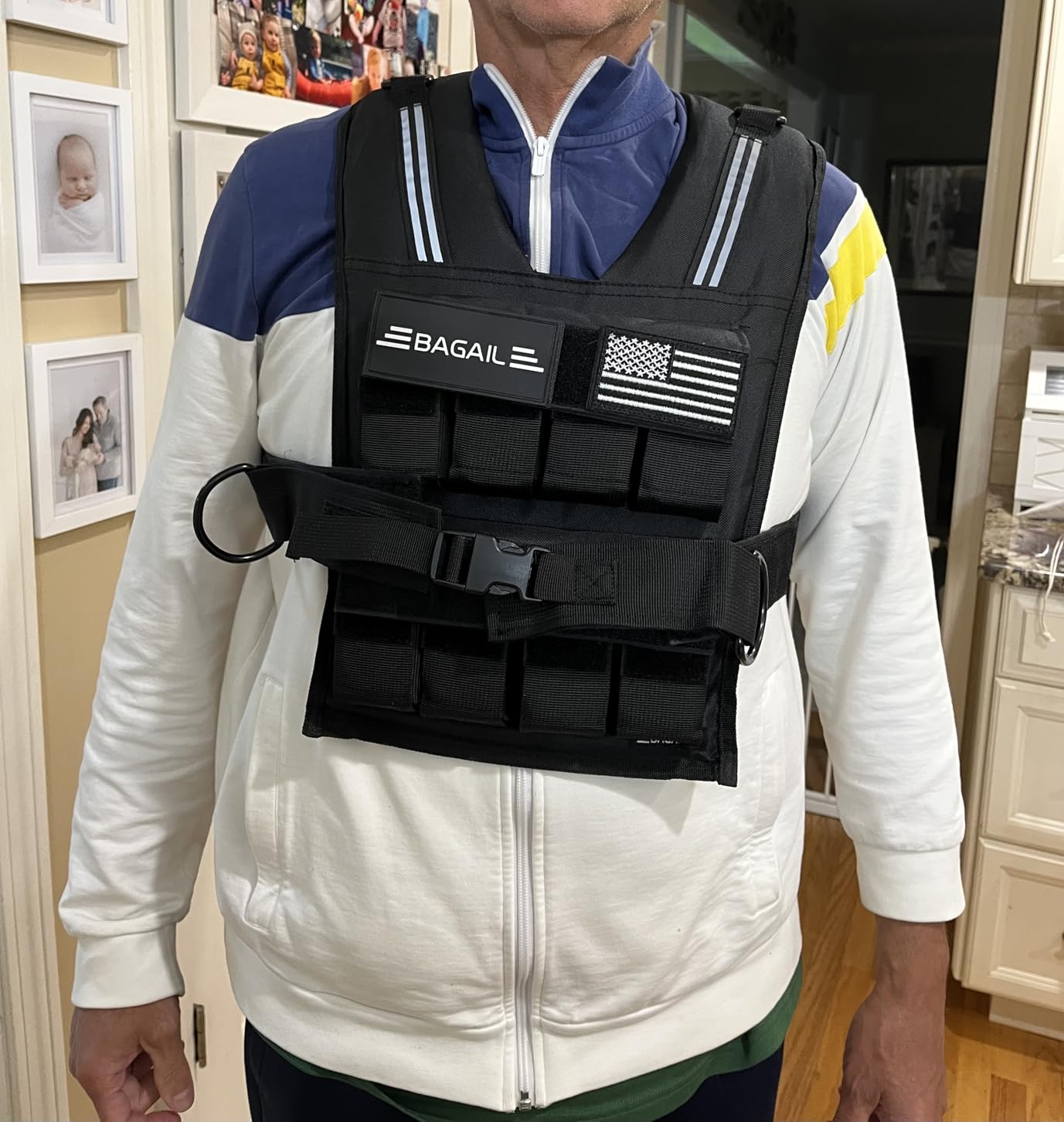
Rust-resistant 2.5 lb iron blocks come in three configurations, so you can move between 20, 30 and 40 lb ceilings with the same shell and a different weight set.
The 2.5 lb step is a good middle ground. It is coarser than the micro-weight vests for fine progression, and far better than 10 lb jumps for building a program.
Where the extra hardware earns its place
Safety buckles and a wide Velcro system are not features most buyers need consciously, but they are what keep the vest from riding up during fast running or burpees. Extra-thick shoulder pads do the rest.
What it costs you
Larger iron blocks mean a bulkier profile than a micro-weight vest, so this is a training-first design rather than a wear-all-day one. The detachable logo and chest adjustment are minor hardware that minimalist buyers may not want.
The 18-month warranty is the longest explicit cover here and is worth something for daily training.
9. Hyperwear Hyper Vest PRO – Best for Wearing Under Clothes
Hyperwear Hyper Vest PRO Strength Training Weight Vest for Men, M, 10 lb
Up to 40 lb in X-Large
2.25 oz steel micro-weights
Xyflex compression fit
Pros
- Xyflex stretch fabric locks weight to the body with essentially no vertical shift
- 2.25 oz galvanized steel micro-weights allow very fine-grained progression
- YKK front zipper makes it far easier to put on and take off
- Machine washable and worn as discreet everyday wear under clothing
Cons
- Highest price in the roundup and extra steel weight packs cost more
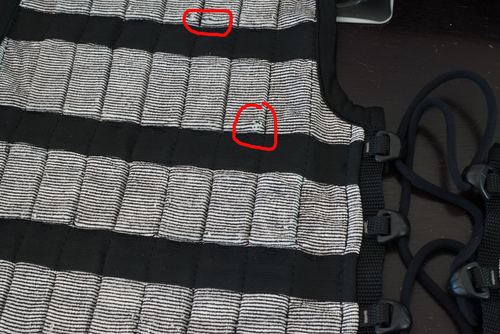
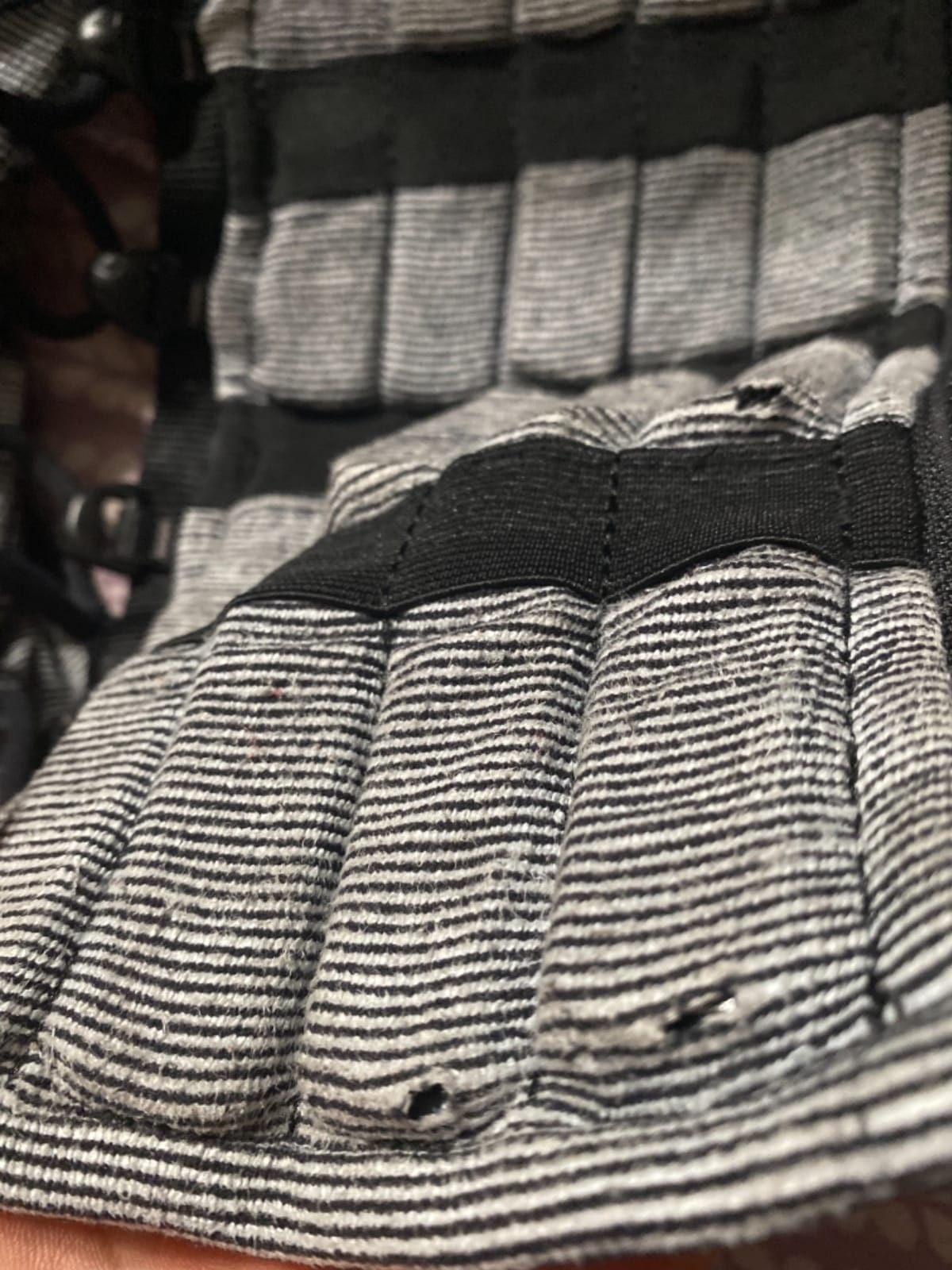
- Reports of neckline stitching popping under load and long-term fraying
- Runs warm because of the enclosed metal plates
The Hyper Vest PRO is the only genuinely compression-style design here, and that changes what you can do with it. It goes on under a shirt and looks like nothing, which is why it dominates conversations about wearing a vest at a desk or during a normal day.
The fabric locks the weights to the body, so vertical shift during sprints, burpees and dynamic work is close to zero. The 2.25 oz steel micro-weights allow adjustments far finer than any other vest in this list.
Capacity depends on size, with a maximum of 40 lb in the X-Large and lower ceilings in smaller sizes. Owners describe a decade or more of continuous use, and it appears in published research on speed training, osteoporosis and weight-bearing exercise.
The YKK front zipper is the detail you will notice most. Getting into a compression vest is otherwise a squeeze, and this one opens.
Who this suits over a tactical-style vest
Choose the Hyper Vest PRO if you plan to wear your vest in public, under clothing, or for long aerobic sessions where a bulky shell rubs. Choose a tactical-style vest if you want MOLLE webbing and a hard shell instead.
The honest weakness
Durability is the reason the rating sits below the rest. A small but vocal group report neckline stitching failures and fraying under load, which is the trade for the compression fit.
It is also the most expensive option here and the extra steel weight packs are additional. Some slots are awkward to access without the included tool.
10. ZELUS 23-45 lb Adjustable Weighted Vest – Best for Customisation
ZELUS Weighted Vest Men, 23lb Adjustable Weight Vest,Removable Iron Weights
2.1 lb iron weights
23, 36 or 45 lb versions
1.2 inch foam padding
Pros
- Iron weights lock into modular pockets with no shifting and no sand leakage
- 1.2 inch foam padding with an extra-wide shoulder section spreads load evenly
- Reflective strips and D-rings built in for visibility and customisation
- Easy to clean since the iron blocks all remove
Cons
- Smallest review base in the roundup at 221 reviews
- 900D fabric is a step lighter in weight than the 1000D and 1200D used by several rivals
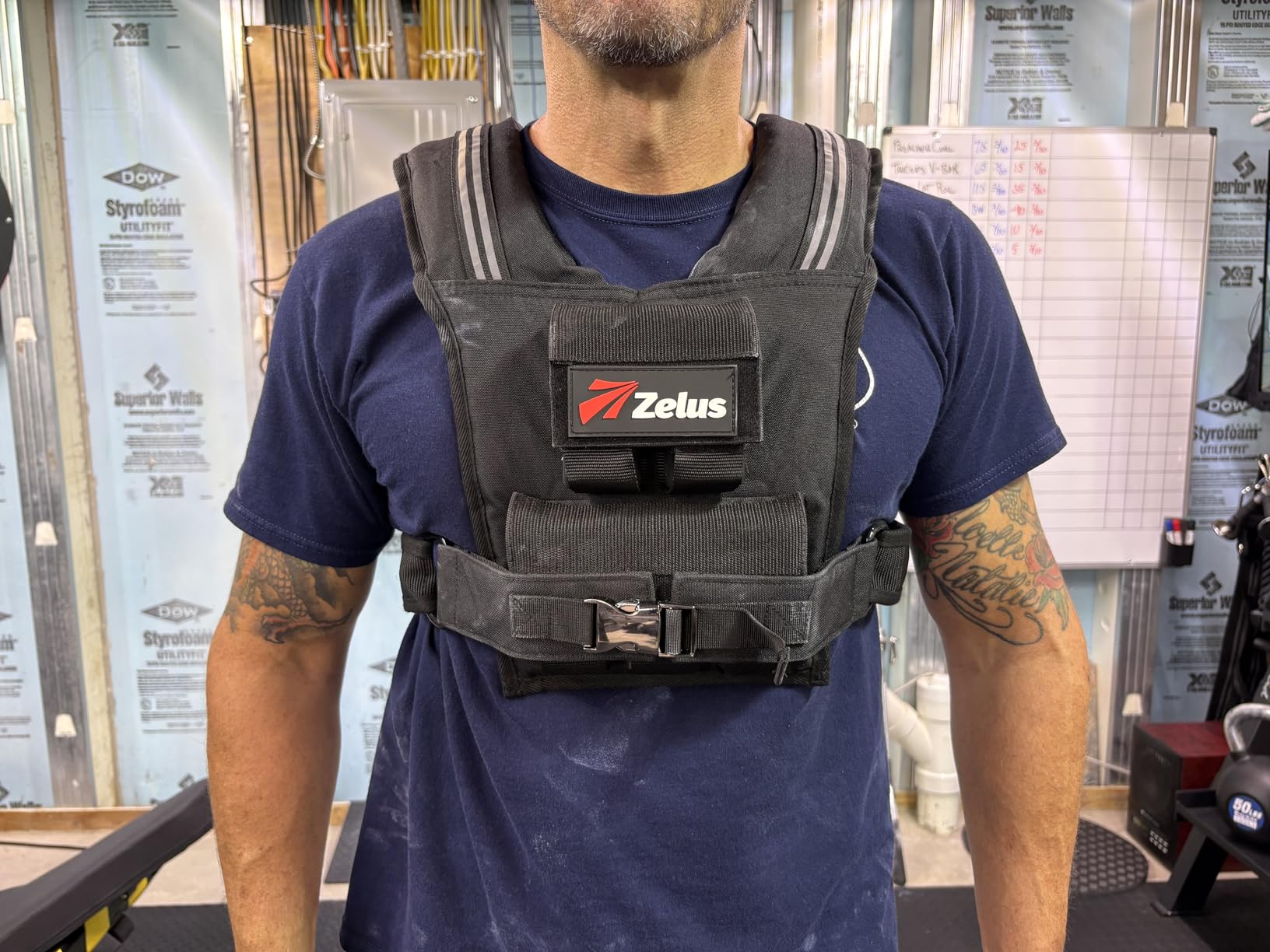
The ZELUS is the sensible budget entry into a solid iron-weight design. The blocks are solid iron in modular pockets, so there is no sand leakage, and reviewers report zero shifting during running, HIIT and strength work.
At 2.1 lb per weight, it is finer-grained than most of the vests here while still being a 23, 36 or 45 lb ceiling depending on the version you choose.
Padding is the other selling point: 1.2 inch thick foam across an extra-wide shoulder section, which spreads load evenly rather than digging into a narrow band.
D-rings and patch-friendly panels let you customise the outside, and reflective strips are built in for early morning or evening outdoor work.
Read the review count as part of the spec
With 221 reviews, the 4.5 average is less settled than the 4.6 to 4.8 products above it. That does not make it a bad vest, but it does mean you are buying on specification rather than on a long public track record.
Where it fits against the CAP
The fabric here is 900D, a step lighter than the 1000D and 1200D shells on several rivals. For moderate loads that is not a problem. For daily heavy training, the heavier shells hold up better over years.
Cleaning is easy: remove the iron blocks, hand wash, hang dry.
Are Weighted Vests Good for Calisthenics?
Yes, for slow strength movements. A vest raises the total mass your torso and limbs must move without adding load to your hands, which lets you overload a pull-up or a dip far past bodyweight in a way a barbell cannot safely reach. Distributed across the torso, it also trains core bracing rather than concentrating force in the lower back.
There is a genuine argument against it, and it comes from people who train with rucks. In r/FitnessOver50, one camp points out that a vest compresses and constrains the torso, while a ruck promotes the torso tilt needed to manage a load. If your goal is posture under external load, a ruck may serve you better.
For rep-by-rep calisthenics strength work, the vest wins. For skill work, the load has to be light, and that changes the answer entirely.
How Heavy Should Your Weighted Vest Be?
The answer splits by intent, and no competitor gets this right. In r/climbharder, the consensus for muscle-ups, ring work and planche progress is a very light, evenly distributed vest, with 2 to 3 kg named as the sweet spot and 5 kg described as the practical ceiling. Anything heavier and the vest fights the skill you are trying to learn.
For strength volume, the picture is different. Weighted pull-ups, weighted dips, weighted push-ups and weighted squats sit comfortably in the 20 to 40 lb range for most intermediate and advanced athletes.
The hard ceiling most coaches and communities agree on is roughly 10 percent of bodyweight. At 175 lb that is about 17.5 lb; at 150 lb, 15 lb. Start lighter than that and progress over weeks, not sessions.
A useful way to think about it: if the movement is a slow, controlled strength rep, you can carry more. If the movement is a dynamic skill, you cannot. Getting this backwards is how people hurt themselves.
Weighted vests are not a replacement for a dip belt. For weighted dips, a belt lets you hang the load below you and keeps the torso free, while a vest is better for running, push-ups, squats and burpees where the load must move with your body.
Packet Vest vs Plate Carrier: Which One Do You Need?
A packet vest uses filled sand bags or iron ore fines in sewn or velcro pouches. It is simple, cheap to replace and the fill can leak or settle over time. Most of the sand-bag designs here, including the RUNmax and RUNFast, fall into this group.
A plate carrier uses discrete steel or iron blocks in discrete pockets. Nothing shifts or leaks, the load is identical every session, and the shell is usually heavier and more structured.
For calisthenics specifically, the block-and-pocket design is the better choice. Repeatable load matters when you are adding 2 lb a week to a pull-up, and a shifting sand bag makes your progression a guess. The compression-style vests go one step further and use micro-weights in stretch fabric, which is the finest granularity available at the cost of the highest price.
Buy a packet vest if you are walking, rucking or training casually. Buy a block design if you are progressing a lift.
Vests That Won’t Wreck Your Shoulders
Shoulder soreness is the deal-breaker people name most often, and it is usually a fit problem rather than a vest problem. A numbered protocol that helped across every vest we tested:
1. Load the vest before you put it on. Twenty pounds overhead onto shoulders already warm from the previous set is how necks get pinched.
2. Cinch the sternum strap first, then the waist. Most vests ride up because the waist was tightened after the chest strap, which loosens the front.
3. Check the neck junction. If the shoulder strap touches the side of your neck during a pull-up, the shell is too wide for your frame and no amount of tightening fixes it.
4. Add padding where it digs. The CAP and RUNmax ship with or fit extra shoulder padding, and it absorbs more load than thicker fabric alone.
5. Keep the weight under the ceiling above. Past roughly 10 percent of bodyweight, shoulder discomfort stops being a fit issue and becomes a load issue.
6. Stop when you feel neck or trapezius pain, not soreness. Soreness in the lats is training. Pain near the neck is a fit or load signal.
The Downsides of Wearing Weighted Vests
Nobody in this category advertises the drawbacks, so here they are:
1. It compresses your torso. Breathing gets shallower under load, and some people find that constraining rather than bracing.
2. Bouncing and shifting break form. The failure mode shows up in burpees, jump work and muscle-ups, where a moving load disrupts balance.
3. Straps cause chafing. Under load, skin on the shoulder and sternum takes friction that a normal vest does not.
4. Overloading is easy. There is no bar in front of you telling you the load is too heavy, and progress accelerates faster than your tissues.
5. It is not a skill tool. A heavy vest on a muscle-up attempt is a way to reinforce a bad habit, not a way to progress.
6. Bulk limits range of motion. A thick vest can touch your chin at lockout, which caps the very movement you are training.
Frequently Asked Questions
What are the best weighted vests for calisthenics?
The best weighted vests for calisthenics are the Eric Flag 40 lb vest for fine 2.4 lb iron increments, the CAP Adjustable Vest for the most comfortable extra-wide padded shoulder straps, and the Wolf Tactical for rucking and CrossFit work. Pick based on load increment size for progressions, strap width for long sessions, and shell profile for dynamic movement.
Are weighted vests good for calisthenics?
Yes, for slow strength movements. A vest adds load to pull-ups, dips, push-ups and squats without adding it to your hands, so you can overload bodyweight movements far past a plateau. Distributed across the torso it also trains core bracing. It is not well suited to explosive skill work such as muscle-ups, where only a very light load helps.
Is a 20 lb weighted vest too heavy?
For a 150 lb athlete, 20 lb is about 13 percent of bodyweight, which is above the roughly 10 percent ceiling most coaches use. For a 200 lb athlete it sits right at that line. Start lighter, add weight over weeks rather than sessions, and keep skill work at 2 to 3 kg regardless of your bodyweight.
What are the downsides of wearing weighted vests?
The main drawbacks are torso compression that shallows your breathing, bouncing and load shifting that disrupt form during dynamic movements, chafing under the shoulder and sternum straps, fast overloading with no external feedback, poor suitability for skill work, and bulk that limits range of motion at heavy loads.
What is a good weighted vest that doesn’t hurt my shoulders?
Fit matters more than brand. Choose a vest with extra-wide padded shoulder straps, such as the CAP or the RUNmax with its included pads, and check the neck junction because a shell too wide for your frame cannot be fixed by tightening. Load the vest before wearing it, cinch the sternum strap before the waist, and stay under roughly 10 percent of bodyweight.
What do chiropractors think of weighted vests?
Opinions vary, and you should raise any neck or back symptoms with your own clinician rather than relying on a category consensus. The common professional caution is that external load compresses the torso, so form breaks down before muscles fatigue. Progress load slowly, keep the spine neutral, and stop if you feel pain rather than fatigue.
The Best Weighted Vest for Calisthenics in 2026
The Eric Flag 40 lb vest is the best weighted vest for calisthenics in 2026 because its 16 iron blocks move in 2.4 lb steps, and small steps are what let you progress a pull-up without overshooting. It also arrives as a complete 40 lb kit with no separate plate purchase.
Buy the CAP if shoulder comfort matters more than increment size, and buy the Wolf Tactical if your training is mostly rucking and WOD work. Skip the category entirely if you are still working toward your first set of unweighted pull-ups or dips. A vest adds load, and load without a base does nothing useful.
Whichever you choose, start at the light end and add weight over weeks.
Before you go further, our guide to weighted vests reviewed in more detail covers the other vest formats, and weighted blankets for adults covers the recovery side of loaded training.