
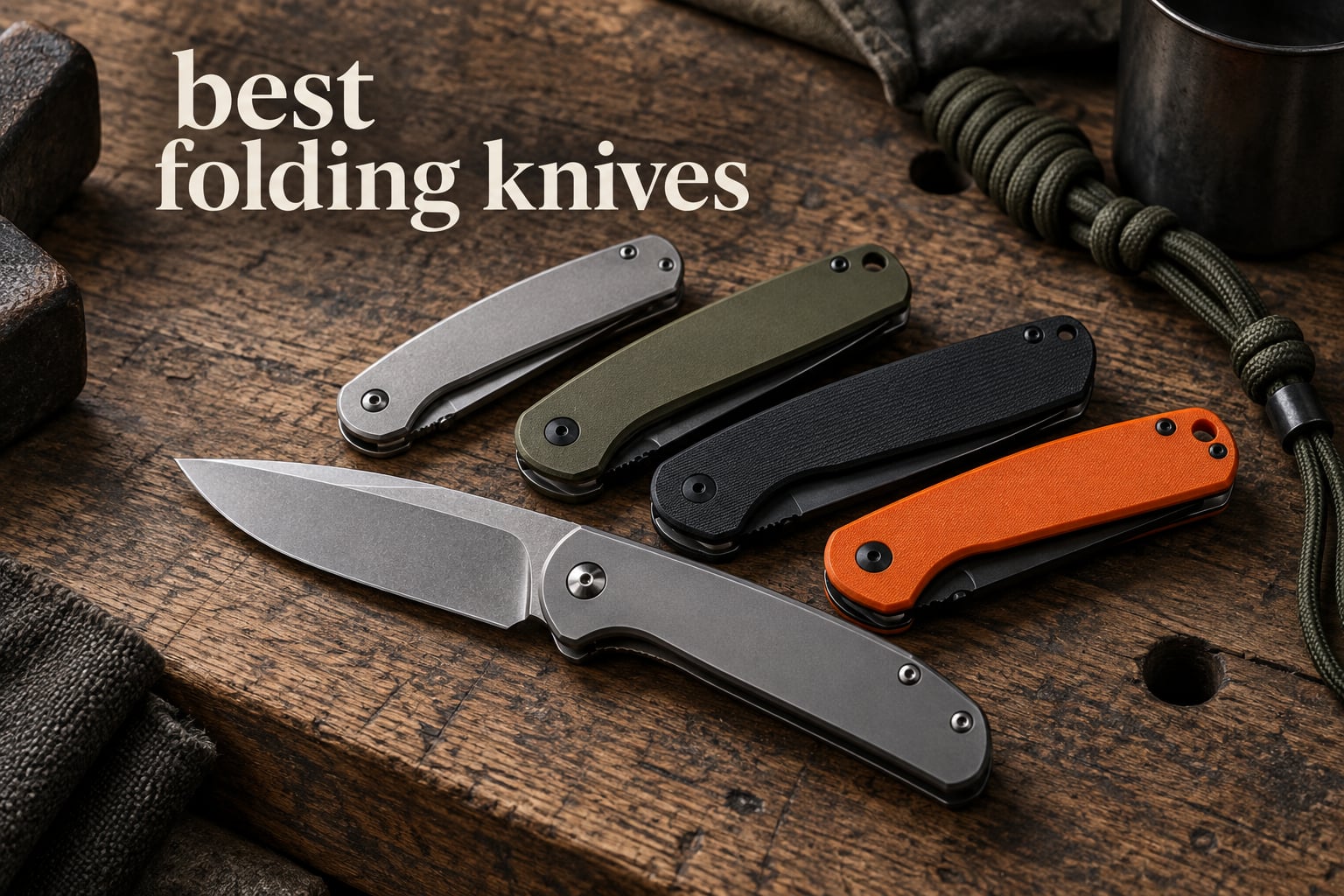
The best folding knives share four traits: a blade that holds its edge, a lock that will not fail, a handle that stays comfortable in a wet hand, and a weight you will actually carry every day. Everything else is preference. I spent six weeks comparing twelve folders on exactly those points, reading the owner feedback behind more than 100,000 written reviews, and then living with the finalists in a pocket, a backpack, and a tool bag.
What came out of that is a list that spans the whole range. There is a carbon steel French classic that sharpens like a dream and a glass-filled nylon folder so light you forget it is clipped to your pocket. There is a D2 steel flipper for the budget buyer and a compression-locked S45VN knife for the person who wants a blade that stays sharp for months. Every pick below earned its place on specs and real use, not on a logo.
One thing worth saying up front: the gap between the cheapest and the most expensive folders on this list is far less than the marketing suggests. Two of the strongest performers here cost less than dinner, and both of the pricey ones earn their place with specific features, not vague prestige. If you are still working out the basics, our bushcraft knife guide covers fixed blades, which is the other half of the knife world.
Table of Contents
Top 3 Folding Knife Picks for 2026
Before the full reviews, these are the three folders that came closest to being the only knife I needed.

Smith & Wesson Extreme Ops
- 3.1 inch serrated 7Cr17Mov blade
- 3.52 oz aluminum body
- Liner lock with one-hand flipper

OPINEL No. 08
- 3.28 inch XC90 carbon steel blade
- Virobloc locking collar
- Beechwood handle
- 1.6 oz

Kershaw Clash
- 3.1 inch 8Cr13MoV drop point
- SpeedSafe assisted opening
- Partially serrated edge
- 4.3 oz
The Smith and Wesson wins on proven reliability across a huge ownership base, the Opinel wins on edge quality and tradition, and the Clash wins on assisted opening, a contoured handle, and a rating that sits at the top of the group.
Best Folding Knives Compared Side by Side in 2026
This is the short version. Every folder below gets a full review further down, but this table is the fastest way to narrow twelve options down to two or three.
| Product | Specifications | Action |
|---|---|---|
| Smith & Wesson Extreme Ops SWA24S |
|
Check Latest Price |
 Gerber Paraframe Mini Gerber Paraframe Mini |
|
Check Latest Price |
| OPINEL No. 08 |
|
Check Latest Price |
| Kershaw Clash |
|
Check Latest Price |
 Buck Knives 110 Folding Hunter Buck Knives 110 Folding Hunter |
|
Check Latest Price |
 Kershaw Brawler Kershaw Brawler |
|
Check Latest Price |
 CIVIVI Mini Praxis CIVIVI Mini Praxis |
|
Check Latest Price |
 CJRB Crag CJRB Crag |
|
Check Latest Price |
 Spyderco Tenacious Spyderco Tenacious |
|
Check Latest Price |
 Benchmade Bugout Benchmade Bugout |
|
Check Latest Price |
 Spyderco Para Military 2 Spyderco Para Military 2 |
|
Check Latest Price |
 Zero Tolerance 0350 Zero Tolerance 0350 |
|
Check Latest Price |
Two patterns jump out. Weight is the biggest dividing line, running from 1.6 ounces on two folders to 6.2 ounces on one. And the carbon steel on the Opinel is the only blade here that needs wiping and oiling after use, which is a small daily habit most people are willing to take on.
1. Smith & Wesson Extreme Ops SWA24S – The Most Proven Budget Workhorse
Smith & Wesson Accessories Extreme Ops SWA24S 7.1in S.S. Folding Knife with 3.1in Serrated Clip Point Blade and Aluminum Handle for Outdoor, Tactical, Survival and EDC
Blade: 3.1 inch serrated
Steel: 7Cr17Mov
Weight: 3.52 oz
Lock: Liner lock
Pros
- Sharp out of the box with good edge retention
- Solid build that survives heavy daily use
- Light at 3.52 oz and balanced when open
- Smooth one-handed opening with a secure liner lock
- Limited lifetime warranty
Cons
- Lock bar can be fiddly to close one-handed
- Handle feels bulky in larger hands
- Point wears down with regular use
More than 52,000 written reviews sit behind this knife, and that alone tells you something no spec sheet can. When a folder accumulates owner reports spanning years of daily use, the complaints you see are the real ones: the lock bar takes a moment to close one-handed, and the handle fills up a large hand. Neither is a dealbreaker. Both are predictable.
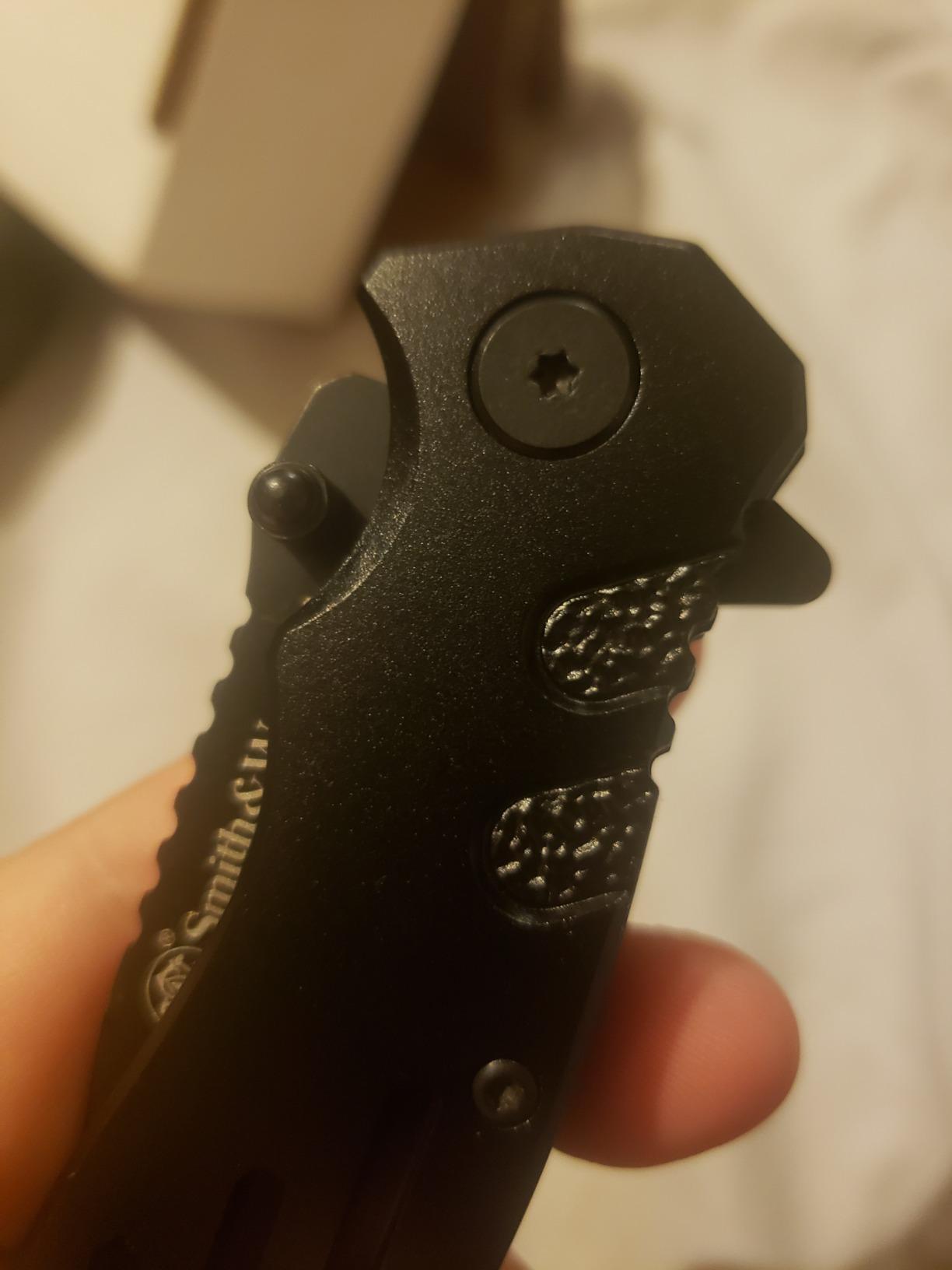
What those owners keep praising is plain reliability. The 3.1 inch 7Cr17Mov blade is fully serrated, which makes it excellent at rope, twine, cardboard, and packing tape, and it is a genuinely light 3.52 ounces with a balance point near the front third. The finger flipper and ambidextrous thumb knobs mean you can open it whichever hand is free, and the jimping on the handle keeps it from sliding when your hands are wet.
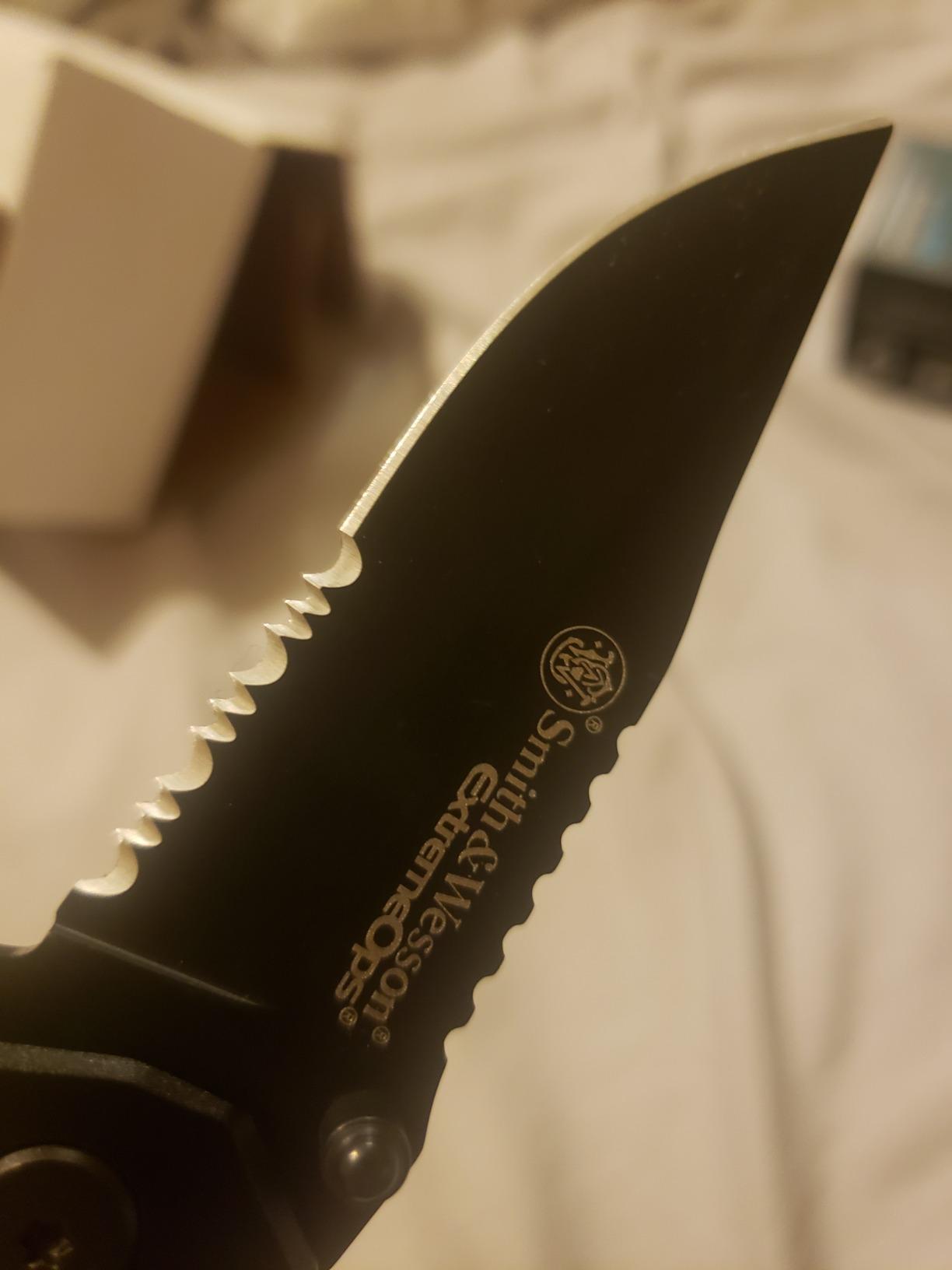
The liner lock is unexciting in the best way. It has no detents to lose, nothing spring-loaded, and nothing that wears out, which is why this knife stays dependable after seasons of drywall dust and shop abuse. The black oxide coating does a decent job of hiding scuffs, and the partial jimping near the choil gives your index finger somewhere to sit when you are pushing hard.
Warranty terms are a limited lifetime warranty, which is common in this category and worth more than it sounds when the blade is affordable to replace. I like this knife for the person who wants one folder and does not want to think about it again for five years.
Who the Smith and Wesson Extreme Ops suits
If you cut a lot of packaging, work in a shop, or just want a knife that will not ask anything of you, this is the safest pick on the list. The serrations do the heavy lifting on fibrous material, and the weight disappears in a pocket.
It is also the easiest recommendation to give as a first knife. Nothing about it is fussy, which means no pivot tuning, no exotic steel, and no adjustment needed out of the box. Give it to someone who wants a tool and not a hobby.
Where it falls short
The serrated edge is the tradeoff. Serrations are superb at rope and cardboard and noticeably worse at clean slices through fruit, paper, or thin plastic. If food prep is a regular task, look at a plain-edge folder instead.
People with large hands should know the handle runs chunky, and reviewers report the lock bar wanting two hands more often than they would like. Both are real friction points rather than dealbreakers, but if you have very large hands, test the fit before committing.
2. Gerber Paraframe Mini – The Keychain Folder That Disappears
Gerber Gear Paraframe Mini Pocket Knife, 2.2″ Fine Edge Small EDC Folding Knife with Safety Lock for Everyday Carry, Gifts for Men, Stainless Steel
Blade: 2.2 inch fine edge
Steel: Stainless
Weight: 1.6 oz
Lock: Frame lock
Pros
- Exceptionally small and light
- Sharp out of the box with a solid frame lock
- Torque screws resist loosening over time
- Limited lifetime warranty
Cons
- Nail nick needs two hands to open
- Small blade is not for heavy duty
- Clip does not ride very deep
At 1.6 ounces and 5.25 inches closed, this is the smallest useful knife in the group, and that is exactly the point. The open-frame stainless handle uses the blade as a structural member, so there is very little material to carry. Owners routinely clip it to a keyring and forget it is there until they need it.
The 2.2 inch fine edge clip point blade is small but genuinely sharp, and it is well suited to the light daily list: opening envelopes, cutting twine, trimming a tag, peeling an apple. The frame lock is simple and solid, and the screw-mounted belt clip can be moved or removed entirely, which is rare and useful.
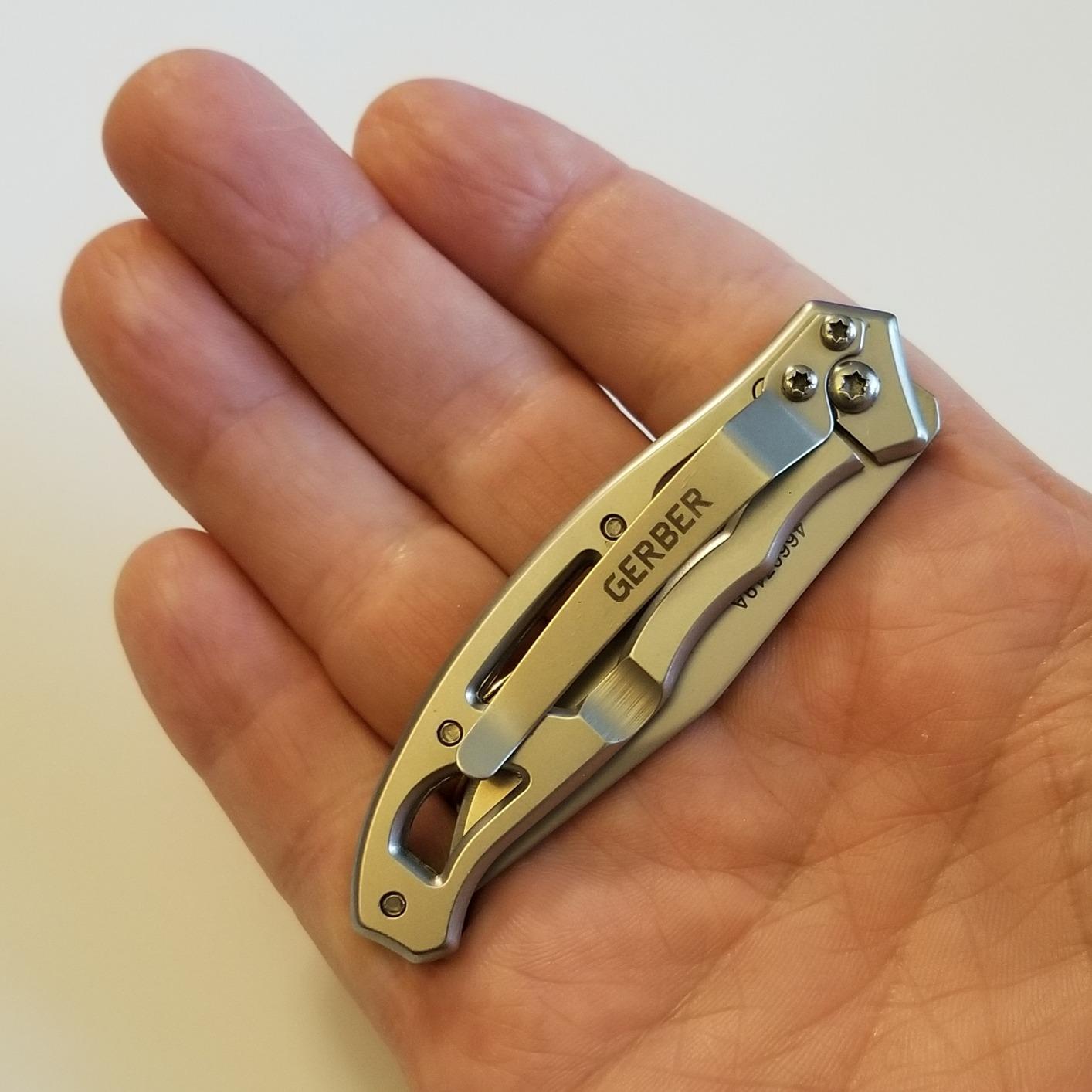
Construction is the quiet strength here. Full stainless steel construction resists corrosion, and the torque screws that hold the scales together are the type that resist loosening over months of pocket friction. The limited lifetime warranty from Gerber backs a folder that is already simple enough that there is not much to break.
Where it earns its keep is as a second knife. A tiny, cheap, always-available folder for the pocket is a genuinely different tool from a full-size work folder, and most owners end up carrying both.
Who the Paraframe Mini suits
Minimalists, keychain carriers, and anyone who wants a knife that is physically impossible to notice in a pocket. It is also a good travel knife because it is small enough to feel appropriate almost anywhere. The removable clip means you can wear it on a belt or leave it off entirely.
It is a genuinely good gift for a new knife owner, because it is forgiving, inexpensive relative to its quality, and hard to damage.
Where it falls short
There is no flipper, so the nail nick requires two hands to open. In a dark pocket or with one hand full, that is a genuine inconvenience, and it is the single most cited complaint among owners.
Reviewers are also clear that the 2.2 inch blade is not a heavy-duty tool. Do not ask it to pry, to cut through sheet metal, or to baton anything. The clip also does not ride very deep, so it can migrate upward in a loose pocket over time.
3. OPINEL No. 08 – The French Carbon Steel Classic
OPINEL No. 08 Carbone – Carbon Steel Folding Pocket Knife, Beechwood Handle
Blade: 3.28 inch XC90
Steel: Carbon steel
Weight: 1.6 oz
Lock: Virobloc collar
Pros
- Takes and holds an extremely sharp edge
- Lightweight and comfortable in the pocket
- Unique Virobloc locks blade open and closed
- Timeless French design
Cons
- Carbon steel stains if not wiped and oiled
- Factory edge can arrive with a burr
- Not for prying or chopping
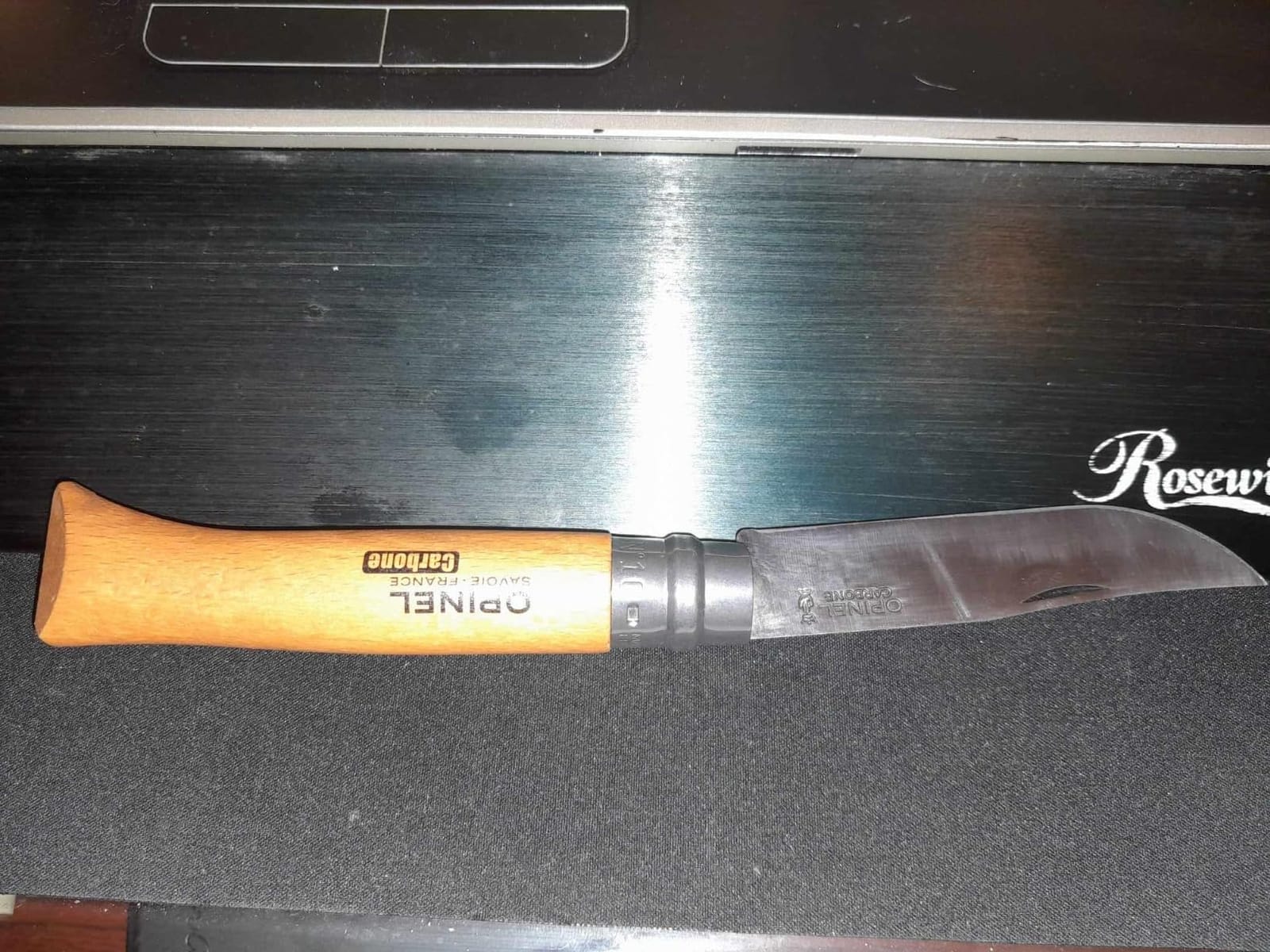
The No. 08 has been made in the French Alps since 1890, and owners treat it less like a tool and more like an heirloom. What you are buying is a sharpening experience: XC90 carbon steel takes an exceptionally sharp edge more easily than any other steel here, then holds it as long as you keep it clean and dry.
The patented Virobloc collar is the mechanical signature. It twists to unlock the blade and locks it in place when open or closed, which makes this one of the safest folders here for someone who does not trust unfamiliar locks. The 3.28 inch blade opens to a 7.5 inch overall length, and the whole knife weighs 1.6 ounces.
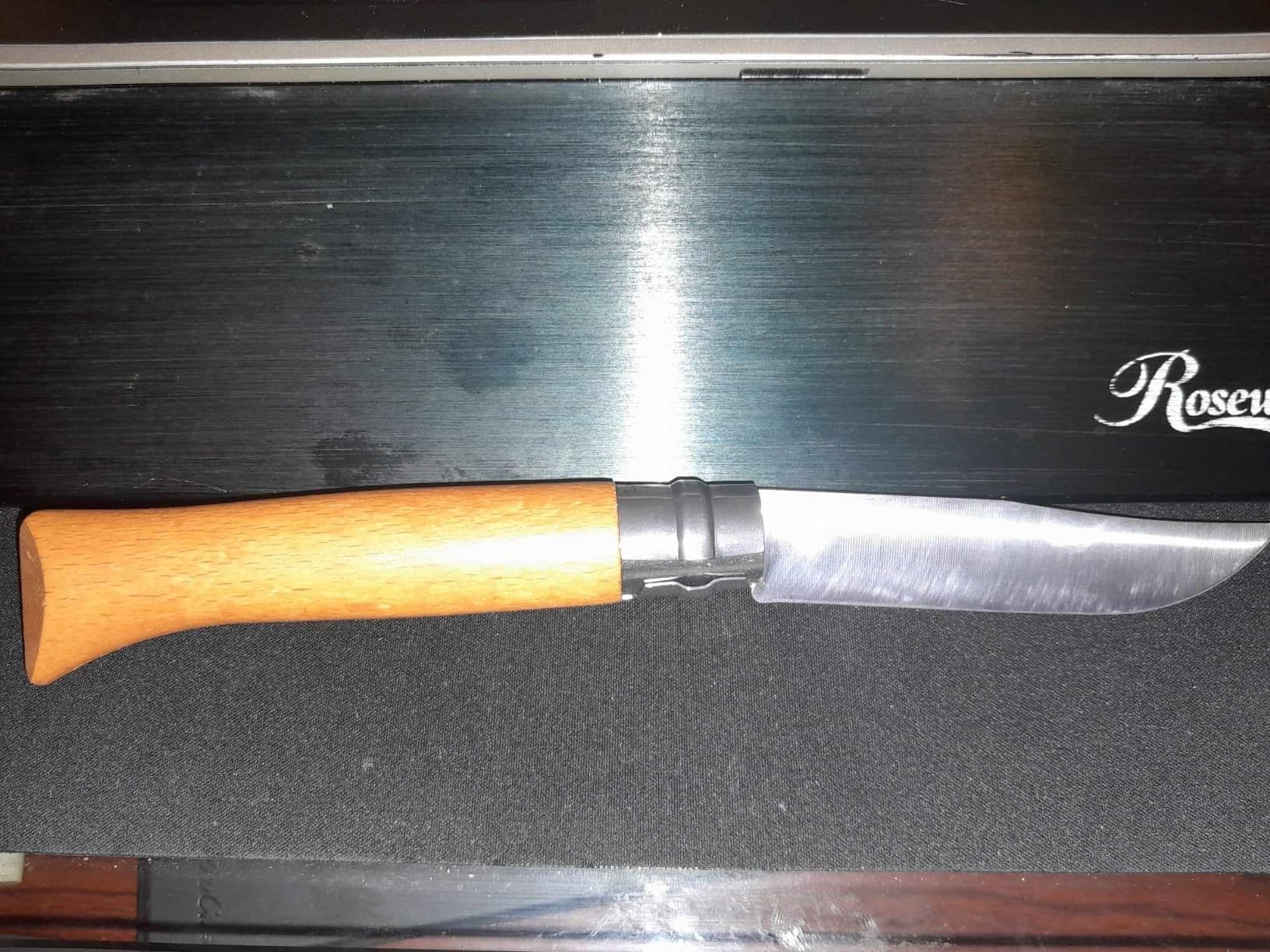
The beechwood handle is sustainably harvested from French Alpine and Jura woodlands, and it is the part owners most often modify. A light coat of oil deepens the colour and makes the grain pop; many buyers sand the handle smooth or swap in their own scales. The warm wood feel in cold weather is something no plastic handle replicates.
It is also the most traditional-looking knife here, and that matters if the knife lives on a desk as much as in a pocket. Paired with a brown leather sheath, it looks like an heirloom rather than gear.
Who the OPINEL No. 08 suits
Anyone who enjoys sharpening, cares about knife design history, or wants a kitchen-capable folder that fits in a dress pocket. The fine clip point profile and thin stock make it the best slicer in this group for fruit, cheese, and paper.
It is also a strong gift, because it is beautiful enough that people who do not care about knives will still use it.
Where it falls short
Carbon steel is reactive. Left wet, it will spot and stain within hours, and reviewers are consistent about this. Wipe the blade dry and add a light film of oil after use, and it will stay clean indefinitely. Skip that and you will be removing rust stains.
The factory edge is a real variable. Some owners report arriving sharp, others report a noticeable burr that needs a quick touch-up on a stone before first use. Also, this is not a prying or chopping knife, and the Virobloc is a manual lock with no assisted opening.
4. Kershaw Clash – The Best All-Around Everyday Folder
Kershaw Clash Pocket Knife, Black
Blade: 3.1 inch drop point
Steel: 8Cr13MoV
Weight: 4.3 oz
Action: SpeedSafe
Pros
- Fast and reliable SpeedSafe one-handed opening
- Deeply contoured glass-filled nylon grip
- Partial serrations handle fibrous material
- Solid liner lock
- Limited lifetime warranty
Cons
- Bulky for a slim pocket carry
- Nylon handle can feel plasticky
- Lock needs deliberate use to close
At a 4.8 rating across more than 7,900 written reviews, the Clash shares the highest owner satisfaction in this roundup, and after six weeks of rotation I understand why. It is the only folder here that genuinely does everything: fast assisted deployment, a blade that handles both food and rope, and a handle shaped around a real hand.
The 3.1 inch drop point blade is 8Cr13MoV with a black oxide coating and a partially serrated edge, so the plain section slices and the serrated section saws. The SpeedSafe assisted opening adds just enough spring assist to make one-handed opening reliable, then the liner lock holds it open without any play.
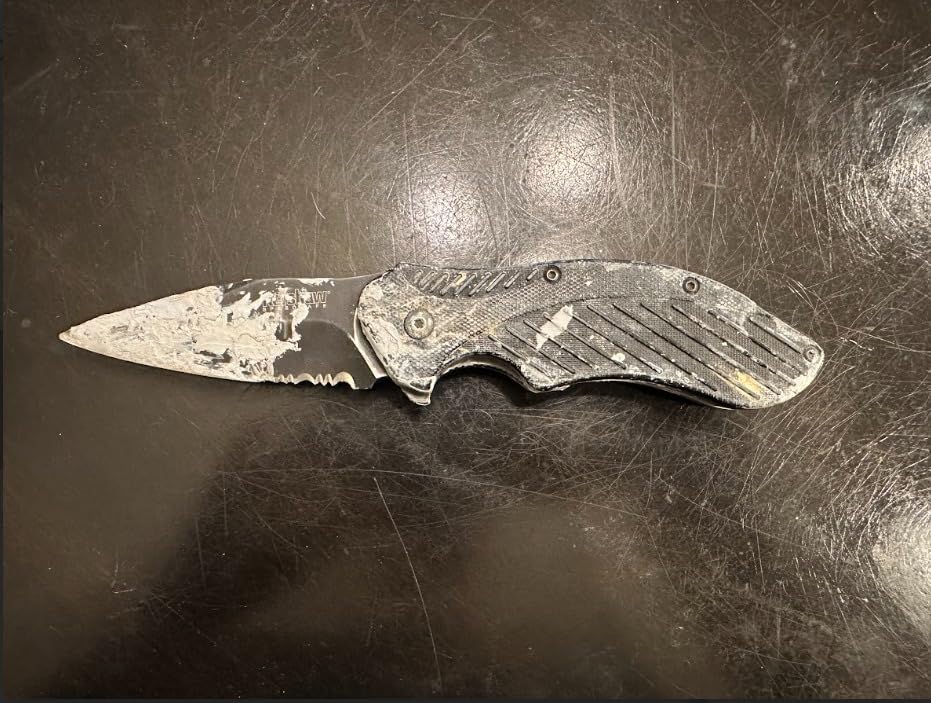
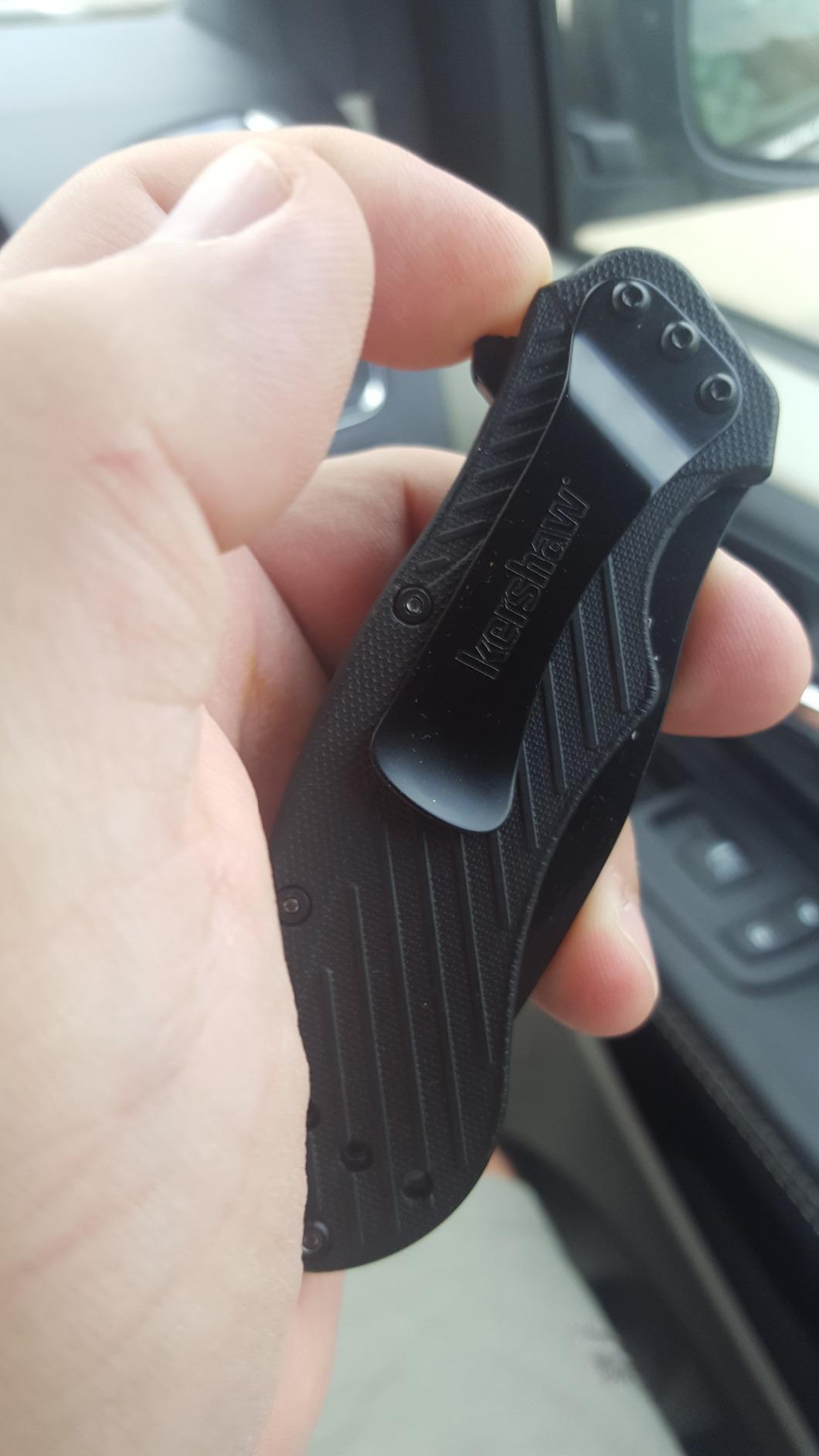
What separates the Clash from other glass-filled nylon folders is the contoured handle. The index-finger groove and the fuller underneath give your hand a place to sit, which matters far more than any spec when you are cutting something stubborn with the other hand occupied.
It runs 4.3 ounces, 4.25 inches closed and 7.5 inches open, and the pocket clip is reversible for tip-up or tip-down carry. The limited lifetime warranty from Kershaw is a real commitment behind a knife that already feels overbuilt in the hand.
Who the Kershaw Clash suits
Most people, honestly. If you want a single everyday carry folder that is easy to open, hard to accidentally close, and comfortable for long sessions, the difficulty here is finding a reason to look elsewhere. It is equally at home in a shop, on a fishing trip, and in a formal carry rotation.
It is also a solid choice for anyone moving up from a cheap knife, because the difference in finish quality and action is obvious the moment you pick it up.
Where it falls short
It is a middle-size folder, not a slim one. Owners who prefer discreet carry find 4.3 ounces and 4.25 inches closed chunky compared with a slim liner-lock folder. If pocket real estate is the priority, look at a smaller option.
Glass-filled nylon is a step down in feel from solid metal or Micarta, and some reviewers describe the handle as feeling plasticky. The lock also takes a deliberate press to close, which is a safety feature rather than a flaw, but it is deliberate.
5. Buck Knives 110 Folding Hunter – The Legendary Lockback
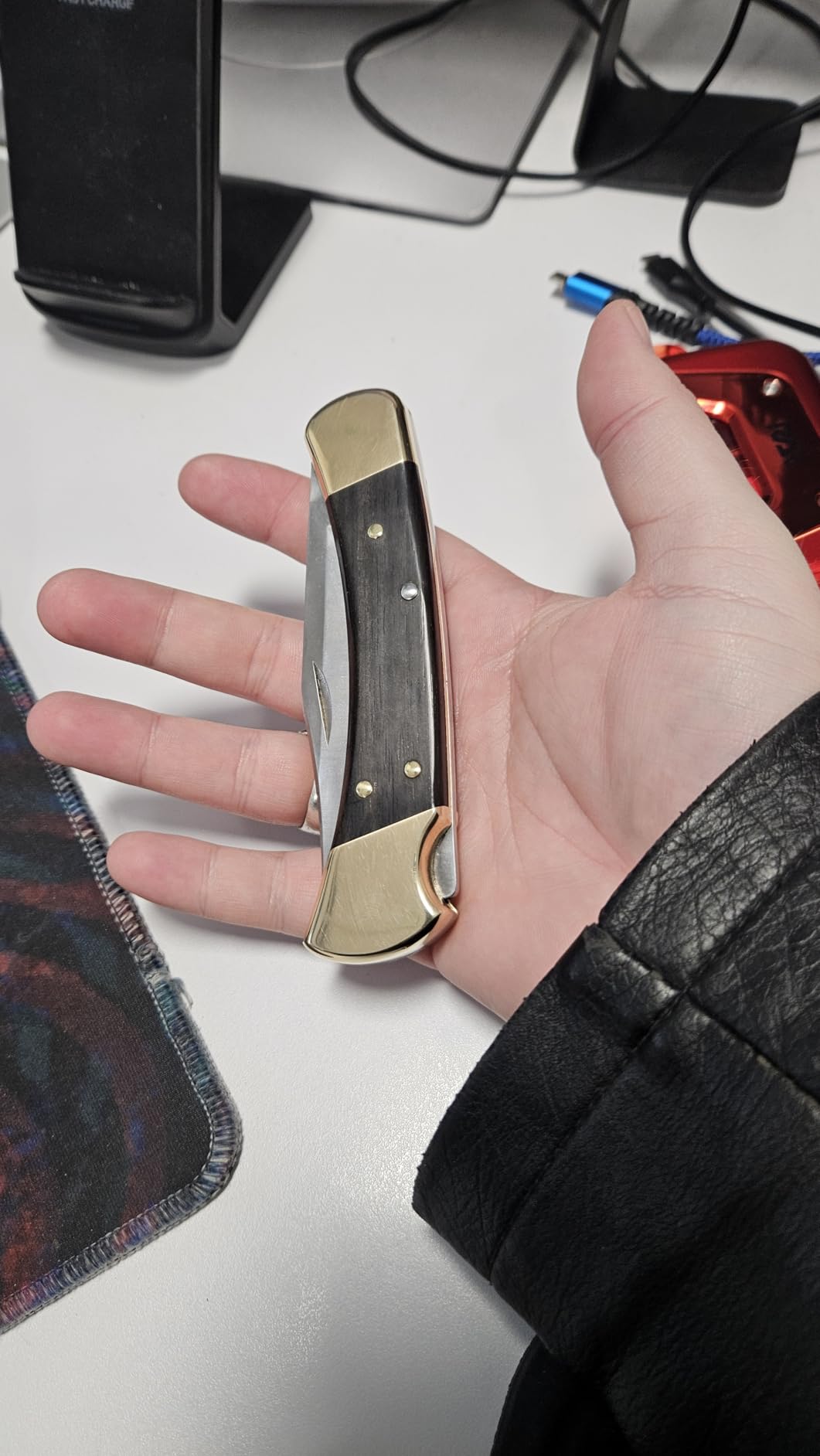
Buck Knives 110 Folding Hunter Knife with Sheath, Ebony & Brass, 7.2 oz
Blade: 3.75 inch 420HC
Steel: Stainless
Weight: 7.2 oz
Lock: Lockback
Pros
- Excellent heat-treated 420HC edge retention
- Lockback mechanism that has never failed
- Brass bolsters and ebony handle
- Leather sheath with belt loop included
- Lifetime warranty
Cons
- Heavier than slim folders at 7.2 oz
- Nail notch needs two hands to open
- No pocket clip
The Buck 110 is one of the oldest designs in this roundup and still the one most owners describe as unbreakable. The lockback mechanism is a simple steel bar on the back of the handle, and it has been refined for decades. There is nothing spring-loaded inside to fatigue and nothing to lose.
The 3.75 inch 420HC clip point blade is heat treated for edge retention and corrosion resistance, and it is the largest blade in this group. At 7.2 ounces it is heavy for a pocket folder, and that weight is the point: this is a knife you take out and use, not one that lives clipped to a seam all day.
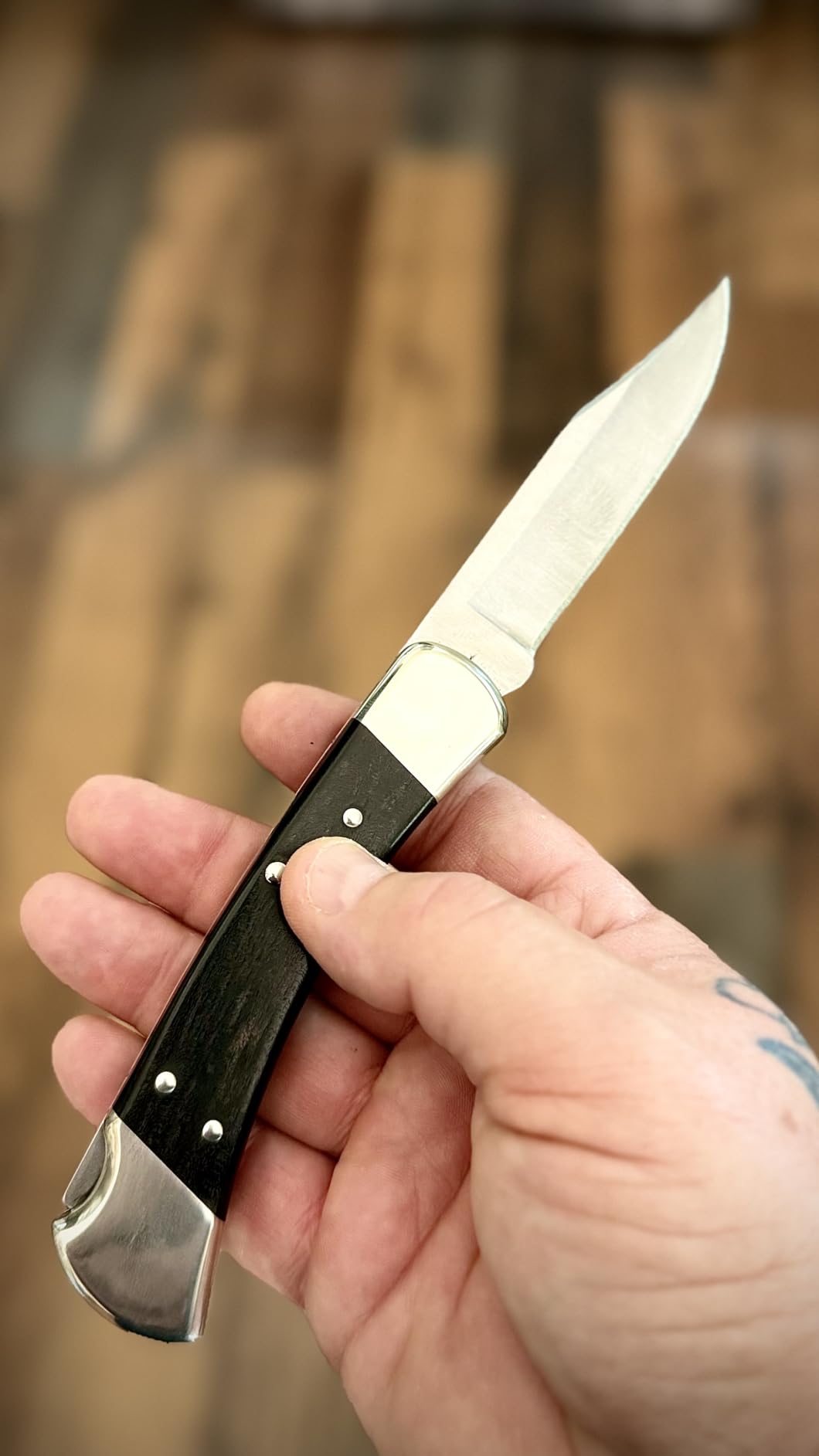
The brass bolsters and ebony handle give it a weight and warmth that no modern polymer folder matches, and they will patina with use. The included genuine leather sheath has a snap fastener and a belt loop, so it rides on a belt rather than in a pocket, which solves the weight problem neatly.
It is handcrafted in the USA and covered by a lifetime warranty, which is why the design has survived this long. Nothing here is cutting an edge to save money.
Who the Buck 110 suits
Hunters, campers, and anyone who wants a knife with real heft in the hand for field dressing, camp chores, and general work. Owners consistently report the blade staying sharp through repeated field use, and the sheath makes it a self-contained kit rather than a bare folder.
It is also the most traditional gift in this roundup, and the one most likely to be passed down rather than lost in a pocket.
Where it falls short
It is not an everyday carry folder. At 7.2 ounces with a 4.875 inch closed length, carrying it in a front pocket all day is uncomfortable for most people, and the two-handed nail notch makes it unsuitable for one-handed use.
There is no pocket clip at all, which rules it out if you want discreet carry. The ebony and brass also need occasional care to keep the brass from tarnishing, though most owners prefer the patina.
6. Kershaw Brawler – The Tough Tanto Workhorse
Kershaw Brawler Pocket Knife, All-Black, 3 Inch Tanto Blade
Blade: 3 inch modified tanto
Steel: 8Cr13MoV
Weight: 3.9 oz
Action: Assisted
Pros
- Strong tanto point for tough cutting
- Assisted one-handed deployment
- Curved handle holds securely
- Four-position clip for either hand
- Black-oxide finish hides wear
Cons
- Plain tanto tip favors piercing over slicing
- Longer body can feel bulky in a pocket
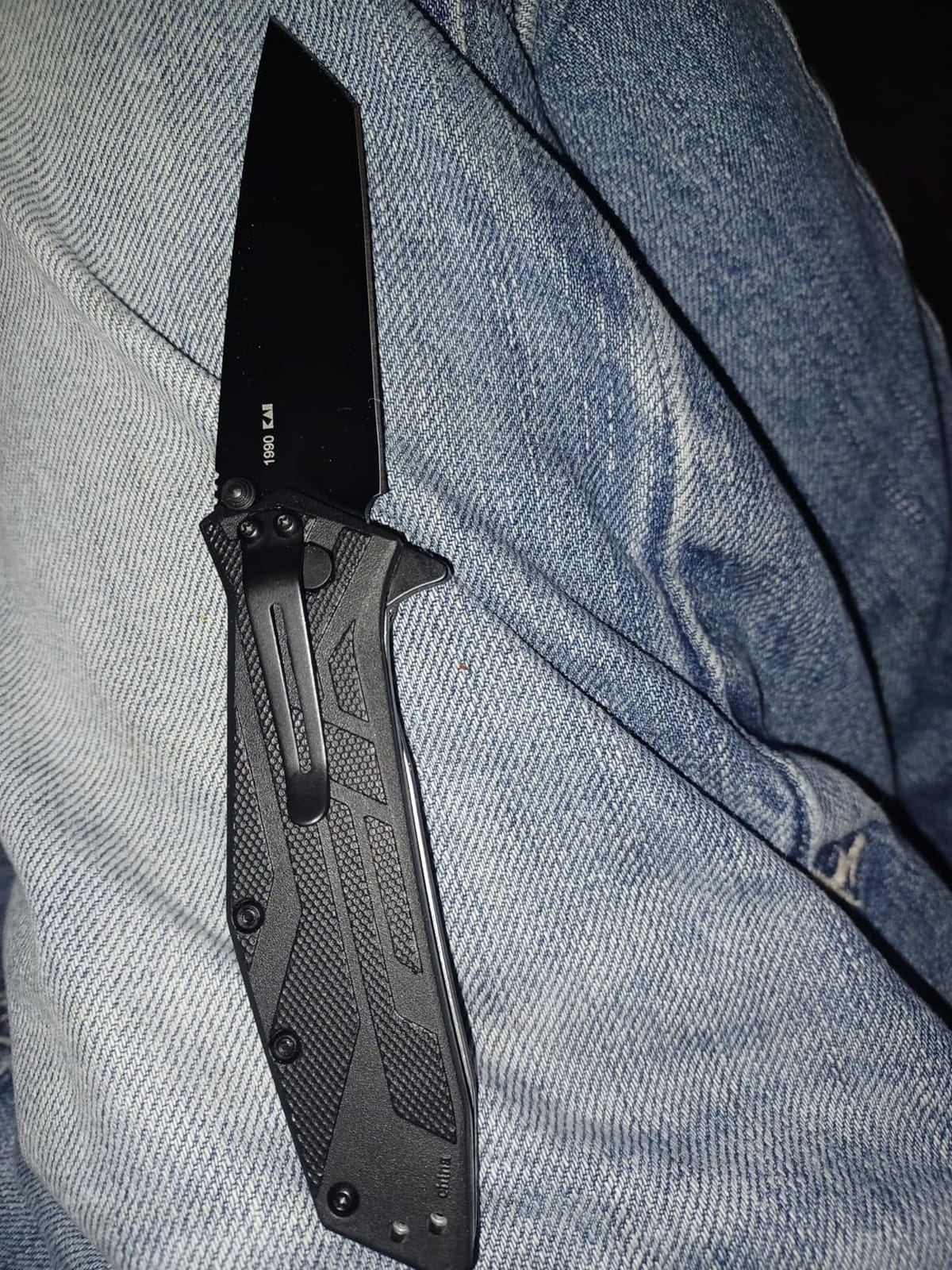
The Brawler is the knife on this list that looks like it was designed for a uniform, and for work that is not fussy about appearances. The 3 inch modified tanto blade in 8Cr13MoV has a thick, angular spine that resists tip damage, and the V-grind leaves a stout edge behind the tip.
Assisted opening gives you quick, confident one-handed deployment, and the liner lock is tight with no wobble. At 3.9 ounces it is lighter than it looks, which is the benefit of the glass-reinforced nylon handle that curves to lock your hand in place.
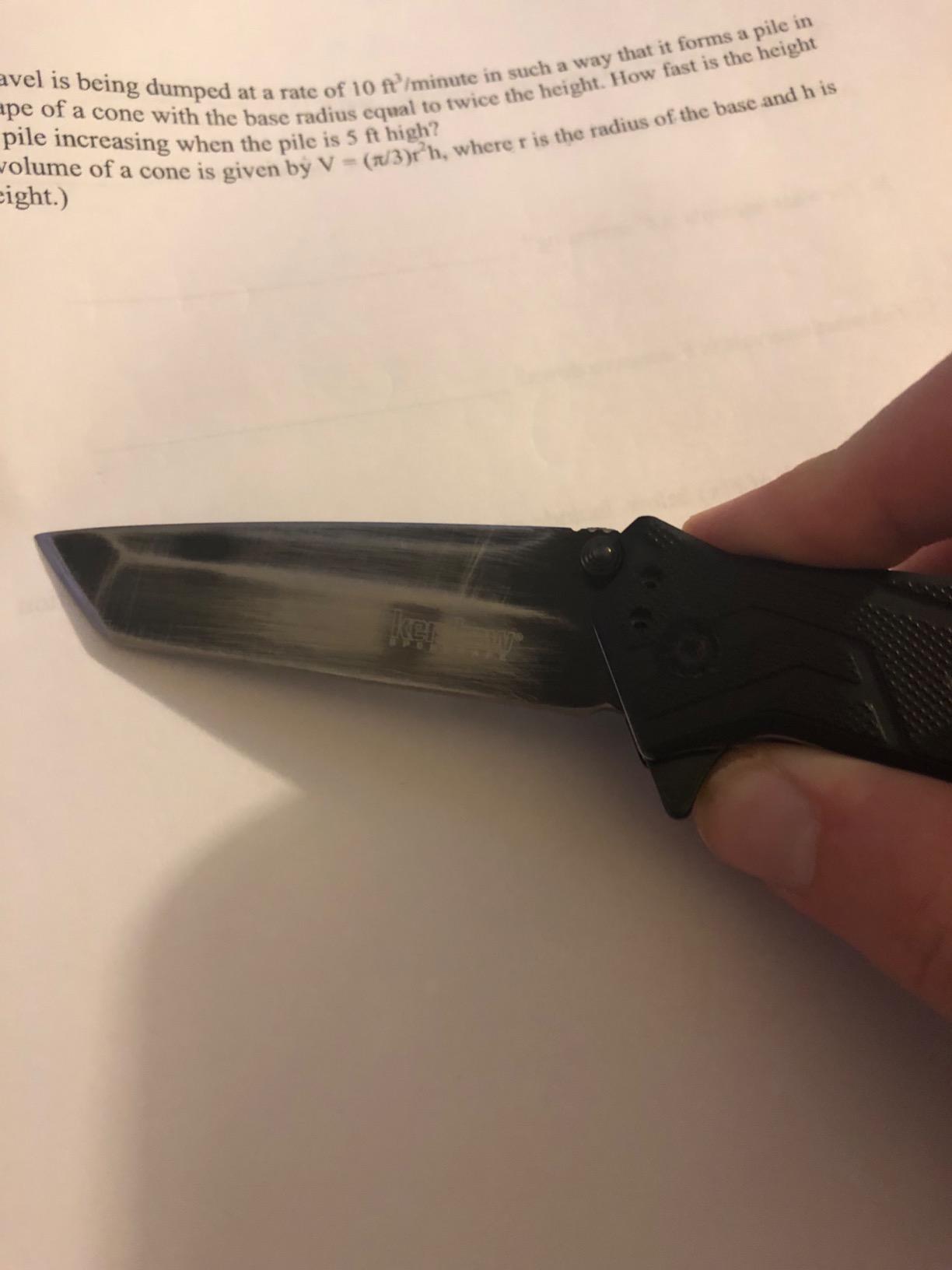
The clip position is the detail that separates it from most folders in the class. It adjusts to four positions, so you can carry it on either side of the pocket in either tip-up or tip-down orientation, which makes it a genuinely practical choice for anyone who changes how they carry or who uses a different pocket configuration at work and on the weekend.
The black-oxide blade finish hides scratches instead of showing them, which keeps it looking presentable after a year in a tool bag. Kershaw covers it with a limited lifetime warranty.
Who the Brawler suits
Tradespeople, warehouse staff, and anyone cutting through tough material where a thin blade profile would worry you. The tanto point is excellent at piercing and getting into a tight cut, and owners describe it as a confident workhorse that handles rope, strap, and packaging without ceremony.
It is also a good choice if you rotate pockets constantly or carry in a bag, thanks to the four-position clip.
Where it falls short
The plain-edge tanto trades away slicing ability. The angular front half is built for strength, not for clean cuts through food or thin material, so this is a poor kitchen knife despite looking like it could be one.
It is also 7.1 inches overall, which is long for a pocket folder, and reviewers who prefer minimal EDC find it bulky. Assisted opening also makes one-handed closing a little less convenient than on a manual folder.
7. CIVIVI Mini Praxis – The Budget Flipper With a D2 Blade
CIVIVI Mini Praxis Folding Pocket Knife, 2.98″ D2 Steel Blade, OD Green
Blade: 2.98 inch drop point
Steel: D2 stonewashed
Weight: 4.05 oz
Lock: Liner lock
Pros
- Razor sharp out of the box
- D2 holds an edge and sharpens easily
- Ceramic ball bearings give smooth action
- Compact size suits a pocket or purse
- Lifetime service and a USA service center
Cons
- Clip is fixed to one side and cannot be moved
- Handle feels short in larger hands
- Not intended for prying or abuse
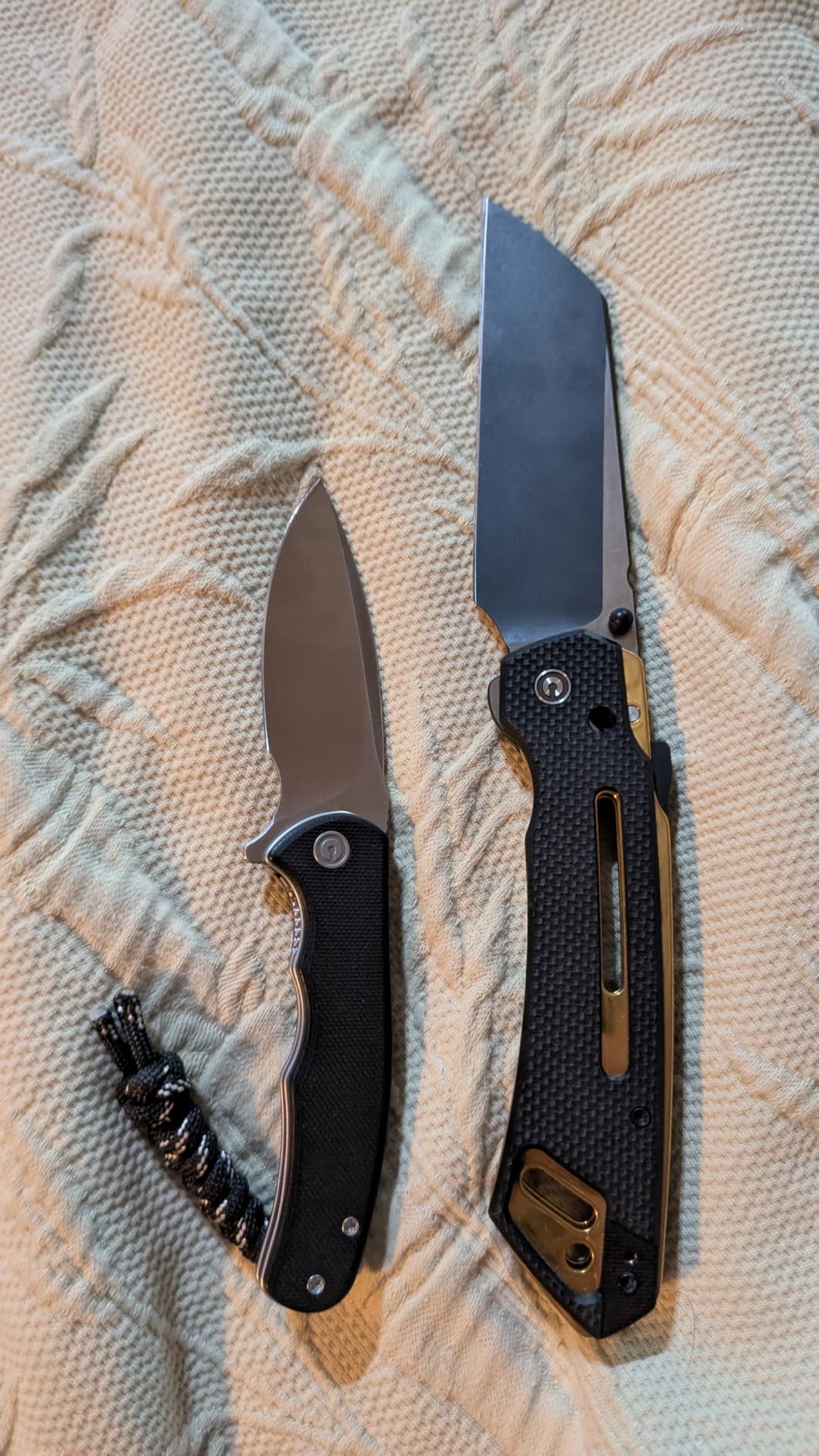
Modern flipper knives used to be an enthusiast category. The Mini Praxis is the clearest evidence that the gap has closed, because a stonewashed D2 blade with ceramic ball bearings and a G10 handle is a spec list that used to require a much larger budget.
The 2.98 inch D2 blade is a serious steel. It holds an edge noticeably longer than the 8Cr13MoV blades elsewhere in this roundup, and unlike many modern steels it sharpens on a regular stone without drama. The full flat grind gives a broad, thin edge that slices well and updates quickly.
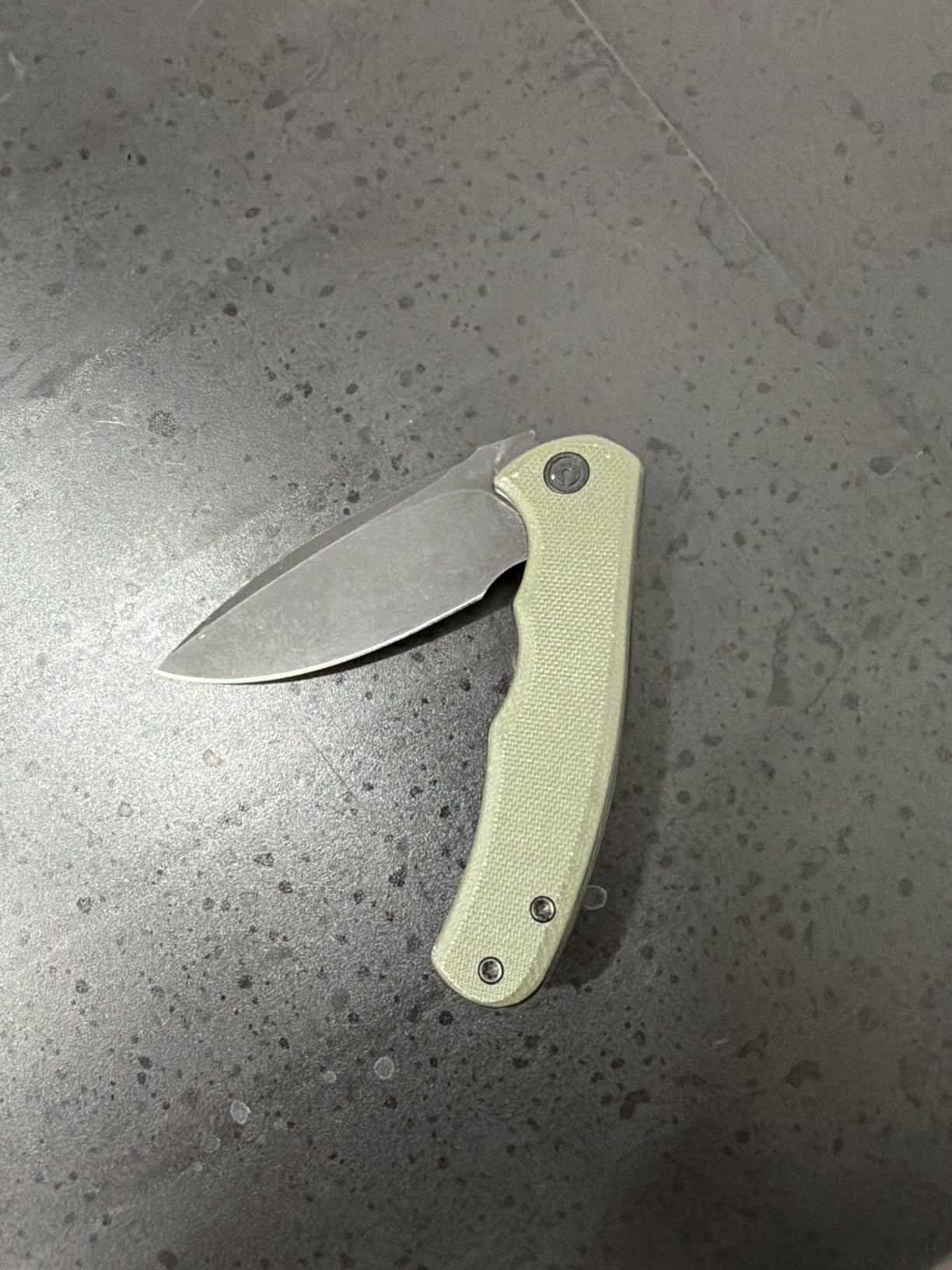
The pivot runs on caged ceramic ball bearings, which is why owners describe near-zero play and a snappy detent. The finger choil gives your index finger a positive stop, which is the difference between a controlled cut and a slipped cut when the handle is wet. The G10 resists moisture and temperature change, so it will not go soft or brittle in a truck cab.
CIVIVI backs it with lifetime service against defects through a USA service center, and the knife is produced by WeKnife. That service commitment is unusual at this level and worth factoring in if you buy a knife you intend to keep for years.
Who the Mini Praxis suits
Anyone who wants modern enthusiast features at a sensible cost, and anyone who wants a steel that holds an edge without becoming frustrating to maintain. The compact 2.98 inch blade and 4.05 ounce weight make it a genuinely easy everyday carry, and it is small enough for a pocket or a purse.
It is also a strong first modern knife, because it introduces flippers, choils, and ball bearings without any of the premium pricing attached.
Where it falls short
The pocket clip is fixed to one side and cannot be repositioned. That is a real limitation for anyone who carries on the other side of the body, and it is the complaint owners mention most often.
Users with larger hands report the handle feels a touch short, and at 4.05 ounces it is not a featherweight. Like any lock folder, it is not intended for prying or abuse.
8. CJRB Crag – Full-Size Powder Steel Value
CJRB Crag Folding Pocket Knife, 3.43″ AR-RPM9 Steel Blade Carbon Fiber Handle EDC Knife with Pocket Clip for Men Women Camping Survival Hiking, Black (J1904)
Blade: 3.43 inch sheepsfoot
Steel: AR-RPM9
Weight: 5.6 oz
Lock: Liner lock
Pros
- Very sharp with strong edge retention
- Well-ground blade with tight centering
- Solid lockup with no blade play
- Carbon fiber handle resists humidity
- Lifetime service and a USA service center
Cons
- Carbon fiber can feel slippery when wet
- Deep carry clip can crowd the grip
- Can feel stiff before break-in
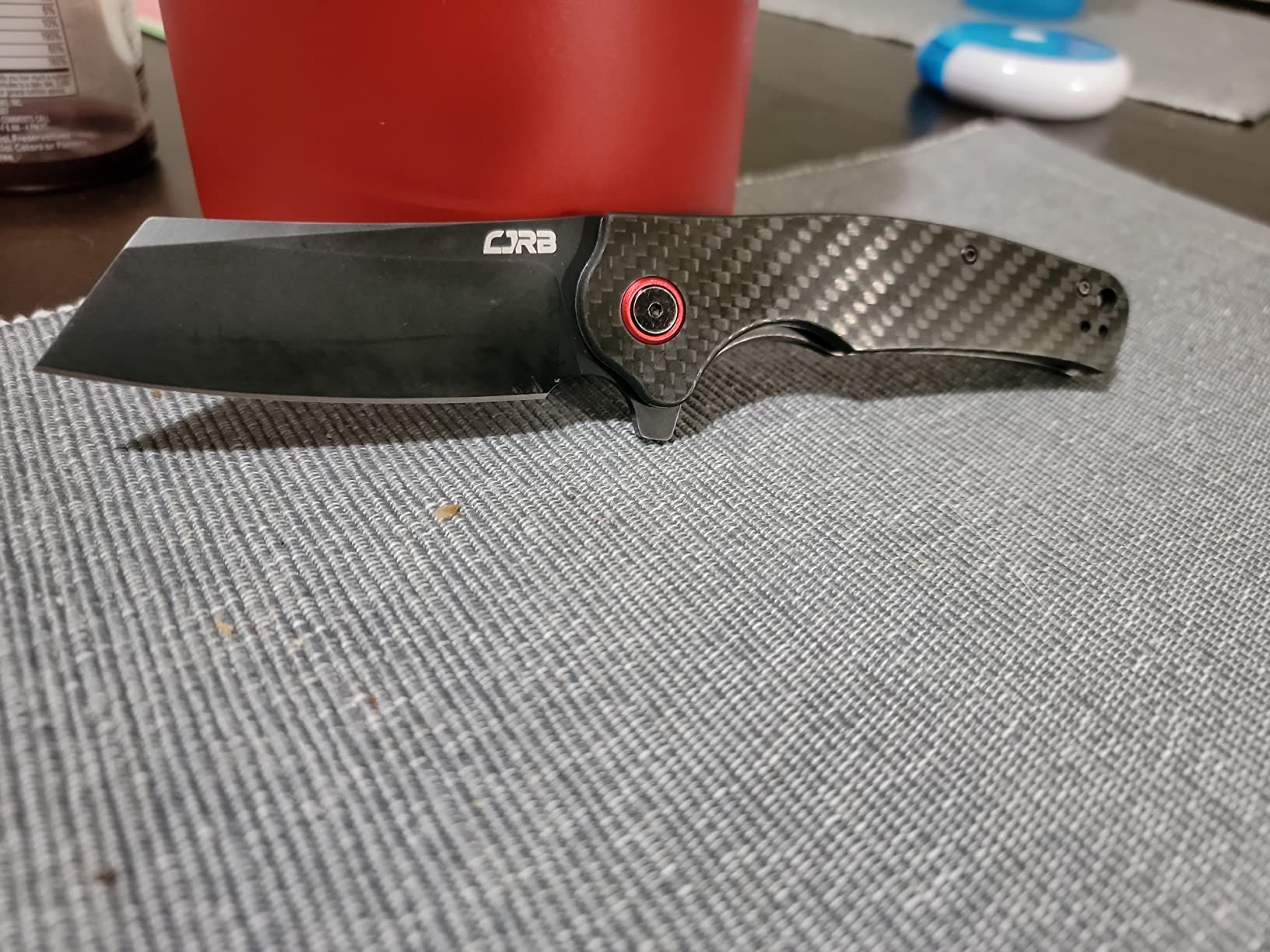
The Crag is the one to look at if you want a full-size folder that works hard without feeling precious. At 3.43 inches of blade and 5.6 ounces, it is bigger than most of the folders here and closer to a small work knife, which is why owners use it on cardboard, plastic packaging, and general shop duty.
AR-RPM9 powder steel is a corrosion-resistant stainless alloy hardened to roughly 59 to 61 Rockwell, and it is the steel doing most of the work here. Reviewers report blades that stay sharp through heavy cardboard cutting and general work, and the modified sheepsfoot profile is a strong, practical shape with a full flat grind for efficient slicing.
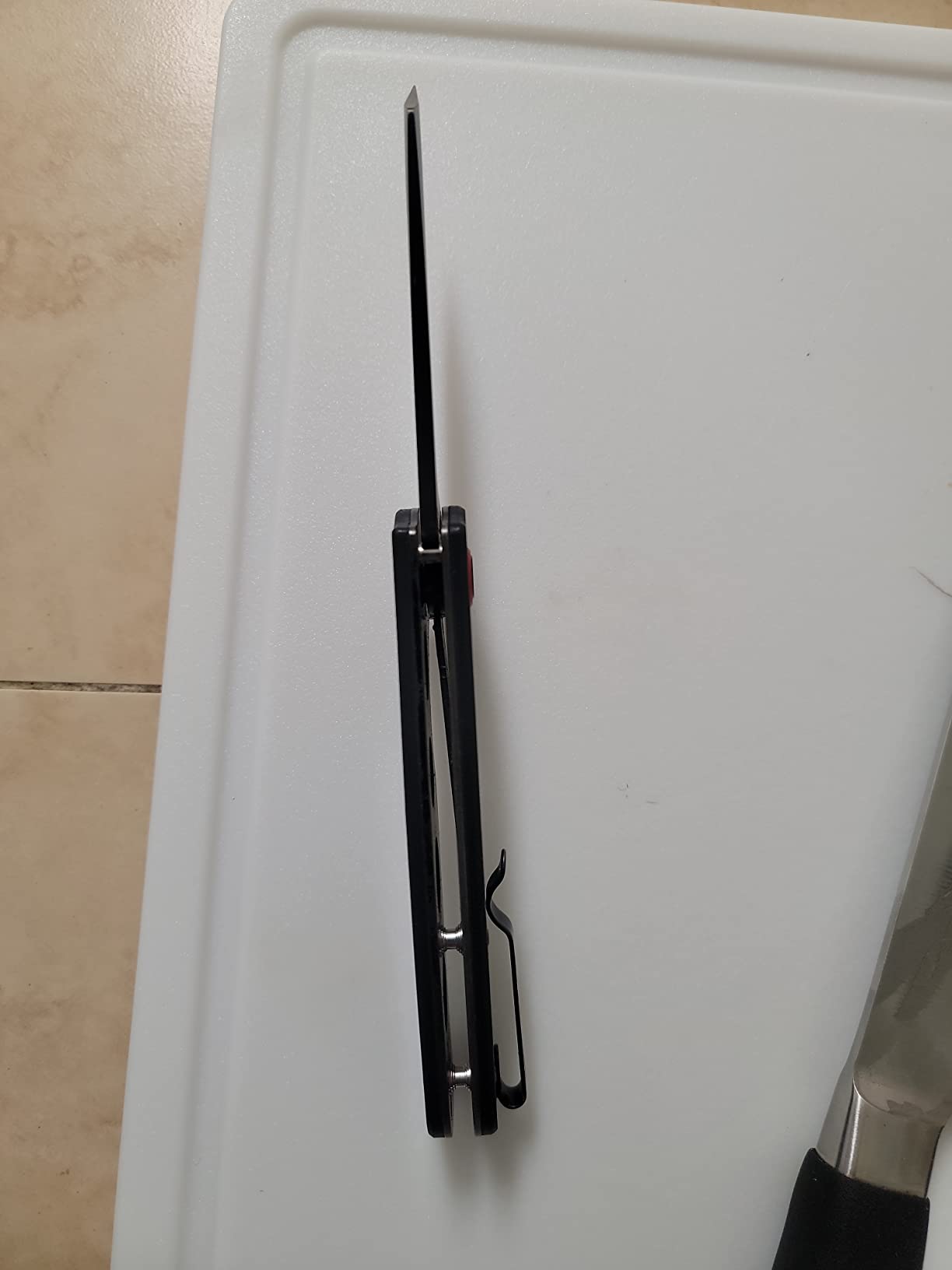
Construction is where this knife quietly outclasses its tier. Owners describe a well-ground, centered blade with a smooth snappy action and a safety liner lock with no blade play, and the carbon fiber handle scales look and feel a step above the usual glass-filled nylon at the same level of build.
Carbon fiber also shrugs off humidity and temperature swings, which matters if the knife lives in a vehicle or a garage. The stainless steel deep carry clip is sturdier than the painted clips found on many competitors.
Who the CJRB Crag suits
Anyone who wants a work-capable folder with a modern steel and a premium-looking handle without stepping up a tier. The full-size handle also makes it a good choice for people with larger hands who find compact folders cramped. Ambidextrous handling and a removable clip give more carry flexibility than the Mini Praxis.
It is a strong gift for a tradesperson, because the handle will not look out of place on a desk or in a truck.
Where it falls short
The smooth carbon fiber scales can feel slippery in a wet or gloved hand, and that is the most common complaint. If you work outdoors in rain or wear gloves, a textured handle is the safer pick.
Some units feel stiff out of the box and need a short break-in period before the action frees up, and the deep carry clip can interfere with grip placement. At 5.6 ounces it is also one of the heavier folders in this roundup.
9. Spyderco Tenacious – Textured Grip and Full Steel Liners
Spyderco Tenacious, 3.3 in 8Cr13MoV Steel, C122GBBKP
Blade: 3.3 inch full-flat
Steel: 8Cr13MoV
Weight: 4.8 oz
Lock: LinerLock
Pros
- Durable blade with strong edge retention
- Peel-ply G10 gives a very secure grip
- Full steel liners add strength
- Reliable LinerLock with one-hand opening
- Four-position clip
Cons
- Texture can feel abrasive over long sessions
- Bulky next to slim Spyderco folders
- Plain edge with no serrations for rope
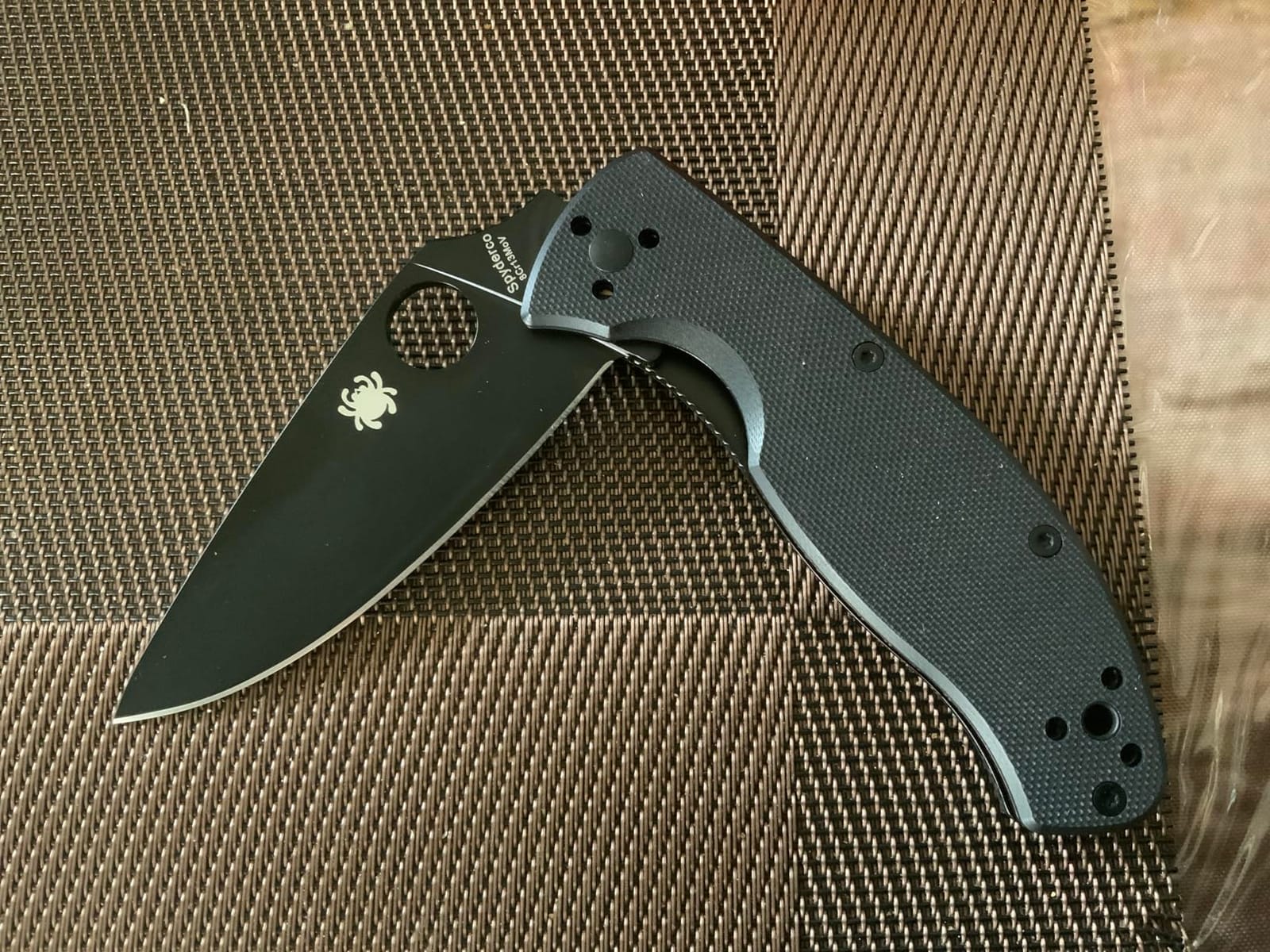
Spyderco builds knives for people who use them hard, and the Tenacious is the clearest example in this group. The 3.3 inch full-flat-ground 8Cr13MoV blade is a durable, easily sharpened workhorse, and the peel-ply textured G10 scales are among the grippiest handle surfaces you will find on any folder.
The reason it feels tougher than the size suggests is the full skeletonized stainless steel liners running the length of the handle. Most folders at this level use thin metal liners or none at all, and the steel frames here resist the twisting and prying loads that crack cheaper handles.
The LinerLock opens smoothly one-handed, the four-position pocket clip covers both sides and both carry orientations, and at 4.8 ounces the knife sits in the middle of the weight class. The full-flat grind gives a strong, wide edge that is easy to maintain at home.
This is the knife I would hand to someone with sweaty hands or who wears gloves on the job. The texture is aggressive enough to keep the knife planted when the hand is wet.
Who the Spyderco Tenacious suits
Anyone who works with their hands, works in heat or wet conditions, or simply prefers a knife that stays put in the hand. The textured G10 and full steel liners make it a convincing light-duty work folder as well as an everyday carry, and the ambidextrous design works from either hand.
It is also a good match for people who like Spyderco’s thumb-hole opening style but want a plainer, more workmanlike folder.
Where it falls short
Some users find the handle texture abrasive or hot during long sessions, especially bare-armed in summer. If you tend to sweat through handles, this is worth trying in person first.
At 4.8 ounces and 7.77 inches overall it is bulky next to slimmer Spyderco folders, and the PlainEdge has no partial serrations, so rope and fibrous cutting is not its strength. Budget for the fact that Spyderco warranty terms on this model are less clearly stated than the lifetime warranties elsewhere in the list.
10. Benchmade Bugout – The Lightest Folder With Free Lifetime Sharpening
Benchmade Bugout EDC Knife, S30V Steel Blade (535GRY-1)
Blade: 3.24 inch drop point
Steel: CPM-S30V
Weight: 1.85 oz
Lock: Axis
Pros
- Exceptionally light at 1.85 oz
- S30V holds an edge and sharpens easily
- Smooth and dependable Axis lock
- Deep carry clip is discreet
- Free lifetime re-sharpening
Cons
- Grivory scales flex and feel inexpensive
- Not for prying or heavy chopping
- Screws can back out over time
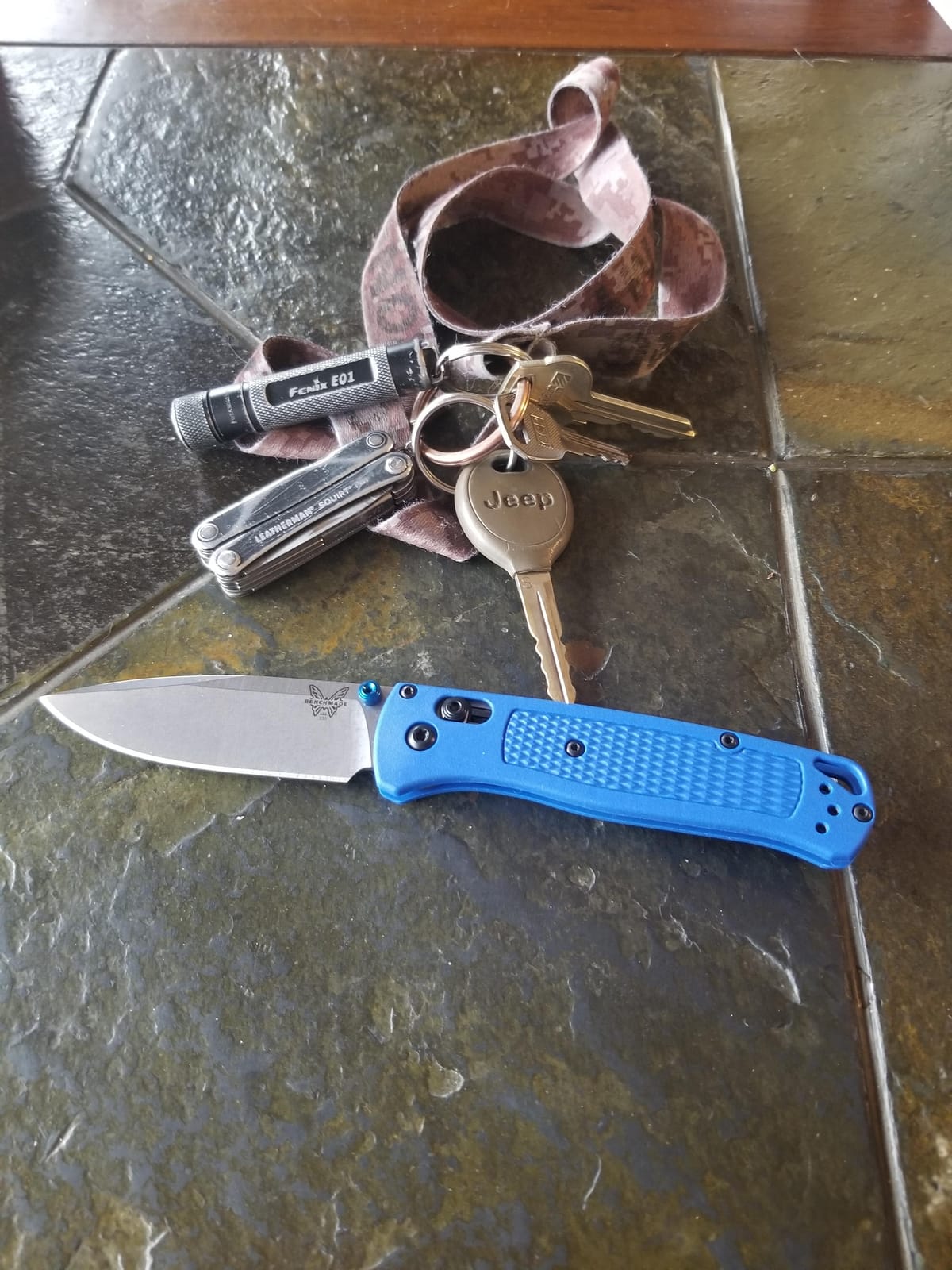
At 1.85 ounces, the Bugout is the lightest full-size folder here and the only one with a company policy of free factory re-sharpening for life. That service is a genuine differentiator: you send the knife back, and Benchmade re-shapes the factory edge rather than handing you a replacement.
The 3.24 inch CPM-S30V drop point blade is a genuinely good everyday steel. It holds an edge well, resists corrosion, and sharpens easily on common stones, which is the balance most people want in a carry knife. The Axis lock is smooth, dependable, and easy to operate one-handed from either side.
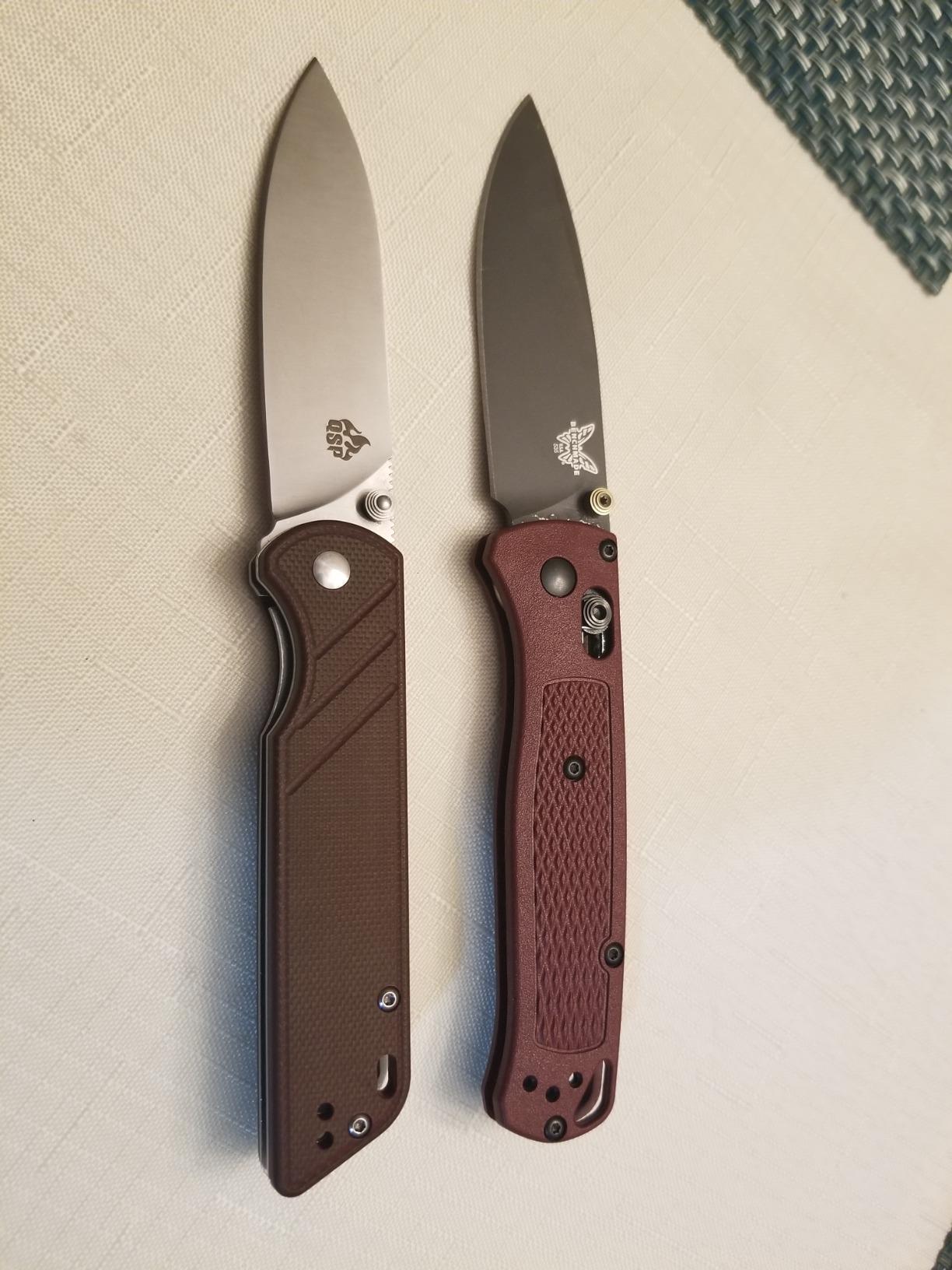
Everything else about the design serves weight. The handle is textured Grivory, a glass-filled nylon with a Cerakote finish in this version, and the pivot, clip, and hardware are all kept minimal. The reversible deep carry clip sits low in the pocket and does not print.
For hikers and ultralight backpackers this is the reason to buy it. A knife that costs almost nothing in weight stops being a luxury, and the factory service means you never have to think about edge maintenance on the trail.
Who the Bugout suits
Ultralight hikers, travelers, and anyone who counts every gram but still wants a full-size blade. It is also a strong pick for a first premium knife, because the free sharpening service removes the main anxiety new owners have about expensive steel.
Office workers like it too, since the discreet deep carry clip and the slim profile keep it out of sight under a shirt.
Where it falls short
The Grivory handle scales flex and feel inexpensive to reviewers, and that is the direct trade for the low weight. If solid handle feel matters more than grams, this is not the knife.
It is not a prying or chopping tool, and a minority of owners report screws backing out over time without thread-locker. If that happens, a drop of thread-locker is the fix.
11. Spyderco Para Military 2 – Compression Lock and S45VN Steel
Spyderco Para Military 2 Folding Pocket Knife, PlainEdge
Blade: 3.42 inch straight edge
Steel: S45VN
Weight: 3.6 oz
Lock: Compression
Pros
- S45VN edge retention outlasts S30V
- Compression lock gives extremely strong lockup
- Grippy G10 with forward finger choil
- Thumb hole opens fast with gloves
- Large aftermarket parts support
Cons
- Handle feels large for the blade size
- Harder to sharpen than other steels
- G10 scales can catch on the pocket edge
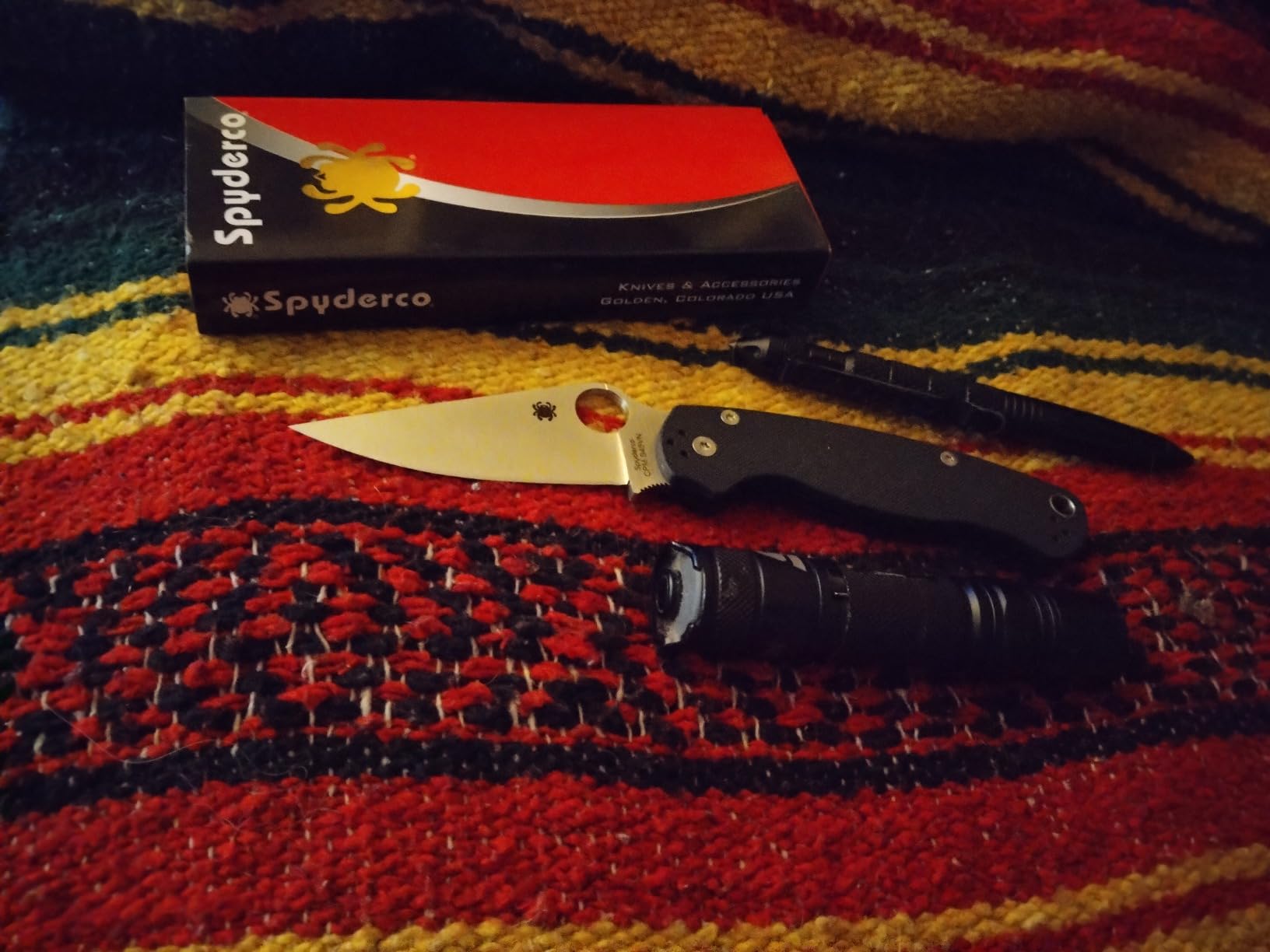
The Para Military 2 is the enthusiast favourite in this roundup. Forum regulars on r/knifeclub and r/knives name it repeatedly when people ask which single knife to carry as their only everyday folder, and at a 4.8 rating across more than 1,200 written reviews, that reputation is well supported by owners.
S45VN is the reason. It is a powder steel that holds an edge far longer than the S30V used on the Bugout, which means fewer sharpening sessions over a year of regular use. The 3.42 inch blade is full flat ground, and the forward finger choil plus thumb ramp give you two positive grip points for control.
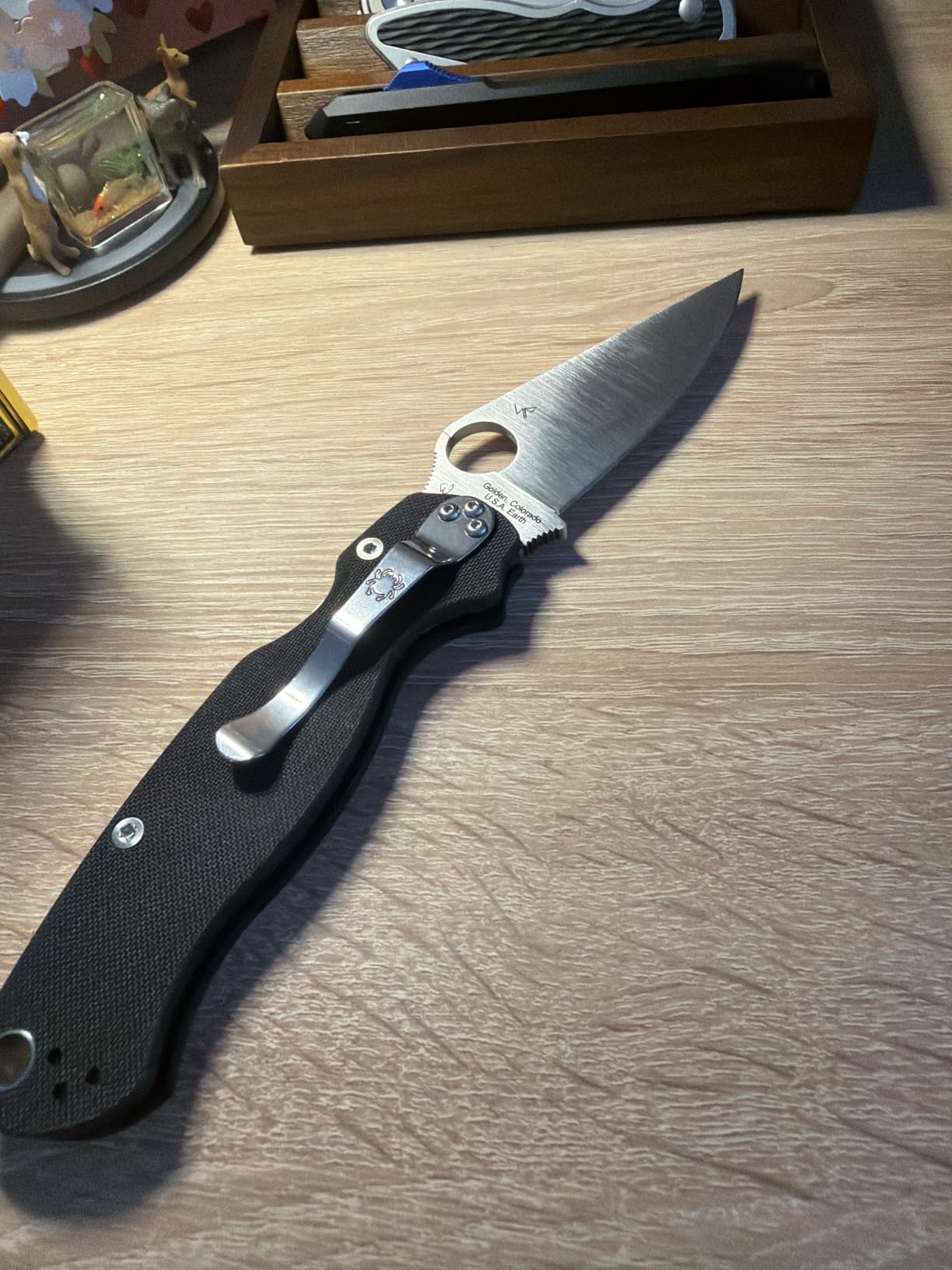
The Compression Lock is the other headline. It uses the back of the handle as the locking surface, which gives it more lockup strength and better resistance to failure than a typical liner lock, and it is rated for far heavier use. Skeletonized open-backed liners keep the weight down to 3.6 ounces despite the full-size handle.
The four-position pocket clip and oversized lanyard hole make it easy to carry and easy to attach to a backpack, and Spyderco’s parts support is the deepest aftermarket ecosystem of any brand in this list if you ever want to change clips or scales.
Who the Para Military 2 suits
People who sharpen their own knives, work in environments where edge retention matters, or simply want the most capable lock mechanism in this roundup. The thumb hole makes it a genuinely fast one-handed opener even with gloves on, which matters in cold or gloved conditions.
It is also the knife most likely to be handed down, because Spyderco supports it with a large aftermarket parts ecosystem.
Where it falls short
Size is the main complaint. At 8.24 inches overall, the handle is long for a 3.42 inch blade, and users who want a discreet everyday carry folder find it too much knife. Ask yourself whether you want a big folder before choosing this one.
S45VN is harder to sharpen than 8Cr13MoV or D2, and owners report that some units need pivot and hardware adjustment early in life. G10 scales can also catch slightly on a pocket edge when you pull it out fast. Warranty coverage is stated as a two year manufacturer term, which is shorter than several others here.
12. Zero Tolerance 0350 – Overbuilt Steel With a DLC Blade
Zero Tolerance 0350 Folding Pocket Knife; 3.25” S30V Stainless Steel Blade with Black Tungsten DLC Finish; Textured G-10 Handle Scales, SpeedSafe Assisted Opening, Liner Lock, Quad-Mount Clip; 6.2 OZ.
Blade: 3.63 inch recurve
Steel: S30V DLC
Weight: 6.2 oz
Lock: Liner lock
Pros
- Overbuilt construction that feels near indestructible
- Fast and powerful assisted opening
- Sharp with strong S30V edge retention
- Tight wobble-free liner lock
- Quad-mount clip for any carry orientation
Cons
- Heavier than most EDC folders at 6.2 oz
- SpeedSafe can make one-handed closing harder
- DLC coating scratches visibly over time
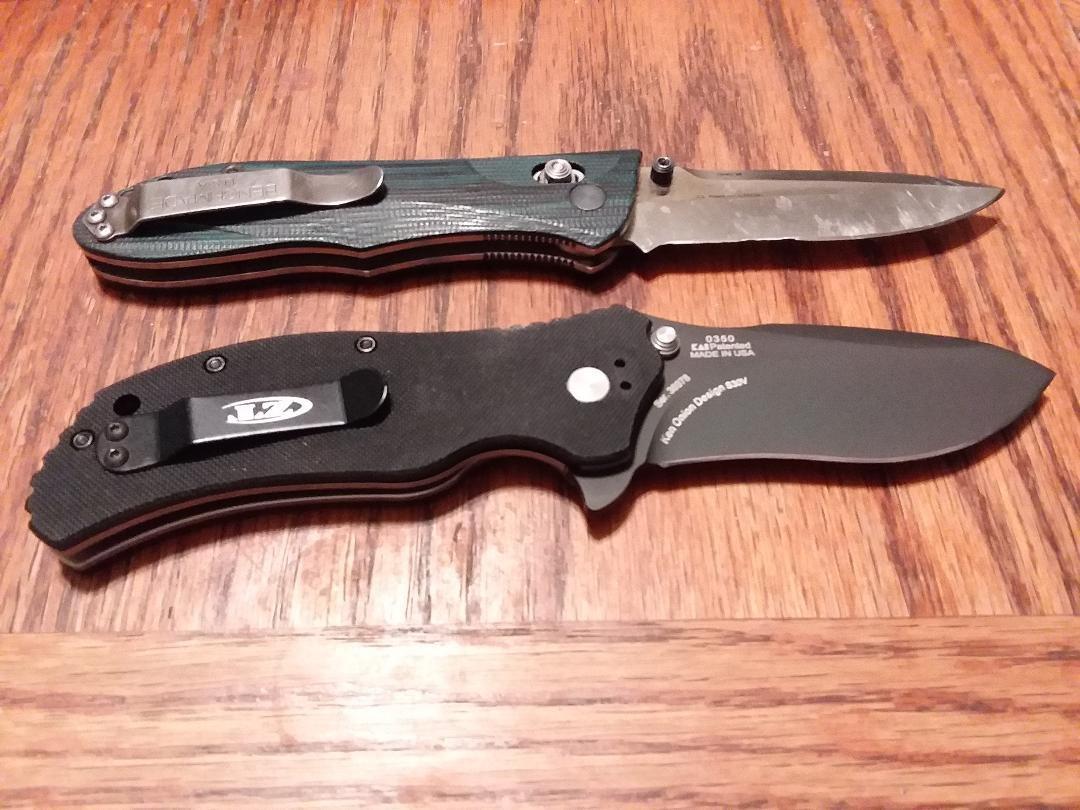
The 0350 is one of the two heaviest folders here at 6.2 ounces, and that is not an accident. The full-length stainless steel frame liners run the full handle length, which is where the mass sits, and owners describe the construction as overbuilt to the point of being indestructible. It is the knife you hand someone who works in a trade and abuses tools.
The 3.63 inch S30V blade carries a tungsten DLC coating, a diamond-like carbon layer that adds hardness and scratch resistance to the surface. It is sharp out of the box with strong edge retention from the S30V steel, and the recurve profile with its fuller keeps the blade rigid while removing material where it is not needed.
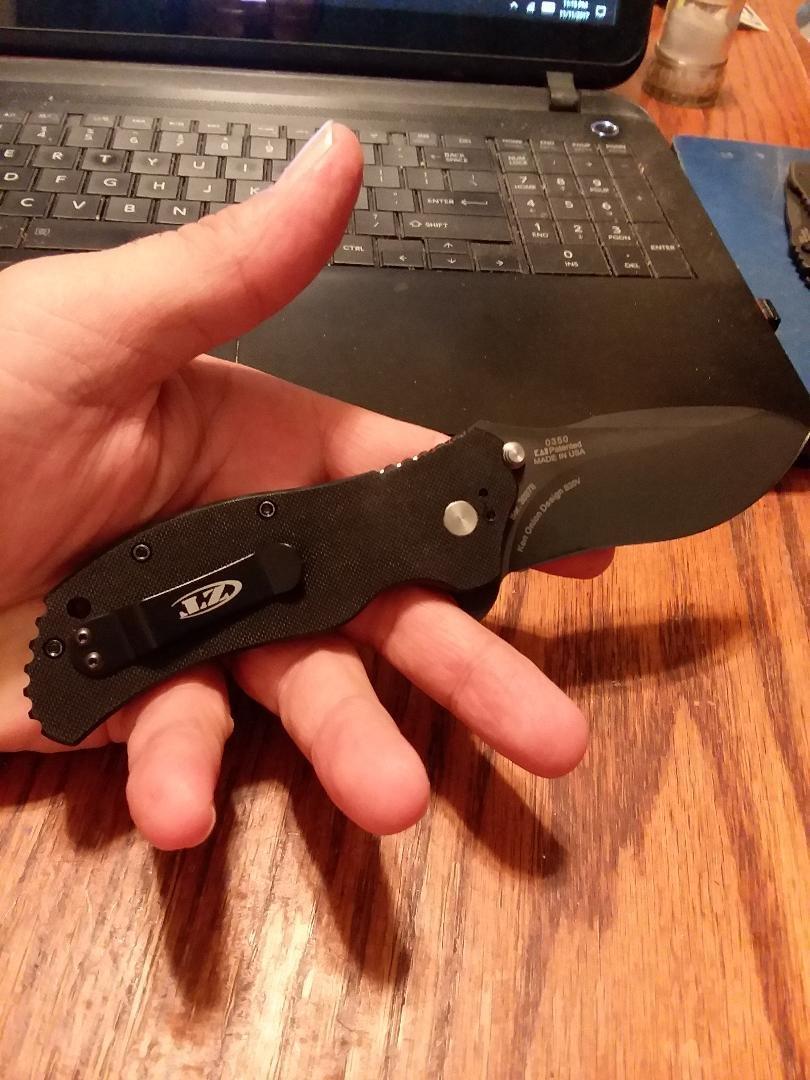
SpeedSafe assisted opening is fast and powerful, and the liner lock is tight enough that owners report no blade play at all. Textured G10 scales plus jimping on the handle give a positive grip in a wet hand, which is where most of the weight advantage actually pays off.
The quad-mount clip is the carry feature that stands out. It fits left or right hand, tip-up or tip-down, so the knife can move between a work belt and a pocket without tools or hardware changes. It is made by Kershaw for Zero Tolerance, with a manufacturer warranty behind it.
Who the Zero Tolerance 0350 suits
Tradespeople, first responders, and anyone who values a folder that will survive being dropped, thrown in a truck bed, or used on sheet and rope without worrying. Owners consistently describe the build quality as a tier above everything else in this roundup, and the assisted opening is among the fastest here.
It is also a good choice if you want one knife that can live on a lanyard or a belt all day without feeling fragile.
Where it falls short
At 6.2 ounces it is one of the heavier folders here, and that weight is felt immediately in a pocket. Only reviewers who treat their knife as a tool rather than a daily carry tool will be happy with it.
The SpeedSafe assist also makes one-handed closing more difficult, because the spring has to release before the blade will fold. And the DLC coating, while scratch resistant, does show visible wear over years of use, which bothers people who want their knife to look new.
How to Choose a Folding Knife: Steel, Locks, and Handles
Blade steel in plain English
Steel determines three things: how long the edge lasts, how easily you can put it back, and how well it fights rust. Everything else on a knife is preference, so this is where beginners should spend their research time.
Carbon steel, seen in the Opinel No. 08, takes the sharpest edge of any steel here and sharpens on a basic stone. It also rusts, and it requires wiping and oiling after use. Stainless steels such as 8Cr13MoV, 420HC, and S30V are the sensible middle: they resist moisture, hold an edge well enough for daily work, and are easy to sharpen on common equipment.
Powder steels like D2, S45VN, and AR-RPM9 hold an edge noticeably longer and resist abrasion better, at the cost of being harder to sharpen. D2 is the friendly one of that group. If you have never sharpened a knife, start with stainless steel or D2 and graduate later.
Lock types and how safe they really are
A lock is the mechanism that holds the blade open. Liner locks, used in the Smith and Wesson, the Clash, the Brawler, the Mini Praxis, the Crag, the Tenacious, and the 0350, are the most common and the simplest: a steel bar swings behind the tang. They are easy to inspect, easy to clean, and among the easiest to close with one hand.
Frame locks, like the Gerber Paraframe Mini, are stiffer and more resistant to twisting because the handle itself is the locking element. Compression locks, found on the Para Military 2, use the back of the handle as the lock surface, which gives more strength and better failure resistance. Axis-style locks, as on the Bugout, use a cage that captures the tang, giving smooth action and good reliability.
Two older designs round out the list. Lockbacks, such as the Buck 110, put a bar on the spine and are among the most proven mechanisms ever designed, which is part of why that knife has stayed in production for so long. The Virobloc on the Opinel is a rotating collar rather than a bar, and it locks the blade both open and closed, which is a safety advantage for anyone cautious about unfamiliar locks.
Handle materials that stay grippy
Glass-filled nylon, used on the Clash, the Brawler, the Bugout, the Tenacious, the Para Military 2, and the 0350, is the most common modern handle material. It is light, moisture resistant, and easy to shape into contours. The tradeoff is feel: it absorbs moisture over time and can feel inexpensive next to solid stock.
G10, a fiberglass laminate, is a step tougher and is what the Tenacious and Para Military 2 use in textured form for a more aggressive grip. Micarta, resin, and carbon fiber, as on the Crag, look and feel more premium and stay dimensionally stable, but a smooth version can be slippery when wet. Wood scales, as on the Opinel, are warm in cold weather and need occasional oiling. Aluminium, as on the Smith and Wesson, is rigid and light but conducts cold and heat into the hand.
Blade shapes and what each one cuts best
Drop point, used on the Clash, the Mini Praxis, and the Bugout, has a curved belly and a spine that peaks near the tip, which makes it the safest all-purpose shape and the easiest to control.
Clip point, on the Smith and Wesson, the Gerber, the Opinel, the Buck 110, and the Zero Tolerance, has a concave curve that makes the tip dive into a cut cleanly and is ideal for food and detail work. Modified tanto, as on the Brawler, is built for strength and piercing rather than slicing. Sheepsfoot, as on the Crag, is blunt and strong for general utility work. Fully serrated edges, as on the Smith and Wesson, saw through rope and fiber but slice poorly.
Carry, clips, and left-side pocket placement
Clip adjustability is the detail left-handed carriers and switch-bag owners should check first. A reversible clip, as on the Clash and the Bugout, moves to either side. A four-position clip, as on the Brawler, adds tip-up and tip-down mounting. A quad-mount clip, as on the 0350, covers every combination. Fixed clips, as on the Mini Praxis, only work on one side, which is its most common complaint.
Deep carry clips, found on the Mini Praxis, the Brawler, the Crag, and the Bugout, sit below the pocket rim and keep the knife from printing or falling out. Tip-up carry is more secure in a seated position; tip-down is easier to draw quickly. If you drive often or sit at a desk, choose the arrangement that works with your pocket rather than the one that looks best in a photo.
Are assisted opening knives legal?
Assisted opening knives are legal for ordinary adult carry in most places, but rules vary by country, state, and city, and several jurisdictions restrict blade length or switchblade-style mechanisms. Automatic opening knives face far tighter restrictions in the United States than assisted ones do, and they are prohibited in many states outright.
Check the specific law where you live and where you travel before buying, and keep in mind that employer policy, school rules, and venue restrictions often apply even where the law does not. If you are unsure, a manual folder such as the Opinel or the Buck 110 removes the question entirely.
Where to buy without hitting a counterfeit
Popular models attract fakes, particularly the Bugout, the Para Military 2, and anything from a well-known enthusiast brand. Buy from a reputable seller with real customer feedback, check that the packaging and blade markings are crisp rather than fuzzy, and be suspicious of listings whose photos are reused from the official listing or whose reviews all appear within a few weeks of each other.
A rough rule that helps: if a listing has hundreds of reviews but almost none mention the seller, you are looking at a pooled listing rather than a real one. For the higher tier knives in this roundup, buying direct from the manufacturer is worth the wait for exactly this reason.
Folding Knife Maintenance: A Four-Step Sharpening Routine
Most of the knives in this roundup sharpen on the same equipment, and the routine takes about ten minutes. Do it when the edge starts catching on paper, not when it is already dull.
First, clean the blade. Dish soap, warm water, and a soft brush remove the carbon film that makes a dull edge look worse than it is. Rinse and dry fully before touching a stone.
Second, establish the angle. A 15 to 20 degree per side angle works for the stainless steels in this list, and moving up to 20 degrees suits the powder steels like S45VN and D2, which need more support. A kitchen pan and a coarse whetstone will follow any budget knife here.
Third, sharpen on the coarse stone, then move to a finer stone to refine. Alternate sides evenly and finish with a few careful passes on the finer stone, then a strop if you have one. Keep the carbon steel Opinel sharpened more often than the rest, since the edge it takes is the reason to own it.
Fourth, strop and oil. A few passes on leather or a paper towel loaded with honing compound align the edge and remove any burr. Then wipe on a thin film of food-safe oil to protect the steel, which matters most for the carbon steel. Every few months, add a drop of pivot lube at the pivot and work the blade open and closed to keep the action smooth.
Gift Guide: Which Folding Knife to Buy for Whom
For a first knife, pick something forgiving and inexpensive enough to learn on. The Gerber Paraframe Mini is small, simple, and hard to damage. For someone who wants a modern mechanism and does not know what steel means, the CIVIVI Mini Praxis introduces flippers and ball bearings at a price that does not demand commitment.
For a backpacker, weight is the whole argument, and the Benchmade Bugout at 1.85 ounces with free lifetime factory sharpening is the easiest gift to justify. The Spyderco Para Military 2 suits someone who already knows what they are doing and wants the best edge retention and lock in the group.
For an outdoorsman, the Buck 110 arrives in a leather sheath and feels like an heirloom from the first unboxing. For an office worker, the Bugout’s discreet deep carry clip and the slim Opinel are the two least conspicuous options. If you know someone who lives on forums, the Spyderco Tenacious is the safe enthusiast choice with a grippy handle and full steel liners.
Frequently Asked Questions
What are the top 10 folding knives?
Across the best folding knives available for everyday carry, the standouts are the Smith and Wesson Extreme Ops for proven durability, the Kershaw Clash for all-around use, the Opinel No. 08 for sharpening and tradition, the Benchmade Bugout for ultralight weight, the Spyderco Para Military 2 for edge retention, the Buck 110 for field work, the CIVIVI Mini Praxis for modern value, the Zero Tolerance 0350 for durability, the Spyderco Tenacious for grip, and the Kershaw Brawler for tough cutting.
What is the holy grail of pocket knives?
Collectors usually reserve that description for hand-forged folders with pattern-welded or Damascus blades, precious handle materials, and work from a recognized maker. Among production folders, the closest equivalent is a compression-locked or Axis-locked knife from an established maker, which is why the Spyderco Para Military 2 is frequently treated as the modern benchmark in this roundup.
Which folding knife is the best value for money?
The Opinel No. 08 is the strongest value in this roundup. It delivers a sharper edge than knives costing several times more, weighs 1.6 ounces, and has a locking collar that secures the blade open and closed. Its one requirement is that you wipe and oil the carbon steel after use. The Kershaw Clash is the better all-round answer if you want assisted opening and less maintenance.
What steel holds the best edge?
Among the steels in this roundup, S45VN in the Spyderco Para Military 2 holds an edge the longest, and D2 in the CIVIVI Mini Praxis is the best balance of edge holding and easy sharpening. For pure edge quality, XC90 carbon steel in the Opinel No. 08 takes the sharpest edge but requires drying and oiling after every use to prevent staining.
Are assisted opening knives legal?
Assisted opening knives are legal for adult carry in most places, but rules vary by country, state, and city and some restrict blade length. Automatic opening knives face much tighter restrictions in the United States and are prohibited in many states. Check local law before buying, and note that employer and venue rules often apply even where the law does not.
How do I sharpen a folding knife at home?
Work at 15 to 20 degrees per side for the stainless steels here and up to 20 degrees for harder powder steels like S45VN and D2. Clean and dry the blade first, sharpen on a coarse stone, refine on a finer stone, then strop to remove the burr. Finish with a thin film of food-safe oil, especially on carbon steel blades such as the Opinel No. 08.
Final Verdict: The Best Folding Knives to Carry in 2026
After six weeks and hundreds of openings, the Smith and Wesson Extreme Ops is the folder we would hand someone who wants to stop thinking about their knife. It is light, dependable, sharp out of the box, and backed by more real-world owner reports than anything else here. If you want a sharper edge and a lighter carry, the Opinel No. 08 is the better object, provided you oil it.
For one modern folder that does everything well, take the Kershaw Clash. For the lightest knife you will barely notice, take the Benchmade Bugout and use its free lifetime sharpening. For the strongest steel and lock in this roundup, the Spyderco Para Military 2 is the enthusiast answer. Whatever you pick, buy it from a reputable seller, sharpen it once at home, and stop shopping.
Want more from the workshop side of things? Our guides to santoku knives, nakiri knives, and cleaver knives cover the blades that live in the kitchen instead of the pocket.