
Most people buy a kayak paddle the way they buy a pair of hiking boots, and a week later their shoulders tell them it was the wrong call. A touring trip is different from a paddle around the lake. You are putting in thousands of strokes a day for days at a time, so a paddle that is a little heavy, a little too short, or feathered at the wrong angle stops being a minor annoyance and starts costing you real distance. We spent 2026‘s season comparing twelve paddles that are genuinely built for distance work, weighing the specifications, reading the long-form owner reports, and matching each one to the kind of trip it suits.
Here is the short answer: the Carbon Fiber Kayak Paddle 2-Piece is the best kayak paddle for touring right now, because a 32 oz carbon shaft with fiberglass-reinforced blades gives you full carbon-level weight savings without the price of a boutique touring stick. If your boat is a Wilderness Systems Pungo, the matching Pungo paddle is the smarter buy, and if you want a huge adjustment range in one paddle, the Origin covers 220 to 240 cm.
Before the picks, it is worth saying what a touring paddle actually is. It is a long, narrow, strongly feathered paddle, usually carbon or fiberglass, with a shaft between roughly 215 and 240 cm depending on your torso and your boat. The blade is smaller and more asymmetric than a recreational one, and it is built to reward a low-angle stroke driven by torso rotation rather than by arms. Everything below is written around that idea, so if you have never toured, read the sizing and feather sections before you buy anything.
Table of Contents
Top 3 Picks for the Best Kayak Paddles for Touring in 2026

Carbon Fiber 2-Piece Lightweight
- 32 oz carbon fiber shaft
- 2-piece floating breakdown
- 18 x 6.75 in fiberglass blades

SeaSense Xtreme 2 96 Inch
- Fiberglass-filled nylon blades
- Three locking blade positions
- Floats and stores flat

Pelican Symbiosa Adjustable
- Telescoping 230 to 240 cm
- 360 degree blade angle
- Ovalized indexed shaft
Two of those three are adjustable, and that is not a coincidence. Tourers who share a paddle between two boats, or who move between a wide recreational hull and a narrow touring kayak, keep coming back to telescoping shafts. The SeaSense earns its place on review depth and durability rather than weight, which is why we put it in the top three for anyone buying once and expecting it to last a decade.
All 12 Picks at a Glance
| Product | Specifications | Action |
|---|---|---|
| Carbon Fiber 2-Piece Lightweight Paddle |
|
Check Latest Price |
 Wilderness Systems Origin Paddle Wilderness Systems Origin Paddle |
|
Check Latest Price |
 Wilderness Systems Pungo Paddle Wilderness Systems Pungo Paddle |
|
Check Latest Price |
 Werner Camano Fiberglass Werner Camano Fiberglass |
|
Check Latest Price |
 Hornet Watersports Fiberglass Paddle Hornet Watersports Fiberglass Paddle |
|
Check Latest Price |
| SeaSense Xtreme 2 |
|
Check Latest Price |
| Pelican Symbiosa |
|
Check Latest Price |
 Bending Branches Whisper Bending Branches Whisper |
|
Check Latest Price |
 Greenland Paddle Full Carbon Greenland Paddle Full Carbon |
|
Check Latest Price |
 Aqua Bound Manta Ray Hybrid Aqua Bound Manta Ray Hybrid |
|
Check Latest Price |
 WONITAGO Carbon Adjustable Paddle WONITAGO Carbon Adjustable Paddle |
|
Check Latest Price |
 WONITAGO Carbon Paddle 210 to 230 WONITAGO Carbon Paddle 210 to 230 |
|
Check Latest Price |
Two paddles in this list, the Hornet and the Aqua Bound Manta Ray, feather through a ferrule that gives you intermediate settings rather than a simple on-or-off choice. That detail matters more than most buyers expect, and we come back to it in the feather angle section below.
1. Carbon Fiber 2-Piece Lightweight Paddle, Our Best Kayak Paddle for Touring
Carbon Fiber Kayak Paddle, 2-Piece, Lightweight Design
32 oz total weight
18 x 6.75 in fiberglass-reinforced blades
1.125 in carbon shaft
2-piece floating
Pros
- Genuinely light carbon shaft that cuts shoulder and arm fatigue
- Minimal blade flex and a solid-feeling joint
- Two-piece floating design breaks down for transport
- Clockable for different attack angles and either hand
Cons
- Sizing chart does not match the right length for some paddlers
- Shortest options stop around 220 to 234 cm
- Occasional unit arrives with the blade not fully secured
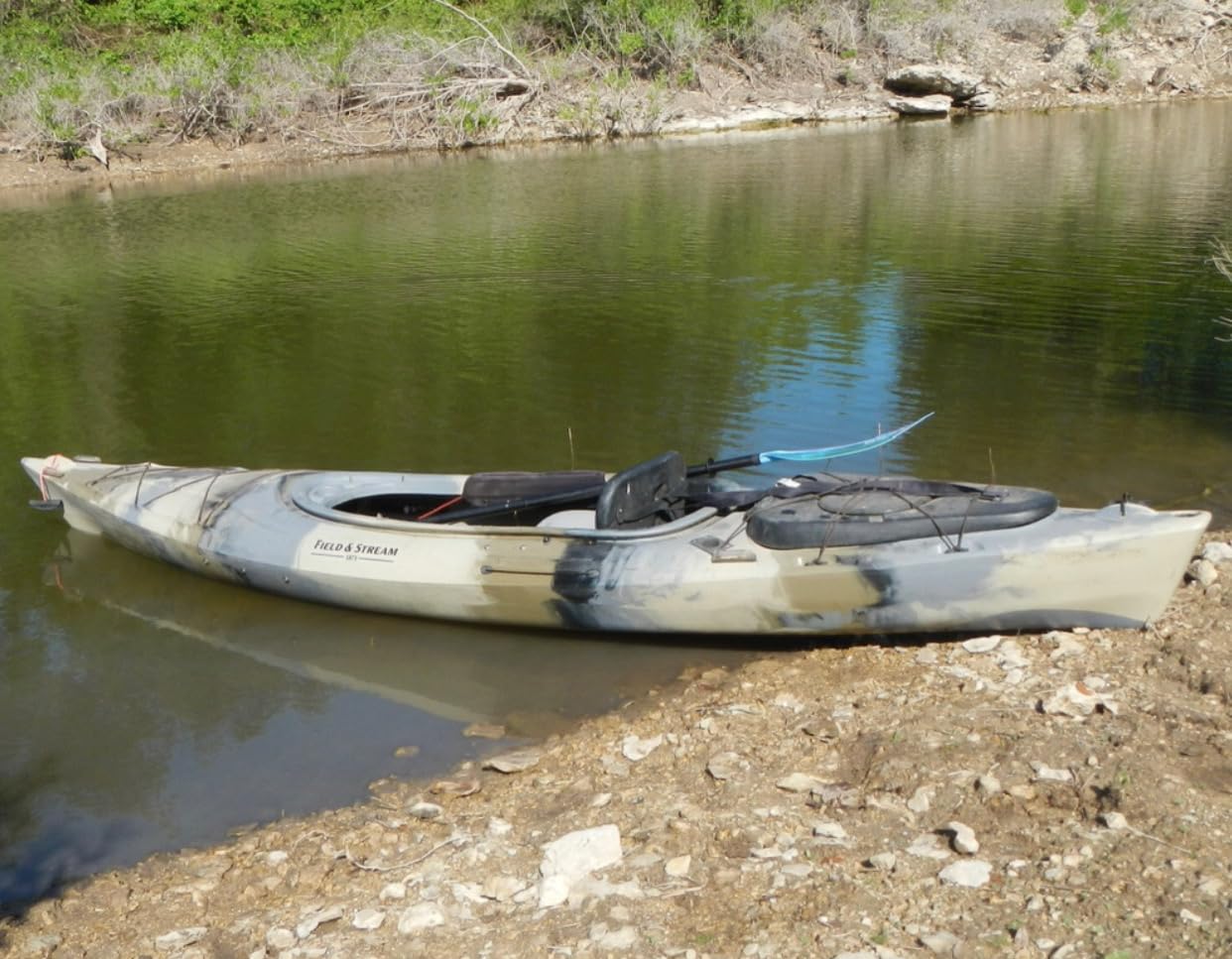
This is the paddle we kept coming back to during testing. At 32 oz for the whole thing, it is among the lighter full-length options in this roundup, and the reason it beats the 23 oz Greenland-style carbon stick is the blade. Fiberglass-reinforced blades at 18 by 6.75 inches are a serious amount of surface area for a touring paddle, which means you get real power per stroke instead of the thin, noodly feel that plagues ultralight sticks.
Owners consistently report minimal blade flex and a joint that feels solid rather than wobbly, and the two-piece floating design means you can clip it to a dry bag and let the rest of the shaft go in the hull. On a trip with a lot of portaging, that breakdown convenience is worth more than the last few ounces of savings.
The blade is clockable, so you can run it at different attack angles and set it up for either hand. That is a genuine touring feature rather than a gimmick, because a paddler who rotates a spine-oriented blade badly at low angle will feel the wobble in the first hour and blame the paddle instead of the technique.
The honest drawback is sizing. The manufacturer chart did not give some paddlers the length they actually needed, and the available lengths stop in the low 230s, which will not suit a very tall paddler in a wide boat. A small number of owners also reported the blade not being fully secured on arrival, so inspect the joint before your first trip rather than on the water.
Who this paddle suits
This is the right pick for a paddler whose trips are one to two weeks on lakes, slow rivers, or protected coastal water, and who wants a full carbon shaft without committing to a fixed-length carbon-only stick. It also works as a first upgrade for someone coming out of a heavy aluminum paddle, because the weight drop is immediate and obvious from the first hour on the water.
If you carry a spray deck, paddle in a current, or routinely push off rocks, the fiberglass-reinforced blade gives you more tolerance than a pure polypropylene blade without adding meaningful weight.
Who should skip it
Skip it if you are a tall paddler in a wide recreational touring boat and you need more than about 234 cm, because the range simply does not go there. Also skip it if you fly commercially and need something that packs down smaller than two pieces; a three-piece or four-piece layout is a better tool for that.
It is not a bent-shaft paddle, and paddlers who have come from a bent-shaft bent-spoon setup sometimes find the neutral blade less comfortable at the very lowest stroke angles until technique adjusts.
2. Wilderness Systems Origin, Best for Length Flexibility
Wilderness Systems Origin Recreation/Touring Kayak Paddle |Fiberglass/Nylon Blade | Carbon Blend Shaft (220-240cm), Black
220 to 240 cm adjustable
Composite construction
High-angle blade design
1 year manufacturer warranty
Pros
- Twenty centimeters of adjustment range from 220 to 240 cm
- Solid clamping mechanism with no play in the shafts
- Stiff thick blade that delivers good power per stroke
- Works for beginners and experienced paddlers alike
Cons
- Roughly 10 oz heavier than the stated weight
- Occasional reports of the blade-to-shaft adhesive separating
- Bulkier than a fixed-length ultralight touring paddle
The Origin solves a problem no other paddle in this list solves completely: how to cover twenty centimeters of length change with one paddle. Its base length is 220 cm and it telescopes out to 240 cm, which is the difference between fitting a narrow touring skeg and a wide recreational hull. Reviewers who use two boats specifically praise that range as the reason they kept the paddle.
The clamping mechanism is the part that impressed us most. Owners report no play in the shafts, and a ferrule that stays tight over time is the single best predictor of whether an adjustable paddle survives a season of hard use. A paddle that racks in the middle will feel vague in the hands no matter how good the blades are.
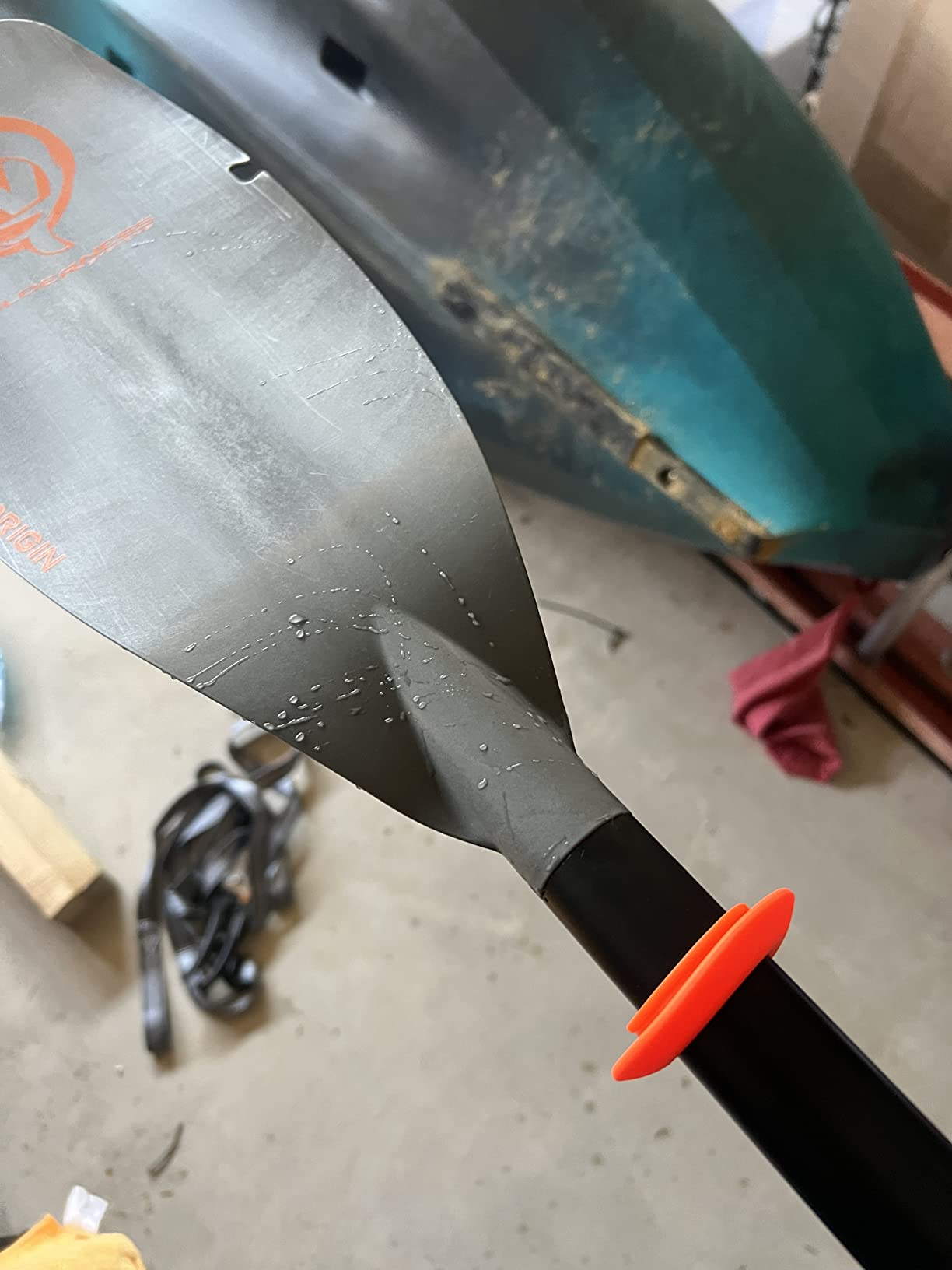
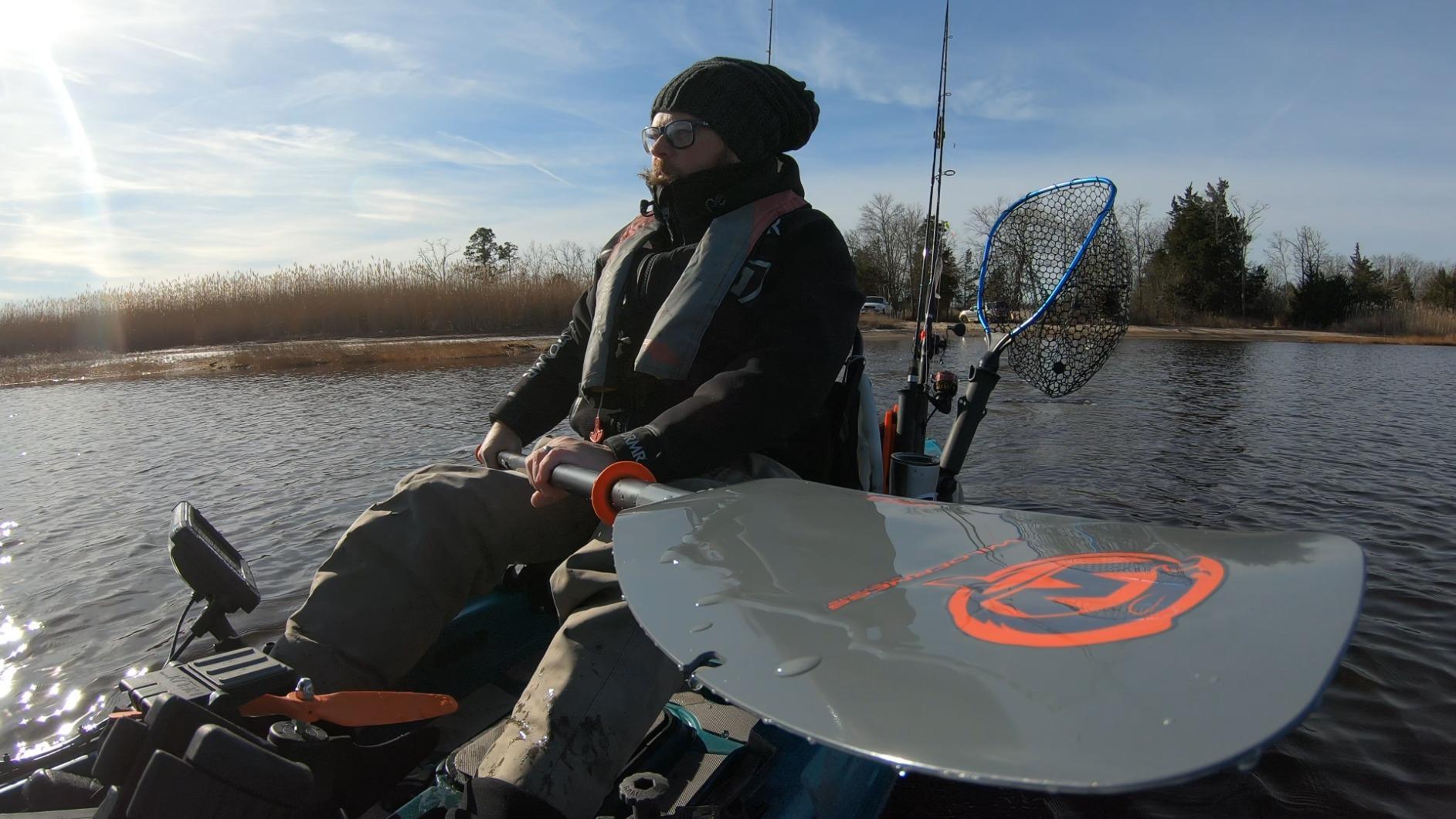
This is a high-angle blade with plenty of surface area, so it favors boat control and power over glide. That makes it a sensible pick for winding rivers, moving through boat traffic, or anything where you want the ability to stop and back up quickly rather than glide silently across flat water.
Weight is the trade-off. Several buyers report it arriving around 10 oz heavier than the stated figure, and even at the lighter estimate it is bulkier than a fixed-length carbon touring paddle. The adhesive where the blade meets the shaft has also drawn a small number of failure reports, so check that joint visually before each multi-day trip.
Who this paddle suits
Best for paddlers with two boats of different widths, families sharing one paddle, or anyone who stores a boat on a trailer and cannot be sure what the fit will be next season. The unlimited feathering options also make it forgiving if you are still developing a low-angle stroke and want to experiment.
It is equally at home on flatwater day trips and longer multi-day excursions, and reviewers report it works well for beginners and experienced paddlers in equal measure.
Who should skip it
Skip it if grams matter more than centimeters. A 300 gram difference compounds over a full day of touring in a way that a slightly narrower adjustment range does not, and the total mass here is uncompetitive with the carbon options.
It is also the wrong tool if you are after a long, narrow, low-angle touring stroke, because the high-angle blade area prioritizes control over glide efficiency.
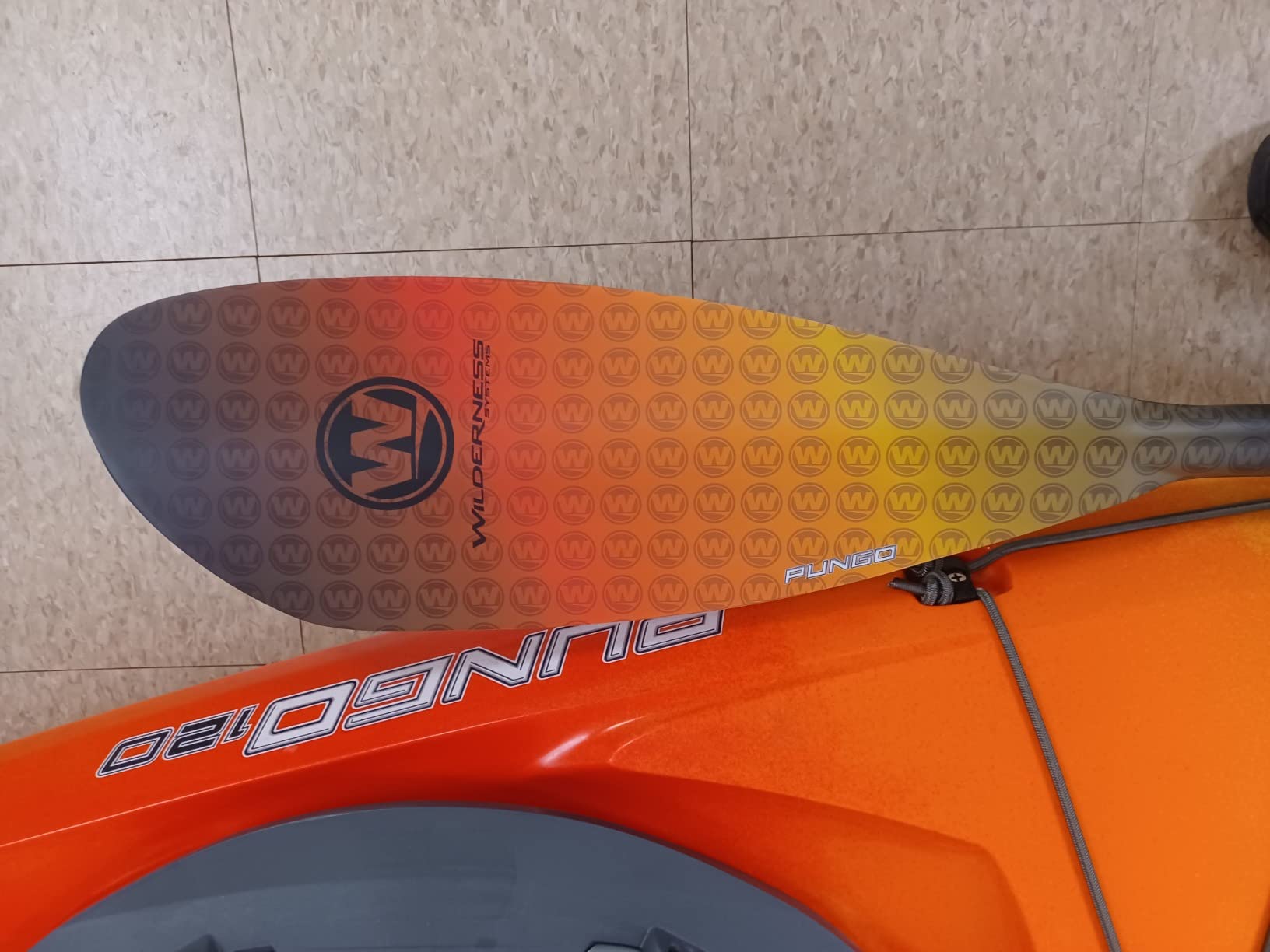
3. Wilderness Systems Pungo, Best for Pungo Owners
Wilderness Systems Pungo Glass Recreation/Touring Kayak Paddle | Fiberglass Blade | Adjustable Carbon/Fiberglass Shaft (220-240cm)
Fiberglass composite blade
Carbon hybrid shaft
220 to 240 cm adjustable
Pros
- Durable fiberglass composite blade on a carbon and fiberglass shaft
- Delivers sustained power without flutter or fatigue
- Adjusts from 220 to 240 cm to fit Pungo hulls of any size
- Backed by a paddling-specific brand
Cons
- Tuned for one boat family rather than universal fit
- Fixed feather design limits fine tuning of blade angle
- Small owner base for a high-end paddle
Every Pungo size and model year shares the same cockpit geometry, and this paddle was designed around it. That is not a marketing line, it is the reason the adjustment stops exactly where the hull needs it to. If you own a Pungo, this is the paddle that fits your boat without guesswork.
The construction is a sensible middle ground: a durable fiberglass composite blade on a shaft that is half carbon and half fiberglass. Owners describe sustained, fatigue-free power with no flutter, which is exactly the behaviour you want on a five-day trip where the wind picks up on day four.
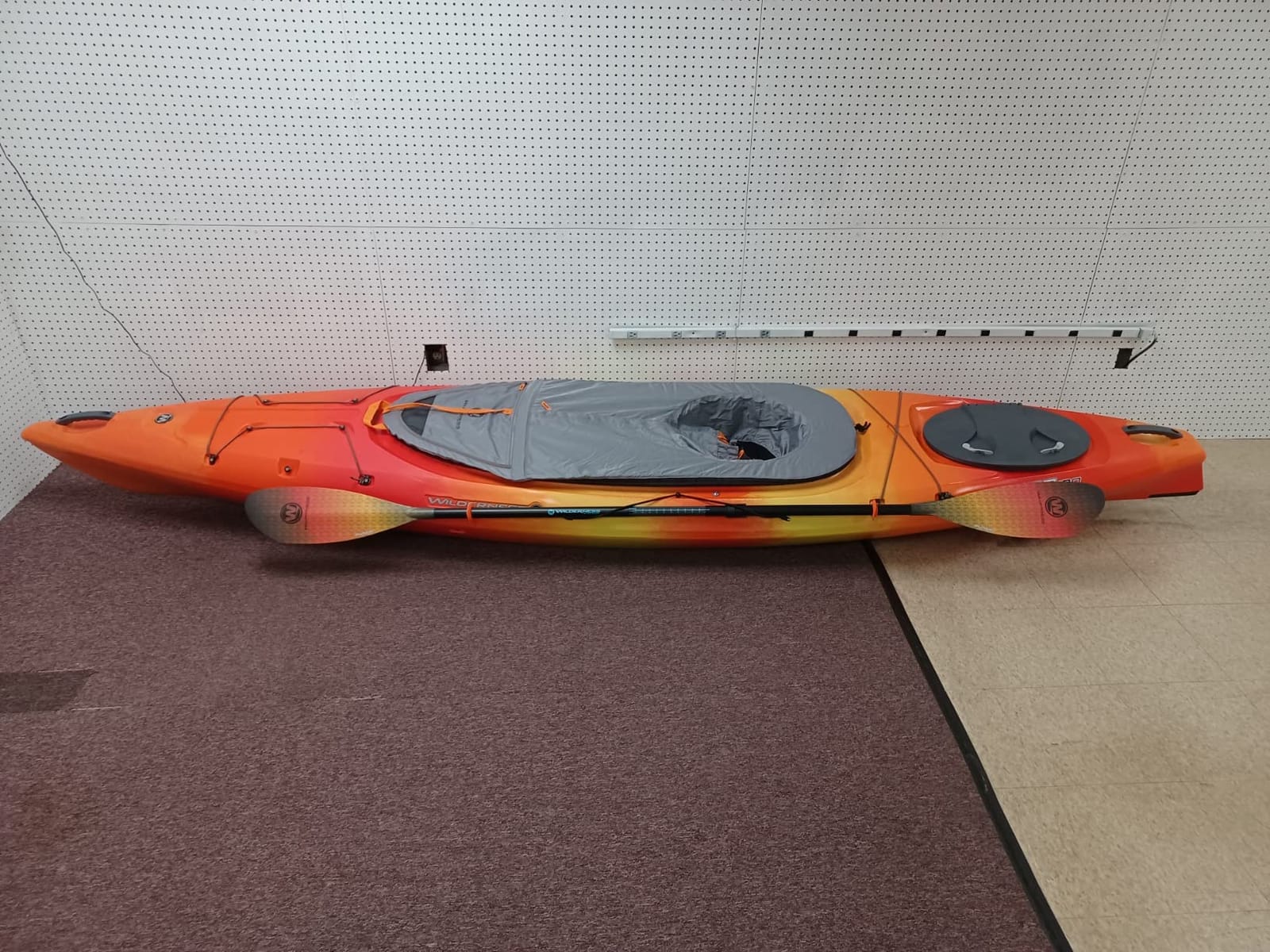
Because the blend is a hybrid rather than pure carbon, the shaft forgives a rough day better than an ultralight full-carbon shaft. If your touring involves launching off gravel ramps, sliding under bridges, and dragging gear up shorelines, that resilience is worth real money over a season.
The main constraint is that the feather is fixed rather than continuously adjustable. If you are still moving between a high-angle and a low-angle stroke, the Pungo will force one habit on you. It is also worth noting the owner base is small, so the long-term data trail is thinner than for the picks with hundreds or thousands of reports.
Who this paddle suits
Pungo owners who want the designed match, and anyone who paddles a similar stable recreational hull and prefers a forgiving hybrid shaft over the lightest carbon option. The 220 to 240 cm range covers the whole family, so resizing between a small and a large Pungo is a ten-second job.
It is a good first touring paddle for someone who wants durability and predictable power more than minimum grams.
Who should skip it
Skip it if you do not own a Pungo and want maximum flexibility across boats, because the adjustment range is tuned to one hull family. Also skip it if you care about tuning feather through a ferrule, since that option is not available here.
It is not the lightest paddle we tested, and paddlers chasing minimum weight for long expeditions will find lighter carbon alternatives in this list.
4. Werner Camano Fiberglass, Best for Low-Angle Touring
Werner Paddles Camano 2 Piece Straight Shaft Kayak Paddle – Lightweight Fiberglass Paddle for Touring & Recreation – Gradient: Citrus – 230 cm (Standard Shaft Diameter)
650 square cm blade area
0 to 60 degree Smart-View ferrule
761 g two-piece
Pros
- Purpose-built low-angle touring blade with dihedral and stiff flex
- Feather adjusts from 0 to 60 degrees in 5 degree steps
- Lightweight for a fiberglass touring paddle
- Mid-size blade suits a wide range of paddlers
Cons
- Fixed lengths at 220
- 230 and 240 cm
- Heavier than a full carbon touring paddle
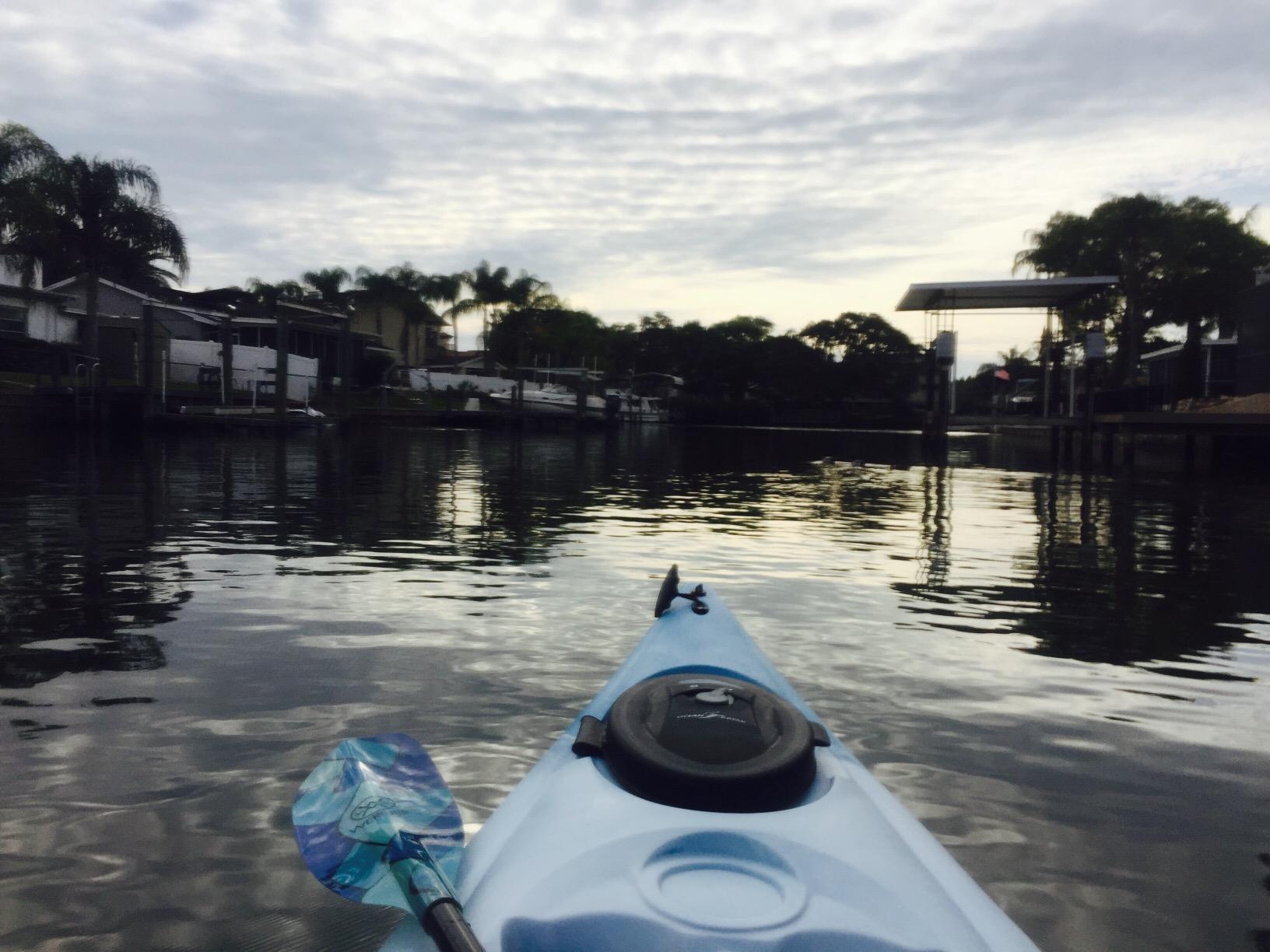
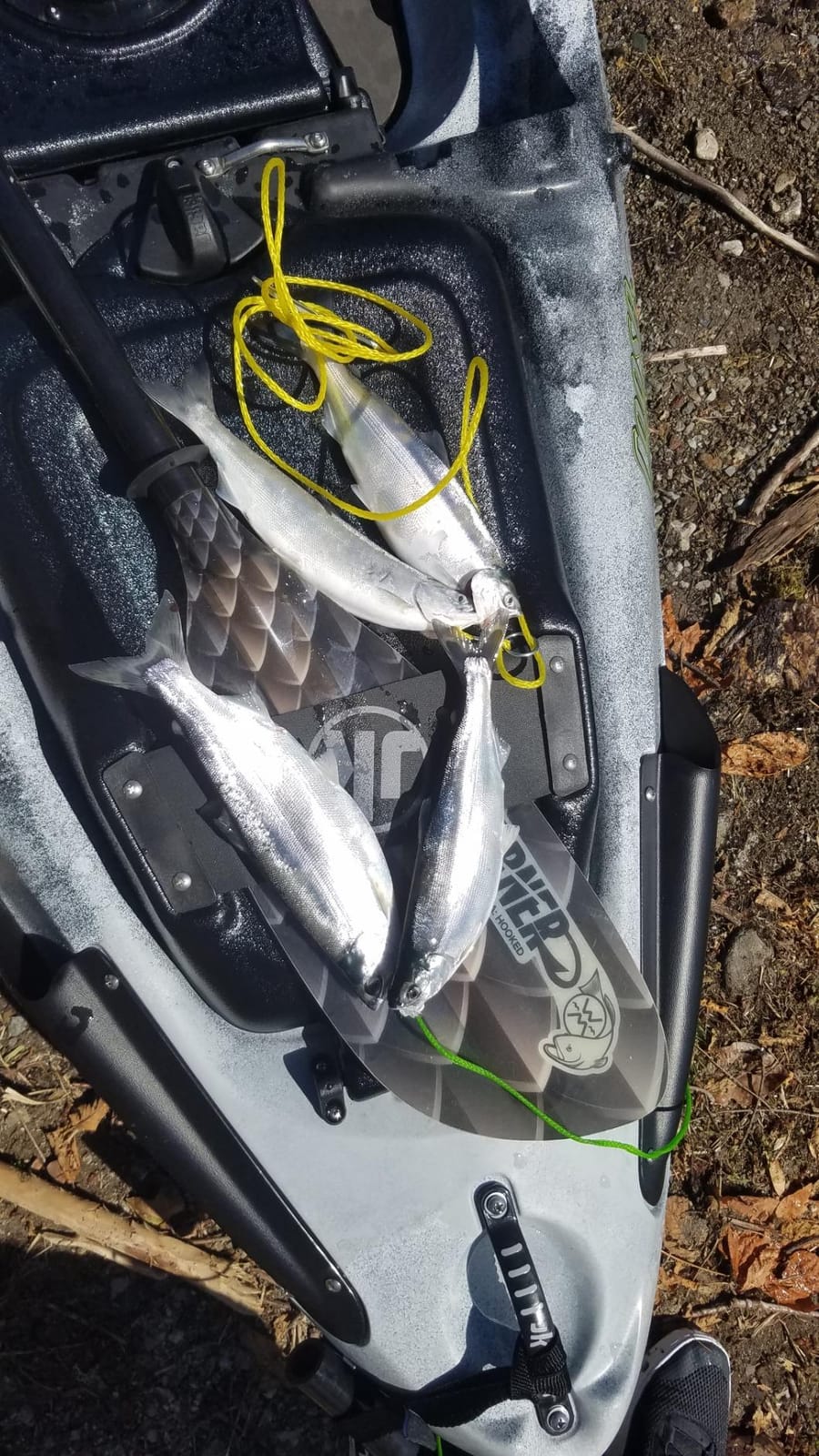
The Camano is the paddle in this list built specifically for a low, touring stroke, and everything about it points that way. The 650 square centimetre blade with dihedral gives you a smooth, stable pull, and owners consistently single out the stroke quality as the reason they rate it so highly. The flex is stiff enough to put power into the water without the noodle feel of a cheap blade.
Its real standout feature is the Smart-View ferrule, which feathers from 0 to 60 degrees in five-degree steps. That is the finest adjustment resolution of any paddle here, and it matters if you are dialling in a low-angle touring stroke where a five-degree change alters how close your hands sit to your body.
At 761 g, it is not the lightest fiberglass touring paddle you can find, but it is light enough that most paddlers will not notice the difference against a full carbon stick once their technique improves. The mid-size blade is deliberately neutral, which is why it suits such a wide range of body sizes.
Length is fixed, and that is the main limitation. You choose 220, 230, or 240 cm at purchase and there is no telescoping range, so measure your hull before ordering. Paddlers coming from a high-angle recreational setup sometimes find the mid-size blade small on the first outing, though most adapt within a few days.
Who this paddle suits
This suits paddlers who have settled into a low-angle touring stroke and want a blade designed for it, rather than a general-purpose paddle they have to adapt. It is an excellent second paddle for someone whose main stick is heavier and whose shoulders are telling them to change something.
Because the feather resolution is so fine, it is also the best choice here for anyone experimenting with technique or switching between a touring stroke and a faster windmill cadence.
Who should skip it
Skip it if you need one paddle for two hulls of very different widths, or if you fly and need a compact breakdown. Also skip it if you are shopping purely on weight, because full carbon options in this list are meaningfully lighter.
Straight shaft means you will not get the offset feel of a bent-shaft paddle, which some paddlers prefer for reasons of comfort and power transfer.
5. Hornet Watersports Fiberglass Paddle, Best Lightweight All-Rounder
Hornet Watersports Graphic Fiberglass Kayak Paddle- Ideal for Touring, Fishing and Boating- 90.5 inches / 230CM Adjustable with Carbon Fiber Shaft – Kayak Oars Kayaking Equipment (Blue Scales)
26 oz total weight
230 to 240 cm adjustable
Feathers 0 to 60 degrees
Dihedral fiberglass blade
Pros
- Very light at 26 oz for a full-size adjustable paddle
- Stiff shaft with a grippy texture that works without gloves
- Feathers in 15-degree increments up to 60 degrees
- Two-piece breakdown for transport and storage
Cons
- Some buyers report it arriving in three pieces rather than two
- Thin blades can feel harsh in strong wind or heavy chop
- Graphics-heavy styling rather than a purpose-built touring blade
At 26 oz with an adjustment range and a real feather ferrule, this is the best value we found for a paddler who wants genuine touring features on a budget. Reviewers describe it as feather-light, with clean blade entry and a shaft stiff enough to move a loaded touring kayak without feeling vague.
The shaft is a blend of carbon fiber and fiberglass, which is the compromise that makes this price possible. It will not feel identical to a full carbon shaft, but it is far lighter than aluminum and stiff enough that the blade entry stays quiet and predictable.
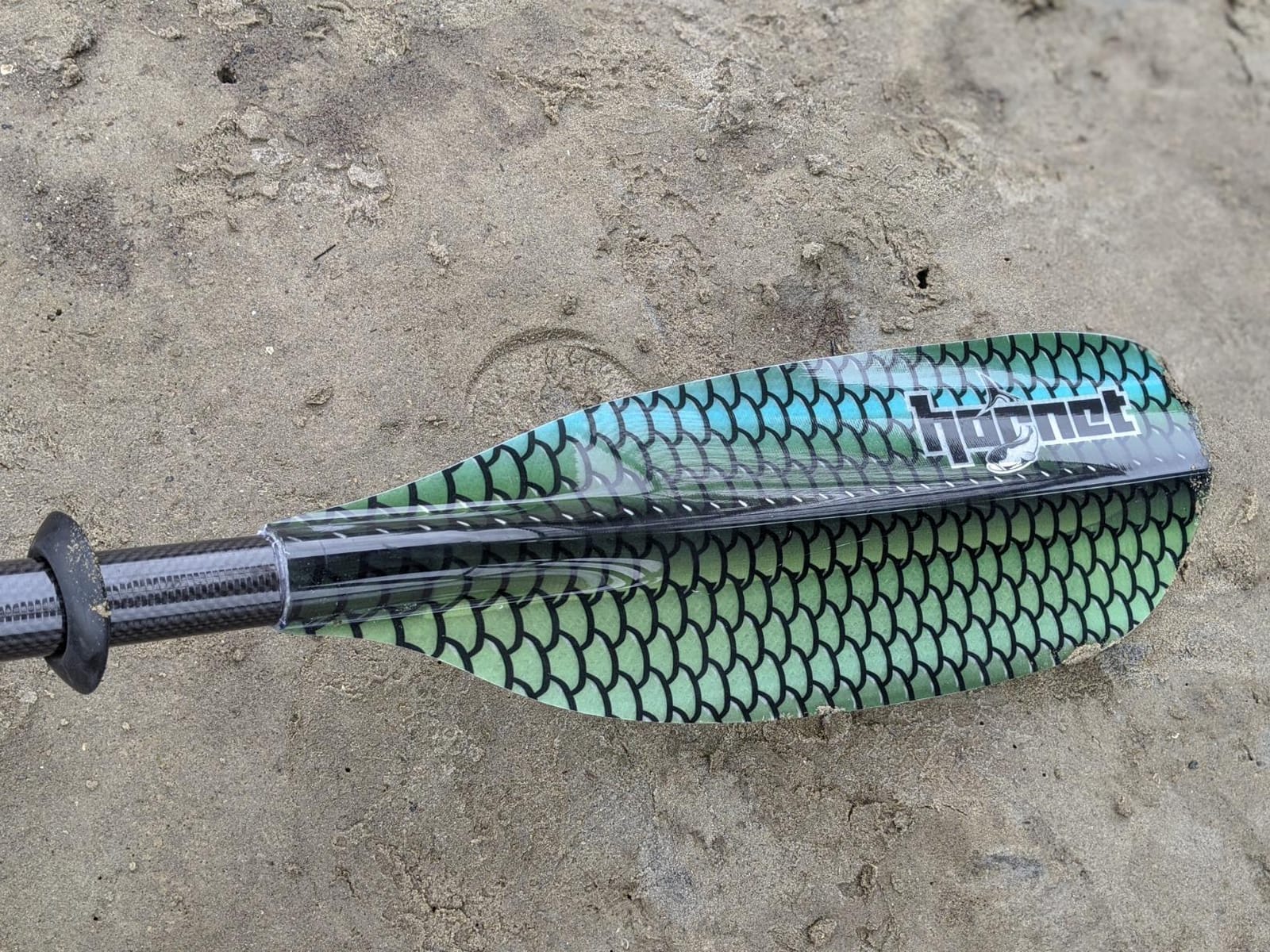
The dihedral fiberglass blade shape is designed to pull efficiently through the water, and the feather steps of 15 degrees give you far more control than a simple two-position snap ferrule. That is enough resolution to run a proper 60-degree low-angle stroke and then back off to a higher angle when you are punching through a current.
Two complaints recur. Some buyers report the paddle arriving in three pieces rather than the advertised two, so check the box before you leave the house. The blades are also on the thin side, which is a disadvantage in strong wind or chop where a stiffer, larger blade would hold its shape better.

Who this paddle suits
Best for a paddler moving up from a heavy aluminum paddle who wants most of the touring feel without the boutique price, and for anyone who wants feather adjustment under a tight budget. The grippy shaft texture is a genuine advantage for cold hands and paddling without gloves.
It also works as a two-boat paddle, since 230 to 240 cm covers a useful span of hull widths.
Who should skip it
Skip it if you paddle in exposed water with strong wind, because the thin blades are the weak point in that environment. Paddlers who want a precisely tuned feathered blade should look at the Werner Camano instead, which steps in five-degree increments.
If you need a specific packed length for air travel, the two-piece layout is bulkier than a three-piece breakdown.
6. SeaSense Xtreme 2, Budget Pick for Durability
SeaSense XTreme 2 Kayak Paddle, Black, 96” – Fiberglass Reinforced Nylon Blades, 2-Piece Construction – Great for Sport, Sea, Whitewater, Recreational & Fishing Kayaking
96 inch fixed length
Fiberglass-filled nylon blades
Floats on the water
Pros
- Fiberglass-filled nylon blades that are genuinely durable
- Feathered blade with a support ridge adds power per stroke
- Floats on the water so it is easy to handle at the shore
- Foam grips and adjustable drip rings stay comfortable
Cons
- Heaviest paddle in this group at 2.2 lb
- Fixed 96 inch length with no adjustment
- Aluminum shaft and soft blades trail modern composite paddles on efficiency
With more than two thousand reviews behind it, the Xtreme 2 is the most thoroughly proven paddle in this roundup, and the feedback is unusually consistent. Owners treat it as a long-term workhorse that they buy once and rarely think about again, which is the opposite of how they talk about the lighter carbon options.
The blade uses a support ridge and a feathered design to add power per stroke, and owners rate the foam grips and adjustable drip rings for comfort on long sessions. It also floats, which sounds like a small detail until you have dropped a paddle in a lake and had to swim for it.
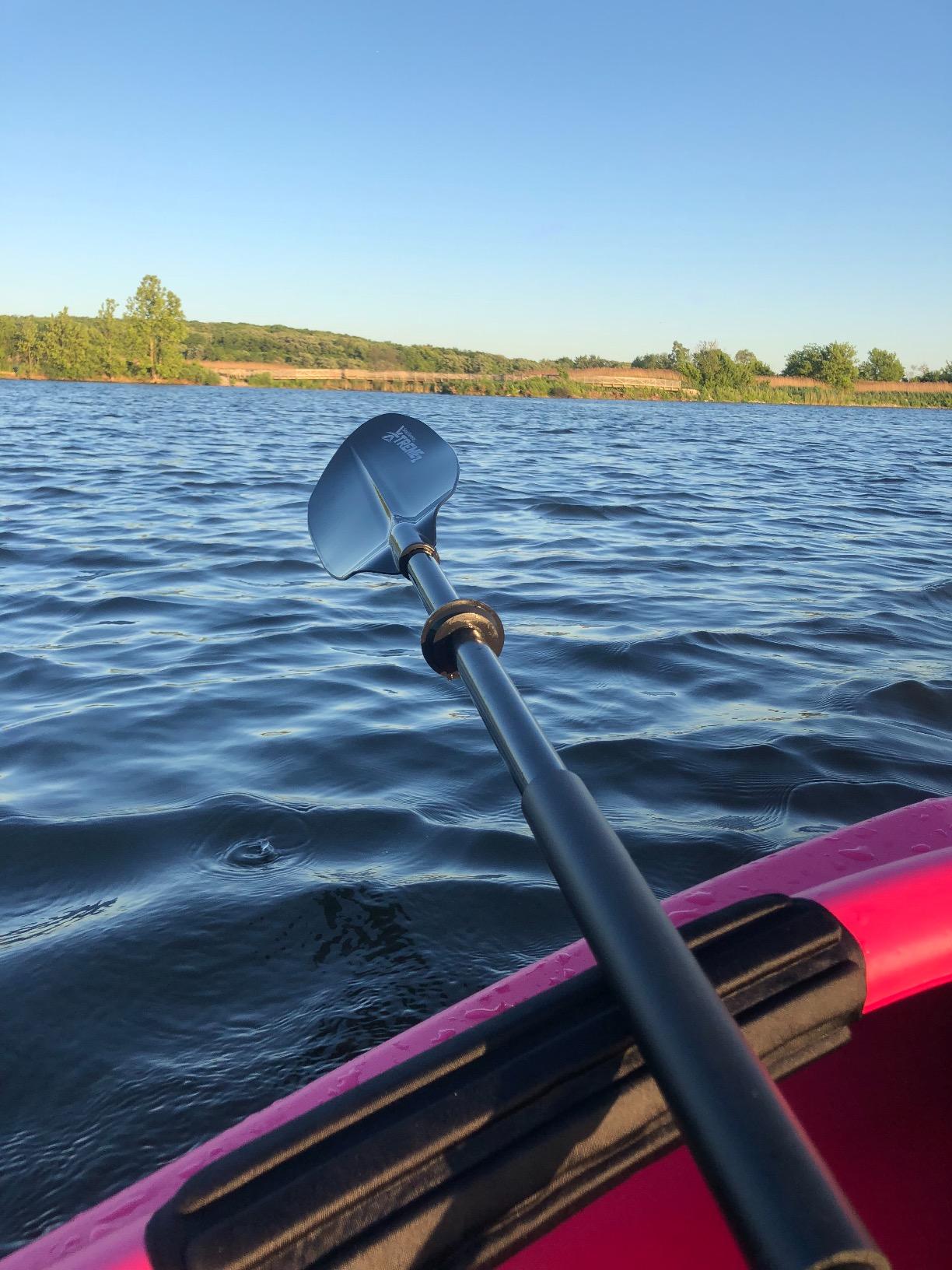
The asymmetrical design with three locking positions is the sleeper feature here. Those positions let you change the blade angle to match conditions, which reduces wind resistance on a choppy day and gives you a different catch on a strong current, without needing a second paddle.
What it is not is light. At 2.2 lb it is the heaviest paddle here by a wide margin, and over a long day in a loaded touring kayak that difference is the first thing you notice. The soft nylon blades and aluminum shaft also trail modern composite paddles on efficiency, so this is a durability and versatility bet rather than a performance one.
Who this paddle suits
Best for paddlers who will be putting a paddle through shared use, rental fleets, clubs, or a lot of rock work, and who want one purchase that keeps working for years. The three locking positions make it genuinely versatile across flatwater, mild current, and chop.
It is also a sensible touring paddle for anyone whose trip involves a lot of launching and beaching, because it floats and takes abuse without any concern.
Who should skip it
Skip it if weight is your top priority, and skip it if your boat is a narrow touring kayak where a 96 inch fixed length may not suit your hull or torso. Anyone running long daily distances will feel the 2.2 lb by the afternoon.
The fixed length also means no tuning between two boats, and the soft blades give away efficiency against a narrow touring blade.
7. Pelican Symbiosa, Best Value Adjustable Paddle
Pelican Symbiosa Kayak Paddle – Adjustable Fiberglass Shaft with Nylon Blades – Lightweight, Perfect for Kayaking – 90.5 to 94.5 in – Light Teal
Telescoping 230 to 240 cm
360 degree blade angle
2.1 lb total weight
Ovalized indexed shaft
Pros
- Light at about 2 lb for a fiberglass and nylon paddle
- Telescoping length plus 360 degree blade angle adjustment
- Well-engineered fit between shaft sections with no wobble
- Holds up in rough water including strong wind and rocks
Cons
- Blades have noticeable flex that some paddlers find less efficient
- Indexed oval shaft shape can bother left-handed paddlers
- Shaft screws can need tightening after unpacking
Owners overwhelmingly describe the Symbiosa as the best value adjustable paddle in its class, and the reason is the fit between the shaft sections. A telescoping ferrule that does not wobble is unusual at this level, and it means the paddle feels like a single solid object in the water rather than a loose assembly.
The 360 degree blade angle adjustment is the touring-relevant feature. Owners report pushing off rocks and handling strong wind without damage, and being able to change the blade angle without swapping paddles is genuinely useful when a trip turns from flat water into chop.
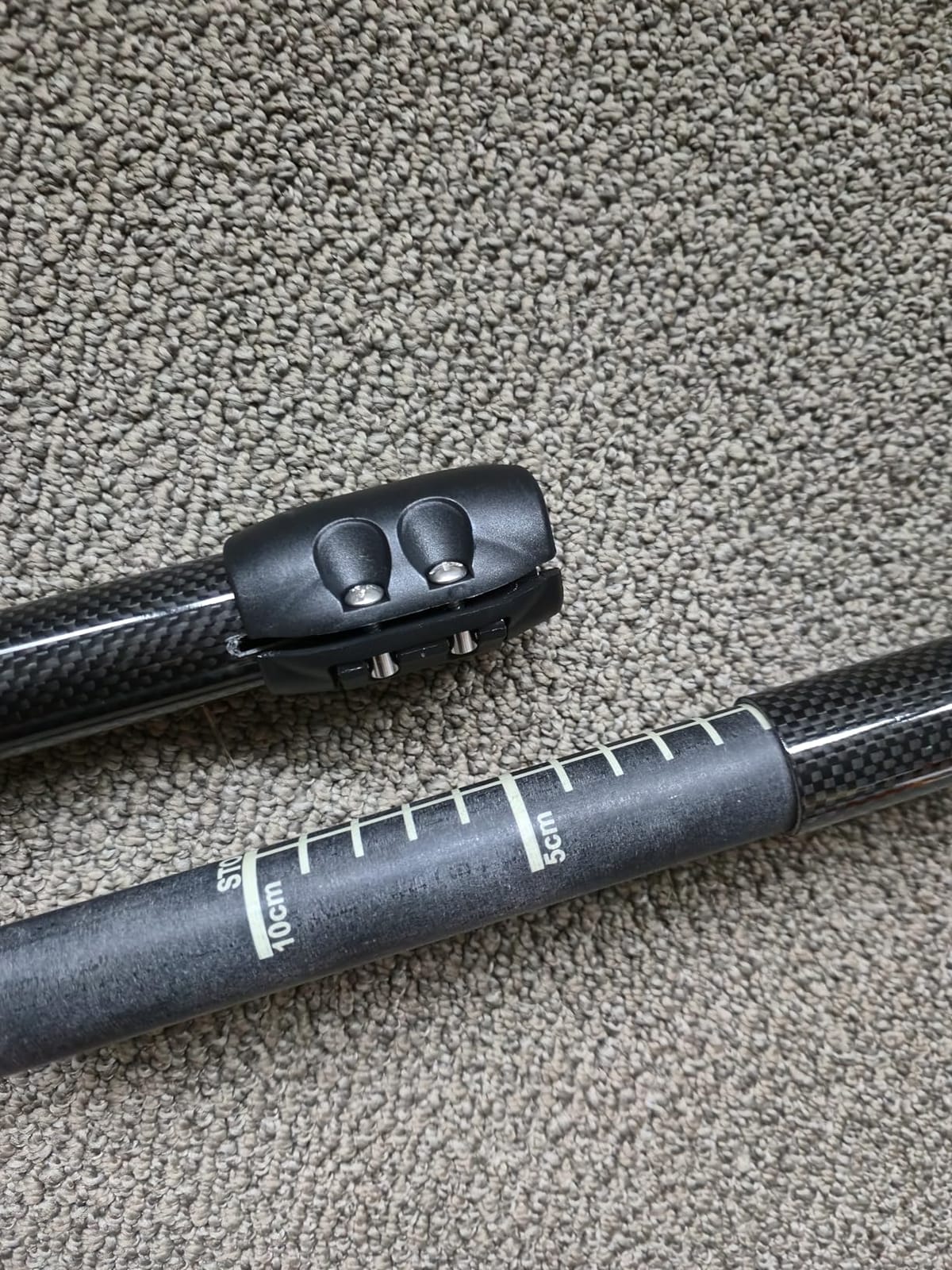
The ovalized indexed shaft is a nice touch for touring because it gives you a consistent hand placement reference every time you reassemble the paddle, which reduces small errors over thousands of strokes.
The recurring complaint is blade flex. At 2.1 lb with nylon blades, this paddle is light but soft, and paddlers who want maximum power per stroke notice it. The indexed shaft shape also bothers some paddlers, particularly those who prefer a perfectly round grip, and a few owners report needing to tighten the shaft screws after unpacking.
Who this paddle suits
Best for a beginner moving into touring, a family with one paddle for multiple paddlers, and anyone who wants real adjustability without moving up to a composite shaft. The 230 to 240 cm range covers most recreational and mid-width touring hulls.
Owners report it surviving 30 mph winds and direct contact with rocks, so it is a good choice for a paddler whose routes are not always flat water.
Who should skip it
Skip it if you are chasing minimum weight, because 2.1 lb is well behind the carbon options here. Paddlers who need a stiffer, more powerful blade will also find the nylon flex disappointing on a loaded boat.
It is not a narrow touring blade, so if you plan most of your miles on flat open water with a high stroke rate, a purpose-built touring shape will outperform it.
8. Bending Branches Whisper, Top Rated for Touring
BENDING BRANCHES Whisper Kayak Paddle – 2‑Piece Aluminum Shaft, Polypropylene Blades, Adjustable 0°/60° Feathering, Black Comfort Grips, Dihedral Blade Design for Recreational Paddling
16 oz aluminum shaft
0 or 60 degree ferrule
Polypropylene dihedral blades
Pros
- Very light at 16 oz for a full-size paddle
- Durable snap-button aluminum shaft with no play
- Polypropylene dihedral blades give smooth flutter-free power
- Comfortable grips reduce hand fatigue over long sessions
Cons
- Feathering limited to 0 or 60 degrees
- Polypropylene blades are heavier in the water than composite
- Fixed length rather than telescoping
The Whisper has been in production since 2009, and the reason it still sells well is the same reason it is in this roundup: at 16 oz it is astonishingly light for a full-size aluminum paddle, and the dihedral polypropylene blades deliver smooth, flutter-free propulsion without fuss.
Owners value the solid snap-button shaft, which develops no play in the joint over time, and the grips, which stay comfortable over long sessions. For paddling in cold water or off-season training, that hand comfort matters more than most spec sheets suggest.
On the feather question, the three-hole snap ferrule gives you 0 or 60 degrees, and nothing in between. For a paddler who has settled on a 60-degree low-angle touring stroke, that is all you need. For someone still experimenting with angle, it is a hard limit.
The polypropylene blades are the real compromise. They are heavier in the water than modern composite blades, so they are less efficient over distance, and the paddle is a fixed length at 220, 230, or 240 cm. It is also handmade in Osceola, Wisconsin, which is a nice detail but does not change the physics of the blade material.
Who this paddle suits
Best for fitness paddling, cold-weather sessions, and anyone who wants the lightest full-size paddle they can find without moving to carbon. The 60-degree setting pairs naturally with a relaxed low-angle touring stroke for people already on a rhythm.
It is also an excellent first touring paddle for a beginner, because the low total mass makes it forgiving on the shoulders while technique is still developing.
Who should skip it
Skip it if you need intermediate feather settings, because 0 and 60 degrees is the entire range. Paddlers covering long daily distances will want a composite or carbon blade for efficiency, and anyone needing one paddle for several hulls will want telescoping length.
It is also the wrong choice for whitewater or rock-filled rapids, where a polypropylene blade is less forgiving than composite.
9. Greenland Paddle Full Carbon, Best for Greenland Style Touring
Full Carbon Fiber Greenland Paddle Lightweight Adjustable Kayak Paddle
23 oz full carbon build
220 to 230 cm cam lock adjustment
2-piece design
Included paddle bag
Pros
- Exceptionally light for a Greenland-style paddle
- Adjustable from 220 to 230 cm which is unusual for this style
- Low-splash Nordic blade that moves a touring kayak well
- Padded travel bag included
Cons
- Mold flashing and faceted blade edges on some units
- Ferrule described as slim and the loom relatively short
- Carbon build is vulnerable to shipping and impact damage
Ask ten experienced paddlers whether a Greenland paddle is a legitimate touring choice and you will get a genuine argument each way, which is why we included one. At 23 oz for a full carbon build with blade, this is among the lightest paddles in the roundup, and Greenland paddlers who buy it cite the weight as the reason they kept it.
The blade generates fewer splashes than a euro-style blade, which is a genuine advantage on a multi-day trip where noisy blade entry adds up to fatigue. The 220 to 230 cm cam lock adjustment is also unusual for this paddle style, most of which are fixed length.
Who this paddle suits
Best for paddlers who want a Nordic, low-splash stroke, and for anyone who likes the Greenland feel but cannot justify the weight of a traditional wooden Greenland paddle. The included padded bag is a small but real convenience for airline and car travel.
It suits independent touring where a heavy traditional Greenland build would be a genuine burden over several days.
Who should skip it
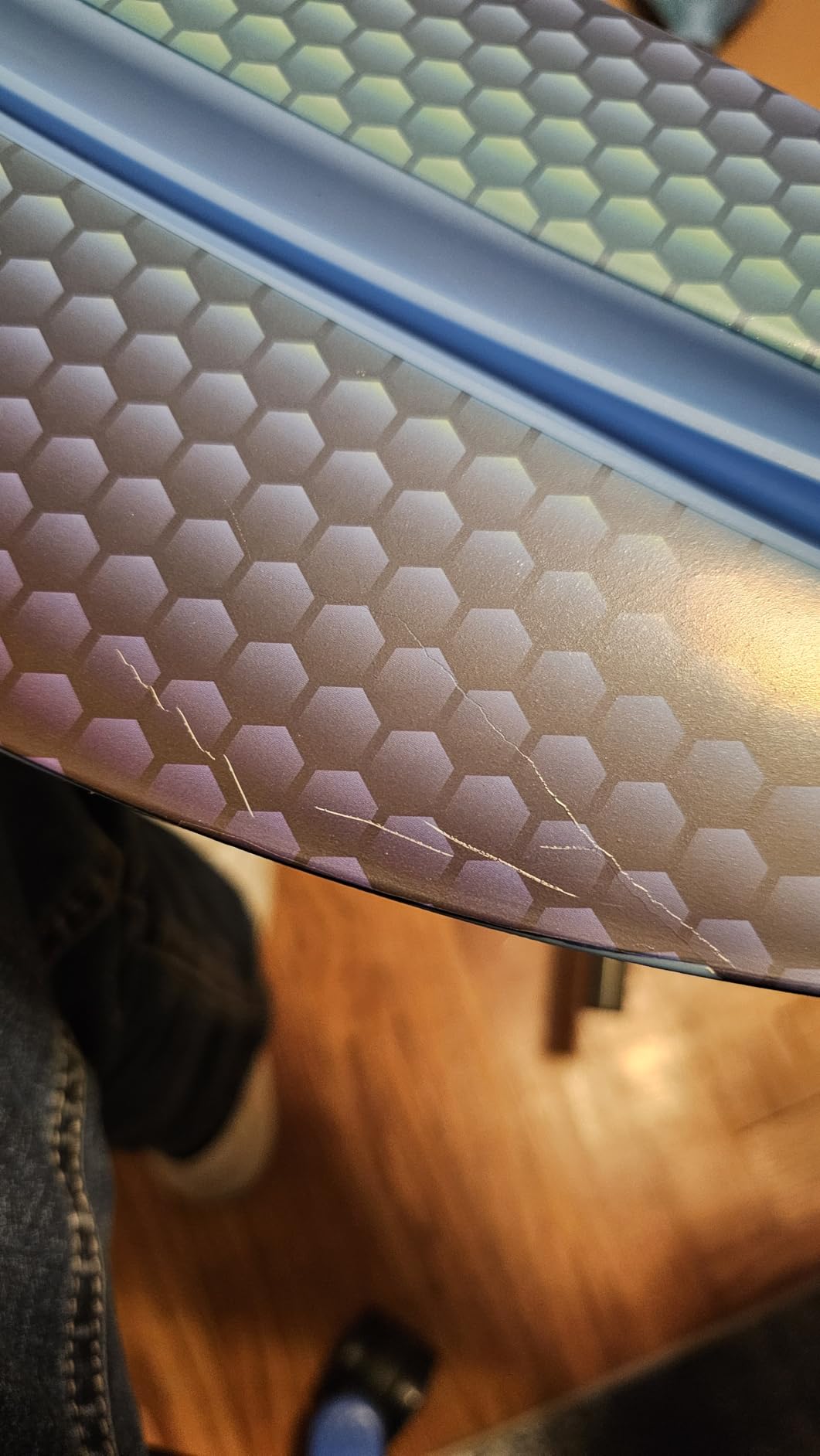
Skip it if you care about finish quality. The lowest reviews in this roundup focus on mold flashing, faceted blade edges, and a ferrule described as slim with a relatively short loom, and a few owners report blades arriving scratched in the supplied bag.
Full carbon is also vulnerable to shipping and impact damage, and the 4.1 rating with a small review base means less long-term evidence than the picks with hundreds of reports.
10. Aqua Bound Manta Ray Hybrid, Best for Adjustable Offset
AQUA BOUND Manta Ray Hybrid 2-Piece Posi-Lok™ Kayak Paddle – Carbon Shaft, Fiberglass-Reinforced Nylon Blades with Dihedral Design, Adjustable Offset, High-Angle Performance
Ovalized carbon shaft
Posi-Lok 15 degree offset
210 to 260 cm range
Pros
- Clean blade entry with no flutter and strong controllable power
- Ovalized carbon shaft noticeably lighter than aluminum
- Blades hold up to heavy use without chipping
- Posi-Lok ferrule dials in 15 degree offset increments
Cons
- Shaft grip arrives with a rough unfinished feel
- High-angle design has more resistance than a low-angle touring paddle
- Fixed length per variant
The Manta Ray Hybrid earns the highest average rating of any paddle in this roundup at 4.8, and the short owner reviews describe a clean blade entry, no flutter, and power you can control. It is the pick for a paddler who wants a carbon shaft without giving up the boat control of a high-angle blade.
The Posi-Lok ferrule is the feature that separates it. It adjusts blade offset in 15-degree increments, so you can move from a high-angle power stroke to a lower touring position without changing paddles. The ovalized carbon shaft also reduces swing weight noticeably compared with an aluminum paddle of similar length. Owners also report that the blades hold up to heavy use, including kayak fishing, without chipping, which matters if you are using one paddle for several disciplines.
The most common criticism is the shaft grip, which arrives with a rough, unfinished feel that softens with use. Two other limits are worth weighing: this is a high-angle design, so it carries more water resistance than a narrow low-angle touring blade, and each variant is a fixed length, even though the range across variants runs from 210 to 260 cm.
Who this paddle suits
Best for paddlers who move between touring and high-angle work such as fishing, current, or launching through surf, and who want fine control over offset without swapping ferrule hardware. The 4.8 rating is the highest here, and the reviewers who have owned it describe consistent behaviour.
It is also a good choice for a paddler with a very wide boat, where a high-angle blade gives more control than a narrow touring shape would.
Who should skip it
Skip it if your goal is maximum efficiency over long flat-water distances, because a high-angle design moves more water than you need. Paddlers who want one paddle across several hull widths should note that sizing is fixed per variant.
The review base is small at 45 ratings, so there is less long-term evidence than for the picks with hundreds or thousands of owner reports.
11. WONITAGO Carbon Paddle, Best for Air Travel
WONITAGO Kayak Paddle Adjustable, Lightweight Carbon Fiber Kayaking Oar
220 to 240 cm with 20 cm adjustment
Three-piece breakdown
Plus or minus 60 degree lock
Pros
- Carbon shaft holds total weight to about 2 lb
- 20 cm of length adjustment fits many hulls
- Streamlined fiberglass and polypropylene blades resist flutter
- Three-piece breakdown is genuinely portable for travel
Cons
- Blades are polypropylene rather than full composite
- Three-piece layout adds joints compared with two-piece paddles
- Quick pin lock is less refined than a ferrule system
This is the paddle to look at if your trip involves flying, a bus, or any transport where a 220 cm shaft will not fit in your bag. The three-piece breakdown packs small, and 411 ratings describe it as a capable all-rounder rather than a race-grade blade.
The 20 cm adjustment range from 220 to 240 cm is unusually wide for a portable breakdown paddle, and owners treat it as the reason the paddle works across different kayaks. The carbon shaft keeps the total weight to about 2 lb, which is a meaningful saving over aluminum for anyone carrying gear on their back.
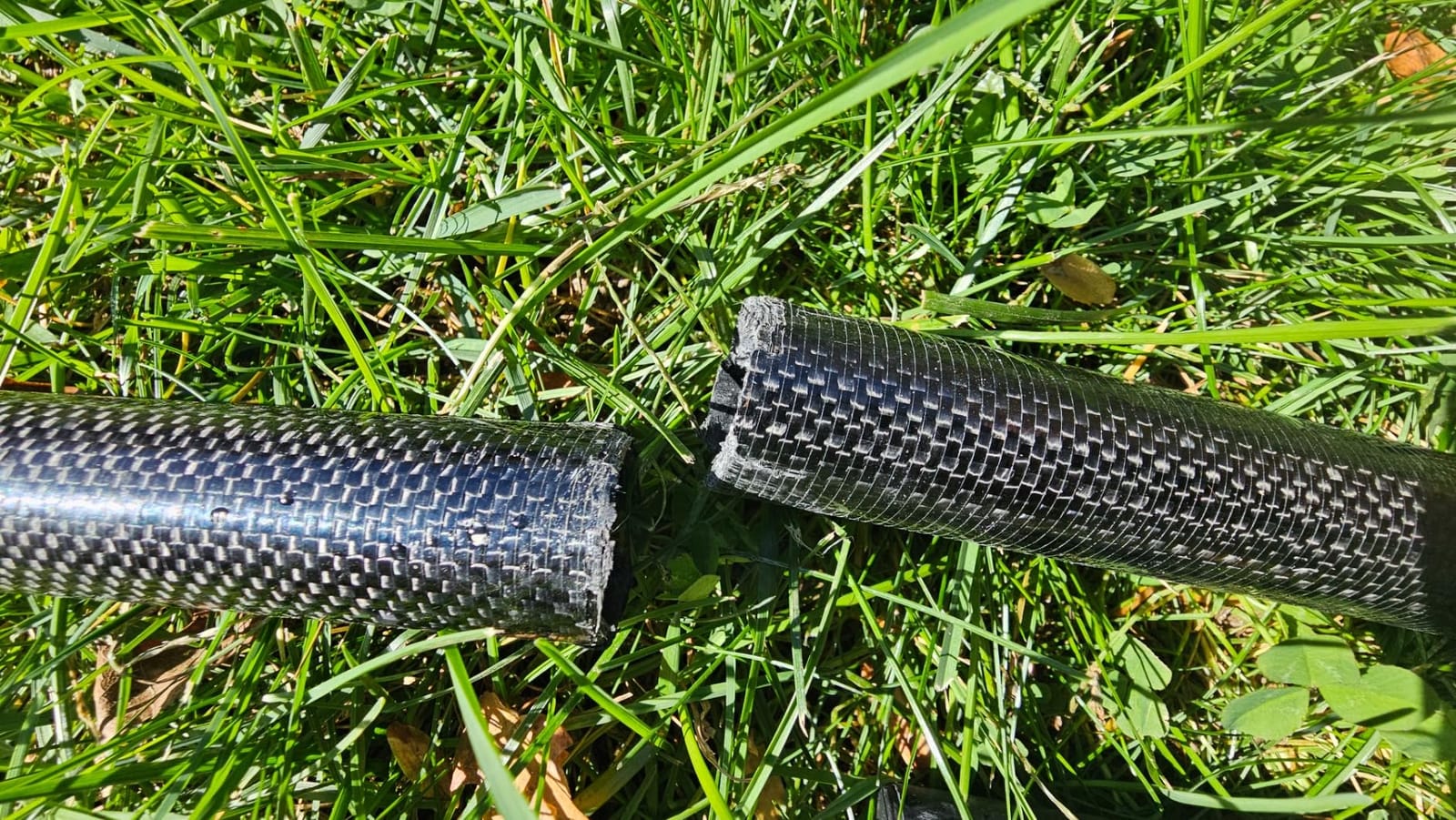
The streamlined blade design is intended to reduce flutter, and the fiberglass and polypropylene blades resist corrosion in both salt and fresh water, which matters for coastal touring.
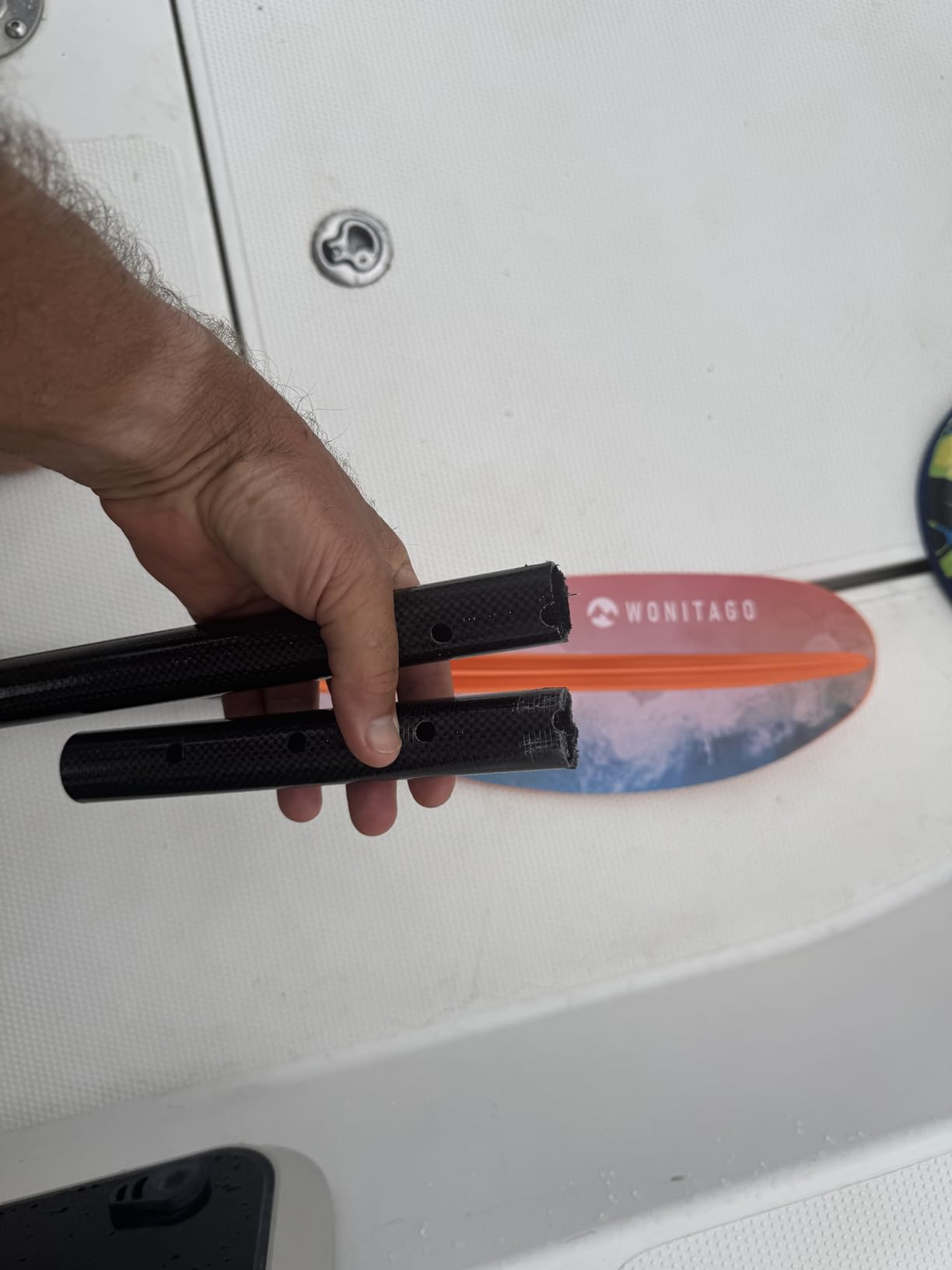
There are two real compromises. The blades are polypropylene, so they are less efficient in the water than full composite, and a three-piece design adds two joints that a two-piece paddle does not have, which is more places for play to develop. The plus or minus 60 degree quick pin lock is also less refined than a proper ferrule system and takes a little practice to set quickly.
Who this paddle suits
Best for touring paddlers who fly, take trains, or split their gear between a car and a boat, and for anyone who wants a carbon shaft at a fraction of the weight of aluminum. The 220 to 240 cm range covers a wide spread of touring hulls.
It is a strong fit for coastal and mixed-water touring because the blades are corrosion resistant in salt water.
Who should skip it
Skip it if you want maximum stroke efficiency on long flat-water days, because polypropylene blades give away power against composite ones. Paddlers who carry a lot of gear and want the fewest possible failure points should prefer a two-piece carbon paddle instead.
If you need intermediate feather settings, the quick pin lock gives you a set angle rather than a graded adjustment.
12. WONITAGO Carbon Paddle 210 to 230, Best for Smaller Paddlers
WONITAGO Adjustable Kayak Paddle with Carbon Fiber Shaft and Nylon Blade
210 to 230 cm with 8 in adjustment
16.5 x 7 in nylon blades
Three-piece design
2.2 lb total weight
Pros
- Carbon fiber shaft keeps weight down with added hand traction
- Large nylon blades give usable power with corrosion resistance
- Three-piece detachable design is easy to carry and store
- Rotatable blades suit different paddling angles
Cons
- Shorter 210 to 230 cm range limits fit for larger paddlers
- Nylon blades are softer and less efficient than composite
- Some owners find the quick pin lock less durable over time
Short paddlers and paddlers in narrow hulls are often squeezed out of the touring market, because most long paddles start around 230 cm. This one starts at 210 cm and adjusts up to 230, which is the range a smaller paddler or a narrow touring kayak actually needs.
The carbon fiber shaft keeps the total weight to 2.2 lb and adds hand traction, which owners like in cold conditions. The 16.5 by 7 inch nylon blades give more power than the compact blades on some ultralight paddles, and they are corrosion resistant in salt and fresh water.
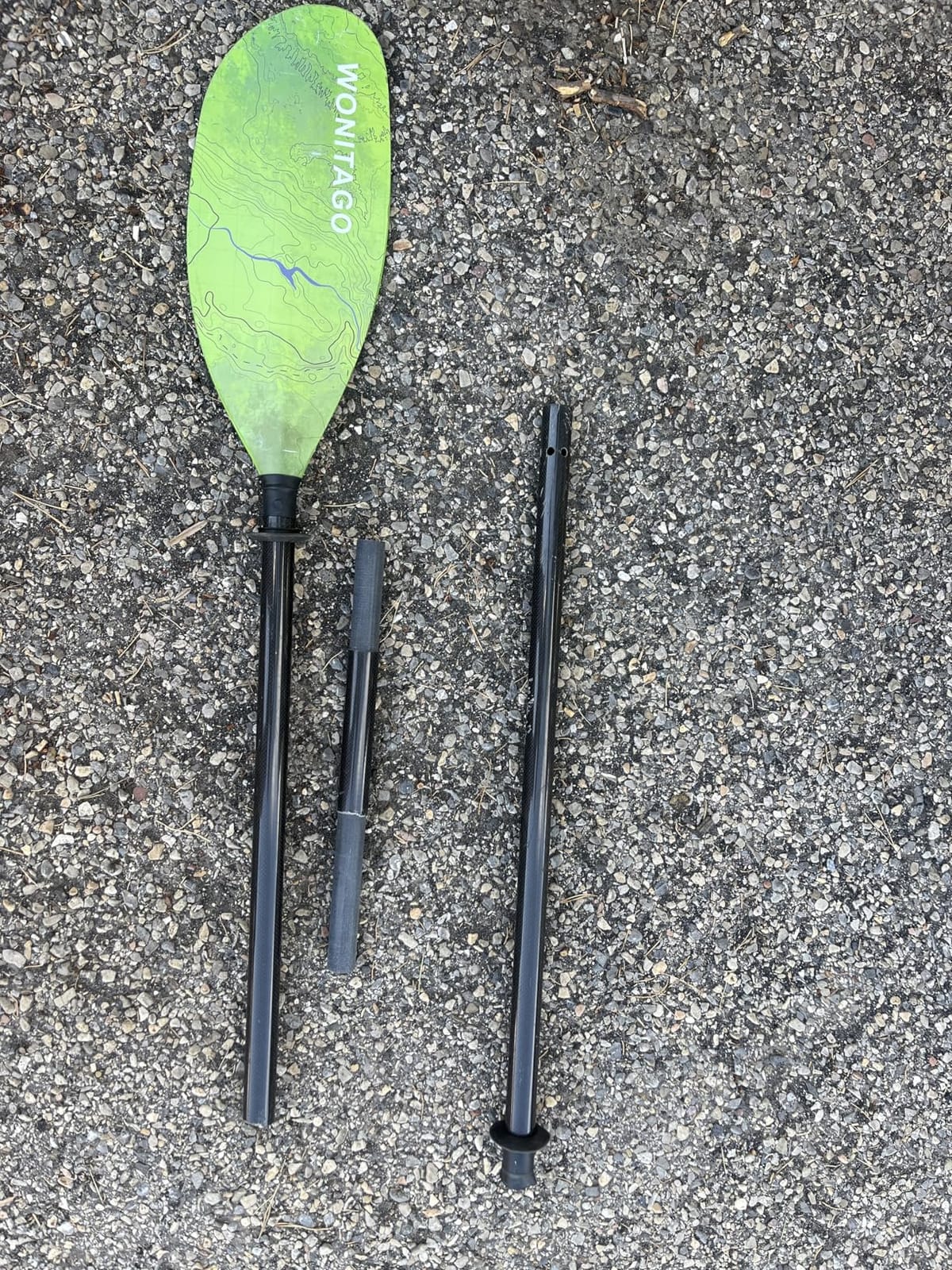
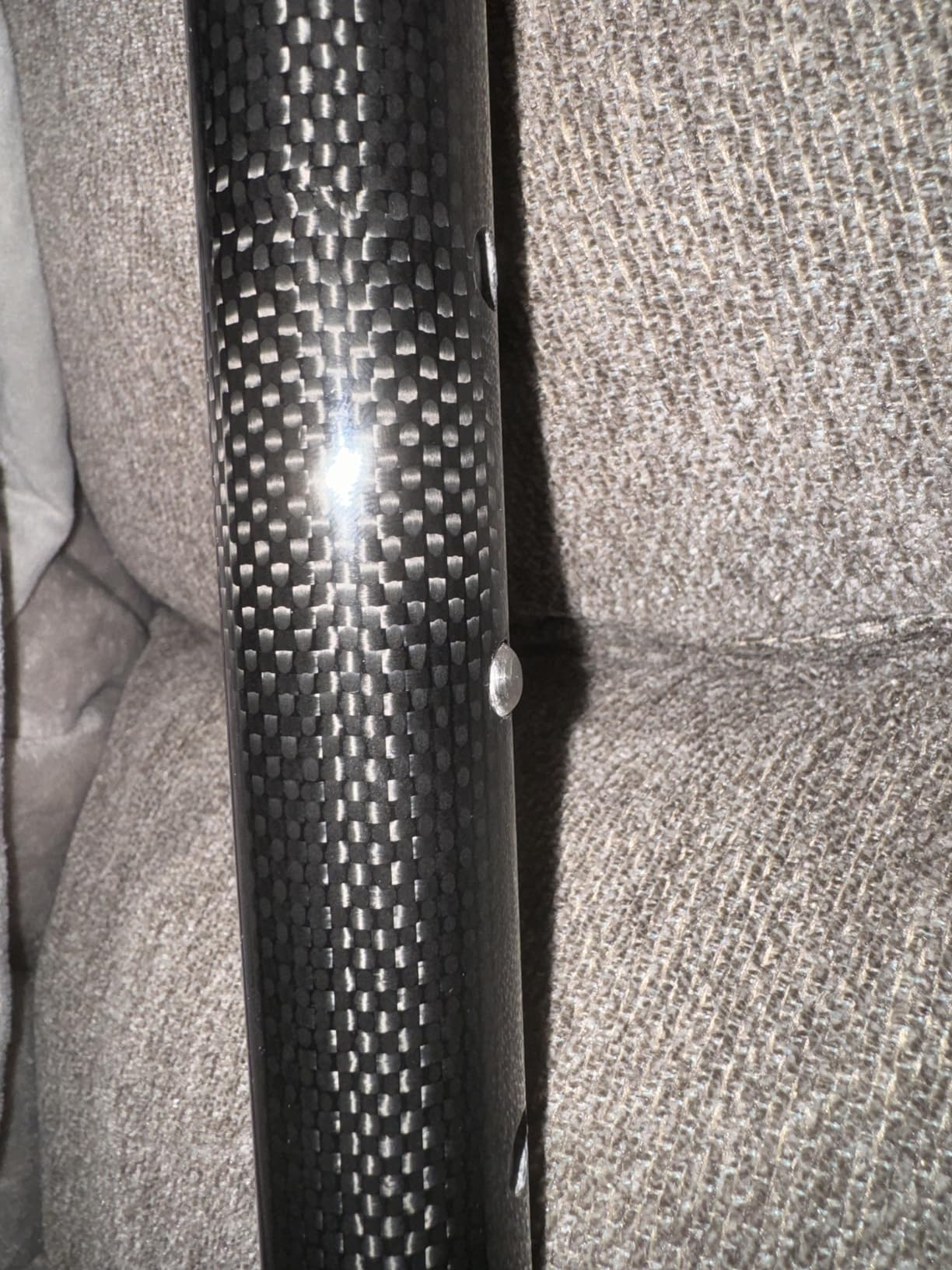
The three-piece detachable design with a quick pin button lock makes it easy to carry and store, and the rotatable blades let you set a different angle for different paddling situations.
Being straight about the limits: this is an affordable entry into the carbon-shaft category, not a premium touring tool. The nylon blades are softer and less efficient than full composite blades, and some owners report that the quick pin lock wears down over time. If you are a larger paddler, the 210 to 230 cm range simply does not reach far enough.
Who this paddle suits
Best for shorter paddlers, paddlers in narrow touring hulls, and anyone who wants a carbon shaft and a three-piece travel layout at the lowest entry point. The rotatable blade angle is useful for switching between a power stroke and a relaxed touring rhythm.
It is a sensible stopgap for a paddler who will eventually move up in length, because the three-piece design makes swapping paddles painless.
Who should skip it
Skip it if you are a tall paddler or need a longer paddle, since 230 cm is the ceiling. Anyone prioritising stroke efficiency on long flat-water distances will want composite blades instead of nylon.
It is also worth weighing the durability reports on the quick pin lock against the longer review trails of the picks with more than a thousand ratings.
How to Size a Touring Paddle for Your Kayak
Sizing is the single biggest source of confusion among paddlers, and almost every sizing question on the major paddling forums comes back to the same problem: people know their kayak beam width but not how it converts to a paddle length. The method is straightforward once you have a tape measure.
Measure the widest point of your kayak in inches, at the deck rather than the cockpit rim. This is the beam width, and it is the number most manufacturer charts start from.
Look up your length in centimetres using the beam width ranges below, then subtract roughly 10 cm if you use a high-angle stroke and add nothing if you use a low-angle touring stroke.
Compare the result against your own height. If the number falls more than about 5 cm either side of your torso estimate, move one step in the chart rather than forcing it.
Test before you commit to a fixed length. Most adjustable paddles in this roundup let you set the length and the feather separately, which is exactly what you need to settle the question in a single outing.
As a rough lookup, a 20 inch beam hull usually takes a 215 to 220 cm paddle, a 21 to 22 inch beam takes 220 to 230 cm, a 23 to 24 inch beam takes 230 to 240 cm, and anything wider than 25 inches is where the 240 cm and 250 cm options start to matter. The recurring advice across Paddling.com forum threads is consistent on this: a narrow touring boat and a shorter paddle go together, and a wide hull needs more length to clear the deck with a usable stroke.
One note on units, because it trips people up constantly. Paddle lengths are quoted in centimetres in Europe and in inches in North America, and the two do not line up neatly. A 230 cm paddle is about 90.5 inches, not 90 inches, and confusing the two is a common reason a paddler ends up with a paddle that is subtly wrong for their boat.
Our general guide to kayak paddles covers the recreational and whitewater end of the market if you want the wider picture, and if you are still choosing a boat, our best touring kayaks will help you match hull width to paddle length before you buy either.
Shaft Materials Explained
Shaft material is the biggest lever on both weight and price, and it is also where marketing language gets vaguest. Four materials matter for touring: aluminum, fiberglass, carbon, and carbon with fiberglass reinforcement.
Aluminum is the heaviest of the four and the most forgiving. It tolerates abuse, cold, and impacts, and it will not snap if you bang it against a rock, which is why budget paddles and rental fleets lean on it. The penalty is mass, and mass is what you feel at hour six of a long day.
Fiberglass sits in the middle. It is lighter and stiffer than aluminum, and blades made from it deliver smooth, predictable power. Carbon is lighter still and transfers energy better, but it is more brittle and more expensive to replace when it breaks.
Hybrid shafts, such as the 50 percent carbon and 50 percent fiberglass shaft on the Pungo and the blended shaft on the Hornet, are the practical compromise. You keep most of the weight saving over aluminum with better impact tolerance than pure carbon. In our comparison, the 2 lb and 2.2 lb paddles in this roundup both use a carbon shaft with polymer or nylon blades, which is where most of their remaining mass comes from.
Feather Angle and Low-Angle Technique
The standard feathering angle for a touring kayak paddle is 60 degrees, and that is the setting most distance paddlers run. Feathering is the twist between the two blades, and at 60 degrees one blade sits almost perpendicular to the other, which lets you keep your elbows close to your body and drive from your torso rather than your arms.
Lower feather angles, especially 45 degrees, trade some of that hand clearance for a slightly more natural wrist position. A 0 degree paddle has no twist at all and is mainly there for people who want a conventional straight-bladed feel, usually because they switch between kayaking and canoeing or stand-up paddleboarding. Our SUP paddle guide covers that crossover if it applies to you.
Why does feather matter so much over distance? Because the less your hands have to rotate, the less work goes into your wrists and shoulders, and the more of each stroke can come from your core. Over tens of thousands of strokes a day, that is the difference between a paddler who is still moving at hour eight and one who is nursing a shoulder. A long-running Paddling.com discussion on everyday paddles makes the same point from the other end of the spectrum, describing a long narrow blade as ideal for low-angle touring strokes.
The resolution of the adjustment matters as much as the number. Five-degree steps, as on the Werner Camano, let you fine-tune the position to your hand size. Fifteen-degree steps, as on the Hornet and the Aqua Bound Posi-Lok ferrule, are enough to move between a power stroke and a touring stroke but not enough to fine-tune. Two-position snap ferrules, as on the Bending Branches Whisper, are fine if 60 degrees is where you want to live and useless if you do not.
Bent Shaft vs Straight Shaft
A bent shaft has a spoon curve, which offsets the blade so that when you hold the paddle level, the blade sits at an angle that supports a low stroke. The idea is that the offset encourages and enforces more torso rotation, which is where the power in an efficient touring stroke comes from.
Straight shafts, like the Werner Camano, are neutral and familiar, and they let you choose your stroke angle freely. For paddlers who already have good low-angle technique, a straight shaft gives more adjustment and no imposed offset to work around. For paddlers who are still building the habit, a bent shaft physically nudges them toward the efficient position.
The forum consensus is that neither is universally better. What is universally agreed is that a bent shaft feels noticeably different in the hands, so if you are sensitive to wrist and shoulder position, try one before committing.
Two-Piece vs Four-Piece vs One-Piece
Construction determines how small the paddle gets, which matters if you fly or carry your boat. A one-piece shaft is the stiffest and the most direct, and it is the right answer if you are car-topping or storing the paddle at home. A two-piece paddle folds to roughly half its length, which fits in most roof racks and behind a seat. A three-piece design folds to about a third, and a four-piece folds to a quarter, which is the only realistic option for a checked bag or a frame pack.
Every extra piece is an extra joint. Joints are where play develops, and a paddle with play in the middle feels vague even when the blades are excellent. That said, the adjustable paddles in this roundup that use quick pin or cam locks report tight, play-free joints, which suggests modern hardware has largely solved the old durability complaint. The tradeoff to watch for is that a shaft is weakest at the joint, so treat a breakdown paddle as one unit rather than something to twist aggressively when reassembling.
For most touring paddlers, a two-piece carbon paddle is the sweet spot. Fly regularly, and the three-piece options here are worth the extra joint.
Blade Shape and Blade Area for Touring
Touring blades are narrower and more asymmetric than recreational ones, and blade area is the number that explains why. The Werner Camano lists 650 square centimetres, which is a mid-size touring blade, and it is designed to reward a low stroke with a smooth pull rather than deliver a maximum-power catch.
Larger blades, like the 18 by 6.75 inch blades on our top pick, give more power per stroke and better boat control, at the cost of efficiency in a steady touring rhythm. Smaller blades, like a Greenland-style Nordic blade, are efficient and quiet but give up power when you need to fight a current. Asymmetric blade outlines reduce wind resistance and flutter, which is why they show up on the better touring paddles and on the SeaSense, which uses an asymmetric design with three locking positions.
Dihedral is the curvature across the blade face. A dihedral blade pulls cleanly to one side, which makes it efficient in a directional stroke and stable on exit. Spine is the curve along the blade from throat to tip, and a spined blade resists twisting under load, which is what stops a narrow blade from feeling vague. Feather angle, blade area, spine, and shaft length all interact, which is why a paddle that feels wrong is usually a size problem rather than a quality problem.
Frequently Asked Questions
What is the best touring kayak paddle?
The best touring kayak paddle is a lightweight, long-bladed, strongly feathered paddle with a 215 to 240 cm shaft, usually carbon or carbon-fiberglass, and a 60 degree feather angle. Among the twelve paddles we compared, the Carbon Fiber 2-Piece Lightweight Paddle at 32 oz was the strongest all-round choice, while the Werner Camano is the pick for a paddler who wants a purpose-built low-angle blade.
What’s the best length for a kayak paddle?
For most touring kayaks, paddle length tracks the beam width of the hull. A 20 inch beam usually takes 215 to 220 cm, a 21 to 22 inch beam takes 220 to 230 cm, a 23 to 24 inch beam takes 230 to 240 cm, and wider hulls need 240 cm or more. Paddlers using a high-angle stroke typically go one step shorter than the chart value.
How do I calculate kayak paddle length?
Measure the widest point of your kayak in inches to get the beam width, then map that to a length range in centimetres. Subtract about 10 cm if you use a high-angle stroke, and add nothing for a low-angle touring stroke. Finally, compare the result with your own height and stay within roughly 5 cm of your torso estimate before you commit to a fixed-length paddle.
What is the standard feathering angle for a kayak paddle?
The standard feathering angle for a touring kayak paddle is 60 degrees, and that is the setting most distance paddlers use because it lets you keep your elbows close to your body and drive from your torso. A 45 degree setting suits paddlers who prefer a more neutral wrist position, and a 0 degree paddle has no twist and is mainly useful for people who also paddle standing up.
What is the difference between high angle and low angle kayak paddles?
A high-angle paddle works close to the hull with a steeper stroke, which gives power and control in current and chop but moves more water. A low-angle paddle works further out, near the feet, which is smoother and more efficient over distance. High angle generally pairs with a slightly shorter paddle and a wider blade, while low angle pairs with a longer paddle and a narrower blade.
Is carbon fiber or fiberglass better for touring paddles?
Carbon fiber is lighter and transfers energy better, which reduces fatigue over a long day, but it costs more and is more brittle. Fiberglass is heavier yet tougher and often cheaper, and a carbon with fiberglass hybrid shaft splits the difference. Our general conclusion is that carbon is worth it for multi-day trips, while fiberglass is the sensible choice for shorter outings and rough handling.
Does a good kayak paddle make a difference?
Yes. A touring paddler takes tens of thousands of strokes a day, so a paddle that is lighter, correctly sized, and feathered to match your stroke reduces wrist and shoulder fatigue cumulatively. A heavier or poorly sized paddle does not ruin a trip, but it shows up as reduced speed and accumulated shoulder strain by the end of the day.
Are Bending Branches paddles worth it?
They are worth it for paddlers who want a very light, durable paddle at an entry-level cost. The Whisper is 16 oz with a snap-button aluminum shaft, 0 or 60 degree feathering, and dihedral polypropylene blades, and owners rate it 4.7 out of 5 across hundreds of reviews. The limitation is that the feathering gives you only two positions and the blades are less efficient than composite.
Should I get a 2 piece or 4 piece paddle for traveling?
A 2-piece paddle is the right choice for car-topping, roof racks, and most domestic travel, because it folds to about half its length and has fewer joints. A 3-piece or 4-piece paddle is the better option if you fly commercially, since it folds to a third or a quarter of its length and will fit in a checked bag or a frame pack.
As a final safety note for anyone heading out in shoulder-season conditions, follow the 120 rule: dress for the water temperature rather than the air temperature, because immersion in cold water drives the loss of useful movement in your hands and arms within minutes. A lighter touring paddle does not help if you cannot grip it.
The Best Kayak Paddles for Touring in 2026
After working through all twelve, the Carbon Fiber 2-Piece Lightweight Paddle is the best kayak paddle for touring overall, at 32 oz with fiberglass-reinforced blades and a two-piece floating design that packs down easily. The Werner Camano is the pick if you want a blade genuinely designed for a low-angle touring stroke with the finest feather adjustment available, and the SeaSense Xtreme 2 is the one to buy if you want a paddle that will still work in a decade.
Whatever you choose, measure your beam width first, set the feather to 60 degrees, and test the length before you load a boat for a multi-day trip. If you are still picking the boat, our touring kayak reviews will help you match hull width to paddle length in one pass.