
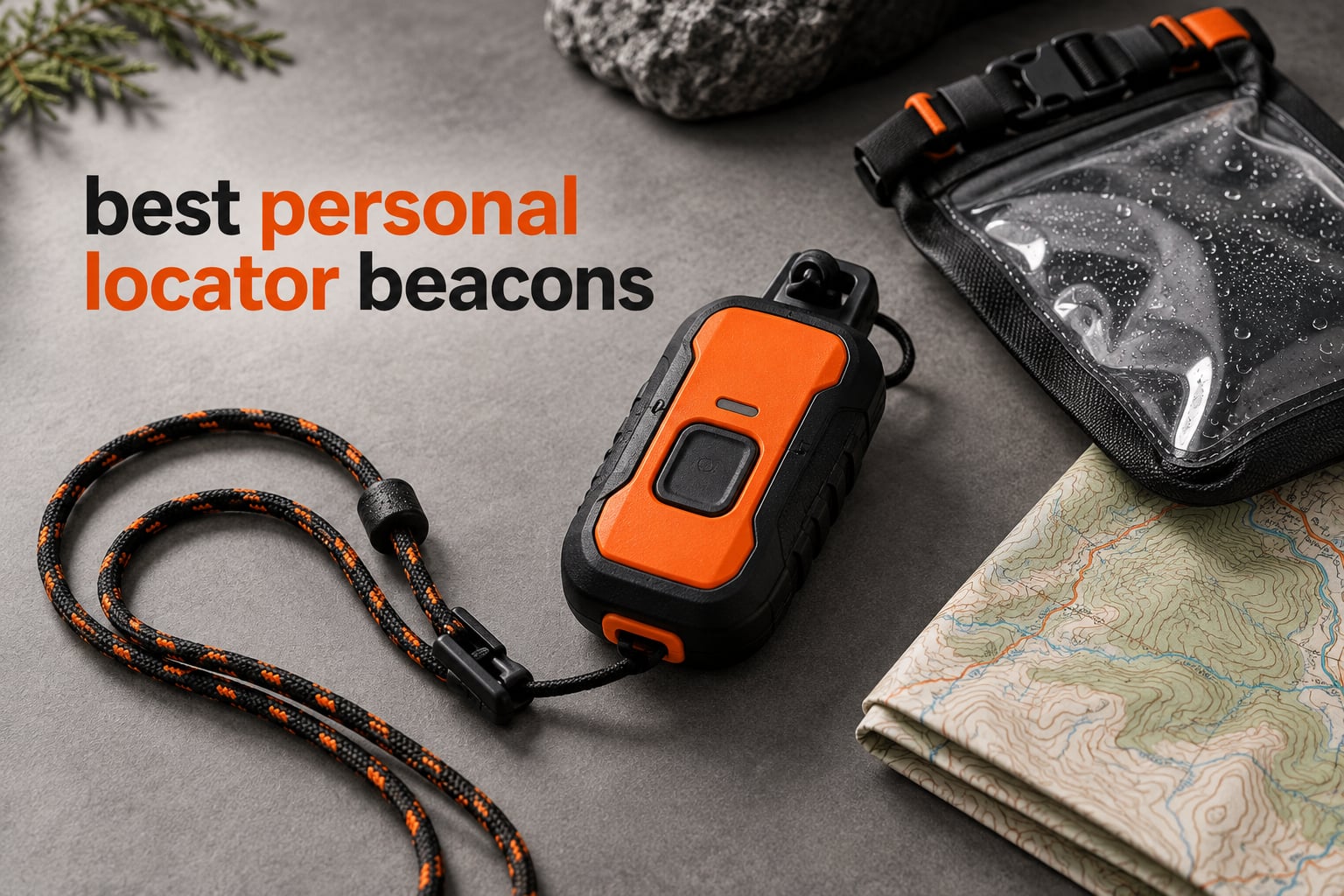
A personal locator beacon (PLB) is a pocket-sized waterproof device that broadcasts a distress signal with your GPS position over the 406 MHz frequency at 5 watts to the international Cospas-Sarsat satellite network, relays it to a government search and rescue coordination centre, and needs no subscription and no two-way messaging. That combination is why the best personal locator beacons are still the first device many people add to a safety kit: a PLB does one job, never runs out of charge, and works anywhere with a view of the sky.
Our best overall pick is the ACR ResQLink 400. It carries the highest average rating in this roundup at 4.8 out of 5 across 281 customer reviews, it has a 5 year plus battery that never needs recharging in the field, and the no-subscription design means you pay once and forget it for half a decade. If you are the kind of person who counts every gram, the Ocean Signal rescueME PLB1 at 4.16 oz is the one to look at instead. If you spend time on the water, the ACR ResQLink View adds a display and a buoyant housing that floats.
We spent several weeks comparing the units in this list on the details that actually decide a rescue: advertised battery life versus operational life, how the unit behaves when it is wet, whether it can be operated with cold hands, and how easy it is to mount where you need it. We also went through the paperwork side, because the single most common mistake new owners make is buying a beacon and never registering it. The result is a short list of real 406 MHz beacons, not a list of smartphone apps dressed up as safety gear.
One thing worth saying up front: a PLB cannot be switched off once activated. There is no cancel button, no way to tell a rescue coordinator that you are fine, and no two-way voice. That single fact drives most of the anxiety people feel about carrying one, and it is the reason we spend a section later on what to do if you set one off by accident in the pack.
Table of Contents
Top 3 Personal Locator Beacons for 2026
These three cover the range we see most often: the highest rated all rounder, the lightest unit you can genuinely forget you are carrying, and the best option for anyone who spends time on the water. We did not include the newest listings in the top three, because a device with one review or none at all has not yet proved itself in a real emergency.

ACR ResQLink 400
- 4.8 rating from 281 reviews
- 406 MHz plus 121.5 MHz homing
- 5 year plus battery
- No subscription

Ocean Signal rescueME PLB1
- 4.16 oz
- Waterproof to 15 meters
- 66 channel GPS
- Retractable antenna
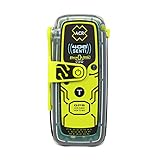
ACR ResQLink View PLB425
- Buoyant housing
- OLED status display
- 28 hour operational life
- LED and infrared strobes
The ResQLink 400 wins on rating and review depth, the kind of evidence that matters when a device’s whole job is to work once and work perfectly. The rescueME PLB1 wins on the number that hikers and skiers actually argue about, which is grams on your body. The ResQLink View wins when the beacon needs to survive a swim.
Best Personal Locator Beacons in 2026
Every beacon below transmits on 406 MHz to the Cospas-Sarsat constellation, pairs that burst with a 121.5 MHz homing signal for rescuers who are already close, and carries no subscription fee. Where they differ is size, whether you get told the alert was received, and how much the unit tells you before you press anything.
| Product | Specifications | Action |
|---|---|---|
| ACR ResQLink 400 |
|
Check Latest Price |
| Ocean Signal rescueME PLB1 |
|
Check Latest Price |
| ACR ResQLink View PLB425 |
|
Check Latest Price |
 McMurdo FastFind 220 McMurdo FastFind 220 |
|
Check Latest Price |
 Jotron Tron SA20 Jotron Tron SA20 |
|
Check Latest Price |
 ACR ResQLink 410 RLS Bundle ACR ResQLink 410 RLS Bundle |
|
Check Latest Price |
Numbers to keep in your head while you read: a 406 MHz burst from a Cospas-Sarsat satellite can be received anywhere on the planet, so there is no range limit in the way people expect with a radio. What does have a limit is battery life, and the difference between a five year shelf life and a five year operational life is where a lot of disappointed owners end up.
1. ACR ResQLink 400 – Our Best Overall Personal Locator Beacon
acr PLB, ResQLink 400, No Display
4.8 rating from 281 reviews
406 MHz plus 121.5 MHz homing
5 year plus battery
No subscription required
Pros
- Highest rated beacon in this roundup at 4.8 out of 5
- Five year plus battery that never needs charging in the field
- 406 MHz distress burst with 121.5 MHz homing signal
- Simple push button activation and built in self test
- Includes 3 AAA batteries
Cons
- No display screen to confirm status
- Belt clip reported as hard to attach and to hold
- Heavier at 10.4 oz than the models here with a published weight
This is the beacon we hand to friends who ask us to just pick one. There is no screen, no app, no account, and nothing to fiddle with in the rain. You carry it, you register it, and for the next five years you do not think about it again. The 4.8 average from 281 reviews is the deepest review base of any unit in this guide, and that matters more here than in most categories because the failure mode you are buying insurance against is rare and unforgiving.
Physically it is a chunky rectangle at 4.52 by 2.03 by 1.49 inches, and at 10.4 ounces it is the heaviest model in this roundup with a published weight. That is a deliberate trade: a bigger battery and a sturdier housing than the sub five ounce alternatives. Reviewers do raise the weight, but the recurring complaint is the belt clip rather than the mass, so if you are counting grams for fast hiking, test the lighter rescueME PLB1 first.
The activation model is as simple as a beacon gets. Deploy the antenna, pull the anti-tamper seal, press the button. There is no menu to work through and no screen to misread, which is exactly what you want when your hands are frozen and you are relying on muscle memory.
Two details from the user reviews are worth repeating. Owners consistently mention easy online registration and a self-test function they actually trust, and the recurring criticism is the belt clip, which several people describe as difficult to attach and unlikely to stay on a belt or a pack strap. Plan on the attachment strap or a lanyard instead of trusting the clip, and the problem disappears.
There is also an international wrinkle. This version is programmed for a US registration, and the reviews make clear that owners travelling to Canada, Australia or France found the regional registration rules did not match their unit. If your trips leave North America, read the registration section later in this guide before you commit.
What the ResQLink 400 does well in the field
The battery is the headline. Five years or more from the date of manufacture, with no charger to pack and no way to run it flat through a season of forgetting about it. Reviewers repeatedly note the peace of mind that comes from a device that cannot die because a cable was left at home.
The second strength is the 121.5 MHz homing signal. Once search and rescue is tasked, that analog homing transmission lets a helicopter or a boat with a directional finder walk straight to you instead of searching a grid. The rescueME PLB1 does the same thing, so both of the most reviewed beacons in this guide carry it, and that should ease any worry about which one to buy.
Finally, the absence of a subscription is a real feature rather than a marketing line. There is no annual fee, no account that lapses, and no manufacturer deciding in five years that your hardware no longer connects to the network. For a device intended to sit in a drawer for half a decade, that is the correct design.
Where the ResQLink 400 is the wrong choice
If you want to know the alert was received, you need the Return Link Service models instead. A 406 MHz PLB is one-way by design, and although the Cospas-Sarsat network continues to add MEOSAR satellites, the confirmation you want is a feature, not a default, and this unit does not advertise it.
It is also the wrong pick for a long expedition where every gram counts against your base weight, and it is not the right choice for someone who wants to know their battery status without pulling a device out of a pack. For either of those needs, look at the lighter rescueME PLB1 or the display-equipped ResQLink View.
2. Ocean Signal rescueME PLB1 – The Lightest Beacon You Can Carry
Ocean Signal rescueME PLB1 – Programmed for US Registration
4.16 oz
Waterproof to 15 meters
66 channel GPS
Retractable antenna and strobe
Pros
- Lightest unit here at 4.16 oz
- Waterproof to 15 meters for open water use
- 66 channel GPS receiver for a fast position fix
- Retractable antenna that protects during storage
- Built in strobe light for night signalling
Cons
- No display screen at all
- Older first generation design
- Small controls are harder to use with cold gloved hands
At 3 by 2 by 1.27 inches and 4.16 ounces, the rescueME PLB1 is the unit we are least likely to notice on a long day. It is roughly half the weight of the ResQLink 400, and it is the first PLB that most hikers and skiers name when we ask what they actually carry. The trade is that you give up the screen and a good deal of physical bulk, and with it some of the reassurance of a device that can show you its state.
Build quality is the quiet strength here. The housing is sealed to 15 metres, so it is fine on a life jacket, in a kayak, or in a whitewater slot where the gear gets rinsed for an hour. The 66 channel GPS receiver acquires satellites quickly even in the kind of broken canopy that slows a first fix, and reviewers single out the retractable antenna as a small design touch that stops the unit snagging in a bag.
The box contains the beacon, registration forms and an owner’s manual. Registration is the same free process every other 406 MHz beacon uses, and this copy is programmed for US registration, which is the version most US buyers want.
The user reviews are warm about size, waterproofing and reliability, and a fair number note that this is an older design rather than a new one. That is fair. The rescueME PLB1 has been in service for years and the architecture has not needed changing, but you should buy it for what it is: a small, sealed, dependable SOS button.
Why hikers and skiers keep choosing it
Weight, plainly. A 406 MHz beacon is the heaviest safety item most people carry after an axe or a water filter, and shaving four ounces off a device you wear for six hours a day changes how willing you are to keep it on your body rather than buried in the bottom of a pack. A beacon in a pack bottom is a beacon that stays behind when you scramble up a slope.
The 15 metre waterproof rating is the other half of the appeal. It means the same unit works for the trail, the boat and the ski tour without a second purchase, and it is deep enough to survive being dropped in a river during a pack crossing.
The strobe light matters more than most buyers expect. At night, or under a canopy in bad weather, a bright strobe is what a search team uses on the final approach, and having one built in means you are not relying on a headlamp that might be flat.
Where the rescueME PLB1 falls short
No display means no status feedback. There is no Return Link Service confirmation and no way to confirm a GPS fix before you need one, which is precisely the reassurance that solo travellers ask for in the forums we read. If that matters to you, spend the extra weight on a display model.
The controls are small. The 4.6 rating across 119 reviews includes repeated comments that the buttons are hard to work with gloves on in cold weather. Operability in gloves matters most when the unit is designed for ski touring and winter camping, so test it cold and gloved before you rely on it.
Mounting hardware is also thin. There is no substantial included clip kit, so you will want a lanyard or a purpose-made PFD attachment for boat use.
3. ACR ResQLink View PLB425 – Best Beacon for Boaters and Kayakers
ACR ResQLink View PLB425 – Buoyant GPS Personal Locator Beacon – 2922
Buoyant housing
OLED status display
28 hour operational life
5 year battery and warranty
Pros
- Buoyant housing that floats and stays with you
- OLED display shows status and GPS state
- 28 hour operational life after activation
- LED and infrared strobe for night and thermal search
- 5 year battery life backed by a 5 year limited warranty
Cons
- Higher cost than most beacons in this roundup
- Screen can be hard to read in direct sunlight
- Belt clip reported as tricky to fit
The ResQLink View is the beacon we would hand to a person whose idea of an adventure ends at a boat ramp. It is the only unit in this list with a buoyant housing, and buoyancy is not a novelty when a person goes into cold water: a beacon that sinks to the bottom is a beacon that cannot be homed in on. The housing is rated to float, and it comes with a clip for an oral inflation tube as well as a belt clip, a strap and adhesive skins.
The 1 inch OLED display is the feature that changes daily behaviour. You can switch it on at home, confirm that the self test passed and that the GPS has a position, and then turn it off and stop thinking about it. Reviewers also value the optional 406Link subscription, which lets you send pre-canned test and GPS messages to a contact by SMS or email so you know the unit is genuinely working before the trip.
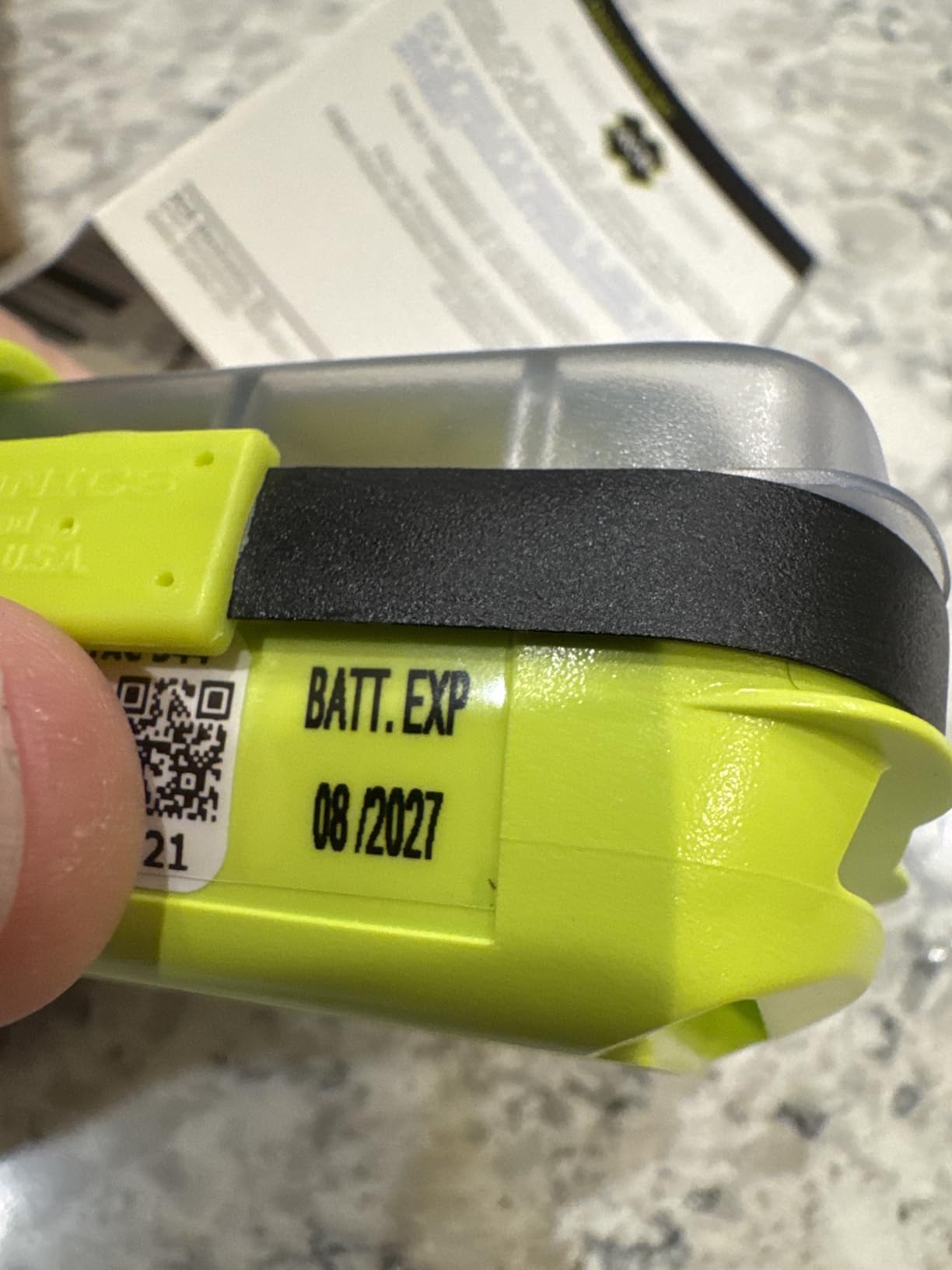
Weight is 5.28 ounces and the body measures 4.52 by 2.03 by 1.49 inches. It is buoyant, it carries both a visible LED strobe and an infrared strobe, and the listed operational life is 28 hours after activation, with a 5 year battery life and a 5 year limited warranty behind it.
With 394 reviews averaging 4.6 and roughly 86 percent five-star ratings, this is the most reviewed unit in the roundup. The recurring themes in the reviews are peace of mind, straightforward registration and a reliable self test. The critical reviews are not about performance at all; they are about regional registration issues for owners who bought a US-coded unit and then travelled to Canada, Australia or France.
One practical note for anyone pairing this with time on the water: if you are choosing between a beacon and a jetski or a tender for short coastal trips, our guide to the best personal watercraft tested covers the other half of that day out. A beacon is the backup, not the plan.
What the display really adds is confidence before you leave. A unit that tells you it has GPS lock and a passing self test removes the single largest unknown in satellite safety gear, which is whether the thing is working at all. The LED and infrared strobes are there for the last hundred metres of an approach, when a search team is looking rather than listening.
The 406 MHz burst goes to the Cospas-Sarsat constellation, which currently spans three satellite systems, and the 121.5 MHz homing signal gives rescuers a directional fix once they are close. The difference from the ResQLink 400 is the screen and the buoyancy, not the distress architecture. The two are the same core beacon.
Why a boater should pick this one
A man overboard situation gives you minutes, not hours. A floating beacon with a live display and a strobe is exactly the combination that lets a nearby boat or a helicopter home in on a person in the water, and the oral inflation tube clip is the detail that tells you this unit was designed for a PFD rather than adapted to one.
The 28 hour operational life is generous for a marine emergency. It means the beacon keeps transmitting through a long search, a nightfall, and the wait for a weather window, and it keeps a 121.5 MHz signal going for anyone still working the scene.
For kayakers and sea kayakers the same argument applies with a different terrain. Whitewater and open crossings are exactly the conditions where cell service is absent and where a floating, strobing, waterproofing-rated unit pays for itself.
Where the ResQLink View is the wrong choice
You are paying for a screen and a float you may never use. In that situation the rescueME PLB1 gives you the same distress function for less weight.
The screen has a real weakness. Reviewers report that the OLED is difficult to read in bright direct sunlight, which is precisely the condition on an open deck at midday. It is fine for checking a status light at home and poor for reading in the sun, so treat the display as a confidence tool rather than a working screen.
The fit and finish is good but not perfect: the belt clip is again the most common grip in the reviews. Mount it on a strap or a PFD clip instead.
4. McMurdo FastFind 220 – The Straightforward Budget Beacon
McMurdo FastFind 220 Personal Locator Beacon – US Programming
406 MHz plus 121.5 MHz homing
GPS position reporting
Programmed for US registration
Pouch included
Pros
- Three step activation with no menu to learn
- GPS position reporting on the distress burst
- Free reprogramming for countries outside the US
- Protective pouch included in the box
- No subscription required
Cons
- No display screen
- Self test instructions reported as confusing
- Only 29 reviews on record
The FastFind 220 is the beacon for people who distrust gear with menus. Activation is three steps: deploy the antenna, pull the anti-tamper seal, press the on button. There is no display, no app and no account, and the whole design assumes you will be using it cold, wet and in a hurry.
It is programmed for US registration as supplied, and the manufacturer will reprogram it free of charge for other countries. That is a genuine advantage over the ACR units if you are the sort of traveller who crosses borders on a multi-week trip, because a beacon with the wrong 406 MHz country code will not be routed correctly.
The unit is GPS-enabled, so your position is encoded into the distress burst rather than being sent later from wherever you happen to be standing, and it broadcasts on the same 406 MHz and 121.5 MHz pair as everything else in this guide. The protective pouch in the box is a small thing that stops the strobe lens taking a beating in a pack.
With 29 reviews at a 4.5 average, the review base is thin compared with the ACR units. The 76 percent five-star share is healthy, and one reviewer credits the beacon with getting help to them during a medical event, which is the kind of report that matters more than any star rating. The main complaint in the reviews is not hardware at all, it is that the self test instructions were confusing enough to take weeks of back and forth with the manufacturer to resolve.
There is also a listing quirk worth flagging. The published battery figure reads as a single day of average life, which is almost certainly a data error rather than a real specification, since the device is a sealed non-rechargeable beacon. We have not repeated that figure in our comparison, and we would want to confirm the operational life with the manufacturer before a long expedition.
What works well about the FastFind 220
Simplicity is the design. There is no state to get wrong and no way to leave it in a half-armed condition, and the anti-tamper seal gives you a clear visual check that the beacon has not been activated. For a beginner buying their first PLB, that clarity is worth more than a display.
The free international reprogramming removes one of the most common failure points for travellers. Most beacons sold in one country carry a country code that routes the alert to that country’s rescue centre, and a mismatch is a serious problem far from home. Check the code before a border crossing.
It includes a pouch, which matters if you are mounting on a life jacket and want the beacon protected from abrasion and sun.
Where the FastFind 220 is not enough
No Return Link Service and no display, so you get no confirmation that the alert reached the network. If you are a solo traveller who wants feedback that a rescue has started, this is the wrong tool.
The self test is the part to learn before you need it. Take twenty minutes with the instructions and confirm you can run a test that reports back correctly, because a beacon you have never verified is a beacon you are guessing about. Several owners found the written process unclear and only got a straight answer from the manufacturer after a long exchange.
Finally, the small review base means the long-term reliability record here is thinner than for the ACR units. That is not a reason to skip it, but it is a reason to run the self test and register it properly.
5. Jotron Tron SA20 – The Budget Pick Life on Paper
Jotron Tron SA20 PLB Personal Locator Beacon | Compact & Lightweight | GPS & Galileo GNSS | 406MHz Emergency Signal | Waterproof | Solas Approved | Programmed for US Registration
11 year battery lifespan
Return Link Service
GPS and Galileo
USB rechargeable
SOLAS approved
Pros
- 11 year battery lifespan
- Return Link Service confirms a rescue centre received the alert
- GPS and Galileo dual constellation for position
- NFC status readout from a phone
- USB rechargeable and SOLAS approved
Cons
- No customer reviews yet
- Weight and dimensions are not published
- Less established brand for US buyers
On paper the Tron SA20 has the most ambitious specification sheet of any beacon in this roundup. It lists an 11 year battery lifespan from an 11000 mAh cell, a dual GPS and Galileo receiver, Return Link Service confirmation, NFC status readout from a smartphone, USB charging, SOLAS approval and a 406 and 121.5 MHz distress pair.
We want to be straight with you about what we are and are not saying. This listing carries no customer reviews and no published rating, which means every one of those figures is a manufacturer claim rather than something we can report as field tested. That does not make the spec sheet wrong. It does mean the risk profile is different from the other five units here, all of which have a review record.
What genuinely stands out is the Return Link Service. An RLS-equipped beacon receives a confirmation signal from the satellite once your alert reaches a rescue coordination centre, which turns a one-way SOS into something that at least answers back. For a solo traveller, that removes the most uncomfortable part of using a PLB, which is not knowing whether anyone heard you.
The NFC readout is a smart middle ground between a beacon and a phone app. Tap the unit and check its state on a handset, with no account and no subscription, then leave the device alone in the pack. The USB rechargeable battery is the other unusual element; a sealed 406 MHz beacon with an 11 year service interval has to be opened by a service centre in most designs, so a rechargeable cell suggests a different servicing model.
Why a spec-focused buyer would look here
Return Link Service is the feature to shop for if you want confirmation. Among the beacons in this guide it is the one that closes the loop between pressing the button and a rescue centre acknowledging the alert, and the 410 RLS bundle later in this list is the other option.
Dual constellation positioning is a real advantage in a canyon, a gorge or a treed valley, where a single GPS receiver can struggle to get a clean fix. Galileo adds satellites to the mix and can shorten the time to a usable position.
SOLAS approval and waterproofing point toward genuine maritime pedigree, which suits anyone using the beacon on the water rather than in a pack.
Why we would not build a trip plan around it yet
No reviews means no independent report of how the GPS lock, the antenna, or the RLS confirmation actually perform. The published figures are promising, but a safety device deserves more than a specification sheet, and that is the honest limit of what we can tell you here.
Weight and dimensions are not published, and those are the numbers that decide whether you will actually carry it. A beacon you leave at home because it is too bulky is a beacon with a very long battery life and no use at all.
It is also a less established name in the US consumer market, so confirm that servicing, battery replacement and reprogramming are handled from inside your country before you commit to a multi-season purchase.
6. ACR ResQLink 410 RLS Bundle – Best Beacon if You Want Confirmation
ACR ResQlink 410 RLS Personal Locator Beacon with Pouch and Carabiner Bundle
Return Link Service
406 MHz plus 121.5 MHz homing
Pouch and carabiner included
LED and infrared strobes
Pros
- Return Link Service confirms the alert reached a rescue centre
- Protective pouch with belt attachment included
- Carabiner with hook and loop for pack or life jacket
- LED and infrared strobe lights
- No subscription required
Cons
- Only one customer review so far
- Weight and dimensions are not published
- Newer model with a short track record
The ResQLink 410 is the current-generation answer to the two complaints that come up most often about the 400. It adds Return Link Service, so the beacon confirms that a rescue coordination centre received your alert, and this bundle includes the mounting hardware people otherwise buy separately, with a protective pouch, a belt attachment and a carabiner with hook and loop backing for a pack strap or a life jacket.
Underneath, the architecture is familiar: a 406 MHz distress burst to Cospas-Sarsat and MEOSAR, a 121.5 MHz homing signal for the final approach, LED and infrared strobes, and no subscription. The pouch plus carabiner combination is a genuine improvement for anyone who has fumbled a beacon into a pack without a way to reach it quickly.
It is also compatible with Bivy Stick mounting, which gives you a second way to wear the same beacon on a life jacket if the belt attachment is not right for your vessel.
We have to be candid about the evidence. This listing carries a single customer review, so the 5 star average is not a meaningful signal yet. The ResQLink 400 remains the pick on the strength of 281 reviews, and the 410 is the pick for a specific reason: RLS, plus the best mounting kit in the box.
The practical question is whether RLS is worth changing model for. If you are paddling alone, ski touring deep into a drainage, or on a long boat passage where a delayed rescue has real consequences, the confirmation signal takes a real amount of the fear out of carrying a one-way device. If you are day hiking within cell range much of the time, the extra value is smaller.
Who this bundle suits
Anyone who has spent an hour looking for a separate PFD clip or a carabiner for a beacon. The included kit removes the most common excuse for a PLB staying in a drawer, which is that the mounting hardware is somewhere else in a gear pile.
Solo travellers who want two-way feedback without a subscription. The Return Link Service is a receipt, not a conversation, but it is the difference between pressing a button into silence and knowing an alert has landed at a rescue coordination centre.
Marine users, since the carabiner and pouch combination suits both a life jacket and a cockpit lanyard, and the strobes give you a visual signal in a dusk rescue.
Where the ResQLink 410 falls short
The evidence base is thin. One review tells you almost nothing about how it performs across a season, and weight and dimensions are not published, so you cannot compare it on pack weight against the 400 or the rescueME PLB1 until it is in your hands.
It is a newer model with a short track record, and it sits at the top of the price range in this roundup. You are paying for confirmation and for the accessory kit, and if neither of those is your priority the 400 is the better-informed buy.
There is no display either. If you want a screen you are looking at the ResQLink View instead, and if you want RLS and a screen you may find yourself waiting for ACR to combine them.
How a Personal Locator Beacon Actually Works
The chain is short and it is worth understanding, because most of the mystery people assign to these devices comes from not knowing who is actually listening. When you activate a PLB, the unit gets a GPS fix, encodes your position into a 406 MHz burst, and transmits it at 5 watts to the Cospas-Sarsat constellation of low earth orbit satellites. Those satellites pass the burst along to a ground station operated by a participating country, and in the United States the alert is handled through NOAA and forwarded to a rescue coordination centre that tasks the nearest search and rescue team.
At the same time the beacon keeps transmitting for 24 to 48 hours and switches on a 121.5 MHz homing signal. That second signal is the reassuring one. A 406 MHz alert tells a rescue centre roughly where you are on a map, which might be a valley with a few square kilometres of search area. The 121.5 MHz homing signal is a continuous analog transmission that a helicopter or a boat with a directional antenna follows like a very slow searchlight, taking the last few hundred metres out of the equation.
There is no range limit in the way people usually imagine one. Cospas-Sarsat is a satellite network, so a beacon with a view of the sky can be heard from anywhere on the planet, including open ocean, a canyon floor and a glacier. What limits performance is the sky itself, which is why a beacon stored in a metal pannier, a dry bag under a tarp, or the bottom of a car boot is a beacon that may not get a fix.
Search and rescue in the United States is free. There is no billing component and no charge for triggering a beacon, so the only cost of using a PLB is the purchase years earlier. That is the strongest argument for buying a real beacon rather than gambling on a phone with a satellite feature.
PLB vs Satellite Messenger: Which One Do You Need?
A PLB is a one-way SOS with a 5 to 11 year battery and no ongoing cost. A satellite messenger, such as the Garmin inReach line or the ZOLEO, is a two-way communications device that runs on the Iridium network and requires a monthly subscription, but it also sends tracking, weather, check-in messages and, in some cases, a selfie to your contacts before you press anything.
The two are not competing products, they cover different needs. A messenger lets you call for help and negotiate it, or text your family from a ridge. A PLB lets you press one button and know that a government search and rescue organisation has received it, with no account, no credit, and no app that needs a signal to work.
Many experienced hikers we read about in forums carry only the messenger, because the two-way channel is worth more to them than the price of a plan they only use a few times a year. Others carry a PLB as a no-subscription backup to a phone that they do not trust to work in cold, wet, mountainous terrain.
A useful rule of thumb: if your trip has a real chance of a prolonged rescue and you want to talk to people, take a messenger. If you want the cheapest possible alarm that works forever, take a PLB. If you are the kind of person who will not pay a monthly fee for gear you use twice a year, the beacon is the correct answer, which is the same buy-once-no-plan logic behind our picks for the best personal blenders: one tool, one job, no recurring cost.
How to Register Your PLB with NOAA
Registration is mandatory, it is free, and there is no licence to own a beacon. The free phrasing matters: there is no fee, no permit and no test, and a US Coast Guard credential has nothing to do with it. The form goes to NOAA, which holds the beacon database that rescue centres actually search when an alert comes in.
The steps are simple. Take the beacon’s unique beacon ID from the label on the unit or its packaging, complete the NOAA beacon registration form with your name, address and emergency contact details, and submit it. Registration is valid for two years, after which you renew it, and many owners set a calendar reminder because an expired registration can slow a rescue.
Use a mailing address you can still reach, and an emergency contact who would actually answer. If you are registering a beacon for a trip abroad, confirm that the 406 MHz country code matches where you will be; a US-coded beacon does not route correctly everywhere, and several reviews in this roundup mention exactly that frustration.
Before a trip, switch the unit on and run the built in self test. A beacon with a current registration and a passing self test is the only version of this gear that actually works, and both checks take a few minutes at home.
What to Do If You Activate a Beacon by Accident
First, understand that you cannot cancel it. There is no off switch once the beacon is transmitting, no way to send a message to the rescue centre saying you are safe, and no way to tell the responding team to stand down. The alert is already in the system, and the beacon will keep transmitting for its full operational life.
Second, act immediately and loudly. Turn the beacon off, then contact the rescue coordination centre for the region you are in and tell them it was a false activation, giving the beacon ID and your location. In the United States the number to reach for a cancelled beacon alert is the Coast Guard search and rescue coordination centre, and telling them early is the single most useful thing you can do.
Third, expect a phone call and be ready for it. A registered beacon means the alert is matched to your name and address, so the call usually comes within minutes. Answer it, be apologetic and factual, and do not ignore it. Search and rescue in the US is free, so a false activation does not generate a bill, but it does consume a real team’s time and it can delay a genuine call later.
Fourth, fix the cause. Accidental activations usually trace back to the same three things: a seal pulled in a pack, a pocket activation on a unit with an exposed switch, and an antenna deployed during packing. A spring-loaded activation flap and a sealed anti-tamper mechanism are the physical safeguards against exactly that, and one review of the ResQLink 400 reports an antenna deploying while the unit was being stowed, so check the seal every time you repack.
Where to Mount a Beacon for Your Activity
On a life jacket, use the PFD clip or attachment strap so the beacon rides on your chest and floats with you. This is the only correct location for a man overboard scenario, and the oral inflation tube clip included with the ResQLink View is designed for exactly that tube.
On a harness or a backpack shoulder strap, use a lanyard or a carabiner so the beacon is reachable in a few seconds. Never put it in a pannier, a top tube bag, a dry bag under a tarp, or the bottom of a pack; those are the places we see beacons go missing, and a metal or heavily covered position can also stop a clean GPS fix.
For skiing and snowboarding, put the beacon on your body rather than in a backpack, because a pack can slide off, be buried, or separate in an avalanche. Under a jacket on a chest harness is the usual answer.
For motorcycle and adventure riding, a lanyard on the body under a jacket works, and reviewers emphasise the same point: on your person, not in a pannier, because panniers come off in exactly the crash you bought the beacon for.
Battery Lifespan vs Operational Life
These are two different numbers and mixing them up is the most common spec sheet error we see, including in one of the listings in this roundup. Operational life is how long the beacon transmits after you activate it, which is typically 24 to 48 hours. Lifespan is how long the sealed battery lasts in storage before it needs replacing, which is typically five to seven years.
A PLB uses a non-rechargeable lithium cell in most designs because it has to hold a charge for years without attention and still deliver five watts of output at the end of it. The trade is servicing: once that cell expires, the unit generally goes back to the manufacturer or an authorised service centre, and people describe that process as a hassle and a real cost.
So compare beacons on both numbers, and check the operational life figure against the scenario. Twenty-four hours is plenty for a mountain rescue. For a long sea passage or a search in bad weather, twenty-eight hours or more, as the ResQLink View claims, is the more comfortable figure.
Frequently Asked Questions
Which PLB is the best without a subscription?
The ACR ResQLink 400 is the strongest all-round choice for anyone who wants a real beacon with no ongoing fees. It carries the highest average rating in our roundup at 4.8 out of 5 from 281 reviews, uses the government Cospas-Sarsat network on 406 MHz, adds a 121.5 MHz homing signal, and carries a battery rated at five years or more. Every beacon in this guide is subscription-free, but if you want the lightest one the Ocean Signal rescueME PLB1 at 4.16 oz is hard to argue with.
Do I need a license to own a PLB beacon?
No. There is no licence, permit or fee to own or carry a personal locator beacon, and no test to pass. The one requirement is registration: you must register the beacon free of charge with NOAA so that search and rescue has your name, address and emergency contact when an alert arrives. Registration is valid for two years and needs renewing after that. Registration does not activate the beacon or transmit anything.
How far can a PLB beacon signal reach?
Anywhere with a clear view of the sky. A 406 MHz burst travels to the Cospas-Sarsat satellite constellation and is relayed to a rescue coordination centre, so there is no practical range limit and no dependence on cell towers or local radio repeaters. That is why a PLB works in canyons, on glaciers and in open ocean. The real limit is positioning: a beacon sealed in a metal pannier or buried at the bottom of a pack may fail to get a clean GPS fix.
How long do personal locator beacons last?
Two numbers matter. Operational life is how long the beacon keeps transmitting after activation, usually 24 to 48 hours, which is plenty for a mountain rescue and generous for marine searches. Lifespan is how long the sealed battery lasts in storage before it needs replacement, typically five to seven years on mainstream models and up to eleven years on the Jotron Tron SA20. After the lifespan expires the unit usually goes back to the manufacturer for battery service.
What happens if I activate a PLB by accident?
You cannot cancel it. A personal locator beacon has no off switch once activated, no two-way voice, and no way to tell rescuers you are safe, so the alert stays live for the full operational life of the battery. Turn it off if you can, then contact the rescue coordination centre for your region immediately and give them the beacon ID and your location so they can stand down the response. In the United States a false activation does not generate a charge, but it does consume a real team’s time.
Which Personal Locator Beacon Should You Buy?
If you want one recommendation rather than a shortlist, buy the ACR ResQLink 400. It has the deepest review base and the highest rating in this roundup, a battery that does not need attention for five years or more, and a no-subscription design that means there is nothing to renew and nothing to cancel. It is heavier than the alternatives and it has no screen, and for most people going into the backcountry those are acceptable costs for the most thoroughly reviewed beacon available.
Pick a different one for a specific reason. Go lighter with the Ocean Signal rescueME PLB1 if every gram matters. Go for the ACR ResQLink View if the beacon has to float and you want a screen. Go simple with the McMurdo FastFind 220 if you want three steps and nothing else, and free reprogramming if you cross borders. Consider the Jotron Tron SA20 only with eyes open about the lack of independent reviews, and the ResQLink 410 RLS bundle if confirmation and a proper mounting kit are worth a step up.
Whatever you choose, register it free with NOAA before you leave the house, run the self test, and put it on your body rather than in your pack. That last habit costs nothing and it is the difference between a beacon that works and a beacon that was simply along for the ride.