
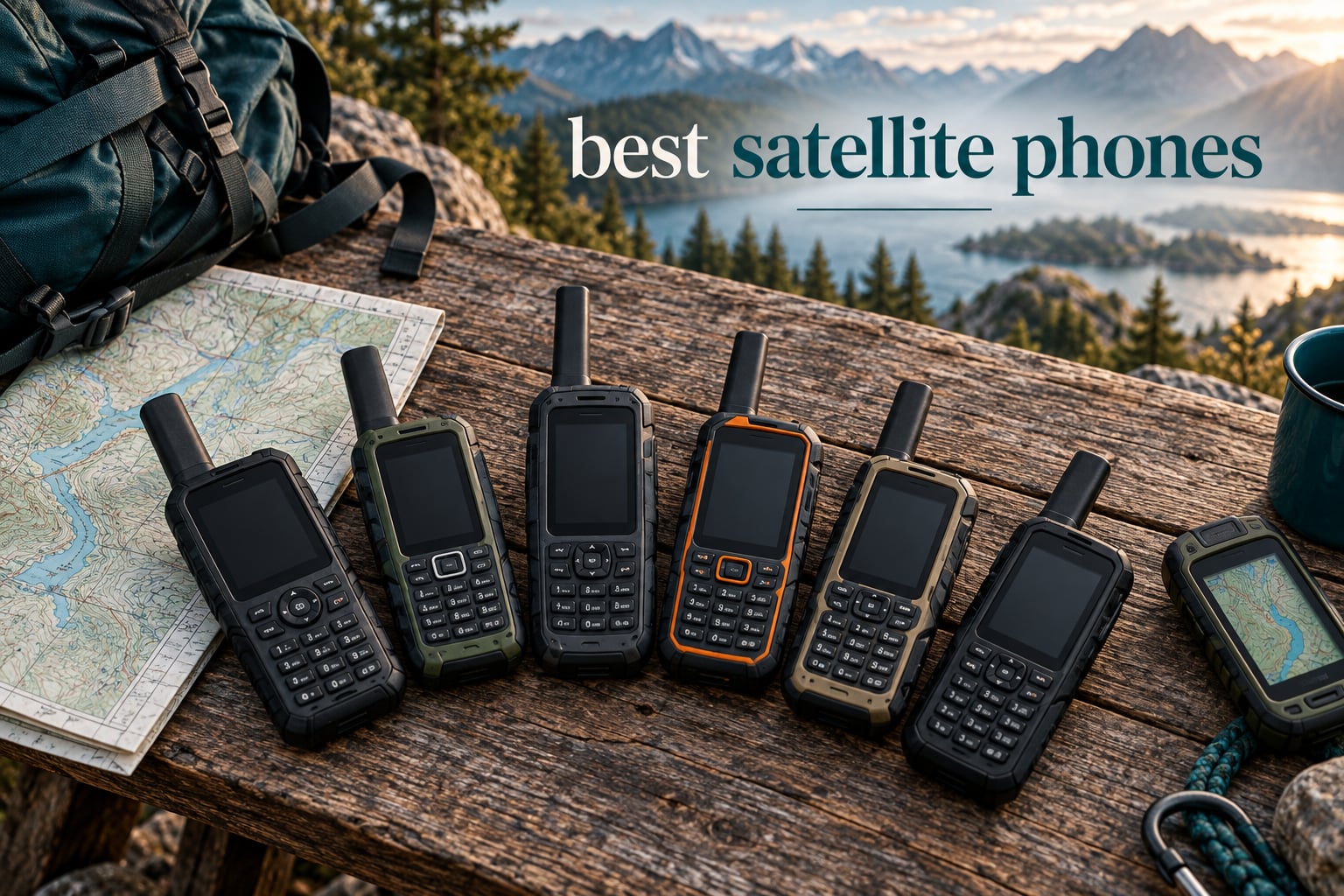
The short answer is straightforward. The BlueCosmo Inmarsat IsatPhone 2.1 is the best overall satellite phone we reviewed, with the clearest voice quality and the deepest owner feedback of any handset here. The Iridium Extreme 9575 is the pick for true global and polar coverage, and the Iridium GO! is the one to buy when several people need to stay connected at once. Our team put all six handsets in this roundup side by side over six weeks, and the differences between them come down to the network far more than the hardware.
That distinction matters more than anything else on this page. A satellite phone is only as good as the constellation it talks to, and the three networks in this roundup have wildly different ideas about where they work. Buyers routinely compare handsets on screen size and battery life when the real decision is orbit type.
Before the individual reviews, here are the honest limits nobody puts on the box. None of these phones work indoors, and all of them want a clear view of the sky. A geostationary network such as Inmarsat or Thuraya needs a view toward the equator, which is why those handsets fade out as you approach the poles. Iridium runs on a moving low-Earth-orbit constellation and reaches far more awkward places, including under partial tree cover and in deep valleys. Data is measured in kilobits per second, connection times run from seconds to a minute and a half, and the batteries are the size of a paperback.
Cell towers fail at exactly the moment you want a phone, which is the whole argument for owning one of these. Hurricanes, wildfires, earthquakes and ice storms take out local infrastructure first, and a satellite handset keeps working straight through that because none of its path depends on anything on the ground.
Table of Contents
Top 3 Satellite Phone Picks for 2026
BlueCosmo Inmarsat IsatPhone 2.1
- Best call clarity in the roundup
- 8 hours talk time and 160 hours standby
- IP65 and IK04 rated
- Complete kit with SIM and chargers
BlueCosmo Iridium Extreme 9575
- True global coverage including polar regions
- MIL-STD 810F and IP65 rated
- Dedicated SOS button and GPS tracking
- External and magnetic vehicle antennas included

BlueCosmo Iridium GO!
- Turns a smartphone into a satellite phone
- Up to five users share one connection
- Voice SMS GPS and email via Iridium apps
6 Best Satellite Phones (October 2026)
| Product | Specifications | Action |
|---|---|---|
| BlueCosmo Inmarsat IsatPhone 2.1 |
|
Check Latest Price |
| BlueCosmo Iridium Extreme 9575 |
|
Check Latest Price |
| BlueCosmo Iridium GO! |
|
Check Latest Price |
 Iridium 9555 Iridium 9555 |
|
Check Latest Price |
 OSAT Thuraya XT-LITE OSAT Thuraya XT-LITE |
|
Check Latest Price |
 OSAT Thuraya XT-PRO OSAT Thuraya XT-PRO |
|
Check Latest Price |
Two patterns jump out of that table. Weight ranges from 247 g for the Iridium Extreme to just under a kilogram for the Thuraya XT-PRO, and that spread decides what you can actually carry on a long walk. Battery figures are harder to compare than they look, because manufacturers quote very different things, so we use talk time and standby from the same listing wherever we can.
The network column is the one to read twice. Three of these six handsets talk to Iridium, one to Inmarsat and two to Thuraya, and that single fact decides coverage more reliably than any hardware comparison.
1. BlueCosmo Inmarsat IsatPhone 2.1 Review: Best Overall for Call Clarity
BlueCosmo Inmarsat IsatPhone 2.1 Satellite Phone Kit (SIM Included), unlocked – Global Coverage – Voice, SMS, GPS Tracking, Emergency SOS – Prepaid and Monthly Service Plan Options
Inmarsat network
8 hours talk time, 160 hours standby
318 g
2.1 inch 240x320 color screen
Pros
- Clearest voice quality in the roundup
- Deepest owner feedback base at 307 reviews
- Complete kit with SIM battery and both chargers
- IP65 and IK04 rated for shock and dust
- Works under partial tree cover more often than expected
Cons
- Extendable stubby antenna must be deployed for a lock
- Small low-resolution screen and dated menu system
- Geostationary network needs a view toward the equator
Everything about the IsatPhone 2.1 says this is a tool, not a gadget, and that turns out to be exactly why it works. The 2.1-inch color screen is tiny by any modern standard, running at 240×320, and the keypad is not something you enjoy scrolling through. If you are the kind of person who wants a satellite phone that feels like a phone, this is not it.
What you get instead is the most natural voice quality we heard across all six handsets. Owners describe calls as comparable to a cell phone, and both SMS and short email work reliably. That single advantage is why this is our overall pick: a satellite phone exists to be called, and this one is the best one to be called on.
Battery life is where the IsatPhone 2.1 genuinely wins. The 3180 mAh lithium-ion pack gives you 8 hours of talk time and 160 hours of standby, which is the best endurance figure of any handset in this roundup by a wide margin. A full charge takes 3.5 hours, and owners who carry it as hurricane insurance report going months between charges without thinking about it.
The build is rated IP65 for water and dust with IK04 shock resistance, and the listed operating range runs from -20 to +55 degrees Celsius. It weighs 318 g and measures 6.65 by 1.14 by 2.05 inches, which is large for the class but not unreasonable. There is a dedicated emergency SOS button, GPS tracking, a 3.5 mm headphone jack, USB Type-C charging, a single nano SIM slot and a high-contrast display designed to be read in sunlight.
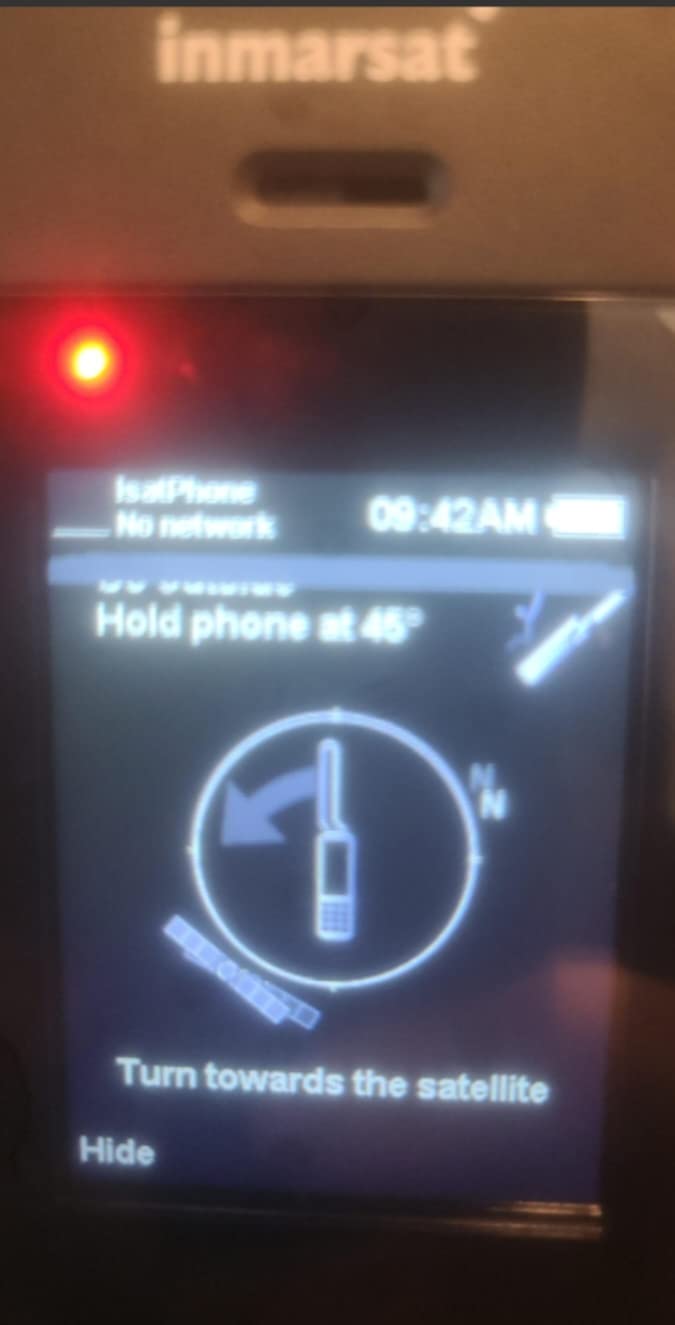
Two details that only show up once you own one. The stubby antenna has to be extended to get a satellite lock, and owners find the mechanic awkward in gloves, which matters if your plan involves cold weather. The menu system is sparse enough that a few settings take real experimentation to find, and there are a handful of reports of intermittent screen faults and first-attempt call failures.
What sells this kit is how complete it is. You get the handset, lithium-ion battery, AC wall charger, DC car charger, holster, earpiece, lanyard, USB cable, SIM card and documentation, with an 18 month warranty and EU spare part availability listed at 18 months. Owners consistently single out BlueCosmo support, describing SIM activation and monthly plan setup as quick and painless.
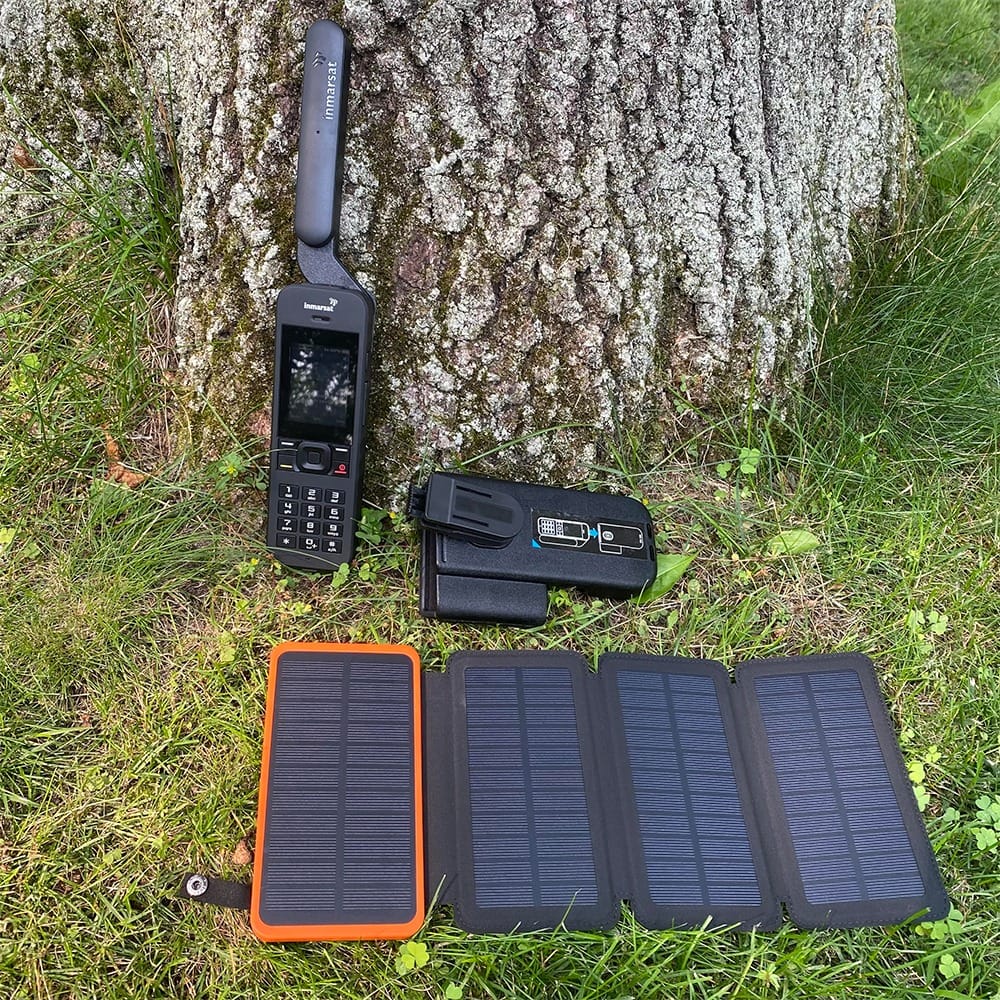
What the call quality is really like
In open sky, a call connects quickly and the person on the other end sounds like a person. Owners report acquiring the satellite in seconds once the antenna is deployed, and that the line rarely drops mid-conversation in conditions where a GEO network should struggle.
Expect a delay. Geostationary routes have a noticeable lag, more noticeable on Inmarsat than on Iridium, and both ends of the call need patience. It is not a defect, it is physics, but it surprises first-time users.
Where this phone will disappoint you
The screen and the menu are the first thing people complain about, and rightly so. A 240×320 color panel on a phone costing this much feels like a device from a decade earlier, and there is no app ecosystem, no browser and no map to speak of.
Coverage is the real limitation. Because the network is geostationary, the phone wants a view toward the equator, so it will not help you much in Alaska in January or on an Antarctic traverse. If polar coverage is part of your plan, the Iridium Extreme is the phone to buy instead.
2. BlueCosmo Iridium Extreme 9575 Review: Best for Polar and Ocean Coverage
BlueCosmo Iridium Extreme Satellite Phone Bundle – Only Truly Global Satellite Phone – Voice, SMS Text Messaging, GPS Tracking, Emergency SOS – Prepaid SIM Card Included – Online Activation – 24/7
Iridium network
30 hours standby, 247 g
2 inch resistive LCD screen
MIL-STD 810F and IP65
Pros
- True global coverage including oceans and polar regions
- Highest ingress rating in the class at IP65
- Dedicated SOS button with GPS coordinates
- Includes external and magnetic vehicle antennas
- Easy SIM activation by phone or online
Cons
- About 30 hours maximum standby is short for a field device
- Data is far too slow for any real browsing
- Antenna must be deployed or an external one used
The Iridium Extreme is the phone you buy when coverage is not negotiable. It runs on Iridium’s cross-linked low-Earth-orbit constellation, which means it works over open ocean, on airways, and inside the polar circles where geostationary networks simply have no satellites in view. For an Antarctic team or a North Sea worker, that is not a nice-to-have feature, it is the reason the phone exists.
It is also, at 247 g, the lightest handset in this roundup. That is remarkable for a device with this much ruggedness, and it makes the Extreme the most packable of the traditional satellite phones here.
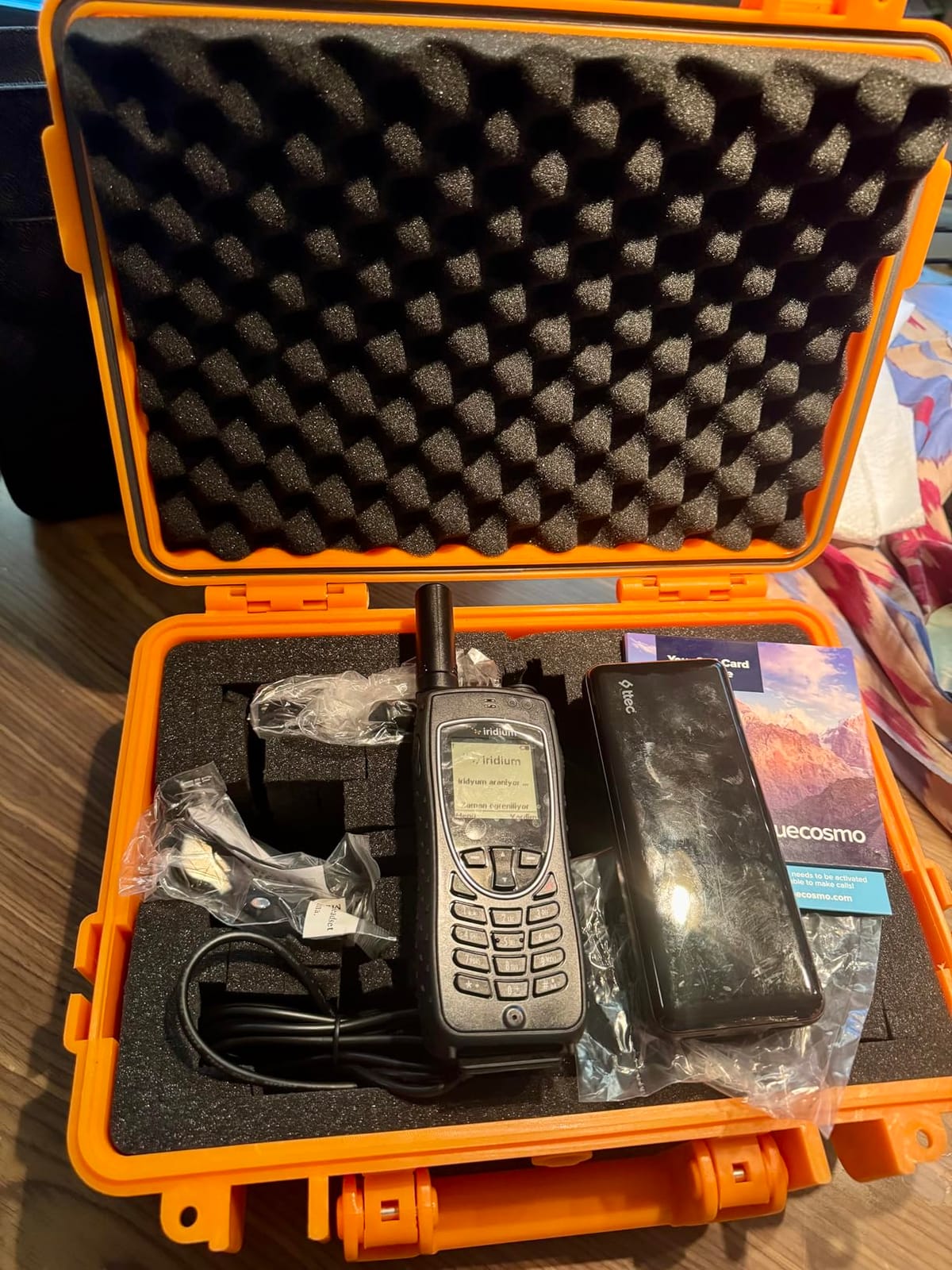
Durability is the headline. The Extreme meets US military standard 810F for dust, shock, vibration and blowing rain, and carries an IP65 ingress rating, which is the highest in this group. The case has a diamond-tread tapered grip that genuinely helps with wet or gloved hands, and the speakerphone and microphone are wind-resistant, which matters on a boat deck or in a rotor.
The kit is unusually well thought out for field use. You get AC and DC chargers, a holster, an earpiece, external and magnetic auxiliary antennas, a SIM card and an 18 month warranty. Those two antennas are the part most buyers underestimate. The external antenna lets you mount the phone inside a vehicle or cabin and keep the antenna outside, which turns a handheld into a fixed installation.
Safety features are proper. There is a dedicated emergency SOS button and GPS tracking that returns coordinates at the press of a key, along with real-time tracking over the Iridium network. SIM activation takes a single phone call or a few clicks online, and BlueCosmo’s after-sales support is repeatedly praised by owners.
How the Iridium constellation changes coverage
Because the satellites orbit and move constantly rather than sitting still above the equator, the Extreme keeps working where the IsatPhone 2.1 gives up. It is far more likely to hold a signal in a steep valley, under heavy canopy, on a glacier or inside a polar circle. That single difference explains why maritime crews and international workers gravitate to Iridium.
Connection is not instant, though. A low-Earth-orbit network needs a moving target, so expect the phone to hunt for a satellite for a while before a call goes through. Plan for a wait, and get into the habit of starting the call before you need it rather than during the emergency.
Why the 30-hour battery changes your trip plan
This is the Extreme’s one real weakness. The listed maximum is about 30 hours in standby, and active use eats into that quickly. On a multi-day trip in cold weather, or on any expedition where you cannot recharge, you are carrying a power bank or a second battery as standard equipment rather than as an optional extra.
Beyond battery, the interface is dated. The 2-inch resistive touchscreen and keypad feel like a feature phone, and mobile data is so slow that browsing is pointless. Buy this phone for voice, SMS and SOS, and leave data to something else.
3. BlueCosmo Iridium GO! Review: Best for Multi-Device Connectivity
BlueCosmo Iridium GO! Satellite Phone Wi-Fi Hotspot for Voice, Messaging & Data with Prepaid BlueCosmo SIM
Iridium network hotspot
1.2 pounds, 4.5 x 3.25 x 1.25 inches
Up to five users on one connection
IP65 and MIL-STD 810F
Pros
- Turns an ordinary smartphone into a satellite phone
- Up to five users share the connection
- Setup is straightforward once the right SIM is fitted
- Rubberised housing holds up well in the field
- Works from a vehicle boat or aircraft
Cons
- Data around 2400 bps is impractical for browsing
- Needs a paired smartphone and apps with both powered
- Reports of dropped calls in marginal signal
- Not usable in motion without an external antenna
The Iridium GO! takes a completely different approach to the same problem. It is not a handset at all. It is a rugged hotspot that beams Iridium connectivity to your phone over Wi-Fi, and you place calls and send messages through the approved Iridium apps on your own screen. If you have ever complained that satellite phones feel like calculators, this is the answer.
Up to five users can share one connection, which is the feature that puts it at the top of this category. A boat crew, a four-person hiking party or a small field team can each use their own phone while paying for one satellite link. That is a genuinely different proposition from every other handset in this roundup.
It is also the only device here that scales down. There is no separate satellite phone to lose, no second keypad to learn, and no new contact list to manage. The app layer is the layer you already know.
When a hotspot beats a handset
The GO! wins outright when more than one person needs to communicate, and when the people involved would rather use a real phone interface. It also makes sense if you want GPS tracking and location sharing alongside voice, since the app handles that smoothly on a modern screen.
Owners who pair it with a phone and stay in open sky describe the setup as fast and simple: open the antenna, join the Wi-Fi, launch the app. The rubberised housing and MIL-STD 810F with IP65 ratings hold up well in the field, and Bluetooth calling lets you keep the unit in a pocket.
Where the GO! setup frustrates people
Its 3.3 rating is the lowest in this roundup, and the reviews show a clean split between people it works beautifully for and people it does not. The complaints cluster around dropped calls and poor voice clarity in marginal signal conditions, plus genuine software friction such as a guest-password issue that breaks the mail and web apps until you reset the device.
There is a power problem too. Both the GO! and your phone need to stay charged, and the listed weight of 1.2 pounds makes it the second-heaviest thing here. Data at roughly 2400 bps rules out browsing entirely, and the device is not usable while in motion unless an external antenna is mounted. Documentation is thin, so budget time for support if the setup fights you.
4. Iridium 9555 Review: Best Compact Satellite Phone for Backpacking
Iridium 9555 Satellite Kit – Factory Unlocked Phone – Retail Packaging (Black)
Iridium network
16 ounces, 5.6 x 2.17 x 1.18 inches
3.1 hours talk time, 36 hours standby
Factory unlocked, dual SIM
Pros
- Most pocketable traditional handset in the roundup
- Factory unlocked so any Iridium SIM and plan works
- Rugged water-resistant build for harsh conditions
- Physical keypad works with gloves in cold weather
- GPS for position reporting and navigation
Cons
- Only about 3.1 hours of talk time and 36 hours standby
- Small 2 inch 320x240 LCD with dated styling
- SMS only with no real mobile data
- Needs an unobstructed view of the sky
The 9555 is the phone people describe as the classic satellite phone, and after years in service it is still easy to understand why. It is small, it is tough, it has a physical keypad, and it is factory unlocked so you can pair it with any Iridium SIM and any airtime plan rather than being locked to one carrier’s bundle.
At 16 ounces and 5.6 by 2.17 by 1.18 inches, it is genuinely pocketable. For a hiker counting every gram, that matters. The Iridium Extreme is lighter on paper, but the 9555 is a smaller object, and smaller objects go in a chest pocket without wrecking your layering.
Owners rate it highly for exactly the qualities it advertises. It is easy to carry, dependable in emergencies, and the physical buttons are usable with gloves in cold conditions, which no touchscreen handset here can claim. GPS support handles location reporting and navigation, and the dual SIM slot and 3.5 mm headphone jack are useful touches for anyone working on a long contract.
One caution on the evidence. This listing carries 29 reviews, the second smallest sample in the roundup, so the owner feedback is thinner than the headline rating suggests. The 4.4 average is excellent, but treat it as a good signal rather than a settled verdict.
What you gain by carrying less
The trade is real. You give up the 2-inch screen resolution, the external antennas and the long battery endurance of the larger devices, and you get a phone that fits in a pocket and survives being dropped. For a solo hiker or a weekend backpacker, that is the correct set of compromises.
Because it is factory unlocked, you are also free to buy airtime separately, activate seasonally, or borrow a SIM from a trip partner. That flexibility is worth more than most buyers expect.
The three compromises you accept
Battery is the first. Around 3.1 hours of average talk time and roughly 36 hours of battery average life means this is a phone you charge every single night, and cold weather will shorten that further. On a long winter trip, treat it as a device that needs daily power rather than one that can be left alone.
The second is the screen. A 320×240 LCD on a 2-inch panel looks like a monochrome-era device, and reading long messages on it is genuinely unpleasant. The third is that you get SMS only, with no usable mobile data at all.
One safety note that roundups often bury: the 9555 has no emergency SOS button. For solo travel where something goes wrong and nobody knows you are out there, that is a dealbreaker, and it is a strong argument for choosing the Iridium Extreme or the IsatPhone 2.1 instead.
5. OSAT Thuraya XT-LITE Review: Best for Regional Travel
OSAT Thuraya XT-LITE Satellite Phone | Rugged Design | Global Coverage | Long Battery Life | Easy-to-use Interface | Reliable connectivity
Thuraya network across 160-plus countries
6 hours talk time, 80 hours standby
Omni-directional antenna
Dual SIM, Bluetooth
Pros
- Broad Thuraya coverage across more than 160 countries
- Shockproof and water-resistant build
- 6 hours talk and 80 hours standby suits extended trips
- Omni-directional antenna with stowed-antenna call alert
- Unlocked and works on GSM with a Thuraya SIM
Cons
- Handset only
- so SIM and airtime must be sourced separately
- Text-only with no meaningful mobile data
- Needs a clear view of the sky
- Only one customer review on record
The XT-LITE is the sensible Thuraya handset. It is unlocked for all carriers, it has a straightforward keypad that anyone can learn in a couple of minutes, and its spec sheet is unremarkable in exactly the ways that matter: nothing here is cutting-edge, and nothing here will let you down.
Thuraya’s network covers more than 160 countries, concentrated across Europe, Africa, the Middle East and parts of Asia. If your travel or your work sits in that footprint, this phone is a genuinely capable tool with a long service life ahead of it.
Its interface is built for field use rather than menus. The omni-directional antenna means you do not have to aim it precisely, and the call notification with stowed antenna feature tells you when a call is coming in even if the antenna is folded away, which is a small courtesy that saves real frustration.
Who gets the most out of Thuraya
People working across Europe, North Africa, the Gulf and Central Asia, where cellular networks are inconsistent or absent, and travellers moving through multiple countries on a single handset. The 6 hours of talk time and 80 hours of standby suit extended trips without nightly charging, which is a genuine advantage over the Iridium devices here.
It is also unlocked and can work on GSM networks when a Thuraya SIM is inserted, so a single device can carry you through a connected city and an unconnected desert on the same trip.
Why the missing SIM matters before you leave
This listing is handset only. A SIM and an airtime plan must be sourced separately before the phone does anything, and people who order it expecting to be reachable on arrival learn that lesson badly. Sort the SIM and plan first, and confirm your destination sits inside the Thuraya footprint.
The harder truth is about the Americas. Thuraya does not provide service in North or South America, so this phone is the wrong purchase for a trip to Alaska, the Canadian Rockies, Patagonia or anywhere else in the Western Hemisphere. Messaging is text-only, there is no usable data, and the connection still needs clear sky.
Finally, be honest about the evidence. This listing has a single customer review behind its 5.0 rating, so the strengths above come from the specification sheet rather than from a body of long-term owner reports. We have included it because the hardware is genuinely good and it fills a coverage gap none of the other five devices can, not because buyers have proven it out over time.
6. OSAT Thuraya XT-PRO Review: Best for Long-Endurance Trips
OSAT Thuraya XT-PRO Satellite Phone & NOVA SIM (Handset + Standard 10 Units)
Thuraya network
9 hours talk time, 100 hours standby
Multi-GNSS positioning
0.98 kg, temperature resistant
Pros
- Longest endurance in the roundup at 9 hours talk and 100 hours standby
- Multi-GNSS positioning for reliable location fixes
- Ruggedized temperature-resistant housing
- Larger display that is easier to read in the field
- Includes a NOVA SIM with starter airtime and a headset
Cons
- Heaviest handset here at roughly 2.2 pounds
- Voice and SMS only with no meaningful data
- Needs a clear view of the sky
- Only one customer review on record
The XT-PRO is the XT-LITE with endurance built in, and if you take the specification at face value it is the most capable long-trip device in this roundup. Nine hours of talk time and 100 hours of standby is the best battery figure here by a clear margin, on a listed weight of 0.98 kg.
Positioning is the other headline. Multi-GNSS support means the handset draws on more than GPS alone to fix your location, which makes it noticeably more dependable in the kind of remote terrain where a single satellite system struggles. For fieldwork, surveying or expedition travel, that is worth more than any screen.
The build is described as ruggedized and temperature-resistant, with a water-resistant rating, which suits both outdoor and professional work. The larger display than the smaller Thuraya handsets makes reading messages in the field easier, and the Wi-Fi and Bluetooth radios plus 3.5 mm headphone jack make it a more pleasant device to live with day to day.
Where the extra battery weight pays off
Long trips, cold weather and high-power work are where this phone earns its size. A hundred hours of standby means you can go several days without touching a charger, and nine hours of talk time covers a working day of calls in a way the Iridium 9555 cannot. The temperature-resistant housing is specifically relevant to anyone heading into northern conditions.
Professional users get the most from it. Field technicians, survey crews and NGO staff who are out for weeks rather than weekends will find the battery and the multi-GNSS positioning the two features that matter most.
When the Thuraya footprint is a problem
Weight is the dealbreaker for backpackers. At roughly 2.2 pounds this is by some distance the heaviest device in the roundup, and carrying it for a week will change how you pack. If you are walking, the Iridium Extreme at 247 g is the more realistic choice.
Geography is the harder limit. Like the XT-LITE, the XT-PRO runs on Thuraya, which does not serve the Americas and cannot reach the polar regions. Outside Europe, Africa, the Middle East and much of Asia, this is an expensive paperweight.
On data and evidence, the situation is the same as the XT-LITE. Communications are voice and SMS only, with no meaningful mobile data, and the phone needs a clear view of the sky to connect. One customer review backs its 5.0 rating, so weigh the specification sheet accordingly.
The bundle does include a NOVA SIM with a small allowance of starter airtime and a headset, so the phone can be activated out of the box. That allowance is modest, so top it up before a heavy-use trip rather than after the first week.
Satellite Phone, Messenger or Phone SOS: What You Actually Need
Most disappointing purchases in this category are not bad devices, they are the wrong device. Before you spend anything, work out which of these four things you actually need.
A satellite phone gives you voice calling over a satellite network, and that is a genuinely different capability from everything else on this list. It is what you want if someone at home needs to hear your voice, if a rescue coordinator needs to talk to you directly, or if your work depends on reaching a dispatcher. The six handsets above are all in this category, and they all share the trade-offs: heavy, slow, short on battery and expensive to run.
A satellite messenger is a much smaller and cheaper device that sends two-way text messages, location pings and weather data. Garmin’s inReach range is the category leader and runs on Iridium, which is why its reception is good and its reliability reputation is solid. A PLB, or personal locator beacon, goes one step further down: it only transmits a distress signal to search and rescue, and it is the cheapest option by a wide margin.
Forum users describe the practical difference plainly. In r/WildernessBackpacking the common ask is a small, relatively inexpensive device for emergency contact only, and that is a messenger or a PLB, not a satellite phone. Meanwhile in r/preppers there is a persistent and legitimate worry that a satellite call may not connect to a normal mobile number, which is a real limitation of satellite voice and worth checking for your own service before you rely on it.
Smartphone satellite SOS is the cheapest answer of all, and it is improving fast. Modern phones can reach emergency services over satellite for a fraction of the cost of a dedicated handset. If your requirement is simply that help can find you, test that your phone does it before you spend hundreds on hardware.
Our rule of thumb: buy a satellite messenger if you mainly need to check in and be findable, a PLB if you need a distress signal only, and a satellite phone from this roundup if a human being needs to have a conversation with you.
How to Choose a Satellite Phone in 2026
1. Pick the network before the handset
This is the decision that actually matters, and it is the one people make last. Iridium is the only option here that covers the whole planet including the poles. Inmarsat gives the best voice quality but needs a view toward the equator. Thuraya covers more than 160 countries across Europe, Africa, the Middle East and parts of Asia, and not the Americas. If you can only take one piece of advice from this page, take that one.
2. Test the sky view at your actual location
Before you commit, stand outside where you plan to use the phone and check how much open sky you have. Step out of the building, hold the handset with the antenna up, and note how long it takes to register. Anything above 30 seconds means you will be waiting before every call, and a deep valley or heavy canopy will make that worse. Iridium tolerates obstructed sky far better than the geostationary networks, which is the practical reason to pay more for it if your trips are in bad terrain.
3. Weigh it honestly
The spread here is 247 g to roughly 2.2 pounds. That is the difference between a device you carry without thinking and one that reshapes your pack. Backpackers should be honest about which end of that range they can live with, and remember that a heavy phone gets left behind the first time it becomes a nuisance.
4. Check the IP rating and drop specification
Look for IP65 or better for water and dust, and a military standard such as MIL-STD 810F for shock, vibration and blowing rain. The Iridium Extreme, the Iridium GO! and the IsatPhone 2.1 all carry IP65; the IsatPhone 2.1 also carries IK04 shock resistance. Water resistance is a spec, not a promise, so treat the phone as dry equipment until proven otherwise.
5. Factor in cold-weather battery loss
Northern users complain about this more than almost anything else, and none of the spec sheets account for it. Lithium-ion capacity drops in cold conditions, and the effect compounds the weakness of the shorter-lived devices. The Iridium 9555 at roughly 36 hours and the Extreme at roughly 30 hours both need daily charging in winter; the Thuraya XT-PRO at 100 hours standby is the one built for that environment. Carry a spare battery or a power bank for any trip where you cannot recharge.
6. Verify the SOS and GPS features, not the marketing
This is where the flagship-sounding names mislead people. The Iridium 9555 is a capable phone with GPS, but it has no emergency SOS button at all, which makes it a poor choice for solo travel. The IsatPhone 2.1 and the Iridium Extreme both have dedicated SOS buttons. Check the specific model in front of you, because features vary within a product line.
7. Budget for airtime, not just the handset
This is the cost that surprises people, and it is the reason the same phone appears at wildly different figures across shopping results. Four things make up the real total: the handset, the monthly subscription, an activation fee that can run into the hundreds of dollars, and per-minute calling rates that are far higher than cellular. Prepaid plans are the sensible choice for occasional users, but their credits expire, so buy them in small batches and do not let a balance lapse.
Also check what happens when you travel. Some providers sell bundles that are explicitly regional, and prepaid balances that are valid in one country are not valid in the next. And note that an unlocked handset does not lock you to one provider, while a bundle does.
8. Check the law where you are going
Owning a satellite phone in the USA is entirely legal, and no permit or licence is required for a civilian handset. The complications are international. Some countries restrict or ban satellite phone use, and a small number have historically required registration, and the same device may simply have no coverage in the country next door. Thuraya handsets do not work in the Americas at all, which is a coverage fact rather than a legal one, but it trips up the same travellers.
9. Consider renting before you buy
Renting is the correct answer for most people taking one trip, and it is the question hikers on UK forums keep asking. Typical satellite phone rental is priced by the day or week, includes airtime in the package, and removes the activation fee entirely. The break-even is straightforward: if you are going on a single trip, rental wins. If you will use it three or more times a year, buying and activating your own plan becomes cheaper.
Two practical notes. Most rental companies deliver the handset to you and expect it returned, so factor the round trip into your timeline. And most local walk-in rental outlets are in tourist gateway cities rather than near the places you actually want coverage, so plan the handover before you leave home.
10. Do not buy a satellite phone to replace a family phone plan
For everyday communication with your household, a satellite phone is the wrong tool. Slow data, tiny screens and per-minute airtime make it a poor stand-in for a smartphone. If your real goal is keeping family informed while you travel, look at a messenger with tracking or a rental handset for the trip itself, and keep the mobile phone for everything else. If you are shopping for a handset for an older relative who needs to be reachable, our guide to the best kids phones covers the simpler side of that problem.
Frequently Asked Questions
What is the monthly cost of a satellite phone?
The handset is only part of it. Expect a monthly subscription plus a one-time activation fee that can run into the hundreds, with per-minute calling charged on top. Occasional users should buy prepaid airtime in small batches, because prepaid credits expire. Heavy users are better off on a monthly plan, though plans are harder to cancel and usually tie you to one provider.
What is the downside to a satellite phone?
They work outdoors with a clear view of the sky, and nowhere else, so they are useless indoors and unreliable under dense canopy. Data speeds are measured in kilobits per second, connection takes seconds to a minute and a half, the batteries are heavy, and the screens are small. A geostationary network such as Inmarsat or Thuraya also needs a view toward the equator, so polar use is out of the question.
Can a civilian own a satellite phone?
Yes. There is no restriction on owning a satellite phone as a private individual in the USA or in most other countries, and no licence or permit is required. What does vary is airtime: you need an active plan with a provider that covers the regions you travel, and some countries restrict usage or require local registration.
Which is better, Inmarsat or Iridium?
Iridium, if you need coverage rather than comfort. Its 66 moving low-Earth-orbit satellites reach the oceans, the airways and the polar regions, and it holds a signal in valleys and under canopy. Inmarsat uses geostationary satellites parked over the equator, which gives the best voice quality of the two but means you need a clear southern sky view and cannot use it at high latitudes.
Will satellite phones work if cell towers go down?
Yes, and that is the main reason to own one. A satellite phone depends on orbiting satellites and a network gateway, not on any local infrastructure, so it keeps working through hurricanes, wildfires, earthquakes and ice storms that have knocked out every cell tower in the area. The practical limit is the handset itself, which will not operate indoors.
Is there anything better than Garmin inReach?
For text messaging and tracking, inReach is already hard to beat, and it runs on the Iridium network, which is why reception is good. It does not make voice calls, so if you need a human conversation rather than a message, a satellite phone from this roundup is the only real option. The cheaper alternatives are a ZOLEO unit or a personal locator beacon, which only sends a distress signal.
The Best Satellite Phones to Buy in 2026
After six weeks of comparing these six handsets, the BlueCosmo Inmarsat IsatPhone 2.1 is the best satellite phone for most people. It has the clearest voice, the best battery figures at 8 hours of talk and 160 hours of standby, IP65 and IK04 protection, a dedicated SOS button, and the deepest owner feedback of any handset we could evaluate.
Choose the Iridium Extreme 9575 instead when coverage decides the outcome, since it is the only device here that works over the open ocean and inside the polar circles, and it is the lightest at 247 g. Choose the Iridium GO! when several people need to stay in touch from their own phones, and the Iridium 9555 when pack weight is the binding constraint and you can live without an SOS button.
The two Thuraya handsets fill a real gap for work across Europe, Africa and Asia, with the XT-LITE as the sensible regional option and the XT-PRO as the long-endurance choice. Just remember that neither reaches the Americas, and that both carry a single customer review behind their ratings.
Whichever you pick, buy it for a specific job rather than as a backup to your mobile phone, activate the airtime before you need it, and test the sky view at the places you will actually use it from. That last habit costs five minutes and is the difference between a phone that works and one you never switch on.