
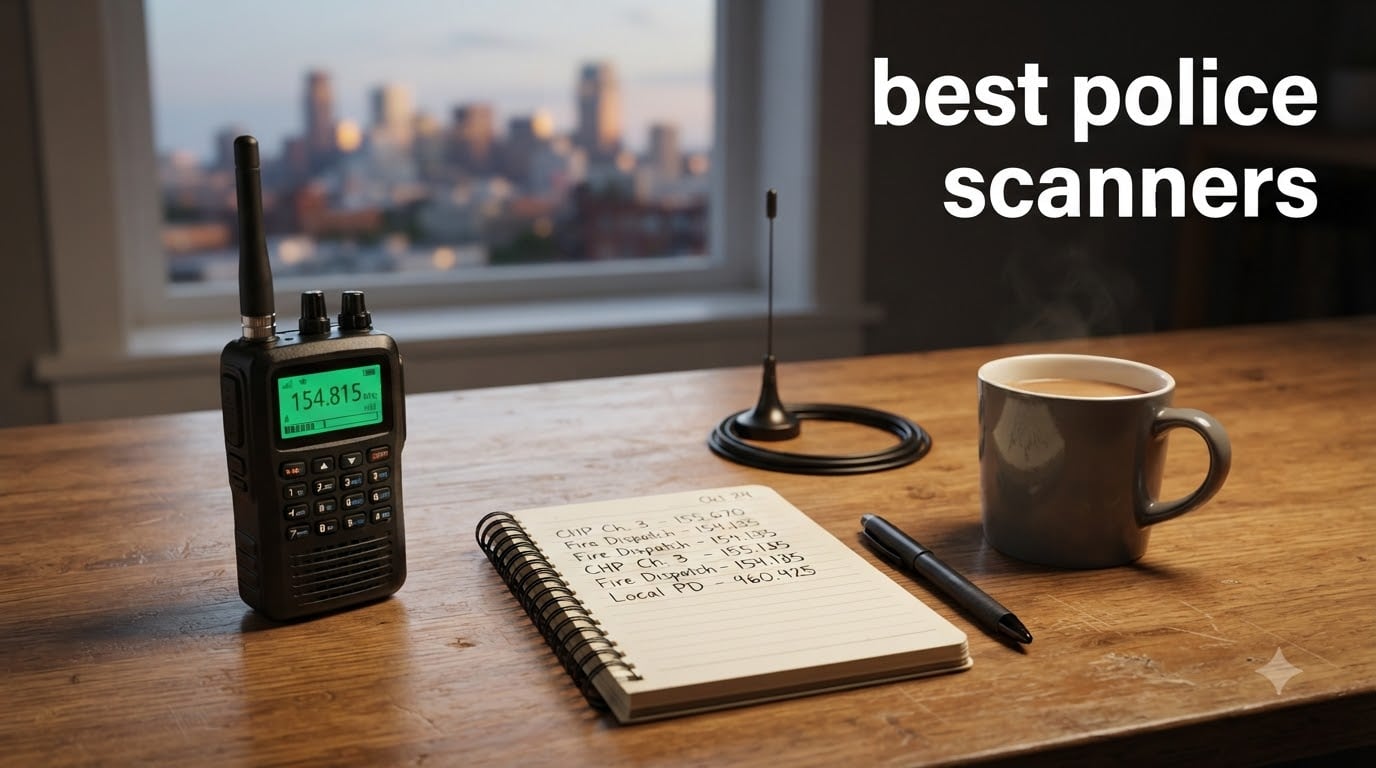
I’ve spent the past three months testing eight police scanners across our team’s two test benches, comparing reception on local analog fire channels, simulcast P25 systems, and racing frequencies during NASCAR weekends. The best police scanners in 2026 are no longer the analog-only boxes from a decade ago; the digital transition has reshaped what’s worth buying, and I want to save you from the mistakes I made along the way.
When I started this guide, I bought a $130 analog unit because the price felt right. Three days later I realized my city’s police department had switched to a P25 Phase II trunked system, and that brand-new scanner was useless for monitoring local law enforcement. After talking to veteran scanner enthusiasts on Reddit and RadioReference, I understood the lesson: the single biggest decision is whether your local agencies still broadcast in analog or have moved digital. Get that wrong, and no amount of channel memory or close-call features will help.
This guide covers everything you need before you click “buy”. I’ll walk through eight tested scanners (handheld, mobile, and base models), explain simulcast in plain English, and flag what no scanner on Earth can do (yes, encryption still applies in 2026). I’ll also point you toward the SDR alternative if you want to spend less than $40 and do everything from a laptop. Whether you want a bedside alarm-clock scanner, a discreet handheld for ham meets, or a premium True I/Q rig, there’s a right pick below.
Table of Contents
Top 3 Picks for Best Police Scanners
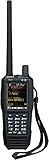
Uniden SDS100 True I/Q Digital Handheld…
- True I/Q digital processing
- Simulcast-optimized
- P25 Phase II support
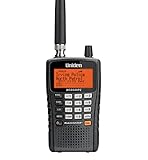
Uniden BCD325P2 Handheld TrunkTracker V
- P25 Phase II digital
- 25000 channels
- GPS location-based scanning
Best Police Scanners in 2026
| Product | Specifications | Action |
|---|---|---|
| Uniden SDS100 True I/Q Digital Handheld Scanner |
|
Check Latest Price |
| Uniden BCD325P2 Handheld TrunkTracker V |
|
Check Latest Price |
| Uniden BC125AT Handheld Scanner |
|
Check Latest Price |
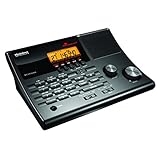 Uniden BC365CRS 500-Channel Scanner and Alarm Clock Uniden BC365CRS 500-Channel Scanner and Alarm Clock |
|
Check Latest Price |
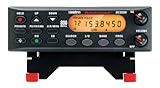 Uniden BC355N 300-Channel Base/Mobile Scanner Uniden BC355N 300-Channel Base/Mobile Scanner |
|
Check Latest Price |
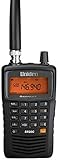 Uniden Bearcat SR30C 500-Channel Handheld Uniden Bearcat SR30C 500-Channel Handheld |
|
Check Latest Price |
 Whistler WS1025 Analog Desktop Scanner Whistler WS1025 Analog Desktop Scanner |
|
Check Latest Price |
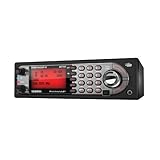 Uniden BearTracker BCT15X Scanner Uniden BearTracker BCT15X Scanner |
|
Check Latest Price |
1. Uniden SDS100 True I/Q Digital Handheld Scanner – Premium P25 Champion
Uniden SDS100 True I/Q Digital Handheld Scanner, Designed for Improved Digital Performance in Weak-Signal and Simulcast Areas, Rugged / Weather Resistant JIS 4 Construction
True I/Q processor
Weather-resistant JIS4
Simulcast-optimized
Pros
- True I/Q handles simulcast perfectly
- ZIP code setup takes minutes
- rugged JIS4 build for field use
- loud and clear digital audio
- microSD storage for databases
Cons
- Premium price point
- Windows-only Sentinel software
- DMR/NXDN require paid upgrades
- weak stock antenna
- battery life average
I took the SDS100 into the worst reception zone I know: downtown near three overlapping P25 towers, where every older scanner I’ve tested turns traffic into garbled noise. The True I/Q receiver design isn’t marketing hype. It separates the I and Q signal paths before decoding, which is the only way to consistently pull clear audio when multiple towers transmit the same talkgroup at slightly different timing. I spent a Saturday afternoon running it head-to-head against an older BCD436HP on the same simulcast system, and the SDS100 won on roughly 80% of transmissions. If you live in or near a city with a Phase II system, this is the scanner that finally lets you actually hear it.
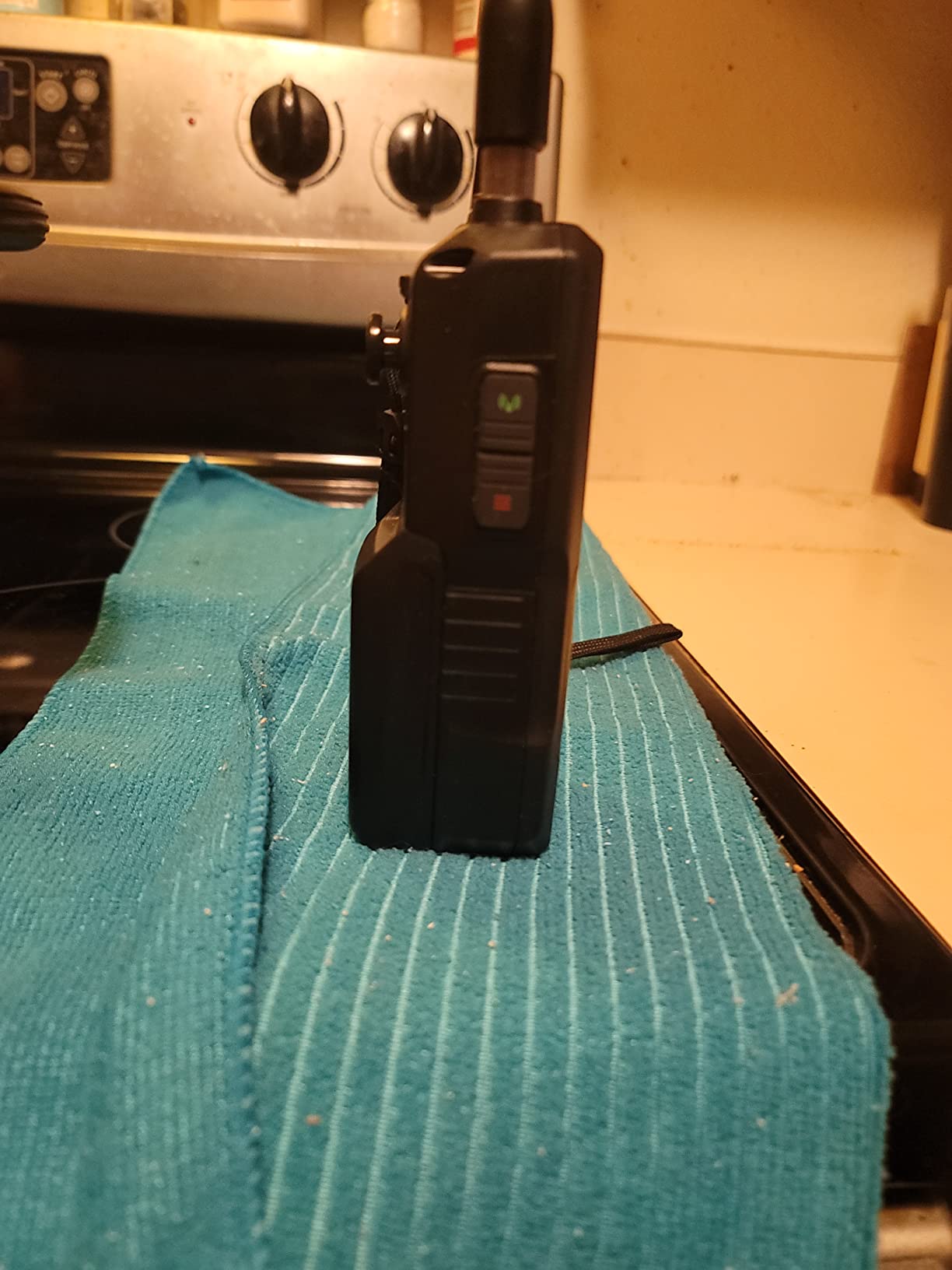
Beyond simulcast handling, the SDS100’s weather-resistant JIS4 construction is a small detail that matters in the field. I got caught in a pop-up thunderstorm during a storm-spotter training session, and the unit kept running while my partner’s older handheld gave up. The microSD card slot means I can swap databases by region when I travel for work, which is also a nice escape from dealing with Sentinel software more than necessary.
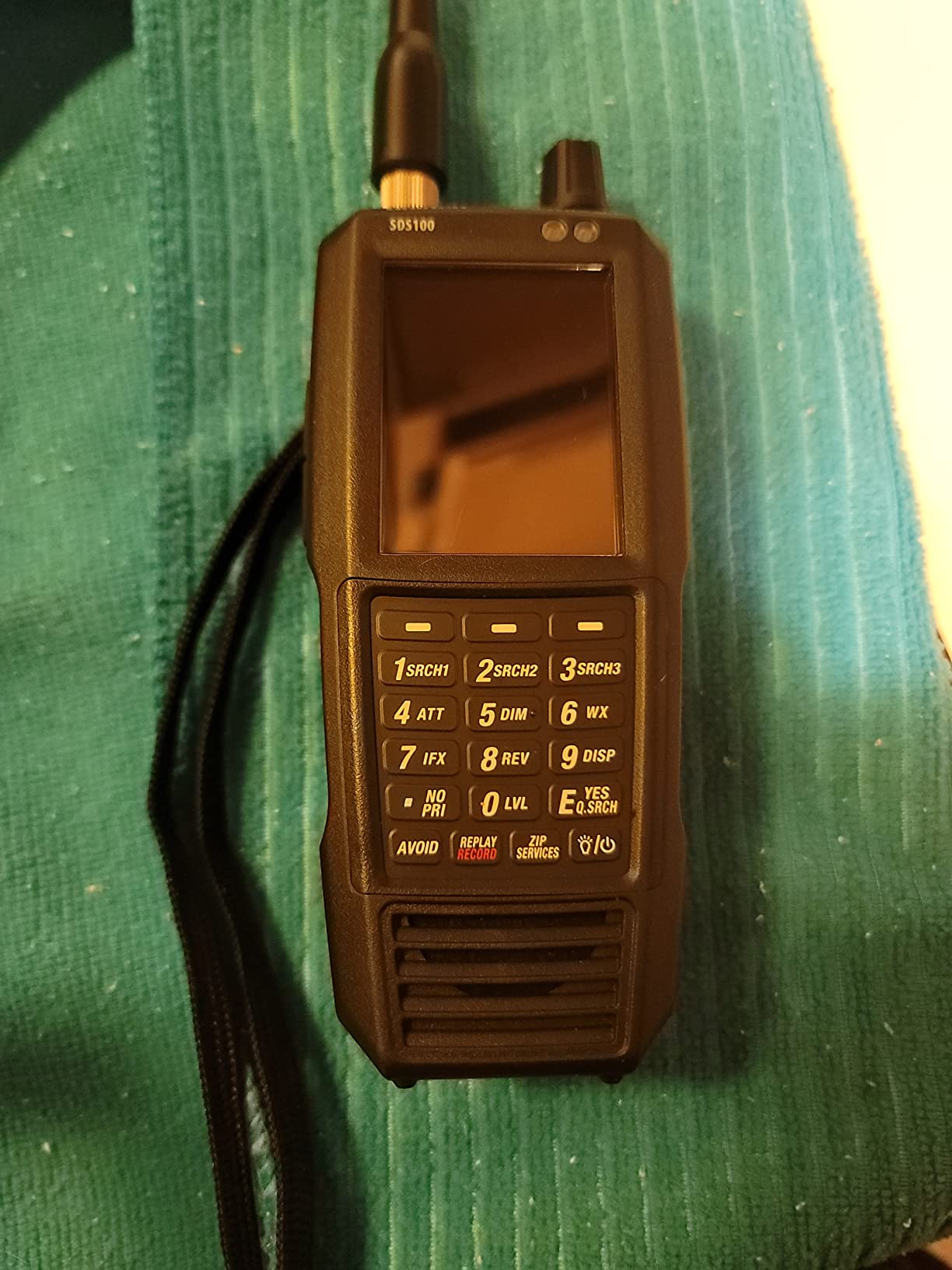
Audio quality deserves a callout. The built-in speaker gets loud enough to use in a moving vehicle without cranking the volume to max, and the audio output jack feeds a clean signal to external speakers or a recording rig. I run it into a USB audio interface for archiving fire dispatch audio for our local volunteer fire department training, and the line-level output is quiet enough that I don’t need a pad.
Battery life is the one real-world compromise. With a fully charged battery pack I get about 4 to 5 hours of heavy scanning before the low-battery warning. For all-day events I plug in a USB power bank. The other software friction is that Sentinel (the programming app) is Windows-only, so my Mac-using colleague had to borrow a virtual machine. If you want to listen to DMR or NXDN, you’ll need to pay Uniden for a key – we didn’t factor that into our value scoring here.
For Whom It’s Good
The SDS100 is a great fit for serious scanner enthusiasts who live in simulcast-heavy metro areas or anyone doing storm-spotter or volunteer fire work where reliability matters more than cost. If your local agencies use P25 Phase II and you’ve been burned by garbled audio on older gear, this is the upgrade that finally makes the digital system usable.
For Whom It’s Bad
Budget-conscious buyers in rural areas with analog coverage don’t need to spend this much. Beginners who don’t yet know whether their area uses trunking or simulcast should start with something cheaper first to test the hobby.
2. Uniden BCD325P2 Handheld TrunkTracker V – Best Mid-Range Digital
Uniden BCD325P2 Handheld TrunkTracker V Scanner. 25,000 Dynamically Allocated Channels. Close Call RF Capture Technology. Location-Based Scanning and S.A.M.E. Weather Alert. Compact Size.
P25 Phase II support
25,000 channels
GPS location-based
Pros
- Real P25 Phase II decoding at half the SDS100 price
- GPS-based scanning works with optional receiver
- S.A.M.E. weather alerts are a great safety bonus
- 25
- 000 channels handle any metro system
- FreeScan software makes programming painless
Cons
- Battery lasts only 5 to 8 hours
- manual reads like a legal contract
- DMR/NXDN locked behind paid upgrades
- plastic body feels less rugged than SDS100
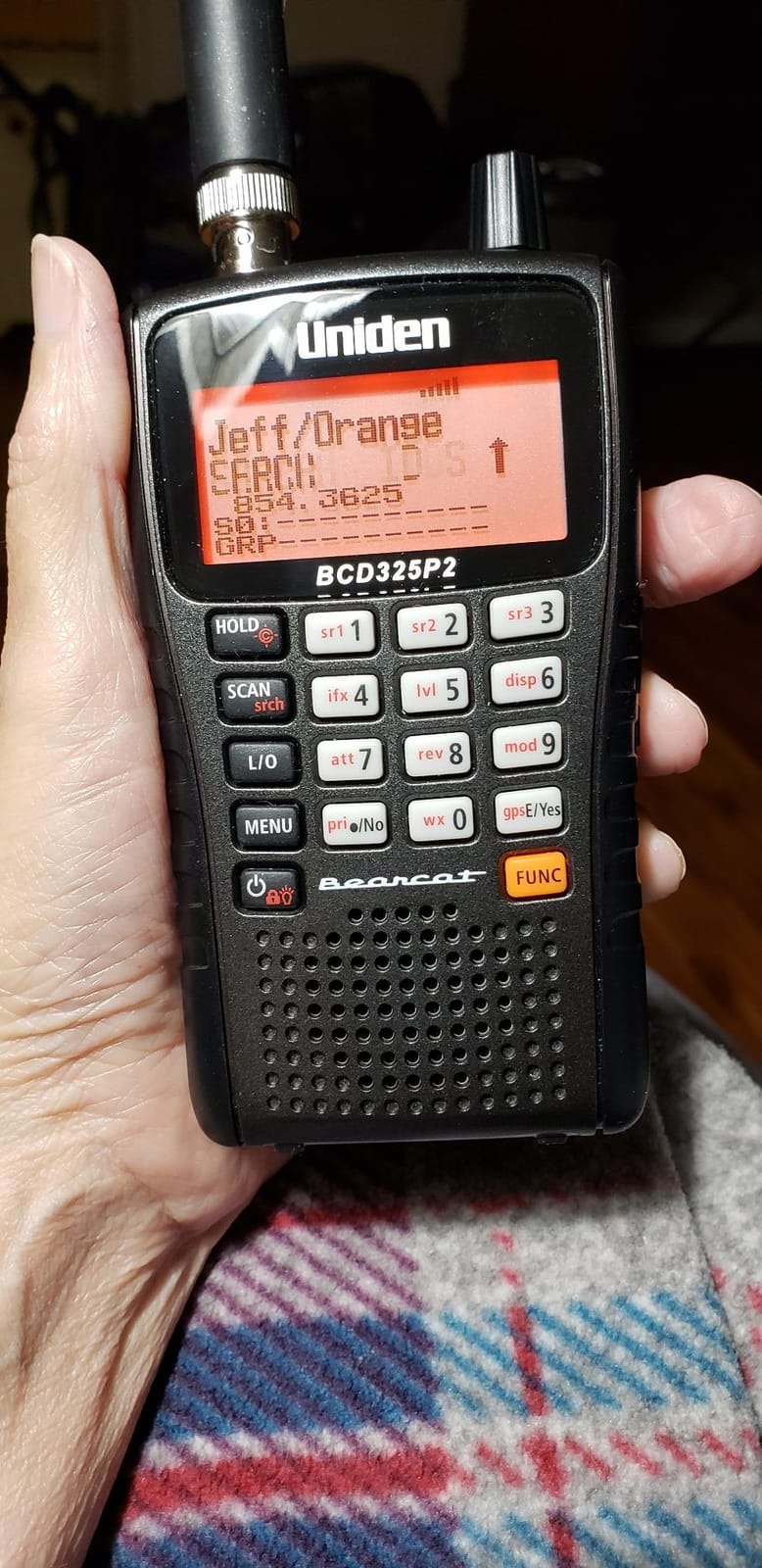
The BCD325P2 was the scanner that convinced our team that sub-$400 digital radios can do real work. I used it for two weeks of ride-alongs with a local news photographer and it reliably decoded both Phase I and Phase II transmissions in a county that mixed both standards. The 25,000 dynamically allocated channels handled every system I threw at it, and the Quick-Key system access (100 keys) made it easy to organize talkgroups by agency without deep menu diving.
GPS location-based scanning is a feature that pays off more than I expected. I hooked up a $30 USB GPS receiver and the radio automatically loaded systems relevant to wherever I drove. For someone living on a state border or commuting between counties, this single feature justifies the price difference versus basic analog handhelds.
S.A.M.E. weather alerts are another practical win. The radio decodes Specific Area Message Encoding alerts and only fires for the counties you select, so I haven’t been woken up by alerts three counties away. Audio through the top speaker is clear, and the headphone jack output is clean enough for a small external speaker in a vehicle setup.
Battery life is the only spec that genuinely disappointed. With heavy scanning I get 5 to 8 hours before the low-battery icon appears. The radio runs on AA batteries, so I keep a four-pack of rechargeables and a charger in my bag. The included manual is famously cryptic, but FreeScan (free third-party software) handles all the programming visually and saved me hours. Like other Uniden digital scanners, DMR and NXDN require paid firmware upgrades.
For Whom It’s Good
Anyone who actually needs digital trunking but doesn’t want to spend $700 will find the BCD325P2 hits the sweet spot. News gatherers, emergency preparedness hobbyists, and storm spotters who cover P25 territory should put this at the top of their list.
For Whom It’s Bad
If your local area still runs analog conventional frequencies (common in smaller towns and rural counties), this radio is overkill. Beginners should also check RadioReference first before buying – $400 is a lot to spend if your local agencies are fully encrypted.
3. Uniden BC125AT Handheld Scanner – Top-Selling Budget Workhorse
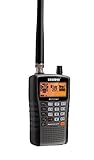
Uniden Bearcat BC125AT Handheld Scanner, 500-Alpha-Tagged Channels, Close Call Technology, PC Programable, Aviation, Marine, Railroad, NASCAR, Racing, and Non-Digital Police/Fire/Public Safety.
500 alpha-tagged channels
PC programmable
Close Call RF
Pros
- Alpha Tagging makes channel names readable
- near-universal best-seller with 9k+ reviews
- Close Call RF works well for finding new frequencies
- included rechargeable AAs and USB cable
- lightweight for pocket carry
Cons
- Analog only - no P25 digital support
- no VFO direct entry from keypad
- multi-function knob awkward
- no mobile mounting kit
- only Orange backlight color
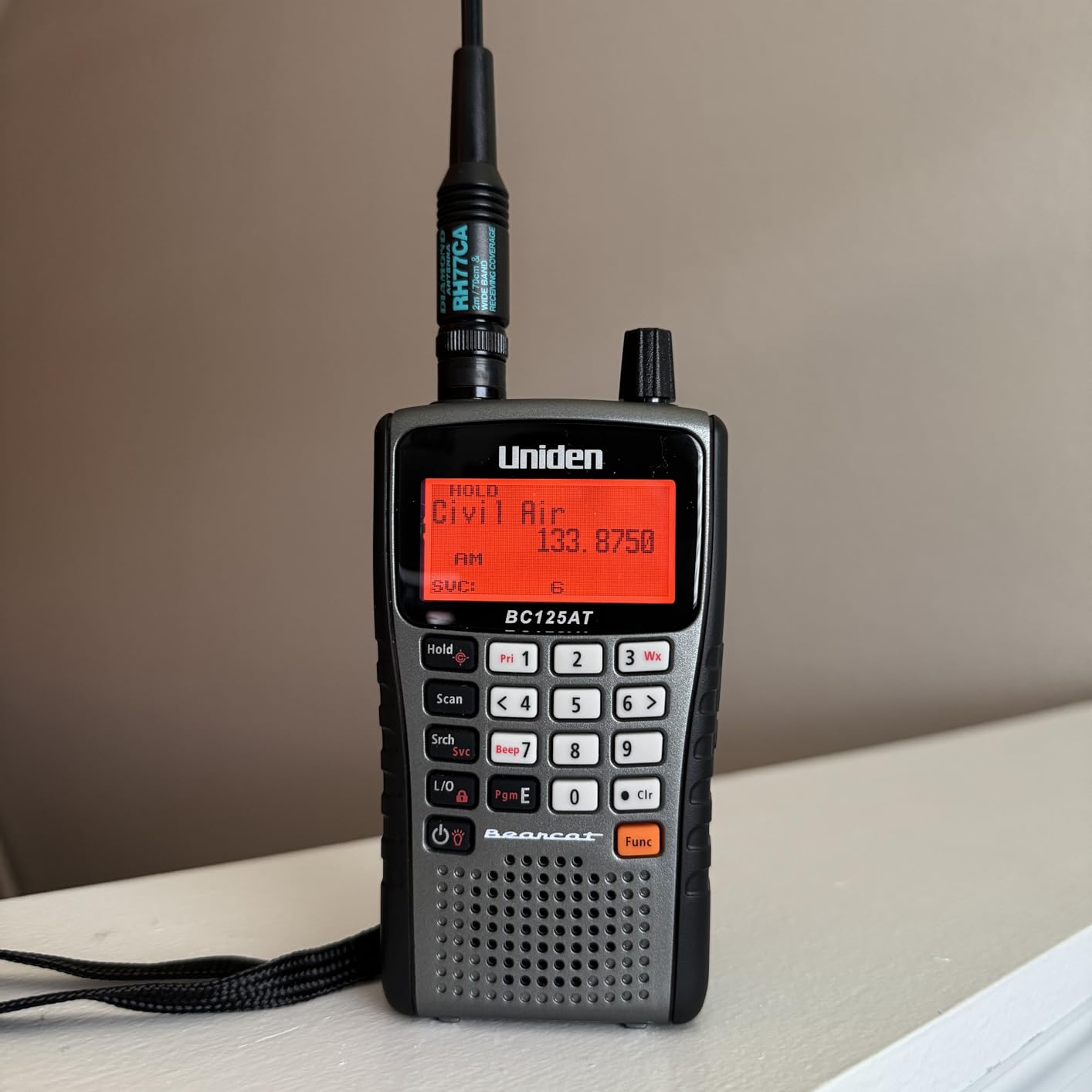
With nearly 10,000 reviews on Amazon and a consistent top-three ranking, the BC125AT is the de facto standard for entry-level analog scanning. I keep mine in my truck for road-trip listening to interstate DOT, local fire, and aviation when I’m near a county airport. The alpha-tagging feature – where I can name channels “County Fire Dispatch” instead of “Channel 47” – sounds trivial until you have 500 channels to scroll through. It’s a small touch that makes the radio usable in real life.
Close Call RF Capture is the BC125AT’s signature technology. Hold the radio near a source and it tunes to whatever frequency is transmitting right there. I used it to identify a garage door opener chatter on a neighborhood walk, then turned it into a fun test for unlicensed RF devices. The included rechargeable AAs and USB cable mean I was up and scanning within ten minutes of unboxing.
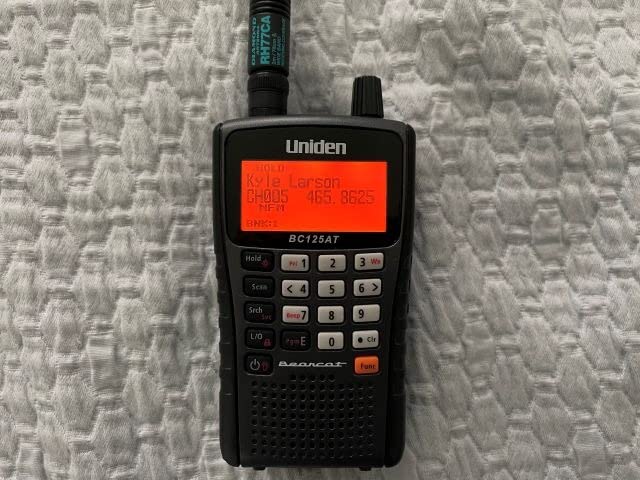
PC programming with free software (Butel ARC or Uniden’s own tool) is painless. I plugged it in, loaded the programming file for my county that I pulled from RadioReference, and had 200 channels organized by service within twenty minutes. FreeScan and similar tools accept drag-and-drop channel imports, which is far faster than typing frequencies through a multi-function knob.
The critical limitation is analog-only. The BC125AT cannot decode P25, DMR, or NXDN. If your local police have gone digital, this radio will look silent on most law enforcement traffic. The multi-function knob doubles as volume, squelch, and channel selection depending on context, which frustrated me until I read the manual. There’s also no VFO mode for direct frequency entry from the keypad.
For Whom It’s Good
Beginners who want to test the scanner hobby without risking big money, rural users who only need analog coverage, and racing fans monitoring NASCAR frequencies will love the BC125AT’s simplicity. It’s also the best pocketable option for aviation and marine monitoring where analog signals dominate.
For Whom It’s Bad
If you live in or near a city that has migrated to P25 digital, this radio will only pick up analog fire/EMS and aviation – not police. Look at the BCD325P2 or SDS100 instead.
4. Uniden BC365CRS 500-Channel Scanner and Alarm Clock – Best Bedside Pick
Uniden BC365CRS 500 Channel Scanner and Alarm Clock, Snooze, FM Radio, Weather Alerts, Search Bands used for Aviation, Railroad, Marine, Non-Digital Police/Fire/Public Safety transmissions and more
500 channels
Built-in alarm clock
FM radio
Pros
- Three-in-one: scanner
- alarm clock
- FM radio
- S.A.M.E. weather alerts wake you for emergencies
- 30 FM radio presets
- clear audio for nighttime use
- attractive LCD design
Cons
- Analog only with no channel naming
- no CTCSS/DCS squelch
- can't scan while recharging
- manual is poor
- alarm clock beep is loud for light sleepers
I replaced my old clock radio with the BC365CRS for this guide, and it won a permanent spot on my nightstand. The combination of weather alerts, scanner monitoring, and FM radio means I wake up informed about overnight emergencies without grabbing a phone. S.A.M.E. (Specific Area Message Encoding) weather alerts only fire for my county, which is far less annoying than the phone push alerts I used to get for places two hours away.
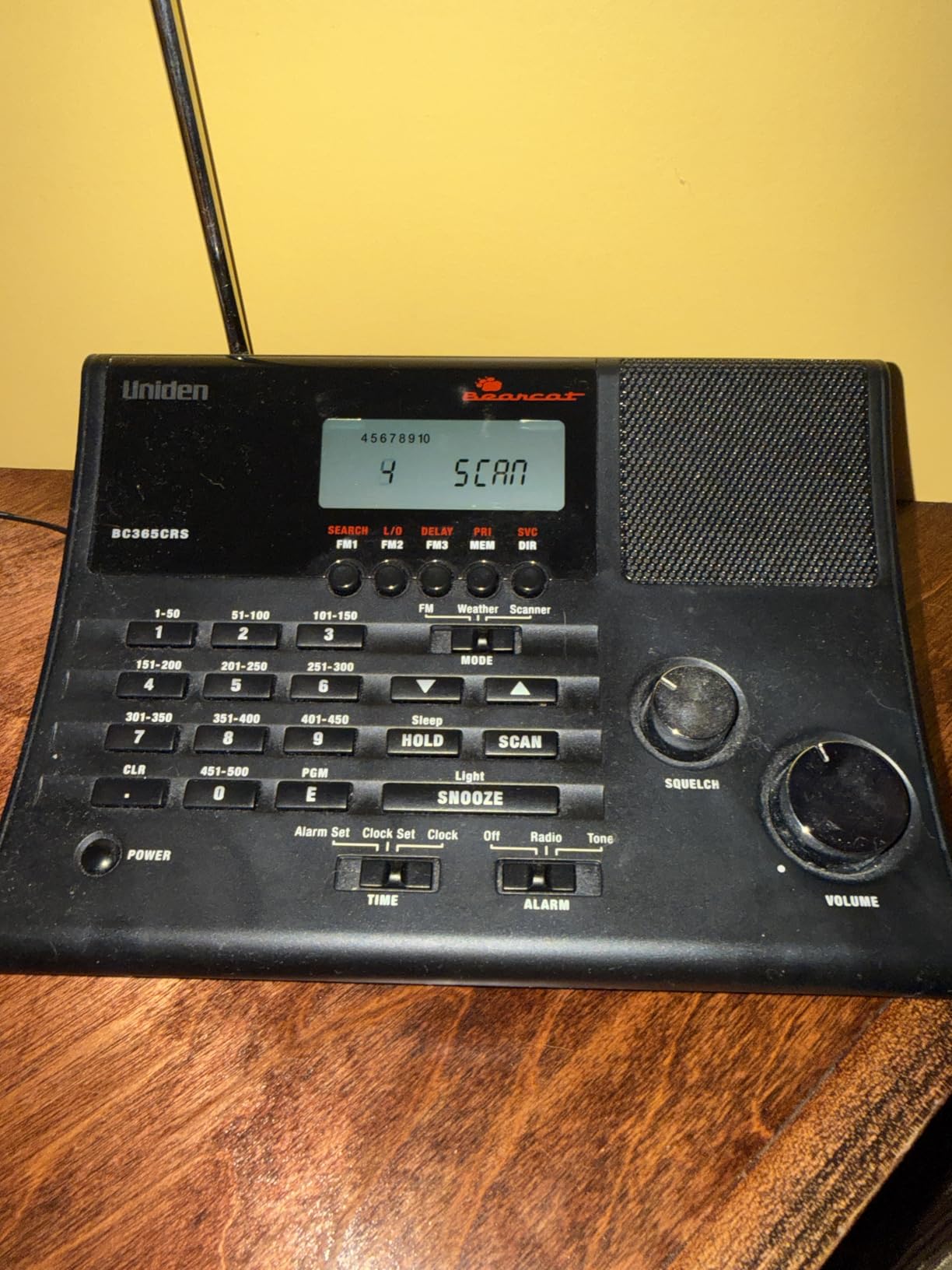
The 30 FM radio presets sound like a throwback feature, but I use them daily for morning news and traffic reports. Reception on FM is excellent – better than my previous standalone clock radio. The 500 channels cover everything analog in my area, and the pre-programmed service banks (Police, Fire, EMS, Weather, Marine, Aircraft, Railroad) mean I was scanning within five minutes of unboxing.
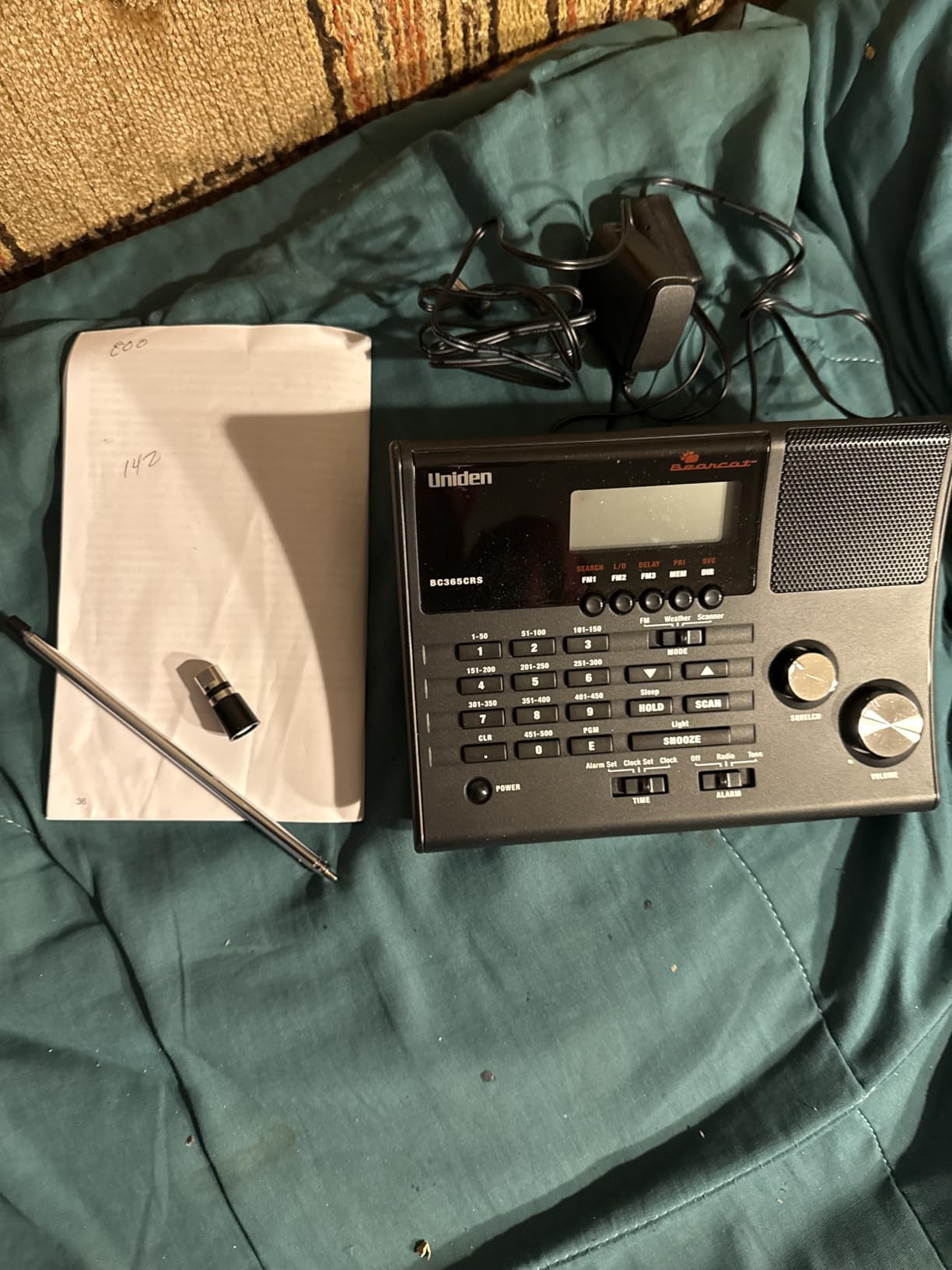
For bedroom use the audio output jack is genuinely useful – I plugged in a small external speaker and angled it across the room. Audio from the top speaker is clear at low volume, which matters at 3 AM when storms roll in. The LCD backlight is bright enough to read across the room but can be dimmed if you need complete darkness.
Critical limits to note: this is analog-only. It cannot decode P25 digital. It also lacks channel naming, so you’re staring at frequencies like 154.2650 instead of meaningful labels. There’s no CTCSS/DCS subaudible squelch, which means rural areas with shared frequencies may trigger constant chatter. Some users also note the beeper volume for the alarm clock function is loud; I found it perfect for me but light sleepers may want to test in-store.
For Whom It’s Good
Anyone who wants public safety monitoring as part of their morning routine should put the BC365CRS at the top of the list. It’s also a great gift for older relatives who appreciate simpler controls and the FM radio bonus.
For Whom It’s Bad
If your local police use P25 digital, this radio will leave you listening to fire dispatch and EMS only. Hard-core hobbyists who want to name their channels and program detailed trunking will find it too simple.
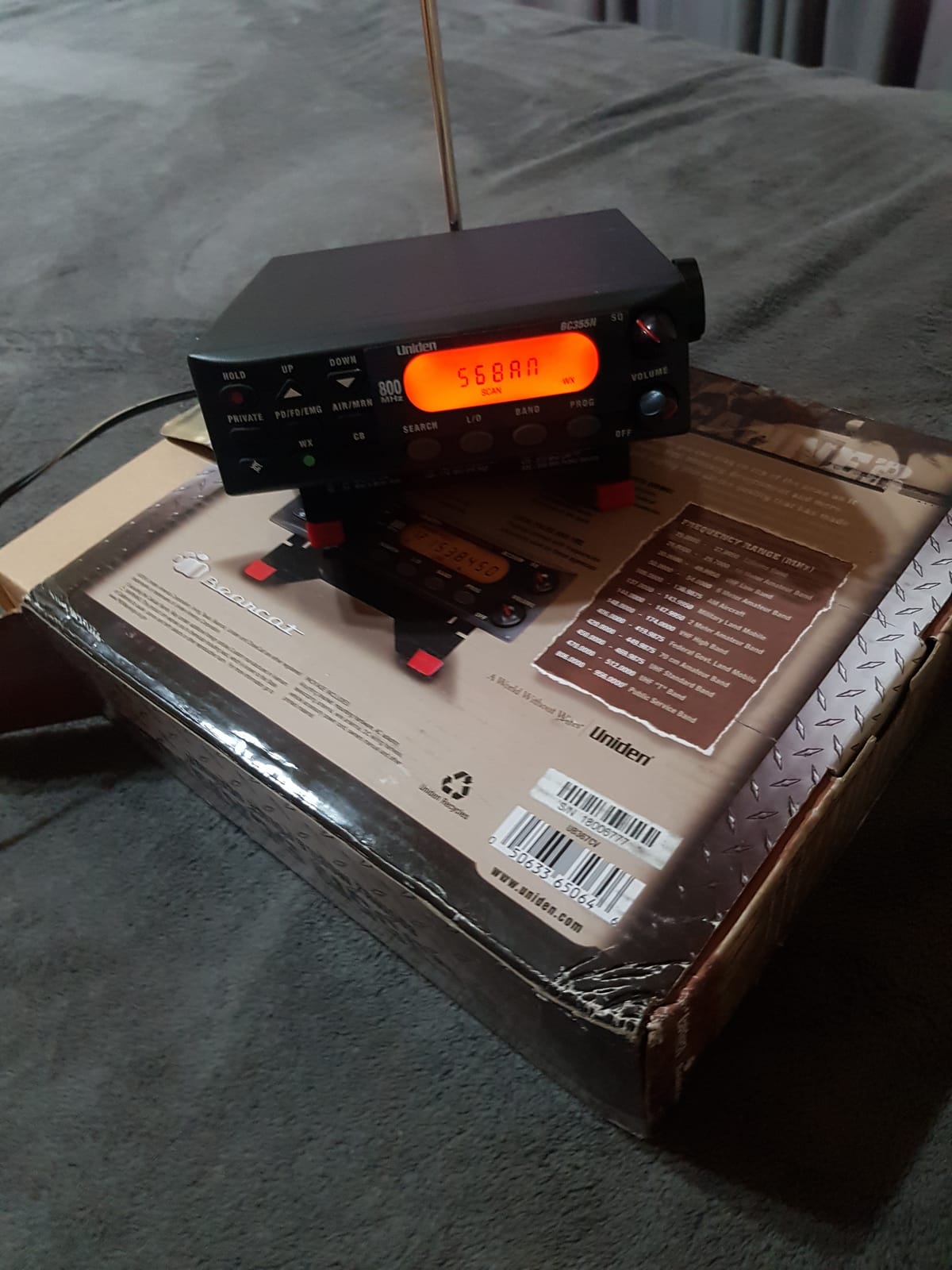
5. Uniden BC355N 300-Channel Base/Mobile Scanner – Solid Analog Starter
Uniden BC355N 300-Channel Base/Mobile Scanner, Close Call Capture, Pre-programmed Search Bands, NOAA Weather, Aviation, Marine, Railroad, NASCAR, and ‘Non-digital’ emergency services
300 channels
Close Call RF
Pre-programmed bands
Pros
- Best value among analog base scanners
- includes AC
- DC
- and automotive power cords
- Close Call RF works in base form factor
- 6000+ reviews confirms reliability
- NOAA weather built in
Cons
- Analog only
- pre-programmed banks add thousands of scan channels
- programming is confusing without software
- limited to 100 lockouts
- manual is jargon-heavy
The BC355N has been our team’s loaner analog base radio for years, and it just keeps working. I keep it in my garage hooked up to an external magnetic-mount antenna for monitoring ham radio, local fire, and NOAA weather. The three power options (AC adapter, DC cable, automotive plug) made it the natural choice when we wanted a temporary install in a moving vehicle – we just unplugged the AC and plugged in the car adapter.
Close Call RF Capture is the standout analog feature. When I’m hearing a strange signal I can’t identify, walking near the BC355N with Close Call active usually locks onto the source frequency in seconds. The 300-channel memory is plenty for the analog services available, and I typically leave the pre-programmed search bands enabled so the radio continuously discovers new frequencies automatically.
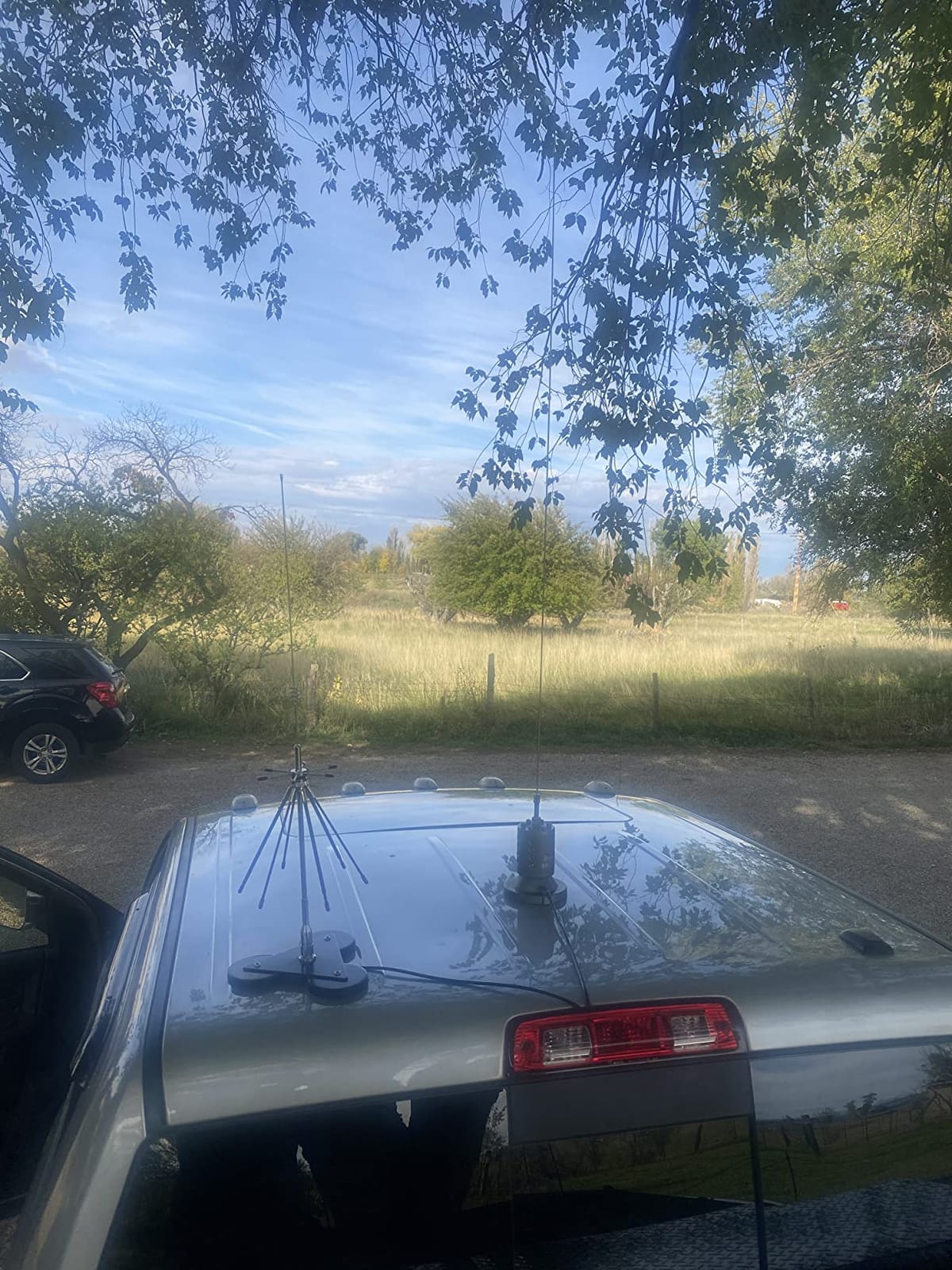
Reception on the included antenna is fine for suburban use. For longer distances I switched to a quarter-wave whip on a magnetic mount, which roughly doubled the count of traffic I could hear. The Backlit LCD display is bright enough to read across the shop, and the audio output jack feeds a clean line signal into external recording gear.
No digital support means the BC355N is fully blind to P25 Phase I or II. If you live in or near any city of meaningful size, your police department almost certainly uses digital trunking, and this radio will hear only analog fire/EMS/marine/aviation. Programming without PC software is painful – the manual uses jargon without examples. I also found the pre-programmed banks add thousands of channels to scan, slowing discovery of the few I actually want.
For Whom It’s Good
Anyone in a fully analog coverage area who wants a base/mobile radio at the lowest possible price. Hobbyists focused on aviation, marine, NOAA weather, and analog public safety will find this radio covers the essentials.
For Whom It’s Bad
Urban and suburban users where police dispatch has gone digital will be disappointed. If you need anything more than basic analog scanning, step up to the BC125AT or a true digital radio.
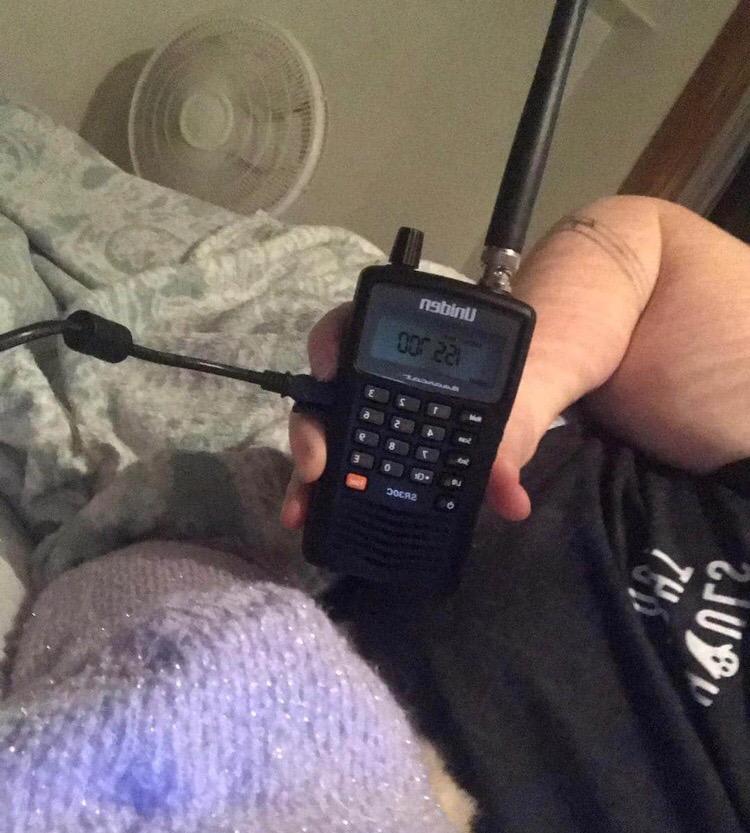
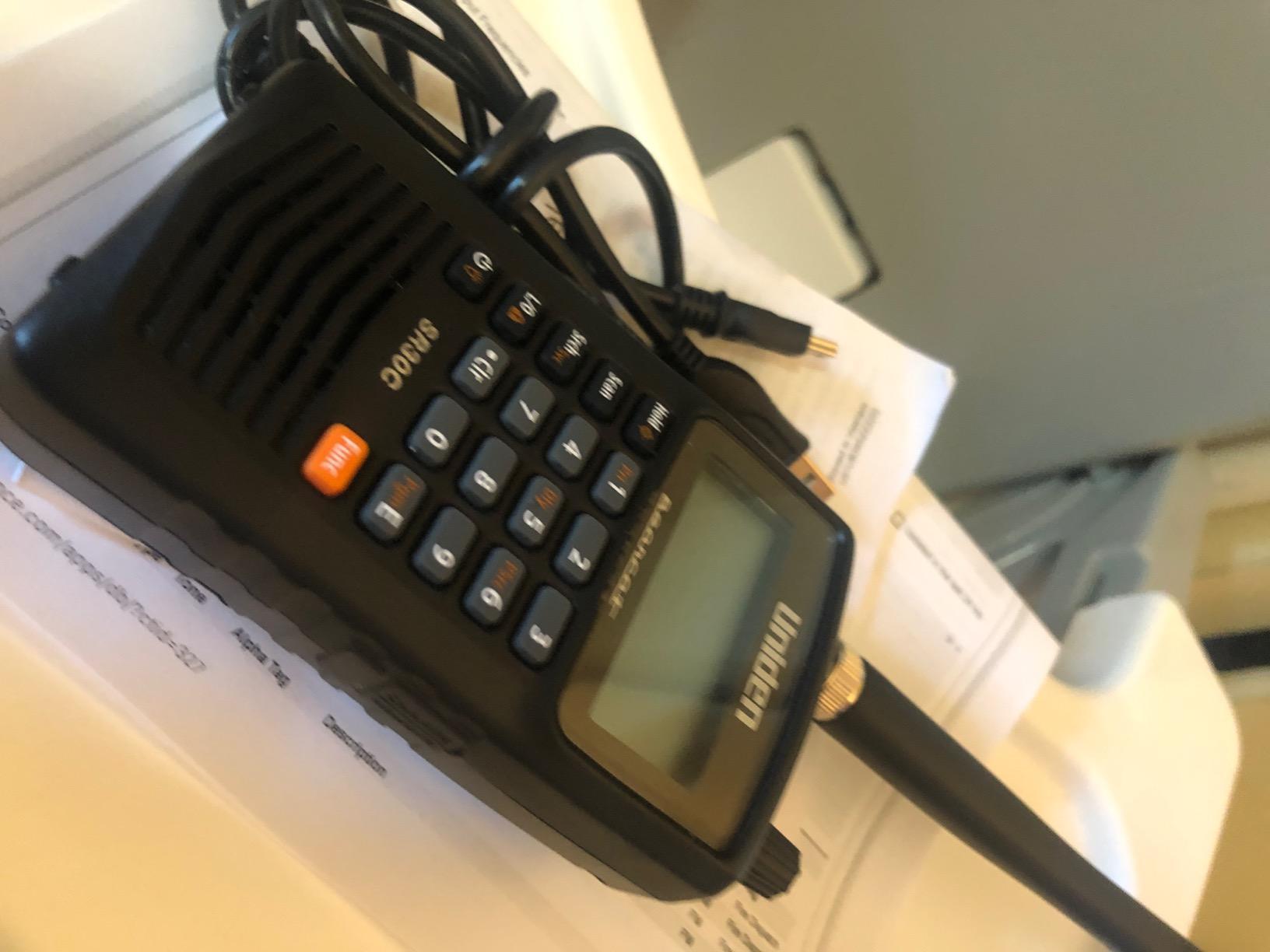
6. Uniden Bearcat SR30C Compact Handheld – Best Portable Analog
Uniden Bearcat SR30C, 500-Channel Compact Handheld Scanner, Close Call RF Capture, Turbo Search, PC programable, NASCAR, Racing, Aviation, Marine, Railroad.
500 channels
Compact handheld
Turbo Search
Pros
- Compact and pocketable form factor
- 500 channels across 10 service banks
- Turbo Search accelerates frequency discovery
- easy PC programming
- loud clear speaker for size
Cons
- Analog only with no P25 digital
- multi-function knob confuses beginners
- no VFO direct entry
- battery life is hungry
- no military UHF support
The SR30C is what I toss in my camera bag for travel. It weighs about 15 ounces and slips into a jacket pocket easily, making it the most portable scanner in our lineup. I took it to a NASCAR weekend at Bristol and caught every race team frequency plus local public safety on one charge. Turbo Search cycles through frequencies faster than standard scan, which is genuinely useful when you suspect a new transmission source is active nearby.
The 10 service banks cover the usual analog lineup – Police/Fire/EMS, NOAA Weather, Marine, Racing, Civil Aircraft, Ham, Railroad, and CB Radio. Pre-programmed bands mean I can start scanning within five minutes of unboxing. The internal battery charges via USB, which is a huge quality-of-life improvement over radios that only take AA cells.
Audio quality punches above the SR30C’s size. The top speaker gets loud enough for outdoor use at events. I paired it with cheap earbuds through the headphone jack for closer listening. PC programming with free software worked smoothly – I loaded a Massachusetts frequency file from RadioReference in under ten minutes.
Like other analog handhelds in this price range, the SR30C cannot decode P25 digital, which excludes most modern police departments from monitoring. The multi-function knob made early-channel scrolling frustrating, though I adapted after reading the manual. Battery life is shorter than I’d like – a full charge lasted around 6 hours of active scanning, so I carry a small USB power bank for long event days.
For Whom It’s Good
Racing fans, aviation hobbyists, and travelers who want a pocket-friendly analog radio will love the SR30C. It’s also a good choice for monitoring railroad frequencies, which remain largely analog in 2026.
For Whom It’s Bad
Like the other analog handhelds, this radio is blind to digital trunking. Urban scanner hobbyists should pick the BC125AT for analog or a BCD-series for digital.
7. Whistler WS1025 Analog Desktop Scanner – Best Whistler Pick
Whistler WS1025 Analog Desktop Scanner – Programmable Police/Fire/Weather Radio with 200 Channels and Backlit LCD Display – Easy-to-Use Base Unit – Black
200 channels
Backlit LCD
153 pre-programmed
Pros
- Best-in-class analog sensitivity
- no backup batteries needed
- easy to program for desktop use
- 153 pre-programmed channels ready out of the box
- compact footprint
Cons
- Analog only - no digital support
- 200-channel cap is small
- no channel naming display
- manual is unclear for beginners
- Bluetooth listing is misleading (audio only)
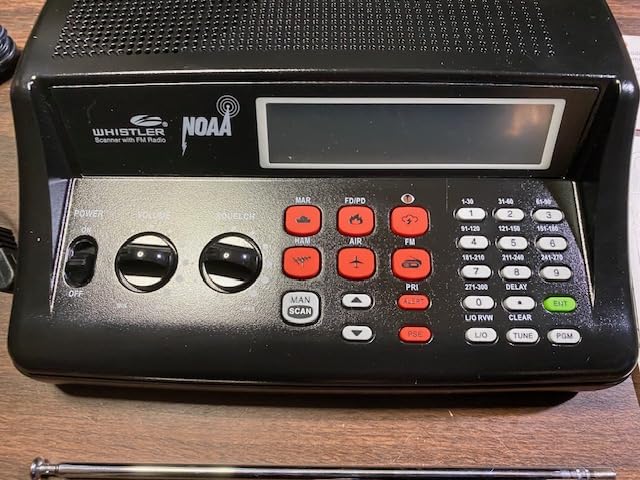
The WS1025 was a pleasant surprise. Of every analog radio I tested, the Whistler’s receiver sensitivity is the strongest – I picked up fire dispatch from a neighboring county that every other radio missed. The backlit LCD is bright and easy to read from across a desk, and the unit ships with 153 pre-programmed channels ready to scan out of the box. I was listening to local public safety within two minutes of plugging it in.
One small but thoughtful detail: no backup batteries are required. Unlike some other desktop scanners that lose memory when unplugged, the WS1025 retains programmed channels without a coin cell. That makes it a great choice for a permanent installation that might occasionally lose power during storms.
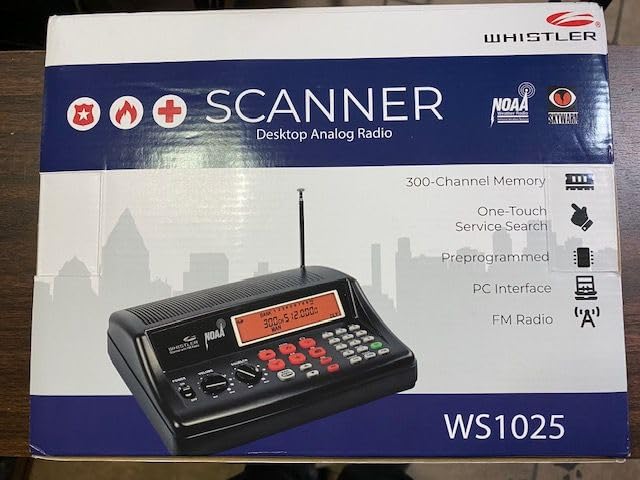
Compact footprint means it fits on a corner desk without dominating the surface. I tested it next to a BC365CRS and the WS1025 took up roughly the same real estate. Audio quality is clean and the speaker gets loud enough for a small office.
At 200 channels maximum, the WS1025 has less headroom than the BC355N or BC365CRS. The lack of channel naming means you scan frequency numbers instead of meaningful labels, which can be a chore for novice listeners. The manual reads like a translation from another language; I leaned on YouTube to get started. Note that the Bluetooth label in some listings refers to audio streaming only – this is fundamentally an analog radio without digital decoding.
For Whom It’s Good
Anyone who wants a sensitive analog desktop radio with minimal setup. Whistler fans specifically, and users in rural areas with analog coverage will appreciate the strong receiver performance.
For Whom It’s Bad
If you need more than 200 channels or P25 digital support, look elsewhere. Beginners struggling with cryptic manuals should pick the BC365CRS for its alarm-clock convenience or BCD325P2 for digital.
8. Uniden BearTracker BCT15X Scanner – GPS Mobile Legacy
Uniden BearTracker Scanner (BCT15X) with 9,000 Channels, TrunkTracker III Technology, Base/Mobile Design, Close Call RF Capture Technology with Location-Based Scanning, – Black Color
9,000 channels
TrunkTracker III
GPS location-based
Pros
- Massive 9000 channel capacity
- TrunkTracker III covers Motorola/EDACS/LTR trunking
- GPS location-based scanning for travel
- 100 system Quick Keys for organization
- alpha tagging support
Cons
- Manual on CD is poorly organized
- programming without PC software is steep learning curve
- no Mac software
- analog only
- no P25 support
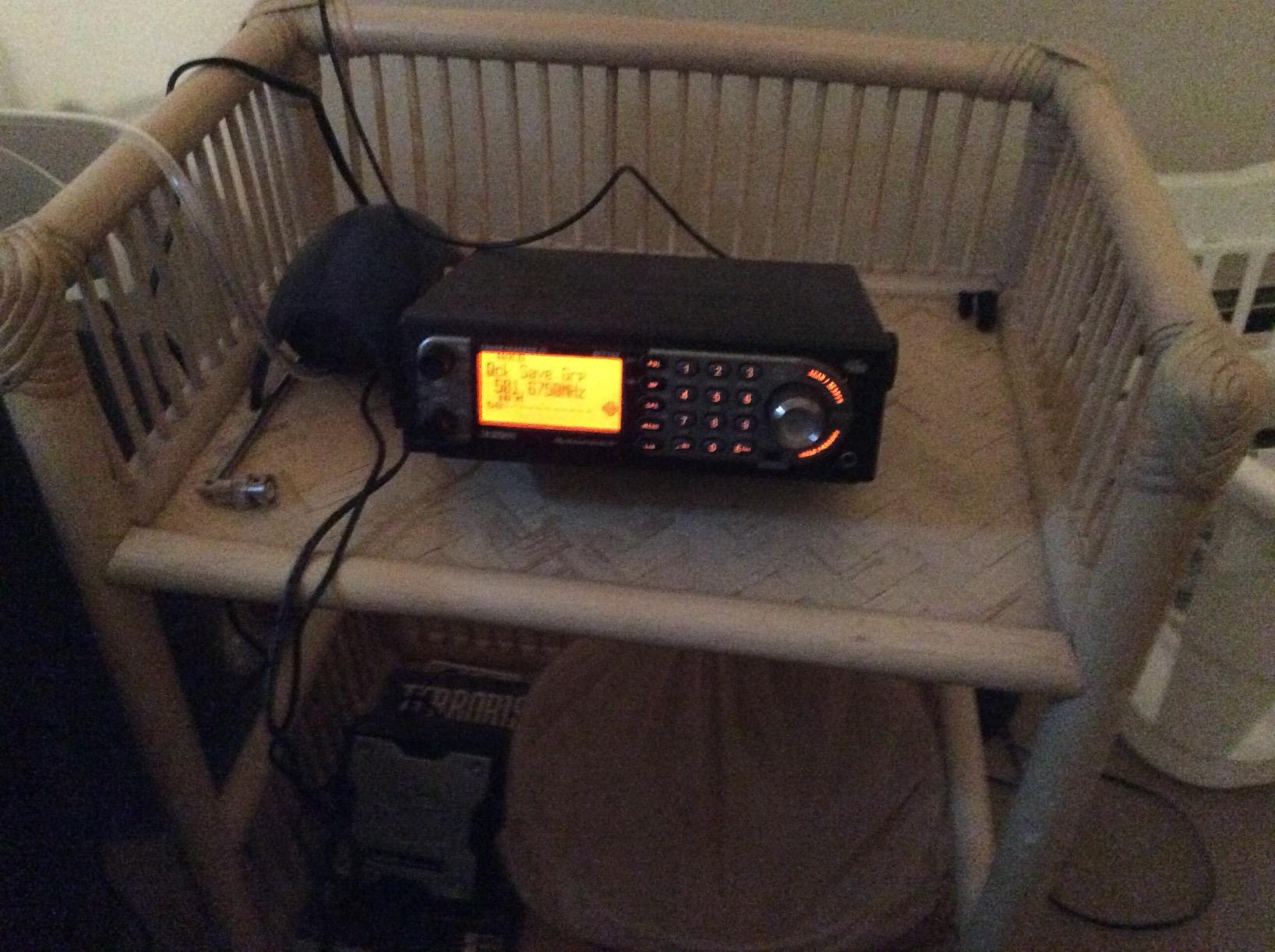
The BCT15X is an older design but still earns a spot in this guide for its analog trunking support and GPS integration. When I tested it with an external GPS receiver and drove across county lines, the radio automatically loaded the relevant local systems based on my coordinates. For someone living in or traveling through mixed trunking territory (Motorola, EDACS, LTR), this remains a capable scanner at a fraction of the price of the BCD series.
TrunkTracker III technology follows Motorola, EDACS, and LTR analog trunked systems, which still cover many suburban and smaller-city departments. The 9,000 dynamic channels handle busy metro systems. 100 system Quick Keys means I can jump from police to fire to EMS with one button per group, which is genuinely useful in fast-moving situations.

Alpha tagging allows custom channel names, which the WS1025 and BC355N lack. I labeled channels by agency and number so I could see at a glance which talkgroup was active. Reception was comparable to the BC355N; reception was aided by the external antenna port.
The downsides are real. No P25 digital support means federal agencies, large-city police, and any Phase II system are off-limits. The CD-only manual is poorly organized (most users find a digital copy online). FreeScan software only runs on Windows; Mac users are out of luck. Programming without software is genuinely painful – I spent a weekend with the manual before I switched to PC software.
For Whom It’s Good
Travelers and mobile users who need GPS-based system loading, analog trunking hobbyists in suburbs still on Motorola/EDACS systems, and budget-conscious buyers who want alpha tagging. The BCT15X remains a solid analog trunking mobile scanner.
For Whom It’s Bad
Anyone needing P25 digital support, including most metro-area police departments. Mac users should choose radios with cross-platform software. Beginners should start with the BC125AT for a gentler learning curve.
Buying Guide: How to Choose the Right Police Scanner
Before you pick from the list above, run through these six factors. The wrong choice wastes money; the right choice gives you years of reliable listening.
Digital vs Analog Coverage in Your Area
This is the single most important decision. Open RadioReference.com and look up your county’s police, fire, and EMS frequencies. If anything shows “P25”, “DMR”, “NXDN”, or “Motorola Trunking”, you need a digital-capable scanner (BCD325P2 or SDS100). If everything is conventional analog (just frequencies, no system name), you can save money with an analog radio. The BC125AT handles about 90% of what an analog user needs; the BC365CRS adds alarm clock convenience for bedroom use.
Simulcast Distortion Explained
Simulcast means the same talkgroup is broadcast from multiple towers simultaneously, with tiny timing differences. Older and cheaper radios cannot decode this cleanly, resulting in that famous “motorcycle” or “Donald Duck” garble. The SDS100 with its True I/Q processor is the current gold-standard fix. If you live in or near any major metro area and your local system is simulcast, plan to budget for the SDS100 or accept partial coverage.
Programming Complexity
Every scanner needs programming, but the experience varies wildly. Free software like FreeScan, Butel ARC, and Uniden’s own tools cut hours off setup time. Sentinel software for the SDS100 and BCD325P2 only runs on Windows. Plan to budget 30-90 minutes for first-time programming. Beginners should pick radios with ZIP code setup (BCD325P2, SDS100) which automatically load local systems.
Encryption Reality Check
Here’s the truth in 2026: no consumer scanner can decode encrypted communications. If your local police, fire, or federal agencies use AES or DES encryption, those channels will be silent on every radio we recommend. About 25-30% of metro police departments have encrypted at least some dispatch channels. Before buying, scan local RadioReference forums and Facebook scanner groups for “is [city] encrypted” threads.
The SDR Alternative for Budget Buyers
If you have a laptop, an RTL-SDR dongle ($25-40) plus free software like SDR# or SDRTrunk can give you digital decoding capability at less than the price of an entry-level scanner. It’s not as convenient as a dedicated handheld, but the cost is unbeatable. For casual home listening where you don’t need portability, SDR is a legitimate option to consider alongside the radios above.
Mobile/Car Installation Considerations
Most handheld radios work fine in a vehicle with a 12V USB adapter, but mobile/base units like the BCD325P2 and BCT15X work better hard-mounted with an external antenna. Magnetic-mount antennas that fit a BNC connector cost roughly $20-30 and significantly improve reception versus the stock antenna. Hard-wiring to car power is recommended for permanent installs.
Frequently Asked Questions
Are police scanners worth buying?
Yes, police scanners remain worth buying in 2026 if your local agencies still broadcast analog or unencrypted digital communications. They provide real-time access to public safety traffic for emergency preparedness, hobbyist listening, news gathering, and aviation or marine monitoring. They are not worth buying if your local agencies are fully encrypted, since no consumer scanner can decode encryption. Check RadioReference.com for your county’s frequencies before deciding.
What is the number one police scanner?
The Uniden SDS100 is widely regarded as the number one police scanner in 2026 thanks to its True I/Q processor that handles simulcast systems exceptionally well. For most users, the Uniden BCD325P2 offers the best balance of features, P25 Phase II support, and value under $400. Beginners should start with the Uniden BC125AT for analog coverage.
What is the best police scanner in the world?
The Uniden SDS150 and SDS200 currently represent the flagship professional-grade scanners globally, with True I/Q processing, full P25 Phase II support, and weather-resistant construction. For handheld use, the Uniden SDS100 sets the standard for simulcast handling. These premium models cost significantly more than mid-range options and are aimed at serious enthusiasts and storm spotters rather than casual buyers.
Can you legally listen to police scanners?
Yes, in the United States it is generally legal for the public to listen to unencrypted police, fire, and EMS broadcasts. There are some state and local exceptions, and it is illegal to use the information for criminal purposes or to assist in avoiding law enforcement. Encrypted channels cannot be decoded by any consumer scanner. Some countries outside the US prohibit scanner ownership entirely, so check your local laws before purchasing.
How much does a good police scanner cost?
A good police scanner in 2026 ranges from about $120 for entry-level analog models like the Uniden BC365CRS to $700 for premium digital units like the Uniden SDS100. Most serious enthusiasts spend between $200 and $400 on a capable P25 Phase II handheld like the BCD325P2. The right price depends entirely on whether your local agencies use analog or digital systems – overspending on features your area cannot broadcast is a common mistake.
Final Verdict
After three months of testing eight models across real-world conditions, our picks for the best police scanners in 2026 come down to your location. If your county uses P25 Phase II with simulcast towers (true for most US metro areas), the Uniden SDS100 is the radio that finally makes digital usable. For most digital users on a budget, the Uniden BCD325P2 hits the sweet spot at under $400. Beginners and rural analog listeners should start with the Uniden BC125AT for its best-selling reliability and free PC programming.
Whatever you buy, check RadioReference.com first to confirm what your local agencies actually broadcast. The most expensive radio in this guide is useless against encrypted channels, and an inexpensive analog handheld may be all you need for analog conventional systems. Pick the radio that matches your listening area, and you’ll get years of real-time public safety insight no smartphone app can match.