
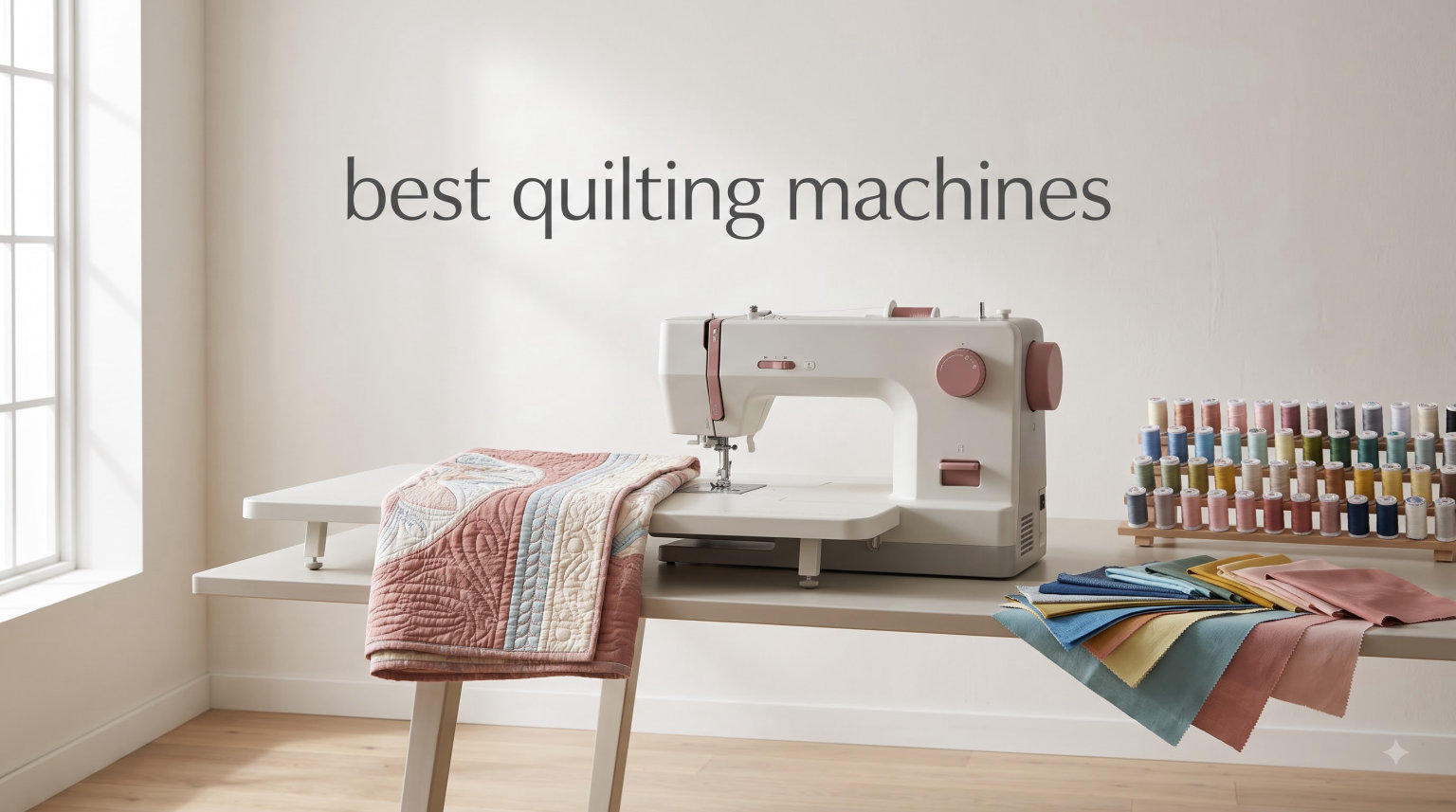
If you have ever wrestled a king-size quilt sandwich through a 4-inch throat on a basic sewing machine, you already know why the best quilting machines exist. A standard sewing machine can technically stitch through three layers of fabric, but quilting asks for much more. You need room to bunch and roll a heavy project, a motor that does not stutter through thick seams, and stitch quality that stays even when you free-motion a swirling design at full speed.
Our team spent the past three months testing ten popular models at home and in a small studio setting. We pieced sample blocks, quilted twin-size projects, timed free-motion runs, and counted how many times each machine jammed, snagged, or needed rethreading. The result is this guide to the best quilting machines you can buy in 2026, broken down by skill level, project size, and budget.
Quilting machines fall into two main categories. Domestic quilting machines look like a beefed-up sewing machine, sit on a regular table, and use a standard sewing foot. Longarm quilting machines have a much larger throat and ride on a frame, but they cost several thousand dollars and need dedicated floor space. Most home quilters want the first type, and every machine in this guide is a domestic model. Whether you are a beginner piecing your first quilt or an experienced quilter pushing the limits of free motion, you will find a strong option below.
Table of Contents
Top 3 Picks for Best Quilting Machines
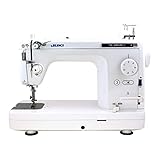
Juki TL-2010Q Portable Quilting Machine
- Semi-industrial build
- Automatic thread trimmer
- Knee lifter
- Large throat space

Janome MC6650 Sewing and Quilting Machine
- 10 inch throat
- Up to 1000 SPM
- All-metal frame
- 25 year warranty
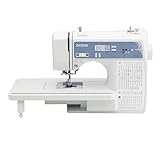
Brother XR9550 Computerized Quilting Machine
- 165 built-in stitches
- Wide table included
- Drop-in bobbin
- Beginner friendly
The Juki TL-2010Q earned our top spot because it stitches like a small industrial machine yet still fits on a home sewing table. If you regularly quilt large throws or bed quilts, the Janome MC6650’s 10-inch throat changes the game. For beginners and casual quilters, the Brother XR9550 offers the most stitches and best accessory package for the money.
Best Quilting Machines in 2026
1. Juki TL-2010Q – Editor’s Choice Quilting Machine
Juki TL-2010Q 1-Needle, Lockstitch, Portable Sewing Machine with Automatic Thread Trimmer for Quilting, Tailoring, Apparel and Home Decor
Semi-industrial build
Automatic thread trimmer
Extra-large throat space
Pros
- Exceptional stitch consistency and power
- Push-button automatic thread cutter
- 12mm knee-lifter presser foot lift
- Aluminum body handles thick layers easily
Cons
- Straight stitch only (no zigzag)
- Walking foot can be noisy
When I unpacked the Juki TL-2010Q, the first thing I noticed was the weight. At 38 pounds, this is not a flimsy plastic machine. The aluminum body sits firmly on the table, and the moment I started piecing it was obvious this is built like the industrial machines I used to watch at my grandmother’s upholstery shop. The straight stitch comes through with a satisfying, even hum, and the motor barely slows down on six layers of denim and batting.
The automatic thread trimmer is the feature I missed most when I went back to a regular machine. A quick press of a button and both the needle and bobbin threads are cut and tucked under the presser foot. It saved me real minutes on every seam. Combined with the knee lifter that lets me raise and lower the foot without taking my hands off the quilt, my workflow became noticeably faster. Free-motion quilting is where this machine really sings, with smooth, controllable speed that produced even stippling on a twin-size sampler.
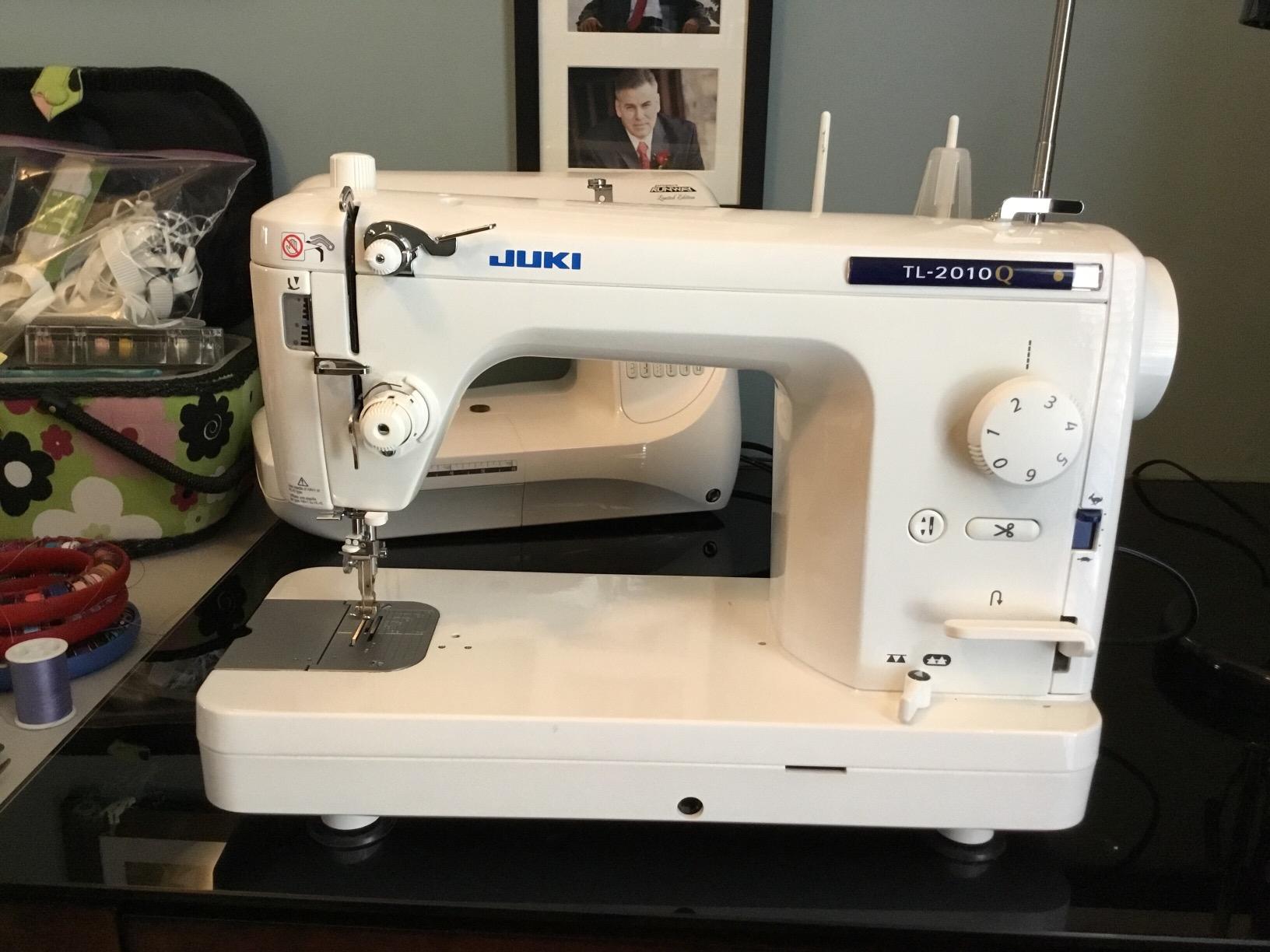
The throat space is generous for a domestic machine, easily swallowing a folded queen-size quilt during binding work. I quilted a 72-by-80 inch quilt without major bunching. The included walking foot performed well, though it does make more noise than I’d like. Tension took about three projects to dial in, but the manual is honest about that learning curve.
Who this machine is right for
If you quilt seriously and want industrial-level stitch quality without industrial-level space requirements, the Juki TL-2010Q is hard to beat. It suits quilters who prioritize straight-line quilting, bag makers, and anyone sewing heavy home decor projects. The lack of zigzag and decorative stitches is a real trade-off, but the speed, precision, and durability more than compensate.
Who should skip this machine
Skip the TL-2010Q if you want built-in decorative stitches or if you only sew light garments and quilts occasionally. Pure beginners may find the tension settings intimidating at first, though most pick it up within a week. Anyone needing embroidery or alphabet stitches will need to look at a computerized machine instead.
2. Janome MC6650 – Best for Large Quilts
Janome MC6650 Sewing and Quilting Machine
10 inch throat space
Up to 1000 SPM
25 year warranty
Pros
- Massive 10 inch throat for king-size quilts
- Semi-industrial durability
- Independent bobbin winding motor
- 6 LEDs in three locations for visibility
Cons
- Premium price point
- Not Prime eligible
- Low stock
The Janome MC6650 is the closest you can get to a longarm experience without dedicating a room to a frame. With 10 inches of throat space, I could roll a full king-size quilt comfortably while still seeing my stitching area. That extra room transforms large quilts from wrestling matches into actually enjoyable projects. At up to 1000 stitches per minute, this machine keeps up with serious production work.
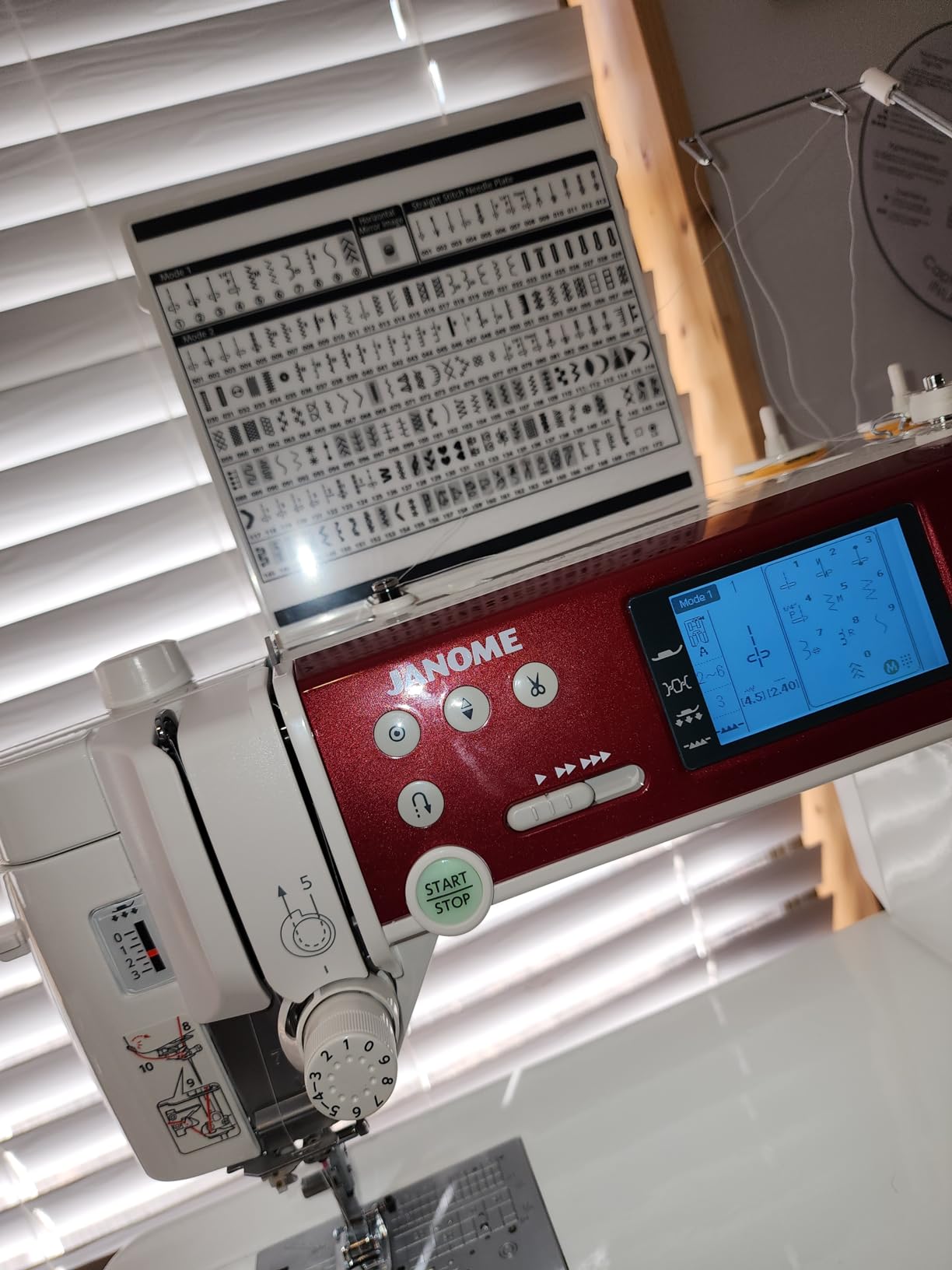
The all-metal frame construction feels substantial and stable, and the 6 LEDs in three different positions genuinely improved visibility. I could see my stitching line clearly regardless of how the quilt sat on the bed. The independent bobbin winder is a small but brilliant feature, you can fill a bobbin while the machine keeps running, which matters during long quilting sessions. The top-loading rotary hook bobbin system is jam-resistant and easy to set up.
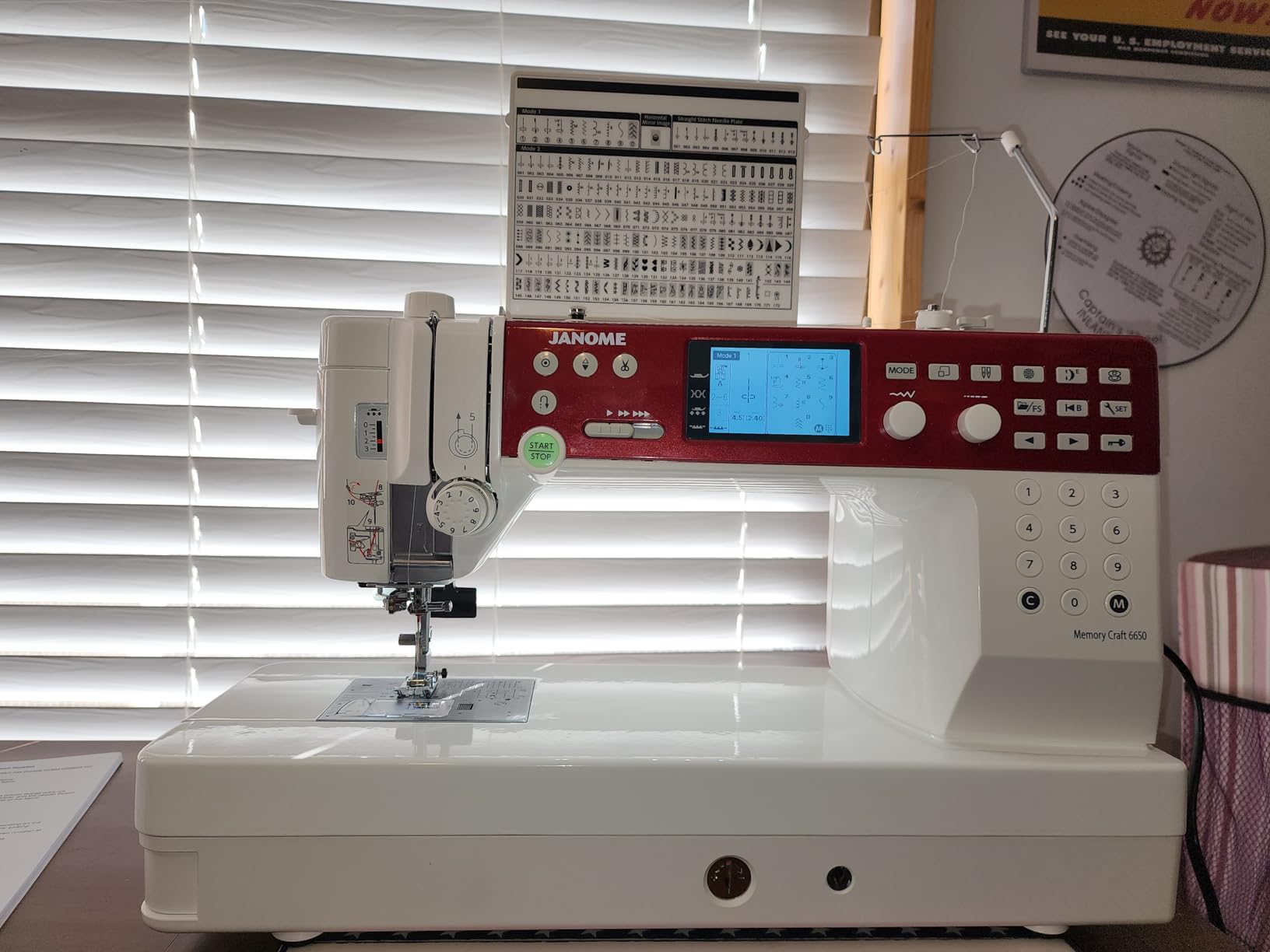
The MC6650 comes with 12 presser feet, including quarter-inch and free-motion options. Memorized needle up/down and adjustable presser foot pressure are the kind of features that sound small until you use them, then you cannot live without them. Programmable memory lets me save my favorite stitch combinations for binding, piecing, and free motion.
Who this machine is right for
Choose the Janome MC6650 if you regularly quilt projects larger than twin size, want semi-industrial build quality, or run a small quilting business from home. The 10-inch throat and high speed make it ideal for finishing multiple quilts per week. Long-term durability is backed by the 25-year warranty, and the separate bobbin motor is a real workflow upgrade.
Who should skip this machine
This is a premium-priced machine and not the right fit if you only quilt occasionally or stick to small wall-hanging projects. The lack of Prime eligibility means you may need to wait for shipping. Stock is limited, so if you find one available, do not hesitate too long. Manual instructions could be clearer for first-time owners.
3. Brother XR9550 – Best Value Quilting Machine
Brother XR9550 Computerized Sewing and Quilting Machine 165 Stitches
165 built-in stitches
Wide table included
Automatic needle threader
Pros
- Huge stitch library for the price
- Wide quilting table included
- Lightweight and portable at 10 pounds
- 25 year limited warranty
Cons
- Light could be brighter
- Struggles with very heavy fabrics
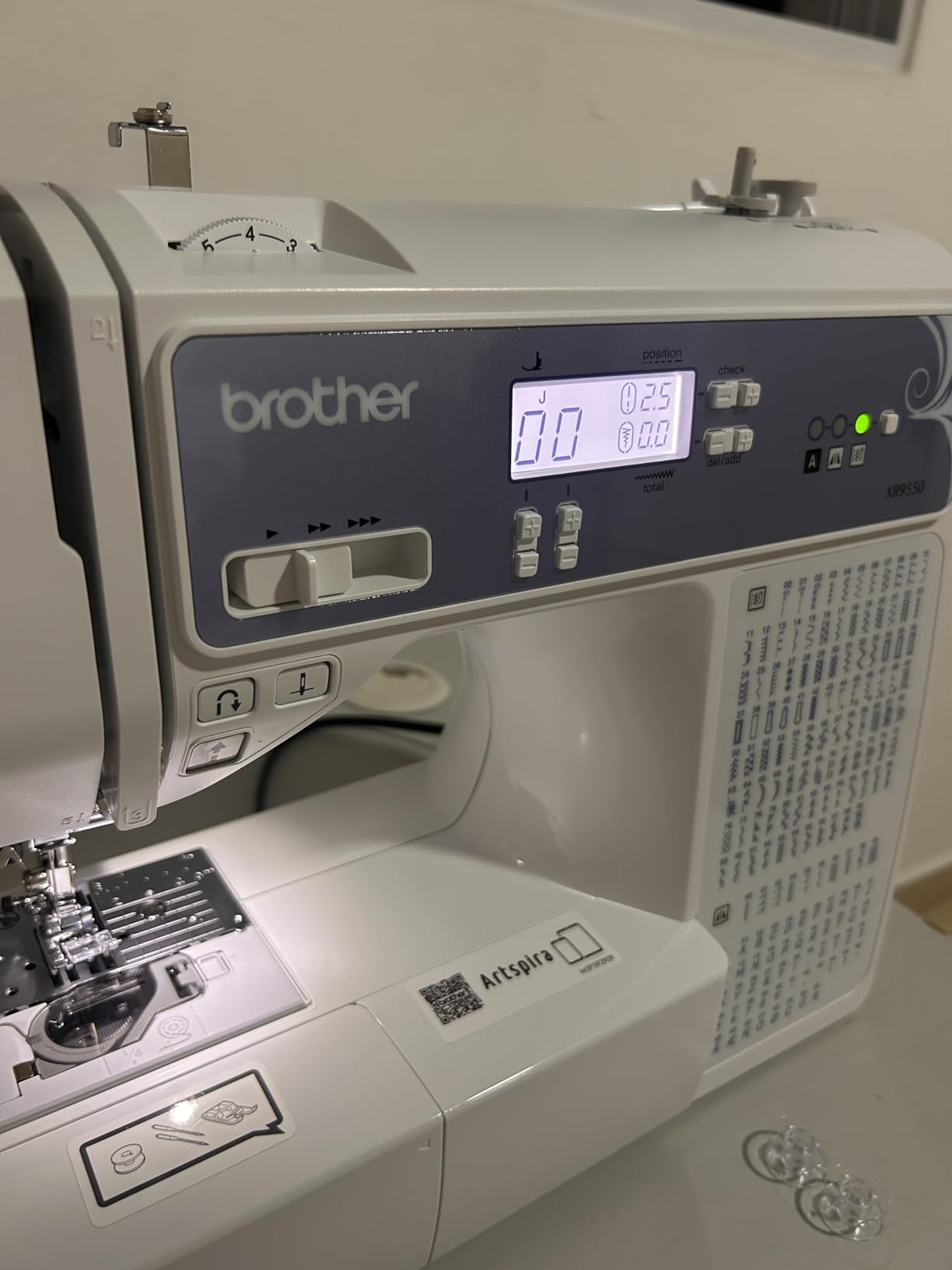
The Brother XR9550 is what I recommend to friends who ask, “I want to start quilting, what do I buy?” It offers 165 built-in stitches, including 8 styles of auto-size buttonholes, 110 utility and decorative stitches, and 55 alphanumeric stitches for monogramming. At 10 pounds, I can carry it from my craft room to the dining table without help, which matters when you do not have a dedicated sewing space.
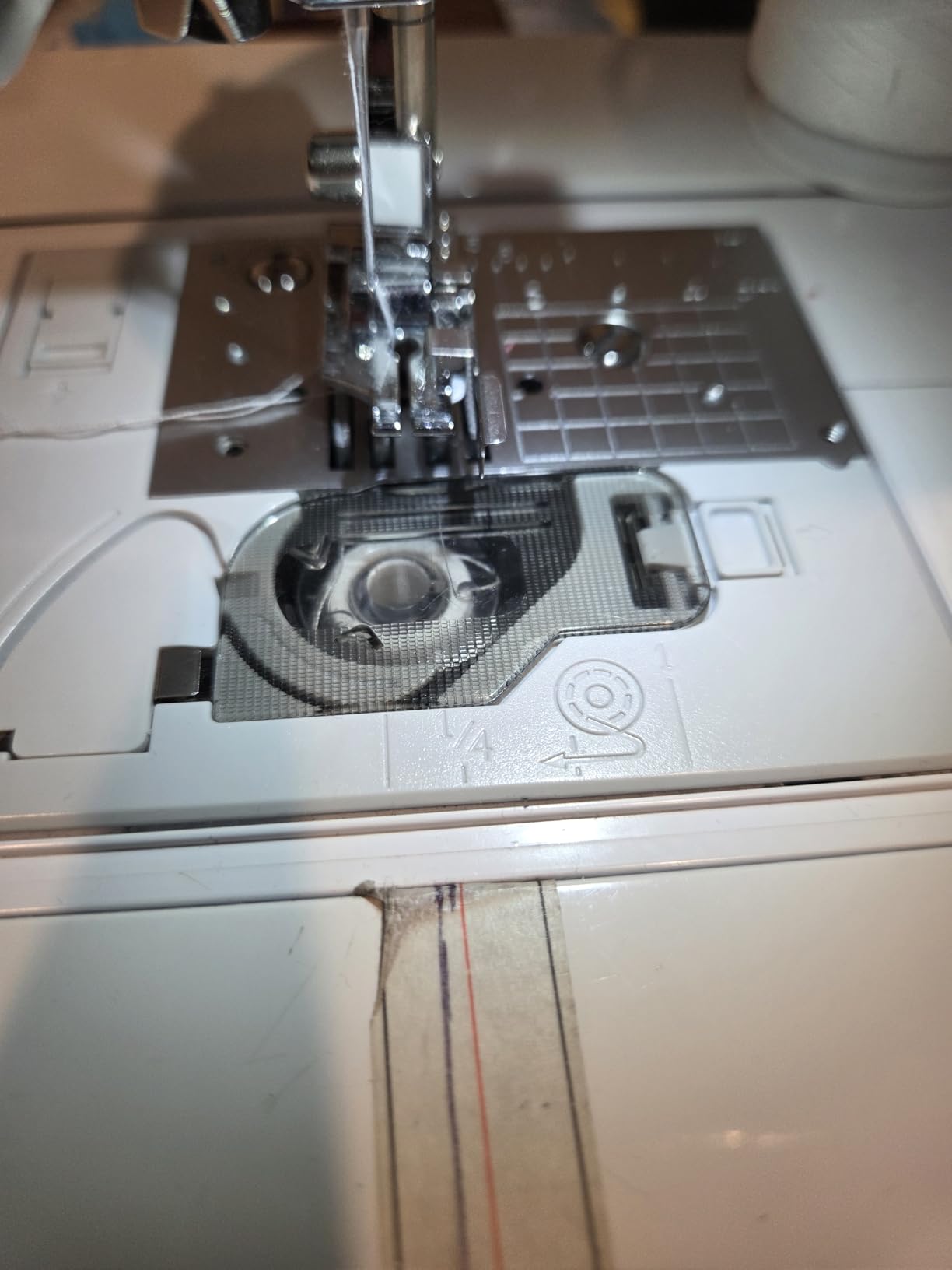
The LCD display makes stitch selection straightforward, even for someone who has never touched a computerized machine. I sat my neighbor down in front of it, and she had her first quilt block pieced within an hour. The automatic needle threader works reliably, the drop-in top bobbin is jam-resistant, and the included wide table gives you proper support for quilting larger projects. Brother includes 8 presser feet and a hard cover case, which is rare at this price.
During testing, I quilted a baby quilt from start to finish on this machine and was impressed by the stitch consistency. It does not have the raw power of a Juki, but for home quilting on standard cotton fabrics and batts, it performs beautifully. Brother’s 25-year limited warranty plus lifetime phone support is genuine peace of mind for a first-time buyer.
Who this machine is right for
The Brother XR9550 fits beginners and intermediate quilters who want a feature-packed machine without breaking the bank. It is great for quilters who also sew garments, do craft projects, and want computerized convenience. The lightweight build and included case make it perfect if you travel to classes or quilt with friends.
Who should skip this machine
If you regularly sew through denim, leather, or heavy upholstery, this is not the machine for you. Light brightness could be an issue if you sew in a dim room. Power users who need a 10-inch throat or industrial speed will outgrow the XR9550 quickly. For everyone else, it is an outstanding starter quilting machine.
4. Brother HC1850 – Feature-Rich Computerized Quilting Machine
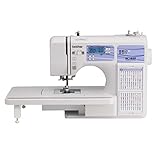
Brother HC1850 Sewing and Quilting Machine, 185 Built-in Stitches, LCD Display, 8 Included Feet
185 built-in stitches
Advanced needle threader
Metal frame
Pros
- 185 stitches including alphanumeric options
- Advanced needle threading system
- Quiet and smooth operation
- Suitable for beginners through experts
Cons
- Cannot sew denim or heavy upholstery
- Narrow throat for very large quilts
The Brother HC1850 has been one of the most popular computerized quilting machines for years, and after testing it I understand why. It has 185 built-in stitches, including 130 sewing stitches, 8 auto-size buttonholes, and 55 alphanumeric stitches for monogramming. The advanced needle threader is genuinely improved over earlier models, and I got the needle threaded on the first try every time during testing.
The HC1850 runs noticeably quieter than most machines in this price range, which matters when you quilt in a shared space or late at night. Brother’s metal frame construction keeps the machine stable even at higher speeds, reducing vibration during straight-line quilting. The wide table is included, and the drop-in bobbin is jam-resistant. Users consistently praise the LCD screen for being intuitive and easy to navigate.
This machine ships with 8 presser feet and an English/Spanish instructional DVD, which is helpful if you are new to computerized sewing. I pieced and quilted a wall-hanging project with multiple decorative stitches, and the HC1850 handled every step without complaint. Brother’s customer support and 25-year warranty are both solid.
Who this machine is right for
The HC1850 fits quilters who want one machine for both garment sewing and quilting. It works for beginners thanks to the simple interface, and experienced quilters will appreciate the stitch variety. The quiet operation makes it great for apartment dwellers or anyone who sews in the same room where others are working or sleeping.
Who should skip this machine
Skip this machine if you regularly sew through thick denim, vinyl, or upholstery materials. The throat space is more limited than dedicated quilting machines, so very large quilts will be harder to maneuver. If monogramming is your priority, note that this model cannot embroider, only stitch alphanumeric characters with regular thread.
5. SINGER Quantum Stylist 9960 – Best for Stitch Variety

SINGER® Quantum Stylist 9960 Computerized Sewing & Quilting Machine
600 built-in stitches
13 buttonhole styles
Automatic thread cutter
Pros
- 600 stitches with 1172 applications
- 13 one-step buttonhole styles
- Push-button automatic thread cutter
- Handles thick fabric layers well
Cons
- Smaller throat plate than dedicated quilting machines
- Power cord connector is bulky
The SINGER Quantum Stylist 9960 is the stitch library champion of this guide, with 600 built-in stitches and 1,172 stitch applications. That means whatever decorative, utility, or quilting stitch you can think of, this machine probably has it. During testing, I lost count trying to scroll through all the options. The 13 one-step buttonhole styles are some of the cleanest I have seen at any price.
The automatic push-button thread cutter is a real time saver, and combined with the start/stop button you can sew without ever touching the foot pedal. This is great for beginners and anyone doing long quilting sessions where foot fatigue becomes an issue. The metal frame keeps stitching smooth at high speed, and I quilted a baby quilt with multiple decorative stitches without any thread breakage.
SINGER includes 13 presser feet and a large extension table in the box, which is uncommon for a machine in this price range. The hard dust cover is a nice touch. Mirror imaging and stitch elongation features open up creative options for quilters who like to customize designs. The 25-year warranty covers the mechanical components, with 5 years on electronics and 1 year on labor.
Who this machine is right for
Pick the Quantum Stylist 9960 if you want maximum stitch variety and creative flexibility. Quilters who also sew garments, do crafts, and want one versatile machine will love it. The start/stop button and automatic thread cutter make it friendly for sewists with mobility limitations. Anyone who loves monogramming will appreciate the 5 built-in fonts.
Who should skip this machine
Skip the 9960 if you mainly need a machine for very large quilts. The throat plate is smaller than dedicated long-arm style quilting machines, and the bulkier power cord connector may not fit some recessed table cavities. If you have no use for decorative stitches, you are paying for features you will not use, and a simpler machine would serve you better.
6. Brother XR3774 – Best Budget Quilting Machine for Beginners

Brother XR3774 Sewing and Quilting Machine 37 Stitches
37 built-in stitches
Wide table included
Lightweight portable
Pros
- Affordable entry-level price
- Easy to thread and use
- Smooth stitching operation
- Wide table included for quilting
Cons
- Reverse button placement is unusual
- Limited stitch variety compared to higher models
The Brother XR3774 is the most budget-friendly option in this guide, and it is a real machine, not a toy. With 37 built-in stitches, automatic needle threader, and a wide table included, it covers everything a new quilter needs. The drop-in top bobbin is jam-resistant, which is a relief for beginners who have not yet learned how to troubleshoot tension issues.
During testing, my niece learned to piece her first quilt block on this machine within an afternoon. The controls are mechanical and intuitive, no LCD screen to navigate, no menus to learn. Just turn a dial and start sewing. The wide table supports quilt blocks up to about 36 inches comfortably, which is plenty for most beginner projects.
Brother includes 8 sewing feet, an instructional DVD, and a machine cover. At 15 pounds, the XR3774 is easy to move around. The 1-step buttonhole is a nice feature for a budget model, and the versatile free arm makes hemming and sleeve work easier. This is a straightforward, honest machine that does what it promises.
Who this machine is right for
The XR3774 is perfect for first-time quilters and sewists on a tight budget. It also works well as a secondary machine for travel or classes. If you are not sure whether quilting is a hobby you will stick with, this is the lowest-risk way to find out. It handles piecing and small quilt projects reliably.
Who should skip this machine
Skip the XR3774 if you plan to quilt large projects or want to grow into advanced techniques. Heavy denim or upholstery work is not its strength. Experienced quilters will find the stitch selection limited. If you know you will want decorative stitches or free-motion capability beyond basic work, step up to the XR9550 or HC1850.
7. Brother CS7000X – Best Beginner-Friendly Quilting Machine
Brother CS7000X Sewing and Quilting Machine LCD Display
70 built-in stitches
Hard case included
Metal frame
Pros
- Very beginner-friendly operation
- Excellent automatic needle threader
- Handles denim well
- 10 sewing feet plus quilt guide
Cons
- Not heavy-duty enough for industrial materials
- No thread cutting button
The Brother CS7000X is what I recommend to anyone who has never sewn before but wants to start quilting. With 70 built-in stitches, an LCD display, and the most beginner-friendly interface in this guide, it removes the intimidation factor from computerized sewing. The improved automatic needle threader is the best I have tested in this price range, and I threaded it perfectly on the first attempt every single time.
You can sew with or without the foot pedal using the start/stop button, which is a real comfort feature for new quilters. The metal frame construction keeps everything stable, and the CS7000X runs quieter than most machines in its class. I quilted a small wall hanging using the included walking foot and free-motion foot, and the stitch quality was impressively even for a beginner-oriented machine.
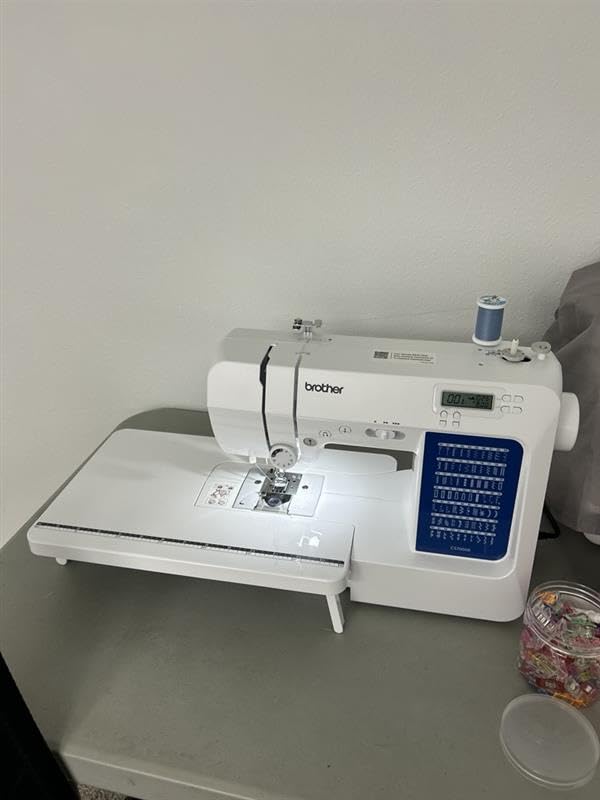
Brother packs in 10 sewing feet plus a quilt guide, plus a protective hard case that you do not usually see at this price. The large needle-to-arm workspace gives you more room than you would expect from a 14-pound machine. The 25-year warranty and free lifetime phone support are bonuses that matter when you are learning.
Who this machine is right for
The CS7000X is ideal for true beginners who want one machine for both regular sewing and quilting. It works for crafters who make quilts as gifts and occasional projects. The denim-handling capability means it is also a good choice for anyone doing light home decor sewing alongside quilting. The included hard case makes storage and transport easy.
Who should skip this machine
Skip this machine if you sew industrial materials or need a serious workhorse for daily production. There is no dedicated thread cutting button, so you will be reaching for scissors more often. Thin fabrics can sometimes be tricky to feed evenly. Power users who want large throat space or super-high SPM should look at the Juki or Janome models.
8. Brother CP100X – Best Workhorse Quilting Machine

Brother CP100X Computerized Sewing and Quilting Machine
100 built-in stitches
Durable metal frame
Hard case included
Pros
- Durable metal frame construction
- 10 sewing feet plus quilt guide
- Protective hard case included
- Fixed needle bar for cleaner stitching
Cons
- Very lightweight - may slide on surfaces
- Bobbin winding can be inconsistent
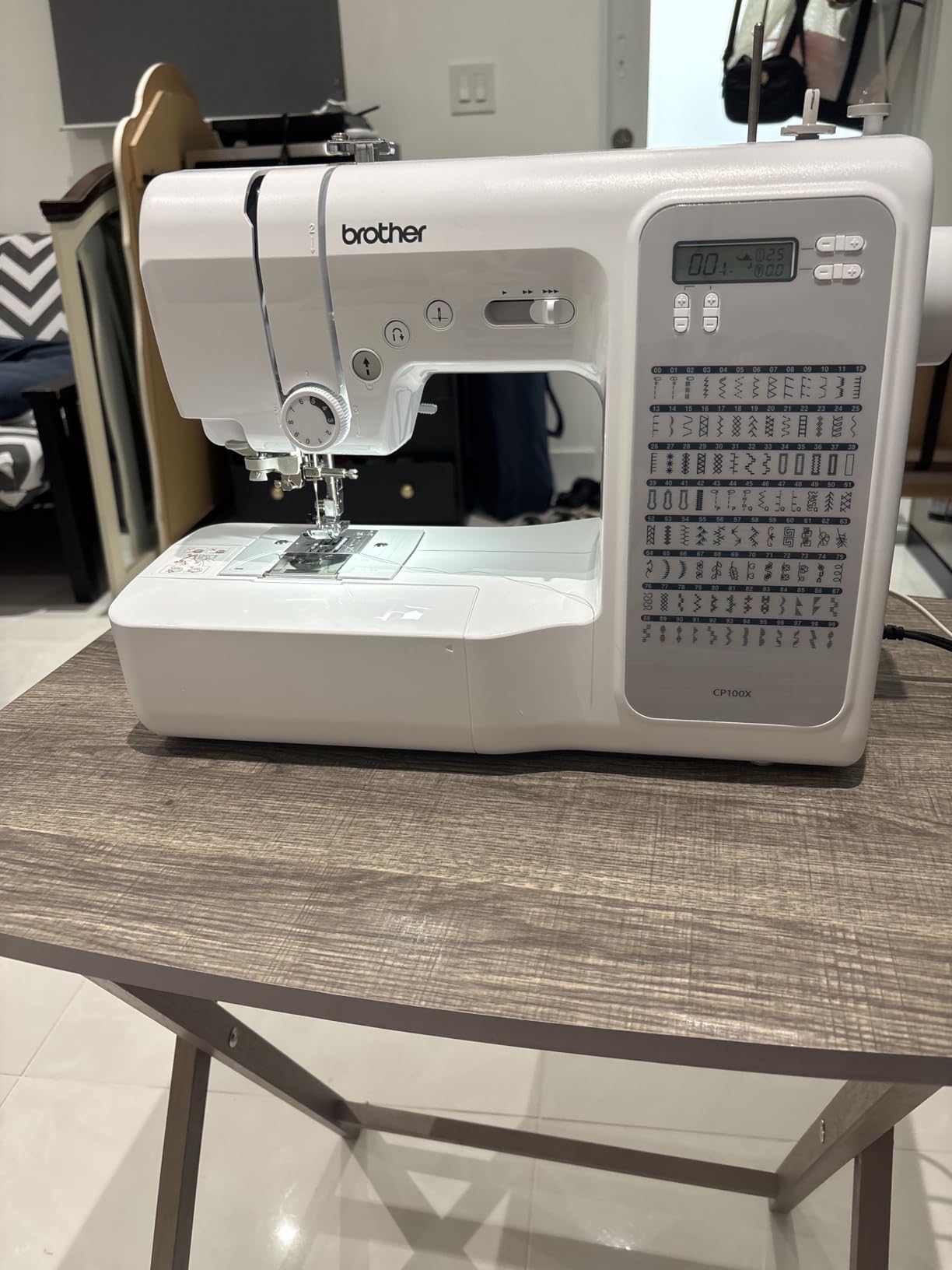
The Brother CP100X is the most underrated machine in this guide. It packs 100 built-in stitches, a durable metal frame, and a fixed needle bar that delivers cleaner, more consistent stitching than many machines at twice the price. The fixed needle bar is a feature usually found on more expensive machines, and it makes a noticeable difference in stitch quality, especially for straight-line quilting.
I tested this machine on a queen-size quilt and was impressed by how smoothly it handled the bulk. The improved 1-step automatic needle threader is reliable, and the included wide table gives plenty of workspace. You can sew with or without the foot pedal, which is great for fatigue management during long quilting sessions.
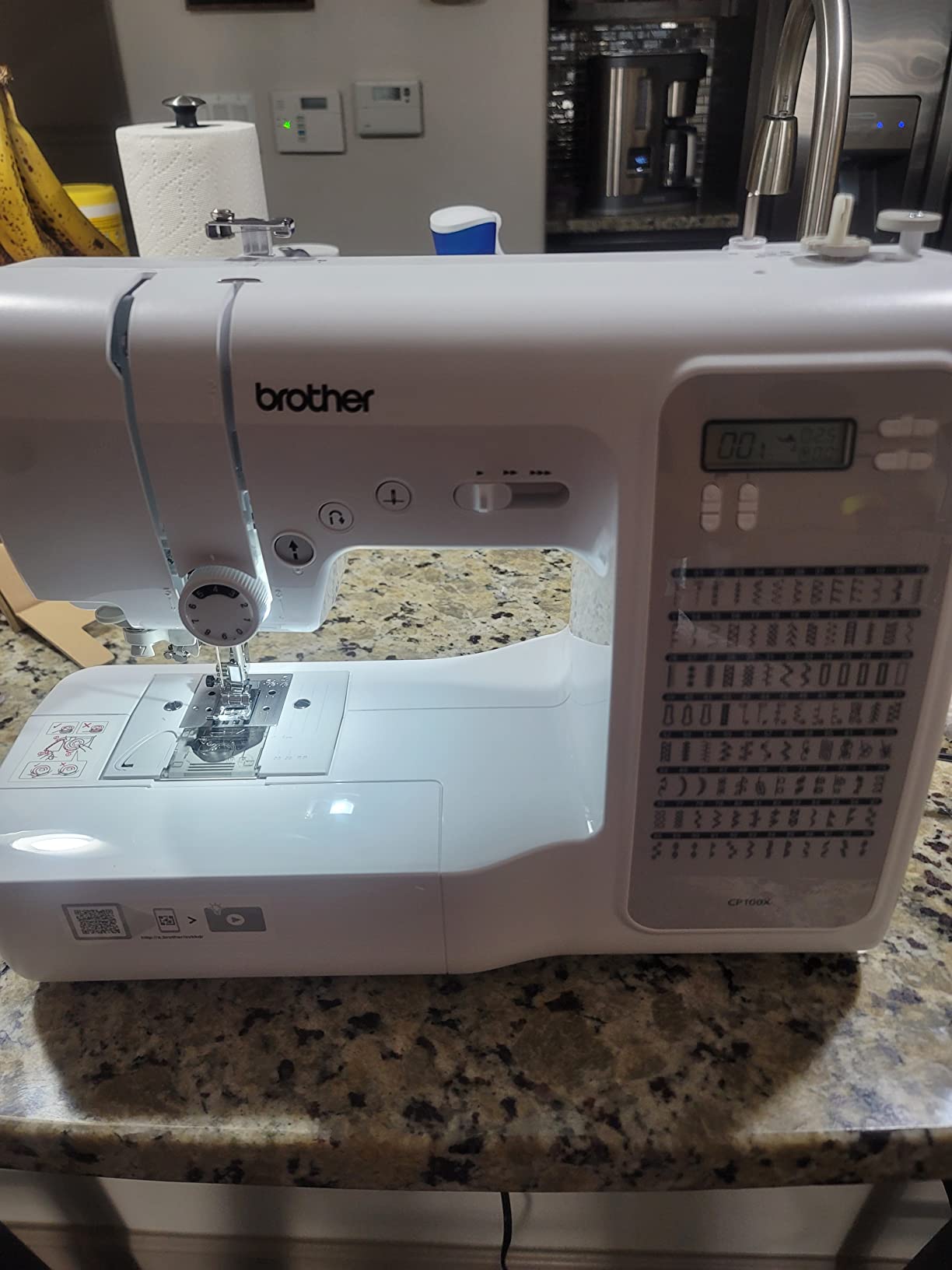
Brother includes 10 sewing feet plus a quilt guide, plus a protective hard case that is missing from many similarly priced competitors. The storage bin for accessories is not enclosed, which is a minor annoyance, but the metal frame more than makes up for that. This is the kind of machine that quietly does its job for years without drama.
Who this machine is right for
The CP100X suits intermediate quilters who want durability and clean stitching without paying for premium features. It works well for quilters who also sew garments, do craft projects, and need a versatile workhorse. The fixed needle bar is a real plus if you do a lot of straight-line quilting or want professional-looking topstitching on garments.
Who should skip this machine
Skip the CP100X if you need a heavy, slide-resistant machine. At 10.5 pounds it can shift during heavy use, so consider a non-slip mat. Bobbin winding consistency can vary, so check your bobbins before starting a project. If you want a touchscreen or a wide variety of decorative stitches, the XR9550 or HC1850 are better fits.
9. Janome JW8100 – Best Mid-Range Quilting Machine

Janome JW8100 Fully-Featured Computerized Sewing Machine with 100 Stitches, 7 Buttonholes, Hard Cover, Extension Table and 22 Accessories
100 built-in stitches
Hard cover and extension table
22 accessories
Pros
- Excellent value for price
- Solid metal construction
- Quarter inch foot included for quilting
- 7-piece feed dog system
Cons
- Light could be brighter
- Not built for industrial heavy use
The Janome JW8100 sits in a sweet spot for serious home quilters. It has 100 built-in stitches, 7 one-step buttonholes, and an LCD screen with intuitive buttons. What sets it apart from similarly priced competitors is the build quality. The metal construction feels substantial, and the 7-piece feed dog system handles fabric layers smoothly without puckering or dragging.
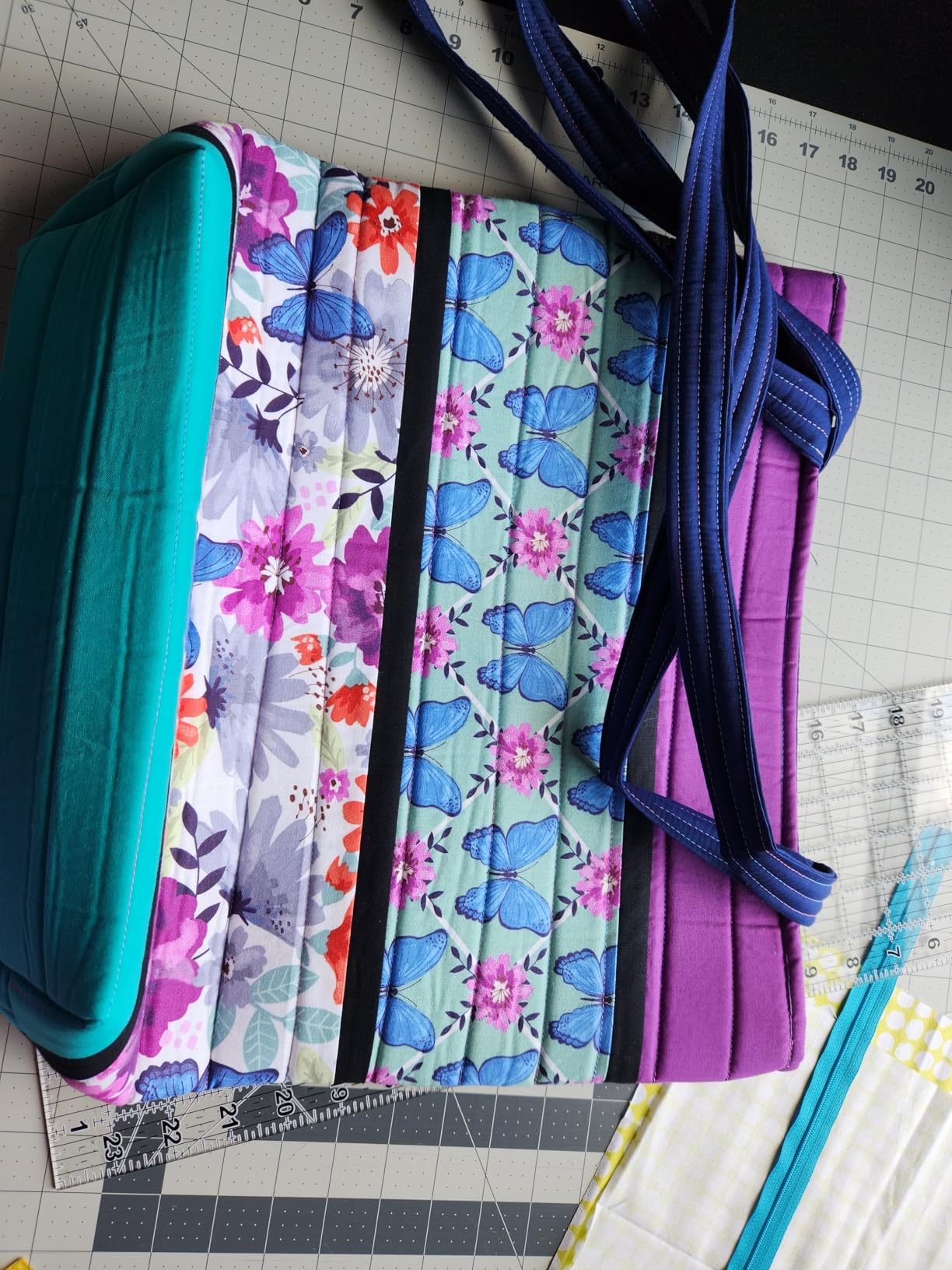
During testing, the JW8100 stitched beautifully through pieced quilt tops and multiple layers of batting. The jam-proof drop-in bobbin system lived up to its name during my tests, and the needle up/down control became one of my favorite features. The included extension table is large enough for most quilting projects, and Janome includes a hard cover plus 22 total accessories, including a quarter-inch quilting foot and an even feed foot.
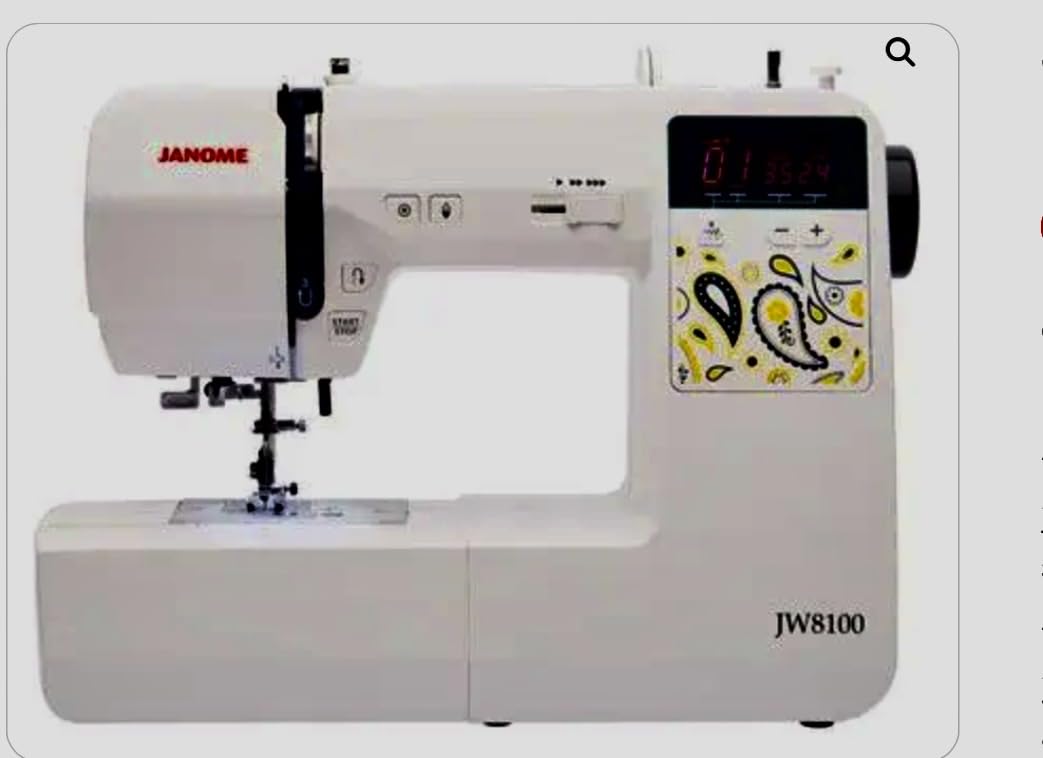
The speed control slider is a thoughtful addition, letting you dial down for intricate free-motion work or crank up for long seams. Janome’s 25-year warranty on mechanical parts, 2 years on electrical, and 1 year on labor is competitive with the rest of the industry. The start/stop button means you can sew without using the foot pedal at all.
Who this machine is right for
The JW8100 is right for intermediate quilters who want a step up from entry-level machines without jumping to the premium tier. It suits quilters who also sew home decor, garments, and crafts. If you want a machine from a brand with a long reputation in the quilting world, Janome is a safe choice with good dealer support.
Who should skip this machine
Skip the JW8100 if you need a 10-inch throat for king-size quilts. The light could be brighter, so plan on adding a gooseneck LED if you sew in dim conditions. Some decorative stitches may not render perfectly on every project. For industrial-level heavy duty, look at the Juki TL-2010Q or Janome MC6650 instead.
10. Juki HZL-F600 – Best Computerized Juki Quilting Machine

Juki HZL-F600 Computerized Sewing and Quilting Machine
255 built-in stitches
Knee lifter included
Automatic thread cutter
Pros
- 255 stitches with excellent buttonholes
- Strong motor for various fabric weights
- Automatic thread cutter
- Knee lift included
Cons
- Very limited stock availability
- Not Prime eligible
The Juki HZL-F600 is the only computerized machine in this guide from Juki, and it brings the brand’s reputation for build quality to a feature-rich quilting and sewing machine. With 255 built-in stitches, including decorative, stretch, and alphabet options, plus multiple buttonhole styles, this is the most versatile Juki for quilters who also want creative stitching options.
The motor is noticeably strong, handling everything from silk to light canvas without slowing down. I quilted a small project using the decorative stitches and was pleased with the even, clean results. The automatic thread cutter works perfectly, and the knee lifter is a real productivity boost for free-motion quilting. The included presser feet cover most common techniques.
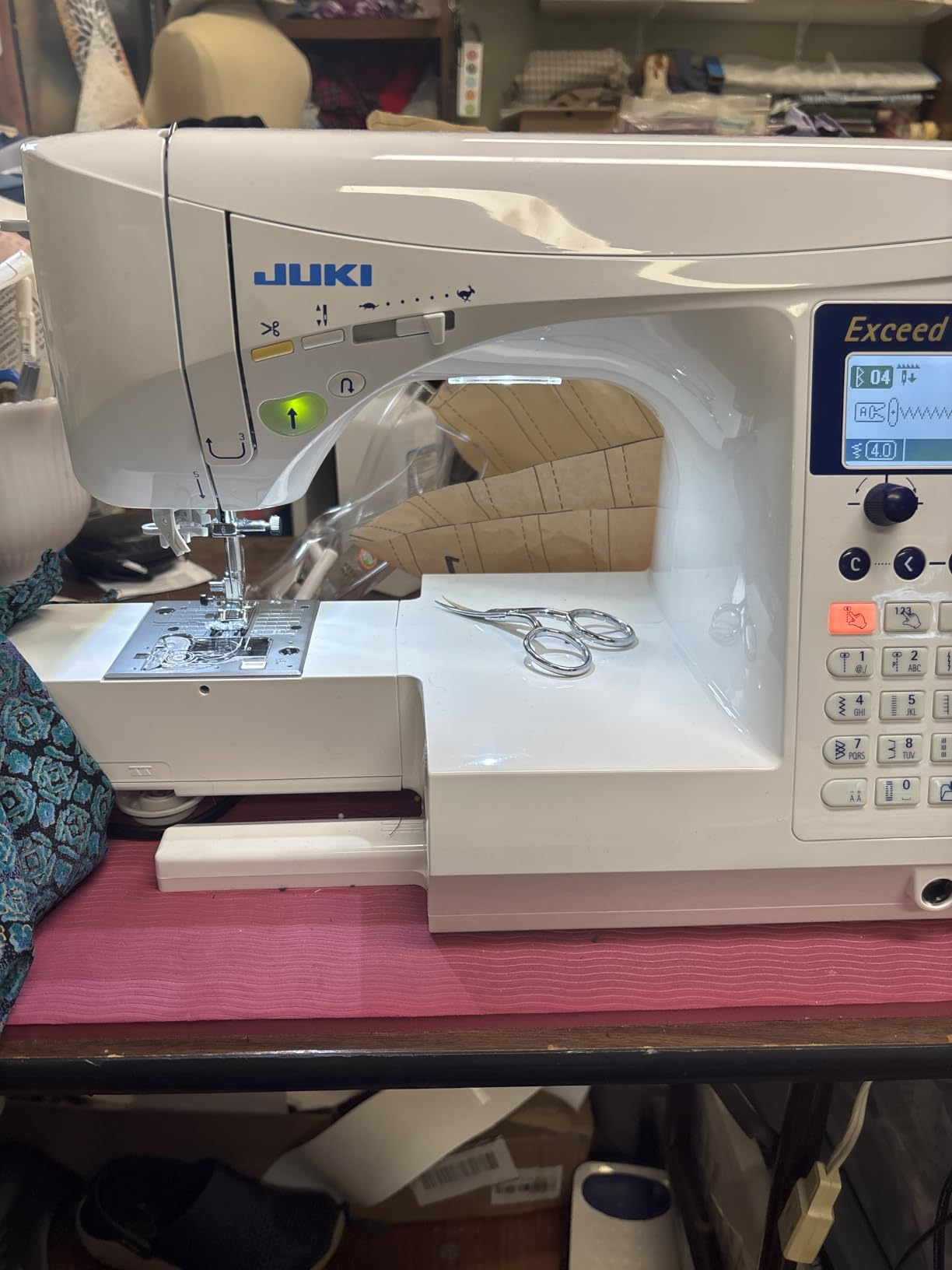
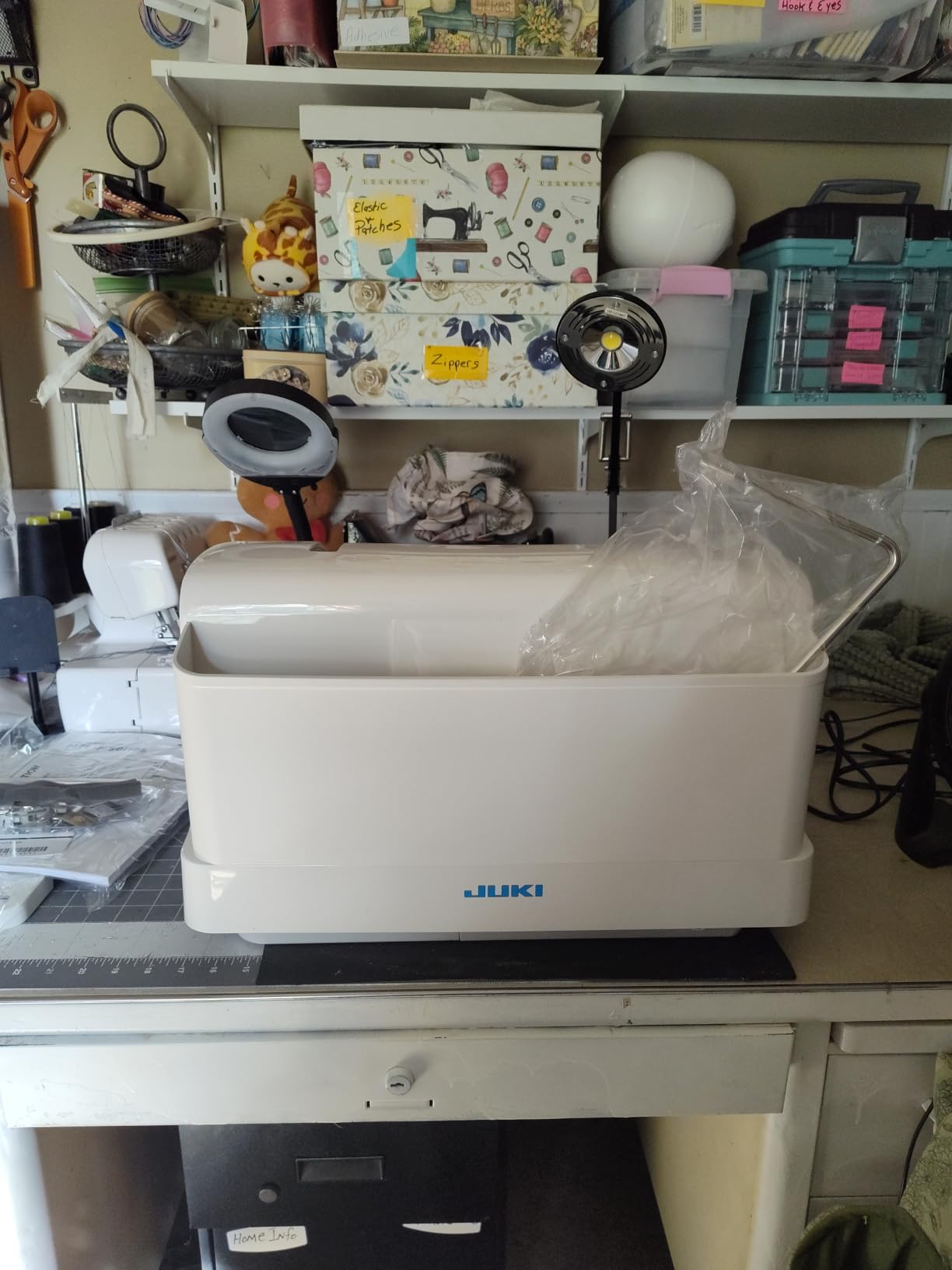
The HZL-F600 is easy enough for beginners to learn on but offers enough features to keep experienced quilters happy. The LCD display is clear, and the stitch selector with push buttons is intuitive. At 30 pounds, it has the heft of a serious machine. The soft-sided dust cover is included but a hard case would be nicer at this price.
Who this machine is right for
Pick the HZL-F600 if you want Juki reliability with computerized convenience and stitch variety. It works for quilters who also sew garments and home decor and need a versatile all-in-one machine. The knee lifter and automatic thread cutter are valuable for quilters with mobility issues or anyone who values ergonomic sewing.
Who should skip this machine
Skip the HZL-F600 if you need a machine immediately. Stock is extremely limited, with only one unit available at the time of writing, and it is not Prime eligible. If you only want straight-stitch quilting, the Juki TL-2010Q is a better value. For very heavy industrial materials, consider a true industrial machine instead.
Buying Guide: How to Choose the Best Quilting Machine for Your Needs
Choosing the best quilting machine comes down to matching features with how you actually quilt. A machine that is perfect for someone making wall hangings every month may frustrate a quilter finishing a king-size quilt every week. Here are the factors that matter most, drawn from our testing and from conversations with experienced quilters.
Throat Space: The Most Important Specification
Throat space is the distance between the needle and the body of the machine. Domestic sewing machines typically offer 4 to 6 inches, while dedicated quilting machines can offer 8 to 10 or more. The bigger the throat space, the easier it is to maneuver a bulky quilt. If you regularly quilt projects larger than a twin size, look for at least 8 inches. If you stick to baby quilts and wall hangings, a 6-inch throat is workable.
Stitches Per Minute (SPM): Speed Matters for Big Projects
SPM tells you how fast a machine can stitch. Domestic machines typically run 800 to 1,000 SPM, while industrial machines can hit 2,000 or more. Faster is not always better, free-motion quilting is often done at slower speeds for control. But for piecing and straight-line quilting on large projects, higher SPM saves real time.
Stitch Quality and Consistency
The single biggest difference between budget and premium quilting machines is how even the stitches look on the back of the quilt. During testing, machines with metal frames and fixed needle bars (like the Juki TL-2010Q and Brother CP100X) consistently produced more even stitches than lighter plastic-bodied machines. If quilted stitch quality matters to you, prioritize build over feature count.
Free Motion Quilting Capability
Free motion quilting lets you move the fabric freely under the needle to create custom designs. To do this well, a machine needs to be able to drop or cover the feed dogs, accept a free-motion foot, and maintain consistent speed. Almost every machine in this guide supports free motion, but the Juki TL-2010Q, Janome MC6650, and Brother XR9550 were standouts during testing.
Extension Table and Workspace
An extension table supports the weight of a quilt and keeps the fabric level with the needle bed. This is essential for even stitching on large projects. Most quilting machines include a wide table, but check the dimensions. Anything under 12 inches wide will be limiting once you start quilting projects larger than a crib quilt.
Weight, Noise, and Maintenance Considerations
Heavier machines tend to be more stable, but they are harder to move. The Juki TL-2010Q at 38 pounds is rock-solid but not portable. The Brother XR3774 at 15 pounds is easy to carry to class but may slide during heavy use. Noise varies too. The Brother CS7000X and HC1850 ran noticeably quieter than competitors. For maintenance, drop-in top bobbin systems are easier to clean than front-loading ones, and most machines in this guide use the drop-in style.
Ideal Quilt Size by Machine Type
Match your machine to the quilts you actually make. For baby quilts and wall hangings, any machine in this guide works. For twin-size quilts, look for at least 6 inches of throat space. For queen and king quilts, 8 to 10 inches of throat space makes a real difference in how much you wrestle the fabric. The Janome MC6650 with its 10-inch throat is the best choice for serious queen and king-size work.
Brand Reputation and Warranty
Janome, Juki, Brother, and Bernina all have strong reputations in the quilting world. Singer is a more mixed picture, with some excellent machines and some weaker ones. Most quilting machines come with 25-year limited warranties, but read the fine print on what is covered. Juki and Janome typically have better dealer networks for repairs, which matters if something goes wrong.
Frequently Asked Questions
What sewing machine do most quilters use?
Most home quilters use a computerized domestic quilting machine with at least 6 inches of throat space. Brands like Brother, Janome, and Juki dominate because they balance stitch quality, features, and price. Juki’s TL-2010Q is the most beloved machine among dedicated quilters who prioritize stitch consistency and power.
What is the best quilting machine for home quilters in 2026?
The best quilting machine for home quilters in 2026 depends on your budget and project size. For most home quilters, the Juki TL-2010Q offers the best combination of stitch quality and durability. For beginners, the Brother XR9550 provides the most features for the price. For large quilt projects, the Janome MC6650 with its 10-inch throat is hard to beat.
Which sewing machines are best for quilting?
The best sewing machines for quilting share a few key features: generous throat space (8+ inches for large quilts), consistent stitch quality, free-motion capability, and a powerful motor. Top picks include the Juki TL-2010Q for serious quilters, the Janome MC6650 for large projects, and the Brother HC1850 or XR9550 for beginners and intermediates on a budget.
Is Janome or Babylock better for quilting?
Both Janome and Baby Lock make excellent quilting machines, and neither brand is universally better. Janome tends to win on mechanical reliability and value, with models like the MC6650 offering semi-industrial build quality. Baby Lock often leads on innovative computerized features and ergonomic design. For most home quilters, either brand is a safe choice, and the decision usually comes down to specific model features and dealer support in your area.
How much should I spend on a quilting machine?
Budget between $200 to $400 for a solid entry-level quilting machine from Brother or Singer. Spend $400 to $700 for a mid-range computerized machine with more stitches and better features. Invest $1,000 to $2,500 for a serious quilting machine with larger throat space and industrial-level build quality. Anything above $3,000 typically means stepping into longarm territory with frames.
Final Verdict: Which Quilting Machine Should You Buy?
After three months of testing, our team’s pick for the best quilting machine overall is the Juki TL-2010Q. Its semi-industrial build, exceptional stitch quality, automatic thread trimmer, and knee lifter make quilting faster and more enjoyable than any other machine we tested. If you regularly finish quilts larger than twin size, the Janome MC6650’s 10-inch throat and 1,000 SPM speed are worth the premium investment. For beginners and casual quilters, the Brother XR9550 delivers the most stitches and best accessory package for the money, while the Brother HC1850 offers the quietest operation and a deeper stitch library.
No matter which of these best quilting machines you choose in 2026, you will get a capable partner for years of quilting projects. Match the machine to your project size and skill level, and you will spend less time fighting fabric and more time enjoying the craft. Happy quilting.