
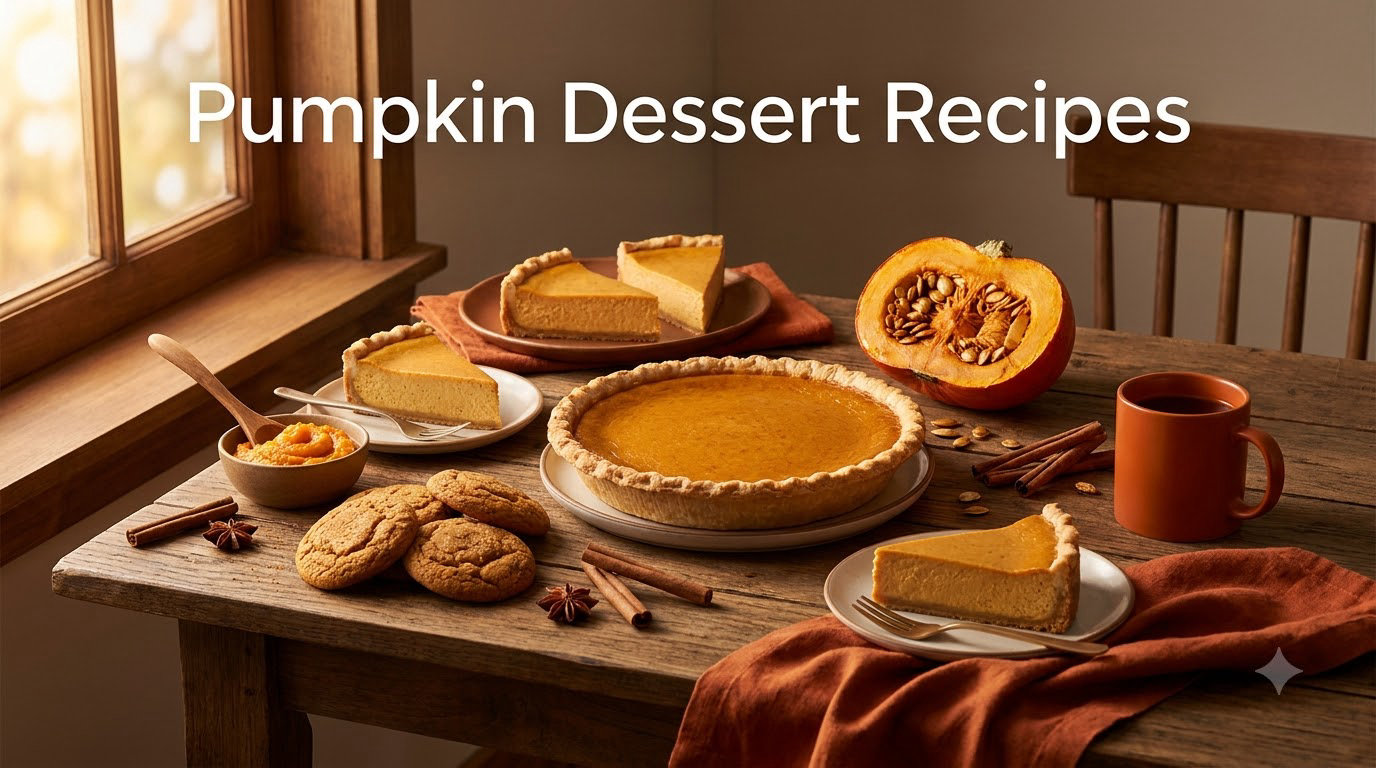
When the air turns crisp and the leaves shift to amber, my kitchen smells like cinnamon, nutmeg, and roasted pumpkin. There is something deeply comforting about fall baking, and pumpkin dessert recipes sit right at the center of that tradition. Whether you are hosting Thanksgiving, bringing a dish to a potluck, or just wanting a cozy weekend project, pumpkin desserts deliver warmth and nostalgia in every bite.
This guide covers everything from classic pumpkin pie to no-bake treats you can throw together in 15 minutes. I have spent years testing these recipes in my own kitchen, tweaking spice levels, and learning from plenty of failures along the way. My goal is to save you the trial and error so your pumpkin desserts come out right the first time.
We will walk through classic recipes, beginner-friendly options, cookies and bars, cakes, no-bake desserts, and even healthy alternatives for dietary restrictions. You will also find a full ingredient guide, troubleshooting tips for common baking mistakes, and answers to the questions home bakers ask most. If you want to round out your fall menu, our best pumpkin beers for fall guide pairs perfectly with these desserts.
Table of Contents
Classic Pumpkin Desserts Everyone Should Know
Classic pumpkin dessert recipes form the backbone of fall baking. These are the desserts that show up at every Thanksgiving table, every bake sale, and every family gathering from October through December. They have stood the test of time because they work.
Classic Pumpkin Pie
Pumpkin pie is the most popular dessert made from pumpkins, and for good reason. A silky custard filling made from pumpkin puree, eggs, sugar, and warm spices sits inside a flaky butter crust. The key to a great pumpkin pie is using room-temperature ingredients and avoiding overbaking.
Pull the pie from the oven when the center still has a slight jiggle. It will continue to set as it cools. Overbaking leads to cracks and a rubbery texture that ruins the creamy mouthfeel everyone loves. I bake my pumpkin pie at 425°F for the first 15 minutes, then drop the temperature to 350°F for the remaining 35 to 40 minutes.
Pumpkin Roll
A pumpkin roll is a sponge cake layered with cream cheese frosting and rolled into a spiral. It looks impressive but is surprisingly approachable once you master the rolling technique. The trick is rolling the cake in a dusted kitchen towel while it is still warm, which trains the cake to hold its shape without cracking.
Once the cake cools completely, you unroll it, spread the filling, and roll it back up. Chill for at least an hour before slicing so the frosting sets. Pumpkin roll freezes beautifully, making it a great make-ahead dessert for holiday entertaining.
Pumpkin Cheesecake
Pumpkin cheesecake takes the rich creaminess of a traditional cheesecake and infuses it with pumpkin puree and warm spices. Many home bakers swear by a ginger snap crust instead of the usual graham crackers, which adds a spicy snap that complements the filling perfectly.
Bake your pumpkin cheesecake in a water bath to prevent cracking and ensure even cooking. The steam creates a gentle, humid environment that keeps the top smooth. Cool the cheesecake gradually in the oven with the door cracked open, then chill overnight for the cleanest slices.
Easy Pumpkin Dessert Recipes for Beginners
Not every pumpkin dessert requires a mixer, a rolling pin, or hours in the kitchen. Some of the best pumpkin dessert recipes are also the simplest. These beginner-friendly options use pantry staples and basic techniques that anyone can handle on a first try.
One-bowl pumpkin muffins are a perfect starting point. You whisk together canned pumpkin, oil, eggs, sugar, and spices in a single bowl, fold in flour and leavening agents, and bake. No mixer required, and cleanup takes about 30 seconds. These muffins stay moist for days and work just as well for breakfast as they do for dessert.
Pumpkin dump cake is another no-fuss option that forum bakers love. You layer canned pumpkin, sugar, and spices in a baking dish, sprinkle dry yellow cake mix on top, drizzle with melted butter, and bake. The result is a gooey, crusty, comforting dessert that tastes like you spent hours on it. It is the kind of recipe you can hand to a teenager or a first-time baker with confidence.
For something even quicker, try pumpkin pudding. Mix pumpkin puree into instant vanilla pudding with a dash of pumpkin pie spice, layer it with crushed gingersnaps in parfait glasses, and chill. It takes under 15 minutes to assemble and looks elegant enough for guests.
Pumpkin Cookies and Bars
Pumpkin cookies and bars are the workhorses of fall baking. They travel well, portion easily, and stay fresh longer than cakes or pies. If you need a dessert for a bake sale, office party, or school event, this category is where I would start.
Pumpkin snickerdoodles are a fan favorite. The dough gets rolled in cinnamon sugar before baking, creating a crackly, sweet crust that contrasts with the soft, cakey cookie underneath. The pumpkin adds moisture and a subtle earthy sweetness that pairs naturally with the cinnamon coating. These cookies are genuinely better on day two, so baking them ahead is a smart move.
Pumpkin chocolate chip cookies divide opinions, but they should not. The combination works because pumpkin’s earthy sweetness tempers the bitterness of dark chocolate. Use semi-sweet or dark chips rather than milk chocolate, and do not skip the chill time on the dough. Chilling prevents the cookies from spreading too thin and helps the flavors meld.
Pumpkin bars with cream cheese frosting are essentially sheet cake in bar form. The batter is thick and spiced, the frosting is tangy and sweet, and together they create the kind of dessert that disappears at every gathering. Cut them small because they are rich, and dust the top with a little extra cinnamon for presentation.
Pumpkin blondies offer a chewier, denser alternative to bars. Browned butter gives them a nutty depth that complements the pumpkin and spices. Add white chocolate chunks and toasted pecans for texture, and you have a bar cookie that tastes nothing like your standard pumpkin offering.
Pumpkin Cakes and Cupcakes
Pumpkin cake brings moisture and warmth that plain yellow or chocolate cake cannot match. The pumpkin puree keeps the crumb tender for days, and the spices fill the kitchen with the smell of autumn while it bakes.
A pumpkin layer cake with cream cheese frosting is a showstopper for Thanksgiving or any fall dinner party. Three layers of spiced pumpkin cake stacked with tangy frosting between each tier creates a dessert that photographs beautifully and tastes even better. Keep your ingredients at room temperature for a smooth, lump-free batter that bakes evenly.
Pumpkin coffee cake is a quieter option that works equally well for breakfast or dessert. A streusel layer runs through the middle and tops the cake, giving each slice a satisfying crunch. Forum bakers frequently mention pumpkin coffee cake as one of their most successful recipes, especially for brunch gatherings.
Pumpkin cupcakes are ideal when you want individual portions. Pipe a swirl of cream cheese frosting on top and finish with a sprinkle of cinnamon or a candy pumpkin. They pack easily for lunches, bake sales, and potlucks, and they are easier to serve than a full cake since no slicing is required.
No-Bake Pumpkin Desserts
When the oven is full or the temperature outside is still warm, no-bake pumpkin desserts save the day. These recipes rely on refrigeration rather than baking, which also makes them excellent make-ahead options.
Pumpkin trifle layers cubes of spiced pound cake or gingerbread with pumpkin mousse and whipped cream in a glass bowl. It looks stunning, requires zero baking if you use store-bought cake, and feeds a crowd. The layers absorb flavor as they sit, so assembling it a few hours ahead actually improves the taste.
Pumpkin mousse is light, airy, and comes together with just a few ingredients. Fold pumpkin puree, spices, and a little sugar into whipped cream, spoon into cups, and chill. It is an elegant finish to a heavy meal when a slice of pie feels like too much.
Pumpkin ice cream takes advantage of the fact that pumpkin and cream belong together. Swirl pumpkin puree spiced with cinnamon and nutmeg into a vanilla ice cream base, or fold it into softened store-bought ice cream for a shortcut version. Either way, you get a frozen dessert that captures fall flavors without turning on the oven.
Healthy and Dietary-Friendly Pumpkin Desserts
Pumpkin desserts can accommodate almost any dietary need without sacrificing flavor. The natural sweetness and moisture of pumpkin make it forgiving in gluten-free, vegan, and lower-sugar recipes.
For gluten-free options, our gluten-free pumpkin bread recipe is a reliable starting point. The same principles apply to cakes, muffins, and cookies. Use a quality 1-to-1 gluten-free flour blend, and add a touch of xanthan gum if your blend does not already include it. Pumpkin’s moisture helps mask any grittiness that gluten-free flours sometimes bring.
Vegan pumpkin desserts swap eggs for flax eggs, applesauce, or aquafaba, and replace dairy with coconut milk or a plant-based butter. Pumpkin pie adapts particularly well because the custard relies on eggs for structure but pumpkin itself provides binding power. Coconut milk adds richness that complements the spices without any animal products.
Lower-sugar pumpkin desserts address one of the biggest complaints I see in baking forums. Many people find traditional pumpkin desserts too sweet. You can cut sugar by a third in most recipes without ruining the texture. Maple syrup or honey can replace refined sugar for a more complex sweetness that does not overwhelm the pumpkin. Adding a pinch of salt also balances sweetness and deepens the spice flavors.
For a genuinely healthy option, try pumpkin chia pudding. Mix pumpkin puree, chia seeds, milk of choice, maple syrup, and spices, then chill overnight. The chia seeds create a pudding-like consistency packed with fiber and omega-3s. It tastes like dessert but works as a wholesome breakfast.
Pumpkin Pie Spice and Ingredient Guide
Understanding your ingredients is the difference between a good pumpkin dessert and a great one. Two questions come up constantly in baking forums, and both deserve clear answers.
The first is pumpkin puree versus pumpkin pie filling. Pumpkin puree is simply cooked, mashed pumpkin with nothing added. Pumpkin pie filling is pre-sweetened and pre-spiced puree designed for convenience. They are not interchangeable. If a recipe calls for pumpkin puree and you use pie filling, your dessert will be far too sweet and over-spiced. Always read the label carefully. Most recipes in this guide use plain pumpkin puree so you control the sweetness and spice levels yourself.
The second question is about pumpkin pie spice. You can buy it pre-blended, but making your own is cheaper and lets you customize the ratio. A standard blend combines 3 tablespoons ground cinnamon, 2 teaspoons ground ginger, 2 teaspoons ground nutmeg, 1.5 teaspoons ground allspice, and 1.5 teaspoons ground cloves. Mix and store in an airtight jar. For more detail on individual spices, our essential spices for baking guide covers each one in depth.
Storage matters too. Canned pumpkin lasts years in the pantry unopened. Once opened, transfer leftovers to an airtight container and refrigerate for up to a week or freeze for up to three months. Most recipes call for a partial can, which is why bakers constantly search for ways to use leftover pumpkin puree. Freezing it in measured portions solves this problem neatly.
Fresh pumpkin works in place of canned, but it requires roasting and pureeing first. Sugar pumpkins, also called pie pumpkins, are the best variety for desserts because they are sweeter and less watery than carving pumpkins. Avoid large jack-o-lantern pumpkins, which tend to be stringy and bland.
Common Pumpkin Baking Mistakes and How to Fix Them
Even experienced bakers run into problems with pumpkin desserts. The high moisture content of pumpkin creates specific challenges that other dessert categories do not face. Here are the most common issues and how to solve them.
A soggy crust on pumpkin pie happens when the custard seeps into the pastry before it sets. The fix is blind baking. Line your pie crust with parchment, fill with pie weights or dried beans, and bake at 375°F for about 15 minutes. Remove the weights and bake another 5 minutes until the bottom looks dry. Then add your filling and finish baking.
A cracked cheesecake is usually caused by overbaking or sudden temperature changes. Use a water bath, check for doneness early, and cool the cheesecake gradually. The center should wobble slightly when you remove it. If a crack still appears, cover it with a layer of sour cream topping or extra frosting. No one will know.
Over-spicing is a frequent complaint. Forum users often mention wanting pumpkin desserts that are not too cinnamon-heavy. Start with less spice than the recipe suggests, taste the batter if it is safe to do so, and adjust. You can always add more, but you cannot take it out. Remember that spices intensify as the dessert sits, so a batter that tastes mildly spiced will taste fully spiced after a day in the fridge.
Desserts that are too sweet respond to two fixes. First, reduce the sugar by 25 percent in your next batch. Most recipes have more sugar than necessary. Second, add a pinch of salt to the batter or filling. Salt suppresses perceived sweetness and lets the pumpkin and spice flavors come forward.
Finally, dense or heavy pumpkin baked goods usually mean too much liquid. Pumpkin puree varies in water content between brands. If your batter looks thinner than expected, add a tablespoon of flour. If your baked goods come out gummy in the center, try draining the puree through cheesecloth for 30 minutes before using it.
Frequently Asked Questions
What is the most popular dessert made from pumpkins?
Pumpkin pie is by far the most popular dessert made from pumpkins. It is a Thanksgiving staple in the United States, featuring a spiced pumpkin custard in a flaky crust. Other popular options include pumpkin cheesecake, pumpkin bread, and pumpkin roll.
What are some of the best pumpkin desserts to make in the fall?
The best fall pumpkin desserts include classic pumpkin pie, pumpkin cheesecake with ginger snap crust, pumpkin snickerdoodles, pumpkin bars with cream cheese frosting, and no-bake pumpkin trifle. These recipes range from beginner-friendly to intermediate and cover every fall occasion from casual snacking to Thanksgiving dinner.
What are some popular pumpkin recipes?
Popular pumpkin recipes include pumpkin pie, pumpkin bread, pumpkin muffins, pumpkin cheesecake, pumpkin cookies, pumpkin roll, pumpkin bars, pumpkin cake with cream cheese frosting, and no-bake pumpkin mousse. For a complete gluten-free option, try a dedicated gluten-free pumpkin bread recipe that uses a 1-to-1 flour blend.
How do you use leftover pumpkin puree?
Leftover pumpkin puree can be used in smoothies, oatmeal, pancakes, muffins, soups, and pasta sauces. You can also freeze it in measured portions for future baking. Many bakers portion leftover puree into ice cube trays, then transfer the frozen cubes to a bag for easy use in small recipes.
What is the difference between pumpkin puree and pumpkin pie filling?
Pumpkin puree is 100 percent cooked, mashed pumpkin with no added ingredients. Pumpkin pie filling is pre-sweetened and pre-spiced puree meant for making pie quickly. They are not interchangeable. If a recipe calls for puree and you use filling, the result will be too sweet and over-spiced.
Can you freeze pumpkin desserts?
Yes, most pumpkin desserts freeze well. Pumpkin pie, pumpkin roll, pumpkin bread, and pumpkin cookies all freeze beautifully. Wrap them tightly in plastic wrap and then foil, or store in airtight containers. Thaw overnight in the refrigerator before serving. Cheesecake also freezes well but should be sliced before freezing for easier portioning.
Conclusion
Pumpkin dessert recipes capture the heart of fall baking in every category, from classic pies and rolls to easy one-bowl cookies and no-bake trifles. The key takeaways are simple: use plain pumpkin puree so you control sweetness and spice, trust room-temperature ingredients for smooth batters, and do not be afraid to dial back the sugar. With the troubleshooting tips and ingredient guidance in this guide, you are ready to tackle any pumpkin dessert recipe with confidence. Pick one, start baking, and let your kitchen fill with the warmth of the season.