
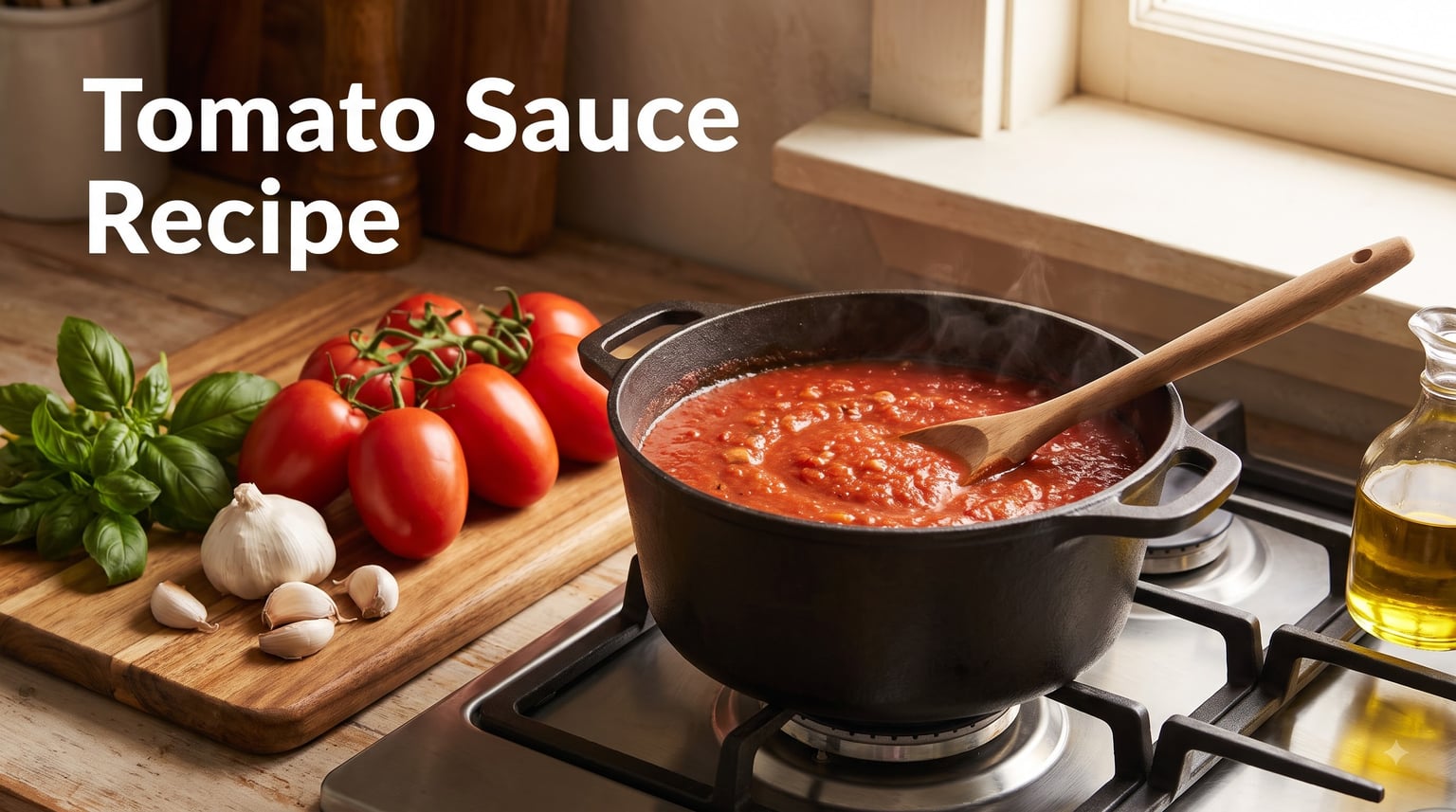
A great tomato sauce recipe is the foundation of countless meals, from weeknight pasta to slow-cooked comfort dishes. I have tested dozens of variations over the years, and I keep coming back to one simple truth: the best sauce comes from understanding your ingredients, not from a long list of them.
Whether you are working with a bumper crop of summer Roma tomatoes or a can of San Marzanos from the pantry, this guide walks you through every step. You will learn how to choose the right tomatoes, build flavor from scratch, fix common problems, and store your sauce for months of easy dinners.
If you want to explore how this sauce compares to other options, check out our pasta sauces ranked guide for a broader look at marinara and beyond.
Table of Contents
What Makes a Great Tomato Sauce?
A great tomato sauce comes down to three things: quality tomatoes, balanced acidity, and patience. When you nail all three, the result tastes like it simmered all day in a Tuscan kitchen.
The best sauces let the tomato shine. You do not need a heavy hand with herbs or spices. A little garlic, good olive oil, and a single bay leaf can carry the entire flavor profile. The secret is building layers gently, tasting as you go, and trusting the process.
Texture matters just as much as taste. Some cooks prefer a velvety smooth puree, while others love a rustic, chunky finish. I will cover how to achieve both in the cooking section below.
Choosing the Right Tomatoes
The tomatoes you pick will define your sauce more than any other decision. Not all tomatoes are created equal, and the choice between fresh and canned changes everything about your approach.
Fresh Tomatoes: When and How
Fresh tomatoes shine during peak summer, roughly July through September. Look for paste varieties like Roma, San Marzano, or Amish Paste. These have fewer seeds, less water, and denser flesh than slicing tomatoes like Big Boy or Beefsteak.
A ripe sauce tomato should feel heavy for its size and yield slightly when pressed. Avoid anything with green shoulders, soft spots, or a mealy texture. If you can smell the tomato through its skin, you have a winner.
The trade-off with fresh tomatoes is time. You need to blanch, peel, and often seed them before cooking. Plan on an extra 30 to 45 minutes of prep compared to working with canned.
Canned Tomatoes: The Reliable Workhorse
Canned tomatoes deliver consistent flavor year-round and eliminate peeling entirely. San Marzano tomatoes from Italy are the gold standard for their natural sweetness and low acidity. Look for cans certified with the DOP seal for authenticity.
For everyday cooking, high-quality domestic crushed tomatoes or whole peeled tomatoes work beautifully. I recommend whole peeled over pre-crushed because you control the final texture. Crush them by hand for a rustic sauce or blend them smooth for a refined finish.
One advantage forum cooks consistently mention: canned tomatoes are picked and processed at peak ripeness. In winter months, they will almost always taste better than out-of-season fresh tomatoes shipped from thousands of miles away.
Ingredients for Homemade Tomato Sauce
Here is what you need for a classic batch of homemade tomato sauce that serves six people over pasta. Each ingredient plays a specific role, and I will explain why it matters.
Tomatoes: 3 pounds fresh Roma or San Marzano tomatoes, OR two 28-ounce cans of whole peeled tomatoes. This is your base, so choose the best quality you can find.
Olive oil: 3 tablespoons extra virgin olive oil. The oil carries flavor and helps aromatics bloom. Do not skimp here.
Garlic: 4 cloves, thinly sliced or smashed. Garlic builds the savory foundation. Sliced garlic gives a milder, sweeter flavor than minced.
Onion: 1 medium yellow onion, finely diced. Some cooks halve it and let it simmer whole for a subtle background note. I prefer diced for a more integrated flavor.
Salt: 1 teaspoon kosher salt, plus more to taste. Salt draws out moisture and brightens every other flavor. Add gradually and taste frequently.
Optional aromatics: 1 bay leaf, a sprig of fresh basil, 1/2 teaspoon dried oregano, or a pinch of red pepper flakes. Pick one or two rather than loading up on all of them.
Optional finishing touch: 1 tablespoon unsalted butter stirred in at the end. This is the Marcella Hazan trick that home cooks rave about on every cooking forum. The butter rounds out acidity and adds a silky mouthfeel.
Equipment You Will Need
You do not need specialty equipment to make excellent tomato sauce. A large heavy-bottomed pot or Dutch oven is the most important tool because it distributes heat evenly and prevents scorching on the bottom.
For processing fresh tomatoes, you will need a large pot of boiling water, a slotted spoon, and a bowl of ice water for blanching. A paring knife makes quick work of removing the skins.
If you want a smooth sauce, an immersion blender is the easiest tool because you can puree directly in the pot. A food mill is the traditional choice and removes seeds automatically. A standard blender or food processor works too, but cool the sauce slightly first to avoid dangerous splattering.
No food mill? A box grater works surprisingly well. Grate cut tomatoes against the large holes, and the skin will peel away naturally while the flesh passes through. This is a favorite shortcut mentioned repeatedly in cooking forums.
How to Make Tomato Sauce from Scratch?
This tomato sauce recipe works with fresh or canned tomatoes. The full process takes about an hour with canned tomatoes and 90 minutes with fresh.
Step 1: Prepare Fresh Tomatoes (Skip if Using Canned)
Bring a large pot of water to a rolling boil. Score the bottom of each tomato with a shallow X using a paring knife. Drop the tomatoes into the boiling water in batches of four or five.
After 30 to 60 seconds, you will see the skins start to peel back at the score marks. Transfer the tomatoes immediately to a bowl of ice water to stop the cooking. Once cool, peel off the skins with your fingers and core each tomato. Roughly chop and set aside.
Step 2: Build the Flavor Base
Heat the olive oil in your heavy-bottomed pot over medium heat. Add the diced onion and cook for 5 to 7 minutes until soft and translucent. You want it golden, not browned.
Add the sliced garlic and cook for 60 to 90 seconds until fragrant. Watch closely because garlic turns bitter the moment it burns. If you are using red pepper flakes, add them now.
Step 3: Add the Tomatoes
Pour in your prepared fresh tomatoes or canned tomatoes with their juice. If using canned whole tomatoes, crush them by hand as you add them, or use kitchen shears to snip them into pieces directly in the pot.
Add the salt, bay leaf, and any dried herbs you are using. Stir everything together and bring the pot to a gentle simmer.
Step 4: Simmer and Develop Flavor
Reduce the heat to low and let the sauce simmer uncovered for 30 to 45 minutes. Stir occasionally to prevent sticking, especially on the bottom of the pot.
The sauce is ready when it has thickened enough to coat the back of a spoon. You will notice the color deepen from bright red to a richer, darker shade. Taste and adjust salt as needed.
If you want a smoother texture, use an immersion blender directly in the pot. For a chunkier sauce, use a potato masher to break up large pieces. Remove the bay leaf before blending or serving.
Step 5: Finish and Serve
Off the heat, stir in the butter if using. Torn fresh basil leaves added at the very end give a bright, aromatic finish that dried herbs cannot match. Let the sauce rest for 5 minutes before serving so the flavors settle.
One tip I learned from a chef friend: if the sauce tastes flat, add a tiny pinch of salt and wait 30 seconds before tasting again. Salt awakens flavors that seem dormant. If it tastes slightly bitter, a quarter teaspoon of sugar or a grated carrot will balance it out naturally.
Common Tomato Sauce Problems and Fixes
Even experienced cooks run into issues. Here are the problems home cooks ask about most often, along with reliable fixes.
My Sauce Is Too Acidic
Acidity is the number one complaint on cooking forums. The fix depends on severity. For mild acidity, add a pinch of sugar or a tablespoon of butter. For pronounced sourness, grate half a carrot into the simmering sauce. The carrot adds natural sweetness without making the sauce taste sugary.
Longer simmering time also reduces acidity. The natural sugars in tomatoes concentrate as water evaporates, mellowing the sharp edge. Try an extra 15 to 20 minutes of gentle simmering before adding anything.
My Sauce Is Too Watery
Thin sauce usually means there was too much liquid to start or it has not simmered long enough. The simplest fix is to keep simmering uncovered. Water will evaporate and the sauce will naturally thicken.
If you are short on time, remove about a quarter cup of the liquid, mix it with a teaspoon of tomato paste, and stir it back in. The paste adds body and intensifies flavor at the same time.
My Sauce Tastes Bitter
Bitterness comes from burned garlic, overcooked herbs, or tomatoes that were not fully ripe. If you catch burned garlic early, remove the pieces before they taint the whole pot. For sauce that is already bitter, a small amount of butter and a pinch of sugar can mask it.
Prevention is the best approach. Cook garlic gently, never beyond golden. Add dried herbs early but fresh herbs late. And always taste your tomatoes before cooking. A raw tomato that tastes sour or metallic will only get worse with cooking.
Storing and Preserving Tomato Sauce
Homemade tomato sauce freezes beautifully, which makes it perfect for batch cooking. Let the sauce cool completely, then portion it into airtight containers or freezer bags. Leave an inch of headspace because the sauce expands as it freezes.
Frozen tomato sauce keeps its quality for 4 to 6 months. I like to freeze it in 2-cup portions, which is exactly enough for a pound of pasta. Thaw overnight in the refrigerator or reheat gently from frozen in a covered pot over low heat.
In the refrigerator, your sauce will last 4 to 5 days in an airtight container. Always bring it back to a full simmer before serving.
Canning Tomato Sauce Safely
Canning lets you enjoy homemade sauce year-round, but it requires careful attention to food safety. Tomato sauce must be acidified before water-bath canning because tomatoes are borderline in acidity. Add 1 tablespoon of bottled lemon juice or 1/4 teaspoon of citric acid per pint jar.
Process pints for 35 minutes and quarts for 40 minutes in a boiling water bath. Use only tested recipes from the National Center for Home Food Preservation. Improper canning can lead to botulism, so follow guidelines exactly. Properly canned sauce lasts up to 18 months in a cool, dark pantry.
If you want a quicker alternative sauce that skips tomatoes entirely, our low sodium pesto sauce recipe comes together in 5 minutes with no cooking required.
Tomato Sauce Variations to Try
Once you master the base recipe, the variations are endless. Here are some of my favorites, each built on the same foundation.
Marcella Hazan Butter Sauce
This three-ingredient legend uses just tomatoes, butter, and a halved onion. Cut an onion in half and simmer it in the sauce for 45 minutes, then discard it. The onion infuses the sauce with a sweet, savory depth. Home cooks on Reddit call this method “insanely good” and it has converted thousands of skeptics.
Spicy Arrabbiata
Add 1 to 2 teaspoons of red pepper flakes when you cook the garlic. The heat builds slowly and pairs beautifully with penne. For a restaurant-quality touch, add a few anchovy fillets with the garlic. They dissolve completely and add umami without any fishy taste.
Vodka Sauce
Stir in 1/4 cup of vodka and 1/2 cup of heavy cream at the end of cooking. The alcohol extracts flavor compounds that are not water-soluble, giving the sauce a unique aromatic quality. Simmer for 5 minutes after adding the vodka to cook off the raw alcohol taste.
Meat Sauce (Bolognese Style)
Brown 1 pound of ground beef or a mix of beef and pork before adding the aromatics. The caramelized meat enriches the sauce with deep, savory notes. This is the sauce I turn to when making comfort food like our chili cheese dog recipe, which uses tomato sauce as its base.
Pizza Sauce
For pizza, skip the cooking entirely. Blend crushed tomatoes with olive oil, salt, dried oregano, and a pinch of sugar. The raw sauce brightens under the oven’s intense heat. Try it on our Margherita pizza recipe for an authentic Neapolitan pie.
Best Dishes to Serve with Tomato Sauce
A batch of homemade tomato sauce opens up a week of easy meals. Here are the dishes that show it off best.
Pasta: The obvious choice. Toss hot pasta with sauce and a splash of pasta water for an emulsified finish. Long noodles like spaghetti suit smooth sauces, while short shapes like rigatoni catch chunkier versions.
Chicken or eggplant parmigiana: Layer breaded cutlets with sauce and mozzarella, then bake until bubbly. The sauce soaks into the breading and ties everything together.
Shakshuka: Poach eggs directly in simmering tomato sauce with a sprinkle of feta. This North African dish is the best breakfast-for-dinner option I know.
Soup and stew base: Use a cup of tomato sauce to enrich minestrone, vegetable soup, or beef stew. It adds body and acidity that balance hearty flavors.
Comfort food: Tomato sauce is the backbone of countless comfort dishes, from Cuban recipes that use it in rice dishes to classic old-school ground beef recipes like sloppy joes and stuffed peppers.
Frequently Asked Questions
How do you make a basic tomato sauce?
Heat olive oil in a pot, cook diced onion and garlic until soft, add crushed tomatoes with salt and a bay leaf, then simmer uncovered for 30 to 45 minutes until thickened. Stir in fresh basil and butter at the end.
What are the 4 ingredients in tomato sauce?
The simplest tomato sauce uses tomatoes, olive oil, garlic, and salt. The famous Marcella Hazan version uses tomatoes, butter, an onion, and salt.
What is the secret to good tomato sauce?
The secret is using high-quality tomatoes, cooking aromatics gently without burning them, and simmering long enough for flavors to concentrate. A tablespoon of butter stirred in at the end rounds out acidity and adds a silky texture.
How long should tomato sauce simmer?
Simmer tomato sauce uncovered for 30 to 45 minutes for a standard consistency. For a deeper, richer flavor, extend simmering to 60 to 90 minutes. Longer cooking reduces acidity and concentrates natural sweetness.
Why is my tomato sauce too acidic?
Your sauce may be acidic because of underripe tomatoes, short cooking time, or naturally acidic varieties. Fix it by simmering longer, adding a pinch of sugar or grated carrot, or stirring in a tablespoon of butter to round out the sharpness.
Can you freeze homemade tomato sauce?
Yes, homemade tomato sauce freezes well for 4 to 6 months. Let it cool completely, portion into airtight containers with an inch of headspace for expansion, and thaw overnight in the refrigerator before reheating.
Conclusion
Making tomato sauce from scratch is one of the most rewarding skills a home cook can learn. Once you understand how tomatoes, aromatics, and time work together, you will never go back to jarred sauce.
This tomato sauce recipe gives you a reliable foundation that adapts to any season, any ingredient list, and any skill level. Start with good tomatoes, cook with patience, and trust your taste buds to guide the final adjustments.
Make a double batch, freeze the extra, and you will always be one step away from a great meal. Your future self will thank you every time you reach for a container of homemade sauce instead of opening a can.