
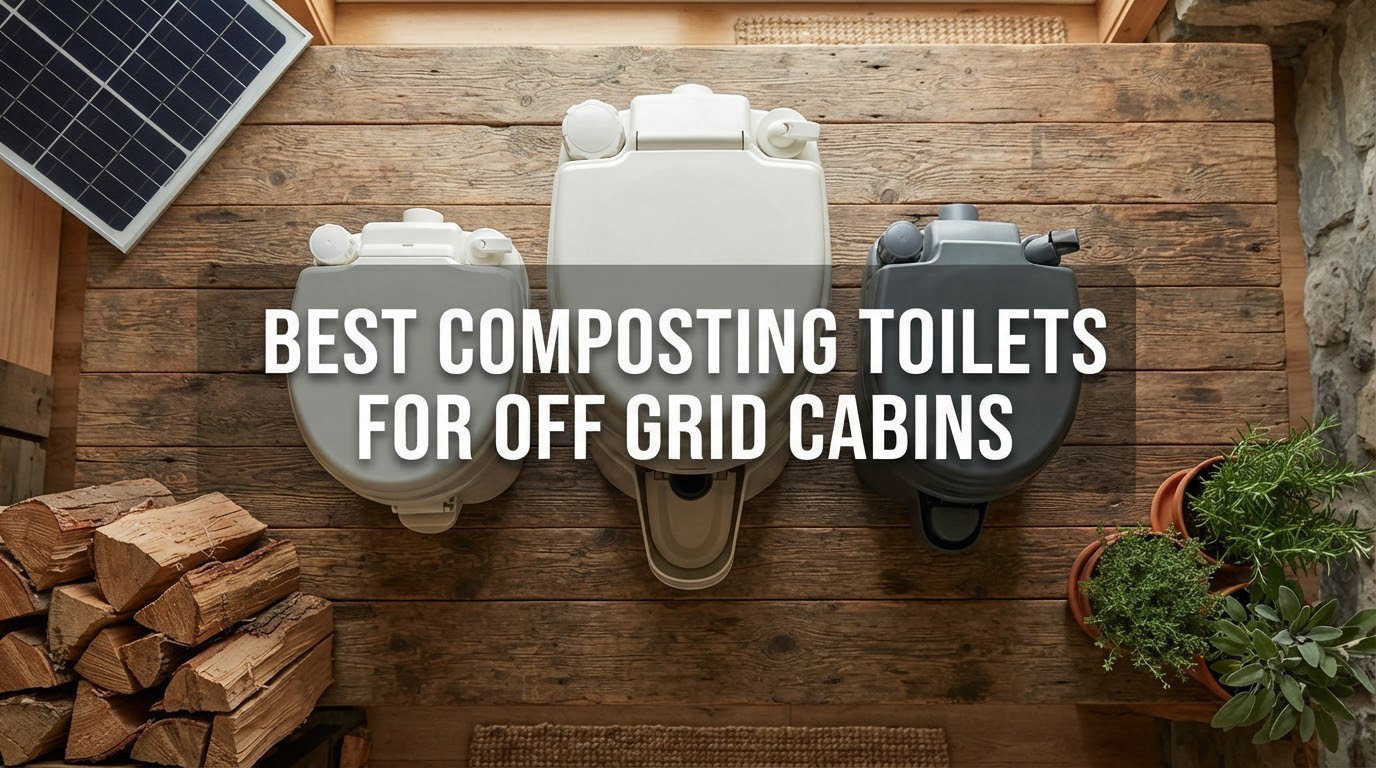
The best composting toilets for off-grid cabins are the units that work without a water supply, a sewer line and a septic permit, and still keep a small enclosed room from smelling like a barn. After spending weeks reading owner threads on Small Cabin Forum and airforums.com, comparing spec sheets, and putting the top contenders through their paces, Nature’s Head comes out on top for most cabins.
The reason is unglamorous but decisive. Nature’s Head sells in volume, so there are more than a thousand ratings describing exactly what it does in a cold cabin with two people in it, and the pattern in those reviews is remarkably consistent: no odor, an emptying cycle of roughly five minutes, and two full-time users going four to six weeks between services. That is a maintenance rhythm you can plan a winter around.
That said, no single unit wins every situation. If your cabin is a weekend retreat that sleeps two, a lightweight separating toilet like the BOXIO is a fraction of the commitment of a fixed install and weighs about eleven pounds. If you have no battery bank at all, skip anything with an electric agitator. And if you are hosting paying guests who have never aimed at a urine diverter in their lives, the Thinktank’s trap-door design removes the single most common complaint we found in the forum threads.
We built the list below around the question cabin owners actually argue about, which is not “which toilet is best” but “which toilet is best for how I use my cabin.” Every unit here is waterless. Ratings and review counts are copied straight from the current customer data, and we flag the winter and emptying trade-offs that most roundups skip. If you want a broader look at the category first, our guide to the best composting toilets overall covers units beyond what fits an off-grid build.
Table of Contents
Top 3 Picks for Off-Grid Cabins in 2026
These are the three units we would put in a cabin tomorrow, each for a different reason. Nature’s Head is the default answer, Separett is the strongest fixed installation, and BOXIO is the one that makes sense when the cabin is used part of the year.
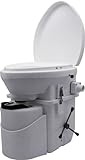
Nature’s Head Self-Contained
- Wall-mounted and fixed
- 28 lb
- Two users empty every 4-6 weeks
- 5 year warranty

Separett Villa Compost Toilet
- Urine separating
- Waterless with no additives
- 34 lb fixed install
- Extended empty intervals

BOXIO Portable Compost Toilet
- 11.4 lb and grabbable
- 8-10 uses per fill
- Hemp litter and plug for odor
- 612 ratings
The 10 Best Composting Toilets for Off-Grid Cabins at a Glance
Every unit below runs without water and without a sewer connection. The column that matters most in an off-grid cabin is not capacity or price but how the unit is powered and how heavy it is when you have to carry the waste out to the treeline in February.
| Product | Specifications | Action |
|---|---|---|
| Nature’s Head Self-Contained Composting Toilet |
|
Check Latest Price |
| Separett Villa Urine-Separating Compost Toilet |
|
Check Latest Price |
 OGO Origin Composting Toilet 12V Electric OGO Origin Composting Toilet 12V Electric |
|
Check Latest Price |
 OGO NOMAD Waterless Composting Toilet OGO NOMAD Waterless Composting Toilet |
|
Check Latest Price |
 TRELINO Evo S Portable Compost Toilet TRELINO Evo S Portable Compost Toilet |
|
Check Latest Price |
 TROBOLO WandaGO Urine-Diverting Toilet TROBOLO WandaGO Urine-Diverting Toilet |
|
Check Latest Price |
 Cuddy Lite Portable Compost Toilet Cuddy Lite Portable Compost Toilet |
|
Check Latest Price |
 Thinktank Composting Toilet Thinktank Composting Toilet |
|
Check Latest Price |
 TRELINO Evo M Portable Compost Toilet TRELINO Evo M Portable Compost Toilet |
|
Check Latest Price |
| BOXIO Portable Composting Toilet |
|
Check Latest Price |
1. Nature’s Head Self-Contained Composting Toilet – Best Overall for a Working Cabin
Nature’s Head Self Contained Composting Toilet with Close Quarters Spider Handle Design
28 lb wall-mounted unit
20.98 x 19.02 x 20.98 inch
Waterless and self-contained
5 year warranty
Pros
- Odor-free operation across 1112 ratings
- Two full-time users empty every 4-6 weeks
- Emptying cycle takes about five minutes
- Installs by a reasonably handy person without a plumber
- Five year warranty
Cons
- Fixed form factor that cannot be moved once installed
- Wall mount needs solid framing and a proper vent run
Nature’s Head is the unit we keep coming back to for a cabin that gets used hard. It weighs 28 pounds, mounts to a wall rather than sitting on the floor, and carries 1112 ratings averaging 4.5 stars, the largest review pool in this roundup. That matters more than any spec sheet, because the hard questions about composting toilets are boring ones that only years of use answer.
The core promise is a biodrum that dries and breaks down solids rather than storing them. Owners report two people living full time empty it every four to six weeks, and the emptying itself takes about five minutes. There is no mixer motor to jam and no chemicals to buy, which is why a lot of the forum chatter about agitator tangles simply does not apply here.
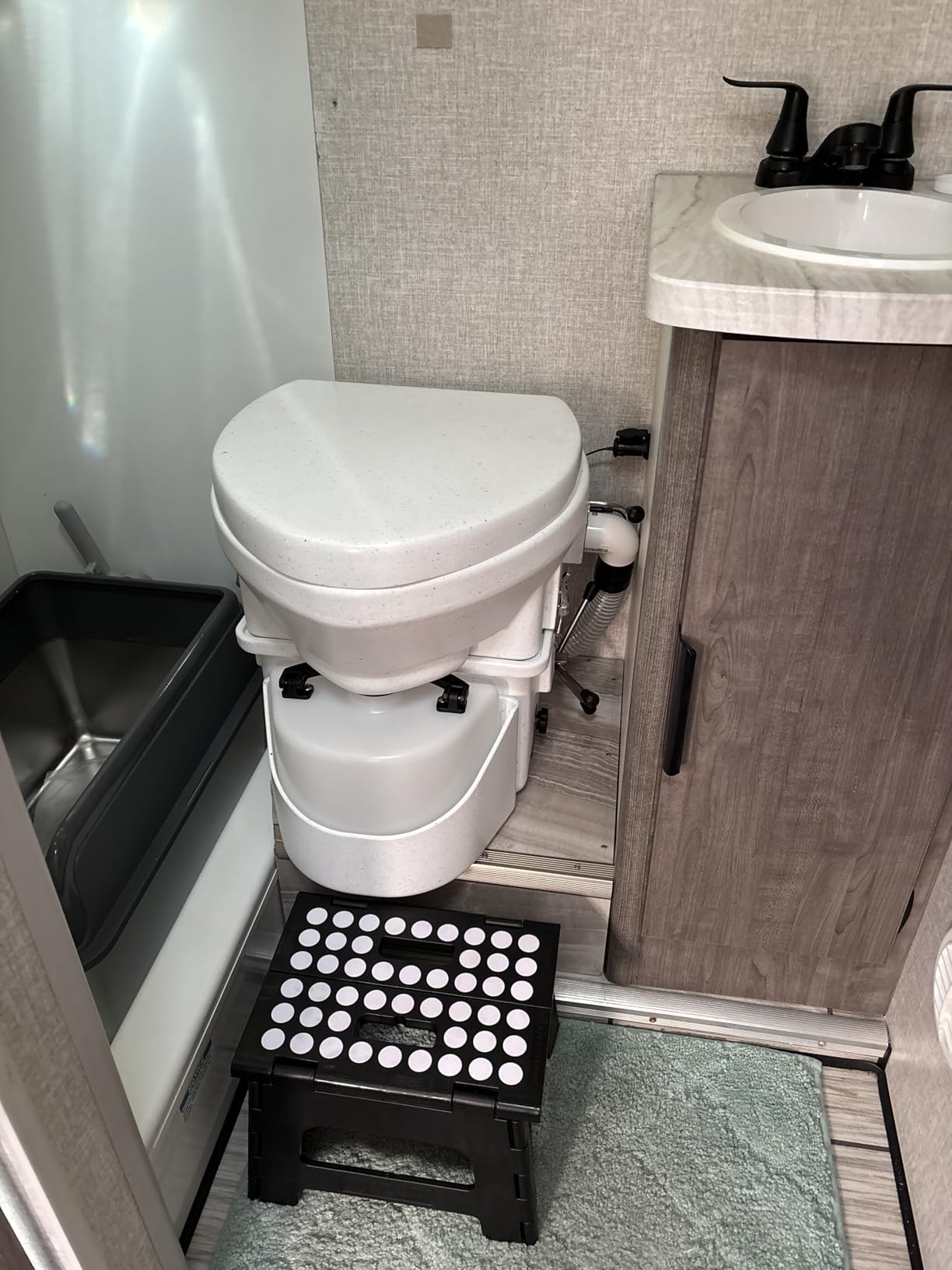
What stands out is how little there is to maintain between services. The spider handle is the only part you touch, and support is the other differentiator reviewers keep naming. That is the piece that matters when a unit is two hours down a logging road and something stops working.
The material is molded plastic rather than fiberglass or stainless, which keeps the installed weight at 28 pounds and means one person can lift the container out to empty it. That light weight is a bigger deal than it looks on paper, because emptying is the task you will do dozens of times a year.
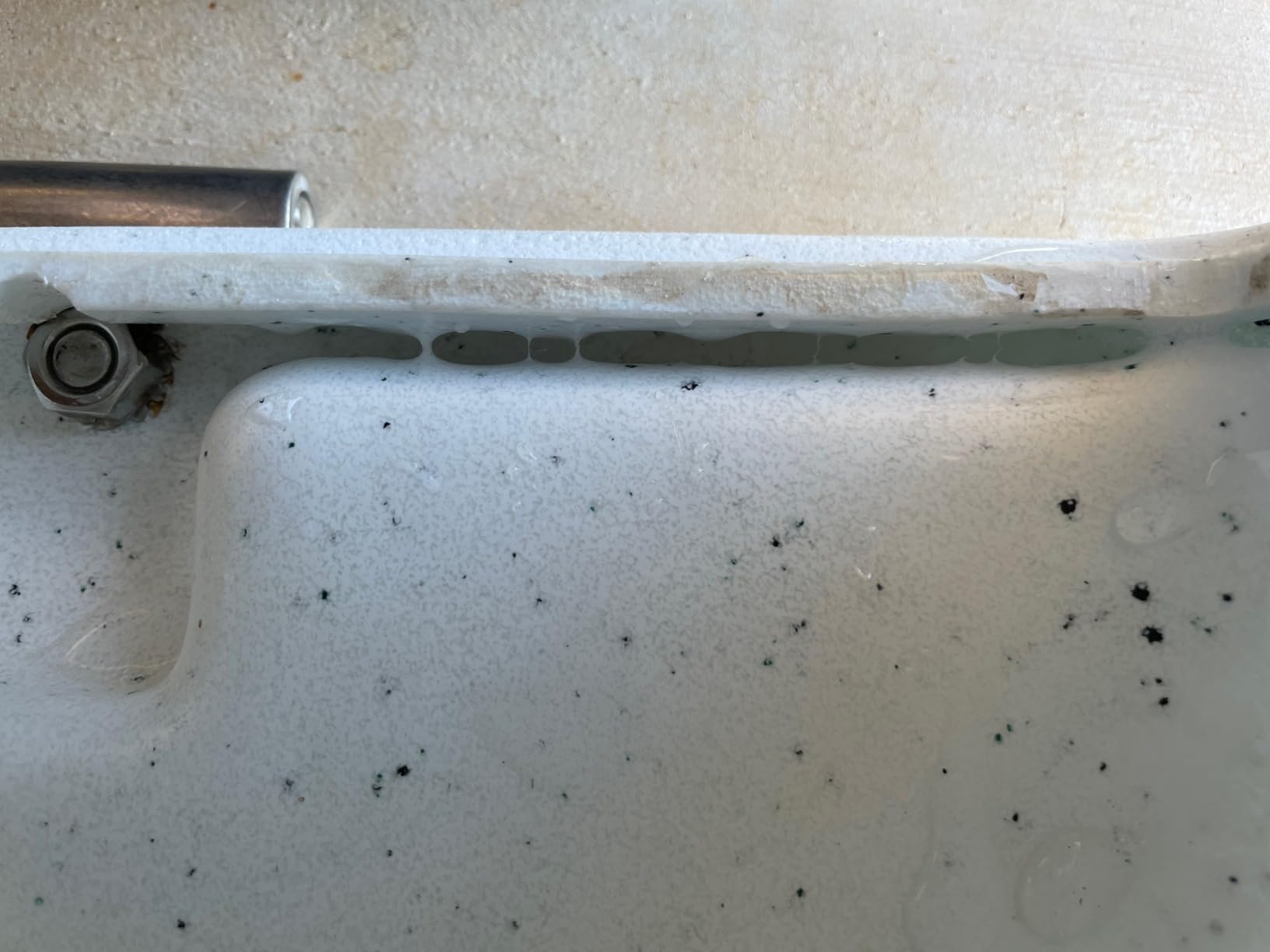
How it holds up with two people through a cold season
This is where Nature’s Head earns its spot at number one. The four-to-six-week empty interval assumes regular use, and the aerobic process slows when the drum gets cold, but owners living in unheated cabins report the unit working through a full winter without trouble. The one thing that genuinely needs attention is the vent line, and a frozen or crushed vent pipe will stall the airflow the whole system depends on.
For a two-person cabin occupied most weekends plus long summer stretches, the capacity math works out comfortably. You are carrying a sealed container to your compost pile every month or so, not every week, and the whole unit is light enough to handle alone.
Where it will frustrate you
It is a fixed installation with no wheels and no way to reposition it, so the wall framing and the vent penetration have to be right the first time. If you are renting, building a rental, or unsure whether the cabin layout will change, that permanence works against you. Wall-mounted also means you need a framed wall behind it, not the thin sheathing of a shed.
The second real constraint is odor control, which is a user behavior rather than a product flaw. If urine mixes into the solids because someone is not seated or not aimed, the smell that follows is the most common complaint in every forum thread we read. Show guests the seat height and the divider before they use it.
2. Separett Villa Urine-Separating Compost Toilet – Best Fixed Installation
Separett Villa Urine-Separating Compost Toilet
34 lb wall-mounted unit
26.5 x 18 x 21.3 inch
Urine separating and waterless
No additives required
Pros
- Genuinely waterless with no plumbing hookups
- Urine diverts without chemicals or mixing
- Extended periods between emptying
- Well suited to cabins and conversions
- Simple low-maintenance design
Cons
- Bulky and heavier than most portable models at 34 lb
- Requires permanent wall mounting and venting
The Separett Villa is the other self-contained unit worth serious consideration for a cabin. It averages 4.5 across 351 ratings, the same level as Nature’s Head on a smaller review pool, and about 77 percent of those ratings are five stars, which tells you the core experience is consistent even if the sample is thinner.
What separates it from the field is the urine separator. Liquids and solids go to different chambers without any additive, chemical, or mixing step, and the manufacturer markets it directly at full-time off-grid homes, cottages, and converted school buses. That is a very short distance from a two-bedroom cabin, and it is the closest any unit here comes to a permanently installed indoor toilet.
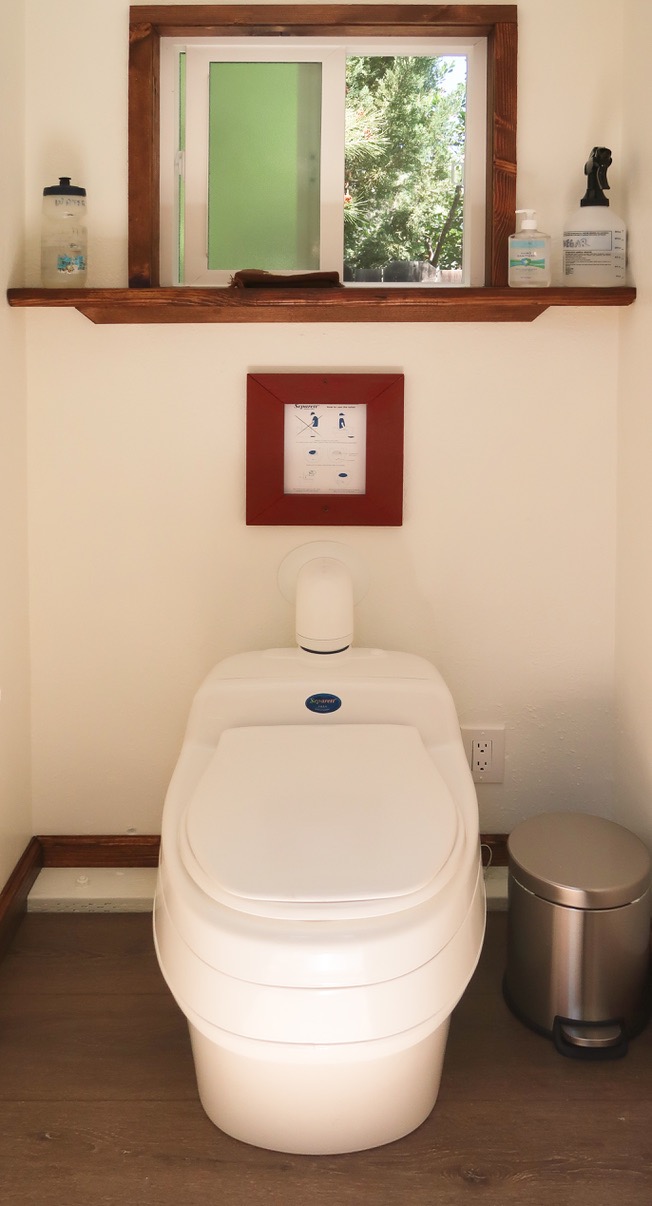
Owners consistently describe the same two things: essentially no odor, and easy cleaning. Nothing needs to be cranked, pumped, or chemically treated. If your cabin is a full-time residence rather than a seasonal retreat, that reliability across a year of continuous use is what you are actually buying.
Capacity is the other argument. The body is noticeably deeper than the Nature’s Head at 26.5 inches, and the chamber is sized to hold extended periods between services. Buyers converting school buses and cottages point to the same effect: capacity is what keeps the empty cycle out of a busy week when four people show up in July.
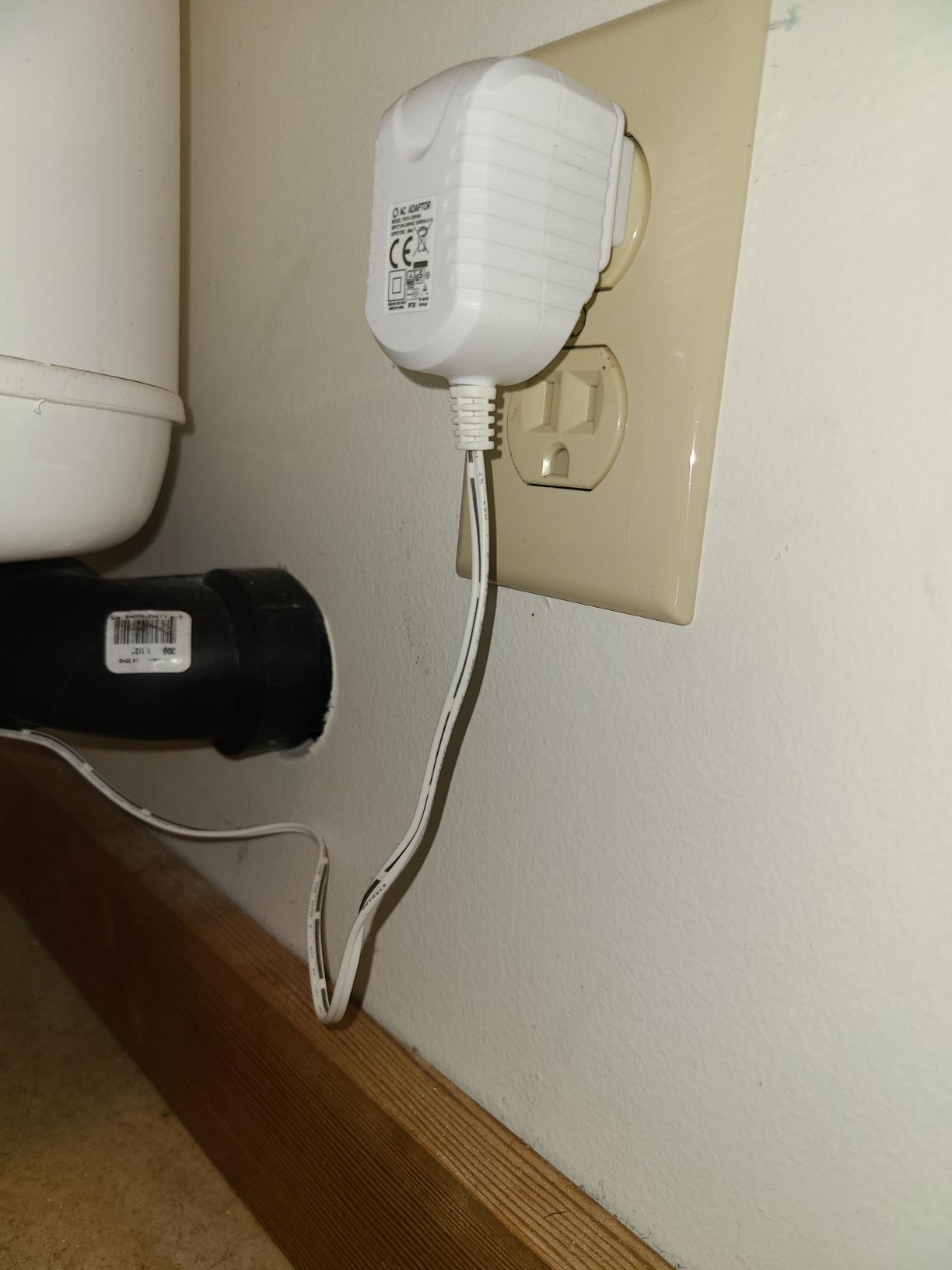
How it fits a full-time or short-term rental cabin
This is the unit to look at if the cabin is a home rather than a retreat. The waterless, additive-free design means there is no supply line to freeze and no chemical locker to keep above freezing, and the extended interval between emptyings reduces how often someone has to walk to the compost pile. In a rental where the toilet is used by strangers in bursts, the capacity margin is the difference between a good week and a bad one.
There is also nothing to store and nothing to replace: no bags, no chemicals, no liners. The only consumable is cover material, and the only part you service is the one you service yourself.
Where it will frustrate you
Thirty-four pounds and 26.5 inches deep is a lot of bathroom to give up, and the wall mount is permanent. If your cabin has a three-quarter bath, this is a large object in a small room. Emptying the separated chambers in a confined space is also more awkward than a single container, and that is a real problem when the toilet is inside and the compost pile is 200 feet away.
Guest usability is the other caution. Urine diversion is genuinely a skill, and first-time visitors get it wrong often enough that you will be explaining it. Everything in the roundup that separates urine shares this trait except the Thinktank.
3. OGO Origin Composting Toilet – Best for a Powered Van or Tiny Home
OGO Origin Composting Toilet for Van Life, Tiny Home & Boat – 12V Electric
28 lb floor-mounted unit
15 x 16 inch footprint
12V electric agitator
25-30 uses per solids bin
Pros
- One of the smallest footprints here at 15 x 16 inch
- Push-button 12V agitator removes manual cranking
- Urine diversion keeps solids dry
- Rear bin holds roughly 25-30 uses
- Serviceable parts
Cons
- Requires 12V power and wiring so it is not usable unpowered
- 16 percent one-star reviews point to odor or reliability issues
The OGO Origin is one of the smallest-footprint units on this list, and that is why it is here. A 15 by 16 inch floor plan means it fits a van corner, a boat locker head, or the tight half-bath of a tiny home where a 26-inch-deep wall unit simply will not go. It is 28 pounds, which is not light, but it is a floor unit you can lift rather than a fixture you must frame for.
The Origin adds what most cabin units leave out: a push-button 12V agitator. One tap and the motor mixes the solids, which removes the single most annoying chore of a manual design. The rear solids bin holds roughly 25 to 30 uses, and urine diverts to a 2.4 gallon bottle so the solids stay dry and never develop the sweet-rot smell of a black tank.
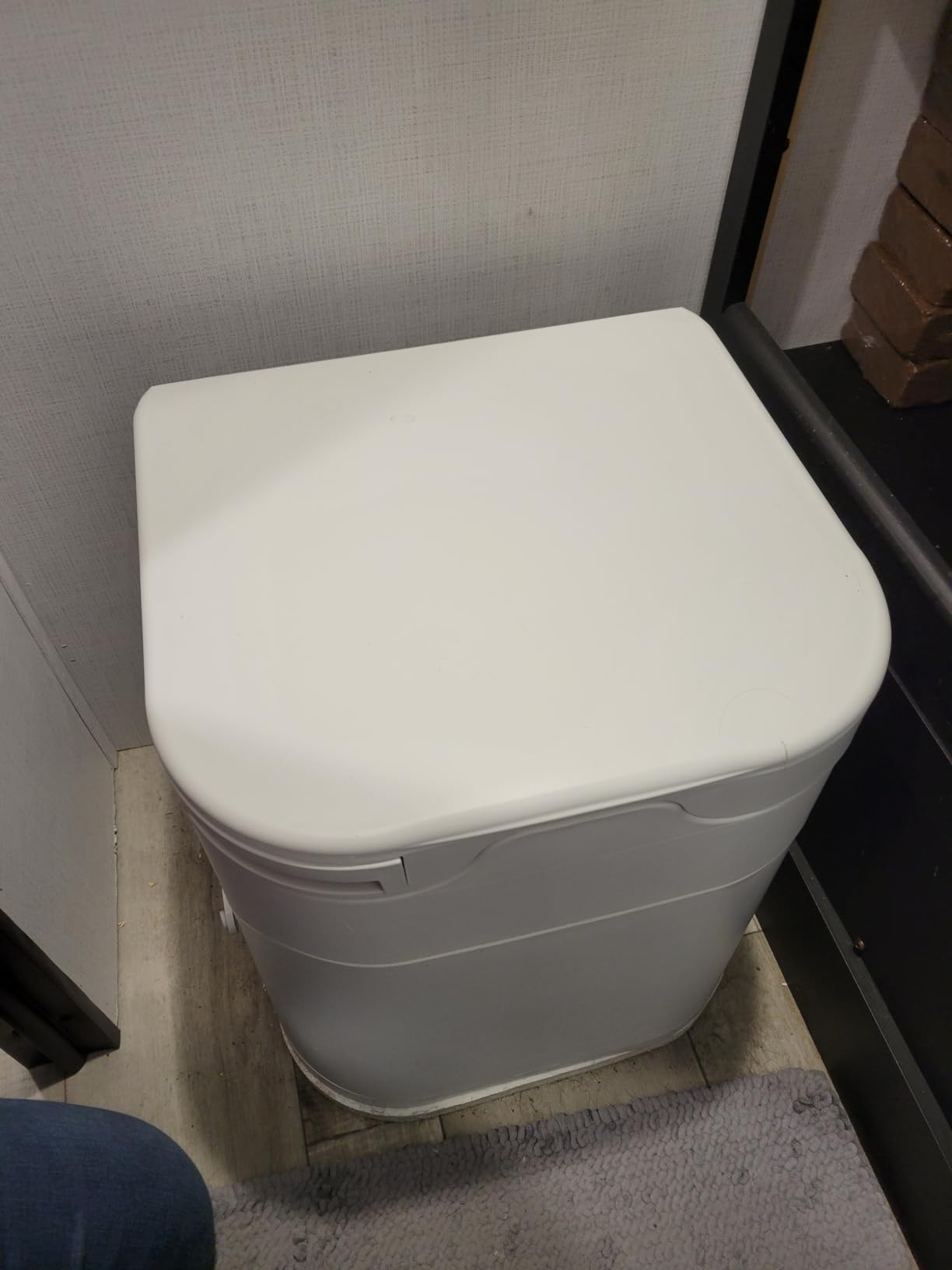
Owners also like the styling. This does not look like a port-a-potty, and in a cabin where the toilet sits inside the living space rather than in a shed, that is not a trivial detail. A quiet fan is part of the package, and the parts list is serviceable rather than sealed.
One caveat on the data before you commit. This unit carries the widest rating spread of anything in the roundup: 64 percent five-star but 16 percent one-star. The complaints cluster around odor and durability, and the odor complaints trace back to diversion misses in a small footprint, where the target is genuinely harder to hit.
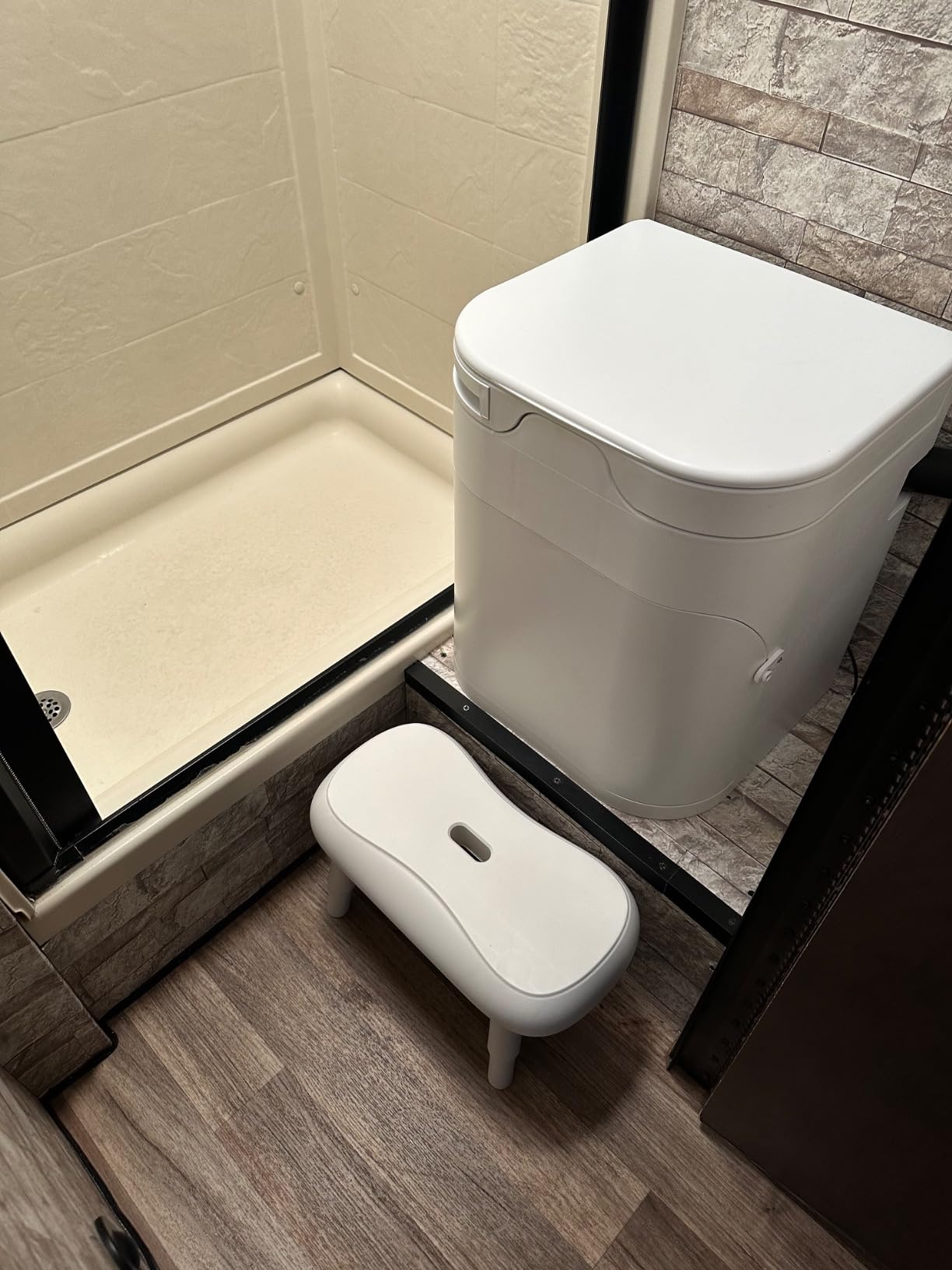
How it fits a cabin with a battery bank
If your cabin already has 12V power, the Origin removes a whole category of maintenance. The agitator handles itself, the fan is quiet, and the draw is low enough that a modest battery bank covers it. For a van conversion or a tiny home that doubles as a guest cabin, that combination of small footprint and motorized mixing is the deal.
Because the footprint is small and the seat is at floor level, expect to look at how you are seated. A taller person will want a riser or a separate step, which adds height you may not have in a van conversion.
Where it will frustrate you
It is a powered unit, full stop. If the cabin has no 12V supply, or if the battery goes flat during a January outage, the agitator stops and the drying process stalls. Odor follows quickly. In an unheated cabin with a solar-only array and long cloudy stretches, that dependency is the main reason not to choose it.
The separation target is also tighter than on a full-size unit. Because the urine path is short, an imperfect seat position sends liquid into the solids bin, and once that happens the odor problem is the user’s to fix, not the manufacturer’s.
4. OGO NOMAD Waterless Composting Toilet – Best for Short Trips and Hunting Cabins
OGO NOMAD Portable Composting Toilet – RV, Van, Camping & Boat, Waterless
12 lb free-standing unit
15.4 x 13 x 12.38 inch
No power and no plumbing
Urine diverting design
Pros
- No electricity and no plumbing required
- Light at 12 lb and easy to deploy anywhere
- Urine-diverting design prevents mixing and odor
- Works with standard 8 gallon bags
- Compostable bags and coco coir included
Cons
- Bag-based design is closer to a camp commode than a true composter
- 15.4 x 13 inch footprint suits short trips over full-time use
- 14 percent three-star and 8 percent two-star reviews point to capacity limits
The NOMAD is the honest answer to a question most roundups dodge: what if the cabin is only used for a few weekends a season? At 12 pounds, free-standing, with no power and no plumbing, you can carry it out to the porch, use it, and put it back. Two compostable bags and a bag of coco coir are included, and it works with widely available 8 gallon bags rather than a proprietary liner.
Be clear-eyed about what it is. This is a urine-diverting bag system, not an aerobic biodrum. Nothing breaks down inside the box; you separate, bag, and dispose. It averages 4.0 across 127 ratings, with 51 percent five-star and a noticeable mid-tier spread that tracks directly to how long you expect between changes.
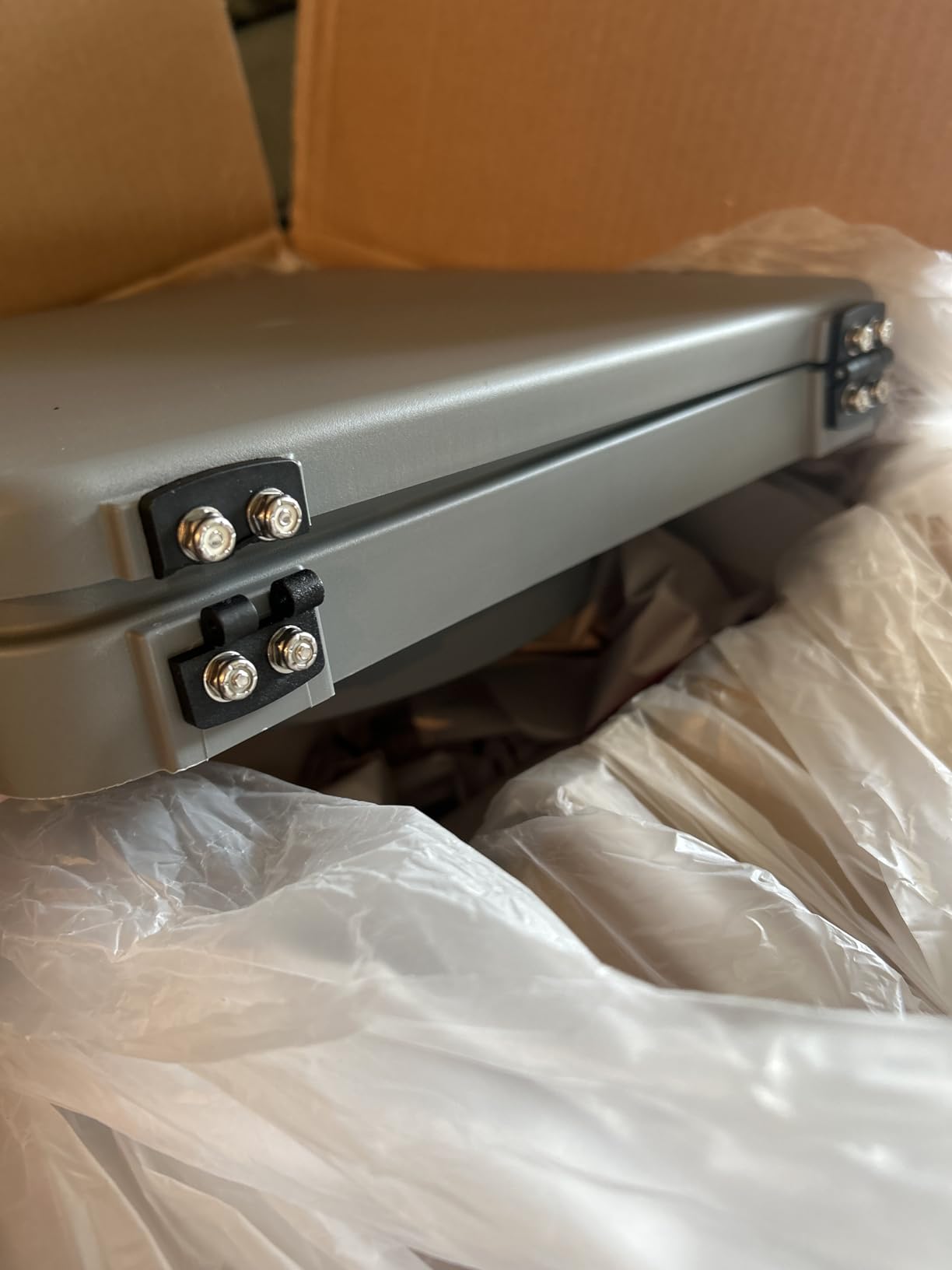
For a hunting cabin, a backcountry property you visit four times a year, or a mudroom add-on where a permanent fixture is overkill, that trade is an easy one to accept. Nothing to install, nothing to winterize, nothing to vent. It is a genuinely appealing answer to the “worst part is dumping” complaint we heard repeatedly, because there is nothing heavy to carry out.
The coco coir supplied with it does real work as a cover material. Sprinkling a layer after each use keeps solids dry, and dry solids are the whole game when there is no biological process doing the drying for you.
How it fits a low-use cabin
Match it to occupancy, not to aspiration. Two or three days at a time is what the dimensions and the review spread support. Guests who stay a week will fill the bag, and the mid-tier ratings are largely people who expected a composter and got a well-made camp commode instead.
It also suits a second bathroom situation. A permanent unit in the main room plus a NOMAD for overflow weekends gives you a fallback when four people show up and the compost pile is 300 feet away in the snow.
Where it will frustrate you
It will not compost anything, and if your reason for going off-grid is closing a nutrient loop, this does not do that. You are hauling sealed bags to a disposal point, and in many rural areas that point is a specific facility with specific rules rather than your own garden.
There is also no odor control hardware at all. No fan, no vent, no carbon filter. Performance depends entirely on you aiming correctly and covering after every use, and a miss in a small enclosed porch will be obvious within hours.
5. TRELINO Evo S Portable Compost Toilet – Best for Overnight and Van Use
TRELINO Composting Toilet Evo S White, Portable Toilet for Camping & Outdoor, Odorless, 1.2 gal & 1.6 gal Capacity, 13 x 15.4 x 11.7 inches
3.9 kg floor-mounted unit
15.4 x 13 x 11.7 inch
1.2 gal urine and 1.6 gal solids
2 year warranty
Pros
- Separation and drying function prevents odor formation
- No water and no chemicals
- Two separately emptyable containers
- Rated to support users up to 330 lb
- Made in Germany from recyclable ABS
Cons
- 12 percent one-star and 9 percent two-star reviews show a dissatisfied share
- Capacity limited to roughly 9-11 number ones and 6-8 number twos per fill
The TRELINO Evo S is a well-made German separating toilet that slots between the NOMAD and the fixed units. It has two separately emptyable containers, 1.2 gallons for urine and 1.6 for solids, and a rated capacity of roughly nine to eleven number ones or six to eight number twos before it needs a service. That is a weekend-plus range, not a season.
It averages 4.0 across 109 ratings, and the distribution explains why it sits mid-pack. Sixty-five percent are five-star and praise the German manufacture, the stability, and how easy it is to wipe down, but 12 percent are one-star, a meaningful share. Those cluster around odor management and short intervals between empties.
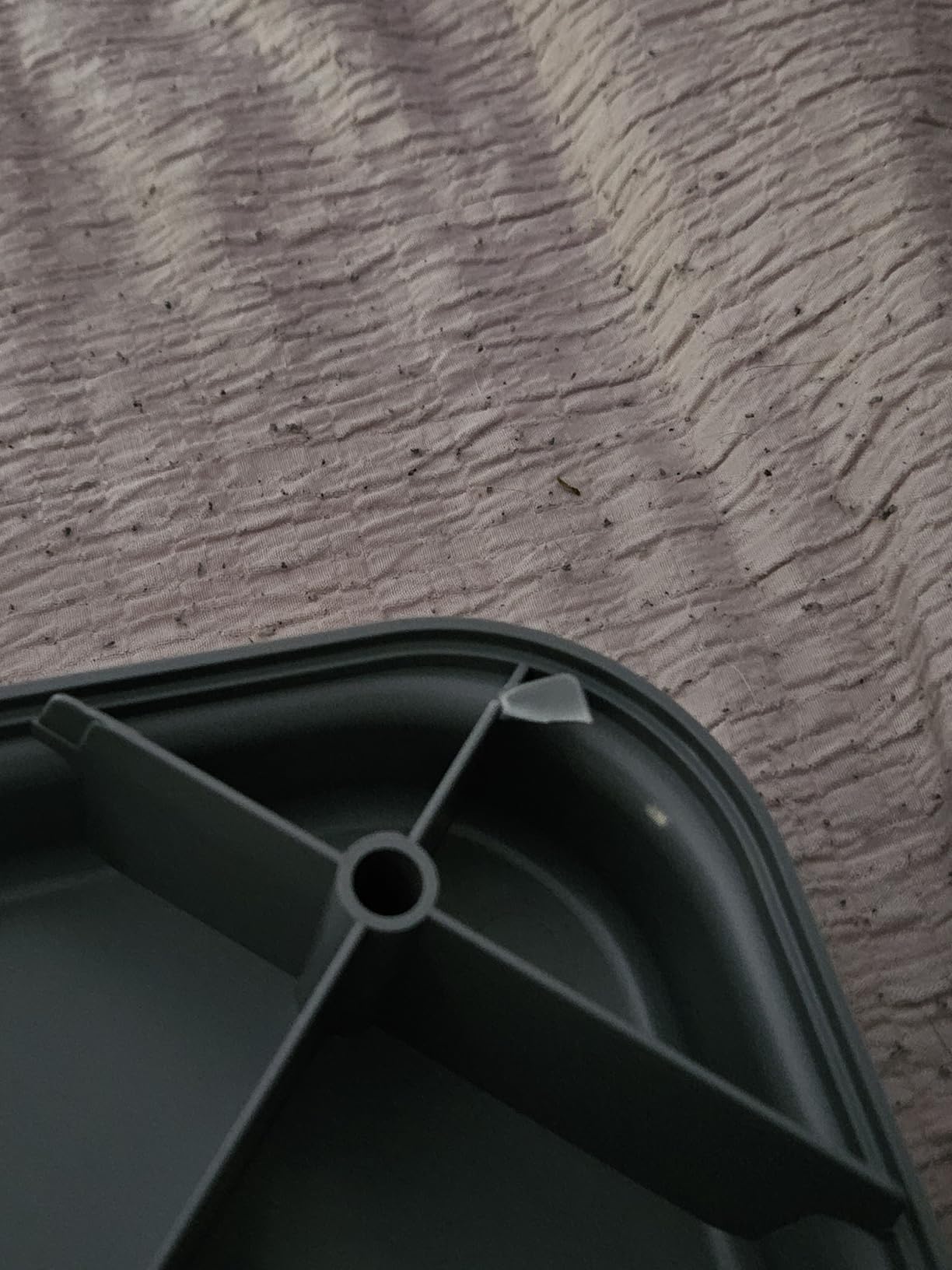
The separating-then-drying function is the honest core of the design. Keep the two streams apart, keep the solids dry, and odor does not form. That is a simple rule that a lot of users follow correctly and a lot of users follow partially, which is exactly what the review spread reflects.
Two details make it cabin-friendly beyond the marketing. It supports users up to 330 pounds, which is not a given in portable toilets, and it comes with a two-year manufacturer warranty, which is longer than most in this price bracket.
How it fits a two-night weekend cabin
Two people, two nights, one fill. That is the clean version of the math, and for a weekend cabin used at that frequency it works without any ceremony. The containers are removable and the whole unit is light enough to carry to a bucket for disposal rather than to a truck bed.
It also does not demand a vent pipe or a power run, so if the cabin toilet sits in a small addition or a screened porch, you have a working indoor fixture in an afternoon with a screwdriver.
Where it will frustrate you
Capacity is the limit and it is a real one. A long weekend with four guests means you are servicing the solids container before the weekend is over, and the emptying process involves two separate containers rather than one, which means two trips.
The one-star reviews are worth reading before you buy rather than after. They point at odor and short capacity together, and in an unheated cabin where nobody is around to add cover material after each use, those two failure modes arrive together.
6. TROBOLO WandaGO Composting Toilet – Best for Taller Users and Adjustable Seating
TROBOLO WandaGO Composting Toilet, Portable Outdoor Camping Toilet, Urine Diverting Dry Toilet With Height Adjustment
10 lb floor-mounted unit
12.3 x 15 x 13.4 inch
Adjustable seat at 12 or 17.2 inch
Urine diverting SafeShell system
Pros
- Adjustable seat height solves the low-seat problem
- Compact and light at 10.4 lb
- SafeShell separation with a firmly closing lid
- Built-in urine level indicator
- Replaces chemical toilets on boats and off-grid setups
Cons
- Odor suppression depends on adding cedar chips or similar litter
- Square urine receptacle is awkward to empty
- Seat comfort is rated below comparable portable designs
- One owner describes the build as flimsy
The WandaGO solves a specific problem better than anything else here. It averages 4.3 across 67 ratings, with 66 percent five-star, and the adjustable seat is the most praised feature across them. The seat sets to either 12 inches or 17.2 inches, and portable toilets are notoriously uncomfortable for anyone over about five foot ten, so this one gives you a real option instead of a workaround.
It is also one of the lightest separating units here at 10.4 pounds, with a 12.3 inch height and a footprint that fits a campervan storage compartment. The SafeShell system separates urine and solids cleanly, the lid closes firmly enough to travel with, and there is a built-in urine level indicator so you are not lifting the canister blind to check it.
How it fits a cabin with mixed-height users
Set it to 17.2 inches and taller users are comfortable; drop it to 12 inches for a smaller washroom or for anyone who needs the lower position. Rated capacity runs 10 to 20 uses for urination and 8 to 12 for defecation, and it supports users up to about 330 pounds.
Because it needs no power, no plumbing, and no vent run, it is also the easiest unit here to move between a main cabin and a hunting shelter when the season changes. A unit you can carry in one hand is a unit you will actually maintain on schedule.
Where it will frustrate you
The odor claims need tempering. At least one detailed negative review documents that odor control depends heavily on adding absorbent litter such as cedar chips, and that without that step the marketing does not hold. The square urine receptacle is also described as awkward to empty and easy to miss the bag when you are emptying it half full in the dark.
Build quality is the second concern. One owner calls it flimsy relative to what it costs, noting that the lid pulls the seat up when opened. Seat comfort is also rated below comparable portable designs, so if the adjustable height is not enough on its own, this is not the answer.
7. Cuddy Lite Portable Compost Toilet – Best for a Full Week of Two-Person Use
Cuddy Lite Portable Compost Toilet – for Camping, RVs, Campervans, Boats & Tiny Houses – LED Full Indicator, Liquid-Diverting, Separating, Solids Cover, Easy Clean – Portable & Compact
About 27 lb portable or floor-mounted
17 x 15.2 x 16.5 inch
Two-plate liquid-diverting cover
LED full indicator
Pros
- Two-plate drop-zone cover separates liquids and solids cleanly
- Removable bag-linable solids bin
- Built-in LED full indicator prevents overflow
- No plumbing and no chemicals needed
- Owners report a full week of two-person use per fill
Cons
- No side handles so it is awkward to move
- 9V battery and DC plug not included
- Bulky at 27 lb despite the portable label
- Vented use recommended to avoid condensation
The Cuddy Lite is the unit to look at if a full week of two people on one solids fill is your requirement. That is exactly what owners report, and it is a meaningfully different promise from the weekend-capacity portable toilets. It works by flush-fit or freestanding, so it suits an RV, a boat, or an off-grid tiny home where the toilet lives in a cabinet.
Its signature feature is the two-plate drop-zone cover. The plates separate liquids from solids without splashing, exposure, or the aiming gymnastics most separating units require, and a carbon filter is included for odor control. The solids bin removes for bag-lining, which makes disposal about as simple as disposal gets.
The LED full indicator is under-appreciated. Liquids in an opaque canister are easy to overfill, and an overflow on the liquid side is an unpleasant failure in a cabin with no running water nearby. A 9V battery drives the indicator, and a standard 12V cable is included for a vented installation, though the battery is not.
It averages 4.3 across 22 ratings, with 59 percent five-star and repeat owners describing it as their third Cuddy. That is a real track record for a small brand, but it is thin enough that you should read the recent reviews rather than rely on the average.
How it fits a week-long cabin stay
Two people, seven days, one bin is the design target, and keeping liquids out of the solids means they stay dry for that whole week. No power is required for the composting function itself, so a battery failure does not stop you using it. That is a meaningful reliability advantage over the OGO Origin in a winter cabin.
The catch is weight. At about 27 pounds this is a bulky unit despite the portable label, and with no side handles it is genuinely awkward to lift. If the disposal point is a long walk from the cabin door, plan on a two-person carry.
Where it will frustrate you
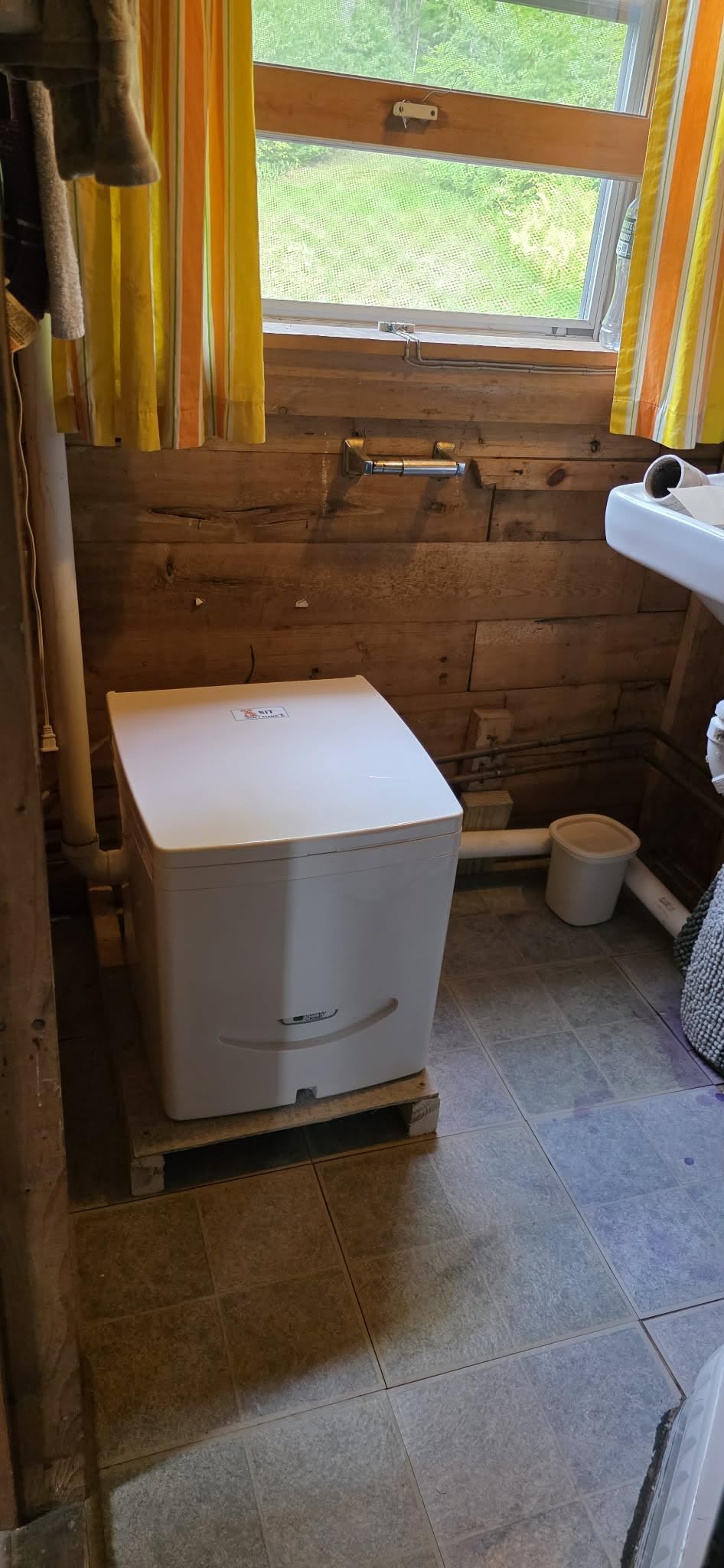
Missing accessories are the recurring theme. The 9V battery for the LED and the DC plug are not in the box, so the two features people like most are the two you may have to source separately before the unit is fully functional.
Vented use is recommended, and in a closed shed condensation can form on the seat and inside the lid. Condensation plus solids is a combination that erodes the odor performance the carbon filter is supposed to deliver.
8. Thinktank Composting Toilet – Best When Guests Are the Problem
Thinktank Composting Toilet, White
30 lb floor-mounted unit
Vent pipes and adapters included
Runs on 110V or 12V
Airtight bagged containment
Pros
- Patented trap door hides waste from users
- Separate air intake and exhaust pipes
- Designed so users never need to aim
- Airtight bagged containment is easy to clean
- Powers from a wall outlet battery or solar
Cons
- Highest cost figure of anything in the roundup
- Only 18 ratings so the evidence base is thin
The Thinktank exists to solve a problem no other unit in this roundup takes seriously: guests who do not know how to use a urine-diverting toilet. It is designed so that a seated user, or a standing man, never has to aim. A patented trap door drops waste out of sight, so there is no bowl to look into and nothing to aim at.
That single design decision answers the complaint we saw most often in owner threads, where the smell that shows up is urine smell caused by liquids landing in the solids chamber. If the diversion happens automatically, the problem does not happen. Owners also praise the separate air intake and exhaust pipes, which keep conditioned air inside the room rather than exhausting it, and the airtight bagged containment that wipes clean.
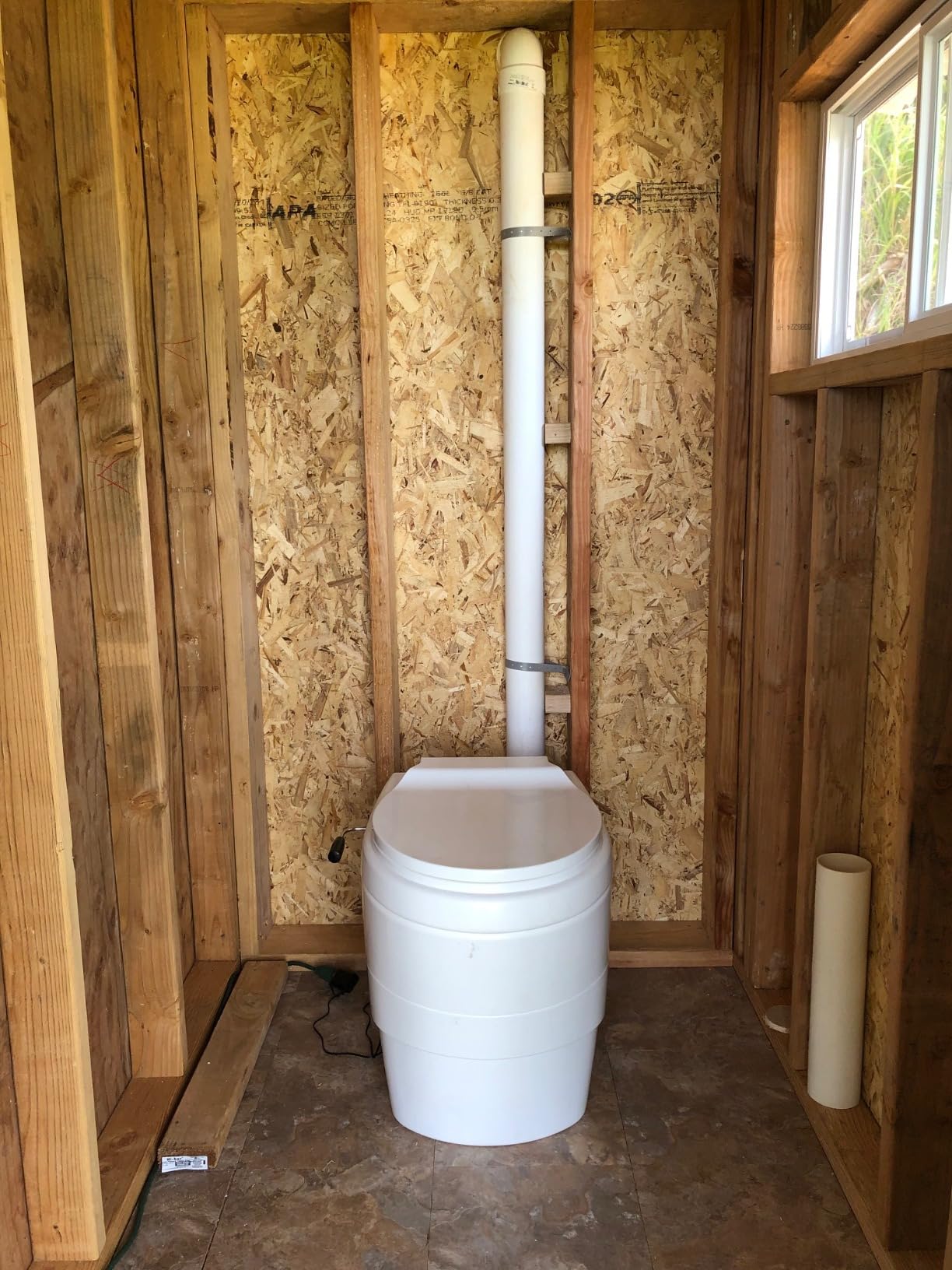
It is a substantial unit at 30 pounds, and the box is unusually complete: two 16 inch vent pipes, a wall adapter for a 110 volt outlet, 12 volt wires for battery or solar, a solid waste container, waste bags, and an installation manual. For a cabin where you want to run it on solar, having the 12V wiring included removes a real step.
Its 82 percent five-star share comes from just 18 ratings, so the sample is thin and that share is promising rather than proven.
How it fits a cabin that doubles as a rental
Short-term rental is where this design pays. Anyone can use it without instruction, which removes the single most common complaint guests file. The exhaust arrangement also matters in a small winter cabin, because exhausting the air a vent fan pulls from the room is a real heat loss in January.
Because it runs on 110V or 12V, it can be powered by the same solar array that runs the rest of the cabin, and the included wiring means you are not hunting for the right connector.
Where it will frustrate you
It is the top-of-the-line cost in the roundup, and for a niche design rather than the volume choice that most of the category settled on. You are paying for a specific solution to the aiming problem, and if your cabin is used by you and one other person, that solution is overkill.
It is also a fixed floor installation with vent piping, not a portable unit, and the review base is thin enough that long-term durability is less well documented than it is for Nature’s Head. We would want a few more years of owner data before calling it the long-term answer for a primary residence.
9. TRELINO Evo M Portable Compost Toilet – Best Balance of Size and Capacity
TRELINO Composting Toilet Evo M Gray, Portable Toilet for Camping & Outdoor, Odorless, 1.3 gal & 2.1 gal Capacity, 13 x 15.4 x 14.2 inches
4.3 kg floor-mounted unit
15.35 x 15.35 x 14.17 inch
2.1 gal solids and 1.3 gal urine
2 year warranty
Pros
- Urine and solids separation works reliably with no leaking reported
- Lightweight plastic build is easy to carry
- Larger capacity than the Evo S
- Coir sprinkling inside the bag removes odor for owners who follow the method
- Supports users up to 330 lb
Cons
- Seat and lid are one connected unit so emptying is awkward in tight spaces
- Thin sharp edges where the seat meets the box
- Urine compartment does not always dump cleanly and can spill
- Not airtight so odor appears if not cleaned often
The Evo M is the bigger sibling of the Evo S, and the upgrade that matters is capacity. Solids capacity goes to 8 liters and urine to 5 liters, with a rated range of nine to eleven number ones or six to ten number twos per fill. It supports users up to 330 pounds and carries a two-year manufacturer warranty.
It averages 4.2 across 29 ratings, one of the thinnest evidence bases here, and the distribution is wide for a Trelino unit: 54 percent five-star, 20 percent three-star, and 3 percent one-star. The three-star cluster is the interesting part. Reviewers say the separation works and it does not leak, but the design fights them somewhere else.
How it fits a two-person weekend cabin
The bigger chamber means one less service trip on a long weekend, and the light plastic build makes it easy to move between rooms or out to a porch when the weather is good enough. Coir sprinkling inside the bag is the odor method owners credit, and it is a five-second habit that works.
Like the Evo S, it needs no power, no plumbing, and no vent, which makes it a good fit for a cabin addition or a screened room where running a vent pipe is not practical.
Where it will frustrate you
The seat and lid are a single connected unit, so removing the containers means working inside an open box in whatever space you have. In a small washroom that is genuinely awkward, and several reviewers single it out. The urine compartment also does not always dump cleanly, and one long-term daily user reports spilling and weak hinges after a year.
It is not airtight, so odor is a function of cleaning frequency. For a weekend cabin that is fine. For a cabin someone occupies for weeks, it is the reason we would choose the Nature’s Head instead.
10. BOXIO Portable Composting Toilet – Best Value for a Seasonal Cabin
BOXIO Toilet MAX+ Complete Set, Mobile Separator Toilet, Compact Camping Toilet 40 x 30 x 28 cm, Includes Toilet UP Seat, Plug, 3 x Bags, 2 x Hemp Litter, 6 Clips Black
11.4 lb floor-mounted unit
14.7 x 11.8 x 11 inch
1.5 gal separation container
2 year warranty
Pros
- Handles 8-10 uses before the solids bag needs changing
- German engineering and sturdy enough to bear full body weight
- Hemp litter plus the plug produces almost no odor
- Fits a van boat car trunk or gazebo
- Under-seat storage riser adds height
Cons
- Plastic clips joining the toilet to the riser pop off easily
- Base sits low for taller users without the riser
- Urine canister has no grip indent and is a two-handed job
- Box slides on smooth van floors unless sealed
The BOXIO is one of the two best-proven products here by volume of evidence, with 612 ratings averaging 4.2 and 64 percent five-star. For a seasonal cabin used on weekends, that combination of build quality, capacity and a low entry point is very hard to argue with. Owners also describe it as a clear upgrade from a 5-gallon bucket system, the most common starting point for new cabin owners.
It handles eight to ten uses before the solids bag needs changing. A 1.5 gallon separation container with a lid and a leak-proof urine canister sit under the seat, and the included hemp litter plus the plug do the odor work. Two hemp fillers, three bio bags, and six clips are in the box, and the two-year warranty is standard for a German-made product at this tier.
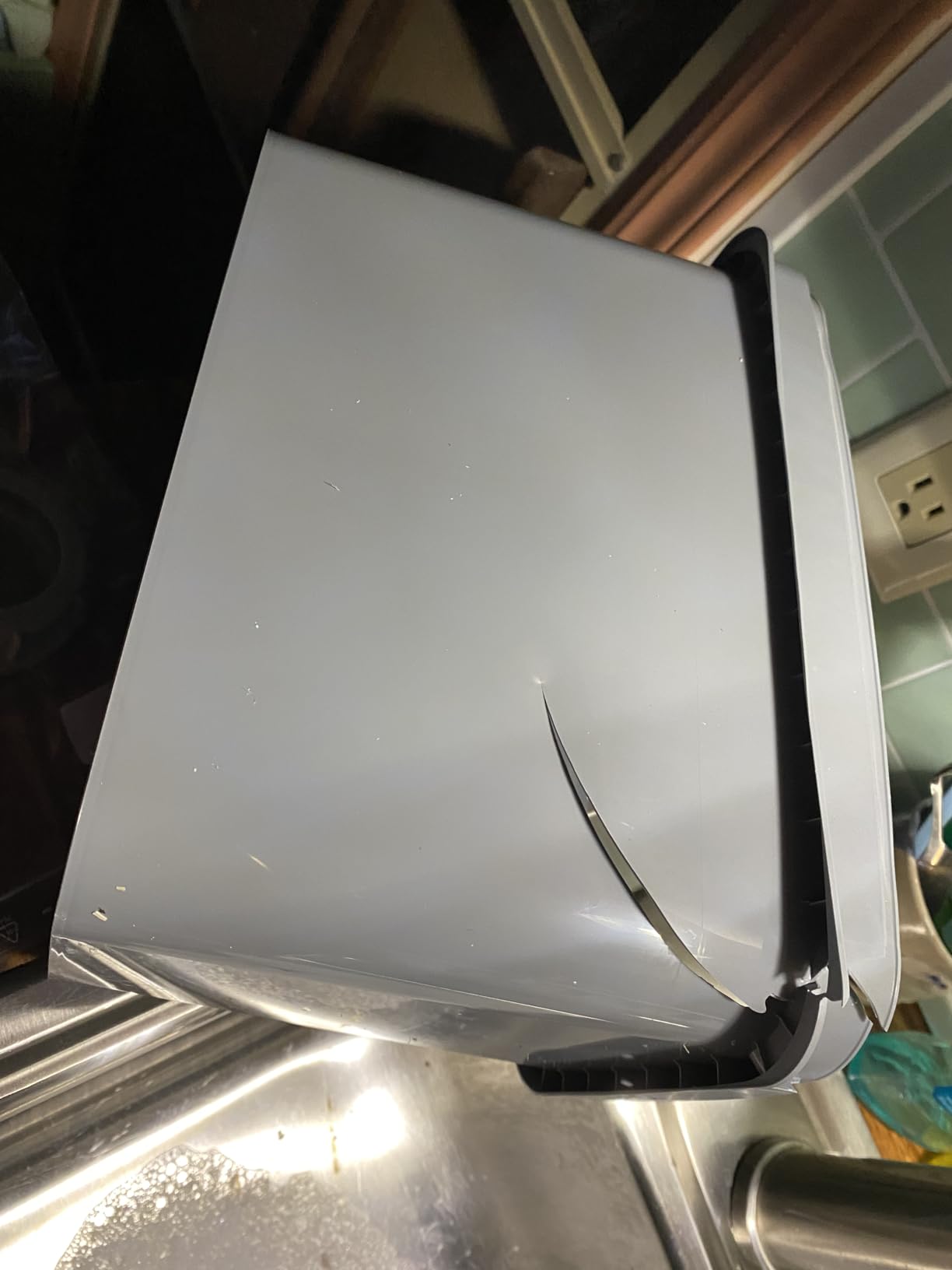
At 14.7 by 11.8 by 11 inches and 11.4 pounds, it is small and light enough to move between a cabin, a boat, and a truck bed without thinking about it. The under-seat riser adds height and doubles as storage for spare bags and litter, which matters more in practice than it sounds.
It needs no power, no plumbing, and no vent pipe, and the disposal path is entirely up to you. Bag the solids for trash and pour the liquid where local rules allow, independent of any dump station, which is exactly what most weekend cabin owners want.
How it fits a weekend and vacation cabin
Eight to ten uses covers a couple of people for a long weekend with a little margin, which makes this the natural pick for a cabin that sits empty for weeks at a time. Nothing needs protecting from freezing, nothing needs a battery, and nothing needs to be drained before you close up the cabin for the winter.
That last point is the underrated advantage. A self-contained composting toilet with a fan and a drum has a season of its own. A bag-based unit has a season of nothing at all, and for a property you open in May and close in October, that simplicity is worth more than capacity.
Where it will frustrate you
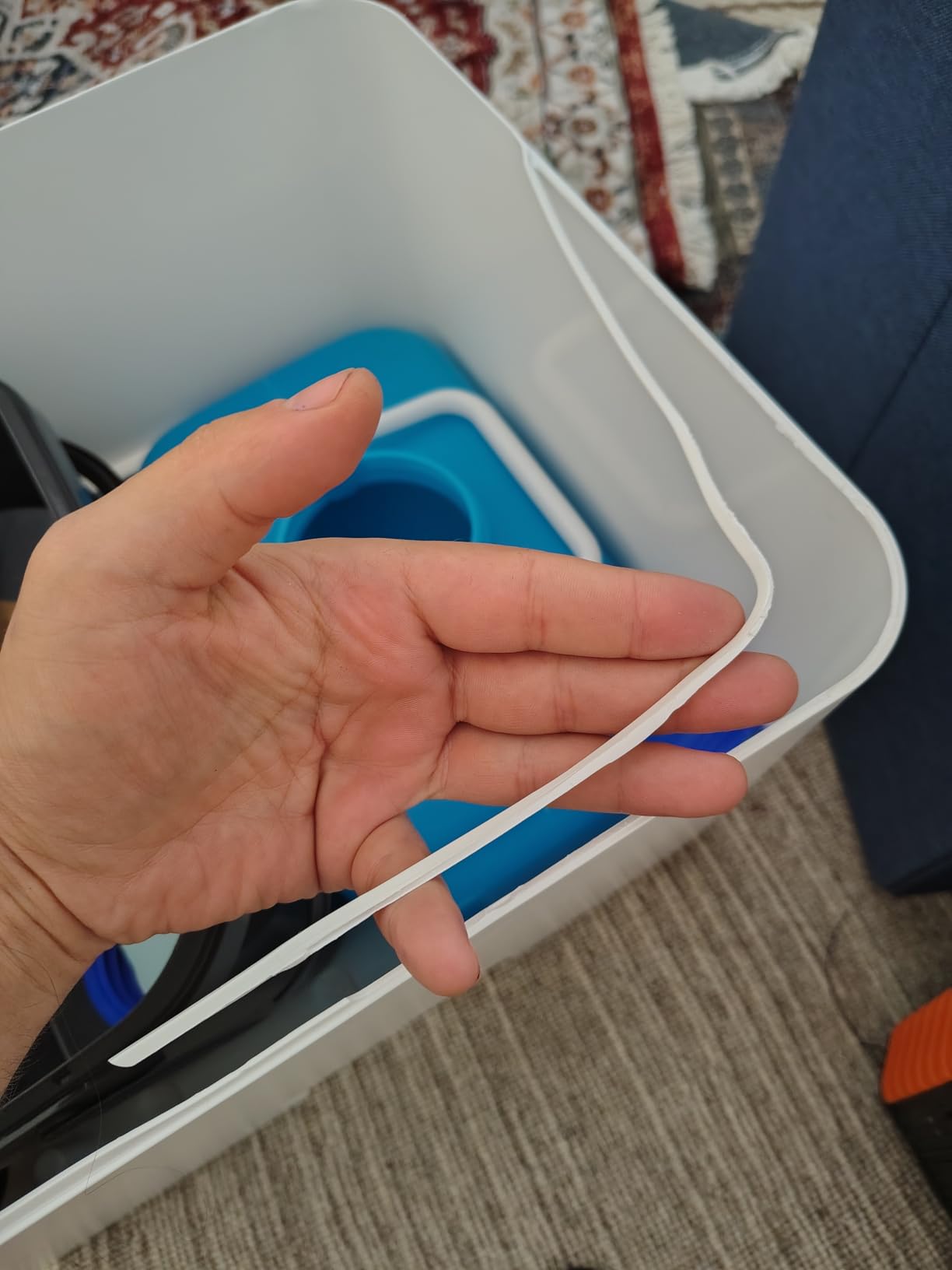
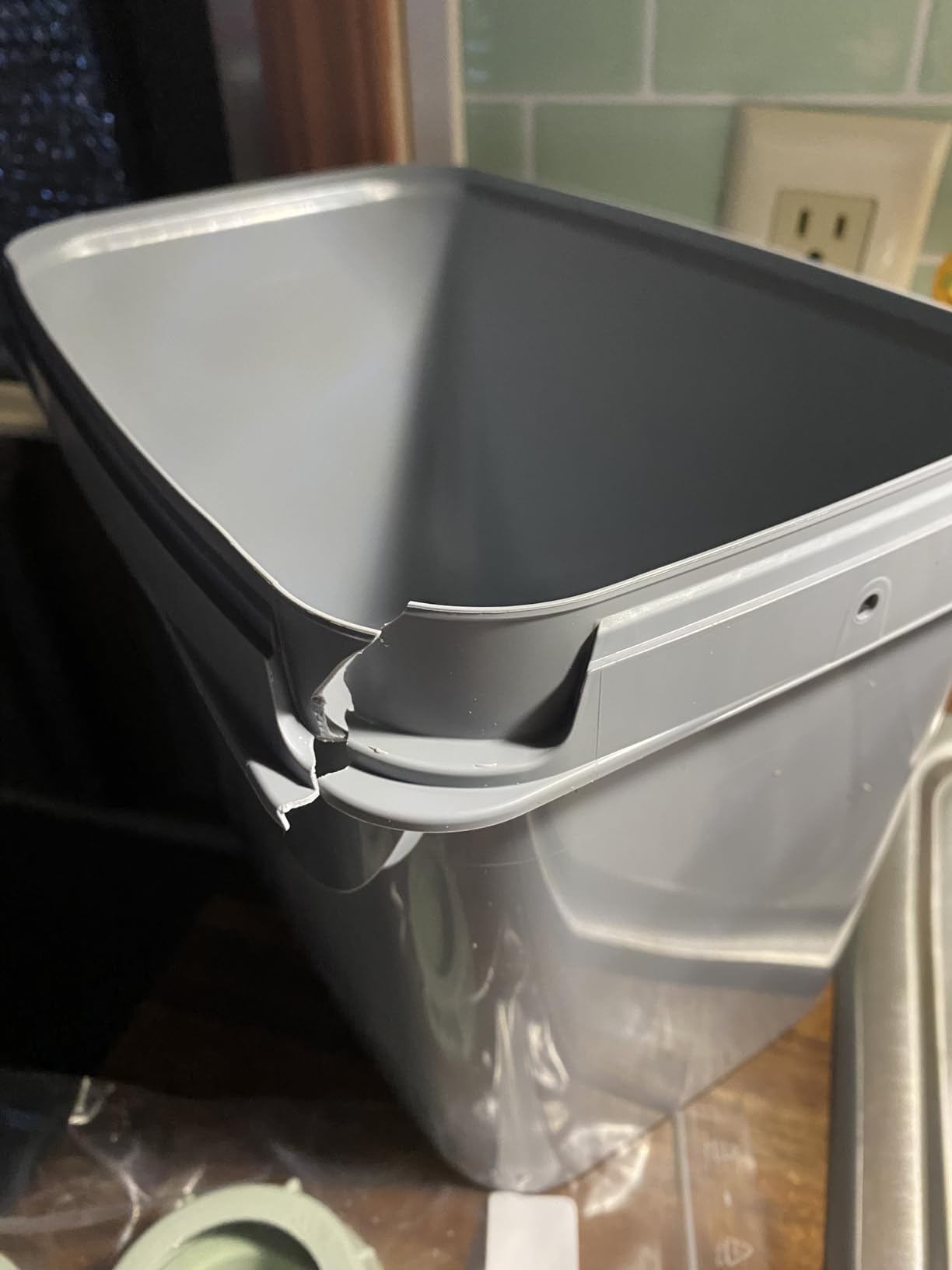
The plastic clips that join the toilet to the storage riser pop off easily, and that is the single most common complaint in the reviews, appearing across multiple detailed write-ups. It is a small fix with tape or a spare clip, but it is the flaw every owner finds first.
Seat height is the second issue. Without the riser the base is low for taller users, and many owners add a soft vinyl pad or a different riser to compensate. The urine canister also has a rounded edge with no grip indent, making it a two-handed emptying job, and the box can slide on a smooth floor unless it is sealed underneath.
How to Choose a Composting Toilet for an Off-Grid Cabin
The right unit follows from how the cabin is used, not from a spec sheet. Work through these in order and the choice usually makes itself.
Self-contained or split system: pick self-contained for a single cabin
A self-contained unit holds the waste, does the composting, and vents through a pipe. Everything happens in one box, which means one thing to install, one thing to empty, and one thing to learn. For a cabin, this is almost always the right call.
A split or central system routes waste by pipe to a shared biodrum, usually on a larger property with multiple structures. It costs more, needs a drain line for liquids, and only makes sense when you have several cabins or a household rather than a single retreat. If you want the broader category explained before you commit, our composting toilet roundup covers both architectures in detail.
Match the unit to your occupancy level
Full-time living needs a fixed installation. A cabin occupied by two people most of the year can run a self-contained unit on a four-to-six-week empty cycle, and the Nature’s Head or the Separett Villa both handle that comfortably. Anything portable is a compromise at that occupancy.
Weekend use changes everything. Units rated for eight to ten uses, or a week for two people, cover a long weekend without a mid-trip service, which is what you want when the disposal point is a 200-foot walk. Seasonal and hunting cabins are the easiest case of all, and a lightweight bag-based unit is a legitimate answer rather than a compromise.
Short-term rentals add a factor the spec sheet cannot express: strangers. Guests use a toilet badly in a way a family does not, and that pushes you toward either a unit that removes the aiming step entirely or a design with a large capacity buffer. If you also need the wider context, our portable toilet guide covers the non-composting options for short stays.
Decide on power before anything else
Non-electric models work with nothing but airflow through a vent pipe. Electric models add an agitator motor, a fan, or both, and they run on 12V in an off-grid cabin, sometimes with a 110V option if the cabin has grid or inverter power. Ask one question: what happens to this toilet when the battery is flat in January?
If the answer is that nothing happens, you have bought yourself resilience. If the answer is that drying stops and odor begins, you need to size your battery bank for the fan’s continuous draw plus the agitator’s intermittent draw, and accept that a solar-only array in a long cloudy stretch is a real failure mode. Owners report exactly this problem, and it is the single most common deal breaker we found in cabin forums.
Plan the vent pipe and the install before you buy
Every self-contained unit needs a vent through an exterior wall or roof, and that is the part of the project that surprises people. Budget for pipe, an adapter, a roof or wall flashing, and a run long enough to clear the roof line, and plan the route before the unit is on the wall. Also confirm the wall can carry the load; a self-contained unit mounted on shed sheathing will eventually crack the panel.
Total installed cost is more than the unit. The unit is the number everyone quotes, but the vent run, the fan hardware, the adapters, and shipping to a remote site are all real. We recommend budgeting for those extras before ordering, because the owners who report feeling ambushed about cost are almost always the ones who did not count the pipe.
Get the cover material right
Sawdust is the most widely available bulking agent and it is what most owners use. Peat moss stays damper longer, which some people prefer in dry climates and others avoid in wet ones. Coco coir, hemp pellets, and wood shavings all work, and the principle is the same: solids must stay dry and be separated from liquids for the aerobic process to work without odor.
Whatever you choose, the habit is the same. Add a covering layer after every use, before you leave the seat. This is the single highest-value five seconds in the whole system.
Winterizing an unheated cabin
This is the topic almost no roundup covers and every cabin owner needs. The biological process slows in the cold, and any liquid line can freeze, so winterizing is not optional for a seasonal cabin.
First, if you have a urine diversion line, drain it completely at the end of the season and leave it disconnected rather than full. A half-full line that freezes splits, and the resulting failure is discovered in the first cold snap rather than in spring. Second, keep the vent pipe clear of snow and ice on the outside; a blocked vent is the most common cause of odor in a cold cabin. Third, decide whether you are draining the unit or leaving it charged, and if you are draining, do it before the first hard freeze rather than during a cold week.
For a model with a fan, run the fan whenever there is any power at all, even in winter. Air movement is what keeps solids drying, and a still drum in a cold cabin is where odor starts. Some owners shut the water to the toilet room for the entire cold season as a precaution against a frozen supply line, which is sound practice for a cabin nobody is living in.
Fixing urine odor in four steps
If a compost toilet starts smelling like urine, work through these in order. One: check that users are seated, not standing, and that the diversion funnel is being used. Two: confirm the solids chamber is not overfilled, because a full chamber pushes liquid into the wrong stream. Three: add cover material so the solids surface is dry. Four: confirm the vent fan is actually running and the vent pipe is clear.
In that order, because the most common cause is the first one, and the most common fix is showing guests how the seat works. Urine odor is almost always a separation failure rather than a composting failure.
Disposing of the finished compost
Rules vary by state, county, and sometimes by township, so check locally before you plan a garden around it. In general there are three routes. Buried human waste has strict setback rules in many jurisdictions, often measured in feet from water sources, wells, and property lines. Bagged waste disposal, where you seal the bucket contents in heavy bags and take them to a permitted facility, works almost everywhere and is the safest default. Trashing it in a landfill is legal in most areas.
For full-time residents, garden application is sometimes permitted after the compost has sat long enough to reach a finished state, and local health or environmental codes will say whether and how. Do not assume that off-grid means unregulated. Our RV toilet guide covers the disposal rules in more depth for people moving between a cabin and a vehicle.
When a flush toilet or a different category is the better answer
A composting toilet is not always correct. If your cabin sits within reach of a sewer line, a macerating upflush unit gives you a familiar bowl with a small footprint. If you have a seasonal water supply and a code-compliant blackwater tank, a flush toilet is simpler. And if you need to host large groups who will not learn a new system, a conventional toilet with a holding tank is a legitimate choice.
You should also skip a composting toilet if you cannot install a vent pipe, if you cannot tolerate a two-to-four-week emptying rhythm, or if the nearest permitted disposal point is a four-hour round trip. Several owners describe a homebuilt 5-gallon bucket system in an outhouse as the right answer for weekend-only use, and that is a legitimate zero-cost starting point before you commit to a permanent unit.
Who should not buy one
The drawbacks are real and worth stating plainly. You will handle waste by hand, periodically, forever. You need a vent pipe, which means a penetration through your envelope. You will manage a fan, a battery, and eventually a part that fails. Odor is possible if separation fails. Emptying means carrying a container some distance, in whatever weather, which owners consistently identify as the worst part.
If any of that sounds disqualifying, a flush toilet with a blackwater tank, an outhouse with a simple bucket, or a neighbor’s septic hookup will serve you better. If it sounds like a manageable routine, composting is the only option that gives you a real indoor toilet with no water, no sewer and no permit-dependent install.
Frequently Asked Questions
Which composting toilet is best for an off-grid home?
For most off-grid homes the answer is the Nature’s Head self-contained unit, because two full-time users empty it every four to six weeks and owners report no odor across 1112 ratings. Choose the Separett Villa if you want a higher-capacity fixed install and do not mind 34 pounds of hardware. Choose a portable separating unit such as the BOXIO if you are only at the cabin on weekends.
What are the drawbacks of composting toilets?
The main drawbacks are hands-on waste handling, a required vent pipe through the building envelope, a periodic fan and battery dependency on electric models, and odor if urine and solids get mixed. Emptying also means carrying a container to your disposal point in all weather, which owners name as the single most annoying part. Units with urine diversion also take practice to use correctly.
How do I stop my compost toilet from smelling like urine?
Start by confirming users are seated and actually using the diversion funnel, since a standing or misaimed user is the usual cause. Then check that the solids chamber is not overfull, because a full chamber sends liquid into the wrong stream. Add a layer of cover material such as sawdust or coco coir after every use, and confirm the vent fan is running and the vent pipe is clear of ice.
What do you do with urine from a composting toilet?
Urine is collected in a separate canister or bottle and kept entirely apart from the solids, which is what prevents odor. Most owners dilute it with a little water and apply it directly to soil, compost, or ornamental plants, since it is a nitrogen source. Where local rules are unclear, a permitted waste facility accepts it, and you should check your county or state code before assuming garden use is allowed.
What if you have diarrhea in a composting toilet?
It will not destroy the system, but it does add a large amount of liquid at once, so add extra cover material immediately to keep the solids balance and absorb the excess. Do not add water to dilute it, because the process needs to stay aerobic and dry. If illness is suspected, some owners dispose of the affected contents entirely rather than continuing the cycle.
How cold can it be for a composting toilet to work?
A self-contained unit will keep functioning in an unheated cabin, but the aerobic process slows significantly in the cold, so solids dry and break down more slowly in winter. Keep the vent fan running whenever any power is available, since airflow is what prevents odor. If you use a unit with a urine drain line, drain it and disconnect it before the first hard freeze, because a split line is discovered in the first cold snap rather than in spring.
Final Verdict by Occupancy Level
For a cabin someone lives in most of the year, the Nature’s Head self-contained unit is our pick, with the Separett Villa close behind if you want more chamber capacity and can accept a larger body. For a weekend and short-stay cabin, the BOXIO gives you the most proven package and the least commitment, and the Cuddy Lite is the answer when a full week of two people on one fill is the requirement.
For a low-use or hunting cabin, a lightweight separating unit such as the OGO NOMAD or the TROBOLO WandaGO removes every install, power and winterization problem you would otherwise have to solve. Whatever you choose from these best composting toilets for off grid cabins, plan the vent run and the disposal point before you order, and pick the smallest unit that covers your real occupancy. Our wall-hung toilet guide is worth a look if you decide a fixed flush fixture suits your site better.