
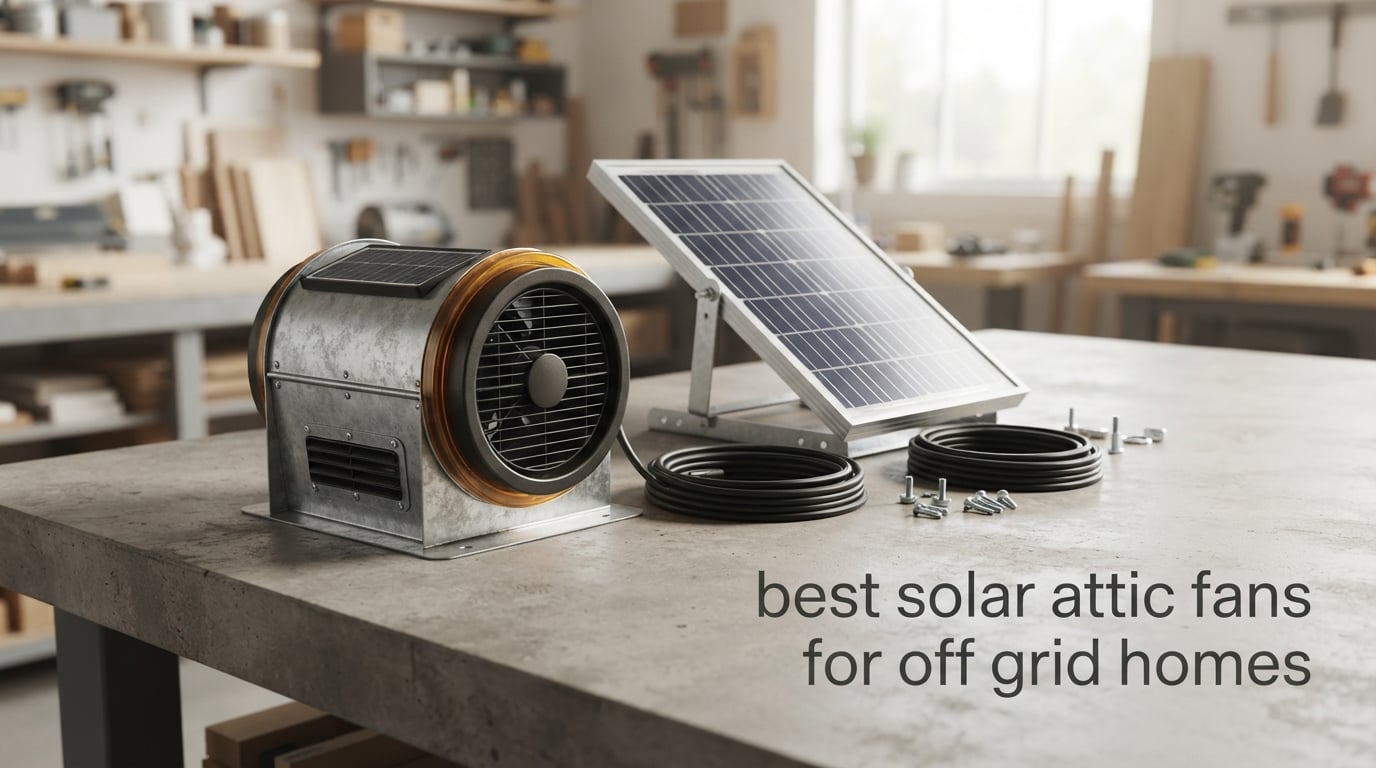
Most of the solar attic fan advice online assumes a house that is plugged into a wall. That assumption quietly breaks down the moment you move to a place with no grid connection, a small battery bank, or an inverter that is already committed to the fridge and the water pump. The short answer is that off-grid homes get more benefit from attic ventilation than grid-tied homes do, because there is no air conditioner sitting in the attic cavity absorbing the heat. What changes is which features matter: battery storage, panel wattage headroom for cloudy stretches, and whether a unit needs mains power at all.
This roundup covers eight solar attic fans we looked at specifically through that lens. We compared airflow ratings, panel wattage, mount geometry, thermostat behavior, noise, and what happens to each fan after sundown. Every pick here runs on its own panel with no wiring run back to a breaker box, and several can be paired with mains or inverter power if you eventually want night operation.
If your priorities are somewhere else entirely, our attic ladder roundup covers access, and misting fans cover the outdoor cooling side of a hot-weather off-grid setup. Neither vents your attic, though, which is a job worth doing properly before you spend a summer in 140-degree rooms.
Table of Contents
Top 3 Best Solar Attic Fans for Off Grid Homes
iLIVING 40W Smart Roof Mount Fan
- 1150 CFM
- 40W adjustable panel
- thermostat 50-122F
- IP68 brushless motor

Remington Solar 30W Roof Mount Fan
- 1550 CFM
- built-in humidistat
- 0.08 sones brushless motor
- steel flashing

VEVOR 14 Inch Gable Mount Fan
- 1300 CFM
- adjustable thermostat
- aluminum alloy blades
- debris mesh guard
All 8 Solar Attic Fans Side by Side in 2026
The table below lists every fan in this roundup with the numbers that decide whether a unit will work on a home with no grid connection. Airflow is rated in CFM, panel output in watts, and coverage figures are the manufacturer’s own attic-square-footage claims.
| Product | Specifications | Action |
|---|---|---|
| iLIVING 40W Smart Roof Mount Fan |
|
Check Latest Price |
 Amtrak Solar 50W Gable Mount Fan Amtrak Solar 50W Gable Mount Fan |
|
Check Latest Price |
| Remington Solar 30W Roof Mount Fan |
|
Check Latest Price |
 4SEASONS 12W Roof Vent Fan 4SEASONS 12W Roof Vent Fan |
|
Check Latest Price |
 QuietCool AFR SLR-40 Roof Mount Fan QuietCool AFR SLR-40 Roof Mount Fan |
|
Check Latest Price |
| VEVOR 14 Inch Gable Mount Fan |
|
Check Latest Price |
 OmniPV 40W Hybrid Attic Fan OmniPV 40W Hybrid Attic Fan |
|
Check Latest Price |
 HNRLOY 25W Roof Vent Fan HNRLOY 25W Roof Vent Fan |
|
Check Latest Price |
1. iLIVING 40W Smart Roof Mount Fan – Best Overall
iLIVING HYBRID Ready Smart Thermostat Solar Roof Attic Exhaust Fan, 14″, 40-Watt, 1150 CFM, Cools up to 2900 Sq.Ft. Coverage Area, Black
1150 CFM
40W adjustable panel
thermostat 50-122F
IP68 motor
32 pounds
Pros
- No wiring or electrician needed
- Very quiet running
- Retrofit into existing housings
- Adjustable thermostat trigger
Cons
- Analog thermostat with no display
- Optional night-running adapter sold separately
- Isolated reports of blade separating from collar
This is the unit we keep coming back to for a fully off-grid house, and the reason is the size of its owner base rather than a single headline spec. Out of more than 1600 ratings it holds a 4.4 average, which tells you the install experience is repeatable enough that people are not writing in with roof leaks. It comes with a 40-watt panel and a 14-inch nylon-fiber-aluminum blade rated at 1150 CFM, and the manufacturer claims coverage up to 2900 square feet of living space.
The panel angle is adjustable through 0, 15, 30 and 45 degrees. That matters more off-grid than it does in a suburb, because remote roofs are often shaded late in the day by nearby trees or a second structure, and a flat-mounted panel in partial shade loses far more output than an angled one catching late light.
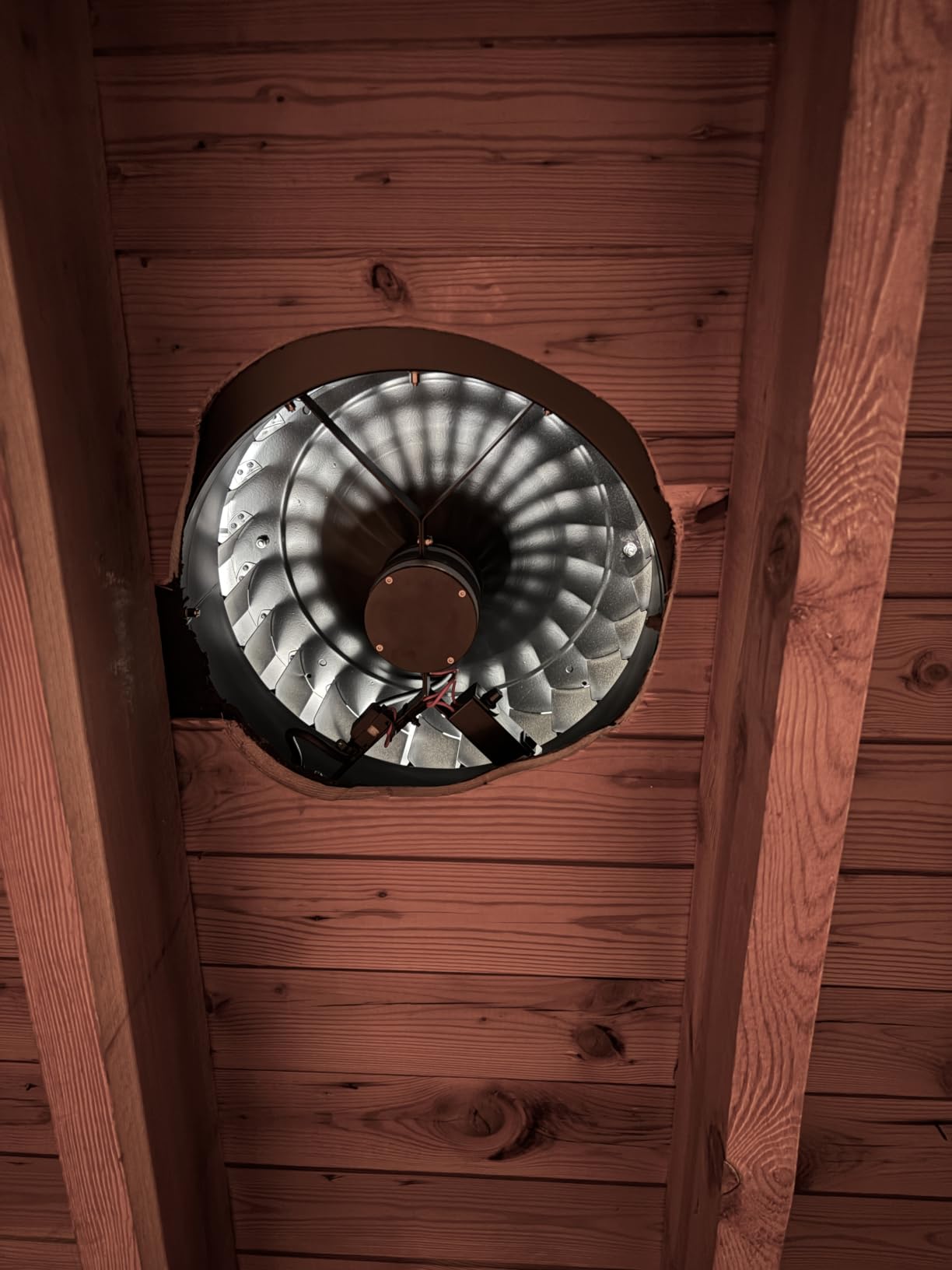
Owners with a thermostat they can actually dial in report double-digit attic temperature reductions in hot climates, and most note they cannot hear it from the room directly below. The motor is rated IP68 for waterproofing and carries a 15-year manufacturer warranty, which is the longest coverage in this group alongside QuietCool.
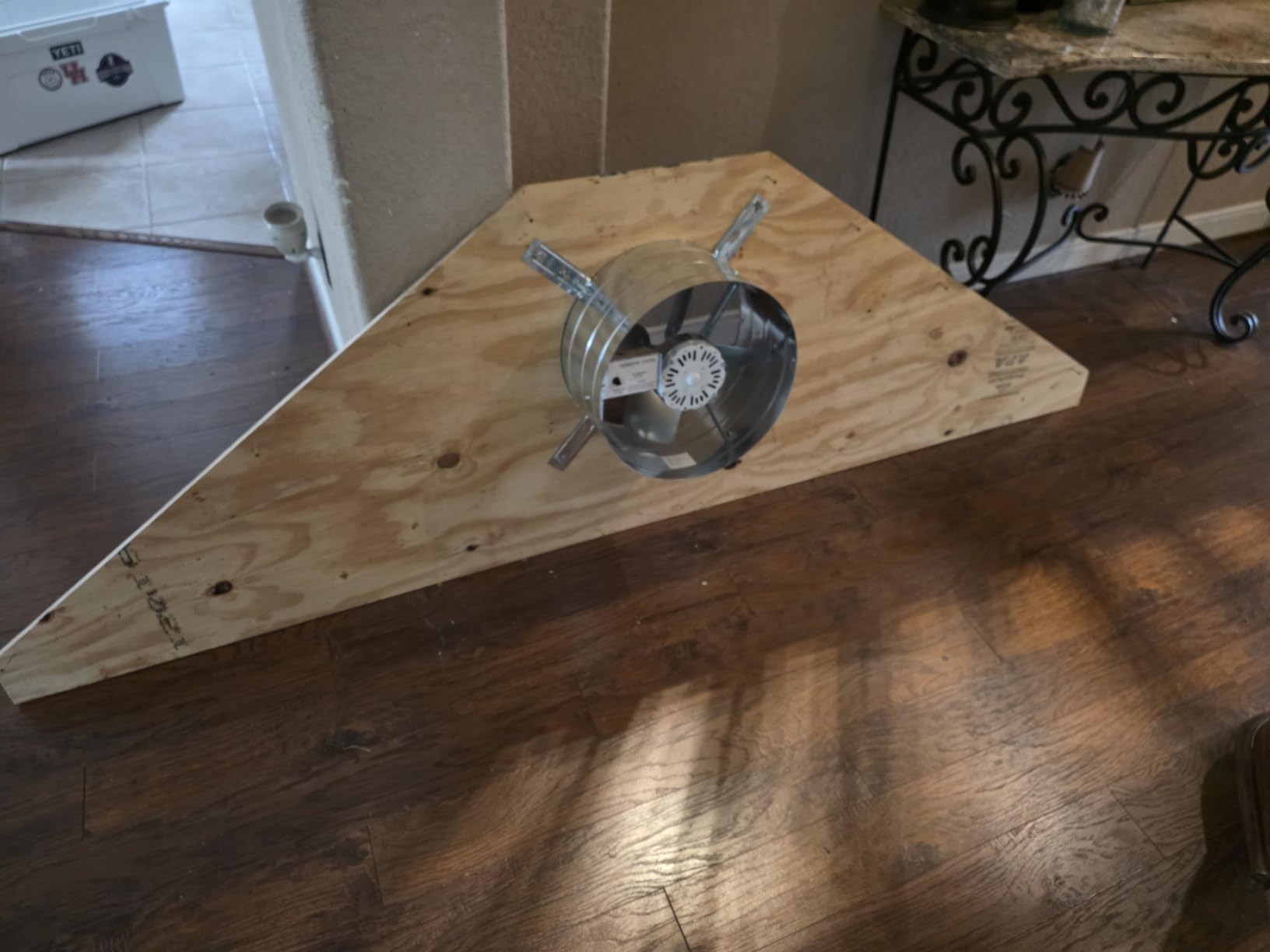
Several buyers retrofit the unit into an existing fan housing with support poles instead of cutting a new hole, a useful trick on older cabins that already have a working roof vent. That approach cuts the flashing work down to a manageable weekend job.
What you get when the sun goes down
Out of the box this fan is a daytime-only device. The model runs from panel input alone, and when light drops below what the panel can supply the motor slows and eventually stops. A small internal buffer smooths short dips, but it is not a night power source.
If you need airflow after dark, the manufacturer sells a separate AC/DC night-running adapter kit under a different model number. On a home with a battery bank you would wire that kit to your 12V bus instead of the wall, which is the arrangement we would actually recommend for an off-grid build.
Where it falls short
The thermostat is an analog temperature switch with no display, so you set it by feel and cannot read the current attic temperature at the unit. On a tight budget that is a fair trade, but it removes one of the levers you have for winter control.
A small number of reviews also describe a faint rattle or hum audible from directly underneath, and one isolated report describes the blade separating from its mounting collar on two separate units. That is rare enough that it does not change the verdict, but it is the failure mode to watch if you install one under a bedroom ceiling.
2. Amtrak Solar 50W Gable Mount Fan – Best Value
Amtrak Solar 12-Inch 50W Solar Attic Fan with Thermostat, Made in USA – Quiet Gable Vent Fan for Attic, Garage, Shed, Greenhouse – Plug and Play
50W panel
12 inch galvanized steel housing
10 inch blade
up to 2250 sq ft
12 pounds
Pros
- All-metal galvanized construction
- Pushes substantial air for its size
- Self-regulates with available light
- Responsive manufacturer support
Cons
- Noticeably louder than premium fans
- Recurring wiring quality complaints
- Small blade may not force tight louvers
Amtrak is the pick when the roof pitch and vent layout make a full roof mount awkward. This is a 12-inch galvanized steel gable unit driven by a 50-watt panel, with a 10-inch high-efficiency blade inside the housing that is strong enough to open a stuck louver. The manufacturer rates it for areas up to 2250 square feet.
That panel is the largest in this roundup, and it earns its place on shaded northern roofs or in cloudy regions where a smaller panel would leave the motor crawling. Owners report 10 to 20 degrees of cooling in attics and greenhouses, and the motor self-regulates its speed with whatever light reaches the panel.
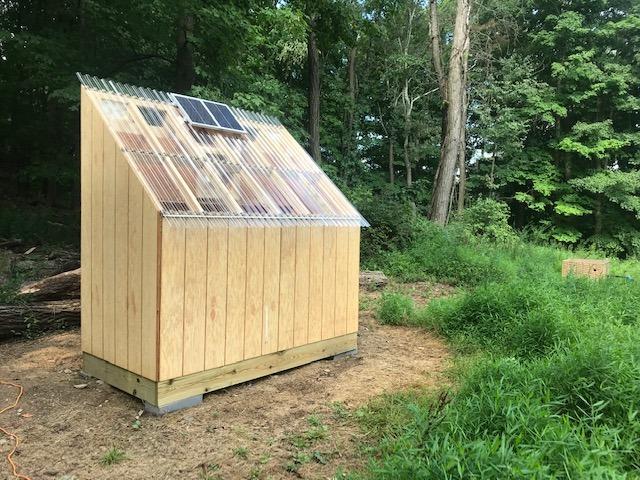
The build is all metal rather than plastic, which is the right call for a shed, coop or workshop exposed to rain and dust. It weighs 12 pounds, so the install is a one-person job with a ladder, and mounting hardware plus 15 feet of extra wire are included so the panel can sit away from the fan on a gable or an outbuilding wall.
Customer support from the manufacturer comes up repeatedly as responsive, and the panel output carries a 25-year service rating that no other specification in this roundup states.
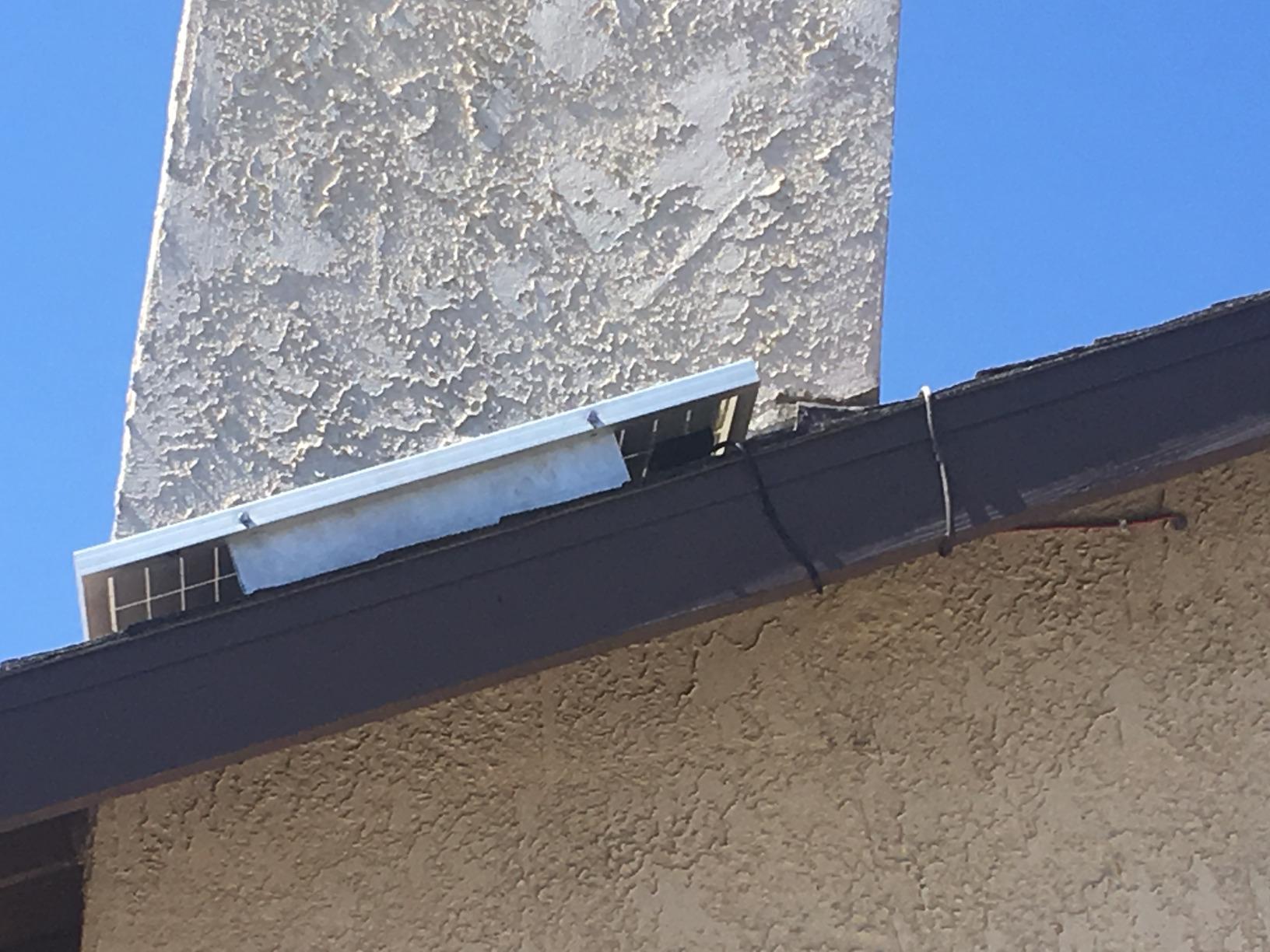
Why the wattage headroom helps on a cloudy property
Headroom is simply the gap between what the panel can produce in poor light and what the motor draws. A 50-watt panel driving a fan rated at 40 watts keeps running when cloud cover cuts output to a fraction of the rated number. That margin is why this model keeps moving air on days when a smaller panel stalls.
For a cabin in a valley or a coastal site with frequent overcast, that margin is worth more than a larger blade. It is the single most useful number to check before buying anything for a low-sun location.
What you give up
Noise is the main complaint. Multiple owners describe this fan as loud enough that they cannot hold a conversation over it, which is a real consideration if it sits above a bedroom or a workshop bench.
The wiring is the second weak point. There are repeated reports of polarity errors out of the box and un-stripped wire ends on the panel lead, and the included thin wire with crimp connectors is not well sealed against weather. Budget for a few minutes of checking connections and sealing the penetrations properly.
3. Remington Solar 30W Roof Mount Fan – Best for Large Attics
Remington Solar 30 Watt Roof Mount Solar Attic Fan
1550 CFM
30W panel
humidistat and thermostat
0.08 sones
30 pounds
Pros
- 1550 CFM from a modest 30W panel
- Near-inaudible brushless motor
- Built-in humidistat as well as thermostat
- Oversized steel flashing resists leaks
Cons
- Night adapter sold separately
- Heavy 30 pound build needing solid roof framing
The Remington 30W moves more air than any other unit here except the OmniPV hybrid, and it does it from a smaller 30-watt panel. That combination of high throughput and a modest panel is unusual, and it is the main reason we rate it above the field for a large attic on a single unit.
At 0.08 sones the brushless motor is effectively inaudible from inside the home. More importantly for an air-sealed off-grid cabin, it has a humidistat as well as a thermostat. A humidistat cuts the fan when moisture rises, which is the failure mode that actually damages cabins in shoulder seasons.
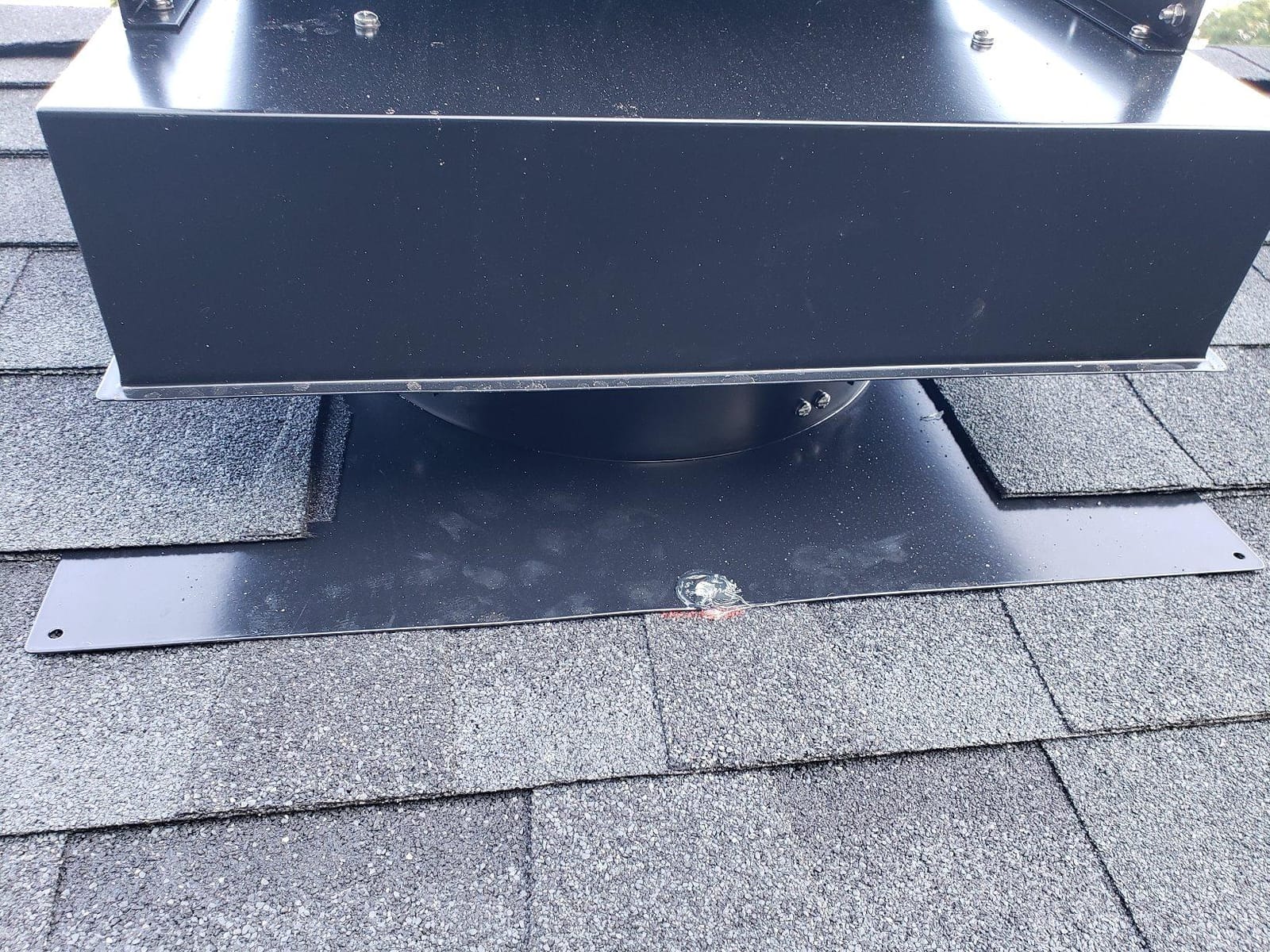
The install is built around an extra large 22.5 by 22.5 inch steel flashing rather than a flexible rubber boot. On a roof you care about, that matters. The unit is also documented as Texas Windstorm certified, which is a reasonable proxy for how it holds up when weather comes sideways.
Owners and the manufacturer both describe a surface-mounted install taking about an hour, which is faster than most people expect from a unit this size.
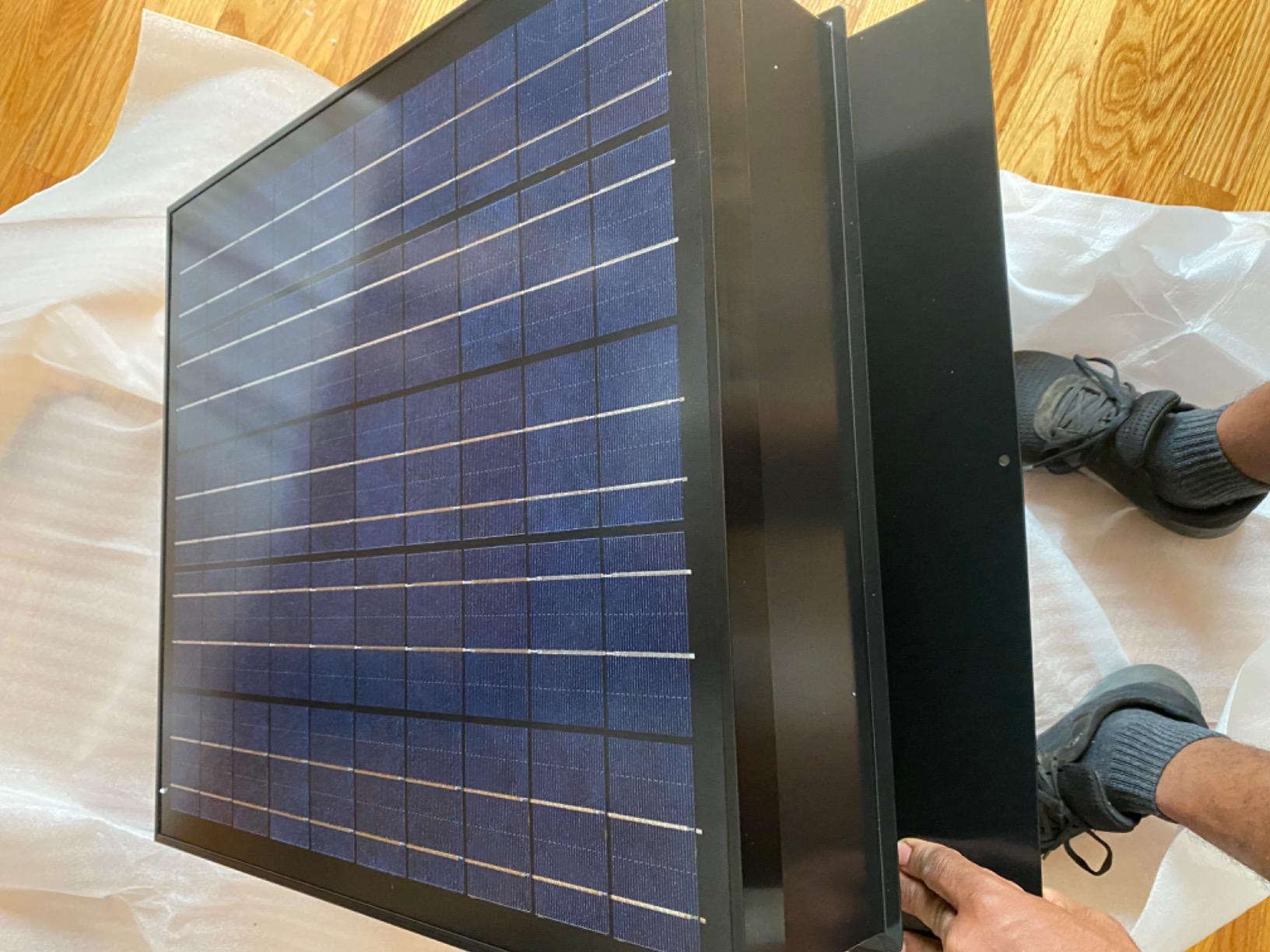
Why airflow matters more off grid than on the grid
In a grid-tied home an attic fan is a convenience that lowers cooling load. In an off-grid home, every watt of cooling compressor load is battery capacity you did not have to buy. Moving more air with a smaller panel means the fan draws less energy for the same ventilation job.
The 1550 CFM figure matters most if your attic floor is large. Owners of roughly 2000-square-foot homes generally run two of these rather than one, and the second fan is the piece of roof area people underestimate before ordering.
Where it is not the right pick
It weighs 30 pounds, so the roof cut needs solid framing behind it and a second person for the lift. On a thin RV roof or a light-framed cabin, that is a genuine drawback rather than a minor one.
Night operation requires a separate hybrid adapter that is not in the box, so plan on a second purchase if you want the fan running after dark. Otherwise it behaves like every other solar fan here and stops when the light goes.
4. QuietCool AFR SLR-40 – Best Panel Adjustment and Night Backup
QuietCool AFR SLR-40 Roof Mount Solar Attic Fan – 40 Watt Adjustable Panel – Included AC/DC Inverter for 24/7 Runtime – Thermostat Controlled
1104 CFM
40W panel
AC/DC inverter included
88F thermostat
15-year warranty
Pros
- Only model here with an AC/DC inverter in the box
- Panel adjusts to 60 degrees tilt and 180 degrees rotation
- Quiet efficient DC motor
- 20 foot power cord included
Cons
- Thermostat fixed at 88F with no adjustment
- Night capability depends on mains power
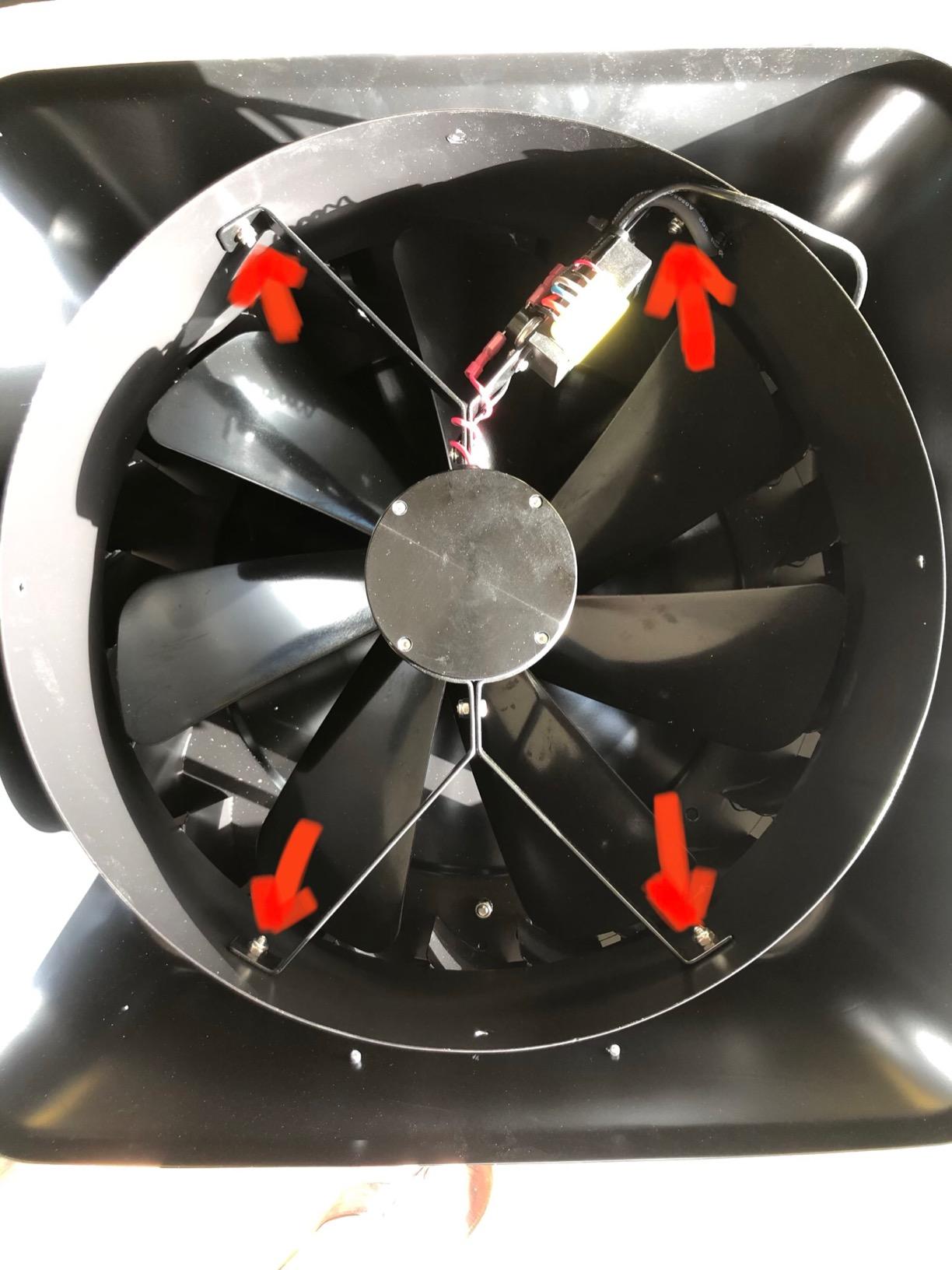
The QuietCool AFR SLR-40 is the only fan in this group that includes an AC/DC inverter in the box. That single inclusion changes what the unit can do, because it can be powered from household mains or an inverter output whenever the panel is not producing enough to run the motor.
Airflow is rated at 1104 CFM from a 40-watt panel with an energy-efficient DC motor. The included 20-foot power cord means the panel does not have to sit directly over the fan, so on a complex roof you can place it on the sunniest plane available rather than the most convenient one.
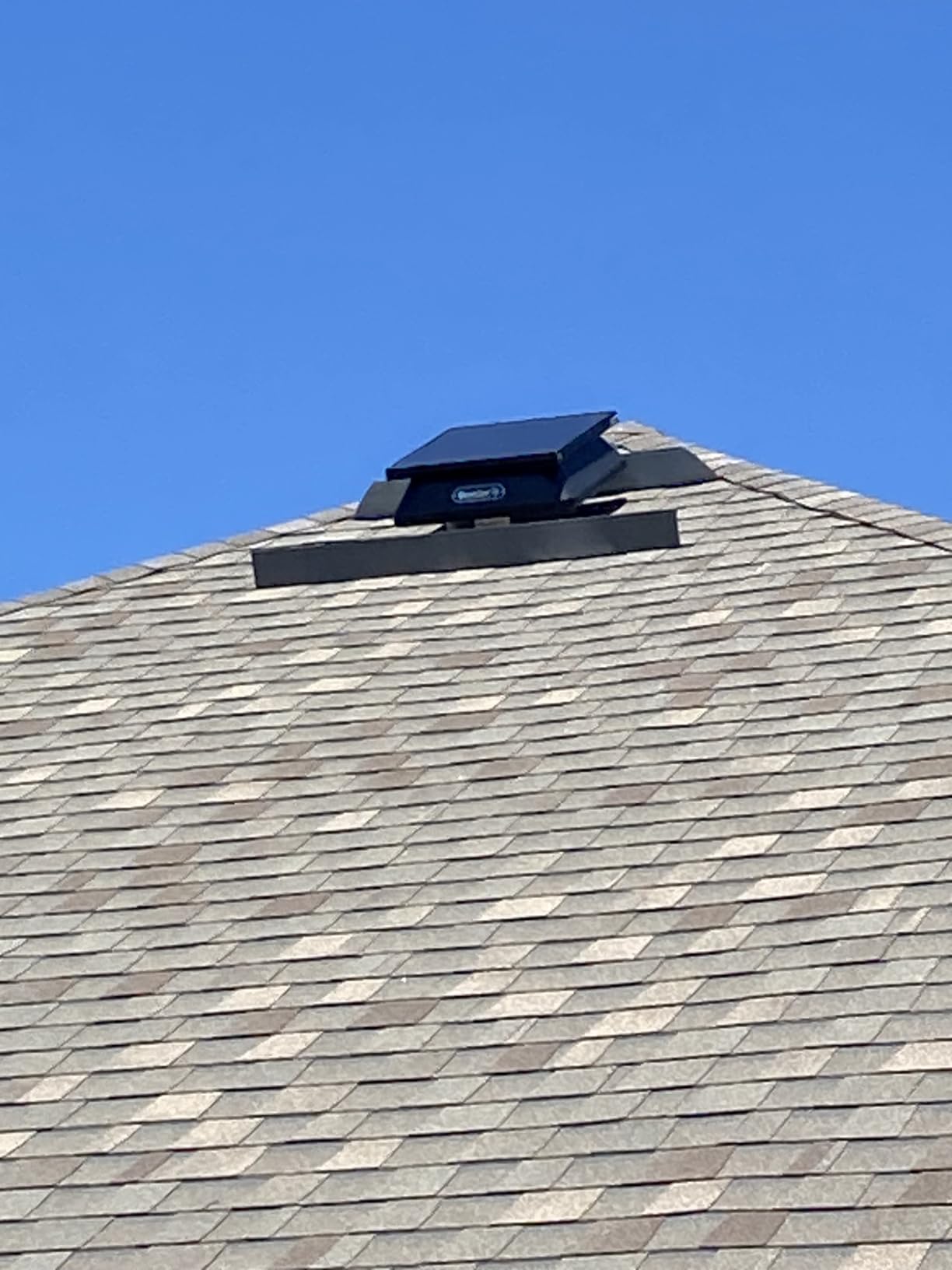
Panel articulation is the best in this roundup: up to 60 degrees of tilt and 180 degrees of rotation. For off-grid installs on steep or oddly oriented roofs, that flexibility alone solves problems that would otherwise force you to abandon a site. The housing is heavy-duty steel and the warranty runs 15 years on the panel and overall, with 5 years on the motor.
A thermostat preset to switch on at 88 degrees handles the daytime trigger without a separate controller, which keeps wiring at the fan minimal.
The off-grid catch with the inverter
Here is the honest limitation. That inverter runs on household mains, not on a battery bank by default. On a home with no grid connection, the night capability is only useful if you feed the inverter from an inverter or generator output you already own, and that is an extra wiring job rather than a plug-in.
For a partially off-grid house that still has a grid connection, this is the cleanest 24/7 setup here. For a fully disconnected cabin, you are buying the flexible panel mount and the DC motor, and the inverter becomes something to wire later if a battery inverter goes in.
What owners say about the QuietCool brand
Owner feedback on this brand splits by model rather than by company. The 40-watt units in this roundup sit at a 4.4 average across 267 ratings, which is solidly in the group. Entry-level listings in the same family show visibly lower averages, so the model number matters more than the badge when you read reviews.
The most repeated praise is for the included inverter and the panel adjustment. The most repeated complaint is the thermostat, which is fixed at 88 degrees and cannot be moved, so in a mild climate you cannot make the fan run earlier in the morning without altering the wiring.
5. 4SEASONS 12W Roof Vent Fan – Best for Tiny Attics and RVs
4SEASONS Solar Attic Vent Fan – 400 CFM Airflow, Up to 500 sq. ft., 12W Solar Panel, CSA A93 Certified, Polycarbonate Housing, Quiet Roof Ventilation
400 CFM
12W monocrystalline panel
CSA A93 certified
integrated flashing
5.6 pounds
Pros
- Lightest unit here at 5.6 pounds for a one-person install
- Fully assembled with integrated flashing
- Very quiet
- Tested to TDI and CSA A93
Cons
- Modest 400 CFM suits about 500 sq ft
- No thermostat or on/off control
When the space is a fifth wheel, a shed, or the attic over a small 800 to 1000 square foot cabin, airflow requirements drop out of the conversation. This 12-watt panel with 400 CFM of output covers attic spaces up to about 500 square feet, and it does that with the least fuss of anything here.
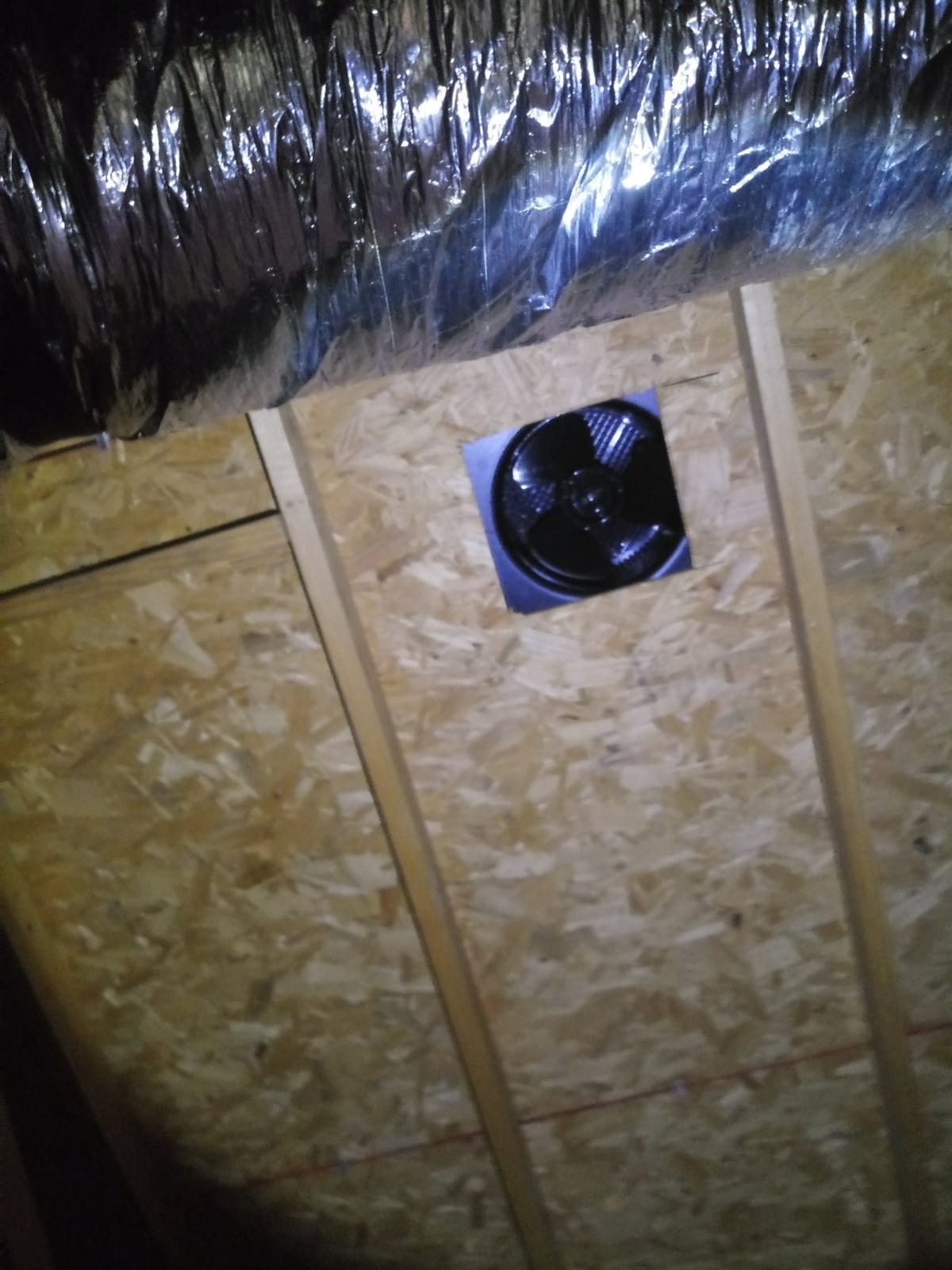
There is no wiring to run because the unit arrives fully assembled with integrated flashing. It weighs 5.6 pounds, which means one person with a ladder can set it in an afternoon. That combination is why it suits the many off-grid owners in our research who wanted a roof-mounted equivalent of a 12V camping fan.
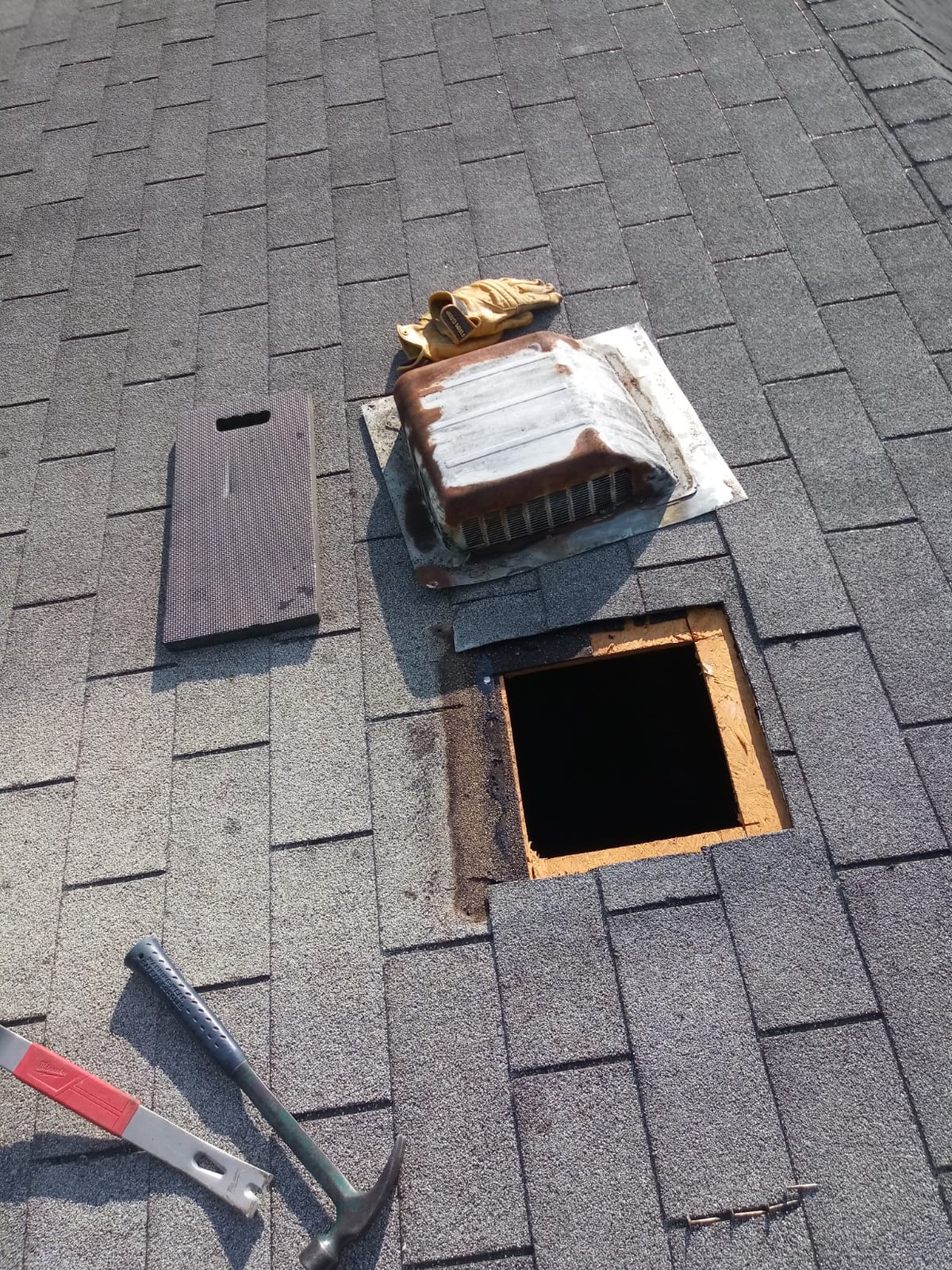
The motor is brushless and owners describe it as inaudible from the room below, and the housing is impact-resistant polycarbonate rather than sheet metal. It is independently tested to TDI and CSA A93 certification, and owners with small homes report holding up to wind-driven rain over multiple seasons.
Several buyers of 1000 square foot homes report wanting two of these rather than one and cutting HVAC runtime sharply after installing them.
Where the small panel actually costs you
With a 12-watt panel driving a fan of this size, there is close to no wattage headroom. In full sun it moves air; under cloud or in any partial shade it slows to a trickle and can stop. That is fine for a shed or an RV, where the goal is odor and moisture control rather than serious heat extraction.
If you are covering a real house, budget for two of these spaced across the roof rather than one unit expecting to cover the whole attic.
No controls means no winter schedule
There is no thermostat, no humidistat and no on/off switch. The fan runs whenever the panel sees light, which is the same runaway-mode trap off-grid owners discuss on the forums, just without a battery to drain.
In cold months that means you are pushing air through the house all day. Some owners solve it by covering the panel with a shade in winter. Others just accept it. Worth deciding before you install, because there is no firmware setting to change later.
6. VEVOR 14 Inch Gable Mount Fan – Best Budget Gable Install
VEVOR Gable Mount Fan, 14 Inch Solar Power Attic Exhaust Fan with Adjustable Thermostat & Outer Mesh, 1300 CFM House Ventilator Cool Upto 1850 Sq.Ft, Quiet Ventilation for Roof, Garage, Shop, Black
1300 CFM
adjustable thermostat
aluminum alloy blades
mesh guard
45 dB
16.8 pounds
Pros
- Highest rated 4.6 with 85 percent five-star feedback
- 1300 CFM on a simple bracket mount
- Adjustable thermostat
- Corrosion resistant steel and aluminum build
Cons
- Gable or wall mount only
- 45 dB is louder than premium units
- Panel role not clearly documented
This is the highest rated fan in the roundup at 4.6 across 84 ratings, with 85 percent of that feedback at five stars. It moves 1300 CFM and covers areas the manufacturer rates up to 1850 square feet, from a 14-inch unit with an adjustable thermostat.
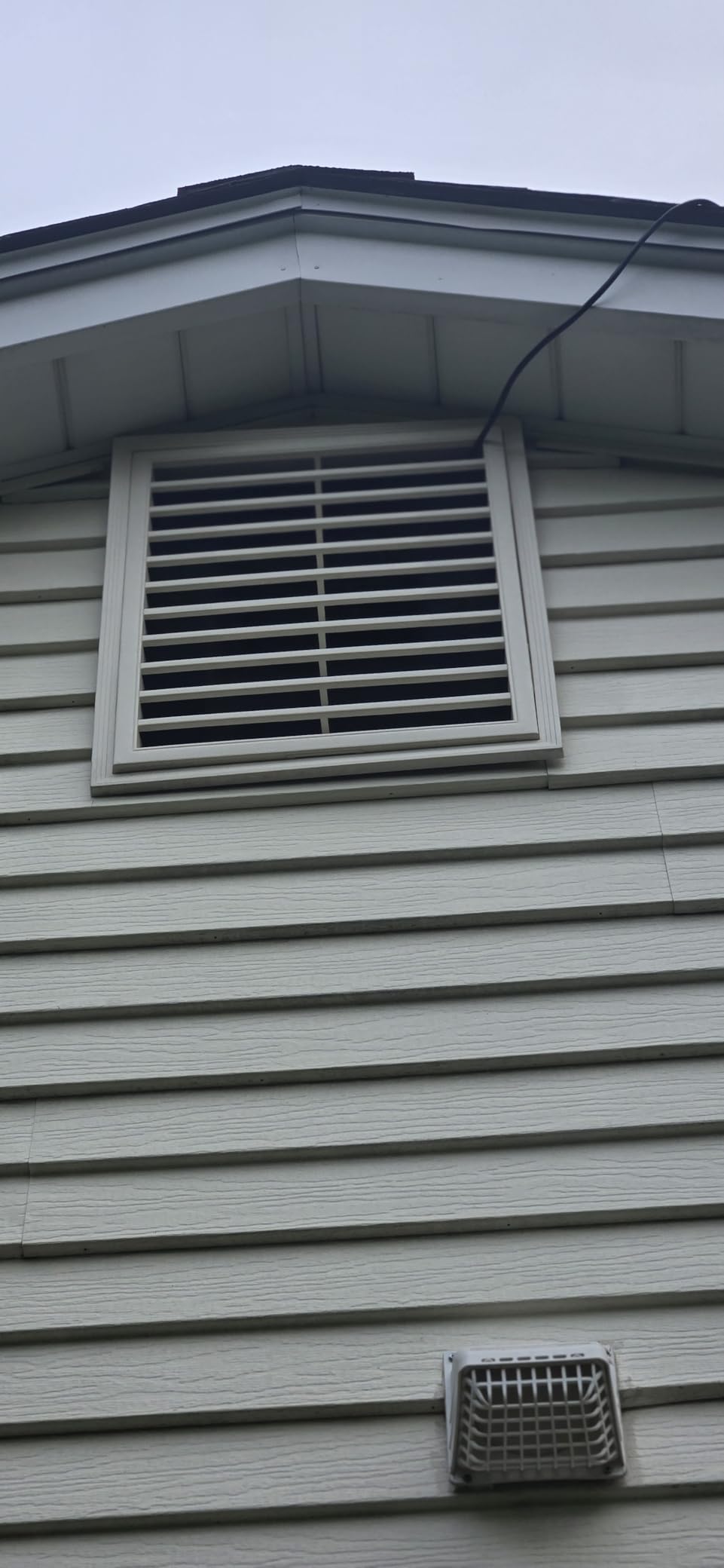
For a gable wall, this is the simplest possible off-grid install. It comes with a 14-inch mounting bracket and needs no professional tools, so you are bolting a bracket to framing rather than cutting and flashing a roof. That avoids the single most common failure point in DIY roof-mount work.
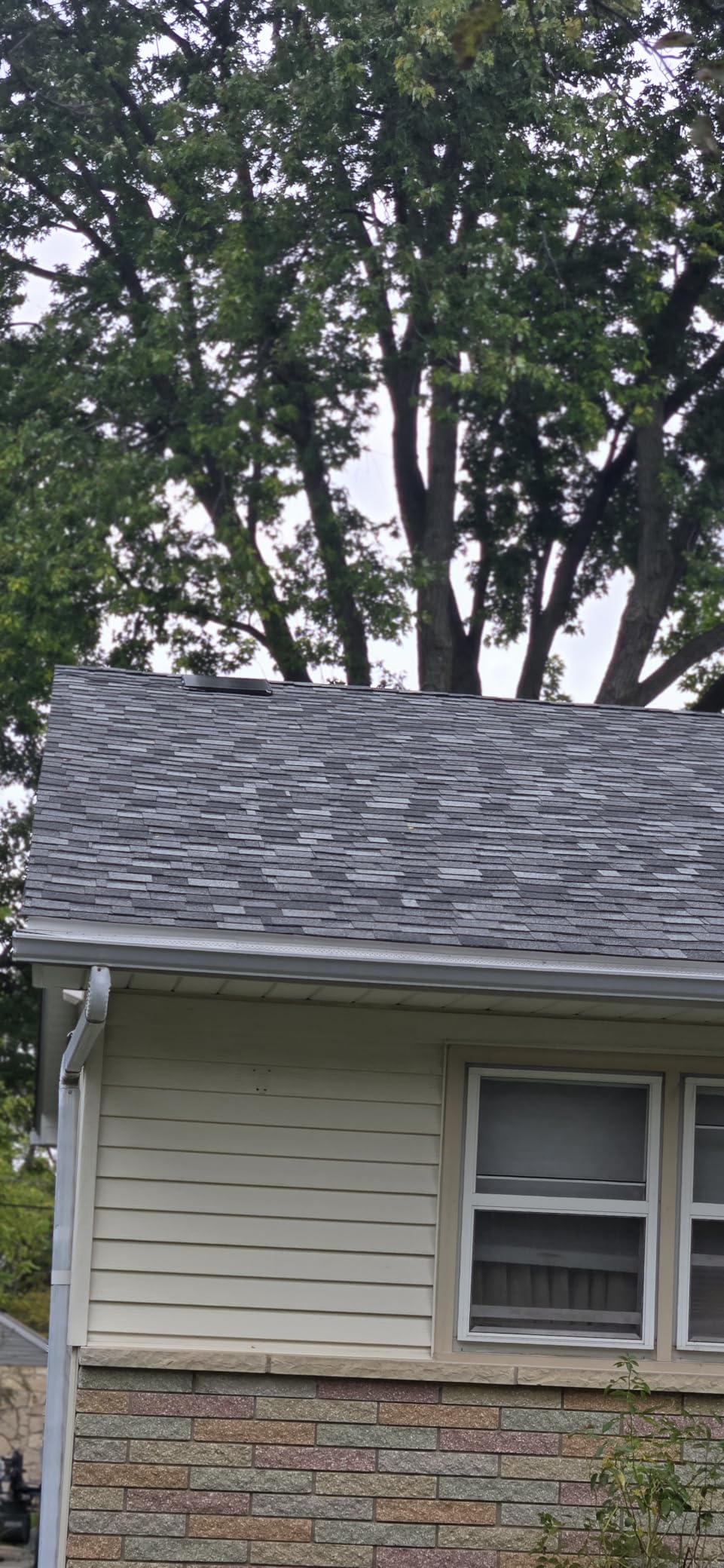
Construction is a high-strength steel housing with a corrosion-resistant powder coat and aluminum alloy 1060 blades, which is the right material pairing for coastal or dusty sites. A protective outer mesh blocks birds, leaves and debris, and the thermostat turns the fan on and off with ambient temperature at a setting you choose rather than a factory preset.
The fan spins at 1600 rpm with five blades and runs at 45 dB, which is audible in a quiet shed and mostly lost under wind or road noise.
What to check before you commit to a gable install
The fan moves air only if intake air can get in. A gable exhaust fan without soffit or gable intake vents pulls mostly recirculated attic air and does far less than the CFM figure suggests. Check that your intake path is open before sizing anything.
Also confirm the panel has genuine sun for most of the day. A south-facing gable in an open field is ideal; a gable shaded by a larger building for half the morning is not.
The documentation gap to know about
The manufacturer spec sheet lists the power source as AC rather than solar, and the documentation on exactly how the panel powers the unit is thin. Reviews do not report failures from it, but if you are building this into an off-grid system where every watt is accounted for, ask before you commit.
It is also a gable or wall mount, so it does nothing for a roof cavity with no vent walls. If your attic has vents, this is the simplest path in; if it does not, look at the roof mounts instead.
7. OmniPV 40W Hybrid Attic Fan – Highest Stated Airflow
OmniPV Solar Hybrid Attic Fan, 40 W 2100 CFM Roof Mount Exhaust Fan With AC Adapter, 75°F Thermostat Auto On/Off, Low Noise and Weatherproof for Home, Shop, RV, Garage & Shed
2100 CFM
40W panel
AC adapter included
75F thermostat
45 dB
17.2 pounds
Pros
- Highest airflow figure here at 2100 CFM
- AC adapter in the box for hybrid operation
- Flexible flashing accepts rafter or batten straps
- Corrosion and UV resistant alloy
Cons
- Fixed 75F thermostat stops the fan in cool weather
- Power lead arrives unconnected
- Thin installation instructions
The 2100 CFM rating on this fan is the highest figure in the roundup, driven by a 40-watt panel and a brushless DC motor. That is a lot of air for a 17.2-pound unit, and it comes with an AC adapter in the box so you can run it hybrid from day one.
The aluminum alloy construction is rated for anti-UV, anti-oxidation and corrosion resistance, which the manufacturer positions for coastal use. Owners on the coast and in high-dust areas report it holding up better than plastic-bodied competitors.
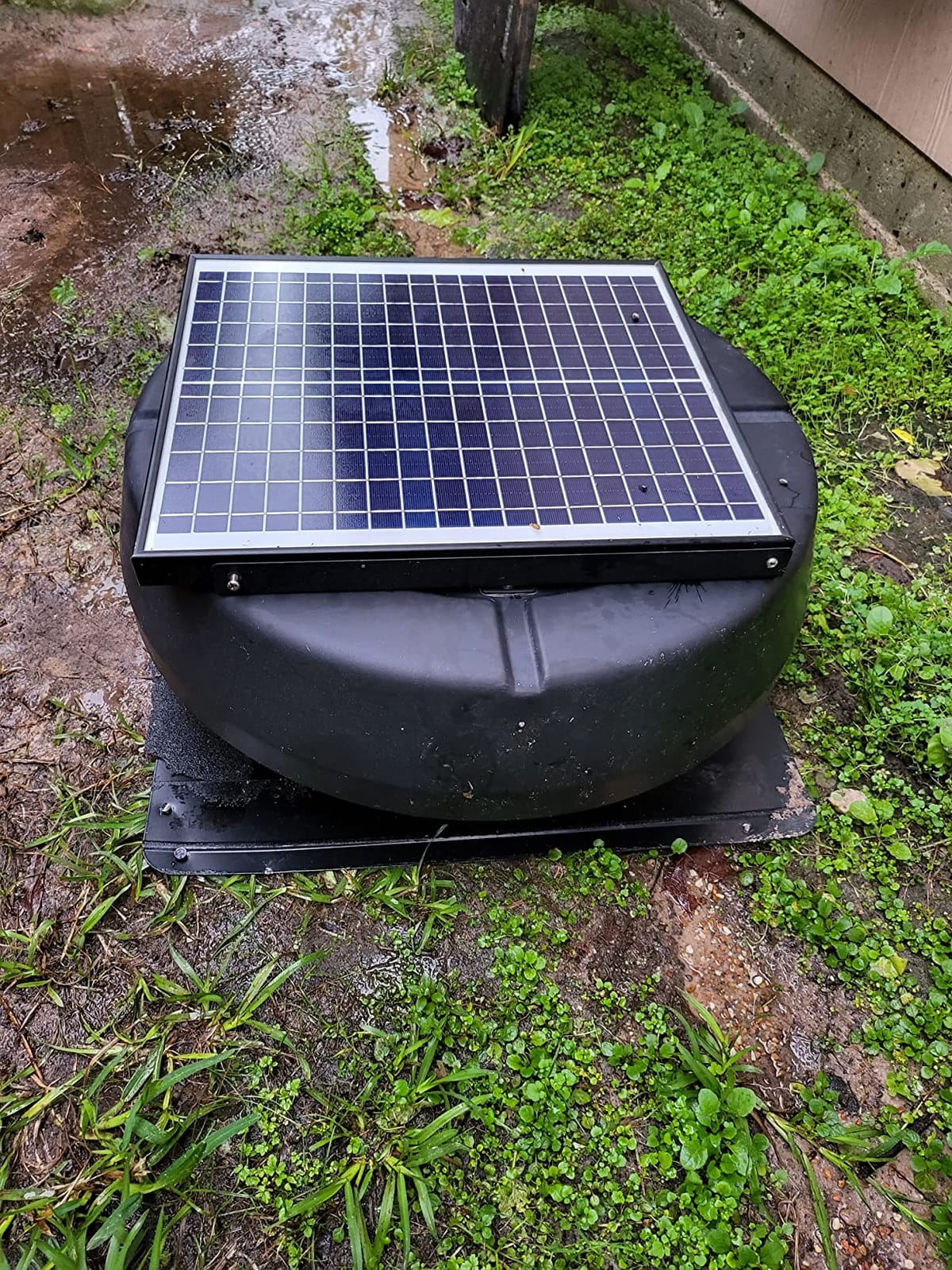
The flashing is flexible rather than a rigid steel boot, and it molds to shingle ridges. It accepts either rafter or batten strap mounting, and the box includes two straps and four screws. Owners report the fan being inaudible from inside the house and noticeable cuts in air conditioning runtime after install.
Noise is listed at 45 dB, which is a little above the near-silent premium units but in line with the mid-range gear.
The hybrid feature is the point for off-grid homes
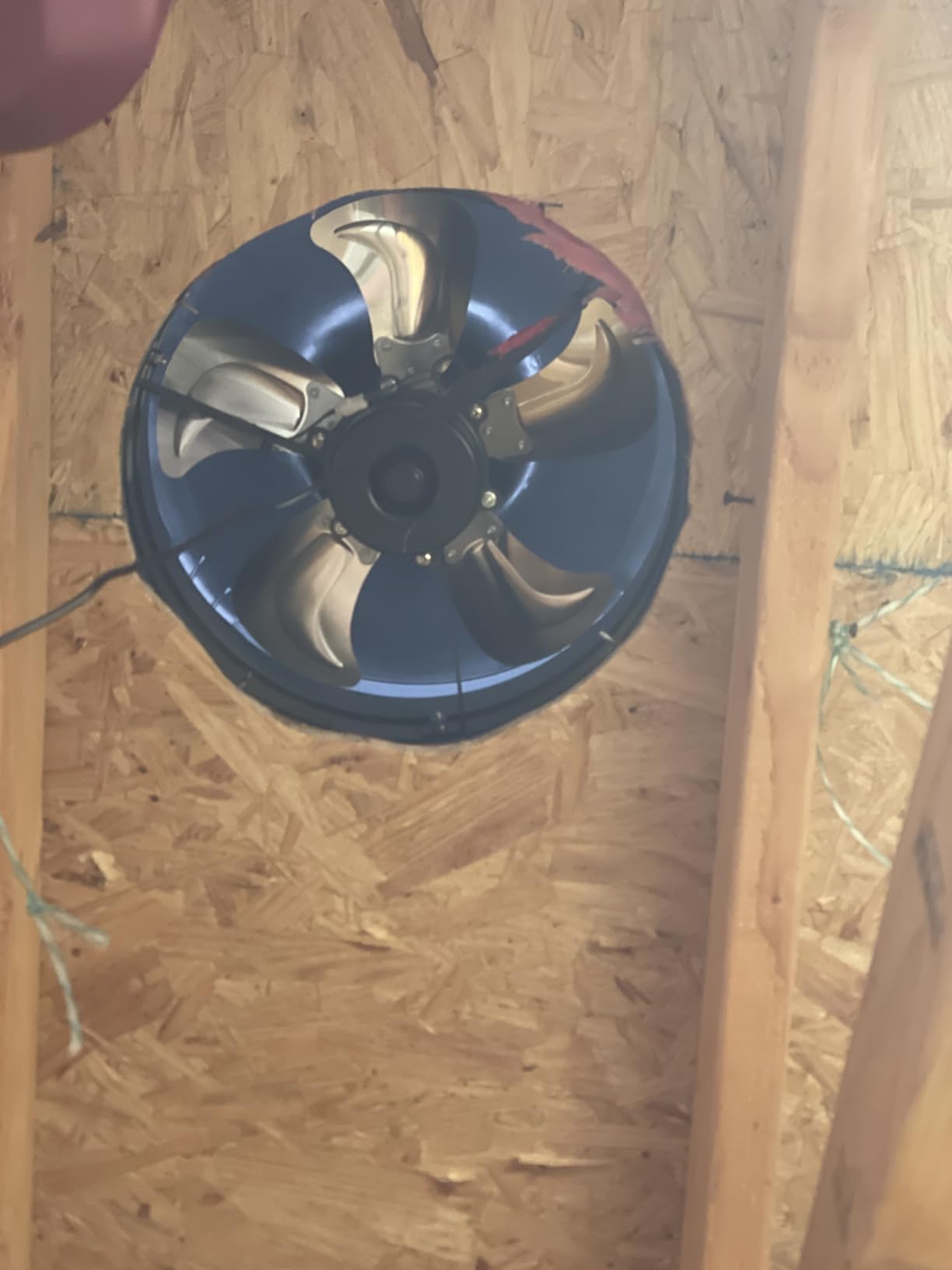
Because an AC adapter comes in the box, cloudy days and night operation are covered without a second purchase. On a home with a battery bank, that adapter is the piece you would wire to your 12V bus instead of a wall outlet, and having it in the box removes one step from the install.
The tradeoff is that hybrid operation only helps if you have somewhere to send the power at night. With no grid and no inverter output, the fan still stops when the panel stops.
The thermostat is the thing to fix on install day
The built-in thermostat shuts the fan off below 75 degrees and restarts it above, and the threshold is fixed. On a cool coastal site or a shoulder season, that will stop airflow on days you want it running. Some owners remove the sensor during install, which converts the unit into an always-on fan that slows with available light.
Two smaller frictions: the power cable arrives unconnected, so plan to terminate it yourself, and the instructions are thin on shingle roof work. Budget an extra hour and confirm your flashing and strap layout before climbing.
8. HNRLOY 25W Roof Vent Fan – Best for Garages and Shops
25W Solar Roof Vent Fan with 8 Inch Removable Roof Vents,Solar Attic Exhaust Fan for Ventilation System,Ideal Soalr Roof Fan for Garage, Shop and Warehouse,Black
Up to 240 CFM
25W panel
8 inch removable roof vent
IP68 motor
10.47 pounds
Pros
- Removable 8 inch roof vent accepts flexible ducting
- Galvanized cover with aluminum mesh guard
- IP68 brushless motor
- Easy four-hole panel mounting
Cons
- Up to 240 CFM suits small spaces only
- No battery storage and no controls
- Three-month manufacturer warranty
Not every building with a hot roof is a house. This 25-watt, 22-volt single-crystal panel unit moves up to 240 CFM in full sun and comes with an 8-inch removable roof vent that has a pipe extension under the flange, so you can attach flexible ducting and vent a shop or warehouse rather than just the attic cavity.
Construction is a galvanized steel cover with a polyester powder coat and an aluminum mesh animal guard, driven by an IP68 waterproof brushless DC motor. The panel is tempered glass in an aluminum frame rated for more than 10 years of service life, and it clamps into the fan cover with a simple four-hole mount.
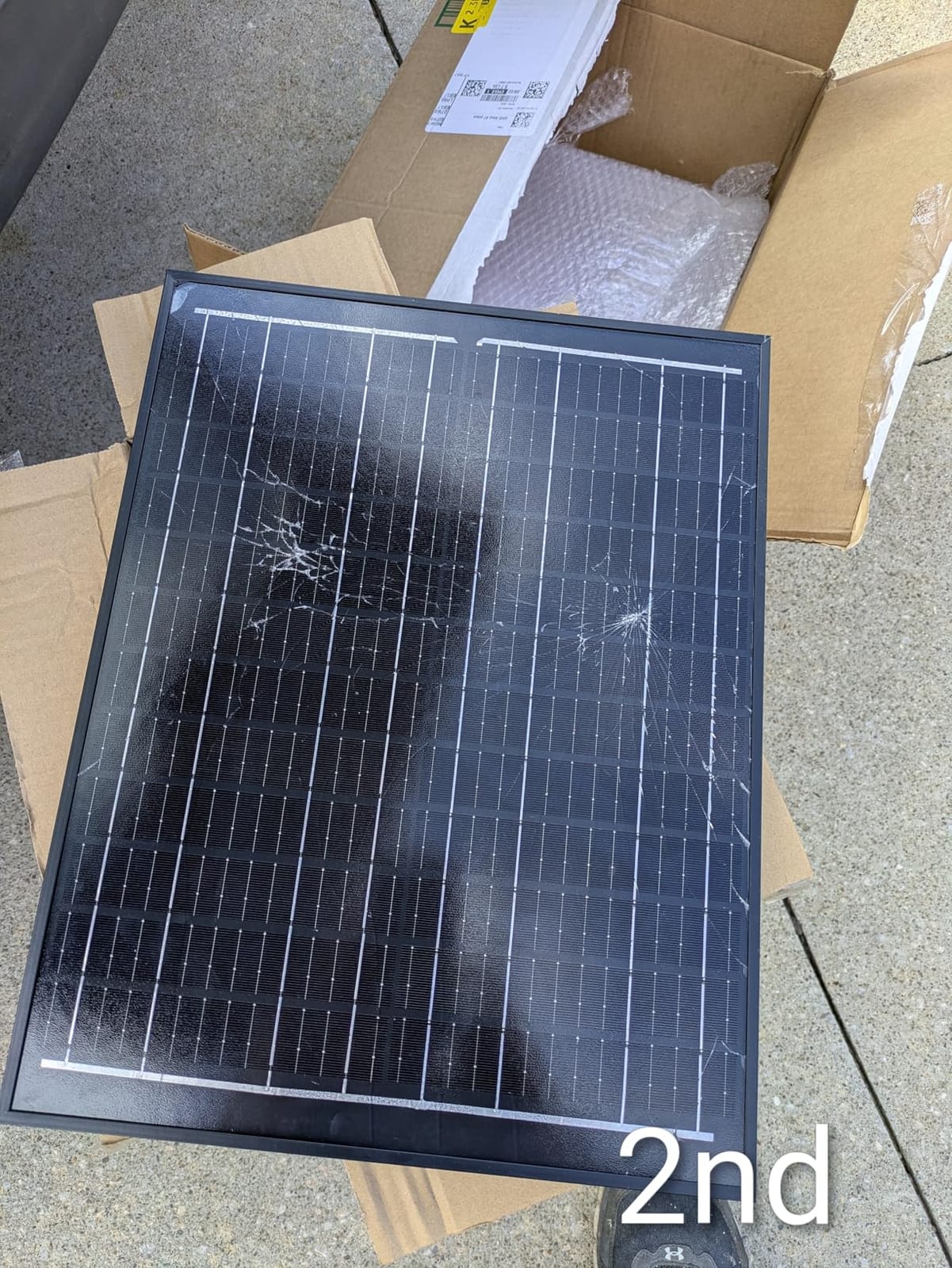
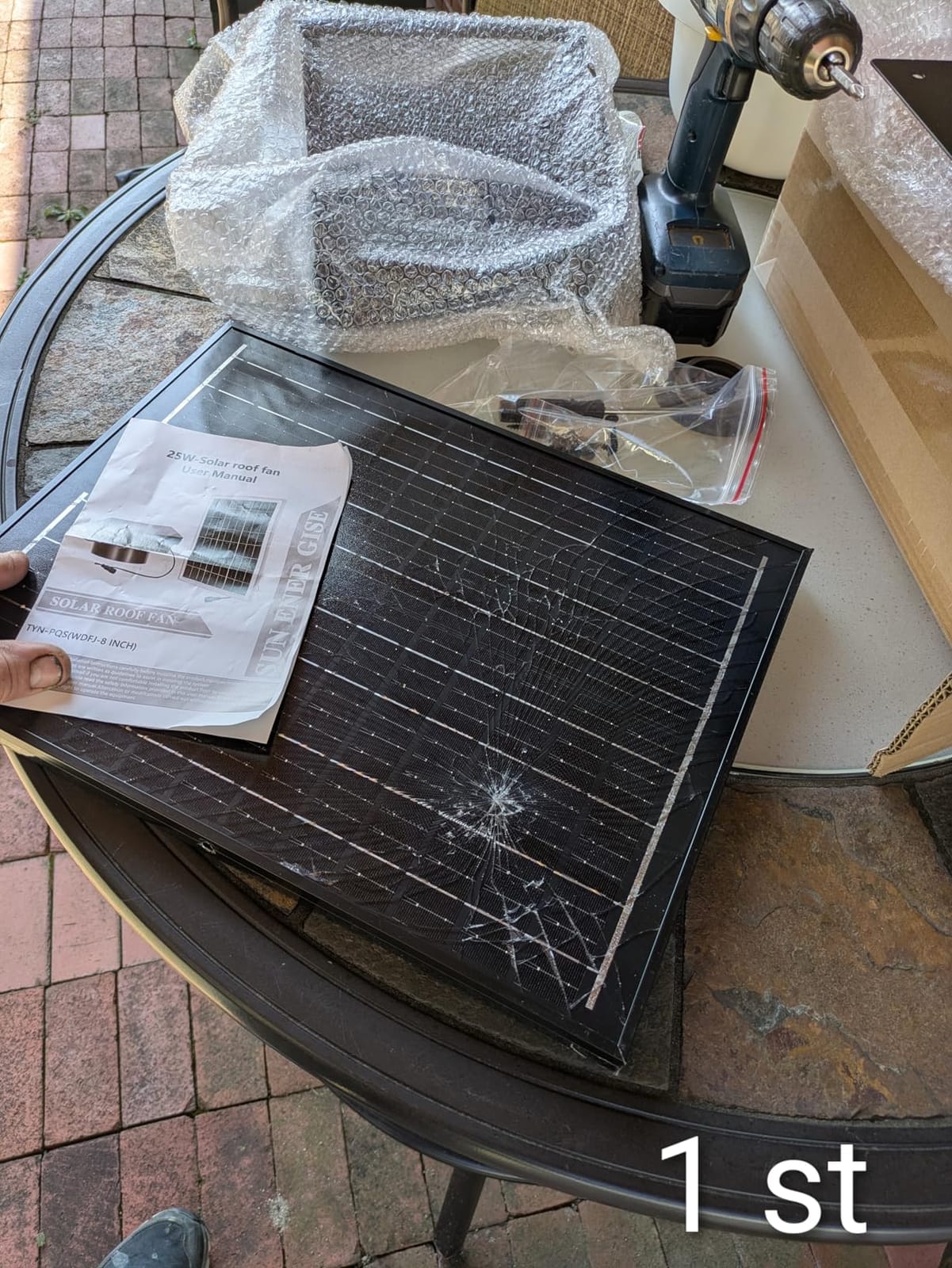
It weighs 10.47 pounds and needs no thermostat, no wiring and no controls. The motor runs at low speed in weak light and stops in full shade, which means it self-regulates without any input from you. That behavior is fine for a garage and a poor fit for a conditioned living space.
Owners use it in garages, shops, sunrooms, warehouses, farm sheds and coops, where exhaust ducting matters more than house-wide ventilation.
What the low airflow means in practice
Two hundred forty CFM is genuinely small, roughly a quarter of what the mid-size models here deliver. In an enclosed garage or a workshop it will clear smoke and odor effectively. In an attic over a house it will do very little on a hot day.
Do not treat this as a whole-house ventilation device. It is a point-source exhaust fan with a solar roof head, and it earns its place by being simple rather than powerful.
Two honest limitations
There is no battery storage, so any cloud or partial shade cuts output or stops the fan, and there is no on/off control of any kind. If your building is in a low-sun location, expect it to run in bursts rather than steadily.
The warranty is three months, the only sub-year coverage listed anywhere in this roundup. For a unit bolted to a roof, that means you are relying on the hardware lasting rather than on the company covering a repair. Several other picks carry multi-year or limited lifetime coverage, so treat the difference as a real signal.
What Actually Changes When Your Home Is Off Grid
Off-grid operation does not make a solar attic fan worse. It makes three specific things matter more: whether the fan has storage, how much panel output remains after the motor draws its share, and whether you are feeding it from mains at all. Everything else about the install is identical to a grid-tied house.
The mechanism is the same five steps in every unit here. Sunlight hits the solar panel. The panel’s controller regulates the DC output. A small battery or controller buffer stores surplus energy. A DC motor spins the blades and pulls superheated air out through the exhaust. Cooler outside air enters through soffit or gable vents lower in the attic, and a thermostat or humidistat cuts power once conditions are met.
The distinction between grid-tied and off-grid is step five in reverse. In a house with an inverter, the fan’s battery buffer can be topped up overnight from stored energy. With no inverter and no grid, the buffer only holds what the panel collected that day, so the fan runs in daylight and stops after dark.
The second change is arithmetic. Divide panel watts by motor watts and you get the headroom ratio. A 50-watt panel on a motor rated at 40 watts keeps running under heavy cloud because output never falls below demand. A 12-watt panel on a compact fan leaves almost nothing in reserve. That single calculation tells you more about performance in a cold month than any feature list.
If you already own a battery bank, the sensible move is to wire the fan’s AC adapter input to your 12V bus. Both the QuietCool and OmniPV units include that adapter, and both will then run on stored energy after dark. If you have nothing but a bare panel, accept that your fan is a daytime device and plan your attic strategy around solar hours.
How We Picked These Eight Fans
We looked for units that run from their own panel with no wiring back to a breaker box, then ranked them on airflow per watt, mount geometry, noise data, warranty length and the behavior of the controls. The CFM sizing rule and the wattage headroom test were the two screening steps that eliminated most of what we saw.
We excluded anything whose airflow rating was missing or unattributed, and anything marketed only as a portable camping fan. Several listings in this category drift into battery-powered room fans, which do not vent an attic and would waste your time on a roof.
We also favored units with a stated warranty over those without, which is why the three-month warranty on the final pick is called out rather than buried. On a roof penetration with no grid power nearby, service life matters.
Buying Guide: Sizing CFM, Panel Watts and Mount Type
Size the fan to the attic floor, not to the living space. The rule of thumb that holds up across this category is roughly 1 CFM per square foot of attic floor, so a 1500-square-foot attic wants a fan in the 1300 to 1600 CFM range, which is where the iLIVING, Remington, QuietCool and VEVOR units land. Cover bigger attics with two smaller fans rather than one oversized one, because two units can be spread across the roof so neither sits in permanent shade.
Then check the headroom math. Panel watts divided by motor watts gives you the margin that carries you through overcast days. Anything under about 1.5 to 1 is tight for a real house. The 4SEASONS unit is the clearest example of a compact fan that is fine for a shed and frustrating in a cottage.
Mount geometry is the decision people underestimate. A roof mount with proper flashing is airtight and pulls from wherever the panel points, but it means cutting a hole and sealing a penetration. A gable mount bolts to a vent wall, is much faster and easier, but needs an existing gable opening and a clear intake path on the opposite side. A removable roof vent like the one on the final pick suits ducted exhaust in outbuildings rather than whole-attic ventilation.
Controls matter more in an air-sealed cabin than anywhere else. A humidistat stops the fan when moisture climbs, which is the difference between a dry attic and a mold problem after a wet spring. If a unit only offers a thermostat, watch the intake and exhaust vents for condensation instead.
Finally, treat the roof as a safety job. Work on a dry day, use the supplied flashing rather than improvising sealant, confirm the attic structure can carry the unit’s weight, and check that intake vents exist below the exhaust. If a fan pulls only recirculated air, no CFM figure will save you.
Frequently Asked Questions
Do solar-powered attic fans really work?
Yes, with conditions. A solar attic fan exhausts superheated air and draws cooler air in through soffit or gable vents, and owners in this roundup report double-digit attic temperature drops in hot climates. It works best when the panel gets full sun, the attic has open intake vents, and the CFM is matched to the attic floor area.
Which solar-powered attic fans are the best?
The iLIVING 40W smart roof mount is the best overall, holding a 4.4 rating across more than 1600 owner reviews with an adjustable panel and an IP68 brushless motor. The Remington 30W is the best for airflow at 1550 CFM with a built-in humidistat. The VEVOR 14 inch gable mount is the best budget install at a 4.6 rating.
What are the disadvantages of solar attic fans?
They do not cool your living space, they move heat out rather than removing it from the house, and output drops sharply under cloud or partial shade. They stop at night unless a battery or an AC adapter is involved, several require a roof penetration that can leak if flashed badly, and many use fixed thermostats that cannot be adjusted.
Why are attic fans not used anymore?
Attic fans were displaced by better insulation, tighter building envelopes and whole-house or ERV ventilation, so they became optional rather than standard. A solar attic fan is still a useful heat-extraction and moisture-control tool, especially on an off-grid home with no air conditioner to absorb attic heat. It is not a cooling system.
Which solar attic fan is the best rated?
The VEVOR 14 inch gable mount has the highest rating in this roundup at 4.6 across 84 reviews, with 85 percent five-star feedback. Among the highest-volume models, the iLIVING 40W holds 4.4 across more than 1600 reviews and the Remington 30W holds 4.5 across 443. High ratings on low review counts mean less than high ratings on large ones.
What are people saying about the QuietCool attic fan?
Owners of the AFR SLR-40 rate it 4.4 across 267 reviews, praising the included AC/DC inverter and the panel that adjusts to 60 degrees of tilt and 180 degrees of rotation. The main complaint is the thermostat, which is preset to 88 degrees and cannot be adjusted. Owner sentiment on this brand varies more by model than by name.
Can a solar attic fan run at night?
Only with stored power. Out of the box these fans stop when the panel output drops. The QuietCool AFR SLR-40 and the OmniPV 40W both include an AC adapter so you can run them from mains or inverter power, and on an off-grid home you would wire that adapter to your 12V battery bus instead.
Which Solar Attic Fan Should You Buy
For a fully off-grid home with a roof you are willing to cut, the iLIVING 40W smart roof mount is the pick: the largest owner base in the group, an adjustable panel that handles awkward light angles, and a 15-year warranty on the motor. If your attic floor is large and airflow per watt is the priority, step up to the Remington 30W and its 1550 CFM and built-in humidistat.
If you want night capability on a battery bank, buy the QuietCool AFR SLR-40 or the OmniPV 40W, since both come with the AC adapter you need. If the house is small, the structure is light, or you would rather not touch the roof, the 4SEASONS unit handles a small attic with almost no install effort. And if you are venting a shop or garage rather than living space, the HNRLOY 25W with its ductable removable vent is the simplest answer in this roundup.
Whichever you choose, measure the attic floor, confirm your intake path is open, and pick the site with the most sun before you order. Those three decisions matter more than any spec on the box. For the rest of an off-grid build, our auto top-off systems guide covers keeping battery capacity from becoming the bottleneck.