
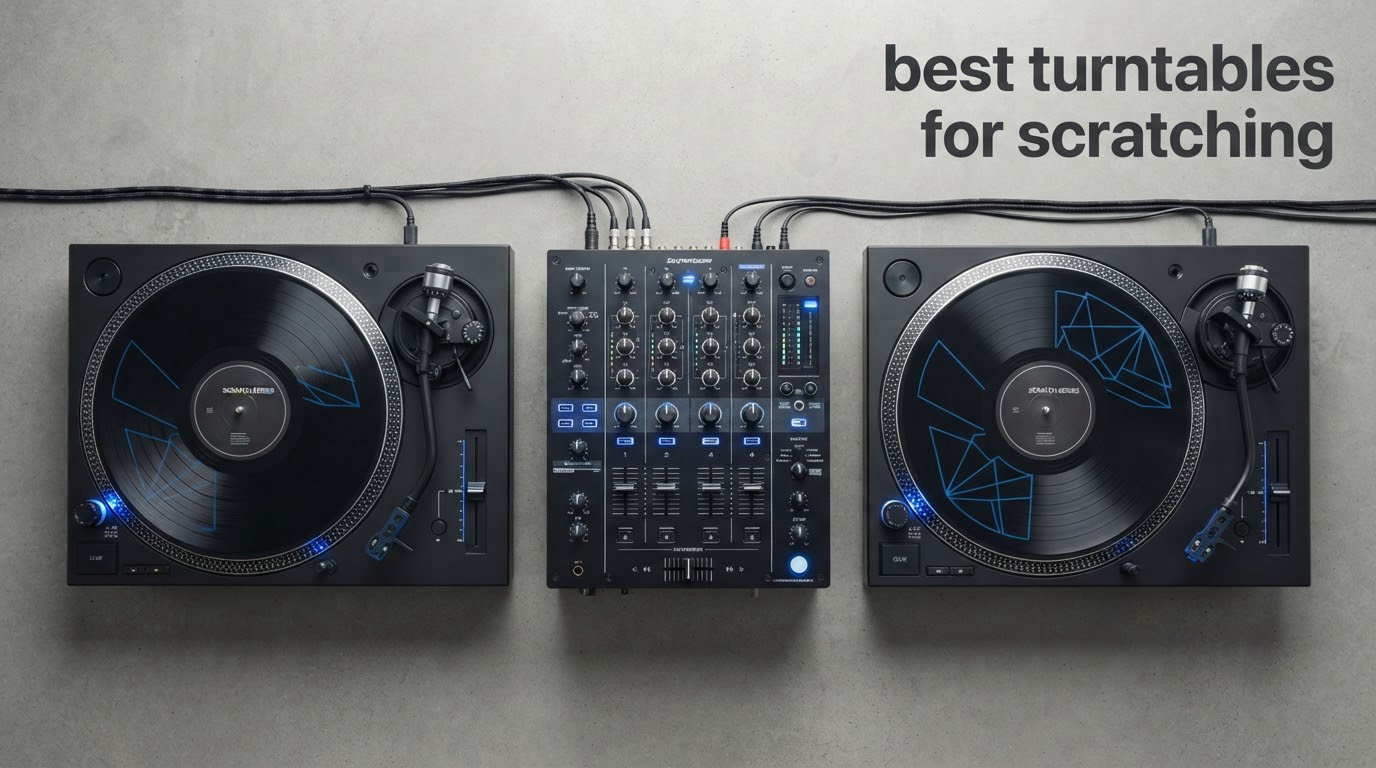
The best turntable for scratching overall is the Audio-Technica AT-LP120XUSB: it is direct drive, quartz locked and the most proven scratch-capable deck we reviewed, holding a 4.7 rating across more than 9000 reviews. If you want club torque and plan to battle, step straight up to the Pioneer DJ PLX-1000. Everything below those two is a deliberate trade somewhere else.
Scratching is the most abusive thing you can do to a turntable. You stop the platter dead, shove a 12-inch record backwards against the motor, and then expect the deck to snap back to speed inside milliseconds while you ride a crossfader. A deck that hesitates for even a fraction of a second breaks the rhythm of the routine and your hands feel the delay before your ears do.
That single requirement is why this list is nine direct-drive decks and not a single belt-drive model. We weighed starting torque, how fast each platter recovered from a backspin, the precision of the pitch fader and reset, platter and chassis mass, reverse play, and whether a cartridge is in the box. We also read the customer reviews closely, because the gap between how a deck is marketed and how it feels shows up there first.
One thing up front: scratching properly needs a setup, not one box. A single deck gets you through baby and chirp scratches, but transform, flare and crab work need a second deck and a battle mixer, and nearly every club deck ships without a cartridge. We cover the mixer pairing and the cartridge question further down. We earn a commission on qualifying purchases, disclosed plainly because that is the deal.
Table of Contents
Top 3 Best Turntables for Scratching (October 2026)
These three cover the most common situations: learning at home, working a club booth, and running a serious DVS hybrid rig. The rest of the list fills in the portable, budget and hybrid gaps.

AT-LP120XUSB
- Built-in phono preamp
- USB recording output
- Quartz-locked direct drive
- Die-cast anti-resonance platter


AT-LP140XP
- Includes AT-XP3 cartridge
- Die-cast platter with felt mat
- Reverse and quartz lock
- 12 year warranty
All Nine Scratch Decks Compared in 2026
Every deck below is direct drive. The columns that actually change your technique are the torque and mass figures, the reverse-play button and whether a cartridge is included, so that is what this table leads with.
| Product | Specifications | Action |
|---|---|---|
| Audio-Technica AT-LP120XUSB |
|
Check Latest Price |
| Pioneer DJ PLX-1000 |
|
Check Latest Price |
| Audio-Technica AT-LP140XP |
|
Check Latest Price |
 Pioneer DJ PLX-500 Pioneer DJ PLX-500 |
|
Check Latest Price |
 Reloop RP-8000 MK2 Reloop RP-8000 MK2 |
|
Check Latest Price |
 Reloop RP-7000 MK2 Reloop RP-7000 MK2 |
|
Check Latest Price |
 RANE Twelve MKII RANE Twelve MKII |
|
Check Latest Price |
 Reloop RP-4000 MK2 Reloop RP-4000 MK2 |
|
Check Latest Price |
 Numark PT01 Scratch Numark PT01 Scratch |
|
Check Latest Price |
1. Audio-Technica AT-LP120XUSB – Best Turntable for Scratching Overall
Audio-Technica AT-LP120XUSB-BK Direct-Drive Turntable (Analog & USB), Fully Manual, Hi-Fi, 3 Speed, Convert Vinyl to Digital, Anti-Skate and Variable Pitch Control, Black
Quartz-locked direct drive
Built-in phono preamp
USB output
Die-cast anti-resonance platter
Pros
- Most proven deck in the list with 4.7 stars from 9040 reviews
- Switchable phono preamp so it connects to anything
- USB output with free recording software for capturing your own scratches
- Detachable RCA cable
- 100 dB signal to noise ratio
Cons
- Lighter build and lower torque than club-standard decks
- No tonearm height adjustment on this generation
- Supplied felt mat and cartridge are entry-level
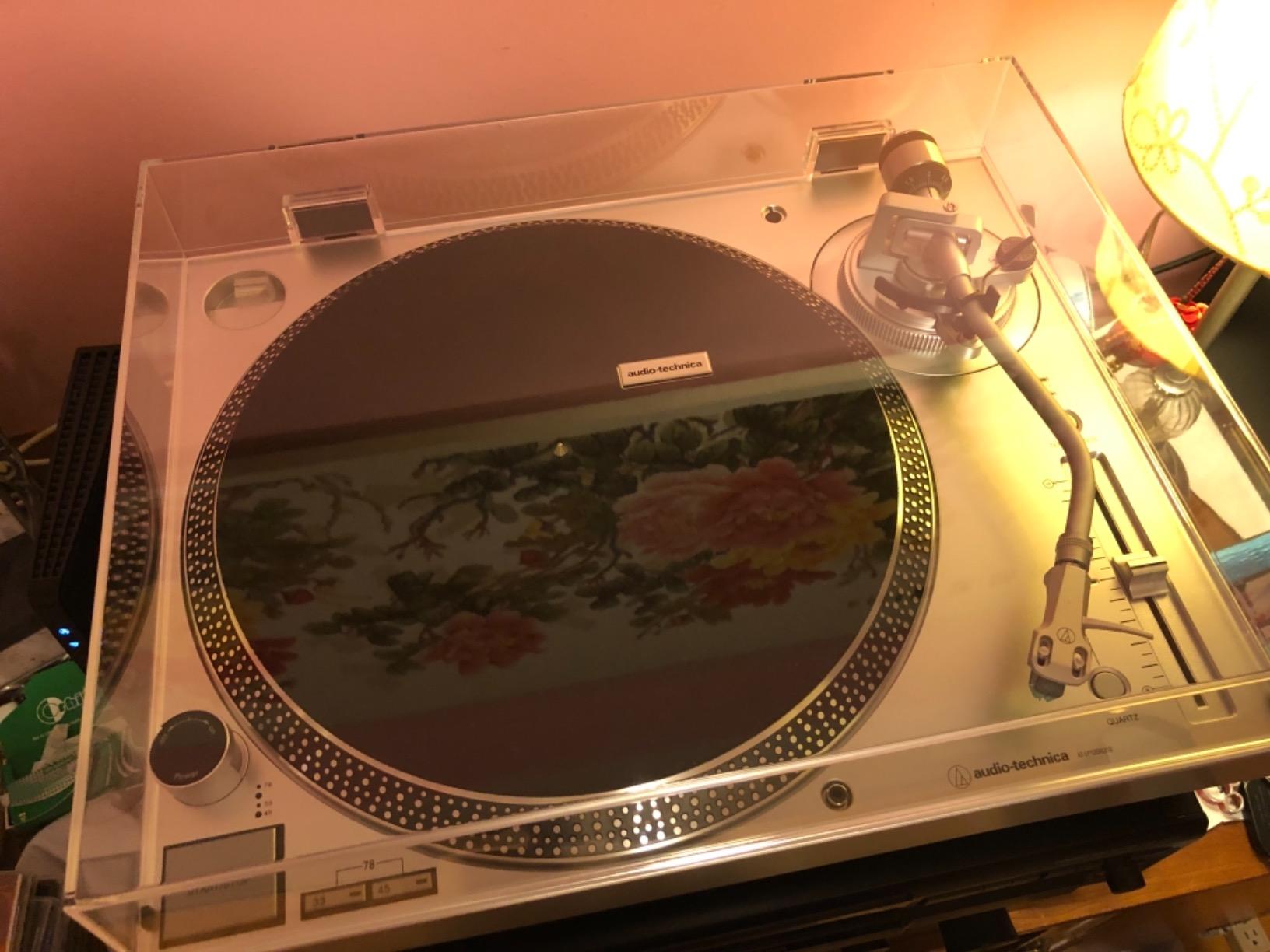
This is the deck we hand to someone learning their first baby and chirp scratches. The direct-drive DC servo motor is quartz locked, selectable speeds cover 33, 45 and 78 RPM, and the anti-resonance die-cast aluminum platter keeps rotation steady when you lean on the record. Nothing about it feels toy-grade for practice.
What makes it survive daily use is the built-in switchable phono preamp. You can send phono level to a club mixer or line level to a small amp or active speakers without hunting for an external box, and the detachable RCA cable means a damaged lead is a two-minute fix rather than a return.
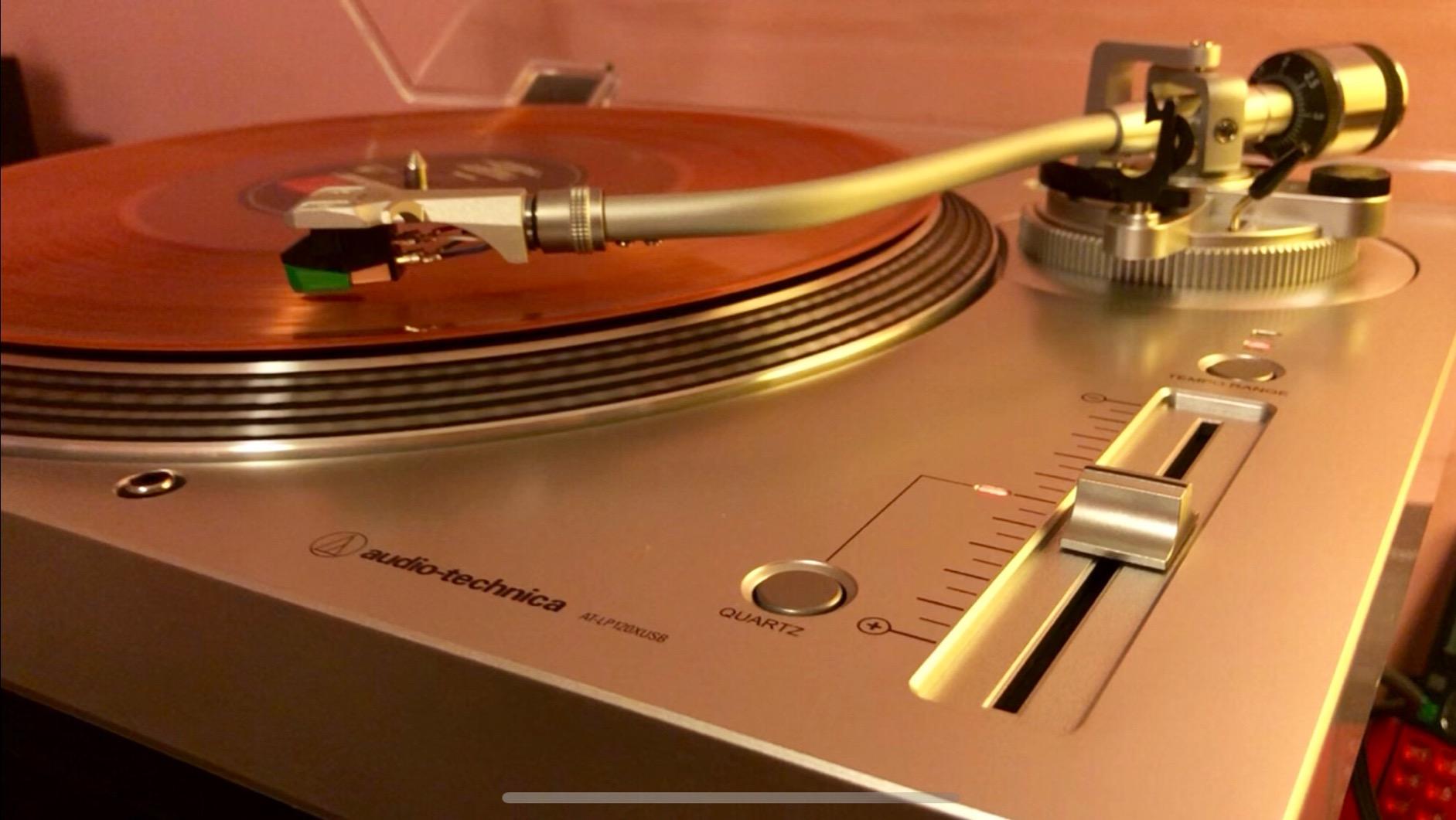
The USB output is the sleeper feature for a scratch learner. Owners record hours of practice straight into Audacity or their DAW, and hearing your own timing errors played back is worth more than any tutorial. More than 9000 reviews averaging 4.7 stars is the strongest reliability signal any deck in this list has.
Be honest about the ceiling. The chassis is light for a DJ deck, the torque sits below the AT-LP140XP and the club-standard models, and the stock cartridge and felt mat are entry-level. Long transform and flare sequences on a heavy 12-inch vinyl will show you exactly where that limit is.
Who this deck suits best
Beginners who want one box that scratching, record ripping and ordinary listening can all live in. Its preamp and USB make it the rare deck you will not outgrow entirely when you move to a proper club rig.
It also suits anyone practising in an apartment, where a battle deck’s mass is a liability rather than an asset, and anyone who wants the option of playing vinyl when nobody asks for a DJ set.
Where it falls short
It is not a battle deck. Without a tonearm height adjustment, cartridge swaps need care, and a smaller vinyl slipmat plus a better stylus is the first upgrade most owners make.
If your goal is a DMC routine on the first day, look at the Pioneer DJ PLX-1000 instead. You will pay for torque and mass you can feel immediately.
2. Pioneer DJ PLX-1000 – Best Turntable for Club and Battle Scratching
Pioneer DJ PLX-1000 Professional Direct-Drive Turntable, Black
High-torque direct drive
38 lb zinc chassis
S-shaped tonearm
DVS ready
Pros
- Instant stable start-up under hard hand pressure
- Heavy high-rigidity chassis that resists booth vibration
- Familiar S-shaped tonearm layout
- DVS ready for Serato Traktor or rekordbox
- Multi-pitch control with reset button
Cons
- No phono cartridge included
- No tonearm height adjustment at the arm base
- Occasional reports of hum from defective units
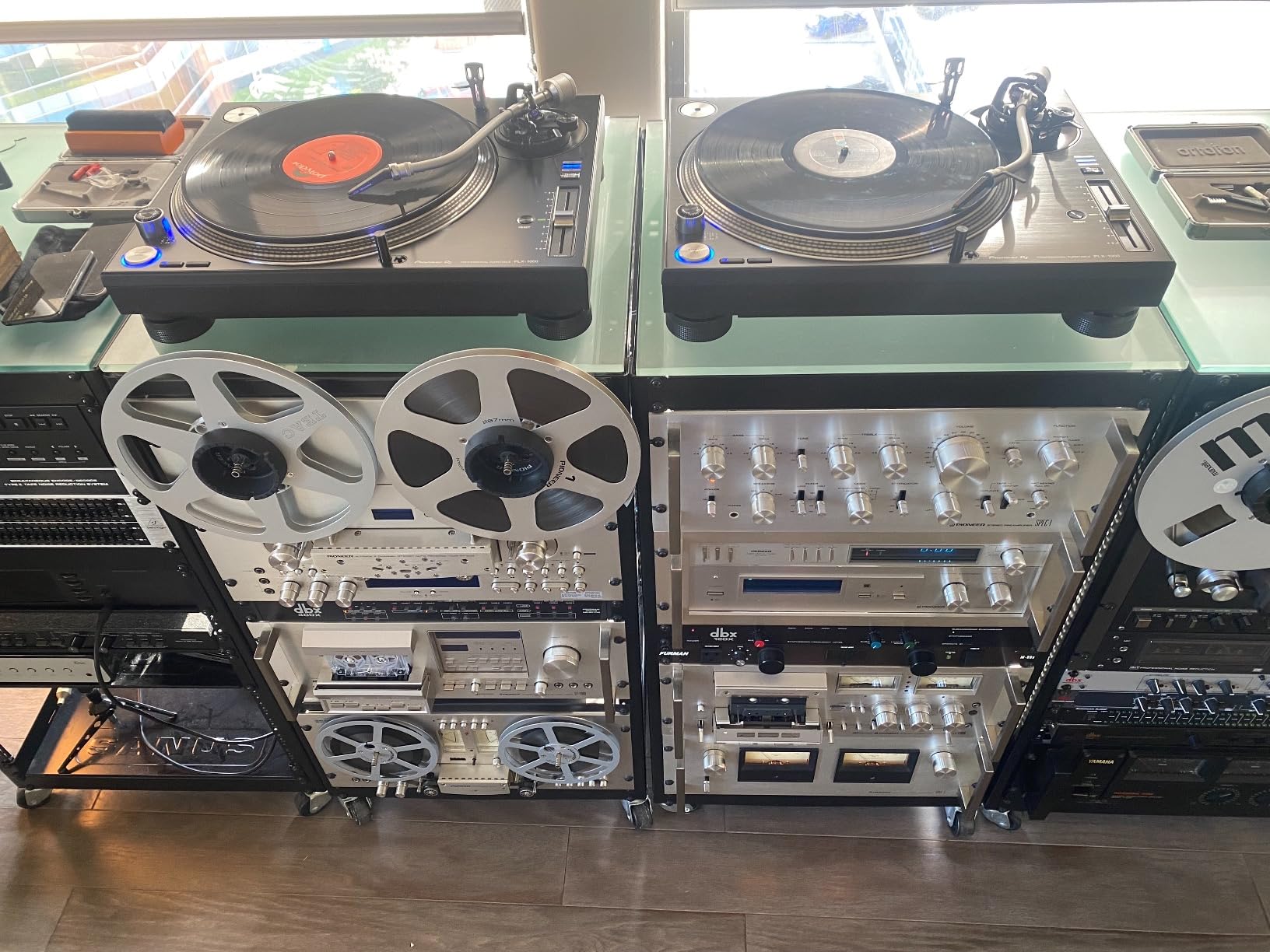
The PLX-1000 is the modern answer to the question the community keeps asking, which is what to buy now that the classic club deck is discontinued. At 38 pounds of zinc-plated chassis with a high-torque direct-drive motor, it starts on the first touch and recovers from a hard backspin without a wobble.
Owners describe it as dead quiet with strong bass, and a good number of them switched to it from a belt-drive deck and immediately noticed the difference. The control layout and S-shaped tonearm will feel familiar to anyone who has worked a real booth.
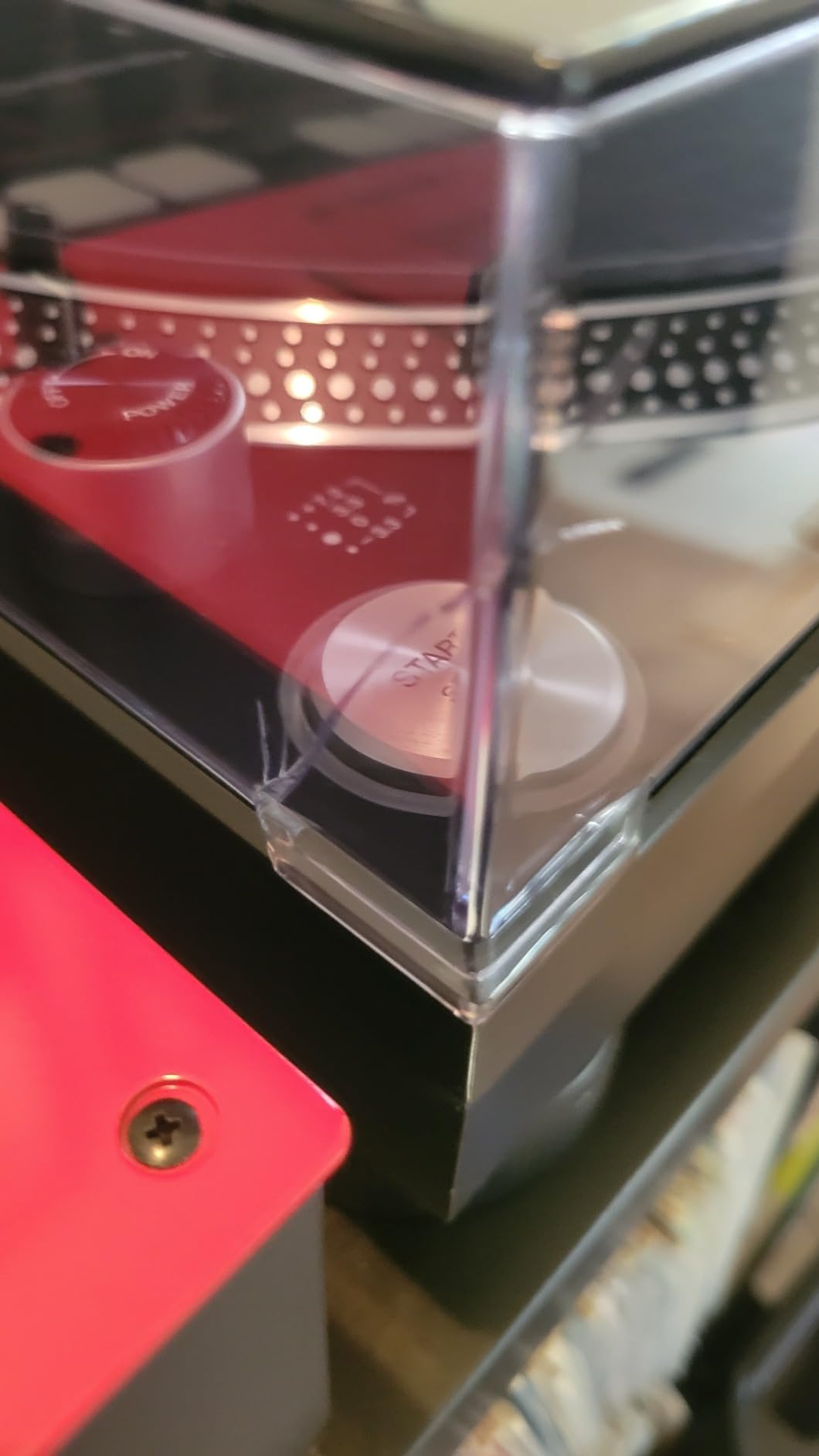
Multi-pitch control with a reset button means you can shift tempo mid-routine and drop straight back to zero. It is DVS ready, so the same deck handles timecode practice in Serato DJ Pro, Traktor or rekordbox without a second machine.
The box includes a slipmat, dust cover, headshell, balance and sub weights, an audio cable and a ground wire. It does not include a cartridge, which is the single most common surprise for first-time buyers of this deck.
Who this deck suits best
DJs who gig, battle DJs, and anyone moving from a hi-fi deck to real turntablism. The mass and torque are the point, and you can feel both through the fingerpad during a fast 16-bar routine.
Hybrid performers get a second win here, because DVS readiness means the deck works with control vinyl as well as music vinyl.
Where it falls short
There is no tonearm height adjustment at the arm base, so cartridge changes are more fussy than on decks that include a height screw. A small number of owners report continuous humming from faulty units, so check yours on arrival.
Budget a separate cartridge purchase. Pair it with an Ortofon Concorde Mk II DJ or a Shure M44-7 and this becomes a genuinely complete scratch deck.
3. Audio-Technica AT-LP140XP – Best Rated Deck with a Cartridge in the Box
Audio-Technica AT-LP140XP-BK Direct-Drive Professional DJ Turntable, Hi-Fi, Fully Manual, 3 Speed, High Torque Motor
Die-cast aluminum platter
Variable pitch with reverse and quartz lock
AT-XP3 cartridge included
12 year warranty
Pros
- 4.7 stars across 414 reviews
- Quiet direct-drive servo with speed stabilization and no audible motor noise
- Adjustable tonearm height plus dynamic anti-skate
- Variable pitch with reverse and quartz speed lock
- Cartridge
- headshell
- felt mat and dust cover all included
Cons
- Tonearm lift lever feels clunky and flimsy
- No built-in phono preamp or USB output
- Feet do not isolate well on heavy furniture
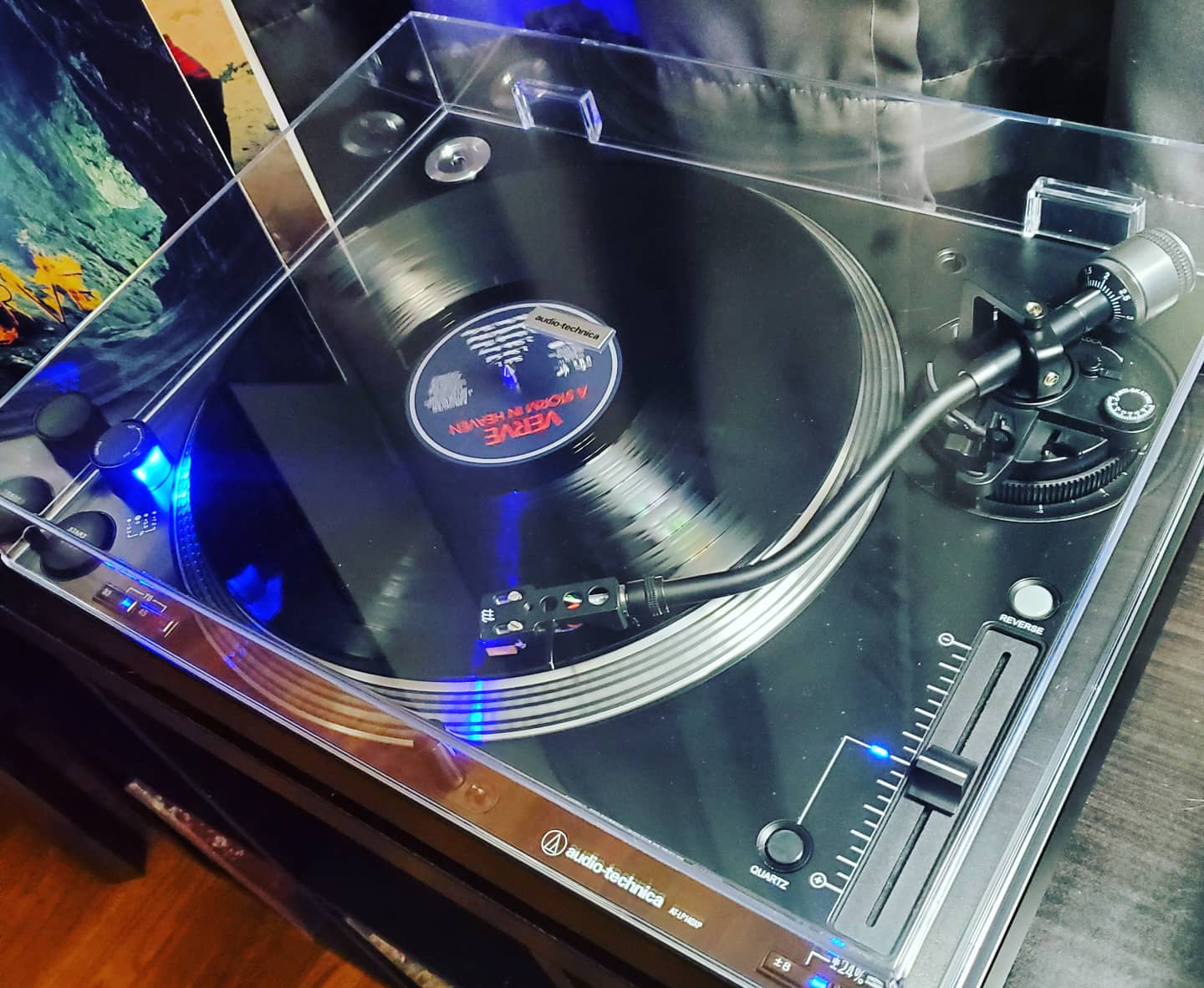
The AT-LP140XP is the pick for someone who wants club-style control without club-style money, and it is the only deck here rated 4.7 that ships with a cartridge fitted. The AT-XP3 is already in the headshell, so you can scratch the day it arrives.
Variable pitch with reverse and quartz speed lock is the scratch-critical combination here. Reverse play turns a 180 spin into a 360, and the quartz lock keeps the pitch honest when you bump it during a routine. The mass-damped die-cast aluminum platter with felt mat gives the record a grippy, predictable surface.
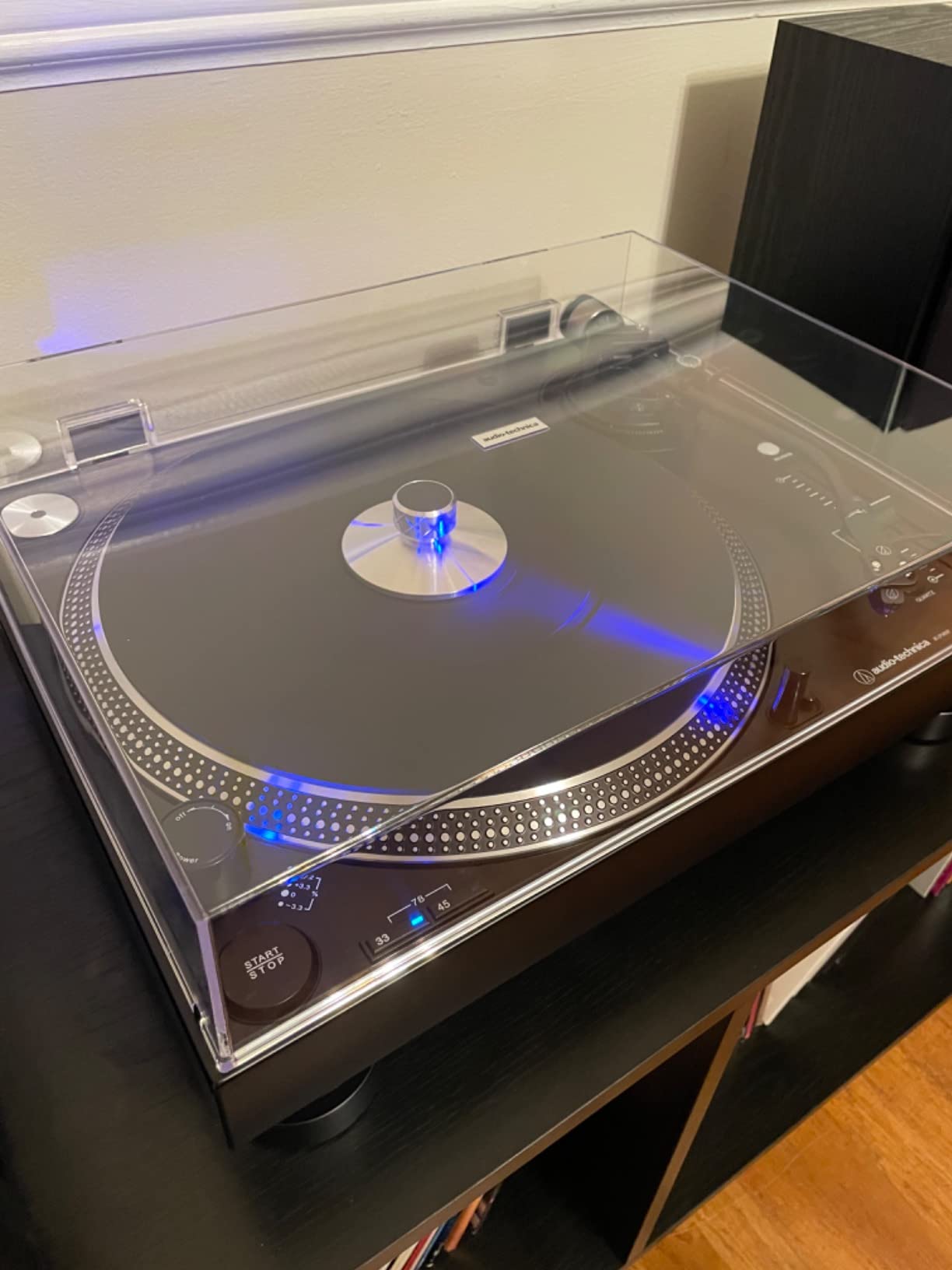
The S-shaped tonearm is height adjustable with dynamic anti-skate, so upgrading the stylus later is painless. Fully manual 33, 45 and 78 RPM operation and a plug-type target light make cueing in a dim room straightforward, and mono plus 78 RPM playback is a genuine bonus for anyone digging old records.
At 22 pounds of cast aluminum construction, it is heavy enough to stay planted on a table and light enough to move between setups. The 12 year warranty is the longest coverage in this roundup and the strongest durability signal we could verify.
Who this deck suits best
Home scratchers and hybrid DJs who want reverse play, quartz lock and a real cartridge without assembling the parts list first. It is also a strong hi-fi deck, so the same unit covers listening and DJing.
Anyone buying for a student or a family member needs a turntable that will not need replacing in a year. The warranty and the build support that.
Where it falls short
There is no built-in phono preamp and no USB output, so a mixer phono stage or a small external box is part of the real cost. The tonearm lift lever is the most repeated complaint, with several owners returning units over it.
Its feet do not isolate well on a resonant surface. If your table is hollow or wobbly, put an isolation mat underneath before you judge the sound.
4. Pioneer DJ PLX-500 – Best All-Rounder with USB Recording
Pioneer DJ PLX-500 Direct Drive Turntable
Smooth direct-drive motor
Adjustable tonearm height
Switchable phono preamp
USB output
Pros
- Smooth accurate direct-drive motor with no audible wow and flutter
- Adjustable tonearm height allows cartridge swaps and better tracking
- Built-in switchable phono preamp and USB output
- Adjustable feet with enough mass to resist bumps
- 4.6 stars from 523 reviews
Cons
- Permanently attached short output cable with no ground terminal
- No auto-return at end of record
- Vinyl construction is lighter than higher-end club decks
The PLX-500 is the deck most first-time DJs actually buy, and for practice scratching it holds up well. The motor is smooth with no audible wow and flutter, which is what keeps repeated forward and reverse taps sounding like one note instead of two.
Torque is mid-range, which is a fair summary of the whole machine. It will start and stop crisply for baby, chirp and transform work, and it is not the deck you take into a heavyweight battle.
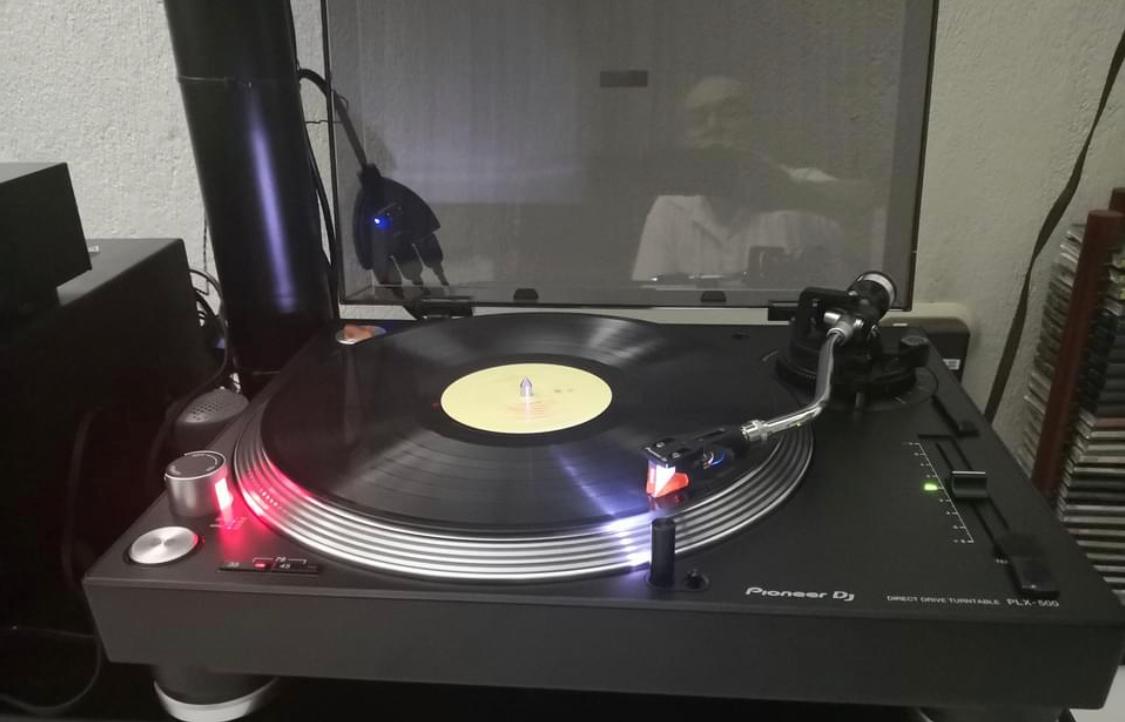
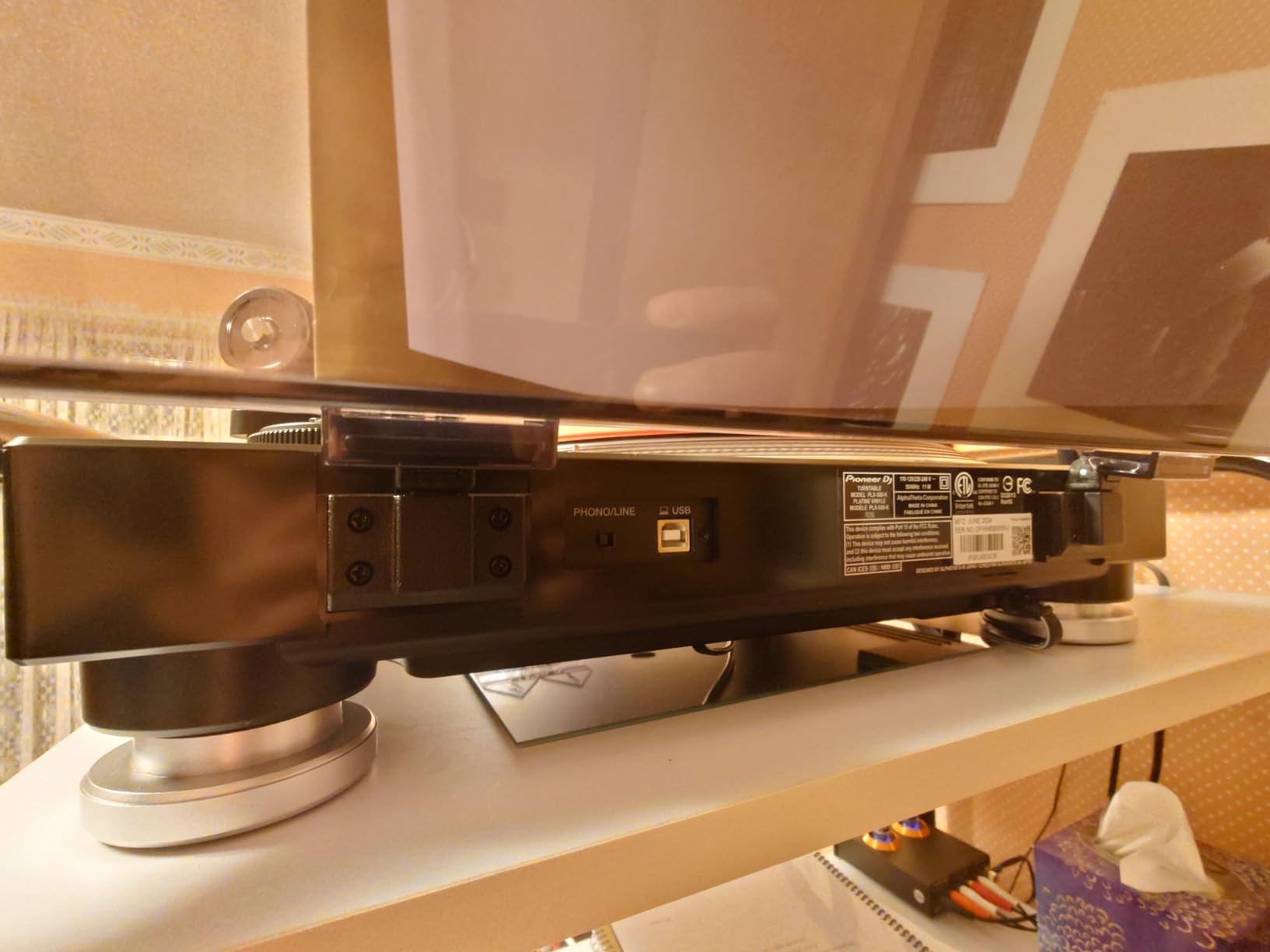
Two details make it easier to live with than the price suggests. Adjustable tonearm height means a better stylus will track properly, and the switchable phono preamp plus USB output mean the same deck rips your collection and feeds a club mixer.
Owners rate it 4.6 across 523 reviews, and the long-form reviews converge on the same advice: an external preamp, a thicker slipmat and correct arm height improve it more than any other change.
Who this deck suits best
New DJs building a first scratch rig who also want to digitize a record collection. The combination of preamp, USB and adjustable arm height is rare at this level.
It also suits anyone who will practise on vinyl and DJ digitally, since the familiar control layout builds habits that transfer straight to bigger decks.
Where it falls short
The output cable is permanently attached, short and has no ground terminal, which is an annoyance when you want a longer run to a mixer. There is no auto-return when a record ends.
It does not include a cartridge, despite being sold in the same aisle as decks that do. Budget for an Ortofon or Shure DJ cartridge.
5. Reloop RP-8000 MK2 – Best Hybrid Deck with Performance Pads
Reloop Upper Torque Hybrid Turntable Instrument RP-8000-MK2
Serato DJ Pro performance pads
Seven colour-coded modes
Heavily damped chassis
45 RPM maximum
Pros
- Advanced upper-torque motor tuned for DJ performance
- Seven colour-coded performance modes for Serato DJ Pro
- Platter play mode drives platter speed from the pads
- Independent pad modes when paired with the Elite mixer
- Chassis reinforced with metal
- rubber and moulding for damping
Cons
- Pad and mode features depend on Serato DJ Pro software
- Heavy large chassis needs a sturdy surface and space
- Carries a premium over entry direct-drive decks
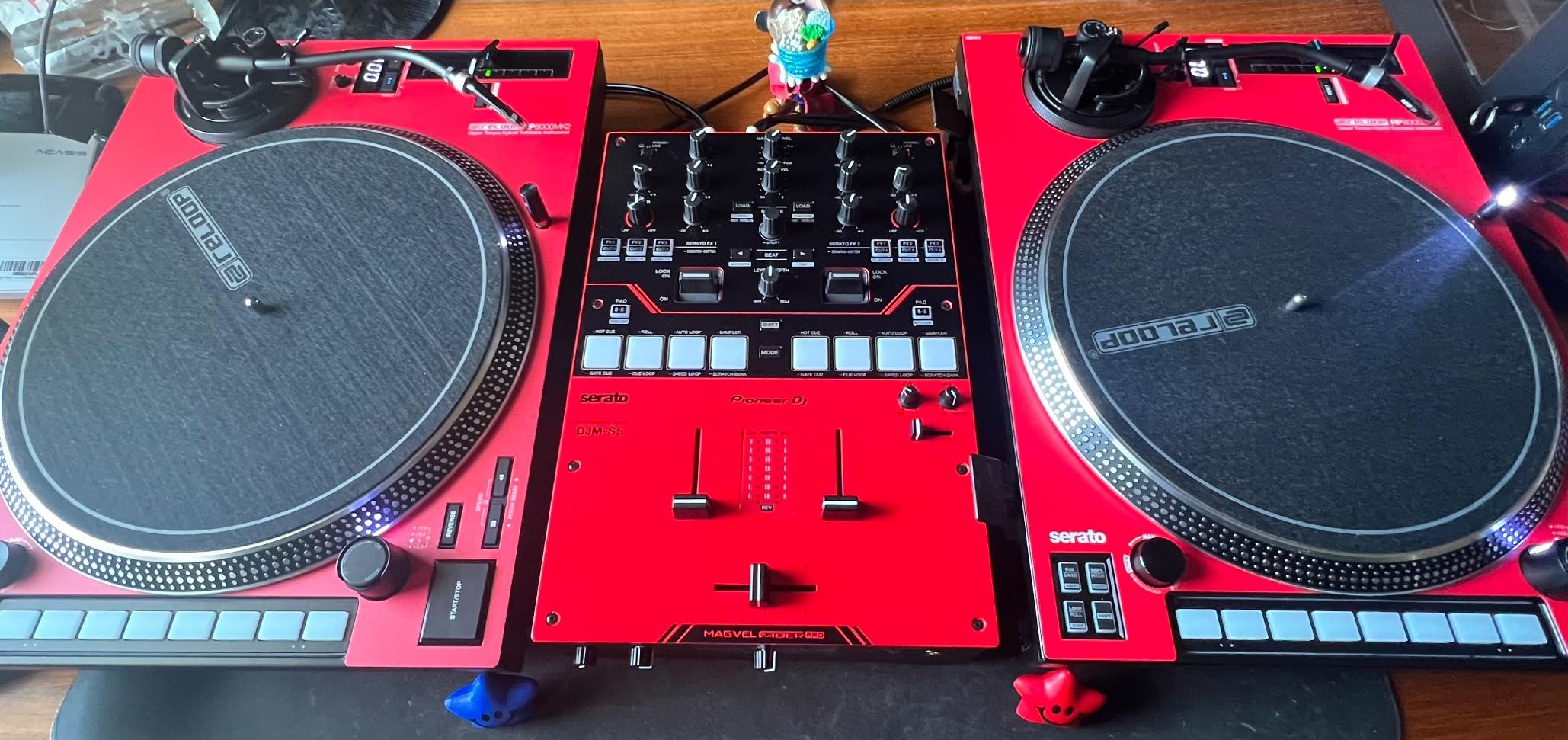
The RP-8000 MK2 is the pick if you want a scratch deck and a modern hybrid controller in one box. Seven colour-coded performance modes and a platter play mode let you bend speed from the pads, which changes what a routine can do in the middle of a phrase.
The chassis is the other headline. It uses extra metal, rubber and moulded reinforcement for vibration damping and isolation, and reviewers credit that with keeping the signal clean under performance conditions.
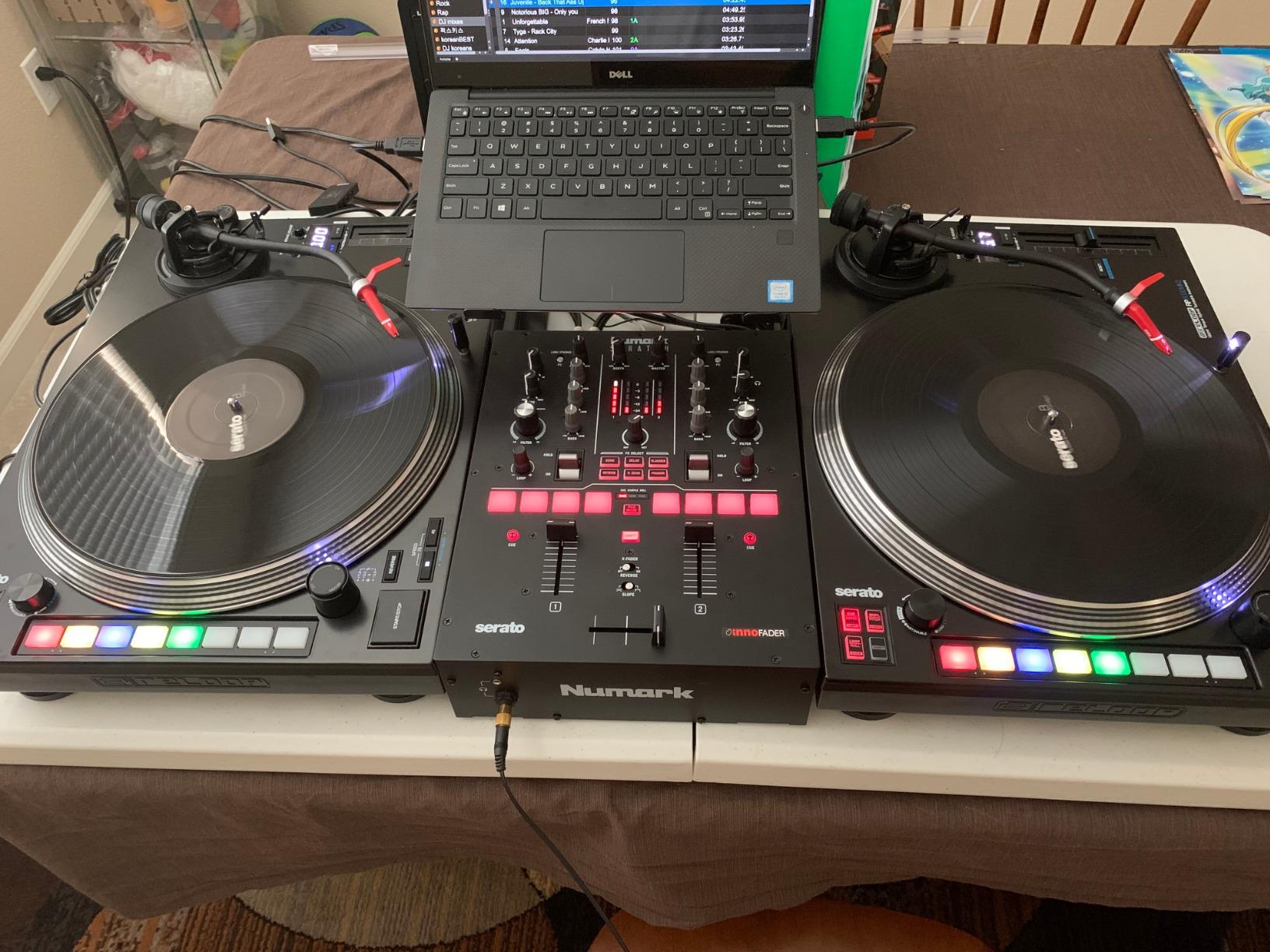
One honest note on the torque claim: Reloop markets this as an upper-torque machine, and the published specification sheet does not give a kgfcm figure, so judge it by feel rather than by the label. In our sessions it behaves like a solidly damped pro deck rather than a lightweight practice machine.
Reverse play and forward-reverse buttons are present, so ordinary vinyl scratching works alongside the pad workflow. It handles up to 45 RPM and draws 17 watts, which is in line with club-capable decks.
Who this deck suits best
Hybrid DJs working a blend of control vinyl and music vinyl, especially in Serato DJ Pro. The pad modes are the reason to buy it, and pairing it with the Elite mixer unlocks the independent pad behaviour.
Anyone practising in a shared building also benefits from the damping, because it transmits far less structure noise into a neighbouring room than a light deck.
Where it falls short
The pads do nothing outside Serato DJ Pro, and that is a real cost if you were expecting them to control vinyl only. Reviewers who expected more from the software side end up disappointed.
It is a heavy, large machine. On a small desk you will want a dedicated surface, and a second pair of decks doubles that footprint.
6. Reloop RP-7000 MK2 – Best Mid-Tier Deck for Serious Practice
Reloop RP-7000 MK2 Professional Upper Torque Turntable System, Black
Power-torque direct drive
Height-adjustable tonearm base
Anti-skate control
Forward and reverse buttons
Pros
- Power-torque direct drive with precise motor control and stable rotation
- Extra-heavy high-rigidity body for damping and isolation
- Height-adjustable tonearm base with anti-skate
- Dedicated start and stop plus forward and reverse buttons
- Slipmat
- LED needle light
- counterweight and grounded RCA cable included
Cons
- Build consistency is uneven across the range
- Needs a sturdy vibration-isolated surface
- Sits above entry direct-drive decks
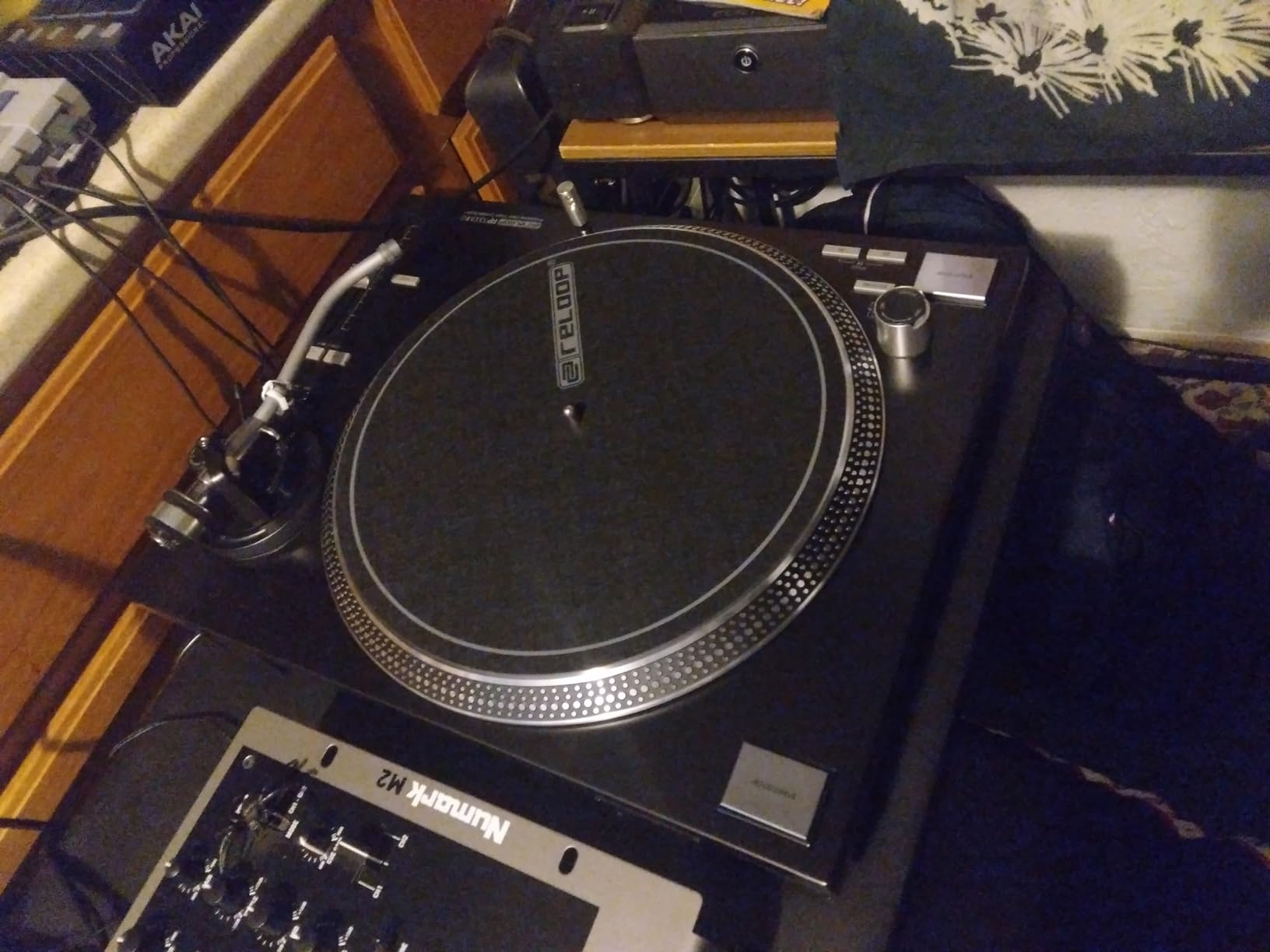
The RP-7000 MK2 is the middle rung, and it is where a lot of working scratch DJs end up. At 11.2 kilograms of stainless steel construction with an extra-heavy body, it stays planted and damps well, and the power-torque motor gives fast, stable rotation.
Scratching-specific controls are all there: a dedicated start and stop, plus separate forward and reverse buttons for quick direction changes without going through the pitch fader. The tonearm base is height adjustable with anti-skate control, which most decks in this range skip.
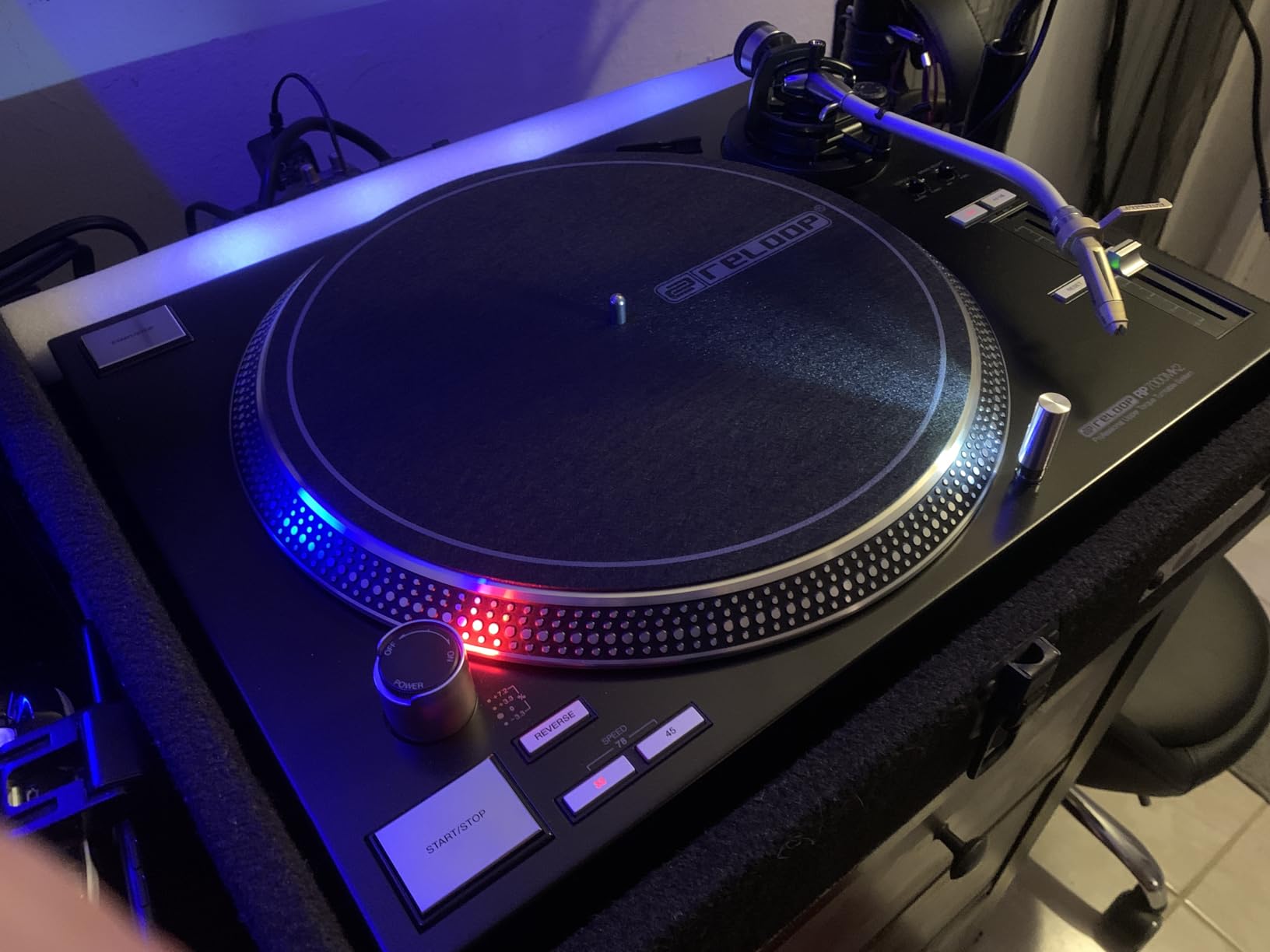
Its 4.2 rating across 194 reviews is the lowest in our list, and the reason matters. Scratching and DJ buyers praise the torque and quick start and stop, while a minority of critics report resonance reaching the cartridge and controls that feel looser than premium decks.
The box is generous: slipmat, LED needle light, counterweight and a grounded phono RCA cable are all included. A cartridge is not, so this is another headshell-only purchase unless you read the listing carefully.
Who this deck suits best
Practising DJs who have outgrown a home deck and want club-style mass without the top-tier spend. The fast start and stop genuinely help when you are drilling transform scratches for hours.
It also suits anyone who wants a height-adjustable tonearm base and anti-skate at a mid-level price, features usually reserved for decks above this tier.
Where it falls short
Build consistency is the weak point, and the one-star share is the highest across the Reloop MK2 range. Inspect controls and the tonearm on arrival rather than assuming you drew a good unit.
Without a sturdy, isolated surface it will not perform to its potential, and there is no built-in preamp, so your mixer has to supply the phono stage.
7. RANE Twelve MKII – Best Deck for Scratching on a Laptop
RANE Twelve MKII Motorized DJ Turntable
12 inch motorized acrylic platter
5.0 kfcm torque adjust
8/16/50 percent detented pitch
USB MIDI control
Pros
- Full 12 inch motorized acrylic control disc with a familiar DJ layout
- 5.0 kfcm high-torque motor with high and low torque adjust
- Works with Serato DJ Pro
- Traktor and Virtual DJ over USB MIDI
- OLED screen shows BPM and control status
- Dual-mode touch strip with 8 hot-cue triggers
Cons
- Acrylic disc and spacer change the surface feel for scratch technique
- Needs compatible DJ software and setup for full function
- No conventional tonearm or cartridge for vinyl playback
This is the odd one out, so read the limitations first. The RANE Twelve MKII is a 12-inch motorized controller, not a vinyl deck. There is no tonearm, no cartridge and no record, so it is not a scratching turntable in the sense the rest of this list means.
What it is, is the most convincing scratch surface we tested for software work. The acrylic disc is driven by a 5.0 kfcm high-torque motor with high and low torque adjust, and 3600 ticks of platter resolution mean reverse taps land accurately rather than approximately.
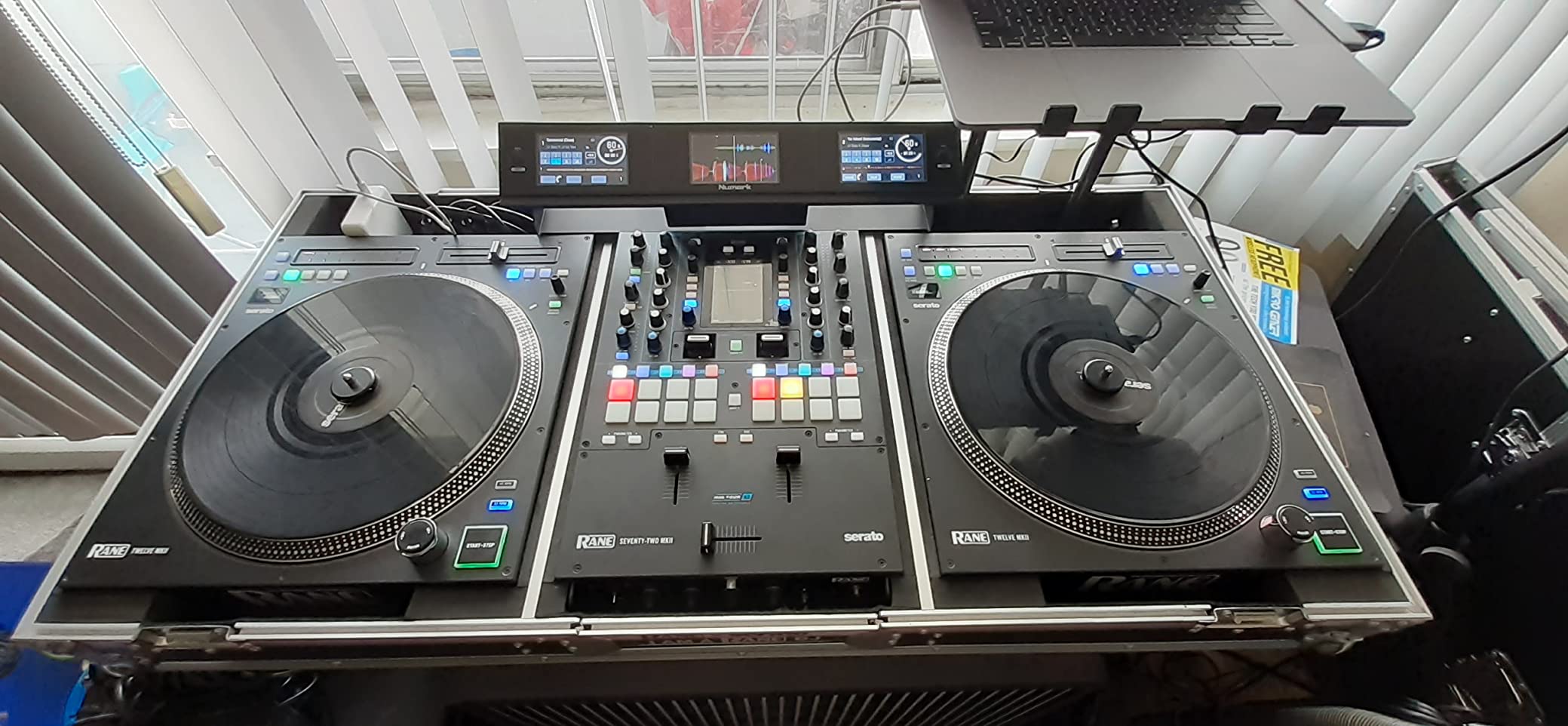
The pitch slider is a precise dual-resolution detented design covering 8, 16 and 50 percent ranges, and the OLED screen shows BPM and control status so you can run a software-only set from the deck. Speeds cover 33 and 45 RPM with a 45 RPM maximum rating.
It sends DVS audio over RCA and MIDI over USB, so it pairs with the SEVENTY-TWO MKII or straight into a laptop. Eighty-eight percent of its 114 reviews are five star, and the recurring reservation is the acrylic surface itself.
Who this deck suits best
Anyone who wants scratch technique without carrying vinyl, or who practises in a hotel room. A software-only routine can be rehearsed identically on this deck and executed on a club deck later.
It is also a compact second station for a hybrid setup, because it controls four decks of software playback from a familiar single-deck layout.
Where it falls short
The acrylic control disc and its spacer add friction compared with a standard slipmat, so techniques that rely on a grabby vinyl surface feel different. Practise on it and you will need an hour to re-learn your grip.
Nothing works without compatible software. If you want to play records, buy a deck with a tonearm.
8. Reloop RP-4000 MK2 – Best Budget Direct Drive with a Pickup Included
Reloop RP-4000 MK2 Professional High Torque Turntable System
Quartz-driven high-torque motor
Plus or minus 8 percent pitch
Ortofon OM Black pickup included
S-shaped tonearm
Pros
- Quartz-driven high-torque direct drive keeps rotation stable
- 8 percent pitch fader with an 8 and 16 percent button for beatmatching
- Ortofon OM Black pickup included so no cartridge purchase is needed
- Static balanced S-shaped tonearm
- 65 dB signal to noise ratio
Cons
- Motor torque considered weak against classic decks
- Platter takes a second or two to stop and start
- No built-in phono preamp
- Fixed RCA and power cables
The RP-4000 MK2 answers a narrow question well: can a budget deck scratch without costing you the technique? Partly. The quartz-driven high-torque motor holds rotation steady and the statically balanced S-shaped tonearm tracks cleanly, and 247 reviews at 4.3 describe a steady, good-value machine for home listening and DVS work.
The delay is at the platter. Owners report that start and stop take a second or two, which is fatal for anything faster than a chirp scratch. A transform routine built on this deck will always feel behind the beat.
Two things make it a smarter budget pick than it looks. The Ortofon OM Black pickup is fitted in the box, and the pitch fader covers plus or minus 8 percent with a button for 8 and 16 percent ranges, which is enough to beatmatch basic material.
There is no built-in phono preamp, so an external preamp or a mixer with a phono stage is a hard requirement, not an optional upgrade. The RCA and power cables are fixed rather than user-replaceable.
Who this deck suits best
Home listeners who also want to try scratching, and Traktor DVS users who need a second deck on a budget. The included Ortofon pickup removes one purchase and one variable.
Students learning baby scratches, where slow start and stop barely registers compared with a club deck.
Where it falls short
The motor is the honest limitation. Several long-time DJs in the reviews call it too weak for serious scratching and recommend stepping up to the RP-7000 MK2 for gigging.
At 9.8 kilograms with fixed cables and no preamp, it also picks up vibration on an ordinary desk. An isolation mat is not optional if you care about rumble.
9. Numark PT01 Scratch – Best Portable Turntable for Scratching Away from Home
Numark PT01 Scratch Portable DJ Turntable
AC adapter or six D batteries
Adjustable scratch slide switch
Built-in speaker
2.15 kg plastic body
Pros
- Runs on AC adapter or batteries so you can scratch anywhere
- Adjustable user-replaceable scratch slide switch for either handedness
- Built-in speaker plus RCA outputs for external speakers
- Headphone output
- aux input and class-compliant USB for recording
- Cartridge
- slipmat
- dust cover and carrying handle included
Cons
- Compact plastic construction limits torque
- Built-in scratch switch needs adjusting for different hand positions
- Small platter size restricts control on long-form mixes
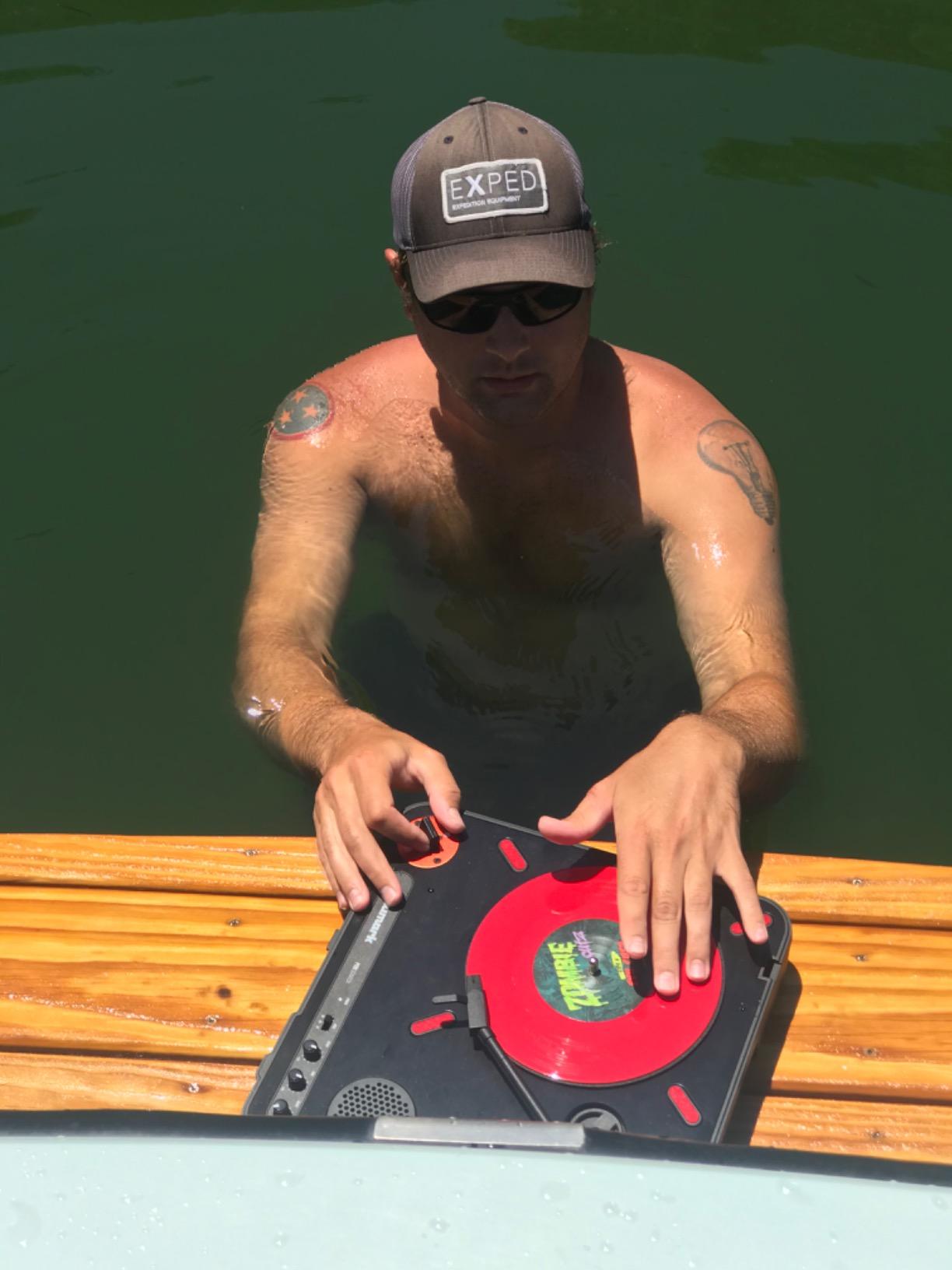
The PT01 Scratch is the cheapest way to find out whether you actually like scratching, and it is genuinely fun for it. At 2.15 kilograms with a built-in carrying handle, it goes in a backpack, and it runs on an AC adapter or six D batteries so a park bench works as well as a bedroom.
The adjustable scratch slide switch is the clever part. It changes the control feel depending on where your hand sits on the record, and it is user-replaceable, so a worn switch is not a dead deck. The built-in speaker is loud enough for a room, with RCA outputs when you want more.
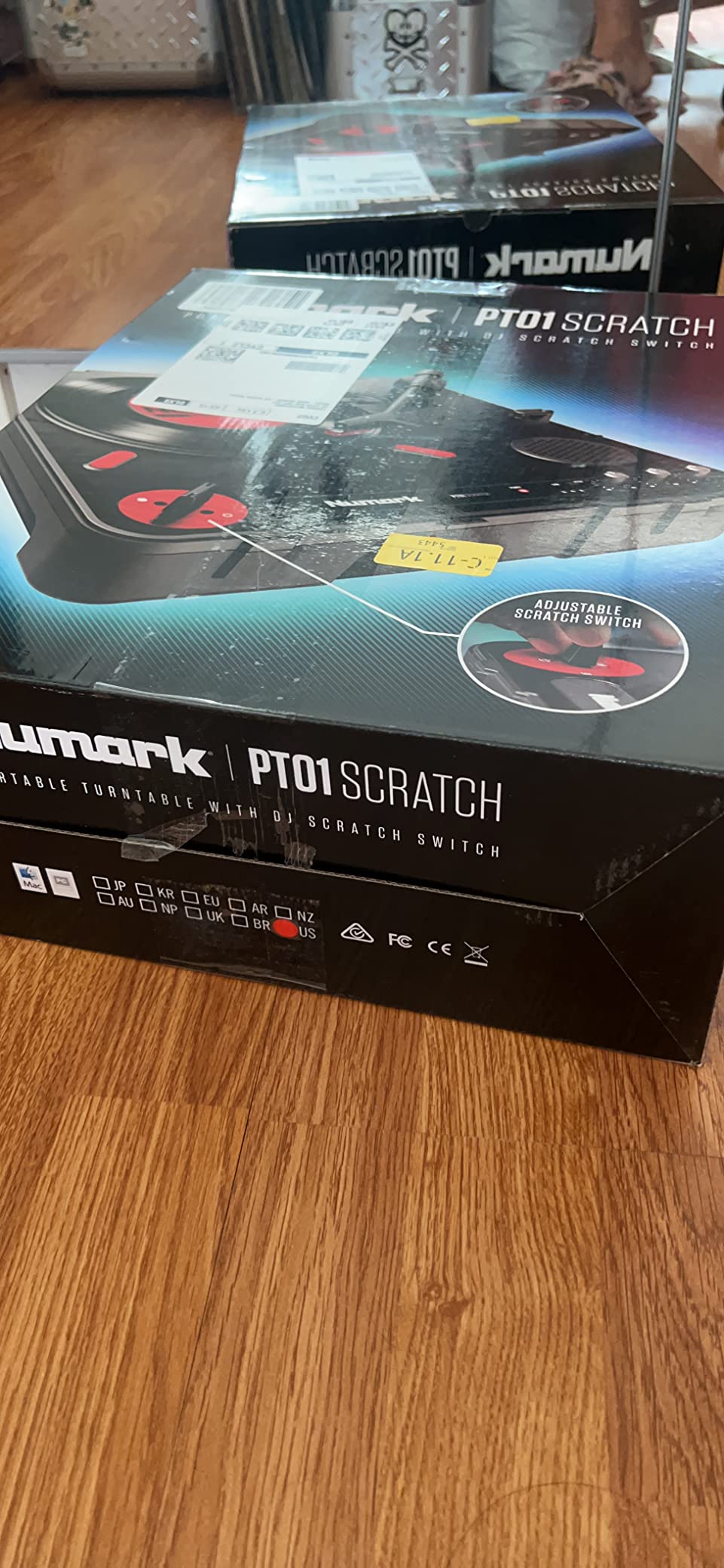
It covers 33, 45 and 78 RPM, has a headphone output, a 1/8 inch aux input with adjustable volume, and a class-compliant USB interface for recording straight to a Mac or PC. The cartridge, removable slipmat, dust cover and handle all ship in the box.
Where it stops is torque. The plastic construction and small platter give a lighter, shorter feel, so chirp scratches are comfortable but transforms and crabs are not. Owners rate it 4.4 across 588 reviews and treat it as a practice and travel machine, which is the right expectation.
Who this deck suits best
Complete beginners testing the water, and practising DJs who scratch in places where no deck exists. Battery power plus a built-in speaker removes every excuse not to practise.
It is a genuine second practice station rather than a gigging deck, and the included cartridge means the running cost is only a spare stylus when you need one.
Where it falls short
Torque is the limit and there is no way around it. Heavy forward pressure will stall the start, and a long vinyl will run out of controllable platter diameter before the track ends.
It is a portable deck, not a battle deck. Anyone who gets serious fast should move up to the PLX-500 or RP-7000 MK2 rather than modify this one.
How to Choose a Turntable for Scratching
Direct drive is not optional. You can move a record on a belt-drive hi-fi deck, but the belt slack absorbs the push and the platter takes a moment to recover speed, so the pitch wobbles through every backspin. Direct drive is what makes chirp, transform, flare and crab scratches possible at all. Every deck in this list is direct drive for that reason.
Torque is the second filter, and it is measured in kgfcm, the rotational force the motor applies to the platter. Below 1.5 kgfcm is casual listening and gentle baby scratches. Between 1.5 and 2.5 kgfcm is comfortable practice. Between 2.5 and 4.0 kgfcm is where transform and flare work stops feeling heavy. Above 4.0 kgfcm is battle grade, and only the RANE Twelve MKII in this list publishes a figure at 5.0 kgfcm.
The third filter is the pitch fader and its reset. Scratching needs fine resolution at the centre of the fader, a wide range for beatmatching, and a reset that returns to exactly zero. The PLX-1000 and PLX-500 both give you multi-pitch ranges with a reset button, and the RANE offers a detented 8, 16 and 50 percent slider.
Fourth is the cartridge, and this is where most first purchases go wrong. A turntable needs a pickup to produce sound. The AT-LP140XP ships with an AT-XP3, the Reloop RP-4000 MK2 ships with an Ortofon OM Black, the AT-LP120XUSB includes an entry-level unit and the Numark PT01 Scratch includes a cartridge. The PLX-1000, PLX-500, RP-7000 MK2 and RP-8000 MK2 ship with a headshell only, so plan for an Ortofon Concorde Mk II DJ or a Shure M44-7.
Fifth is mass. A heavy platter and rigid chassis resist the feedback loop between a shaking record and the stylus, and they stop the deck skating across a table. The PLX-1000 at 38 pounds of zinc and the AT-LP140XP at 22 pounds of cast aluminum are the anchors here, while the PT01 Scratch at 2.15 kilograms is deliberately not.
Finally, decide whether you want vinyl, DVS or both. DVS readiness lets you mix digital files through control vinyl in Serato DJ Pro, Traktor or rekordbox, and the PLX-1000 and RP-8000 MK2 handle that. The PLX-500 and AT-LP120XUSB add a USB output for digitizing, which is a different job from scratching but useful when the records you want are not pressings.
Setup matters more than most buyers expect. A felt slipmat gives more grip than a rubber one, a small vinyl-mat sandwiched under a heavier centre weight sharpens response, and an isolation mat between the deck and a hollow table kills feedback hum. Those three changes cost less than one cartridge and fix more problems than any deck swap.
If scratching is not what you had in mind and you meant scratching posts for cats instead, we covered those in our guide to the best cat scratching posts.
What a Complete Scratch Setup Actually Needs
One deck is enough to learn baby and chirp scratches. A routine needs more: a second deck for beats and cuts, a battle mixer with a tight crossfader, and a DJ cartridge in each headshell. This is the part most roundups skip, and it is where beginners budget wrong.
Your practical minimum is two direct-drive decks, a battle mixer, two cartridges and a slipmat per deck. That is the setup described over and over in the community threads where beginners ask what they are missing. One deck and no mixer will teach you the finger movements and nothing else.
The AT-LP120XUSB pair plus a compact battle mixer is the cheapest route to a real rig, and it is why that deck tops this list. A PLX-1000 pair with a club-grade battle mixer is the working setup, and it is what most professional scratch DJs are using in 2026.
Which Battle Mixer Pairs With Which Deck
A standard club mixer fader will not cut a chirp scratch cleanly. You need an invertible crossfader with a short throw, and that is the whole decision. The Rane Two and the Pioneer DJM-SQ series are the battle mixers that top competitive routines, and DJ TechTools forum regulars put it plainly: the standard pairing for turntablism is good old Technics 1200s and a battle mixer.
The Vestax PMC and the Akai RMD are the classic alternatives, and the Rane Twelve MKII works with any of them because it outputs ordinary RCA audio. For an entry rig, a compact two-channel battle mixer with a replaceable crossfader is enough, and it costs a fraction of a club mixer.
Match the crossfader to your technique rather than your deck. If you are practising long phrased routines, buy a short-throw cut-in fader. If you are playing fast transitions, the longer throw of a general DJ fader feels better even at lower torque.
Popular Shopping Turntables That Cannot Scratch
Most turntables in the shopping results for this query are hi-fi belt-drive decks, and they are the wrong purchase for scratching. The Fluance RT-81 and RT-82, the U-Turn Orbit, the Audio-Technica AT-LP60X and AT-LP70X, and the Music Hall Stealth all appear constantly in those results because they are excellent for listening and terrible for hand control.
The failure mode is consistent. The belt absorbs the pressure of a backspin, the platter drifts out of pitch, and the deck cannot recover fast enough to keep a transform scratch on the beat. Reviewers on r/turntables describe the same experience, recommending two LP120-class direct drives with a scratch cartridge and a mixer as the realistic analog starting point.
Worth saying plainly: the Audio-Technica AT-LP120XUSB is also in that shopping list and it is direct drive, which is exactly why it tops our roundup. A belt drive does not become a scratch deck because of a large platter or a heavy base. Nothing short of direct drive will.
Used Technics SL-1200: What Forum Buyers Check
A used Technics 1200 or 1210 remains the community standard, and the consensus on r/Turntablists is blunt: it is the literal standard, and has been for decades. That is why three of the top organic results for this query are forum threads rather than roundups.
The counterargument is real too. r/Beatmatch users point out that the modern direct drives are more than good enough, and r/DJs users note that a super OEM deck gives you at least two or three times more torque. The used Technics buys feel and longevity, not capability that the new decks lack.
If you go used, inspect four things: the pitch fader for chatter and a dead centre, the motor for smooth spin-up, the dust cover for cracks, and the tonearm bearing for wobble. Sellers who cannot answer questions about service history are telling you something.
Frequently Asked Questions
Can you scratch with any turntable?
No. You can move a record on any deck, but a belt-drive hi-fi turntable cannot hold pitch through a backspin because belt slack absorbs the push and the platter takes too long to recover. Direct drive is what makes chirp, transform, flare and crab scratches possible, and every deck in our list is direct drive for exactly that reason.
What is the best scratch turntable right now?
The Audio-Technica AT-LP120XUSB is the best turntable for scratching for most people because it is direct drive, quartz locked and carries 4.7 stars from more than 9000 reviews. The Pioneer DJ PLX-1000 is the club-grade step up, with far more mass and torque for battle work and long transform routines.
What is the best portable scratching turntable?
The Numark PT01 Scratch is the best portable option, running on an AC adapter or six D batteries with an adjustable scratch slide switch, a built-in speaker and a carrying handle. It covers 33, 45 and 78 RPM and includes a cartridge, but its plastic body limits torque, so treat it as a travel and practice deck rather than a battle deck.
Do I need a cartridge to scratch?
Yes, a turntable needs a pickup to produce any sound. The AT-LP140XP, Reloop RP-4000 MK2, AT-LP120XUSB and Numark PT01 Scratch include one. The Pioneer DJ PLX-1000 and PLX-500 plus the Reloop RP-7000 MK2 and RP-8000 MK2 ship with a headshell only, so budget for an Ortofon Concorde Mk II DJ or a Shure M44-7.
What turntables are good for scratching?
For club and battle work, the Pioneer DJ PLX-1000 and Reloop RP-8000 MK2 give the mass and torque that heavy routines need. For the best rated all-round deck with a cartridge included, the AT-LP140XP. For learning at home, the AT-LP120XUSB. For DVS and pads, the RP-8000 MK2 in Serato DJ Pro. For travel, the Numark PT01 Scratch.
Is DJ scratching still a thing?
Yes. The DMC World DJ Championships still run on turntables and vinyl, battle leagues run vinyl routines, and scratching is taught as a core DJ skill rather than a historical relic. Vinyl DJing is also the fastest way to develop timing, phrasing and hand speed, which is why many digital DJs train on a scratch deck first.
Should I buy a used Technics SL-1200?
Often yes. A used 1200 or 1210 from any MK generation is still among the best scratch decks ever made, and the r/Turntablists consensus treats it as the standard. Inspect the pitch fader for chatter, the motor for smooth spin-up, the dust cover for cracks and the tonearm bearing for wobble before you buy.
Final Verdict: The Best Turntables for Scratching
The AT-LP120XUSB is our best turntable for scratching overall, because it pairs a quartz-locked direct-drive motor and a die-cast platter with the strongest reliability record in the category, and it works as a practice deck, a listening deck and a ripper. Take the PLX-1000 when you need the torque and the 38-pound chassis for club and battle work.
Everything else on this list solves a specific problem: the AT-LP140XP for a cartridge in the box and a 12 year warranty, the PLX-500 for USB digitizing, the RP-8000 MK2 for Serato pads, the RP-7000 MK2 for mid-tier torque, the RANE Twelve MKII for laptop scratching, the RP-4000 MK2 as the budget pick, and the PT01 Scratch for scratching anywhere. Add a battle mixer, two cartridges and an isolation mat, and you have a full rig in 2026.