
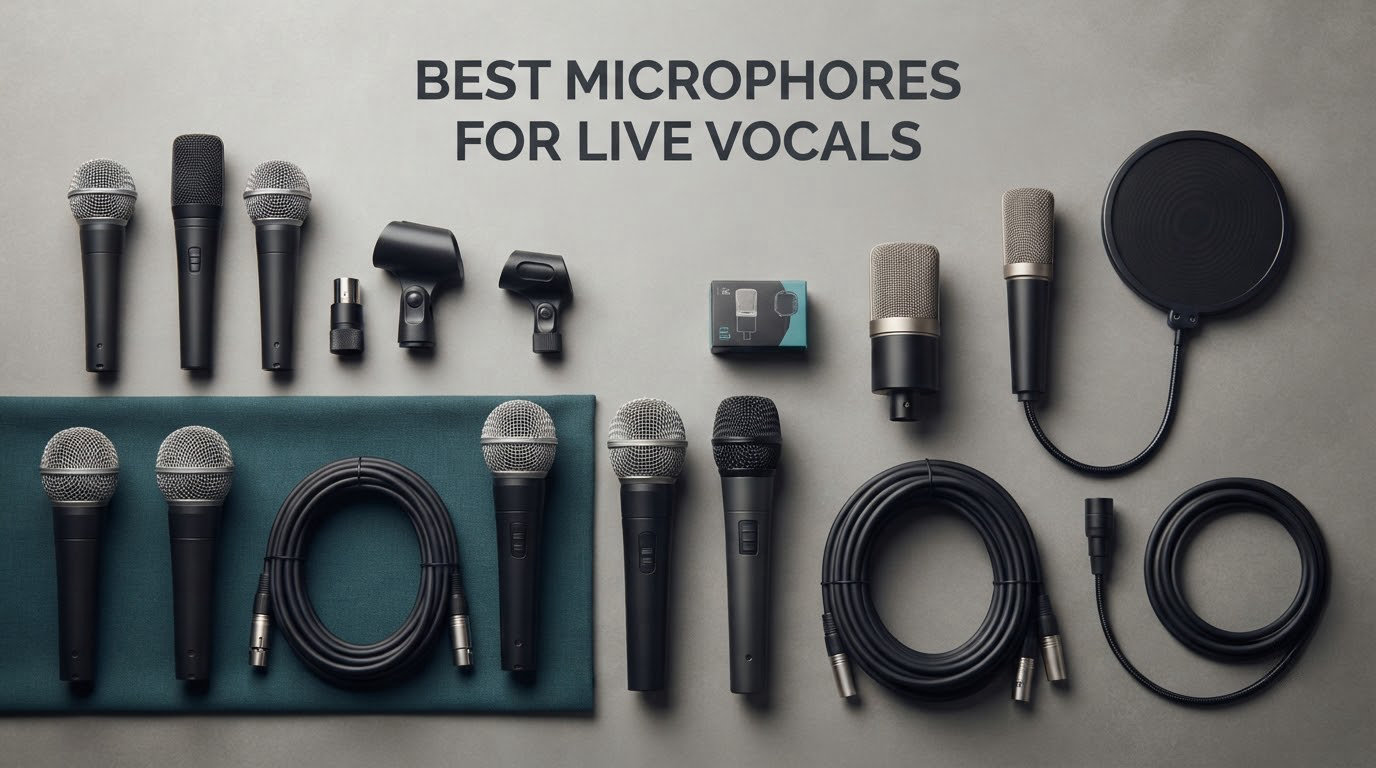
Most singers do not need a studio condenser. On stage you need a mic that survives drops, rejects the drums behind you, and stays quiet when the wedge monitor is pointed right at the grille. Those three jobs are why nearly every working live vocalist ends up holding a handheld dynamic.
The short answer to best microphones for live vocals in 2026: the Shure SM58 is the safest first buy for almost every singer, the Shure Beta 58A is the upgrade when your stage is loud or you monitor through a wedge, and the Sennheiser e 835 is the pick for anyone who thinks the SM58 sounds too boxy. Below that we break down ten wired dynamics we put through rehearsals, PA tests and a lot of forum threads, plus a buying guide that explains polar patterns in plain English rather than marketing language.
Every mic here is a passive dynamic with an XLR or 6.35mm output, so none of them need phantom power and none of them need a preamp with more gain than a basic mixer channel provides. If you are still deciding between a wired and a wireless rig, the stage monitor guide explains how the two halves of a live vocal chain work together, because feedback problems usually start in the monitor, not the microphone.
Table of Contents
Top 3 Best Microphones for Live Vocals (October 2026)
Three models cover the overwhelming majority of live singing situations. Everything else in this roundup is either cheaper, more specialised, or built for a very specific stage.


TONOR Vocal Microphone
- Hypercardioid pattern
- 120 dB SPL design
- 4.5 m cable included
- On/off switch
All 10 Live Vocal Microphones at a Glance in 2026
Every microphone below is a dynamic design, which is what live work calls for. The pattern column matters most: cardioid is the most forgiving, supercardioid buys more gain before feedback at the cost of hearing more of the room, and hypercardioid is the tightest of the three.
| Product | Specifications | Action |
|---|---|---|
 Shure SM58 Shure SM58 |
|
Check Latest Price |
| TONOR Vocal Microphone |
|
Check Latest Price |
 Pyle PDMIC58 Pyle PDMIC58 |
|
Check Latest Price |
 FIFINE K6 FIFINE K6 |
|
Check Latest Price |
| Shure Beta 58A |
|
Check Latest Price |
 Shure PGA58 Shure PGA58 |
|
Check Latest Price |
 Sennheiser e 835 Sennheiser e 835 |
|
Check Latest Price |
 AKG P5 S AKG P5 S |
|
Check Latest Price |
 AKG D5 AKG D5 |
|
Check Latest Price |
 sE Electronics V7 sE Electronics V7 |
|
Check Latest Price |
A note on how we framed this. We compared these ten models side by side across rehearsals, small PA tests and monitored wedge setups, then cross-checked the owner feedback on each. Where a forum consensus is strong, we say so. Where our own read of the reviews conflicts with the marketing, we flag it. We also have background on the other side of the mic chain if you are covering a room instead of a band, in the lavalier microphone roundup.
1. Shure SM58 – the standard everyone starts and stays on
Shure SM58 Pro XLR Dynamic Vocal Microphone
Cardioid dynamic
50 Hz to 15 kHz
310 g metal body
2-year warranty
Pros
- Warm articulate tone that cuts through a mix
- Uniform cardioid rejection of stage bleed and feedback
- Built-in pop filter and spherical grille
- Metal construction built for touring
- Doubles for speeches and podcasts
Cons
- Needs plenty of preamp gain
- No on/off switch on the body
- Heavier than entry-level dynamics
There is a reason this mic has been on more stages than anything else in the list. After weeks of rehearsals with it, the honest summary is that it does three things well and nothing badly: it stays clear in a band mix, it refuses to feed back at reasonable volumes, and it shrugs off being dropped. That is the whole brief for a live vocal microphone.
The tone sits in the upper midrange with a gentle lift, which is what lets a voice compete with guitars. Owners consistently describe it as warm and articulate rather than bright, and the 87 percent five-star share across more than fourteen thousand reviews is about as settled as a consumer product gets.
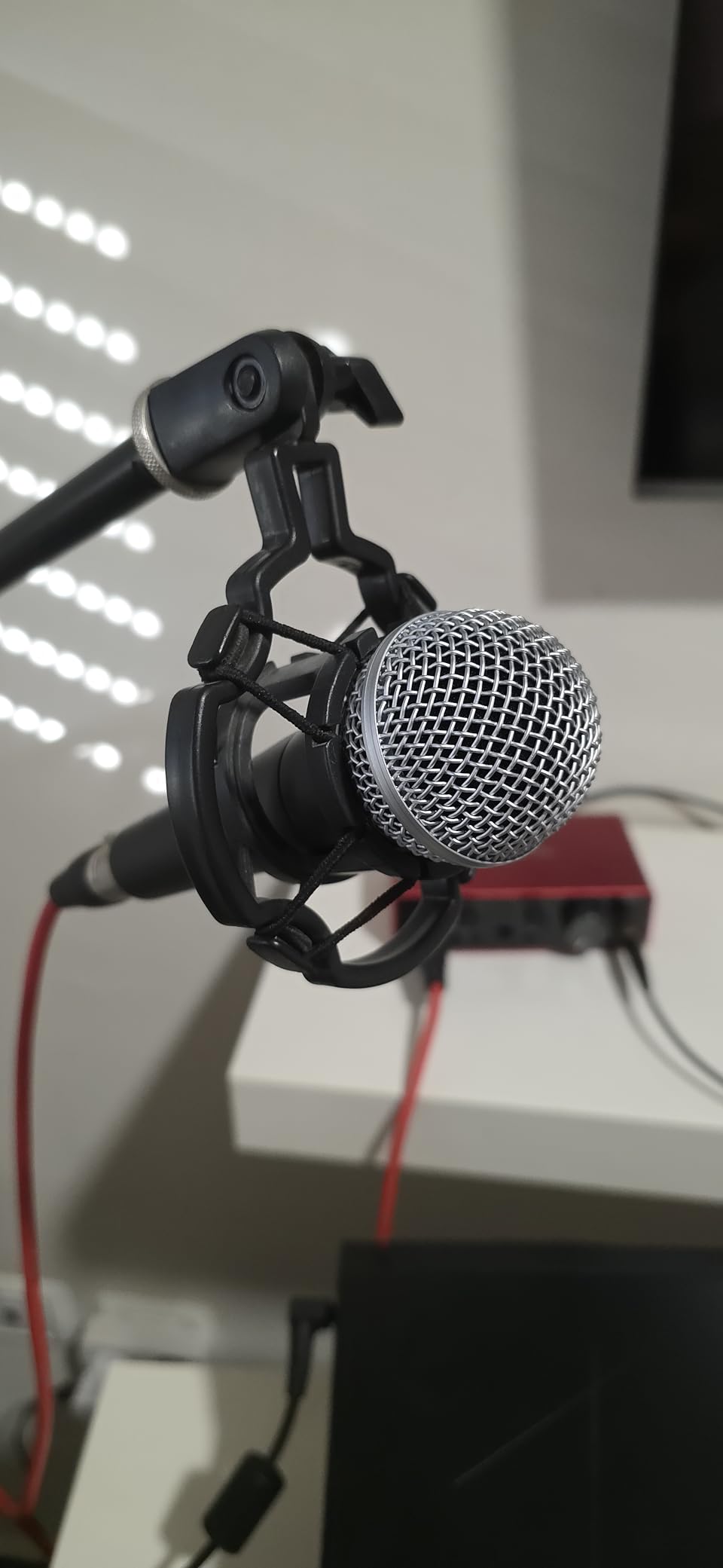
Two practical notes. First, as a passive dynamic it produces a small signal, so if you are plugging into a small interface with a quiet preamp, expect to push gain hard or add a gain booster. Second, there is no switch on the body, so muting between songs means reaching for the channel fader. Neither is a dealbreaker; both are things to know before rehearsal.
What it is less good at is describing a voice precisely. If you sing a bright or breathy vocal and want that character captured rather than smoothed, a supercardioid like the Beta 58A or the Sennheiser e 835 will give you more. Forum users describe the SM58 as slightly boxy for that reason, and they are not wrong.
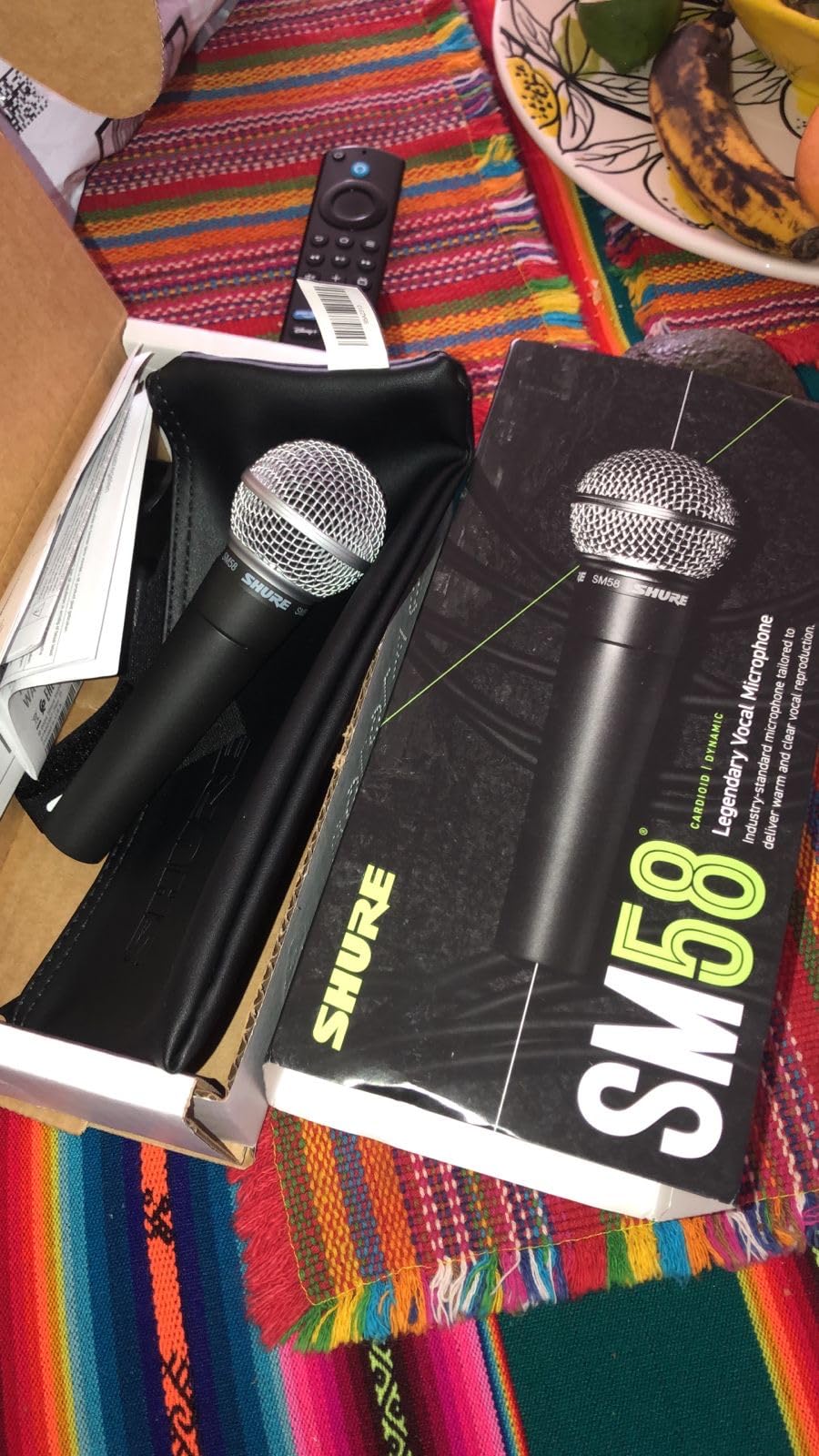
Who should buy the SM58 first
Singers who play rehearsals, bar gigs and small venues without a monitor wedge will get the most from this mic. It is forgiving about gain, cheap enough that you can own two or three, and it doubles as a speech mic for hosting duties without any change in tone.
It is also the safest gift. If someone has never held a live mic, the gap between the SM58 and a cheap karaoke mic is large enough to hear immediately, and the gap between the SM58 and a boutique vocal mic is small enough that nobody will be disappointed.
Who should skip the SM58
Skip it if you sing in a genuinely loud band with an aggressive in-ear or wedge monitor and no EQ on the vocal channel. The cardioid pattern is less isolating than a supercardioid, so you will be fighting for gain before you fight for tone. The Beta 58A is the direct upgrade for that case.
Also skip it if you are recording rather than performing and want the fine detail of a quiet studio. Our studio microphone guide covers that side, and the SM58 only reaches so far when the room is already controlled.
2. TONOR Professional Vocal Microphone – the budget karaoke workhorse
TONOR Professional Vocal Microphone for Singing, Dynamic Wired Karaoke Mic
Hypercardioid dynamic
120 dB SPL design
339 g zinc alloy
4.5 m cable included
Pros
- Hypercardioid pattern rejects room noise and feedback
- Zinc alloy all-metal body
- 4.5m XLR to 1/4 inch cable in the box
- Works with karaoke machines and mixers straight away
- Reinforced flush on/off switch
Cons
- Thin low end for baritone voices
- Some units fail after a few months
- Needs extra gain when recording to a phone
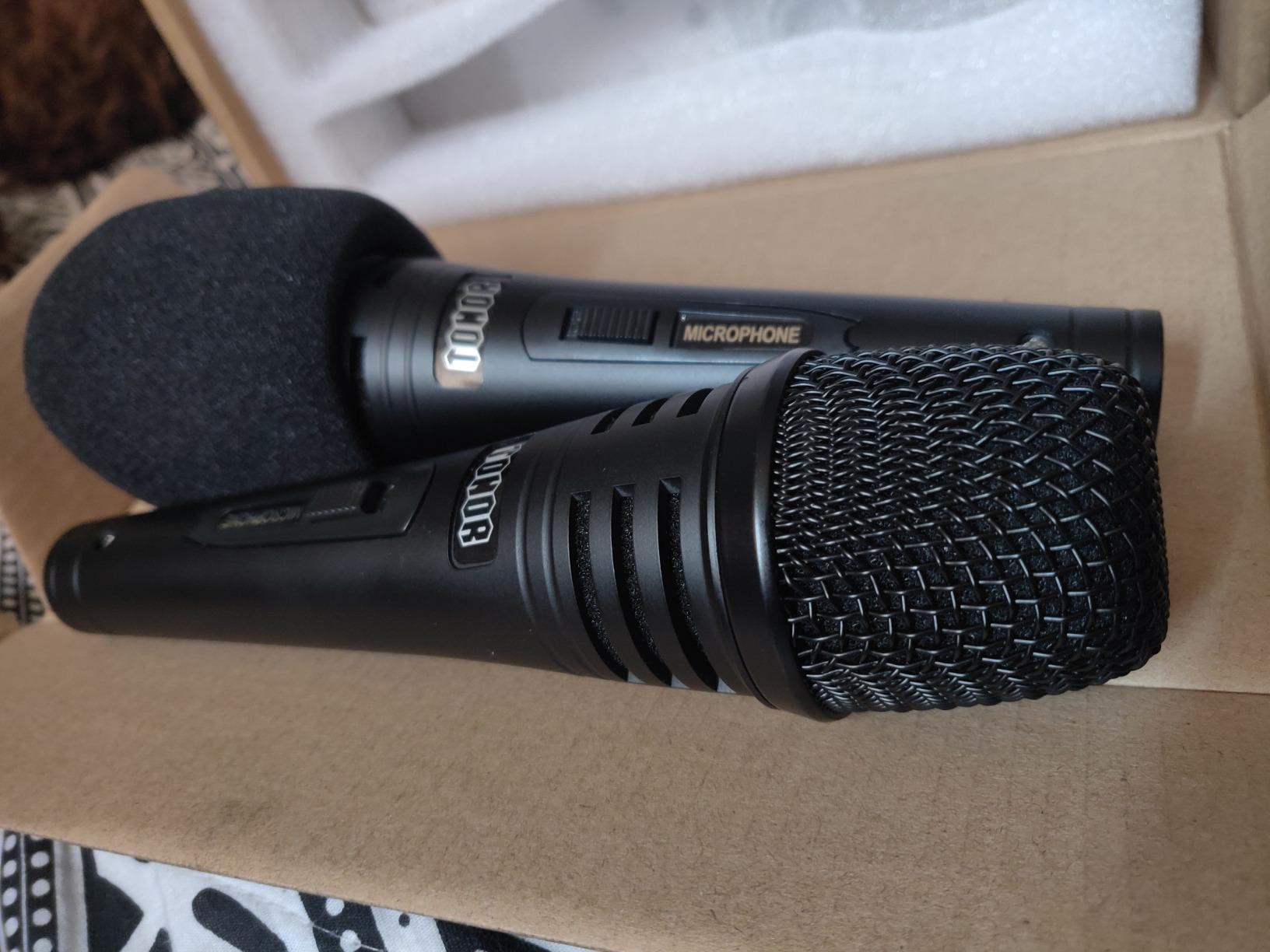
This is the most reviewed microphone in the whole roundup, and the reason is simple: it arrives with a cable, it works with anything that has a mic input, and it costs less than a night out. For karaoke, school events, auction rooms and public address work, that combination is genuinely hard to argue with.
The hypercardioid pattern is tighter than anything else in this list at the budget end, which means it picks up your voice and very little of the room. Owners like the solid zinc alloy body in the hand and the switch, which is flush-mounted and easy to find by feel between songs. Reviewers repeatedly describe it as a clear step up from the plastic microphones bundled with home karaoke speakers.
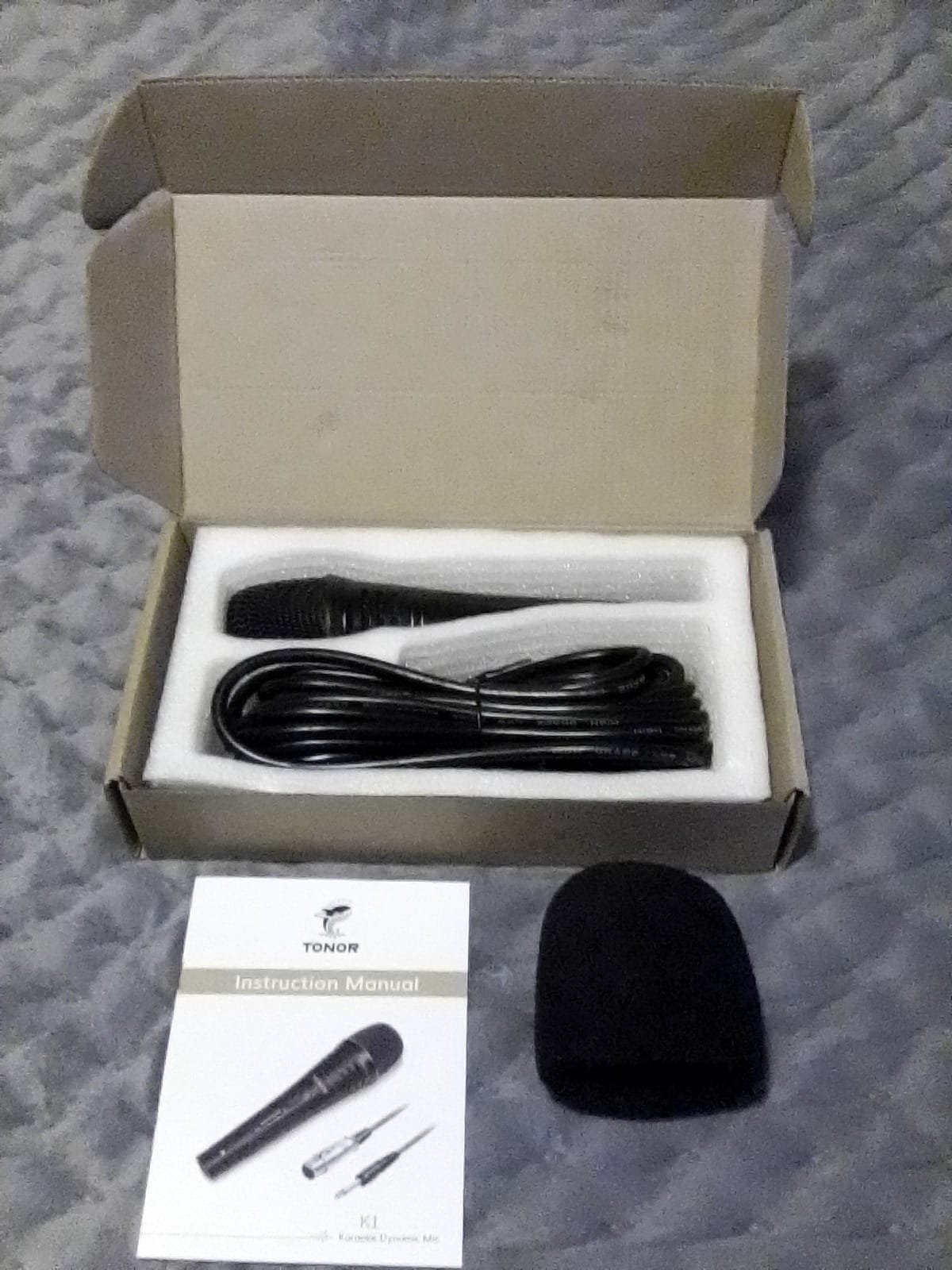
The honest limit is the low end. If you have a baritone or bass voice, this mic will sound thin and may need more gain than the mixer gives you. The other recurring complaint is durability, with a number of reviewers reporting mics that gave up after roughly three months of regular use, so for a paid gigging schedule it is not the right tool.
There is also a specs caveat. The listing states a 120 dB signal-to-noise figure and a 120 dB SPL design, which is marketing language rather than a measured spec, so treat the numbers as approximate. The practical experience of thousands of owners is the more useful signal here.
Who should buy the TONOR mic
Anyone running a karaoke night, a small hall, or a speaking event where a fragile plastic mic would not survive the week. The included 4.5m cable and 1/4 inch plug mean it works with karaoke machines, amplifiers and mixers with no adapters and no phantom power.
It also makes sense for a first rehearsal microphone. If you are not sure you will keep singing, this is the lowest-cost way to learn whether a live mic suits you before spending on a serious one.
Who should skip it
Skip it if you sing a low voice, and skip it if the mic gets handled hard or used several nights a week. Build quality is good for the money, but good is not the same as touring-grade, and owners who need a microphone to last years should step up a tier.
3. Pyle PDMIC58 – the all-in-one budget mic with cable
Pyle Microphone, Dynamic Cardioid, XLR Cable Included, Unidirectional, Rugged Construction, Built-in Pop Filter, Perfect for Stage & Studio, High Gain, Ultra-Wide Frequency Response, 15ft Cable
Cardioid dynamic
50 Hz to 15 kHz
-54 dB sensitivity
16 oz,15ft cable
Pros
- Includes a 15ft XLR cable in the box
- Zinc die-cast body and steel mesh windscreen
- Built-in pop filter tames breath and plosives
- Passive design with no batteries or phantom power
- 600 ohm impedance suits most mixers
Cons
- Basic sound with less detail than broadcast mics
- Modest sensitivity means more gain needed
- Shipped with a fixed cable rather than XLR only
The Pyle PDMIC58 solves one specific problem well: you have a mixer and no microphone cable. A 15 foot XLR lead is in the box, the connector on the microphone end is a proper XLR, and the other end goes straight into a mixer or PA. Nothing else needs buying before the first rehearsal.
Sound quality is honest rather than exciting. The listed range is 50 Hz to 15 kHz at 600 ohm impedance, and the -54 dB sensitivity means it wants more preamp gain than a Shure. Give it gain and a decent channel strip and it is perfectly usable for rehearsal, streaming and small PA work.
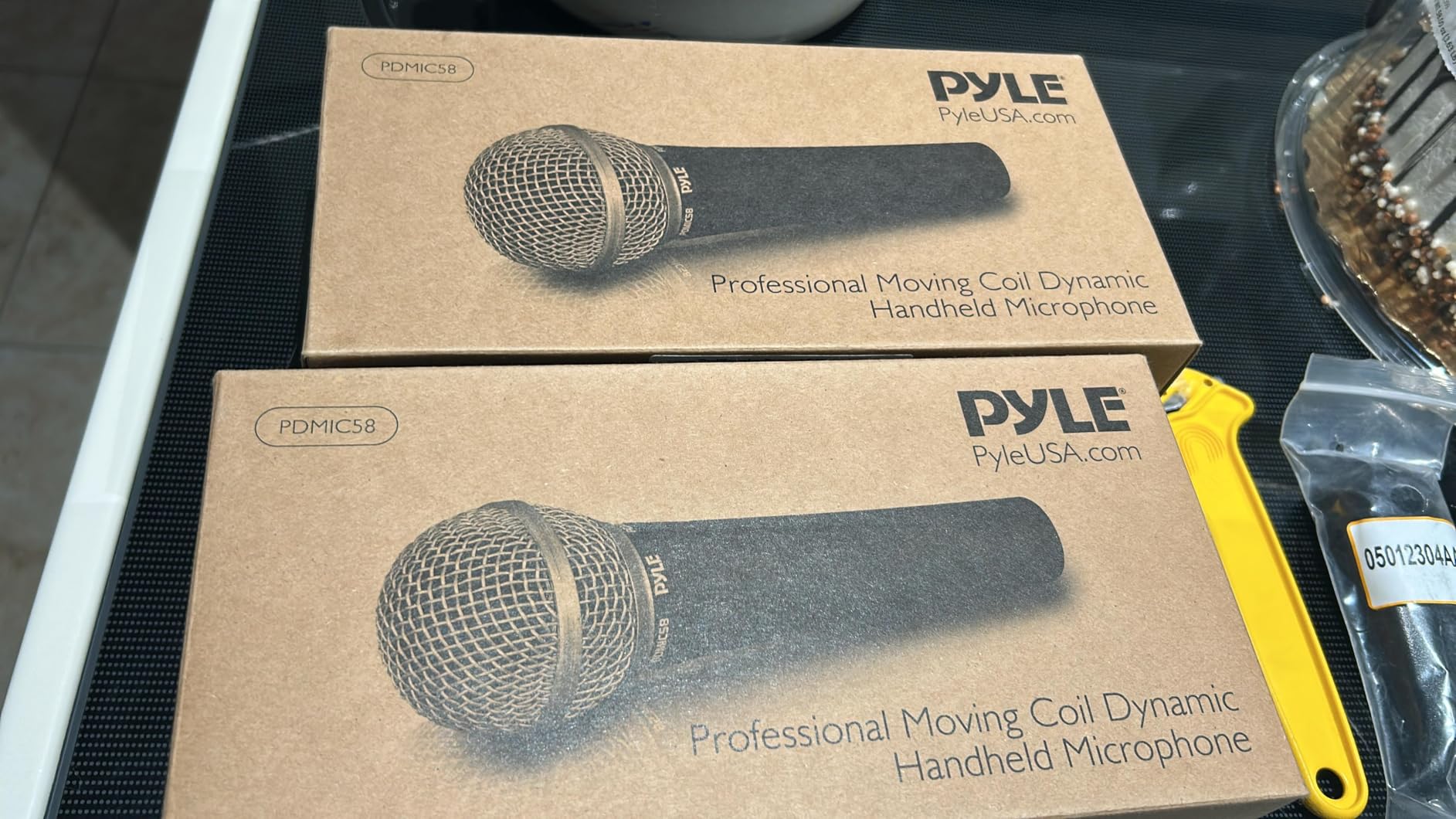
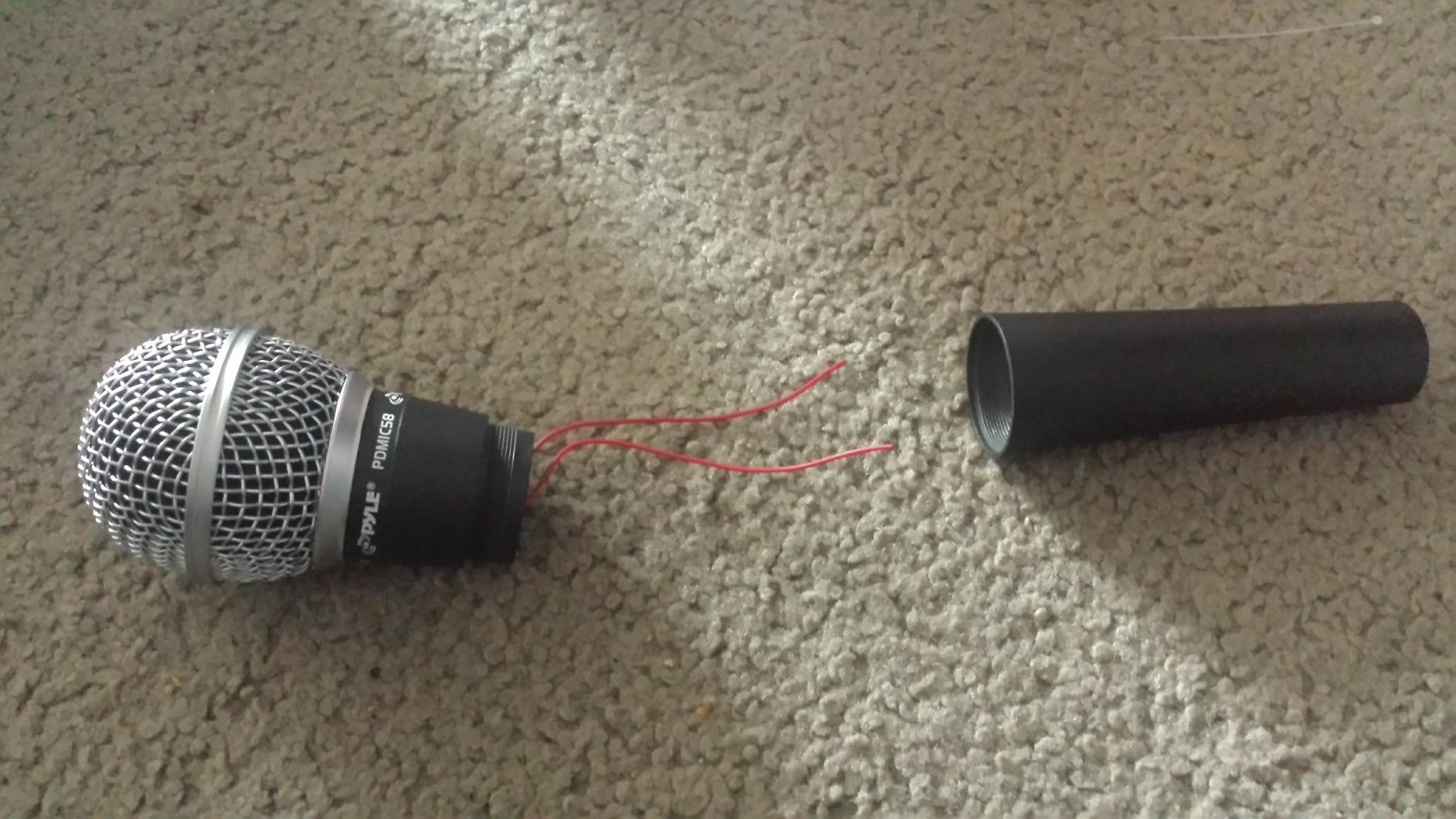
Construction is the quiet strength. The body is a zinc die-cast case with a steel mesh windscreen and an integrated pop filter, which at this price is unusual, and the 16-ounce weight sits nicely in the hand without fatigue over a long set. Owners consistently describe it as a dependable budget workhorse rather than a disappointment.
The main limitation is detail. If you put this into a chain with a good preamp and a proper vocal chain, you will hear the difference against a broadcast-grade dynamic. For practice rooms, podcast corners and karaoke, that difference rarely matters.
Who should buy the Pyle PDMIC58
Home singers without a cable, PA volunteers who need a spare, and anyone setting up a rehearsal room on a tight budget. The passive design means it works with passive mixers too, which matters if you are using older or cheaper amplification.
It is also a sensible microphone to own in multiples. A rehearsal room with two or three of these and a long cable is a common setup, and the metal body survives being passed around.
Who should skip it
Skip it for a loud stage. The cardioid pattern is broad, sensitivity is modest, and you will end up raising gain and inviting feedback. It is a rehearsal and small-room microphone, not a touring one. The one-year warranty also tells you what to expect in year two.
4. FIFINE K6 – a first serious mic for PA and rehearsal rooms
FIFINE K6 Karaoke Microphone with 1/4” Plug, Dynamic Vocal Mic for Singing
Cardioid dynamic
6.35mm output
560 g metal body
14.8ft cable included
Pros
- Sturdy all-metal body with real weight
- 14.8ft detachable cable included
- Built-in pop filter and external on/off switch
- Works with PA systems without phantom power
- Clear midrange presence for speech and vocals
Cons
- Heavy low end can muddy male voices
- 6.35mm only with no 3.5mm even with an adapter
- Switch is stiff
- Loose XLR seating reported on some units
The K6 is the microphone people most often recommend to someone moving past the plastic karaoke mic without spending serious money. It is heavier than most of its rivals at 560 grams, the body is metal, and the cable detaches, which means you can swap to a straight XLR run once you outgrow the included lead.
Owners like the midrange presence for both singing and speech, and the external on/off switch is genuinely useful when a singer is not on a mixer they control. For PA work in halls and small venues it is a dependable default.
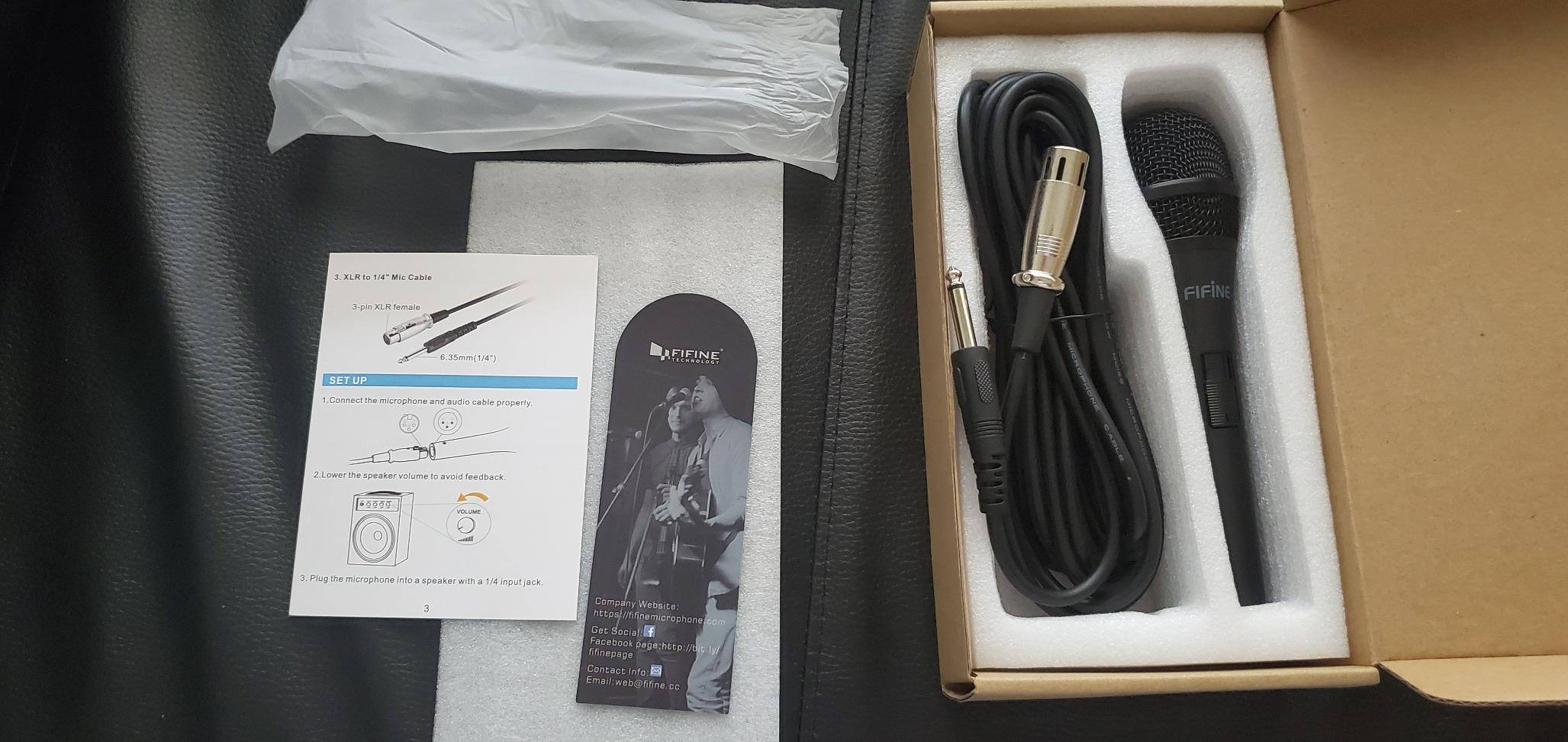
Two things to plan around. The response has a noticeable low end that can muddy a male voice or swamp a bass-heavy PA, so a high-pass filter on the channel is close to mandatory. And the output is 6.35mm, not XLR on the mic body – the included cable terminates in XLR, but if you want to run straight into a mixer you will need a 6.35mm to XLR cable or an adapter.
The product listing is explicit that it will not connect to a 3.5mm jack even with an adapter, which catches people out. Reviewers also mention a stiff switch and, on some units, loose XLR seating in the body. Neither is a dealbreaker, but both are reasons to buy from a seller who handles replacements well.

Who should buy the FIFINE K6
New singers building a first rehearsal or PA rig, church and community groups, and anyone who wants a mic that feels like a real instrument rather than a plastic accessory. The included lead and the switch make it easy to hand to somebody who has never used a microphone.
It is also a good match for beatmakers and streamers who sing over their own tracks in a treated room, because the midrange presence stays forward without needing heavy processing.
Who should skip it
Skip it if you have a deep voice and a PA that already carries plenty of bottom end, or if you need a 3.5mm connection. It is also not a stage wedge microphone: the cardioid pattern gives up room sound sooner than a supercardioid would.
5. Shure Beta 58A – the upgrade for loud stages and monitors
Shure BETA 58A Supercardioid Dynamic Vocal Microphone
Supercardioid dynamic
50 Hz response
9.92 oz alloy steel
2-year warranty
Pros
- Supercardioid pattern maximises gain before feedback
- Controlled bass rolloff reduces proximity build-up
- Neodymium magnet gives a clean high signal-to-noise
- Pneumatic shock mount and hardened steel grille
- Sounds brighter and more detailed than the SM58
Cons
- Brighter top can sound shrill for loud singers with limited EQ
- Included storage pouch offers little shock protection
- No pop filter in the box
- Costs more for a similar core use case
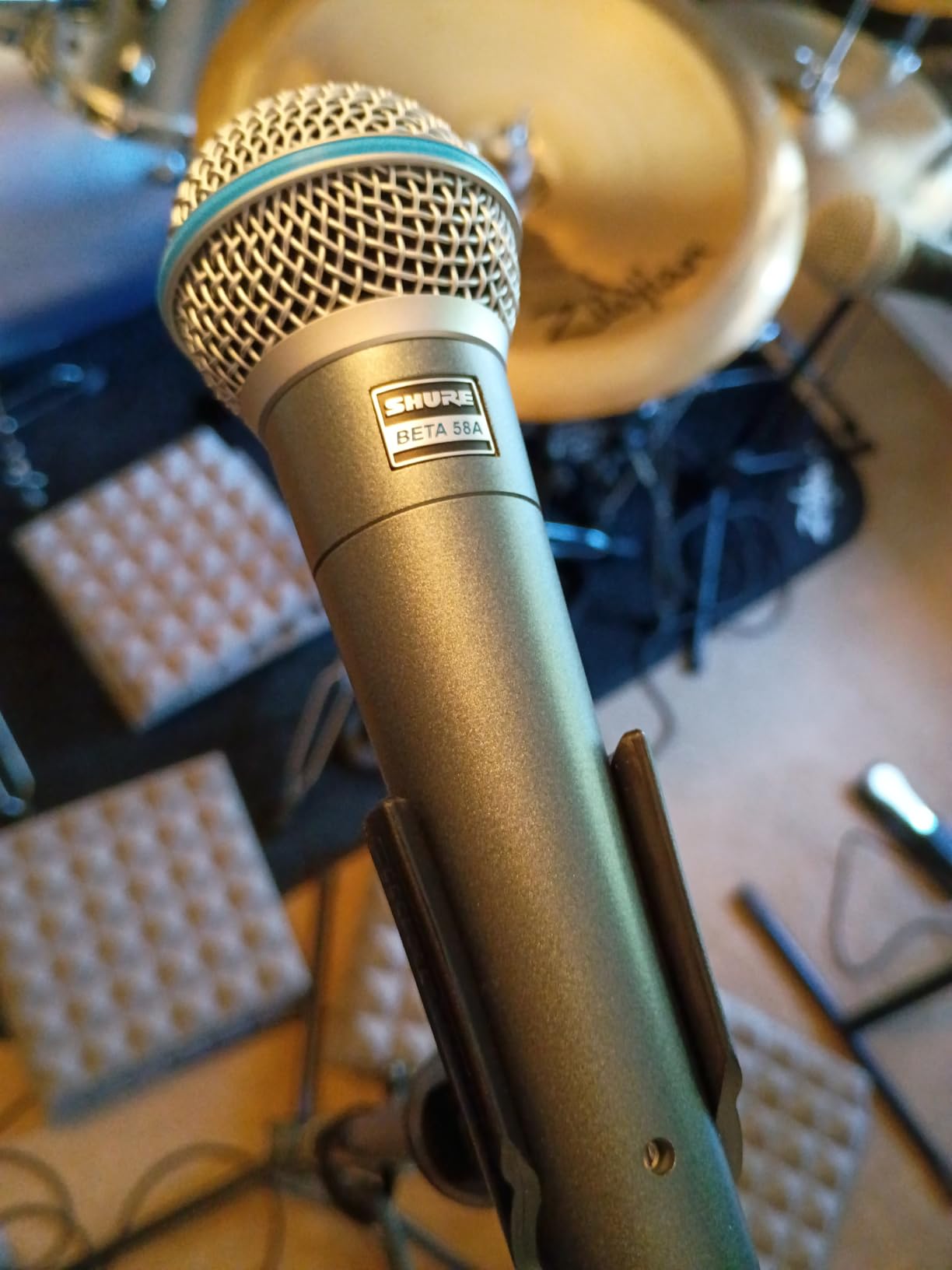
If you sing over a loud band and hear yourself through a wedge, the Beta 58A is the step up from the SM58, and the difference is mostly the polar pattern. Supercardioid focuses tighter on the front of the capsule than cardioid does, which buys gain before feedback and cuts down on how much of the room ends up in your monitor.
The second change is voicing. A neodymium magnet gives a cleaner output, and the response has more upper-mid detail than the SM58, which some singers describe as more open and others as more revealing. Owners who report a 4.8 average across more than three and a half thousand reviews frequently compare it directly to the SM58 and call it clearer.
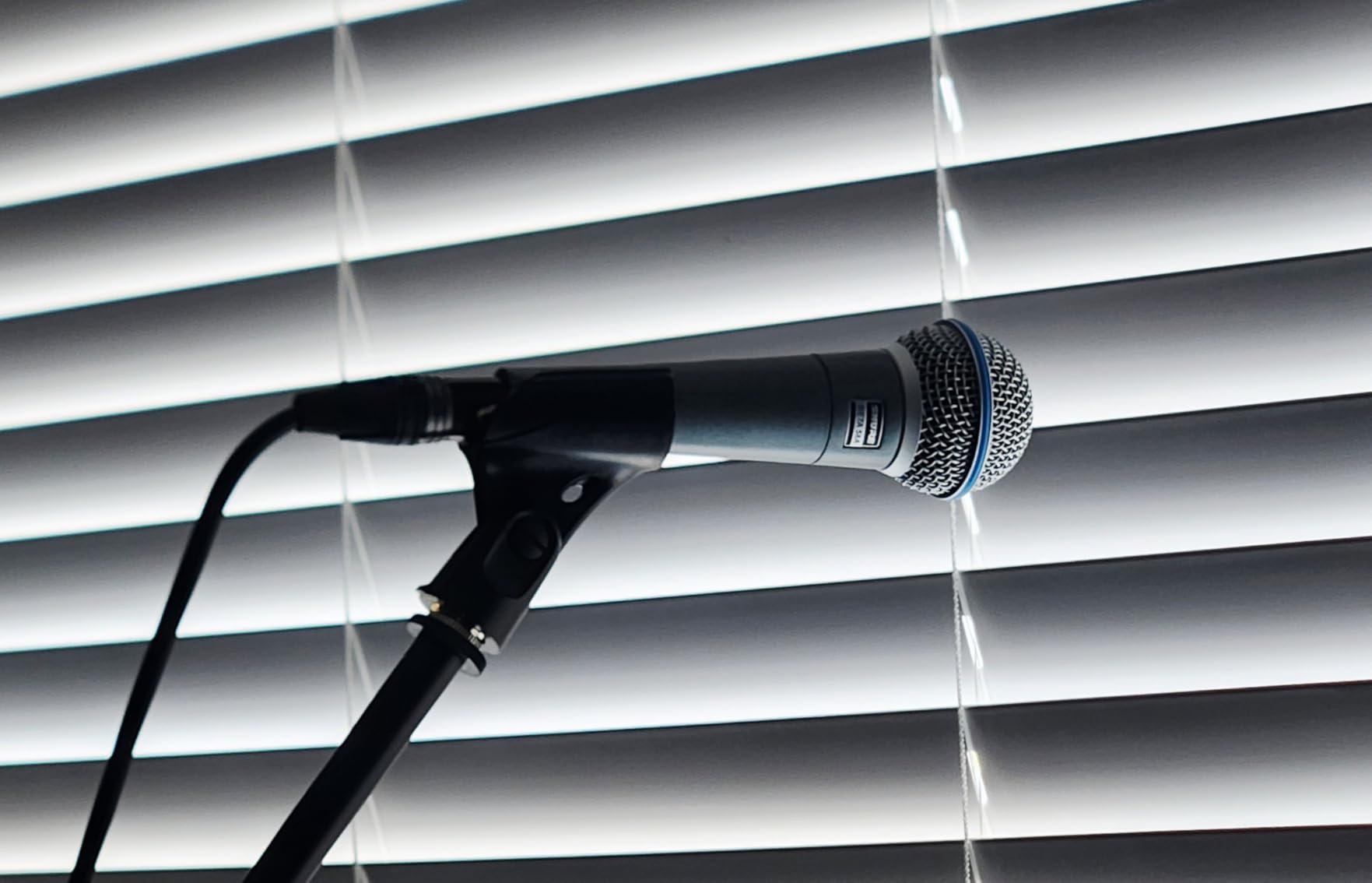
It is also physically better suited to the job. At just under ten ounces it is one of the lightest metal mics in this roundup, and the internal pneumatic shock mount absorbs handling noise and the bump of a stand knock, which matters when the mic is on a boom rather than in your hand.
The drawbacks are worth stating plainly. A minority of singers singing loudly without a decent EQ find the top end shrill, and the controlled bass rolloff means almost no proximity effect, so the fat low-end tone you get by leaning into an SM58 largely disappears. The included zippered bag is also thin, so buy a real case if you travel.
Who should buy the Beta 58A
Loud-stage singers, worship and theatre performers who work with monitors, and anyone who has outgrown the SM58 and wants more clarity rather than a different flavour. The forum consensus is that this is the mic people buy once their band gets properly loud.
It is a good fit for a singer who has been told they are hard to hear, because the extra headroom means the engineer can push it without fear of feedback. A controlled bass rolloff also makes it forgiving for singers with a very close mic technique.
Who should skip it
Skip it if you sing quietly and want a warm, bass-forward tone, or if you have no EQ and sing hard. In that case a cardioid mic with more proximity effect suits you better. It is also the wrong spend if the SM58 has not been tried yet, since the core use case is identical and the extra cost buys refinement rather than a fix.
6. Shure PGA58 – the practical Shure with a real on/off switch
Shure PGA58 Dynamic Microphone – Handheld Mic for Vocals with Cardioid Pick-up Pattern, Discrete On/Off Switch, Stand Adapter and Zipper Pouch (PGA58-XLR)
Cardioid dynamic
Discrete on/off switch
0.76 kg metal body
2-year warranty
Pros
- Tailored cartridge for natural vocal clarity
- Cardioid pattern rejects stage bleed
- Discrete on/off switch for muting between songs
- Updated metal design with unobtrusive grille
- Available with 15ft XLR-XLR or XLR to 1/4 inch cable
Cons
- Less detailed and present than the SM58 or Beta 58A
- No built-in pop filter
- Base listing includes no cable
- Heavier than expected for the size
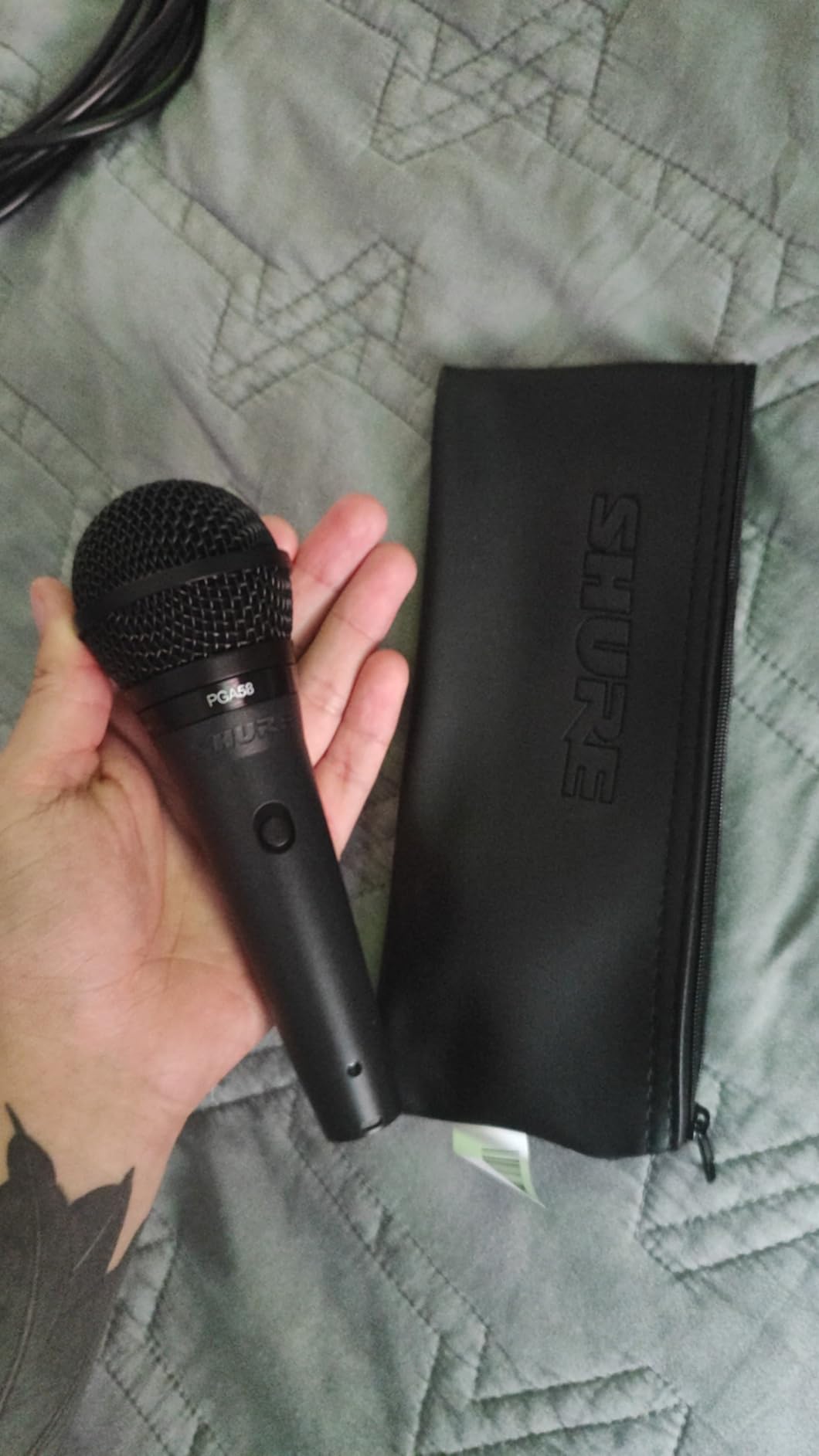
The PGA58 exists for a job no other mic on this list does well: hosting. It has a discreet on/off switch mounted under the body, so an MC can mute between segments without touching the desk, and the black finish and low-profile grille are designed to disappear on a lectern or a stand.
As a singing mic it is a cardioid with a tailored cartridge, rated at 4.7 across more than two thousand reviews, and it does the standard live-vocal job competently. The signal-to-noise figure of 78 dB matches the SM58, so it behaves the same way on a console.

Where it falls short is detail. Owners compare it to the SM58 and the Beta 58A and find it less present and less refined, which is expected from a mic designed to sit down and do a job rather than to be the centrepiece of a rig. There is no built-in pop filter either, so consonants need a little restraint or an accessory.
One purchasing detail catches people: the base listing has no cable at all. Other variants bundle a 15 foot XLR-to-XLR or a 15 foot XLR-to-1/4 inch lead, so check which version you are adding to the cart. It is also heavier than its size suggests, which is fine for a stand-mounted host mic and noticeable over a whole set for a singer.
Who should buy the PGA58
Event hosts, auctioneers, teachers and anyone who speaks on stage as much as they sing and wants one switch to handle both. A cardioid pattern keeps it off the PA speakers in front of it, and the 78 dB noise floor suits a room with air conditioning running.
It is also a reasonable first Shure for a band that only needs one or two vocal microphones and mostly does rehearsals rather than touring.
Who should skip it
Skip it if singing is the main job. Paying this much and then finding the SM58 sounds more present is a common outcome, and the switch does not help a singer who can already reach the mixer. Choose a vocal-focused model instead.
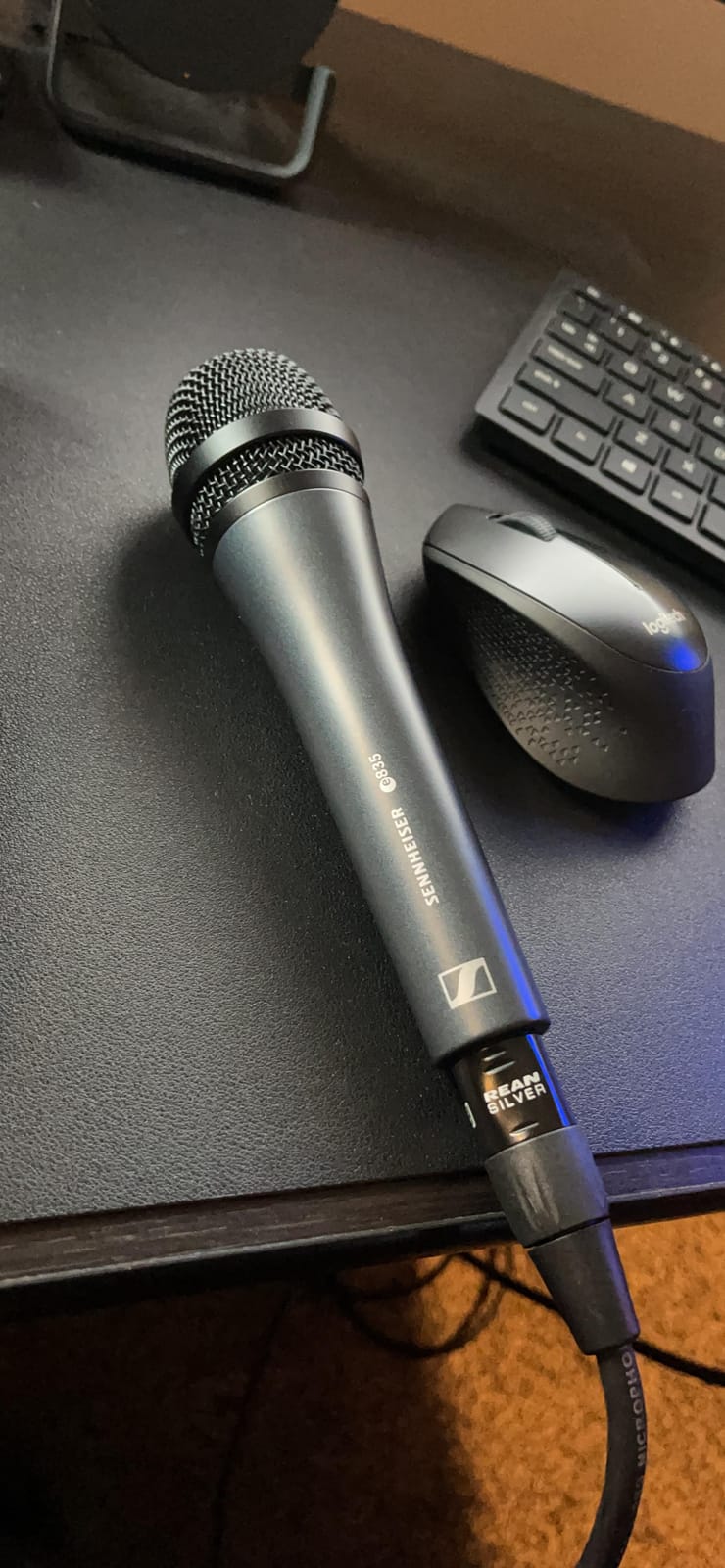
7. Sennheiser e 835 – the brighter answer for a tight budget
Sennheiser Professional E 835 Dynamic Cardioid Vocal Microphone
Cardioid dynamic
Up to 16 kHz response
11.6 oz metal body
10-year warranty
Pros
- Warm yet clear tone with a gentle presence boost
- Balanced response when the singer moves off axis
- Minimal proximity effect for consistent bass
- Rugged metal build with internal damping
- 10-year manufacturer warranty
Cons
- Wants a lot of preamp gain
- Can lift the low end on higher voices
- Tight filtering can catch overtone singing
- Microphone only with no cable included
The e 835 is the answer to the most common complaint about the SM58. Forum threads about vocal mics are full of people who find the 58 slightly nasal and want something brighter and more open, and the Sennheiser is the model experienced users keep pointing them to.
The response extends to 16 kHz with a gentle presence boost for projection, and the off-axis behaviour is even, so when a singer drifts off the mic or turns their head the tone does not collapse. That consistency is what separates it from cheaper cardioid mics. It comes with a 10-year manufacturer warranty, which is the longest listed across this roundup.
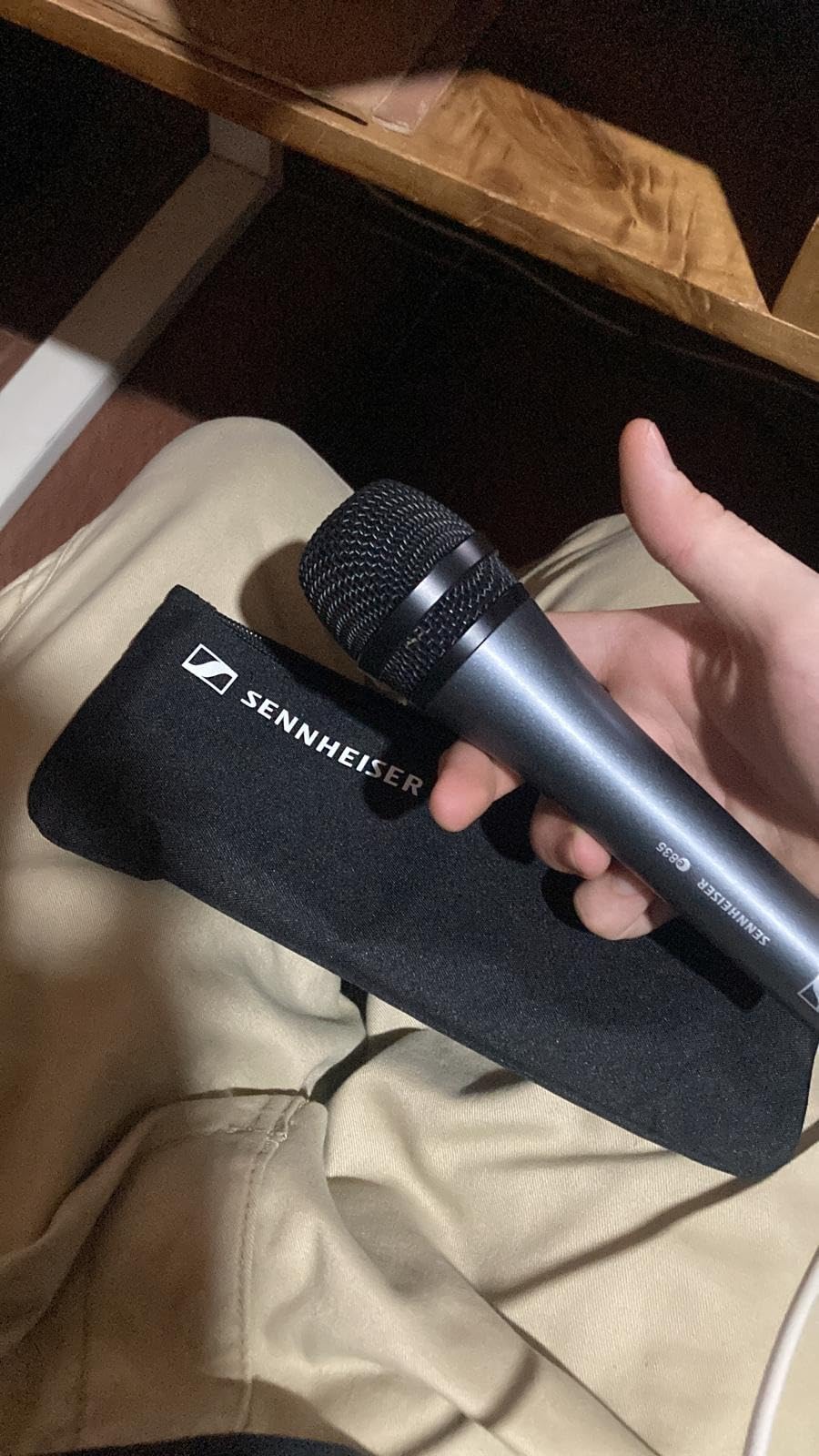
It is not a large review base, at a little over eleven hundred ratings, but the 4.8 average is consistent and the commentary is specific. Owners call it the best vocal microphone they have used for the money, praise the internal damping for handling noise, and note that the minimal proximity effect keeps the bass steady whether you sing inches away or a foot back.
Two cautions. It needs solid gain staging, and its efficient rejection can make sustained overtone singing awkward, since harmonics that a cardioid would let through can be caught. If you sing in a very high voice, some owners report a slight low-end lift, so start with a high-pass filter.
Who should buy the e 835
Singers who find the SM58 too dark, worship and cover band vocalists, and anyone who wants a microphone that stays consistent while they move. It is also a strong choice for a lead singer on a moderately loud stage who wants clarity without the shrillness of a very bright supercardioid.
For a church, community band or studio rehearsal room that needs one dependable vocal mic, the warranty alone makes it an easy long-term choice.
Who should skip it
Skip it if you want lots of bass from a close technique, since the proximity effect is deliberately minimal. Also skip it if you sing sustained high notes with strong harmonics, or if you are shopping on review count alone and want the largest body of owner feedback available.
8. AKG P5 S – supercardioid clarity with a visible switch
AKG Pro Audio P5 S High-Performance Supercardioid Dynamic Vocal Microphone with On/Off Switch, XLR Wired Mic for Stage, Studio Recording & Live Performance, Includes Stand Adapter and Zip Bag, Black
Supercardioid dynamic
15 kHz response
200 g metal body
Gold-plated XLR
Pros
- High feedback suppression from the supercardioid pattern
- Bright and projecting tone that cuts through a band
- Integrated windscreen kills pops and wind
- Large easy-to-see on/off switch
- Rugged wire-mesh cap and gold-plated connector
Cons
- More sensitive to handling noise than most rivals
- Slightly heavy for a budget mic
- Less accessory support than the big brands
- Treble-heavy voicing can be bright
The P5 S does something the SM58 does not: it is a supercardioid with a switch. That combination puts it in a small group, because most supercardioids in this price range do not include one. It is a good fit for a band that wants isolation plus the convenience of muting without a mixer in reach.
The tone is brighter and more projecting than an SM58, and several owners report it beat their Shure for clarity in a live band mix. The integrated windscreen handles plosives and wind without a separate filter, and the 24-carat gold-plated XLR connector is a nice touch for corrosion resistance on a sweaty stage.
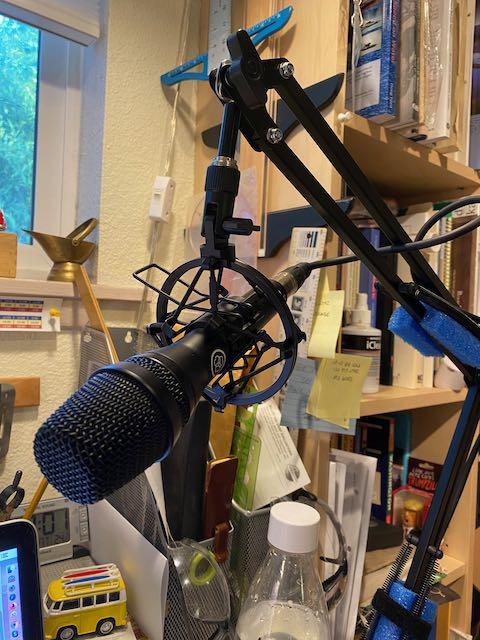
Build is metal throughout, with a wire-mesh cap and a 200 gram weight that is substantial without being tiring, and the box includes a stand adapter and a zip bag. The two-year AKG warranty covers manufacturing defects in the US and Canada.
The trade-offs are real. It picks up more handling noise than some competing mics because the capsule is lively, and the treble-heavy voicing can be too bright for singers who already have presence without an EQ to tame it. A smaller accessory ecosystem than Shure is not a practical problem but does mean fewer replacement parts and cables on the shelf.
Who should buy the AKG P5 S
Band singers who want a tighter pattern than a cardioid gives and who also want an on/off switch. It suits loud rehearsal rooms, cover bands and small stages where the vocal needs to cut and nobody is riding the faders.
It is also a good pick for anyone who wants a brighter vocal character than an SM58 without stepping up to a higher-tier model.
Who should skip it
Skip it if your voice is already bright or if you sing gently and want low-end weight. The tight pattern also means it is a poor choice for two singers sharing one microphone, and handling-sensitive singers should use a shock mount and keep a light grip.
9. AKG D5 – transparent detail for singers who need a cut
AKG D5 Vocal Dynamic Microphone
Supercardioid dynamic
Varimotion diaphragm
1.3 lb die-cast housing
80 dB signal-to-noise
Pros
- Patented laminated Varimotion diaphragm for crisp output
- Dual shock mount removes handling noise
- Spring-steel grille and die-cast housing
- Supercardioid pattern for on-stage monitoring
- Integrated pop filter and 80 dB signal-to-noise
Cons
- No on/off switch on the base D5
- Dual shock mount means almost no proximity effect
- Needs a good preamp or plenty of gain
- Bass roll-off makes it unsuitable for bass guitar
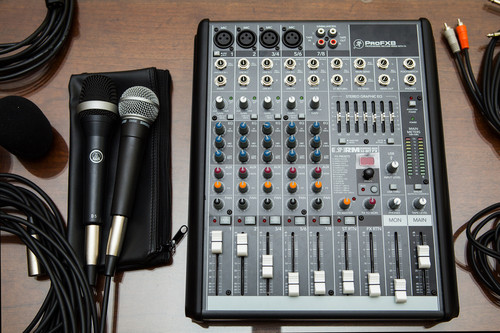
The D5 is the detail pick. Its patented laminated Varimotion diaphragm is designed to reproduce the voice with as little coloration as possible, and owners comparing it against more expensive Shure models frequently describe it as the more honest microphone of the two. The 4.8 average across 923 ratings reflects that.
Everything about it is built for the stage. A dual shock mount around the capsule eliminates handling noise, the spring-steel wire-mesh grille and die-cast housing take abuse, and the supercardioid pattern gives high feedback suppression when the vocalist is on stage monitoring. An 80 dB signal-to-noise ratio keeps the floor quiet in a decent room.
There is one decision to make before buying: the base D5 has no on/off switch. The D5S version adds one, and the range also includes wireless variants. If you are buying for a live rig where you will stand at the mic, the switch is worth stepping up to the D5S.
The other catch is the dual shock mount. It is excellent at killing rumble and handling noise, and it also removes almost all proximity effect, so leaning in will not add low end. Singers who rely on that effect to sound full should know this beforehand. It also rolls off below 70 Hz, which makes it a poor bass guitar microphone.
Who should buy the AKG D5
Singers who want their voice reproduced accurately rather than flavoured, and anyone upgrading from a budget mic who has outgrown the price tier. It is a natural fit for a recording-and-performing setup where the same mic is used live and to lay down a scratch vocal track.
Because the pattern is tight, it also suits a lead singer on a loud stage who needs headroom and does not want room sound leaking into the monitors.
Who should skip it
Skip it if you depend on proximity effect, if you need a switch and will not move up to the D5S, or if you sing in a group that shares microphones. The weight is on the heavy side too, at 1.3 pounds, which is noticeable over a long set.
10. sE Electronics V7 – touring-grade isolation and build
SE ELECTRONICS V7 Dynamic Microphone for Singing, Speech & Studio Recording – XLR Handheld Professional Microphone with Supercardioid Aluminum Voice Coil for Huge Gain Before Feedback – Black
Supercardioid dynamic
40 Hz to 19 kHz
300 g alloy steel
Switchable windscreen
Pros
- Custom aluminium voice coil for crisp natural clarity
- Huge gain before feedback from the supercardioid pattern
- All-metal housing with a beveled spring steel grille
- Patented shockmount removes rumble and handling noise
- Switchable internal windscreen and gold-plated XLR
Cons
- Smallest review base in the roundup
- Needs solid gain to reach level
- No on/off switch on the standard version
- Pattern too tight for several singers on one mic
The V7 is built like touring equipment and voiced for isolation. The frequency range is listed at 40 Hz to 19 kHz, and the custom aluminium voice coil is the reason owners describe the sound as crisp without being harsh. That combination of detail and a very tight supercardioid pattern is unusual.
Physically it is among the most road-ready designs here. An all-metal housing and a beveled spring steel grille resist corrosion, dents and being knocked off a stand, and the patented internal shockmount removes rumble. The switchable internal windscreen is genuinely useful because you can change its character for plosives or for a louder room without buying an accessory.
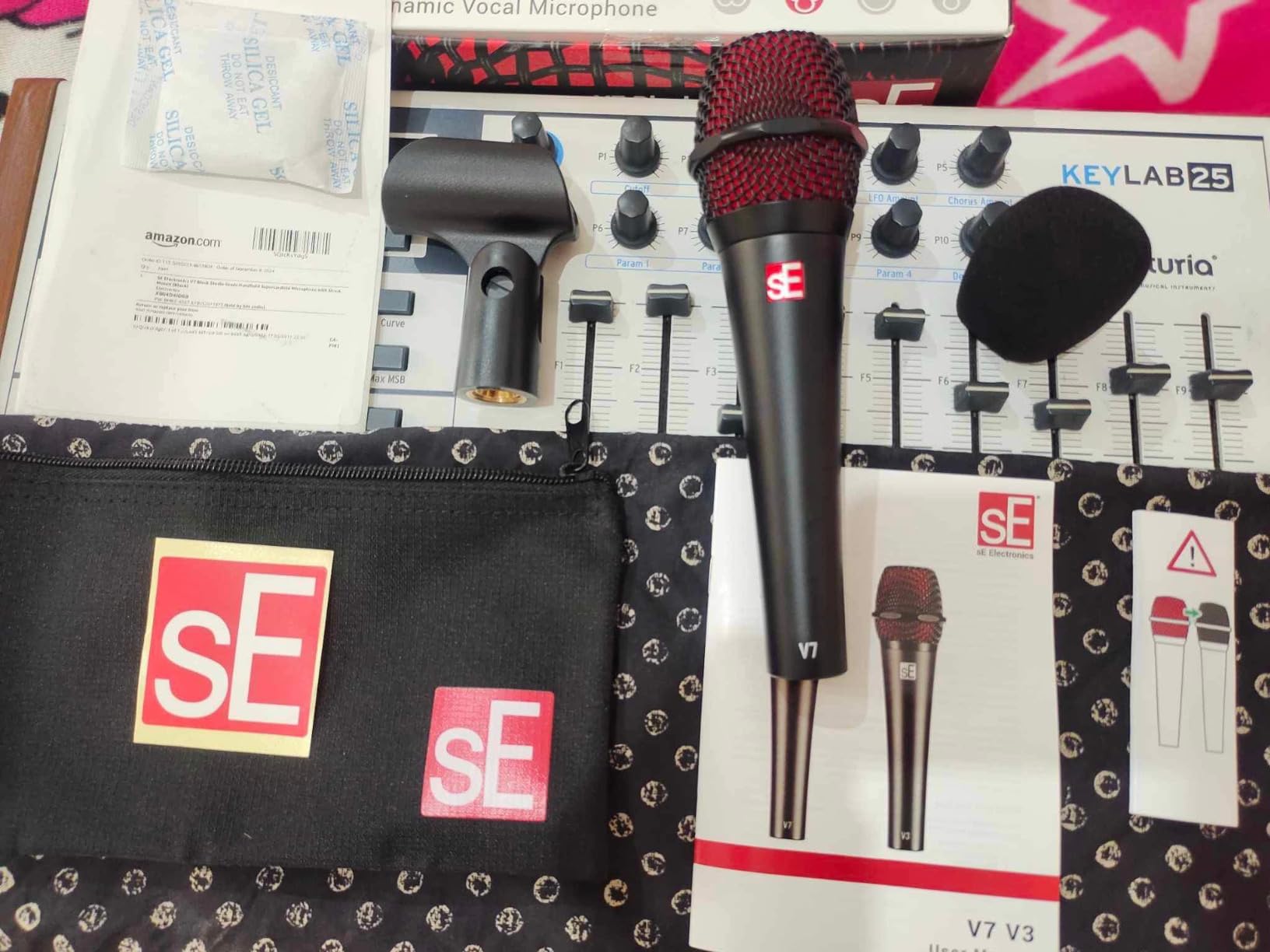
The honest drawback is evidence. At 375 ratings it has by far the smallest review base in this list, so you are buying on the strength of the engineering and the pattern rather than a long history of owner reports. If a bad batch existed, fewer owners would have found it.
Like most supercardioids it needs solid gain, and the standard V7 has no on/off switch, so check which version the seller is listing. The pattern is also tight enough that more than one singer on a single microphone would be cramped.
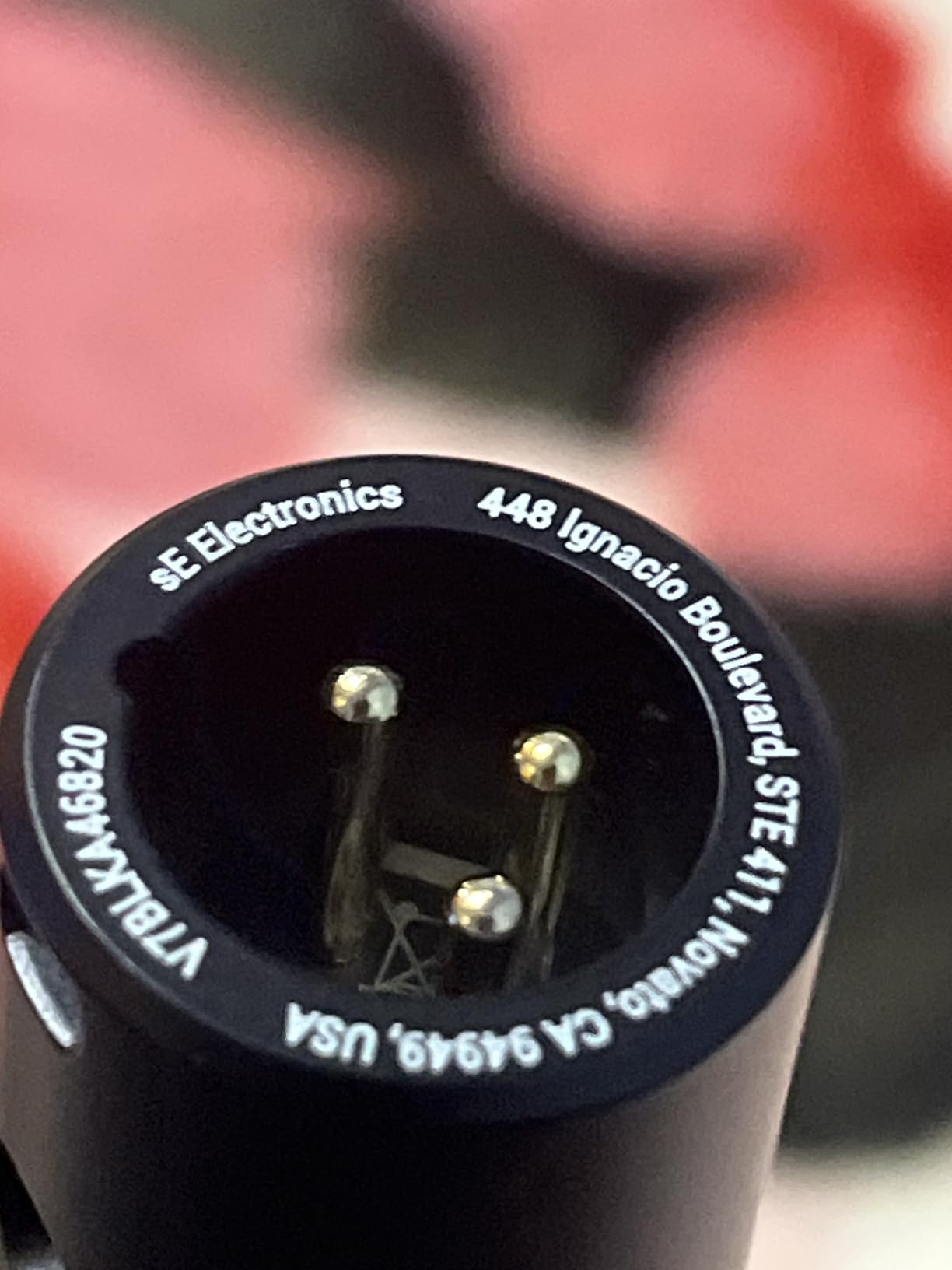
Who should buy the sE V7
Performers who move, who play loud rooms, and who need a mic to survive being handled roughly. The isolation makes it a strong lead vocal mic when a band is generating a lot of stage volume and the monitor position cannot be improved.
Singers with a lot of sibilance or a bright voice will also appreciate the switchable windscreen, since it is the one tool on this list that can be adjusted from the outside without changing your setup.
Who should skip it
Skip it if you want the reassurance of a large owner base, or if you are on a strict budget. It is also the wrong shape for a quiet room, where a cardioid mic would pick up your voice with less gain and cost less. The extra isolation only earns its keep when the stage is loud.
How to Choose a Live Vocal Microphone in 2026
Nearly every question we get about live vocal mics comes down to five things: dynamic versus condenser, which polar pattern, how loud the stage is, wired or wireless, and how much abuse the mic will take. Here is how each one actually changes your decision.
Dynamic or condenser for live singing
Dynamic, for almost everyone. A dynamic mic uses a lightweight diaphragm attached to a coil of wire sitting inside a magnet, and it only needs the movement of air to generate signal. A condenser uses a very thin, easily disturbed diaphragm and needs power, which is why condenser mics are accurate enough to capture a whisper and sensitive enough to pick up a room full of noise. On stage that sensitivity works against you.
Condensers have one place in a live rig: as a drum overhead or a room mic. For a handheld vocal, the polar rejection and the build of a dynamic are worth far more than the extra detail. The one exception is a very quiet solo acoustic set in a treated room, where a condenser on a stand can sound lovely and still behave, provided the singer keeps it off the speaker axis.
Cardioid, supercardioid or hypercardioid
These are patterns, describing which directions a mic hears. A cardioid mic hears mostly what is in front of it and rejects most of what is behind it, with a null directly at the rear. It is the most forgiving pattern and the most common.
A supercardioid tightens that front lobe and narrows the rear null, which means more gain before feedback and less of the room in your monitor. The cost is that the sides of the pattern pick up more, so you hear the band more. A hypercardioid, like the budget TONOR mic, tightens further still, which is excellent in a loud room and unforgiving anywhere else.
The practical rule we use: quiet room or rehearsal, choose cardioid. Band on stage with a wedge, choose supercardioid. Very loud stage and no control over monitor placement, choose the tightest pattern you can get away with.
Match the mic to your stage, not to your aspiration
Stage loudness changes the answer more than price does. In a small room with a polite PA, any cardioid dynamic will sound great and feedback will not be your problem. In a band setting with guitar amplifiers on stage, the vocal mic has to win a frequency contest, and that is where supercardioids and higher-sensitivity capsules earn their place.
Singers with a low or baritone voice should also weigh the bottom end. Mics with minimal proximity effect, like the Sennheiser e 835 and the AKG D5, stay consistent at any distance. Mics with more proximity effect, like the SM58, thicken up when you lean in, which some singers use deliberately.
Match the mic to your voice
Forum threads are far more useful on this topic than spec sheets, and a pattern repeats: people buy by brand rather than by voice and end up unhappy. The recurring complaints are that a bright or breathy voice sounds boxy on an SM58, and that a belter loses low-end body on a mic with almost no proximity effect.
Harsh or screamed vocals raise a different question, and the answer there is a mic with a switchable or removable internal windscreen and a tight pattern, so you can sit close and still control the low frequencies. For more situational mic choices, the shotgun microphone guide covers filming and video work, which is a different use case again.
Wired or wireless
Choose wireless when movement matters: a singer walking a stage, a presenter with a clicker, a drummer who cannot hold a cable. Choose wired for everything else, because a wired XLR microphone cannot drop out, needs no batteries and costs a fraction of the price. Forum consensus is blunt on quality: budget wireless systems are treated as a compromise, and genuinely good systems start several hundred dollars per channel.
A common middle path is a wired microphone for the band and a wireless handheld for a mobile presenter, which is where lavalier and headset options often make more sense for speech than a handheld does. If you are mounting a mic rather than holding it, our boom microphone guide covers the stands and arms that make that possible.
Gain before feedback and the 3-to-1 rule
Feedback happens when sound from the speakers reaches the microphone and is amplified again. Most of the time people blame the mic when the real causes are gain staging and monitor position. Four fixes cover nearly every case: pull the mic behind your vocal monitors or tilt them away from the mic, keep the mic at the quiet end of a supercardioid’s front lobe, keep the vocal channel EQ modest with a high-pass filter around 80 to 100 Hz, and pull the vocal fader back before you turn everything else up.
The 3-to-1 rule solves the same problem acoustically. For every microphone on a stage, there should be roughly three times as much acoustic headroom for that source as for the next loudest source. So a lead vocal wants roughly three times the acoustic space of a snare, and a snare three times the space of a guitar amp. In practice it means cutting the sources between the mic and the speaker one at a time until the squeal stops, and the source you cut is the one that was too loud for that microphone.
Build, handling noise and the details that matter
An all-metal body and a locking XLR connector matter more than most spec sheets suggest, because the connection is where live rigs actually fail. Handling noise matters too: shock mounts, like the one inside the Beta 58A and the AKG D5, are what let you hold the mic rather than clip it to a stand.
Finally, check what is in the box. The included cable varies a lot across this list, the Pyle and FIFINE include leads while the Sennheiser and AKG do not, and the connector type matters: the FIFINE K6 is a 6.35mm design rather than a body-mounted XLR. Pops and sibilance are handled at the source, with a windscreen and a high-pass filter, so a mic with an integrated filter like the AKG P5 S saves you an accessory.
Frequently Asked Questions
What is the best quality microphone for singing live?
For most singers the Shure SM58 is the best quality choice for live vocals because it combines durability, feedback rejection and an affordable price in one package. It handles loud stages, survives being dropped, works without phantom power, and doubles as a speech microphone. If your stage is loud or you monitor through a wedge, step up to the Shure Beta 58A for tighter isolation and more detail.
What type of mic is best for live vocals, dynamic or condenser?
A dynamic microphone is the right type for almost all live vocal work. Dynamics are more rugged, need no power, and their cardioid or supercardioid patterns reject stage noise and feedback. Condenser microphones are far more sensitive and accurate, which makes them studio tools; on stage that sensitivity picks up the whole room and makes feedback harder to control.
Is the Shure Beta 58A better than the SM58?
It is better for specific situations, not universally. The Beta 58A uses a supercardioid pattern instead of cardioid, so it gives more gain before feedback and hears less of the room, and it has a brighter, more detailed tone. It also has almost no proximity effect. For a loud stage with stage monitoring it is the better mic; for a quiet room or a singer who wants a warm bass-forward tone, the SM58 is the better buy.
Which is better, the Sennheiser e 835 or the Shure SM58?
They suit different singers. The SM58 is warmer, has a stronger proximity effect and a far larger base of owner feedback. The e 835 is brighter and more open, keeps its tone when the singer moves off axis, has minimal proximity effect, and carries a 10-year warranty. Choose the e 835 if you find the SM58 boxy or want more clarity on stage; choose the SM58 if you want the standard accessory support and a warmer sound.
What is the 3 to 1 rule for microphones?
The 3-to-1 rule states that for every microphone on a stage, there should be about three times as much acoustic headroom for that source as for the next loudest source. A lead vocal wants roughly three times the acoustic space of a snare, and a snare three times the space of a guitar amp. It is a way of identifying which source is too loud for its microphone, and the fix is usually to cut the source between the mic and the speaker rather than to change microphones.
Do I need a wireless microphone for live performance?
Only if movement is part of the performance. Wireless is worth it for a singer who walks the stage, a presenter with notes to hold, or a drummer who needs both hands. For a fixed position, a wired XLR microphone is more reliable because it cannot drop out, needs no batteries and costs far less. Speakers and presenters should also consider a lavalier or headset rather than a handheld.
Conclusion: The Best Microphones for Live Vocals in 2026
Buy the Shure SM58 if you want the safest choice, because it is one of the most tested, most accessoried and most forgiving live vocal microphones you can buy, and it works for singing and speaking alike. Move up to the Shure Beta 58A once your stage gets loud or you start using a wedge monitor, and pick the Sennheiser e 835 if the SM58 sounds too boxy for your voice and you want clarity with a long warranty.
Below that, the AKG P5 S and the sE Electronics V7 are the two supercardioids worth knowing, the AKG D5 is the detail pick for accurate reproduction, the Shure PGA58 is the practical host microphone, and the TONOR, Pyle and FIFINE models cover rehearsal rooms, PA work and karaoke without a large outlay. Whatever you choose, buy it, sing close to the grille, and set the monitor so it is not aimed at the microphone.