
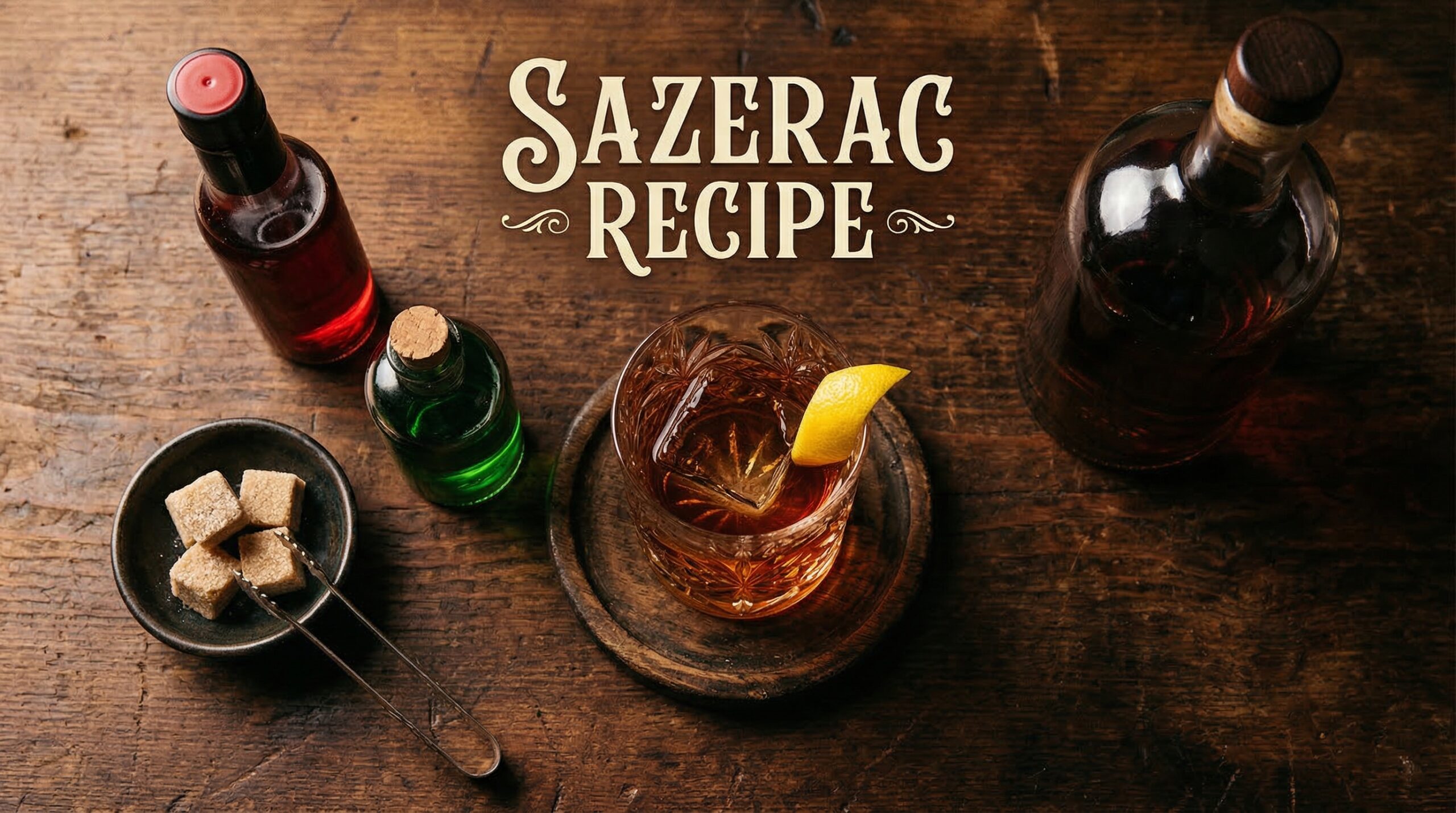
If you’ve ever visited New Orleans, you’ve probably heard of the Sazerac. This iconic cocktail has been the official drink of the Big Easy since 2008, and for good reason. Our team has tested dozens of variations over the years, and we’re sharing our perfected Sazerac recipe with you today.
What makes this drink special is its simplicity and technique. Unlike many modern cocktails loaded with fruit juices and syrups, the Sazerac relies on quality spirits and proper preparation. It’s a spirit-forward drink that rewards patience and attention to detail.
In this guide, we’ll walk you through everything you need to know: the exact ingredients, step-by-step instructions, the fascinating history behind this drink, and pro tips we’ve learned from bartenders across the French Quarter. Whether you’re a cocktail novice or seasoned mixologist, you’ll be making restaurant-quality Sazeracs at home.
Table of Contents
What is a Sazerac?
A Sazerac is a classic New Orleans cocktail consisting of rye whiskey (or cognac), Peychaud’s bitters, sugar, and an absinthe rinse. It’s served neat in a chilled rocks glass with a lemon twist garnish. The drink gets its distinctive character from the absinthe coating the glass, which adds subtle anise and licorice notes without overpowering the whiskey.
Unlike most cocktails, the Sazerac is never served with ice. This makes temperature control critical. The glass must be thoroughly chilled, and the drink should be consumed relatively quickly before it warms up. It’s a sipping cocktail meant to be enjoyed slowly.
The flavor profile is bold yet balanced. The spicy rye whiskey provides the backbone, Peychaud’s bitters add floral and anise complexity, sugar rounds out the edges, and the absinthe rinse gives it that signature aromatic finish. One sip and you’ll understand why this drink has survived nearly two centuries.
Sazerac Ingredients
One of the beauties of this cocktail is its short ingredient list. Here’s everything you need:
For the cocktail:
- 2 ounces rye whiskey – We recommend a high-rye content bourbon like Rittenhouse or Sazerac Rye. The peppery spice cuts through the sweetness.
- 4 dashes Peychaud’s bitters – This is non-negotiable. Peychaud’s has a distinctly floral, anise-forward profile that Angostura simply cannot replicate.
- 1 sugar cube (or 1/2 teaspoon simple syrup) – Traditionalists prefer the ritual of muddling a sugar cube, but simple syrup dissolves more consistently.
- Absinthe or Herbsaint (for rinsing) – You only need a small splash to coat the glass. Herbsaint is the Louisiana-made absinthe substitute and works beautifully.
- Lemon twist for garnish – Express the oils over the drink before dropping it in.
Equipment you’ll need:
- Two Old Fashioned (rocks) glasses
- Barspoon for stirring
- Mixing glass (optional but helpful)
- Vegetable peeler or channel knife for the lemon twist
The quality of your ingredients matters here. Since there are so few components, each one shines through. We’ve found that investing in decent rye whiskey and authentic Peychaud’s bitters makes a noticeable difference in the final drink.
How to Make a Sazerac
Here’s our step-by-step method for crafting the perfect Sazerac at home. We’ve refined this technique over years of testing, and it produces consistent results every time.
Step 1: Chill Your Glass
Place one Old Fashioned glass in the freezer for at least 10 minutes before you start. A properly chilled glass is essential for this drink since there’s no ice in the final serving. If you’re short on time, fill the glass with ice water and let it sit while you prepare everything else.
This step matters more than most people realize. A warm glass will cause your carefully chilled cocktail to lose temperature within minutes. We’ve tested this extensively, and drinks served in frozen glasses stay at optimal temperature nearly twice as long.
Step 2: Prepare the Absinthe Rinse
Take your second glass (the one you’ll serve in) and add about 1/4 ounce of absinthe or Herbsaint. Swirl it around to coat the entire inside of the glass, including the rim. Pour out the excess, leaving just a thin film coating the interior.
Some bartenders use a small spray bottle filled with absinthe to mist the glass instead. This method uses less product and provides more even coverage. If you make Sazeracs regularly, a spray bottle is worth the small investment.
The goal is to leave the aromatic essence of absinthe without overwhelming the drink. Too much absinthe will dominate the flavor profile. Think of it as seasoning the glass, not adding a full ingredient.
Step 3: Muddle the Sugar and Bitters
In your chilled mixing glass or the first Old Fashioned glass, place your sugar cube. Add 4 dashes of Peychaud’s bitters and about 1/2 teaspoon of water. Muddle gently until the sugar cube breaks down into a paste.
Don’t skip the water. It helps dissolve the sugar and creates a smoother final texture. If using simple syrup instead, skip the muddling and simply add 1/2 teaspoon syrup to your glass.
We prefer the sugar cube method for its tradition and the subtle texture it adds. However, simple syrup is more forgiving for beginners and dissolves completely every time.
Step 4: Add Whiskey and Stir
Add 2 ounces of rye whiskey to your sugar-bitters mixture. Fill the glass with ice and stir continuously for 20-30 seconds. Many experienced bartenders count their stirs, typically aiming for 40 rotations with the barspoon.
Stirring (rather than shaking) is crucial here. You want to chill and dilute the drink without introducing air bubbles or clouding the crystal-clear appearance. The motion should be smooth and controlled, with the back of the spoon against the inside of the glass.
The ice will begin to melt slightly, providing just enough dilution to open up the flavors. Stop stirring when the outside of the glass feels cold to the touch and condensation begins to form.
Step 5: Strain and Garnish
Strain the mixture into your absinthe-rinsed glass. No ice goes into the final serving. Using a vegetable peeler or channel knife, cut a wide strip of lemon peel, avoiding the white pith as much as possible.
Hold the peel over the glass with the colored side facing down. Gently squeeze and twist to express the lemon oils over the surface of the drink. You’ll see them shimmer on the liquid. Rub the peel around the rim of the glass, then drop it into the drink.
Your Sazerac is now ready to serve. Enjoy it immediately while it’s properly chilled.
The History of the Sazerac
The Sazerac’s story begins in the 1830s when a Creole apothecary named Antoine Amédée Peychaud ran a pharmacy in New Orleans’ French Quarter. Peychaud created his proprietary bitters blend and served brandy toddies mixed with his bitters to customers. These early versions were likely the precursors to what we now know as the Sazerac.
The drink got its name from Sazerac de Forge et Fils Cognac, which was the original base spirit. The Sazerac Coffee House opened on Exchange Place in the 1850s and became famous for serving this cognac-based cocktail. At this point, the drink was made with cognac, Peychaud’s bitters, sugar, and an absinthe rinse.
Everything changed in the late 1800s when the phylloxera epidemic devastated French vineyards. Cognac became scarce and expensive. Bartenders adapted by switching to American rye whiskey, which was abundant and affordable. This switch became permanent for most recipes, though some traditionalists still prefer cognac.
By the early 20th century, absinthe faced legal troubles. The United States banned it in 1912 over concerns about wormwood’s supposed hallucinogenic properties. New Orleans bartenders substituted Herbsaint, a locally produced anise-flavored liqueur. Many recipes still call for Herbsaint today, though true absinthe is legal again and widely available.
In 2008, the Louisiana Legislature officially named the Sazerac as the official cocktail of New Orleans. This recognition cemented its status as a cultural icon. Today, you’ll find it on menus throughout the city, from dive bars to upscale hotel lounges.
Sazerac vs Old Fashioned: What’s the Difference?
This question comes up constantly, and for good reason. Both drinks are spirit-forward, served in rocks glasses, and contain whiskey, bitters, and sugar. But the differences are significant.
The base spirit: Old Fashioneds typically use bourbon, while Sazeracs specifically call for rye whiskey. The rye adds a spicier, drier character compared to bourbon’s sweetness.
The bitters: Old Fashioneds use Angostura bitters as the standard. Sazeracs require Peychaud’s bitters, which have a distinctly different flavor profile with more floral and anise notes.
The absinthe rinse: This is the most obvious difference. Sazeracs always include an absinthe rinse, which adds aromatic complexity. Old Fashioneds never do.
The garnish: Old Fashioneds typically feature an orange slice or peel. Sazeracs use a lemon twist. This subtle change affects the aromatic experience significantly.
Serving style: Old Fashioneds are served over a single large ice cube. Sazeracs are served neat, with no ice at all.
Think of the Sazerac as a more complex, aromatic cousin of the Old Fashioned. Both are excellent cocktails, but they occupy different flavor territories entirely.
Tips for the Perfect Sazerac
After making hundreds of these drinks, we’ve learned a few things that separate good Sazeracs from great ones.
Temperature Matters
Because there’s no ice in the final drink, temperature control is critical. Use plenty of ice when stirring, and work efficiently. A warm Sazerac is a disappointing Sazerac. Some enthusiasts even store their serving glasses in the freezer permanently.
The Stir Count
Professional bartenders often count their stirs. We’ve found that 40 rotations with a barspoon provides ideal dilution. Under-stirring leaves the drink too boozy and harsh. Over-stirring dilutes it to the point of being watery.
Try the Split Base Variation
Some of the best Sazeracs we’ve had use a combination of rye and cognac. Try 1.5 ounces rye whiskey and 0.5 ounce cognac for added complexity. This approach honors the drink’s cognac origins while keeping the spicy rye character that most people expect.
Common Mistakes to Avoid
- Too much absinthe: The rinse should leave just a whisper of anise flavor. If you can taste absinthe prominently, you’ve used too much.
- Warm glass: If your glass isn’t cold enough, the drink will lose temperature quickly. Freeze it properly.
- Wrong bitters: Angostura is wonderful, but it’s not for Sazeracs. Peychaud’s is essential for the authentic flavor.
- Poor lemon expression: Take time to properly express those lemon oils. It’s not just garnish; it’s an integral flavor component.
Frequently Asked Questions
What is the difference between Old Fashioned and Sazerac?
The main differences are the bitters (Angostura vs Peychaud’s), the absinthe rinse (Sazerac only), the garnish (orange vs lemon), and serving style (over ice vs neat). Sazeracs also specifically use rye whiskey while Old Fashioneds typically use bourbon.
What is the best liquor for Sazerac?
Rye whiskey is the standard choice, with Rittenhouse Rye and Sazerac Rye being the most frequently recommended options. For a more traditional approach, try cognac or a split base combining 1.5 oz rye with 0.5 oz cognac.
Is Sazerac rye or cognac?
Originally, Sazeracs were made with cognac. The switch to rye whiskey occurred in the late 1800s when the phylloxera epidemic made cognac scarce. Today, rye is the standard, but cognac-based versions are still made and some recipes use both.
Can I make Sazerac without absinthe?
While absinthe is traditional, you can substitute Herbsaint, Pernod, or another anise-flavored liqueur. The absinthe rinse is essential to the Sazerac’s character, so we don’t recommend skipping it entirely.
Final Thoughts on This Classic Cocktail
Mastering the Sazerac recipe connects you to nearly two centuries of New Orleans cocktail history. It’s a drink that rewards attention to detail and quality ingredients. The technique may seem fussy at first, but once you get the hang of it, you’ll be making these in under five minutes.
We encourage you to experiment with the split base variation and find your preferred rye whiskey. Every bartender has their own slight twist on the recipe, and that’s part of what makes this cocktail so enduring.
If you enjoyed this guide, check out our other cocktail recipes for more classic drinks to master at home. Cheers!