
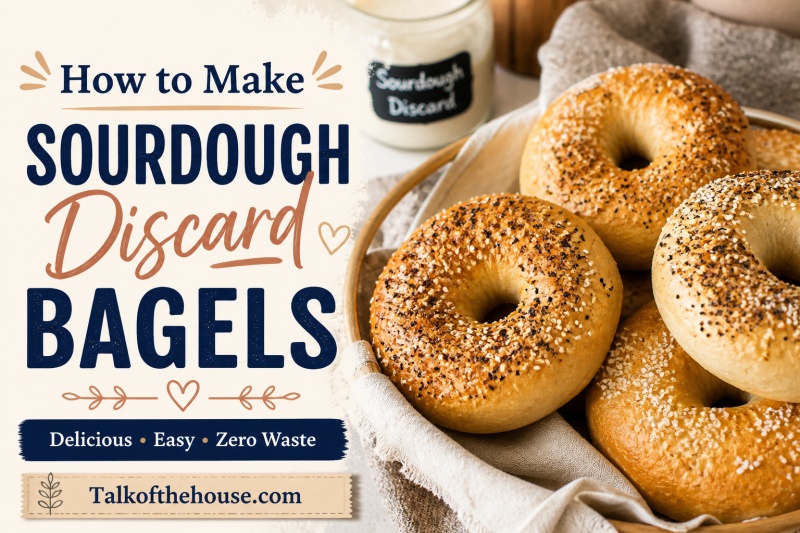
If you have a sourdough starter, you know the weekly struggle. You feed your starter, it bubbles up beautifully, and then you have to throw away half of it to keep things manageable. That discard feels like such a waste. I started making these sourdough discard bagels about two years ago when my starter was particularly prolific, and honestly, I haven’t looked back since.
These bagels combine the tangy depth of sourdough with that signature chewy texture you expect from a real New York-style bagel. Unlike traditional sourdough bagels that can take 8-12 hours, this sourdough discard bagel recipe uses a small amount of commercial yeast to speed things up. You get homemade bagels in under 3 hours from start to finish.
I’ve tested this recipe more times than I can count, adjusting hydration levels and proofing times to get it just right. The result? Golden brown bagels with a crackly crust and soft interior that rival anything from a bakery. Whether you are a seasoned baker or new to sourdough, this recipe will walk you through every step with confidence.
Table of Contents
Why You’ll Love This Sourdough Discard Bagel Recipe
There are plenty of reasons to love this recipe. First, it solves the discard problem. Instead of throwing away that unfed starter, you transform it into something delicious. Our team tested this recipe against traditional yeast-only bagels and found the sourdough version had noticeably better flavor depth and kept fresh longer.
The speed factor matters too. Pure sourdough bagels can take all day. By adding instant yeast, we cut that down to 2.5 to 3 hours total time. You still get the complex fermentation flavors from the discard, but you don’t have to plan your entire day around bagel making.
The texture is what really sets these apart. The combination of bread flour, proper kneading, and the boiling step creates that perfect chewiness you want in a bagel. These are not bready, soft dinner rolls shaped like bagels. These are real, substantial bagels that hold up to cream cheese and lox.
Understanding Sourdough Discard
Before we get into the recipe, let’s clarify what we mean by “discard.” When you maintain a sourdough starter, you typically feed it with fresh flour and water every day or every few days. Before feeding, you remove a portion of the existing starter to make room for the new food. That removed portion is your discard.
Discard is unfed starter. It is not as active as a fed starter, which means it will not leaven bread on its own. However, it still contains all those wonderful fermented flavors and some residual yeast activity. In this recipe, we use the discard for flavor and rely on commercial yeast for the rise.
You can use discard that is anywhere from a few hours old to a week old. Fresher discard will have more subtle flavor, while older discard (stored in the refrigerator) will contribute more tang. I personally prefer discard that is 3-5 days old for the best balance.
What You’ll Need
Ingredients
These measurements make 8 standard-sized bagels. You can double the recipe if you want to make a larger batch for the week.
Dry Ingredients:
- 4 cups (500g) bread flour (plus more for dusting)
- 1 tablespoon (12g) granulated sugar or honey
- 2 teaspoons (12g) fine sea salt
- 2 teaspoons (6g) instant yeast (also called rapid-rise or bread machine yeast)
- 1 tablespoon (10g) diastatic malt powder (optional but recommended)
Wet Ingredients:
- 1 cup (240g) sourdough discard, at room temperature
- 3/4 cup (180ml) warm water (about 100°F)
For the Boiling Bath:
- 8 cups (2 liters) water
- 2 tablespoons (30g) baking soda
- 1 tablespoon (15g) brown sugar or barley malt syrup
For Topping:
- 1 egg beaten with 1 tablespoon water (egg wash)
- Your choice of toppings (see topping ideas section)
Equipment Needed
You don’t need fancy equipment, though a few tools make the process easier:
- Large mixing bowl
- Stand mixer with dough hook (optional but helpful)
- Kitchen scale (highly recommended for accuracy)
- Dough scraper or bench knife
- Rimmed baking sheet
- Parchment paper
- Large pot for boiling (at least 6 quarts)
- Slotted spoon or spider strainer
- Pastry brush
If you don’t have a stand mixer, you can absolutely make these by hand. I did my first 10 batches by hand before getting a mixer. It just takes a bit more time and elbow grease.
Ingredient Notes and Substitutions
Flour Options
Bread flour is ideal for bagels because it has a higher protein content (12-14%) than all-purpose flour. That extra protein develops more gluten, which gives bagels their characteristic chew. However, you can substitute all-purpose flour if that is what you have. The bagels will be slightly less chewy but still delicious.
If using all-purpose flour, you can add 2 tablespoons of vital wheat gluten to approximate bread flour protein levels. This helps maintain that bagel texture.
Yeast Types
This recipe calls for instant yeast because it works quickly and doesn’t need to be bloomed in water first. If you only have active dry yeast, use the same amount but let it sit in the warm water for 5-10 minutes until foamy before mixing into the dough.
You can also use fresh yeast (cake yeast) if you have access to it. Use 0.6 ounces (17g) and crumble it into the warm water first.
Diastatic Malt Powder
This is the secret ingredient many commercial bagel shops use. Diastatic malt powder is made from sprouted barley that has been dried and ground. It contains enzymes that break down starches into sugars, which helps with browning and extends shelf life.
If you don’t have it, you can substitute 1 tablespoon of barley malt syrup or just use brown sugar. The bagels will still taste great, though they might not brown quite as deeply.
What About Discard Age?
As mentioned, discard anywhere from fresh to a week old works. Very old discard (over a week refrigerated) can develop hooch, that dark liquid that sits on top. Just pour off the hooch and use the discard below. The flavor will be more pronounced.
If your discard has any mold or foul smell beyond the normal sour tang, discard it and use fresher discard.
Sourdough Discard Bagel Recipe: Step-by-Step Instructions
Now let’s get into the actual process. Read through all the steps before starting so you understand the flow. Bagel making involves timing, so knowing what’s coming next helps.
Step 1: Mix the Dough
In a large bowl, whisk together the bread flour, sugar, salt, instant yeast, and diastatic malt powder (if using). Make sure the yeast and salt are distributed evenly throughout the flour. Salt can inhibit yeast if they come into direct contact in concentrated areas.
Add the sourdough discard and warm water to the dry ingredients. Mix with a wooden spoon or dough whisk until a shaggy dough forms. The dough will look rough and sticky at this stage. That is normal.
If using a stand mixer, mix on low speed with the dough hook for about 2 minutes until combined.
Step 2: Knead Until Smooth
Turn the dough out onto a lightly floured surface. Knead for 8-10 minutes by hand, or 5-6 minutes in a stand mixer on medium-low speed. The dough should transform from shaggy and sticky to smooth and elastic.
You will know it is ready when you can stretch a small piece thin enough to see light through it without tearing. This is called the windowpane test. Proper gluten development is crucial for chewy bagels.
If the dough is too sticky to handle, add flour a tablespoon at a time. But be conservative. Bagel dough should be stiffer than sandwich bread dough.
Step 3: First Rise
Place the kneaded dough in a lightly oiled bowl and cover with plastic wrap or a damp kitchen towel. Let it rise at room temperature (70-75°F) for about 60 minutes, or until doubled in size.
The sourdough discard and yeast work together here. The commercial yeast does the heavy lifting for the rise, while the discard contributes flavor. In cooler kitchens, this might take 75-90 minutes. In warmer kitchens, check at 45 minutes.
Step 4: Shape the Bagels
Once the dough has doubled, gently punch it down to release the air. Turn it out onto a lightly floured surface and divide into 8 equal pieces. Each piece should weigh about 110-115 grams if you are using a scale.
Shape each piece into a ball by tucking the edges underneath and rolling it on the counter with a cupped hand. This creates surface tension, which helps the bagels hold their shape.
To form the bagel shape, poke your thumb through the center of each ball to create a hole. Stretch the hole to about 1.5 to 2 inches in diameter. The hole will shrink during proofing and baking, so make it larger than you think you need.
Place the shaped bagels on a parchment-lined baking sheet, spacing them about 2 inches apart.
Step 5: Second Rise and the Float Test
Cover the shaped bagels with a damp towel and let them rise for 30-45 minutes at room temperature. They should look puffy but not doubled.
Now comes the float test. Fill a bowl with room temperature water. Gently place one bagel in the water. If it floats within 10 seconds, your bagels are ready to boil. If it sinks, let them proof for another 15-20 minutes and test again.
The float test indicates that enough carbon dioxide has built up inside the dough to make the bagels buoyant. This means they will be light and airy rather than dense.
Step 6: Prepare the Boiling Water Bath
About 10 minutes before the bagels are ready, start heating your water bath. Bring 8 cups of water to a boil in a large pot. Once boiling, add the baking soda and brown sugar or barley malt syrup.
The baking soda makes the water alkaline, which helps create that shiny, chewy crust. The sugar or malt syrup adds subtle sweetness and aids in browning. Do not skip this step. Boiling is what makes bagels different from regular bread rolls.
Reduce the heat to maintain a gentle simmer. You want active bubbles but not a rolling boil that will knock the bagels around.
Step 7: Boil the Bagels
Carefully lower 2-3 bagels into the simmering water using a slotted spoon or spider strainer. Do not crowd the pot. Boil for 30 seconds on the first side, then flip and boil for 30 seconds on the second side.
The bagels will puff up in the water. This is the gelatinization of the surface starches, which creates that distinctive chewy exterior. Remove the bagels with the slotted spoon, letting excess water drain off, and return them to the parchment-lined baking sheet.
Repeat with the remaining bagels until all are boiled.
Step 8: Add Toppings
While the bagels are still wet from boiling, brush them with egg wash. This helps toppings adhere and gives the bagels a beautiful golden sheen when baked.
Immediately sprinkle on your chosen toppings. Press gently so they stick. The wet surface from boiling is key here. If the bagels dry before you top them, the toppings will fall off.
Step 9: Bake Until Golden Brown
Preheat your oven to 425°F (218°C) while the bagels are proofing. If you haven’t already, get the oven going now.
Bake the bagels for 20-25 minutes, rotating the pan halfway through for even browning. They should be deep golden brown and sound hollow when tapped on the bottom.
Transfer the baked bagels to a wire rack and let them cool for at least 20 minutes before slicing. This resting period allows the interior to set. If you cut into them immediately, they can seem gummy even when fully baked.
The Secret to Chewy Bagels: Understanding the Boiling Process
Many home bakers wonder why boiling is necessary. Couldn’t you just bake the shaped dough? Technically yes, but you would end up with bagel-shaped bread, not real bagels.
Boiling serves three critical functions. First, it gelatinizes the surface starches, creating that distinctive chewy crust. Second, it sets the shape so the bagels don’t spread during baking. Third, it pre-cooks the exterior, which limits expansion and creates the dense, chewy interior texture.
The baking soda in the boil water increases the pH, which promotes browning through the Maillard reaction. This is why bagels get that beautiful deep brown color while the interior stays pale.
Some recipes call for longer boiling times, up to 2 minutes per side. I find 30 seconds per side gives the perfect balance. Longer boiling creates a thicker, chewier crust but can make the interior too dense. Shorter boiling gives you a thinner crust and slightly softer bagel. Adjust to your preference.
Delicious Topping Ideas for Your Homemade Bagels
The classic everything bagel seasoning is always a hit, but don’t stop there. Here are our favorite topping combinations:
Savory Options:
- Everything bagel seasoning (sesame seeds, poppy seeds, dried onion, dried garlic, salt)
- Plain sesame seeds (white or black)
- Poppy seeds
- Coarse kosher salt or flaky sea salt
- Dried onion flakes
- Garlic powder and Italian herbs
- Everything seasoning plus crushed red pepper
Sweet Options:
- Cinnamon sugar (mix 1/4 cup sugar with 1 tablespoon cinnamon)
- Everything bagel seasoning with a drizzle of honey before baking
- Chopped dried cranberries and orange zest
- Dark chocolate chips and coarse salt
Apply toppings immediately after boiling while the surface is still wet. For sweet toppings like cinnamon sugar, brush with melted butter instead of egg wash for extra richness.
Expert Tips for Perfect Sourdough Discard Bagels
Troubleshooting Dense or Gummy Bagels
This is the most common issue home bakers face. If your bagels are coming out dense, there are a few likely culprits.
First, check your yeast. If it is old or was stored improperly, it might not be active enough. Proof your yeast in warm water with a pinch of sugar before using. If it doesn’t foam within 10 minutes, get fresh yeast.
Second, make sure you are not adding too much flour. Bagel dough should be stiff but still tacky. If the dough feels like Play-Doh, you have added too much flour.
Third, verify your proofing times. Underproofed bagels will be dense. Make sure your bagels pass the float test before boiling. If they do not float, they need more time.
Finally, let them cool completely before judging the texture. Warm bagels always seem gummier than they actually are. Wait at least 30 minutes after baking.
How to Get Bigger Holes in Your Bagels
Many bakers want that classic big bagel hole. The key is in the shaping and proofing. When you form the hole, stretch it to at least 2 inches in diameter. It will close up significantly during proofing and baking.
Also, avoid overproofing. Bagels that have proofed too long will puff up and close the center hole. Stick to the timing in the recipe and use the float test as your guide.
If your holes consistently close up, you can poke them again right before boiling. Use your finger or the handle of a wooden spoon to reopen the hole gently.
Overnight Cold Ferment Option
For even more flavor development, you can cold ferment the dough overnight. After shaping the bagels in Step 4, cover them and refrigerate for 8-24 hours instead of doing the room temperature second rise.
The cold temperature slows fermentation but allows complex flavors to develop. Take the bagels out of the refrigerator about 30 minutes before boiling to take the chill off. They may pass the float test straight from the fridge, or they might need a short warm-up proof.
This is perfect for weekend baking. Shape the bagels Friday night, refrigerate overnight, then boil and bake Saturday morning for fresh bagels with minimal morning effort.
Preventing Sticking Issues
If your bagels stick to the parchment paper, there are a few solutions. First, make sure you are using genuine parchment paper, not wax paper. Wax paper will stick.
Second, you can dust the parchment with cornmeal or semolina flour before placing the shaped bagels. This creates a barrier that prevents sticking.
Finally, make sure your bagels are fully baked. Underbaked bagels have a moister bottom that is more likely to stick. If the bottoms are browning too quickly, place a second baking sheet underneath to insulate.
Why the Bottom of My Bagels Burn
If your bagel bottoms are getting too dark while the tops are perfect, your oven rack is too low or your baking sheet is conducting too much heat. Try moving the rack to the upper-middle position.
You can also double up on baking sheets. Place one sheet directly under the other to create an air buffer that protects the bottoms. Silicone baking mats can also help regulate heat transfer.
Storage and Freezing Instructions
Fresh bagels are best eaten within 24 hours. Store them at room temperature in a paper bag or wrapped in a clean kitchen towel. Do not store them in plastic, which will make them soft and soggy.
For longer storage, these bagels freeze beautifully. Let them cool completely, then slice them in half. Place the halves cut-side-down on a baking sheet and freeze until solid, about 2 hours. Transfer to a freezer bag and store for up to 3 months.
To reheat from frozen, you can toast the halves directly from the freezer. For a whole bagel, wrap it in foil and bake at 350°F for 10-15 minutes, or microwave for 30 seconds then toast for the best texture.
I like to make a double batch on Sunday and freeze half for quick weekday breakfasts. They taste almost as good as fresh when properly reheated.
Serving Suggestions
Classic cream cheese is always a winner, but let’s get creative. Try these combinations:
Savory:
- Smoked salmon, cream cheese, capers, red onion, and dill
- Avocado, everything seasoning, and flaky salt
- Fried egg, cheddar cheese, and hot sauce
- Hummus, cucumber, and za’atar
Sweet:
- Cream cheese and jam (raspberry or apricot are classic)
- Nut butter and sliced bananas with a drizzle of honey
- Mascarpone and fresh berries
- Cinnamon cream cheese and apple butter
These bagels also make excellent breakfast sandwiches. The chewy texture holds up to fillings without falling apart. Try bacon, egg, and cheese for a weekend treat.
Frequently Asked Questions
Do you use sourdough discard for bagels?
Yes, sourdough discard is excellent for bagels. It adds complex tangy flavor and helps reduce food waste. The discard provides flavor while commercial yeast handles the rise, giving you faster results than pure sourdough bagels.
Is sourdough discard still gut healthy?
Sourdough discard contains some of the same beneficial bacteria and wild yeast as active starter, though in lower concentrations. The fermentation process creates organic acids and partially breaks down gluten and phytic acid. However, the health benefits are reduced compared to fully fermented sourdough bread since these bagels use yeast for the main rise.
Can I use all-purpose flour instead of bread flour for sourdough discard bagels?
Yes, you can substitute all-purpose flour, though the texture will be slightly less chewy. For best results with AP flour, add 2 tablespoons of vital wheat gluten to approximate bread flour protein levels. The bagels will still taste delicious.
How long does it take for sourdough discard bagels to rise?
Total rising time is typically 90 to 105 minutes. The first rise takes about 60 minutes until doubled, and the second rise after shaping takes 30-45 minutes. Use the float test to confirm readiness – the bagels should float in water within 10 seconds when properly proofed.
Can I make sourdough discard bagels without a stand mixer?
Absolutely. You can mix and knead the dough by hand. Knead for 8-10 minutes until the dough passes the windowpane test. It takes more time and effort than using a mixer, but hand-kneaded bagels are equally delicious.
Why didn’t my bagels pass the float test?
If bagels don’t float, they are underproofed. Let them rest another 15-20 minutes and test again. Other causes include expired yeast, water that was too hot and killed the yeast, or dough that is too dense from excess flour.
How do I store leftover sourdough discard bagels?
Store at room temperature in a paper bag for up to 24 hours. For longer storage, freeze sliced bagels in an airtight bag for up to 3 months. Reheat frozen bagels by toasting directly from frozen or wrapping in foil and baking at 350°F for 10-15 minutes.
Can I freeze sourdough discard bagels?
Yes, these bagels freeze very well. Cool completely, slice in half, and freeze cut-side-down on a baking sheet first to prevent sticking. Then transfer to a freezer bag. They keep for 3 months and reheat beautifully.
Final Thoughts
This sourdough discard bagel recipe has become a weekly tradition in my kitchen. It turns what would be waste into something truly special. The combination of tangy sourdough flavor, chewy texture, and golden crust makes these bagels better than most bakery versions.
I encourage you to try different flours, experiment with toppings, and find your perfect timing. Baking is as much about feel as it is about precise measurements. Once you make these a few times, you will develop an intuition for when the dough is ready.
If you have been throwing away your sourdough discard, stop. Start making these bagels instead. Your weekend breakfasts will thank you.
Happy baking.