
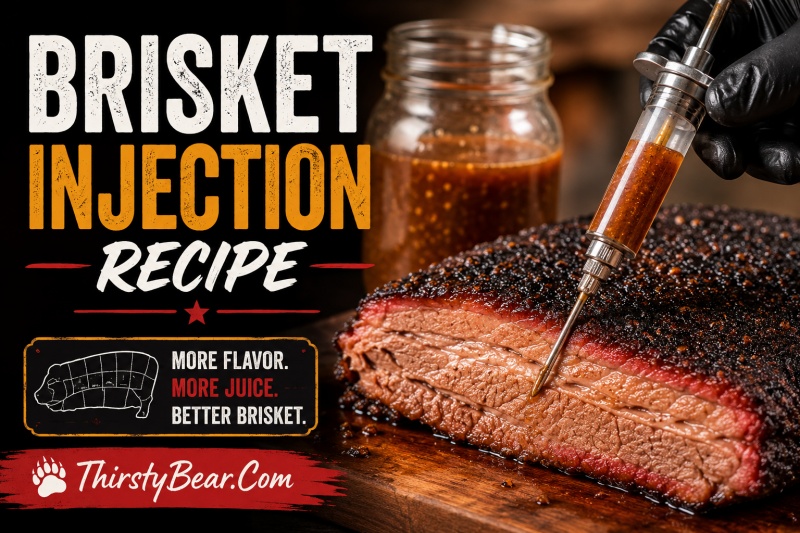
After 15 years of smoking brisket in my backyard and watching competition pitmasters work their magic, I can tell you one thing with certainty. A proper brisket injection recipe separates good brisket from the kind that makes people close their eyes and sigh with pleasure. If you have ever sliced into a dry brisket and wondered where all the moisture went, this guide will change your barbecue game forever.
In this article, I will walk you through everything you need to know about brisket injection. You will learn what it is, why it works, and how to create your own homemade injection that rivals what the pros use. I have tested dozens of recipes over the years, and I am sharing the exact formula that consistently wins praise at my family cookouts.
Table of Contents
What Is Brisket Injection
A brisket injection is a flavorful liquid mixture that gets inserted deep into the meat using a meat injector syringe. Unlike surface rubs or marinades that only flavor the outside, injection delivers moisture and seasoning directly into the center of thick cuts where it matters most.
Brisket is a tough, dense cut of beef that can be several inches thick. A dry rub creates a delicious bark on the outside, but it cannot penetrate more than a few millimeters into the meat. Injection solves this problem by bypassing the surface entirely and distributing flavor throughout every bite.
Why Use a Brisket Injection
Injecting brisket makes a noticeable difference in three key areas. First, it adds moisture that helps counteract the natural drying that happens during long smoking sessions. Second, it introduces salt and umami flavors deep into the meat where rubs cannot reach. Third, it gives you insurance against overcooking, which is easy to do with a 12 to 16 hour cook.
Competition pitmasters almost universally use injection because judges take one bite from each entry. That bite needs to be perfect, and injection ensures consistent flavor and juiciness throughout the entire brisket. Home cooks benefit just as much because nobody wants to serve dry meat to their guests.
I spent one season smoking briskets without injection to see if it really mattered. The difference was night and day. Injected briskets were noticeably more moist and had better flavor distribution from edge to edge. The non-injected ones had great bark but the centers were sometimes bland and occasionally dry.
Brisket Injection Recipe: The Classic Formula
This is the foundational brisket injection recipe that works for beginners and seasoned pitmasters alike. It uses ingredients you probably already have in your kitchen, and it takes less than 5 minutes to prepare.
Ingredients
- 2 cups beef broth or water
- 2 tablespoons Worcestershire sauce
- 1 tablespoon soy sauce
- 1 teaspoon beef base or Better Than Bouillon
- 1/2 teaspoon kosher salt
- 1/2 teaspoon black pepper
- 1/4 teaspoon garlic powder
Instructions
- Warm the beef broth slightly in a microwave or saucepan until it reaches about 100 degrees Fahrenheit
- Whisk in the beef base until completely dissolved
- Add Worcestershire sauce, soy sauce, salt, pepper, and garlic powder
- Stir until all ingredients are fully incorporated
- Let the mixture cool to room temperature before injecting
This recipe makes enough injection for a 12 to 15 pound brisket. The Worcestershire and soy sauce provide umami depth, while the beef base amplifies the meaty flavor profile. I have used this exact recipe at least 50 times, and it never disappoints.
Brisket Injection Variations to Try
Once you master the classic recipe, experiment with these variations that bring different flavor profiles to your brisket.
Butter Injection
For an incredibly rich and decadent brisket, substitute half the beef broth with melted butter. Use 1 cup beef broth and 1 cup melted unsalted butter. The butter adds fat content that creates a luxurious mouthfeel. Heat the butter gently until just melted, not hot, then combine with the other ingredients.
The downside of butter is that it can solidify if your brisket is cold when you inject. I recommend letting the meat sit at room temperature for 30 minutes before injecting with a butter-based mixture.
Tallow Injection (Texas Style)
Texas barbecue purists often use beef tallow instead of butter. Tallow is rendered beef fat that stays liquid at higher temperatures and carries a more intense beef flavor. You can buy beef tallow or render your own from brisket trimmings.
Mix 1 cup warm beef broth with 1 cup melted tallow. The result is a deeply savory injection that complements post oak smoke beautifully. This is my go-to recipe when I want that authentic Central Texas flavor.
Coffee Injection
For something completely different, try adding 1/2 cup strong brewed coffee to your base recipe. Coffee adds earthy, bitter notes that balance the richness of the beef. Use cold brew or cooled regular coffee. Do not use sweetened coffee drinks as the sugar will burn during the long cook.
I was skeptical about coffee until I tried it on a whim. The result was a brisket with subtle complexity that had my guests asking what my secret was. It pairs especially well with hickory or mesquite smoke.
Competition-Style Injection
Competition pitmasters often aim for what they call over-flavored meat because judges take just one bite. For this style, double the salt and beef base in the classic recipe. Add 1 tablespoon of phosphates if you can find them, as they help retain moisture during the long hold times common in competitions.
When to Inject Your Brisket: Night Before or Day Of
One of the most common questions I see in barbecue forums is whether to inject the night before or right before smoking. Both methods work, but they produce slightly different results.
Overnight Injection
Injecting 12 to 24 hours before cooking gives the salt time to penetrate deeply and begin the initial breakdown of muscle fibers. This leads to slightly more tender meat and a more cohesive flavor throughout. The salt essentially starts the curing process, which can improve texture.
The downside is that some moisture can leak out during the overnight rest. You may notice liquid in your pan or wrapping. This is normal but means you lose a small amount of your injection.
Day-Of Injection
Injecting immediately before smoking keeps all the liquid exactly where you put it. You lose less moisture to leakage, and the brisket goes into the smoker fully loaded with injection. This is my preferred method for home cooks.
The trade-off is slightly less deep flavor penetration. However, I find the difference minimal, and the convenience of prepping everything the morning of the cook outweighs the small flavor advantage of overnight injection.
My Recommendation
For backyard barbecue, inject your brisket 1 to 2 hours before smoking. This gives the injection time to settle without significant leakage. If you are competing, experiment with overnight injection to see if you prefer the texture difference.
How to Inject a Brisket: Step-by-Step Technique
Proper injection technique matters as much as the recipe itself. Here is exactly how I do it every time.
What You Need
- A meat injector with a needle that has multiple side holes, not just an open tip
- Your prepared injection liquid
- A large tray or pan to catch drips
- Paper towels for cleanup
Step 1: Prepare Your Workspace
Lay the brisket flat in a large aluminum pan or on a clean cutting board. Make sure you have room to work around all sides. Place your injection mixture in a container that is easy to draw from.
Step 2: Load the Injector
Pull back the plunger on your injector and submerge the needle in the liquid. Push down slowly to fill the chamber. Tap the injector gently to release any air bubbles. Repeat until the injector is full.
Step 3: Find the Grain Direction
Look at your brisket and identify which way the muscle fibers run. This is the grain direction. You want to inject parallel to the grain, not across it. Think of the meat fibers as straws. You want to slide your needle alongside them, not cut across them.
Step 4: Create Your Injection Pattern
Insert the needle at a 45-degree angle about 1 inch deep. Slowly press the plunger while pulling the needle out. This distributes liquid along the entire path. Space your injections about 1 to 2 inches apart across the entire surface.
Pay special attention to the flat, which is the thinner portion. It dries out faster than the point, so give it extra injection sites. The point has more natural fat, so it needs less help staying moist.
Step 5: Watch for Blowouts
If you inject too quickly, the liquid will shoot back out the hole you created. This is called a blowout and wastes your injection. Go slowly and steady. If liquid starts bubbling out, pause and let it absorb before continuing.
Step 6: Apply Your Rub
After injecting, pat the surface dry with paper towels. This helps your dry rub adhere properly. Apply your favorite brisket rub generously. The injection and rub work together to create that perfect bark while keeping the inside juicy.
Pro Tips for Better Brisket Injection Results
These tips come from years of trial and error and countless conversations with serious barbecue enthusiasts.
Prevent Needle Clogs
The number one frustration with injection is a clogged needle. Avoid this by straining your mixture through a fine mesh strainer before use. Never add solid spices like garlic powder that has clumped, onion flakes, or herbs directly to your injection. Use only powders that dissolve completely in liquid.
If your injector does clog, remove the needle and run hot water through it. A thin wire or needle-cleaning brush can help push out stubborn blockages.
Control Your Salt Content
Salt is crucial for flavor and moisture retention, but too much ruins a brisket. I recommend keeping salt at around 1 to 2 percent of your total injection liquid by weight. For the recipe above, that half teaspoon of kosher salt is perfect. If you are using commercial injection mixes, check the sodium content carefully.
Heat to Bloom Spices
Warming your injection slightly helps dissolve ingredients and blooms spices, releasing more flavor. Just do not make it hot. Think warm to the touch, not hot enough to burn. Hot liquid can start cooking the outer layer of meat prematurely.
Know How Much to Use
A general rule is to use about 1 to 2 ounces of injection per pound of raw brisket. A 12-pound brisket needs roughly 12 to 24 ounces of liquid. I typically aim for the higher end because some always leaks out. Better to have extra juice than dry meat.
Common Mistakes to Avoid
Learn from my failures so you do not repeat them.
Over-Injecting
More is not always better. If you pump too much liquid into the meat, it can create pockets of mushy texture. The brisket becomes waterlogged and loses its meaty bite. Stick to the 1 to 2 ounces per pound guideline.
Using Acidic Ingredients
Avoid adding vinegar, citrus juice, or other acids to your injection. Acid can make the outer layers of meat mealy if left too long. Save the acidic flavors for finishing sauces or spritzes during the cook.
Wrong Needle Size
Needles with only an open tip at the end create one big channel. You want a needle with multiple side holes that distributes liquid along the entire path. The holes should be small enough that the liquid shoots out under pressure but not so large that chunks clog them.
Injecting Cold Meat
Let your brisket warm up slightly before injecting. Cold meat is tighter and does not absorb liquid as well. Room temperature meat accepts injection more readily. Just do not leave it out so long that food safety becomes a concern.
Frequently Asked Questions
What should I inject my brisket with?
Inject your brisket with a mixture of beef broth, Worcestershire sauce, soy sauce, and seasonings. The classic recipe combines 2 cups beef broth, 2 tablespoons Worcestershire, 1 tablespoon soy sauce, 1 teaspoon beef base, and spices. For richer flavor, substitute half the broth with melted butter or beef tallow.
Does injecting brisket make a difference?
Yes, injecting brisket makes a significant difference. It adds moisture deep into the meat where rubs cannot reach, improves flavor penetration throughout the entire cut, and provides insurance against overcooking. Injected briskets are noticeably more juicy and have better flavor distribution from edge to edge compared to non-injected meat.
Should I inject my brisket the night before?
You can inject brisket the night before or the day of cooking. Overnight injection gives salt time to penetrate deeply and tenderize the meat, but some moisture may leak out. Day-of injection keeps all liquid in place but has slightly less deep flavor penetration. For home cooks, injecting 1 to 2 hours before smoking offers the best balance.
Do pitmasters inject brisket?
Yes, competition pitmasters almost universally inject brisket. They do this because judges take only one bite from each entry, and that bite needs to be perfect. Injection ensures consistent flavor and juiciness throughout the entire brisket. Many backyard barbecue enthusiasts also inject for the same benefits of moisture and flavor.
Final Thoughts
Mastering a brisket injection recipe is one of the most impactful upgrades you can make to your barbecue. The combination of proper technique and a well-balanced injection mixture will transform your results. Start with the classic recipe in this guide, then experiment with variations as you gain confidence. Your guests will notice the difference, and you will never have to apologize for dry brisket again.
The best part is that injection is simple. If you can mix ingredients and use a syringe, you can inject brisket. The 10 minutes you spend injecting will pay off in hours of compliments and empty plates. Fire up that smoker and give it a try.