
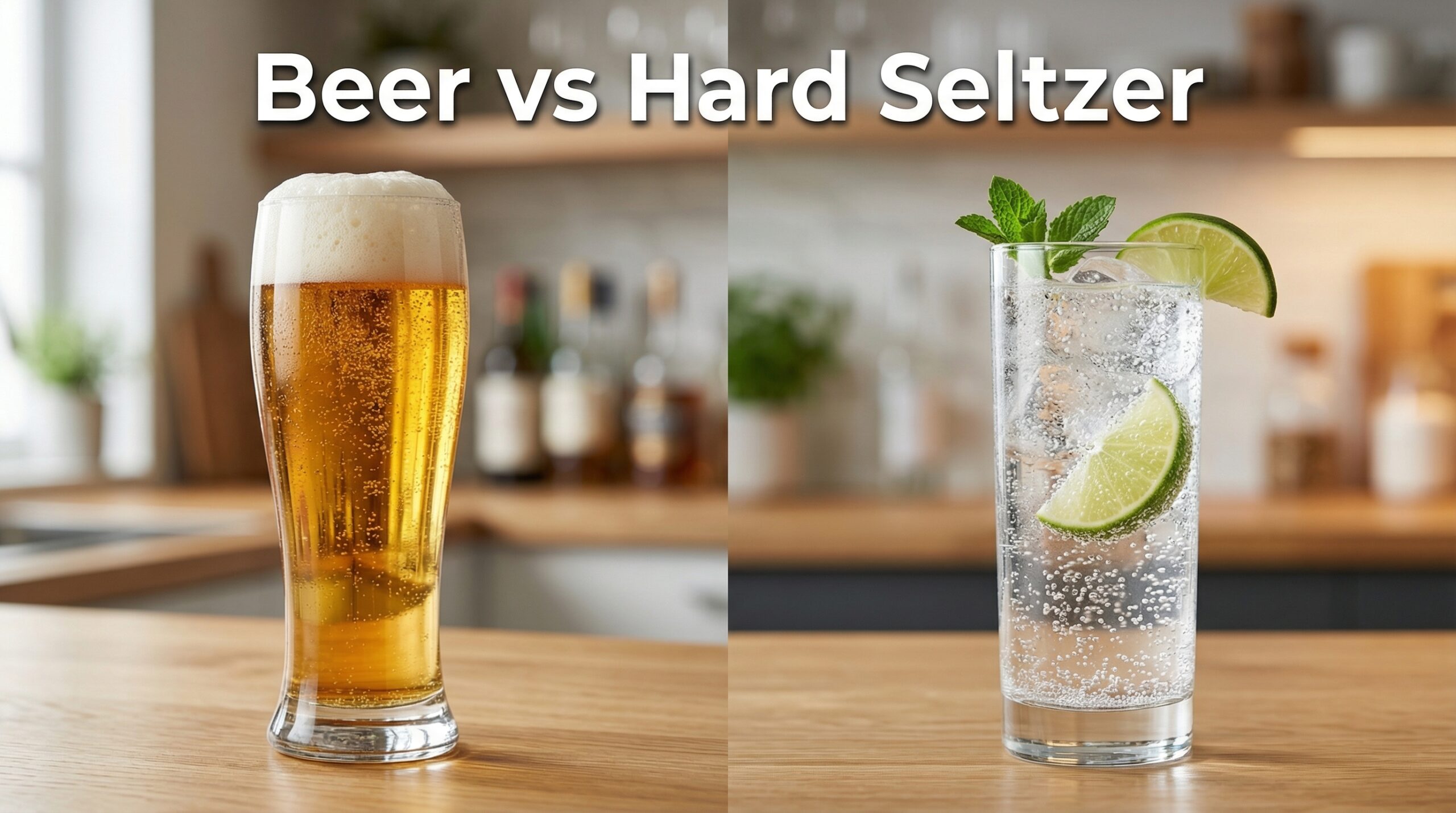
If you have been paying attention to the beverage aisle lately, you have probably noticed both beer and hard seltzer taking up more shelf space than ever before. Many people find themselves wondering which one is the better choice when they are trying to make healthier decisions or simply want to enjoy a drink with friends. Our team has spent time researching and comparing these two popular options to help you understand exactly how they stack up against each other.
Hard seltzer has surged in popularity over the past few years, especially among younger adults and those looking for lower-calorie alternatives to traditional alcoholic drinks. Beer, on the other hand, has been a staple for centuries with its rich variety of styles and flavors. Understanding the differences between these beverages matters because your choice affects not just your taste experience but also your calorie intake, potential health considerations, and even how quickly you might feel the effects of the alcohol.
In this comprehensive comparison, we will break down everything you need to know about beer versus hard seltzer. We will look at alcohol content, calorie counts, ingredient differences, flavor profiles, and even how each affects your body differently. By the end, you will have a clear understanding of both beverages and can make an informed decision the next time you reach for a drink.
Table of Contents
What Is Beer?
Beer is one of the oldest alcoholic beverages in human history, with evidence of brewing dating back thousands of years. At its core, beer is produced through the fermentation of malted grains, primarily barley, though wheat, rye, and corn are also used depending on the style. The basic brewing process involves malting the grain, mashing it to extract sugars, boiling with hops for flavor and bitterness, and then fermenting with yeast.
The four main ingredients in beer are water, malted grains, hops, and yeast. Water makes up the majority of the beverage, typically around 90-95% of the total volume. Malted grains provide the sugars that yeast converts into alcohol and carbon dioxide during fermentation. Hops add bitterness to balance the sweetness of the malt and contribute floral, citrus, or herbal notes depending on the variety used.
Beer offers an incredibly diverse range of flavors and styles. You can find everything from light, crisp lagers with minimal bitterness to heavy, malty stouts with notes of chocolate and coffee. IPAs have become particularly popular in recent years, known for their bold hop character and citrus or pine aromas. This variety means there is likely a beer style to match almost any palate preference.
What Is Hard Seltzer?
Hard seltzer is a more recent addition to the alcoholic beverage market, having only gained significant popularity in the late 2010s. The drink is essentially carbonated water that has been spiked with alcohol from fermented sugar. Most hard seltzers are made by fermenting cane sugar or malted grains with yeast, which produces alcohol and carbonation as byproducts.
The main ingredients in hard seltzer include carbonated water, fermented sugar (typically cane sugar or malt), and fruit flavors for taste. This simple ingredient list is one of the appeals for health-conscious consumers who want to know exactly what they are drinking. The fermentation process creates the alcohol content, while natural or artificial fruit flavors provide the various taste options available.
Hard seltzer typically comes in fruity flavors like lime, berry, grapefruit, and mango. The flavor profile is generally lighter and more refreshing than beer, with a noticeable effervescence that comes from the high carbonation levels. Many people find hard seltzer easier to drink in social situations because the flavors are not as complex or an acquired taste as some beer styles can be.
Alcohol Content Comparison
When comparing beer vs hard seltzer alcohol content, both beverages typically fall within a similar range. Most hard seltzers contain between 4% and 6% alcohol by volume (ABV), with 5% being very common among popular brands. Beer also occupies a similar range, with most standard lagers and ales containing 4% to 5.5% ABV. However, beer offers styles that range significantly higher, with some craft beers reaching 8% ABV or more.
The standard drink equivalence matters when considering your alcohol intake. In the United States, a standard drink contains approximately 14 grams of pure alcohol, which is roughly equivalent to 12 ounces of beer at 5% ABV or 12 ounces of hard seltzer at 5% ABV. This means if you consume similar volumes, you will likely take in a comparable amount of alcohol regardless of which beverage you choose.
However, the serving sizes often differ in practice. Hard seltzer is commonly sold in slim 12-ounce cans, making it easy to track consumption. Beer comes in various formats including bottles, cans, and pints, which can make it harder to gauge exactly how much alcohol you have consumed. Our team noticed that this difference in serving size perception can lead some people to accidentally drink more than intended with beer.
Calories and Carbohydrates
The calorie comparison between beer and hard seltzer is where hard seltzer often claims its health advantage. Most hard seltzers contain approximately 90 to 110 calories per 12-ounce serving, with some brands going as low as 80 calories. Beer, by contrast, typically ranges from 150 to over 300 calories per 12-ounce serving, depending heavily on the style and alcohol content.
Carbohydrate content shows an even more dramatic difference. Hard seltzer usually contains only 1 to 2 grams of carbohydrates per serving, making it an attractive option for those following low-carb diets like keto. Beer commonly contains 10 to 20 grams of carbohydrates per serving, with some high-gravity styles containing even more. This difference comes primarily from the malted grains used in beer, which are rich in starches and sugars.
Sugar content varies between the two beverages as well. Hard seltzer typically has minimal residual sugar because most of the fermented sugar converts to alcohol. However, some sweeter hard seltzer varieties may contain small amounts of added sugar for flavor. Beer contains various sugars depending on the fermentation completion, with some styles retaining more sweetness than others. The sugar source also differs, with beer primarily containing maltose from grain fermentation.
Flavor Profiles
The flavor difference between beer and hard seltzer reflects their fundamentally different production methods. Beer offers an extraordinarily wide spectrum of flavors, from the crisp, clean taste of light lagers to the rich, complex profiles of barrel-aged stouts. The combination of malted grains, hops varieties, yeast strains, and brewing techniques creates endless possibilities for flavor development.
Hard seltzer flavors tend to be fruit-forward and relatively simple. Popular options include citrus flavors like lime and grapefruit, berry varieties such as blackberry and raspberry, and tropical fruits like mango and passion fruit. The taste is generally lighter and more refreshing than most beers, with a clean finish that does not linger. This simplicity appeals to people who find the bitterness of hops or the malty character of beer unappealing.
Our team conducted informal tastings and found that hard seltzer was generally considered more “sessionable” for casual drinking situations, meaning people could drink several without feeling overwhelmed by heavy flavors. Beer enthusiasts, however, often appreciate the complexity and depth that craft brewing can achieve. The choice between them often comes down to personal preference and the occasion.
Carbonation and Mouthfeel
Hard seltzer typically has significantly higher carbonation levels compared to most beers. This high effervescence creates a bubbly, refreshing sensation on the palate that many people find appealing, especially on hot days or during outdoor activities. The carbonation in hard seltzer is often added artificially during production to ensure consistent fizziness throughout the product.
Beer carbonation levels vary widely depending on the style. Some beers, like certain Belgian varieties and wheat beers, are highly carbonated and feel similar to hard seltzer in terms of bubbles. However, most standard lagers and ales have moderate carbonation that provides a smoother mouthfeel. The type of carbonation also differs, with beer carbonation coming primarily from the fermentation process itself.
There is an important physiological effect to consider regarding carbonation and alcohol absorption. Forum discussions and user experiences consistently mention that the high carbonation in hard seltzer seems to speed up the feeling of intoxication. This happens because carbonation helps alcohol pass through your stomach lining into your bloodstream more quickly than flat beverages would. Our team found this effect mentioned frequently in user testimonials, with many people reporting they feel the alcohol hit faster with carbonated drinks.
Ingredients and Brewing Process
The brewing process for beer is more complex and time-consuming than hard seltzer production. Traditional beer brewing involves malting grains to convert starches to fermentable sugars, then mashing at specific temperatures to extract sweetness. The resulting liquid, called wort, is boiled with hops for bitterness and flavor extraction. Finally, yeast is added to ferment the sugars into alcohol and CO2.
Hard seltzer production is simpler and more direct. The base is essentially sugar water that has been fermented using yeast. Some hard seltzers use cane sugar as the fermentable sugar source, while others use malted grains similar to beer. The fermentation produces alcohol and carbon dioxide, with the CO2 sometimes being captured for carbonation or allowed to escape for a still product that then gets carbonated artificially.
Gluten content represents a significant difference between most beers and hard seltzers. Traditional beer made from barley, wheat, or rye contains gluten, which causes problems for people with celiac disease or gluten sensitivity. Many hard seltzers are naturally gluten-free because they are made from fermented cane sugar rather than grain. However, some hard seltzers use malted grains and may contain gluten, so checking labels is important if you need to avoid gluten.
Price Comparison
Price is an important factor for many consumers when choosing between beer and hard seltzer. In general, hard seltzer tends to be priced similarly to or slightly higher than premium beers. A 12-ounce can of hard seltzer typically costs between $2 and $3 at retail, while a 12-ounce beer can range from $1 for budget options to $3 or more for craft varieties.
When comparing price per standard drink, the values are relatively comparable. However, the value proposition changes when considering alcohol content and serving sizes. Some beer styles with higher ABV provide more alcohol per serving, potentially offering better value for money if you are specifically looking for the alcohol content rather than the drinking experience.
Regional availability and brand selection significantly affect pricing for both categories. Hard seltzer brands have proliferated in recent years, leading to competitive pricing and frequent promotions. Beer pricing varies widely based on whether you are buying mass-market lagers or specialty craft brews, with imported and limited-edition beers commanding premium prices.
Hangover and Next-Day Effects
Forum discussions reveal that many people are curious about the hangover comparison between beer and hard seltzer. While individual experiences vary significantly, several factors influence how each beverage affects you the next day. Hard seltzer’s lower calorie and carbohydrate content may contribute to feeling slightly better compared to drinking an equivalent amount of beer, though this is highly individual.
The carbonation in hard seltzer may actually work against you when it comes to hangovers. Carbonation can accelerate alcohol absorption, potentially leading to higher blood alcohol levels than consuming the same amount of flat alcohol. This faster absorption might intensify the effects of alcohol and potentially worsen hangover symptoms for some people. Staying hydrated becomes especially important when drinking carbonated alcoholic beverages.
Sugar content also plays a role in how you feel the next day. Some users report that hard seltzer, despite its lower sugar content, can cause worse hangovers due to the combination of carbonation and alcohol. Beer contains various compounds beyond alcohol and sugar, including congeners from fermentation, which can contribute to hangover symptoms. The saying that darker spirits cause worse hangovers has some parallel in the beer versus hard seltzer discussion.
Which Should You Choose?
Choosing between beer and hard seltzer ultimately depends on your priorities and the specific situation. If you value lower calorie intake and fewer carbohydrates, hard seltzer offers a clear advantage with typically half the calories or less compared to beer. The light, fruity flavors also make hard seltzer a good choice if you prefer not to taste the alcohol itself.
Beer is the better choice if you appreciate flavor complexity and variety. The craft beer movement has created an incredible diversity of styles, with new flavors and techniques constantly emerging. Beer also pairs better with many foods, making it a popular choice for dining occasions. If you enjoy the ritual of exploring different breweries and styles, beer provides far more depth to explore.
For social gatherings, pool parties, and outdoor events, hard seltzer has become the go-to option for many people due to its light, refreshing character and lower calorie appeal. Beer remains popular for game days, cookouts, and situations where flavor pairing matters more than calorie counting. Consider what matters most to you in the moment, and do not be surprised if you find yourself reaching for different beverages in different situations.
FAQs
Are hard seltzers healthier than beer?
Hard seltzers are generally lower in calories and carbohydrates than beer, which can make them a healthier choice for those watching their weight or carb intake. However, both contain similar alcohol content and should be consumed in moderation. The health impact depends on overall consumption patterns and individual health factors.
What is the 1/2/3 rule for drinking?
The 1-2-3 rule is a guideline for responsible drinking. It suggests limiting yourself to 1 drink per hour (your body can process one standard drink per hour), 2 drinks maximum per sitting, and 3 alcoholic drinks per day maximum. This helps your body metabolize alcohol safely and reduces the risk of overconsumption.
Which alcohol is hardest on the liver?
All alcoholic beverages put stress on the liver when consumed in excess, but higher ABV drinks can be more damaging because they deliver more alcohol in smaller volumes. Beer and hard seltzer have similar ABV ranges, so the liver impact is comparable when consumed in equal amounts. Heavy, chronic drinking causes the most liver damage regardless of beverage type.
Is beer bad for LDL cholesterol?
Moderate beer consumption may actually have some beneficial effects on cholesterol levels, though excessive drinking raises bad (LDL) cholesterol and triglycerides. Light to moderate beer intake has been associated with increased good (HDL) cholesterol in some studies. However, the calorie and carbohydrate content in beer can contribute to weight gain, which negatively impacts cholesterol levels over time.
Why does hard seltzer make me feel drunk faster?
Hard seltzer’s high carbonation accelerates alcohol absorption in your stomach. The bubbles help alcohol pass through your stomach lining into your bloodstream more quickly than flat beverages, leading to faster intoxication. This is why many people report feeling the effects of hard seltzer sooner than beer despite similar alcohol content.
Is hard seltzer gluten-free?
Many hard seltzers are gluten-free because they are made from fermented cane sugar rather than grain-based ingredients. However, some brands use malted grains in their production, which would contain gluten. Always check the label if you need to avoid gluten due to celiac disease or gluten sensitivity.
Conclusion
The beer vs hard seltzer comparison ultimately comes down to understanding what matters most to you in an alcoholic beverage. Hard seltzer offers clear advantages in calorie and carbohydrate content, making it attractive for those focused on health or weight management. Its light, fruity flavors and high refreshment factor have earned it a permanent place in the beverage market.
Beer, however, provides something hard seltzer cannot match: depth, complexity, and centuries of brewing tradition. From light pilsners to rich stouts, beer offers endless variety for those who enjoy exploring different styles. The craft beer movement has made beer appreciation a hobby for millions, with flavor profiles that range from subtle to bold.
Our team recommends trying both beverages in various situations to discover your personal preferences. You might find that hard seltzer is perfect for daytime outdoor events while beer is better suited for evening gatherings and food pairings. There is no single right answer, and many people enjoy both depending on the occasion. The key is drinking responsibly and understanding what you are consuming so you can make choices that align with your health goals and taste preferences.