
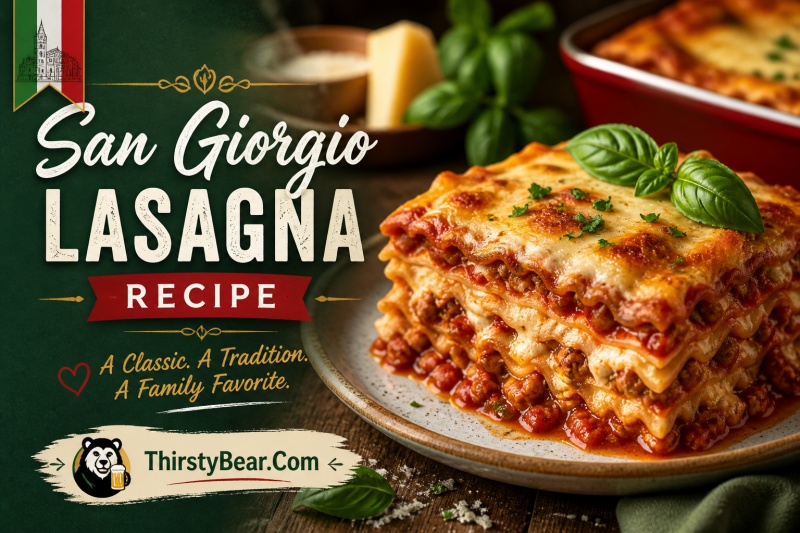
There’s something magical about pulling a bubbling pan of homemade lasagna from the oven. The cheese stretches golden and gooey. The sauce bubbles at the edges. And the aroma fills your kitchen with pure comfort. Our San Giorgio lasagna recipe brings together everything you want in this classic dish: layers of tender pasta, rich meat sauce, creamy ricotta, and melted mozzarella that will have everyone at the table asking for seconds.
I’ve been making this recipe for over fifteen years. It started with the classic back-of-box recipe and evolved through countless family dinners, holiday gatherings, and potluck contributions. The secret isn’t fancy ingredients or complicated techniques. It’s about layering flavors properly and giving the dish the time it deserves. This is the kind of recipe that gets passed down through generations because it simply works.
Whether you’re cooking for a busy weeknight dinner or preparing a show-stopping centerpiece for Sunday family gathering, this San Giorgio lasagna delivers every single time. Let’s dive into what makes this recipe special and how you can create lasagna that rivals any Italian restaurant.
Table of Contents
Why San Giorgio Pasta Makes the Difference
San Giorgio has been producing authentic Italian pasta in the United States since 1914. Their lasagna noodles are made from premium durum semolina wheat, which gives them that perfect al dente texture even after baking in the oven for nearly an hour. The ridges on each noodle help trap sauce between layers, ensuring every bite is moist and flavorful.
While you can use any brand of lasagna noodles, San Giorgio holds a special place in many Italian-American families. The back-of-box recipe has guided home cooks for decades, creating consistent results that taste like Sunday dinner at grandma’s house. The pasta quality matters because these noodles need to hold up to multiple layers of sauce and cheese without turning mushy.
Our recipe uses the traditional cooking method where you boil the noodles first, though San Giorgio does offer oven-ready varieties if you prefer a shortcut. The classic boiled noodles give you better control over texture and prevent that dreaded dry lasagna that sticks to your fork.
San Giorgio Lasagna Ingredients
The beauty of this recipe lies in its simplicity. You don’t need a long shopping list or hard-to-find ingredients. Everything here is available at your regular grocery store, and many items are probably already in your pantry. Here’s exactly what you’ll need to feed eight hungry people:
For the Meat Sauce
- 1 pound ground beef (80/20 blend for best flavor)
- 1 jar (24 ounces) pasta sauce of your choice
- 1 small onion, finely diced
- 3 cloves garlic, minced
- 1 tablespoon olive oil
- 1 teaspoon dried Italian seasoning
- 1/2 teaspoon salt
- 1/4 teaspoon black pepper
For the Cheese Mixture
- 2 cups ricotta cheese (whole milk for creamiest results)
- 2 cups shredded mozzarella cheese (block cheese, not pre-shredded)
- 1 cup grated Parmesan cheese
- 1 large egg
- 2 tablespoons fresh parsley, chopped
- 1 tablespoon fresh basil, chopped
- 1/4 teaspoon salt
- 1/4 teaspoon black pepper
For Assembly
- 12 San Giorgio lasagna noodles
- Additional 1 cup shredded mozzarella for topping
- Fresh basil leaves for garnish (optional)
A quick note about the cheese: buy blocks of mozzarella and shred it yourself. Pre-shredded cheese contains anti-caking agents that prevent proper melting. You’ll notice a significant difference in the creamy texture when you grate your own. The extra five minutes of effort transforms the final dish from good to absolutely incredible.
Kitchen Equipment You’ll Need
Before you start cooking, gather these tools to make the process smooth and enjoyable. Having everything ready prevents that frantic search for the right pan when your sauce is simmering.
- 9×13 inch baking dish (deep dish preferred)
- Large pot for boiling pasta
- Large skillet or Dutch oven for meat sauce
- Medium mixing bowl for cheese mixture
- Box grater or food processor with shredding attachment
- Wooden spoon or spatula
- Aluminum foil
I recommend using a deep 9×13 baking dish rather than a standard one. Lasagna needs vertical space for all those delicious layers. A shallow pan leads to overflow and messy ovens. If you only have a standard depth dish, place it on a rimmed baking sheet to catch any drips.
How to Make San Giorgio Lasagna Step by Step
This San Giorgio lasagna recipe follows a logical sequence that keeps everything moving efficiently. Read through all the steps before starting so you understand the flow. Total active time is about forty-five minutes, plus baking time.
Step 1: Prepare the Noodles
Bring a large pot of salted water to a rolling boil. Cook the San Giorgio lasagna noodles according to package directions, usually about eight to ten minutes. You want them al dente, meaning they still have a slight bite when you test one. Overcooked noodles turn mushy during baking.
Drain the noodles and lay them flat on a lightly oiled baking sheet or clean kitchen towels. This prevents sticking and makes layering much easier later. Some cooks rinse their noodles with cold water to stop cooking, though traditionalists argue this removes starch that helps sauce cling. I find a quick rinse works fine and prevents burned fingers during assembly.
Step 2: Create the Meat Sauce
While the noodles cook, heat olive oil in your large skillet over medium-high heat. Add the diced onion and cook for three to four minutes until soft and translucent. Add the minced garlic and cook for another thirty seconds until fragrant. Be careful not to burn the garlic, as it turns bitter quickly.
Add the ground beef to the skillet, breaking it up with your spoon as it cooks. Brown the meat completely, which takes about six to eight minutes. Drain any excess fat to prevent greasy lasagna. Nobody wants a pool of oil on their plate.
Stir in the pasta sauce, Italian seasoning, salt, and pepper. Reduce heat to low and let the sauce simmer for at least fifteen minutes. This simmering time allows flavors to meld together beautifully. The sauce should thicken slightly and smell incredible. If you have time, simmer for thirty minutes for even deeper flavor.
Step 3: Mix the Cheese Filling
In your medium mixing bowl, combine ricotta cheese, two cups of shredded mozzarella, Parmesan, egg, chopped parsley, chopped basil, salt, and pepper. Stir until everything is evenly distributed. The egg acts as a binder, helping the cheese layer hold together when you cut and serve.
Some cooks add extra seasonings like garlic powder or red pepper flakes. Feel free to customize to your taste preferences. Just remember that the meat sauce already carries plenty of flavor, so don’t overwhelm the cheese mixture.
Step 4: Assemble the Lasagna Layers
Preheat your oven to 350 degrees Fahrenheit. Spread a thin layer of meat sauce on the bottom of your baking dish. This prevents noodles from sticking and adds moisture to the base layer. Lay four lasagna noodles across the bottom, slightly overlapping if needed to cover the surface.
Spread half of the ricotta cheese mixture evenly over the noodles. Use the back of a spoon to distribute it gently without tearing the pasta. Layer one-third of the remaining meat sauce over the cheese. Top with another layer of four noodles.
Repeat the cheese mixture and meat sauce layers. Add the final four noodles on top. Spread the remaining meat sauce evenly over these noodles, making sure to cover all edges so they don’t dry out during baking. Sprinkle the reserved cup of mozzarella cheese generously across the top.
The layering order matters: sauce, noodles, cheese, sauce, noodles, cheese, sauce, cheese. This creates distinct layers that hold together when sliced while keeping everything moist and flavorful.
Step 5: Bake to Perfection
Cover the baking dish tightly with aluminum foil. This traps steam and prevents the cheese from burning before the center heats through. Bake for forty-five minutes covered.
Remove the foil and continue baking for another fifteen minutes until the cheese on top is bubbly and starting to turn golden brown. For an extra crispy top, switch to broil for the final two to three minutes. Watch carefully during broiling, as cheese can go from perfect to burned very quickly.
Let the lasagna rest for at least ten minutes before cutting. This resting period allows the layers to set and makes serving much cleaner. If you cut immediately, the layers slide apart and you end up with a messy plate. Patience here rewards you with perfect squares of cheesy, saucy goodness.
Tips for the Best San Giorgio Lasagna Results
After making this recipe countless times, I’ve learned a few tricks that elevate the final dish. These small details separate good lasagna from the kind that makes people close their eyes and sigh with happiness.
First, always shred your own cheese from blocks. Pre-shredded mozzarella contains cellulose to prevent clumping, and that same ingredient prevents proper melting. Freshly grated cheese creates those beautiful stretchy pulls when you serve each portion. It takes an extra five minutes but transforms the texture completely.
Second, don’t rush the meat sauce simmering time. Those fifteen to thirty minutes of gentle bubbling develop depth and complexity. The onions sweeten, the garlic mellows, and the herbs infuse throughout. Rushing this step leaves you with flat, one-dimensional flavor.
Third, season each component individually. The meat sauce gets salt and pepper. The cheese mixture gets its own seasoning. And you should taste as you go. Under-seasoned lasagna disappoints no matter how perfect the technique.
Finally, that resting period after baking is non-negotiable. I know it’s tempting to dig in immediately when that cheesy aroma fills your kitchen. But ten to fifteen minutes of patience creates clean slices and allows the flavors to settle. The lasagna stays hotter than you think during this time anyway.
Make-Ahead and Freezing Instructions
One of the best features of this San Giorgio lasagna recipe is how well it works for advance preparation. Busy families love having a homemade meal ready to pop in the oven after a long day.
To make ahead and refrigerate, assemble the lasagna completely but do not bake. Cover tightly with plastic wrap and then aluminum foil. Store in the refrigerator for up to twenty-four hours. When ready to bake, remove from the refrigerator while the oven preheats to take the chill off the dish. You may need to add ten to fifteen minutes to the covered baking time since you’re starting from cold.
For freezing, assemble the unbaked lasagna in a freezer-safe dish. Wrap tightly in plastic wrap, then foil, and freeze for up to three months. Thaw overnight in the refrigerator before baking, or bake directly from frozen at 375 degrees for about ninety minutes, covering with foil for the first sixty minutes. Check that the internal temperature reaches 165 degrees before serving.
Leftover baked lasagna stores beautifully in the refrigerator for up to four days. Reheat individual portions in the microwave, or cover the entire dish with foil and warm in a 350-degree oven for twenty to twenty-five minutes. The flavors actually improve after a day as they meld together.
What to Serve with San Giorgio Lasagna
Lasagna is hearty enough to stand alone, but the right side dishes create a complete Italian feast. Here are my favorite pairings that complement without competing.
A crisp Caesar salad with homemade dressing cuts through the richness of the cheese and meat. The cool, crunchy lettuce contrasts beautifully with the warm, soft lasagna. Add some crusty garlic bread for soaking up any extra sauce on the plate.
Roasted vegetables like asparagus, broccoli, or zucchini add color and nutrition to the meal. Toss them with olive oil, salt, and pepper, then roast at 425 degrees for twenty minutes while the lasagna rests.
For a special occasion, serve with a medium-bodied red wine like Chianti or Sangiovese. The acidity balances the rich cheese and tomato sauce perfectly. For non-drinkers, sparkling water with lemon keeps the palate fresh between bites.
Delicious Variations to Try
Once you’ve mastered the classic version, experiment with these tasty modifications. Each brings a new dimension while maintaining the comforting essence that makes lasagna special.
For a vegetarian version, replace the ground beef with sauteed mushrooms, zucchini, and spinach. Use the same quantity of vegetables by volume, and add extra Italian seasoning since vegetables lack the savory depth of meat. The result is lighter but still deeply satisfying.
Try mixing Italian sausage with the ground beef for extra flavor. Use half a pound of each, removing the sausage from casings and breaking it up as it cooks. The fennel and spice in Italian sausage add wonderful complexity.
For a four-cheese lasagna, substitute half the ricotta with small-curd cottage cheese and add fontina or provolone to the mozzarella layer. More cheese is rarely a bad thing, and this version appeals to serious cheese lovers.
Frequently Asked Questions About San Giorgio Lasagna
What are the ingredients in San Giorgio lasagna?
San Giorgio lasagna requires 12 lasagna noodles, 1 pound ground beef, 24 ounces pasta sauce, 2 cups ricotta cheese, 3 cups shredded mozzarella cheese (divided), 1 cup grated Parmesan cheese, 1 egg, onion, garlic, fresh herbs including parsley and basil, and Italian seasoning. The key to great results is using block cheese that you shred yourself rather than pre-shredded varieties.
What is the secret to great lasagna?
The secret to great lasagna is threefold: shred your own cheese for proper melting, simmer your meat sauce for at least 15 minutes to develop depth, and let the baked lasagna rest for 10-15 minutes before cutting. These simple steps transform good lasagna into restaurant-quality comfort food that holds together perfectly when served.
Do real Italians use ricotta?
Traditional Italian lasagna varies by region. Northern Italian versions often use bechamel sauce rather than ricotta, while Southern Italian and Italian-American recipes frequently include ricotta cheese. Both are authentic depending on the regional tradition. San Giorgio lasagna follows the Italian-American style that incorporates ricotta for a creamy, rich texture between layers.
Do Italians put eggs in their lasagna?
Yes, eggs are commonly added to the cheese mixture in both Italian and Italian-American lasagna recipes. The egg acts as a binder that helps the ricotta layer hold together when sliced and served. Without the egg, the cheese filling can become runny and seep out from between the layers, making the lasagna harder to serve neatly.
Make This San Giorgio Lasagna Recipe Your Own
There’s a reason this San Giorgio lasagna recipe has remained a family favorite for generations. It delivers consistent, delicious results without requiring culinary school training or expensive ingredients. The layers of tender pasta, savory meat sauce, and creamy cheese create something greater than the sum of its parts.
Give yourself permission to make it your own. Add your favorite herbs, experiment with different cheese combinations, or adapt it for vegetarian guests. The foundation here is solid, and the techniques work with endless variations.
I hope this recipe brings your family around the table the way it has mine for so many years. The best meals aren’t just about the food; they’re about the memories created while sharing them. Happy cooking.