
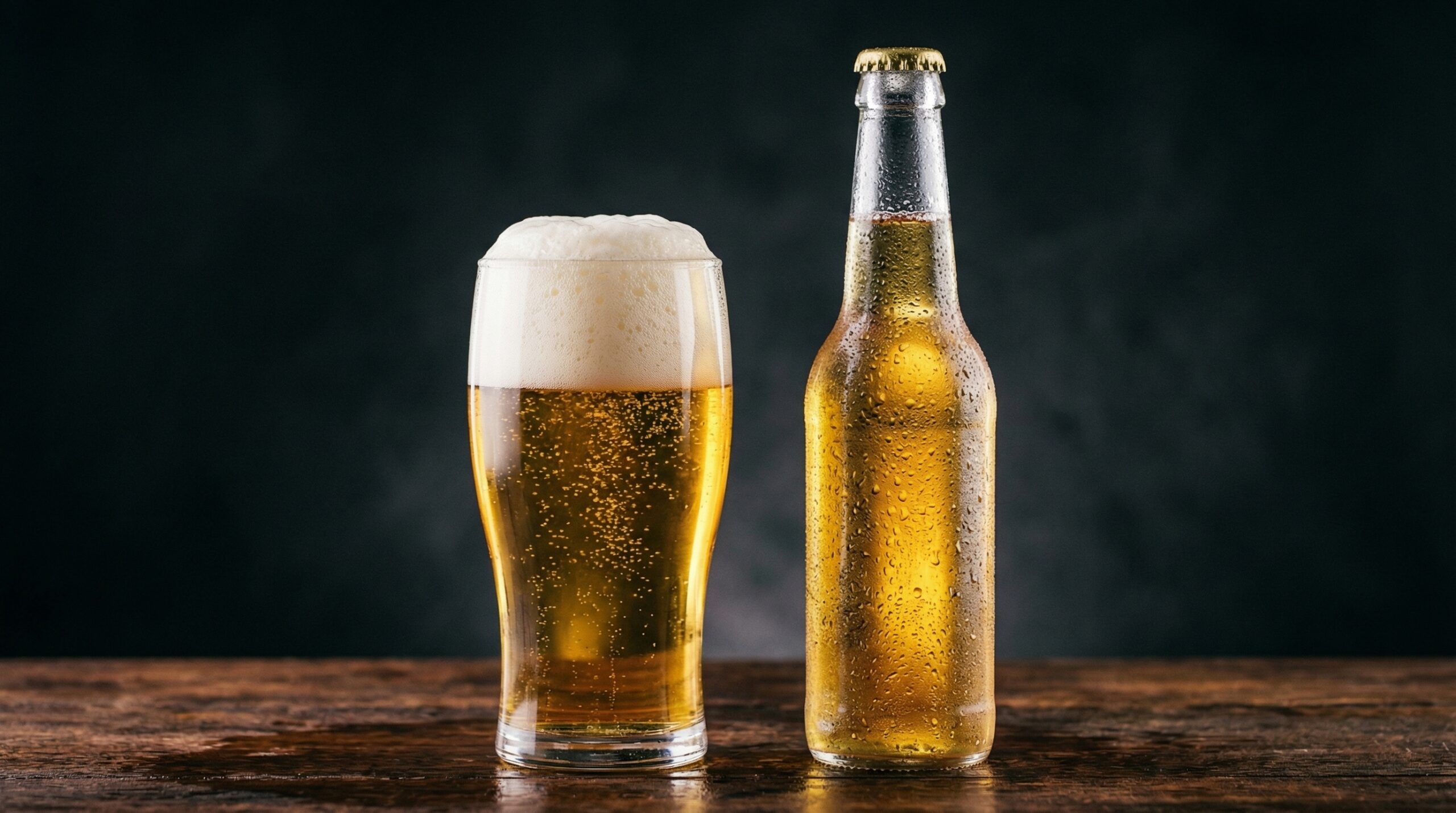
You walk into a bar, order a pint of your favorite craft beer, and take that first sip. The flavor hits differently than when you crack open a bottle at home. So what gives?
After years of comparing beers in both formats, I can tell you this: draft beer and bottled beer can taste noticeably different, and it is not just in your head. The difference comes down to science, logistics, and sometimes how the brewery intentionally crafts each version.
In this guide, I will break down exactly why draft beer and bottled beer taste different, covering everything from carbonation chemistry to light exposure and line maintenance. By the end, you will understand the key factors that make your pint taste fresher than that bottle in your fridge.
Table of Contents
Why Draft Beer Often Tastes Fresher
The biggest reason draft beer typically tastes better comes down to freshness. When you order a pint at a bar, that beer often traveled directly from the brewery to the keg to your glass with minimal storage time in between.
Packaged beer, on the other hand, faces a longer journey. After brewing, the beer gets bottled or canned, stored in warehouses, shipped to distributors, sits on store shelves, and then finally makes its way to your home. This process can take weeks or even months.
During this time, the beer slowly ages and loses its fresh hop character and bright aromatics. The flavors that make craft beer exciting, those citrusy hops in an IPA or the crisp finish of a pilsner, fade over time. Draft beer sidesteps this issue because it moves through the supply chain faster and reaches your glass closer to its peak.
Carbonation and Mouthfeel Differences
One of the most noticeable differences between draft and bottled beer is how they feel in your mouth. Draft beer often seems smoother with less of that sharp carbonation bite. This is not just perception, it has to do with how CO2 behaves under pressure.
Bottled beer typically gets force-carbonated to reach about 2.5 to 3 volumes of CO2. Draft beer systems use different pressure setups. Many commercial breweries use what is called beer gas, a mixture of CO2 and nitrogen, which creates a different carbonation profile. The nitrogen adds a creamy mouthfeel that CO2 alone cannot replicate.
When you pour a draft beer, it draws from the keg under pressure, creating that characteristic thick head and silky texture. Bottled beer, even when poured into a glass, does not achieve quite the same effect because the carbonation was forced in under different conditions.
This difference in carbonation also affects flavor perception. Higher CO2 levels can amplify bitterness, making bottled versions of the same beer taste more bitter than their draft counterparts. That smoothness you notice in draft beer partly comes from the lower perceived bitterness due to how the gases interact with your taste buds.
Light Exposure and Skunking
Here is a scientific one that many beer lovers do not know: light literally destroys certain compounds in beer, creating that notorious skunked flavor. This process is called photodegradation, and it happens when ultraviolet light hits the iso-alpha acids in hops.
When UV light strikes these compounds, they break down and recombine into a chemical that smells and tastes like a skunk. This is why clear and green bottles are particularly vulnerable. Brown bottles offer some protection because they block more UV light, but they are not immune.
Kegs solve this problem entirely. Metal kegs block all light, so draft beer never gets skunked from light exposure. This means if a bottled beer has been sitting on a store shelf under fluorescent lights for weeks, it may have developed that skunky flavor even before you open it.
Our team has conducted informal tests comparing the same beer in bottles versus draft. Beers in clear or green bottles that had been light-exposed tasted noticeably worse than their draft counterparts. The difference was immediate and unmistakable.
Oxygen Exposure and Oxidation
Oxygen is another enemy of fresh beer. When beer oxidizes, it develops stale, papery, or even sherry-like flavors that mask the original hop and malt characteristics. This happens gradually in packaged beer as small amounts of oxygen seep in over time.
Brewers work hard to minimize oxygen exposure during packaging. They use bottling lines that flush containers with CO2 before filling and seal bottles as tightly as possible. However, no packaging is perfect, and some oxygen always makes its way in.
Draft beer systems actually protect against oxidation in an interesting way. When a keg is tapped, it gets pushed by gas pressure, usually CO2 or beer gas. This creates a protective blanket that prevents air from contacting the beer surface. As long as the keg remains sealed and under pressure, oxidation is minimal.
Problems arise when bars use what are called air blenders. These devices mix air into the beer lines to extend how long a keg lasts once tapped. While this saves money, it introduces oxygen directly to the beer, causing rapid staling. Some bars still use this practice, which means even draft beer can taste stale if the establishment prioritizes profit over quality.
Draft Line Maintenance Matters
Here is a factor that surprises many people: dirty draft lines can ruin beer flavor just as badly as light exposure or oxidation. Over time, beer residue builds up inside the lines connecting kegs to taps. This residue creates a perfect environment for bacteria and wild yeasts to grow.
What happens next is what brewers call the bioreactor effect. The accumulated organic material starts to ferment and produce off-flavors that get infused into every beer that passes through. You might taste buttery diacetyl, sourness, or musty flavors that have nothing to do with the actual beer style.
Professional bars follow cleaning schedules for their draft systems, typically every one to two weeks depending on volume. The lines get flushed with cleaning solutions that break down beer stone and kill microbial growth. However, some establishments skip this maintenance or do not clean frequently enough.
When we visit a bar and notice off-flavors that do not match the beer style, we often suspect dirty lines. The telltale sign is when multiple different beers all taste slightly wrong in the same way. If you consistently find draft beer tastes off at a particular establishment, the lines might be the culprit.
Different Recipes for Draft vs Bottled
Here is a fact that surprises even seasoned beer enthusiasts: some breweries intentionally create different recipes for their draft versus bottled versions of the same beer. They adjust the malt bill, hop schedule, or fermentation to account for how each format will age.
A famous example is Sierra Nevada Pale Ale. The draft version uses slightly different hop additions and malt proportions than the bottled version. When you compare them side by side, you will notice differences in bitterness balance and aroma intensity. The brewery did this deliberately because bottled beer faces different conditions during storage and distribution.
The reasons for recipe adjustments vary. Bottled beer needs to hold up longer in the supply chain, so brewers might dial back late hop additions that would fade quickly. Draft beer gets consumed faster, so it can showcase more delicate hop character that would not survive months in a bottle.
This practice is more common than you might think, especially for hop-forward beers like IPAs and pale ales. Next time you have a favorite craft beer, try comparing the draft and bottled versions. You might notice subtle differences that are not flaws but intentional choices by the brewer.
When to Choose Draft vs Bottled Beer
Now that you understand why draft and bottled beer taste different, let us talk about when each format makes more sense.
- At a bar or restaurant: Draft is usually the better choice if the establishment maintains their lines properly. Ask about how often they clean their draft system or look for signs of high turnover. Bars that go through beer quickly tend to have fresher product. Avoid draft at places where you see dusty bottles or slow service.
- For home drinking: Bottled or canned beer gives you more control over storage conditions. Keep your beer in a cool, dark place and consume it within a reasonable timeframe. Check freshness dates when purchasing and avoid bottles with significant light exposure at the store.
- For outdoor gatherings: Canned beer often wins here because it is more portable and less fragile than bottles. Many craft breweries now package their best beers in cans specifically for this reason. Cans also protect against light exposure better than clear or green glass bottles.
- For hoppy beers especially: IPAs and other hop-forward styles degrade fastest. If you are a fan of hazy New England IPAs, seek out draft versions when possible or drink canned IPA as fresh as possible. The difference between a two-week-old hazy IPA and a fresh one is dramatic.
Frequently Asked Questions
Does draft beer taste better than bottled beer?
Why does draft beer taste smoother and less bitter?
Draft beer often uses beer gas mixtures containing nitrogen, which creates a creamy mouthfeel and smoother texture. Additionally, draft beer typically has slightly different carbonation volumes than bottled beer, which reduces the sharp carbonation bite that can amplify perceived bitterness.
Is draft beer stronger than bottled beer?
In most cases, draft beer and bottled beer from the same batch have identical alcohol content. However, because draft beer often has a smoother mouthfeel and goes down easier, people may perceive it as stronger or feel its effects more quickly due to faster consumption.
How can I tell if draft lines are dirty?
Dirty draft lines often produce off-flavors that do not match the beer style, such as buttery, sour, or musty notes across multiple different beers. If you notice consistent off-flavors at a particular establishment despite ordering different styles, the lines are likely the issue.
The Bottom Line
So does draft beer taste different than bottled beer? Absolutely yes, and now you know exactly why. Freshness, carbonation chemistry, light exposure, oxygen, line maintenance, and even intentional recipe differences all contribute to making draft and bottled versions of the same beer taste distinct.
The next time you notice your favorite brew tastes better at a bar than from a bottle at home, you will understand the science behind that difference. Use this knowledge to seek out fresher beer, avoid light-exposed bottles, and find establishments that maintain their draft systems properly.
Whether you prefer draft or bottled ultimately comes down to context and convenience. What matters most is understanding these factors so you can make informed choices about where and how to enjoy your beer at its best.
1 thought on “Draft Beer vs Bottled Beer: Does It Taste Different?”