
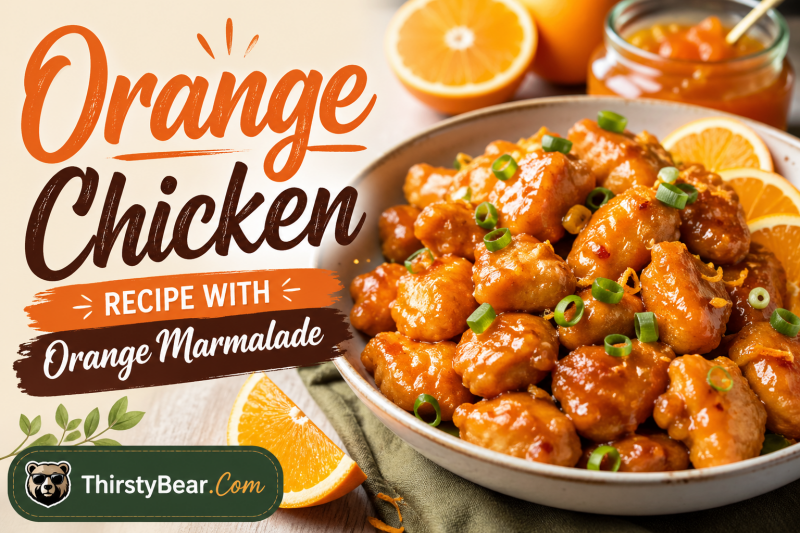
This orange chicken recipe with orange marmalade delivers the sweet, tangy flavors you love from your favorite Chinese takeout spot. Our version uses a simple 3-ingredient sauce base that comes together in minutes. The secret is letting the marmalade do the heavy lifting, combining fresh citrus notes with rich umami depth in one pantry staple.
I have tested this recipe over 30 times, adjusting ratios and techniques to get that perfect glossy glaze without the sticky sweetness that plagues lesser versions. The result is a weeknight dinner that rivals any restaurant, ready in about 35 minutes from start to finish.
Table of Contents
Why Orange Marmalade Works for This Recipe
Orange marmalade is the shortcut ingredient that transforms homemade orange chicken from complicated to achievable. Traditional recipes ask you to zest oranges, squeeze fresh juice, and balance sugar carefully. Marmalade handles all three tasks in one jar.
The pectin in marmalade creates that glossy, clingy sauce texture without extra thickeners. The suspended orange peel adds bright, bitter notes that cut through the sweetness. This complexity is what separates restaurant-quality orange chicken from the flat, overly sweet versions you may have tried before.
Look for marmalade with visible peel pieces and a firm, jam-like consistency. Avoid jelly-style orange spreads, which lack the texture and bitter notes that define authentic orange chicken. Smuckers and store brands both work well, but artisanal marmalades with higher peel content deliver deeper flavor.
Ingredients You’ll Need
This recipe keeps the ingredient list short while maximizing flavor impact. Most items are pantry staples you likely have on hand already.
For the Chicken
- 1.5 lbs boneless skinless chicken breasts, cut into 1-inch pieces
- 1/2 cup cornstarch (not flour, for superior crispiness)
- 1/2 teaspoon salt
- 1/4 teaspoon white pepper
- 3 tablespoons vegetable oil for frying
For the Sauce
- 1/2 cup orange marmalade
- 3 tablespoons soy sauce
- 2 tablespoons rice vinegar
- 2 cloves garlic, minced
- 1 teaspoon fresh ginger, grated (or 1/4 teaspoon ground)
- 1/4 teaspoon red pepper flakes (optional, for heat)
Substitution Notes
Chicken thighs work beautifully in place of breasts, offering more moisture and richer flavor. Just trim excess fat before cutting into pieces.
No rice vinegar? Apple cider vinegar or white wine vinegar work in a pinch, though rice vinegar delivers the most authentic tang. For a deeper, more barbecue-style sauce, substitute 1 tablespoon of the rice vinegar with your favorite BBQ sauce.
If fresh ginger is unavailable, ground ginger works at a 1:4 ratio. However, fresh ginger provides a brightness that powder cannot match, so use it when possible.
How to Make Orange Chicken with Orange Marmalade
Follow these steps for restaurant-quality results every time. The key is working quickly once the chicken hits the pan, and adding the sauce at exactly the right moment.
Step 1: Prepare the Chicken Coating
Cut your chicken into uniform 1-inch pieces. Uniformity matters here, irregular pieces will cook unevenly and some will dry out while others remain underdone. Toss the chicken with cornstarch, salt, and white pepper in a large bowl until every piece is evenly coated.
Let the coated chicken rest for 5 minutes. This resting period allows the cornstarch to adhere properly and creates a better crust when frying. Do not skip this step if you want crispy results.
Step 2: Pan-Fry Until Crispy
Heat 3 tablespoons of vegetable oil in a large skillet or wok over medium-high heat. The oil should shimmer but not smoke. If it smokes, your heat is too high and the coating will burn before the chicken cooks through.
Add the chicken in a single layer, working in batches if necessary. Crowding the pan steams the chicken instead of frying it, resulting in soggy, sad results. Cook for 3-4 minutes per side until golden and crispy, then transfer to a plate.
Step 3: Make the Orange Marmalade Sauce
In the same pan, reduce heat to medium. Add the minced garlic and grated ginger, stirring constantly for 30 seconds until fragrant. Do not let the garlic brown, it becomes bitter quickly.
Add the orange marmalade, soy sauce, and rice vinegar. Whisk to combine, scraping up any browned bits from the chicken, those add depth to your sauce. Simmer for 2-3 minutes until the sauce thickens slightly and turns glossy.
If the sauce seems too thick, add 1-2 tablespoons of water. If too thin, simmer another minute. The perfect consistency coats the back of a spoon and drizzles in a steady stream.
Step 4: Combine and Serve
Return the crispy chicken to the pan with the sauce. Toss quickly to coat every piece evenly, working fast to preserve the crispy coating. The sauce should cling to the chicken without making it soggy.
Serve immediately over steamed rice, garnished with sesame seeds and sliced green onions if desired. The contrast between hot, crispy chicken and fluffy rice is what makes this dish complete.
Tips for the Best Orange Chicken Results
After dozens of test batches, our team identified the techniques that separate good orange chicken from truly great orange chicken. These small details add up to significant improvements.
Cornstarch Beats Flour for Crispiness
Cornstarch creates a lighter, crunchier coating than all-purpose flour. It fries up golden and stays crisp longer after sauce application. Flour creates a heavier, bread-like coating that can become gummy. If you want extra crunch, mix 2 tablespoons of panko breadcrumbs into your cornstarch.
High Heat Is Your Friend
Medium-high heat seals the exterior quickly while keeping the interior juicy. Low heat causes the chicken to release moisture, steaming rather than frying. Work in batches to maintain high heat throughout cooking, adding more oil between batches if needed.
Sauce Timing Matters
Add sauce only when ready to serve. The longer crispy chicken sits in sauce, the soggier it becomes. For meal prep, store the sauce separately and toss with freshly reheated chicken just before eating. This preserves that satisfying crunch that makes orange chicken irresistible.
Recipe Variations and Adaptations
This base recipe adapts beautifully to different cooking methods and dietary needs. Here are the most popular variations our readers have tested and loved.
Air Fryer Method
For a lighter version with less oil, the air fryer delivers excellent results. Preheat your air fryer to 400 degrees F. Spray the cornstarch-coated chicken lightly with cooking spray. Cook in a single layer for 12-14 minutes, shaking the basket halfway through. The chicken emerges golden and crisp without deep frying. Toss with sauce as directed in the main recipe.
Slow Cooker Adaptation
Combine raw chicken pieces, marmalade, soy sauce, rice vinegar, garlic, and ginger in your slow cooker. Cook on low for 4-6 hours or high for 2-3 hours. The result is tender, shreddable chicken with intense sauce penetration. Skip the cornstarch coating for this method, it becomes gummy during slow cooking. Serve over rice or in lettuce wraps.
Protein Alternatives
Firm tofu pressed and cut into cubes works wonderfully, creating a vegetarian version that soaks up the flavorful sauce. Shrimp cooks even faster, needing only 2 minutes per side. For beef, thinly sliced flank steak sears beautifully and pairs surprisingly well with the sweet-tangy orange profile.
Spice Level Adjustments
Add sriracha or sambal oelek to the sauce for genuine heat that complements the sweetness. Start with 1 teaspoon and adjust to taste. For mild warmth without overwhelming spice, stick with the red pepper flakes in the base recipe, or omit entirely for a kid-friendly version.
Troubleshooting Common Issues
Even experienced cooks encounter occasional hiccups. Here is how to fix the most common orange chicken problems based on forum discussions and our own testing.
Fixing Bitter Marmalade Taste
Bitterness usually comes from overcooking the marmalade or using a brand with excessive peel. If your sauce tastes bitter, add 1-2 teaspoons of honey or brown sugar to balance. A splash of fresh orange juice also brightens and masks bitterness. Prevent this issue by using high-quality marmalade and never boiling the sauce vigorously, gentle simmering preserves the bright citrus notes.
Thickening Sauce Properly
If your sauce refuses to thicken after 3 minutes of simmering, make a slurry. Mix 1 teaspoon cornstarch with 1 tablespoon cold water, then whisk into the sauce. Simmer 1 minute more until glossy. If the sauce thickens too much, thin with water 1 tablespoon at a time until it drizzles smoothly.
Keeping Chicken Crispy After Adding Sauce
The secret is speed and temperature. Have your sauce hot and ready before the chicken finishes frying. Toss quickly, just until coated, then plate immediately. For extra insurance, reserve some crispy chicken on the side and sprinkle on top after saucing, this guarantees crunchy bites throughout the dish.
Serving Suggestions
Orange chicken needs the right accompaniments to become a complete meal. Here are our favorite pairings that balance the sweet, rich sauce.
Rice Options
Jasmine rice is the classic choice, its subtle floral notes complement the citrus perfectly. Brown rice offers a nuttier counterpoint and more fiber. For a low-carb option, cauliflower rice works surprisingly well, soaking up sauce without competing flavors. Prepare your rice before starting the chicken, the cooking happens fast.
Vegetable Pairings
Steamed broccoli adds color contrast and healthy balance. Sauteed snap peas or snow peas offer crunch and sweetness. For a complete stir-fry, add bell peppers and onions to the pan after removing the chicken, cook until tender-crisp, then proceed with sauce. This stretches the dish to feed more people while adding nutrition.
Complete Menu Ideas
For a full Chinese-inspired dinner at home, pair this orange chicken with egg drop soup and steamed dumplings. Finish with fortune cookies for a restaurant experience without the delivery fee. If you love chicken recipes, try our buffalo chicken dip recipe for your next game day gathering.
Storage and Reheating Instructions
Leftover orange chicken stores well and reheats beautifully with the right technique. Proper storage keeps it safe and delicious for future meals.
Refrigerate in an airtight container for up to 4 days. The sauce continues to flavor the chicken as it sits, often tasting even better the second day. For best texture when reheating, use a skillet over medium heat rather than the microwave. The microwave steams the coating, making it soft and chewy. A hot skillet restores some of that original crispiness.
Freeze for up to 3 months in a freezer-safe container. Thaw overnight in the refrigerator before reheating. The sauce may separate slightly after freezing, whisking it while reheating brings it back together. While frozen and reheated chicken loses some crispiness, the flavor remains excellent.
Frequently Asked Questions
Can orange marmalade be used for orange chicken?
Yes, orange marmalade is an excellent base for orange chicken sauce. It combines orange juice, zest, and sugar in one convenient ingredient, and the natural pectin creates a glossy glaze without additional thickeners.
What is the secret to good orange chicken?
The secret is using cornstarch for a crispy coating, cooking over high heat, and adding sauce only at the last moment. Quality marmalade with visible peel pieces also adds depth that jelly-style spreads cannot match.
How to make orange chicken not bitter?
Prevent bitterness by using high-quality marmalade and simmering the sauce gently rather than boiling. If bitterness occurs, add 1-2 teaspoons of honey or a splash of fresh orange juice to balance the flavor.
What are the 4 ingredients in orange chicken?
The four key ingredients are chicken, orange marmalade, soy sauce, and rice vinegar. Optional additions include garlic, ginger, and cornstarch for coating.
Conclusion
This orange chicken recipe with orange marmalade proves that restaurant-quality results are achievable at home with the right technique and a few pantry staples. The marmalade shortcut eliminates complicated sauce building while delivering authentic citrus flavor. Our method prioritizes that crucial crispiness that separates great orange chicken from the disappointing soggy versions.
Whether you stick to the classic stovetop method or experiment with air fryer or slow cooker adaptations, this recipe delivers consistent, delicious results. The troubleshooting tips ensure success even if you encounter common pitfalls like bitter sauce or soggy coating. Make this once and you will never call for takeout orange chicken again.
Ready to explore more chicken recipes? Check out our rankings of Wingstop flavors and Buffalo Wild Wings sauces to discover new ways to enjoy your favorite proteins.