
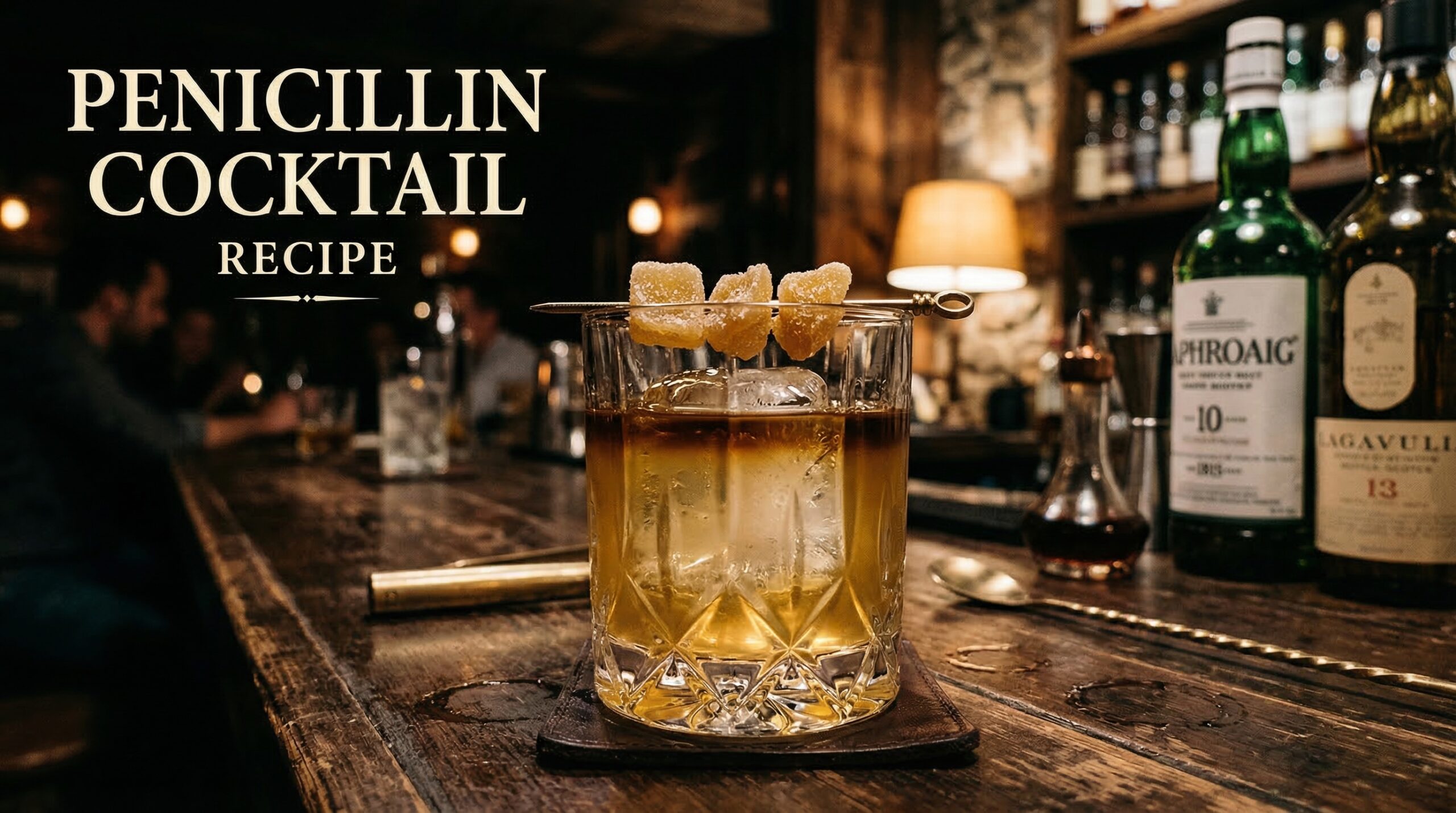
If you’ve ever ordered a cocktail at a serious whiskey bar, chances are you’ve seen the Penicillin on the menu. This modern classic cocktail has earned its place among the most respected drinks of the 21st century, and for good reason. Created by bartender Sam Ross in 2005 at New York City’s legendary Milk & Honey, the Penicillin cocktail combines blended Scotch, fresh lemon juice, honey-ginger syrup, and a signature float of smoky Islay Scotch.
What makes this drink special is its layers. You get bright citrus upfront, warming ginger spice, smooth honey sweetness, and then that distinctive smoky finish from the peated Scotch. It’s like a whiskey sour that went to finishing school and came back with character. Whether you’re a seasoned home bartender or just starting to explore craft cocktails, this Lychee Martini recipe and the Penicillin are both excellent additions to your repertoire.
In this guide, I’ll walk you through everything you need to know about making the perfect Penicillin cocktail at home, including the honey-ginger syrup from scratch, proper technique for the Islay float, common mistakes to avoid, and even variations for when you want to switch things up.
Table of Contents
Penicillin Cocktail Ingredients
The beauty of the Penicillin lies in its carefully balanced ingredients. Each component plays a specific role in creating that signature tart, spicy, sweet, and smoky profile. Here’s what you’ll need for one cocktail:
For the Cocktail:
- 2 ounces (60 ml) blended Scotch whisky
- 3/4 ounce (22 ml) fresh lemon juice, freshly squeezed
- 3/4 ounce (22 ml) honey-ginger syrup (recipe below)
- 1/4 ounce (7 ml) Islay single malt Scotch whisky
- Candied ginger or lemon peel for garnish
For the Honey-Ginger Syrup (makes about 1 cup):
- 1 cup water
- 1 cup honey
- 2-3 inches fresh ginger, peeled and thinly sliced
The blended Scotch forms the base of the drink. You want something approachable but not bland. Monkey Shoulder, Famous Grouse, and Dewars are popular choices that won’t break the bank. Reserve the expensive Islay for the float, where its smoky character will shine.
Fresh lemon juice is non-negotiable here. Bottled juice lacks the bright, aromatic oils that make this cocktail sing. Squeeze your lemons right before making the drink for the best results.
The Islay Scotch is what sets this cocktail apart. These whiskies from Scotland’s Islay region are known for their intense peat smoke character. Laphroaig 10 and Lagavulin 16 are the gold standards, but Ardbeg 10 or Caol Ila 12 also work beautifully.
How to Make a Penicillin Cocktail
Making a Penicillin cocktail requires attention to technique, especially when it comes to the Islay float. Follow these steps for a bar-quality result every time.
Step 1: Prepare Your Glass and Ice
Fill a rocks glass (also called an old-fashioned glass) with a large ice cube or several smaller cubes. A single large cube melts more slowly, preventing over-dilution as you sip. If you’re serious about cocktails, investing in large ice molds makes a noticeable difference.
Step 2: Combine the Base Ingredients
Add the blended Scotch, fresh lemon juice, and honey-ginger syrup to a cocktail shaker. Fill the shaker with ice, filling it about three-quarters full. The amount of ice matters because it affects both chilling and dilution.
Step 3: Shake Vigorously
Shake the cocktail for 12-15 seconds until the outside of the shaker becomes frosty cold. You want to shake hard enough to properly chill and dilute the drink while aerating it slightly. This creates that silky mouthfeel that makes whiskey sours so satisfying.
Step 4: Strain Over Fresh Ice
Using a Hawthorne strainer or fine mesh sieve, strain the shaken mixture into your prepared rocks glass over the fresh ice. Using fresh ice for serving ensures your drink stays cold without picking up any shaker residue.
Step 5: Float the Islay Scotch
Here’s where the magic happens. Pour the 1/4 ounce of Islay single malt slowly over the back of a bar spoon so it floats on top of the drink. The idea is to create a layer where the smoky Scotch sits above the sweeter, citrusy base.
The proper float technique takes practice. Hold the spoon just above the drink’s surface and pour the whisky gently onto the spoon’s convex side. It should spread across the surface rather than sinking into the cocktail.
Step 6: Garnish and Serve
Add your garnish of choice. Candied ginger is traditional and echoes the ginger in the syrup. A piece of crystallized ginger on a cocktail pick works beautifully. Some bartenders prefer a lemon peel, expressing the oils over the drink before dropping it in.
Serve the Penicillin without a straw. This forces the drinker to experience the smoky aromatics of the Islay float with each sip, which is exactly how Sam Ross intended it.
How to Make Honey-Ginger Syrup
The honey-ginger syrup is what gives the Penicillin its distinctive warming spice. Making it from scratch takes about 20 minutes and keeps in the refrigerator for up to two weeks.
Ingredients:
- 1 cup water
- 1 cup honey
- 2-3 inches fresh ginger, peeled and thinly sliced
Instructions:
Combine the water and honey in a small saucepan over medium heat. Stir until the honey dissolves completely into the water. Add the sliced ginger and bring the mixture to a gentle simmer.
Reduce the heat to low and let the syrup simmer for 10-15 minutes. The longer you simmer, the more ginger flavor will infuse. I find 12 minutes gives a good balance of ginger heat without becoming overpowering.
Remove from heat and let the syrup cool to room temperature with the ginger still in the pot. This continues the infusion process. Once cool, strain out the ginger pieces through a fine mesh sieve.
Transfer the syrup to a clean glass jar or bottle with a lid. Store in the refrigerator for up to two weeks. The high sugar content acts as a preservative, but if you notice any mold or off smells, discard it.
Leftover Syrup Ideas: This honey-ginger syrup is versatile. Use it to sweeten hot tea, drizzle over vanilla ice cream, or add complexity to other whiskey cocktails. It works beautifully in hot toddies during cold season.
The History of the Penicillin Cocktail
Every great cocktail has an origin story, and the Penicillin is no exception. Understanding its history adds another layer of appreciation when you make it at home.
The Penicillin was created in 2005 by Australian bartender Sam Ross at Milk & Honey in New York City. Milk & Honey was the flagship bar of the late Sasha Petraske, credited with reviving classic cocktail culture in the early 2000s. Ross was working there when he developed the recipe that would become one of the most influential modern classics.
The name “Penicillin” is a playful reference to the cocktail’s perceived medicinal qualities. The combination of honey, ginger, and lemon has long been associated with cold remedies, and Ross joked that this drink could cure what ails you. The smoky Islay float adds a layer of complexity that transforms it from a simple whiskey sour into something far more sophisticated.
What makes the Penicillin historically significant is how quickly it spread. Unlike cocktails that took decades to gain recognition, the Penicillin appeared on menus worldwide within just a few years. It’s now recognized by the International Bartenders Association as a “New Era” cocktail, cementing its status as a modern classic.
The drink also popularized the technique of using peated Scotch as a float rather than the base spirit. This approach allows bartenders to add smoky aromatics without overwhelming the drink. It’s influenced countless riffs and variations, including the popular Oaxacan Penicillin that substitutes tequila and mezcal.
Tips, Variations, and Common Mistakes
Even with a straightforward recipe, there are plenty of ways things can go wrong. Here are the most common mistakes and how to avoid them, plus some variations to explore once you’ve mastered the original.
Common Mistakes to Avoid:
Skipping the fresh lemon juice. Bottled juice contains preservatives that flatten the bright citrus notes. Fresh lemons are inexpensive and make a dramatic difference.
Using cheap or bland blended Scotch. While you don’t need premium whisky for the base, something with character works better than the bottom shelf. Monkey Shoulder offers excellent value for cocktails.
Pouring the Islay float too quickly. If you dump the smoky Scotch in, it sinks and you lose that layered drinking experience. Take your time with the bar spoon technique.
Making syrup that’s too thick. If your honey-ginger syrup is more like molasses, it won’t blend properly. Use equal parts honey and water for the right consistency.
Shaking too briefly. Under-shaking leaves the drink warm and insufficiently diluted. Give it a full 12-15 seconds of vigorous shaking.
Using old ginger. Fresh ginger has more bite and aroma. If your ginger is wrinkled or soft, it’s past its prime.
Variations to Try:
Oaxacan Penicillin: Replace the blended Scotch with reposado tequila and use mezcal for the float instead of Islay Scotch. This variation was created at Death & Co. and has become almost as popular as the original.
Bourbon Penicillin: Substitute bourbon for the blended Scotch and skip the Islay float entirely, or use a small amount of smoky mezcal instead. This creates a sweeter, rounder profile.
Hot Penicillin: Build the drink in a heatproof glass, skip the ice, and top with hot water. Perfect for cold winter nights when you want something warming.
Batch Preparation for Parties:
You can pre-batch the base (blended Scotch, lemon juice, and syrup) in the following ratios for 8 servings: 16 ounces blended Scotch, 6 ounces fresh lemon juice, and 6 ounces honey-ginger syrup. Combine in a sealed container and refrigerate for up to 24 hours.
When serving, shake individual portions with ice, strain over fresh ice in rocks glasses, and add the Islay float to each. This approach lets you serve impressive cocktails to a crowd without playing bartender all night.
Food Pairing Suggestions:
The Penicillin pairs beautifully with rich, savory foods. Try it alongside charcuterie boards with aged cheeses, smoked salmon, or roasted nuts. The smoky, spicy profile also complements grilled meats and barbecued dishes. For dessert pairings, gingerbread, spice cake, or dark chocolate work well with the warming spice notes.
FAQs
Why is it called a Penicillin cocktail?
The name is a playful nod to the cocktail’s warming, medicinal qualities. Created by Sam Ross in 2005, the combination of honey, ginger, and lemon was thought to have soothing properties similar to a cold remedy, while the smoky Scotch float adds complexity.
What is in a Penicillin cocktail?
A Penicillin cocktail contains 2 ounces blended Scotch whisky, 3/4 ounce fresh lemon juice, 3/4 ounce honey-ginger syrup, and 1/4 ounce Islay single malt Scotch (floated on top). It’s typically garnished with candied ginger.
What is the best Scotch for a Penicillin cocktail?
For the base, use an affordable blended Scotch like Monkey Shoulder, Famous Grouse, or Dewars. For the Islay float, Laphroaig 10 or Lagavulin 16 provide the signature smoky character. The float technique allows you to use premium Islay sparingly.
Is a Penicillin cocktail strong?
The Penicillin has an ABV around 20-25%, similar to other whiskey sours. It’s sipped over ice, which dilutes it slightly as you drink. The honey-ginger syrup and lemon make it approachable despite its whisky base.
What does a Penicillin cocktail taste like?
The Penicillin offers a complex flavor journey: bright citrus from fresh lemon, warming spice from ginger, sweetness from honey, and a distinctive smoky finish from the Islay Scotch float. It’s tart, spicy, sweet, and smoky in perfect balance.
Conclusion
The Penicillin cocktail recipe represents everything great about modern craft bartending: respect for classic techniques, creative use of ingredients, and attention to detail that elevates a simple whiskey sour into something memorable. With its layers of citrus, spice, honey, and smoke, it’s a drink that rewards both the making and the sipping.
Now that you know how to make this modern classic at home, you can impress guests with your bartending skills or simply enjoy a well-crafted cocktail on a quiet evening. For more cocktail inspiration, browse all recipes on our site and discover your next favorite drink.