
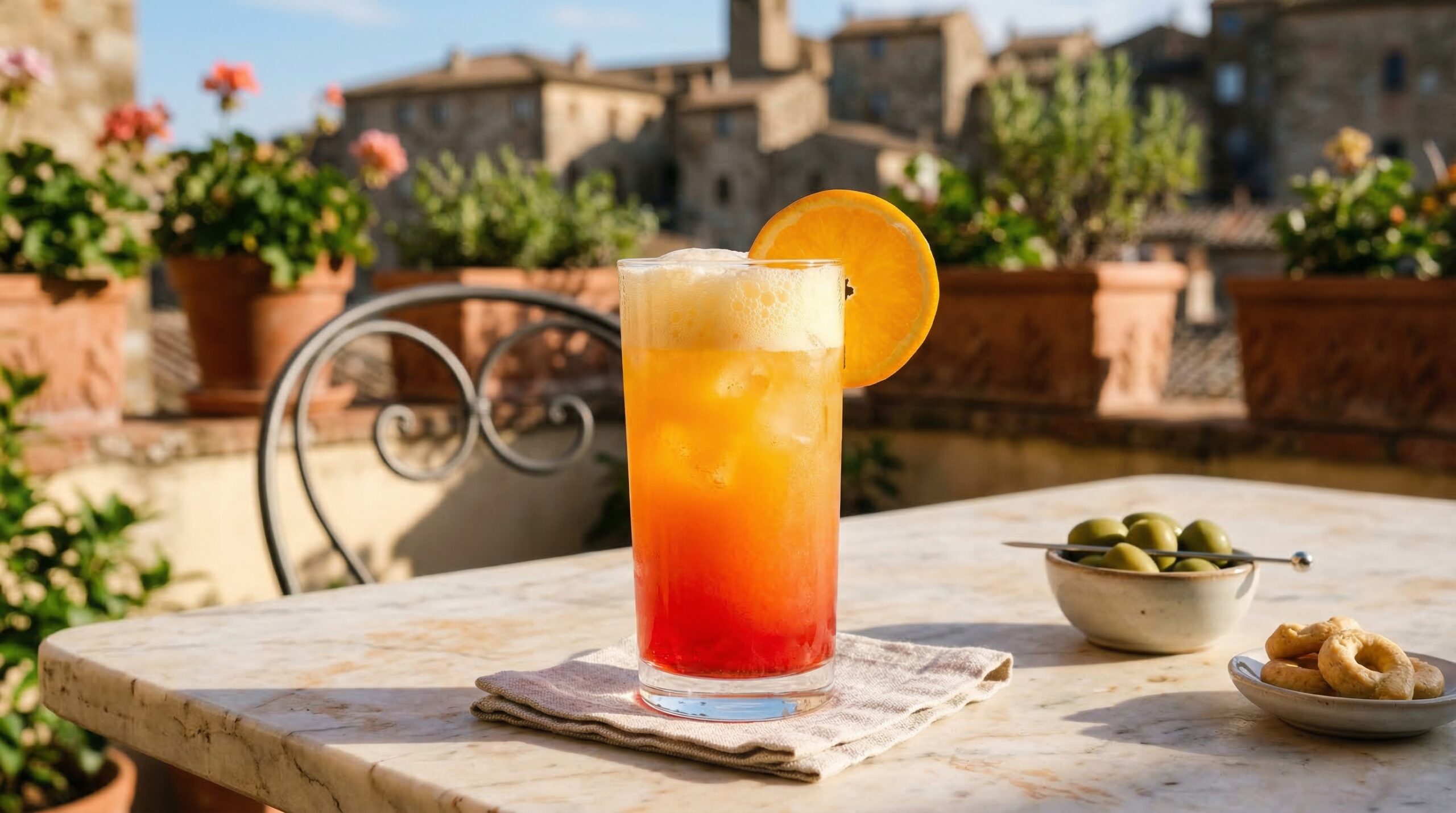
Picture yourself sitting at a sun-drenched terrace in Rome as the afternoon stretches into evening. The waiter brings you a brilliantly orange drink in a tall glass, the juice frothy and light, the color reminiscent of a perfect sunset. This is the Garibaldi cocktail, and once you try it, you’ll understand why Italians have embraced it as their go-to aperitivo drink for generations.
The Garibaldi cocktail recipe might be the most elegant two-ingredient drink you’ll ever make. It combines Campari, that iconic bitter Italian liqueur, with fresh orange juice that’s been whipped into a frothy cloud. The result? A bittersweet, refreshing low-alcohol cocktail that works perfectly for brunch, afternoon sipping, or that magical Italian ritual of aperitivo hour. We’ve tested this drink dozens of times, and the secret lies in one simple technique that transforms ordinary orange juice into something special. If you enjoy exploring cocktail recipes that prioritize simplicity and flavor, this one belongs in your repertoire.
Table of Contents
What is a Garibaldi Cocktail
A Garibaldi cocktail is a classic Italian aperitivo made with just two ingredients: Campari and fresh orange juice. Named after Giuseppe Garibaldi, the Italian revolutionary who helped unify Italy in the 19th century, this drink symbolizes the coming together of northern and southern Italy. Campari represents the north, where it’s produced in Milan, while oranges represent the south, particularly Sicily.
What sets the Garibaldi apart from other simple highball cocktails is the preparation technique. The orange juice should be aerated or “fluffed” before adding it to the Campari. This creates a lighter texture and a beautiful foam on top, which helps balance the bitterness of the Campari. The drink is built directly in a highball glass over ice, making it one of the easiest cocktails to prepare at home.
The flavor profile walks a perfect line between bitter and sweet. Campari brings its signature bitter orange and herbal notes, while fresh orange juice provides natural sweetness and bright citrus flavor. At around 10-12% ABV, it’s considerably lighter than spirit-forward cocktails, making it ideal for daytime drinking when you want something with character but not too much punch.
Garibaldi Cocktail Ingredients
You only need two main ingredients to make a proper Garibaldi, though we’ll include an optional third that some recipes call for:
- 1.5 oz (45ml) Campari – This iconic Italian bitter liqueur has been produced since 1860. Its distinctive red color comes from natural carmine dye, and its flavor combines bitter orange, herbs, and spices. There’s no real substitute that captures its unique character.
- 4-5 oz (120-150ml) Fresh Orange Juice – This is where quality matters enormously. Store-bought orange juice won’t give you the same result. You need freshly squeezed juice, ideally from Valencia, Cara Cara, or blood oranges. Each variety brings something different: Valencia offers classic sweet-tart balance, Cara Caras add subtle berry notes, and blood oranges contribute stunning color and complex flavor.
- Optional: 0.25 oz (7ml) Simple Syrup – Some recipes include a small amount of sugar syrup to soften Campari’s bitterness. After testing both versions extensively, we prefer it without. The natural sweetness from quality oranges provides enough balance, and skipping the syrup lets the Campari’s character shine through. But if you’re new to bitter cocktails, feel free to add it.
- Garnish: Orange wheel or twist – A fresh orange slice adds visual appeal and a hint of aromatic oils when you bring the glass to your lips.
How to Make a Garibaldi Cocktail
The Garibaldi is a built drink, meaning you assemble it directly in the serving glass rather than shaking or stirring in a separate vessel. Here’s our step-by-step method:
Step 1: Prepare Your Glass
Fill a highball glass with ice cubes. Clear ice looks best, but any ice will work. The glass should be about three-quarters full.
Step 2: Add the Campari
Pour 1.5 oz of Campari over the ice. You’ll see that gorgeous deep red color immediately.
Step 3: Prepare the Fluffy Orange Juice
This is the crucial step. Squeeze your fresh oranges, then aerate the juice using one of the methods we’ll detail in the next section. You want the juice to become frothy and slightly thickened.
Step 4: Add the Orange Juice
Slowly pour 4-5 oz of the fluffy orange juice over the Campari. The two liquids will create beautiful layered effects before you stir them together.
Step 5: Stir Gently
Give the drink a gentle stir with a bar spoon or regular spoon. You want to combine the ingredients without destroying all that lovely foam on top.
Step 6: Garnish and Serve
Add an orange wheel to the rim of the glass or float a small orange twist on top. Serve immediately while the foam is still present.
The Fluffy Orange Juice Technique
Here’s where the Garibaldi transforms from a simple drink into something memorable. Aerating the orange juice changes its texture completely, creating a silky, frothy consistency that balances Campari’s intensity and makes the drink feel luxurious. We’ve tested three methods extensively, and each has its merits.
Method 1: Blender Technique (Best Results)
This method produces the most consistent, stable foam. Pour your freshly squeezed orange juice into a blender and run it on high speed for 30-45 seconds. The juice will become noticeably lighter in color and develop a thick layer of foam on top. Let it sit for about 30 seconds after blending, then pour slowly. The foam will hold for several minutes, giving you time to appreciate the texture. Professional bartenders often use this method because it creates the most dramatic presentation.
Method 2: Handheld Milk Frother (Most Convenient)
If you have a handheld milk frother, this is the easiest method for home bartenders. Pour your orange juice into a tall container (to prevent splashing) and run the frother for 20-30 seconds. Move the frother up and down through the juice to incorporate air throughout. The foam won’t be quite as stable as the blender method, but it’s more than adequate and requires minimal cleanup. Many cocktail enthusiasts keep a dedicated frother just for this purpose.
Method 3: Cocktail Shaker (Traditional)
Before blenders and frothers became common, bartenders used a cocktail shaker to aerate citrus juice. Pour your orange juice into a shaker without ice and shake vigorously for 15-20 seconds. The mechanical action forces air into the juice, creating foam. Strain it into your glass over the Campari. This method works well but produces less stable foam than the other two options.
Which Oranges Work Best?
After making this cocktail with every orange variety we could find, here are our recommendations:
- Valencia Oranges: The classic choice. They’re juicy, sweet-tart, and produce that quintessential orange flavor. Available year-round in most markets.
- Cara Cara Oranges: These pink-fleshed navels add subtle berry and cherry notes. They’re slightly sweeter than Valencias and create a beautiful coral-colored drink.
- Blood Oranges: Our favorite for visual impact. The deep red-purple juice creates a stunning drink that looks almost like a sunset in a glass. Flavor-wise, they bring raspberry-like notes that complement Campari beautifully.
- Navel Oranges: A solid backup choice, though they’re not quite as juicy as Valencias. They work well if that’s what’s available.
Whichever variety you choose, the oranges should feel heavy for their size, indicating plenty of juice. Roll them on the counter before juicing to break down the internal membranes and extract more liquid.
History of the Garibaldi Cocktail
The Garibaldi cocktail owes its name to Giuseppe Garibaldi, one of Italy’s most celebrated historical figures. Born in 1807 in Nice (then part of the Kingdom of Sardinia), Garibaldi became a military leader and nationalist who played a crucial role in Italian unification. His volunteer army, known as the Red Shirts or Garibaldini, became legendary for their campaigns to unite Italy’s disparate regions.
The drink’s symbolism is clever and distinctly Italian. Campari originated in Milan, in northern Italy, while oranges grow abundantly in the south, particularly in Sicily. Combining these two ingredients in one glass represents the unification of northern and southern Italy that Garibaldi fought to achieve. It’s the kind of cultural symbolism that Italians appreciate, turning a simple drink into something meaningful.
The exact origin of the cocktail is less clear. Campari itself was created in 1860 by Gaspare Campari, and mixing it with orange juice was likely a natural progression. The drink appears in cocktail books as early as the mid-20th century, often listed under the simpler name “Campari-Orange.” In Italy, it’s been a staple aperitivo for decades, served in bars and cafes as a refreshing pre-dinner drink.
The modern Garibaldi renaissance can be traced to Dante, the acclaimed bar in New York City’s Greenwich Village. When Dante won World’s Best Bar in 2019, their Garibaldi was one of the signature drinks that helped put them on the map. Bartender Naren Young championed the fluffy orange juice technique, turning what was already a good drink into something exceptional. Since then, the Garibaldi has appeared on cocktail menus worldwide, introducing a new generation to this simple Italian classic.
Today, the Garibaldi represents everything great about Italian aperitivo culture: simplicity, quality ingredients, and the idea that drinking should be a pleasure, not a chore. It’s a low-alcohol option meant to be savored slowly, perhaps with some olives or a small plate of food, as you transition from the day’s work to the evening’s relaxation.
Serving Suggestions and Food Pairings
The Garibaldi shines as a daytime cocktail, making it perfect for brunch, lunch, or that late-afternoon aperitivo hour. Its low alcohol content means you can enjoy a couple without feeling overwhelmed, and the bitter-sweet profile pairs wonderfully with a wide range of foods.
Garibaldi vs. Mimosa
People often ask what makes a Garibaldi different from a mimosa. Both are brunch cocktails combining a bitter-sweet component with orange juice, but they’re quite different drinks. A mimosa uses champagne or sparkling wine, making it lighter and more celebratory but with less depth of flavor. The Garibaldi uses Campari, which brings bitterness and complexity that champagne lacks. If you find mimosas too sweet or one-dimensional, the Garibaldi offers a more sophisticated alternative.
When to Serve
The Garibaldi works beautifully for brunch gatherings, especially when you want something more interesting than the standard mimosa or Bloody Mary. It’s also ideal for aperitivo hour, that Italian tradition of pre-dinner drinks and snacks. Serve it at afternoon parties, summer barbecues, or anytime you want a refreshing cocktail that won’t knock you out.
Food Pairing Ideas
The bittersweet profile of the Garibaldi pairs exceptionally well with salty and savory foods. Try serving it alongside:
- Marinated olives with herbs and citrus zest
- Prosciutto and melon or fresh figs
- Bruschetta with tomato and basil
- Aged cheeses like Parmigiano-Reggiano or Pecorino
- Fried snacks like arancini or croquettes
- Charcuterie boards with salami and cured meats
The bitterness of Campari cuts through rich, fatty foods while the orange juice refreshes the palate. It’s a natural pairing with Italian cuisine, but works just as well with Spanish tapas or Mediterranean mezze.
Glassware and Presentation
A highball glass is traditional and practical, allowing room for plenty of ice and the full measure of orange juice. Collins glasses work too if you prefer something taller. The key is using a glass that shows off the beautiful color of the drink. Clear glass is essential. If you’re entertaining, rimming the glass with a salt-sugar mixture can add another dimension, though purists might object.
Garibaldi Cocktail Variations
While the classic Garibaldi is perfect as is, there are several interesting variations worth exploring. These twists maintain the spirit of the original while offering new flavor experiences.
The Garibaldi with Galliano
Some bartenders add a quarter ounce of Galliano, the yellow herbal liqueur, to the mix. The vanilla and anise notes of Galliano add complexity without overwhelming the drink. Add it along with the Campari, then proceed with the fluffy orange juice as usual. This variation is sometimes called a “Garibaldi al Galliano” and offers a slightly sweeter, more complex profile.
Blood Orange Garibaldi
Using blood oranges instead of regular oranges creates a visually stunning variation with a deeper, more complex flavor. The raspberry-like notes of blood oranges complement Campari beautifully. This is our favorite variation, especially when blood oranges are in season during winter months. The deep red-orange color is absolutely gorgeous.
Non-Alcoholic Garibaldi
For those avoiding alcohol, you can create a similar drink using non-alcoholic bitter aperitivo alternatives. Brands like Lyre’s and Seedlip offer alcohol-free Campari substitutes that capture much of the original’s bitter character. Mix with fluffy orange juice just like the original recipe. It’s a great option for designated drivers or anyone wanting the aperitivo experience without the alcohol.
Batching for Parties
The Garibaldi is perfect for batch preparation when entertaining. The ratio is simple: 1 part Campari to 3 parts orange juice. For a pitcher serving 8-10 people, combine 12 oz Campari with 36 oz freshly squeezed orange juice. You can mix these ahead of time and refrigerate, but wait to aerate the juice until just before serving. Have guests pour their drinks over ice, or set up a self-serve station with a pitcher, ice bucket, and glasses.
Frequently Asked Questions
What is in a Garibaldi cocktail?
A Garibaldi cocktail contains just two main ingredients: Campari (1.5 oz) and fresh orange juice (4-5 oz). Some recipes include a small amount of simple syrup, though we prefer it without. The key technique is aerating the orange juice to create a fluffy texture before adding it to the Campari over ice in a highball glass.
What makes a Garibaldi different from a mimosa?
While both are brunch cocktails with orange juice, a mimosa uses champagne or sparkling wine while a Garibaldi uses Campari. This gives the Garibaldi a bitter, complex flavor profile versus the mimosa’s light, sweet character. The Garibaldi also has a lower alcohol content and the distinctive fluffy orange juice technique that creates a unique texture.
What does a Garibaldi cocktail taste like?
The Garibaldi has a bittersweet flavor profile that balances Campari’s distinctive bitterness with the natural sweetness of fresh orange juice. The aerated juice creates a silky, luxurious texture. Expect notes of bitter orange, herbs, and spices from the Campari, complemented by bright citrus sweetness. It’s refreshing and complex without being heavy or cloying.
How does Campari affect the Garibaldi’s flavor?
Campari brings bitterness, complexity, and a distinctive red color to the Garibaldi. Its flavor includes bitter orange peel, herbs, spices, and a subtle sweetness. This bitterness is what makes the drink interesting—it cuts through the sweetness of the orange juice and creates balance. Without Campari, you’d just have orange juice; with it, you have a proper cocktail with depth and character.
Is the fluffy orange juice technique essential?
The fluffy technique isn’t strictly essential—you can make a Garibaldi with regular fresh orange juice—but it significantly improves the drink. Aerating the juice creates a lighter texture, produces an attractive foam, and helps balance Campari’s bitterness. Professional bartenders consider it the defining technique of a proper Garibaldi. If you’re short on time, a quick shake without ice will add some aeration, though not as much as blending or frothing.
Conclusion
The Garibaldi cocktail recipe proves that extraordinary drinks don’t require complicated techniques or obscure ingredients. With just Campari and fresh orange juice, you can create a bittersweet, refreshing cocktail that rivals anything from a professional bar. The fluffy orange juice technique takes only an extra minute but transforms the drink completely, adding silky texture and visual appeal that makes every sip feel special.
What we love most about the Garibaldi is its versatility. It works for elegant brunches, casual afternoon gatherings, or quiet evenings at home. The low alcohol content means you can enjoy it responsibly throughout the day, and the bitter-sweet profile pairs beautifully with everything from olives to charcuterie to light appetizers. It’s a drink that embodies the Italian approach to life: simple pleasures, quality ingredients, and time spent enjoying good company.
We encourage you to experiment with different orange varieties and find your preferred method for creating that fluffy texture. Whether you use a blender, a handheld frother, or the traditional shaker method, the key is freshly squeezed juice and quality Campari. Once you’ve mastered the classic Garibaldi cocktail, try the variations or create your own twists. For more recipes to add to your cocktail repertoire, explore our collection and discover your next favorite drink.