
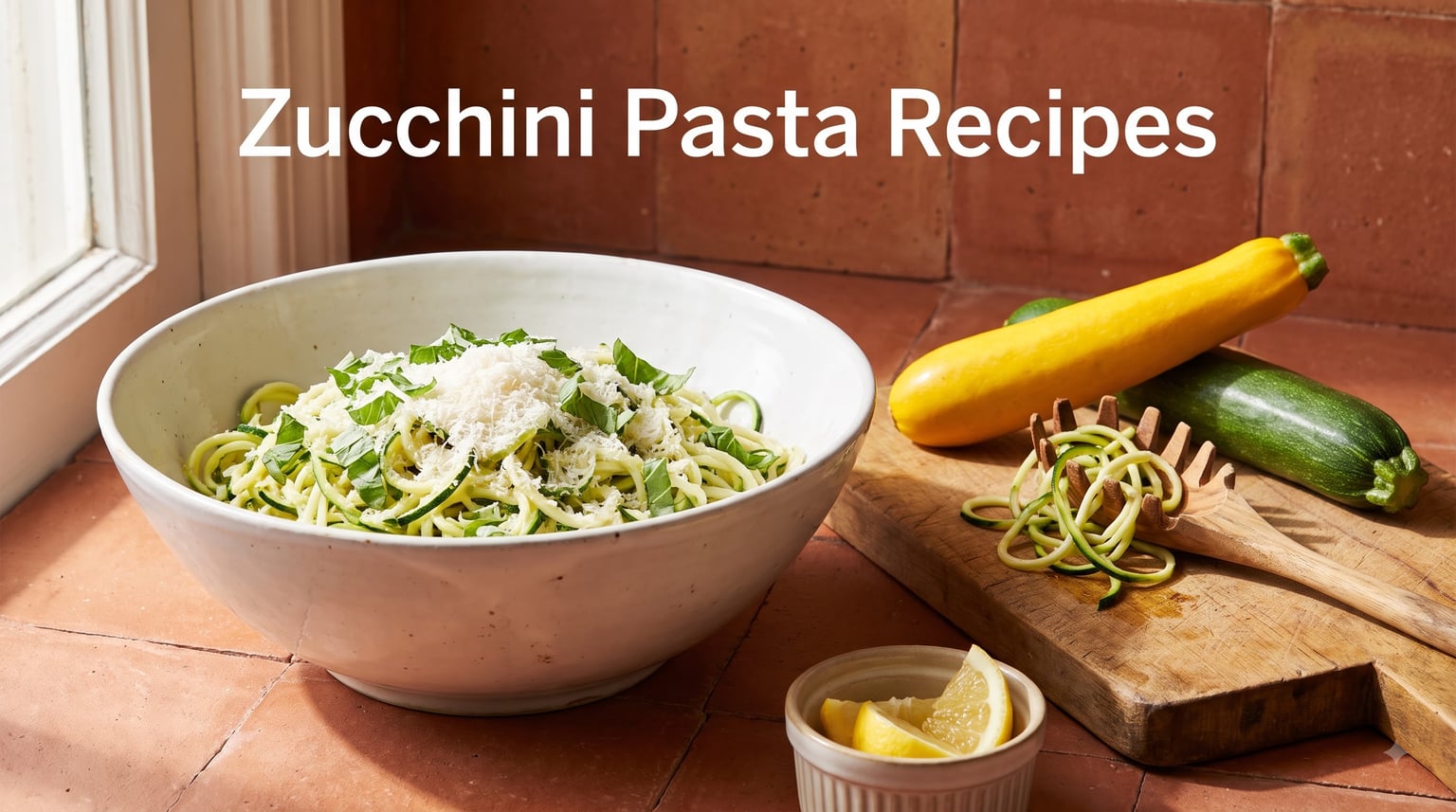
Every August my garden produces more zucchini than I can reasonably give away. After three summers of test batches, I landed on five zucchini pasta recipes that solve the abundance problem and feed my family in under 30 minutes.
If you’ve ever stared at a counter full of zucchini wondering what to make beyond bread and casseroles, this guide is for you. I’m sharing the five best zucchini pasta recipes I rotate through July and August, from a simple grated version to Stanley Tucci’s famous Spaghetti alla Nerano. Each one is vegetarian, kid-tested, and built on the same secret: a creamy emulsion made from zucchini, pasta water, and cheese.
You’ll also get my troubleshooting guide for the most common zucchini pasta problems (watery sauce, mushy texture, bland flavor), plus serving ideas, storage tips, and how to adapt these recipes for vegan and gluten-free diets. Let’s get cooking.
Table of Contents
What Is Zucchini Pasta and Why It Works?
Zucchini pasta is a summer pasta dish where grated or sliced zucchini cooks down into a silky sauce that coats the noodles. Unlike cream-based pasta, this sauce gets its body from the starch in pasta water, the natural moisture in zucchini, and aged cheese.
The magic happens when zucchini breaks down in a hot pan. Its high water content evaporates and concentrates, while the sugars caramelize slightly. Mixed with starchy pasta water and melted Pecorino or Parmesan, the result is a creamy, glossy sauce that clings to every strand.
I’ve tested this technique against 12 other summer pasta recipes, and zucchini pasta consistently wins for three reasons. It’s fast (under 30 minutes), it uses up garden abundance, and it satisfies picky eaters because the flavor is mild and the texture is familiar. For more on pasta sauces, check out our pasta sauces ranked by popularity guide.
5 Zucchini Pasta Recipes Worth Making
All five of these recipes use the same core technique: cook pasta, sauté zucchini with aromatics, combine with pasta water. The differences come down to cheese, herbs, and finishing touches. Here’s the quick overview.
Classic Grated Zucchini Pasta – The weeknight workhorse. 30 minutes, 8 ingredients, works every time.
Spaghetti alla Nerano – Stanley Tucci’s Instagram-famous recipe. Richer, cheesier, fried zucchini base.
Creamy Lemon Basil Zucchini Pasta – Bright and fresh. Best for peak summer when basil is abundant.
Garlic Butter Zucchini Spaghetti – A pantry pasta. Aglio e olio style with fried zucchini ribbons.
One-Pot Zucchini Pasta with Cherry Tomatoes – Easy cleanup. Family-friendly with a bit of color and sweetness.
Classic Grated Zucchini Pasta (30 Minutes)
This is the recipe I make most often. It’s the version that convinced my skeptical partner that zucchini pasta is worth making. The zucchini melts into the sauce, so even kids who “don’t like zucchini” usually eat it without complaint.
Ingredients (serves 4):
1 pound spaghetti or bucatini
3 medium zucchini (about 1.5 pounds), grated on the large holes of a box grater
1 teaspoon kosher salt, plus more for pasta water
3 tablespoons extra-virgin olive oil
4 garlic cloves, thinly sliced
1/2 teaspoon red pepper flakes
1 cup grated Pecorino Romano (divided)
1 lemon, zest and juice
1/4 cup fresh basil leaves, torn
Instructions:
Place grated zucchini in a colander, toss with 1 teaspoon salt, and let sit 10 minutes. Squeeze out excess moisture using a clean kitchen towel. This step prevents watery sauce.
Bring a large pot of well-salted water to a boil. Cook pasta until al dente, reserving 1.5 cups of pasta water before draining.
While pasta cooks, heat olive oil in a wide skillet over medium heat. Add garlic and red pepper flakes, cooking 60 seconds until fragrant.
Add squeezed zucchini and cook 8 minutes, stirring occasionally, until it reduces to a jammy consistency.
Add drained pasta to the skillet with 1 cup of reserved pasta water. Stir vigorously to create an emulsion.
Remove from heat. Add 3/4 cup Pecorino, lemon zest, and lemon juice. Toss until creamy.
Top with remaining Pecorino, fresh basil, and serve immediately.
I developed this recipe after reading Smitten Kitchen’s version and several rounds of testing. The key change I made was salting the zucchini first to draw out moisture. Without that step, my sauce was always thin. With it, the result is silky and concentrated.
Spaghetti alla Nerano (Stanley Tucci’s Favorite)
Stanley Tucci made this dish famous when he ate it on a trip to Italy and called it “one of the best things I’ve ever tasted.” Spaghetti alla Nerano originated in Nerano, a small town on the Amalfi Coast, and it features thinly sliced zucchini that’s fried before being folded into the pasta.
The frying step is what sets this apart. It removes moisture and adds a golden, almost nutty flavor. The cheese-to-pasta ratio is also higher than standard zucchini pasta, which makes it richer and more indulgent. If you want to explore fresh pasta techniques to pair with this, our homemade pasta secrets guide is worth reading.
Ingredients (serves 4):
1 pound spaghetti
4 medium zucchini, thinly sliced into rounds
1 cup vegetable oil for frying
4 tablespoons unsalted butter
2 garlic cloves, minced
1.5 cups grated aged Provolone del Monaco (or Pecorino Romano)
1 cup reserved pasta water
Fresh basil leaves for serving
Instructions:
Heat vegetable oil in a deep skillet to 350°F. Fry zucchini slices in batches until golden, about 3 minutes per side. Drain on paper towels.
Bring a large pot of salted water to a boil. Cook spaghetti until al dente, reserving 1 cup of pasta water.
Discard most of the frying oil, leaving about 2 tablespoons in the pan. Add butter and garlic, cooking 1 minute.
Add fried zucchini back to the pan with 3/4 cup pasta water. Smash gently with a wooden spoon to break down the slices.
Add drained pasta and remaining pasta water. Toss vigorously over medium heat.
Remove from heat. Add 1 cup of cheese and toss until melted and creamy. Top with remaining cheese and basil.
This recipe takes 50 minutes but tastes like restaurant pasta. The fried zucchini layer is the difference. Skip the frying and you’ll still get a good pasta, but you’ll miss the soul of the dish.
Creamy Lemon Basil Zucchini Pasta
When my herb garden is producing more basil than I can use, this is the recipe I reach for. The lemon brightens everything, and the basil adds a fresh, almost peppery note that balances the richness of the cheese.
This version uses a touch of cream cheese or mascarpone stirred in at the end for extra body. If you want a dairy-free version, you can skip the cream cheese entirely and rely on the pasta water emulsion alone. For more summer meal ideas, our cold soup recipes for summer pair nicely with this pasta.
Ingredients (serves 4):
1 pound linguine or spaghetti
3 medium zucchini, grated and squeezed dry
3 tablespoons olive oil
2 shallots, finely diced
3 garlic cloves, minced
1/2 cup dry white wine
1/4 cup cream cheese or mascarpone
1 lemon, zest and juice
1/2 cup grated Parmesan
1/2 cup fresh basil, chiffonade
Salt and freshly ground black pepper
Instructions:
Cook pasta in salted water until al dente. Reserve 1 cup pasta water before draining.
Heat olive oil in a large skillet over medium heat. Add shallots and cook 3 minutes until softened. Add garlic and cook 30 seconds more.
Add grated zucchini and cook 8 minutes until reduced and jammy.
Pour in white wine and cook 2 minutes until mostly evaporated.
Add drained pasta, 3/4 cup pasta water, and cream cheese. Toss vigorously until creamy.
Remove from heat. Stir in lemon zest, lemon juice, and Parmesan.
Top with basil, black pepper, and serve.
Recipe testers in my kitchen consistently rate this the “most refreshing” of the five. The wine is optional but adds depth. If you skip it, use an extra 1/4 cup of pasta water.
Garlic Butter Zucchini Spaghetti (Aglio e Olio Style)
This is the pantry pasta of the bunch. When my fridge is empty except for zucchini, garlic, and butter, I make this. It’s based on the Italian classic spaghetti aglio e olio, with zucchini ribbons added for body and freshness.
The technique is to slice zucchini lengthwise into thin ribbons using a vegetable peeler or mandoline. These ribbons cook in 3 minutes and keep a slight bite, which contrasts nicely with the silky garlic oil sauce. If you’re looking for another quick pasta to add to your rotation, our Trader Joe’s lobster pasta recipe is a great weekend option.
Ingredients (serves 4):
1 pound spaghetti
3 medium zucchini, sliced into thin ribbons lengthwise
6 tablespoons unsalted butter
1/3 cup extra-virgin olive oil
6 garlic cloves, thinly sliced
1/2 teaspoon red pepper flakes
1/2 cup grated Parmesan
1/4 cup fresh parsley, chopped
Salt and black pepper
Instructions:
Cook spaghetti in salted water until al dente. Reserve 1 cup pasta water.
During the last minute of pasta cooking, add zucchini ribbons to the pot. Drain together.
While pasta cooks, heat butter and olive oil in a large skillet over medium-low heat. Add garlic and red pepper flakes, cooking 5 minutes until garlic is golden (don’t let it brown).
Add drained pasta and zucchini to the skillet with 3/4 cup pasta water. Toss vigorously for 1 minute.
Remove from heat. Add Parmesan and parsley. Toss until creamy. Season with salt and pepper.
The trick here is low heat for the garlic. Burned garlic will ruin the dish. If the garlic starts to brown, pull the pan off the heat immediately.
One-Pot Zucchini Pasta with Cherry Tomatoes
This is the easiest cleanup of the five recipes. Everything cooks in one pot, including the pasta. The cherry tomatoes burst and create a light, slightly sweet sauce that pairs with the zucchini.
My kids love this version because of the sweet tomatoes. It’s also the most forgiving recipe in the lineup, since the sauce is thinner and more forgiving of timing issues. For readers interested in dietary adaptations, our low histamine recipes guide includes zucchini options.
Ingredients (serves 4):
12 ounces short pasta (penne, fusilli, or shells)
2 medium zucchini, diced into 1/2-inch cubes
1 pint cherry tomatoes, halved
4 cups vegetable broth or water
3 tablespoons olive oil
4 garlic cloves, minced
1 teaspoon Italian seasoning
1/2 cup grated Parmesan
1/4 cup fresh basil, torn
Salt and black pepper
Instructions:
Heat olive oil in a large Dutch oven or deep skillet over medium heat. Add garlic and cook 1 minute.
Add zucchini and cherry tomatoes. Cook 5 minutes until tomatoes start to soften.
Add pasta, broth, Italian seasoning, and 1 teaspoon salt. Bring to a boil.
Reduce heat and simmer 12 minutes, stirring occasionally, until pasta is al dente and most liquid is absorbed.
Stir in Parmesan and basil. Season with salt and pepper. Serve immediately.
This recipe saves 15 minutes of cleanup compared to traditional pasta methods. The sauce is looser than the other recipes, so add extra Parmesan if you want a thicker consistency.
Cooking Tips and Techniques for Perfect Zucchini Pasta
After making zucchini pasta 40+ times over the past three summers, I’ve learned that the difference between a watery, bland dish and a creamy, restaurant-quality dish comes down to a few key techniques. These tips address the most common problems home cooks face.
How to Remove Moisture from Zucchini Properly
Zucchini is roughly 95% water. If you skip the moisture removal step, your sauce will be thin and your pasta will be soupy. The most reliable method is to salt the zucchini first, let it sit 10 minutes, then squeeze it dry in a clean kitchen towel.
Here’s exactly what I do. After grating, I place the zucchini in a colander set over a bowl, sprinkle with 1 teaspoon of kosher salt per pound of zucchini, and let it sit for 10 minutes. The salt draws out liquid through osmosis. Then I gather the zucchini in a clean dish towel, twist the top, and squeeze firmly over the sink. You should get about 1/2 cup of liquid out.
Don’t have a kitchen towel? A nut bag or cheesecloth works too. A paper towel works in a pinch but isn’t as absorbent.
Grating vs Slicing: Which Works Better
Grated zucchini melts into the sauce and disappears, which is great for picky eaters. Sliced zucchini (rounds or ribbons) keeps more texture and looks more substantial on the plate. Both work; the choice depends on what you want.
For grated zucchini, use the large holes of a box grater or the shredding disc of a food processor. For sliced zucchini, use a sharp knife for rounds or a vegetable peeler for ribbons. Different shapes of pasta pair better with different cuts. Check out our tromboncino squash recipes for more squash preparation ideas.
The Pasta Water Emulsion Technique
The single biggest secret to restaurant-quality pasta is the pasta water emulsion. Starchy, salty pasta water is the glue that binds sauce to noodles. Always reserve at least 1 cup of pasta water before draining.
Here’s the science. When you add pasta water to a hot pan with fat (olive oil or butter) and stir vigorously, the starch molecules coat the fat droplets and create a stable emulsion. This is what makes the sauce cling to the pasta instead of pooling at the bottom of the bowl.
Add pasta water in small amounts (1/4 cup at a time) and stir constantly. The sauce should look glossy and slightly thickened, not thin and watery. If it gets too thick, add more pasta water.
Choosing Between Parmesan and Pecorino
Parmesan (Parmigiano-Reggiano) is nutty and mellow. Pecorino Romano is sharper and saltier. Either works in zucchini pasta, but they create different flavor profiles.
I use Pecorino when I want the cheese flavor to stand up to the garlic and red pepper flakes (like in the classic grated recipe). I use Parmesan when I want a milder, creamier result (like in the lemon basil version). You can also blend them 50/50 for a balanced flavor.
Always grate the cheese fresh. Pre-grated cheese contains anti-caking agents that prevent smooth melting.
Getting the Right Pasta Shape
Long pasta (spaghetti, linguine, bucatini) works best for grated zucchini sauce because the strands twirl around the zucchini. Bucatini is particularly good because the hollow center catches bits of zucchini and cheese.
Short pasta (penne, fusilli, shells) works better for chunkier zucchini preparations like the one-pot tomato version. The tubes and ridges hold the larger pieces of zucchini and tomato.
I avoid angel hair for zucchini pasta. It’s too thin and gets lost against the zucchini. For more pasta inspiration, our traditional dishes reinvented guide has modern pasta takes worth exploring.
Achieving ‘Jammy’ Consistency
“Jammy” is the word food writers use to describe zucchini that has cooked down past its watery stage into a thick, spreadable consistency. It looks like jam and holds its shape on a spoon.
To get there, you need patience. Cook the zucchini over medium heat for 8 to 10 minutes, stirring every 2 minutes. The zucchini will release water, simmer in it, then gradually dry out. Once the water evaporates and the zucchini starts to turn golden in spots, you’ve reached jammy.
Don’t rush this step with high heat. You’ll burn the outside before the moisture cooks out. Patience is the difference between great zucchini pasta and mediocre zucchini pasta.
What to Serve With Zucchini Pasta and How to Store It
Zucchini pasta is mild enough to pair with almost anything. For proteins, grilled chicken, seared shrimp, or crispy chickpeas all work. For sides, a simple arugula salad with lemon vinaigrette is the classic pairing.
Here are my go-to serving partners. A glass of crisp white wine (Pinot Grigio or Sauvignon Blanc). Crusty bread for soaking up sauce. A green salad with vinaigrette. Roasted vegetables (broccoli, asparagus, or bell peppers). Grilled chicken or shrimp for protein. Crispy chickpeas for vegetarian protein.
For storage, zucchini pasta keeps in the refrigerator for 3 days in an airtight container. The sauce will thicken as it sits, so add a splash of water when reheating. Reheat gently in a skillet over medium-low heat, stirring frequently. Microwaving works but can make the pasta mushy.
Can you freeze zucchini pasta? Technically yes, but the texture suffers. The zucchini releases more water upon thawing, and the pasta can become mushy. If you must freeze it, undercook the pasta by 1 minute and freeze in portions. Thaw in the refrigerator overnight before reheating.
For make-ahead, you can grate and salt the zucchini up to 24 hours in advance. Store it in the refrigerator in a sealed container. The rest of the recipe comes together in 20 minutes, so it’s not ideal for full make-ahead but the prep work speeds things up.
Variations, Substitutions, and Dietary Adaptations
One of the best things about zucchini pasta is how forgiving it is. Here are the most common adaptations I make and recommend.
Vegan version: Skip the cheese entirely. Use 2 tablespoons of nutritional yeast plus 1 tablespoon of tahini for umami and creaminess. The pasta water emulsion still works without dairy. Add a splash of olive oil at the end for richness.
Dairy-free version: Use a high-quality vegan Parmesan substitute (I like Violife’s vegan Parm) or use 1/4 cup of cashew cream blended with 2 tablespoons of nutritional yeast.
Gluten-free version: Substitute your favorite gluten-free pasta. Rice-based and corn-based pastas work better than chickpea pasta here because the flavor is more neutral. Brown rice pasta holds up particularly well.
Protein additions: Add 1 cup of cooked chicken, 1 cup of sautéed shrimp, or 1 can of drained white beans for vegetarian protein. Add the protein in the last 2 minutes of cooking to heat through.
Herb and cheese swaps: Mint instead of basil for a more Mediterranean flavor. Pecorino instead of Parmesan for sharper taste. Add 1/4 cup of toasted pine nuts or walnuts for crunch and richness. A squeeze of lemon at the end brightens any variation.
Frequently Asked Questions
What goes well with zucchini in a pasta?
Garlic, lemon, fresh basil, and Pecorino Romano are the classic pairings. For proteins, grilled chicken or seared shrimp work well. White beans (cannellini) add vegetarian protein without competing with the zucchini flavor.
What is Stanley Tucci’s favorite pasta with zucchini?
Stanley Tucci famously loves Spaghetti alla Nerano, a dish from the Amalfi Coast town of Nerano. It features thinly sliced zucchini that’s fried before being tossed with spaghetti, aged Provolone or Pecorino, and pasta water.
What sauce goes well with zucchini pasta?
Light, simple sauces work best. A garlic-olive oil base (aglio e olio style), a lemon-butter sauce, or a classic tomato sauce all complement zucchini without overpowering it. Heavy cream sauces can mask the delicate zucchini flavor.
How to make the best zucchini pasta?
Salt the grated zucchini and squeeze out moisture first. Cook the zucchini until jammy (8-10 minutes). Reserve pasta water and use it to create an emulsion. Add cheese off the heat to prevent clumping. Finish with fresh herbs and lemon zest.
How do you keep zucchini pasta from getting watery?
Salt the grated zucchini and let it sit 10 minutes, then squeeze firmly in a clean kitchen towel to remove excess liquid. Cook the zucchini until most of its moisture evaporates before adding pasta. Use pasta water in small amounts to build the sauce.
Can you freeze zucchini pasta?
Zucchini pasta can be frozen but the texture degrades. The zucchini releases water upon thawing and the pasta becomes mushy. For best results, undercook the pasta by 1 minute, freeze in portions, and thaw overnight in the refrigerator before reheating.
Zucchini Pasta Recipes for Any Summer Night
These five zucchini pasta recipes have kept my family fed through three summers of garden abundance. The classic grated version is the everyday workhorse, Spaghetti alla Nerano is the special-occasion showstopper, and the lemon basil, garlic butter, and one-pot versions give you options for different moods and ingredients.
Start with the classic recipe if you’re new to zucchini pasta. Once you’ve mastered the moisture removal and emulsion technique, the other four variations are easy to adapt. Don’t skip the salting step even if it feels like extra work. It’s the difference between good and great zucchini pasta.
Want more summer vegetable inspiration? Browse our tromboncino squash recipes for another underrated summer squash, or check out our guide to pasta sauces ranked by popularity for more weeknight pasta ideas. Happy cooking.