
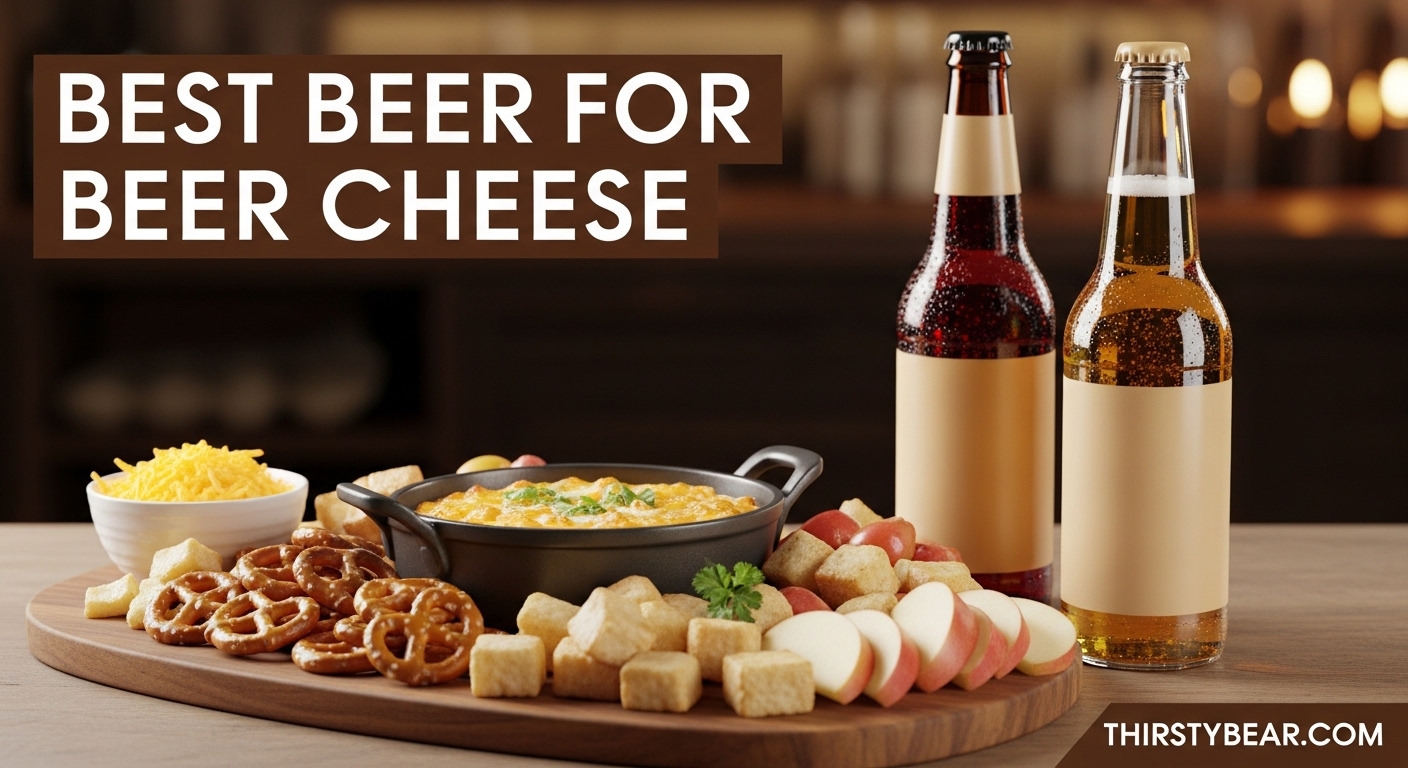
When I set out to master beer cheese, the first question I faced was simple but crucial: what beer should I use? After testing dozens of options over the past year, I can tell you that choosing the wrong beer can turn a promising dip into a bitter, disappointing mess. The best beer for beer cheese is light, crisp, and malt-forward with low bitterness – pilsners, blonde ales, wheat beers, and Mexican lagers are your safest bets.
This matters because beer isn’t just a flavoring agent – it’s the foundation of the sauce. The beer you choose determines whether your dip will be creamy and balanced or harsh and overwhelming. I learned this the hard way when an IPA ruined an entire batch during a Super Bowl party. Since then, I’ve made it my mission to find the perfect beer-cheese pairings.
In this guide, I’ll share what I’ve learned from testing, what the brewing community recommends, and what food experts consistently agree on. We’ll cover the best beer styles, specific brands to try, and what to avoid at all costs.
Table of Contents
Best Beer Types for Beer Cheese
Light, crisp beers with subtle malt profiles work best for beer cheese. These styles enhance the cheese without overpowering it. Based on my testing and community feedback, here are the top choices organized by category:
Best Overall: Pilsners
Pilsners are the gold standard for beer cheese. Their clean, crisp profile and subtle bitterness complement sharp cheddar perfectly. I’ve had great success with Stella Artois, Pilsner Urquell, and Miller Lite. The light body lets the cheese shine while adding a gentle malt backbone.
Wheat beers like hefeweizen are excellent alternatives if you want a slightly creamier texture. The wheat proteins add body to the dip, and the subtle clove and banana notes from a traditional German hefeweizen create a unique flavor profile that pairs beautifully with smoked gouda.
Best for Richness: Amber Lagers
When you want a deeper, maltier beer cheese, amber lagers are the way to go. Oktoberfest and amber lagers like Yuengling, Sam Adams Boston Lager, or Fat Tire add caramel and toast notes that complement aged cheeses. I prefer these with sharp cheddar or colby for a pub-style dip that feels substantial.
Best for Creaminess: Mexican Lagers
Mexican lagers like Modelo, Corona, or Dos Equis are fantastic for lighter, refreshing beer cheese. Their crisp, clean profile and subtle corn sweetness work wonderfully with mild cheeses like Monterey Jack or American cheese. I reach for these when I’m making dip for a summer gathering.
For Bold Flavor: Blonde Ales
Blonde ales like Budweiser, Coors Banquet, or Firestone Walker 805 offer a middle ground between light lagers and amber beers. They have more character than American light lagers but won’t overpower your cheese. These work well with almost any cheese type, making them versatile pantry staples.
Specialty Options
For unique variations, consider winter beers with spice notes for holiday beer cheese, or experiment with darker styles like brown ales when pairing with nuttier cheeses like gouda. Just remember that darker beers will change the color of your dip significantly.
Beers to Avoid for Beer Cheese
Some beer styles that are delicious in a glass become problematic when heated and combined with cheese. Understanding why helps you avoid disappointing results.
IPAs and Hoppy Beers
IPAs are the number one enemy of good beer cheese. The hop compounds that create that piney, citrusy bitterness in the glass intensify dramatically when heated. I once made a batch with a West Coast IPA that was so bitter it was nearly inedible. The IPA bitterness in cooking creates a harsh, astringent flavor that overpowers the cheese.
If you love IPAs, save them for drinking, not cooking. Even low-and-slow cooking won’t tame the bitterness. This is consistently the most common mistake I see in online forums, and it’s easily avoided by choosing a malt-forward beer instead.
Stouts and Porters
While some cooks swear by dark beers, I find they create two problems. First, the roasted, chocolatey notes can clash with the cheese. Second, and more importantly, they turn your dip an unappetizing dark brown color. If you do use a stout, stick with milk stouts rather than imperial or barrel-aged versions, and pair them with very sharp cheeses that can stand up to the roast character.
Fruity and Spiced Beers
Beers with fruit additions (orange, berry, tropical) or heavy spice additions (pumpkin, chai) create confusing flavor profiles in beer cheese. The fruit notes can taste artificial when combined with cheese, and spices distract from the star ingredients. Stick to traditional beer styles for the best results.
Making Tips and Ratios
The beer is only half the equation. How you use it matters just as much. Here are the techniques I’ve refined through trial and error.
Beer Temperature
Use room temperature beer whenever possible. Cold beer can cause the cheese to seize and separate when added to a hot roux. If you only have chilled beer, let it sit out for 30 minutes before using. This small step makes a noticeable difference in the final texture.
The Ratio
For a standard beer cheese dip serving 6-8 people, I use 12 ounces of beer to 2 cups of shredded cheese. This ratio creates a dip that’s creamy but not too thin. If you’re making a thicker spread for sandwiches, reduce the beer to 8 ounces. For soup consistency, increase to 16 ounces.
The Roux Method
Start with a roux: melt 3 tablespoons butter in a saucepan over medium heat, whisk in 3 tablespoons all-purpose flour, and cook for 1-2 minutes. This creates a stable base that prevents separation. Slowly whisk in your beer, then gradually add the cheese, allowing each addition to melt completely before adding more.
Low Heat is Key
Keep the heat at medium-low once the beer is added. High heat causes the cheese proteins to tighten and separate, creating a grainy texture. Be patient – slow melting produces the smoothest results.
Seasoning Balance
Worcestershire sauce, Dijon mustard, garlic powder, and smoked paprika are the classic beer cheese seasonings. Start with 1 tablespoon each of Worcestershire and mustard, and 1 teaspoon each of garlic powder and smoked paprika. Adjust to taste, but remember that the cheese and beer provide plenty of flavor on their own.
Troubleshooting Common Problems
Even experienced cooks run into issues with beer cheese. Here’s how to fix the most common problems.
Grainy or Separated Cheese
If your cheese sauce looks grainy or has separated, the cheese was likely overheated or added too quickly. To fix it, remove the pan from heat immediately and let it cool slightly. Whisk in a splash of cold milk or cream, then return to very low heat and whisk vigorously until smooth. Prevention is better: always add cheese gradually and keep the temperature moderate.
Dip Too Thin
If your beer cheese is too runny, create a slurry with 1 tablespoon cornstarch and 2 tablespoons cold water, then whisk it into the simmering dip. Cook for 2-3 minutes until thickened. For future batches, reduce the beer or increase the cheese ratio.
Dip Too Thick
Overly thick dip can be thinned with additional beer or milk, added a tablespoon at a time while whisking over low heat. Don’t add liquid all at once, or you might overshoot the consistency.
Pre-Shredded Cheese Issues
Pre-shredded cheese contains anti-caking agents that prevent smooth melting. I learned this after multiple grainy batches. Always shred your own cheese from blocks for the smoothest results. It takes a few extra minutes but makes a huge difference in texture.
What to Serve with Beer Cheese
Beer cheese is incredibly versatile, but some pairings work better than others. Soft pretzels are the classic choice for good reason – the slight sweetness and chewy texture complement the creamy dip perfectly.
Crusty bread, baguette slices, or pretzel bites are excellent alternatives. For lighter options, try raw vegetables like carrots, celery, and bell peppers. The crunch provides a nice contrast to the smooth dip.
For parties, I like to offer a variety: soft pretzels for the traditionalists, veggies for the health-conscious, and maybe some crackers or tortilla chips for variety. Beer cheese also works well as a sandwich spread or burger topping, so don’t feel limited to dip applications.
Serve beer cheese warm, not piping hot. Too hot and the cheese continues to separate. Too cold and the texture becomes unappealingly stiff. Warm is just right – creamy, smooth, and coating without being runny.
Frequently Asked Questions
Is Budweiser good for beer cheese?
Yes, Budweiser works well for beer cheese. As an American-style lager with light body and subtle malt flavor, it provides a clean canvas that lets the cheese shine. Many home cooks and even professional kitchens use Budweiser for its consistent results and mild character that doesn’t overpower the dip.
Can you make beer cheese with any beer?
Technically yes, but results vary dramatically. Light, malt-forward beers like pilsners, blonde ales, and lagers produce the best results. Avoid IPAs and heavily hopped beers as they become bitter when heated. Dark beers will work but change the color and flavor profile significantly. For consistent, crowd-pleasing results, stick to the recommended beer styles.
What German beer is best for beer cheese dip?
German pilsners and hefeweizens are excellent choices. Brands like Warsteiner, Bitburger, or Paulaner provide clean, crisp profiles that complement cheddar beautifully. Hefeweizens add subtle banana and clove notes that work especially well with smoked gouda or aged cheddar. Avoid German IPAs or heavily hopped styles.
How much beer for beer cheese?
For a standard dip serving 6-8 people, use 12 ounces of beer to 2 cups of shredded cheese. This creates a creamy, dippable consistency. Adjust based on your preference: 8 ounces for a thicker spread, 16 ounces for soup-like consistency. Always add beer gradually to achieve your desired texture.
Is Modelo good for beer cheese?
Yes, Modelo is an excellent choice for beer cheese. As a Mexican lager, it offers a crisp, clean profile with subtle corn sweetness that pairs beautifully with mild cheeses like Monterey Jack or American cheese. It’s particularly good for lighter, summer-style beer cheese dips where you want refreshing flavor without heaviness.
Can you get a buzz from beer cheese?
No, you cannot get a buzz from beer cheese. While beer cheese contains alcohol, the concentration is very low after cooking. A typical serving contains less than 0.5% alcohol by volume – similar to kombucha or very low-alcohol beer. You would need to consume impractically large amounts to feel any effects. It’s safe for children and those avoiding alcohol.
Does beer cheese dip have alcohol in it?
Yes, beer cheese dip contains small amounts of alcohol. However, most of the alcohol evaporates during the cooking process. The remaining alcohol content is minimal – typically less than 0.5% ABV. This trace amount is not enough to cause intoxication, but it does contribute to the flavor profile. If you need to avoid alcohol completely, use non-alcoholic beer or substitute with beef broth.
Are you supposed to heat up beer cheese dip?
Beer cheese is best served warm, not hot. Warm beer cheese has the ideal creamy, smooth texture for dipping. If it’s too hot, the cheese continues to separate and the texture becomes grainy. If it’s too cold, the dip becomes stiff and hard to scoop. Gentle warming in the microwave or on the stove over low heat restores the perfect consistency. Serve it warm and keep it warm using a slow cooker on the lowest setting for parties.
Conclusion
Finding the best beer for beer cheese comes down to understanding flavor balance. Light, malt-forward beers like pilsners, blonde ales, wheat beers, and Mexican lagers create the most successful dips. Avoid IPAs and overly hoppy styles that turn bitter when heated. With the right beer selection and proper technique, you’ll create creamy, delicious beer cheese that keeps everyone coming back for more.