
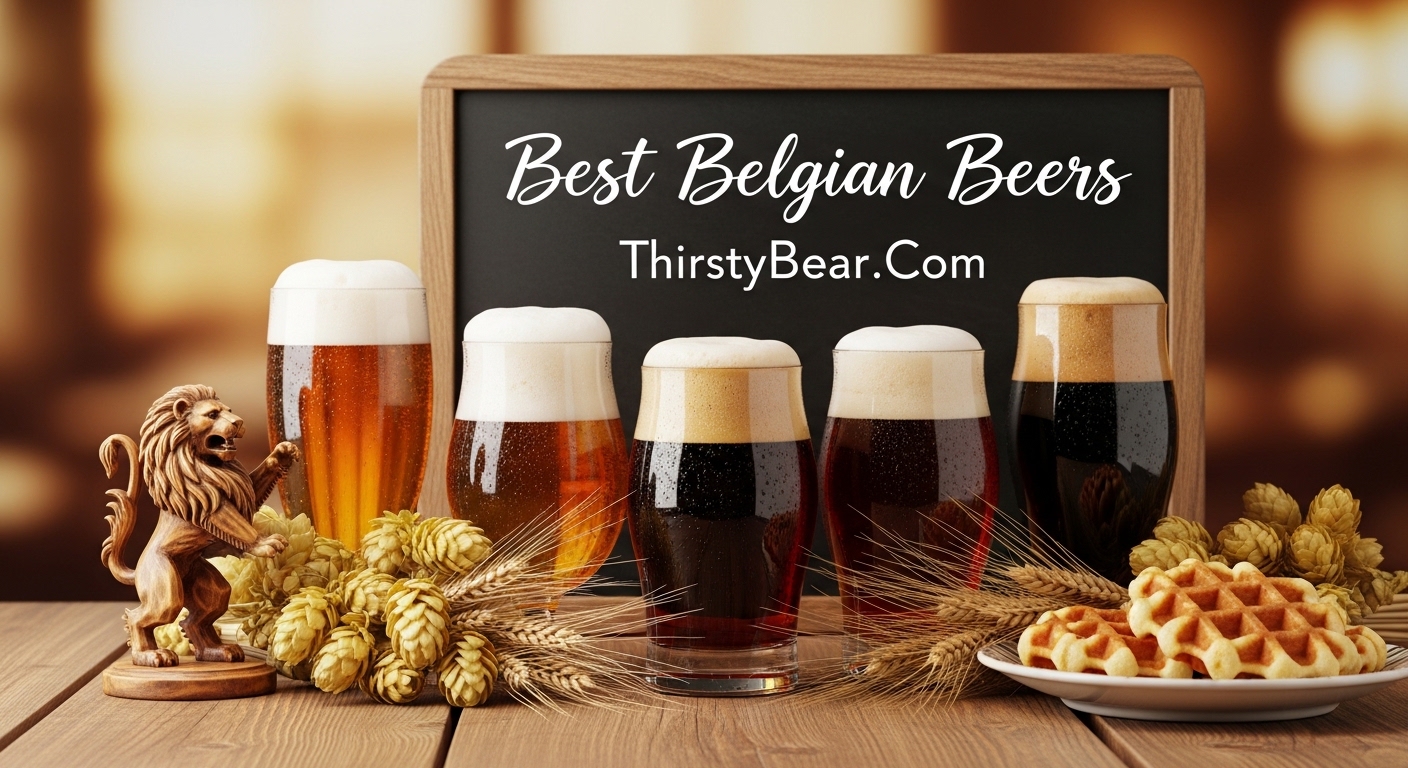
When it comes to world-class beer, Belgium stands alone with centuries of brewing tradition that UNESCO has recognized as Intangible Cultural Heritage. The best Belgian beers offer complexity and character you simply won’t find elsewhere, thanks to unique yeast strains, traditional brewing methods, and recipes passed down through generations. Having spent years exploring Belgian beer culture both in Belgium and through imports, I’ve developed a deep appreciation for what makes these beers so special.
In this guide, I’ll walk you through the finest Belgian beers you can find today, from authentic Trappist ales to refreshing witbiers and complex sour lambics. Whether you’re a complete beginner or a seasoned craft beer enthusiast, you’ll discover recommendations that match your taste preferences, learn about different Belgian beer styles, and understand how to serve these exceptional beers properly.
Belgian brewing dates back over 1,000 years, with monks in monasteries perfecting recipes that are still in production today. What sets Belgian beer apart starts with the yeast. Traditional Belgian yeast strains produce distinctive esters and phenols, creating flavors like banana, clove, spice, and bubblegum that you won’t find in other beer traditions. Many Belgian beers also undergo bottle conditioning, where a second fermentation happens right in the bottle, adding complexity and creating that signature high carbonation Belgian beer is known for.
The brewing techniques are equally distinctive. Belgian brewers often use open fermentation vessels, allowing wild yeast to interact with the beer. Some beers are aged for years in massive oak barrels called foeders, while others blend young and old beers to achieve perfect balance. This dedication to traditional methods, combined with Belgian brewers’ willingness to experiment, creates some of the world’s most diverse and complex beer styles.
Belgium’s beer culture runs deep. In Belgian cities, beer is more than a beverage—it’s a social ritual, a part of daily life, and a source of national pride. Each beer often has its own specific glass designed to showcase its color, capture aromatics, and maintain the perfect head. When you drink Belgian beer, you’re participating in a tradition that has evolved over centuries while staying remarkably true to its roots.
Table of Contents
Understanding Trappist vs Abbey Beer
One of the most common questions about Belgian beer is the difference between Trappist and Abbey beers. Let me clear up this confusion once and for all. Trappist beer is brewed within the walls of a Trappist monastery by Trappist monks themselves. There are only 12 authentic Trappist breweries in the world, with 6 located in Belgium (Chimay, Westmalle, Westvleteren, Rochefort, Orval, and Achel). The Trappist designation is protected by law and strictly controlled.
Abbey beers, on the other hand, are brewed by commercial breweries that have licensed an abbey’s name and often use recipes inspired by monastery brewing traditions. Some were originally brewed by monks but now contract out production. While Abbey beers can be excellent, they’re not held to the same strict standards as Trappist beers. Think of Abbey beers as paying homage to monastic brewing traditions, while Trappist beers are the authentic article made by monks.
The distinction matters because Trappist beers often command premium prices and have a certain mystique among beer enthusiasts. However, some of Belgium’s best beers are actually Abbey beers like St. Bernardus Abt 12, which many beer drinkers prefer to similar Trappist offerings. Don’t get too caught up in the label—the taste should be your ultimate guide.
Best Belgian Beers (September 2026)
Here are the Belgian beers that consistently deliver exceptional experiences, based on my personal tasting notes and insights from the broader beer community. These selections cover the full spectrum of Belgian beer styles, from sessionable ales to complex sippers that reward careful contemplation.
1. Rochefort 10
Rochefort 10 represents the pinnacle of Belgian dark ales. This Quadrupel from Notre-Dame de Saint-Remy Abbey delivers massive complexity with dark fruit, fig, raisin, and caramel notes balanced against a subtle warmth from its 11.3% ABV. I’ve been cellaring bottles for over five years, and they continue to evolve beautifully, developing deeper malt character and more integrated alcohol.
The mouthfeel is velvety smooth with just enough carbonation to keep it from being heavy. Rochefort 10 isn’t a beer you chug—it’s a slow sipper meant for contemplation. Reddit discussions consistently rank this among the world’s best beers, and after years of tasting, I have to agree. If you try only one Belgian dark ale, make it this one.
2. Westmalle Tripel
Westmalle Tripel is the gold standard for the Tripel style and arguably the most influential Belgian beer of the modern era. Created in 1934 at Westmalle Abbey, it defined the Tripel category that countless breweries have attempted to replicate. With 9.5% ABV, this golden ale delivers surprising drinkability thanks to bright citrus, spicy clove, and subtle banana notes from the house yeast.
What makes Westmalle Tripel special is its balance—the high alcohol never overpowers the delicate flavors, and the finish is remarkably clean. I’ve served this to countless friends who claim they don’t like beer, and they’re always surprised by how approachable it is. This is the perfect Belgian beer for introducing newcomers to the style while still satisfying experienced drinkers.
3. St. Bernardus Abt 12
St. Bernardus Abt 12 has a fascinating history—it was originally brewed under license from St. Sixtus Abbey before Westvleteren decided to discontinue all outside production. Today, it’s produced by a secular brewery using the original Westvleteren 12 recipe. Many beer enthusiasts actually prefer it to the harder-to-find Westvleteren, and after extensive side-by-side tastings, I can understand why.
At 10.5% ABV, this Quadrupel delivers rich dark fruit, toffee, and caramel flavors with a beautifully warming finish. The mouthfeel is luxurious but never heavy, and the alcohol integration is masterful. Reddit discussions frequently cite St. Bernardus Abt 12 as a favorite, and it’s consistently one of the highest-rated Belgian beers on major beer rating sites. If you can’t find Westvleteren 12, this is arguably even better.
4. Chimay Bleue (Premiere)
Chimay is perhaps the most famous Trappist brewery, and Chimay Bleue is their flagship dark ale. At 9% ABV, this Dubbel delivers complex malt character with notes of dried fruit, caramel, bread crust, and subtle spice. It’s remarkably well-balanced and surprisingly drinkable despite the alcohol content.
Chimay is widely available compared to some other Trappist beers, making it an accessible entry point to monastery-brewed beers. I’ve been drinking Chimay Bleue for over a decade, and the quality remains consistent year after year. It’s one of those beers that never disappoints, whether you’re having it with dinner or enjoying it on its own as a special treat.
5. Orval
Orval is unlike any other Belgian beer you’ll encounter. This 6.9% ABV pale ale from Abbaye Notre-Dame d’Orval is dry-hopped with whole leaf hops, giving it a unique earthy, herbal, and slightly funky character. Orval also undergoes bottle conditioning with Brettanomyces wild yeast, which continues to develop over time.
Fresh Orval is crisp and hoppy with citrus notes. Aged Orval (2-3 years) develops barnyard, leather, and horse blanket characteristics that divide beer drinkers—you either love it or hate it. I keep both fresh and aged bottles on hand because they’re essentially different beers. Orval is controversial even among Belgian beer enthusiasts, but that’s part of its charm. If you’re looking for something truly unique, this is it.
6. Tripel Karmeliet
Tripel Karmeliet from Brouwerij Bosteels has become one of Belgium’s most popular exports, and for good reason. This 8.4% ABV Tripel is brewed with three grains—wheat, oats, and barley—which gives it a distinctive creamy mouthfeel and layered complexity. The flavor profile includes bright citrus, vanilla, and subtle spice, all beautifully integrated.
What sets Tripel Karmeliet apart is its incredible balance. Despite the relatively high alcohol, it’s remarkably smooth and never feels boozy. I’ve served this at countless gatherings, and it’s always a crowd-pleaser. Reddit discussions frequently cite Tripel Karmeliet as a favorite Tripel, often alongside Westmalle Tripel. If you’re looking for a Belgian beer that appeals to almost everyone, this is your safest bet.
7. Duvel
Duvel is the archetype of the Belgian Golden Ale style, and its influence on craft brewing worldwide can’t be overstated. At 8.5% ABV, this straw-colored ale delivers bright pear, apple, and spicy clove flavors with a remarkably dry, crisp finish. The high carbonation creates a Champagne-like effervescence that makes it incredibly refreshing.
Despite the alcohol content, Duvel drinks lighter than a typical craft IPA. I’ve been drinking Duvel for years, and it remains one of my go-to beers for any occasion. It’s substantial enough to be interesting but refreshing enough to have multiple bottles. The distinctive tulip glass that comes with Duvel isn’t just marketing—it really does enhance the drinking experience by concentrating aromatics and maintaining the perfect head.
8. Saison Dupont
Saison Dupont represents the Saison style, which originated as farmhouse ales brewed in Belgium’s Hainaut province to refresh farmworkers during harvest season. At 6.5% ABV, it’s more sessionable than many Belgian beers but no less complex. The flavor profile includes citrus, pepper, earth, and subtle funk from the distinctive Saison yeast.
What makes Saison Dupont special is its incredible versatility—it’s refreshing enough for summer but complex enough for winter sipping. The mouthfeel is crisp and effervescent with a dry finish that keeps you coming back for more. I’ve paired Saison Dupont with everything from seafood to spicy cuisine to roasted meats, and it works beautifully. This is the perfect Belgian beer for those who prefer more delicate, nuanced flavors over big, bold character.
9. Rodenbach Grand Cru
Rodenbach Grand Cru is a masterpiece of mixed fermentation, representing the Flemish Red Ale style. This 6% ABV beer is a blend of young and aged beer, with the aged portion spending up to two years in massive oak foeders. The result is an incredibly complex sour beer with bright acidity balanced against dark fruit, oak, and subtle vanilla notes.
Flemish Red Ales like Rodenbach are often called “Burgundy beers” because they share wine-like complexity and food-pairing versatility. Rodenbach Grand Cru is more assertively sour than the standard Rodenbach, making it better suited for experienced beer drinkers or those who appreciate tart flavors. If you’re curious about Belgian sour beers but intimidated by wild-fermented lambics, this is an excellent starting point.
10. La Chouffe
La Chouffe from Brasserie d’Achouffe is a Belgian Golden Ale with a distinctive gnome mascot and a wonderfully approachable flavor profile. At 8% ABV, it delivers bright citrus, coriander, and subtle spice with a creamy mouthfeel and refreshing finish. The gnome theme isn’t just whimsical marketing—the brewery was founded in the Belgian Ardennes, known for folklore and fairy tales.
What makes La Chouffe special is its incredible drinkability. Despite the alcohol content, it goes down dangerously easy. Reddit discussions frequently cite La Chouffe as a favorite Belgian beer, and after serving it at countless gatherings, I understand why—it’s one of those rare beers that appeals to novices and connoisseurs alike. If you’re looking for a Belgian beer that’s approachable without sacrificing complexity, La Chouffe is perfect.
11. Cantillon Gueuze
Brasserie Cantillon is legendary among beer enthusiasts for their traditional lambic beers, and their Gueuze is a masterpiece of wild fermentation. Gueuze is a blend of one-, two-, and three-year-old lambics that undergoes bottle conditioning, creating a complex sour beer with bright acidity, barnyard funk, and citrus notes. At 5% ABV, it’s relatively low alcohol but incredibly complex.
Cantillon beers are polarizing—you either love them or hate them. Traditional lambics taste nothing like typical beer, more like a dry, funky cider or a tart wine. If you appreciate sour beers or are curious about wild fermentation, Cantillon Gueuze is a must-try. I always keep a few bottles on hand for when I want something truly unique. These beers also age beautifully, developing deeper funk and more integrated acidity over time.
12. Stella Artois (if looking for something lighter)
While most of this guide focuses on complex Belgian specialty beers, I’d be remiss not to mention Stella Artois for those seeking something more sessionable. This 5% ABV pale lager is Belgium’s best-known export and offers crisp, clean character with subtle malt sweetness and mild hop bitterness. It’s far from the most complex Belgian beer, but it’s perfectly executed for what it is.
In Belgium, Stella is served in distinctive chalices that enhance the drinking experience by maintaining proper head and concentrating aromatics. While it may not excite craft beer enthusiasts, Stella Artois is a perfectly enjoyable lager that represents Belgium’s mainstream brewing tradition. If you’re looking for a Belgian beer that won’t overwhelm you, Stella is a solid choice.
Belgian Beer Styles Explained
Belgian beer isn’t a single style—it’s an entire universe of diverse beer categories. Understanding these styles will help you navigate Belgian beer menus and discover what suits your taste preferences. Let me break down the major categories you’ll encounter.
Tripel, Dubbel, and Quadrupel
The Belgian monastic numbering system can be confusing, but it follows a logical pattern. Dubbels are dark, malty ales with 6-8% ABV, characterized by dark fruit, caramel, and bread flavors with subtle spice. Tripels are golden, lighter-colored ales with 8-10% ABV, featuring bright fruit, spice, and sometimes clove or banana notes from yeast-derived esters and phenols. Quadrupels are the darkest and strongest of the monastic styles, with 10-12% ABV, delivering intense dark fruit, caramel, toffee, and sometimes chocolate character.
These styles originated in monasteries, which used the number system to indicate relative strength rather than precise specifications. When ordering at Belgian bars, knowing these categories will help you make informed choices based on your preferences for color, flavor intensity, and alcohol content. Generally, higher numbers indicate darker color, more intense flavors, and higher alcohol content.
Witbier and Belgian White Beer
Witbier, also known as Belgian white beer, is a refreshing wheat beer style that’s perfect for warm weather. Brewed with wheat and oats, these beers are typically 4.5-5.5% ABV and flavored with coriander and orange peel during the brewing process. The result is a cloudy, pale beer with bright citrus, spice, and subtle wheat flavors with a creamy mouthfeel.
Witbiers are among the most approachable Belgian beer styles, making them perfect for beginners. They’re not as complex as Trappist ales, but they’re perfectly executed for their purpose. If you’re curious about Belgian beer but intimidated by the high alcohol content of many styles, start with a witbier. This style has also influenced countless American craft wheat beers, many of which try to capture that distinctive Belgian character. Belgian witbier similar to Blue Moon is a popular comparison that many American drinkers make when exploring this style.
Saison and Farmhouse Ales
Saison, or farmhouse ale, originated in Belgium’s Hainaut province as beers brewed by farmers for their workers during harvest season. These beers were traditionally brewed in winter for consumption during summer, which explains their refreshing character. Saisons are typically 5-7% ABV with bright carbonation, citrus, spice, earth, and sometimes subtle funk from distinctive yeast strains.
What makes Saisons special is their incredible versatility—they’re refreshing enough for hot summer days but complex enough for winter drinking. The yeast-derived flavors create a distinctive profile that sets Saisons apart from other beer styles. Modern craft brewers worldwide have embraced the Saison style, creating countless interpretations, but the traditional Belgian versions remain benchmarks. If you enjoy Saison Dupont, explore other traditional Saisons like those from Dupont’s neighbor Brasserie Fantome.
Lambic and Gueuze
Lambic represents Belgium’s most traditional and unusual beer style. These beers are brewed with wild yeast and bacteria in spontaneous fermentation, meaning brewers expose cooled wort to open air where wild yeast from the Senne Valley region inoculates it. The result is a distinctive sour beer with complex funk, barnyard, and sometimes horse blanket characteristics. Unblended lambics are rarely found outside Belgium.
Gueuze is a blend of young and aged lambics that undergoes bottle conditioning, creating a complex sour beer with bright acidity and layered flavors. Fruit lambics are made by adding fruit (cherry, raspberry, peach) to aging lambic, creating beers like Kriek (cherry lambic) and Framboise (raspberry lambic). These beers are polarizing—you either love the unique sour-funky character or you don’t. If you’re curious about Belgian beer beyond conventional styles, lambics offer an experience unlike anything else in the beer world.
How to Serve Belgian Beer Properly
Serving Belgian beer properly makes a surprising difference in the drinking experience. These beers were crafted with specific serving rituals in mind, and following traditional methods will help you get the most out of each bottle. Let me share what I’ve learned from years of Belgian beer tasting.
Glassware Matters
Belgian beers are traditionally served in specific glassware designed to enhance each beer’s unique characteristics. Tulip glasses have a flared rim that concentrates aromatics, making them perfect for aromatic styles like Tripels. Goblets and chalices have wide bowls that showcase color and maintain head, ideal for strong dark ales like Rochefort 10 or Chimay Bleue. Flutes are used for highly carbonated beers like Saison to maintain effervescence.
While you might not have the perfect glass for every Belgian beer, try to use tulip glasses or large wine glasses as general-purpose vessels. The key is having glassware that concentrates aromatics and allows proper head formation. Avoid pint glasses—they’re fine for lagers but don’t do justice to complex Belgian ales. If you buy Belgian beer in gift packs, they usually include the proper glass, which is more than just marketing—it really does enhance the drinking experience.
Serving Temperature
Temperature dramatically affects how Belgian beer tastes. Lighter styles like witbier and Saison should be served at 45-50°F, similar to how you’d serve lager. These beers are meant to be refreshing, and warmer temperatures can make them feel heavy. Golden ales like Duvel work well at 50-55°F, which brings out their delicate aromatics without muting flavors.
Complex dark ales like Rochefort 10, St. Bernardus Abt 12, and Chimay Bleue shine at 55-60°F. At cooler temperatures, their complex flavors are muted. At warmer temperatures, the alcohol becomes too prominent. Finding the sweet spot allows all the subtle notes—dark fruit, caramel, spice, and malt—to come through in harmony. If you’re not sure, start slightly cool and let the beer warm in your glass. You’ll notice new flavors emerging as the temperature rises.
Pouring Technique
Proper pouring is more ritual than technical skill, but it does affect the drinking experience. Start by tilting your glass and pouring slowly down the side to create a gentle pour. When the glass is about half full, begin pouring more vertically down the middle to create a proper head. A good head should be about two fingers thick and should be maintained throughout the drink.
Many Belgian beers have significant carbonation, so pour slowly to avoid excessive foaming. Some bottle-conditioned beers have yeast sediment at the bottom—you can either pour carefully to leave the yeast in the bottle, or swirl the last bit and pour it in for a cloudier appearance and slightly more complex flavor. There’s no right or wrong approach—try both and see what you prefer. The most important thing is slowing down and enjoying the ritual of pouring.
Food Pairing with Belgian Beer
Belgian beer and food have a natural affinity, and the right pairing can elevate both elements. Unlike wine, beer has carbonation that cuts through fat, malt sweetness that complements savory dishes, and bitter hops that provide contrast. Here are pairing principles I’ve developed through years of experimentation.
Classic Belgian Pairings
Carbonnade Flamande, a Belgian beef and onion stew braised in beer, is traditionally made with dark Belgian ales like Chimay Bleue or Dubbel. The dark fruit and caramel notes in the beer complement the beef, while the carbonation cuts through the richness. This is one of those cases where the beer becomes part of the dish rather than just an accompaniment. Moules-frites (mussels and fries) are traditionally paired with witbiers or light blonde ales—the bright citrus and subtle spice complement the mussels without overpowering them.
Belgian cheese boards work beautifully with the right beer. Strong cheeses like aged Gouda or Chimay cheese pair perfectly with Trappist ales, while milder cheeses like Brie or Camembert work well with witbiers and Saisons. The carbonation in Belgian beer acts as a palate cleanser, making it ideal for cheese courses. If you’re building a cheese board, aim for variety—some creamy, some aged, some blue—and have several Belgian beer styles to experiment with different combinations.
Modern Pairing Approaches
Sour Belgian beers like Gueuze and Rodenbach Grand Cru pair exceptionally well with rich, fatty dishes. The bright acidity cuts through richness while the complex flavors add interest. Try Rodenbach with duck confit or Gueuze with rich pate. These unusual pairings might seem counterintuitive, but they work because of the same principles that make wine and food pairing successful—balance and contrast.
Spicy cuisines like Thai, Indian, or Mexican work beautifully with witbiers and Saisons. The bright citrus and spice in these beers complement heat while the carbonation provides refreshment. Heavy, rich dishes like braised short ribs or roasted lamb pair perfectly with Quadrupels like Rochefort 10—the dark fruit and caramel notes complement the meat while the alcohol content stands up to rich flavors. Don’t be afraid to experiment with unexpected pairings—some of the best combinations come from trial and error.
Dessert Pairings
Belgian chocolate deserves a proper beer pairing. Dark chocolate works beautifully with Quadrupels like Rochefort 10 or St. Bernardus Abt 12—the dark fruit and caramel notes complement chocolate while the bitterness creates harmony. Milk chocolate pairs well with Tripels like Westmalle Tripel—the lighter flavors complement the sweeter chocolate without being overwhelmed.
For fruit desserts, consider fruit lambics. Kriek (cherry lambic) is perfect with cherry tarts or chocolate-covered cherries, while Framboise (raspberry lambic) works with raspberry desserts or chocolate mousse. Even if you’re not a fan of sour beer on its own, you might be surprised how well it pairs with sweet desserts. The acidity and tartness balance sweetness while the fruit notes create natural harmony. If you’re serving dessert, consider offering a Belgian beer flight with different dessert courses—your guests will appreciate the thoughtful pairing.
Seasonal Belgian Beer Recommendations
Just as Belgian beer culture changes with the seasons, so do the optimal beer choices. Different styles shine in different weather conditions, and matching beer to season enhances the drinking experience. Here are my seasonal recommendations based on years of Belgian beer exploration.
Summer Beers
When temperatures rise, lighter, more refreshing Belgian beers take center stage. Witbiers like Hoegaarden are perfect for hot weather—the bright citrus, coriander, and creamy mouthfeel provide refreshment without heaviness. Saisons like Saison Dupont are equally ideal, with their bright carbonation, citrus notes, and crisp finish. Even relatively simple beers like Stella Artois hit the spot when the mercury climbs.
For summer entertaining, I recommend stocking a variety of lighter Belgian styles. A witbier for the beach, a Saison for backyard barbecues, and maybe a lighter Tripel for evening patio drinking. These beers won’t weigh you down in hot weather, but they still deliver the complexity that makes Belgian beer special. If you’re planning summer gatherings, consider a Belgian beer flight featuring lighter styles—your guests will appreciate the thought and the variety.
Winter Warmers
When winter arrives, Belgian beers really shine as warming, complex sippers. Quadrupels like Rochefort 10 and St. Bernardus Abt 12 are perfect winter beers—the intense dark fruit, caramel, and warming alcohol provide comfort in cold weather. Strong dark ales like Chimay Bleue offer similar warming qualities with slightly more approachable alcohol content. Belgian winter ales and Christmas beers are seasonal specialties that showcase breweries’ creativity with spiced, darker, and more complex offerings.
Winter is the perfect time to explore cellared Belgian beers. Many Belgian strong ales improve with age, developing deeper character and more integrated alcohol. I set aside bottles each year to age, and winter is when I crack open those special vintages. If you’re new to Belgian beer, winter is an ideal time to start—these complex, warming beers demonstrate what makes Belgian brewing tradition so special. Cozy up with a Quadrupel by the fire, and you’ll understand why Belgian beer has captivated drinkers for centuries.
Frequently Asked Questions About Belgian Beer
What is the most famous Belgian beer?
What are some good Belgian beers for beginners?
What is Trappist beer?
What is Tripel beer?
What is Witbier?
Where can I buy Belgian beer in the US?
Should Belgian beer be served cold?
Conclusion
Exploring the best Belgian beers is a journey that offers endless rewards. From the complex dark fruit and caramel of Rochefort 10 to the bright citrus of Westmalle Tripel, the refreshing spice of Saison Dupont to the wild funk of Cantillon Gueuze, Belgian beer offers something for every palate. These beers represent centuries of brewing tradition, innovation, and cultural heritage that UNESCO has recognized as Intangible Cultural Heritage.
Don’t feel pressured to try everything at once. Start with styles that sound appealing based on your current preferences. If you like IPAs, explore Tripels for their bright hop character. If you enjoy stouts, Quadrupels might be your entry point. If you prefer lighter beers, witbiers and Saisons offer complexity without overwhelming intensity. The beauty of Belgian beer is its diversity—there’s no wrong place to start your journey.
I encourage you to explore beyond this guide. Visit specialty bottle shops and ask for recommendations. Join beer communities online or locally to discover others’ favorites. Most importantly, trust your own palate. The “best” Belgian beer is ultimately the one you enjoy most, regardless of ratings or reputation. With hundreds of Belgian beer varieties available and new interpretations emerging constantly, the exploration never really ends—it just gets more interesting.
Whether you’re enjoying a Rochefort 10 by a winter fire, sipping a Tripel Karmeliet on a summer evening, or exploring the wild world of lambics with fellow beer enthusiasts, you’re participating in a tradition that has captivated people for generations. Cheers to your Belgian beer journey, and may it be as rewarding and enjoyable as mine has been.