
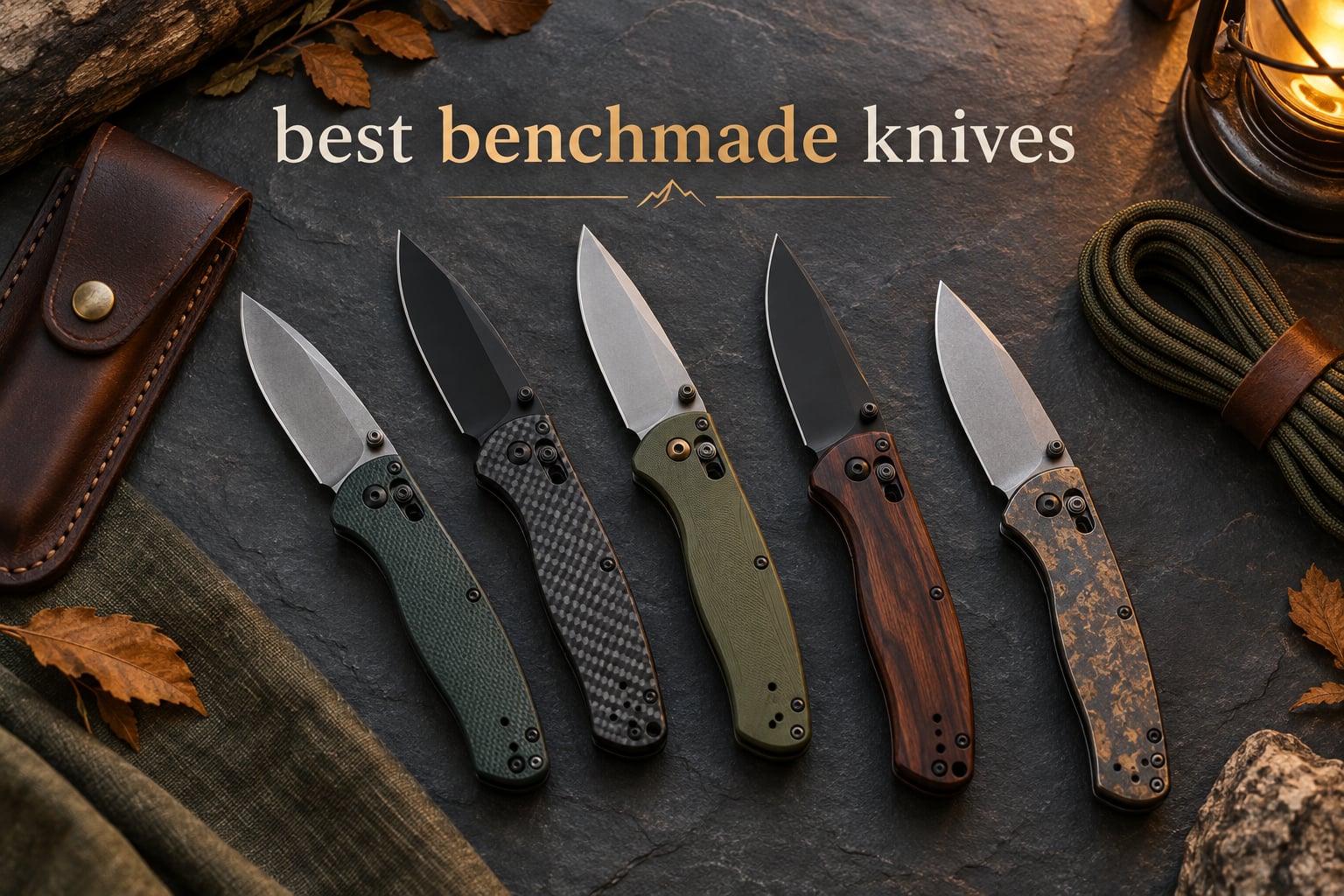
Best overall: Benchmade Bugout 535. Best EDC: Benchmade Mini Griptilian 556. Best classic folder: Benchmade Osborne 940. Best for big game: Benchmade Crooked River 15080-2. Best assisted opening: Benchmade Barrage 583. Best fixed blade: Benchmade Hidden Canyon Hunter 15017.
Picking the right Benchmade comes down to one question: what job is the knife doing for you. Someone dressing an elk and someone opening a package at a barbecue need very different blades, even though both carry the same badge and the same free lifetime sharpening service.
We spent 2026 putting this roundup of the best Benchmade knives through the only test that matters to a buyer, which is living with them. Our team compared all twelve models on carry weight, edge retention, blade geometry, action quality and the work each one actually earns in a day.
If you are still narrowing the field, our Misen knife picks and bushcraft knife guide cover the fixed-blade and budget ends of the market Benchmade sits above.
Table of Contents
Top 3 Picks for Benchmade Picks for 2026
12 Best Benchmade Knives (October 2026)
| Product | Specifications | Action |
|---|---|---|
 Benchmade Bugout 535 Benchmade Bugout 535 |
|
Check Latest Price |
 Benchmade Osborne 940 Benchmade Osborne 940 |
|
Check Latest Price |
 Benchmade SOCP Dagger 176BK Benchmade SOCP Dagger 176BK |
|
Check Latest Price |
 Benchmade Mini Griptilian 556 Benchmade Mini Griptilian 556 |
|
Check Latest Price |
 Benchmade Mini Bugout 533 Benchmade Mini Bugout 533 |
|
Check Latest Price |
 Benchmade Crooked River 15080-2 Benchmade Crooked River 15080-2 |
|
Check Latest Price |
 Benchmade Freek 560BK-1 Benchmade Freek 560BK-1 |
|
Check Latest Price |
 Benchmade Barrage 583SBK Benchmade Barrage 583SBK |
|
Check Latest Price |
 Benchmade Mini Barrage 585 Benchmade Mini Barrage 585 |
|
Check Latest Price |
 Benchmade Triage 917SBK Benchmade Triage 917SBK |
|
Check Latest Price |
 Benchmade Mini Crooked River 15085-2 Benchmade Mini Crooked River 15085-2 |
|
Check Latest Price |
 Benchmade Hidden Canyon Hunter 15017 Benchmade Hidden Canyon Hunter 15017 |
|
Check Latest Price |
1. Benchmade Bugout 535 – The Best Benchmade Overall
Benchmade Bugout EDC Knife, S30V Steel Blade (535GRY-1)
3.24 inch drop point
CPM-S30V steel
Grivory handle
1.85 oz
Pros
- Very light at 1.85 oz
- Deep discreet clip
- S30V holds an edge for months
- Secure grip when wet or gloved
Cons
- Handle flex from light steel liners
- Not a pry or batoning tool
- Some units need pivot and screw adjustment
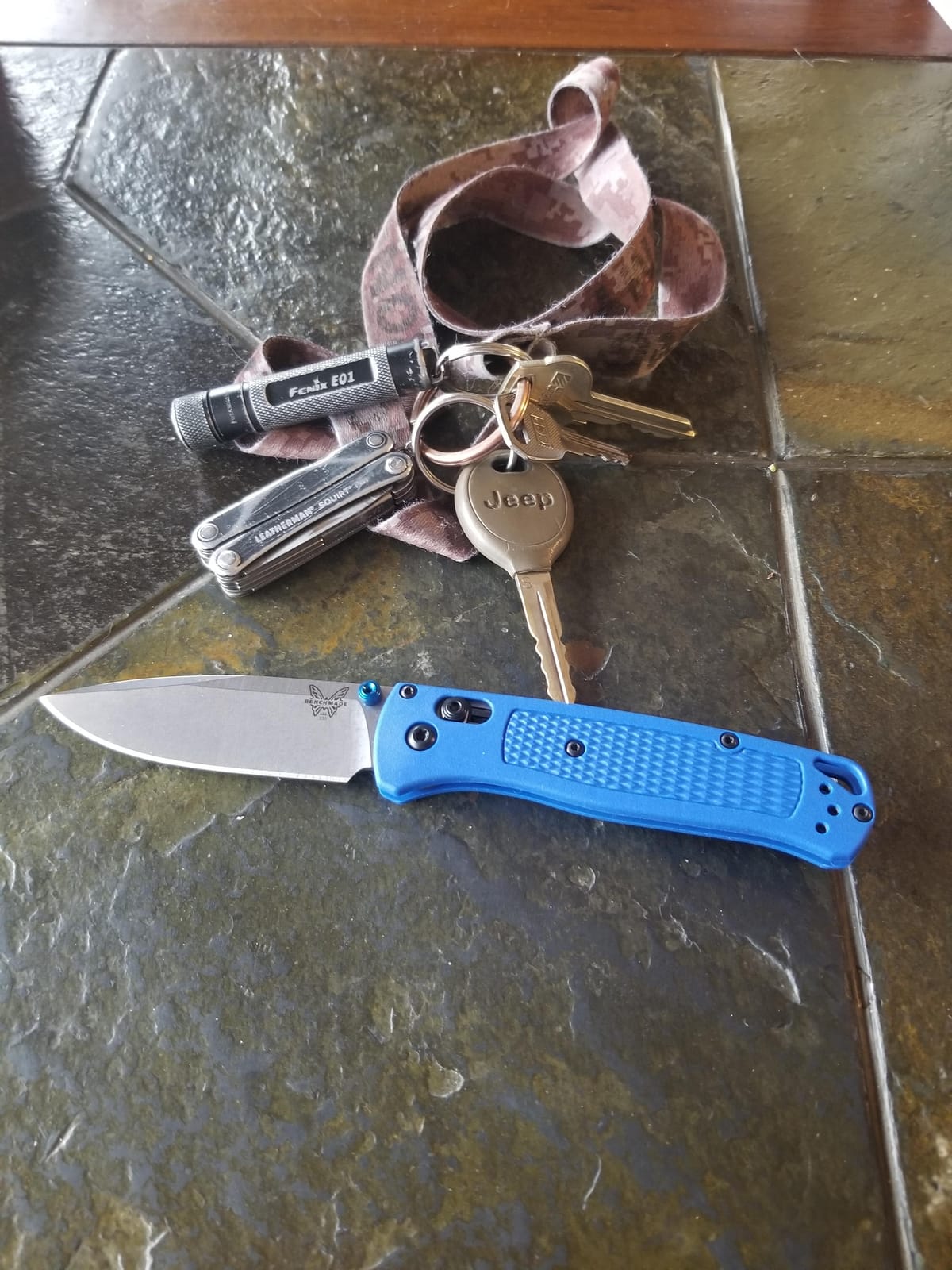
There is a reason the Bugout shows up in the hands of airline pilots and fish guides. At 1.85 ounces with a 3.24 inch drop point, it does more useful cutting per gram than anything else here, and it disappears into a front pocket so completely that you forget it is there.
The CPM-S30V blade is a powder metallurgy steel whose vanadium carbides keep the edge together longer than a conventional stainless. On cardboard and rope it held a working edge for weeks without a stone, and the drop point gave a curved belly plus a fine tip for detail work.
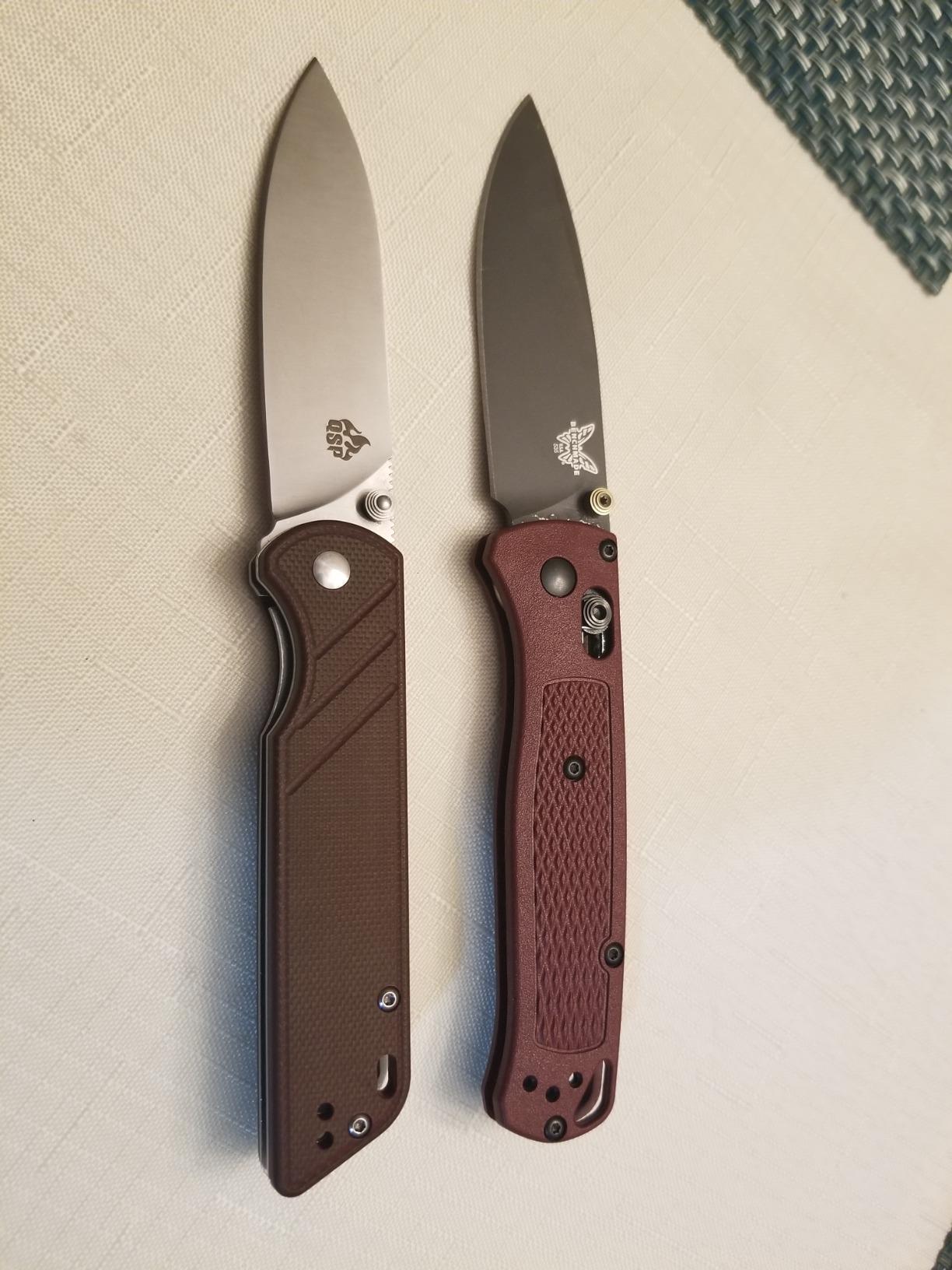
The AXIS lock is why it feels the way it does. The patented lock opens and closes one-handed with either hand and stays smooth after thousands of cycles instead of developing the wobble that spoils cheaper folders. Grivory, which is glass-filled nylon, holds a wet or gloved grip far better than smooth plastic.
What the Bugout is not is a hard-use tool. Steel liners and nylon scales give the handle visible flex under load, so this is not the knife to baton, pry a nail or chop with.
What to check before you buy the Bugout
Most complaints trace back to assembly variance, not design. Owners report a stiff pivot and screws that loosen after a few weeks, and a few recent runs have shown uneven blade centering. Five minutes with a quality driver and threadlocker on the pivot screw fixes the first problem permanently. Fit is the other thing: the handle is slim, and large hands can run out of palm.
Who the Bugout suits and who should skip it
It suits people who carry a knife every day and want something that stays out of the way, and it works as a backup alongside a larger folder. Skip it if knives get used as pry bars in your trade, or if you want one tool for the kitchen too. For rope and webbing the serrated Barrage is the better instrument, and if the premium over brands like Spyderco is the sticking point, our kitchen knife guide covers a lot of ground without it.
2. Benchmade Osborne 940 – The Best Classic EDC Folder
Benchmade Osborne EDC Knife, Green Aluminum Handle, S30V Steel Blade (940)
3.4 inch reverse tanto
CPM-S30V
Anodized aluminum
2.9 oz
Pros
- Long blade in a slim body
- Light at 2.9 oz
- Proven AXIS lock
- Textured aluminum grips better than polished metal
Cons
- Anodizing scratches and marks
- Pivot often arrives stiff
- S30V trails modern steels on edge retention
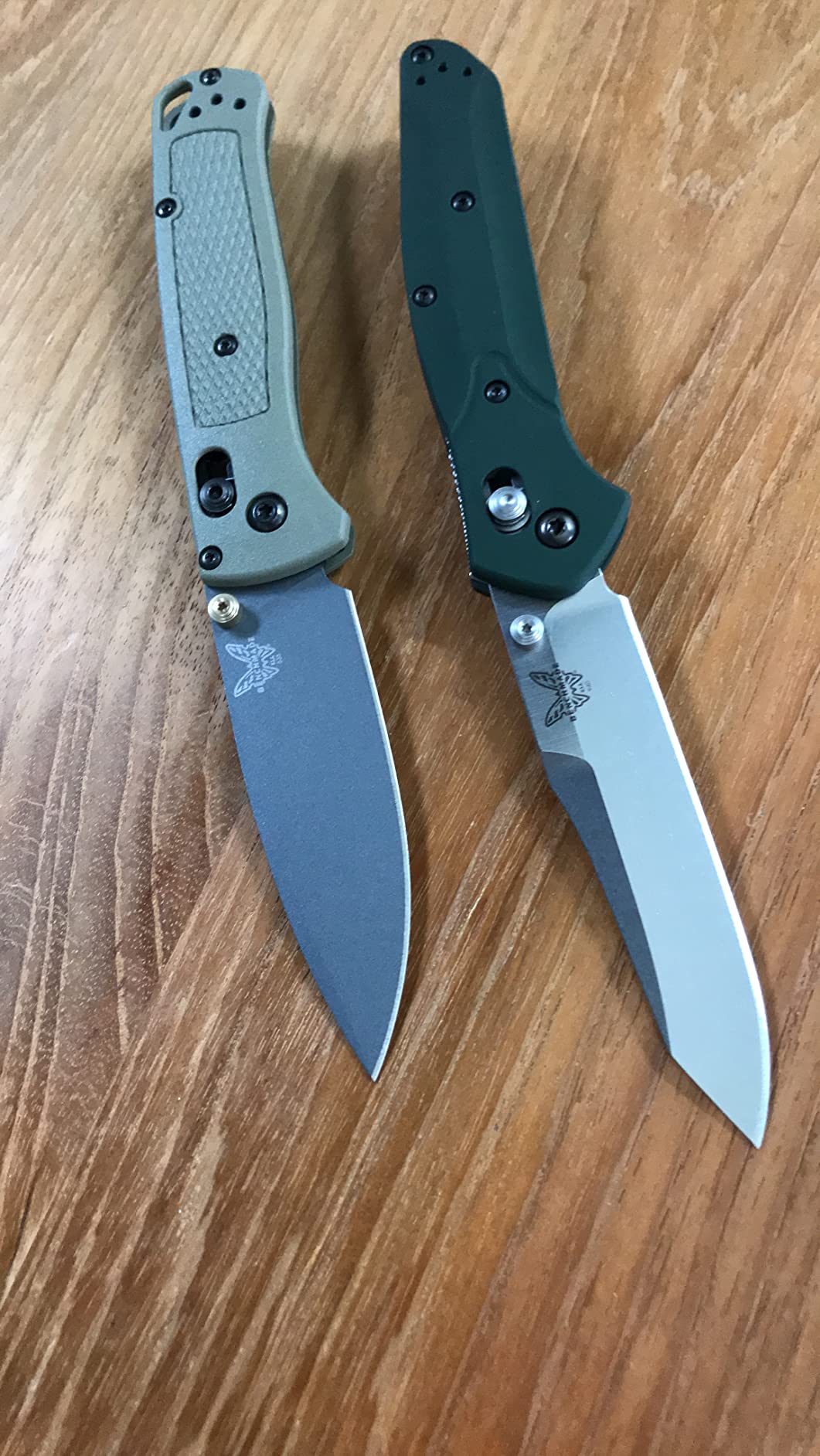
Designed by Warren Osborne and introduced in 2000, the 940 is the knife most people picture when they picture Benchmade. It carries a 3.4 inch reverse tanto in a body slim enough to vanish in a dress pocket, which is why it stays the default recommendation for a carry that still works hard on a weekend.
The reverse tanto has a shallow primary edge and a strong thick spine. That spine is the point: it resists the chipping that breaks thin blades when a tip lands on a shoelace or a stick. It took hard lateral pressure in our testing without deforming, at only 2.9 ounces.
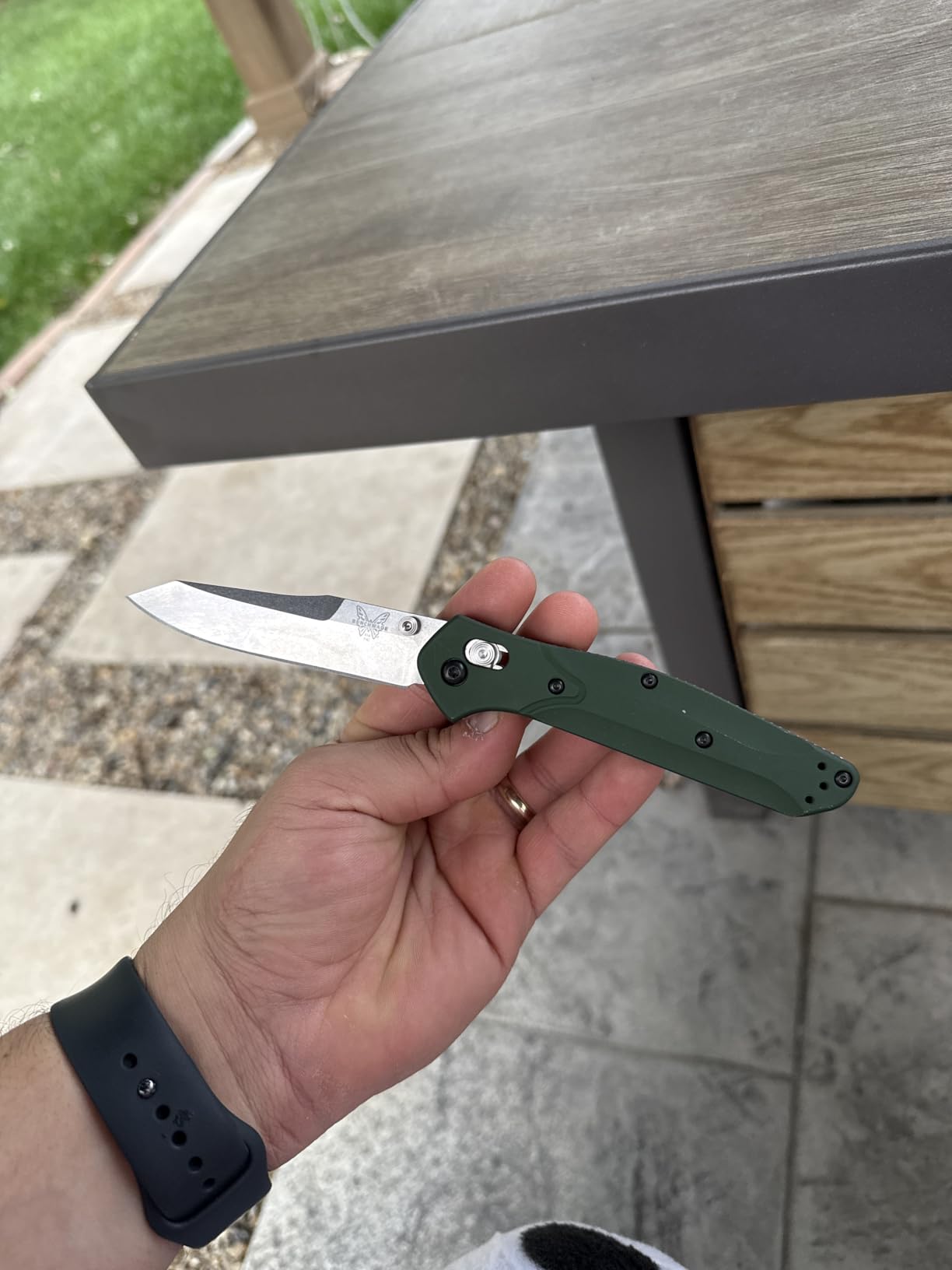
The anodized 6061-T6 handle is where this knife earns its reputation and where most criticism lands. Blasted texture grips a sweaty hand better than polished metal, and the handle is fully ambidextrous with a reversible clip. It is also the part that wears first, since blasted anodizing shows fingernail marks and mars from keys.
S30V is no longer the newest steel available, and reviewers are candid that it is not the last word on edge retention. For a general folder the difference is theoretical in daily use, and the AXIS lock has a service record spanning decades.
What to check before you buy the 940
Check the pivot tension before you carry it. A common report is a knife stiff enough to discourage one-handed opening, which is a two-minute fix with a driver but a poor first impression. Removable threadlocker stops it returning for the life of the knife. Then look at the finish if cosmetics matter to you, because this knife gets marked.
Who the 940 suits and who should skip it
It suits office carry, travel, and anyone who wants one knife that opens one-handed, cuts rope, opens packages and looks right with a collared shirt. Skip it if you need a folder you can pry with or if sweat and rain are constant. The Bugout is lighter and more discreet, and the Crooked River carries a much longer blade when skinning is the job.
3. Benchmade SOCP Dagger 176BK – The Best for Self-Defense
Benchmade SOCP Dagger Tactical Knife, 440C Steel Blade (176BK)
3.22 inch double edge
440C steel
Skeletontized handle
2.12 oz
Pros
- Dedicated puncturing dagger geometry
- Finger ring keeps the hand positioned
- Very light at 2.12 oz
- 440C is easy to sharpen and maintain
Cons
- 440C edges sooner than S30V
- Dagger shape is poor for slicing or prying
- Fixed blade with no folder convenience
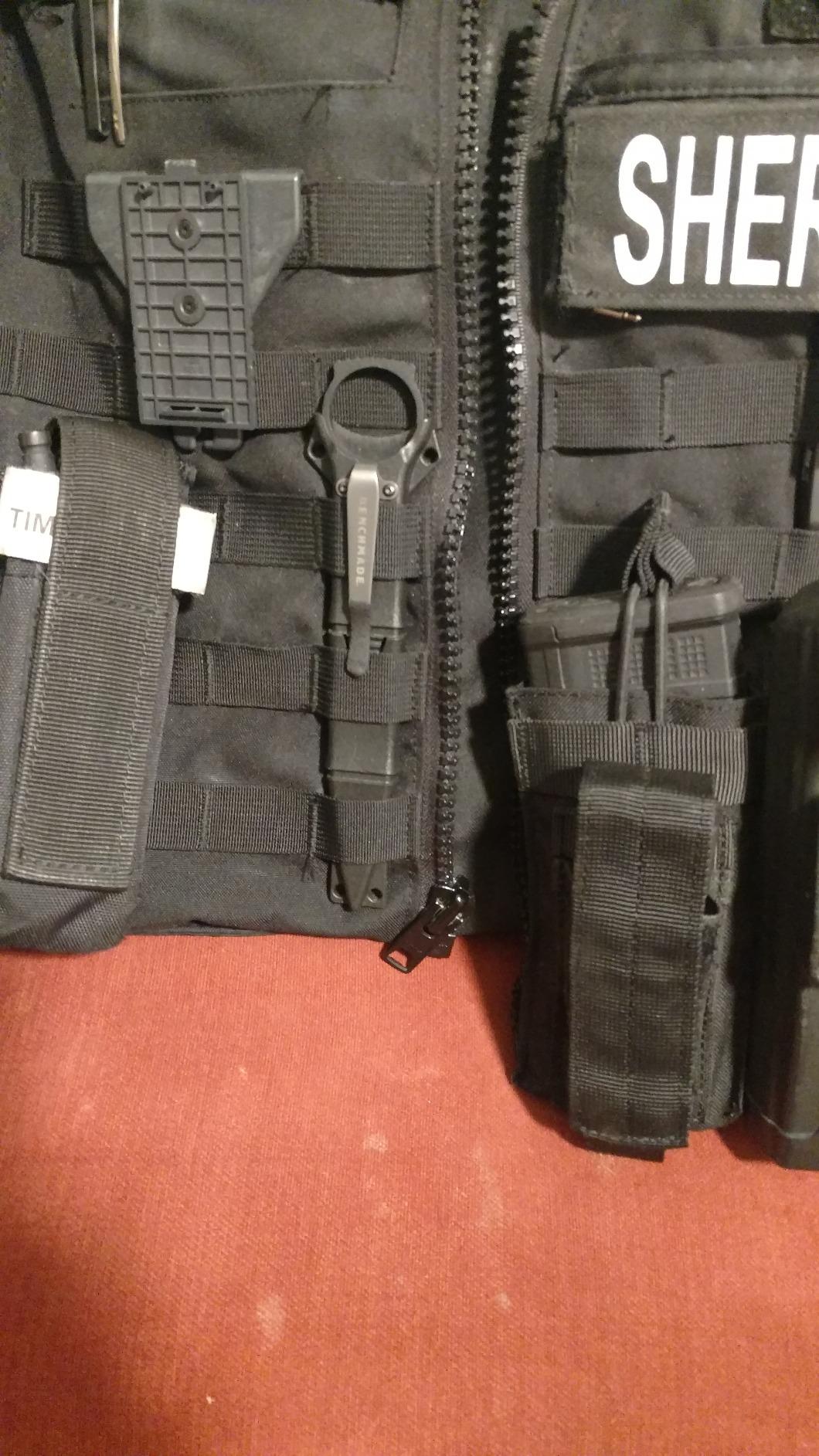
The SOCP is not an everyday carry knife, and pretending otherwise would be a mistake. It is a fixed blade with a 3.22 inch double-edge dagger, and the geometry exists for one purpose, which is puncturing. Symmetry gives a tip that concentrates force into a small area, reaching depth with less hand strength than a drop point needs.
The handle is milled from a single piece of 440C with a finger ring at the end. That ring is a retention device, not decoration: when both hands are on the knife it keeps the hand from sliding forward during a hard push. At 2.12 ounces with a low-profile MOLLE-compatible sheath, it disappears under a jacket.
440C is the most forgiving blade material in this roundup. It sharpens easily on a common stone, resists rust reasonably when dried after use, and is far less fussy to maintain than powder metallurgy steels. The tradeoff is edge retention, since it gives up its edge sooner than S30V or 154CM.
Users are blunt about where this stops working. A dagger will not pry, will not baton, and will not do controlled slicing because there is no belly to draw through a cut.
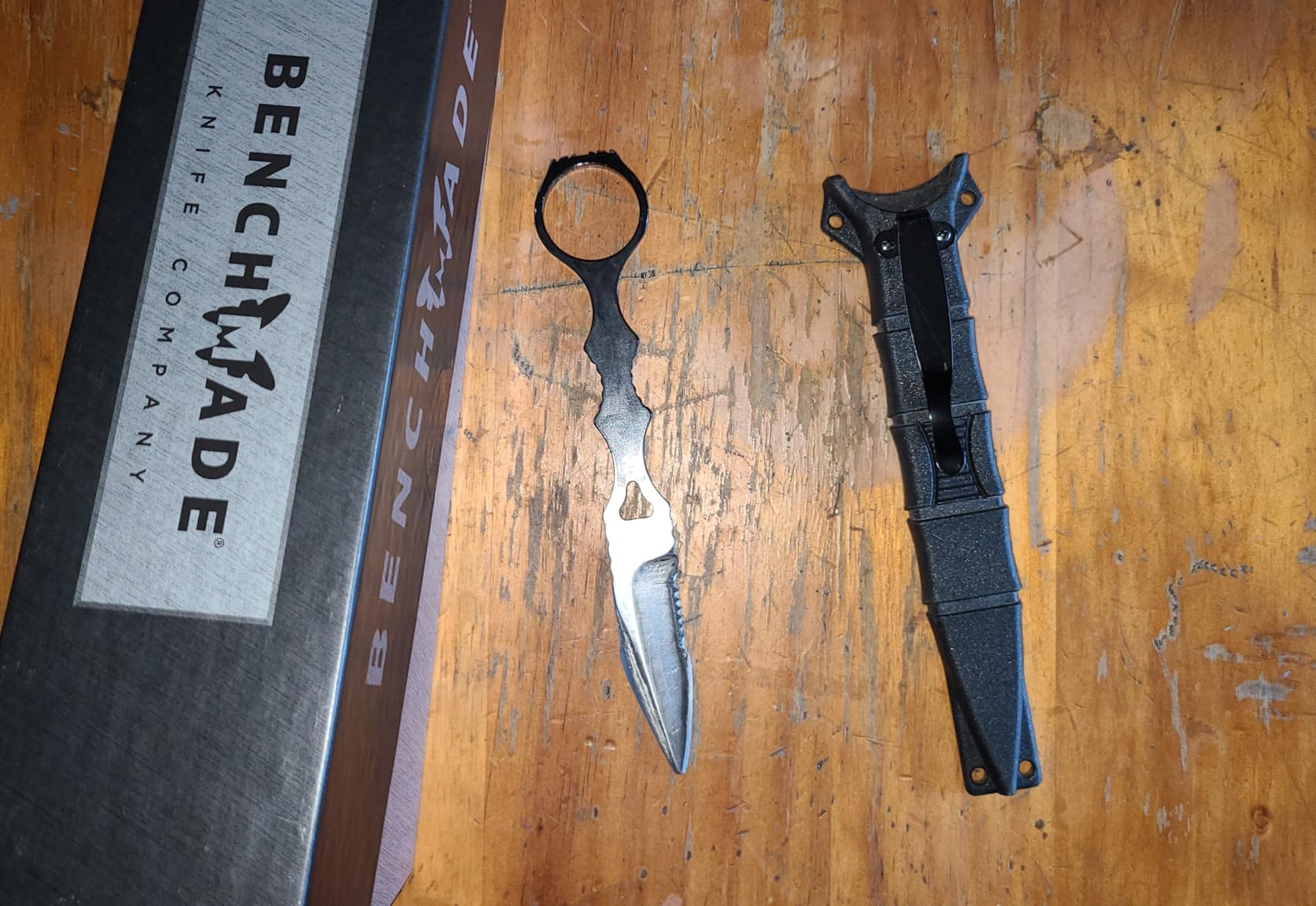
What to check before you buy the SOCP
Carry law is the first thing to verify, and it is not a footnote. A fixed blade is illegal to carry in many jurisdictions regardless of blade length, and rules on concealed fixed blades vary by state and city. Read your local regulations before the purchase, not after. Second, test the ring with your actual hand, since it is only safe if it is large enough for your grip and small enough to stop a slide.
Who the SOCP suits and who should skip it
It suits people who carry a fixed blade by choice and want the fastest penetration with the least wrist movement. Skip it for daily carry, for a kitchen, or for any work involving rope or food. A drop point folder is the better general tool, the Hidden Canyon Hunter is a fixed blade you can genuinely use for camp tasks, and if you want one knife for everything, choose between the Bugout and the Mini Griptilian.
4. Benchmade Mini Griptilian 556 – The Best Benchmade for Everyday Carry
Benchmade Mini Griptilian EDC Knife, S30V Steel Blade (556-S30V)
2.91 inch drop point
CPM-S30V
Grivory handle
2.81 oz
Pros
- Highest-rated folder in the group
- S30V resists corrosion for months
- Strong smooth AXIS lock
- Secure grip from jimping
Cons
- Aggressive jimping wears pocket linings
- Clip rides high and scuffs
- Pivot usually needs backing off
The Mini Griptilian earns the highest average rating of anything we tested, and the reason has little to do with excitement. A 2.91 inch drop point in CPM-S30V, 2.81 ounces, fully ambidextrous, with the same AXIS lock as the flagship folders. It works every day without asking for attention.
The drop point is the general-purpose answer to every task, which is why it recurs across this list. The curve gives a long belly for slicing, the spine stays thick enough to survive tip impacts, and the tip is fine enough for detail work. Our S30V edge needed three touch-ups across a month of daily use.
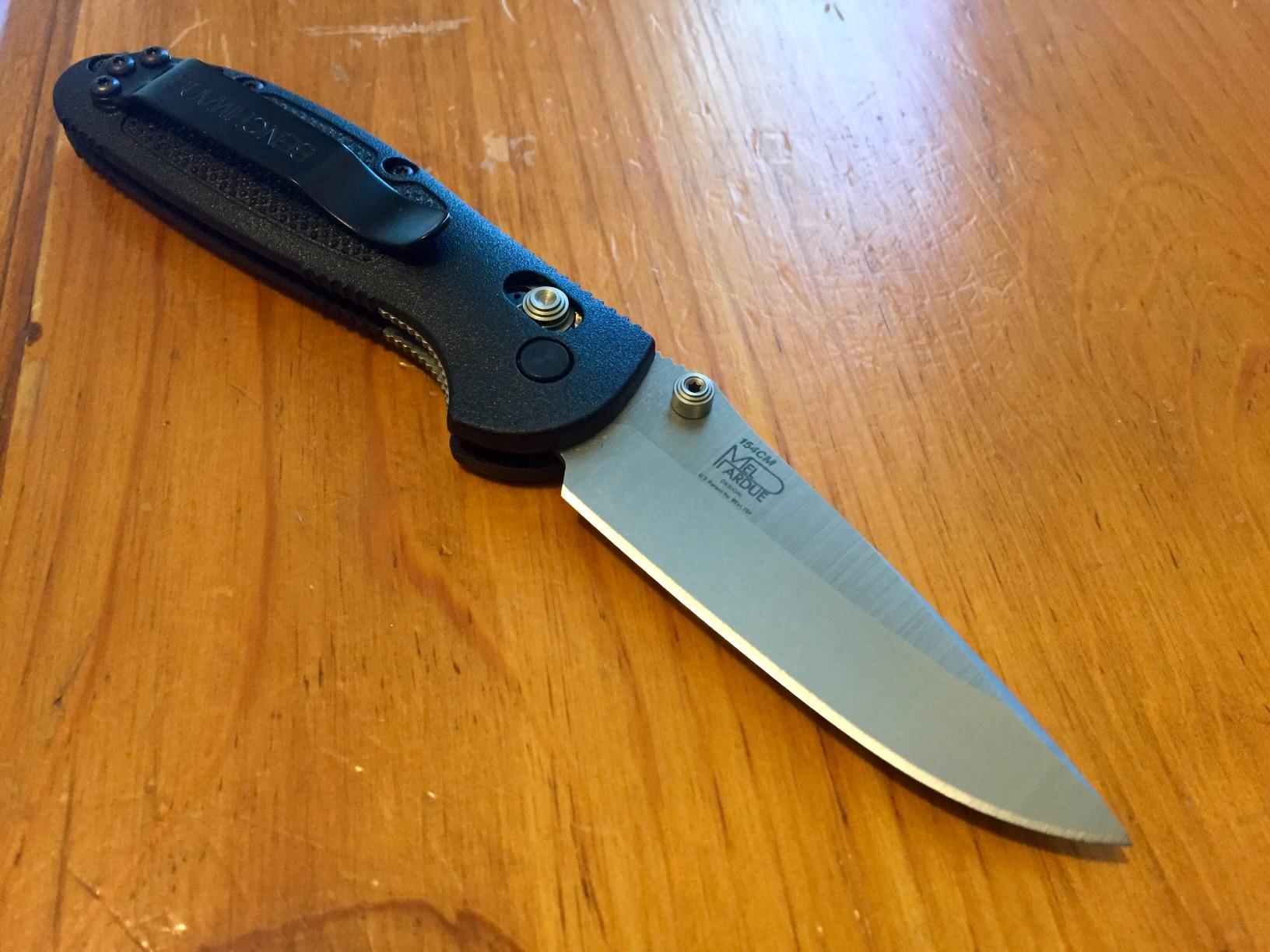
Ergonomics are why it sits at the top of the ratings. The Grivory scales are aggressively textured with jimping along the side where a braced index finger rests, giving one of the most secure small-handle grips in this roundup. The thumb studs are tactile enough to find blind, and the whole knife works one-handed with either hand.
The criticisms are about ownership, not capability. That jimping will abrade a cotton pocket lining, the slim clip rides high and scuffs, and the pivot is tight enough out of the box that backing it off is close to universal advice among owners.

What to check before you buy the Mini Griptilian
Test the size against your hand and your pocket. At 2.91 inches the blade suits the most common pocket knife length limits, but the handle is thin enough that large hands can feel cramped. Then inspect the jimping against your trousers, because in thin cotton or canvas it will wear through over months. If the geometry feels too small, the Freek 560 expands the handle considerably.
Who the Mini Griptilian suits and who should skip it
It suits the person who wants one knife and does not want to think about it. Skip it if your hands are large, if the work involves prying, or if you want a serrated edge for cord. The Mini Bugout is even lighter, the Barrage handles rope, and for a different feel the Crooked River gives you a 4 inch blade.
5. Benchmade Mini Bugout 533 – The Best Lightweight Backup
Benchmade Mini Bugout EDC Knife, S30V Steel Blade (533BK-1)
2.82 inch drop point
CPM-S30V
Grivory handle
1.5 oz
Pros
- Lightest Benchmade here at 1.5 oz
- Real 2.82 inch blade
- Deep carry clip stays discreet
- Action breaks in fast
Cons
- Handle flex at this size
- Too short for large hands
- Some units need blade centering
The Mini Bugout is what happens when the Bugout formula loses everything that is not the blade. At 1.5 ounces it is the lightest knife here, and the 2.82 inch CPM-S30V drop point is a real cutting tool rather than a token blade. It is the knife to put on a keyring and forget about.
That lightness is the entire brief. The deep carry clip holds it low in the pocket where it is nearly invisible, which matters to anyone who wants a knife on hand without a clip printing. The action starts tight and breaks in fast to a drop-shut close, and the slim handle still carries enough texture for a four-finger grip.
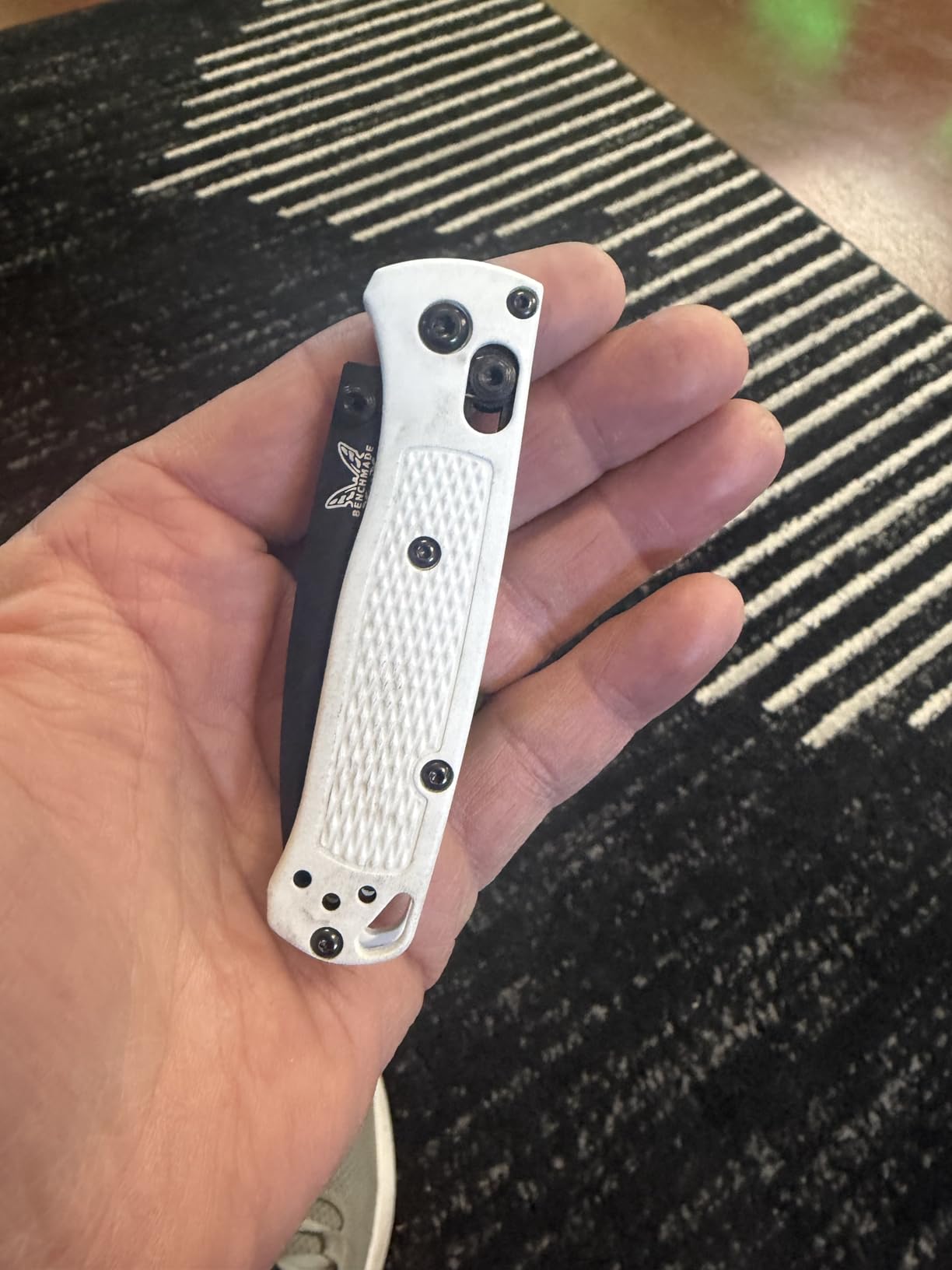
At this size the compromises are physical. The Grivory scales flex noticeably, fine for light general work and not fine for prying, and the handle is short enough that users with large hands report running out of palm. The deep clip is a highlight, but it is the listed included component rather than a full kit.
What owners praise is versatility. Carried as a backup, a neck knife, or a legal sub-3 inch folder where length rules apply, it does the small jobs a big folder is awkward for.

What to check before you buy the Mini Bugout
Check the length against your grip first. If you have large hands and prefer all four fingers around the handle, the Mini Griptilian or the Freek will serve you better. The Mini Bugout is built for a pinch grip, and the size complaints come from forcing a full fist grip on it. Check the out-of-box fit too, since centering varies more at this scale.
Who the Mini Bugout suits and who should skip it
It suits anyone who wants a knife that is genuinely weightless in a pocket, and anyone carrying a larger primary who wants a second blade for small tasks. Skip it if it will be your only knife, if you need a long blade for packages, or if handle flex bothers you under load. The Bugout at 1.85 ounces is stiffer while staying light.
6. Benchmade Crooked River 15080-2 – The Best for Big Game Hunting
Benchmade Crooked River Hunting Knife, S30V Steel Blade (15080-2)
4 inch clip point
CPM-S30V
Stabilized wood
5.41 oz
Pros
- Massive 4 inch blade with a strong piercing tip
- Factory edge stays sharp through abuse
- Wood scales resist moisture and odor
- Large handle suits two-handed work
Cons
- Too large and heavy for everyday carry
- AXIS lock can be stiff for average hands
- Pivot screw needs threadlocker
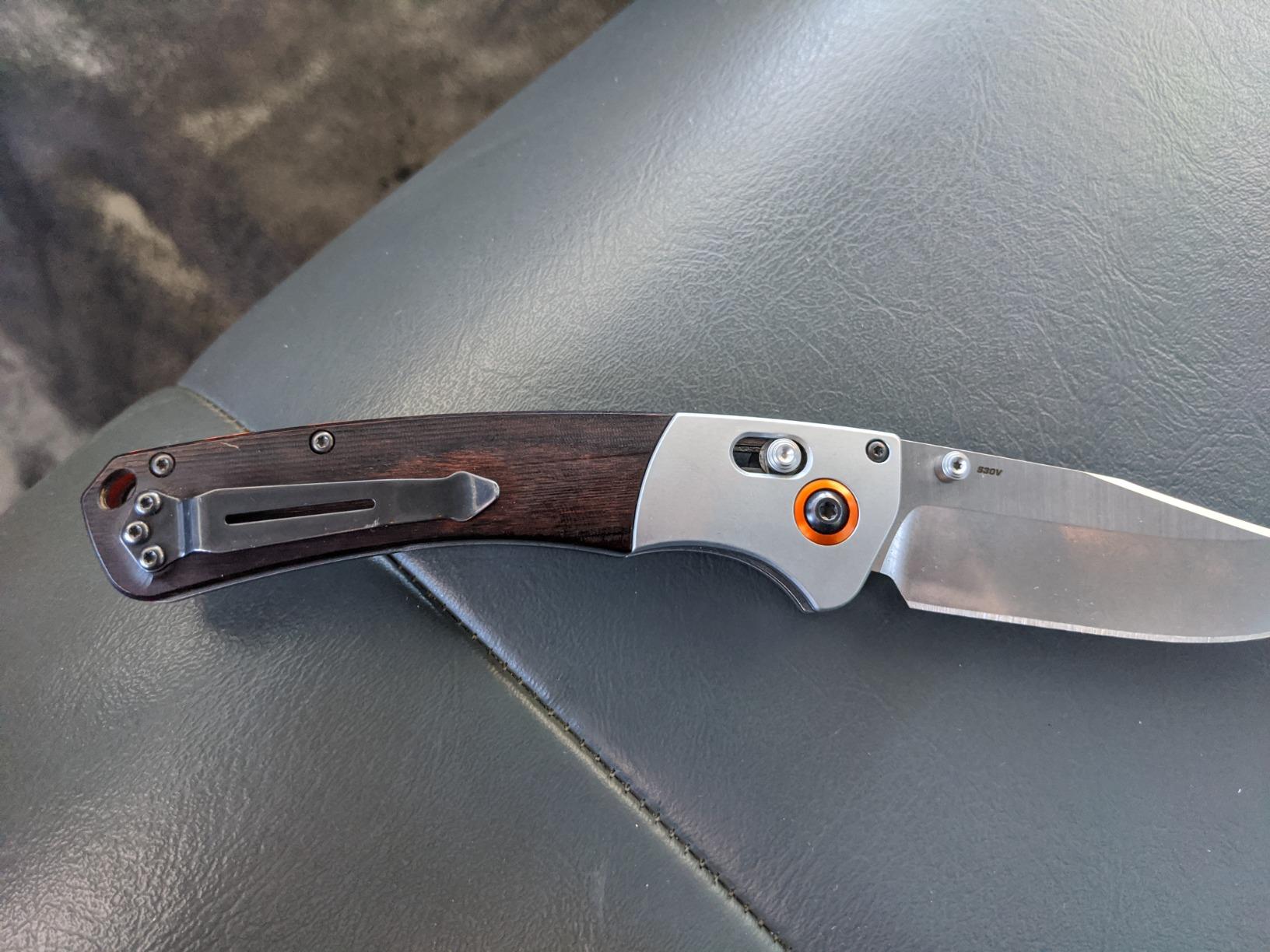
The Crooked River is a skinning knife. The 4 inch clip point gives a long curving belly for sweeping cuts along a backbone and a fine reinforced tip for opening the chest cavity, and the resin-stabilized wood handle shrugs off blood, rain and temperature swings.
At 5.41 ounces and 9.3 inches overall, this is a belt knife, not a pocket knife. The factory edge arrives dangerously sharp and stays that way through heavy processing, and the split arrow clip is reversible for either hand.
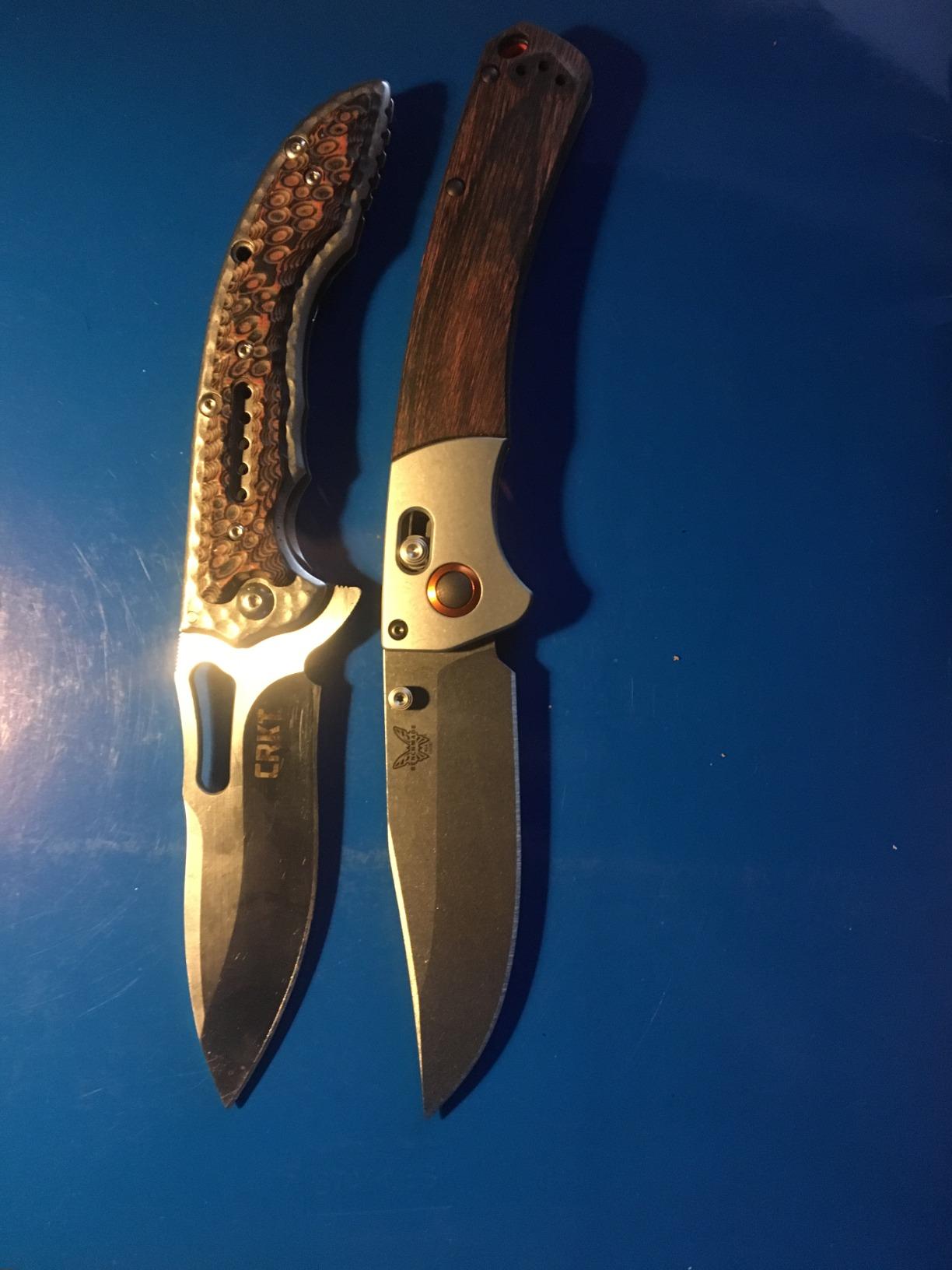
The honest issue is size, and it comes up in almost every review. Buyers with average hands find the big handle and initial lock stiffness awkward, and a good number move to the Mini Crooked River later. The grind is thick by design, so it wants real pressure rather than a few passes on a ceramic stone.
Pivot maintenance is the other recurring theme. Without threadlocker the pivot gradually works loose, which is a safety and a feel problem.
What to check before you buy the Crooked River
Try the handle in a full grip, ideally gloved, because a hunting knife that slips during a wet field dressing is worse than useless. If the grip feels too big, the Mini Crooked River gives you the same steel, scales and lock in a package you can carry in a daypack. Also decide honestly whether you need a folder at all, since a sheath is faster to draw and easier to clean.
Who the Crooked River suits and who should skip it
It suits hunters processing game in the field, butchers handling a full carcass, and anyone who wants a traditional wood-handled folder with modern lock internals. Skip it for daily carry, for small hands, and for anyone who wants a fine slicer, because the thick spine is correct for skinning and wrong for slicing vegetables or fish.
7. Benchmade Freek 560BK-1 – The Best for Large Hands
Benchmade Freek EDC Knife, M4 Steel Blade (560BK-1)
3.6 inch drop point
CPM-S30V
Dual-durometer handle
2.74 oz
Pros
- Fuller handle that still stays slim
- Strong smooth AXIS action
- Deep grooves fit big hands
- Scales grip without abrading
Cons
- Heavier and bulkier than the Bugout
- Lock can feel gritty before break-in
- Bold color scheme divides opinions
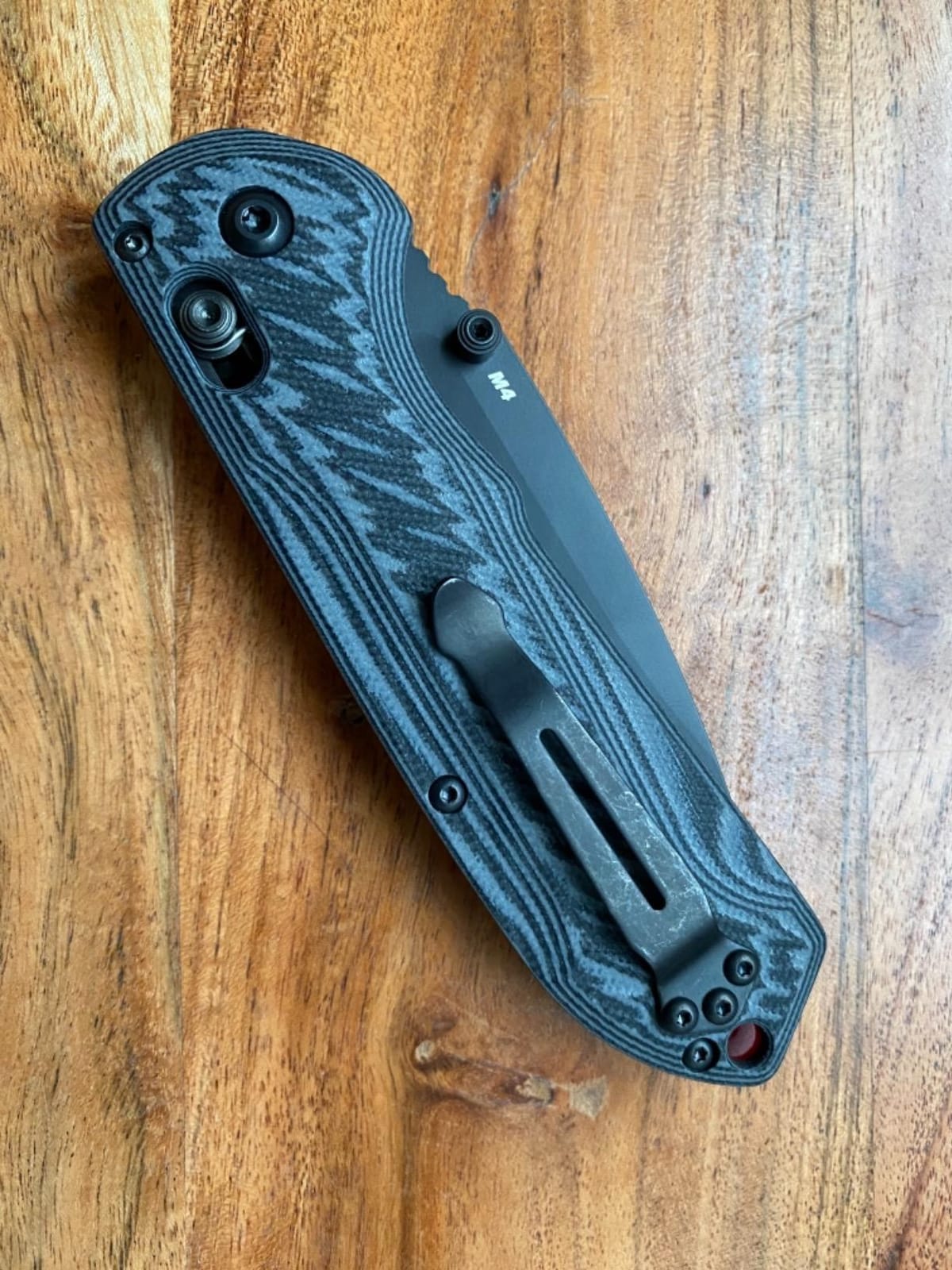
The Freek exists because a lot of people love the Griptilian design and cannot comfortably hold it. This is the expanded version, with a 3.6 inch drop point and a substantially fuller handle that still weighs only 2.74 ounces, and for large hands it is the most comfortable knife here by a wide margin.
The handle is the story. Dual-durometer Grivory and Versaflex means a rigid core with a grippier surface moulded in, and deep grooves where the fingers sit keep the knife planted when the task gets wet or slippery. It is ambidextrous with a reversible clip, and the AXIS lock matches every other folder here.
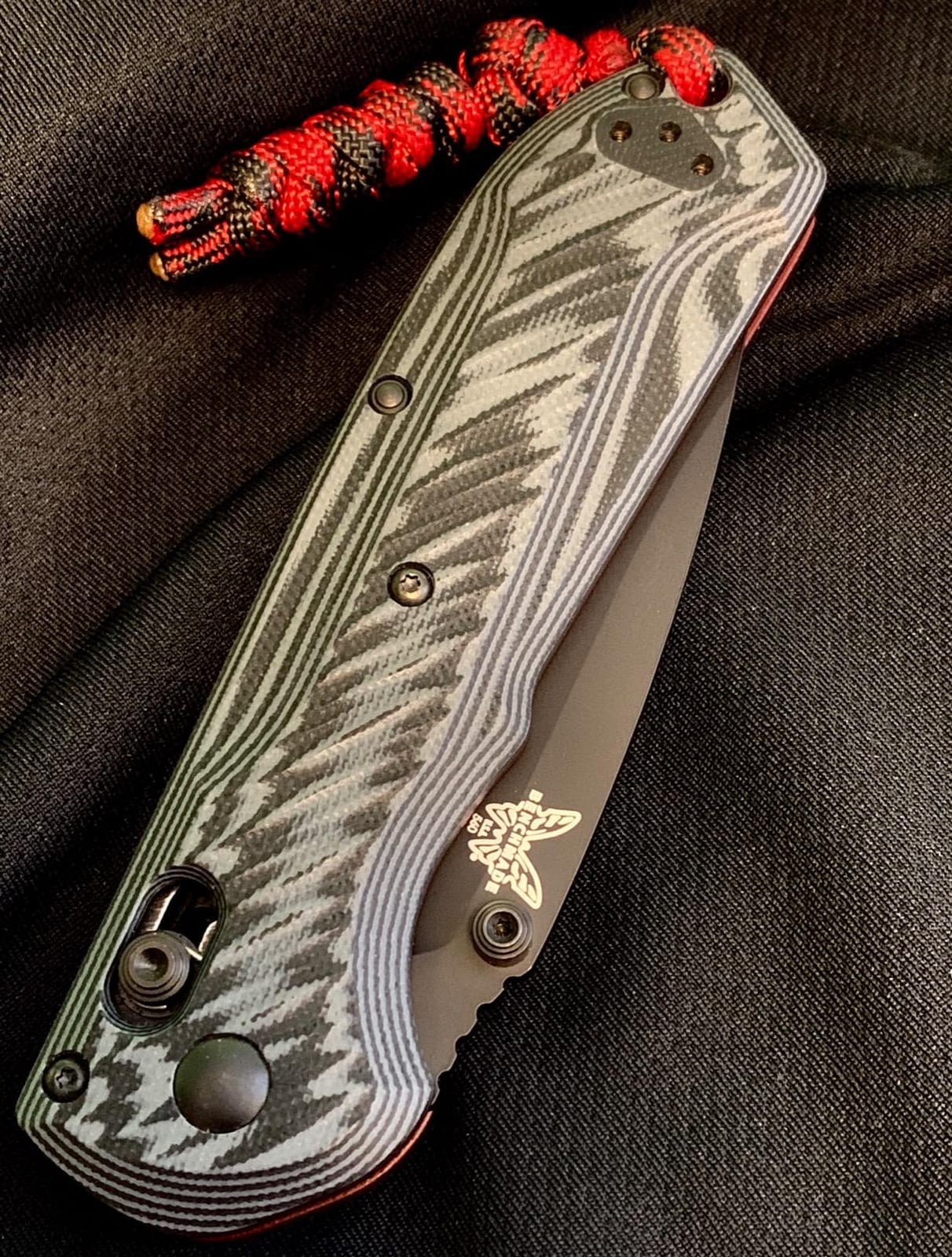
The blade is a 3.6 inch drop point in tough, edge-holding stainless steel with a coating that resists wear and staining, and users find it harder to chip and easier to sharpen than the S30V models.
The cost is bulk. At 2.74 ounces it is light on paper but noticeably larger in a pocket than the Bugout, the lock can feel gritty until broken in and oiled, and the black, gray and red scheme is the boldest in the lineup.
What to check before you buy the Freek
Check the depth of the grip on a work glove. This knife is designed around a four-finger hold, and if your habit is a two-finger pinch the extra handle length is wasted weight. The grooves run deeper than most, which is what some hands want and what others find abrasive. Second, oil the lock early, since a gritty feeling in the first few days is fixed with lock oil rather than more force.
Who the Freek suits and who should skip it
It suits people with larger hands who have been forcing a small Griptilian for years, and anyone who wants a 3.6 inch blade without carrying five ounces of knife. Skip it if discretion matters more than grip, if you want the absolute lightest folder, or if a bold color scheme is not for you. The Crooked River is the answer when you need a longer blade rather than a bigger handle.
8. Benchmade Barrage 583SBK – The Best for Rope and Webbing
Benchmade Barrage Tactical Knife, 154CM Steel Blade (583SBK)
3.6 inch serrated tanto
154CM steel
Valox handle
4.51 oz
Pros
- Assisted opening deploys fast and repeatedly
- High tip strength from tanto and 154CM
- Serrations excel on rope and synthetics
- Spine safety locks blade open or closed
Cons
- Bulky and conspicuous in a pocket
- Valox feels plasticky
- Assisted spring has enough kick to use the safety
- Lock needs break-in
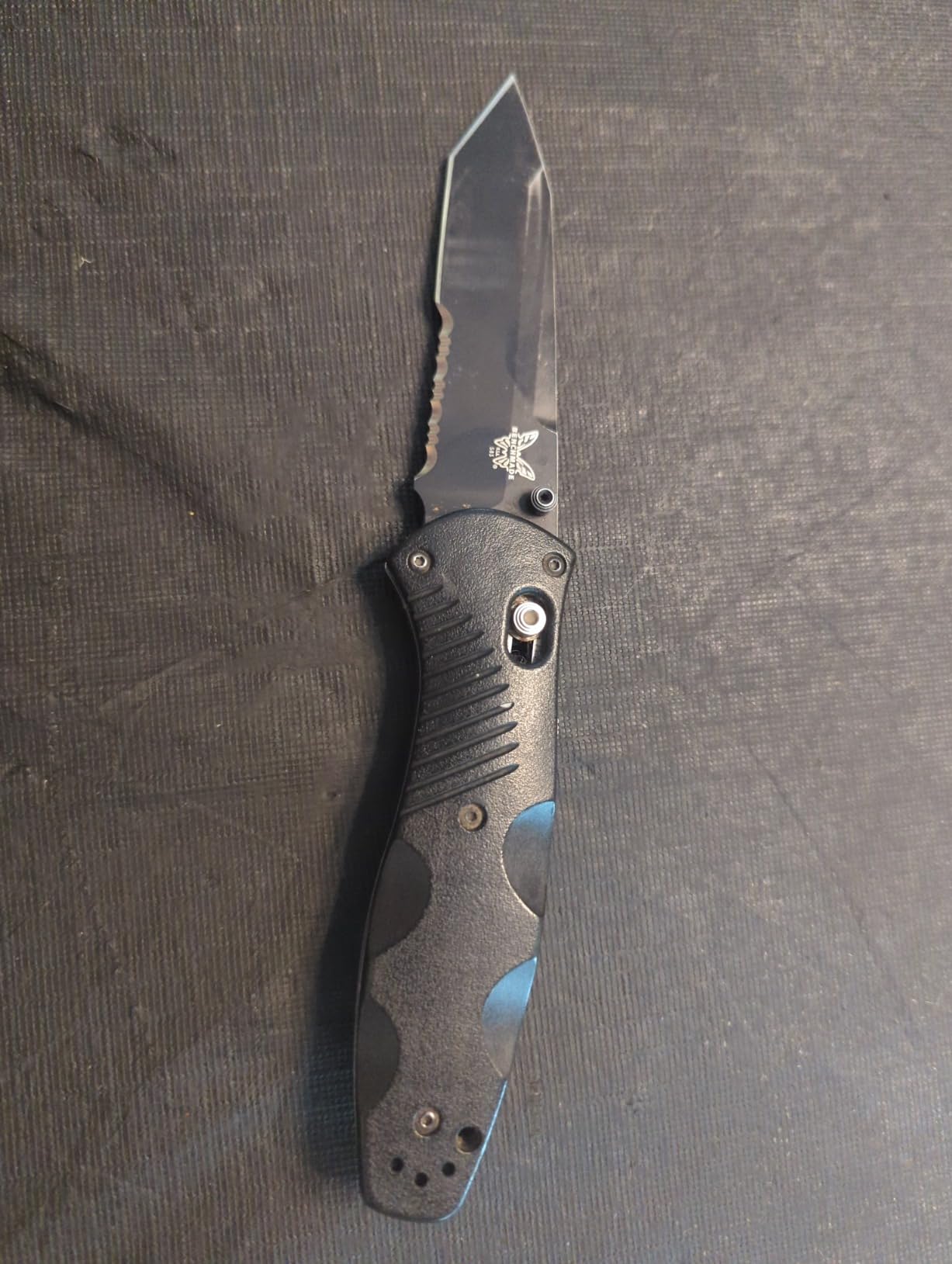
The Barrage is the first Benchmade family built on the AXIS Assist mechanism, and that mechanism is the reason to own it. A spring-loaded bar assists the blade past halfway and holds it open, so deployment takes one thumb motion with either hand and reaches full extension every time, with no let-up like a manual folder.
The 3.6 inch blade is 154CM at 58-61 HRC in a tanto profile, which is a very strong tip. Serrations run along most of the edge, and they are the right tool for rope, webbing, hose and synthetic cord, where a plain edge smears and a saw edge does not. The spine safety locks the blade open or closed.
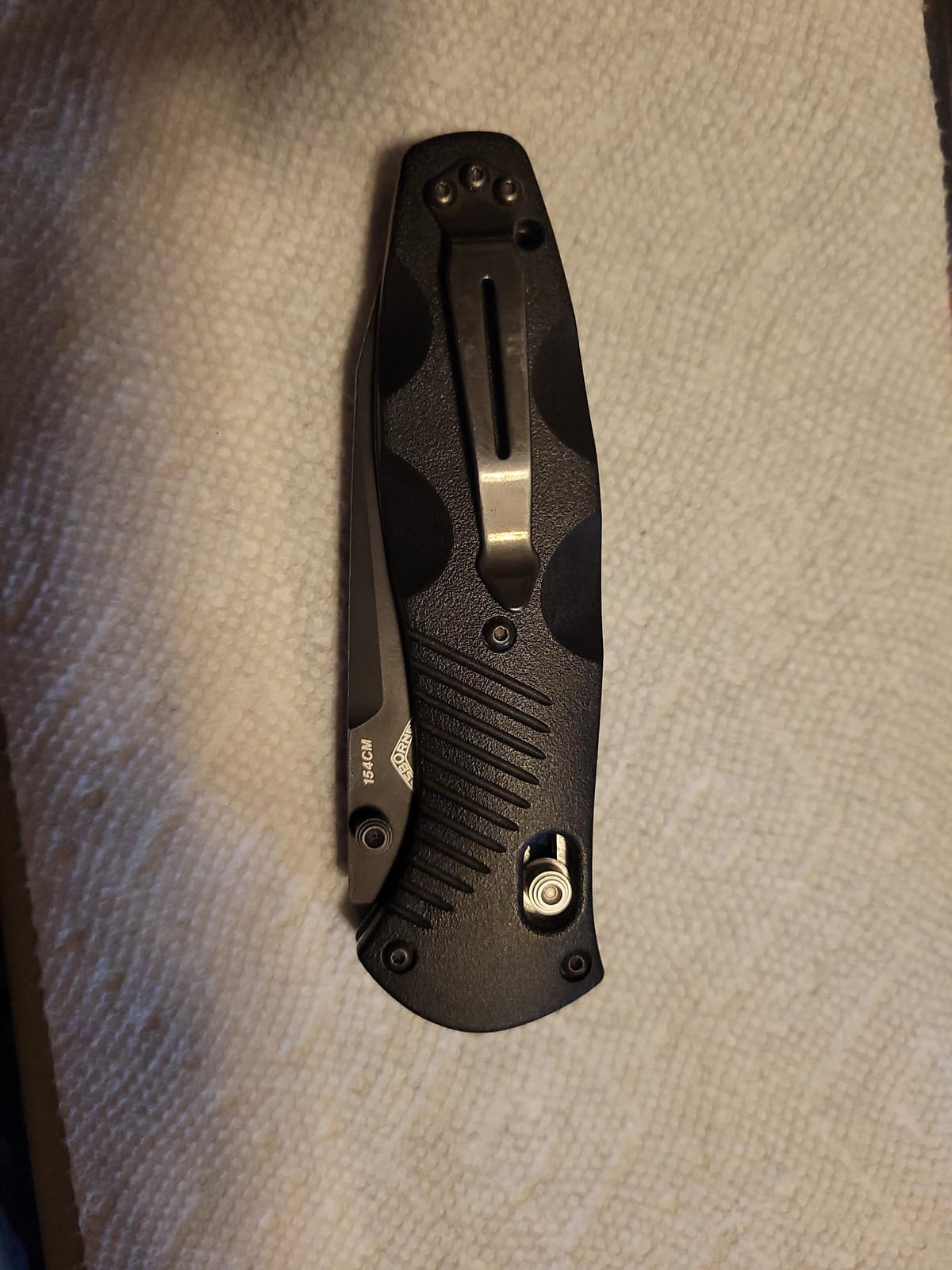
Handle and weight are the trade-off. Valox reinforced with steel liners stayed rigid in our testing, but it feels hollow next to aluminum, and many buyers prefer metal in a knife this size. At 4.51 ounces it is not a discreet everyday folder and it prints in a pocket in a way none of the slimmer models do.
Owners note that the assisted spring has real kick and that the safety slider should be used, especially when the knife lives in a bag with children.
What to check before you buy the Barrage
Check the carry profile honestly. If you want a folder that lives in a dress pocket and is invisible when you sit down, this is the wrong shape. The Barrage suits a belt, a work bag, a boat console or a vehicle. Check the safety slider too, and find it with a gloved thumb before you need it, because the assisted action is fast and loud the first several times.
Who the Barrage suits and who should skip it
It suits boaters, stagehands, field techs, first responders and anyone who cuts a lot of synthetic cord. Skip it for fine detail work, for discreet office carry, and for anyone who dislikes a plasticky handle. The Mini Barrage is the version that fits a jeans pocket, and the 940 is the calmer plain-edge choice.
9. Benchmade Mini Barrage 585 – The Best Assisted-Opening EDC
Benchmade Mini Barrage EDC Knife, 154CM Steel Blade (585)
2.91 inch drop point
154CM steel
Valox handle
3.4 oz
Pros
- Fast reliable assisted opening
- 2.91 inch blade takes a very sharp edge
- Discreet enough for jeans or slacks
- Owners report six to ten years of hard use
Cons
- Valox handle feels hollow
- Safety lock can arrive stiff
- Loud on first deployment
- Listings sometimes show the wrong edge
The Mini Barrage answers someone who wants the snap of an assisted opener in a knife that can live in a jeans pocket. The 2.91 inch 154CM drop point is short enough to stay discreet, AXIS Assist opens and closes it one-handed with either hand, and the spine safety slider locks it open or closed.
154CM is a tough, well-behaved stainless that takes a very sharp edge and holds it, and it is forgiving to sharpen at home. Owners with large collections describe the Mini Barrage as a keeper that has held up for six to ten years of daily work, and the short blade keeps it within common pocket knife rules.
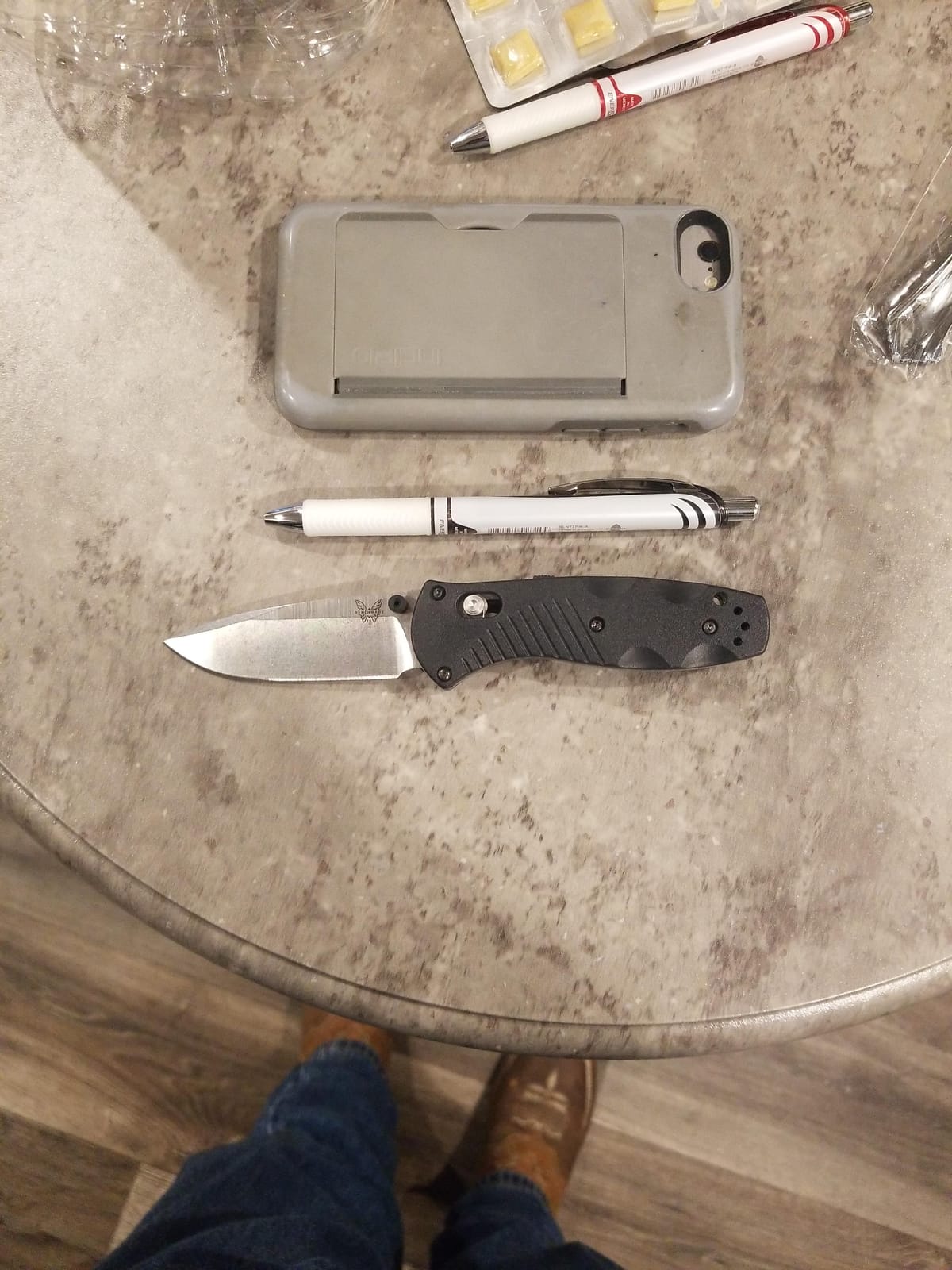
Complaints cluster around the handle and the arrival experience. Valox scales feel hollow to users who have handled aluminum, and the spine safety lock can arrive stiff enough to look jammed. The assisted action is also genuinely loud the first few times, which surprises people expecting a quieter thumb speed.
One practical note: listings for this model can show a partially serrated blade that does not always match what arrives. Check the edge configuration on arrival and confirm it with Benchmade customer service if it is not what you ordered.

What to check before you buy the Mini Barrage
Try the safety slider before the blade is dirty, tired or wet, because it is a mechanism you want working smoothly on day one. Work it open and closed twenty times with fresh lock oil and the stiffness almost always disappears. Check the handle feel against your preference too, because if hollow polymer bothers you the full size Barrage uses the same mechanism with a different handle.
Who the Mini Barrage suits and who should skip it
It suits carry where you want one-handed speed without a large footprint, and anyone who prefers a plain edge for general tasks but still wants the reach of an assisted opener. Skip it if handle materials matter to you, if you want the lightest possible folder, or if you prefer a slim manual action. For discreet everyday carry the Bugout is easier to live with all day.
10. Benchmade Triage 917SBK – The Best for First Responders
Benchmade Tactical Triage Tactical Knife, S30V Steel Blade (917SBK)
3.48 inch serrated drop point
CPM-S30V
G10 handle
5.28 oz
Pros
- Built-in glass breaker and rescue hook
- G10 handle impervious to moisture
- Serrated coated blade cuts webbing
- Robust AXIS lock construction
Cons
- Heaviest folder here at 5.28 oz
- Serrated edge poor for fine slicing
- Rescue features are useless to most buyers
The Triage is the most specialized knife here, built for a job description rather than a lifestyle. The 3.48 inch coated CPM-S30V drop point carries a serrated edge sized for seatbelt webbing and rope, and the contoured black G10 handle is resin-soaked fiberglass that is impervious to moisture and temperature swings.
The detail that defines it is moulded into the handle: a glass breaker at the butt and a rescue hook beneath it. Both are there for vehicle extrication and emergency work, both are useless to anyone not doing that work, and together they are the entire reason to buy this knife.
At 5.28 ounces it is the heaviest folder we tested, and that weight is noticeable in a pocket across a full shift. The serrated edge rules out fine slicing, and some units arrive with stiff action that needs oiling. Reviewers consistently praise the build quality and the material choice, since G10 does not soften, swell or become slick in the rain.
What to check before you buy the Triage
Ask yourself honestly whether you will ever use the glass breaker and rescue hook. If not, you are carrying 5.28 ounces and paying for two features that stay in your pocket untouched. If the answer is yes, check the weight against how long the knife stays on your body, because a 5.28 ounce folder on a duty belt all day is fine while a shirt pocket is uncomfortable by afternoon.
Who the Triage suits and who should skip it
It suits safety officers, search and rescue staff, emergency medical technicians and anyone who genuinely works around vehicles and extrication. Skip it for general everyday carry, for kitchen or food work, and for fine cutting of any kind. The Barrage handles webbing with less weight, and the Hidden Canyon Hunter is the better fixed blade if the job is outdoors.
11. Benchmade Mini Crooked River 15085-2 – The Best Classic-Style Folder
Benchmade Mini Crooked River Hunting Knife, S30V Steel Blade (15085-2)
3.4 inch clip point
CPM-S30V
Stabilized wood
3.29 oz
Pros
- Classic wood look with a modern AXIS lock
- More belly for slicing than the 940
- Smooth safe one-handed action
- Free replacement clip from Benchmade service
Cons
- Wood scales feel plasticky next to metal
- Not for batoning or chopping
- Hard to justify against cheaper folders
- Deep carry clip sold separately
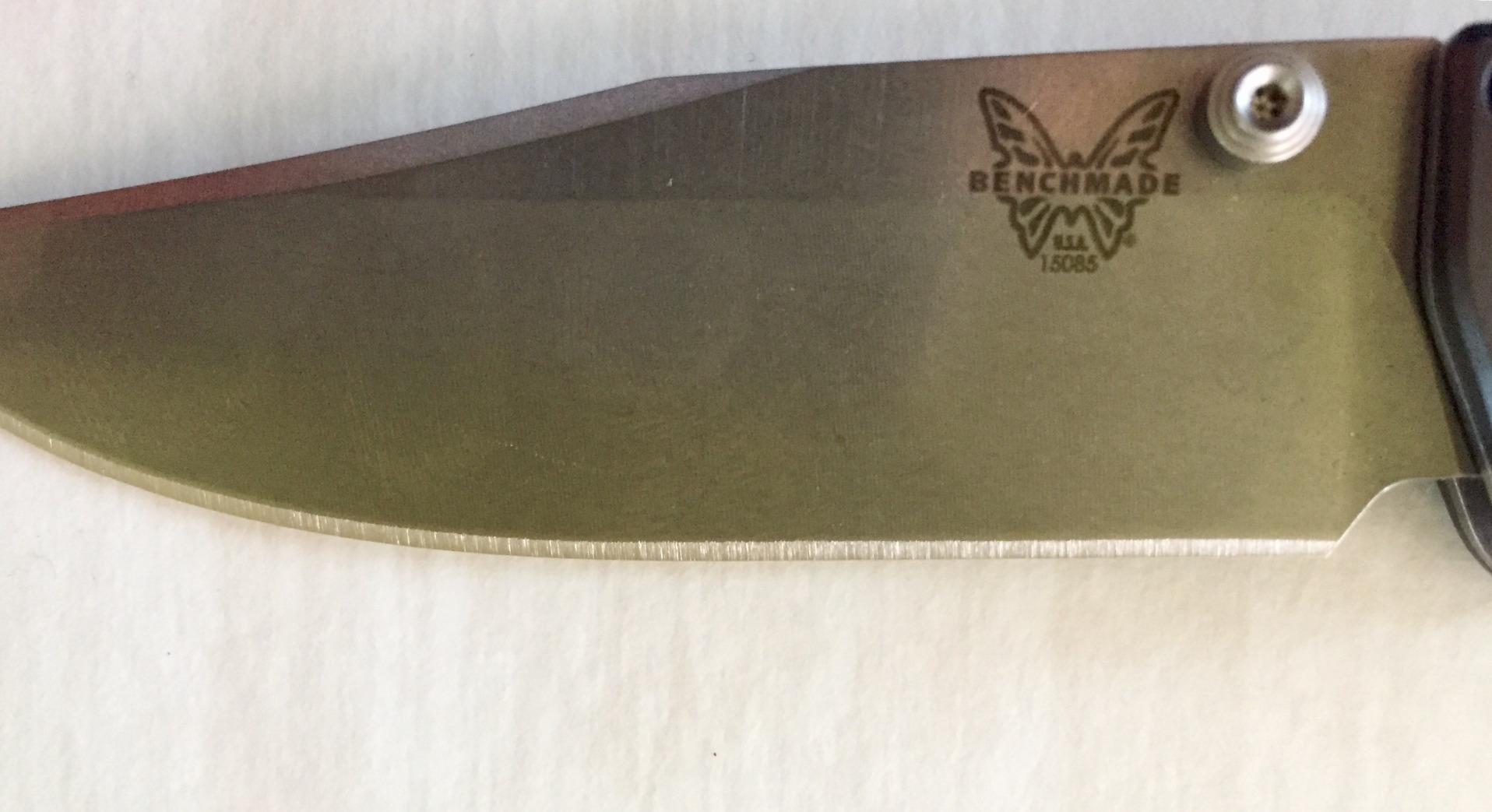
The Mini Crooked River is the full size Crooked River’s answer to the problem it created, which is being too large to live with. It keeps the resin-stabilized wood scales and clip point hunting profile, and it fits a pocket at 3.29 ounces with a 3.4 inch blade.
It is essentially the Osborne 940 footprint with a clip point instead of a reverse tanto, and that change adds belly, meaning more usable slicing edge on the same amount of steel. Owners who love the 940 but find its geometry too assertive end up here, and the S30V clip point arrives sharp and holds a working edge well.
Where sentiment splits is the handle and the math. Stabilized wood looks traditional and resists elements, but some users find it less integrated beside a metal handle, and the aesthetic does not translate into a cutting advantage. Blunter still, several reviewers struggle to justify the cost against folders with similar function for far less.
Service is a genuine bright spot. Benchmade customer service supplied a replacement deep carry clip at no charge, which says a lot about how the lifetime warranty is treated in practice. Note that the deep carry clip is an accessory rather than standard.

What to check before you buy the Mini Crooked River
Decide whether the styling is buying you anything, because that is the criticism owners voice most and it deserves a fair hearing. If you only care about cutting performance, the 940 gives you the same steel and lock for a similar footprint. Also check the clip position you will actually use, since the stock clip is a reversible split arrow and tip-up deep carry requires the accessory.
Who the Mini Crooked River suits and who should skip it
It suits hunters who want wood scales in a modern lock folder, and anyone moving up from the full size Crooked River who found 5.41 ounces too much to carry. Skip it if you need a hard-use blade, if you are highly value-focused, or if you prefer something slimmer for dress wear. Our bushcraft knife picks cover the fixed-blade side of the market.
12. Benchmade Hidden Canyon Hunter 15017 – The Best Fixed Blade for EDC
Benchmade Hidden Canyon Hunter Hunting Knife, S30V Steel Blade (15017)
2.79 inch drop point
CPM-S30V at 58-60 HRC
Stabilized wood
2.81 oz
Pros
- Very sharp out of the box
- Well balanced and ergonomic
- Light 2.81 oz for daily carry
- Leather sheath holds up to dirt and concrete
Cons
- 2.79 inch blade is smaller than buyers expect
- Leather less secure than Kydex
- No clip
- so it must be drawn
The Hidden Canyon Hunter is a fixed blade built for people who would rather not carry a folder at all. The 2.79 inch satin CPM-S30V drop point is hardened to 58-60 HRC for edge retention, arrives razor sharp, and the 6.42 inch profile with stabilized wood scales is light and balanced enough to wear daily.
It comes with a full grain leather sheath, the traditional choice for a blade worn from a belt or a neck cord. Owners report the leather holding up well to dirt and concrete, and a fixed blade is quicker to draw and simpler to clean than any folder.

The recurring surprise is blade size. Buyers read the model name, picture a larger hunter, then meet 2.79 inches and recalibrate. It is a compact everyday fixed blade, not a skinner, and the correct comparison is the SOCP dagger in weight and carry terms, with far better general cutting ability.
Second is retention. Leather is comfortable and quiet but not as secure or adaptable as molded Kydex, and with no clip you always draw from a sheath rather than flicking it open. Fixed blades also fall under different carry rules in many places, so check local regulations first.

What to check before you buy the Hidden Canyon Hunter
Check carry law before sheath and before anything else, because fixed blades are restricted in a number of jurisdictions and the rules on concealed fixed blades are not uniform. Second, decide whether a fixed blade suits your routine, since some find drawing from a sheath effortless while others prefer one-handed folder deployment. If you like the blade but want more retention, a Kydex sheath solves that at once.
Who the Hidden Canyon Hunter suits and who should skip it
It suits people who want a Benchmade without a lock, without a clip springing across a trouser seam, and with the simplicity of a blade that cannot fail closed. Skip it if you need one-handed speed, if you carry where fixed blades are restricted, or if you expect a 4 inch skinning blade. For food prep the best santoku knives are a separate and better tool.
How to Choose the Right Benchmade Knife
Every Benchmade here is a good knife, so choosing wrong is a mismatch rather than a quality failure. Five questions will get you there faster than any spec sheet.
1. What is the job? A drop point is the general answer: the Bugout, Mini Griptilian, Freek and Mini Bugout all cover boxes, cord, fruit and daily work. A clip point such as the Crooked River covers skinning and game processing. A serrated tanto such as the Barrage covers rope and synthetic webbing. A dagger such as the SOCP covers puncturing and nothing else.
2. How much steel do you need? Three steels appear here. CPM-S30V is the all-rounder, holding an edge for months and resisting corrosion. 154CM is tougher and takes a sharper edge but gives it up a little sooner. 440C is the most forgiving to sharpen and the least retentive. None needs a sharpening board to be a pleasure to own.
3. What shape fits? Drop points slice and do everything adequately. Reverse tanto, as on the 940, has a strong spine and a shallower edge that resists hard use. Clip points give a piercing tip and a deep belly for field work. Tanto points are thick near the tip. Serrations cut rope and cord and are poor for anything delicate.
4. Which lock and handle? The AXIS lock is why most people stay with Benchmade, because it opens and closes one-handed with either hand and has a service record spanning decades. Grivory stays grippy and hides wear, aluminum is lighter but marks, Valox is light and strong but hollow feeling, and G10 is moisture-proof and stable in any climate.
5. How much do you want to carry? The range runs from 1.5 ounces on the Mini Bugout to 5.41 ounces on the Crooked River. If you will not carry it, you will not use it, and the heaviest knife in a drawer is the most expensive one you own.
Two practical points. For southpaw carry, every knife here is ambidextrous with a reversible clip and an AXIS lock that works with either hand, so hand dominance is not a filter. On automatics and out-the-front doubles, carry law is stricter than most people expect and varies by state, so verify local rules before buying a spring-assisted or double-action model.
Finally, the ownership story. Every knife here carries a lifetime warranty and Benchmade’s LifeSharp service, which returns the knife to the factory for free resharpening for as long as you own it. Benchmade is built in Oregon City, Oregon, and that servicing record is a real difference against cheaper brands where a dull knife is simply your problem. On sharpening, our nakiri guide covers edge angles if you want to do it yourself.
Frequently Asked Questions
Which Benchmade knife is considered the best?
The Benchmade Bugout 535 is the most widely considered best overall. It weighs 1.85 ounces, carries a 3.24 inch CPM-S30V drop point blade and uses the ambidextrous AXIS lock. For a compact everyday carry, the Mini Griptilian 556 has the highest average rating in our group at 2.91 inches and 2.81 ounces. The Osborne 940 is the classic gentleman-carry folder, the Crooked River 15080-2 is the best big game pick, and the Barrage 583 is the best assisted-opening option.
Do Navy SEALs use Benchmade knives?
Benchmade’s tactical models, including the SOCP dagger tested in this roundup, are widely associated with military and law enforcement use, and the SOCP sits in the Camping Fixed-Blade and Tactical categories on Amazon. We could not verify any specific unit-level issue or endorsement, so treat broad claims about who carries what as community lore rather than fact. The practical takeaway is that the SOCP, the Barrage and the Triage are built to tactical specifications, while the Bugout and the Osborne are everyday carry folders.
Which Benchmade OTF knife is considered the best?
Benchmade’s out-the-front double-action offerings are a different category from every folder in this roundup, and we did not test one. Among them, the 9400 Auto Osborne is the flagship double-action model, with the manual-action Osborne 940 in this roundup as its sibling. Before buying any out-the-front or automatic knife, check your local carry law, because these are restricted in more jurisdictions than folders and rules differ by state.
What is the holy grail of pocket knives?
There is no single agreed answer, and the enthusiasts who argue about it rarely agree on the same model. Among the knives in this roundup, the most commonly cited grail-tier Benchmades are the Crooked River 15080-2 for build quality and edge, the Osborne 940 for its decades-long design record, and the Bugout 535 for being the most copied folder of its generation. Within the buying community, grail status is a matter of taste and availability as much as performance.
What was the Benchmade controversy?
Benchmade drew public criticism in the early 2020s over a marketing campaign that many buyers read as political rather than product-focused, and the company removed the advertising. The reaction was loud among knife buyers and is still referenced in forum discussions as a reminder to judge the knives on the knives. The relevant practical points for a buyer are the Oregon City manufacturing, the lifetime warranty and the free LifeSharp factory resharpening, none of which changed.
Our Verdict on the Best Benchmade Knives in 2026
The Bugout 535 wins because it does the most work with the least effort. At 1.85 ounces with a 3.24 inch CPM-S30V drop point and a proven AXIS lock, it is the knife we would hand to someone who wants one Benchmade and nothing to think about.
Buy the Mini Griptilian 556 if you want the highest-rated compact folder, the Osborne 940 if you want a longer blade in a slimmer and more formal body, and the Crooked River 15080-2 if you process game. The Freek 560 is the move for larger hands, the Barrage family covers rope and webbing, and the Hidden Canyon Hunter is the answer for anyone who wants a fixed blade they can wear every day.
Whichever you choose, check the pivot and add threadlocker on day one, and remember that every knife here comes with lifetime warranty coverage and free factory resharpening. That service, more than any single feature, is why these knives hold value and stay in rotation across a long working life rather than a drawer.