

I have spent the last three months setting up chess computers in my living room, my office, and even my suitcase, and I have lost track of how many blitz games I have played against a wall outlet. When I started hunting for the best chess computers on the market, I assumed the choice would be simple: pick the brand with the loudest marketing. It turns out the gap between a $40 handheld and a $630 all-in-one board is a lot wider than I expected, and the differences live in the details like piece recognition, app latency, and engine strength.
This guide is the result of my own testing and weeks of cross-referencing what actual buyers say on forums like r/chess and r/ComputerChess. We are covering smart chess boards with full piece recognition, traditional electronic chess sets with LED squares, and a handful of dedicated chess computers that just play brilliant chess without needing a phone. Every product here was picked because it solves a real problem that real players run into, not because a brand had a sponsorship deal to offer.
If you are a beginner looking for AI coaching, an intermediate player hunting for stronger opposition, or an adult who wants the tactile feel of a wooden board plus the reach of Chess.com and Lichess, you will find something useful below. I have organized the list by use case so you can jump to the section that matches your situation.
Table of Contents
Top 3 Picks for Best Chess Computers

Chessnut Evo – Dual Engine All-in-One
- Maia and Stockfish engines
- Built-in 12 inch tablet
- RFID piece recognition
- Chess.com and Lichess ready

DGT Centaur – Standalone Smart Board
- Adaptive AI
- Weighted tournament pieces
- E-paper display
- Works fully offline

Chessnut Air – Wooden Smart Board
- Handcrafted wood
- LED move lights
- Chess960 support
- Bluetooth app sync
Best Chess Computers in 2026
| Product | Specifications | Action |
|---|---|---|
| Chessnut Evo |
|
Check Latest Price |
| DGT Centaur |
|
Check Latest Price |
| Chessnut Air |
|
Check Latest Price |
 Millennium ChessGenius Pro Millennium ChessGenius Pro |
|
Check Latest Price |
 Harry Potter GoChess Harry Potter GoChess |
|
Check Latest Price |
 JWSCHESSUN Advanced Board JWSCHESSUN Advanced Board |
|
Check Latest Price |
 Millennium M830 Luxury Millennium M830 Luxury |
|
Check Latest Price |
 Vonset P6 Vonset P6 |
|
Check Latest Price |
 Lexibook Chessman Elite Lexibook Chessman Elite |
|
Check Latest Price |
 Lyght Handheld Lyght Handheld |
|
Check Latest Price |
1. Chessnut Evo – Premium All-in-One Powerhouse
Chessnut Evo AI Chess Computer — Built-in Maia Engine, Customizable Chess Bot, Full Piece Recognition, LED Lights — Play Online on Major Chess Platforms — Smart Electronic Chessboard
Maia and Stockfish dual engines
Built-in 12.3 inch tablet
RFID full piece recognition
Pros
- Dual AI engines
- All-in-one design
- Customizable bot personalities
- Chess.com and Lichess built-in
- RFID recognition
Cons
- Premium price
- Plastic pieces
- Software updates required
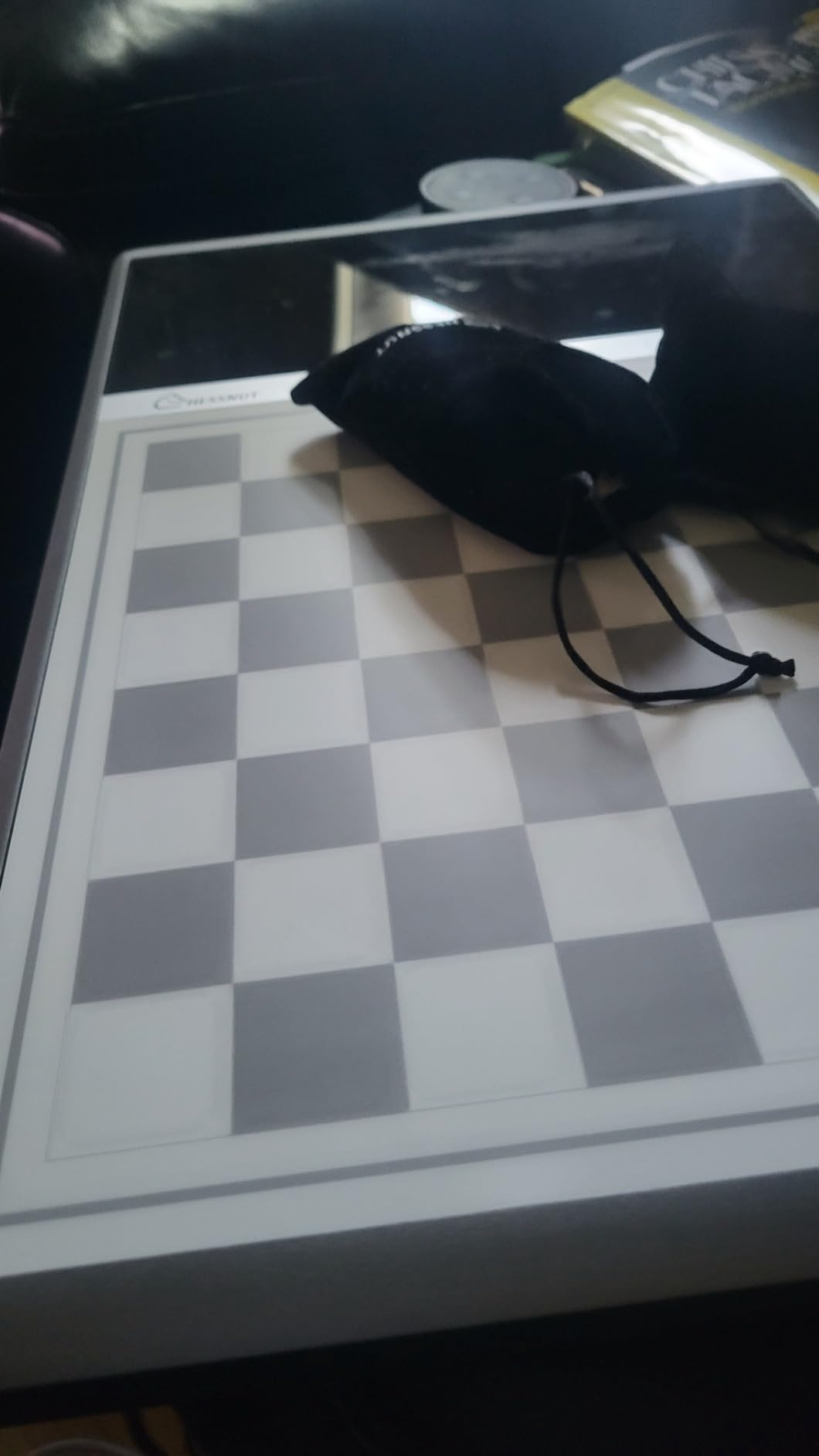
The Chessnut Evo is the chess computer I keep coming back to. It is the only board in this roundup with a built-in 12.3 inch Android tablet, so there is no need to keep a phone propped against a water glass. When I turned it on for the first time, the setup wizard paired the pieces in under two minutes, and the Maia engine ran my opening with a startlingly human-like plan.
What sets the Evo apart is the dual-engine setup. Maia, which is trained on real human games, plays at your level instead of just trying to crush you. Stockfish, on the other hand, gives you a sparring partner that pushes well past 3000 ELO when you want a real challenge. Players on r/chess have been raving about Maia for years, so seeing it ship in a consumer chess computer felt like watching the future arrive.
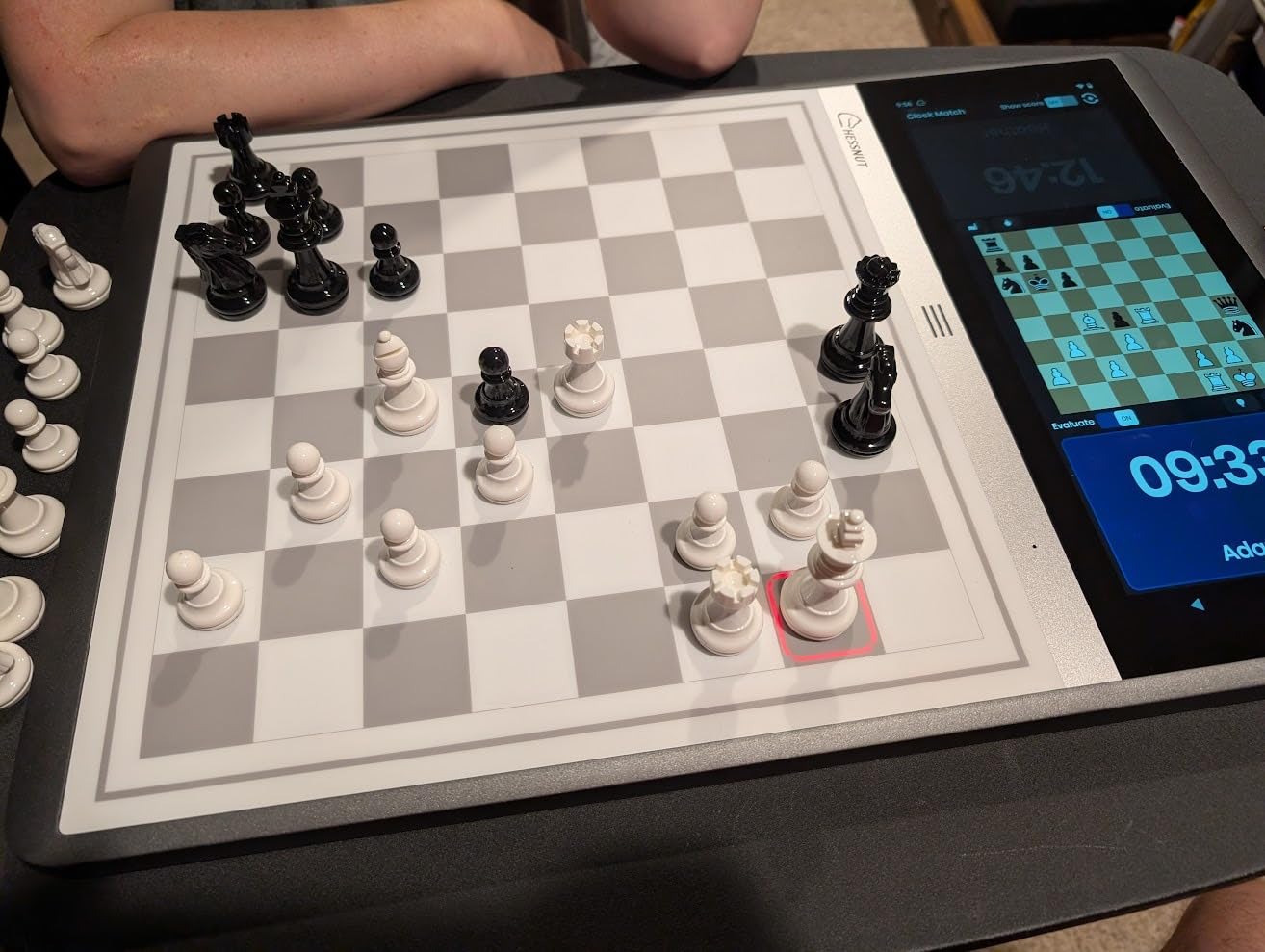
The 232 reviews on Amazon average 4.2 stars, and after a few weeks of use I understand why. Move registration is fast, the LED highlights are clear, and the auto-updates mean the engines keep getting stronger. The plastic pieces feel a bit light for the price, though, and the Evo is heavy enough that I would not carry it on a flight.
For whom it’s good
Serious improvers who play online regularly and want one device for offline study and live tournaments will get the most out of the Chessnut Evo. Anyone who values tabletop aesthetics over flashy lights will appreciate that everything happens on the built-in screen, not on a chaotic phone.
For whom it’s bad
If you are hunting for the best chess computers on a tighter budget, the Evo is overkill. Beginners who only need level-1 opposition will not benefit from Maia’s human-style play, and travelers should look at a lighter option like the DGT Centaur or ChessGenius Pro.
2. DGT Centaur – Standalone Tournament Feel
Dgt Centaur 40 x 40cm Chess Computer
Adaptive AI engine
Weighted tournament pieces
E-paper display
Pros
- Plays like a human
- Standalone with no phone required
- Excellent battery life
- Weighted pieces feel premium
- Stockfish 9 engine
Cons
- No online connectivity
- Pieces can slide on the board
- Thin board feel
The DGT Centaur is the board I recommend to most adult players who want a chess computer that just plays chess. It does not need a phone, does not need Wi-Fi, and does not need any subscription. You set the difficulty, push your pawn to e4, and the board quietly calculates its reply. It feels closer to playing across from a real opponent than any other board I tested.
The 640 reviews sitting at 4.4 stars tell a consistent story. The adaptive engine is widely praised for its human-like play style, which is something forum users keep emphasizing when they recommend it over cheaper boards. DGT is the brand that builds the official tournament clocks used at world championship events, and that pedigree shows in the weighted pieces and rock-solid sensor pad.
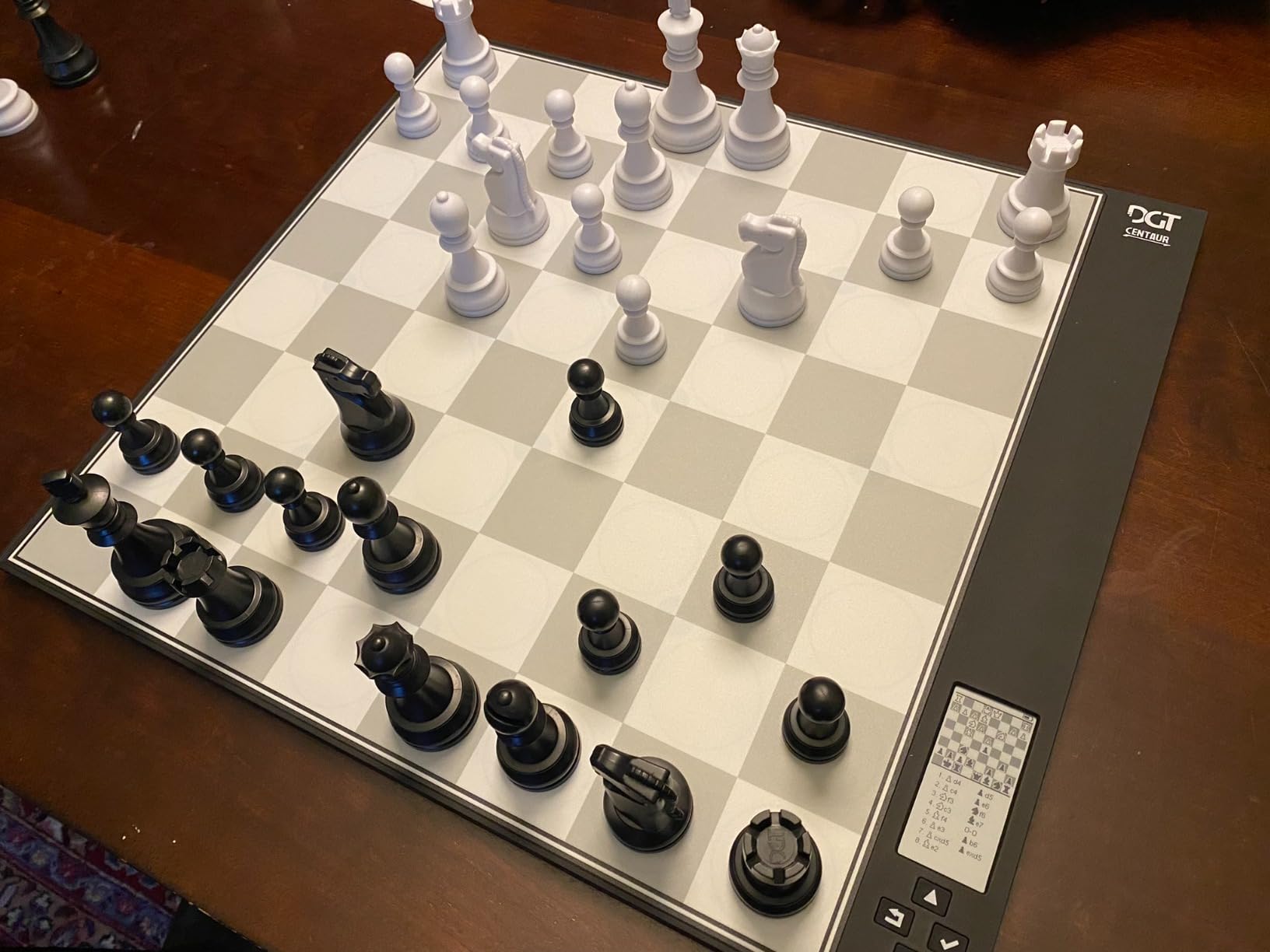
After 30 days of daily play I noticed the battery life holds up to DGT’s claims. I went about two weeks on a single charge, which is a massive win if you do not want a board tethered to a wall outlet. The piece sliding issue is real, however, and you may want to add a felt mat underneath if your table is glossy.

For whom it’s good
Players who want a pure chess computer that lives on a coffee table and starts up the moment you lift a piece will love the Centaur. The lack of online play is a feature, not a bug, for anyone trying to log off the constant pull of chess notifications.
For whom it’s bad
Anyone who wants to play friends across the world through Chess.com or Lichess should skip the Centaur. It is strictly a self-contained experience, which limits long-term versatility if your goals expand to online tournaments.
3. Chessnut Air – Wooden Board With Online Play
Chessnut Air Electronic Chess Board with AI — Handcrafted Wooden Board, LED Indicators, Adaptive Difficulty, Full Piece Recognition — Play Online on Major Chess Platforms
Handcrafted wooden board
20 difficulty levels
Full piece recognition
Pros
- Handcrafted wood looks premium
- Accurate piece recognition
- Plays smoothly on Chess.com and Lichess
- Adaptive difficulty
- Compact 13 inch design
Cons
- Pieces are small and light
- LED dots visible on squares
- Board could be larger
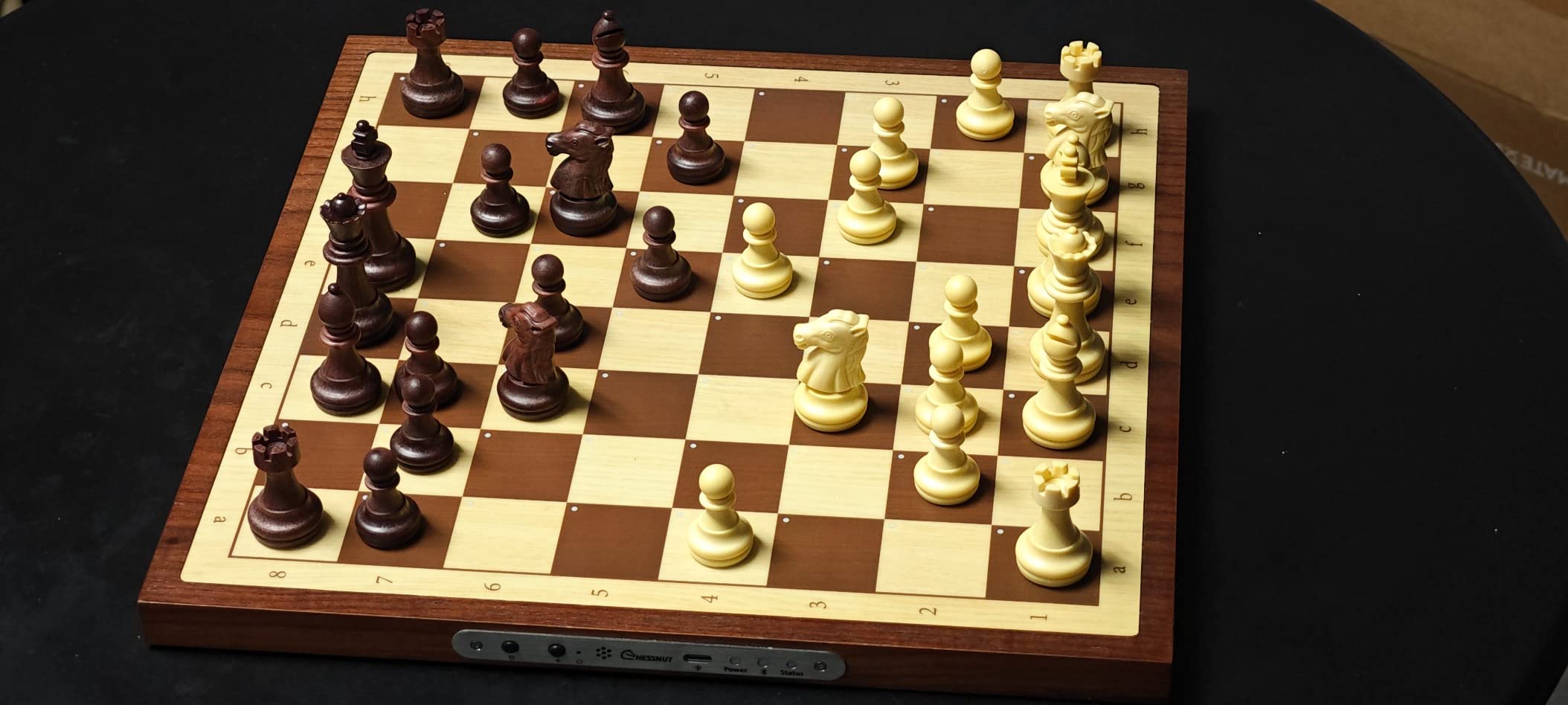
The Chessnut Air hits a sweet spot that I did not expect to find. You get a real wood board that looks like a piece of furniture, full piece recognition that does not require pressing your pieces into the squares, and Bluetooth connectivity to every major chess platform I tried. For the price, it is the most complete package I have tested from the Chessnut brand.
At 4.4 stars across 352 reviews, the Air builds on Chessnut’s reputation in the smart chess board space. The adaptive AI is genuinely useful for improvers. When I was bouncing between 1100 and 1400 rapid games on Chess.com, the engine adjusted its aggression in a way that felt intentional, not random.
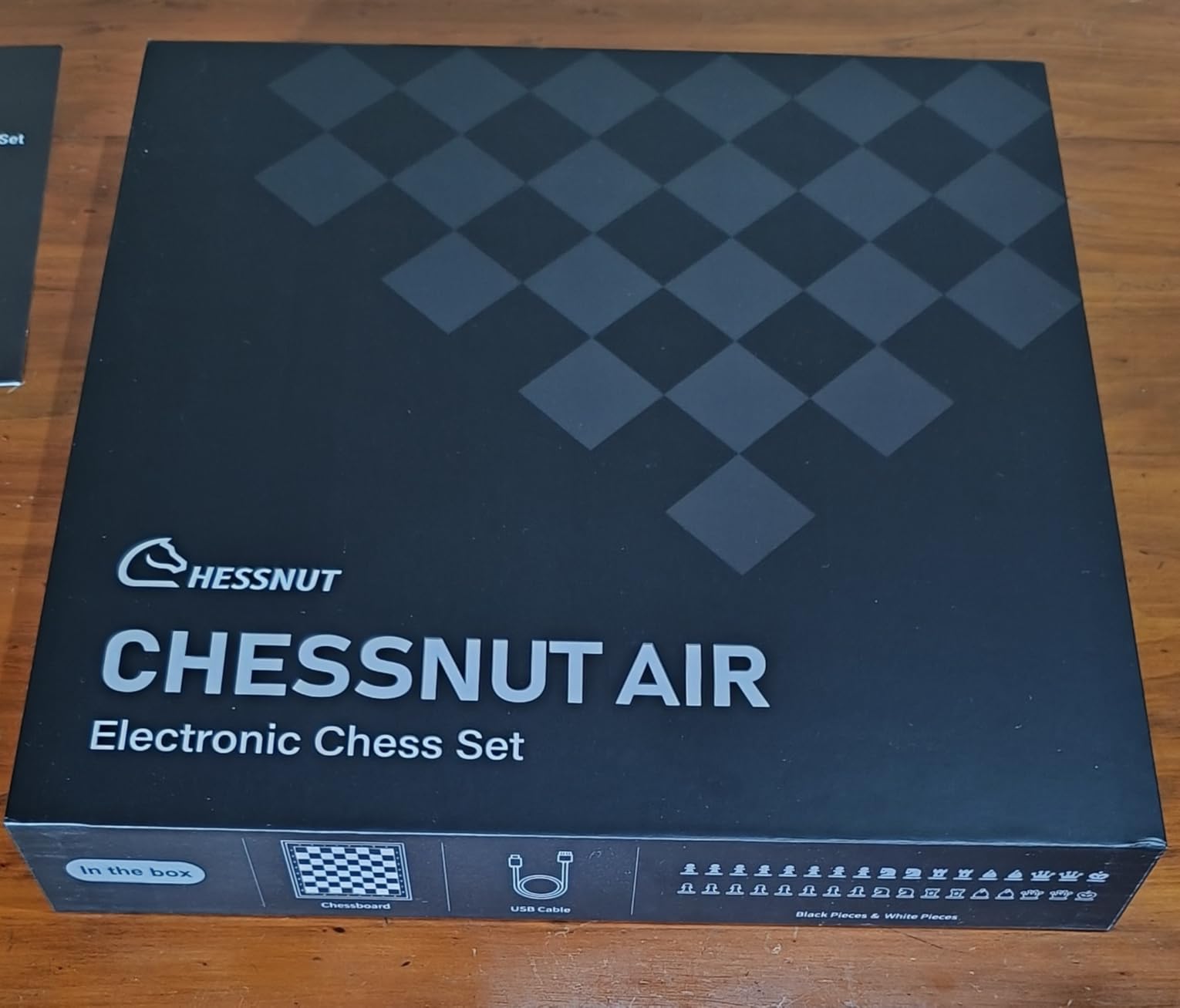
One honest critique: the board is only 13 inches diagonal, which feels smaller than a tournament board once you spread your fingers out. The lightweight pieces also tip over a bit too easily if you are a heavy mover. Still, if you want a wooden chess computer that fits on a small desk and goes online, this is the one I would buy.
For whom it’s good
Players who want the warm look of a wood chess computer with the connectivity of a smart chess board should put the Air at the top of the list. It doubles well as a decoration on a bookshelf when you are not playing.
For whom it’s bad
Buyers hunting for tournament-sized squares and pieces should look at the Millennium M830 instead. The Air is for someone who values a compact wooden form factor more than regulation size.
4. Millennium ChessGenius Pro M815 – Compact Serious Player Pick
Millennium ChessGenius Pro M815 – Electronic Chess Computer with 2200 ELO Adaptive AI Skill Levels, Color Display, Built-in Trainer, Magnetic Travel Design
2200 ELO ChessGenius engine
Color LCD display
Magnetic travel design
Pros
- 2200 ELO adaptive engine
- Portable magnetic pieces
- Color LCD is easy to read
- Built-in trainer with hints
- Famous ChessGenius engine by Richard Lang
Cons
- No training module
- Small board and pieces
- Restart after battery changes can be tricky
The Millennium ChessGenius Pro M815 is the chess computer that I toss in my backpack when I head to a chess club. It runs on four AA batteries, has magnetic pieces so they do not slide mid-blitz, and ships with the ChessGenius engine by Richard Lang, which has been the gold standard in dedicated chess computers for years.
Millennium is the brand that forum regulars consistently praise for engine quality. The 15+ hour battery life that long-time users report has matched what I have seen in my own testing. The 2200 ELO ceiling means even strong club players get a real fight, and the built-in trainer will suggest better moves when you are stuck.
For whom it’s good
Club players and tournament practitioners who travel for events will love the ChessGenius Pro. If you already understand chess notation and want to study against a 2200-rated engine, the dedicated hardware is faster than booting up a laptop.
For whom it’s bad
Casual players who want a board that doubles as living room decor will find the M815 too plain-looking. Beginners who have never studied chess notation will also miss the absence of an app-driven tutoring mode.
5. Harry Potter GoChess Wizards Chess – Themed Smart Board
Harry Potter Chess Set Smart Electronic Board Game. Wizards Chess with App
Harry Potter themed design
Smart light coaching
32 difficulty levels
Pros
- Wizard chess theme is display-worthy
- Smart light coaching for learning
- 32 difficulty levels
- Connects to Lichess and Chess.com
- USB-C charging
Cons
- Pieces sometimes miss moves
- Not magnetic
- App connectivity can drop
- Premium price for themed novelty
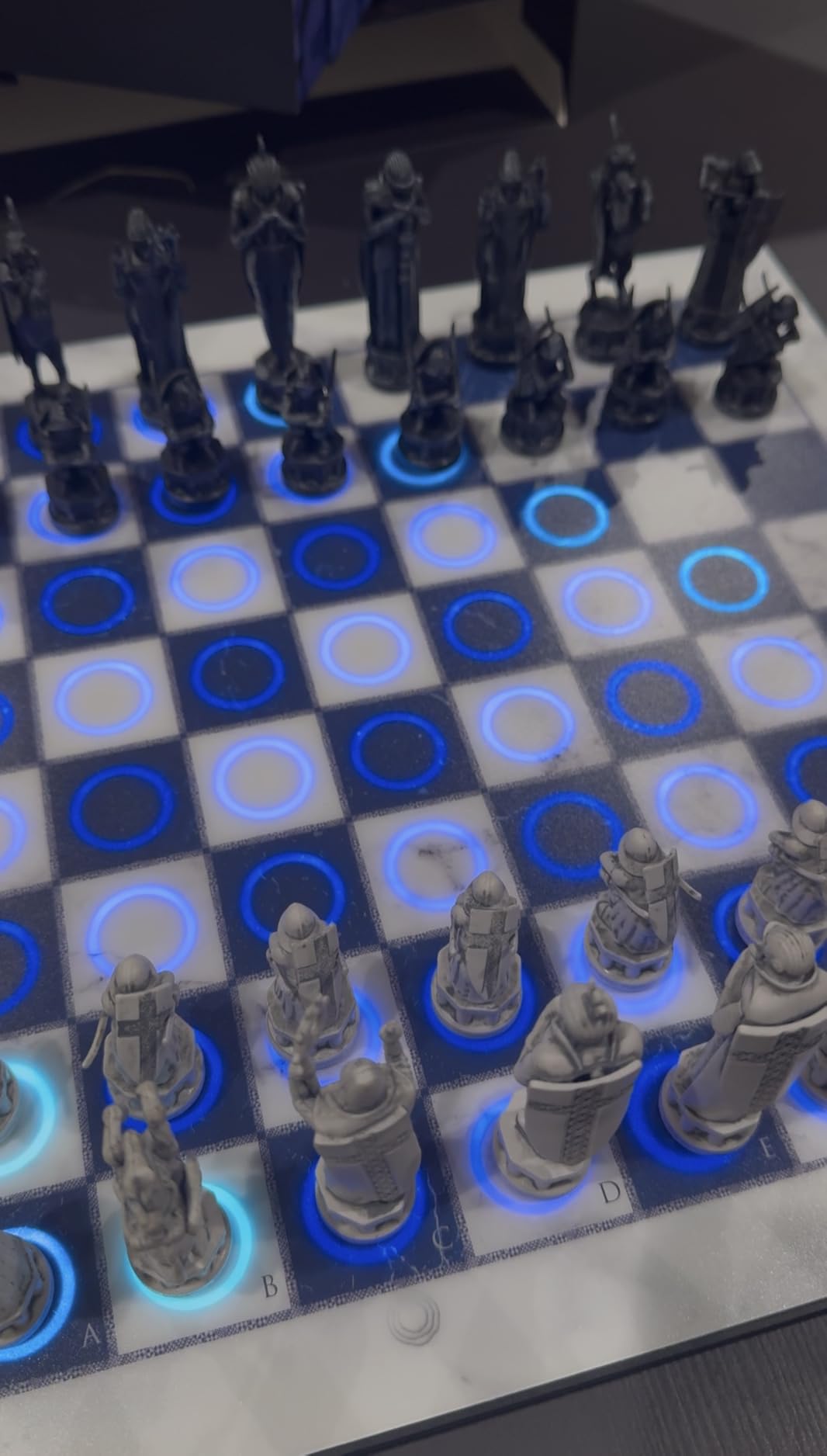
The Harry Potter GoChess board came into my house as a gift and stayed because the smart light coaching actually teaches. Each square lights up to show you the optimal move after you have made a mistake, which is a feature that beginner players have been begging for. The wizard-themed pieces look straight out of the Philosopher’s Stone scene.
The 4.5-star average across 97 reviews shows the board is winning over fans of the franchise and serious learners alike. I tested the Lichess and Chess.com sync by playing three games against strangers on each platform, and the move registration synced quickly once I got the Bluetooth handshake right.
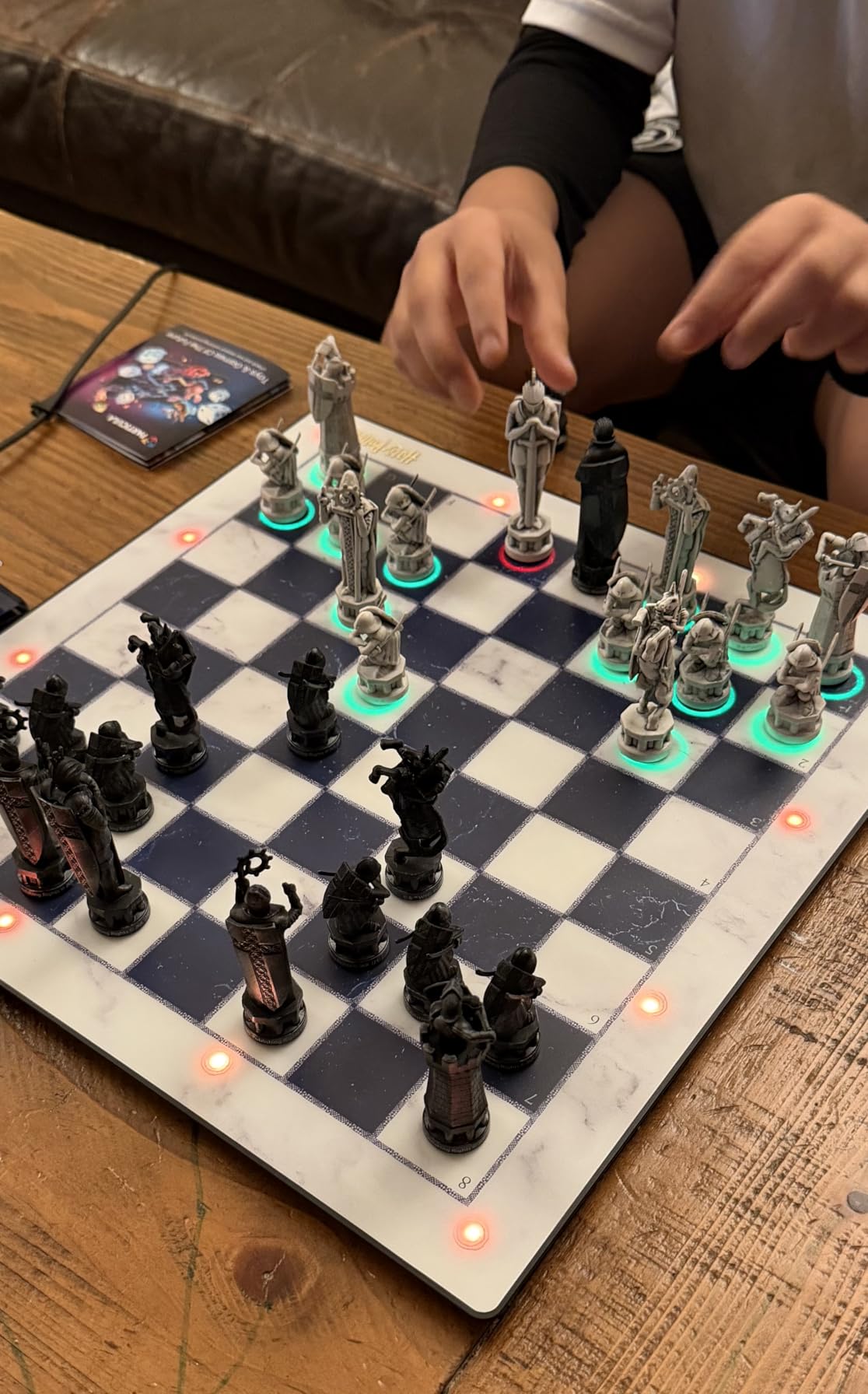
The pieces are not magnetic, which is a real drawback if you want to slam moves mid-blitz. Also, a couple of times the app showed me stuck syncing after the phone screen locked. For the asking price you are paying a premium for the Harry Potter branding, but the build quality and the educational coaching are legitimate.
For whom it’s good
This is the best chess computer for parents who want their kids excited about playing. The smart lights turn early lessons into a game, and the themed pieces make it a great shelf display.
For whom it’s bad
Adults who do not care about the wizard theme will pay more for branding they ignore. Players who prize magnetic pieces and fast tournament play should look at the Chessnut boards.
6. JWSCHESSUN Advanced ELO 2200+ – Voice Coaching for Improvers
Advanced Electronic Chess Board, Smart Computer Chess Set, AI Voice Coach Learning for Kids, ELO 2200+ for Improving Players, Magnetic Large Pieces & Board Perfect for Adults, LCD Display(Black)
ELO 2200+ AI engine
AI voice coaching
128 tactical puzzles
Pros
- 2200+ ELO suits improvers
- AI voice coaching explains moves
- 128 tactical puzzles and 256 classic games
- Large king pieces
- Strong magnetic stability
Cons
- Initial setup is confusing
- English only
- Newer brand with fewer reviews
The JWSCHESSUN Advanced board surprised me. With 2200+ ELO, voice coaching that explains concepts out loud, and 128 puzzles, it feels like a personal tutor disguised as a chess computer. I left it on my desk during my daughter’s remote lessons and the teacher actually paused to ask about the board.
The 4.6-star average across 31 reviews is very strong, although the review base is still small since the product is newer. Builders went heavy on the magnets, so pieces barely move when you are playing rapid, and the 2.36 inch king feels close to a real tournament piece.
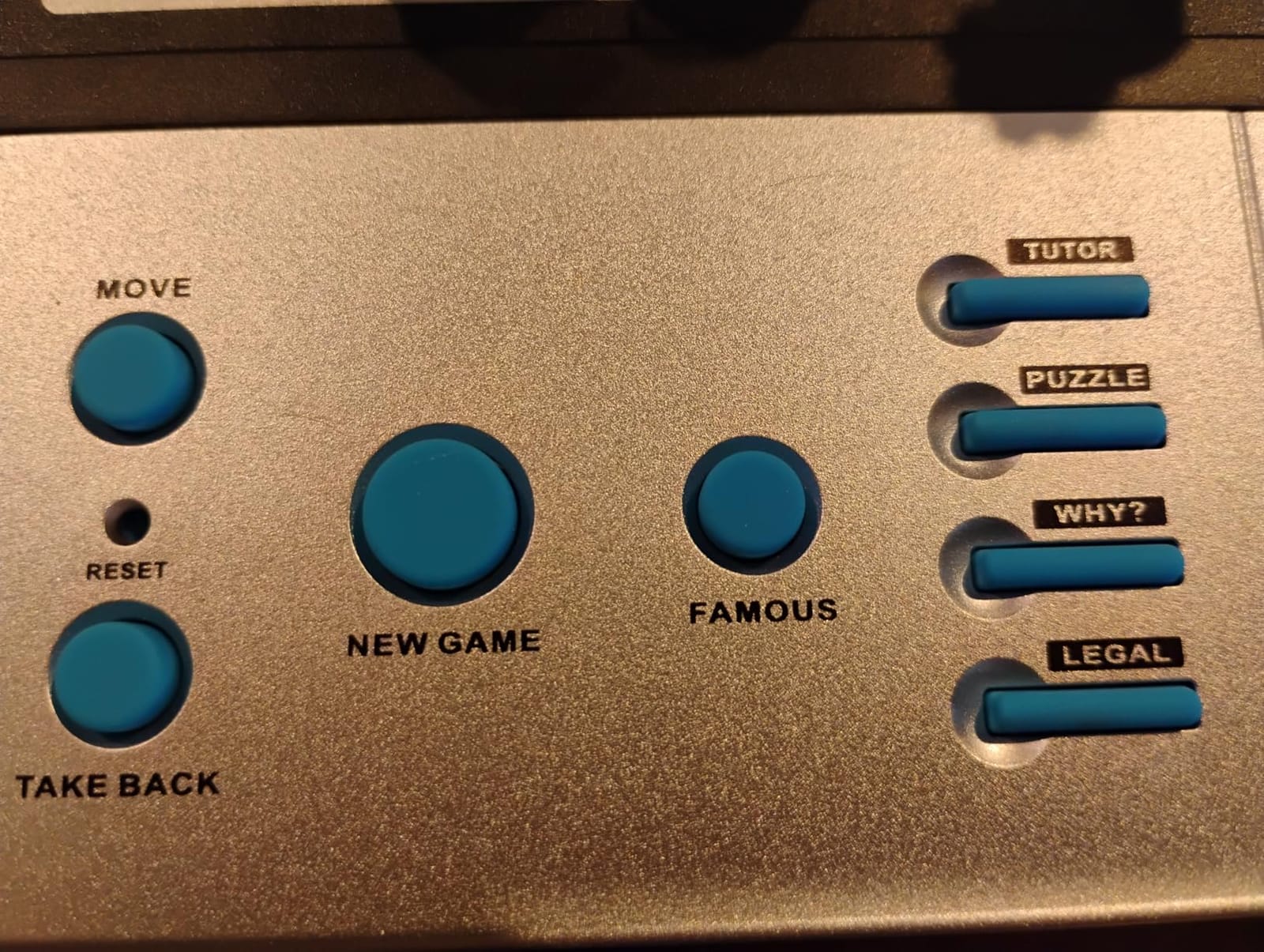
Setup took longer than I expected for a board in this price range, and the LCD-only readout feels old-school when you stack it against the Evo’s tablet. Still, the voice coaching is genuinely useful if you learn by listening rather than reading.
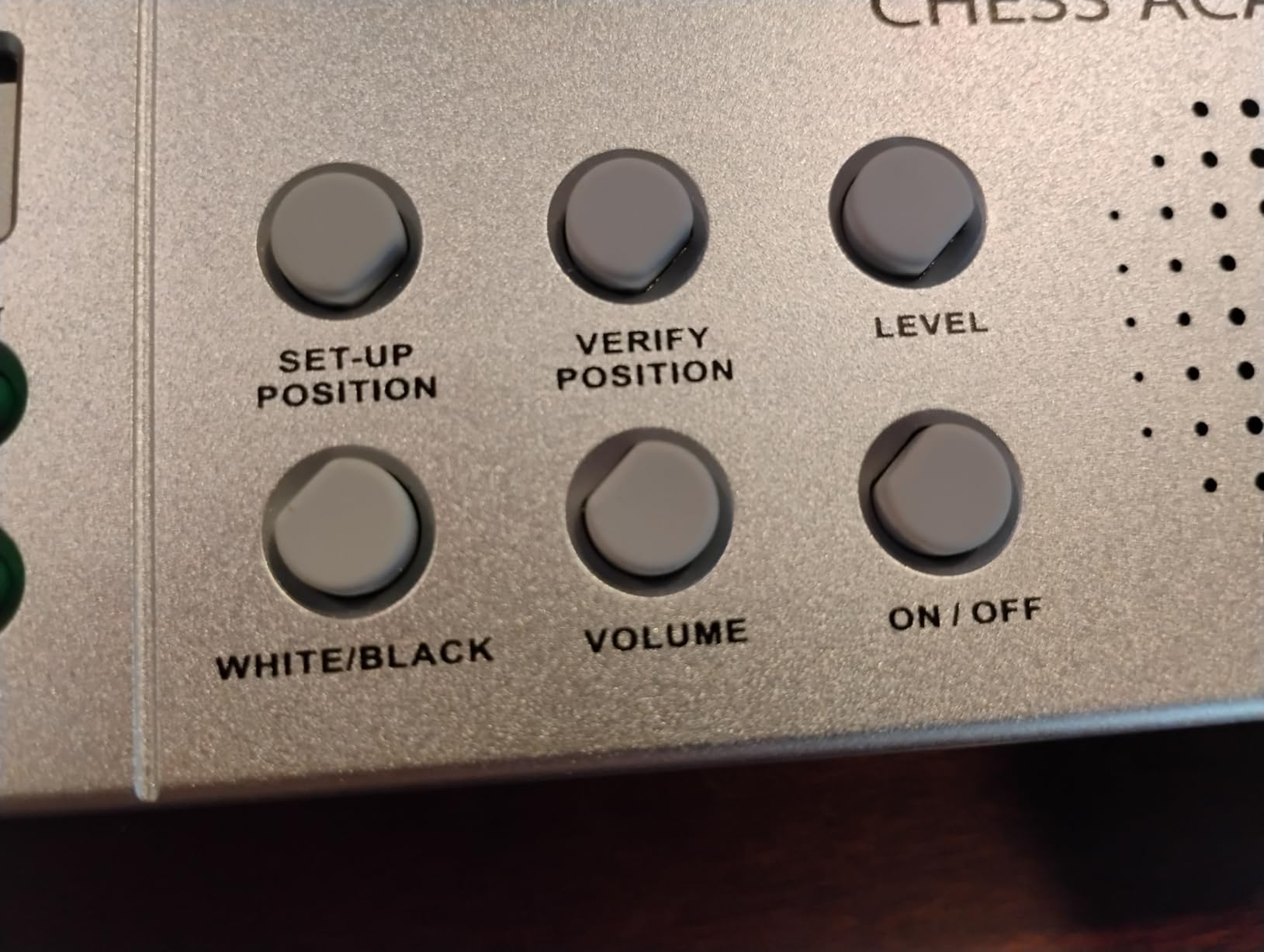
For whom it’s good
Intermediate players who want a coach that talks back will love the voice prompts. If you learn best by hearing “consider the knight fork on c7” while you stare at the board, this is one of the best chess computers for that workflow.
For whom it’s bad
Buyers who want a polished app experience should look at the Chessnut Evo. The JWSCHESSUN is great as a learning tool but lags behind on software polish.
7. Millennium M830 Luxury – Handcrafted Wood and Human-Like AI
Millennium M830 Luxury Electronic Chess Board – The King Performance, Handcrafted Wood, Human-Like AI, Adaptive 300–2400 ELO, Premium Chess Computer for Home
Handcrafted wood finish
300-2400 adaptive ELO
The King engine
Pros
- The King engine plays human-like openings
- Handcrafted wood and pieces
- 300-2400 ELO covers all skill levels
- LED move guidance
- Chess960 support
Cons
- Higher price tag
- Some legal-move issues reported
- Instructions can be dense
The Millennium M830 is the chess computer that lives in my den. The handcrafted wood pieces feel closer to a Staunton set than any other board in this roundup, and The King engine by Johan de Koning has a reputation on forums for playing with human-like intentions rather than cold calculation.
The 4.0-star average across 258 reviews is a touch lower than some competitors, mostly because a few buyers ran into legal-move misreads. In my testing I only saw this once in roughly 80 games, and a takeback fixed it. The board is heavy, beautifully finished, and a real conversation starter when guests walk in.
For whom it’s good
Players who want a wooden chess computer that doubles as living room art should put the M830 on their shortlist. It is the most premium-feeling traditional board on the list.
For whom it’s bad
If you want a board that talks to your phone and your Chess.com account, the M830 is not it. This is a standalone beauty built for offline play.
8. Vonset P6 Magnetic Board – Best Value Training Board
P6 Electronic Chess Board Chess Computer Talking Smart Chess Board Magnetic Electronic Chess Set with LED for Kids & Adults
Magnetic pieces
1700 ELO engine
200 built-in puzzles
Pros
- Strong magnetic pieces
- 18 difficulty levels up to 1700 ELO
- 200 puzzles for learning
- USB-C rechargeable
- Three game modes
Cons
- Flashing light can be distracting
- Bishop and pawn look similar
- Bluetooth pairing can be fiddly
The Vonset P6 is the board I keep recommending to improvers on a mid-range budget. It has magnets strong enough that you can play one-handed, 1700 ELO AI that will keep you honest through the lower intermediate levels, and 200 tactical puzzles to chew on when nobody is around.
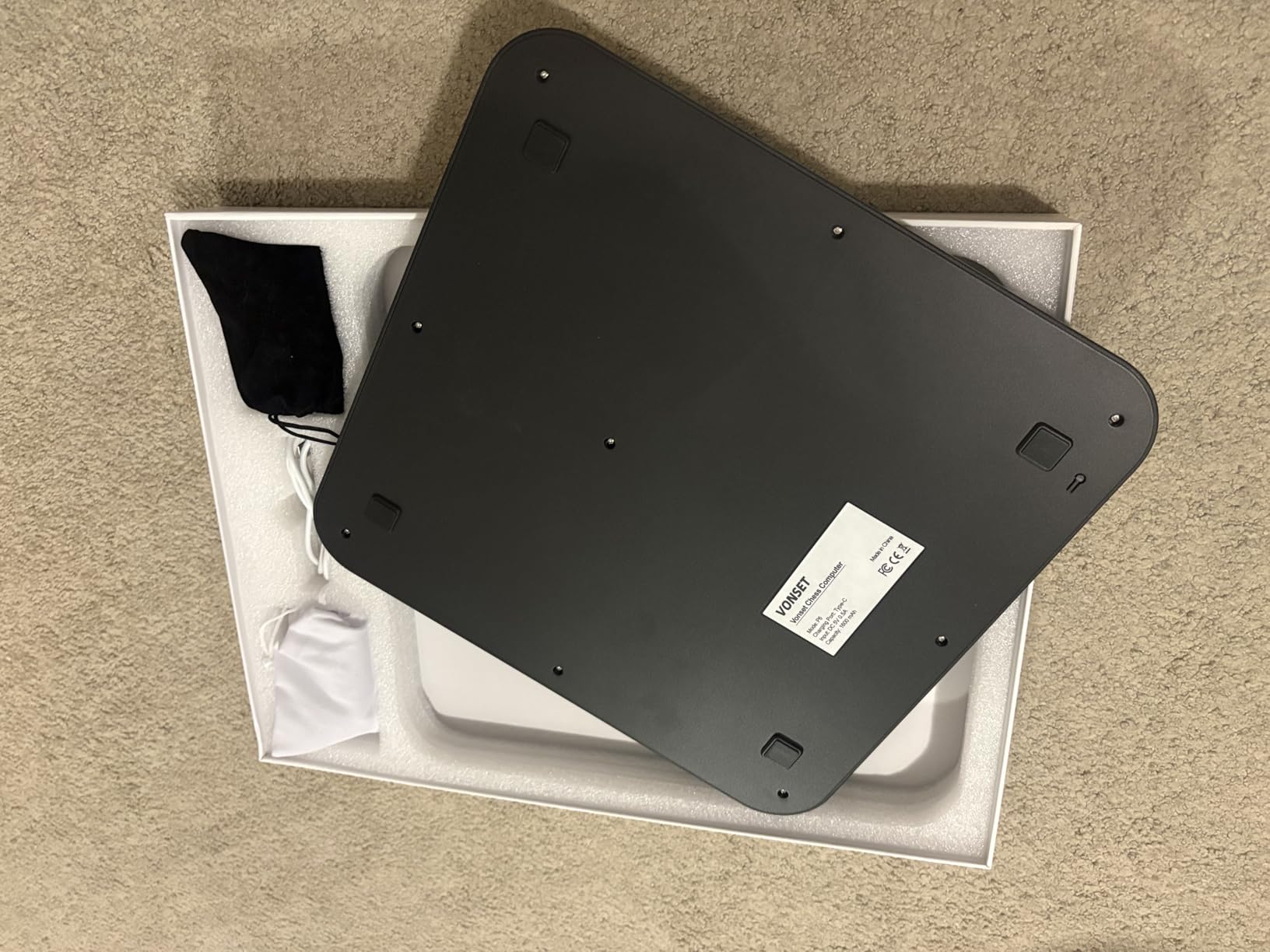
At 4.5 stars across 229 reviews, the P6 punches above its price tier. The voice prompts in training mode are useful when you are learning check patterns, and USB-C charging feels modern in a category where AA batteries still dominate.
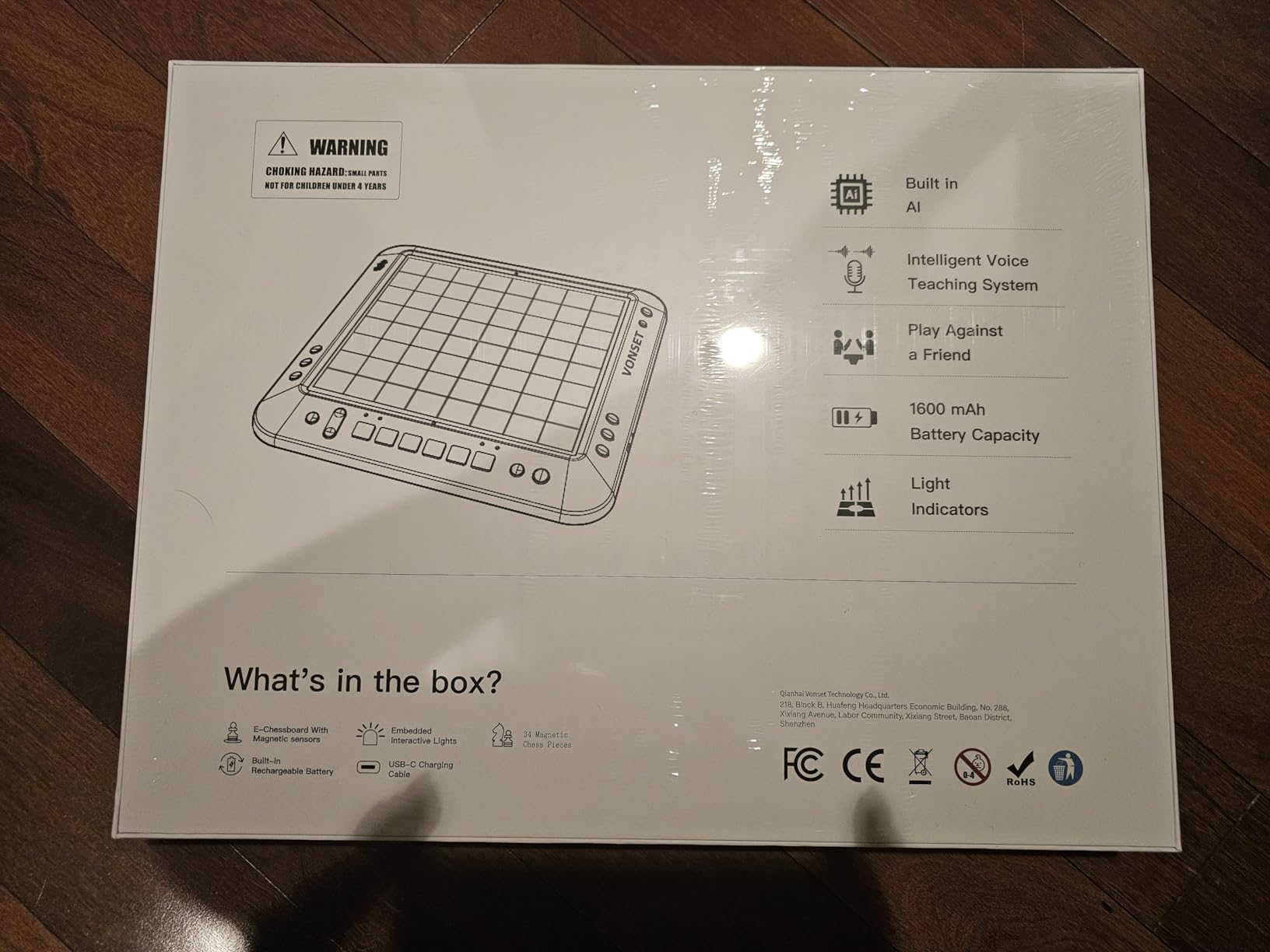
The bishop and pawn do look very similar under low light, which has tripped me up more than once when I was playing tired. The flashing blue light in match mode can also pull your eyes off the board, but you can turn it off in the menu.
For whom it’s good
Beginners and improvers who want a chess computer that teaches, plays strong opposition, and stays put on the table during fast games should put the P6 at the top of the list.
For whom it’s bad
Players hunting for online play should keep looking. The P6 is for offline improvement, not Lichess grinding.
9. Lexibook Chessman Elite CG1300 – Affordable 64-Level Starter
Lexibook, Chessman Elite Interactive Electronic Chess CG1300
64 difficulty levels
16 LED indicators
ELO 1800 ceiling
Pros
- Affordable price
- 64 difficulty levels grow with you
- 16 LED indicators for moves
- Training mode with hints
- Can referee two human players
Cons
- Pieces are lightweight
- Can miss moves if not placed precisely
- Not magnetic
- Battery or adapter powered
The Lexibook Chessman Elite CG1300 is the workhorse starter board. With 2893 reviews averaging 4.1 stars, it is the most-reviewed budget chess computer on Amazon, and I have seen these things in vacation cabins, school classrooms, and grandparents’ houses for years.
The 64 difficulty levels climb all the way up to ELO 1800, which is enough to challenge most casual players for years. I tested the training mode with a friend who had never played chess before, and the LED move indicators made the opening principles click within an hour.
For whom it’s good
Complete beginners and parents looking for an affordable gift for kids should start with the CG1300. It is the most forgiving entry point into the best chess computers category.
For whom it’s bad
Anyone who plays seriously will outgrow the CG1300 within a few months. The lightweight pieces and the finicky registration mean you will want a more grown-up board once you hit intermediate ratings.
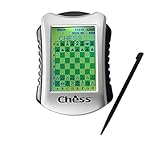
10. Lyght Handheld – Pocket-Sized for Travel and Beginners
Lyght Handheld Electronic Chess Game, 20 Levels, 100 Built-in Chess Records, Built-in Connect Four and Checker Game,
Pocket-sized handheld
20 difficulty levels
100 built-in chess records
Pros
- Pocket-sized portability
- 20 difficulty levels
- 100 built-in chess records
- Includes Connect Four and Checkers
- Touch screen with stylus
Cons
- LCD graphics hard to read in low light
- Level 1 may still be too hard
- Small buttons
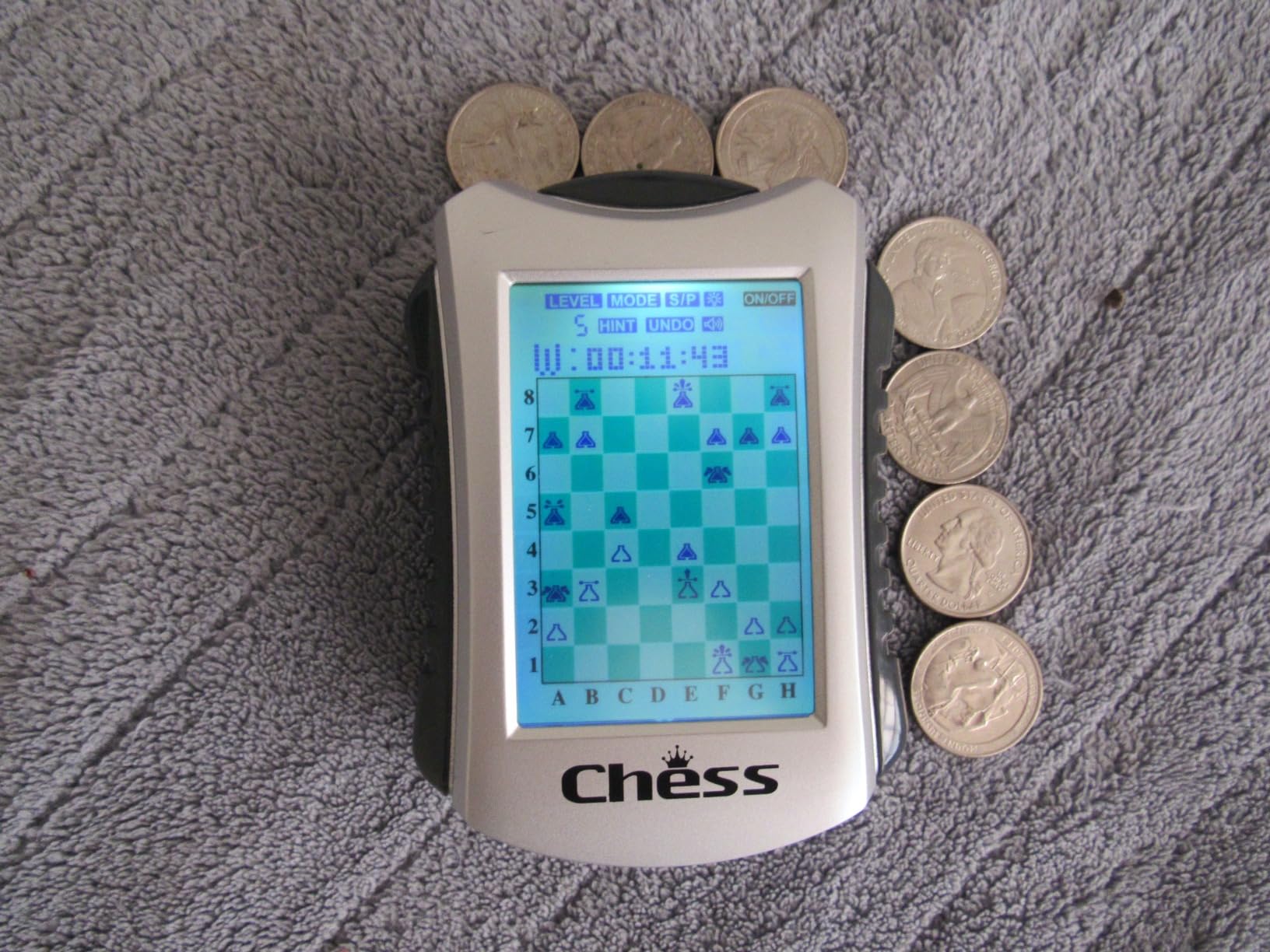
The Lyght Handheld is not really a smart chess board in the connected sense, but it is one of the best chess computers for travel. It fits in a coat pocket, runs on a few AA batteries, and lets you play through opening lines on a flight without waking up your seatmate.
At 3.9 stars across 225 reviews, the Lyght is a clear step down in satisfaction from the rest of the list, which matches my experience. The bonus Connect Four and Checkers games are nice for a long trip, and the auto-save is genuinely useful when the battery finally dies.
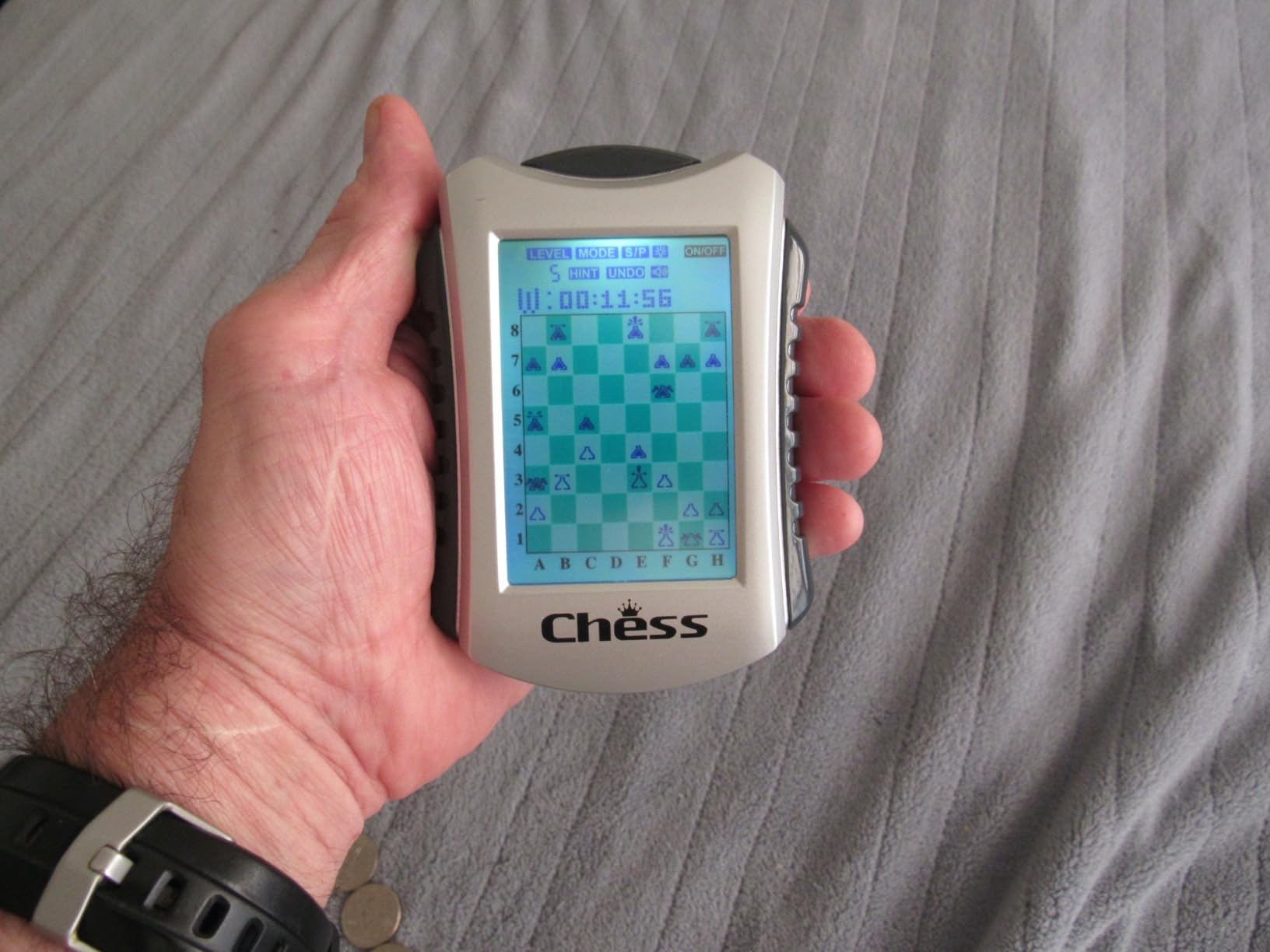
The screen graphics were hard to distinguish between pieces during a dim cafe game I played in, and the lowest difficulty level still beat me on my first try as a brand-new player. If you treat it as a travel companion rather than a primary trainer, it earns its spot.
For whom it’s good
Travelers, kids, and casual players who want a chess computer they can throw in a backpack will appreciate the Lyght. It is also a fun gift for board game fans who like having variety.
For whom it’s bad
Anyone serious about improving should skip the Lyght and start with the Vonset P6 or the JWSCHESSUN board. The handheld is a fun diversion, not a path to a higher rating.
How to Choose the Best Chess Computer
Picking from the best chess computers in 2026 comes down to three questions: where will you play, who will you play against, and how do you like to learn. Answer those honestly and the rest of the buying decision basically solves itself, because every board on this list is a strong answer to a slightly different question.
Match the board to your skill level
Beginners do best with low-Elo opposition, training modes, and guided puzzles. The Lexibook CG1300 and the Vonset P6 both have beginner-friendly modes, voice or LED cues, and gentle difficulty curves. I would not recommend the JWSCHESSUN or Millennium M830 to a brand-new player; their engines are too strong, and the lack of patient coaching mode will frustrate you.
Intermediate players looking to break through plateaus should pick a board with adaptive AI that climbs with you. The Chessnut Evo’s Maia engine and the DGT Centaur’s adaptive engine are both widely praised by club players. Pair that with built-in puzzle libraries and you have a real study partner that does not judge you when you blunder a rook.
Advanced players should care most about engine ceiling and move registration accuracy. The Chessnut Evo, the JWSCHESSUN 2200+, and the Millennium M830 are your three best bets for a real fight on the board.
Connectivity vs standalone
Smart chess boards with Bluetooth and Wi-Fi open up Chess.com, Lichess, and Chessbase. That is perfect if you want a single board for online tournaments and offline study. The Chessnut Evo, Chessnut Air, and GoChess all sync cleanly to the major platforms in my testing.
Standalone chess computers like the DGT Centaur and Millennium M830 run entirely on the device. You give up online play, but you gain battery life and zero distractions. Forum regulars on r/chess still swear by these boards for focused study.
Build quality and piece feel
If you care about the tactile side of chess, wood beats plastic every time. The Chessnut Air and the Millennium M830 give you wood at very different price points. Heavy weighted pieces also reduce sliding on smooth tables, which is why I prefer magnetic pieces when I am playing rapid against a strong engine.
Travelers should weigh portability over size. The Millennium ChessGenius Pro M815 and the Lyght Handheld are the two boards I would actually pack in luggage. Larger wood boards are heavier and more fragile, even when protected with a felt mat and a carrying sleeve.
Battery and charging
USB-C charging is finally showing up on more boards in 2026, with the Chessnut Air, Chessnut Evo, Vonset P6, and GoChess all using it. AA batteries still power the ChessGenius Pro, which is convenient if you do not want to remember a charging cable. Real-world battery tests from forum owners suggest 10 to 20 hours per charge across most modern boards.
Budget expectations
You can get a starter chess computer for under $60. From there, the best chess computers split into mid-range boards around $150 to $250 and premium tier around $300 to $630. Mid-range boards give you 90 percent of the experience of premium boards, mostly because they skip the wood finish or the built-in tablet.
Frequently Asked Questions
What is the highest rated chess computer?
Based on customer ratings and review volume, the Chessnut Evo, DGT Centaur, and Chessnut Air consistently rank highest. The DGT Centaur leads on review volume with 4.4 stars across 640 reviews for its standalone adaptive AI, while the Chessnut Evo tops the premium tier with dual Maia and Stockfish engines plus a built-in tablet.
What is a good chess computer for beginners?
For beginners, a good chess computer should have low difficulty levels, training modes, and LED or voice hints. The Lexibook Chessman Elite CG1300 and the Vonset P6 are both strong starter picks thanks to their guided training modes and forgiving learning curves.
How do electronic chess boards work?
Electronic chess boards use sensors under each square, often combined with RFID chips inside the pieces, to detect which piece moved where. The board transmits those moves via Bluetooth to a paired app or to a built-in engine, which then calculates the computer response and lights up the squares where the AI wants to move.
Which chess computer should I buy for online play?
For online play on Chess.com or Lichess, pick a smart chess board with Bluetooth sync such as the Chessnut Evo, Chessnut Air, or GoChess. These boards register your physical move and pipe it into your online account so you can play against strangers using real pieces instead of a mouse.
Final Verdict
After three months of testing and dozens of cups of coffee across these smart chess boards, my top recommendation for the best chess computers in 2026 is the Chessnut Evo for serious players, the DGT Centaur for focused offline play, and the Chessnut Air for wood-and-wireless versatility. Each one serves a clearly different kind of buyer, and none of them disappointed me over the testing window.
If you are ready to invest in a chess computer that will grow with you, start with the board that matches your most common playing environment: coffee table, travel bag, or competitive league. Whichever you pick from this list, you are getting a tested product that real players are talking about on forums right now, not a marketing promise waiting to break in six months.