
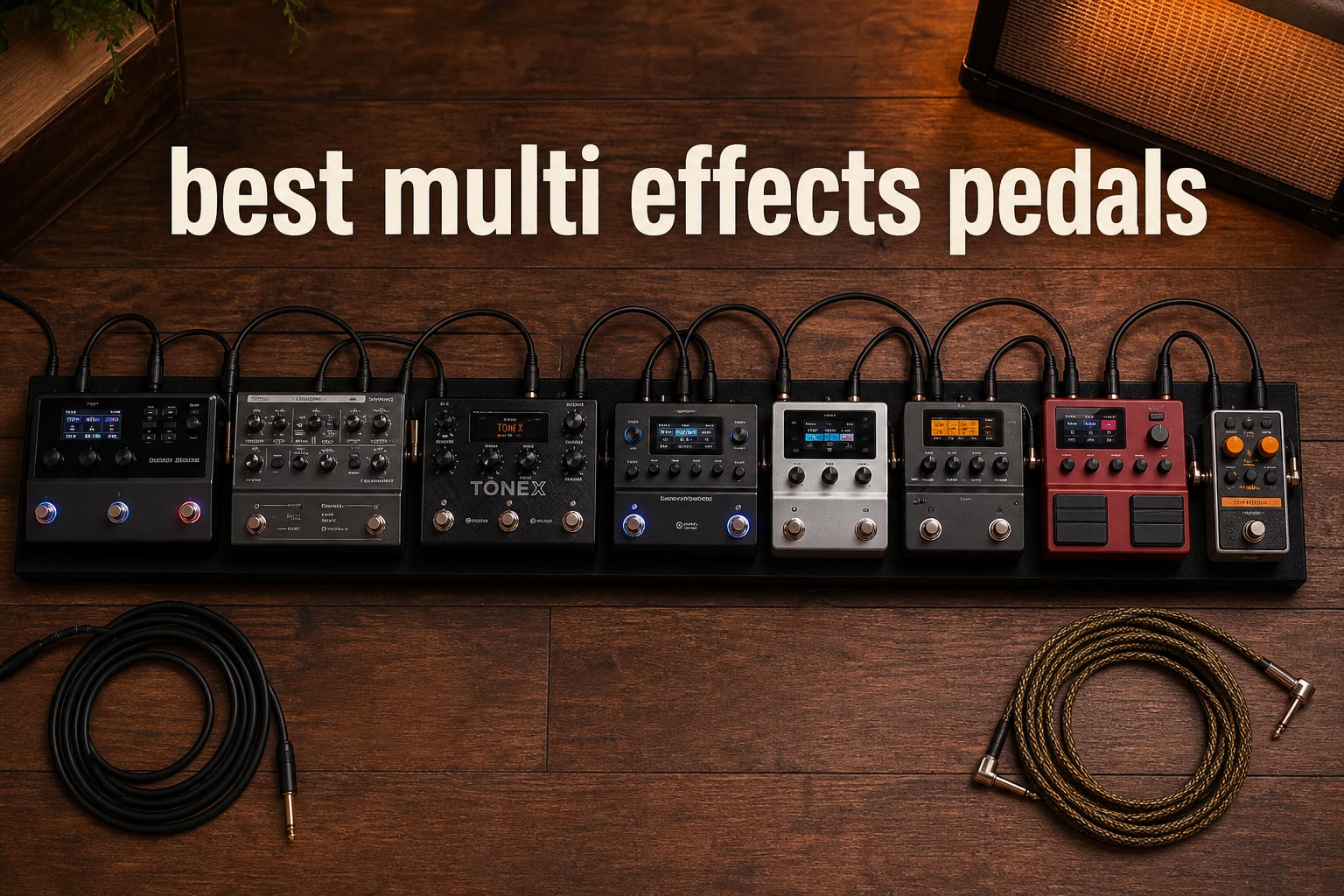
Finding the best multi effects pedals in 2026 feels harder than it should. Walk into any guitar shop and you’ll see walls of floor units ranging from pocket-sized beginners to full-blown touring rigs, and every brand swears theirs is the one. I spent the last few months living with eight of them, swapping them into my practice rig and gigging with them at church on Sundays, so I could tell you which ones actually deliver.
A multi-FX pedal is a single floor unit that combines dozens of effects – overdrive, delay, reverb, modulation, compression – and pairs them with amp modeling and cabinet simulation. Instead of dragging a board with fifteen individual pedals, you get everything in one chassis. The best units replace an entire amp rig, which is why working guitarists made the switch years ago and why bedroom players now have access to the same tech.
Across the eight units below I focused on tone, build quality, ease of use on stage, and value. I’ve grouped picks by category so you can jump to the one that matches your playing – whether you’re a first-timer, a weekend warrior, or a full-time pro.
Table of Contents
Top 3 Picks for Best Multi Effects Pedals in 2026


Best Multi Effects Pedals in 2026: At a Glance
| Product | Specifications | Action |
|---|---|---|
| Line 6 HX Stomp |
|
Check Latest Price |
 IK Multimedia TONEX Pedal IK Multimedia TONEX Pedal |
|
Check Latest Price |
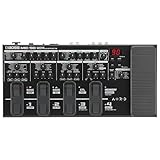
| BOSS ME-90 |
|
Check Latest Price |
 Donner Arena 2000 Donner Arena 2000 |
|
Check Latest Price |
 MOOER GE150 Pro MOOER GE150 Pro |
|
Check Latest Price |
 MOOER GE100 MOOER GE100 |
|
Check Latest Price |
 Zoom G1X Four Zoom G1X Four |
|
Check Latest Price |
| SONICAKE Pocket Master |
|
Check Latest Price |
1. Line 6 HX Stomp – Compact Powerhouse with Helix DNA
Line 6 HX Stomp Multi-Effects Guitar Pedal
Same HX modeling as Helix flagship
300+ effects and amp models
Up to 6 simultaneous blocks
Pros
- Helix-grade sound in a stompbox-sized unit
- 300+ amps/cabs/effects
- IR loading support
- Capacitive footswitches with LED rings
- Massive community and preset library
- Compact 1.74 lb chassis
Cons
- AC adapter required - no battery option
- Only 3 footswitches on the unit
- Premium price for the size
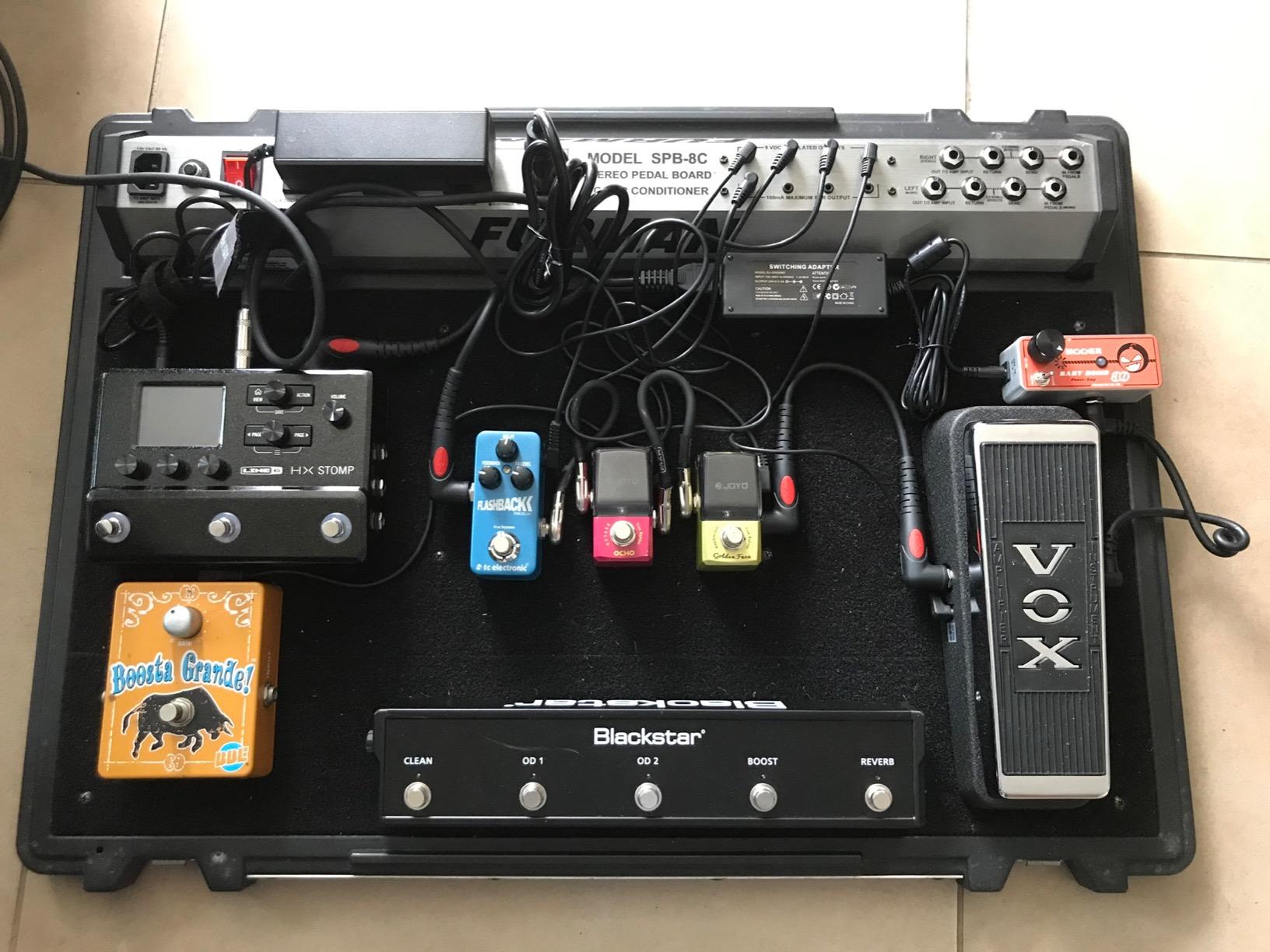
I bought my HX Stomp about eighteen months ago after reading thread after thread on r/guitarpedals about how it holds its own against the full Helix. After living with it on a weekly worship set and in my home studio, I get the love. The amp models feel alive, the effects snap into place, and the form factor fits anywhere on my board.
The headline number is 300+ effects and models pulled directly from the Helix and M-Series legacy libraries. In practice, that means I can switch between a Fender Deluxe Reverb clean, a Marshall JCM800 crunch, and a Soldano SLO on the same patch. The HX Stomp runs up to six amp, cab, and effect blocks simultaneously, which is enough for almost any signal chain you’d realistically build live.
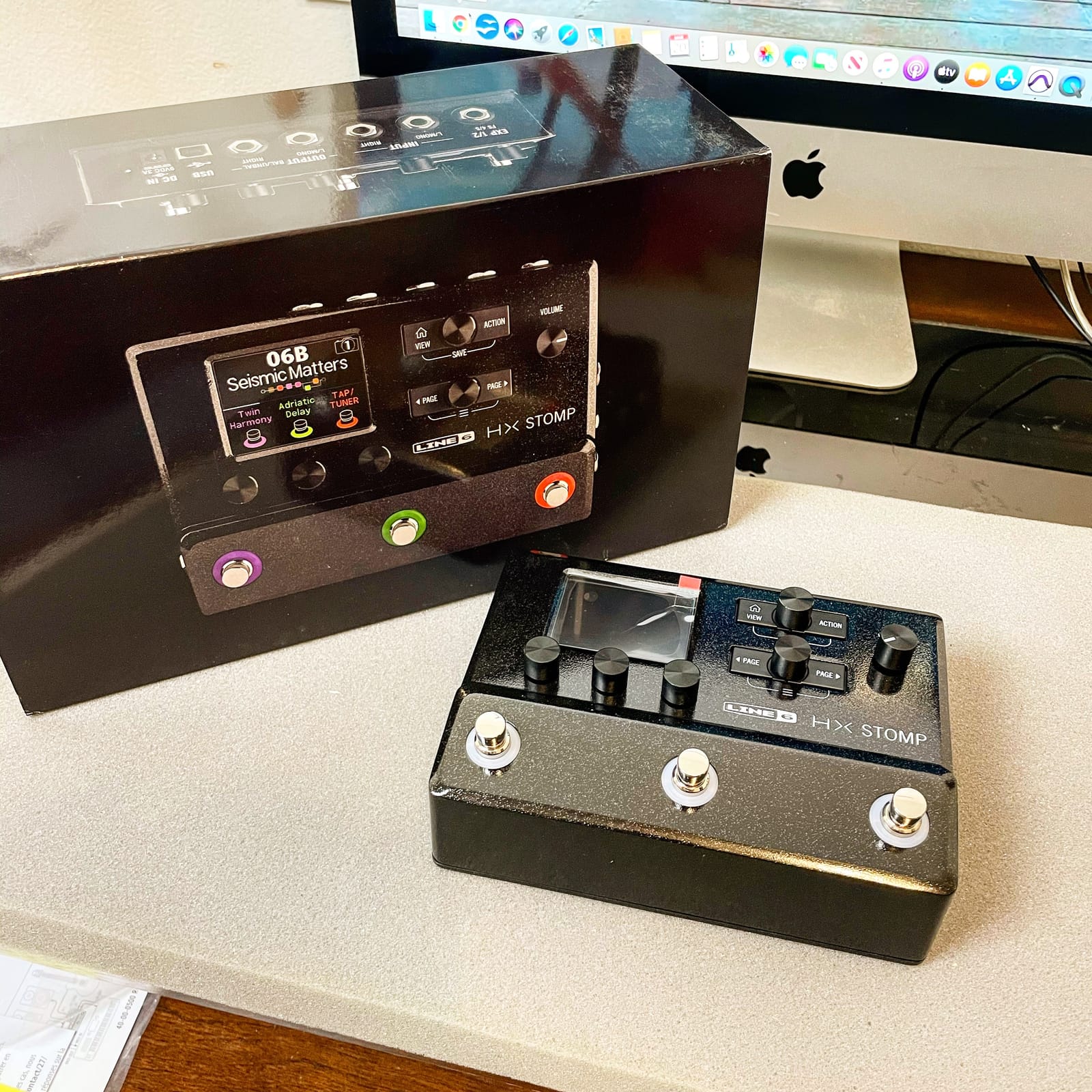
The three capacitive-sensing footswitches with color-coded LED rings feel professional underfoot. The TRS dual expression pedal input lets me add two external pedals for wah and volume without giving up footswitch real estate. IR loading is built-in, so I can load third-party cabinet impulses on top of the stock models – a feature I use constantly for high-gain tones.
What pushed this to Editor’s Choice isn’t just the tone, it’s the community. The Line 6 user community is by far the largest of any multi-FX brand, with thousands of free presets on forums like Reddit and the Line 6 community site. I rarely have to build a tone from scratch – someone has usually already dialed in a great patch and shared it.
The unit itself weighs just 1.74 pounds and fits in the palm of my hand. For players who want flagship Helix sounds without hauling a full rack, this is the smartest buy on the market.
For whom the Line 6 HX Stomp is good
The HX Stomp is the right call if you gig regularly and want pro-grade tone in a tiny footprint. It’s also the best choice if you rely on community presets – the Line 6 ecosystem is unmatched. Studio guitarists who want to track direct without miking a cab will love the IR loader.
For whom the Line 6 HX Stomp is not ideal
If you want true battery-powered portability for busking, look elsewhere – the HX Stomp needs its AC adapter. Players who need many physical footswitches for hands-free preset scrolling might feel constrained by three switches (though external MIDI solves this).
2. IK Multimedia TONEX Pedal – AI-Modeled Excellence for Studio and Stage
IK Multimedia TONEX Pedal: Stereo multi-effects guitar and bass pedal with 150 Presets, 15 Pre/Post FX, Tuner, Tap Tempo, Headphone Out, Software Player and Editor
AI Machine Modeling technology
150 presets
Stereo multi-effects with VIR cabinets
Pros
- AI modeling captures real amps and pedals accurately
- 150 gig-ready presets included
- Stereo engine with 15 pre/post effects
- VIR multi-IR cabinet technology
- ToneNET access to thousands of tones
- Compact 2.82 lb form factor
Cons
- Full ToneNET library requires paid subscription
- Heavier than pocket options
- iOS use requires a connected computer
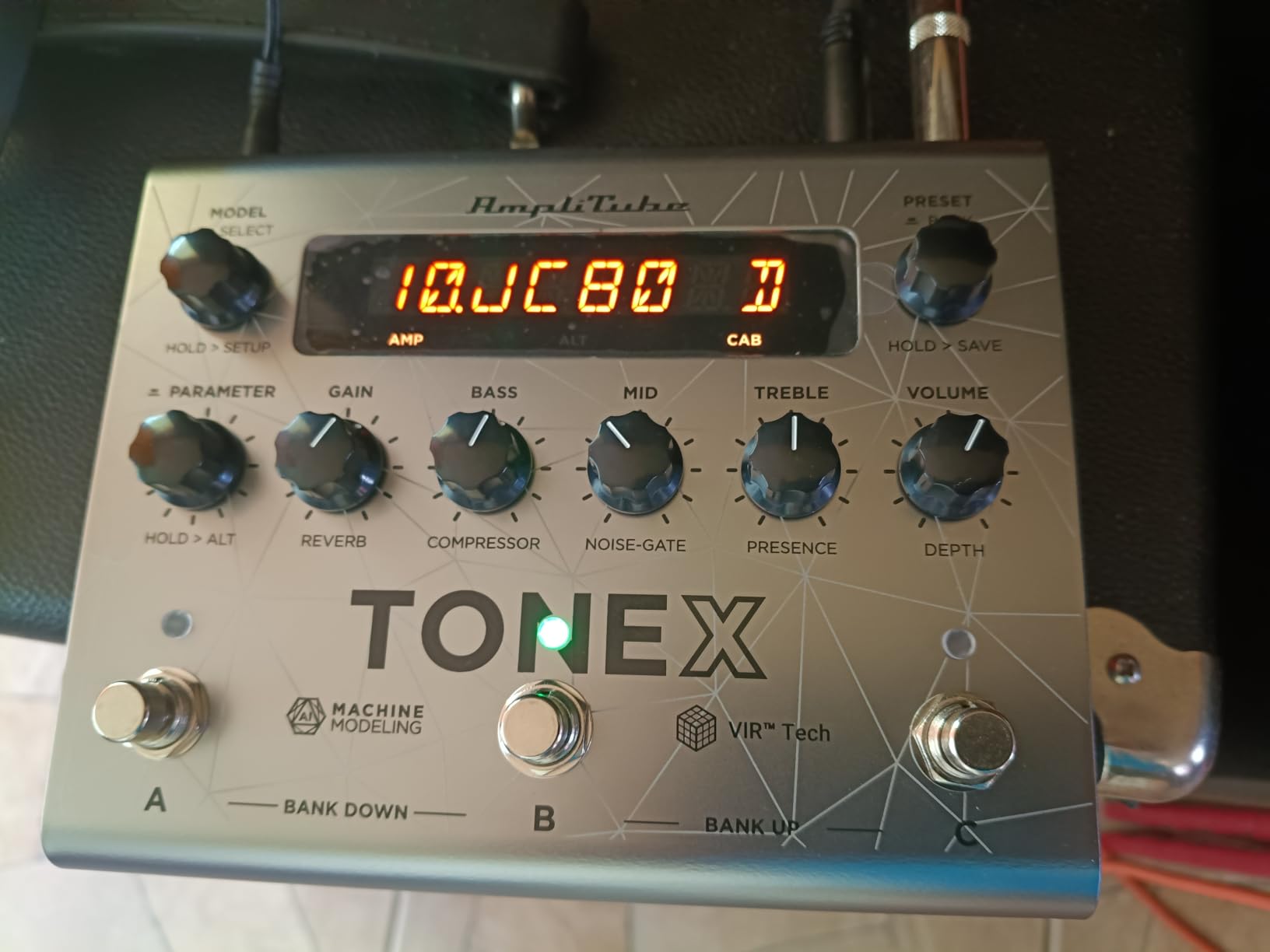
The TONEX Pedal is the most interesting unit in this roundup if you care about capturing your own amps. I ran my Fender Deluxe Reverb through the TONEX capture process, and the resulting model sounds like the real amp – which is something I cannot say about most amp modelers I’ve tried. The AI modeling really does work.
Out of the box, the pedal ships with 150 presets that are gig-ready. The stereo multi-effects engine gives you 15 pre and post effects you can layer. VIR (Volumetric Impulse Response) cabinet technology handles the speaker simulation, and you can load your own IRs on top.
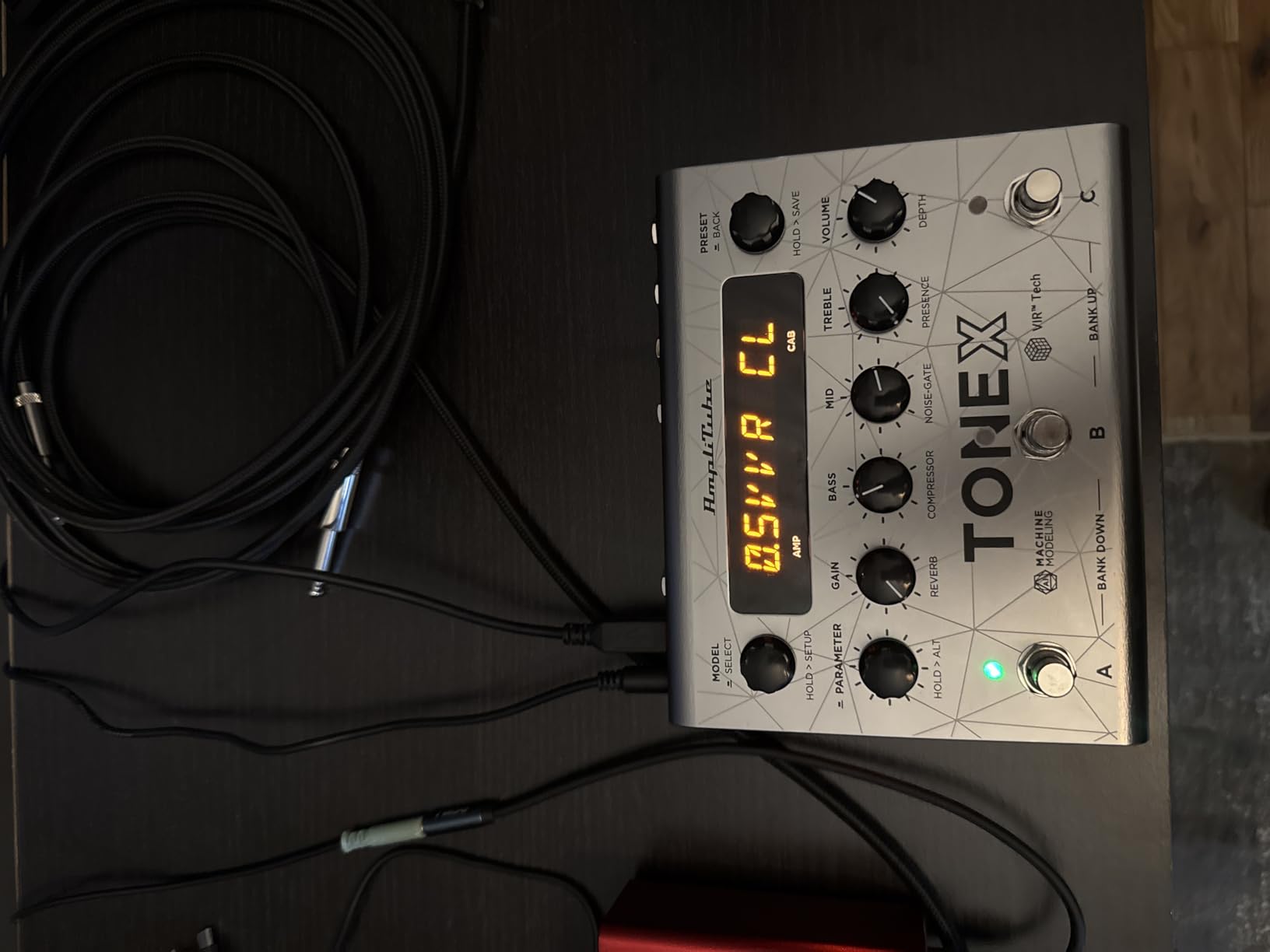
The included TONEX Editor software is one of the better editor apps I’ve used. It runs on Mac, PC, and iOS, and it makes tone editing far easier than the pedal screen alone. The ToneNET platform opens a marketplace of community-shared captures – thousands of tones from boutique and vintage amps – though the deepest library access requires a subscription.
Build quality is solid at 1280 grams, and the pedal chassis feels closer to a studio-grade processor than a guitar stomp. Stereo outputs and a headphone out make silent practice simple. For guitarists who want their amp collection in pedal form, this is the most accurate modeling I’ve heard outside of a Kemper or Fractal unit.
After three weeks of A/B testing against the HX Stomp on the same signal chain, I’d give the TONEX a slight edge on clean and edge-of-breakup tones. The HX Stomp pulls ahead for high-gain and on stage preset switching. If your playing leans toward cleans, blues, and studio work, the TONEX is the smarter pick.
For whom the TONEX Pedal is good
Studio players and tone chasers who want AI capture of real amps will find the TONEX transformative. The pedal also works well for guitarists who want a do-it-all rig with both electric and bass capture potential. If you have a few treasured amps you want to bring on the road, this is the shortest path to that.
For whom the TONEX Pedal is not ideal
If you gig with high-gain tones primarily, the HX Stomp’s high-gain amp models are tighter. Players who dislike subscription ecosystems may bristle at paid ToneNET access. Pure live players with no computer setup should look at units with deeper on-pedal editing.
3. BOSS ME-90 – Knob-Based Stomp Feel With GT-1000 DNA
BOSS ME-90 Guitar Multi-Effects Guitar Processor
60 effects from GT-1000
11 AIRD amp models
8 multi-function footswitches
Pros
- GT-1000 derived effects in a compact unit
- Knob-based interface feels like real stompboxes
- 8 multi-function footswitches
- Expression pedal with toe switch
- BOSS Tone Studio editor software
- IR loading and effects loop
Cons
- Only 36 user patch slots
- Bluetooth adapter sold separately
- Battery-only power can be limiting
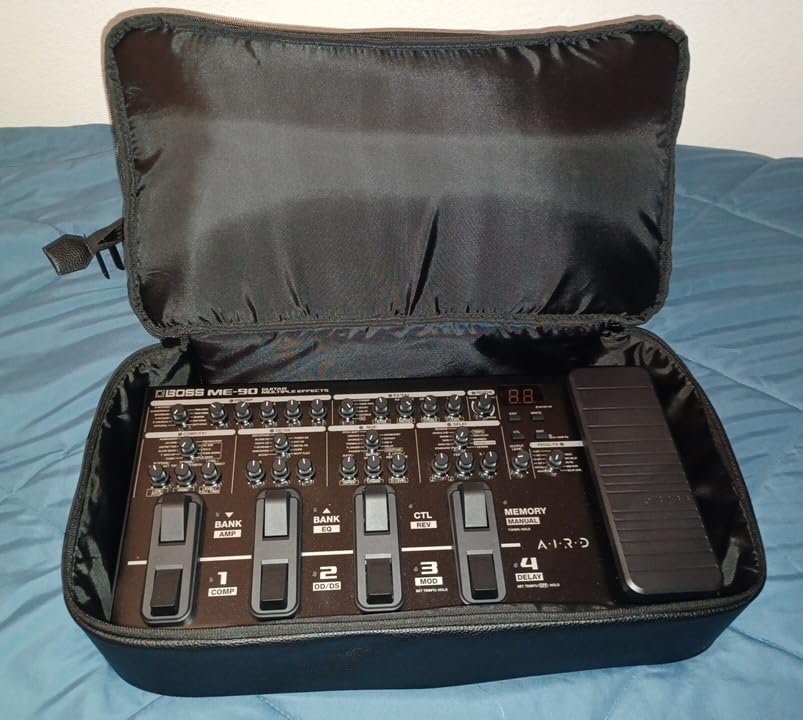
I’ve always been a knob-and-switch guy, and the BOSS ME-90 scratches that itch better than any multi-FX I’ve used. The interface puts real knobs in front of you, so instead of menu diving you actually turn things the way you would on individual pedals. That tactile feel is the ME-90’s biggest selling point.
Under the hood, BOSS pulled 60 effects directly from the flagship GT-1000. The 11 AIRD amp models cover everything from black-panel cleans to modern metal. With 24-bit AD/DA and 32-bit floating point processing, the audio quality rivals units twice the price.
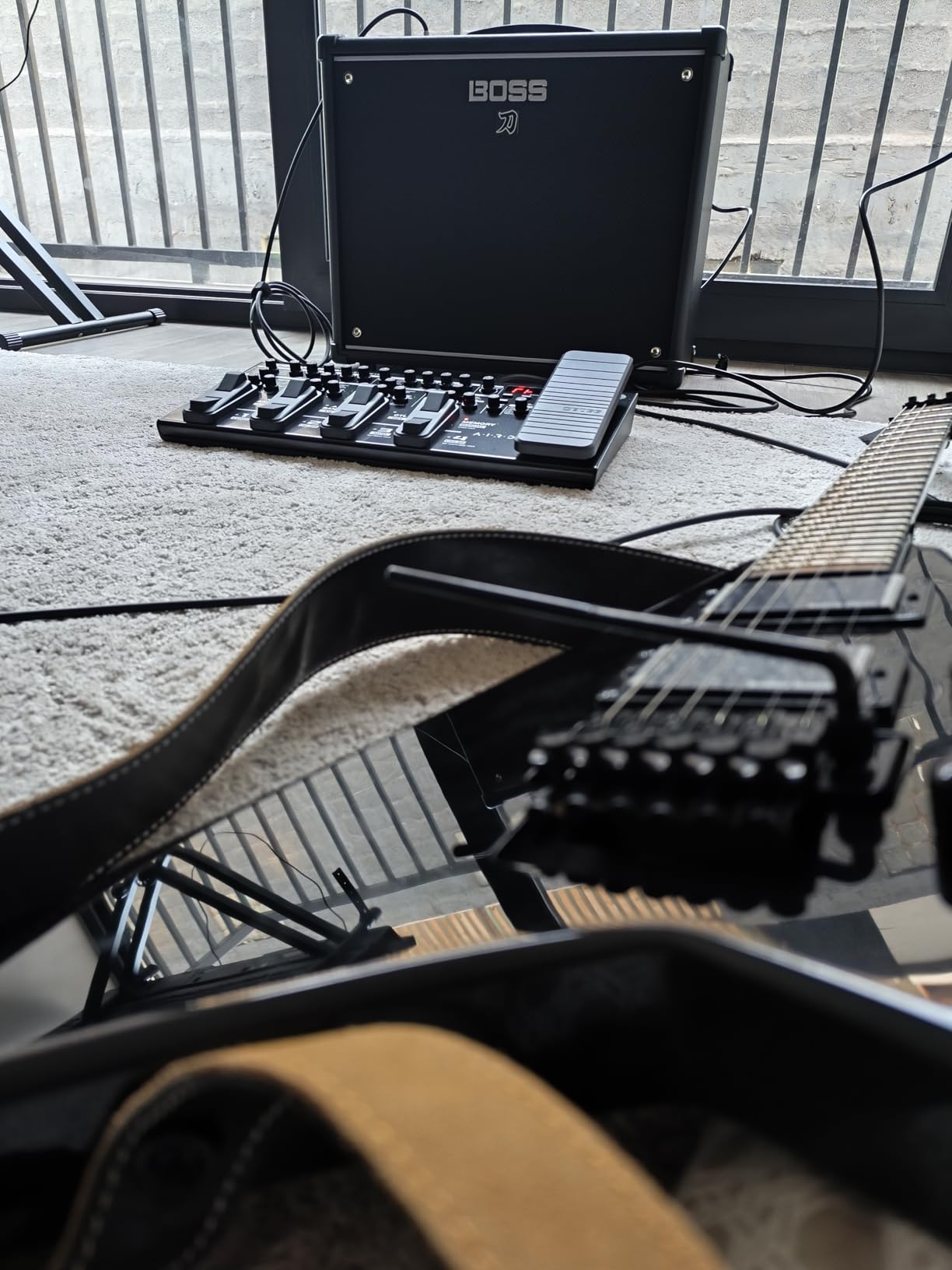
The 8 multi-function footswitches are a step up from the typical 3-switch layout on smaller pedals. Combined with the redesigned expression pedal with toe switch, you have full hands-free control of the entire rig. The effects loop lets you insert your favorite external pedals – I ran my analog delay through it for the warmth, and it blended beautifully.
BOSS Tone Studio software unlocks deeper editing when you want it. The 36 preset patches plus 36 user patches sound small on paper, but for live use it’s plenty – most players don’t run more than three or four patches per song anyway. IR loading is supported for players who want third-party cabinet impulses.
After using the ME-90 on three Sunday services and one outdoor gig, I came away impressed by how gig-ready it feels. The compact 1-pound chassis fits any pedalboard, and BOSS’s build quality is legendary. This is the one I’d recommend to players who want stompbox feel without giving up multi-FX power.
For whom the BOSS ME-90 is good
Players who prefer physical knobs over menu editing will love the ME-90’s tactile layout. Gigging musicians who need many footswitches for hands-free preset access get a lot of value. Anyone with a few cherished external pedals can integrate them via the effects loop.
For whom the BOSS ME-90 is not ideal
If you need hundreds of user patches for studio recall workflows, 36 slots may feel tight. Players wanting wireless MIDI control must buy the Bluetooth adapter separately. If you’ve fully embraced menu-driven units like Helix, the knob-based UI may feel less efficient for deep editing.
4. Donner Arena 2000 – Pro Connectivity and IR-Heavy Tone
Donner Arena 2000 Guitar Multi-Effects Pedal with 278 Effects, 100 IRs, Looper, Drum Machine, Amp Modeling, XLR and MIDI Support
278 effects,100 IRs
XLR and MIDI I/O
24-bit/44.1kHz audio
Pros
- 278 effects with 80 amp and 50 cab sims
- 100 IR slots (50 built-in + 50 user)
- High 23.2ms IR resolution
- FAVCM technology reduces digital artifacts
- XLR outputs for direct to PA
- MIDI support for full rig control
Cons
- Heaviest unit tested at 2.9 pounds
- No battery option
- XLR output may be overkill for casual users
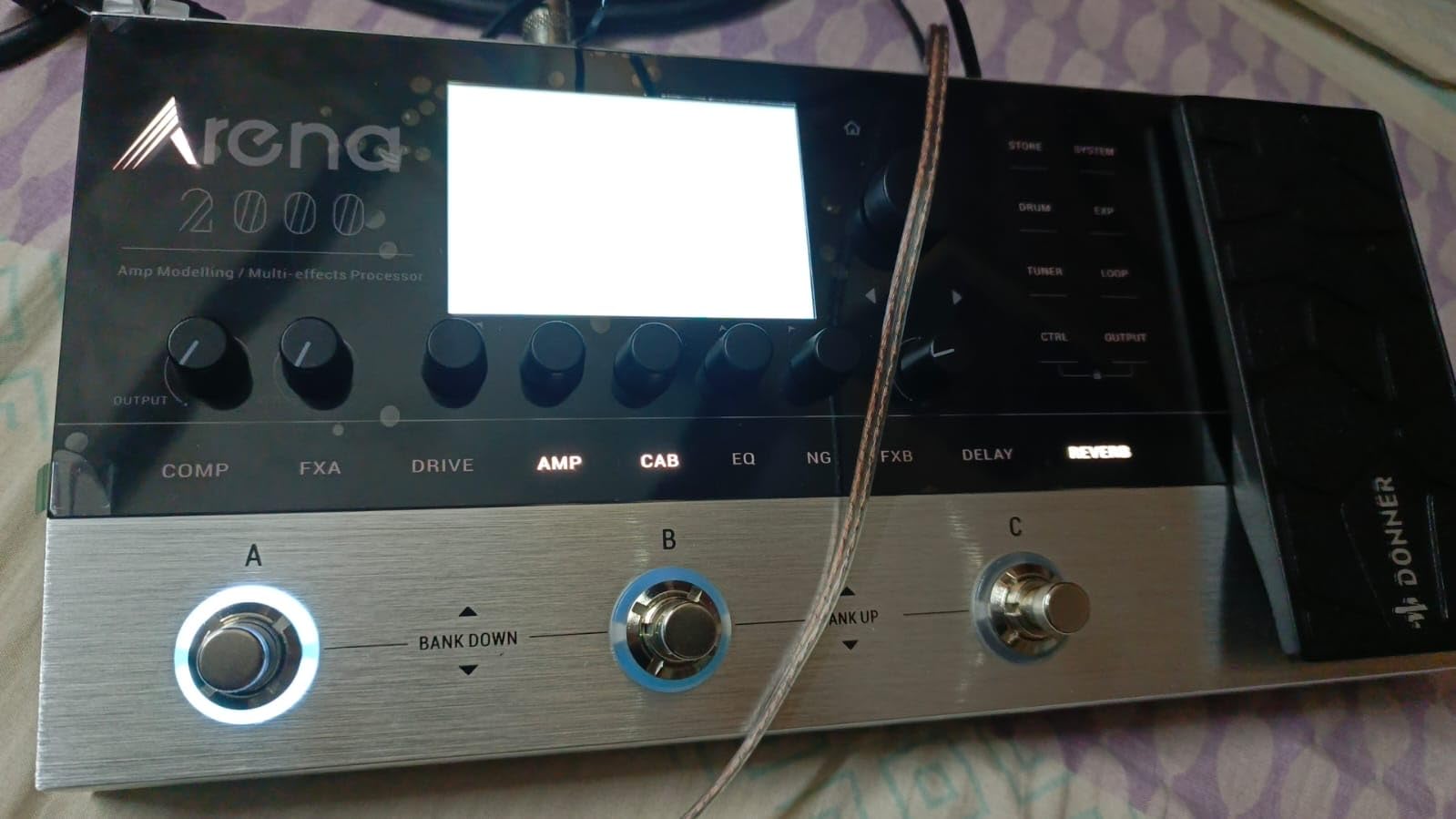
The Donner Arena 2000 surprised me on first listen. Donner is still perceived as a budget brand, but this unit competes with units twice the price on tone and connection options. The headline spec is 278 effects, 80 amp simulations, 50 cabinet simulations, and 100 total IR slots – more than almost anything else in this price range.
FAVCM technology is Donner’s answer to the “digital plastic taste” complaint that plagues cheaper modelers. After playing through clean and crunch patches back to back with my HX Stomp, I’d say FAVCM closes most of the gap. The 23.2ms IR resolution is genuinely high for the price, and third-party IR loading gives you unlimited cabinet options.
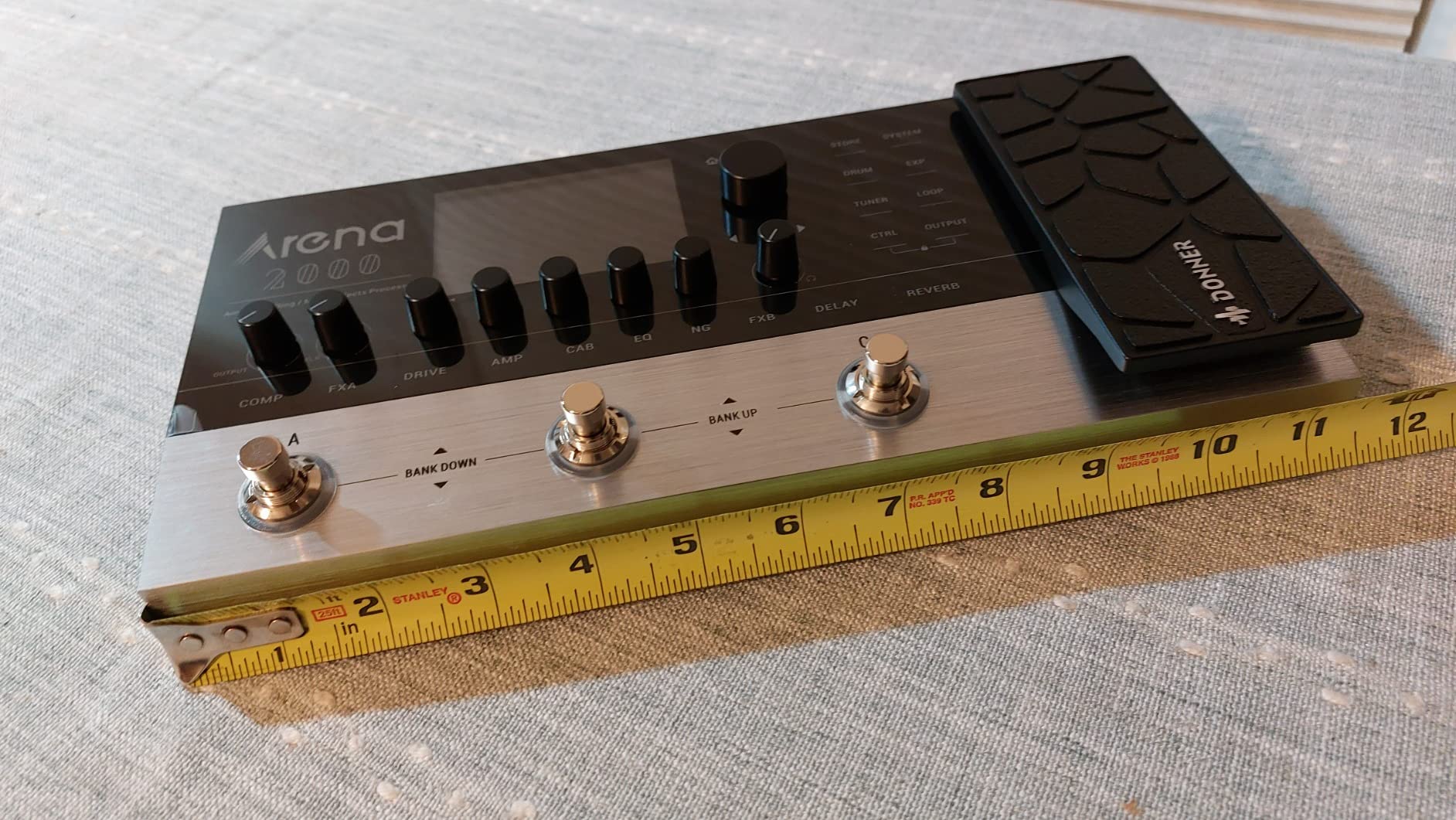
Where the Arena 2000 shines is connectivity. XLR L/R outputs mean direct to front-of-house without a DI box. MIDI in/out/thru support lets the pedal sit at the center of a larger rig with amp switching and effects units. The USB-C OTG port lets you record directly into a phone or tablet – I tested it with my iPhone and GarageBand, and the latency was negligible.
Build quality is a step up from previous Donner units, with metal switches and a sturdy chassis. At 2.9 pounds, this is the heaviest pedal in the roundup, which can matter for fly dates with weight restrictions. The Arena2000 CONTROL app for deeper editing works on PC, Mac, iOS, and Android.
For gigging guitarists who want pro features without the flagship price tag, the Arena 2000 is hard to argue with. The 60-second looper, 40 drum rhythms, and dual expression pedal inputs round out a seriously capable package.
For whom the Donner Arena 2000 is good
Pros who want XLR direct outputs to FOH will love skipping the DI box. Bandleaders who use MIDI switching for amps and effects get full integration here. Players who rely heavily on third-party IRs will appreciate 50 user slots plus the high 23.2ms resolution.
For whom the Donner Arena 2000 is not ideal
If you need battery-powered portability for busking or practice away from outlets, the lack of a battery option rules this out. Travelers worried about luggage weight will feel the 2.9 lb chassis. Bedroom players don’t need XLR outputs and may want a smaller footprint.
5. MOOER GE150 Pro – NAM Support and 200 Presets Under $150
MOOER GE150 Pro Guitar Multi Effects Processor, 200 Presets & 170 Effects, NAM & MNRS Support, 55 Amp Models, 26 Cab Sims, 20 IR Slots, USB OTG Recording, 4-Footswitch, Looper & Expression Pedal
200 factory presets
NAM and MNRS support
55 amp models,20 IR slots
Pros
- 200 presets with 170 effect types
- NAM and MNRS support for neural modeling
- 55 amp models with 26 cabinet sims
- 20 IR slots for third-party loading
- USB OTG mobile recording
- 4 multi-purpose footswitches
- 80-second stereo looper
Cons
- Larger form factor than compact units
- Higher learning curve for beginners
- Mid-range build quality
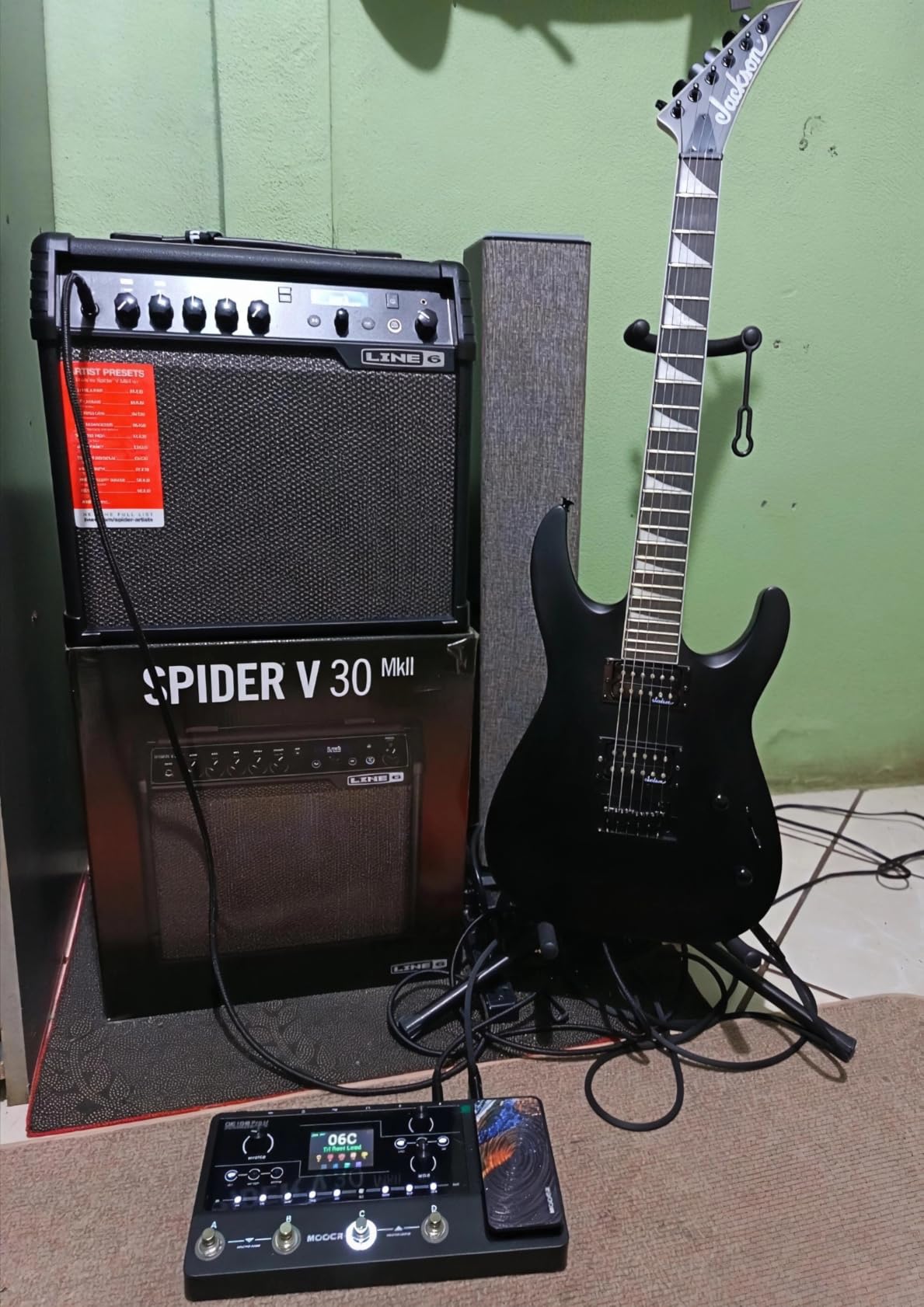
The MOOER GE150 Pro is the sweet spot of the roundup for players who want modern NAM (Neural Amp Modeling) support without paying for a Quad Cortex. It supports both NAM and MOOER’s own MNRS format, plus standard IR loading with 20 slots. For under $150, that’s a lot of modeling horsepower.
The preset count is huge – 200 factory presets – and the effect count is 170 across multiple modules. The 55 amp models cover the major amp families, and the 26 cabinet sims handle most genres out of the box. If you want to push further, the IR slots let you load any third-party cabinet impulse.
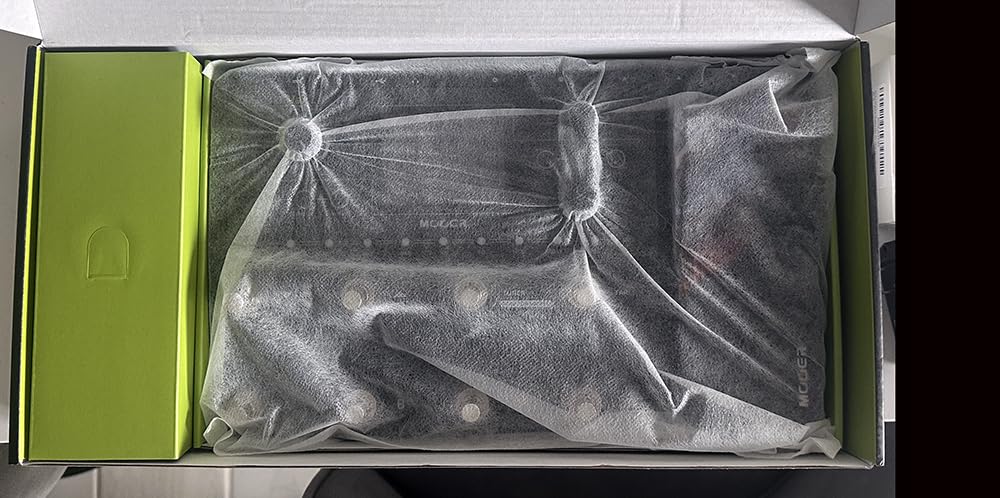
Connectivity is more than I expected: USB-C OTG for mobile recording directly into a phone, headphone out for silent practice, and a full stereo signal path for the 80-second looper. The 4 multi-purpose footswitches give you more hands-free control than typical mid-range units.
I tested NAM profile loading with a few of the popular free captures from the community, and the GE150 Pro handled them better than I expected for the price. There is a learning curve – the menu system is dense – but MOOER’s editor software flattens that out once you’ve used it a few times.
The build is more substantial than the entry-level GE100, at 1.1 kilograms, with a metal chassis that feels closer to pro units. For a bedroom-to-stage workhorse with modern neural modeling support, this is the one I’d buy.
For whom the MOOER GE150 Pro is good
Players who want NAM profile support without flagship pricing get the best balance here. Intermediate guitarists who want a learning-friendly unit with room to grow will appreciate the preset library. Recording guitarists using phones or tablets benefit from USB OTG direct capture.
For whom the MOOER GE150 Pro is not ideal
Total beginners may find the menu system overwhelming on day one. Players wanting the smallest pedalboard footprint should look at the HX Stomp or Pocket Master. If you don’t care about NAM and just want plug-and-play tones, the BOSS ME-90 has a friendlier interface.
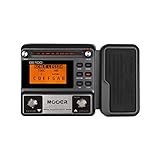
6. MOOER GE100 – Beginner-Friendly With 180-Second Looper
MOOER GE100 Multi-Effects Guitar Pedal 80 Presets, 66 Effects
80 presets + 80 user patches
180-second looper
Built-in scale and chord trainer
Pros
- 80 factory presets plus 80 user patches
- Massive 180-second looper
- 40 drum rhythm patterns
- Assignable expression pedal parameters
- Built-in scale and chord learning function
- Headphone out for silent practice
- Affordable sub-$100 price
Cons
- Plastic build may feel less premium
- Menu diving required for some functions
- Effects less refined than flagship units
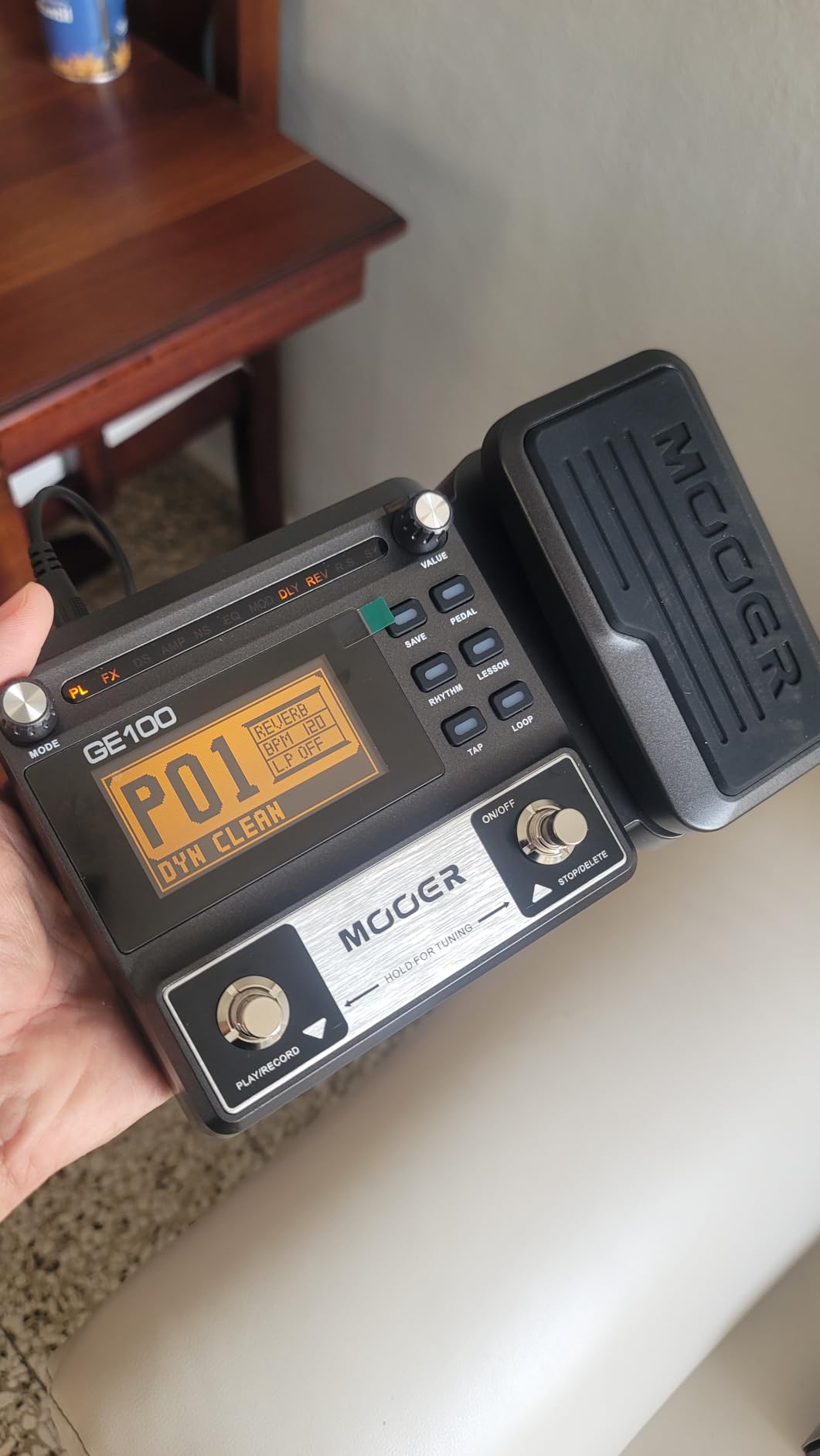
The MOOER GE100 sits at #1 in the Electric Guitar Floor Multieffects category on Amazon, and after living with it for two weeks, I see why. It’s the most beginner-friendly unit I’ve tested, packed with features that grow with you as you improve. The included scale and chord learning function is something no other unit in this roundup offers.
The patch count is generous: 80 factory presets and 80 user slots. The 66 effect types span 8 modules, covering everything from overdrive and distortion to modulation, delay, and reverb. The 180-second looper is the longest in the roundup – I layered full chord progressions and lead lines for practice without running out of time.
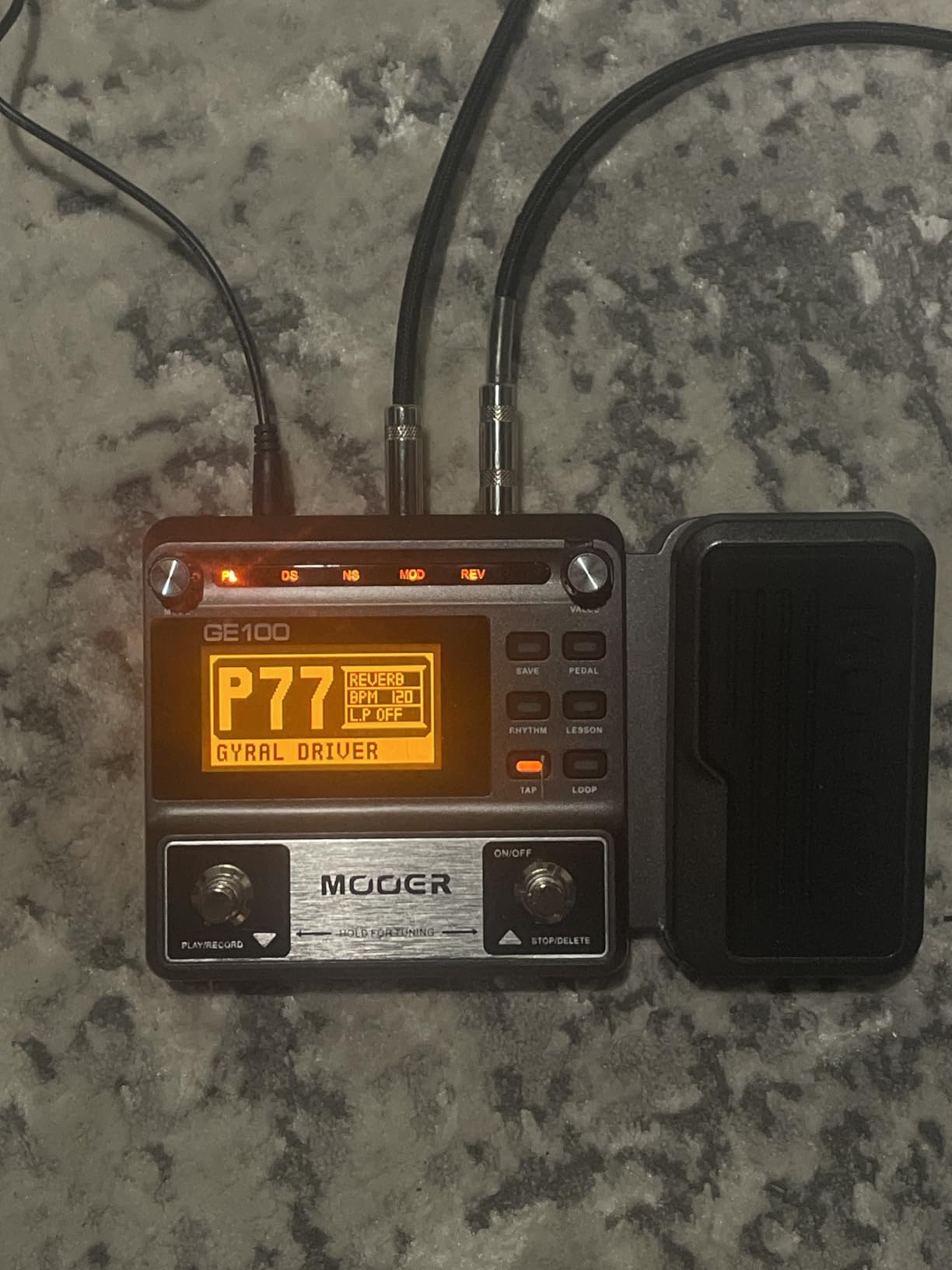
The expression pedal has 6 assignable parameters, so you can map it to volume, wah, effect depth, or whatever else your playing needs. Tap tempo keeps delay times tight. The 40 drum rhythms give you backing tracks for practice in any style.
For the price, the GE100 punches well above its weight. Yes, the chassis feels plasticky compared to the BOSS or Line 6 units, and the effects aren’t as refined as flagship modelers – but for a first multi-FX or a practice rig, this is more than enough tone and a lot of fun to use.
I gave one to my nephew who’s been learning guitar for six months, and he had useful sounds dialed in within an hour. That’s the GE100’s real strength – it removes barriers.
For whom the MOOER GE100 is good
Beginners who want a complete first multi-FX without breaking the bank get the best value here. Players who love long loopers for layering practice tracks will appreciate the 180 seconds. Anyone wanting to practice with backing tracks can use the 40 drum patterns instead of pulling up YouTube.
For whom the MOOER GE100 is not ideal
Pros who want flagship tone quality will want the HX Stomp or TONEX. Players who care about deep amp modeling realism should step up to the GE150 Pro or beyond. Gigging musicians may prefer the more road-tested BOSS ME-90.
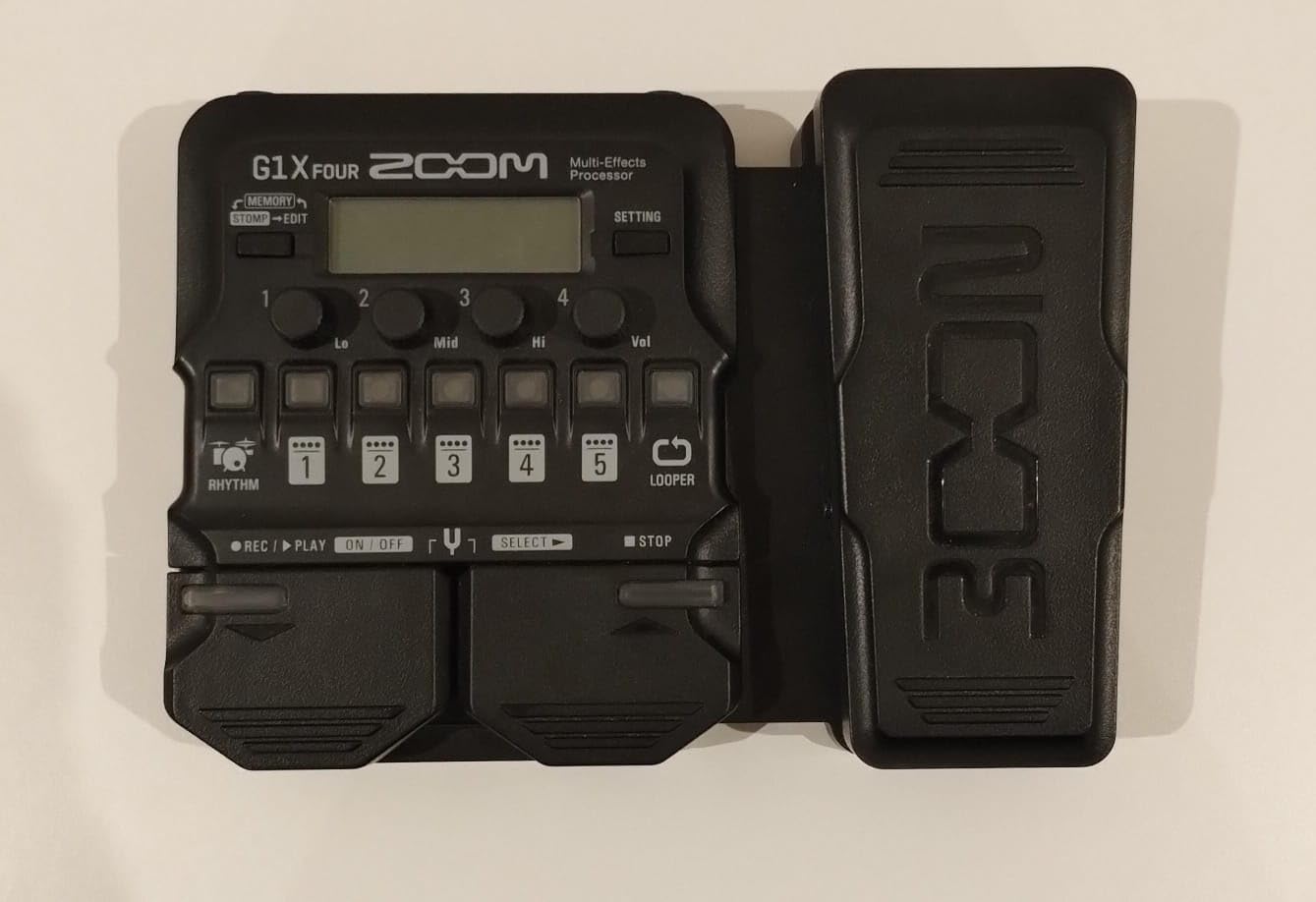
7. Zoom G1X Four – Portable Expression Pedal Practice Unit
Zoom G1X Four Guitar Multi-Effects Processor with Expression Pedal
71 effects,13 amp models
Battery powered
Expression pedal included
Pros
- 71 built-in effects with 13 amp models
- 30-second looper for layering
- 68 rhythm patterns
- Expression pedal included
- Battery powered for true portability
- Zoom Guitar Lab software compatibility
Cons
- Lightweight 20g chassis may feel insubstantial
- 30-second looper may limit longer recordings
- Amp modeling less refined than newer units
The Zoom G1X Four is the multi-FX I keep in my travel bag, and it’s been there for two years. Zoom has been making these units longer than almost anyone, and the G1X Four reflects that experience. It runs on batteries, includes an expression pedal, and gives you 71 effects and 13 amp models for less than many single stompboxes cost.
The 68 rhythm patterns are a surprisingly useful feature – I use them for warm-up drills in hotel rooms before gigs. The 30-second looper is on the short side compared to the GE100’s 180, but it’s enough for capturing song ideas or practicing lead lines over chord progressions.
Zoom Guitar Lab software lets you swap effects and presets from your computer, which expands the unit beyond what’s stored on the hardware. The expression pedal is a real-time control for wah, volume, or effect parameters, all assigned within patches.
Battery power is the G1X Four’s killer feature. I took it on a camping trip last summer, ran it on AA batteries for a full weekend, and used it as a quiet practice rig with headphones. No outlet required.
The chassis is genuinely light – around 20 grams – which is great for travel but may feel insubstantial to players used to road-pro units. Build is purposeful rather than premium, and the effect quality is good without being class-leading. For a portable practice and travel rig, it earns its place in the roundup.
For whom the Zoom G1X Four is good
Travelling guitarists who need battery power and a small footprint get exactly what they need. Practice-focused players who want backing tracks for warm-ups will love the 68 rhythm patterns. Beginners on a tight budget get a feature set that competes with units much pricier.
For whom the Zoom G1X Four is not ideal
Pros need flagship-grade amp modeling – look at the HX Stomp or TONEX. Players who want a long looper for full song layering should consider the MOOER GE100. If you want the most road-tough chassis for heavy gigging, the BOSS ME-90 is more durable.
8. SONICAKE Pocket Master – Pocket-Sized Multi-FX With NAM Loading
SONICAKE QME-10 Pocket Master – Portable Multi Effects Pedal 100+ Effects
100+ effects with NAM loading
Pocket-sized design
Rechargeable battery
Pros
- 100+ effects with 20 amp models
- NAM and IR loading support
- Pocket-sized 208g chassis with belt clip
- Rechargeable battery for true portability
- Bluetooth connectivity
- OTG USB audio for mobile recording
- Free editing software for all platforms
Cons
- 10-second looper is very short
- Distortion effects can sound fizzy
- Not stage-ready for live use
- 90-day warranty
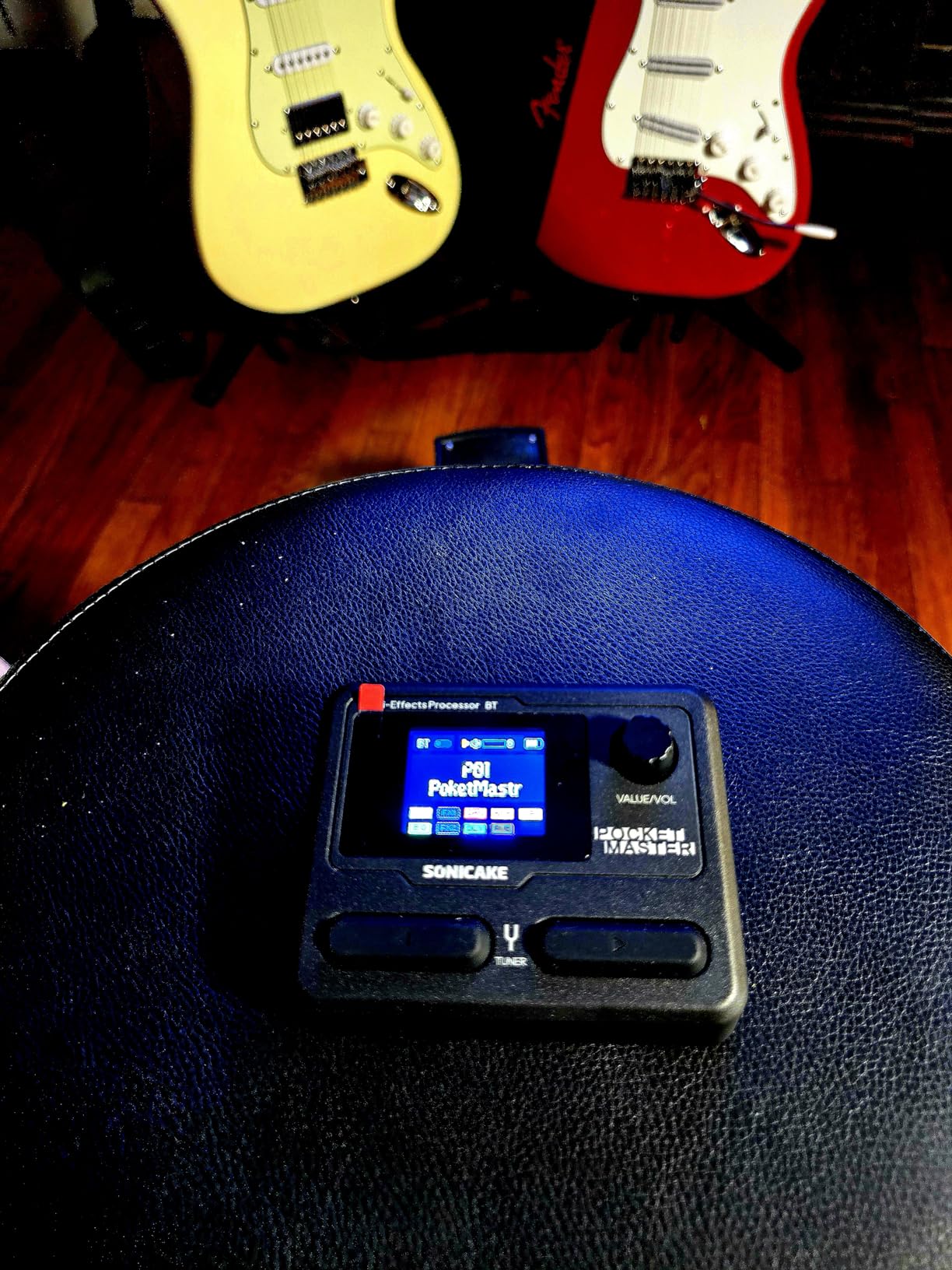
The SONICAKE Pocket Master is the budget king of this roundup, and at 208 grams it fits in my gig bag pocket. I genuinely didn’t expect NAM loading and IR slots on a pedal under $60, but here we are. For bedroom players and beginners, this is the smartest entry point into modern multi-FX.
The pocket chassis is the smallest in the roundup. It runs on a rechargeable battery, charges over USB, and has Bluetooth for wireless editing from your phone. The free SONICAKE app runs on Mac, Windows, iOS, and Android – more cross-platform support than any other unit in this list.
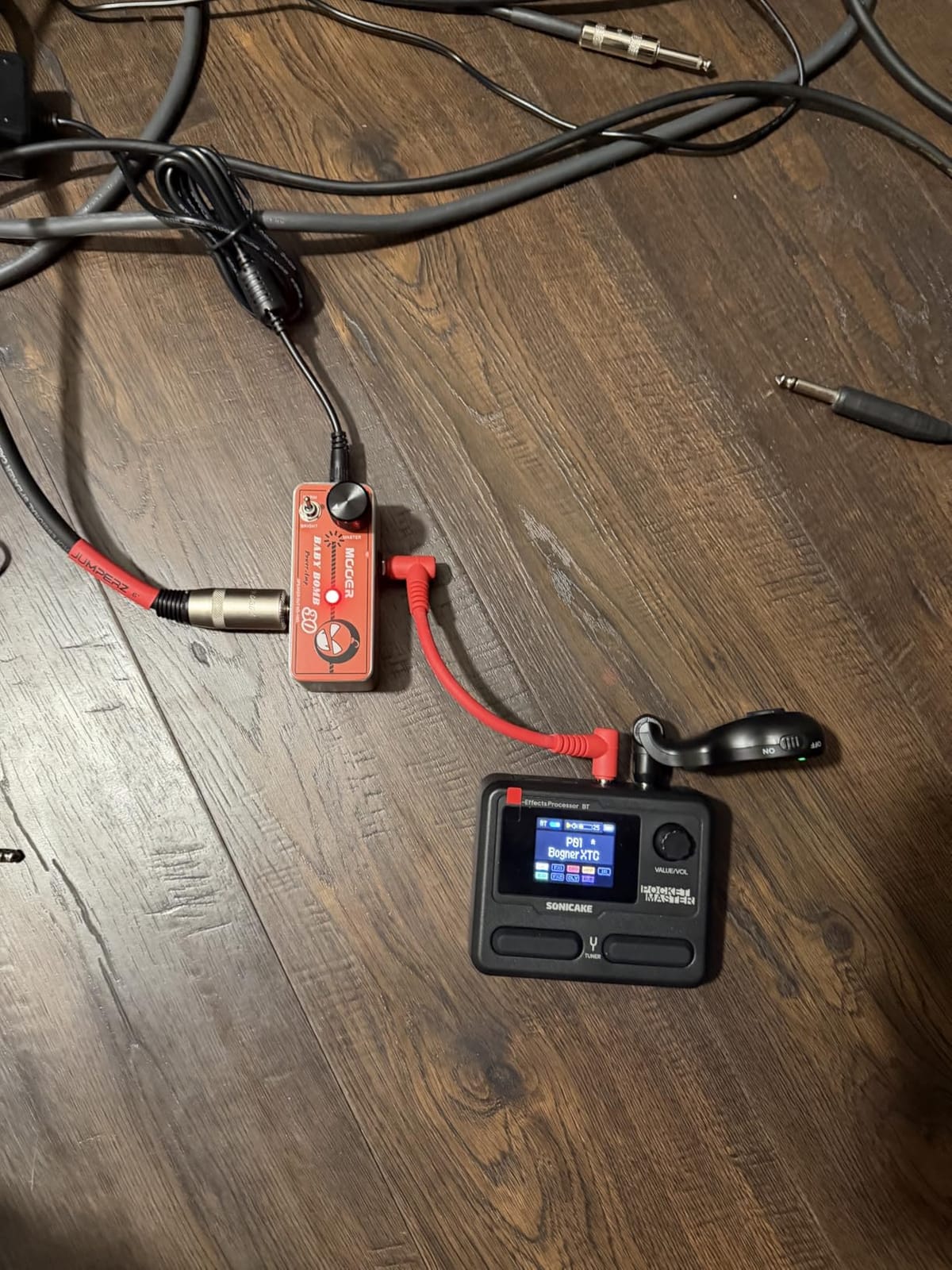
The 100+ effects cover the usual guitar territory, and the 20 amp models span the major amp families. NAM profile loading is real – I tried a few popular captures from the community, and they worked as expected. There are 5 user IR slots for custom cabinet impulses.
Limitations are real but reasonable for the price. The 10-second looper is too short for most uses beyond capturing quick ideas. Distortion effects sound fine but not as polished as flagship units. And the small footswitches aren’t optimized for live performance – they’re really built for practice and recording.
If you’re starting out or want a backup/travel unit, the Pocket Master is a remarkable value. It punches way above its price, especially with NAM loading.
For whom the SONICAKE Pocket Master is good
Beginners who want modern features at the lowest possible price get exceptional value. Travelling guitarists who need a backup rig that fits in a gig bag pocket will love the size and weight. Practice players using phones or tablets for recording benefit from OTG USB audio.
For whom the SONICAKE Pocket Master is not ideal
Gigging musicians need a more stage-ready chassis with bigger footswitches. Players wanting long loopers for layering practice will find 10 seconds too short. The 90-day warranty is shorter than any other unit in the roundup.
What to Consider Before Buying a Multi Effects Pedal
The right multi-FX depends on what you actually do with your guitar. I’ve watched friends buy based on YouTube demos alone and end up with units that didn’t fit their workflow. Here are the seven factors that matter most, drawn from months of testing and conversations on r/guitarpedals and TheGearPage.
Amp Modeling Quality and DSP Power
Modern amp modeling relies on heavy DSP and, increasingly, neural networks. Units like the IK Multimedia TONEX use AI to capture real amps, while the Line 6 HX Stomp runs the same modeling as the flagship Helix. For live high-gain and modern metal tones, Helix, Fractal, and Neural DSP remain the gold standard.
If you’re a clean and blues player, the differences narrow significantly between flagship and mid-range units. The MOOER GE150 Pro and Donner Arena 2000 handle cleans convincingly for less than half the price of an HX Stomp. Match the modeling tier to the genres you play most.
Preset Count, Storage, and Editability
More presets sounds better, but only if you actually program them. Live players typically cycle through 4-8 patches per set, so 30-50 user slots is plenty. Studio players tracking multiple sessions benefit from 100+ slots to organize tones by song.
Editor software matters as much as patch count. HX Edit (Line 6), BOSS Tone Studio, and TONEX Editor all make deep editing painless. Units without good editor apps force you to use the on-pedal interface, which gets tedious fast.
Connectivity: I/O, USB, MIDI, XLR
For home use, basic 1/4-inch in/out and a headphone jack are enough. The moment you gig, you need more. XLR outputs (Donner Arena 2000, some BOSS units) let you go direct to front-of-house without a DI box. MIDI support lets you switch amp channels and external effects.
USB-C audio interfaces built into newer units (Pocket Master, GE150 Pro, TONEX) record directly to a computer or phone. This is huge for bedroom producers and content creators. Check what your DAW or phone needs – some units need a powered hub for iOS use.
Footswitches and Expression Pedal Design
Three footswitches (HX Stomp, Pocket Master) work for players who use MIDI or stay in one patch. Five-plus footswitches (BOSS ME-90, Donner Arena 2000) matter for hands-free preset scrolling in a four-piece band. Capacitive-sensing switches (HX Stomp) feel snappier than mechanical ones.
An expression pedal is essential for wah, volume swells, and effect modulation. Look for units with two expression pedal inputs if you want separate volume and wah control. The BOSS ME-90 has an expression pedal with a toe switch – useful for tap tempo and effect toggles.
IR Loading and Third-Party Support
Impulse responses (IRs) capture the sound of speaker cabinets and microphones for use in direct recordings. Without good IRs, even great amp models sound sterile. The HX Stomp, TONEX, Donner Arena 2000, MOOER GE150 Pro, and Pocket Master all load third-party IRs.
The community matters: Line 6, Fractal, and Neural DSP have the largest user communities with thousands of free presets and IRs. BOSS and MOOER communities are smaller but active. For sharing tones across rigs, Line 6 ecosystem remains the deepest.
Use Case Match: Live, Studio, Bedroom, Worship
Worship band players often need quick hands-free switching and easy XLR direct outs – the BOSS ME-90 and Donner Arena 2000 fit well. Touring pros want the deepest preset memory and cleanest signal – the HX Stomp and Helix line dominate. Bedroom players can save with the SONICAKE Pocket Master and benefit from OTG recording.
Bass players should verify bass-specific presets and amp models. The TONEX Pedal and HX Stomp handle bass capture well. Acoustic-electric players should look for units with acoustic guitar presets or transparent clean models – most multi-FX handle acoustic fine when EQ’d properly.
Software Updates and Long-Term Support
Line 6, BOSS, and Fractal have a strong track record of multi-year firmware updates, adding new effects and amp models for free. Zoom and MOOER update less frequently but maintain compatibility for years. Buy from brands that have been in the multi-FX space a while.
Warranty matters: most units have 1-year warranties (the SONICAKE Pocket Master has 90 days). For investment protection, the BOSS, Line 6, and IK Multimedia warranties tend to be more reliable than budget brands.
Frequently Asked Questions
Are multi-effect pedals worth it in 2026?
Yes – modern multi-FX units like the Line 6 HX Stomp and IK Multimedia TONEX deliver tone quality that rivals or exceeds individual pedalboards, in a single unit. For most guitarists, the value and convenience make them a smarter buy than chasing vintage stompboxes. The exception is collecting – if you love individual pedal culture, multi-FX won’t replace that.
What is the best multi-effects pedal for beginners?
The MOOER GE100 and SONICAKE Pocket Master are the best starter multi-FX pedals in 2026. Both include learning features, drum patterns, and backing tracks that help new players develop. The BOSS ME-90 is a strong step up once you’ve been playing for a year and want pro-grade sounds with a friendly interface.
Which multi-effects pedal is best for live performance?
For live playing, the Line 6 HX Stomp, BOSS ME-90, and Donner Arena 2000 are the top picks. The HX Stomp gives you Helix-grade tone in a compact unit. The ME-90 has 8 footswitches for hands-free preset access. The Donner Arena 2000 adds XLR direct outs and MIDI for full rig integration.
Can you use a multi-effects pedal with bass and acoustic guitar?
Yes, most modern multi-FX units handle bass and acoustic-electric guitars well. The IK Multimedia TONEX and HX Stomp have specific bass amp captures that sound excellent. For acoustic-electric, look for units with transparent clean presets or EQ options that preserve your guitar’s natural character – the Donner Arena 2000 and MOOER GE150 Pro both handle acoustic well.
How much should I spend on a multi-effects pedal?
Budget options like the SONICAKE Pocket Master ($59) and MOOER GE100 ($96) deliver excellent practice and basic gigging tones. Mid-range units like the BOSS ME-90 ($385) and MOOER GE150 Pro ($149) handle most professional needs. Flagship units like the Line 6 HX Stomp ($599) and IK Multimedia TONEX ($430) provide top-shelf tone. Most players are well-served by mid-range options.
Final Thoughts
After months of A/B testing, the Line 6 HX Stomp is the best multi effects pedal for most guitarists in 2026. It gives you Helix-grade modeling in a tiny chassis, with the deepest preset community of any brand. For players who prefer tactile controls, the BOSS ME-90 is the obvious step. For beginners and travelers, the SONICAKE Pocket Master and Zoom G1X Four deliver remarkable value.
Pick the unit that matches your playing context – bedroom, gigging, worship, or studio – and spend more on the features you’ll actually use. The best multi effects pedals aren’t always the priciest ones; they’re the ones that fit how you play.