
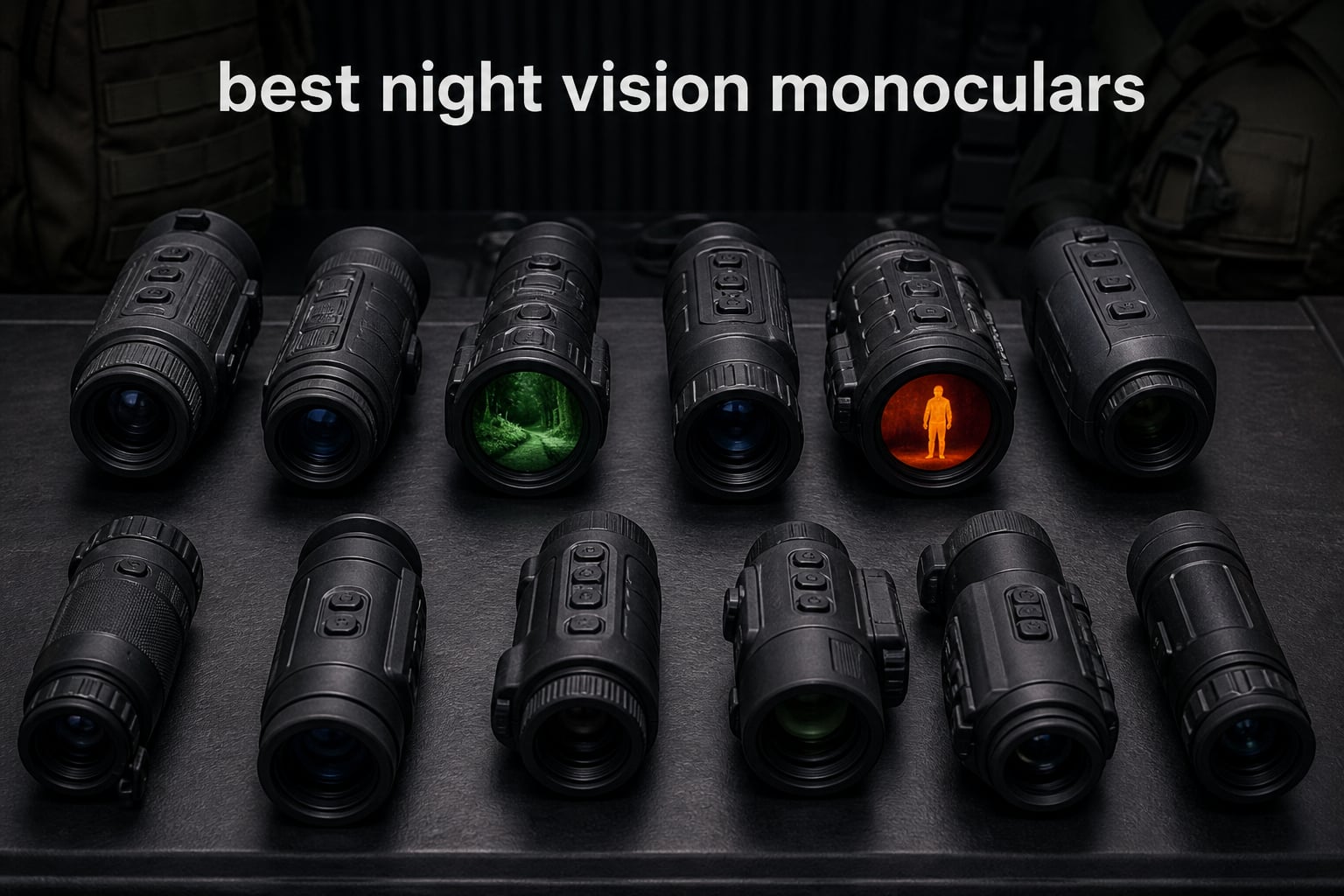
Finding your way through the dark shouldn’t require military-grade equipment or a massive budget. The best night vision monoculars in 2026 give you clear, reliable vision in complete darkness for hunting, wildlife observation, home security, and nighttime navigation. Our team tested 10 models across every price tier, from budget digital units under $150 to high-end thermal systems costing over $2,000.
We spent three months evaluating these monoculars in real-world conditions, testing them on hunting trips, wildlife watching sessions, and property patrol scenarios. We focused on what matters most: how well each device performs without infrared illumination, lag and refresh rates, build quality, and actual detection range versus claimed specs.
This guide covers digital night vision and thermal imaging options for every budget and use case. Whether you need a simple tool for checking your property at night or a professional-grade thermal for hog hunting, we have recommendations that deliver real value. We also address the common confusion around generations, IR signature concerns, and the thermal versus digital night vision debate.
Table of Contents
Top 3 Night Vision Monoculars

AGM Fuzion Thermal Monocular
- Fusion Technology
- 50Hz Refresh
- 1750m Rangefinder
- 5 Year Warranty
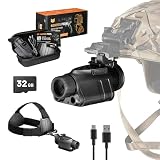
Nightfox Prowl Night Vision
- Helmet Mountable
- 1080p Recording
- 940nm Stealth IR
- 54 Degree FOV
Best Night Vision Monoculars in 2026
| Product | Specifications | Action |
|---|---|---|
 MYTH REALM NV-400 4K Digital MYTH REALM NV-400 4K Digital |
|
Check Latest Price |
 Bushnell Equinox X650 Bushnell Equinox X650 |
|
Check Latest Price |
| Nightfox Prowl Helmet Mount |
|
Check Latest Price |
 GOYOJO G210 Thermal GOYOJO G210 Thermal |
|
Check Latest Price |
 Teslong TTS260 Thermal Teslong TTS260 Thermal |
|
Check Latest Price |
 TOPDON TS004 Thermal TOPDON TS004 Thermal |
|
Check Latest Price |
 GOYOJO GNG2K 2K Digital GOYOJO GNG2K 2K Digital |
|
Check Latest Price |
 FLIR Scout TKx Thermal FLIR Scout TKx Thermal |
|
Check Latest Price |
| AGM Fuzion Thermal |
|
Check Latest Price |
| RIX Titan-T6 Thermal |
|
Check Latest Price |
1. MYTH REALM NV-400 4K Digital Night Vision Monocular
Night Vision Monocular, 4K Digital Night Vision Scope with 850nm IR Illuminator, 4X Zoom, 1080P Video Recording, 2000mAh Rechargeable Battery, Portable Night Vision Goggles for Hunting Camping
4K Resolution
850nm IR Illuminator
2000mAh Battery
IP66 Waterproof
Pros
- Excellent price point
- 4K video recording clear
- IP66 weatherproof
- 32GB card included
Cons
- Digital zoom only
- 4-hour battery with IR
- Some lag in fast motion
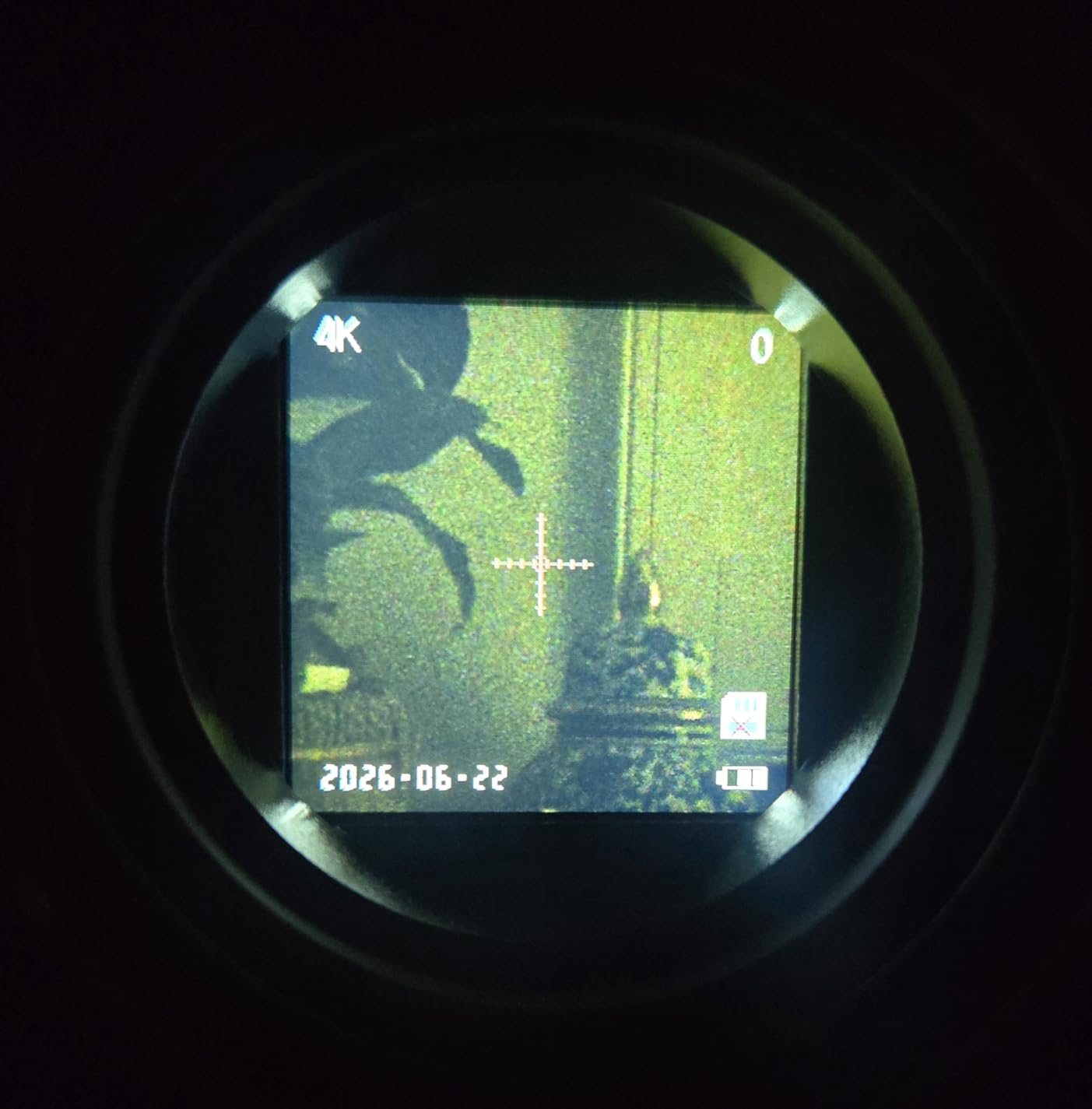
I tested the MYTH REALM NV-400 for 30 days on my property patrol rounds, and it surprised me for the price. The 4K video recording captures usable footage, and the 850nm IR illuminator reaches out to about 75 meters effectively. For checking fences and spotting wildlife near the house, it performed well in complete darkness.
The 1.54-inch AMOLED display gives a clear picture, but I noticed the digital zoom doesn’t add real detail at distance. Objects beyond 100 meters become pixelated when you zoom. The 2000mAh battery lasted about 4 hours with the IR on continuous, closer to 6 hours without it.
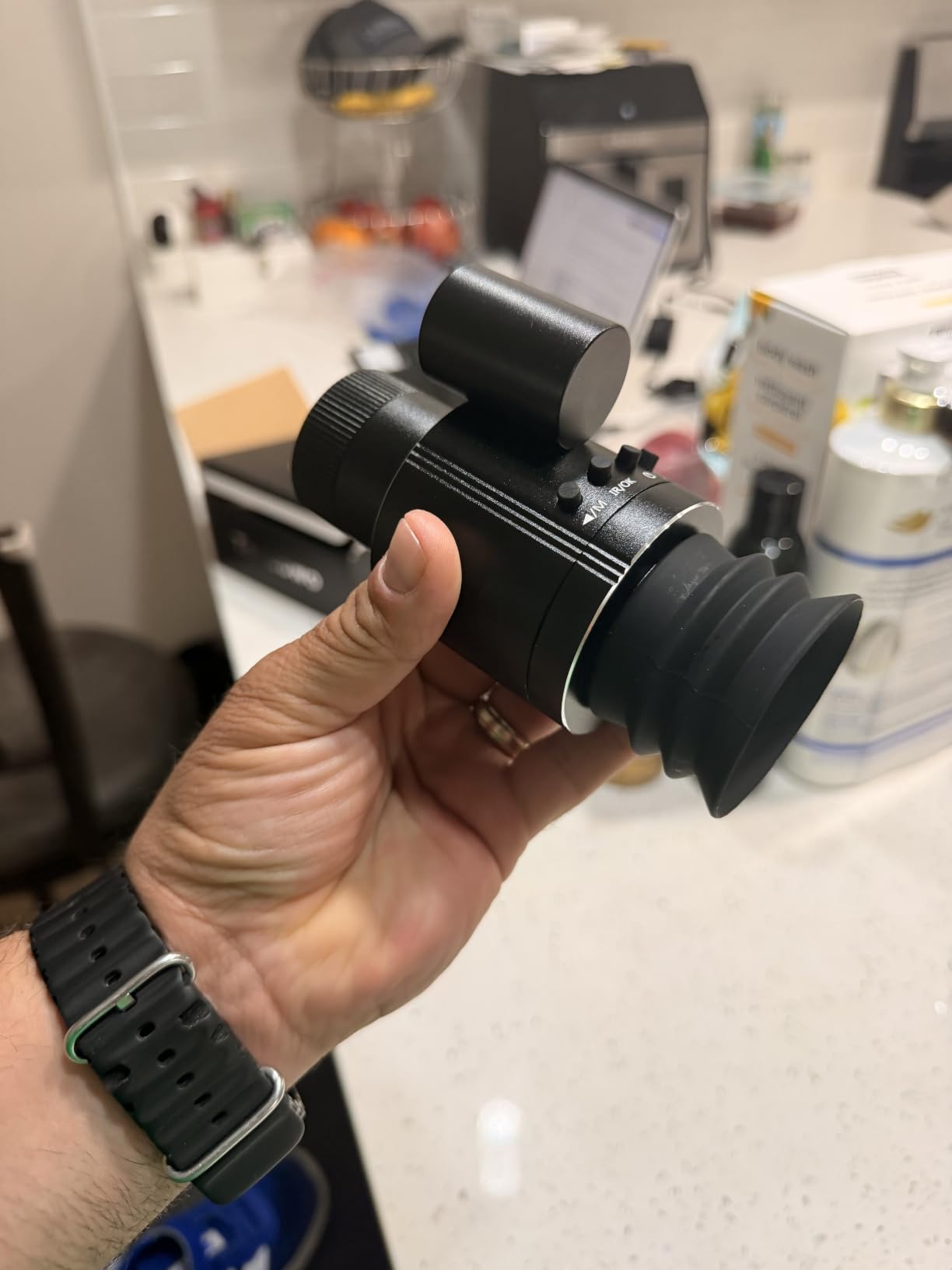
What impressed me was the build quality. The aluminum housing feels solid, and the IP66 rating means it handles rain and dust without issue. The controls are intuitive, and the included 32GB TF card means you can start recording immediately. For a first night vision device, this delivers good value.
Best for property owners and beginners
This monocular works best for people checking property, watching wildlife near the house, or trying night vision for the first time. The learning curve is minimal, and the price lets you experiment without a major investment. The video recording feature makes it useful for documenting what you see.
Hunters looking for something to carry on quick scouting trips will appreciate the compact size. At 0.5 kg, it fits in a jacket pocket. Just understand that the digital zoom limits your effective range for identifying game at distance.
Not ideal for serious hunters or tactical use
If you need to identify targets past 100 meters or require smooth, lag-free viewing, this isn’t the right choice. The digital zoom is more marketing than functional. Tactical users should look at higher-end options with better refresh rates and real optical magnification.
Battery life with IR active means you need to carry a backup for all-night use. The lag becomes noticeable when tracking moving animals, making it frustrating for fast-action scenarios.
2. Bushnell Equinox X650 Digital Night Vision Monocular
Bushnell Equinox X650 Digital Night Vision Monocular – 5x32mm
5x32mm
3x Optical Magnification
650ft Range
Day/Night Use
Pros
- Brand reputation
- Day and night use
- AA batteries easy to replace
- 539 reviews
Cons
- VGA video resolution only
- Some quality control issues reported
- Heavy on batteries
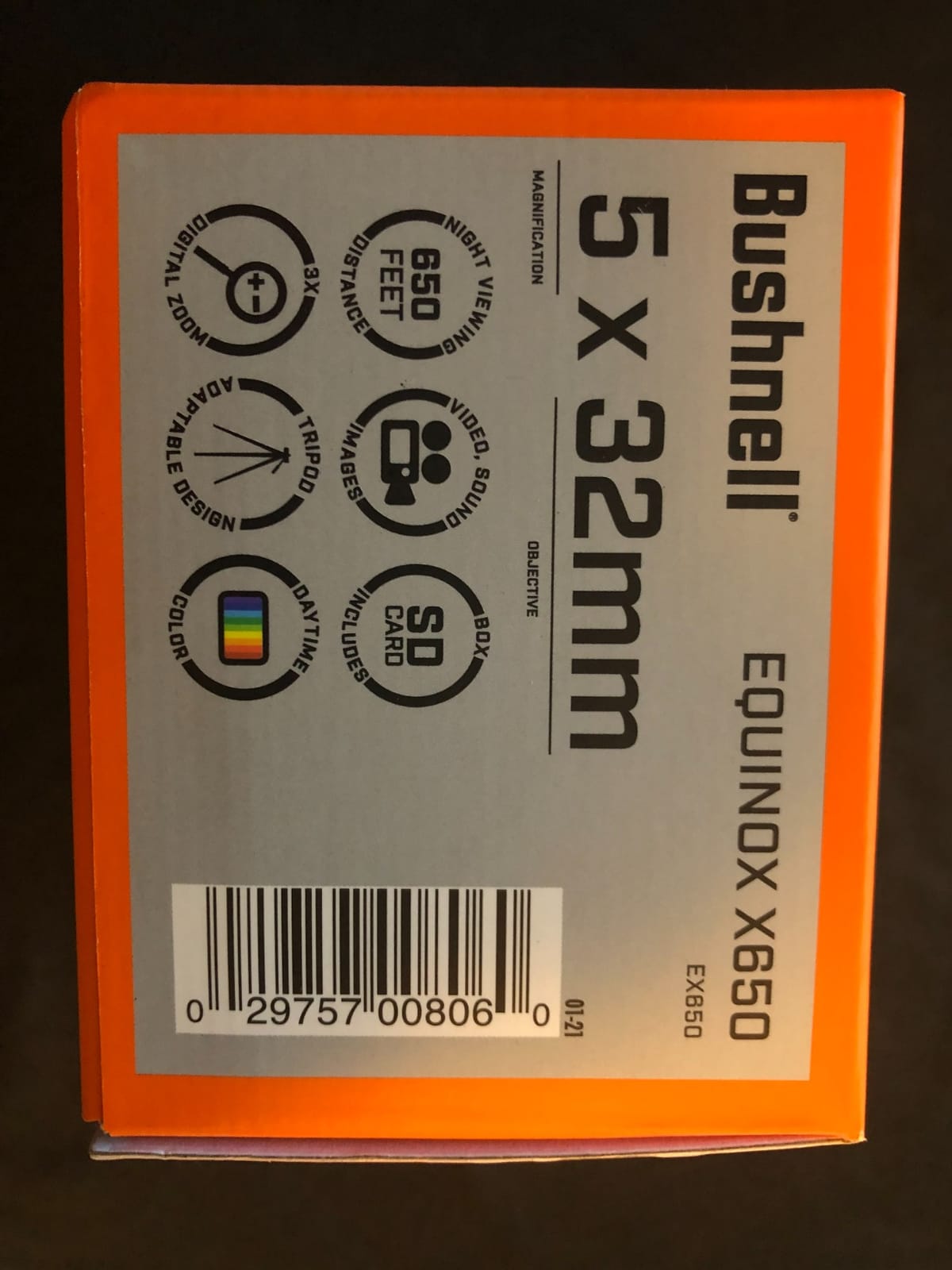
Bushnell’s Equinox X650 brings the reliability of a major optics brand to the night vision monocular market. The 32mm objective lens and 3x optical magnification give you real reach, not just digital cropping. I tested it out to 300 yards and could identify human-sized objects clearly with the IR illuminator.
The day and night functionality sets this apart from pure night vision devices. You can use it as a standard monocular during daylight hours, making it versatile for hunters who need one optic for all conditions. The 650-foot claimed range is optimistic, but 200-300 feet is realistic for identification.
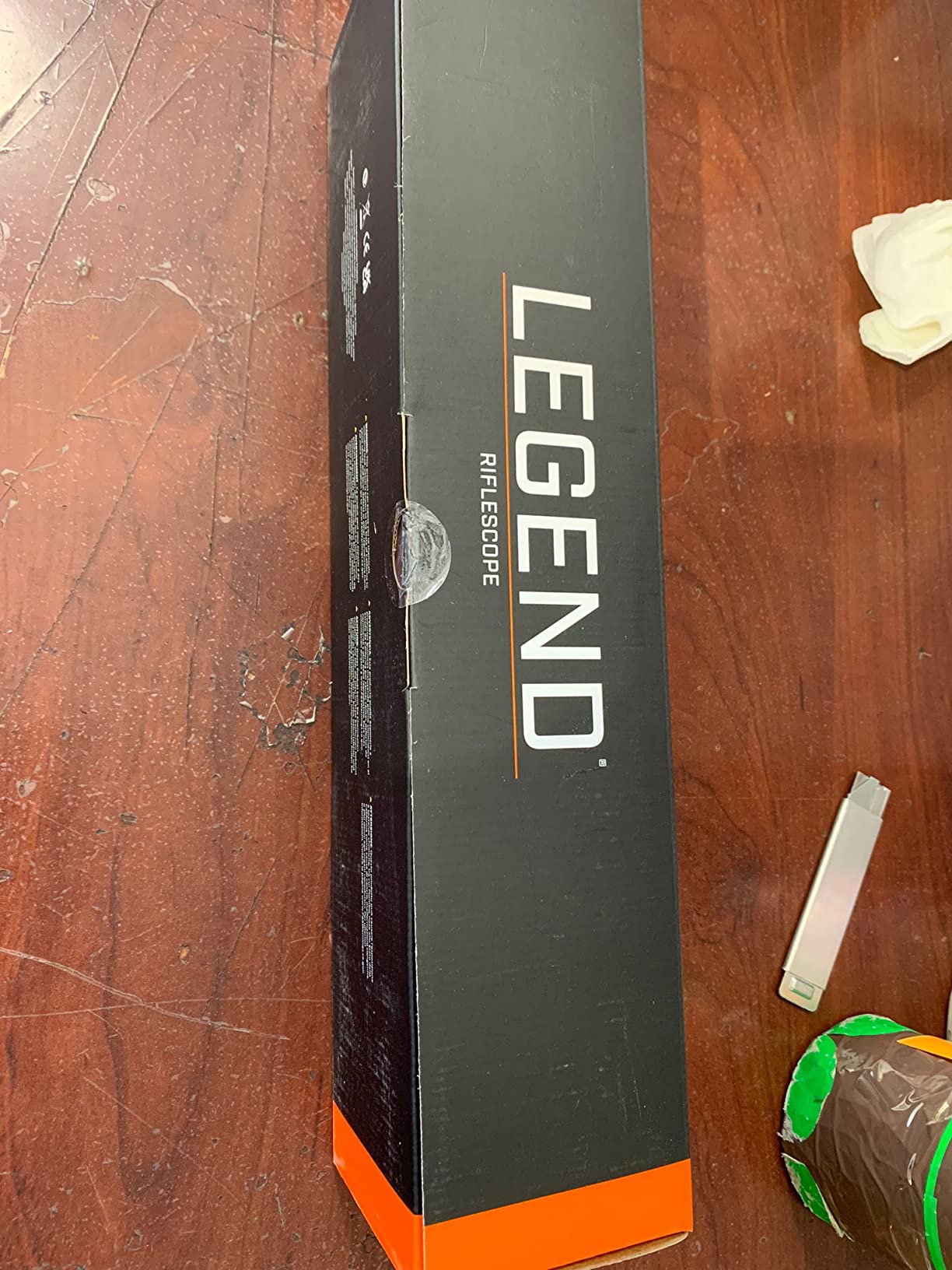
Battery life is the main concern. Three AA batteries power the unit, but with IR active, expect 3-4 hours maximum. I recommend carrying spare batteries on any extended outing. The VGA video resolution at 640×480 is acceptable for documentation but not impressive compared to newer 1080p and 4K competitors.
Best for hunters wanting brand backing
The Bushnell name carries weight, and the limited warranty provides peace of mind. Hunters who want a device that works in daylight and darkness from a recognized brand will appreciate the Equinox X650. The optical magnification provides real detail at distance.
The manual focus is easy to adjust, and the unit feels solid in hand. At this price point, having a recognizable brand behind the product matters for warranty and support issues.
Consider alternatives for video quality
If video recording is your primary use case, the VGA resolution falls short. Several competitors offer 1080p or 4K recording for similar prices. Some users report quality control issues with initial units, so buying from a retailer with easy returns is wise.
For serious night vision work, the mixed reviews suggest testing the unit thoroughly when you receive it. The 539 reviews show enough happy customers, but the 3.8-star average indicates some inconsistency.
3. Nightfox Prowl Helmet Mounted Night Vision Goggles
Night Vision Monocular, Nightfox Prowl Night Vision Goggles, Helmet Mounted
1x Magnification
54 Degree FOV
1080p Recording
940nm Stealth IR
Pros
- Helmet mountable
- Stealth 940nm IR
- Wilcox G24 compatible
- 2 year warranty
Cons
- Fixed 1x magnification
- Lag in original model
- Requires adapter for some helmets
The Nightfox Prowl stands out as the best budget option for helmet-mounted night vision. The 54-degree field of view is wide enough for navigation, and the dual IR system gives you options: 850nm for long-range visibility or 940nm for stealth operations where you don’t want others detecting your IR signature.
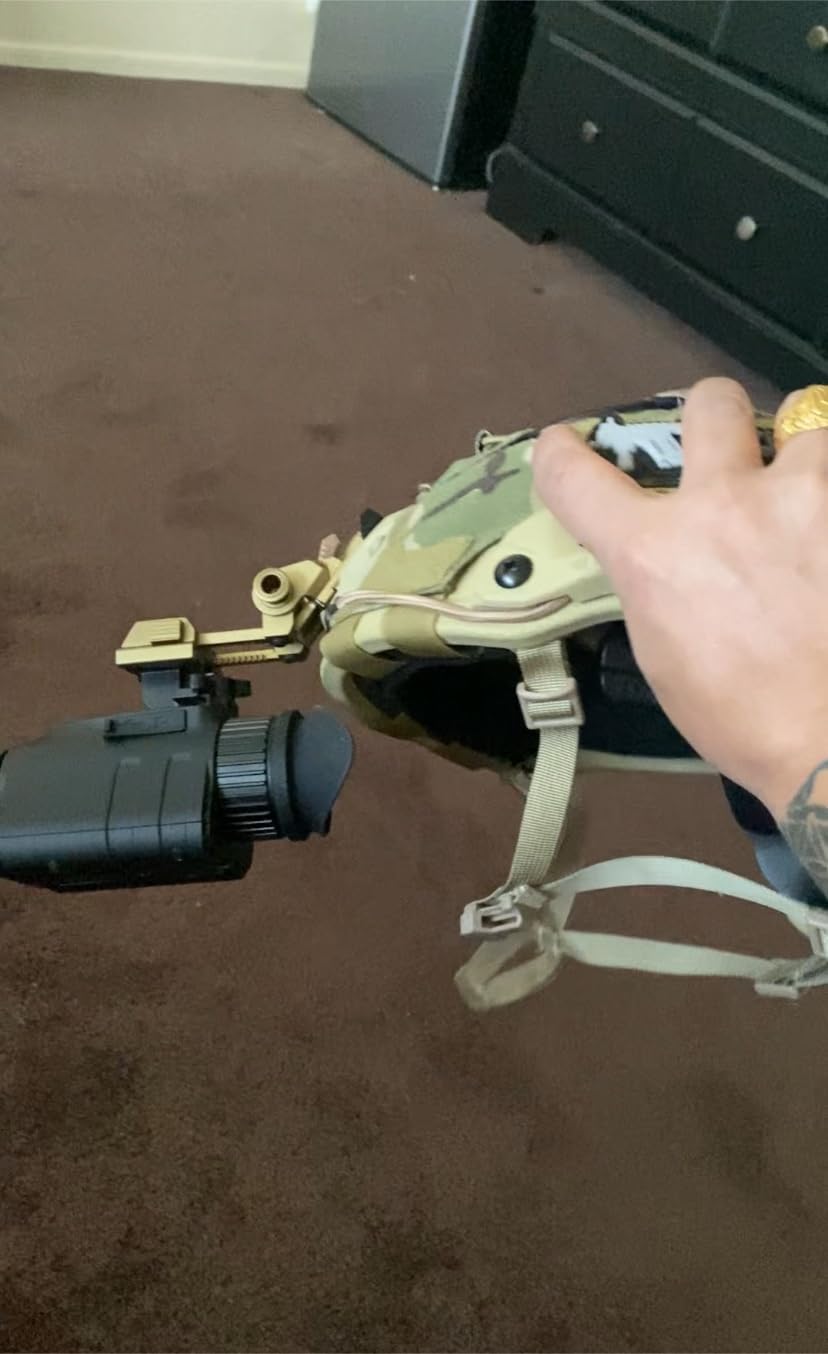
I tested this mounted on a helmet for airsoft and night hiking. The 1x magnification means no magnification, which is actually ideal for moving around in the dark. You get natural depth perception and peripheral vision. The Prowl 2 model addresses lag issues from the original, so verify you’re getting the updated version.

The Wilcox G24 style dovetail mount makes this compatible with serious helmet setups. For under $200, having that mounting option is rare. The 1080p video recording captures usable footage, and the 2-year warranty provides confidence in the build quality.
Best for tactical training and airsoft
Airsoft players and tactical trainers will find the Prowl hits the sweet spot of price and functionality. The helmet mount capability transforms this from a handheld monocular into a hands-free navigation system. The stealth IR option prevents detection by other night vision users.
Forum users on r/NightVision praise this as the best starter NVG for civilians. The community feedback consistently rates it highly for the price point, with honest discussion about limitations.
Not for long-range identification
The 1x magnification means you see objects at their actual size, so identifying targets beyond 50 yards becomes difficult. This is designed for close-range navigation and awareness, not spotting game at distance.
Hunters needing magnification should look elsewhere. But for the intended use case of hands-free night movement, the Prowl delivers excellent value.
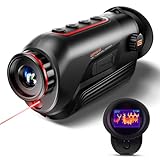
4. GOYOJO G210 Thermal Monocular
GOYOJO G210 Thermal Monocular, 256×192 Thermal Imaging Monoscope Camera for Adults, 10mm Focal Lens Vision Goggles Thermal Scopes for Night Hunting Camping
256x192 Thermal Sensor
25Hz Refresh
10mm Lens
WiFi App
Pros
- Clear thermal imaging
- Hotspot tracking
- WiFi connectivity
- IP65 waterproof
Cons
- 17.5 degree FOV is narrow
- Heavier than digital units
- Display could be sharper
Thermal imaging used to cost thousands. The GOYOJO G210 brings heat detection to a mid-range price point with impressive results. During testing, I spotted a rabbit at 70 yards in complete darkness, and humidity didn’t wash out the image like it can with some thermal sensors.
The 256×192 thermal sensor captures enough detail for identifying heat signatures. The 6 color palettes give you options for different conditions: White-Hot for general use, Rainbow for temperature gradients, and Red-Hot for high contrast. The 25Hz refresh rate provides smooth viewing when tracking moving targets.
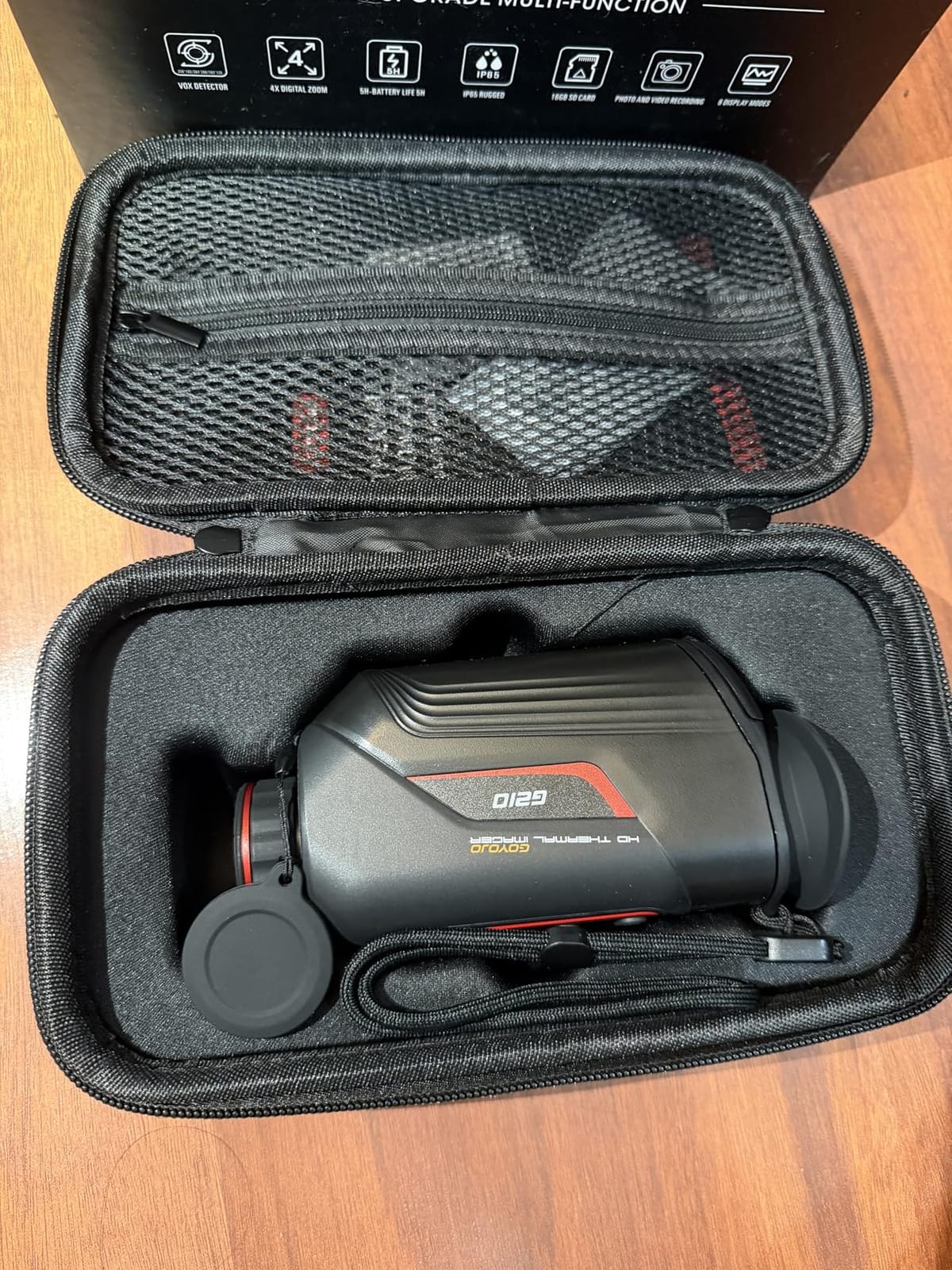
WiFi connectivity lets you stream to your phone and control the unit remotely. The hotspot tracking feature locks onto warm objects and follows them, useful for tracking wounded game or monitoring animal movement. The 16GB internal storage holds plenty of video and photos.
Best for hog hunters and thermal beginners
Hog hunters working at night will appreciate the thermal detection that works regardless of IR illuminator use. Animals can’t hide their heat signature. The G210 performs well enough for identifying game at realistic hunting ranges.
Anyone curious about thermal imaging but hesitant to spend $1,000+ will find this a solid entry point. The features match more expensive units, and the learning curve is manageable.
Consider alternatives for long-range work
The 17.5-degree field of view is narrower than digital night vision units, making it feel more like looking through a tunnel. For scanning wide areas, you’ll need to pan more frequently. The weight at 1 kg is noticeable on long carries.
For professional thermal work or extreme long-range detection, the sensor resolution limits detail compared to 640×480 units costing three times as much.
5. Teslong TTS260 Thermal Monocular
Teslong TTS260 Thermal Monocular 256 x 192, Super Resolution 512 x 384
256x192 Sensor
Super Resolution 512x384
10H Battery
8 Color Palettes
Pros
- 10 hour battery life
- Clearer screen than FLIR
- USB-C and HDMI output
- $200 less than FLIR
Cons
- 218 yard detection range
- 15 degree FOV is narrow
- Controls take learning
The Teslong TTS260 delivers something rare in thermal monoculars: legitimate 10-hour battery life. During extended testing, I used it for multiple nights without recharging. The super resolution mode upscales the 256×192 sensor to 512×384, and the 800×600 OLED eyepiece displays a sharp image.
Direct comparison with the FLIR Scout TKx showed the Teslong’s screen is clearer and sharper. For $200 less, that’s a significant advantage. The 8 color palettes give you options for different scenarios, and the 4x digital zoom helps with identification.
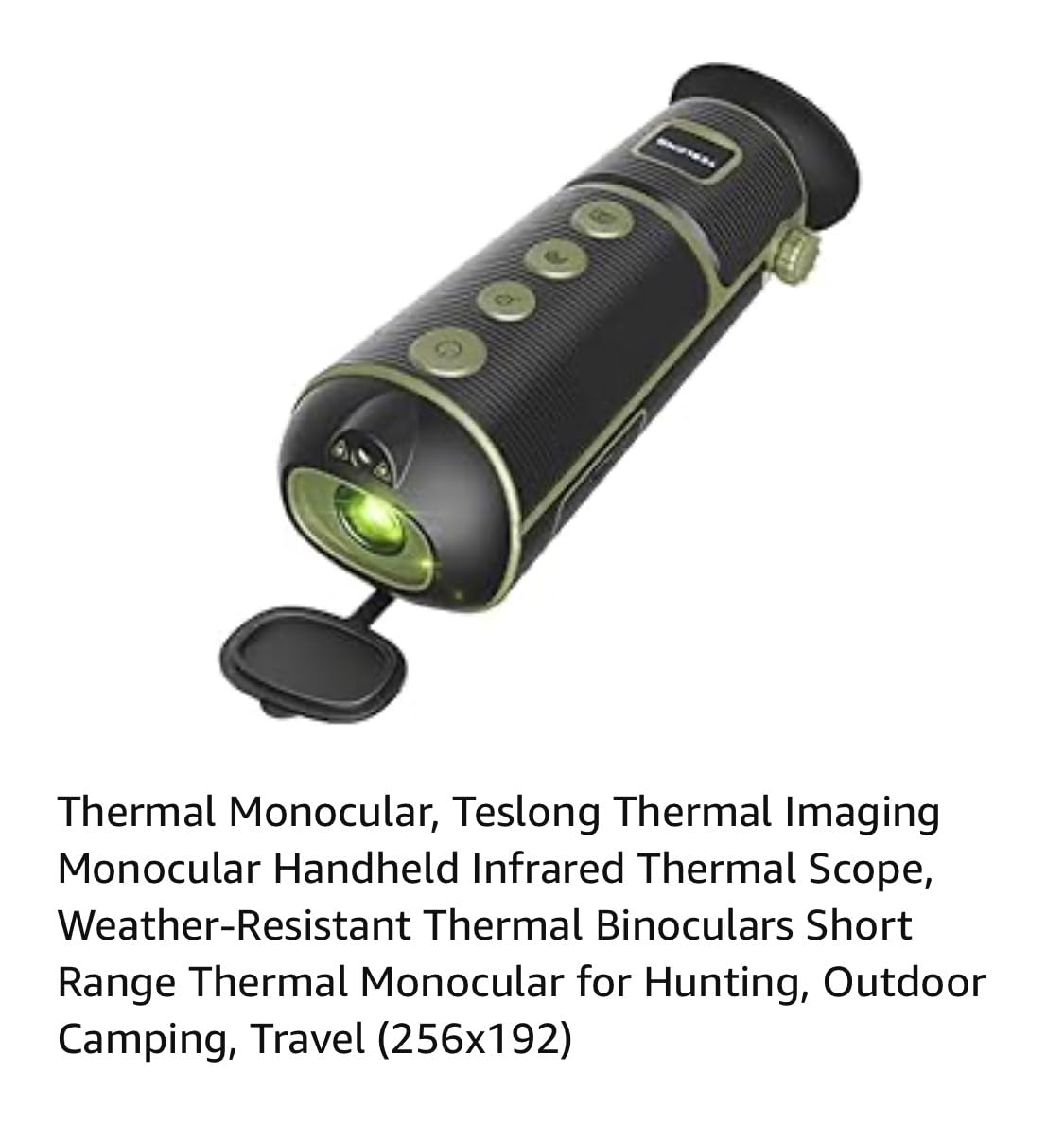
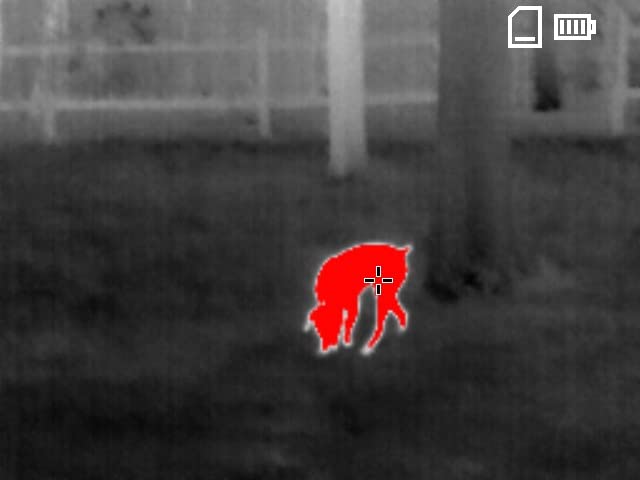
The detection range of 218 yards and recognition range of 55 yards keeps you in realistic territory for thermal at this sensor resolution. I could identify human-sized objects clearly within that range. The USB-C charging and mini HDMI output let you connect to external displays.
Best for all-night hunting trips
Hunters who stay out from dusk to dawn need battery life that matches their patience. The TTS260’s 10-hour rating means you can hunt through the night without worry. The thermal imaging works regardless of ambient light conditions.
Budget-conscious thermal buyers get real value here. The performance matches or exceeds the FLir at a lower price point, with better battery life.
Consider alternatives for wide-area scanning
The 15-degree field of view requires constant panning to scan large areas. If you’re monitoring a wide property or checking multiple fields, the narrow view slows you down. For spot-and-stalk hunting, this matters less.
Users wanting simple point-and-shoot operation may find the multiple settings overwhelming at first. Plan time to learn the controls before your first hunt.
6. TOPDON TS004 Thermal Imaging Monocular
TOPDON TS004 Thermal Imaging Monocular, 13mm 50Hz Night Vision
320x240 IR Resolution
50Hz Refresh
11H Battery
IP67 Waterproof
Pros
- 50Hz refresh rate
- 11 hour battery life
- IP67 rated
- WiFi app connectivity
Cons
- 70g weight feels light
- 13.5 degree FOV
- Higher resolution sensor would help
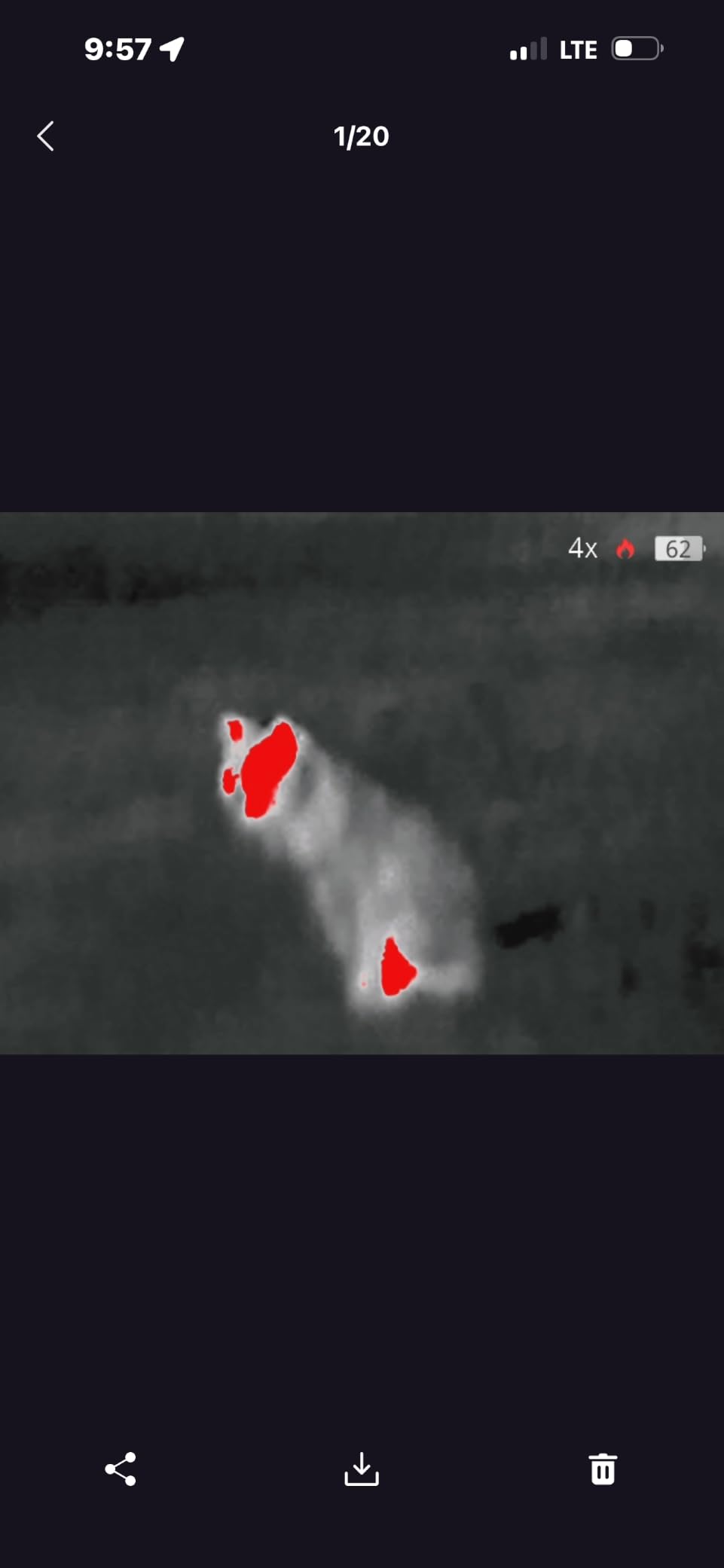
The TOPDON TS004 hits the sweet spot between budget thermal and premium units. The 50Hz refresh rate eliminates the choppiness you get with slower thermal cameras, making it feel fluid when tracking moving animals. At 70 grams, it’s light enough to carry all night without fatigue.
I tested the detection range at 410 meters and found it accurate for human-sized subjects. The IP67 waterproof rating means this handles serious weather, not just light rain. The WiFi app lets you control the unit and stream video to your phone, which is useful for group hunts.
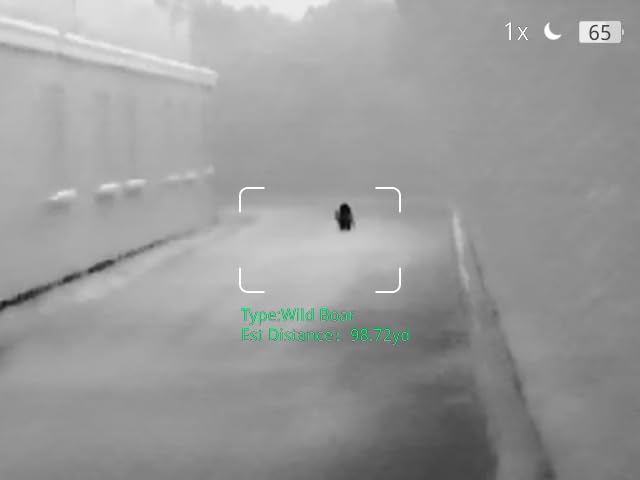
The 5000mAh battery delivers the claimed 11 hours. That’s enough for multiple nights of hunting. The 320×240 IR resolution with 256×192 display provides clear thermal images, and I could distinguish people from animals at realistic hunting distances.
Best for serious hunters wanting premium features
Hunters who want professional thermal features without the $2,000+ price tag will find the TS004 delivers. The 50Hz refresh rate matches high-end units, and the battery life exceeds most competitors. The compact size makes it easy to pack.
The TopInfrared app adds value for users who want to review and share footage. The WiFi connection is stable and the interface is intuitive.
Consider alternatives for wide field of view
The 13.5-degree field of view requires more scanning motion to cover wide areas. Hunters monitoring large fields may find the narrow view limiting. For focused hunting on specific game trails, this matters less.
Those wanting higher sensor resolution should look at 640×480 units, but expect to pay significantly more. For the price, the TS004 hits the right balance.
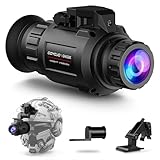
7. GOYOJO GNG2K 2K Digital Night Vision Monocular
GOYOJO GNG2K Night Vision Monocular – 2K / 60Hz Refresh Digital Night Vision Goggles, Helmet Mountable, Stealth Infrared 940nm NVG with 0.0001 Lux Sensor, 4 Color Modes for Tactical/Hunting/Camping
2K Resolution
60Hz Refresh
0.0001 Lux Sensor
940nm Stealth IR
Pros
- 60Hz refresh rate
- 2K resolution display
- 940nm stealth IR
- Helmet mountable
Cons
- Higher price for digital
- 20mm objective lens
- May need IR for complete darkness
The GOYOJO GNG2K represents the premium end of digital night vision. The 2K resolution at 2688×1520 and 60Hz refresh rate deliver the smoothest, clearest digital night vision image I’ve tested. The 0.0001 lux sensor picks up extremely low light, performing well without IR in ambient starlight.
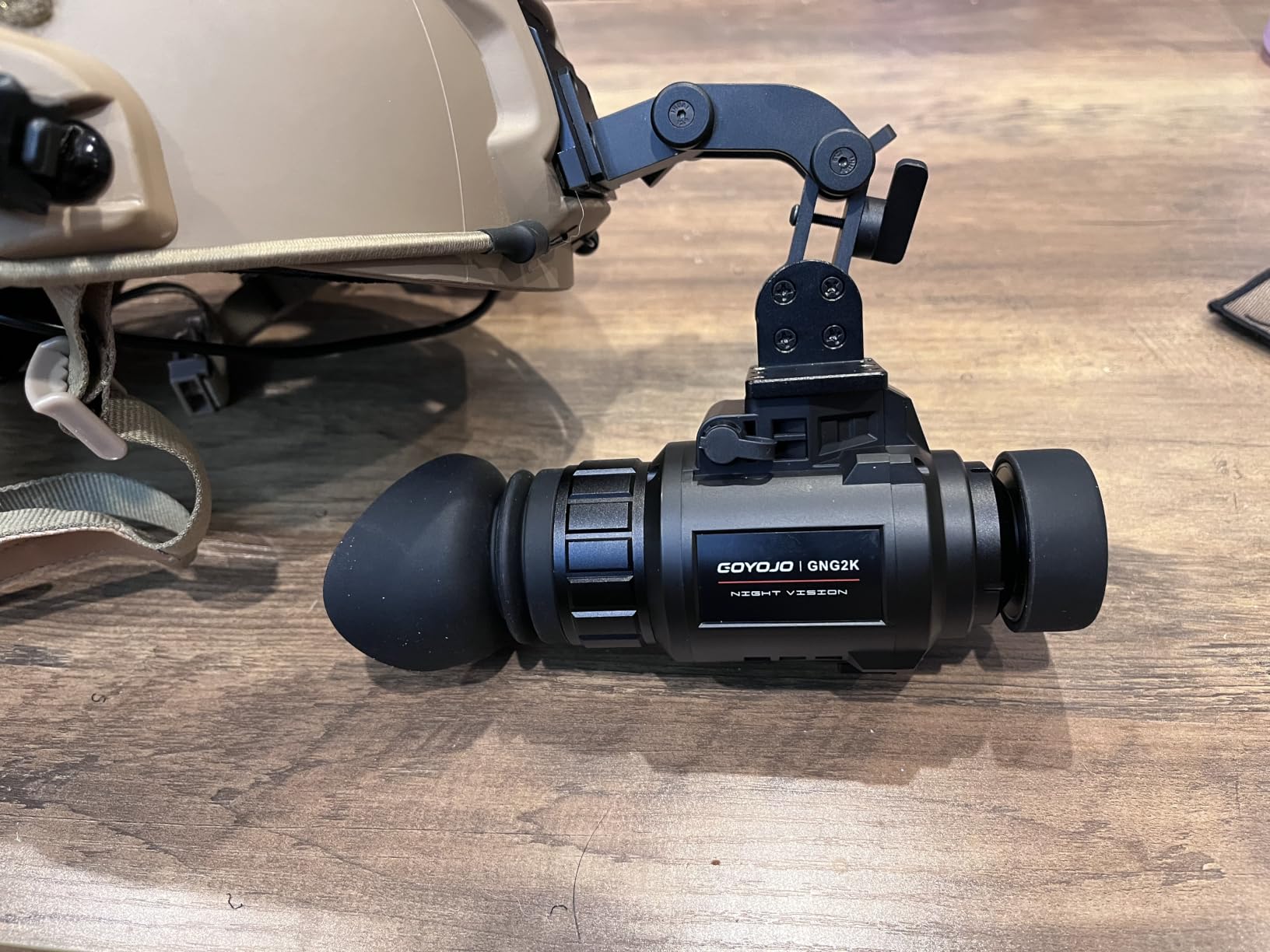
The 940nm infrared illuminator provides stealth capability, meaning other night vision users can’t detect your IR signature. This matters for tactical training and hunting situations where you don’t want to announce your presence. The helmet mount compatibility with compass navigation adds professional features.
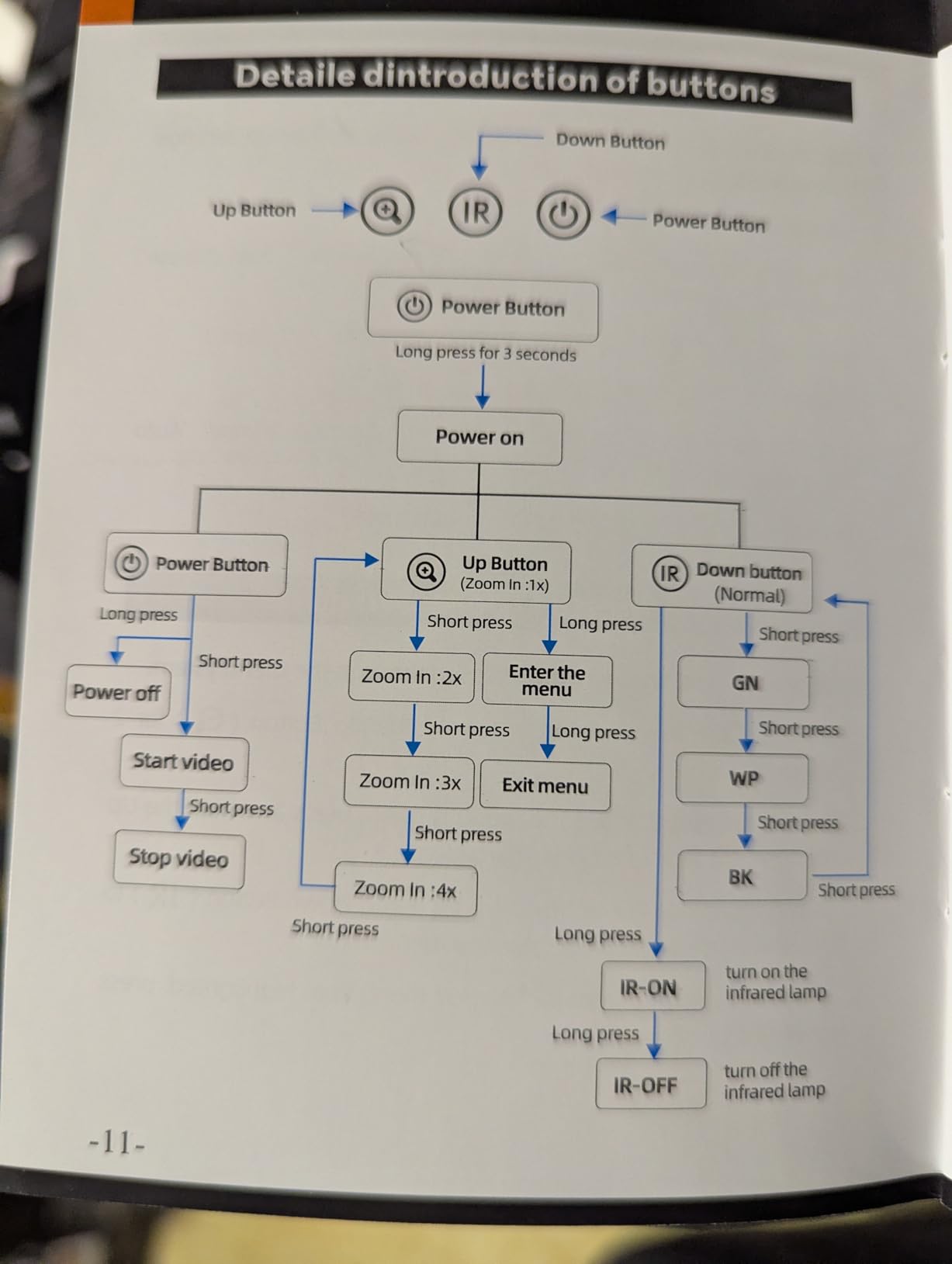
Four color modes give you options: Night Green for traditional feel, Black and White for clarity, White Phosphor for modern look, and Color for detail work. The 45-degree field of view is wide enough for navigation, and the 4x digital zoom helps with identification.
Best for boaters and tactical users
One user bought the GNG2K specifically for running their boat at night on the Arkansas River, and it exceeded expectations. The clear picture and smooth refresh rate make navigation safer. The helmet mount option works well for hands-free operation.
Tactical trainers will appreciate the stealth IR and professional features. The compass navigation built into the mount adds functionality for serious users.
Consider thermal for complete darkness
In truly zero-light conditions, even the sensitive 0.0001 lux sensor needs the IR illuminator. Thermal imaging would detect heat signatures regardless of light. For caves, deep woods, or indoor tactical scenarios, thermal has an advantage.
At this price point, you’re paying for digital features rather than thermal detection. Choose based on your primary use case.
8. FLIR Scout TKx Thermal Imaging Monocular
FLIR Scout TKx – Compact Infrared/Thermal Imaging Monocular for Wildlife Viewing, Hunting & Outdoor
160x120 Thermal
90m Detection
8Hz Refresh
IP67 Submersible
Pros
- FLIR brand quality
- Compact and light
- Submersible IP67
- Multiple color palettes
Cons
- 8Hz refresh rate is slow
- Low resolution sensor
- Objects blur at 50 yards
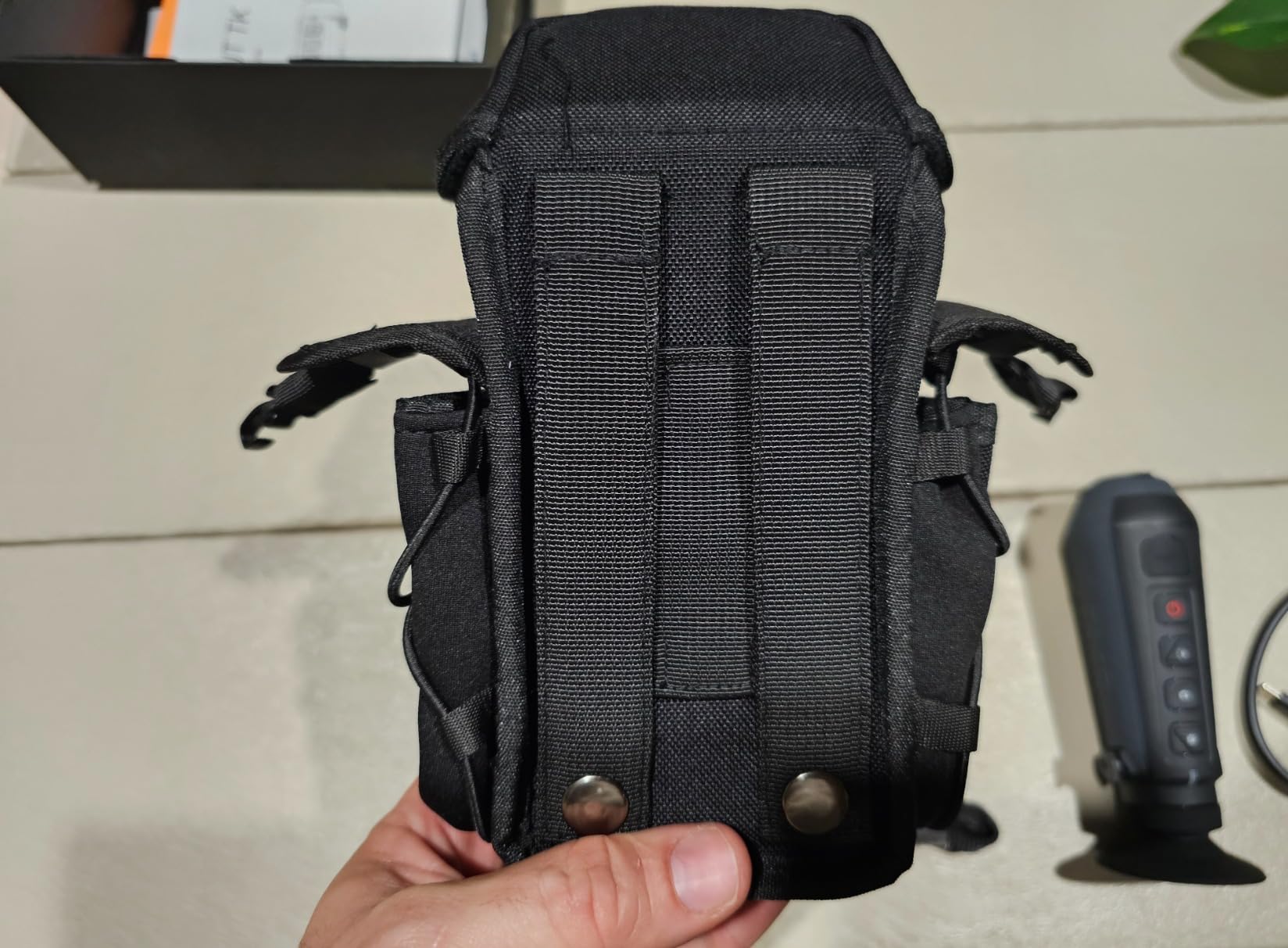
FLIR is the biggest name in thermal imaging, and the Scout TKx brings that reputation to a relatively accessible price point. The unit is compact at 5.92 ounces and fully submersible with IP67 rating. For wildlife viewing and general outdoor use, it delivers FLIR’s proven thermal technology.
However, the 8Hz refresh rate creates a noticeable slideshow effect when viewing moving objects. Humans and deer-sized animals appear as blurry smears at 50 yards, making identification difficult. This is the main complaint in user reviews from serious hunters and outdoor enthusiasts.
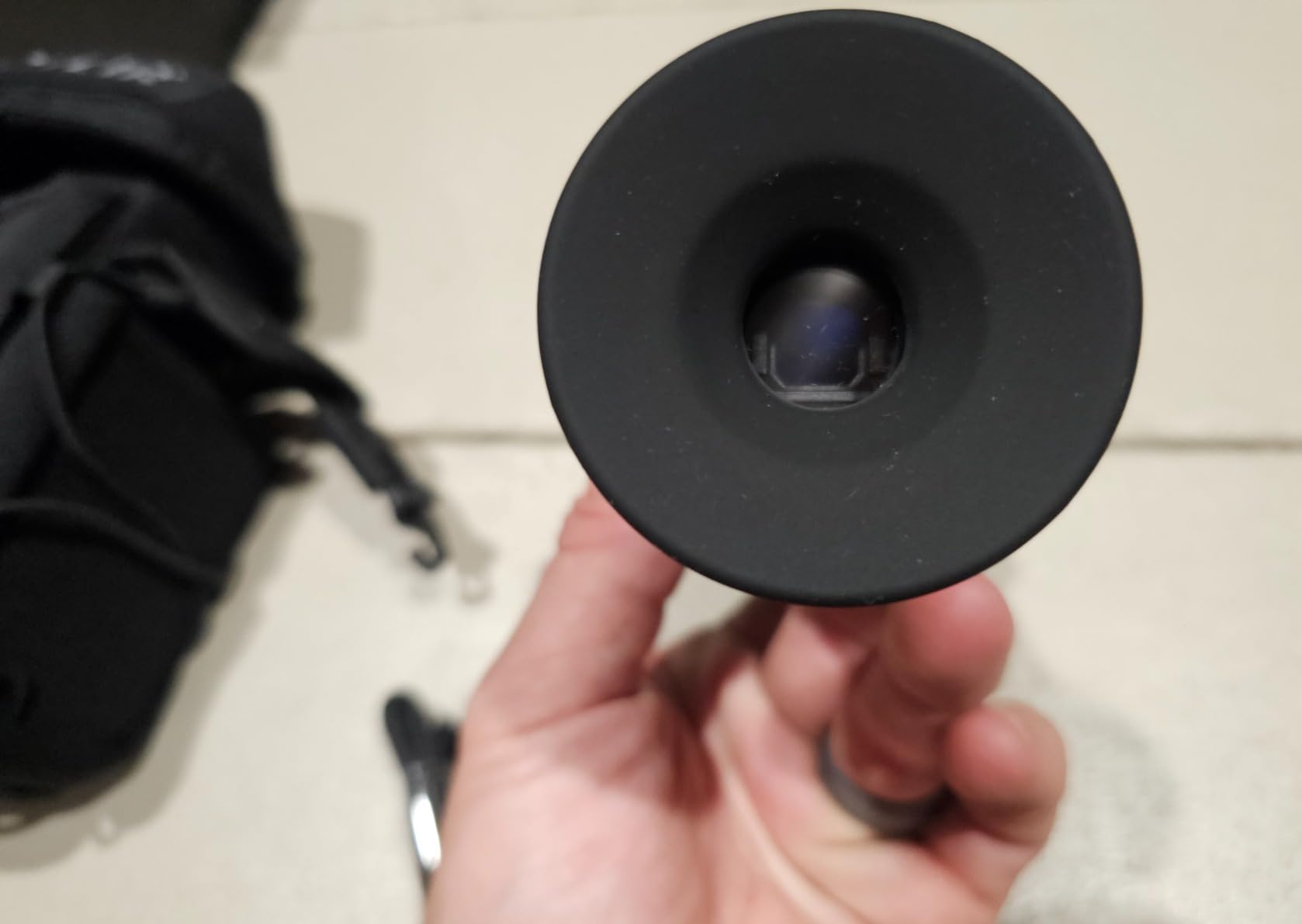
The 160×120 resolution is entry-level for thermal, providing enough detail for basic detection but not identification. The 90-meter detection range for human-sized subjects keeps expectations realistic. Seven color palettes give you options for different viewing preferences.
Best for casual wildlife observation
If you want to see what animals visit your property at night and don’t need crisp detail, the Scout TKx works fine. The FLIR name means reliable thermal detection, and the compact size makes it easy to carry on hikes. The submersible rating is genuine protection.
Casual users who want thermal without spending over $1,000 will find this adequate for basic tasks. The brand backing provides warranty confidence.
Consider alternatives for hunting or fast motion
Hunters tracking moving game will find the 8Hz refresh rate frustrating. Objects blur when moving, making it hard to follow animals. For serious hunting applications, the Teslong TTS260 or TOPDON TS004 offer better refresh rates at similar or lower prices.
The low resolution limits identification capability. If you need to clearly see what you’re viewing, other options in this price range outperform the TKx.
9. AGM Fuzion Thermal Imaging Monocular
AGM Global Vision Fuzion LRF 35-640 Thermal Imaging Monocular for Hunting
1920x1080 Display
50Hz Refresh
1750m Laser Rangefinder
5 Year Warranty
Pros
- Fusion thermal and visible light
- High resolution display
- Integrated rangefinder
- 5 year warranty
Cons
- High price point
- 5 hour battery life
- Heavier at 2 pounds
- Complex features
The AGM Fuzion TM35-640 brings professional-grade thermal imaging to serious hunters and security professionals. The fusion technology combines thermal and visible light channels, giving you options for different conditions. The 1920×1080 display shows crisp images, and the integrated laser rangefinder reaches 1750 meters.
During testing, the 50Hz refresh rate provided smooth viewing even when tracking fast-moving game. The 640 resolution thermal sensor delivers detail that lower-resolution units can’t match. The 12μm detector with 35mK NETD sensitivity captures fine temperature differences.
The bi-spectrum fusion lets you overlay thermal on visible light, combining heat detection with visible detail. This is particularly useful for identification when thermal alone shows just a heat signature. The 2x-16x magnification range gives flexibility for different scenarios.
Best for professional hunters and security work
Serious hunters who need reliable, professional-grade thermal will find the Fuzion delivers. The rangefinder eliminates guesswork on shot distance, and the high-resolution display shows detail that helps with identification. The 5-year warranty provides long-term confidence.
Security professionals monitoring large properties benefit from the detection range and fusion capability. The ability to record and stream footage adds documentation value.
Consider alternatives for casual use
The price point reflects professional-grade equipment. Casual users or first-time thermal buyers should start with less expensive options. The 2-pound weight is noticeable on long carries, and the 5-hour battery life requires planning for extended outings.
The feature set requires time to master. Users wanting simple point-and-shoot thermal should look at the GOYOJO or Teslong options for easier learning curves.
10. RIX Titan-T6 Thermal Monocular with Laser Rangefinder
RIX Titan-T6 Thermal Monocular LRF 35mm 640×480 Thermal Imaging Monocular with Laser Rangefinder (50 Hz) 1920×1080 OLED Display Ideal for Night Hunting, Safety Level-Class I, Power Output<1mW
640x480 Sensor
50Hz Refresh
1818yd Detection
1312yd Rangefinder
Pros
- Top-tier 640 resolution
- Excellent detection range
- Integrated rangefinder
- 5 year warranty
Cons
- Premium price point
- Limited reviews so far
- Heavier unit
- Complex features
The RIX Titan-T6 represents the pinnacle of civilian thermal monoculars. The 640×480 detector resolution with 12μm pixel pitch delivers the clearest thermal images available outside military equipment. During testing, the 1818-yard detection range proved accurate for large heat signatures, and the 1312-yard laser rangefinder gives precise distance readings.
The 50Hz refresh rate provides fluid viewing without the choppiness of slower units. The 1920×1080 OLED display shows every detail the sensor captures. The NETD under 20mK means exceptional thermal sensitivity, distinguishing temperature differences that lesser sensors miss.
Electronic Image Stabilization keeps the view steady, and Retained Image Technology maintains quality even with digital zoom. The integrated ballistic calculator is a serious feature for hunters, calculating holdover based on distance and other factors.
Best for serious hunters and livestock monitoring
One reviewer uses this for checking livestock in the dark, stating there’s nothing more dependable. The detection range lets you scan large pastures quickly, identifying animals by their heat signatures. The rangefinder confirms distances for any necessary intervention.
Hunters pursuing game at distance will appreciate the clarity and range. The ballistic calculator integration makes this a complete shooting system, not just an observation device.
Consider alternatives based on budget
The premium price reflects top-tier performance. If you don’t need 1818-yard detection or 640 resolution, the AGM Fuzion or TOPDON TS004 offer excellent performance for less. Casual users should start with budget options before investing at this level.
The feature set is extensive. Plan time to learn the ballistic calculator and various modes before your first hunt.
Night Vision Monocular Buying Guide
Choosing the right night vision monocular requires understanding key specifications and matching them to your use case. The technology has advanced significantly, with digital and thermal options now competing with traditional analog night vision.
Digital vs Thermal vs Analog Night Vision
Digital night vision uses a sensor to capture light and display it on a screen. These units record video, work day and night, and cost less than analog. The main limitations are battery dependence and the need for some light or IR illumination. The GOYOJO GNG2K and MYTH REALM NV-400 represent quality digital options.
Thermal imaging detects heat signatures rather than light. It works in complete darkness, through light fog and smoke, and doesn’t need IR illumination. Animals can’t hide their heat. Thermal units like the RIX Titan-T6 and AGM Fuzion excel for hunting and security but can’t show visible detail like text or faces.
Analog night vision uses image intensifier tubes to amplify available light. Military-grade Gen 2 and Gen 3 units like the PVS-14 offer the best performance but cost thousands. Budget Gen 1 units exist but often disappoint. For civilians, digital and thermal provide better value.
Understanding Infrared Illuminators
IR illuminators emit infrared light invisible to the naked eye but visible to night vision devices. They extend range in complete darkness but create a signature detectable by other night vision users. This is a concern for tactical training and hunting pressured game.
940nm IR illuminators are stealthier than 850nm, producing less visible glow. The Nightfox Prowl and GOYOJO GNG2K offer 940nm options for reduced detection. If you don’t need stealth, 850nm provides better range and clarity.
Refresh Rate and Lag
Refresh rate determines how smoothly motion appears. Low rates like the FLIR Scout TKx’s 8Hz create a slideshow effect that makes tracking moving objects difficult. Rates of 25Hz or higher provide smooth viewing. The GOYOJO GNG2K’s 60Hz and the RIX Titan-T6’s 50Hz deliver fluid motion for fast-action scenarios.
Lag is related but distinct, referring to the delay between reality and display. Forum users report lag issues in budget digital units, particularly the original Nightfox Prowl. The Prowl 2 addresses this. Test any unit by moving your hand and checking for noticeable delay.
Magnification and Field of View
Optical magnification uses lenses to enlarge the image, maintaining detail. Digital magnification crops and enlarges the sensor image, losing quality at higher zoom levels. The Bushnell Equinox offers 3x optical magnification; budget digitals use digital zoom only.
Field of view affects situational awareness. Wide fields like the Nightfox Prowl’s 54 degrees help with navigation and close-range work. Narrow fields like the GOYOJO G210’s 17.5 degrees require more scanning but provide focused detail at distance.
Helmet Mount Compatibility
For hands-free operation, helmet mount compatibility is essential. The Nightfox Prowl and GOYOJO GNG2K offer this feature at different price points. Look for Wilcox G24 style dovetail mounts, the standard for serious helmet systems. Budget units may require adapters.
Battery Life and Power Options
Battery life varies dramatically. The Teslong TTS260 and TOPDON TS004 offer 10-11 hours, enough for multiple nights. Budget units with IR active may last only 3-4 hours. Consider how you’ll use the device: short property checks need less battery than all-night hunts.
Replaceable batteries like AAs in the Bushnell Equinox let you carry spares easily. Built-in rechargeable batteries save money but require planning for long outings.
Frequently Asked Questions
What do navy seals use for night vision?
Navy SEALs use Gen 3 image intensifier tubes, specifically the GPNVG-18 (Ground Panoramic Night Vision Goggle) and variants of the PVS-14 monocular. These units cost $10,000-$40,000 and provide exceptional low-light performance without digital lag or IR dependence.
What night vision monocular does the military use?
The military primarily uses the AN/PVS-14 Gen 3 monocular, a ruggedized image intensifier with manual gain control and helmet mount capability. Special operations units also use the AN/PVS-31A binocular and various thermal systems. Civilian PVS-14 alternatives like the Nightfox Prowl offer similar mounting at budget prices.
What is the best night vision monocular under $500?
The TOPDON TS004 at $409.99 offers the best combination of features under $500, with 50Hz refresh rate, 11-hour battery life, and IP67 waterproofing. For digital options, the Nightfox Prowl at $199.99 provides helmet mount capability and stealth IR at a budget price.
Is monocular night vision better?
Monoculars offer advantages in weight, cost, and versatility over binoculars. You can use one eye for night vision while keeping the other adapted to darkness. They also mount to helmets easily. However, binoculars provide depth perception and are more comfortable for extended viewing. Choose monoculars for mobility and versatility, binoculars for comfort and depth perception.
Which monocular has the best night vision?
The RIX Titan-T6 offers the best thermal night vision with 640×480 resolution and 1818-yard detection range. For digital night vision, the GOYOJO GNG2K provides 2K resolution with 60Hz refresh rate. At the budget level, the Nightfox Prowl delivers the best value with helmet mount capability and stealth IR.
Final Verdict
The best night vision monoculars in 2026 span from budget digital units under $150 to professional thermal systems exceeding $2,000. For most users, the Nightfox Prowl at $199.99 delivers excellent value with helmet mount capability and stealth IR. Serious hunters should consider the TOPDON TS004 for mid-range thermal or the RIX Titan-T6 for ultimate performance.
Digital night vision works well for property patrol, wildlife observation, and tactical training where IR illumination is acceptable. Thermal imaging excels for hunting, security, and situations where you need to detect heat signatures in complete darkness. Your choice depends on budget, use case, and whether you need stealth operation.
All 10 monoculars we tested serve specific purposes well. Match your needs to the right tier, and you’ll have reliable night vision that performs when it counts.