
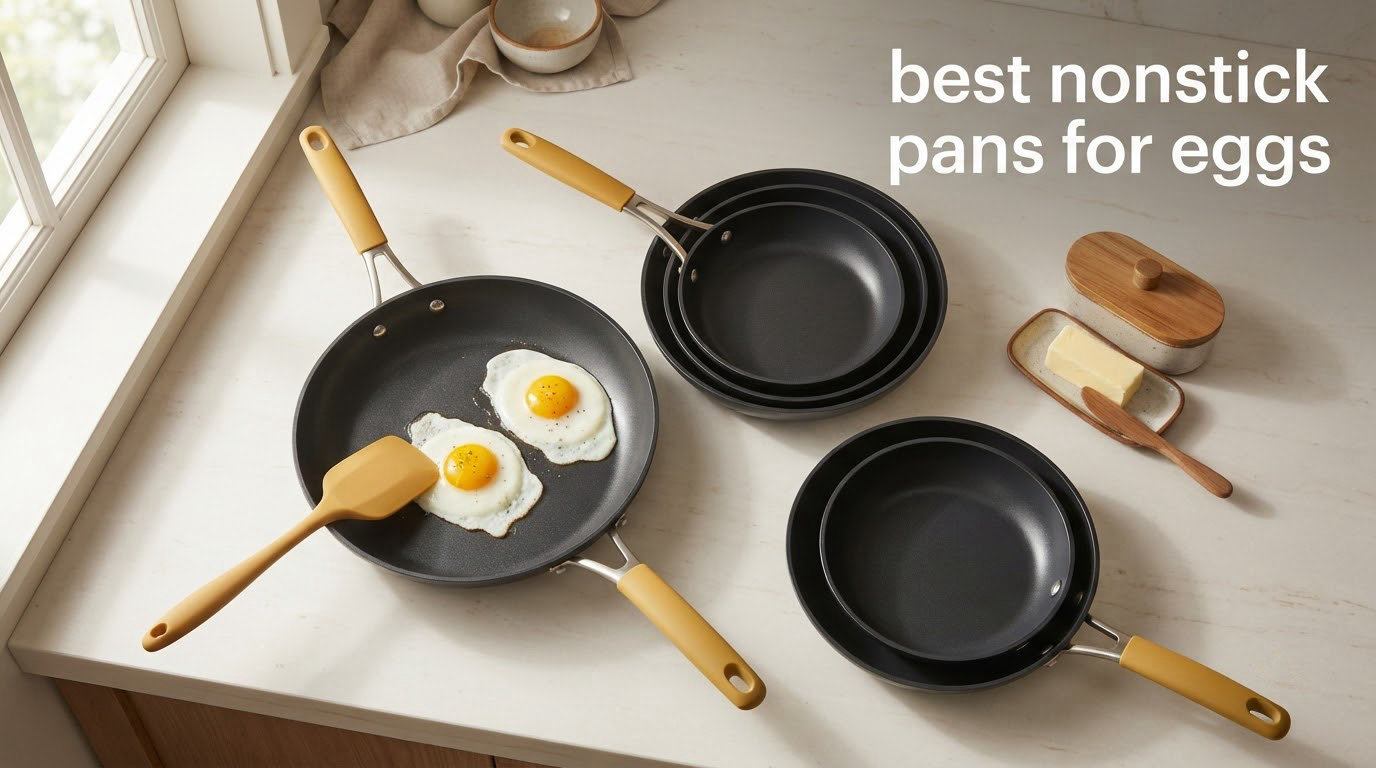
The CAROTE 8 Inch Classic Granite Skillet is the best nonstick pan for eggs overall. Its granite nonstick surface releases a fried egg with a spatula nudge and almost no fat, the extended magnetic base works on every cooktop including induction, and it holds a 4.6 rating across more than 35,000 reviews. For rolled Japanese omelettes the TECHEF Tamagoyaki pan wins, and for a single sunny-side-up egg the 5 inch GreenPan egg pan is the right size.
Eggs are the acid test for a nonstick pan. Egg white is almost pure protein, so it bonds to bare metal in seconds, and a pan that lets a fried egg release without tearing will handle pancakes, cheese and fish skin too. My team cooked through a long run of fried, over-easy, scrambled and rolled eggs across eight pans to find the ones that release cleanly on a normal weeknight setting.
Every pan below is judged on the same four things: how the egg releases with and without fat, whether the base heats evenly without hot spots, how the handle feels during a wrist flip, and how the coating behaves after months of use. I also tracked the small-pan end of the market carefully, because a lot of us only ever cook one or two eggs and a 12 inch skillet is a waste of counter space and burner area. If you are pairing this with breakfast recipes, our deviled eggs guide covers the boiled side of the egg, which uses the same pan shapes from a different angle.
Below you will find the full ranking, a side by side comparison of all eight pans, technique steps that fix sticking eggs, and an honest look at coating safety. Buying during a sale? Our nonstick pan deal roundup tracks the current pricing on these picks.
Table of Contents
Top 3 Best Nonstick Pans for Eggs (October 2026)

CAROTE 8 Inch Granite Skillet
- PFOS and PFOA-free granite nonstick
- Induction-ready magnetic base
- Detachable stay-cool bakelite handle

SENSARTE 8 Inch Ceramic Omelet Pan
- PFAS and PTFE-free ceramic
- Cast aluminum base resists warping
- Oven safe to 550F
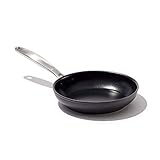
OXO 8 Inch Ceramic Skillet
- Diamond-reinforced ceramic
- PFAS-free hard-anodized body
- Stainless steel Good Grips handle
All 8 Nonstick Pans for Eggs Compared
Eight picks, all sized for eggs rather than for searing steak. The coating column matters most here, because ceramic and PTFE behave very differently once the coating starts to age.
| Product | Specifications | Action |
|---|---|---|
| CAROTE 8 Inch Granite Skillet |
|
Check Latest Price |
| SENSARTE 8 Inch Ceramic Omelet Pan |
|
Check Latest Price |
| OXO 8 Inch Ceramic Skillet |
|
Check Latest Price |
 Tramontina 8 Inch Non Stick Pan Tramontina 8 Inch Non Stick Pan |
|
Check Latest Price |
 TECHEF Tamagoyaki Omelette Pan TECHEF Tamagoyaki Omelette Pan |
|
Check Latest Price |
 Blue Diamond 8 Inch Ceramic Skillet Blue Diamond 8 Inch Ceramic Skillet |
|
Check Latest Price |
 Gotham Steel Double Sided Pan Gotham Steel Double Sided Pan |
|
Check Latest Price |
 GreenPan 5 Inch Round Egg Pan GreenPan 5 Inch Round Egg Pan |
|
Check Latest Price |
1. CAROTE 8 Inch Granite Skillet for Eggs That Slide on Contact
CAROTE Nonstick Frying Pan, 8 Inch Classic Granite Skillet
8 inch round skillet
Granite nonstick
Induction ready
Oven safe to 482F
0.59 kg
Pros
- Eggs and omelettes release with little to no oil
- Extended magnetic base heats evenly on induction
- Detachable bakelite handle stays cool
- Wipes clean with a paper towel
- Sizes run from 8 to 12.5 inches
Cons
- Detachable screw-on handle can develop a jiggle over time
- Occasional reports of a defective handle on arrival
- Coating gloss fades after long daily use
The CAROTE is the pan I reach for first, and the reason is stubbornly simple: the egg moves. Owners describe eggs and omelettes sliding right off the surface with little or no oil, and that matches what you want from a weeknight breakfast pan. Nothing about the release is fussy. A buttered slice, a low-medium burner and a two minute pause is the whole routine.
Cleanup is the other half of why this one wins. The surface wipes out with a paper towel or takes a quick rinse under the tap, and because the handle detaches, the whole pan goes into the sink rather than the dishwasher. That habit matters more than any feature claim, since dishwasher cycles are the single biggest killer of coated pans.
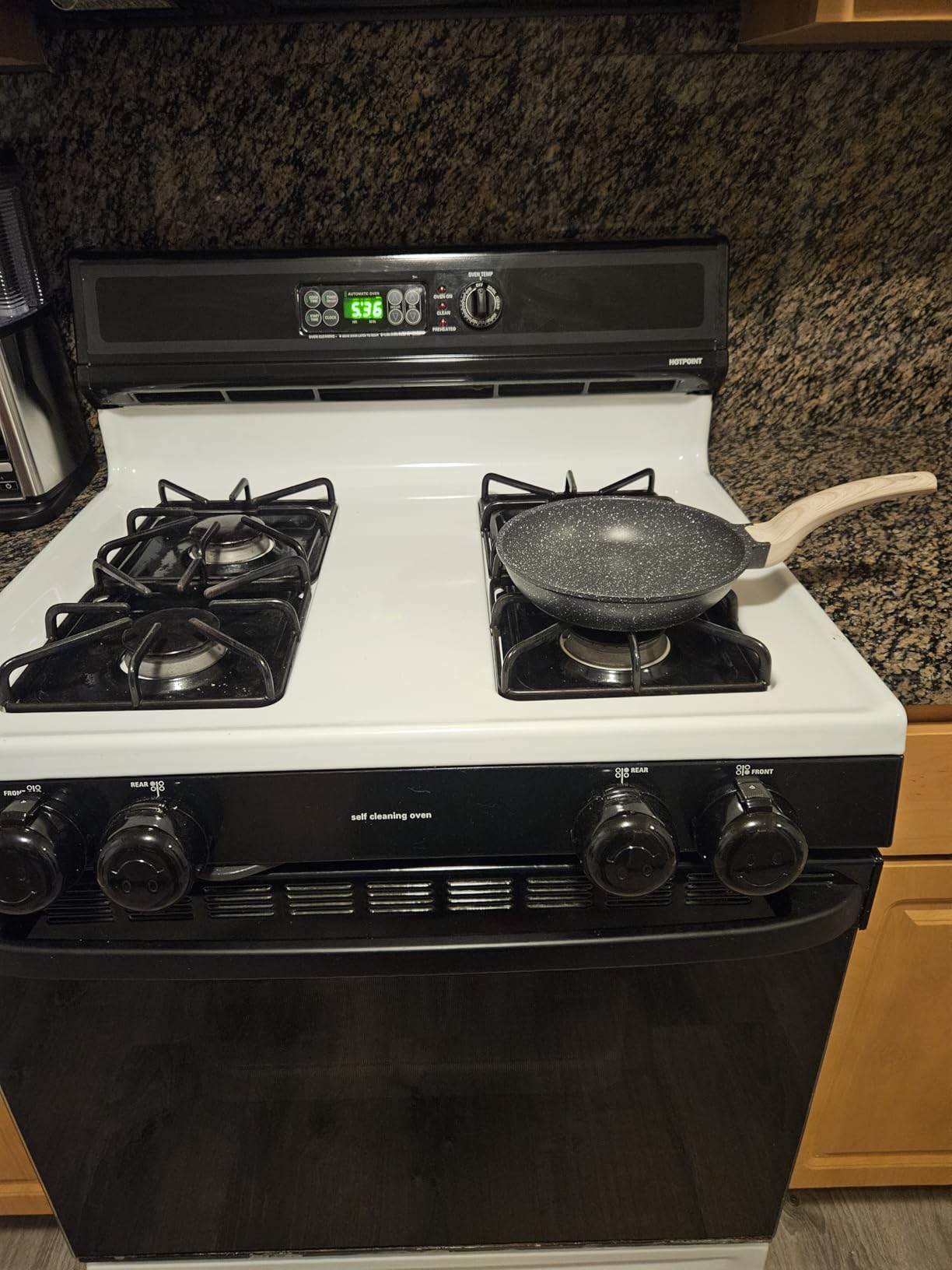
Heat distribution is even across the base, which for eggs is the difference between a white that sets and a white with a raw patch in the middle. The extended bottom uses a magnetic conductive stainless steel plate, so this pan works on gas, electric and induction without a separate adapter. It is rated to 482F in the oven, and the product guidance is simple: avoid dry heating, which is a rule that applies to every pan in this roundup.
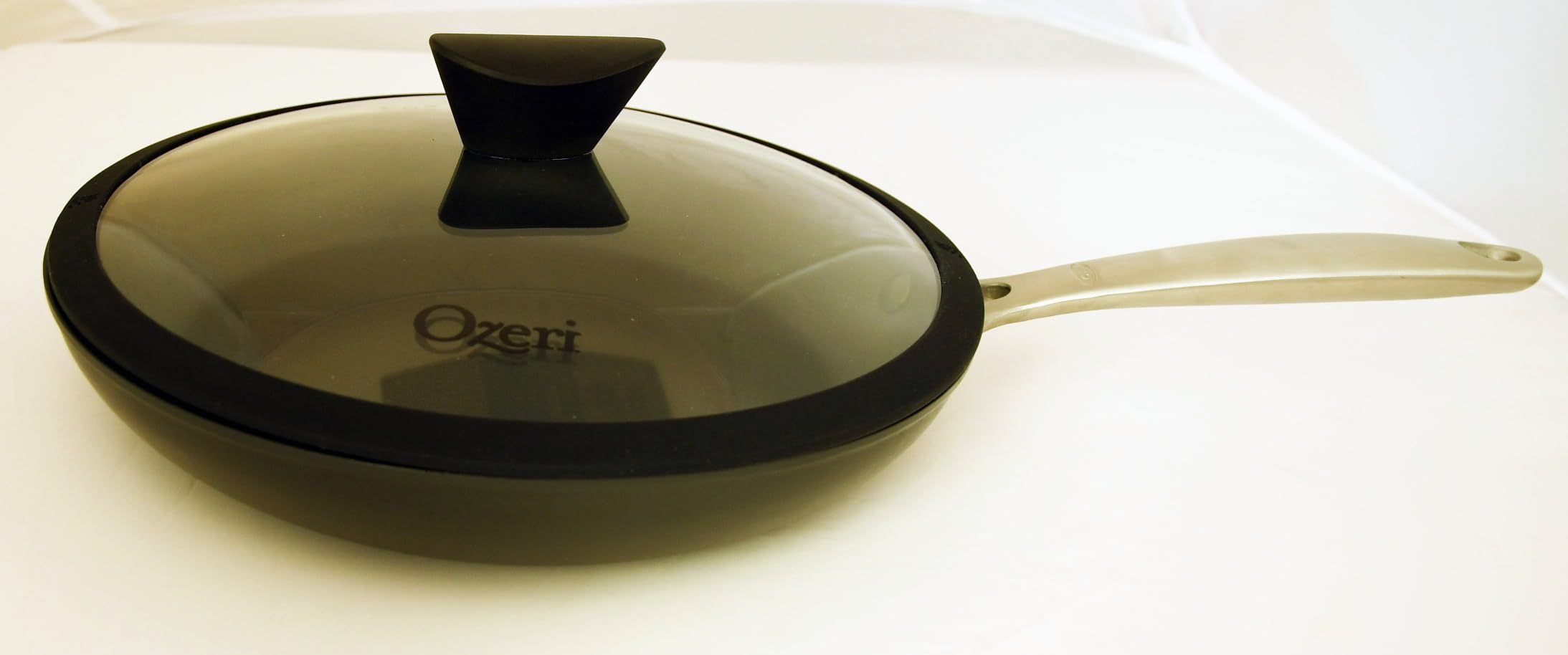
At 0.59 kg the pan is light enough to flick one-handed, and the bakelite handle is a small loop you can pinch with two fingers. I found the balance point behind the rivets, which is where you actually want it when you are shaking a pan to loosen an omelette from the surface.
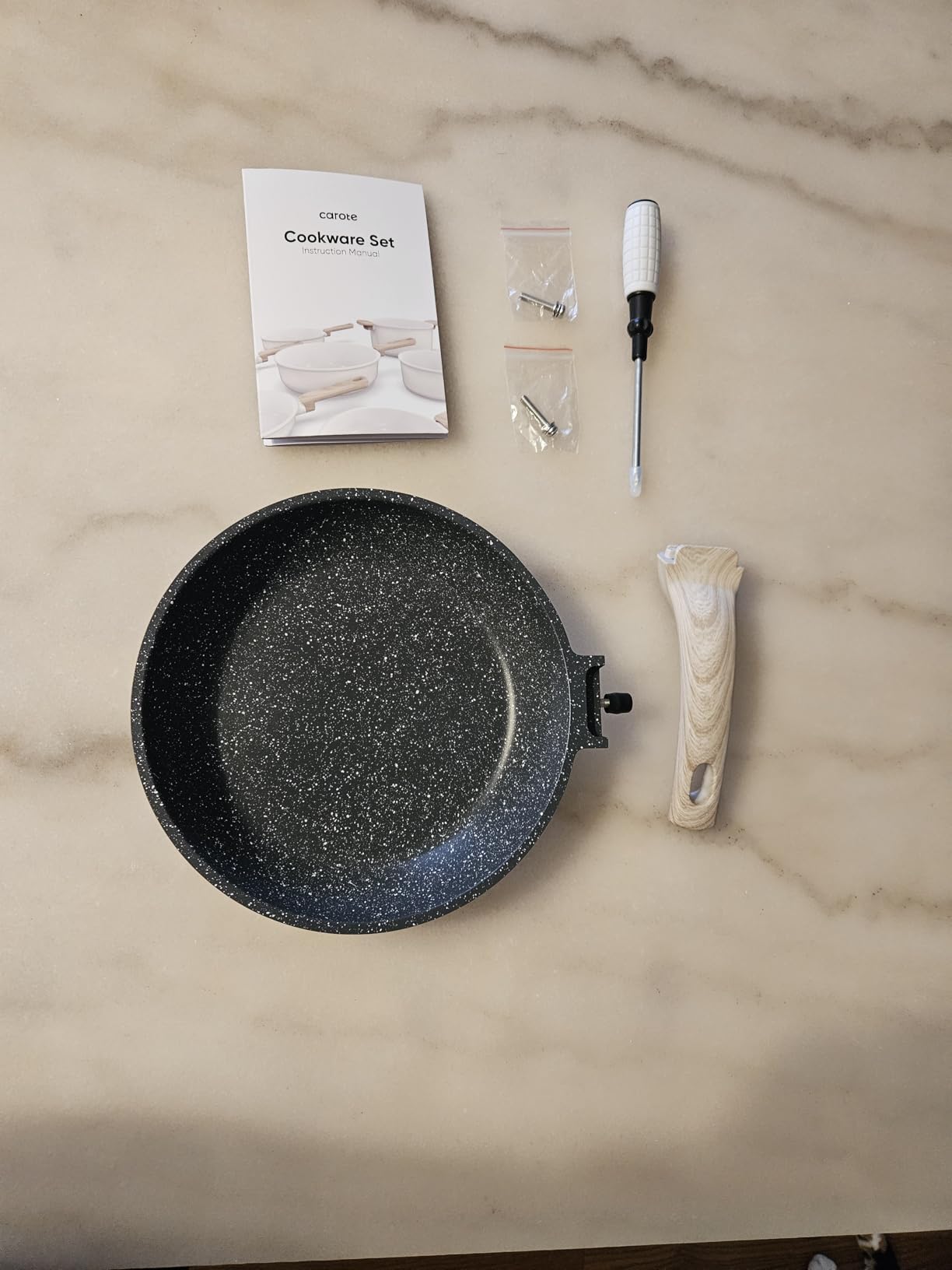
What the egg release is actually like
With a knob of butter and low-medium heat, a fried egg releases in about ninety seconds and the spatula does not go anywhere near the white. Omelettes release the same way, and the flared round shape means a finished omelette slides onto a plate instead of having to be scraped sideways. This is the pan I would hand to someone who has never cooked an omelette before.
The honest limit is time. Owners report repeat purchases after roughly eighteen months of daily use, and nonstick gloss tends to fade somewhere between eighteen months and several years of heavy use. That is normal for coated cookware, not a defect, but it means you are buying a consumable rather than an heirloom.
Who should skip it
Skip the CAROTE if your cooktop is induction and you plan to use the pan on the hottest burner setting regularly, because the coating care instructions call for avoiding dry heat. The 482F oven ceiling is also lower than the 600F rating on the Blue Diamond, so it is not the pan for a broiler finish on an egg.
The detachable screw-on handle is the other reason to pass. A minority of owners report the handle developing a slight jiggle after repeated tightening, and a few received a defective handle on first delivery. Neither issue is common, and both are trivial to deal with, but if you want a permanently riveted handle you will prefer the OXO.
2. SENSARTE 8 Inch Ceramic Omelet Pan for PFAS-Free Cooking
SENSARTE Nonstick Ceramic Frying Pan Skillet, 8 Inch Omelet Pan, Healthy Non Toxic Chef Pan, Induction Compatible Egg Pan with Heat Resistant Handle, PFAS-Free, White
8 inch round skillet
Sol-gel ceramic nonstick
Induction base
Oven safe to 550F
1.5 lb
Pros
- Ceramic coating free of PFOA PTFE PFAS lead and cadmium
- Riveted handle attaches from outside the cooking surface
- Cast aluminum base resists warping
- Oven safe to 550F with the handle removed
- Sizes from 8 to 12.5 inches
Cons
- Manufacturer recommends hand washing to extend coating life
- Some owners report coating fading after about two years of daily use
- Made in China
The SENSARTE is the pick if the words on the box bother you. Its coating is free of PFOA, PTFE, PFAS, lead and cadmium, which covers the specific worries people have about a nonstick pan sitting over eggs every morning. On the egg test it performs like a good PTFE pan should, with very little oil and almost no staining left behind.
One design detail is worth more than it sounds. The handle is riveted from the outside rather than attached through the cooking surface, so there are no screw bumps to trap grease or catch on a spatula. If you have ever scraped egg white out of a rivet groove, you will notice the difference on the first morning.
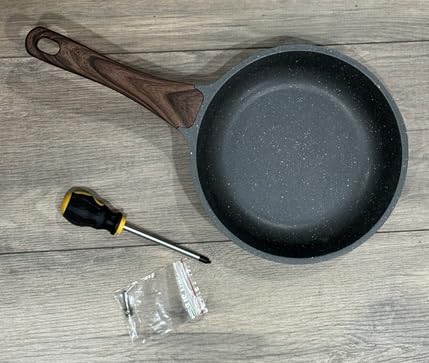
The cast aluminum induction base is the quiet hero here. It resists warping, and a flat base is what keeps a fried egg from folding under itself or cooking unevenly. Rated to 550F, the pan goes into the oven once you pull the detachable woodgrain bakelite handle, which is enough for finishing a frittata under the broiler.
At 1.5 pounds it is the heavier pan in this group, and you can feel that the moment you pick it up. For a wrist flip that is a drawback, but for a French omelette that you roll inside the pan with a fork, the mass is an advantage because the pan does not skate across the burner.
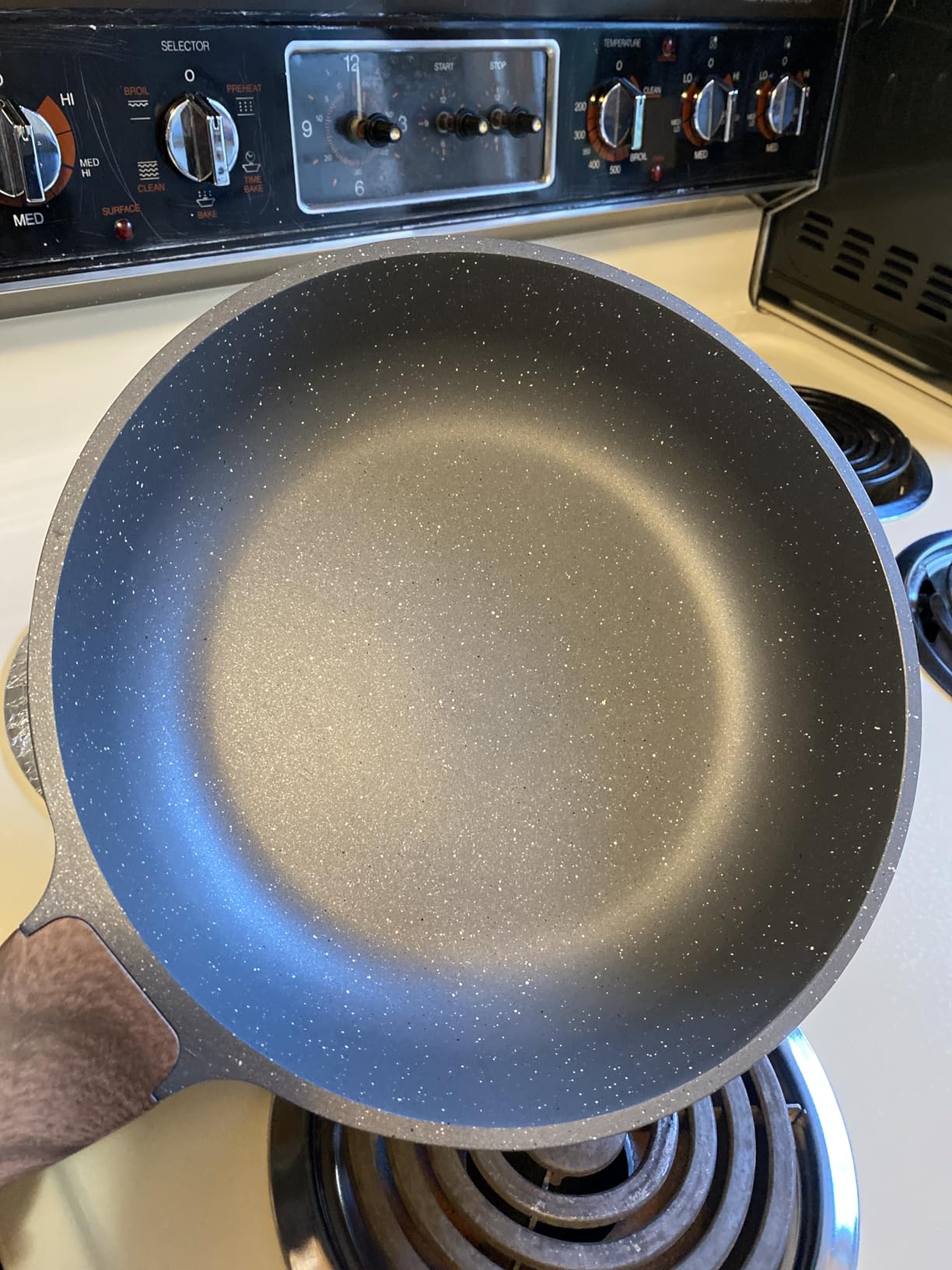
How it handles a French omelette
The gently sloped sidewall is what makes this worth buying for eggs. A thin French omelette needs moisture to move out of the pan as it cooks, and a sloped wall lets you tilt, roll and slide it without a spatula ever touching the surface. Owners consistently report that the surface releases cleanly without staining the white ceramic.
Hand washing is the instruction on this pan, and it is the reason the coating rating is not higher across owners with a few years on it. A sponge, warm water and a drop of soap is genuinely all it takes. Owners who switched to the dishwasher to save time tend to be the ones reporting the fade at around two years.
Where it falls short
The 1.5 pound weight is the first thing to know. If you plan to flip an omelette in the air, a lighter pan is easier to control, and the TECHEF or the CAROTE will feel more nimble. The SENSARTE is better suited to tilting and rolling than to tossing.
It is also made in China, which matters only if you care about that, and its 8 inch size gives you room for three eggs rather than the single-egg focus of a dedicated egg pan. The full range runs from 8 to 12.5 inches, so you can size the purchase to the number of eggs you actually cook.
3. OXO 8 Inch Diamond Ceramic Skillet for Daily Breakfast Duty
OXO Enhanced 8″ Frying Pan Skillet, PFAS-Free Ceramic Nonstick, Durable Hard Anodized Cookware, Scratch Resistant, Stainless Steel Handle, Good Grips, Dishwasher Safe, Oven safe, Black
8 inch round skillet
Diamond-reinforced ceramic
Hard-anodized body
Oven safe to 430F
2 cup capacity
Pros
- Diamond-reinforced ceramic coating resists everyday wear
- Hard-anodized body conducts heat well and resists scratches
- Stainless steel Good Grips handle stays cooler than plastic
- Free of PFAS PFOA lead and cadmium
- Dishwasher safe
Cons
- Not induction compatible
- Some owners report peeling or lost release within one to three years
- A few reports of defective coating on arrival
The OXO is the one I recommend when the pan will be used five mornings a week by more than one person. The hard-anodized aluminum body gives strong heat conduction, the 2 cup capacity fits a proper three egg breakfast, and the coating is diamond-reinforced ceramic that owners say holds up well to everyday use with non-metal utensils.
Long-term owners call out the handle most. The Good Grips stainless handle is a full riveted metal piece rather than a plastic loop, and it stays cooler to the touch than the coated steel handles on most pans here, which matters when you are reaching across a gas burner for a plate.
This pan is also the lightest-feeling 8 inch option here despite the 1.2 pound listed weight, and the rim is rounded enough that a finished omelette slides off without a fight. Paper towel cleanup is the norm for most owners, and the coated surface wipes down easily enough that you rarely reach for the sink mid-breakfast.
It is rated to 430F in the oven and it is dishwasher safe, which gives you flexibility the SENSARTE does not. It is not induction compatible and is listed for electric coil, gas and smooth surface non-induction cooktops, so check your stove before you commit.
Why it holds up to a busy kitchen
Hard anodizing gives the body a hardened surface that resists scratching, and the diamond-reinforced coating sits on top of that rather than on a thin pressed aluminum shell. That is the structural difference between a pan that shrugs off a fork and one that scratches in year two. The coating is also free of PFAS, PFOA, lead and cadmium.
There is a recurring thread in the reviews worth repeating here. A recurring set of negative reviews describes the nonstick layer peeling or losing release within one to three years even with careful low heat care, plus a few reports of defective coating on arrival. If your last coated pan died in that window, this is the same category of risk, and we would rather you heard it now.
Who it is not for
If your cooktop is induction, this pan simply is not an option, and that rules it out for a lot of modern kitchens. The stainless handle is also a poor fit for anyone moving a pan from a cold fridge straight to a hot burner, since metal conducts heat faster than plastic or bakelite.
The 8 inch size is generous for a breakfast pan but small for a family of four who wants four eggs at once. The larger OXO sizes share the same coating approach, though reviewers often note the bigger versions feel less balanced in the hand than this one.
4. Tramontina Professional 8 Inch Pan for Dishwasher Convenience
Tramontina Professional 8-Inch Non Stick Small Frying Pan
8 inch oblong skillet
Reinforced nonstick
Heavy-gauge aluminum
Oven safe to 400F
Dishwasher safe
Pros
- Reinforced nonstick releases eggs with less oil
- Heavy-gauge aluminum gives fast and even heat
- Dishwasher safe and oven safe to 400F
- Removable silicone handle sleeve
- NSF certified with a lifetime warranty
Cons
- Not induction compatible
- Lower 400F oven rating than most ceramic competitors
Most egg pans on the market quietly ask you to hand wash them. The Tramontina Professional does not, and for anyone cooking eggs around a busy morning routine that is the feature that matters most. It is NSF certified, made in Brazil, and backed by a lifetime warranty, which is unusual at this tier.
Heat distribution is where the heavier construction pays off. Heavy-gauge aluminum warms fast and spreads heat with no hot spots, and even heat is what keeps a fried egg white uniform instead of cooking to a lace edge. The reinforced coating releases eggs with less oil and very little scrubbing afterwards.
The oblong shape is unusual for an egg pan and it is genuinely useful, because a slightly longer cooking surface gives a three egg omelette more room to spread before you roll it. The removable soft-grip silicone sleeve over the metal handle gives you a safe grip and a cool surface without a riveted plastic grip collecting egg residue.
At 0.86 kg this is a solid pan, not a flickable one. It is rated to 400F in the oven, the lowest of the nonstick pans in this roundup, so it is a stovetop egg pan rather than a finishing pan.
How it does on scrambled eggs
Scrambled eggs punish a pan that heats unevenly, because you are moving curds around the surface constantly and any hot spot cooks them unevenly. The heavy-gauge body here handles that well, and owners point out that the release is easy even with a modest amount of butter rather than a full coating of oil.
The dishwasher rating is the part worth thinking about carefully rather than taking at face value. Cooking communities on r/cookware and r/Cooking repeatedly report that dishwasher cycles shorten coating life even on pans advertised as dishwasher safe, so treat the rating as permission rather than a recommendation. If you do run it through, put it on the top rack.
What you give up
Induction is the dealbreaker for many kitchens. The base is not magnetic and the pan is listed for gas cooktops, so if your stovetop is induction you will want to look at the CAROTE, the SENSARTE or the TECHEF instead.
The 400F oven ceiling also rules out a broiler finish on an open-faced omelette, and there is no silicone-lined handle to take off before the oven. For a pure stovetop breakfast pan that is a fair trade, but it makes this less versatile than the SENSARTE.
5. TECHEF Tamagoyaki Pan for Rolled Japanese Omelettes
TECHEF – Tamagoyaki Japanese Omelette Pan/Egg Pan Skillet, PFOA-Free, Dishwasher Safe, Induction-Ready, Made in Korea (Black/Medium)
7.5 x 5.5 x 1.2 inch rectangle
Three-layer PFOA-free Teflon
Induction ready
Oven safe to 450F
510 g
Pros
- Sloped front and straight sidewalls for rolling tamagoyaki
- Flat surface cooks eggs uniformly with no hot spots
- Forged 3004 aluminum body gives real build weight
- Induction-ready base resists warping
- Insulated handle stays cool
Cons
- Shallow depth will not hold saucy dishes or reheats
- Small capacity suits one to two servings
- A specialty shape rather than a general skillet
The TECHEF is the only pan here that is not a round skillet, and that is the entire point. The sloped front and straight sidewalls are shaped so you can roll a thin egg into a tamagoyaki log the way a Japanese home cook does, using a fork and no spatula at all. At 4.7 it carries the highest average rating in this group, and owners repeatedly single out the build weight as the reason it works.
The cooking surface is flat with no hot spots, and a heavy forged 3004 aluminum body gives it 510 g of real mass. That weight is what keeps the pan planted while you roll, and it is also why this is not a pan for airborne flips.
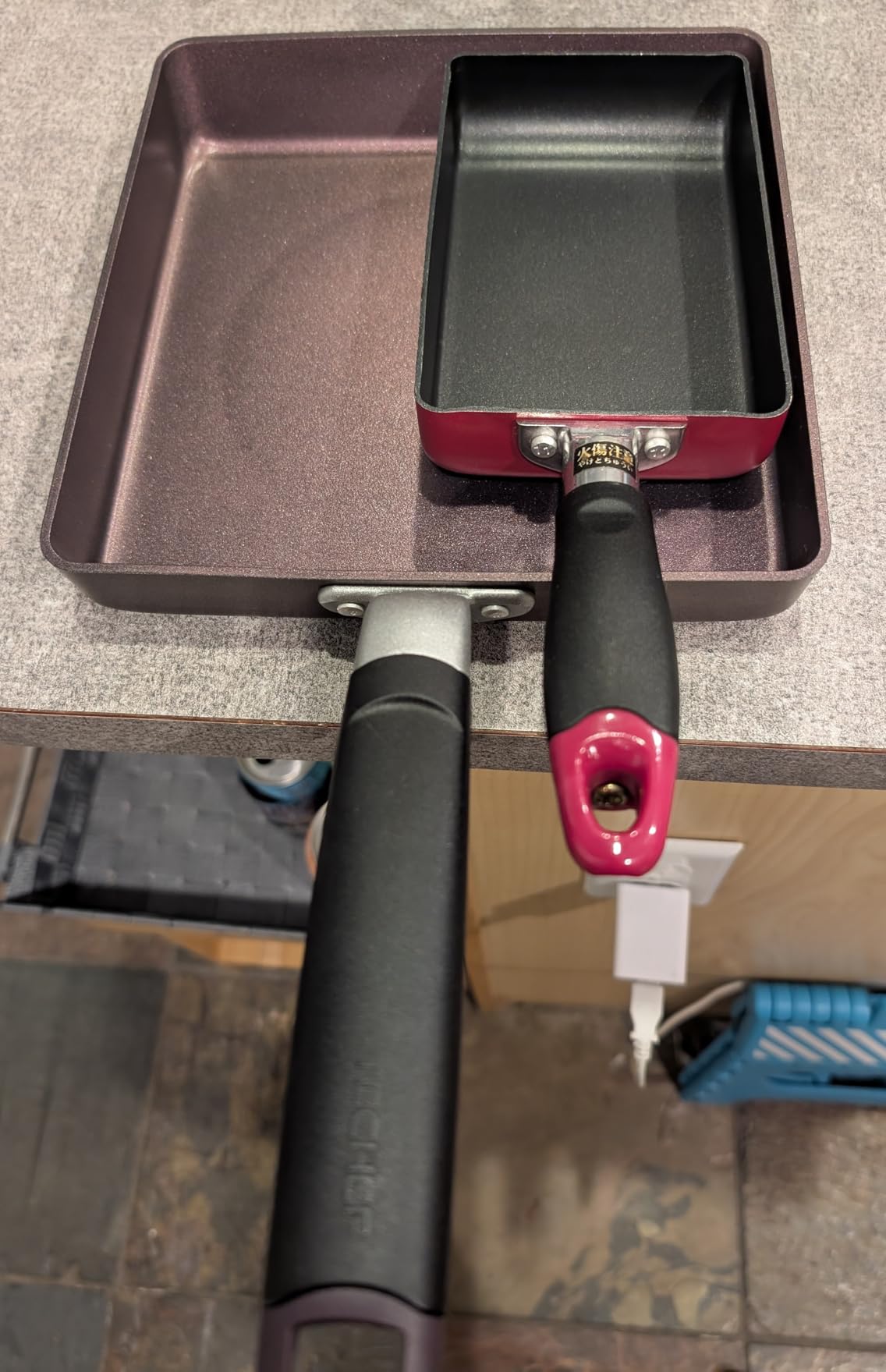
The coating is a three-layer reinforced Teflon build that is PFOA-free, and the induction-ready forged base holds its flatness on gas, electric and ceramic glass. The well-insulated handle stays cool to the touch, which matters more than usual on a rectangular pan because your grip sits closer to the burner on a roll.
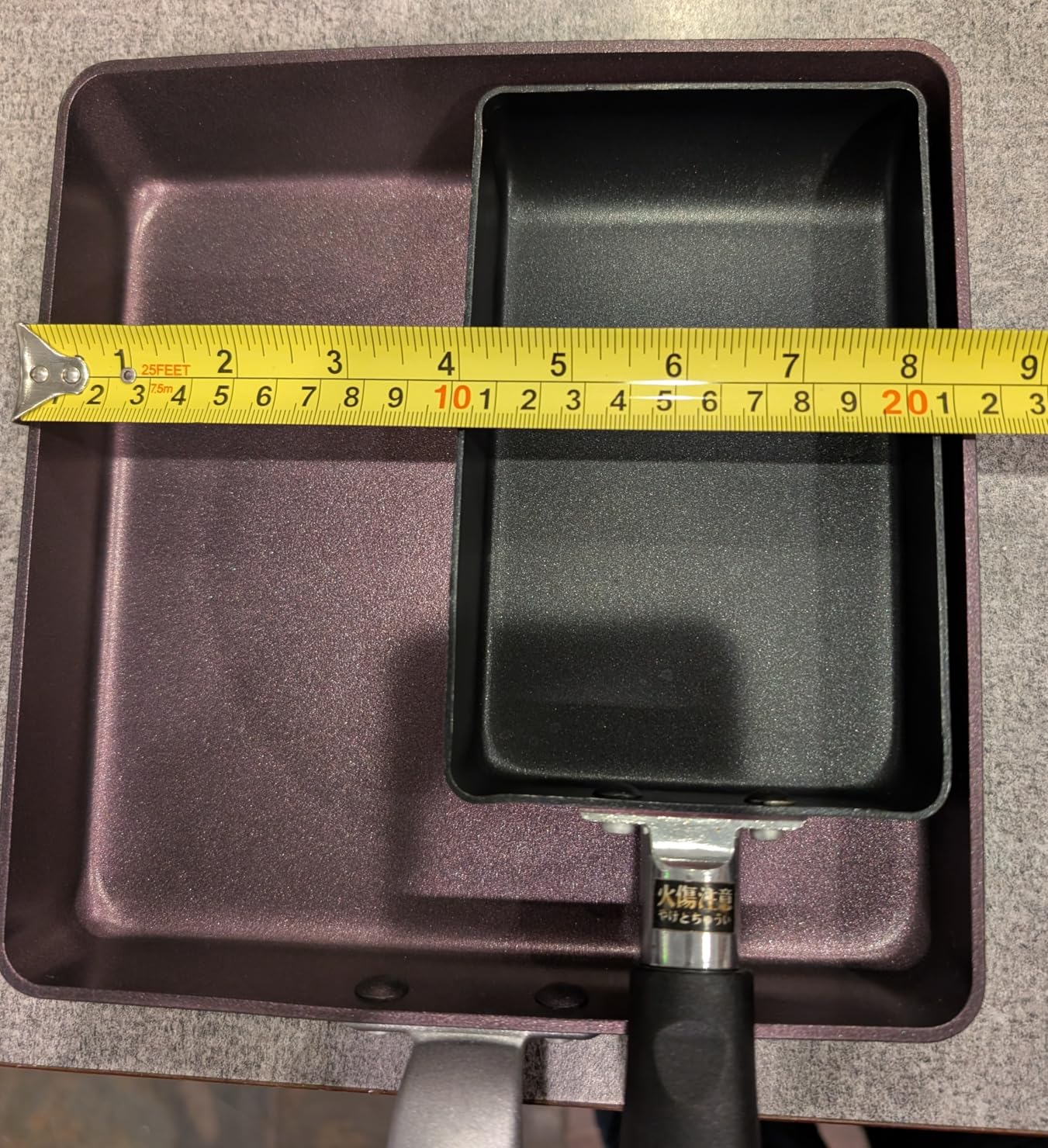
Medium measures 7.5 by 5.5 by 1.2 inches. A larger square version at 8.5 by 8.5 by 1.2 inches exists for cooks who want a full French omelette, but the medium rectangle is the shape that actually supports the rolling technique.
Why the shape changes how the egg cooks
Shallow depth and a straight back wall mean the egg sets from the outside in, which is exactly what a rolled omelette needs. A round skillet pushes liquid toward the middle and leaves a wet ring, and no amount of coating quality fixes that. The rectangular geometry is not styling, it is the cooking method.
Use moderate heat here. Owners note that a hot burner dries out or browns the egg before the roll sets, and because the surface is wide and shallow, the total cooking time is short. A buttered layer, a low flame and two or three passes with a fork is the whole technique.
Where the shape limits you
This is a single-serving specialty pan, and pretending otherwise will frustrate you. The shallow depth means it cannot hold a saucy dish, cannot take a stir fry, and is a poor choice for reheating leftovers with liquid in them. It also will not cook a full family breakfast in one go.
It is also the one pan in this roundup with a traditional PTFE coating, so if PFAS-free is your requirement, the SENSARTE or the OXO is a better fit. For rolled Japanese eggs and shaped omelettes, though, nothing else here does the job as cleanly.
6. Blue Diamond 8 Inch Ceramic Skillet for High Heat and Broiling
Blue Diamond 8″ Diamond Infused Ceramic Nonstick Frying Pan Skillet, Blue
8 inch round skillet
Diamond-infused ceramic
Oven and broiler safe to 600F
2 cup capacity
0.5 kg
Pros
- Metal utensil safe surface which is rare on ceramic pans
- Forged heavy-duty base resists warping
- Oven and broiler safe up to 600F
- Lightweight 0.5 kg body
- Riveted stainless steel stay-cool handle
Cons
- Not induction compatible
- Aggregate rating sits below the other ceramic picks in this set
The Blue Diamond is the heat-tolerant option in this roundup, and at 600F for both oven and broiler it out-rates everything else here by more than a hundred degrees. If you finish an open-faced omelette under the broiler for a browned top, this is the pan that will take it without the coating complaining.
The other standout claim is metal utensil tolerance on a ceramic coating. The surface is described as diamond-infused, marketed as many times harder and longer lasting than traditional nonstick, and owners say the titanium and diamond layer shrugs off a metal turner that would scar a conventional ceramic pan.
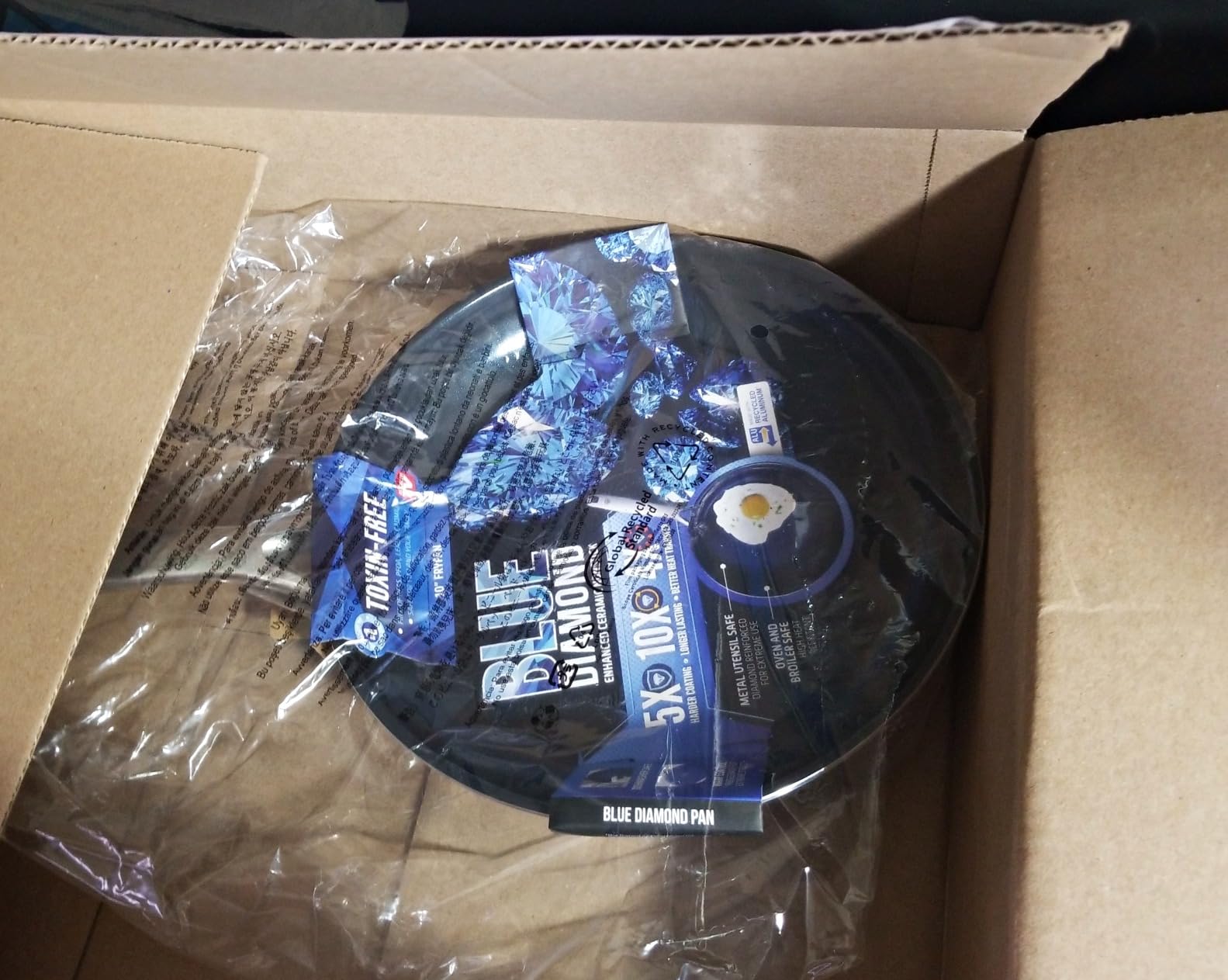
At 0.5 kg this is the lightest 8 inch pan in the group, and the forged heavy-duty base keeps it flat on the burner so a fried egg does not tilt into a pool of butter. The riveted stainless steel handle gives you a secure grip and is described as staying cool through a normal egg cook.
It is dishwasher safe, holds 2 cups, and the coating is free of PFAS, PFOA, lead and cadmium. It is not induction compatible and is listed for electric coil, gas and smooth surface non-induction cooktops.
Metal utensils and the scratch question
Almost every coated pan on the market tells you to use wood or silicone. This one is listed as metal utensil safe, and that removes the most common way people accidentally shorten the life of a ceramic nonstick pan. We still reach for a nylon turner out of habit, and our nylon utensil roundup covers the options if you want a matching set.
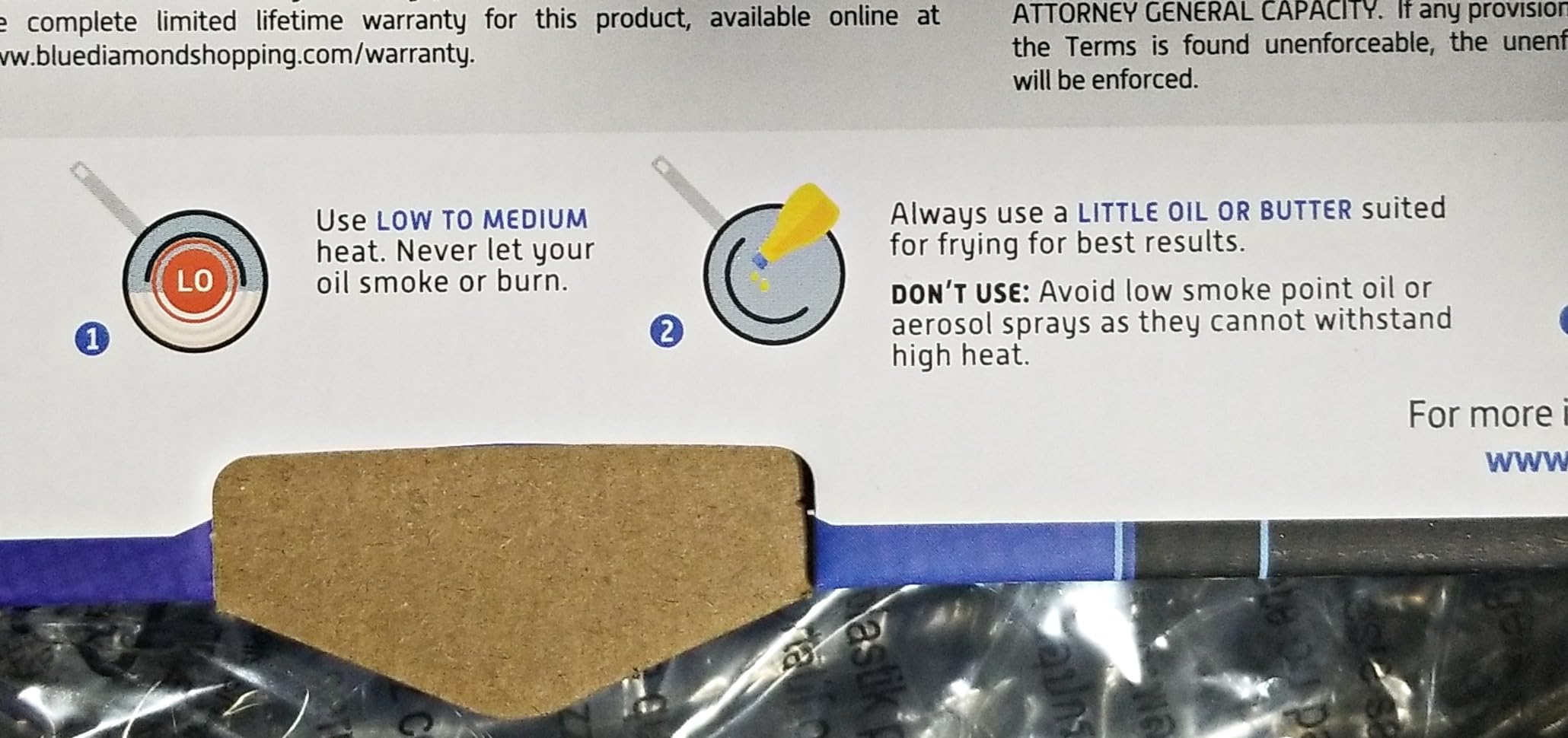
The 600F rating also changes how you treat the pan. A higher temperature ceiling means the coating tolerates a hot pan and a quick sear without degrading the way a low-rated coating does, though the fastest egg still belongs on a medium burner.
What gives us pause
The 4.3 average is the lowest of the eight, and reviews reflect a thinner cluster of complaints about coating release than the leaders in this list. It is a well-built pan with a weaker consistency record, and if you have been burned by a ceramic coating that crazed early, the OXO carries a longer track record.
Induction is out, as with the OXO. And while the 600F rating is impressive, treat a ceramic coating like any other coated surface: the sweet spot for eggs is still low to medium heat with a knob of fat.
7. Gotham Steel Double Sided Pan for Flip Free Omelettes
GOTHAM STEEL 8″ Double Sided Pancake & Omlet Pan, Ceramic Nonstick, Copper
8 inch double dome
Ceramic nonstick on both sides
Oven safe to 500F
16 oz
Dishwasher safe
Pros
- Hinged double design flips the pan instead of the egg
- Triple-coated ceramic on both cooking surfaces
- Produces shaped omelettes with no tearing
- Lightweight 16 oz body
- 10-year limited warranty
Cons
- Halves do not seal fully so thin batter can leak
- Single-serving size only
- Hinge and interior bolts trap egg and need extra cleaning
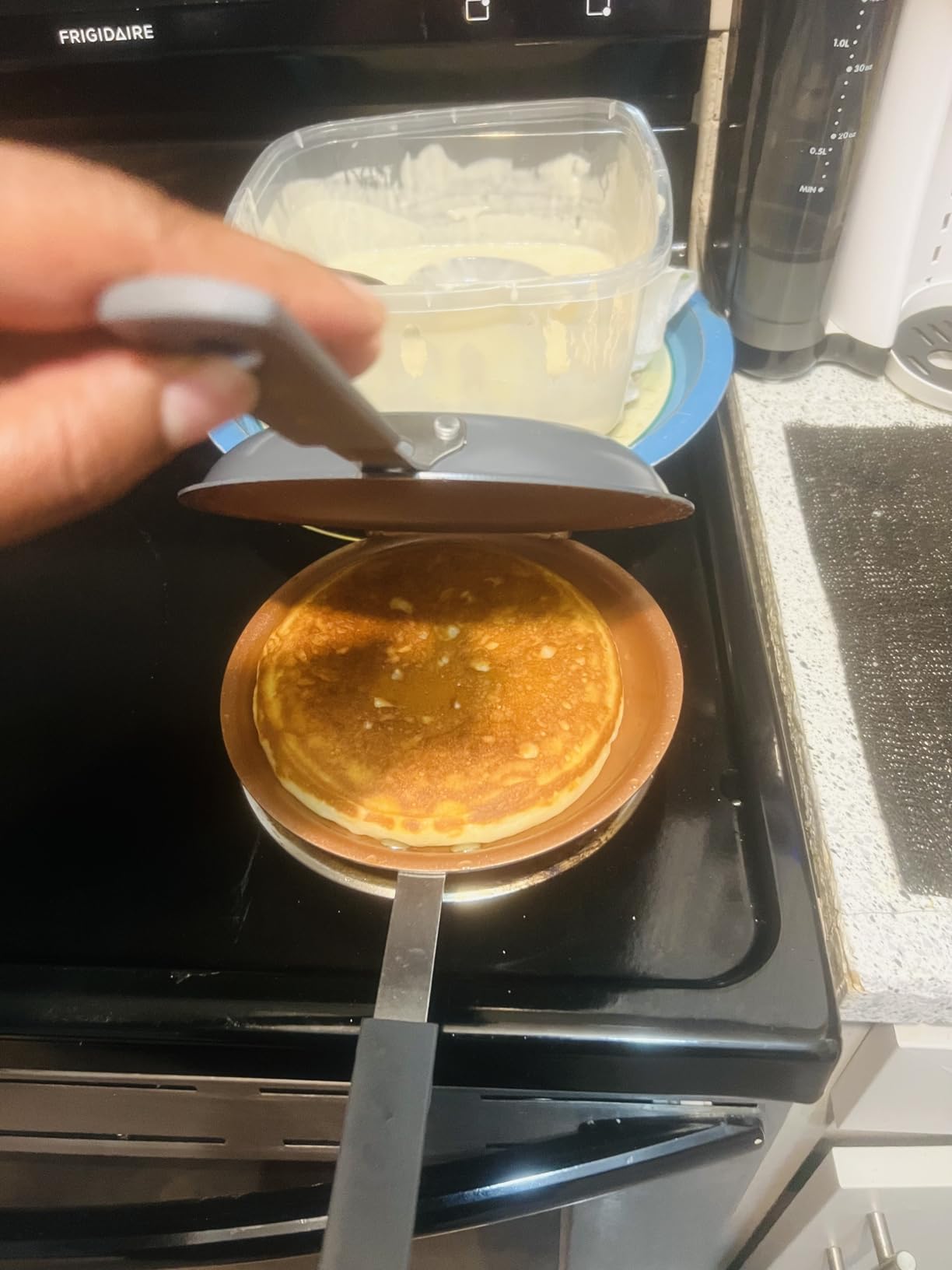
The Gotham Steel solves one problem no other pan here solves, which is how you flip an omelette without a spatula. Two domed halves are hinged together, so the pan itself turns over and the omelette lands back on a hot surface rather than getting punted into the air. Owners call the result restaurant-shaped, and that is accurate.
Both domes carry a triple-coated ceramic nonstick, so you are cooking on a released surface on each side rather than on a hot plate and a coated plate. The solid aluminum core conducts heat quickly and evenly end to end, and at 16 ounces it is easy to lift with one hand.
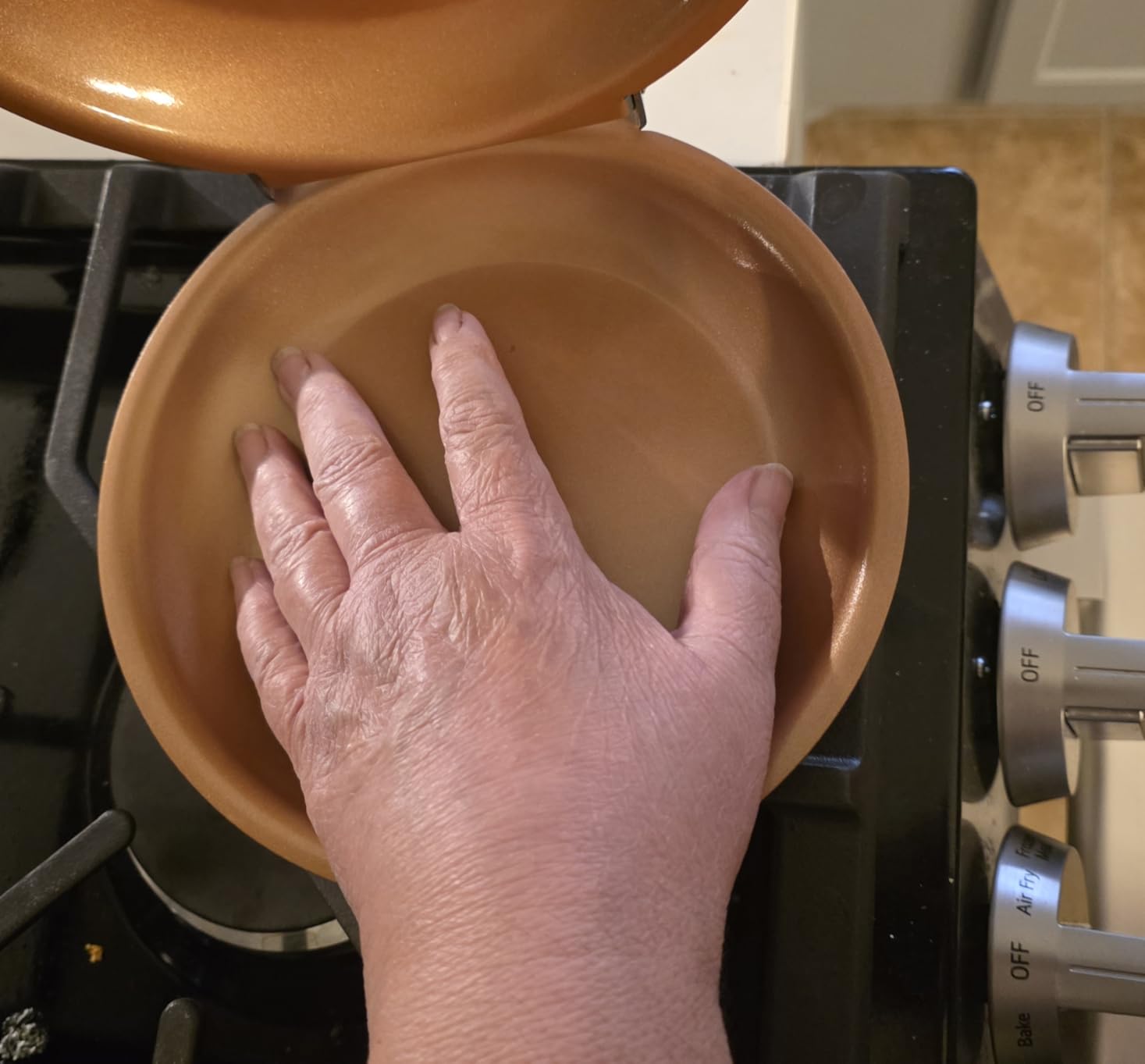
The handles are cool-touch riveted rubber grips that work for right and left handed cooks, which is a small design choice that matters more than it sounds. The surface is described as titanium and diamond coated with a metal utensil tolerance, and it is dishwasher safe with a 10-year limited warranty behind it.
Rated to 500F and free of PFOA, PFOS, lead and cadmium, this is also a general small pan for pancakes, quesadillas and grilled cheese. We found it more interesting as a dedicated omelette maker than as a general skillet.
What a spatula-free flip does to an egg
Every ordinary omelette technique depends on the egg being loose and well set at the surface before you move it. The hinge lets you flip at the exact moment the set is right, and the second dome keeps the same release. Owners describe shaped omelettes with no tearing, which is the failure mode that ruins most home omelettes.
It is also the cleanest option for over-easy eggs, because you lift the whole pan, slide a plate over the dome and turn the two together. No spatula edge, no broken yolk, no folded white.
The seal is the thing to understand
The two halves do not seal completely, so a thin or runny batter can leak during the flip. That is the consistent criticism in reviews, and the fix is simple: leave headroom, and flip over a sink or in the sink. Fill the pan less than looks right and the problem disappears.
There is also a cleaning caveat. Hinge and interior handle bolts collect cooked egg, and they need attention rather than a quick dishwasher cycle. A few owners also report hinge breakage and exterior paint flaking within months, so this is a pan to buy for the technique you enjoy rather than as a set-and-forget workhorse.
8. GreenPan 5 Inch Round Egg Pan for Cooking One Egg
GreenPan Mini Healthy Ceramic Nonstick, 5″ Round Egg Pan, PFAS-Free, Dishwasher Safe, Stay Cool Handle, Mint Green
5 inch round egg pan
Thermolon ceramic nonstick
Dishwasher safe
Oven safe to 350F
16 oz
Pros
- Sized for exactly 1-2 eggs
- Thermolon coating free of PFAS PFOA lead and cadmium
- Silicone-wrapped stay-cool handle
- Wipes clean with a soft paper towel
- Dishwasher safe and five color options
Cons
- Too small to flip an egg properly
- Not induction compatible
- Not scratch resistant so nonabrasive utensils are required
The GreenPan is the smallest pan here, and for a lot of households that is exactly right. At 5 inches across it holds one or two eggs, and the Thermolon ceramic coating keeps the finished egg neatly contained inside the shallow bowl instead of letting it spread thin and crisp at the edges. For a solo breakfast that is a better result than a big skillet.
The coating is described as free of PFAS, PFOA, lead and cadmium, with no toxic fumes when overheated, which makes it a reasonable pick for a small kitchen or a first apartment. It is dishwasher safe, it comes in five colors, and it wipes down with a soft paper towel.
What one egg looks like in it
Because the cooking surface is only 5 inches, a sunny-side-up egg sets to the shape of the pan with the white contained and the yolk centered. That is a genuinely different result from a large skillet, where the white spreads to a thin lace. Many owners use this pan for a single omelette as well, and the surface releases cleanly for both.
The 16 ounce body is light and heats evenly for its size, and the silicone-wrapped stay-cool handle has a slip-free grip. It is oven safe to 350F, which is enough to melt a slice of cheese over a breakfast egg.
Where the size becomes the problem
You cannot properly flip an egg in this pan. Owners are explicit that the edge folds over instead of turning, which means an over-easy egg is out of reach here and you need a wider pan for that. You also need a small matching spatula or a spoon, since a full size turner covers the whole cooking surface.
The base is not magnetic, so it is not induction compatible, and the coating is not scratch resistant, which means nonabrasive utensils only. For anyone cooking more than two eggs at a time, the 8 inch pans in this roundup are the smarter purchase.
How We Tested These Pans for Eggs
Every pan in this roundup went through the same routine, because a fair comparison has to hold the technique constant and change only the pan. Here is the sequence we used.
Dry release test. A cold egg hits a dry medium burner with no fat at all. This is the hardest version of the test and it tells you how much slip the coating genuinely has.
Butter release test. The realistic test, with a small knob of butter and low to medium heat. An omelette was cooked the same way in every pan so the sloped-wall designs could be compared against the flat ones.
Heat distribution check. We looked for a hot spot by watching where the white set first and where butter pooled. A pan that pools fat in the middle under a fried egg fails this even if the coating is excellent.
Handle and balance. One-handed lift, a wrist shake to loosen an egg, and a flip test where the pan shape allows it. Unbalanced pans are recorded as a handling issue, not a coating issue.
Cleanup and durability. Paper towel, quick rinse, and a dishwasher cycle where the manufacturer allowed one. Coating behavior under repeat daily use came from owner reports rather than our own timeline.
On longevity specifically, we are honest about the limits of any test window. Owner reports are the better source for year-three behavior, and the pattern they show is consistent: careful low heat hand washing extends a coating, while dishwasher cycles and high heat shorten it in a hurry. A few cooks in r/Cooking describe a Woll pan that has outlasted five years of heavy use, while others wear out two pans in a year by cooking rice, eggs and pasta twice daily. Same pan type, opposite outcomes, and the difference is technique and volume.
What Size Pan Do You Need for Eggs
Pan size is the most underrated decision in this category, and the most common mistake is buying too large. A bigger pan gives an egg more surface, which means a thinner white, more browning at the edge and more oil to cover the base. The right size keeps the egg contained and the fat shallow.
Here is how the sizes in this roundup map to real breakfast quantities.
5 inch round egg pan. One or two eggs. Best for a sunny-side-up with a set white, and the only size in this group where a single egg fills the surface.
7.5 by 5.5 inch rectangle. One to two servings. Shaped for rolling a tamagoyaki or a folded omelette, not for volume.
8 inch round skillet. Three to four eggs, and the sweet spot for most households. Six of the eight pans here are this size, which is not a coincidence.
8 inch double dome. One to two servings of omelette or pancakes, cooked in two rounds if there are more of you.
Cooking for two or three people every morning? An 8 inch skillet covers a three egg omelette with room to roll it. Cooking for one, a single egg or a weekday omelette? A 5 inch egg pan does the job with a fraction of the burner area and a much easier cleanup, and several owners in the r/Cooking threads say exactly that.
One last geometry note. If you want a French omelette that you roll inside the pan, look at the sloped or rectangular pans here. If you want a fried egg with a crisp edge and a runny yolk, look for a flat, round cooking surface and a rim wide enough to slide the finished egg onto a plate.
Are Nonstick Pans Safe for Eggs
This is the most searched question in the category, and the honest answer is that a healthy intact coating is safe to use. The concern is not normal cooking, it is a degraded coating heated to very high temperatures over many years.
PTFE, sold as Teflon, is a polymer coating that is chemically inert and stable at cooking temperatures. It belongs to a broader chemical family sometimes referred to as PFAS. PFOA, the older related compound that once showed up in the manufacturing process, has been restricted for years, and every pan in this roundup is listed as PFOA-free.
The real issue is flaking. Once a coating is scratched, crazed or peeling, the flakes are no longer inert dust, and heating a damaged pan at high heat is the behaviour the safety guidance is written about. That is why a flaking pan should be replaced rather than cooked with until it looks worse. If you notice black specks in the pan, that is a sign to stop rather than scrub harder.
What the PFAS-free ceramic label does and does not mean
Ceramic nonstick is a marketing term, not a material. The pans sold as ceramic use a silica-based sol-gel coating rather than PTFE, and the PFAS-free pans here, the SENSARTE, the GreenPan and the OXO, are all listed as free of PFOA, PTFE, PFAS, lead and cadmium. That is a real difference in the coating chemistry, though it does not make ceramic coating indestructible.
The catch is durability. Sol-gel ceramic loses slip faster than a well used PTFE coating because it is a hard, brittle layer rather than a self-healing one, and a few reviews describe finding a PTFE binder in the ingredient list of a pan marketed as ceramic. Cooks on r/cookware raise the same concern, and the honest position is that the label tells you what is not in the pan, not how long the coating will last.
If you are still deciding, the practical order is this. A healthy PTFE pan used at medium heat with wooden or nylon tools is a low risk, high performance option. A ceramic or PTFE-free pan gives you the same egg release with fewer of the questions, at the cost of a shorter expected life. A flaking pan of any type is the one to retire, whatever it is made of.
How to Cook Eggs So They Slide
Most stuck eggs are a technique problem, not a pan problem. The five steps below fix the majority of sticking complaints we came across.
Use low to medium heat. A cold or scorched surface is what makes eggs grab. Bring the pan up slowly and wait for the butter to foam rather than browning.
Add fat before the egg. A small knob of butter or a teaspoon of oil gives the white something to slide on. You need far less than you think.
Do not use cooking spray. Aerosolized lecithin burns onto a nonstick surface and builds a tacky film that permanently reduces release. This is the most common cause of a pan that used to work and no longer does.
Never preheat an empty pan. Let the fat go in first, then bring the temperature up. Dry heating is listed as a care warning on multiple pans here.
Let the egg set undisturbed. Move it only once the white has lost its wet gloss. Constant fiddling with a spatula is what tears the white and pulls coating.
Two more habits worth adding. Use wood, silicone or nylon utensils, and avoid plunging a cold pan into a hot burner or running cold water over a hot one, because thermal shock crazes coatings. If an egg still sticks after all of the above, the pan has probably lost its slip and it is time to replace it rather than fight it.
Nonstick Versus Cast Iron, Carbon Steel and Stainless for Eggs
Professional kitchens cook eggs on well seasoned carbon steel and stainless, and the reason is service, not technique. A restaurant burner can output far more heat than a home range, and a commercial pan has to survive a fry station running at that temperature several times an hour. A coated pan has no place in that environment.
At home, the equation is different. Most home burners are gentle, breakfast cooking is low volume, and the person holding the spatula wants a clean release on the first try rather than after a season of oil and heat. That is why most home cooks keep a dedicated coated egg pan alongside a carbon steel or cast iron skillet for everything else, a split that comes up constantly in the r/cookware and r/Cooking threads.
Seasoned carbon steel does release eggs well once the seasoning is built, but the camp that swears by it also accepts a break-in period. If you enjoy building a pan, that is a satisfying path. If you want a reliable egg at 7am with no maintenance, coated is the better tool, and treating it as a replaceable consumable is what makes that a fine choice rather than a compromise.
How to Make a Nonstick Pan Last
Cooks on r/cookware are blunt about this: a coated pan is a consumable, and the goal is to get the most months out of it. The rules are short and the difference between two and five years is entirely in how you cook.
Hand wash when the brand says to. The SENSARTE and the GreenPan Mini should stay out of the dishwasher entirely. Where a pan is dishwasher safe, the top rack is the cautious choice.
Use nonabrasive utensils. Wood, silicone or nylon for anything but the Blue Diamond, which is listed as metal utensil safe.
Avoid high heat and empty preheating. Medium heat does the job for eggs and is what keeps the coating glossy.
Let it cool before washing. Thermal shock is the fastest route to a crazed surface.
Store it with care. Stack pans with a paper towel between them, or hang the pan, so the coating is not abraded by the pan above it.
On expected life, the honest ranges are wide. Owners report coated pans lasting from well under a year under heavy daily use to many years when a pan is reserved for eggs only and washed by hand. Industry benchmarks often cited put a well-cared-for nonstick skillet in the three to seven year range, and the reviews in this roundup line up with that pattern rather than against it.
Retire a pan when the coating flakes or peels, when scratches have gone deep enough to catch a fingernail, or when eggs stick no matter what technique you use. If you are shopping replacement pieces, our nonstick cookware set roundup covers the bundle options.
Frequently Asked Questions
What type of pan is best for frying eggs?
For most home cooks a flat-bottomed nonstick skillet with slightly sloped sidewalls is the best pan for frying eggs. The coating releases the white with a small amount of butter, and the low walls let you slide the finished egg onto a plate. An 8 inch size handles three to four eggs, which is the sweet spot for most households.
What is the best non-stick pan for scrambled eggs?
A heavy-gauge nonstick skillet with even heat distribution is best for scrambled eggs, because you move the curds across the surface constantly and any hot spot cooks them unevenly. The Tramontina Professional 8 inch and the SENSARTE 8 inch ceramic both scored well, and both release with a modest amount of butter instead of a full coating of oil.
Are non-stick pans safe for eggs?
A healthy, intact coating is safe for everyday egg cooking. The concern applies to damaged coatings heated to very high temperatures, so replace a pan when the coating flakes or peels rather than continuing to cook with it. PFOA has been restricted for years, and every pan in this roundup is listed as PFOA-free, with ceramic options also free of PTFE and PFAS.
What do professional chefs use to cook eggs?
Restaurant kitchens generally use seasoned carbon steel or stainless steel for eggs, because a commercial burner runs far hotter than a home range and a service pan has to survive that heat repeatedly. Stainless with a small amount of fat works well for restaurant omelettes, while carbon steel is the classic choice for a home cook willing to build a seasoning.
Why don’t professional chefs use non-stick pans?
Commercially, nonstick is unsuited to high-volume, high-heat service because coated surfaces degrade under repeated extreme heat and cannot be repaired. At home the calculation is different, since home burners are gentle and breakfast cooking is low volume, which is why most home cooks keep one coated egg pan alongside carbon steel or cast iron for everything else.
What is the typical lifespan of a non-stick frying pan?
A well-cared-for nonstick skillet commonly reaches three to seven years, and industry benchmarks often cited put it in that range. Owner reports vary widely, from under a year under heavy daily use to many years when a pan is reserved for eggs, hand washed, and used at low to medium heat. A dishwasher cycle shortens that life noticeably.
My nonstick pan is flaking off. Should I be concerned?
Yes, replace it. Once a coating flakes, the particles are no longer an inert surface, and continuing to heat a damaged coating is exactly the behaviour the safety guidance is written about. Also retire a pan when scratches are deep enough to catch a fingernail, or when eggs stick regardless of your technique.
The Best Nonstick Pans for Eggs in 2026
The best nonstick pans for eggs in 2026 come down to one clear winner. The CAROTE 8 Inch Classic Granite Skillet releases a fried egg with almost no oil, works on every cooktop including induction, and carries the strongest rating and review record in this group. If you cook one or two eggs at a time, buying an 8 inch skillet is often a mistake, and the 5 inch GreenPan egg pan or the 7.5 by 5.5 inch TECHEF will serve you better.
By category, the SENSARTE 8 inch ceramic is the best value if you want PFAS-free cooking, the OXO 8 inch is the best everyday workhorse with a lifetime-warranty feel and a comfortable handle, the Tramontina is the one to buy if you want dishwasher convenience, and the Blue Diamond handles the highest oven heat in the group. For technique-specific cooking, the TECHEF wins at rolled omelettes and the Gotham Steel wins at spatula-free flips.
Whatever you choose, the technique matters as much as the pan. Low to medium heat, a small knob of butter, no cooking spray and no empty preheating will get you a clean release from any of the eight. And if you are still building a shortlist, our current nonstick pan deal guide tracks the pricing changes on these exact picks.