
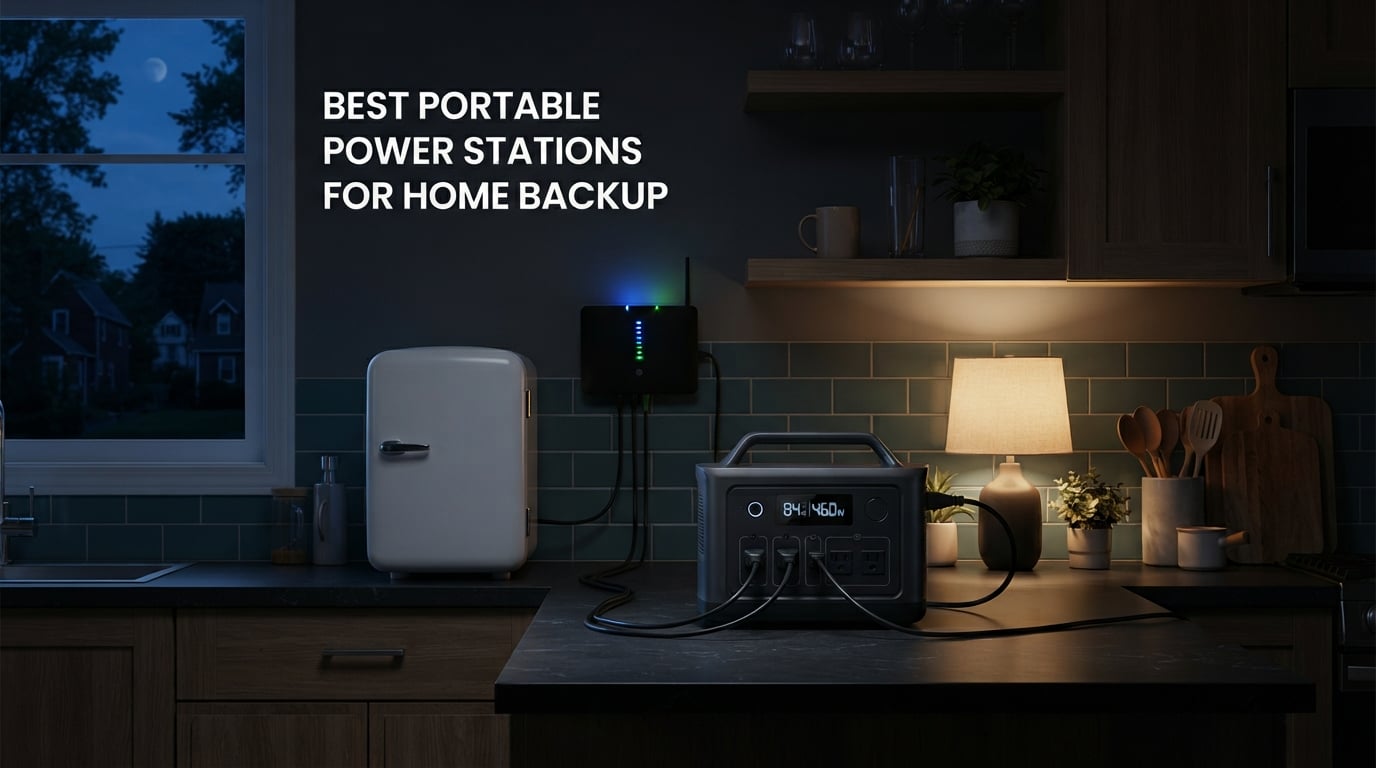
Nobody buys a portable power station because they want one. They buy it after the freezer thaws, after a night with no heat and no hot water. That is the mood we wrote this guide in, and it is why every pick below is judged on one question: will it still be working at 4am on the second night of an outage?
We compared 10 portable power stations built for home backup, from a 519Wh unit that fits under a desk to a 3,014Wh model with RV output. We checked continuous output, surge, battery chemistry, cycle rating, recharge times, solar input and expansion, then cross-checked all of it against what owners report in reviews. We also did the sizing math, because the question on every home backup forum is the same one we kept getting: is 1,000 watt-hours enough?
Quick answer: the Jackery Explorer 1000 v2 is the best portable power station for home backup for most households, pairing 1,070Wh with 1,500W of continuous output at a weight most people can carry alone. Size to 1,000-2,000Wh for a refrigerator, a CPAP machine, a router and lights. Go above 2,000Wh when you add a freezer, a home office or outages beyond 24 hours.
We earn a commission when you buy through the links on this page, at no cost to you. That does not change how we rank anything, and we name the weaknesses of every unit we recommend.
If you are still working out which category of device you need, our guide to battery backup power stations covers fixed home systems, and our home battery backup breakdown explains what changes when a system is wired in rather than carried around.
Table of Contents
Our Top 3 Portable Power Stations for Home Backup in 2026

Jackery Explorer 1000 v2
- 1070Wh and 1500W output
- 23.8 lb body
- LFP rated 4000+ cycles
- 0-100% in about 1 hour

BLUETTI AC180
- 1152Wh and 1800W continuous
- 20 ms UPS switchover
- 500W solar input
- 5-year warranty

Anker SOLIX C1000 Gen 2
- 1024Wh with 2000W output
- 10 ms UPS switchover
- 0-100% in 49 minutes
- 600W solar input
All 10 Picks at a Glance in 2026
Every unit below is reviewed in full further down. This table is the quick scan: capacity, continuous output, and the feature that separates each one from its rivals.
| Product | Specifications | Action |
|---|---|---|
| Jackery Explorer 1000 v2 |
|
Check Latest Price |
| BLUETTI AC180 |
|
Check Latest Price |
| Anker SOLIX C1000 Gen 2 |
|
Check Latest Price |
 OUPES Mega 1 OUPES Mega 1 |
|
Check Latest Price |
 EF ECOFLOW Delta 3 Classic EF ECOFLOW Delta 3 Classic |
|
Check Latest Price |
 Jackery Explorer 2000 v2 Jackery Explorer 2000 v2 |
|
Check Latest Price |
 Anker SOLIX S2000 Anker SOLIX S2000 |
|
Check Latest Price |
 BLUETTI Elite 300 BLUETTI Elite 300 |
|
Check Latest Price |
 GRECELL 500W GRECELL 500W |
|
Check Latest Price |
 LIBRIDS 640Wh LIBRIDS 640Wh |
|
Check Latest Price |
1. Jackery Explorer 1000 v2 – Best Overall Home Backup Station
Jackery Explorer 1000 v2 Portable Power Station,1070Wh,1500W
1,070Wh
1,500W continuous
3,000W surge
23.8 lb
LFP 4,000+ cycles
Pros
- Carries at 23.8 lbs with a foldable handle
- 1500W continuous handles a fridge compressor and small appliances
- 0-100% in about an hour with emergency charging mode
- LFP cells rated 4000+ cycles and a 10-year lifespan
- Seven outlets including 100W USB-C and three pure sine wave AC ports
Cons
- Solar input only accepts Jackery-branded panels
- The one-hour charge mode has to be re-enabled in the app each time
- Only three AC outlets at this capacity
- Short listed warranty versus some rival brands
This is the unit we keep in our own shortlist for the middle of a house. 1,070Wh of LFP capacity with 1,500W continuous is the sweet spot for a fridge, a CPAP machine, a router and a lamp, and at 23.8 pounds one person can move it without help. Three of the ten units here sit at 1,024Wh, and this is the only one of those three that can be expanded with extra batteries.
Charging is what sold us. The app’s emergency mode takes it from flat to full in about an hour against a 1.7-hour default, which matters when a storm is forecast and you have an evening. Seven outlets cover the usual mix: two USB-C, one USB-A, a 12V car port, three pure sine wave AC sockets and a light.
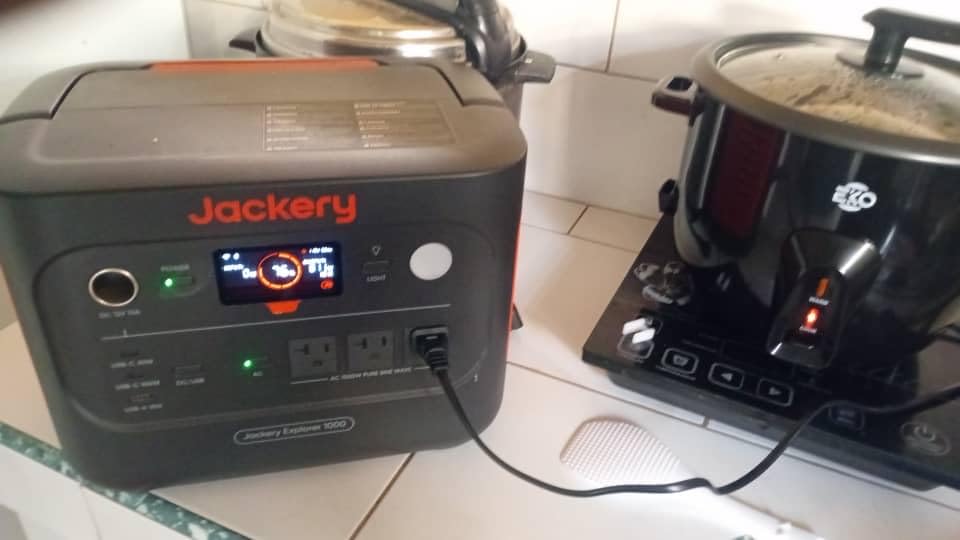
The 3,000W surge figure is not decoration. A compressor can pull several times its running wattage for a second on start, and that headroom is the difference between the fridge cycling all night and the inverter tripping at 1am. Reviewers running sump pumps and small window units report exactly that behaviour.
Two caveats. Solar charging only works with Jackery’s own panels, so a generic 400W panel you already own will not do you any good. And the one-hour emergency mode has to be switched on in the app each time rather than saved as a standing setting, which is an easy thing to forget.
What 1,070Wh actually buys you at 4am?
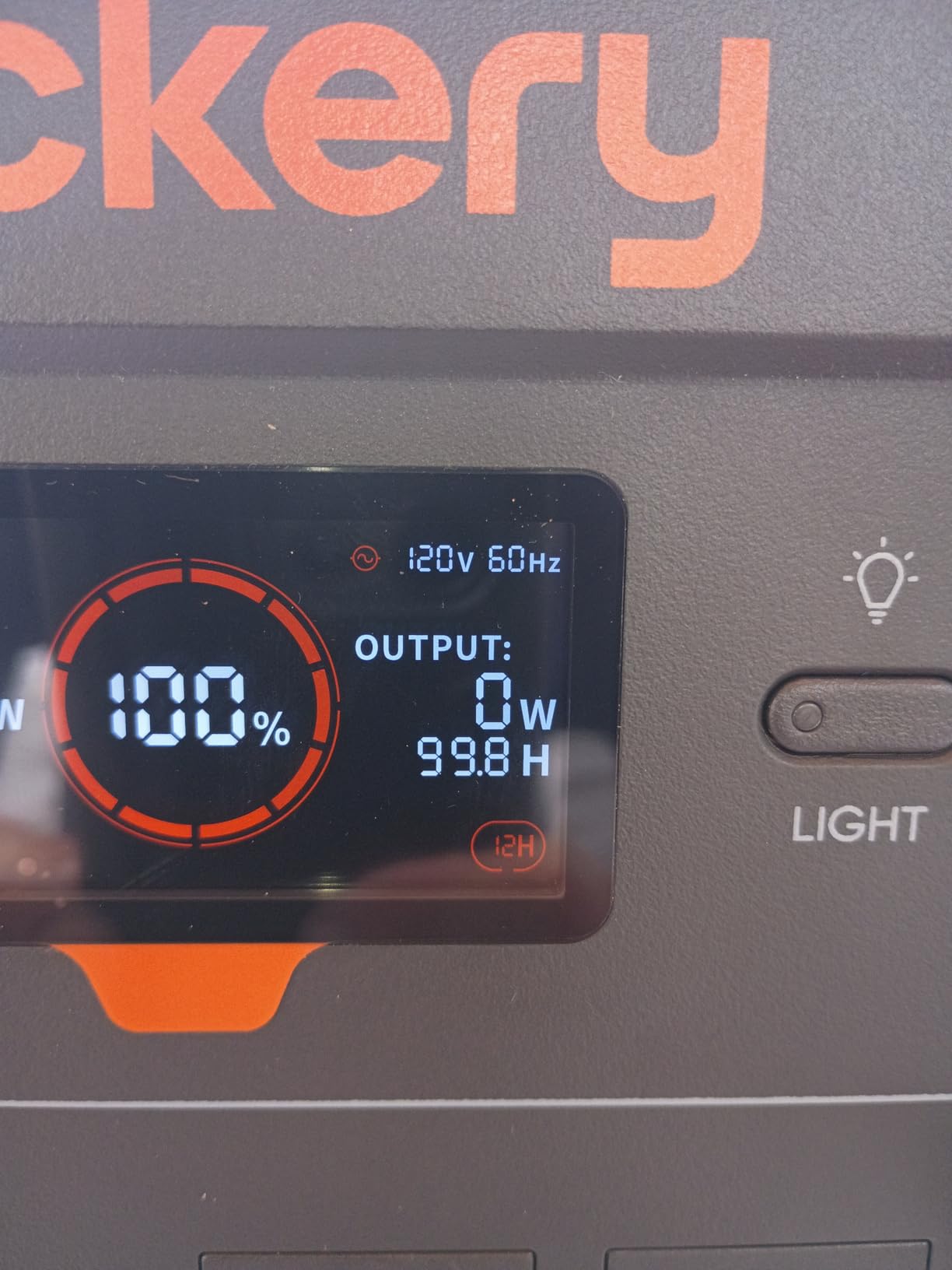
Expect roughly 900Wh once inverter overhead and the reserve the battery management system holds back are subtracted, so plan on 85 percent of the label. A 150-200W fridge cycling about 40 percent of the time averages 60-80W per hour, putting this unit at roughly 11-15 hours of fridge.
Add a CPAP at about 50W for eight hours and a router at 12W for a day and you are looking at a realistic 30-40 hours of mixed essential load. That is the number to plan an overnight outage around, and it is why this sits above a unit that would weigh several times as much.
Where it falls short?
The warranty is the weakest part of the package. Buyers treating this as a 10-year home asset should read that as the main reason to check the coverage terms first, because a cycle rating is only useful if a cell failure is actually handled. Three AC outlets is also fewer than some rivals at a similar capacity.
At 23.8 pounds it stays within a single-person carry even though it holds more than a kilowatt-hour, and the foldable handle makes that carry a one-hand job. Plan a dedicated shelf near the outlets you will actually use during an outage.
2. BLUETTI AC180 – Best Value 1,152Wh Station for UPS Backup
BLUETTI AC180 Portable Power Station 1152Wh 1800W LiFePO4 Solar Generator
1,152Wh
1,800W continuous
2,700W surge
37.4 lb
20 ms UPS
5-year warranty
Pros
- Full charge in about an hour from a 1440W AC input
- 1800W continuous with a 2700W power lift from the app
- Over eight outlets plus a wireless charging pad
- 20 ms UPS keeps routers and internet alive
- 500W solar input recharges in roughly 2.8-3.3 hours in good sun
- Five-year warranty and strong customer support
Cons
- 37.4 lb is heavy for a 1kWh class unit
- The top-mounted wireless charging pad frequently fails to hold a phone
- About 20W of idle draw plus reserved capacity cuts usable watt-hours
- Charge rate settings only adjustable through the app
For a household that wants a permanently plugged-in unit behaving like a mini UPS, the AC180 is one of the most complete packages at this size. 1,152Wh with 1,800W continuous is more headroom than the Jackery above, and 20 ms switchover is short enough that a router or desktop rides through an outage without noticing.
Port selection is generous: more than eight outlets covering AC, USB-C, USB-A, a car port and 12V DC, plus a wireless pad on top. The app also exposes a power lift mode that pushes usable output to 2,700W for short bursts, which helps when a compressor needs a kick.
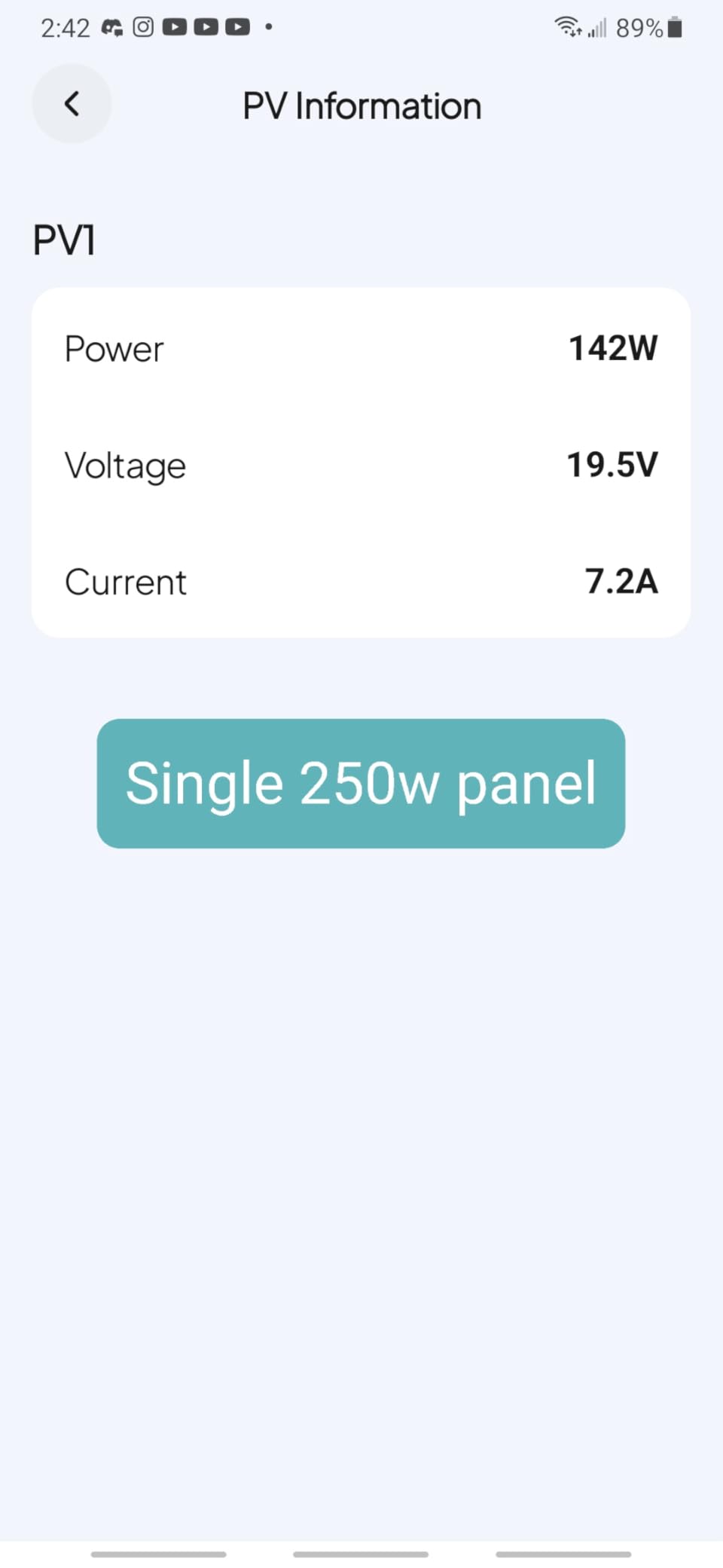
Recharging is genuinely fast. A 1,440W AC input reaches full in about an hour, and 500W of solar brings it back in roughly 2.8-3.3 hours in good sun. Five years of warranty and five years of spare part availability make this an easy station to commit to for the long term.
Now the honest part. At 37.4 pounds this is a two-person lift for most people, and the wireless pad draws consistent criticism from owners. Roughly 20W of idle draw plus about 10 percent reserved capacity means plan around 80 percent of the label, not all of it.
Why we rate delivered output rather than the nameplate?
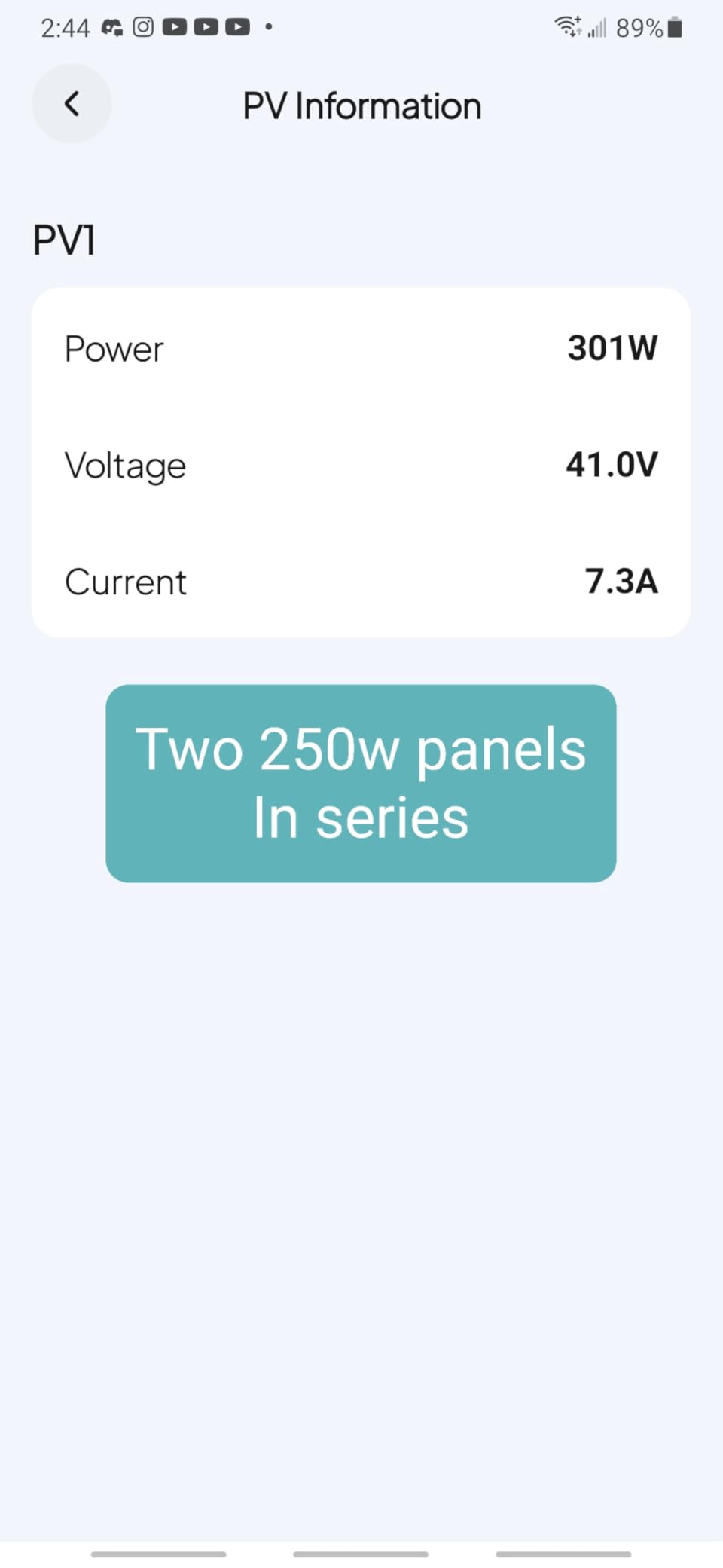
Run a watt-hour meter from empty to cutoff and the gap between the sticker and your appliances is obvious. On a unit this size, 85-92 percent of the label is a reasonable expectation, and lower if you draw heavily through DC rather than AC.
Once idle draw and the reserve are subtracted, usable energy lands close to the Jackery’s despite a higher nameplate, and the 1,800W continuous rating still wins for anything with a compressor in it. That is why we rank it on delivered energy rather than capacity alone.
Where it falls short?
Skip this if anyone in the house has to move the power station alone during an outage, because 37.4 pounds is not a marketing number. It is also the wrong pick if you want to add capacity later, since this configuration has no expansion path.
App-only charge rate control is a minor irritation, but the pattern runs through this whole category: core settings are moving behind phone apps, which means no backup if the app or account stops working. Keep the unit operable without software.
3. Anker SOLIX C1000 Gen 2 – Best for CPAP and Medical Devices
Anker SOLIX C1000 Gen 2 Portable Power Station
1,024Wh
2,000W output
3,000W peak
about 25 lb
10 ms UPS
4,000 cycles
Pros
- 2000W continuous output is unusually high for a 1kWh station
- Full recharge in 49 minutes on 1600W HyperFlash
- 10 ms UPS switchover keeps CPAP and routers running
- About 10 percent smaller and 11 percent lighter than comparable models
- 600W solar input refills the battery in roughly 1.8 hours
- Anker app with time-of-use scheduling and remote monitoring
Cons
- The Gen 2 is not expandable with extra batteries
- 15-20 percent harmonic distortion on the sine wave under a microwave load
- No protective storage case for the cable clutter
- Slightly more expensive than some 1kWh rivals
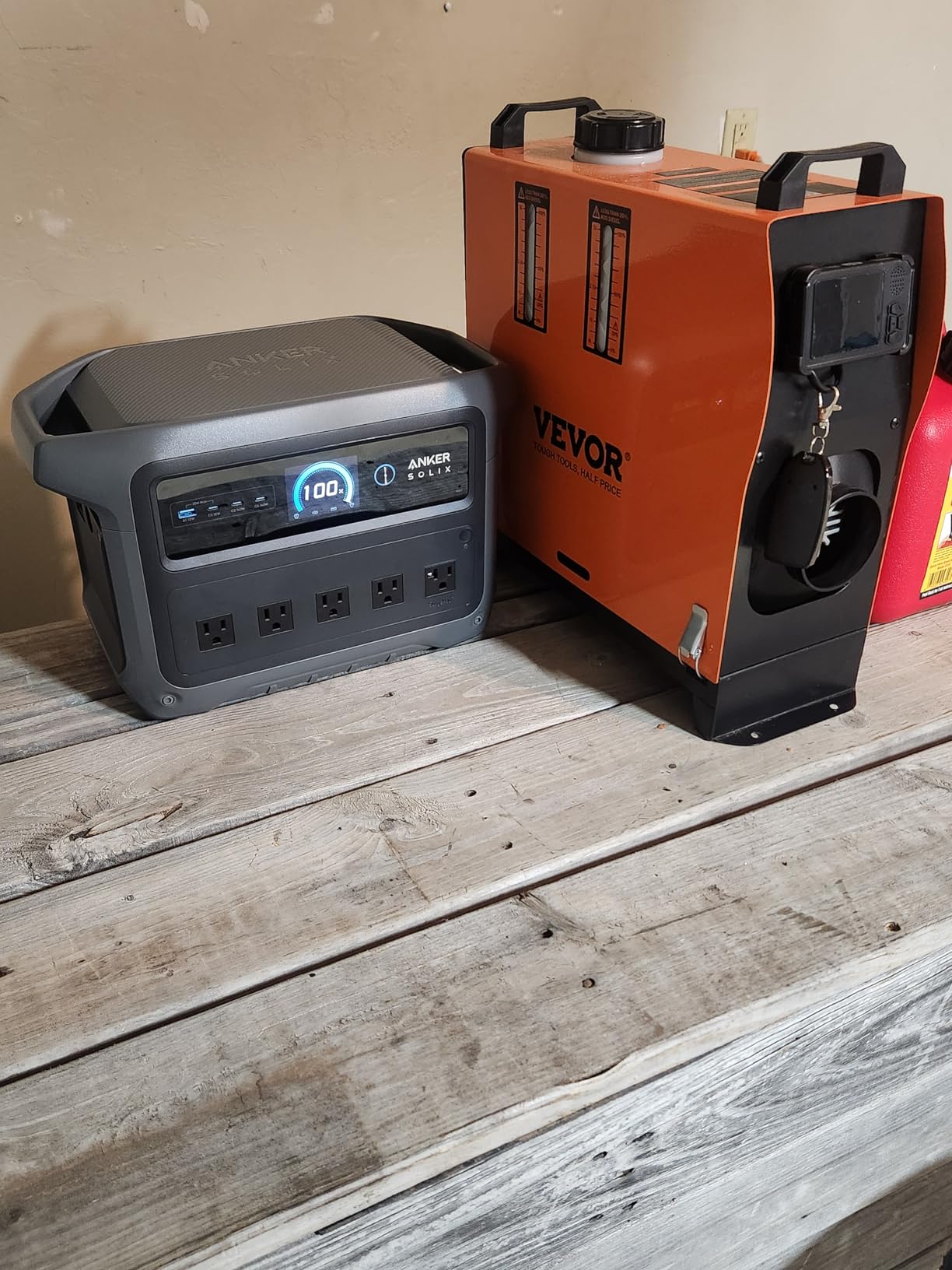
If a medical device is the reason for the purchase, switchover time matters more than anything else on this page. At 10 ms the C1000 Gen 2 transfers fast enough that CPAP machines, laptops, routers and monitors keep running through an outage with no manual reset. Owners report powering a CPAP for three nights and covering a five-hour outage unattended.
2,000W continuous from 1,024Wh is unusual for this class, matched here only by the OUPES Mega 1, and it lets you run a small appliance alongside the sensitive electronics instead of rationing. At roughly 25 pounds and 15.1 by 8.2 by 9.6 inches, it is about 10 percent smaller and 11 percent lighter than comparable models.
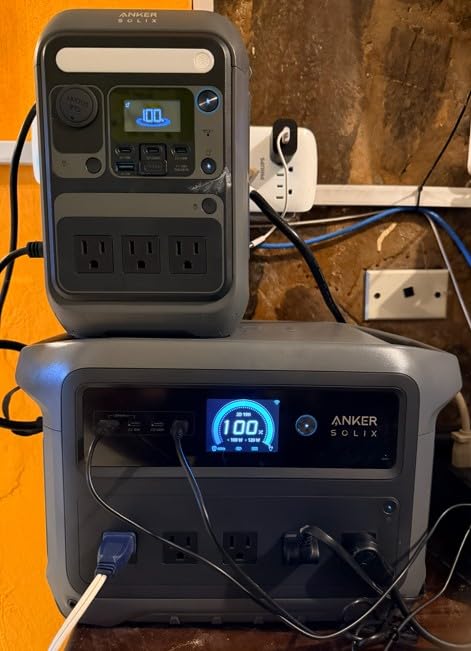
Recharge speed is the standout. A 1,600W HyperFlash input takes it from empty to full in 49 minutes, and 600W of solar refills it in roughly 1.8 hours of good sun. The 4,000-cycle rating to 80 percent and a five-year warranty are the durability markers we look for in an emergency asset.
Two limits first. The Gen 2 dropped expandability the first generation had, so 1,024Wh is the ceiling. And reviewers measuring the inverter under a microwave report 15-20 percent harmonic distortion, a reminder that medical gear and heavy inductive loads are not always ideal companions.
What a CPAP load really costs in watt-hours?
A CPAP typically sits between 30W and 60W depending on mode and whether the humidifier runs. At 50W for eight hours that is 400Wh, plus mask heating and any onboard battery.
On 1,024Wh of label capacity at 85 percent usable, that leaves roughly three nights of CPAP on its own, or two nights with a refrigerator and router alongside. Any guide claiming a 1,000Wh unit runs a CPAP for a week is wrong, and it is worth ignoring that claim wherever you see it.
Where it falls short?
Lack of expansion is the dealbreaker for anyone expecting the load to grow. If a 1,024Wh ceiling feels tight on day one, a unit you can add batteries to is a better ten-year purchase than a faster one you cannot.
The distortion figure is specific rather than general. If you plan to run a microwave, a motor or an air conditioner off the same unit, check that model’s inverter behaviour rather than assuming a clean waveform everywhere.
4. OUPES Mega 1 – Best for Expandable Capacity
OUPES Mega 1 Portable Power Station 1024Wh 2000W (4500W Surge)
1,024Wh expandable to 5,120Wh
2,000W continuous
27.8 lb
5-year warranty
Pros
- Expands to 5120Wh with two B2 extra batteries
- 2000W continuous output is unusually high for a 1kWh unit
- 0-80% in about 36 minutes on AC
- 800W solar input and 1400W AC input
- Two 100W USB-C PD ports alongside well spaced AC outlets
- Bluetooth app control with pass-through charging support
Cons
- The advertised 4500W surge is optimistic and some units trip around 2050-2200W
- Cooling fan runs continuously while charging
- Wi-Fi in the app is unreliable though Bluetooth works better
- Proprietary Anderson-style charging cable is hard to replace
- Plastic housing with no weather resistance
The Mega 1 is the pick for a buyer whose load list will grow. Add two B2 extra batteries and capacity scales to 5,120Wh, turning a weekend fridge-and-lights unit into something that can carry a freezer, a home office and lights through a 48-hour event. It is the only model in this roundup with a meaningful expansion path.
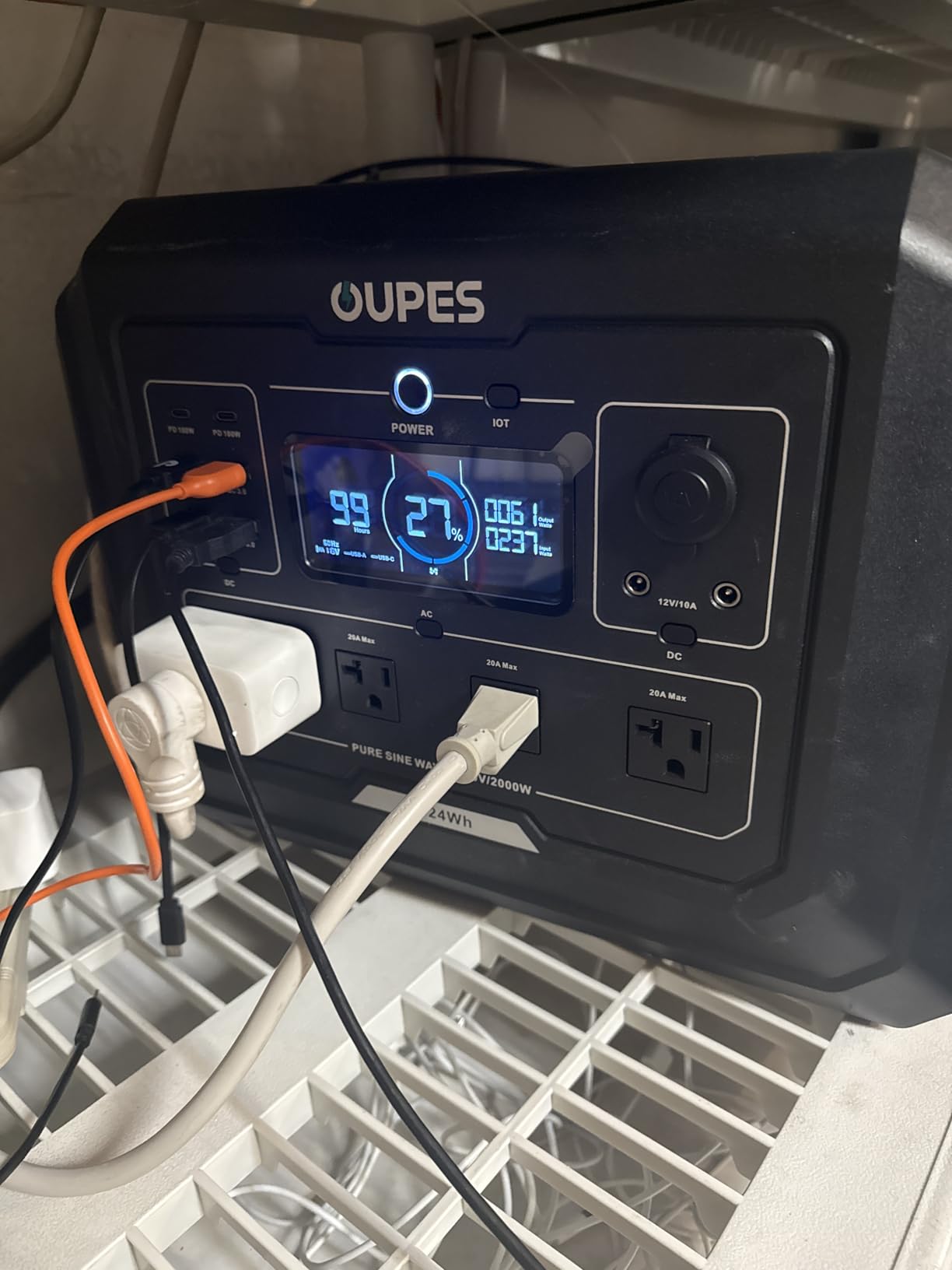
Out of the box it is already strong: 2,000W continuous, 0-80 percent in about 36 minutes on AC, 26 minutes combining AC and solar, and 800W of solar input. Two 100W USB-C PD ports and four QC3.0 USB-A ports match the port count of the other 1,024Wh units here, on a model that can also grow.
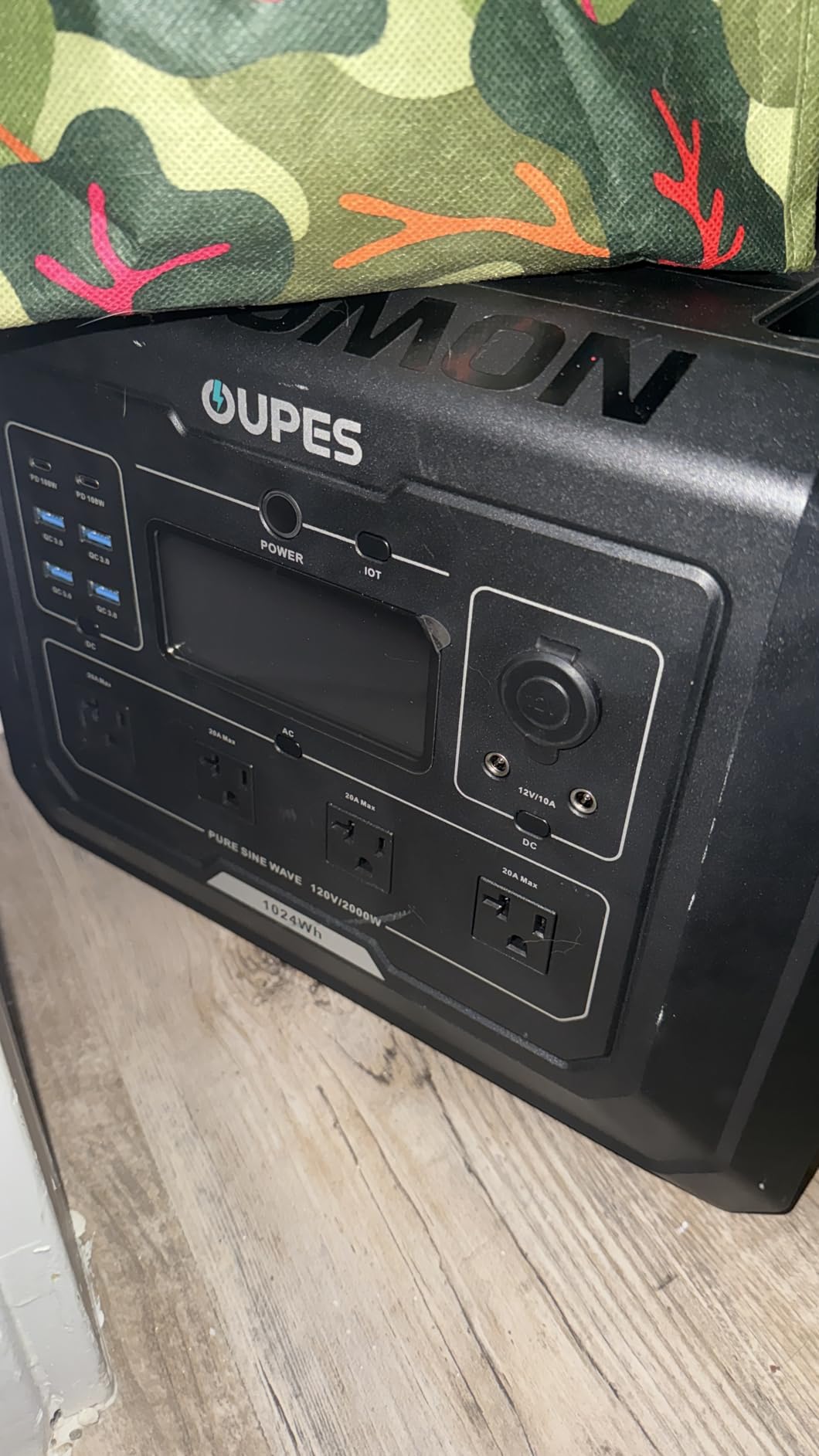
Owners treat it as a value pick for a good reason: it matches or beats branded rivals on continuous wattage and surge headroom while sitting at a lower tier of the category. The LiFePO4 pack is rated 3,500+ cycles under a five-year warranty.
The surge rating is where we would push back on the marketing. The listing claims 4,500W and owners report units tripping closer to 2,050-2,200W, so treat that as aspirational. The fan also runs continuously while charging, and the app’s Wi-Fi is unreliable where Bluetooth works well.
Whether the expansion batteries are worth planning around
Expansion only helps if you buy the packs at the right time and the connection is still supported years later. That is a real question with any proprietary battery ecosystem, and the cheaper a brand, the less certain the long-term parts and firmware support.
A minority of reviews describe first-unit failures resolved by responsive support and quick replacement. That is a good sign about the brand, and also a reminder that on a value pick the warranty is doing the work build quality does on a premium one.
Where it falls short?
The plastic housing feels cheap and carries no weather resistance, so this is an indoor or fair-weather unit. The proprietary Anderson-style charging cable is also awkward to replace if lost, which becomes an emergency at 2am.
If your main load is a compressor-heavy appliance rather than electronics, read the surge complaint again. 2,000W continuous is generous here, but the gap between advertised and real surge is exactly where these models get marginal.
5. EF ECOFLOW Delta 3 Classic – Best for Outage Monitoring and Fast Top-Ups
EF ECOFLOW Portable Power Station Delta 3 Classic, 1024Wh 1800W AC
1,024Wh
1,800W continuous
2,600W with X-Boost
26.7 lb
under 10 ms UPS
Pros
- 0-80% in 45 minutes with X-Stream AC charging
- 1800W output that X-Boost pushes to 2600W for heavy loads
- Under 10 ms UPS switchover for computers and medical devices
- App supports scheduled charging
- Storm Alert and Self-Powered backup modes
- Dual handles and a non-skid base for handling in the dark
Cons
- Cannot expand with DELTA 2 or Delta 3 Series extra batteries
- 26.7 lb is heavy for a 1kWh unit
- Solar charging needs sustained direct sun to outpace a running fridge
- A small number of reviews report units arriving dead or previously opened
The Delta 3 Classic’s rating profile is the strongest in the roundup, with 90 percent of its reviews at five stars, and the software is why. Storm Alert, scheduled charging and Self-Powered backup mode mean the unit can top itself up on off-peak electricity and tell you what it is doing, which is the difference between owning a power station and running one.
The hardware matches the software. 0-80 percent in 45 minutes on AC, 1,800W continuous, and X-Boost pushing usable output to 2,600W for resistive loads like a kettle or space heater. Switchover sits under 10 ms, and the EV-grade cell-to-chassis design with a smart battery management system is why owners describe build quality as a cut above.
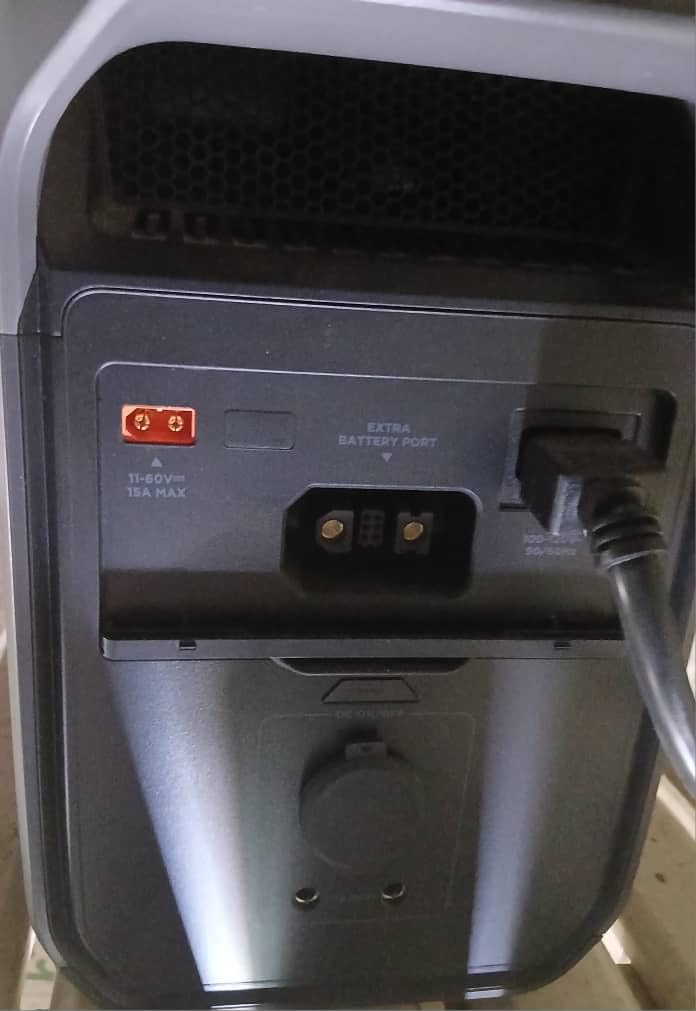
Solar input is 500W with a recharge around 2.5 hours in good sun. Physical details matter more than they sound: dual handles, a non-skid base and angled outlets that do not collide with bulky plugs all reduce fumbles in a dark kitchen.
Two limits. At 26.7 pounds it is heavy for a 1kWh unit on paper, and it cannot take extra batteries, so 1,024Wh is a hard ceiling. There is also a small tail of reviews describing units that arrived dead or already opened, so inspect the box on delivery.
How fast solar can actually refill it?
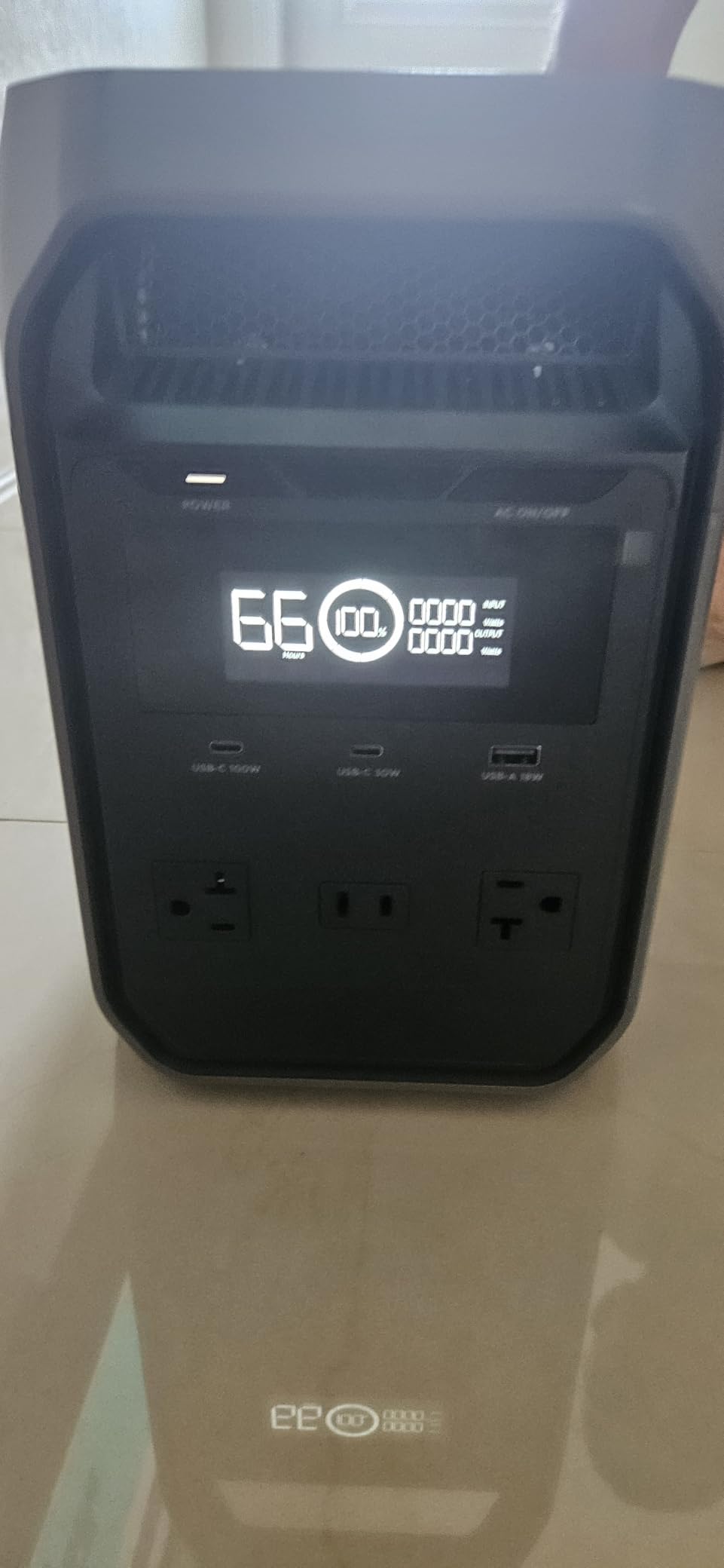
The arithmetic is simple: 1,024Wh at 500W of panel input is roughly two hours of perfect sun, and closer to the 2.5 hours quoted once conversion losses are allowed. On a partly cloudy day that stretches, and a running refrigerator turns solar from a top-up into a treadmill.
Treat a portable panel as a way to slow the drain during a long outage, not as a way to recharge a fridge overnight. Panels in the 200-400W range are more realistic at this size than the 500W maximum.
Where it falls short?
The battery incompatibility is worth stating plainly: this unit does not work with DELTA 2 or Delta 3 Series smart extra batteries, so anyone planning to scale up later is looking at a different product. The weight is the second issue.
App dependence is the third. Storm Alert and scheduling only help if you configured the app before the outage, not during it. Spend ten minutes setting it up the week you buy it.
6. Jackery Explorer 2000 v2 – Best for 2,000Wh in a Small Box
Jackery Explorer 2000 v2 Portable Power Station, 2042Wh, 2200W AC Output
2,042Wh
2,200W across 3 AC outlets
39.5 lb
20 ms UL1778 UPS
Pros
- 2042Wh with 2200W across three AC outlets covers most home essentials
- 41 percent lighter and 34 percent smaller than typical 2kWh LiFePO4 units
- 0-80% in 66 minutes and full in 102 minutes with super charging
- Silent charging mode under 30 dB for indoor use
- 20 ms UPS switching with UL1778 test certification
- 100W USB-C PD port charges a laptop without an adapter
Cons
- 39.5 lb is still a two-person lift for most users
- Highest cost per watt among the 2kWh options here
- Only three AC outlets
- Solar charging limited to Jackery panels
- One-star reviews run higher than the sibling model at 8 percent of ratings
Stepping up to 2,000Wh changes the conversation from surviving a night to covering most of a day. This unit pairs 2,042Wh with 2,200W continuous across three AC outlets, enough to run a refrigerator, a freezer, a router and lights at once without the inverter complaining.
What makes it interesting is size. At 39.5 pounds it is 41 percent lighter and 34 percent smaller than a typical 2kWh LiFePO4 unit, and cell-to-body construction is the reason. For a tight utility room or garage shelf, that footprint difference is the whole decision.
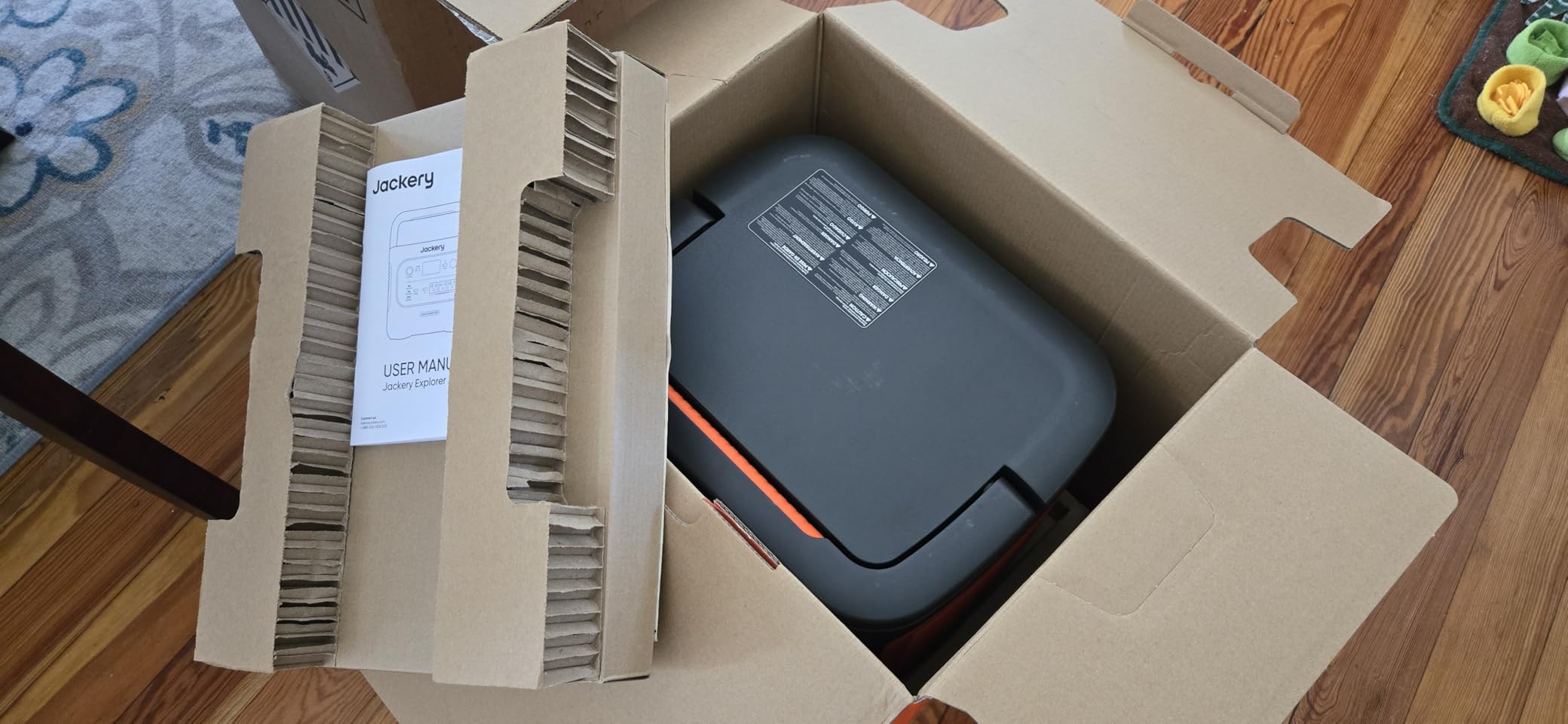
Charging is good rather than spectacular: 0-80 percent in 66 minutes, or full in 102 minutes with app-enabled super charging. The silent mode under 30 dB is genuinely useful indoors, and the 20 ms switchover is UL1778 test certified, worth looking for if you plan to back up a computer.
Be aware the 4.4 average is among the lowest here, and the reason is the one-star tail: 8 percent of ratings, with delivery, support and durability the recurring themes. Most owners still recommend it, but the feedback on this one splits further than on any other pick we covered.
What 2,042Wh covers that 1,070Wh does not?
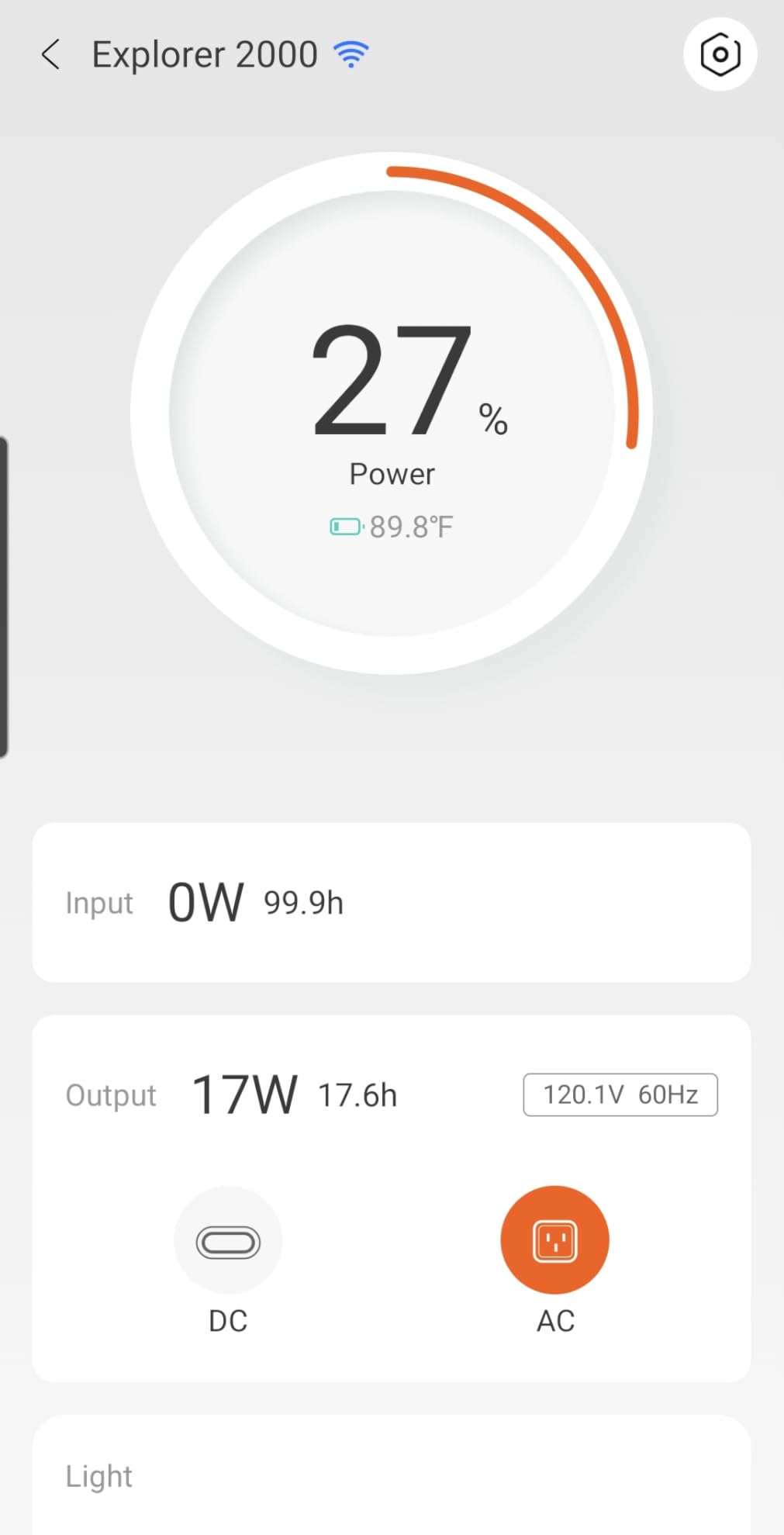
At 85 percent usable, roughly 1,700Wh reaches your appliances. A refrigerator averaging 60-80W per hour, a chest freezer at similar draw, a router at 12W and a CPAP at 50W for part of the night lands in the 30-40 hour range without solar.
That is the difference between topping up a phone and keeping the freezer running through a second night. If your outage history is more than one night, or you run a second appliance continuously, this is the tier where the maths starts to work.
Where it falls short?
Three AC outlets is restrictive at this capacity, and 39.5 pounds is still a two-person lift for most people. Solar input is limited to 400W and to Jackery-branded panels, so pairing it with a panel you already own may not be possible.
Reviewers flag this as the highest cost per watt among the 2kWh options here, which is the price of the smaller box. Buyers without a space problem should compare the larger alternatives before settling.
7. Anker SOLIX S2000 – Best for Long Refrigerator Runtime
Anker SOLIX S2 Portable Power Station, 2,010Wh, 1,500W
2,010Wh
1,500W continuous
6W idle draw
35.7 lb
under 10 ms UPS
Pros
- Low 6W idle draw extends fridge runtime to about 35 hours
- 30 percent smaller and 25 percent lighter than the 2kWh category average
- 314Ah LFP cells rated 10000 cycles with a 15-year lifespan
- Six ways to recharge including AC plus solar simultaneously
- Under 10 ms UPS switchover with dual-sided outlet layout
- App offers adjustable charge rates
- UPS mode and time-of-use control
Cons
- 1500W continuous output is low for a 2kWh unit against rivals at 2200-2400W
- No 12V DC port at all
- Fan is loudly droney while charging at 1200W
- Noticeable chemical burn-off odor on the first charge cycle
- Heavy two-hand carry with no centre handle
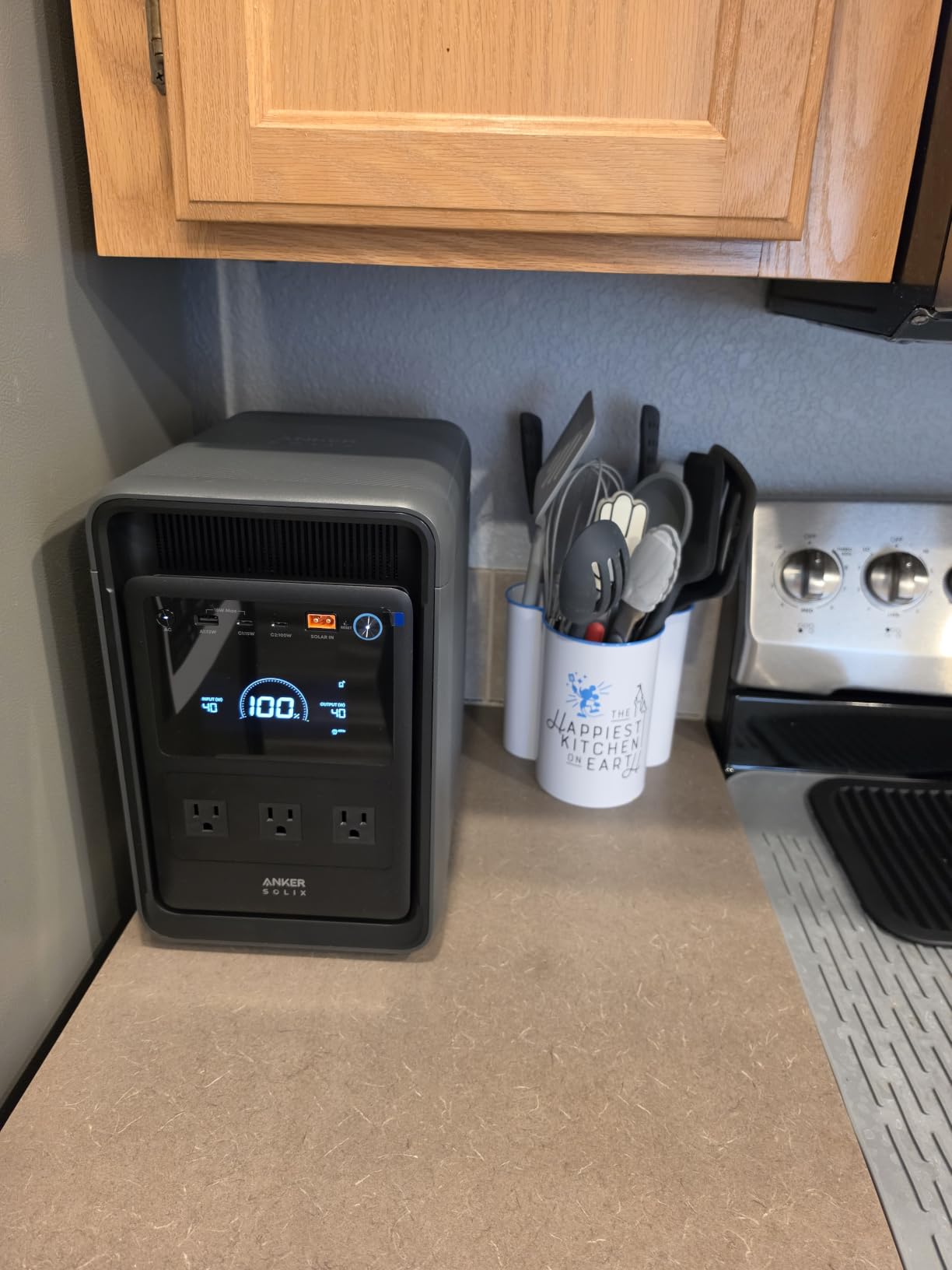
This is the pick if the single most important outcome is that the refrigerator stays cold. The 6W idle draw is the quiet hero: a 2,010Wh battery that wastes almost nothing when nothing is plugged in is what turns into roughly 35 hours of fridge backup rather than closer to 20 on a unit with a heavier baseline.
Owners describe exactly that, including a 30-hour event with a fridge, freezer, network rack and sump pump all running. The 314Ah LFP cells are rated at 10,000 cycles and a 15-year lifespan, the strongest cycle-life claim in the roundup.
Form factor is the second strength. At 8.19 by 11.1 by 12.7 inches it is 30 percent smaller and 25 percent lighter than the 2kWh category average, and the dual-sided outlet layout is genuinely useful: always-on appliances at the rear, portable devices at the front. Six recharge paths include AC, solar, wall, generator, panels, alternator and a car outlet.
The limitation that matters most is output. 1,500W continuous is low for a 2kWh unit against competitors at 2,200-2,400W, so it runs essentials brilliantly and struggles the moment a compressor-heavy appliance is added. There is no 12V DC port, and the fan is droningly loud during fast charging.
Why idle draw changes the runtime calculation?
Runtime is not capacity divided by load. The unit’s own overhead, drawn even with nothing connected, is subtracted from every hour it runs, and it matters more the longer the outage lasts. A 6W overhead costs about 144Wh over 24 hours, a meaningful slice of the evening’s energy on a 2,000Wh battery.
That is why the 35-hour fridge figure and the ten-thousand-cycle cell rating together make this the choice for anyone whose outages are measured in days, even though the 317-review base is the smallest of the picks here.
Where it falls short?
Run anything with a compressor beyond the fridge and you are near the ceiling. Buyers planning a freezer plus a sump pump on one unit should look at a 2,200W or 2,400W model instead.
The first-charge odour is reported by several owners and fades after a cycle, but it is alarming if you have never seen it. Charging fan noise matters most if the unit lives in a bedroom or quiet living space overnight.
8. BLUETTI Elite 300 – Best for 3,000Wh Headroom and RV Output
BLUETTI Elite 300 Portable Power Station for RV & Home Backup 3014.4Wh
3,014Wh
2,400W continuous
4,800W surge
58 lb
10 ms UPS
TT-30 RV outlet
Pros
- 3014Wh in a body roughly 59 percent smaller than traditional large power stations
- 2400W continuous with 4800W surge verified by owners under full sustained load
- True 20A right-angle blade outlets plus a 30A 12V DC output for RV use
- 10 ms UPS switchover tested with a desktop PC without interruption
- 0-80% in 78 minutes on AC
- App with custom AC input limits and 24/7 human support
Cons
- No battery expansion so 3kWh is the ceiling
- Solar input capped at 60V and 20A which can exceed a panel open-circuit voltage
- 58 lb is the heaviest unit in this roundup
- Soft-start voltage ramp stops some inductive loads like a dehumidifier from starting
- Firmware updates only over Wi-Fi with no wired fallback
- Only an AC cable is included
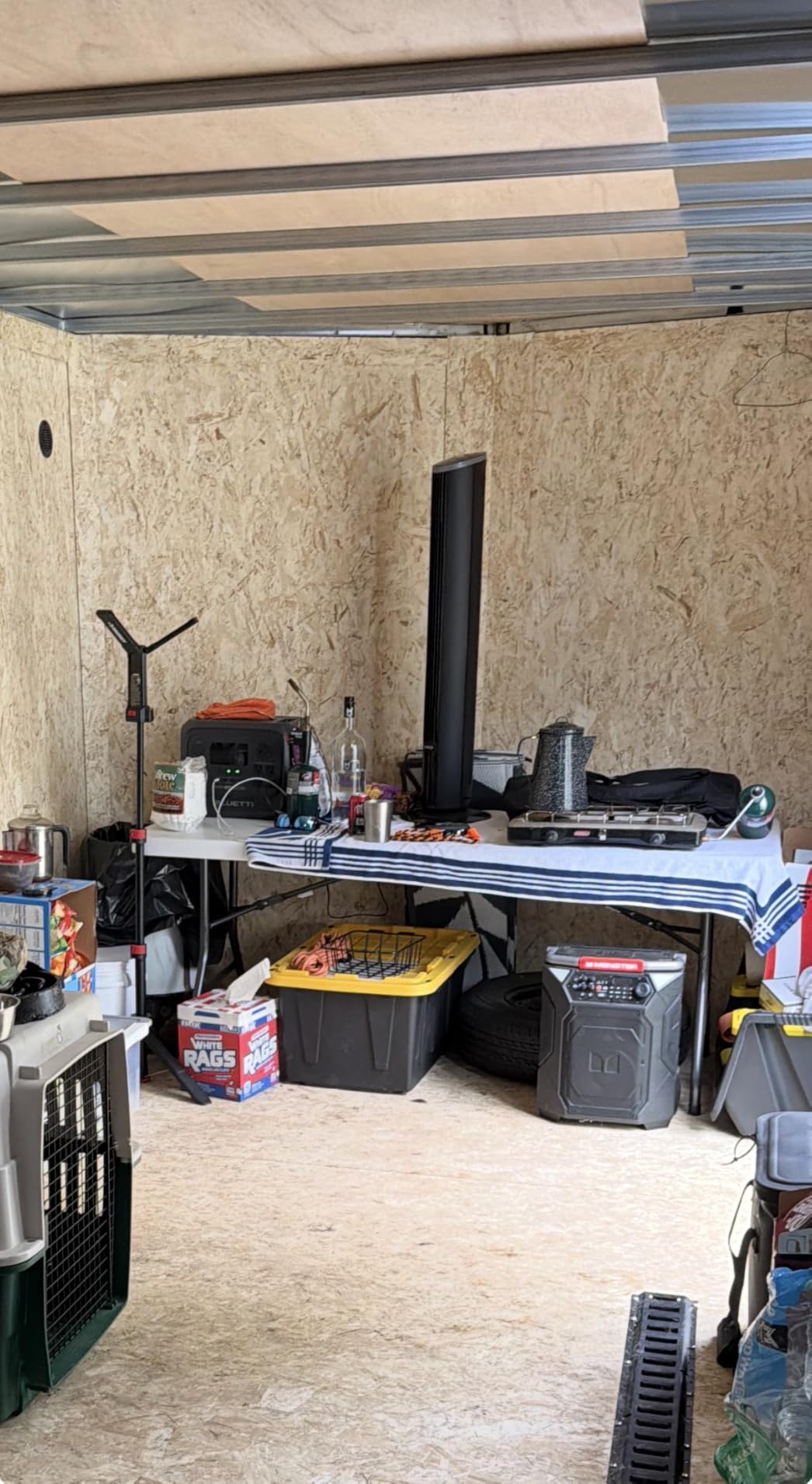
The Elite 300 is the only unit in this roundup that stops you worrying about fridge, freezer and lights all at once. 3,014Wh with 2,400W continuous and 4,800W surge gives room for a refrigerator, chest freezer, router, CPAP and a home office setup running together, and owners report the surge figure holding under full sustained load.
It is also unusually small for 3kWh, roughly 59 percent smaller than a traditional large power station, which changes where you can put it. The TT-30 RV outlet and 30A 12V DC output make it dual-use for anyone who also travels with it.

Switchover is 10 ms and one owner tested it against a desktop PC with no interruption, the standard most people never check themselves. AC charging reaches 0-80 percent in 78 minutes, and the app allows custom AC input limits plus simultaneous charge and discharge, useful on a time-of-use tariff.
Two design limits deserve attention. Solar input is capped at 60V and 20A, which can exceed a panel’s open-circuit voltage and void the warranty if you connect the wrong one, and there is no battery expansion at all, so 3kWh is the ceiling forever.
What 3,000Wh changes about outage planning?
At 85 percent usable, roughly 2,550Wh reaches your appliances. That covers a 12-24 hour outage with a full appliance list and leaves real headroom, rather than forcing you to choose which loads to switch off each hour.
One owner running instrumented testing measured about 77 percent charge-to-discharge round-trip efficiency, a fair warning that the 85 percent rule is optimistic at this size. At 58 pounds this is the heaviest unit in the set, so plan where it lives before you commit to moving it in an emergency.
Where it falls short?
The soft-start voltage ramp is a real limitation reviewers found the hard way: some inductive loads such as a dehumidifier will not start on it. If you have a motor-based appliance in your load list, test it before you need to.
Firmware updates only over Wi-Fi with no wired or app-free fallback is a choice that will age badly, and only an AC cable is included. For a 3kWh-class unit, the box should contain more.
9. GRECELL 500W – Budget Pick for Lights, Router and Small Loads
Portable Power Station 500W, 519.48Wh/140400mAh Solar Generator Backup
519Wh
500W pure sine wave
10 outputs
18 lb
24-month warranty
Pros
- Accessible entry point into a 519Wh pure sine wave unit with 10 outputs
- 60W USB-C PD plus three QC3.0 USB-A ports charge phones and laptops quickly
- Covers two AC outlets
- two 12V DC
- a car port and a 10W wireless charger
- Completely silent with no fuel
- fumes or exhaust
- Only 18 lb so one person can carry it
- Built-in BMS protection plus pass-through charging
Cons
- 500W ceiling rules out microwaves
- kettles and any large appliance
- Charging is slow at 6-7 hours on wall power and 6-9 hours with 100W solar
- Included AC power brick limits AC output while pass-through charging
- Only a 24-month warranty
- half of most competitors here
- Needs to be used and recharged at least once every three months
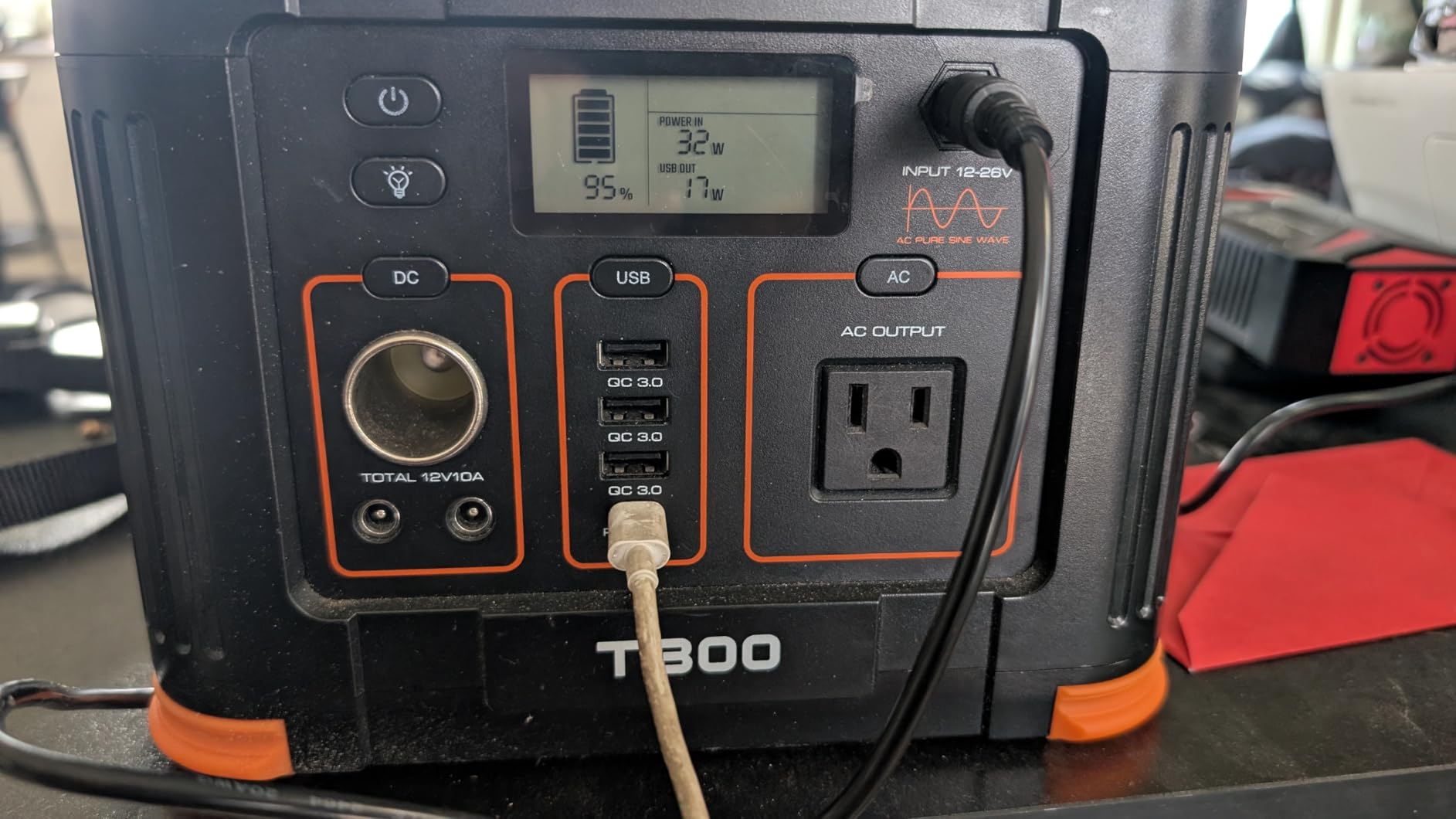
Treated as a primary home backup system, the 500W ceiling ends the conversation. Treated as a secondary unit it is genuinely useful: 519Wh of pure sine wave power with ten outputs, at 18 pounds, for the loads that matter most in the first hour of an outage.
Lights, fans, a router, phone and laptop charging, a projector or a CPAP all sit comfortably inside 500W. Two AC outlets, two 12V DC ports, a car socket, a 10W wireless charger, three QC3.0 USB-A ports and a 60W USB-C PD port mean most of your emergency kit never needs an adapter.
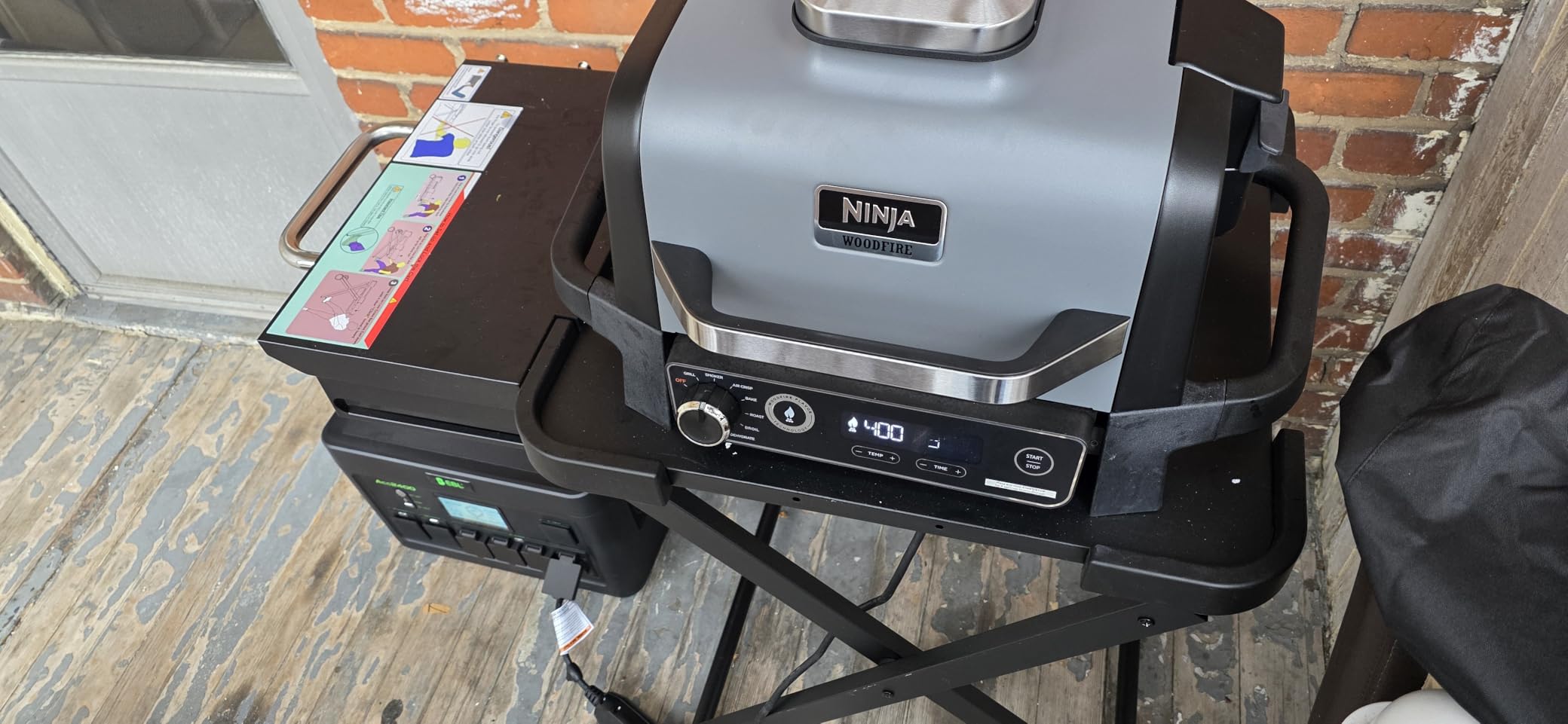
Because the inverter is pure sine wave, sensitive electronics behave, and the built-in battery management system handles temperature, overvoltage, overcurrent and short circuit protection. Operation is completely silent with no fuel and no exhaust, which is what makes it acceptable in a bedroom or a small apartment.
The trade-offs are real. Six to seven hours to recharge on wall power is slow, and 6-9 hours with a 100W panel slower still. The 24-month warranty is shorter than what most rivals in this roundup offer, and one reviewer reported a unit arriving with a cracked bottom shell and liquid on the batteries, so inspect it on delivery.
When a 519Wh unit is the right answer?
Apartment dwellers, renters and condo owners who cannot run a generator are the obvious audience, along with anyone wanting a small unit to carry to a neighbour or keep in a car. Where the priority is light, information and charging, 519Wh is sufficient.
What it cannot do is run a refrigerator compressor for long, power a microwave or kettle, or carry a freezer. If the fridge is what you are trying to save, this is the wrong tier.
Where it falls short?
Using and recharging it every three months is a real maintenance commitment, and an easy one to forget until the month you need it. The 500W limit also means one tripped breaker ends the whole load, not just that device.
For anything beyond light emergency duty the slow recharge makes top-ups impractical. Buy this as a companion unit, not as the thing standing between your family and a spoiled freezer.
10. LIBRIDS 640Wh – Best Compact Metal Build for Small Homes
LIBRIDS Portable Power Station 640Wh, 1200W Surge, Solar Generator 4 AC
640Wh
600W continuous
1,200W surge
about 16.3 lb
10 ms UPS
metal enclosure
Pros
- Full charge in about 1.5 hours from a wall outlet
- Four AC outlets plus USB ports let eight devices run at once
- 10 ms UPS switchover for routers
- monitors and CPAP machines
- Metal enclosure feels far more robust than comparable plastic units
- 4000+ cycle automotive-grade LiFePO4 battery with a 5-year warranty
- Compact footprint that fits in a car and carries by the top handle
Cons
- 600W continuous output cannot run a microwave or kettle
- Cooling fan runs audibly during fast charging
- No 12V car socket and no USB-C input for charging the unit
- Two separate reviews report units that dropped power immediately
- Documentation and manufacturer site are English-only
- Indoor-use-only safety labeling rules out wet-weather camping
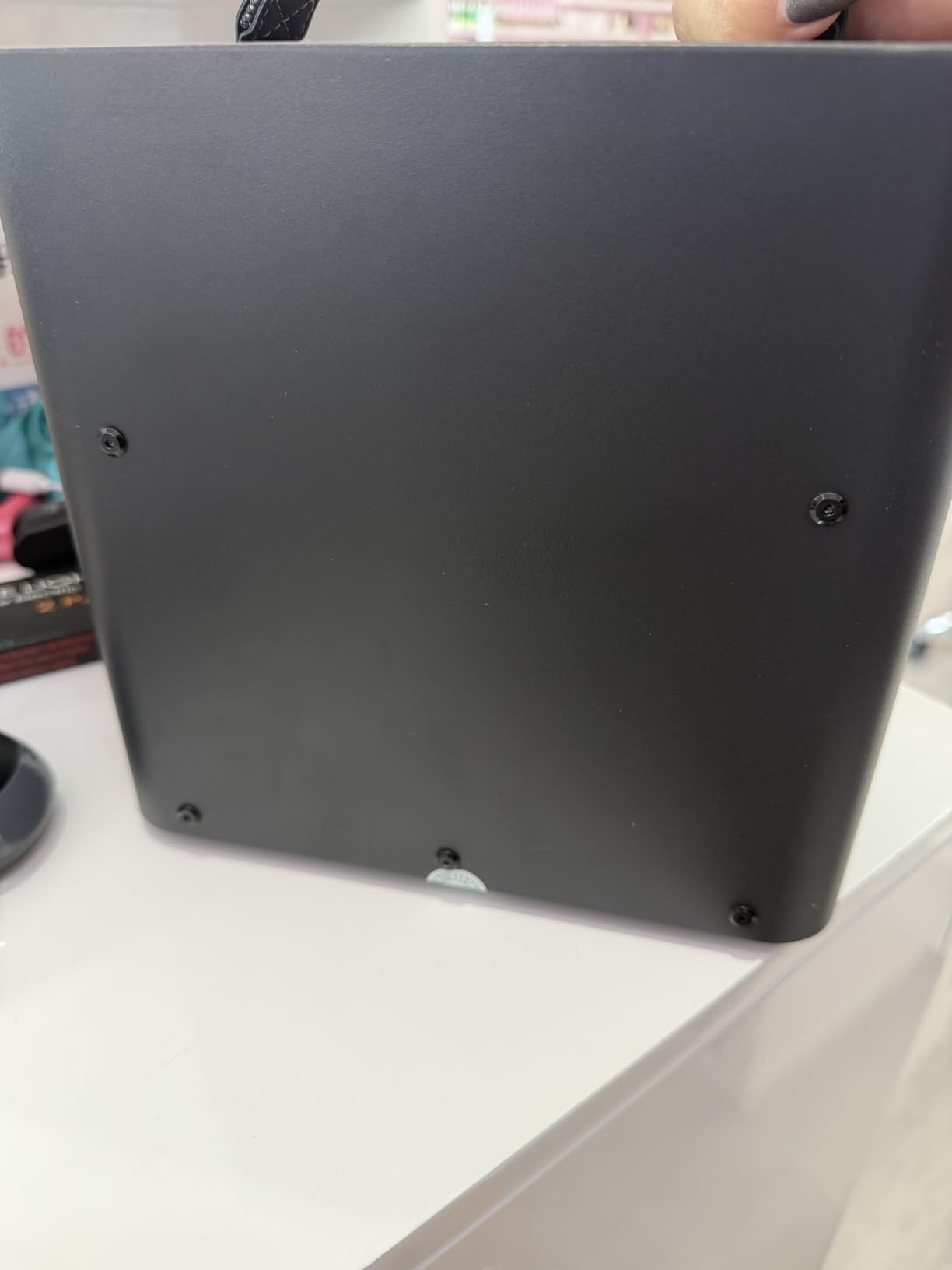
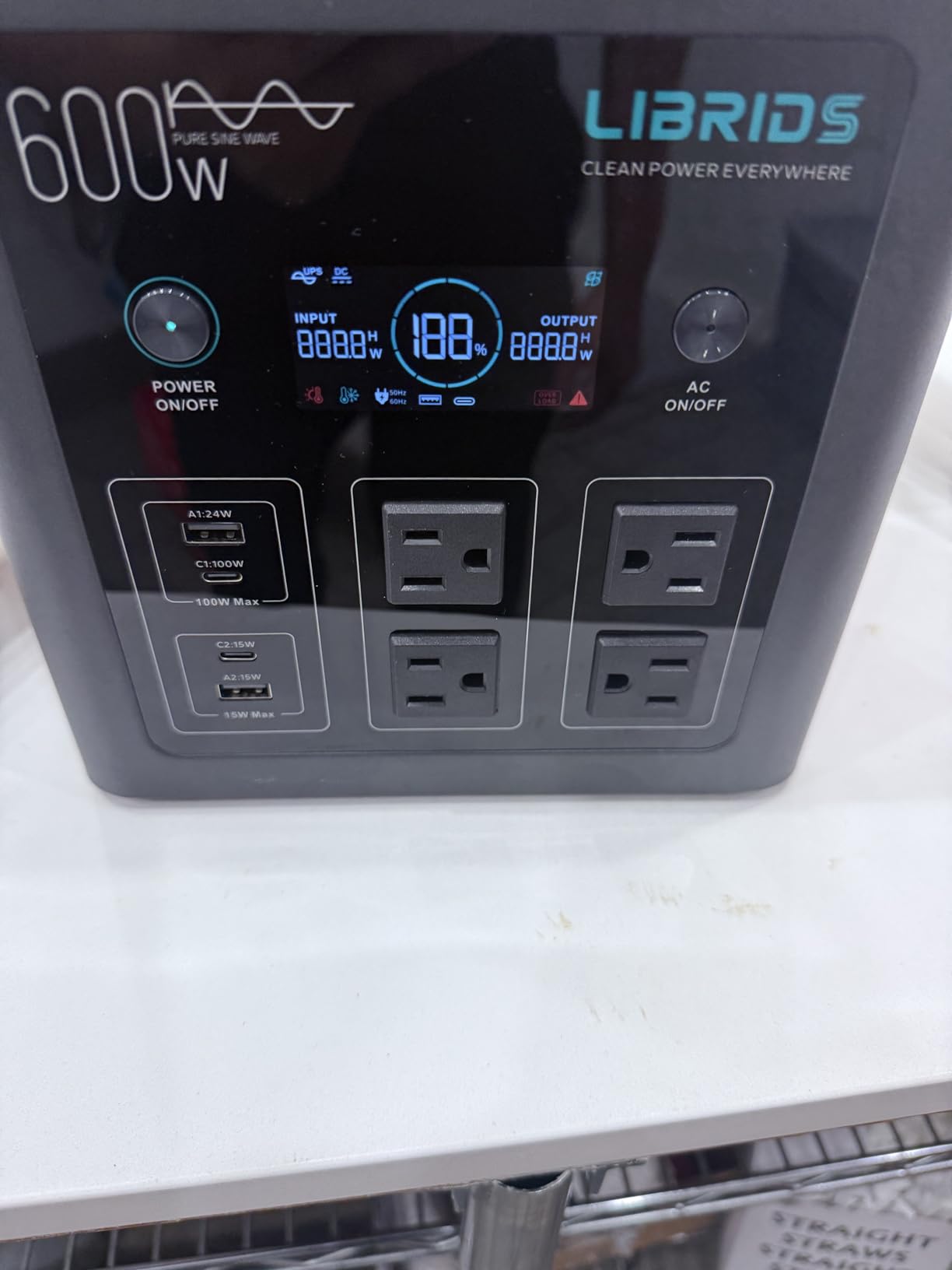
The LIBRIDS stands out at this tier for its chassis. A metal enclosure with improved heat dissipation at roughly 16.3 pounds, carrying 640Wh of automotive-grade LiFePO4 rated 4,000+ cycles under a five-year warranty, does not feel like a plastic box, and in a home the build is what you touch every time you move the unit.
Four AC outlets plus USB ports means eight devices can run at once. Switchover is 10 ms, tight enough for routers, monitors and CPAP machines, and a full wall charge takes about 1.5 hours.
Several owners use it specifically for deep freezers and CPAP machines, and the smart LCD showing real-time battery percentage and input and output power is more useful during an outage than it sounds. The footprint fits in a car and the top handle carries it easily.
The 4.4 average is held down by a small but forceful set of one-star reviews describing units that dropped power immediately or could barely hold a 30W load within days of arrival. Two separate reviews describe that, which is enough to flag rather than bury. There is no 12V car socket and no USB-C input for charging the unit itself.
Why the metal enclosure matters in a home?
Heat is what kills portable power stations, and improved heat dissipation is not a marketing line, it is cycle life. A chassis that sheds heat runs cells cooler, which affects how many cycles you get before capacity fades and how the unit behaves in a warm garage during a summer outage.
That attention does not extend to firmware or documentation. English-only support materials and app-free operation that is not clearly documented are gaps worth weighing if this is your only backup.
Where it falls short?
600W continuous is the hard ceiling, and below what some refrigerator compressors ask for at start. Test your actual fridge on it before committing, or accept that this covers a CPAP, a router and lights rather than an appliance.
The audible charging fan rules it out for a bedroom, and indoor-use-only labeling means it is not a wet-weather camping unit. For a small home or apartment where weight and outlet count decide the purchase, it is still a strong pick.
How Much Capacity Do You Need?
Start with a division, not a guess. Take the label watt-hours, multiply by 0.85 for usable energy, then divide by your load’s running watts to get hours. That allowance covers inverter conversion loss and the charge the battery management system holds back, which is why a 1,070Wh unit behaves more like a 910Wh unit.
The load list for a typical home is shorter than people expect. A refrigerator averages 60-80W once you account for compressor duty cycle, a freezer is similar, a router and modem together draw about 15W, LED lighting runs 10-30W, and a CPAP sits around 50W with the humidifier on.
Multiply out and a 12-hour outage covering a refrigerator, router, lights and a CPAP night needs roughly 1,200-1,800Wh of usable energy, which is exactly why 1,000-2,000Wh is the sweet spot for most homes. The same list over 24 hours calls for 2,000-3,000Wh. Stretch it to 72 hours and no single unit here gets you there without solar, or you start unplugging the freezer on day two.
What these stations will not power?
Every honest buying guide needs this list, and it is the part most roundups skip. A well pump and a sump pump draw far more to start than any of these units can surge into, so a 2,000W continuous rating does not make them safe bets. Electric heat, whole-home air conditioning and any electric vehicle charging sit outside the envelope of everything on this page.
What remains is a large space these models are genuinely good at: refrigerators, freezers, routers, lights, medical devices, laptops, power tools and small appliances. Sizing honestly inside that boundary is what makes a mid-size unit the right purchase rather than a false economy.
Can a Portable Power Station Replace a Generator?
For outages up to roughly 12 to 24 hours, comfortably yes, and it is the better tool in almost every way. There is no fuel to store, no oil to change, no exhaust and therefore no carbon monoxide risk, which is what makes it the only backup power most apartment and condo dwellers can safely use. The silence matters too, since a generator running all night is a neighbourhood problem as well as a household one.
Past about 48 hours the picture changes. A generator runs for days on a tank of fuel while a 2,000Wh battery without solar is finished, and the honest threshold where a generator wins is somewhere around three to seven days. Past that, the two are not substitutes but different tools.
There is a middle path worth knowing. Pairing a unit with a 400-800W solar panel turns a two-night battery into something closer to indefinite if you get sustained direct sun, and a 30A transfer switch lets a larger unit feed a few critical home circuits instead of one power strip. That changes the question from can it replace a generator to which circuits do I want backed up.
Our broader guide to portable power stations covers the camping and off-grid side, where the weight-to-capacity trade-off matters differently than it does in a hallway.
How to Keep Your Power Station Outage-Ready?
A power station that has sat empty for eight months is a paperweight. Maintenance is what turns a purchase into insurance, and it takes about ten minutes a month.
Recharge every three months and store between 40 and 60 percent rather than full or empty. A partial charge is the stable resting state for these cells, and a station kept at 100 percent in a warm room ages faster than one kept at half. Any manufacturer that requires a monthly discharge cycle, including the GRECELL here, is telling you to do exactly that.
Run a test every quarter: plug in a lamp and a phone charger, leave them on for an hour, confirm the output meter moves. It is the cheapest insurance against discovering a dead unit at the start of an outage, and almost nobody performs it.
When an outage starts, work in this order. Medical devices first, then the refrigerator, then communications, then everything else. Leave the freezer closed, keep the unit on a hard surface away from carpets and bedding, leave clear space for airflow, and keep it away from water, heat and direct sun. There is no exhaust and no carbon monoxide, which is precisely why it is safe indoors, but it still needs clearance and a dry location.
Finally, check the forecast before the storm rather than during it. A unit at 40 percent the day before a known storm is a unit you can top up on the wall while the power is still on, and that habit removes most of the anxiety in this category.
What to Look for When You Buy a Home Backup Power Station?
Continuous output matters more than surge for most homes, and surge matters more than you think for compressors. A refrigerator or freezer can pull several times its running wattage for a second on start, and a unit without that headroom trips its inverter in the middle of the night. Check the continuous number against your largest appliance first, then confirm surge is at least double it.
Battery chemistry is the second filter. The LiFePO4 packs here carry a 3,500-cycle rating on the budget picks and 10,000 cycles on the Anker SOLIX S2000, against the far shorter life of older nickel-based packs people still ask about in forums. A five-year warranty is the table norm; the Jackery Explorer 1000 v2 is the exception, and that is worth weighing.
Then check three smaller things. A pure sine wave inverter matters for medical gear, laptops and anything with a motor. UPS switchover below 20 ms is what keeps a router or desktop alive, and the five 10 ms units here are the ones we would trust for a home office. And solar input plus expansion decide whether the unit can grow with you or is a fixed ceiling.
Jackery or Anker SOLIX is the most common brand question we see, and the honest answer is that they excel at different things. Jackery tends to win on weight and footprint, with the Explorer 1000 v2 at 23.8 pounds and the 2000 v2 at 34 percent smaller than a typical 2kWh unit. Anker SOLIX tends to win on electronics handling, with a 49-minute full recharge, a 6W idle draw and sub-10 ms switchover on both of its picks. For a house running a CPAP and a home office, that is the deciding factor.
One more thing. Our home weather station picks are worth pairing with any of these, because a charged unit plus a forecast that warned you is the difference between a managed outage and a panicked one.
Frequently Asked Questions
Which portable power station is best for home backup?
The Jackery Explorer 1000 v2 is our top pick for most households, pairing 1,070Wh with 1,500W of continuous output at 23.8 pounds. The Anker SOLIX C1000 Gen 2 leads for medical devices, the BLUETTI AC180 is the best value, and the BLUETTI Elite 300 covers 3,000Wh-class outages.
How long can a portable power station run a refrigerator?
A 150-200W refrigerator averages roughly 60-80W per hour once compressor duty cycle is accounted for. On a 1,070Wh unit at about 85 percent usable, that is around 11-15 hours. The Anker SOLIX S2000’s low 6W idle draw stretches that to about 35 hours on its 2,010Wh capacity.
What size portable power station do I need for my house?
For a refrigerator, a router, lights and a CPAP machine through a 12-hour outage, 1,000-2,000Wh is the right band. Add a freezer, a home office or a 24-hour scenario and you want 2,000-3,000Wh. Multi-day outages need solar paired with a large unit or a permanently installed home battery.
Can you leave a portable power station plugged in all the time?
Most modern units support pass-through or UPS charging and are designed to stay connected, using a battery management system to cycle the pack safely. Set the app to a scheduled or time-of-use charging window so the unit tops up on off-peak electricity instead of sitting full indefinitely.
Are portable power stations safe to use indoors?
Yes. There is no combustion, no exhaust and therefore no carbon monoxide risk, which is the main reason they suit apartments and indoor use. Keep clear space around the unit for airflow, place it on a hard surface rather than carpet or bedding, and keep it away from water and direct heat.
Is Jackery or Anker better?
Jackery leads on weight and physical footprint, with the Explorer 1000 v2 at 23.8 pounds and the Explorer 2000 v2 at 34 percent smaller than a typical 2kWh unit. Anker SOLIX leads on electronics handling, with a 49-minute full recharge, a 6W idle draw and sub-10 ms UPS switchover on both of its picks.
Is it worth buying a portable power station?
It is worth it if your outages run past a few hours, if you run powered medical equipment, or if you cannot safely run a generator where you live. It is not worth it if your outages last 30 minutes, or if you are buying a 500W unit expecting it to run a refrigerator.
Which Portable Power Station Should You Buy?
The best portable power stations for home backup come down to one number: how many hours you actually need to cover. Under 12 hours with a fridge, router and lights, the Jackery Explorer 1000 v2 is the pick we would buy. Add a CPAP and sensitive electronics and the Anker SOLIX C1000 Gen 2’s 10 ms switchover earns its place. Past 24 hours, or with a freezer and home office in the load, move to the 2,000Wh class. Past 48 hours, add solar or step up to the BLUETTI Elite 300 and plan a transfer switch.
Whichever you choose, the sizing rule is not complicated. Take your list of loads, multiply watts by hours, divide by 0.85, and buy the next tier up from the number you get. Then charge it, test it and keep it at half, because an untested power station is not backup power at all.
Every specification and rating here is drawn from manufacturer data and owner reviews for these ten models as they stood in 2026, and we have said plainly where a number is softer than it looks. Check the latest price and current reviews for each unit before you buy, and pick the tier that fits your outage history rather than the one that fits your wish list.