
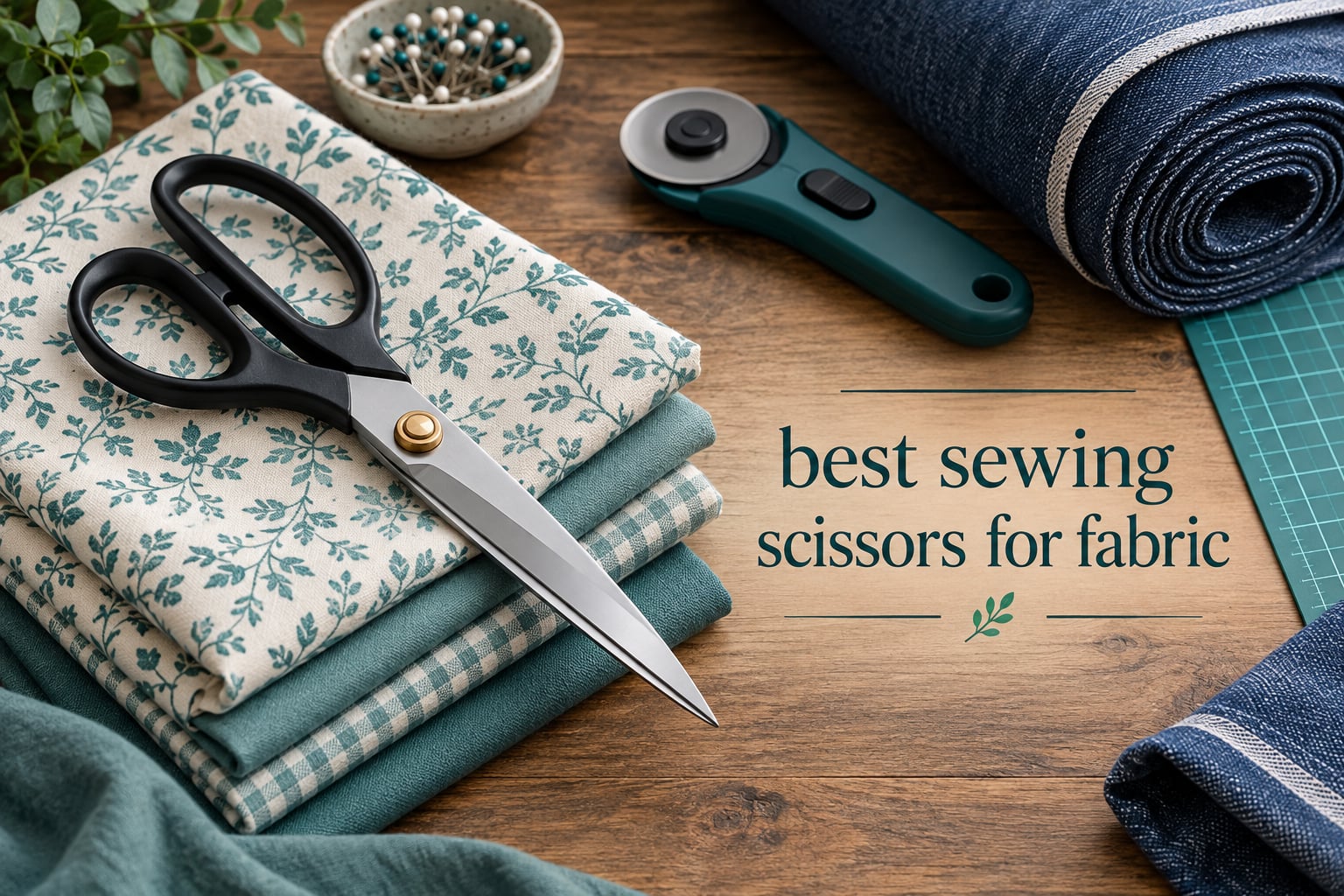
The LIVINGO 9.5 Inch Professional Tailor Shears are the best sewing scissors for fabric overall, and they are not close. For most home sewists and quilters the decision comes down to four things: how long the blade is, what steel it is made from, whether the handle sits flat, and how the pair feels after forty minutes of cutting. We read through tens of thousands of owner reviews on all twelve pairs below, cross-checked the specifications against the manufacturer listings, and sorted the results by the job each pair is actually built for.
That sorting matters. Most scissors roundups arrange products by brand or by how much they cost, which tells you nothing about whether the pair suits the cutting you do on a Tuesday night. A quilter cutting a four-layer quilt backing and someone trimming seam allowances at the machine have completely different requirements, and one pair rarely wins both jobs.
Two rules run through everything below. First, never use a fabric shear on paper, which is the single most common way good scissors get ruined. Second, weight preference is genuinely split – some sewists with hand problems want a heavier pair for straighter results, while others want the lightest thing they can hold. If you are still building a workspace, our sewing machine buying guide covers the other machine-side tools worth owning.
Table of Contents
Top 3 Picks for Best Sewing Scissors for Fabric in 2026
LIVINGO 9.5in Shears
- Titanium-coated blades
- 16-layer cutting
- 152 g balanced weight
- Ergonomic grip

Fiskars 8in Orange
- Precision-ground stainless blades
- Cuts to the tip
- 2.88 oz lightweight
- Bent handle

Mr. Pen 9.5in Shears
- 9.5 inch shears
- High density stainless
- Ambidextrous
- Lifetime blade warranty
12 Best Sewing Scissors for Fabric (October 2026)
| Product | Specifications | Action |
|---|---|---|
| LIVINGO 9.5in Heavy Duty Shears |
|
Check Latest Price |
| Fiskars 8in Orange Handled |
|
Check Latest Price |
 Fiskars No.8 Premier 10in Fiskars No.8 Premier 10in |
|
Check Latest Price |
 Proshear 10in High Carbon Shears Proshear 10in High Carbon Shears |
|
Check Latest Price |
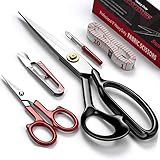 Snavida 9in Fabric Scissors Snavida 9in Fabric Scissors |
|
Check Latest Price |
 Pro-Master 9in Forged Shears Pro-Master 9in Forged Shears |
|
Check Latest Price |
| Mr. Pen 9.5in Tailor Scissors |
|
Check Latest Price |
 Kai 5210 8in Dressmaking Shears Kai 5210 8in Dressmaking Shears |
|
Check Latest Price |
 Westcott ExtremEdge 9in Westcott ExtremEdge 9in |
|
Check Latest Price |
 Kai 7250 10in Professional Kai 7250 10in Professional |
|
Check Latest Price |
 Kai 7230 9in Professional Kai 7230 9in Professional |
|
Check Latest Price |
 Fiskars 9in RazorEdge Fiskars 9in RazorEdge |
|
Check Latest Price |
1. LIVINGO 9.5 Inch Heavy Duty Tailor Shears: Best Overall for Fabric
LIVINGO Fabric Scissors 9.5″ Professional Tailor Heavy Duty Sewing Shears
4 inch blade in a 9.45 inch body
Stainless steel with titanium coating
152 g weight
Right hand oriented
Pros
- Cuts more than 16 layers of fabric
- Titanium coating resists rust glue and tape
- Solid 152 g weight without tiring the hand
- Ergonomic comfort grip for long sessions
- Cuts cleanly without snagging
Cons
- Bulkier feel than ideal for arthritic hands
- A few owners rate the cut below Japanese 8 inch shears
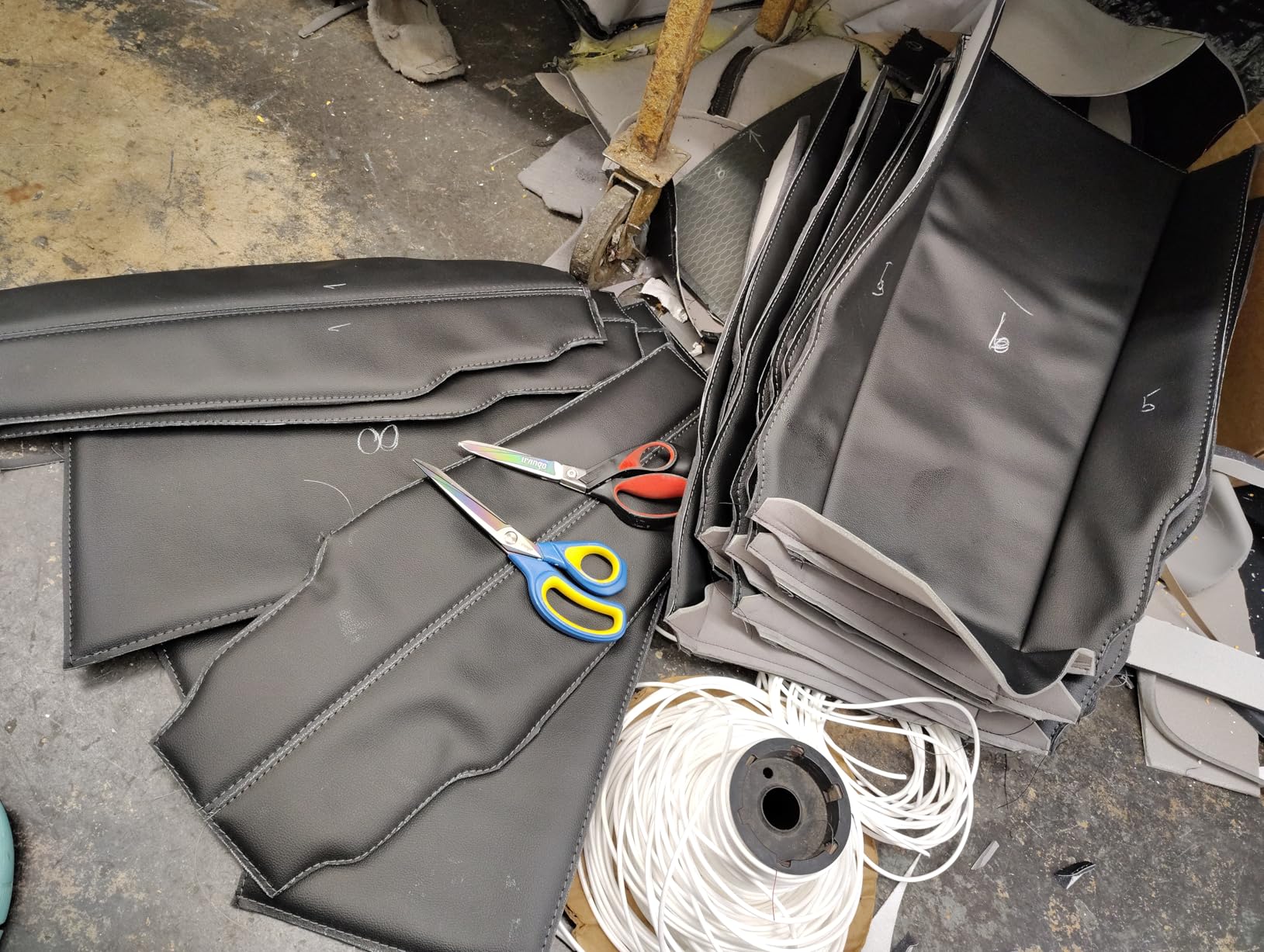
This is the pair I reach for first, and it earned the top spot on the strength of owner volume more than anything else. With close to 37,000 ratings averaging 4.8, this is the most thoroughly stress-tested set of fabric scissors in the category, and the pattern in the reviews is remarkably consistent.
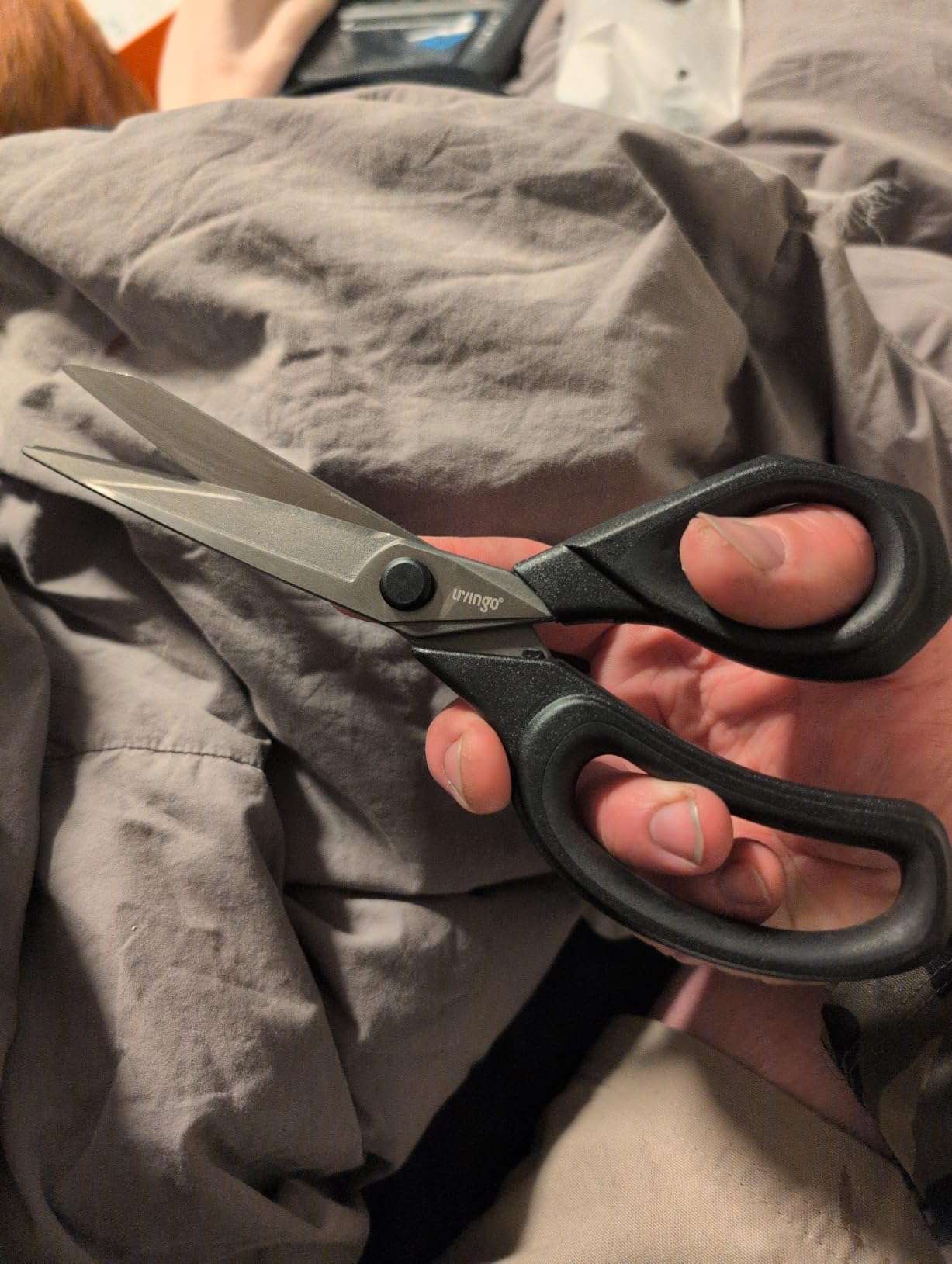
The manufacturing detail that stands out is the forging press process, which produces steel the maker rates at three times harder than ordinary stainless. On top of that sits a multi-colour titanium coating rated to shrug off rust, glue and adhesive, which matters more than it sounds in a craft room full of pins, clips and glue sticks.
At 152 g the pair has real substance without dragging the hand down, and the 4 inch blade inside a 9.45 inch frame is the sweet spot between chopping through layers and staying controllable for curved cuts.
Who this suits
If you quilt, make garments, or cut yardage regularly, this is the safe choice. Owners consistently describe it gliding through several layers without fraying the edge, and the coating is what keeps it that way after months of work.
Who should skip it
Hands with reduced grip strength sometimes find it bulkier than they would like, and if you work mostly in fine silk and need a needle point, a shorter precision shear is a better match. One reviewer also felt the cut quality fell short of Japanese-made 8 inch shears, though most disagree.
2. Fiskars 8 Inch Orange Handled Scissors: Best Value for Everyday Cutting
Fiskars 8″ Original Orange-Handled Craft & Fabric Scissors, All Purpose
3.35 inch precision-ground blade
2.88 oz item weight
Orange bent handle
Right hand
Pros
- Precision-ground blades cut all the way to the tip
- Very light at 2.88 oz for long sessions
- Bent handle keeps material flat
- Backed by a full lifetime warranty
Cons
- 3.35 inch blade is short for heavy multi-layer cutting
- Bent handle profile is not to every hand's taste
These are the orange-handled scissors almost everyone already owns, and the long-ownership reports are the most impressive thing about them. Owners describe pairs that have stayed sharp across decades of general use, which is exactly the edge retention you want from an everyday tool.
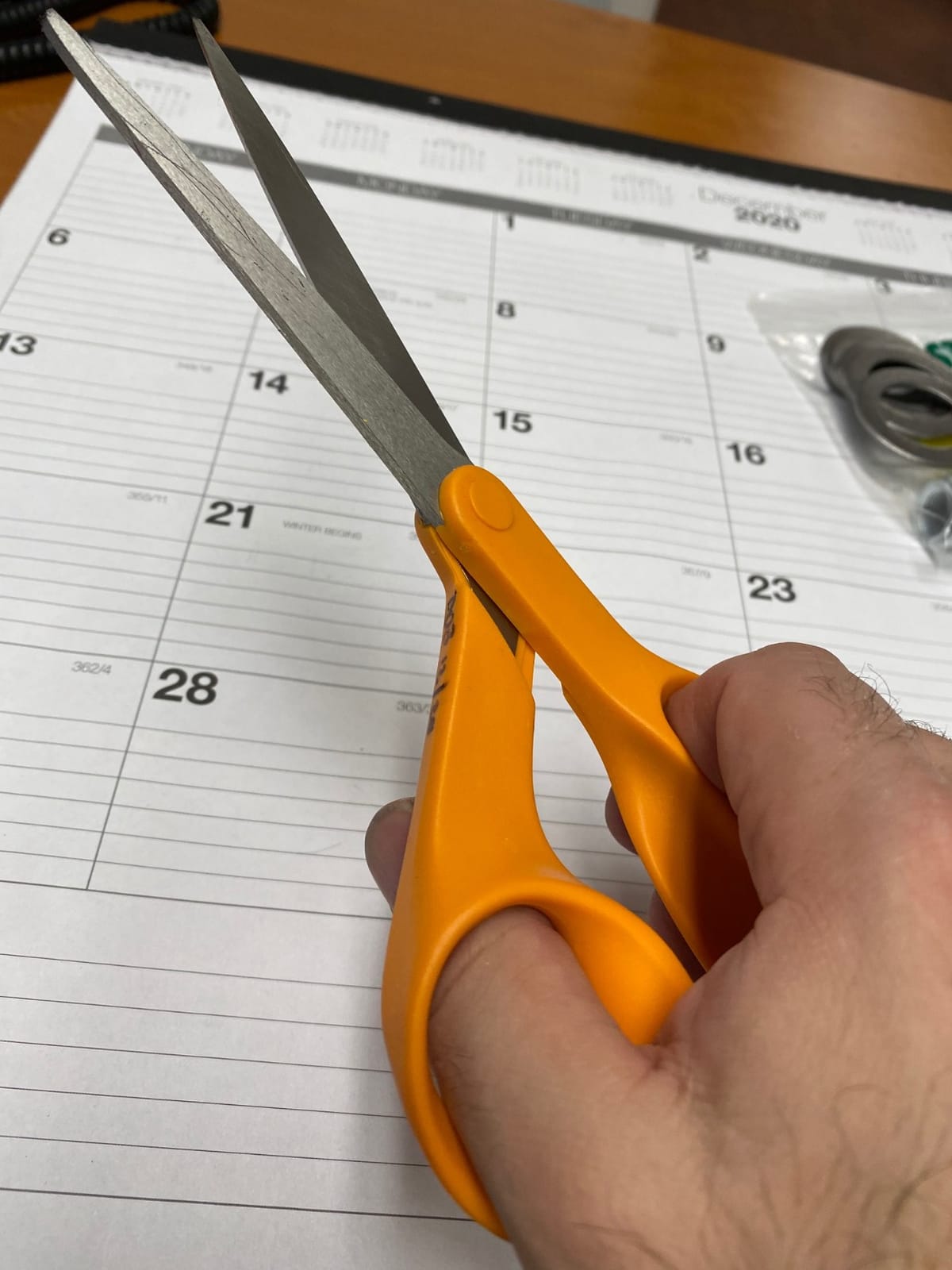
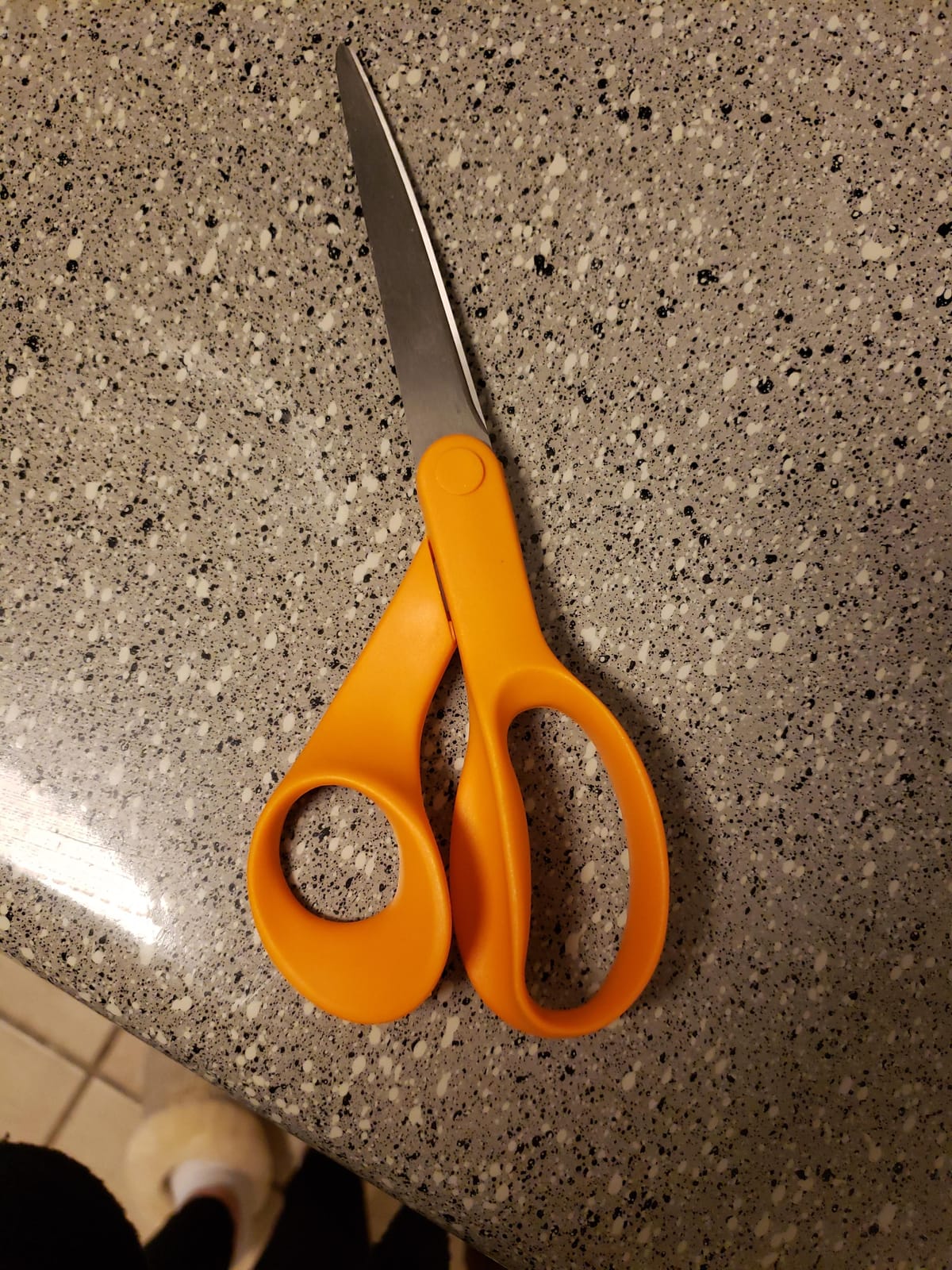
The blade is precision-ground stainless steel that cuts to the tip, so the last inch of a curve is as clean as the first. At only 2.88 ounces the pair is the lightest here, and light wins for long cutting sessions more often than intuition suggests.
The bent handle is the feature to understand rather than just notice. It keeps the lower blade flat and the material flat on the table, which removes the lifting that causes fabric to distort on a long cut.
Who this suits
Anyone doing general cutting – garment pieces, quilt strips, binding – who wants one pair that does almost everything and comes with a full lifetime warranty. It is also the easiest recommendation to live with, because nothing about the design is fussy.
Who should skip it
The 3.35 inch blade is the limiting factor. Chunky denim, multiple layers of flannel, or scrim-bonded batting will reach the end of its capacity long before the scissors struggle, and if heavy cutting is your main job, a longer blade is the better buy.
3. Fiskars No.8 Premier 10 Inch Easy Action Shears: Best for Long Straight Cuts
Fiskars No.8 Premier Easy Action Bent Scissors 10-Inches
8 inch blade in a 10 inch body
4.8 oz weight
Titanium coated alloy steel
Ambidextrous
Pros
- 8 inch blade handles denim and multiple layers
- Spring-assisted handle reduces hand fatigue
- SoftGrip handle with thumb lock
- Titanium coated blades hold an edge
- Limited lifetime warranty
Cons
- Spring action needs a few cuts to get used to
- Small share of 1 and 2 star ratings
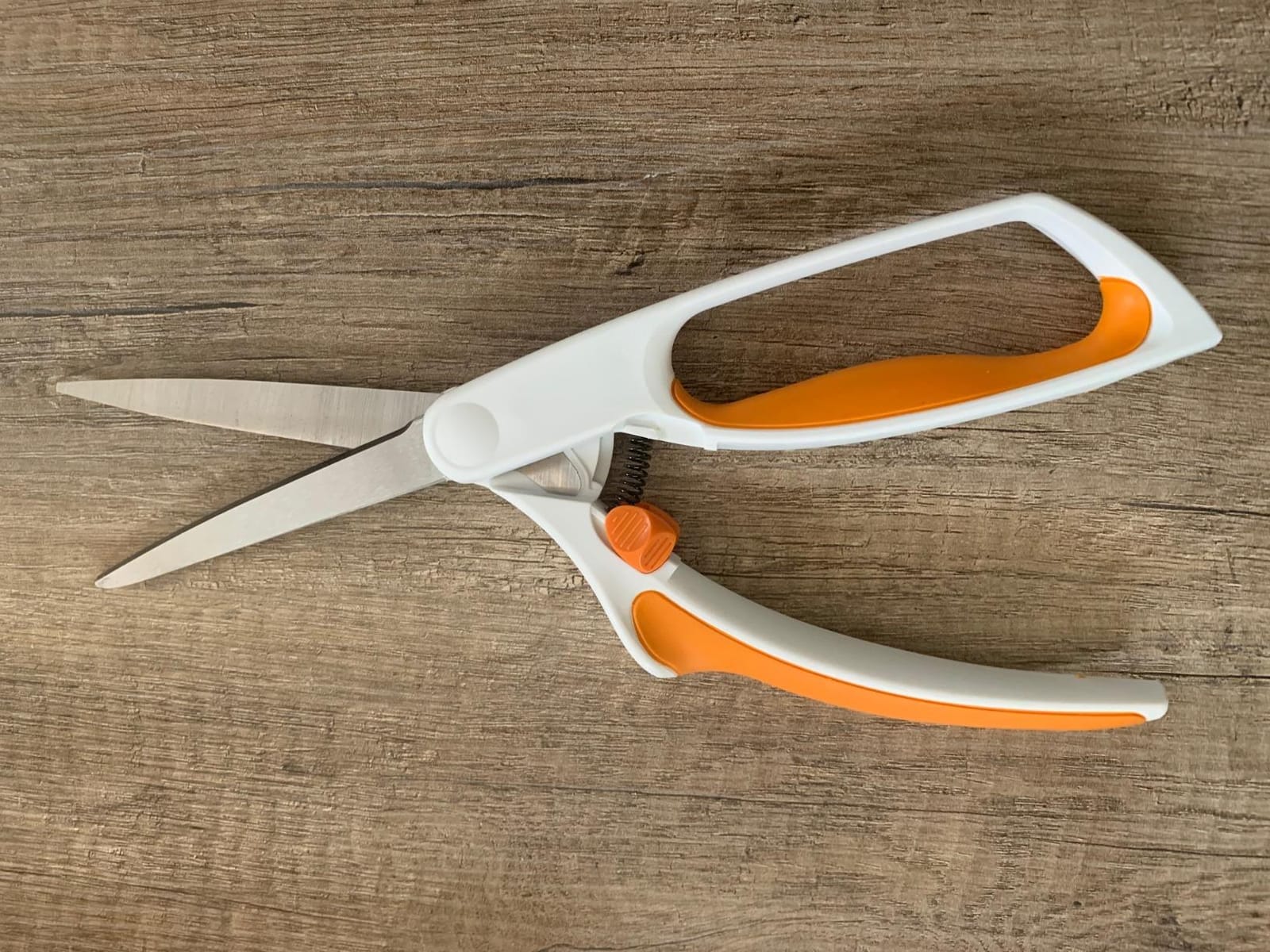
Length is the reason to buy this pair. With an 8 inch blade, a single stroke takes you a long way across a bolt of yardage, and owners single this out when they talk about denim and layered cuts being manageable rather than a fight.
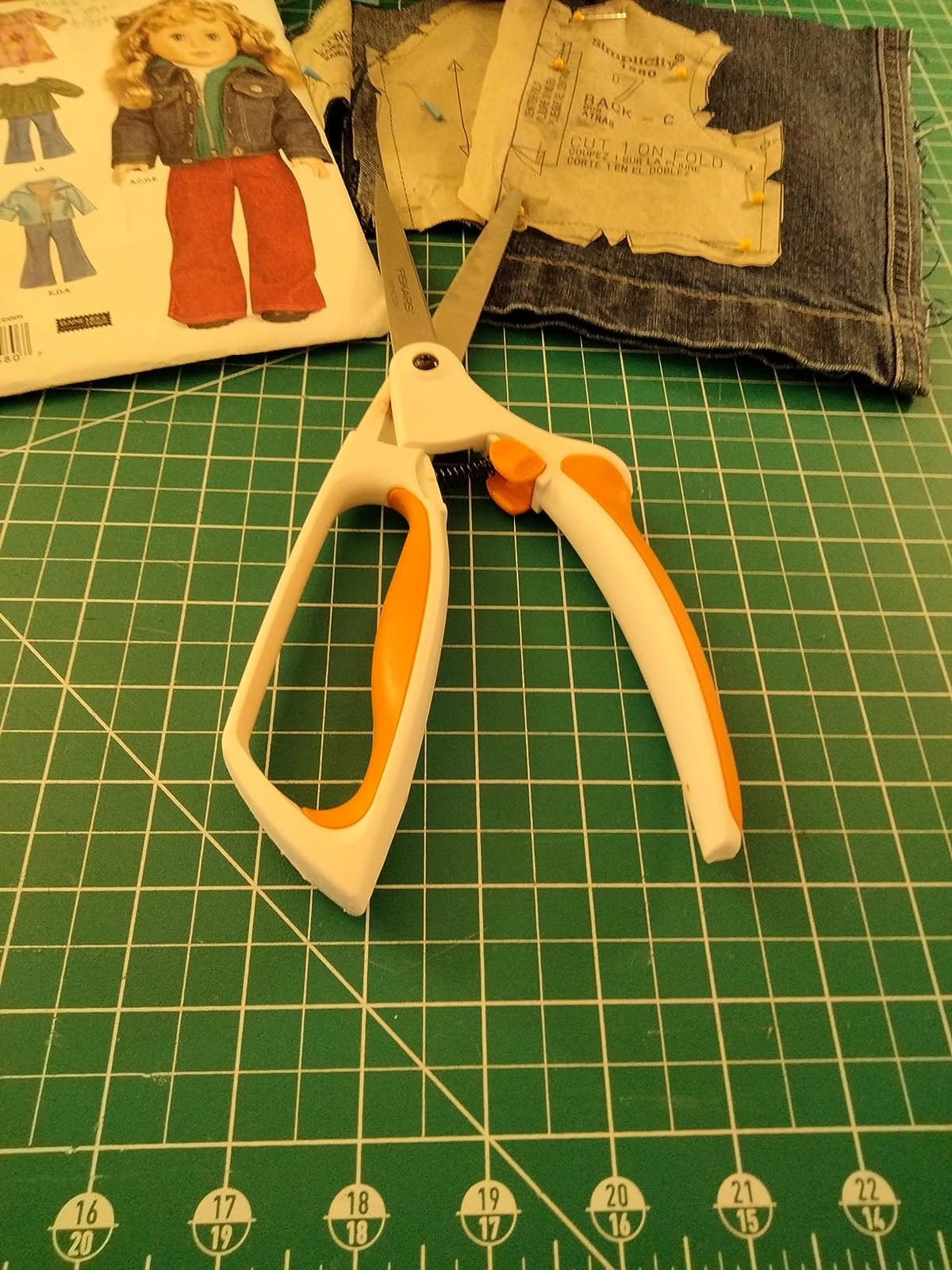
The spring-assisted handle opens back up after each cut on its own, which is the feature that changes how long you can keep going. Hand fatigue is the thing that actually ends a cutting session, and the spring does more for that than any amount of cushioning on a fixed handle.
A SoftGrip handle and a thumb lock for storage round it out, and the blades are titanium-coated alloy steel that owners report continuing to hold an edge through regular work.
Who this suits
Quilters cutting backing and long yardage, and anyone who gets a hand cramp partway through a long straight run. The thumb lock is also handy if you travel with your tools, which forum sewists frequently do.
Who should skip it
The spring takes a few cuts to feel natural, and this is the only pair in the list rated below 4.8, with a small minority of 1 and 2 star reviews from people who found the performance unremarkable. If you mostly cut curves and small pieces, the length is wasted on you.
4. Proshear 10 Inch High Carbon Tailor Shears: Best for Leather and Canvas
Fabric Scissors Professional 10 inch Heavy Duty Scissors for Leather Sewing shears for Tailoring Industrial Strength High Carbon Steel Tailor Shears Sharp for Home Office Artists Dressmakers
5 inch blade in a 10 inch body
High carbon stainless steel
Rubberized bent handle
Ambidextrous
Pros
- High carbon steel holds an edge well
- Substantial weight owners read as premium
- Rubber coated handles grip securely
- Bent handle holds material flat
- Chamfered head avoids scratching cloth
Cons
- Pivot screw nut can rust and need re-tightening
- Item weight is not listed by the manufacturer
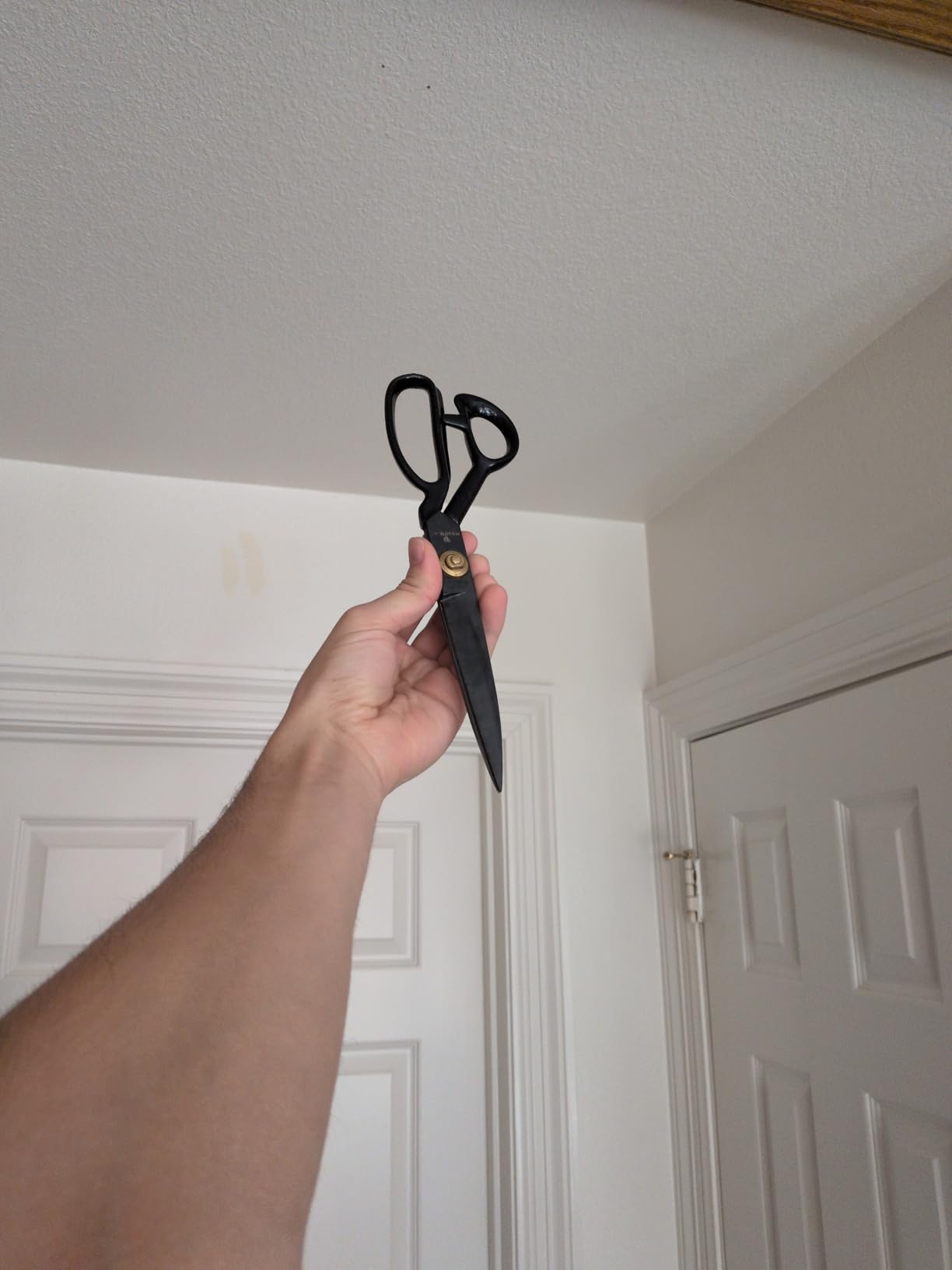
High carbon steel is the reason this pair earns its place. Carbon steel takes an edge and holds it in a way budget stainless cannot, and owners repeatedly describe blades that stay sharp through thick material and multi-layer cutting.
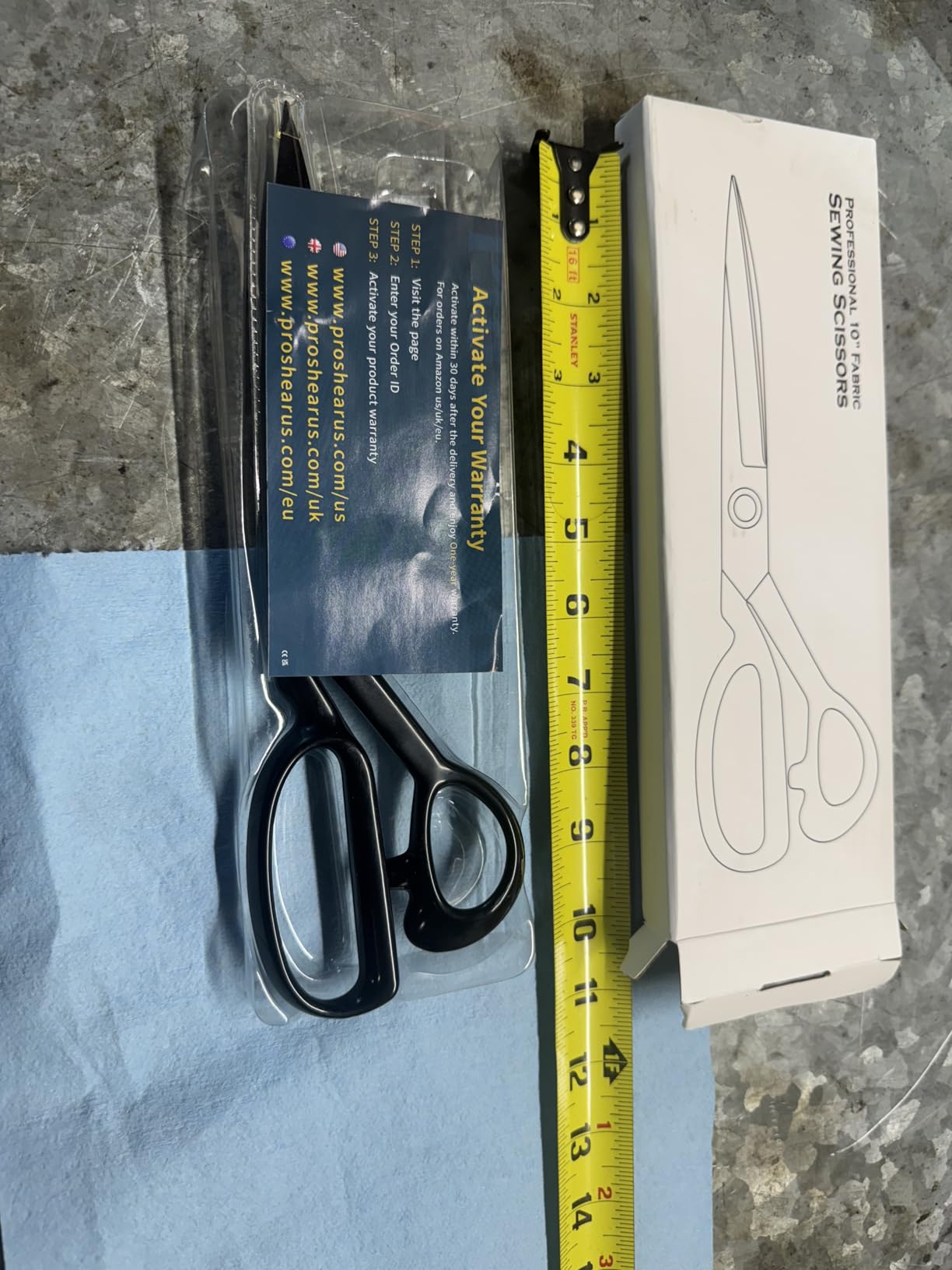
The chamfered blade head is a small design choice that matters more than it sounds. It stops the blade from catching and scratching the cloth right where the tips meet, which is exactly where you notice a rough cut.
This is also the only pair here that comes with a 60 inch dual-sided measuring tape in the box, a small convenience that saves you hunting for one mid-project.
Who this suits
Anyone cutting upholstery weight, canvas, thicker interfacing, or working through a project that pushes past what cotton demands. The rubberised bent handle gives a secure grip even when the material is awkward.
Who should skip it
The one recurring complaint is the pivot screw nut, which a small number of owners say tends to rust and needs frequent re-tightening. If you live somewhere damp, store it oiled and dry, or look at a pair with a sealed pivot.
5. Snavida 9 Inch Heavy Duty Fabric Scissors: Best Starter Kit
Fabric Scissors Tailor Sewing Shears – 9 Inch Heady Duty Scissors for Fabric Cutting Professional Ultra Sharp Cloth Tailor Scissors Multipurpose Utility Dressmaker Leather Titanium Scissors (9Inch)
9 inch shears with high carbon blades
4.8 oz set weight
Right hand
11 inch overall
Pros
- Cuts more than 32 layers of fabric
- Balanced and weighted for smooth cutting
- Kit includes 5.2 inch precision scissors
- Arrives lightly oiled with no rust
- Chamfered head prevents scratching
Cons
- Set is heavy for hands with carpal tunnel or arthritis
- Included measuring tape had flaws in at least one unit
The appeal here is the box contents. You get 9 inch shears, a 5.2 inch precision pair, a measuring tape and a storage case, which covers the two sizes most beginners actually need without a second order.
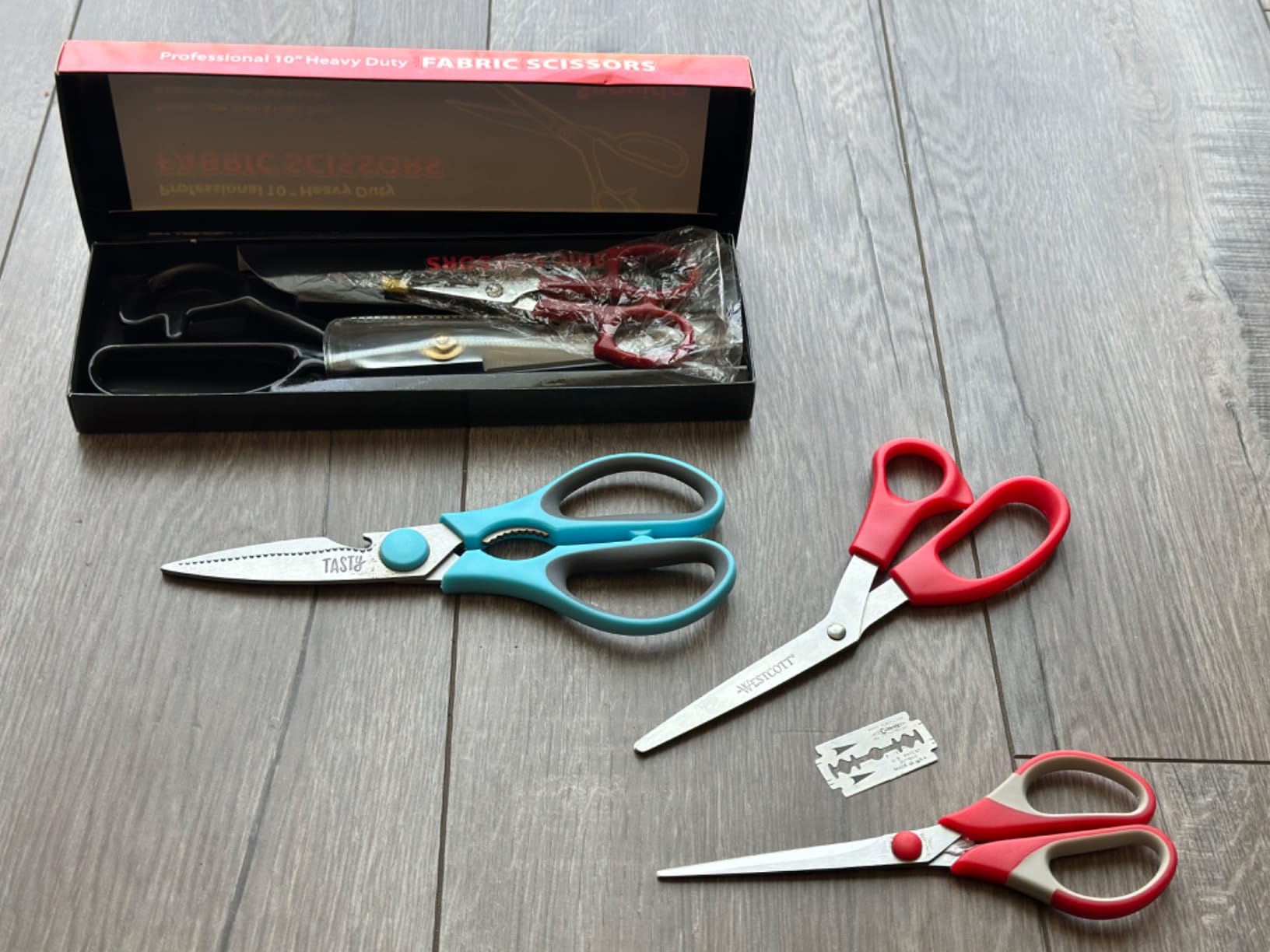
The titanium-coated high carbon blades are tempered and ground on both sides and rated for more than 32 layers, and experienced sewists in the reviews single out how well weighted and balanced the pair feels for its size.
They arrive lightly oiled and free of rust, which sounds trivial until you compare it with a pair that has been sitting in a damp shed for a year.
Who this suits
New sewists building a first real set, and anyone who wants a large and a small pair covered in one purchase. Experienced sewists also mention using the bonus thread snips and precision scissors far more often than expected.
Who should skip it
The set is noticeably heavy, and owners with carpal tunnel or arthritis call that out specifically. If that describes you, buy the single pair you need and choose lightness over bundle value – or start with the Fiskars 8 inch pair above.
6. Pro-Master 9 Inch Forged Shears: Best for Multiple Heavy Layers
Professional 9 Inch Sewing Scissors for Fabric Cutting – Ultra Sharp, Heavy Duty Fabric Shears for Smooth, Precise Cuts on All Fabrics and Leather, for Tailors, Dressmakers, Crafters, and Artists
23 cm blade in a 9.25 inch body
Forged high carbon steel
Rubberized handles
Ambidextrous
Pros
- Forged high carbon steel stays sharp and durable
- Handles leather denim canvas and burlap
- Rubberized handles grip securely
- Cuts more than 32 layers
- Clean cuts from tip to handle
Cons
- Bundled accessories add more clutter than some buyers need
- Item weight is not listed
This is the pick for genuinely heavy work, and the material list is the argument. The manufacturer rates the forged high carbon steel blades for leather, denim, canvas, burlap, rope, carpet and vinyl, and more than 32 layers at once.
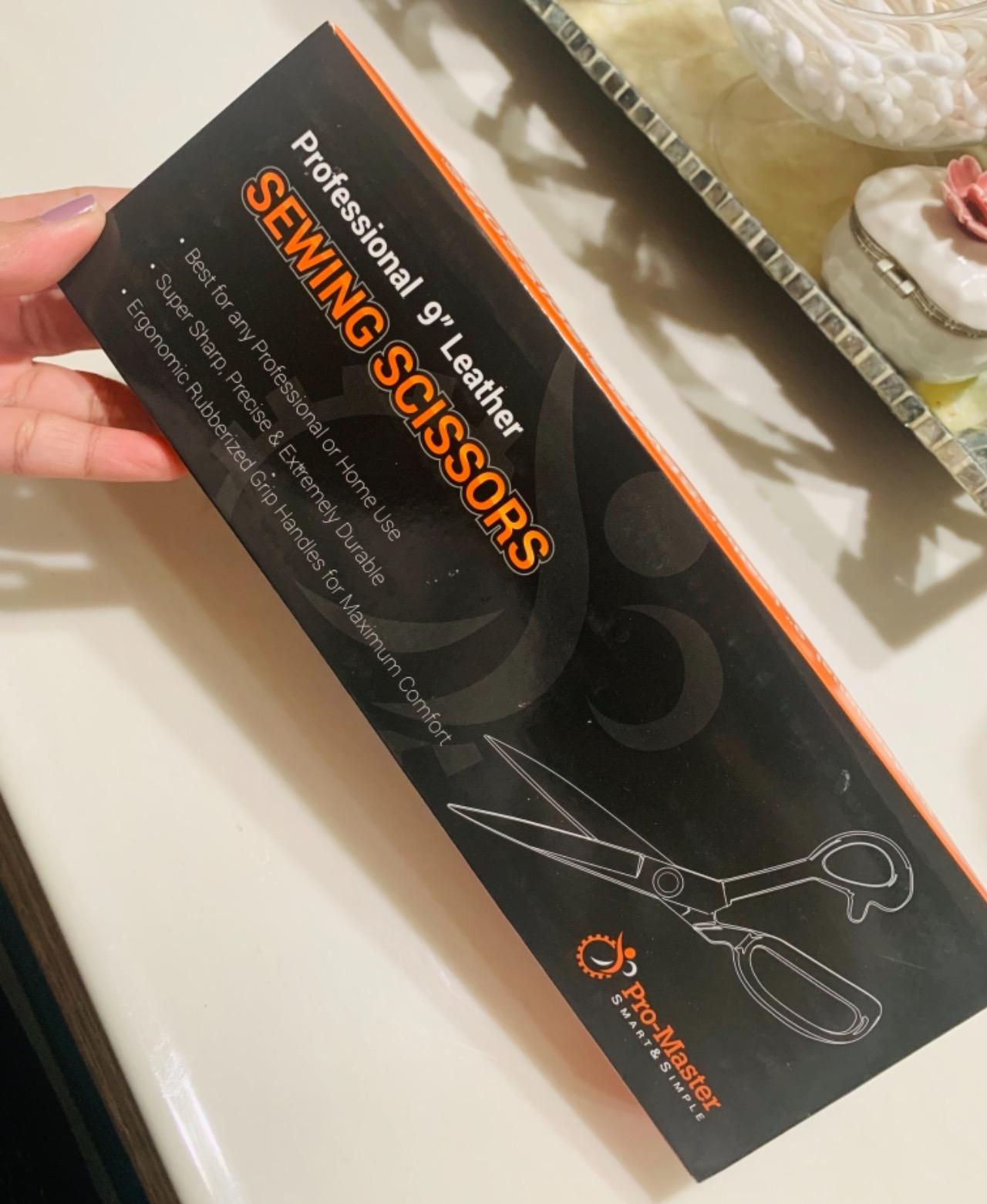
Forging rather than stamping is the meaningful word here. A forged blade is shaped under pressure, which is what lets a pair hold a grind longer before it needs attention – the same reason professional dressmaking shears cost what they do.
The rubberised handles are described as secure and low-fatigue, which matters when the work is heavy enough to make you grip harder than you mean to.
Who this suits
Upholstery, bag making, costume work, and anyone who cuts denim in stacks. If you are reworking a sofa rather than making a garment, our best fabric sectionals roundup is a useful companion read on which frames people actually start from. If your heaviest current job is four layers of quilting cotton, this is more tool than you need, which is not a complaint so much as a fact.
Who should skip it
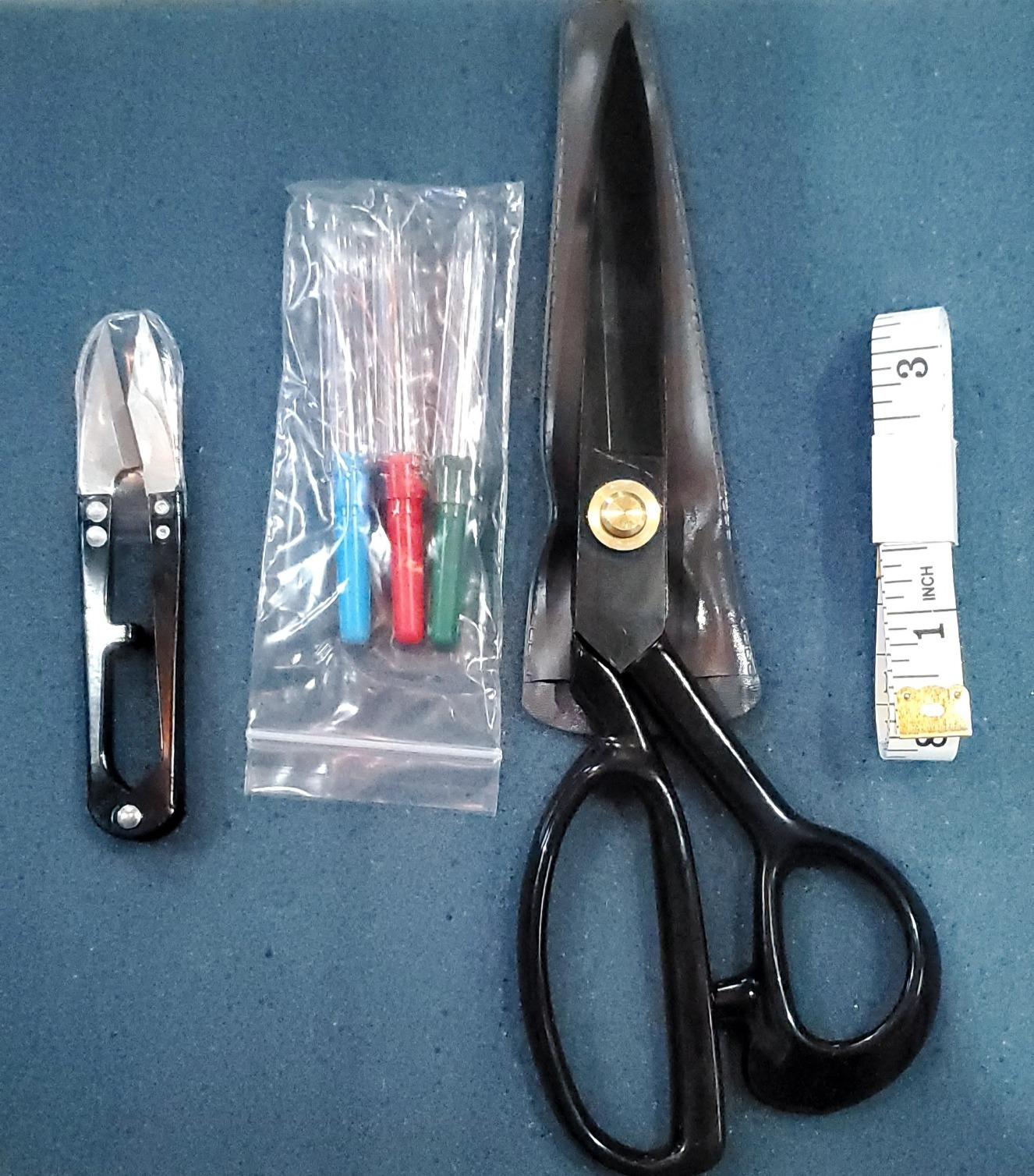
The kit is the reason some buyers walk away, because the box adds thread snips, three sewing picks, a tape measure, a sleeve and packaging around what is essentially one very good pair. Skip the accessories mentally and the shears still stand up.
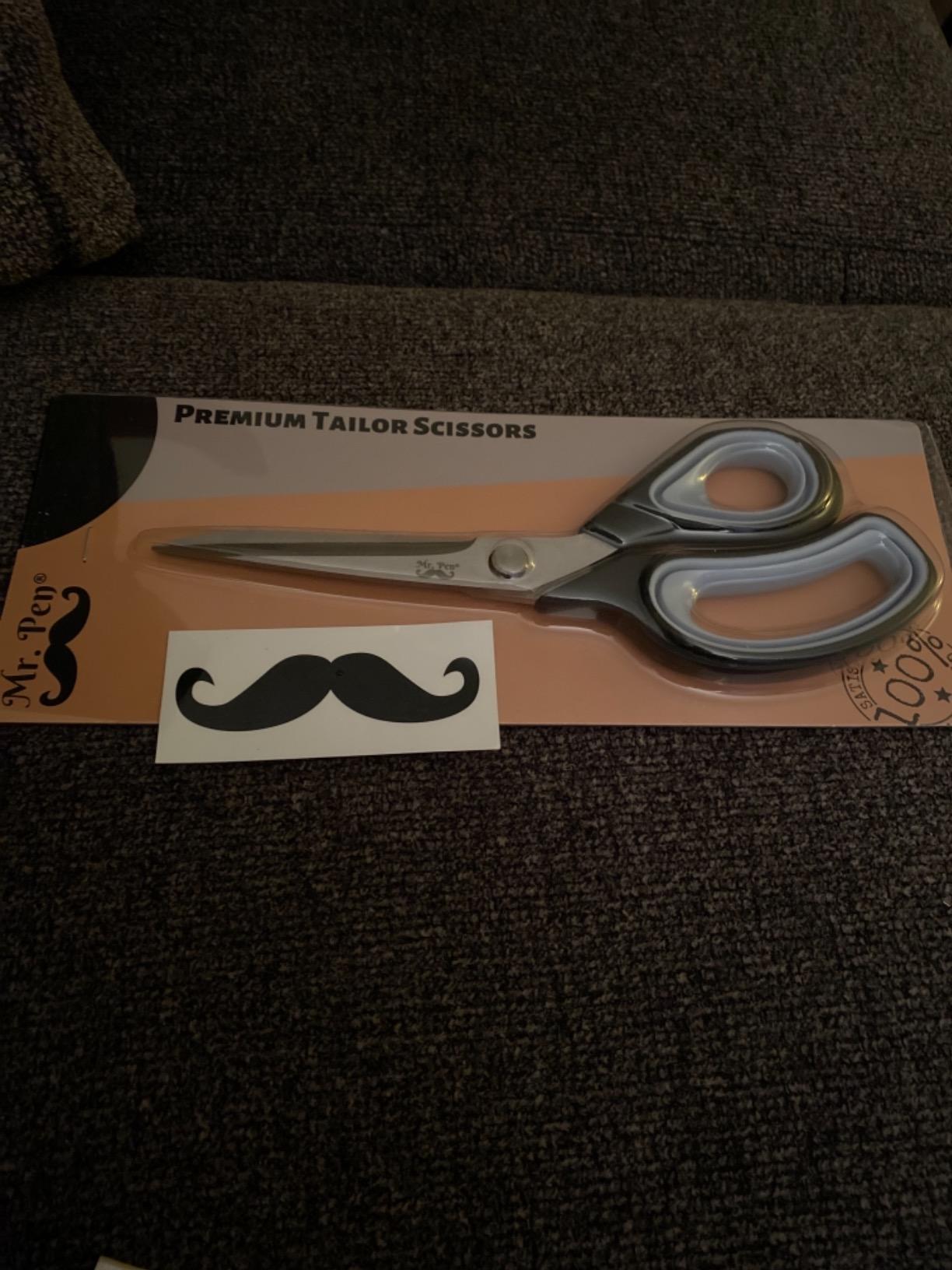
7. Mr. Pen 9.5 Inch Premium Tailor Scissors: Best Budget Pick
Mr. Pen- Premium Tailor Scissors, 9.5 Inch, Heavy Duty Stainless Steel
9.5 inch stainless steel shears
3.2 oz weight
Ambidextrous both hands
Rust resistant
Pros
- 9.5 inch shears at a low entry cost
- High density rust resistant stainless
- Works for right or left handed users
- Lifetime warranty on the blade
- Soft grip handle for precision control
Cons
- Lacks the weight and balance of premium tailor shears
- Plain handle offers less cushioning
This is the answer to the beginner upgrade question. The most common line in sewing forums from people starting out is that their current pair feels poor and they want better, and this is the least expensive step up that genuinely changes how the scissors cut.
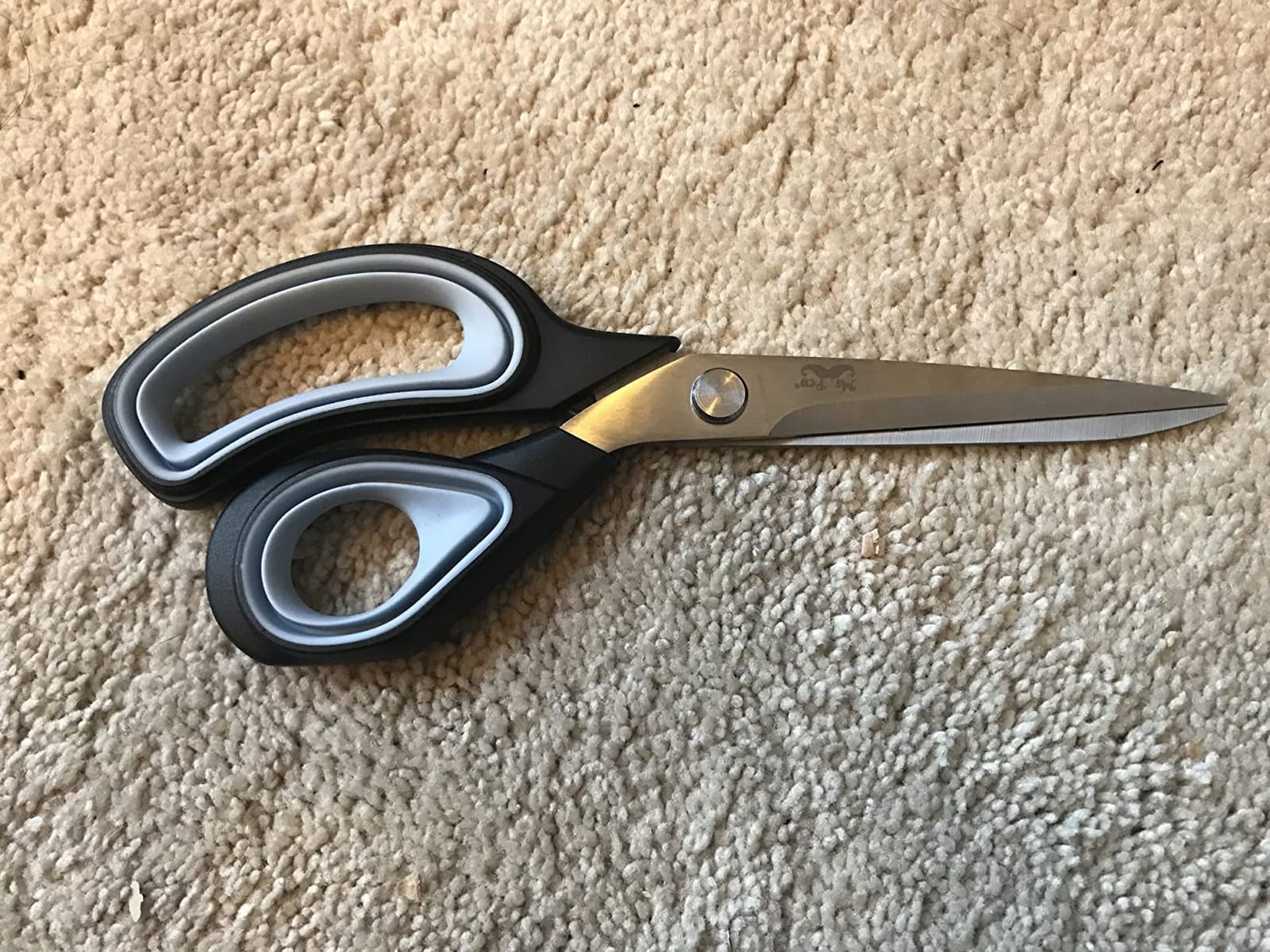
At 9.5 inches with high density rust resistant stainless steel blades, it is a real tailor shear in shape and size, not a craft scissor pretending to be one. The blade carries a lifetime warranty, which is not something you normally see at this level.
It is also ambidextrous, which makes it one of the few picks here that works properly for either dominant hand.
Who this suits
First-time buyers, students, anyone outfitting a shared craft room, and sewists who want one pair that both hands can use. The weight at 3.2 ounces keeps long sessions comfortable.
Who should skip it
Owners consistently note it lacks the heft and refinement of the higher-end pairs, and the handle is plainer with less cushioning. If you already have a decent pair, this is a backup or a guest-room pair rather than an upgrade.
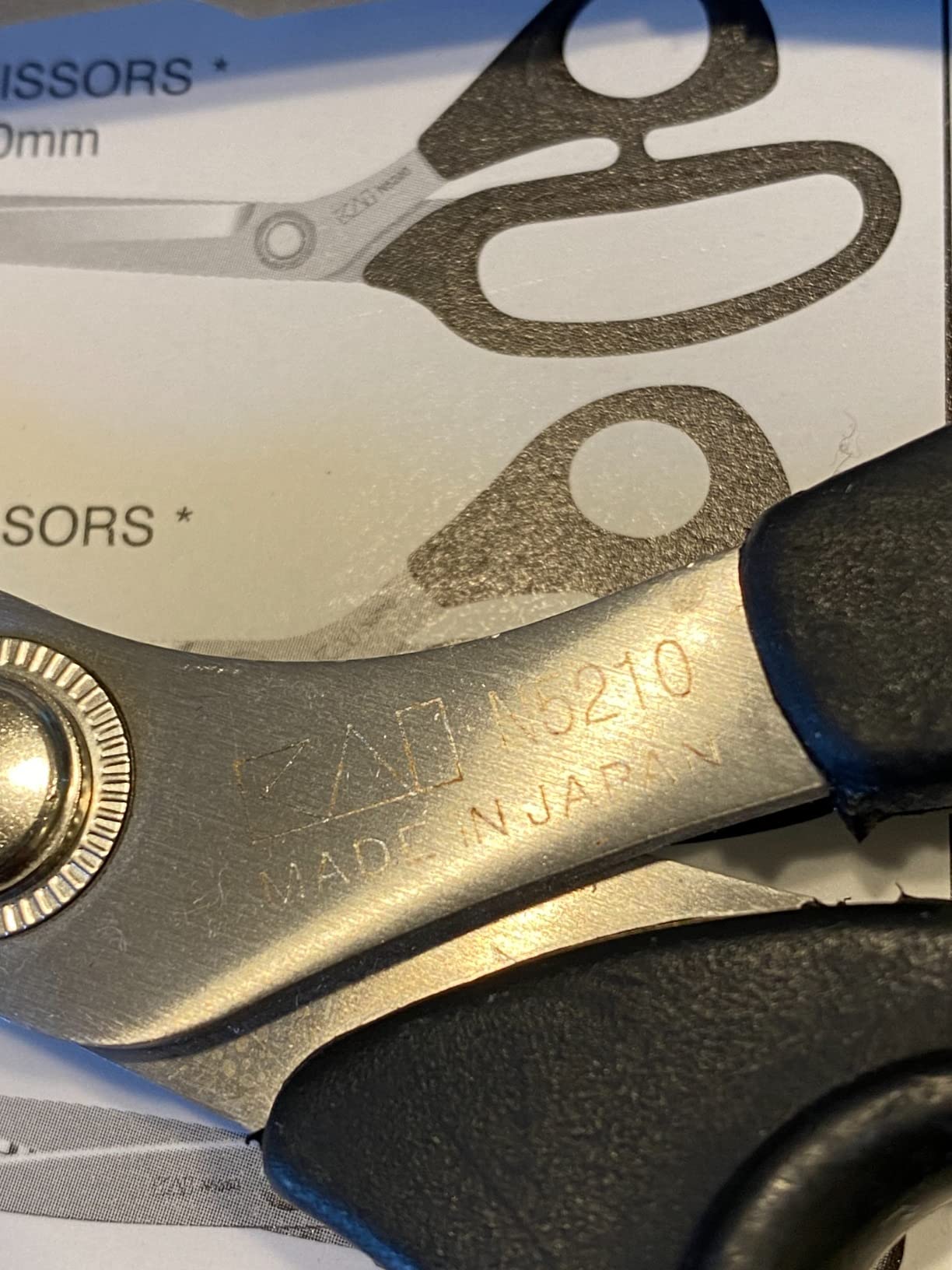
8. Kai 5210 8 Inch Dressmaking Shears: Best Japanese-Style Everyday Pair
Kai 5210 8-inch Dressmaking Shears (N5210)
3.5 inch stainless steel blade
8.25 inch overall
5 oz weight
Ambidextrous
Pros
- Cuts to the tips without snagging
- Holds its edge over years of daily use
- Smooth action needing very little force
- Comfortable grip with good heft
- Light enough for long sessions
Cons
- 5 oz weight tires some hands over a full day
- Tips cut less cleanly on thick fabric
- Plastic handle trim could be finished better
Kai is the brand that shows up again and again when long-term sewists describe what they still use. In a quilting forum thread, one owner put it plainly: she has Gingher shears and they are fine, but she loves her Kai scissors a ton more. Another said her main scissors are Kai, with the cheaper pairs still doing a decent job around them.
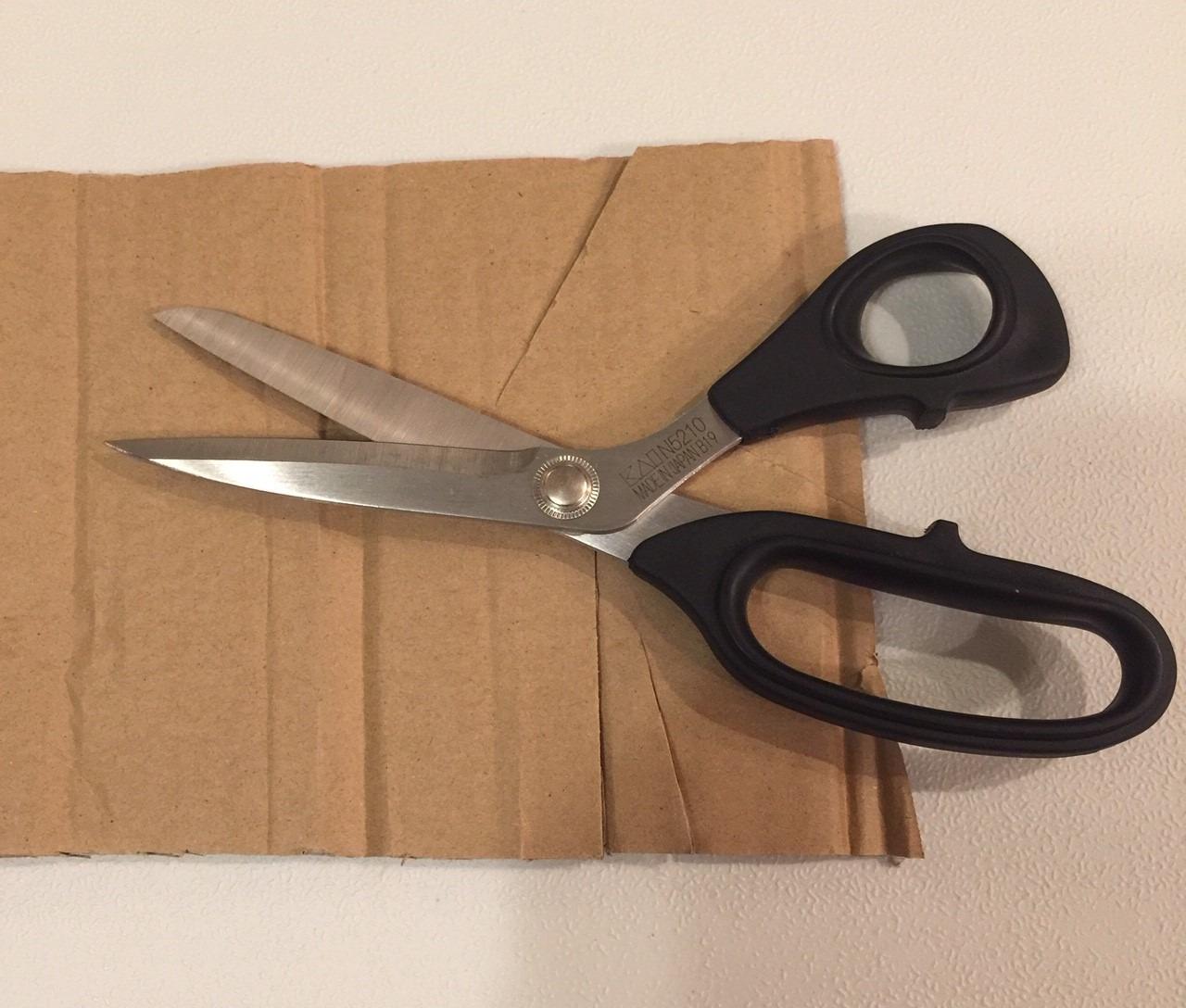
The specific thing owners praise is edge retention over years rather than sharpness out of the box. Professional sewists report the blades still cutting like new after long stretches of near-daily use, and outperforming costlier heritage brands they had owned before.
Action is smooth and light at 5 ounces, so you need very little force to close the blades, and the tips are reported to cut cleanly without snagging.
Who this suits
Dressmakers, quilters, and anyone planning to keep one pair for years. The smooth low-force action suits hands that tire, and the ambidextrous build widens who can use it.
Who should skip it
At 5 ounces a minority of owners find the weight uncomfortable across a full day of cutting, and a few report the tips struggle slightly on thick fabric. If you cut heavy material all day, the Kai 7250 below is the better tool.
9. Westcott ExtremEdge 9 Inch Adjustable Tension Shears: Best for Tunable Tension
Westcott ExtremEdge Adjustable Tension Titanium Bonded Scissors, 9″ Bent, Gray
9 inch bent blade
Titanium bonded steel,3x harder than stainless
Ambidextrous
Contoured soft handles
Pros
- Titanium bonded blades stay sharp longer
- Adjustable tension screw for a custom feel
- Cuts multiple layers of tough material easily
- Ergonomic contoured soft handles
- Limited lifetime warranty
Cons
- Handle comfort reported as average over long sessions
- Bent profile is not to every cutting preference
Westcott is the name that comes up most often when sewists compare it head to head with Fiskars, and this is the model in that debate. The differentiating feature is the tension screw, which lets you tune how the blades meet rather than living with whatever the factory set.
For a pair that feels slightly stiff, or one that has developed play after heavy use, that screw is genuinely useful. A stiff pivot is one of the most common reasons people think their scissors are dull when the edge is still fine.
The titanium bonded blades are rated by the manufacturer at three times harder than stainless steel, and the 9 inch bent blade is the long-cut geometry this pick is built around.
Who this suits
Anyone who wants a long pair they can adjust themselves, and anyone who has inherited or bought second-hand shears that need a little tuning. Titanium bonding also means less maintenance on the rust front than plain carbon.
Who should skip it
Some users report the handle comfort could be better over extended use, and the bent design simply does not suit everyone. If you are replacing a good worn-in pair of scissors, note that a stiff handle never gets more comfortable with age.
10. Kai 7250 10 Inch Professional Shears: Best for Heavy Yardage
Kai 7250 10 Inch Professional Shears
10 inch overall with 3.75 inch blade
High carbon stainless steel
8.5 oz weight
Ambidextrous
Pros
- Exceptional sharpness and edge retention
- Excellent balance reduces hand fatigue
- Smooth action from the spring washer
- Sharp needle point for precision work
- Lock nuts keep blade alignment secure
Cons
- Highest cost in this lineup
- Needs proper care to prevent rust
- Single bevel edge needs a specific sharpening technique
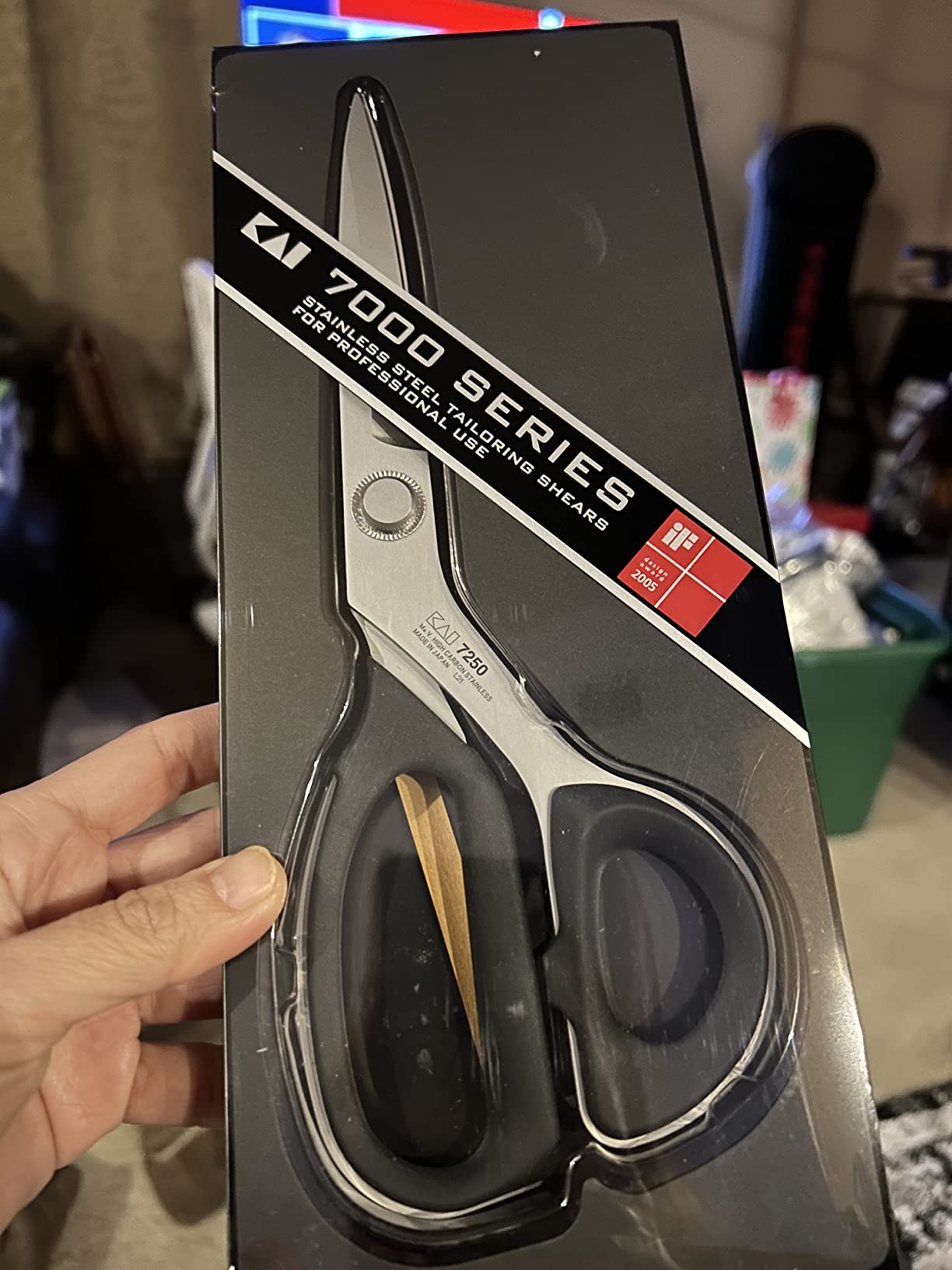
This is the top of the list on cutting performance, and it is the pair we would buy once rather than twice. Owners describe outstanding sharpness, perfect balance and a smooth cutting action, and they treat it as a long-term investment rather than a tool to replace.
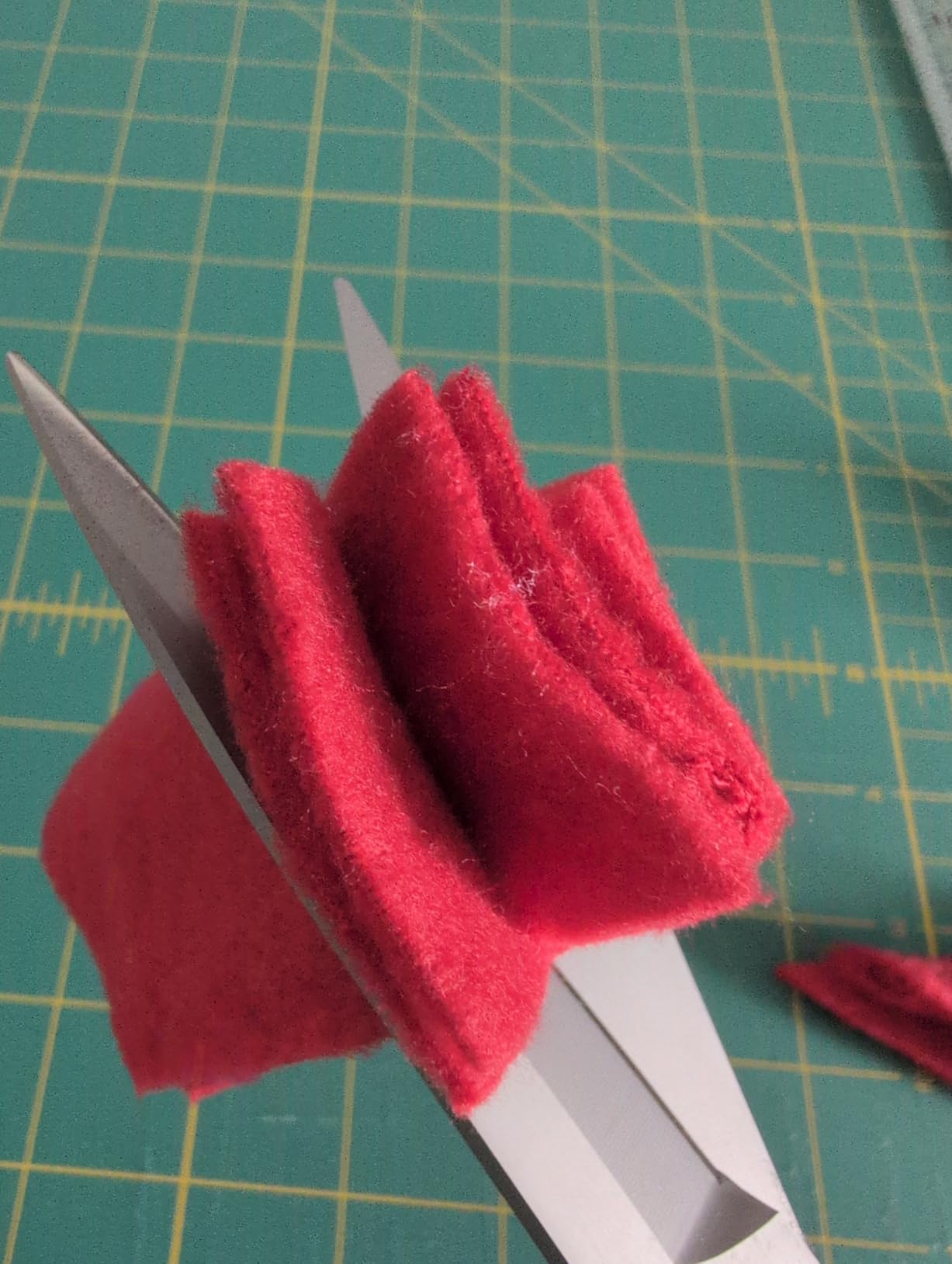
The hardware is what separates it from the budget tier. Lock nuts hold blade alignment, a spring washer produces fluid movement through each stroke, and elastomer handles take the sting out of the grip at 8.5 ounces.
The single bevel knife edge is the reason professional tailors buy into this construction, and it is the reason it also needs a sharpener who knows what a single bevel is.
Who this suits
Quilters and garment makers cutting long lengths of heavy cloth regularly, and anyone who would rather sharpen one pair for a decade than replace two. The needle point handles appliqué curves and tight radii as well as the long cuts.
Who should skip it
It carries the highest cost in this lineup, and single bevel edges need more care than a standard stainless blade, including prompt oiling to prevent rust. If your cutting is occasional, a mid-tier pair will serve you better.
11. Kai 7230 9 Inch Professional Shears: Best Lightweight Precision Pair
Kai 7230 9 Inch Professional Shears
9 inch overall with 3.75 inch blade
High carbon stainless steel
7.2 oz weight
Right hand
Pros
- Finer edge suits precision work
- Light at 7.2 oz for long sessions
- Matt finish reduces glare
- High carbon stainless holds an edge
- Excellent balance and smooth action
Cons
- Right handed design only
- Needs careful maintenance
- Finer edge is more delicate on heavy fabrics
Where the 7250 goes heavy, this goes fine. The 7230 is built around a finer edge for precision work, and at 7.2 ounces it is the lighter of the two professional Kai pairs, which is the version most sewists actually use daily.
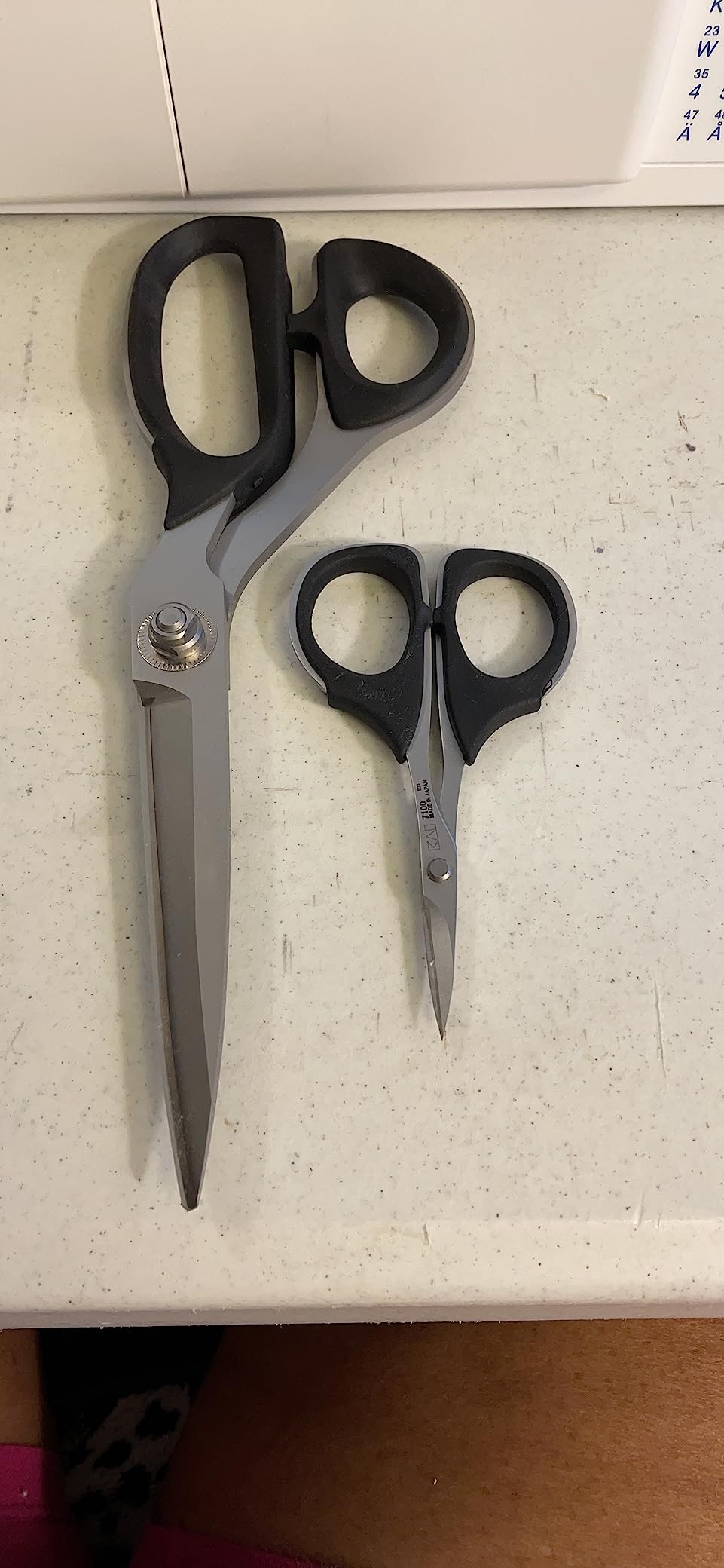
The matt finish is a detail worth appreciating. Glossy blades throw glare, and after an hour of cutting under a lamp, the difference in eye strain is something owners notice and mention.
Balance is the other word that comes up repeatedly, with reviewers describing smooth, lightweight action and no hand fatigue across a full project.
Who this suits
Anyone doing detailed fabric work – appliqué curves, small pieces, trimming – who still wants a professional 9 inch length and a light pair. The higher carbon content is what keeps the fine edge from going quickly.
Who should skip it
It is a right-handed design, so it is not a fit if you cut with the other hand. A finer edge is also more delicate on heavy fabric, and like the 7250 it expects regular oiling.
12. Fiskars 9 Inch RazorEdge Fabric Scissors: Best for Larger Hands
Fiskars 9″ RazorEdge Fabric Scissors, Heavy Duty & Sharp Fabric Shears
9 inch RazorEdge stainless blade
6 oz weight
Plastic SoftGrip handles
Sheath included
Pros
- Precisely honed blades cut cleanly to the tip
- Advanced pivot design for smooth action
- Larger handle loops fit bigger hands
- Protective sheath included
- SoftGrip touchpoints aid control
Cons
- Plastic handle feels less premium
- Quality control inconsistency in a few reviews
- May need sharpening sooner than forged shears
This is the newest model in the list and the least reviewed, so we have weighted the specification sheet more heavily here. What it clearly is, is the most accommodating option for larger hands in the whole roundup.
The RazorEdge blades are described as precisely honed for long clean cuts right to the tip, and the advanced pivot design targets the stiff, uneven action that makes cheap scissors feel cheap. The larger handle loops are the headline: more room, and a better fit for bigger hands.
A protective sheath ships in the box, which matters more than it sounds given how often forum sewists report losing scissors in shared craft rooms.
Who this suits
Anyone who has avoided Fiskars because the standard handle loops feel cramped, and anyone who wants a 9 inch fabric shear with a sheath and soft grip touchpoints. Reviewers also call out comfort for hands with arthritis.
Who should skip it
A few reviews mention the plastic handle feeling less premium than all-metal designs, and some report quality control inconsistency between units. With a smaller pool of reviews than the rest of the list, we would buy it understanding you are early in the ownership curve.
How to Choose Sewing Scissors for Fabric
Good fabric shears are long, sharply ground blades on a bent handle that keeps cloth flat while you cut, and the angled grind concentrates force onto a very thin edge so the blades shear the yarns instead of crushing them. Beyond that, five decisions actually separate a good pair from a disappointing one.
Blade material decides how long the edge lasts
Stainless steel resists rust and needs no maintenance, which is why most affordable shears use it. High carbon steel takes a sharper edge and holds it far longer, at the cost of needing to be kept oiled and dry. Titanium bonded steel sits between them, marketed as around three times harder than plain stainless, and it is the middle ground the Westcott and LIVINGO pairs sit in. For a beginner in a damp climate, stainless is the safe pick; for someone cutting heavy cloth daily, carbon or titanium bonded wins.
Blade length by job
Longer blade, longer stroke. Between 8 and 10 inches is right for yardage, quilt backing and long straight cuts, because you cover more ground per stroke. Between 4 and 6 inches is right for trimming seam allowances at the machine, clipping dog ears, appliqué curves and thread work, where a short blade gives you control. This is why owning two different sizes genuinely outperforms owning one twice the length of.
Offset handle keeps fabric flat
The bent or offset handle is the angled shape that many beginners mistake for a defect. It exists so the lower blade sits flat on the table and the material stays flat, which stops fabric lifting and distorting mid-stroke. It is the single biggest reason fabric shears are not interchangeable with office scissors.
Knife edge versus pinking edge
A knife edge is a smooth, straight ground, and it is what you want for clean seams and long cuts. A pinking edge is serrated, and its teeth grip slippery material so it cannot slide forward, at the cost of leaving a zigzag line on the edge. Micro-serrated blades are the compromise, and they are worth it for batik, minky, silk, flannel and anything that shifts under the blade. Smooth edges handle denim and heavy layers better and stay sharp longer.
Hand orientation and true left-handed construction
True left-handed shears are ground and shaped for use with the other hand, and they are rare. An ambidextrous handle is symmetric, so it can be used either way, but it is not the same thing and it will never feel quite as natural to a left-handed user. Of the picks here, the Kai 5210, Kai 7250, Westcott ExtremEdge, Fiskars No.8, Proshear and Mr. Pen are ambidextrous; the Kai 7230 is right-handed only.
Weight and grip for hands that tire
Weight preference is the most split opinion in sewing forums. Some sewists with hand problems deliberately choose heavier scissors because the weight gives them straighter results. Others buy expensive shears, work with them for a month, and conclude the lighter ones win for long sessions. Our answer is to test the pair on a real job before committing, because grip shape matters more than grams. If grip strength is limited, rubberised or SoftGrip handles such as those on the Proshear and Pro-Master pairs are worth prioritising.
What Never to Cut With Fabric Shears
Dulling scissors on paper is the most universal complaint in sewing forums, and one owner has literally written the reminder onto her own blades. Paper leaves microscopic mineral deposits that chew a fine steel edge, and the damage is permanent rather than something oiling fixes. The same applies to template plastic, card, zip ties, and anything with an abrasive edge.
Batting is a special case. Cotton and poly batting are fine, but scrim-bonded batting has a stiff internal net that will blunt an edge quickly, and forum sewists regularly report ruined shears from it. Rip batting rather than cut it, or keep a separate sacrificial pair for the job. Sticky notes, pattern weights and pins stored in the blade groove all cause the same kind of slow damage.
If your fabric storage is filling up, our fabric storage bin guide covers keeping bolts upright and clean, and cutting a fresh length properly is the first half of a clean straight cut.
Sharpening and Care: Sharpen or Replace
Before spending money on a sharpener, test whether the edge is actually dull. Cut a single layer from the tip inward with no resistance: if the scissors chew into the fabric or leave a wedge-shaped nick, they are dull. If they close stiffly but still cut cleanly, the problem is the pivot, and a turn of the tension screw may be all it needs.
The break-even question nobody else answers is simple. If a sharpening service costs roughly what a mid-range new pair costs, replacement wins for anything that is not forged, single bevel or resharpenable under warranty. But for a forged professional pair, sharpening almost always wins, because the handle, balance and hardware are the parts you cannot replace once the blade is gone.
Warranty-backed resharpening changes this further. A blade lifetime warranty, as offered on the Mr. Pen pair, means a dull edge is a service, not a purchase. Check the manufacturer’s terms before deciding – a pair covered for life is never worth replacing.
Between services, wipe the blades clean after use, drop a drop of pivot oil on the hinge, and store them closed with the handles down. A sheath or a sheath-style blade guard, like the one supplied with the Fiskars RazorEdge, keeps the point protected in a bag.
Frequently Asked Questions
What are the best quality sewing scissors for sewing?
The best quality sewing scissors combine a long, sharply ground blade with high carbon or titanium bonded steel, a bent handle that keeps fabric flat, and a pivot that closes smoothly without force. Owners rate the LIVINGO 9.5 inch shears highest overall, while professional sewists most often praise Kai dressmaking shears for holding an edge across years of daily use.
What is a good brand of sewing scissors?
Three brands come up repeatedly in long-term ownership reports: Kai for Japanese-style professional shears that hold their edge, Fiskars for lightweight general-purpose pairs with a lifetime warranty, and Westcott for adjustable tension and titanium bonded blades. Mr. Pen and Proshear cover the value end well, and neither forum nor retailer data supports treating any of them as a disposable option.
What scissors do professional tailors use?
Professional tailors most often reach for long forged shears between 8 and 10 inches, usually Japanese-made, with a single bevel knife edge and a balance fine enough to work all day. The Kai 7250 and Kai 7230 in this list match that description, and the Kai 5210 covers the same construction at a shorter 8 inch length for everyday work.
Are Fiskars or Westcott scissors better?
Fiskars generally win for lightweight general-purpose cutting, with precision-ground stainless blades and a full lifetime warranty. Westcott wins when you want a long 9 inch blade, titanium bonded steel rated at roughly three times the hardness of stainless, and an adjustable tension screw. For heavy multi-layer fabric, neither is the first choice; a high carbon or forged pair is.
Which is better, stainless steel or titanium scissors?
Stainless steel is maintenance-free and rust resistant, which suits beginners and damp storage. Titanium bonded steel is rated around three times harder, holds an edge noticeably longer, and sits between stainless and high carbon steel. Neither edge is as sharp as forged high carbon, so the right answer depends on how often you cut and how carefully you store the pair.
How often should sewing scissors be sharpened?
Sharpen when the blades begin to chew into fabric or leave a nick, not on a fixed calendar. For a home sewist cutting occasionally, that is typically every year or two. For someone cutting fabric daily, treat it as an annual check. A stiff pivot often feels like a dull blade, so test the tip on a single layer before paying for sharpening.
Can I use fabric scissors to cut paper or batting?
Never cut paper with fabric shears. It deposits abrasive minerals that permanently degrade a fine steel edge, and this is the single most common way good scissors get ruined. Cotton and poly batting are fine, but scrim-bonded batting has a stiff internal net that blunts edges quickly, so rip it instead or keep a separate sacrificial pair for the job.
Conclusion
For most people, the LIVINGO 9.5 inch tailor shears are the best sewing scissors for fabric, because they carry the highest review volume in the category, cut more than 16 layers, and hold an edge through ordinary use without demanding a particular technique. If your hands tire, swap the Fiskars 8 inch orange pair in for its 2.88 ounce weight, and if you cut heavy yardage every week, the Kai 7250 is the tool professional tailors reach for.
Tell us the fabric you cut most, your dominant hand, and how much you cut in a week, and we will narrow twelve options down to one.