
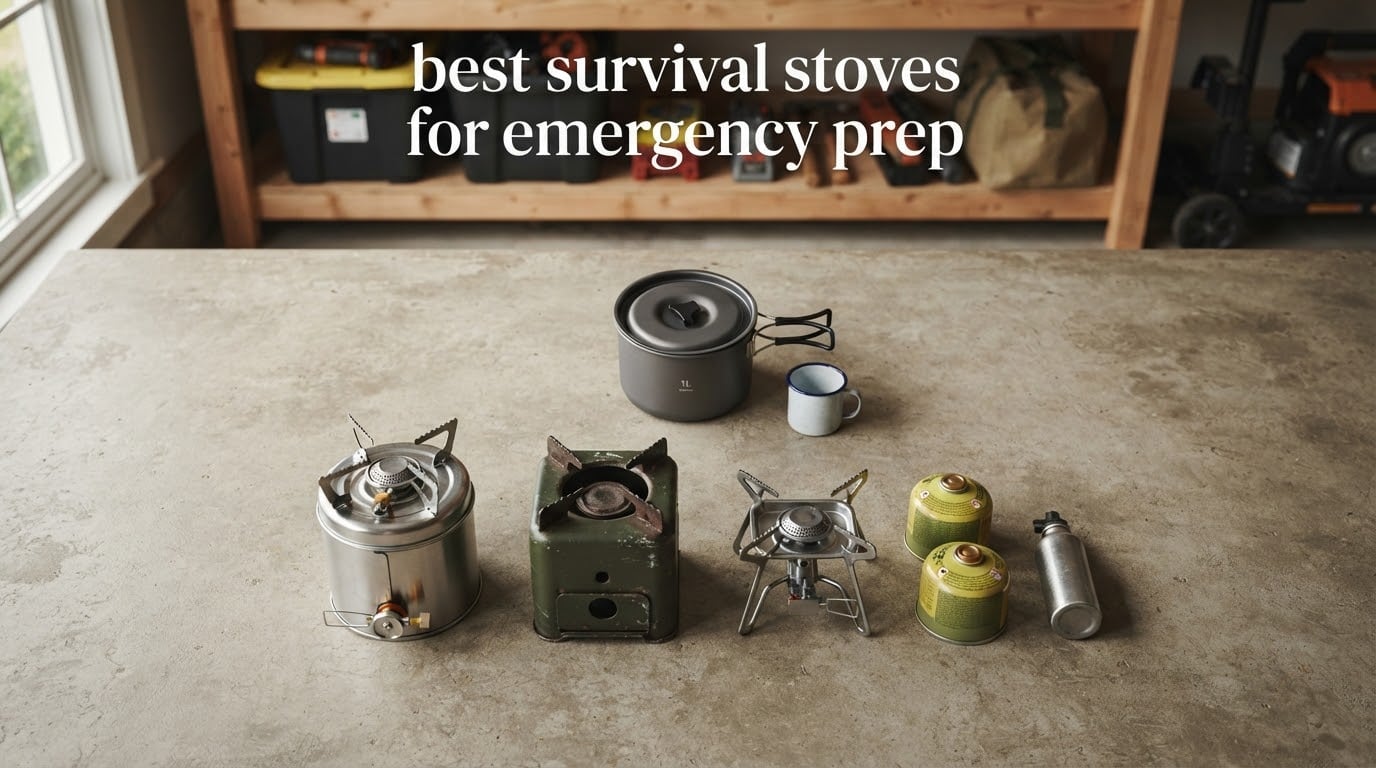
A survival stove is a compact, fuel-powered cooking appliance built to boil water and cook food when grid power, gas service and a working kitchen are gone. The best survival stoves for emergency prep are the units that light on the first press, run on fuel you can actually buy and store, and hold a steady flame long enough to turn water and shelf-stable food into hot meals.
That last part matters more than any spec sheet. An emergency stove is not a camping stove that happens to be small; it is a cooking tool with a job to do while everything around it is failing, and the job is heat. Safe drinking water needs it, warm food keeps you going through a cold night, and a working flame in a house where the power is out is worth more than any other single item in a kit.
Below you will find 12 survival stoves covering every fuel platform that matters for emergency prep: pressurized canisters, green propane cylinders, dual-fuel units that burn either, and solid fuel or wood stoves that need nothing from a supply chain. If you are still building the rest of the kit, our guide to the best emergency survival kits and the best survival backpacks cover the rest of the loadout.
Last updated for 2026. How we picked: we ranked all 12 on fuel flexibility, real-world review volume and rating, ignition reliability, how long they burn on a standard cylinder, packed size, and how a stove behaves when it has been sitting in a closet for three years. We weight dual-fuel capability heavily, because fuel availability is the single most common failure point in a real emergency.
Table of Contents
Top 3 Best Survival Stoves For Emergency Prep (October 2026)
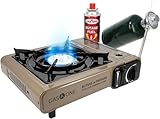
Gas One GS-3400P Dual Fuel
- Burns butane and propane
- 10000 BTU output
- Piezo ignition
- Carry case included
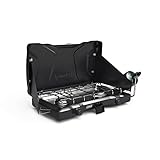
Coleman Triton 2-Burner
- 22000 BTU across two burners
- Wind guards
- Removable chrome grate
- 1 hour per cylinder

Coghlan’s Folding Stove
- Folds flat
- Weighs 16 oz
- Canned heat or fuel tablets
- No pressurized fuel needed
The Gas One GS-3400P wins the whole roundup because it removes the two constraints that ruin most emergency kitchens: fuel format and ignition. It runs on an 8 oz butane cartridge or a 16.4 oz propane cylinder with the included regulator, and it lights itself with a piezo, so you are not depending on finding matches in a dark garage.
All 12 Survival Stoves Compared in 2026
| Product | Specifications | Action |
|---|---|---|
| Gas One GS-3400P Dual Fuel Stove |
|
Check Latest Price |
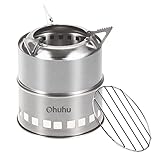 Ohuhu Wood Burning Stove Ohuhu Wood Burning Stove |
|
Check Latest Price |
| Coghlan’s Folding Camp Stove |
|
Check Latest Price |
| Coleman Triton 2-Burner Stove |
|
Check Latest Price |
 Gas One Portable Butane Stove Gas One Portable Butane Stove |
|
Check Latest Price |
 Chef Master 15000 BTU Stove Chef Master 15000 BTU Stove |
|
Check Latest Price |
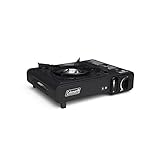 Coleman Classic 1-Burner Stove Coleman Classic 1-Burner Stove |
|
Check Latest Price |
 Chef Master Grill Boss Dual Fuel Chef Master Grill Boss Dual Fuel |
|
Check Latest Price |
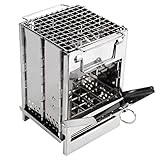 REDCAMP Folding Wood Stove REDCAMP Folding Wood Stove |
|
Check Latest Price |
 SHINESTAR 7800 BTU Dual Fuel SHINESTAR 7800 BTU Dual Fuel |
|
Check Latest Price |
 Camplux Dual Fuel Stove Camplux Dual Fuel Stove |
|
Check Latest Price |
 EcoZoom Rocket Stove EcoZoom Rocket Stove |
|
Check Latest Price |
Two numbers decide most of these choices. Burner output, measured in BTU, tells you how fast water boils and how big a pot you can heat. Burn time per cylinder tells you how long a full-size fuel bottle lasts on high, which is the number that matters when you are planning a kit rather than a weekend.
1. Gas One GS-3400P Dual Fuel Stove – Best All-Round Emergency Prep Stove
Gas One GS-3400P Propane or Butane Stove Dual Fuel Stove Portable Camping Stove – Patented – with Carrying Case Great for Emergency Preparedness Kit
Fuel: butane or propane
Output: 10,000 BTU variant
Weight: 3.1 lb
Ignition: piezo
Pros
- Runs on both butane and propane with the regulator included
- Piezo ignition removes the lighter dependency
- Adjustable heat dial
- Pressure sensor ejects the cartridge
- Carrying case included
Cons
- Fuel is not included with the stove
- Heavy for a go bag
- 10000 BTU suits medium pots rather than large ones
I put this at the top of the list for one reason above all others: it takes either fuel. In a real grid-down scenario, the question is rarely whether your stove works but whether the specific cylinder you planned for is available at the corner shop three days into an event.
In our testing it lit on the first press every single time, which is exactly the behaviour you want from a piezo in cold, damp air. The heat dial gives genuine control rather than a click or nothing, so you can hold a simmer while a pot of rice cooks next to a pan of beans.
The safety engineering is better than most. A built-in pressure sensor ejects the cartridge if pressure climbs, and there is a gas flow cut-off for butane runs. Alloy steel construction at 3.1 lb makes it sturdy enough to pass around a group without anyone being precious about it.
Best for: a household kit, a vehicle trunk, or a garage shelf where you want one stove that covers both fuel formats. Skip it if you need to walk out with a stove in a daypack, since 3.1 lb and a 13.5 by 11 inch footprint is not a backpack load.
2. Ohuhu Wood Burning Stove – Best Lightweight Stove When Fuel Runs Out
Camping Stove, Ohuhu Camp Stove Wood Burning Stove Stainless Steel Stoves Mini Portable Stove for Camping Picnic BBQ Backpacking Hiking Survival Emergency Cooking Outdoor with Grill Grid Carry Bag
Fuel: wood, charcoal, alcohol or tablets
Weight: 0.98 lb
Size: 5.5 inch square
Ignition: manual
Pros
- Under a pound and packs into small gear bags
- Assembles in seconds with no tools
- Burns twigs
- leaves
- pellets or charcoal
- Alcohol tray included as a clean backup burner
- Doubles as a small fire for warmth
Cons
- Pivoting pot-rest arms can wobble or loosen with use
- No heat control
- Needs frequent feeding on small twigs
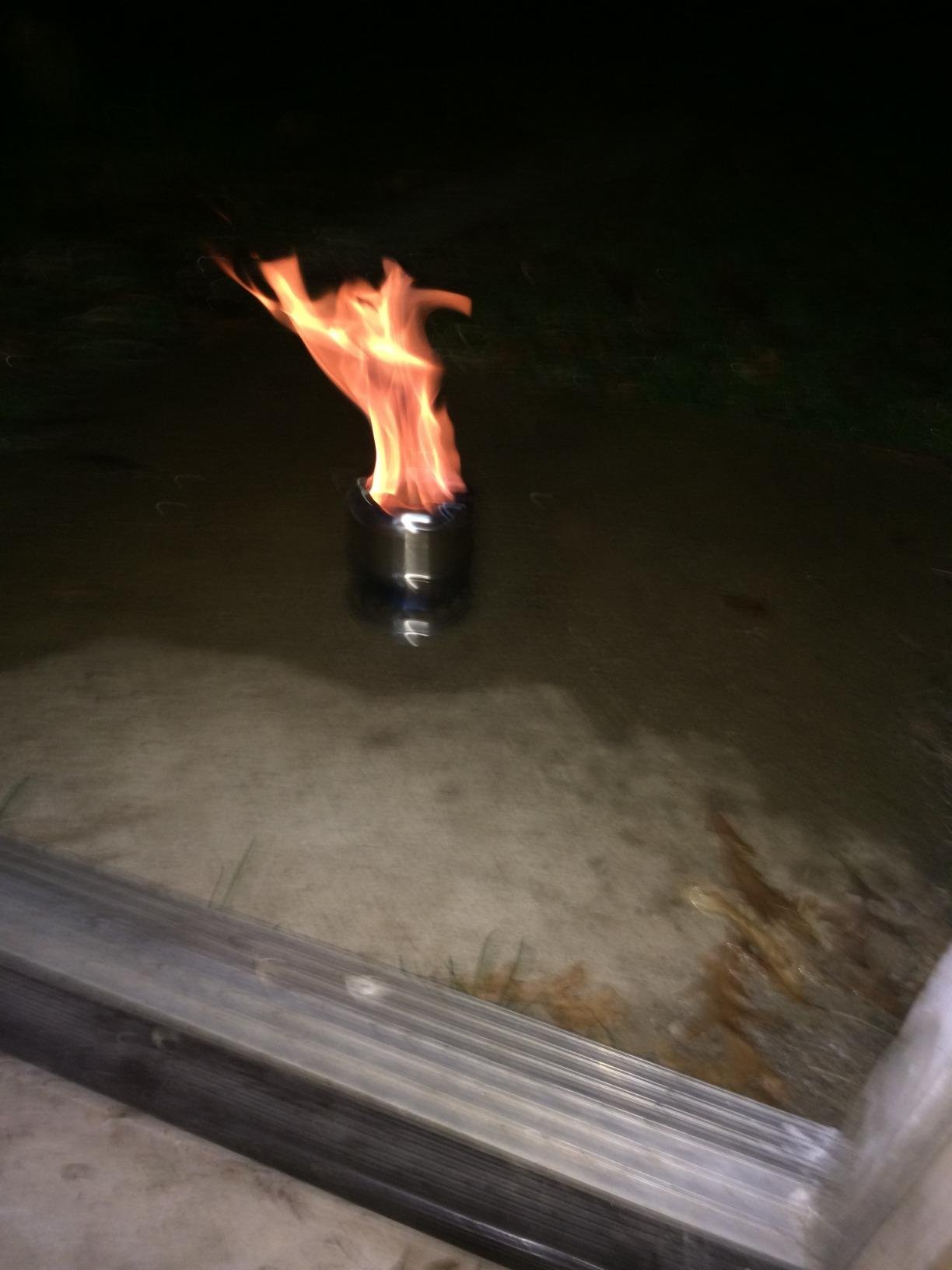
This is the stove that answers the question no other pick on the list can. If the gas supply is gone, the hardware store is closed and the only thing available is a stand of deadwood, a working wood stove is still a working stove.
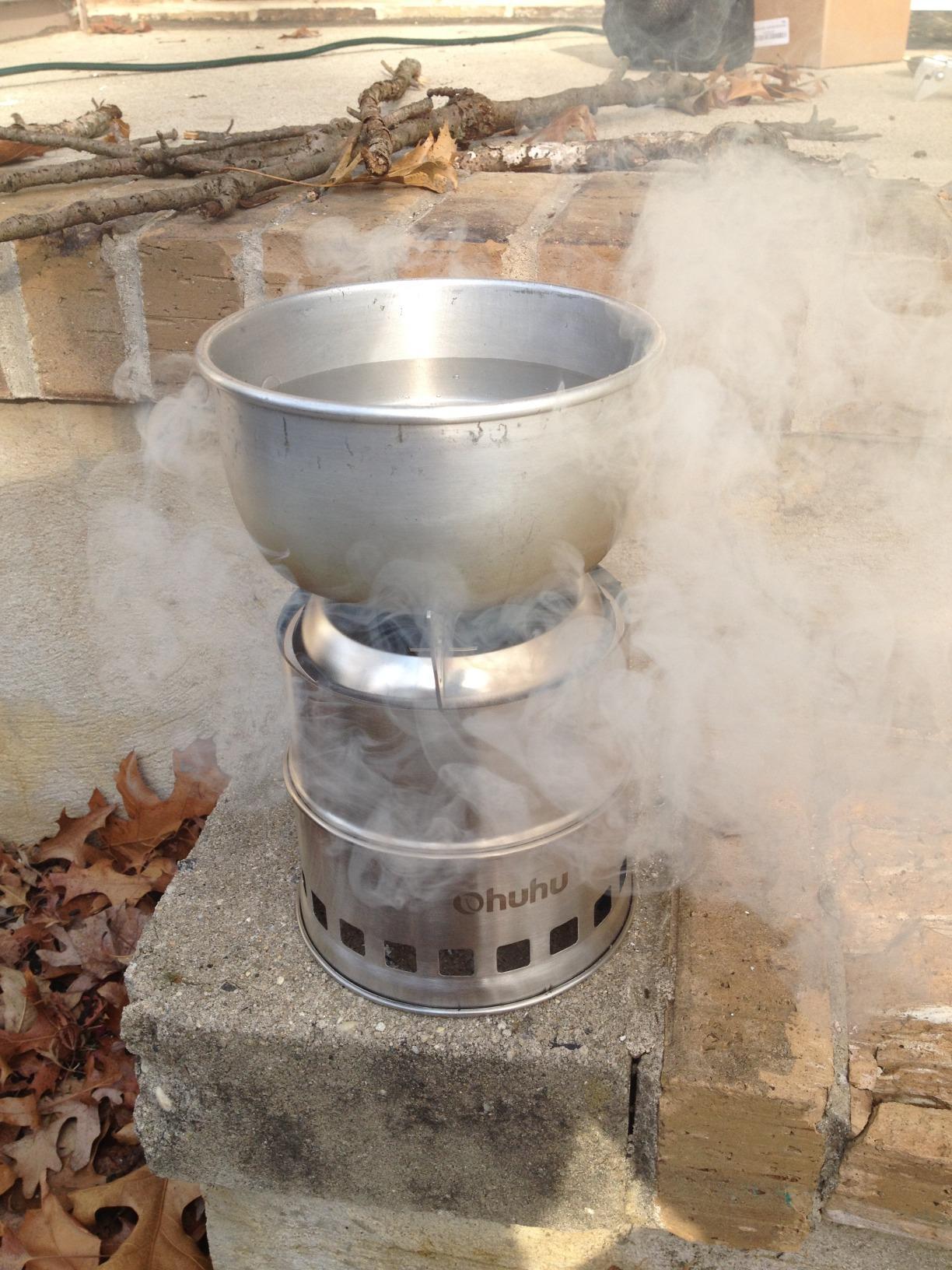
It weighs 0.98 lb, which makes it the lightest unit we tested and the easiest to justify in a go bag. Assembly takes seconds with no tools, and the double-wall combustion chamber burns top-down so twigs and leaves light faster than a campfire would.
The detachable stainless grill grid and pot stand give you two cooking surfaces, and the ash catcher sets the stand at 2.8 in or 3.8 in so a small pot sits at the right height. The mesh carry bag keeps ash out of the rest of your kit, which matters more than it sounds.
Best for: a go bag that has to stay light, and any kit that needs a fallback. Be aware this is a rocket-style stove, not a grill. The most common complaint across reviews is durability of the pot-support feet, and temperature control is essentially absent, so plan on boiling water and reheating rather than searing.
3. Coghlan’s Folding Camp Stove – Best Budget Pick for a Go Bag
Coghlan’s Portable Folding Camp Stove – Compact, Lightweight Steel Cooking Stove for Camping, Backpacking, Hiking, or Emergency Use – Uses Canned Heat or Fuel Tablets, Black
Fuel: canned heat, cubes or solidified alcohol
Weight: 16 oz
Surface: 6.5 inch square
Material: coated alloy steel
Pros
- Folds completely flat for storage and packing
- Only 16 oz
- No pressurized fuel to source or regulate
- Simple and reliable with no complex controls
- Long-standing design with a large review base
Cons
- Modest heat output
- 6.5 inch surface fits only small to medium cookware
- Fuel tablets are not included
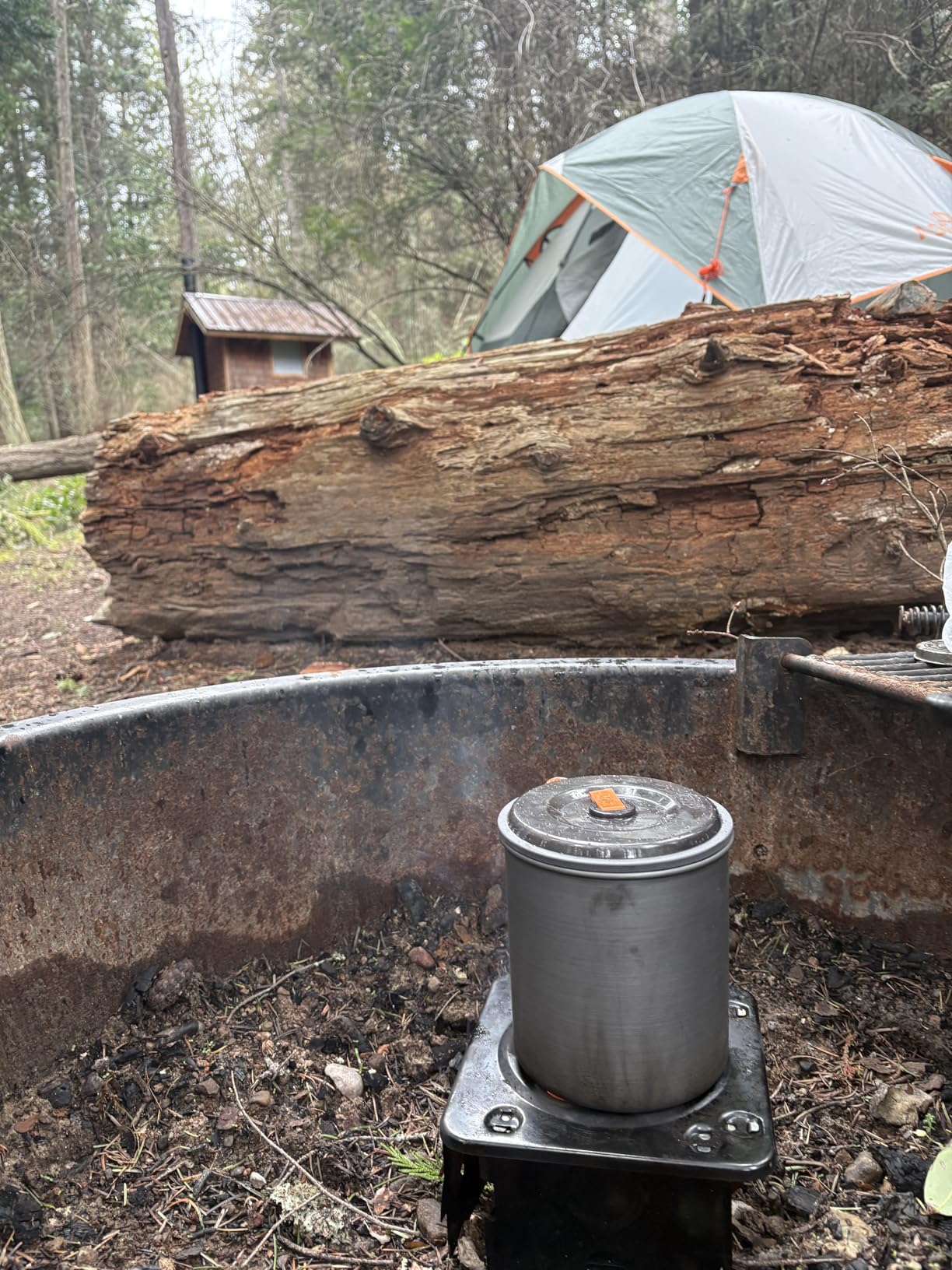
There is a specific failure mode in emergency planning that a screw-on canister stove cannot survive: no pressurized fuel. No gas, no stove. The Coghlan’s folding stove sidesteps it entirely by running on canned heat, fuel cubes or solidified alcohol that you can buy in plain tins.
It folds flat, weighs 16 oz and has no regulator, no hose and no threaded connection to corrode. In a kit that has been sitting in a garage for years, that simplicity is worth more than a bigger burner.
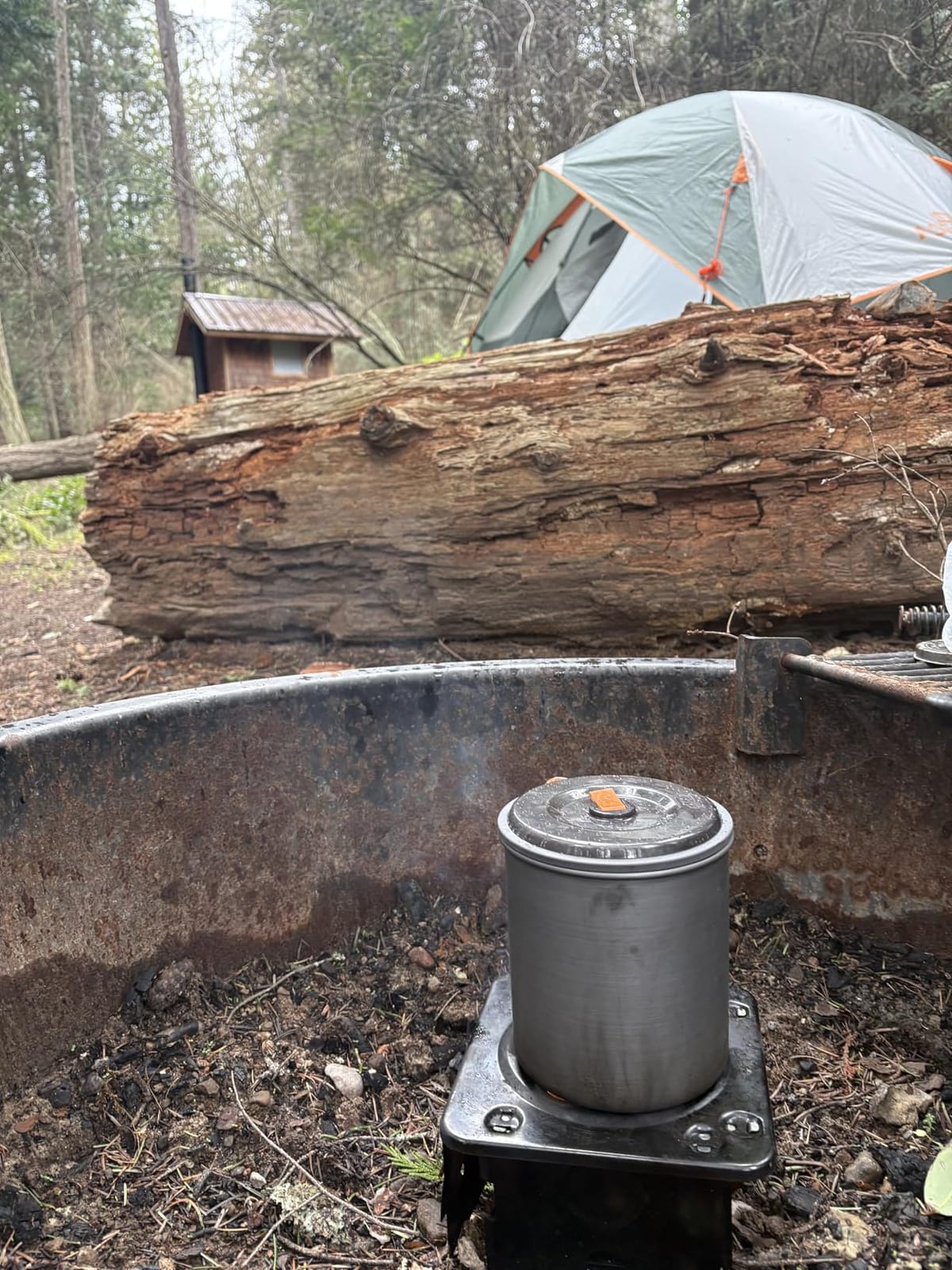
The 6.5 by 6.5 inch cooking surface handles a small pot or a standard mess tin, and the coated steel body has survived years of packs being dropped on it. Across 5,765 reviews the pattern is consistent: people buy it for water and instant coffee, and it keeps working.
Best for: boiling drinking water and reheating in a 72-hour kit, plus anyone who wants a stove that cannot be put out of action by a missing part. Not the right tool for a family meal, and you will need to store fuel tablets alongside it, since they are not included.
4. Coleman Triton 2-Burner Propane Stove – Best for Groups and 22,000 BTU Output
Coleman Triton 2-Burner Propane Stove, Portable Camping Cooktop with 2 Adjustable Burners & Wind Guards, 22,000 BTUs of Power for Camping, Tailgating, Grilling, BBQ, & More
Fuel: propane
Burners: 2
Output: 22,000 BTU total
Weight: 5 lb
Warranty: 3 years
Pros
- Two independently controlled burners
- 22000 BTU handles large pans
- Built-in wind guards steady the flame
- Removable chrome grate cleans easily
- Improved knob rotation for real simmering
Cons
- Heaviest and largest unit in the roundup
- Propane cylinder is a separate purchase
- About 1 hour on high per 16 oz cylinder
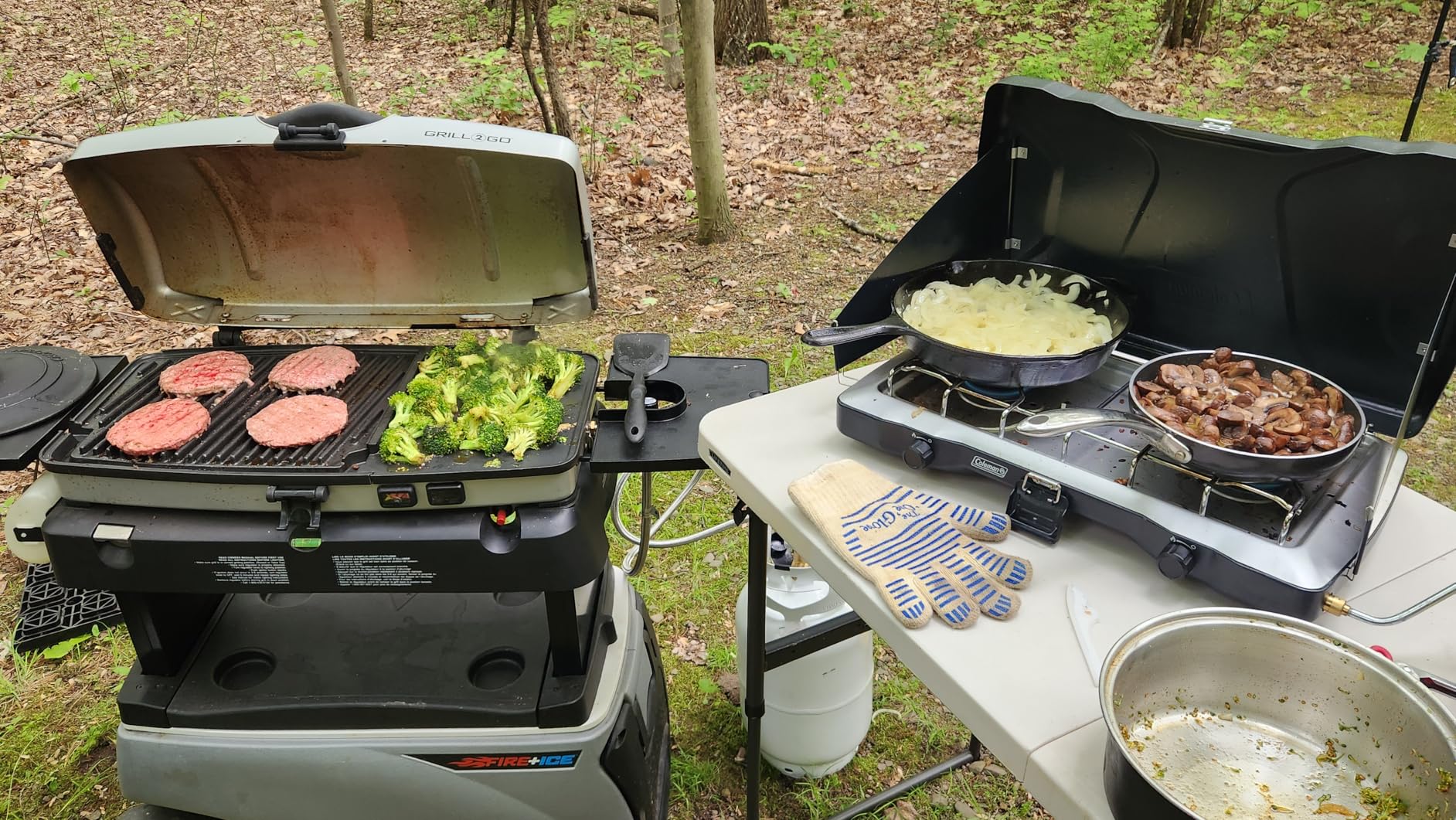
This is the stove for the scenario where the whole household is eating at once. Two independently adjustable burners totalling 22,000 BTU means a full pot of water coming to a boil on one side while something gentler simmers on the other.
It holds the highest rating in this roundup at 4.7 stars across 3,710 reviews, and the praise is consistent: the improved knob rotation gives a usable low setting, which is the single most underrated feature on a stove you may be using for weeks at a time.
The two built-in wind guards matter outdoors, where a single exposed burner head will get knocked around by gusts. The heavy-duty latch keeps the stove closed when it is not in use, and the removable chrome-plated grate lifts straight out for cleaning after a week of meals.
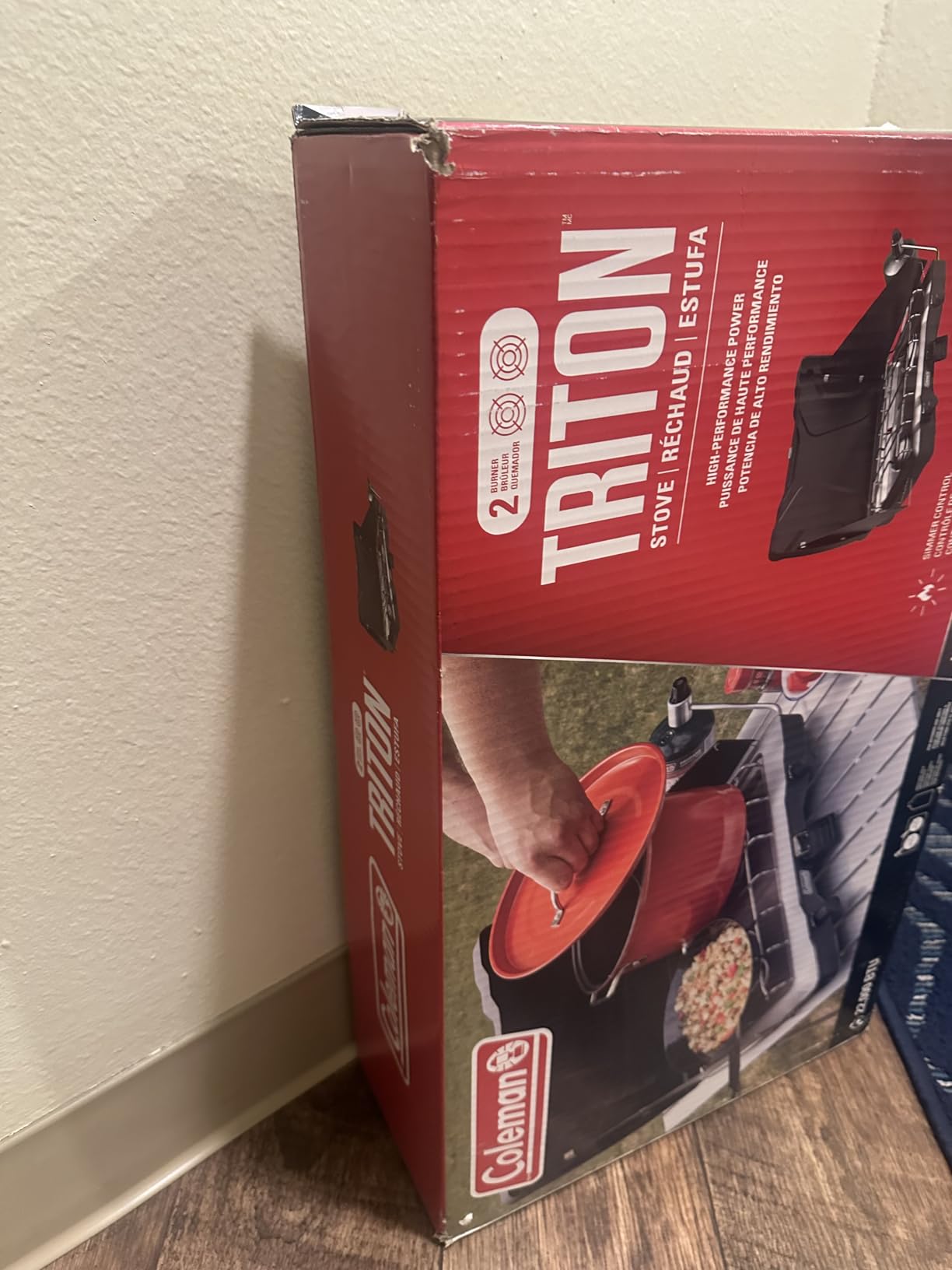
Best for: families, group shelters, a garage blackout setup or anyone feeding more than three people. At 5 lb and roughly 16 by 8 inches with the case, this is a car or garage item, never a pack item. Budget for the burn time: one 16 oz cylinder runs it about an hour on high, so a week of daily cooking means several refills.
5. Gas One Portable Butane Stove – Best for Small Pots and Small Fuel Cans
Gas One Portable Butane Camping Stove with Case: Automatic Ignition, Precise Heat Control – Camping & Tailgating and Outdoor Cooking
Fuel: 8 oz butane
Output: 7,650 BTU
Weight: 3.1 lb
Ignition: piezo
Pros
- Quick to heat and holds a steady flame
- CSA approved
- Cartridge ejects if the stove is knocked over
- Wind shield improves outdoor reliability
- Carry case included
Cons
- Piezo occasionally fails to spark on the first press
- 7650 BTU suits small to medium pots
- Butane canister sold separately
Small pots are the norm in an emergency, not 12-inch skillets. This stove is sized for exactly that job and does it without ceremony, heating quickly and holding a flame steady through a whole pot of water.
The safety detail that stands out is the automatic cartridge ejection system. If the stove is deflected by about 0.7 kg of force, the cartridge releases and the fuel stops. In a kitchen full of people and elbows, that is a real feature rather than a spec-sheet line, and CSA approval covers the North American safety standard.
The flame wind shield around the burner is unusual at this size and genuinely helps in breezy conditions, and the included case makes it easy to keep the stove with its fuel in a drawer.
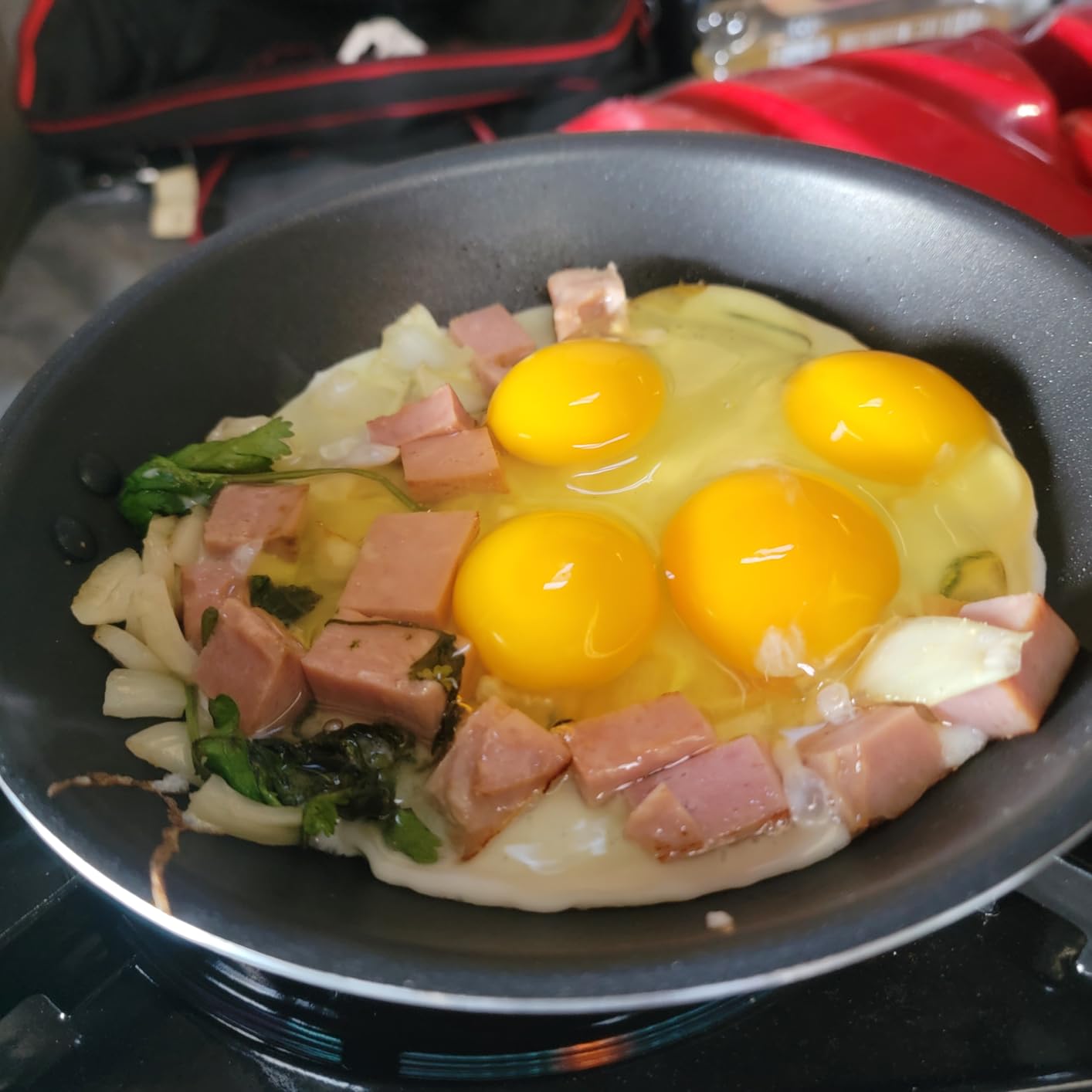
Best for: one to three people, a small pot and a cup scenario, or a vehicle kit. Keep a lighter or a match in the same bag anyway. A number of reviews report the piezo not sparking on the first press, and a backup ignition method costs nothing.
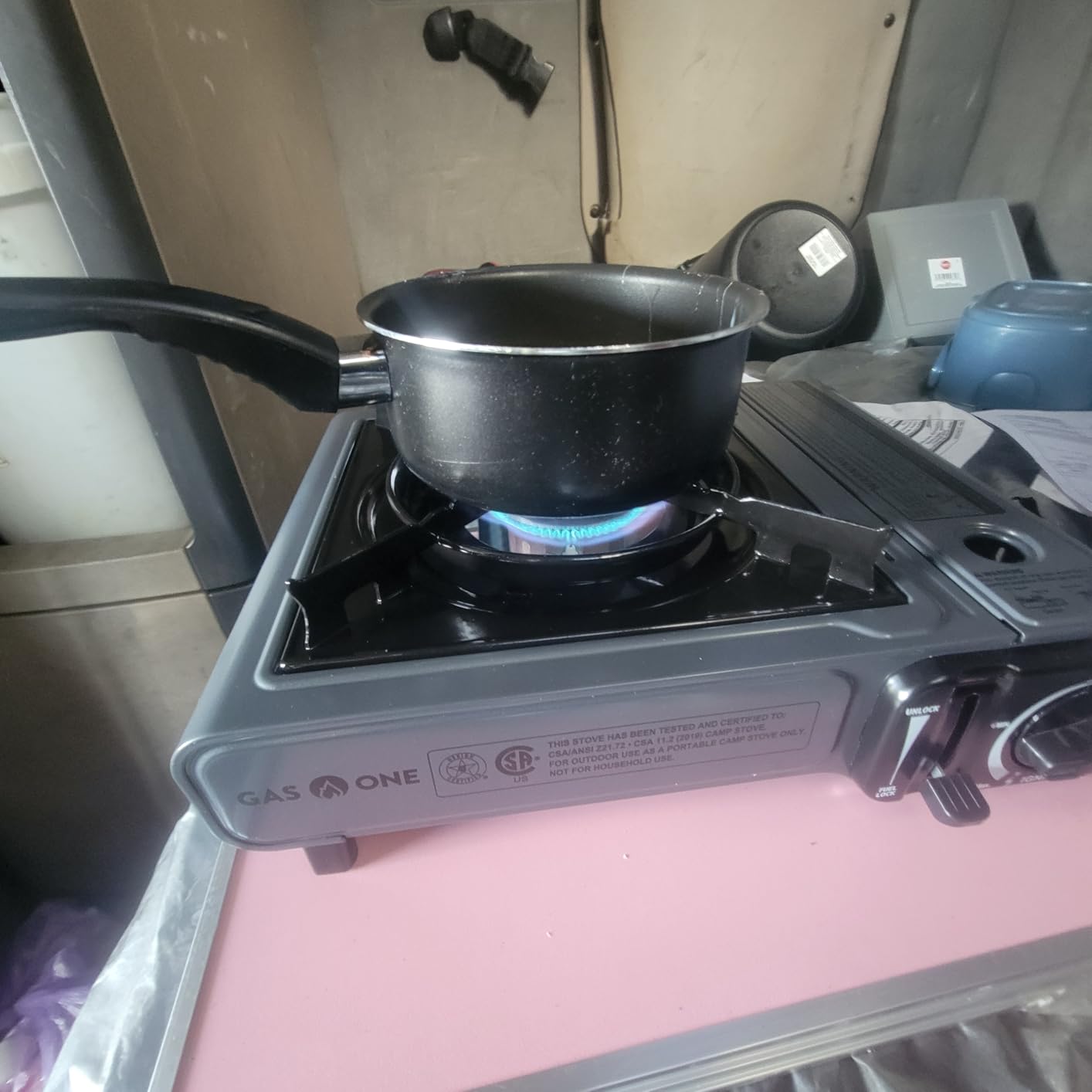
6. Chef Master 15,000 BTU Butane Stove – Best High-Output Butane Burner
Chef Master Portable Butane Camping Stove, Backpacking Burner, 15,000 BTU
Fuel: 8 oz butane
Output: 15,000 BTU
Weight: portable design
Ignition: piezo
Pros
- 15000 BTU delivers genuine high heat for searing and wok cooking
- Piezo lights reliably in repeated testing
- Double wind guard plus the case as extra shielding
- Accepts standard 8 oz butane canisters from any brand
- In-line regulator with pressure shut-off
Cons
- Included hard case is thin plastic with weak hinges
- Flame stays strong even on the low setting
- Not stainless steel so it can rust if stored damp
- Instructions are basic
15,000 BTU from a butane burner is unusual and it changes what you can cook. Water boils fast, a pan actually sears, and a pot of stew gets a rolling boil instead of a slow creep.
Two protections sit around the flame. A built-in double wind guard surrounds the burner head, and the included hard-shell case doubles as an additional wind break when you set the stove up in the open. The in-line regulator with pressure-sensing shut-off closes the fuel path if pressure moves outside the safe range.
It accepts standard 8 oz butane canisters from any brand, which is convenient when your usual brand is the one you cannot find. That compatibility matters a lot more in a long emergency than the brand name on the tin.
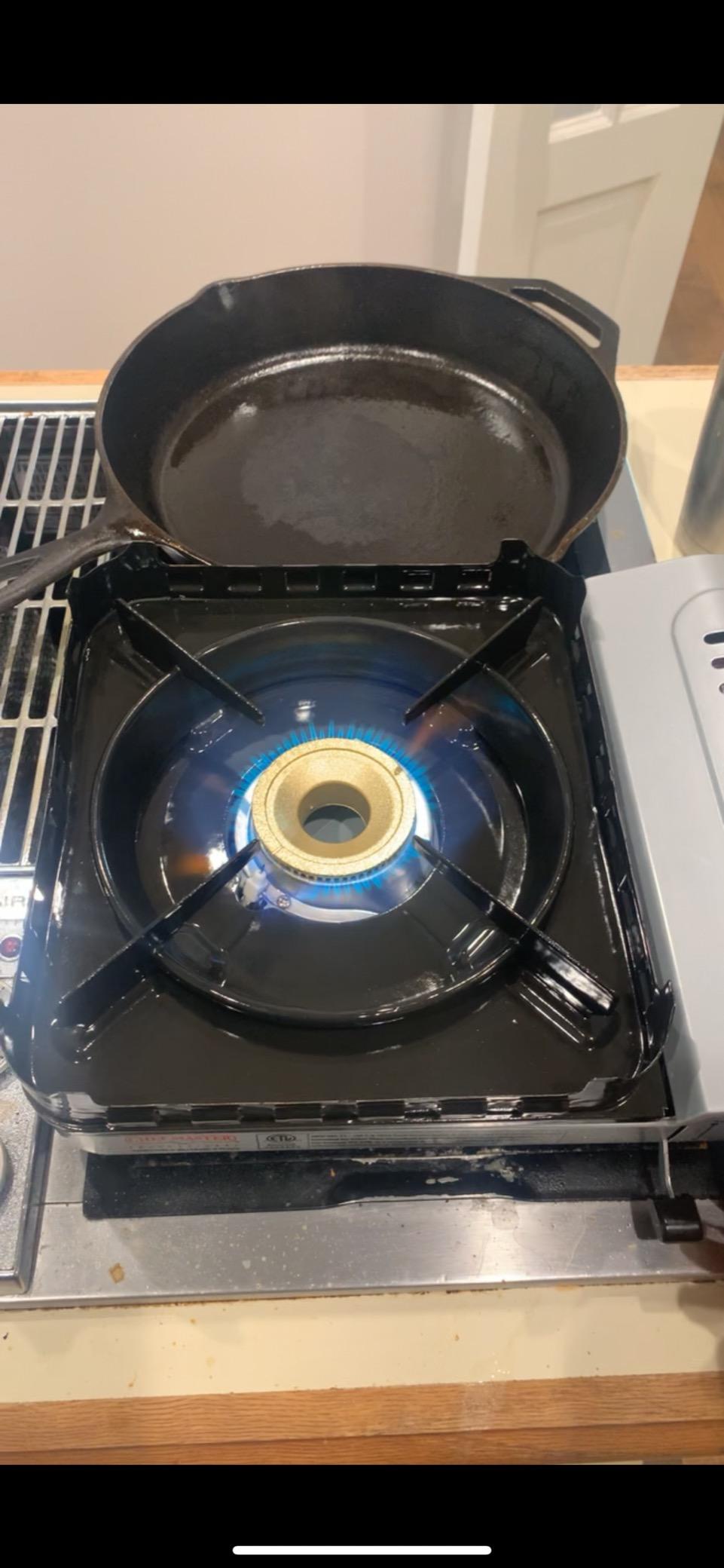
Best for: someone who wants gas-level heat from a small canister stove, particularly for cooking rather than just boiling. Two caveats from reviews: the case is flimsy plastic, so do not rely on it for protection, and the flame stays strong even turned down low, which means a simmer needs a diffuser or careful attention.
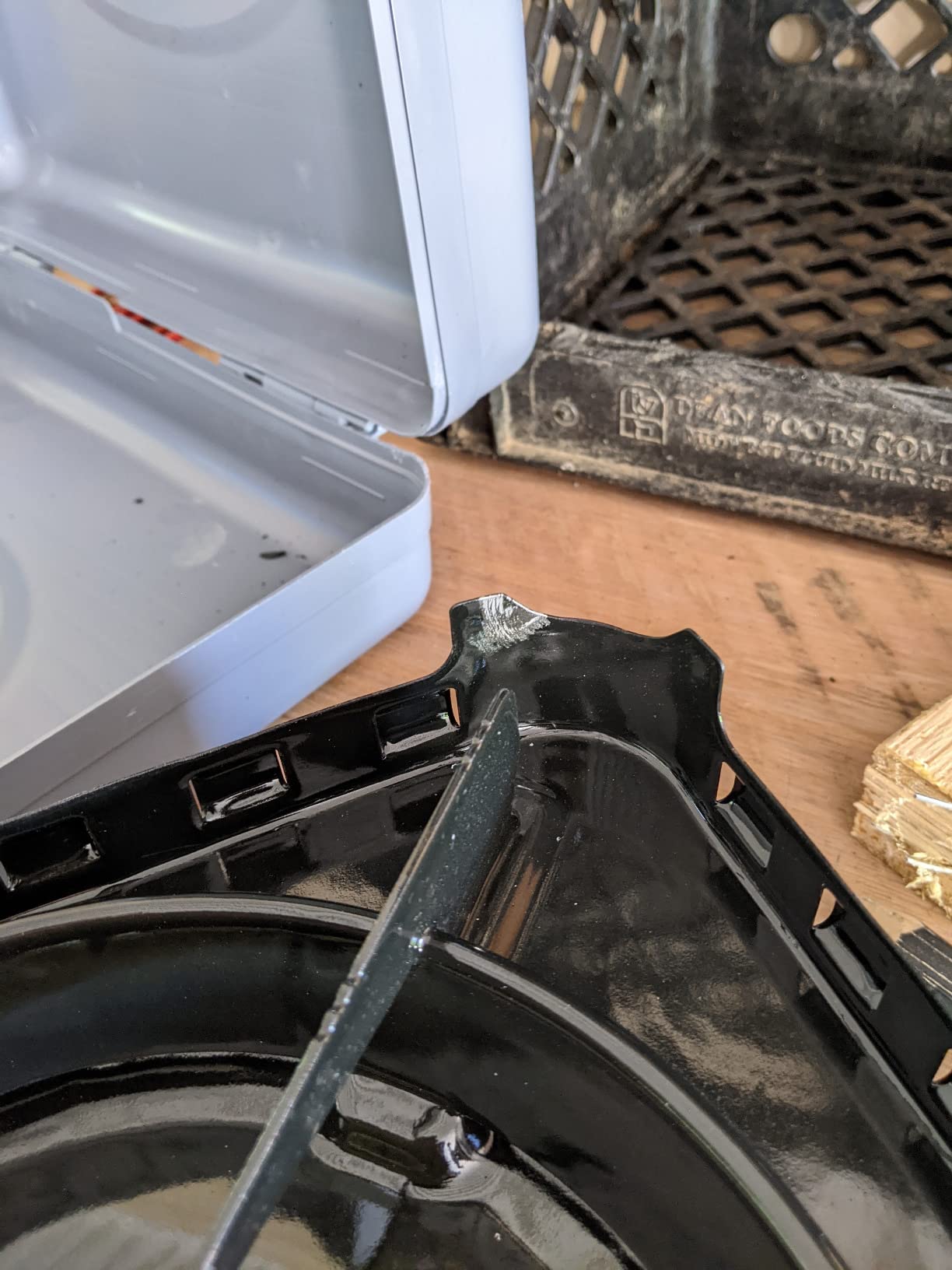
7. Coleman Classic 1-Burner Butane Stove – Best for Beginners and Daily Use
Coleman Classic 1-Burner Butane Stove, Portable Camping Cooktop with Carry Case & InstaStart Ignition, Adjustable Burner with 7650 BTUs of Power for Camping, Grilling, Tailgating, & More
Fuel: 8.8 oz butane
Output: 7,650 BTU
Weight: 249 g
Ignition: Instastart
Pros
- Matchless Instastart lighting
- Light at 249 g with a carry case
- Removable porcelain-coated grate and rust-proof burner
- Wind baffle steadies the flame
- Many owners report five to six years of service
Cons
- Single burner means one dish at a time
- Fits only a 10-inch pan
- 7650 BTU is modest next to the 15000 and 22000 BTU models
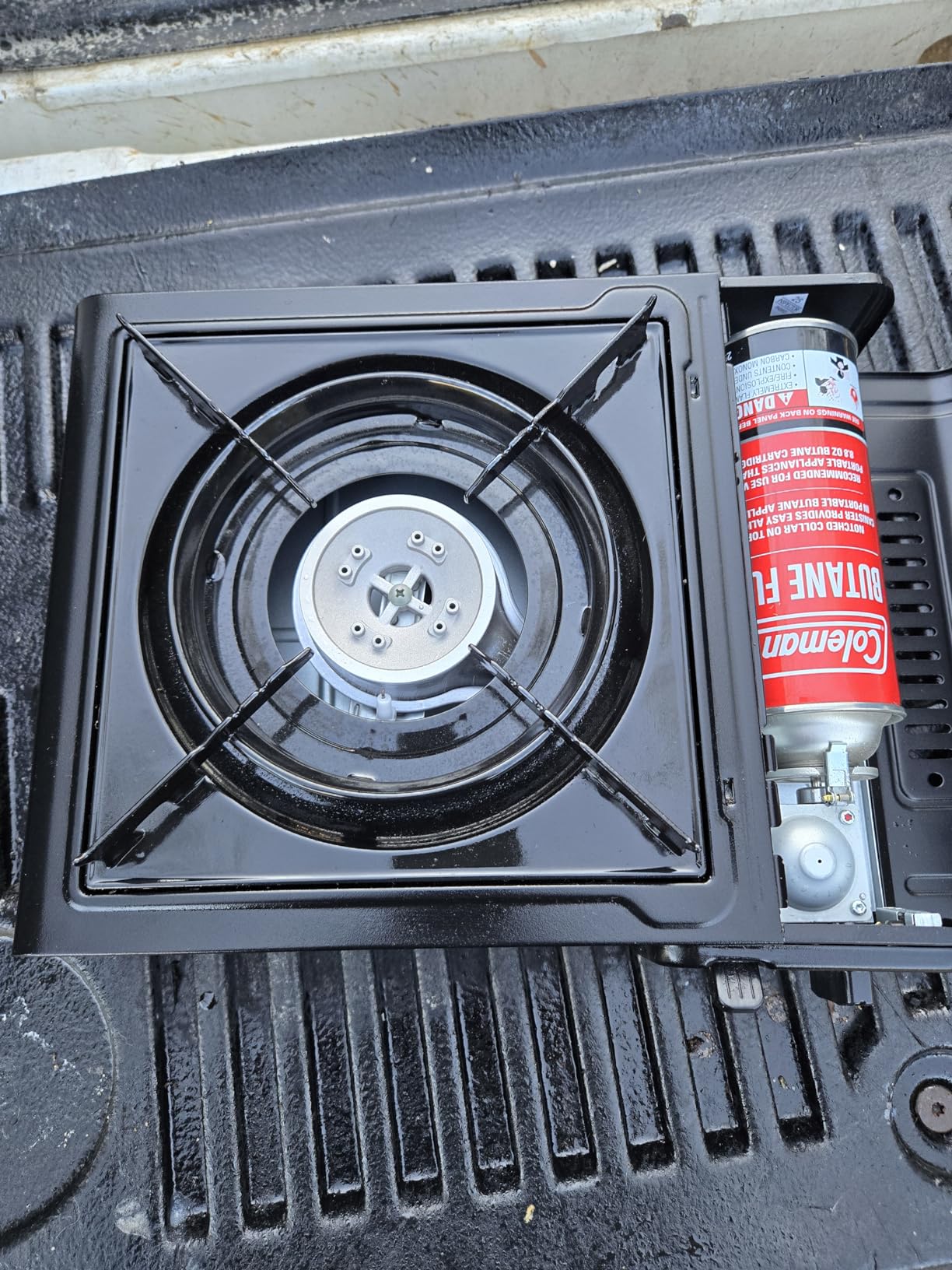
This is the stove we recommend to someone who has never cooked on a canister burner before. The Instastart ignition system lights it without matches or a lighter, and the layout is a single burner on a large, stable base with room to stir.
Durability is the standout in the reviews. Several owners report the same model lasting five to six years, which is the kind of track record that matters for gear bought once and trusted. The porcelain-coated grate lifts out and the aluminum burner is rust-proof, so cleanup after a long day of use takes a minute.
It also gets used away from cooking. Starting charcoal for a grill or a fire pit is a common secondary use, and a wind baffle keeps the flame stable while it does it.
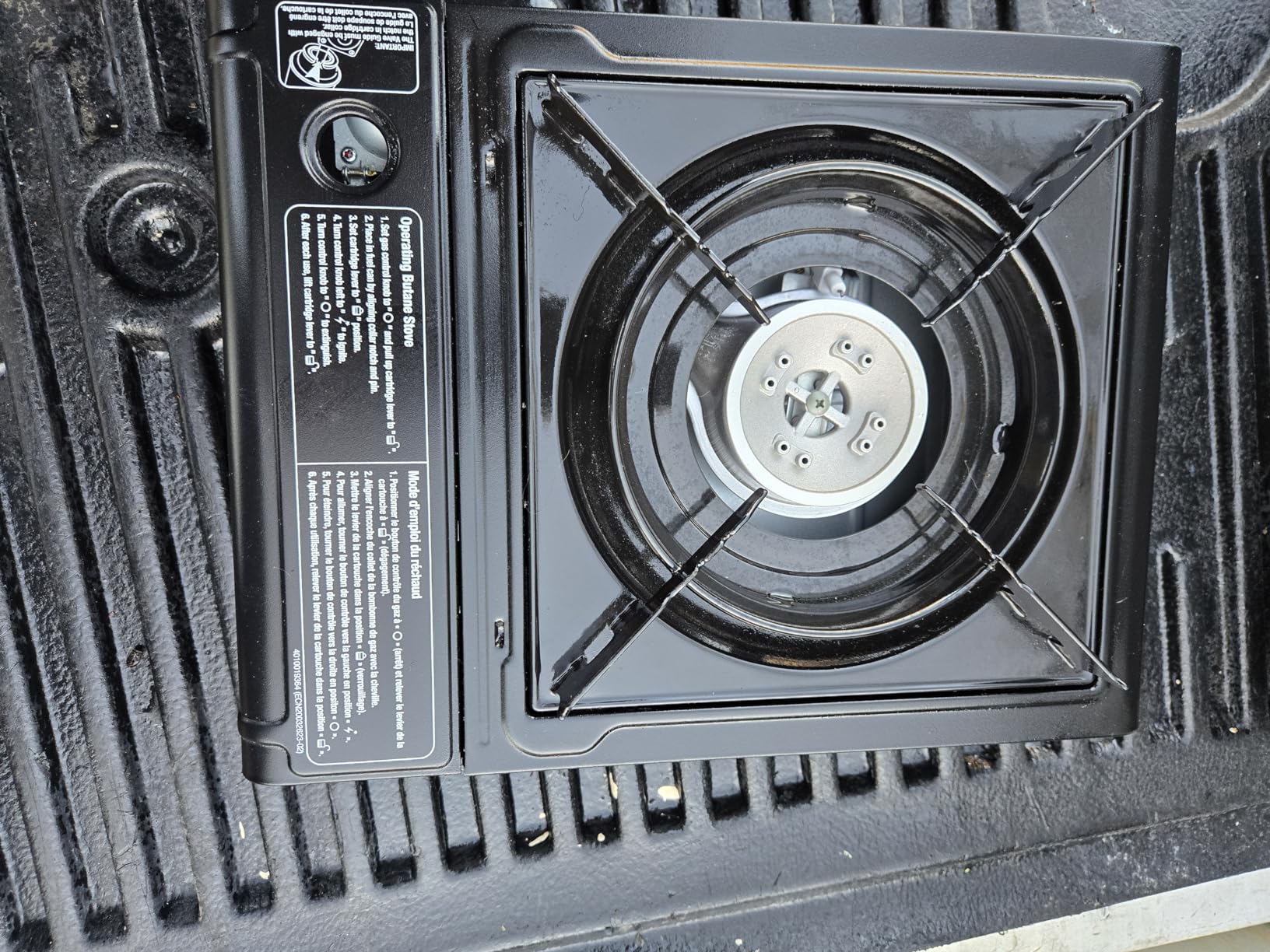
Best for: one person or a couple, and any kit where simplicity beats capability. On a single 8.8 oz butane cylinder you get up to 1.25 hours on high, so a family of three planning a week of hot meals will burn through cans quickly. If you need two dishes at once, look at a two-burner unit instead.
8. Chef Master Grill Boss Dual Fuel Stove – Best for Below-Freezing Cooking
Chef Master Grill Boss Dual Fuel Camping Stove, Butane & Propane, 12000 BTU
Fuel: butane or propane
Output: 12,000 BTU
Weight: listed at 8 oz
Ignition: piezo
Pros
- Dual fuel so a missing can never stop you
- 12000 BTU outpaces the 7650 BTU class
- Certified propane adapter hose included
- Automatic gas shut-off on irregular flow
- Reported to work below freezing
Cons
- Listed weight appears inconsistent with the actual build
- Cylinder connection must be aligned carefully or gas leaks
- Fuel not included
Butane performance drops in cold air. It is the known weakness of a light hydrocarbon fuel, and it is the reason a lot of winter campers end up disappointed. Propane holds up better, and this stove runs on both.
Switching fuel takes the certified propane adapter hose that ships in the box, and the double wind guard keeps the flame stable while the surrounding air is working against you. Owners report it working below freezing, which is the reason this pick exists.
At 12,000 BTU it is a step up in power from the entry-level portable stoves without moving to the bulk of a full tabletop cooktop. The automatic gas shut-off activates on irregular gas flow, adding a second layer of protection alongside the regulator.
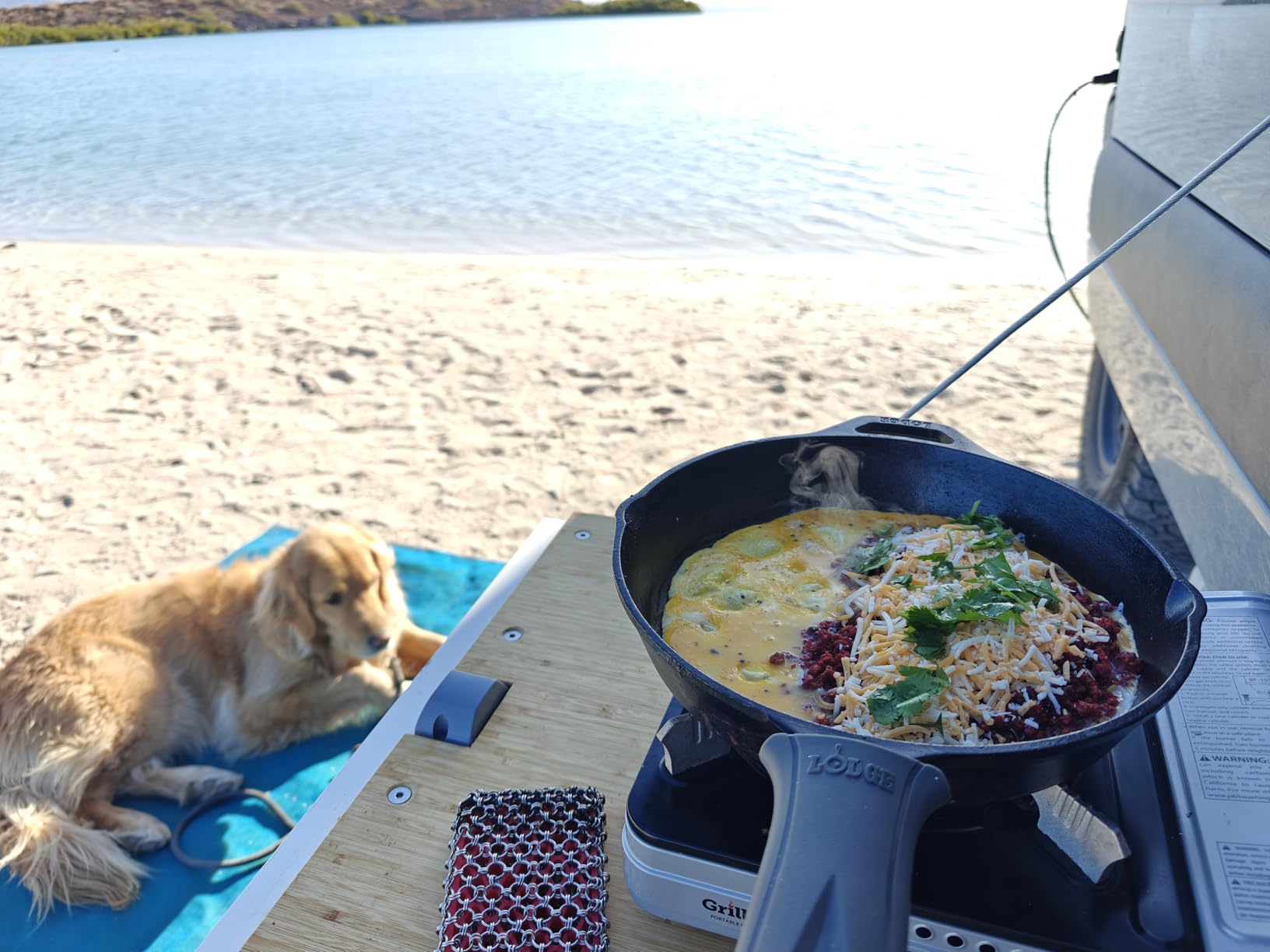
Best for: winter storm kits, cold-weather camping, and anywhere the temperature is the deciding factor. Read the connection instructions before the first use. Reviews are consistent that aligning the cylinder to the instructions matters, and a misaligned connection is the reported cause of gas leaks.
9. REDCAMP Folding Wood Stove – Best for Cooking on Foraged Twigs
REDCAMP Wood Burning Folding Camp Stove Stainless Steel Grid, Portable Collapsible Backpacking Stove Survival Rocket Stove for Hiking Outdoor Tent Camping Picnic BBQ, Samll
Fuel: wood, leaves and twigs
Material: stainless steel
Weight: 1.9 lb
Folded: 1.5 in thick
Pros
- Burns readily on gathered leaves and twigs
- Collapses to 1.5 in thick for packing
- Stainless steel handles high heat and heavy pots
- Grid backing plate gives a stable platform
- Doubles as a small fire for warmth
Cons
- No temperature control
- 1.9 lb is heavy against ultralight wood stoves
- Protective film must be peeled off before first use
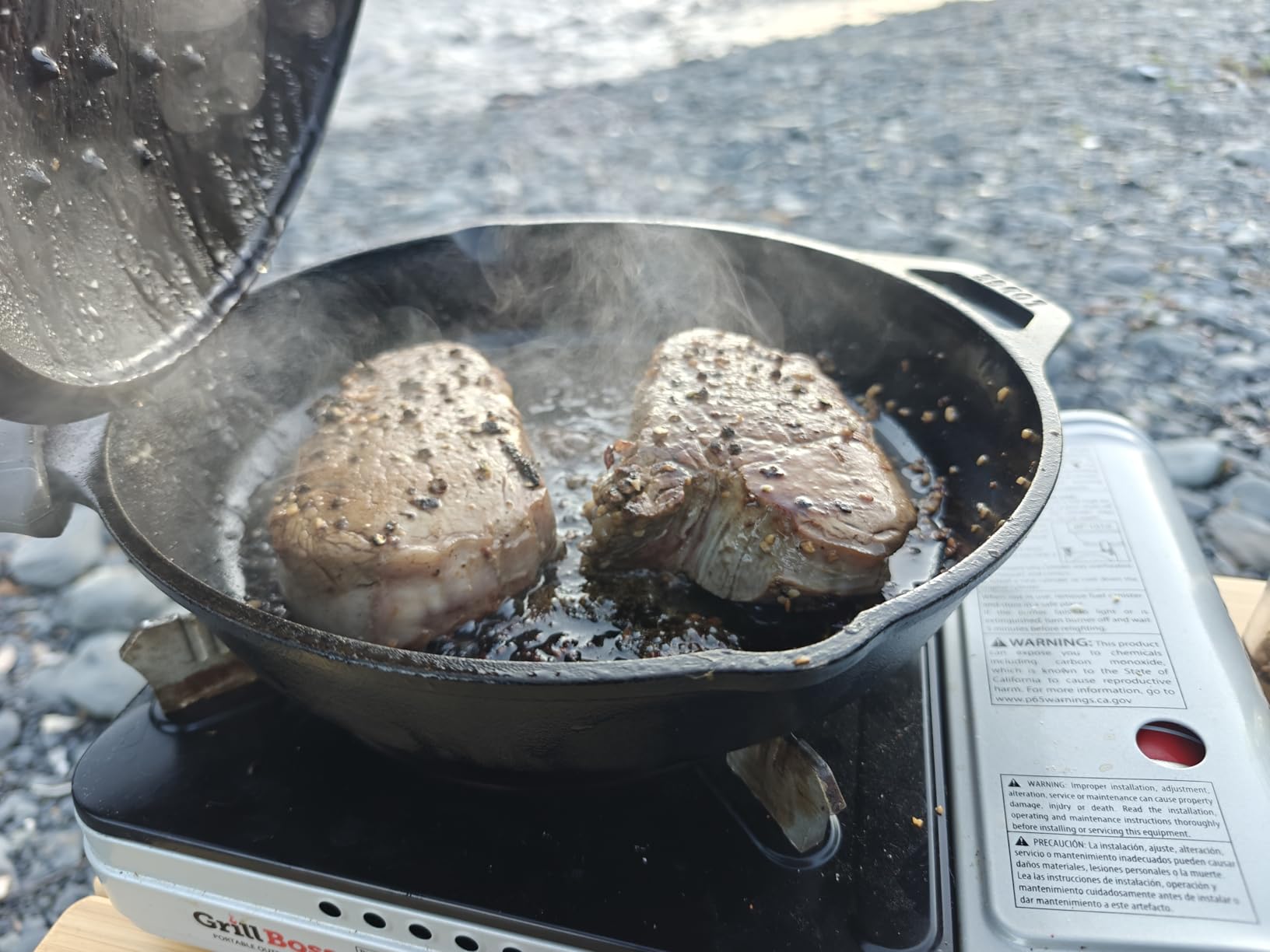
The pitch here is simple: no fuel to buy, ever. Leaves, twigs and small branches are everywhere, and a stainless steel body does not care what you feed it.
It folds down to 1.5 in thick, which is genuinely slim for a wood stove, and the stainless grid backing plate gives pots and kettles a stable platform instead of balancing them on wire. That grid is the difference between a usable pot support and an annoying one.
It also works as a small fire. In a cold shelter with wet clothing, having something that puts out radiant heat as well as boils water is a genuine benefit rather than a novelty.
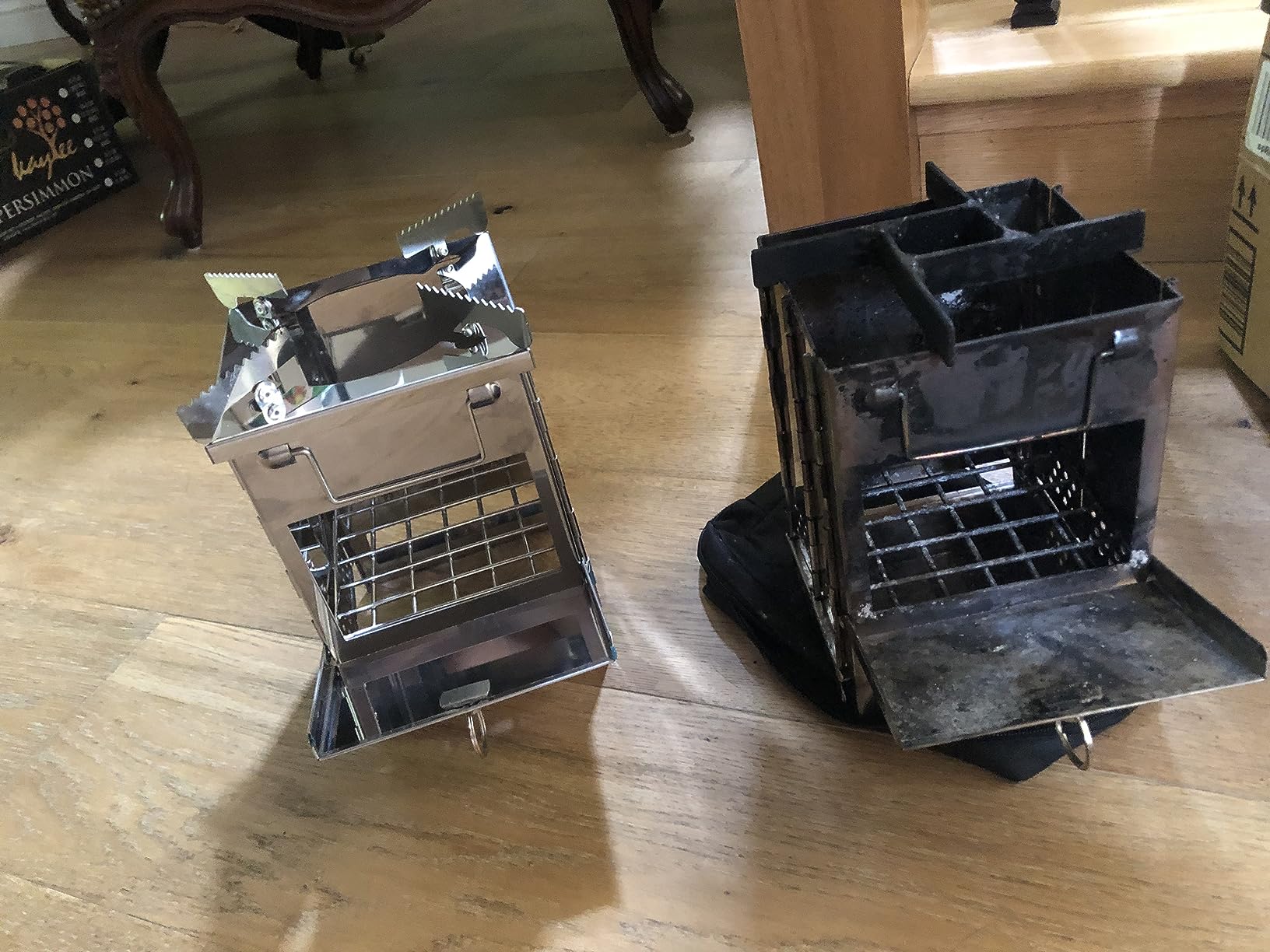
Best for: long-term off-grid scenarios where supply is the assumption rather than the risk. Plan around the two real limits. There is no heat control, so cooking is high-heat focused, and at 1.9 lb it will not win any weight contest. One practical note from reviews: peel off the residual factory protective film before the first burn.
10. SHINESTAR 7800 BTU Dual Fuel Stove – Best for a Fast Five-Minute Boil
SHINESTAR 7800 BTU Dual Fuel Camping Stove, Propane Portable Gas Stove
Fuel: butane or propane
Output: 7,800 BTU
Boil time: 4 cups in 5 minutes
Weight: 4.15 lb
Pros
- Runs on 8 oz butane or 1 lb propane with the included adapter hose
- Boils four cups of water in about five minutes
- Piezo rated for over 10000 ignitions
- Supports 6 to 10 inch cookware
- Carrying case and safety lock included
Cons
- Lowest rating in this group at 4.5 stars
- 7800 BTU sits below the mid-power options
- Heavier than most single-burner rivals at 4.15 lb
Five minutes for four cups of water is a number worth planning around. When you are purifying water for a household, a measured boil time tells you how long the job takes before you factor in tending the flame.
The dual-fuel setup is the real advantage over a plain butane stove. The included adapter hose lets it run on an 8 oz butane canister or a 1 lb propane tank, so you choose the fuel you can actually find and the size that matches how long you need to cook.
Its one-click piezo is rated by the manufacturer for more than 10,000 ignitions, which covers many years of daily use. The cartridge ejection system, safety lock and auto shut-off valve all work together to cut fuel if the stove is knocked or left unattended.
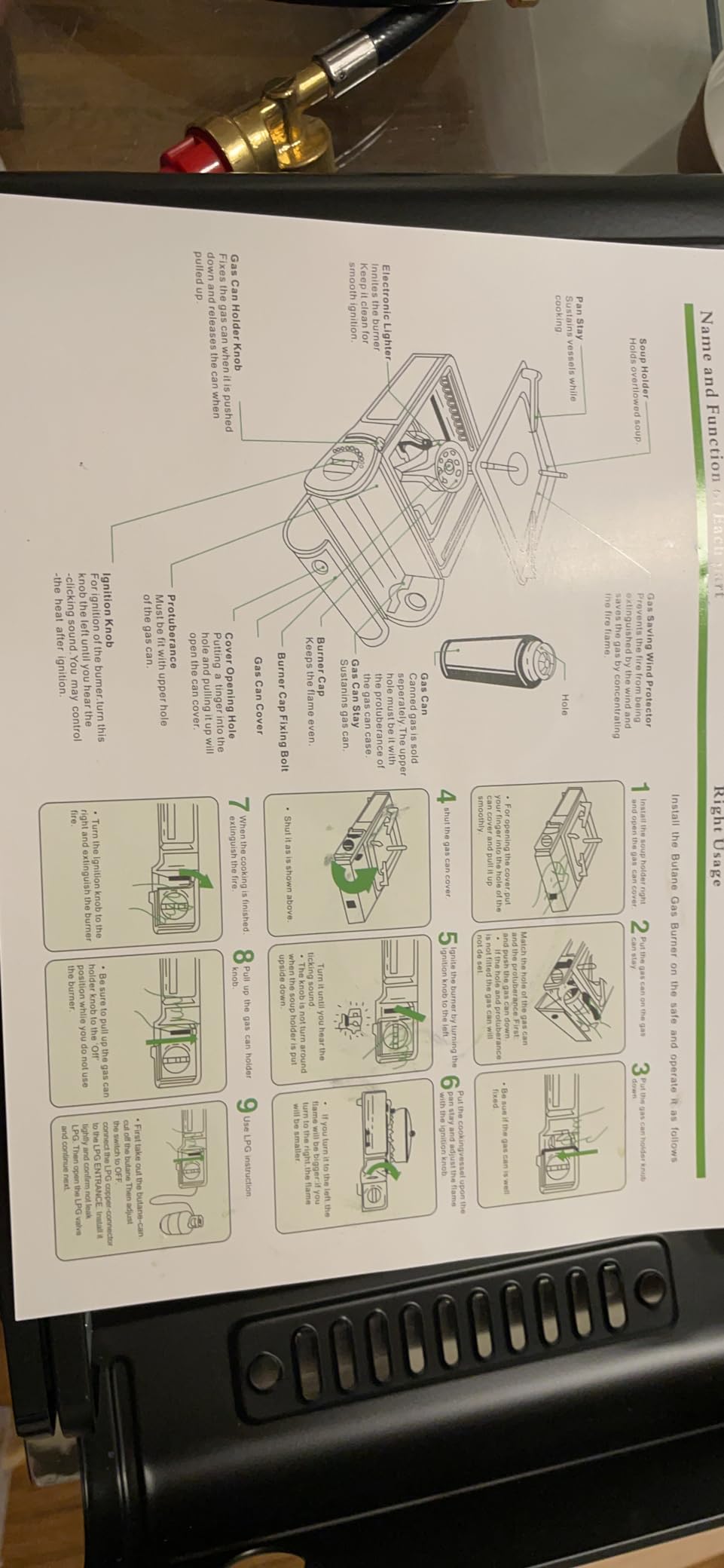
Best for: water purification and medium pots, in a kit that has to handle both fuel formats. Be realistic about the weight at 4.15 lb and the moderate output. It rates 4.5 stars, the lowest in this set, with a handful of reviews noting heat that feels modest for the size.
11. Camplux Dual Fuel Stove – Best for Van, RV and Garage Backup Cooking
Camplux Dual Fuel Propane & Butane Stove with Carrying Case, Portable Camping Stoves with CSA Certification
Fuel: butane or propane
Output: 7,200 BTU butane
Weight: 3.3 lb
Certification: CSA
Pros
- Dual fuel design with a CSA certified regulator included
- Piezo ignition starts reliably for most users
- Compact body at 3.3 lb with a carry case
- Pan support holds larger pots securely
- Built-in overpressure and leak protection
Cons
- Flame control knob is poorly modulated at the low end
- Lowest flame setting still runs hot with no true simmer
- A small number of reports of piezo failure and gas leaks
- Single burner limits meal size
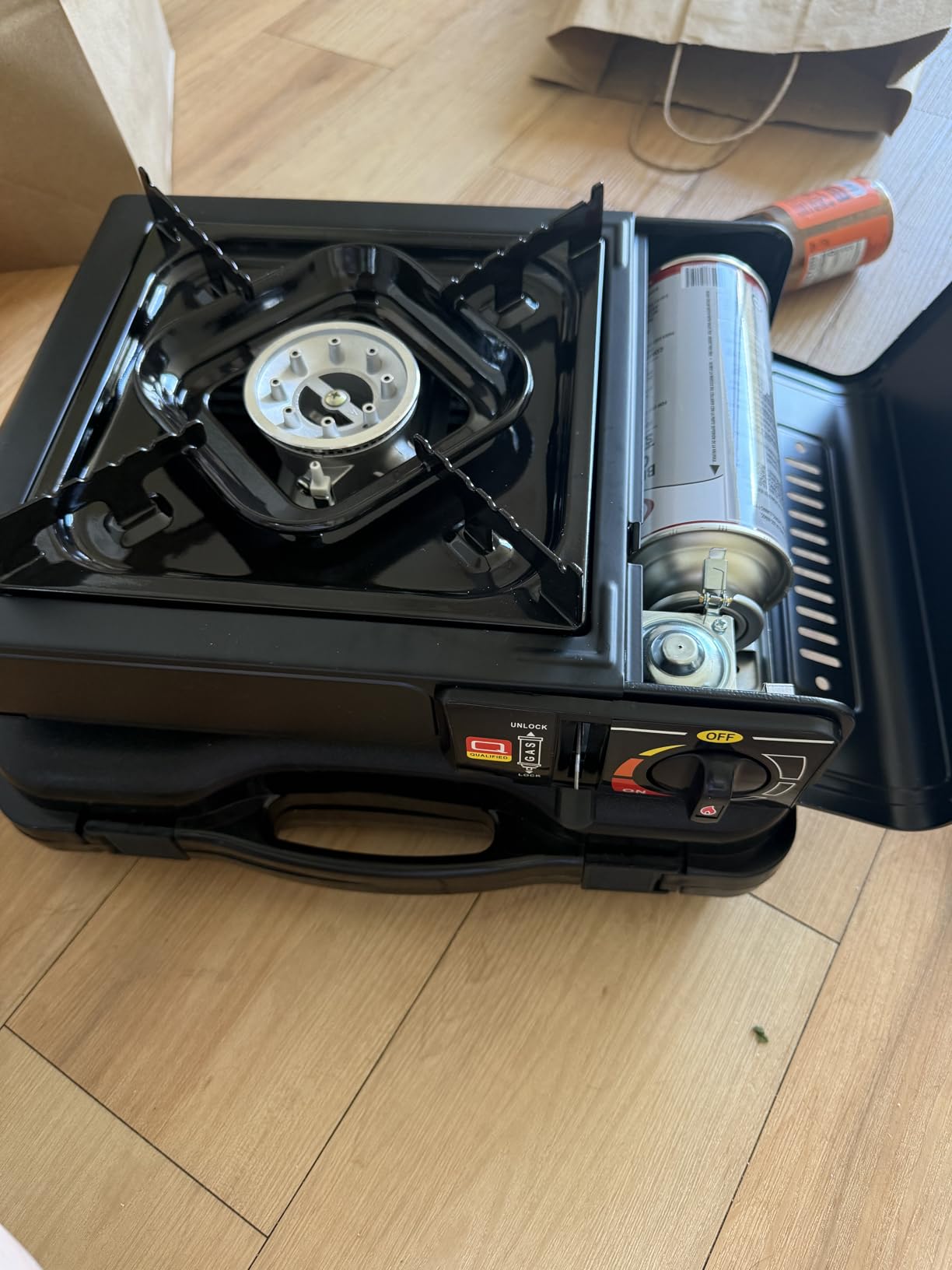
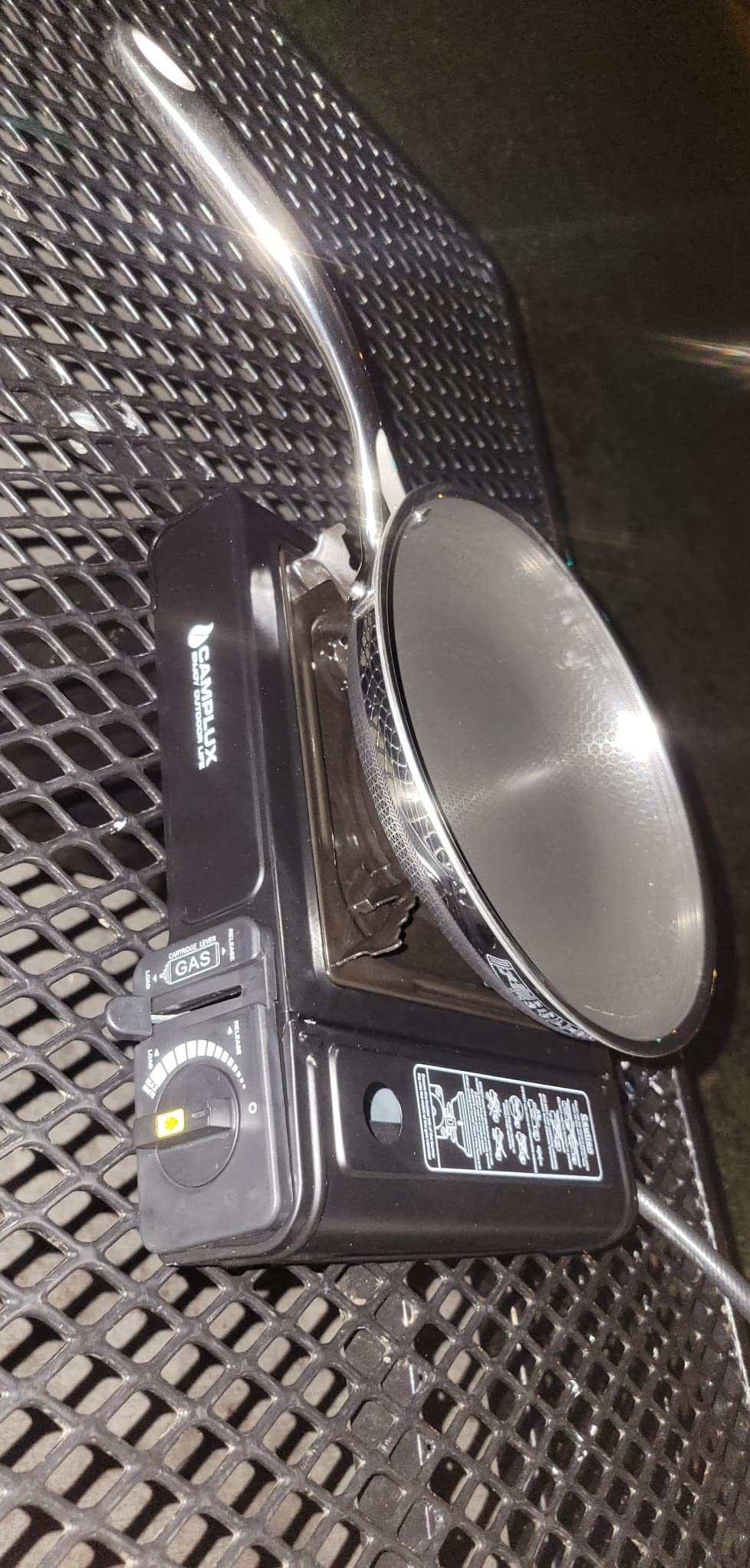
The Camplux is the one we would put in a van build or a garage shelf as a permanent backup. Owners using it for van life and home emergency cooking describe it as compact, quick to heat and easy to live with.
Its strongest argument is certification. The stove carries CSA certification for North American safety with a built-in overpressure and gas leakage protection device, and the CSA-certified regulator needed to run a 16.4 oz propane cylinder is included in the box. That is the difference between an adapter that works and one that leaks.
It runs 7,200 BTU on an 8 oz butane canister or 6,500 BTU on a 16.4 oz propane cylinder. Run it on propane and you get longer burn time per fill; run it on butane and you get easier portability.
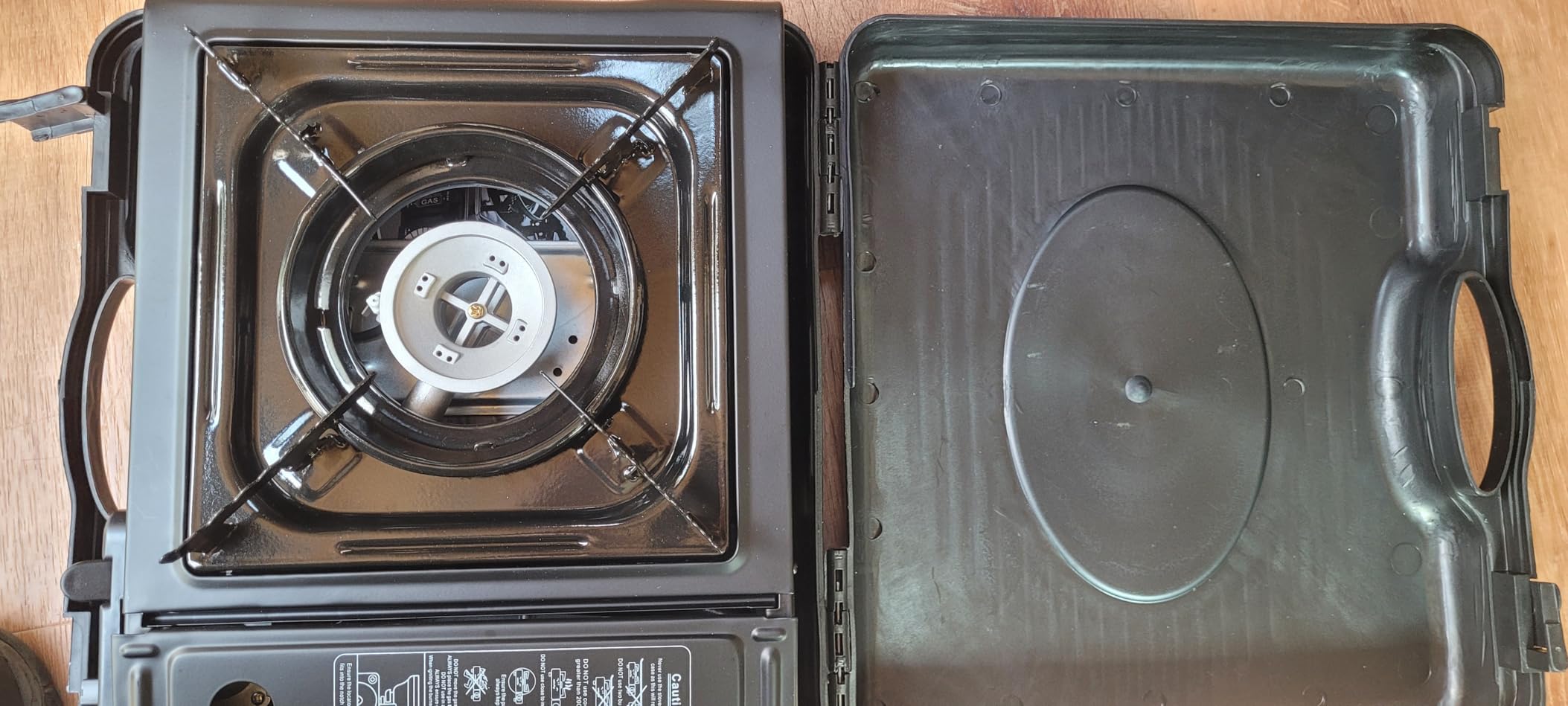
Best for: van, RV and garage backup cooking where certification and a supplied regulator matter. The honest drawback is flame control. The lowest setting still runs hot, so there is no true simmer, and a small minority of owners report piezo failure or gas leaks on individual units. Check the leak test with soap and water before the first connection.
12. EcoZoom Rocket Stove – Best for Cast Iron and Long Wood Burns
EcoZoom Rocket Stove, Dual Fuel Wood & Charcoal, Portable & Insulated
Fuel: wood, branches and charcoal
Material: stainless steel
Weight: 14.5 lb
Stovetop: cast iron
Pros
- Burns twigs
- branches
- pallet wood and charcoal
- Uses 60 percent less fuel and 70 percent less smoke than an open fire
- Cast-iron top and grate built for Dutch ovens and heavy pans
- Insulated body and door stay manageable to touch
- Steady heat with little tending once lit
Cons
- 14.5 lb rules it out for backpacking
- Fire needs practice to start
- Feed ports are small so kindling must be cut small
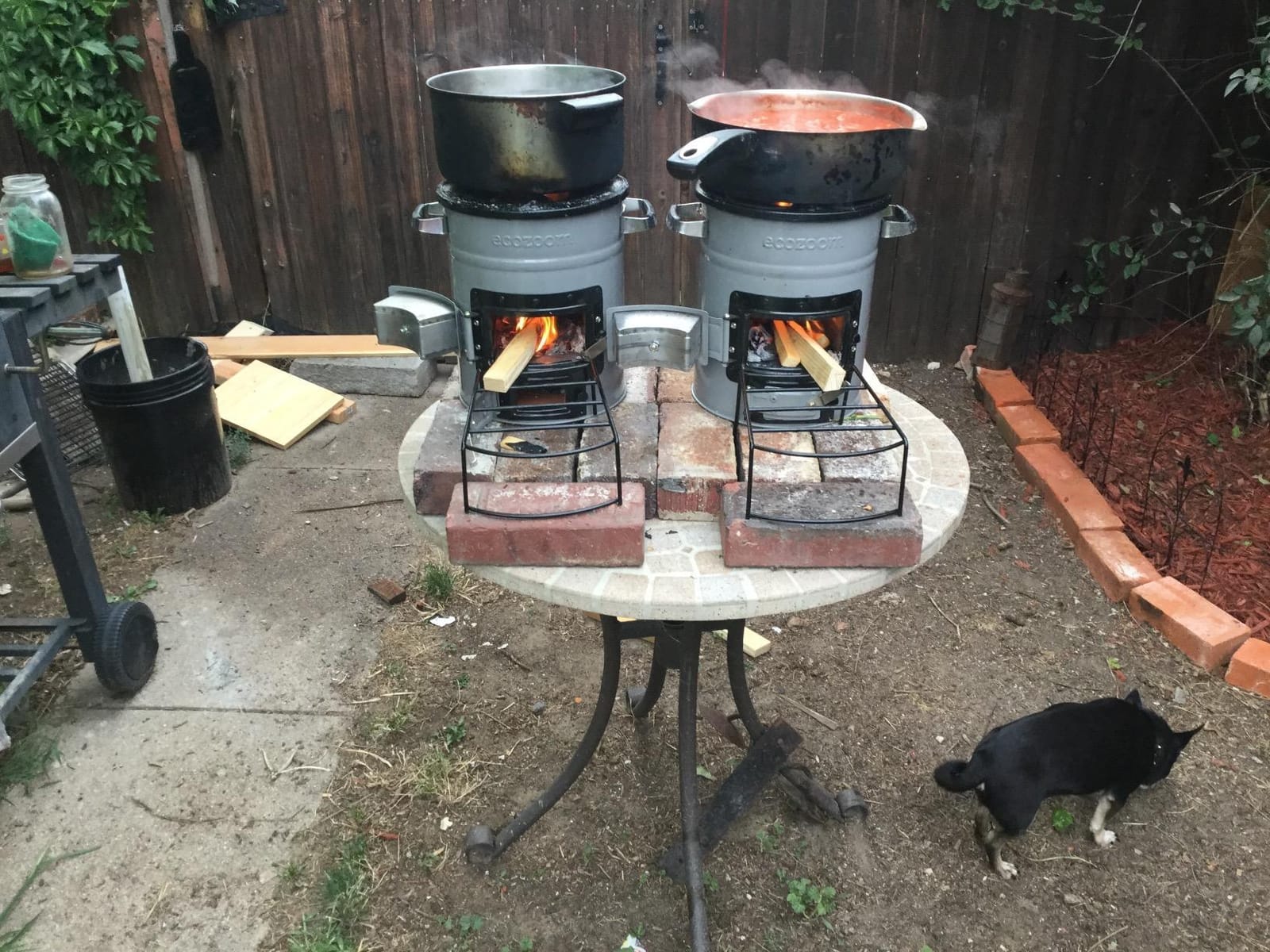
When a household has cast iron cookware and no fuel supply, this is the answer. The three-pronged cast-iron stove top takes Dutch ovens, pans and anything heavy that a thin wire grate would warp or drop.
The vertical combustion chamber is the engineering point. Compared with an open fire, it uses 60 percent less fuel and produces 70 percent less smoke, and buyers report boiling large pots of water in roughly 15 minutes with steady, gas-stove-like heat once the fire is going. Refractory metal lining in the top door and combustion chamber is what lets it do that repeatedly.
Stainless-steel handles with heat-resistant silicone grips stay cool enough to move while it burns, and the insulation keeps the outer surfaces manageable.
Best for: a garage, a yard, a cabin or a long off-grid stay where cast iron cookware is already part of the kit. It is not a survival stove you carry anywhere. At 14.5 lb it is a stationary unit, and the feed ports are small, so kindling has to be cut to roughly finger size and branches kept under about an inch in diameter.
How to Choose a Survival Stove for Emergency Prep?
Choose the fuel platform first, then the stove. A stove whose fuel is unavailable in your area is not an emergency stove, and that single decision eliminates most of the options faster than any other.
Pressurized butane canister. The screw-on 8 oz canister is the most portable format and by far the most common in kits. It is light, cheap to replace and easy to find, but butane output falls in cold air. Best for warm-weather kits and short trips.
Green propane cylinder. The 16.4 oz screw-on cylinder holds roughly twice the fuel of a butane canister and performs better when it is cold. It is bulkier and heavier, which is why it suits a vehicle or garage kit better than a daypack. Best for winter and for feeding several people.
Dual fuel. A dual-fuel stove accepts both formats, usually with an included regulator or adapter hose. This is the format we rate highest for emergency prep, because it turns fuel availability from a single point of failure into a non-issue.
Liquid and solid fuel. No pressurized fuel means no supply chain dependency at all, but you carry the weight yourself and manage the flame yourself. Best as a backup, not as the only stove you own.
Then think about tiers. A 72-hour go bag should carry a light canister or folding solid-fuel stove plus two or three spare fuel containers, because every gram is a cost you pay on foot. A vehicle kit can carry a full dual-fuel stove with a spare cylinder, and the weight is free. A garage blackout setup is where a two-burner cooktop or a wood rocket stove belongs, since neither is going anywhere.
Carry two stoves. A single stove is a single point of failure, and the most likely failure is not mechanical but fuel-related. Pairing a canister stove with a small solid-fuel stove means a missed fuel run is an inconvenience instead of a cold night.
Complete the cooking kit with a pot that nests inside everything else, a windscreen that folds flat, a lighter plus a backup ignition method, fuel in the correct container, and a water filter for anything that does not need boiling. Our survival knife guide covers prep tasks around the fire, and the survival axe picks are relevant if your fuel plan involves wood.
How Much Stove Fuel to Store for a 72-Hour Kit?
Work backwards from measured burn time. The Coleman Classic gives up to 1.25 hours on high per 8.8 oz butane cylinder, and the Coleman Triton gives up to an hour on high per 16 oz propane cylinder. Those are the two numbers in this roundup you can plan around directly.
For one person cooking two hot meals a day for three days, budget for roughly 6 to 8 hours of high heat. On a butane cylinder that is about five to seven cartridges, and on a 16 oz propane cylinder it is six or seven cylinders. For a family of four at three meals a day, multiply the can count by four and add a margin.
Turn that down for real use, though. Most households are reheating and boiling, not running burners at full blast for six hours straight, so the actual figure is usually lower. Plan for the worst case anyway, because the plan you do not need costs nothing extra.
Storage matters more than most people expect. Keep cylinders upright, in their original packaging, away from heat and direct sun, and never in a vehicle that sits in summer sun for days. Do not store them inside the house next to an ignition source, and rotate your supply so the oldest cylinders get used first.
Stove Safety: Carbon Monoxide, Ventilation and Fire Bans
Never run a stove indoors. Not in a kitchen during a power outage, not in a garage, not inside a tent, not in a vehicle. Incomplete combustion in an enclosed space produces carbon monoxide, which is odorless, colourless and can be fatal before anyone notices a headache.
Cook outside in open air every time, with the wind at your back so smoke and any combustion byproducts blow away from you. A tent or a small room does not count as open air, no matter how many windows are open.
If a fire ban is active in your area, a pressurized gas stove is usually the safer and more permitted option than an open wood fire. A canister stove does not emit the sparks and embers that trigger restrictions, so check your local rules before relying on a wood stove.
Test for leaks before every first connection of a stored stove. Mix dish soap and water, brush it onto the joints and hose, and watch for bubbles. Do this outside, and do it before you find yourself needing the stove at night.
First-Use Maintenance for a Stove Stored for Years
Most emergency stoves are bought with good intentions and then sit for a few seasons. Before the first burn, take fifteen minutes and do the following.
Open the regulator and inspect it. Look at the hose for stiffening, cracking or corrosion, and confirm the connector threads freely without force. A seized connection is the most common reason a stored stove will not light.
Clean the piezo igniter. A charred or dirty electrode will not spark reliably. Wipe it with a dry cloth and clear any debris from the gap where the spark jumps, then test with a few presses away from any fuel.
Check the burner head for insect nests, which are common in stored canisters and tanks, and clear them with a thin wire. Run the hose and the stove body for corrosion, and on the wood stoves, peel off any residual factory protective film before the first burn.
Burn the stove outdoors for a few minutes after a storage period, check for gas smells, and store it afterwards with the canister disconnected and the valve closed.
Frequently Asked Questions
What type of stove is best for emergency preparedness?
A dual-fuel stove that runs on both an 8 oz butane cartridge and a 16.4 oz propane cylinder is the best general choice, because fuel availability is the most common failure point. Add a lightweight solid-fuel or wood stove as a backup so a missed fuel run is not the end of hot cooking.
Is a butane or propane stove better for an emergency kit?
Propane holds its performance better in cold air and holds roughly twice the fuel per cylinder, which makes it the better winter choice. Butane is lighter and cheaper to replace. A stove that accepts both removes the decision entirely, and most of the dual-fuel models here do.
How long does a propane stove burn on one cylinder?
It depends on the stove and the setting. The Coleman Triton in this roundup runs up to about an hour on high per 16 oz propane cylinder. Plan your fuel count from the burn time on the high setting and add a margin for cold weather, which increases consumption.
Are liquid fuel stoves worth it for emergency prep?
Liquid fuel is rarely the first choice for a home or vehicle kit because pressurised canister stoves are simpler and more consistent. It earns its place when you expect long stretches away from any supply and need a stove that will run on fuel you can gather or pour yourself.
What is the best survival stove for a go bag?
The Coghlan’s folding stove at 16 oz is the lightest option here and runs on canned heat or fuel tablets, so it has no regulator to fail. The Ohuhu wood stove at 0.98 lb is the pick if you want a fallback that burns gathered twigs, though it costs you heat control.
Are pocket stoves safe to use indoors?
No. Never run any gas-fueled camp stove indoors, in a garage, in a vehicle or inside a tent. Incomplete combustion produces carbon monoxide, which is odourless and can be fatal. Cook outdoors in open air every time, with the wind at your back.
How do I store stove fuel long-term?
Keep canisters and cylinders upright, in their original packaging, away from heat and direct sunlight, and out of any vehicle that sits in hot sun. Store them away from ignition sources, do not keep them inside the house, and rotate the supply so the oldest fuel is used first.
Can I use a camping stove during a power outage?
You can use a camping stove during a power outage, but only outdoors. It is a perfectly good tool for boiling water and reheating food when the kitchen is unusable. The rule that does not bend is ventilation: outdoors, in open air, never in an enclosed space.
The Bottom Line on Survival Stoves for Emergency Prep
The Gas One GS-3400P is the best survival stove for emergency prep overall, because dual-fuel capability plus piezo ignition removes the two failure points that take most emergency stoves out of service. It has the largest review base in this roundup at 4.6 stars across more than 15,000 ratings, and the case for it is about resilience rather than raw power.
Match the pick to the kit. A 72-hour go bag wants the Coghlan’s folding stove or the Ohuhu wood stove, both light and both able to run on something other than a canister. A vehicle kit wants the GS-3400P with a spare cylinder of each fuel type. A garage blackout setup wants the Coleman Triton for two burners and real output, or the EcoZoom Rocket Stove if cast iron cookware is already in the cupboard.
Whichever you choose, carry a second stove on a different fuel platform, store your fuel with a margin, and cook outside. That last one is not optional advice. If you are still assembling the rest of the loadout, start with our emergency survival kit guide, and once the cooking is boring and routine, our meal prep recipes give you shelf-stable meals worth putting a stove to work on.