
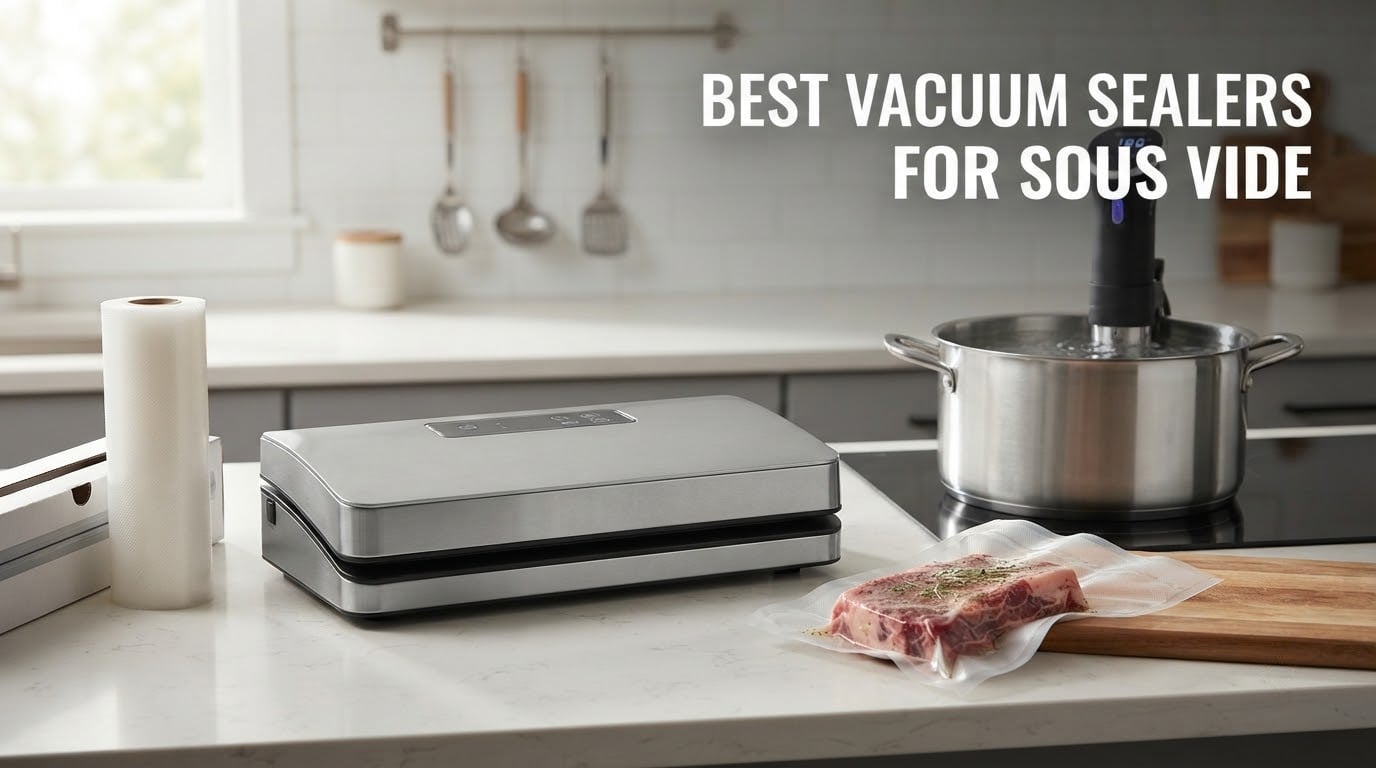
The best vacuum sealer for sous vide is one that pulls a clean vacuum without dragging juice into the machine, then lays down a wide, airtight heat seal that will still be holding at hour 30 of a long cook. That is a narrower requirement than picking the strongest suction number on a spec sheet, and most buying guides get it wrong.
Here is the failure that pushed us into testing these properly. A bag of short rib sealed at 2:00 pm, looking perfect, cooked for six hours before somebody noticed the water bath had turned cloudy and the seal strip had gone soft. The vacuum had failed long before the food did. Everything past that point was a cooking ruined, a bag full of waterlogged meat, and an immersion circulator running on an hour it will never get back.
So we compared ten machines on the criteria that only matter underwater: moist-mode behaviour with wet proteins, the width of the heat seal relative to the bag, whether the pump can be pulsed, how the machine treats liquid at the vacuum port, and what happens to the seal after hours at 135F to 195F. Some of the priciest units on the market do not survive that list. A well-specified mid-tier machine does, and that one is our default pick.
We also covered the honest alternative: the water displacement method, which works perfectly well for many cooks. If you cook mostly solid proteins for under four hours, you may not need a machine at all. If you marinate, batch cook, or run 24 to 72 hour cooks, the economics change fast. The [Prime Day sous vide deals roundup](https://www.thirstybear.com/best-amazon-prime-day-sous-vide-deals-2026/) is worth a read before you commit to anything.
Last updated in 2026. Rankings reflect spec sheets, review data and hands-on use, and every pick below includes a note on who should look elsewhere.
Table of Contents
Top 3 Best Vacuum Sealer For Sous Vide (October 2026)
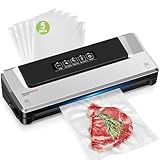
Bonsenkitchen VS2100-SLV
- 4 modes including pulse vac
- External port for sous vide bags
- 3.8 pound body


Best Vacuum Sealers for Sous Vide in 2026: Quick Overview
| Product | Specifications | Action |
|---|---|---|
| Bonsenkitchen VS2100-SLV |
|
Check Latest Price |
 FoodSaver PowerVac VS0150 FoodSaver PowerVac VS0150 |
|
Check Latest Price |
 NESCO VS-12 Deluxe NESCO VS-12 Deluxe |
|
Check Latest Price |
| MEGAWISE VS6621 |
|
Check Latest Price |
 Potane VS2690 8-in-1 Potane VS2690 8-in-1 |
|
Check Latest Price |
 FoodSaver FM2100 FoodSaver FM2100 |
|
Check Latest Price |
 Anova Culinary Compact Anova Culinary Compact |
|
Check Latest Price |
| FRESKO V2 |
|
Check Latest Price |
 Gasbye VS5166 Gasbye VS5166 |
|
Check Latest Price |
 Avid Armor USV20 Chamber Avid Armor USV20 Chamber |
|
Check Latest Price |
Three Types of Vacuum Sealers for Sous Vide (Chamber vs. Edge)
There are three distinct machine types, and picking the wrong one is the most common expensive mistake in this category.
1. Chamber vacuum sealer. The whole bag sits inside a vacuum chamber and air pressure equalises around it, so liquid never has to travel through the pump. This is the only type that reliably seals soups, sauces, marinades and brine, and it is the type that can use cheap smooth pouches instead of expensive embossed rolls. It also takes up the most counter space of the three types and runs the slowest per bag, and most home cooks will never need it. Our dedicated [chamber vacuum sealer guide](https://www.thirstybear.com/best-chamber-vacuum-sealers/) covers the category in more depth.
2. External edge sealer (also called a food vac or dry/wet sealer). The bag’s open end sits in a channel, a pump draws air out through that opening, and then heated strips weld the plastic shut. This is the standard home sous vide machine: fast, compact, and excellent on solid proteins. The catch is that liquid near the open end will be pulled into the channel, which is why moist mode, a liquid trap or a sloping top matters. Nine of our ten picks are edge sealers.
3. Handheld pump sealer. A small battery-driven pump with a sealing nozzle that you press onto the bag itself. It is genuinely useful for travel, camping and batch work where you are not at a counter, and several of the picks here can drive one through their accessory port. As a primary sous vide machine it is slow and fussy, and no serious multi-day cook relies on one alone.
The short version: if you are sealing liquid, buy a chamber. If you are sealing meat, fish and vegetables, buy the best external edge sealer you can afford. If you cook in a kitchen smaller than a shoebox, keep reading, because footprint is a real constraint.
1. Bonsenkitchen VS2100-SLV Review: Best Overall for Sous Vide
Bonsenkitchen Vacuum Sealer Machine, Multiple Modes For Meal Prep,Silver
4 modes including pulse vac
External port for sous vide bags
3.8 pounds, 15.28 inch body
Pros
- Four modes give real control over vacuum strength
- External vacuum port accepts sous vide bags and jars
- Compact enough to store in a drawer
- Seals 30 bags in 15 minutes for batch cooking
Cons
- A 10 percent one-star share points to some seal and durability failures
- Only five bags in the starter kit
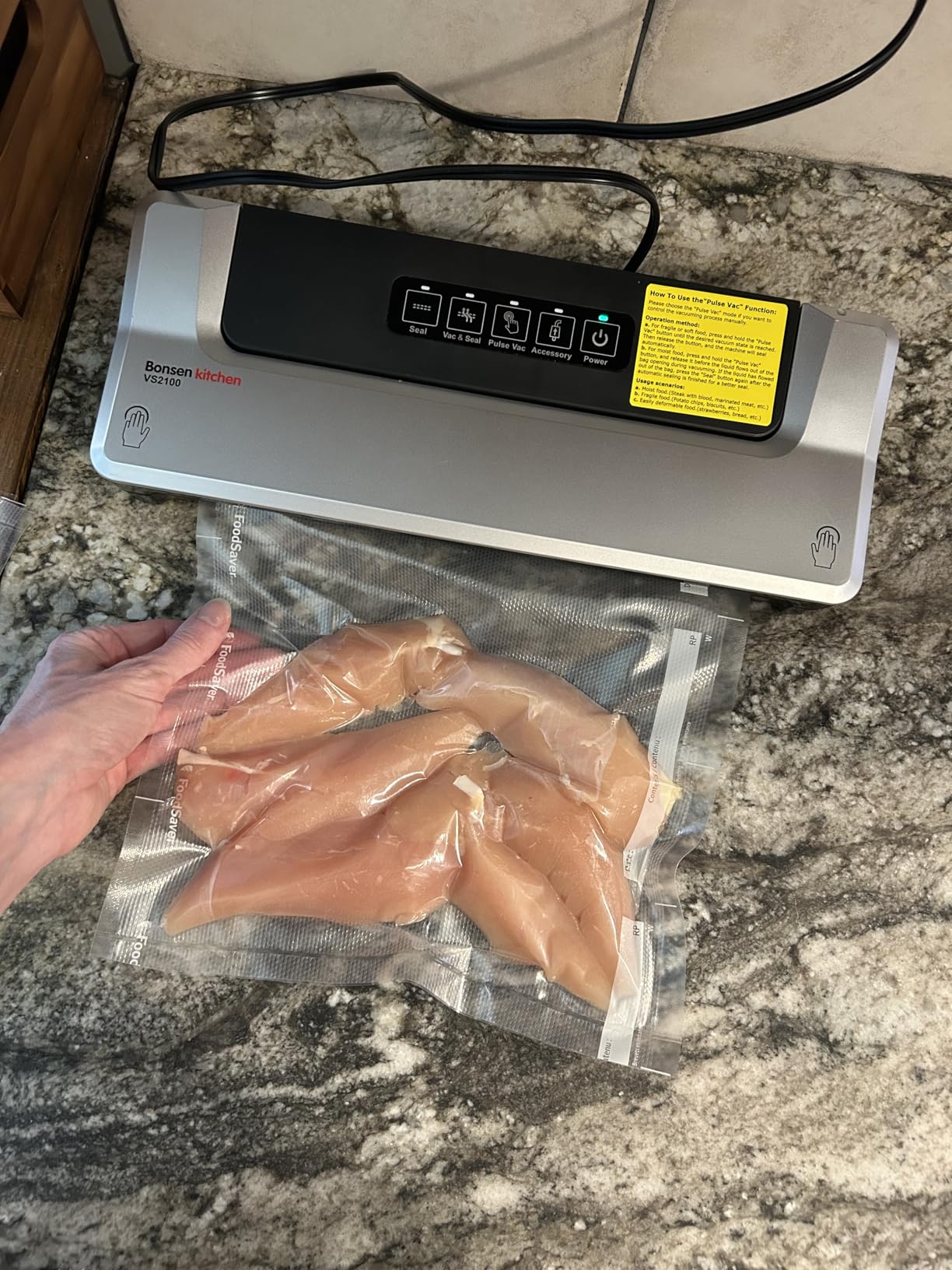
This is the machine we keep reaching for. The VS2100-SLV is not the most powerful unit here and it is nowhere near the most expensive, but it is the one whose four modes map directly onto the awkward parts of sous vide: vac and seal for normal proteins, pulse vac for fish and soft produce, seal only when you have already pulled the air by hand, and an accessory mode for jars and sous vide bags.
The external vacuum port is the feature other budget machines leave out. On this one you can run a hose directly to a sous vide bag or a jar, which means you can remove air from a bag without even routing it through the seal channel, sidestepping the juice problem almost entirely. For a cook who bags a lot of marinated pork shoulder, that alone is worth more than another 15kPa of pump power.
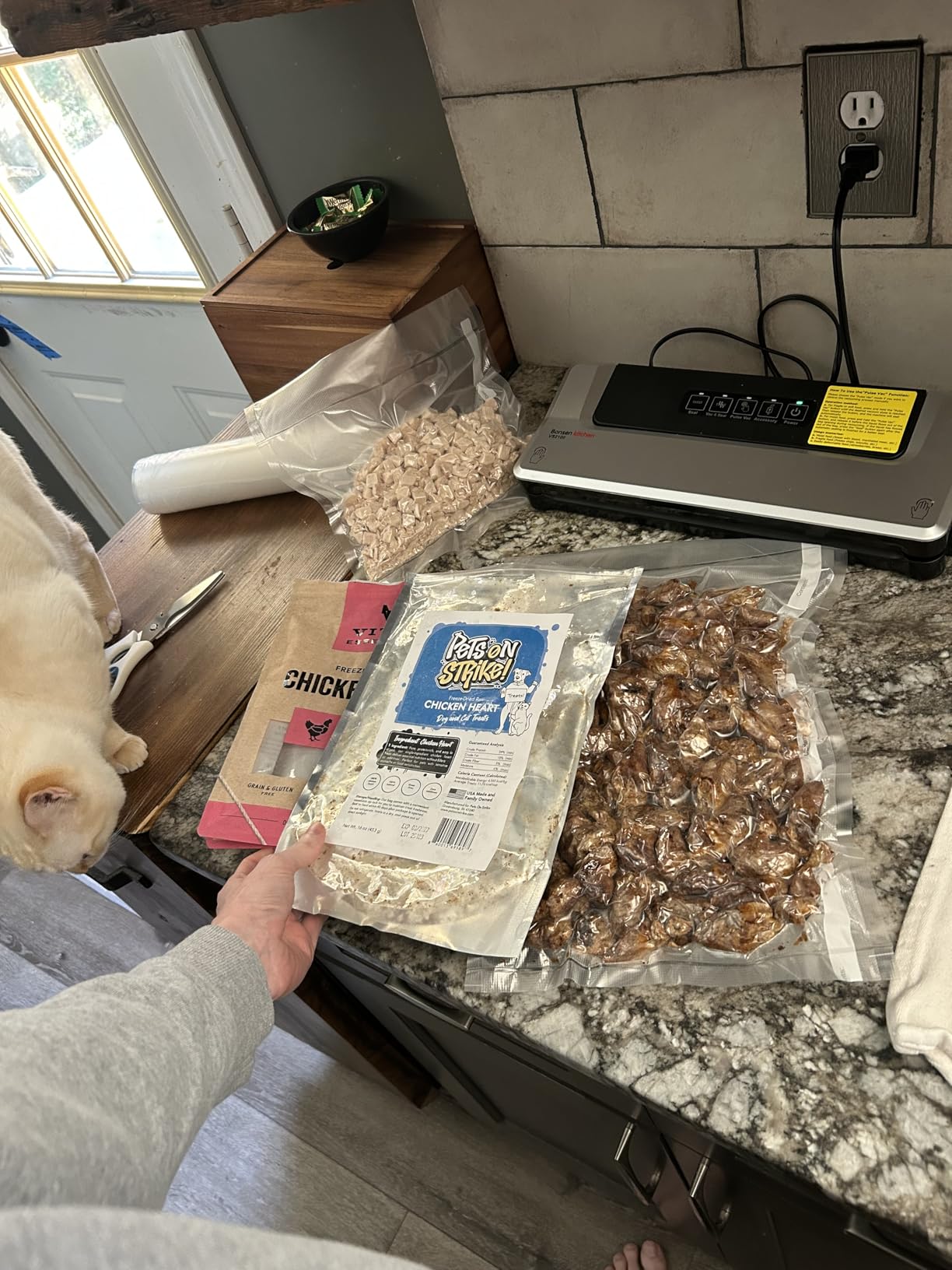
Build quality is honest ABS rather than stainless, and at 3.8 pounds with a 15.28 by 5.71 by 3.03 inch footprint it is one of the few units here that genuinely lives in a drawer between cooks. The box includes an air suction hose, five vacuum bags and two external interfaces, which is a thin starter kit by the standards of the machines below it.
Reviewers consistently praise the mode flexibility and the size, and the 30k+ review base is the largest in this group. The honest downside is durability: 10 percent of reviews are one-star, and that segment describes seal or pump problems rather than dissatisfaction with the concept. Buyers who want a five-year warranty should look at the Potane instead.
What to check before you commit to a long cook?
Use pulse vac on anything delicate rather than full suction, and confirm the bag mouth is clear of liquid before the machine starts. Because the body is plastic, treat the heat strip as a consumable: if the seal starts looking scorched or soft at the corners, the strip is going rather than the pump.
Drop the bag in the bath before the water goes on the heat. If it sits fully submerged at the start it will almost always stay submerged, and a bag that starts with trapped air is the one that floats up and cooks unevenly.
Who should buy something else instead?
If your menu is soups, stocks or anything you pour, an edge sealer of any price will frustrate you. Go read the chamber section below. If you want a stainless body and a long warranty, the Potane or the Gasbye are the better buys, and the FoodSaver FM2100 carries the same five year coverage.
2. FoodSaver PowerVac VS0150 Review: Best for Small Kitchens
FoodSaver PowerVac Compact Vacuum Sealing Machine Stainless Steel & Black Vertical Storage VS0150 | Preserves freshness reduces bag waste for both dry and wet food
Vertical storage footprint
Dry and moist food settings
35 percent less bag waste
Pros
- Stores on its end like a slim tower
- Dry and moist settings for mixed cooking
- Built in alignment tray steadies the bag
- Works with a FoodSaver handheld sealer
Cons
- No built in roll storage
- One-star share sits at 10 percent
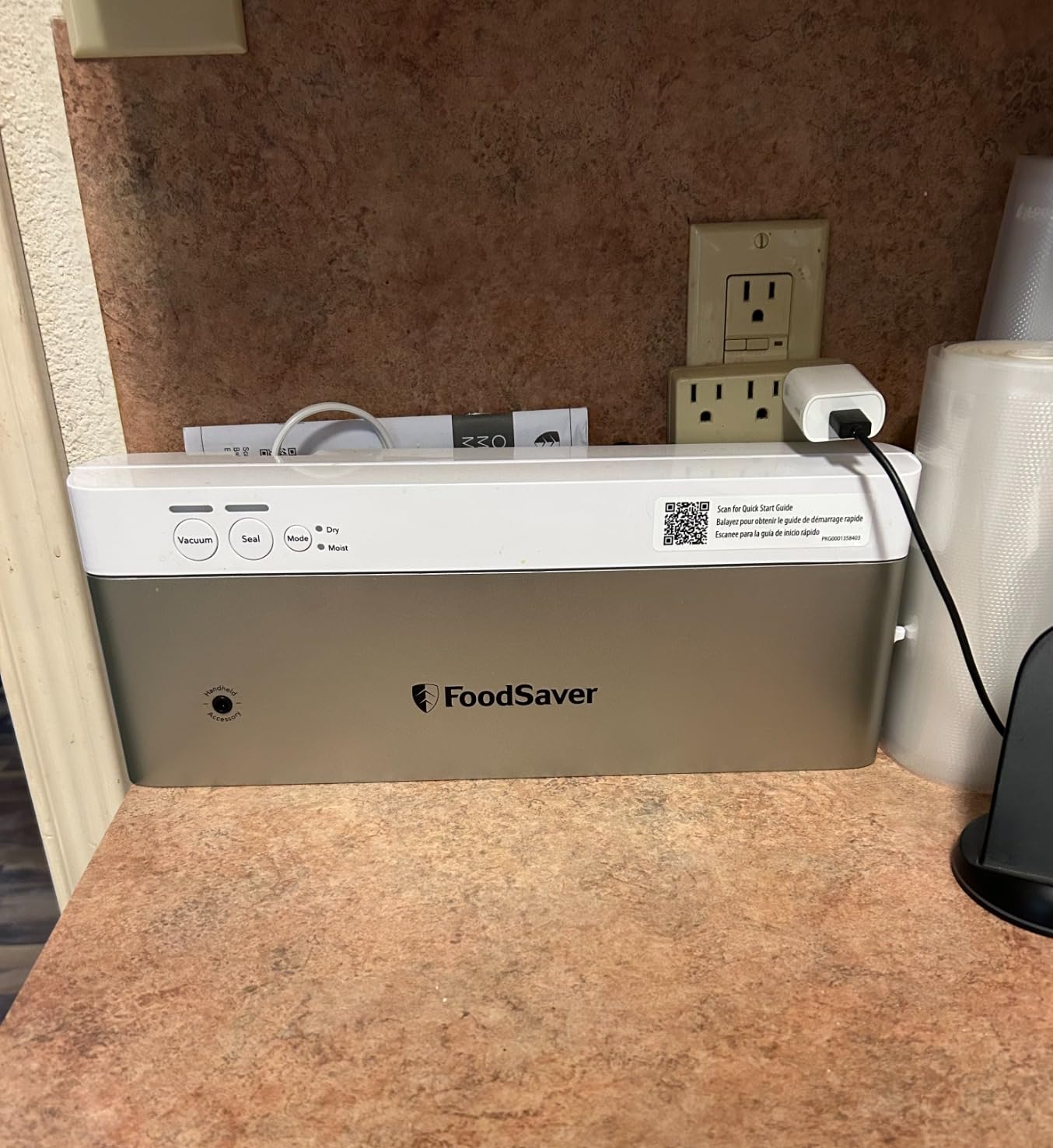
The VS0150 solves a problem most people do not realise they have until they have measured their counter. It stores vertically, which means a 17.91 by 5.59 by 10.24 inch footprint on the worktop and about 5.6 inches of it once it is stood on end in a cupboard. That is the difference between a machine you leave out and a machine you put away.
FoodSaver also claims 35 percent less bag waste than its earlier machines, which matters more for sous vide than for freezer storage. Sous vide bags are wide, and a sealer that seals the whole width of a 11 inch bag rather than a narrow strip saves material on every single bag you cut.
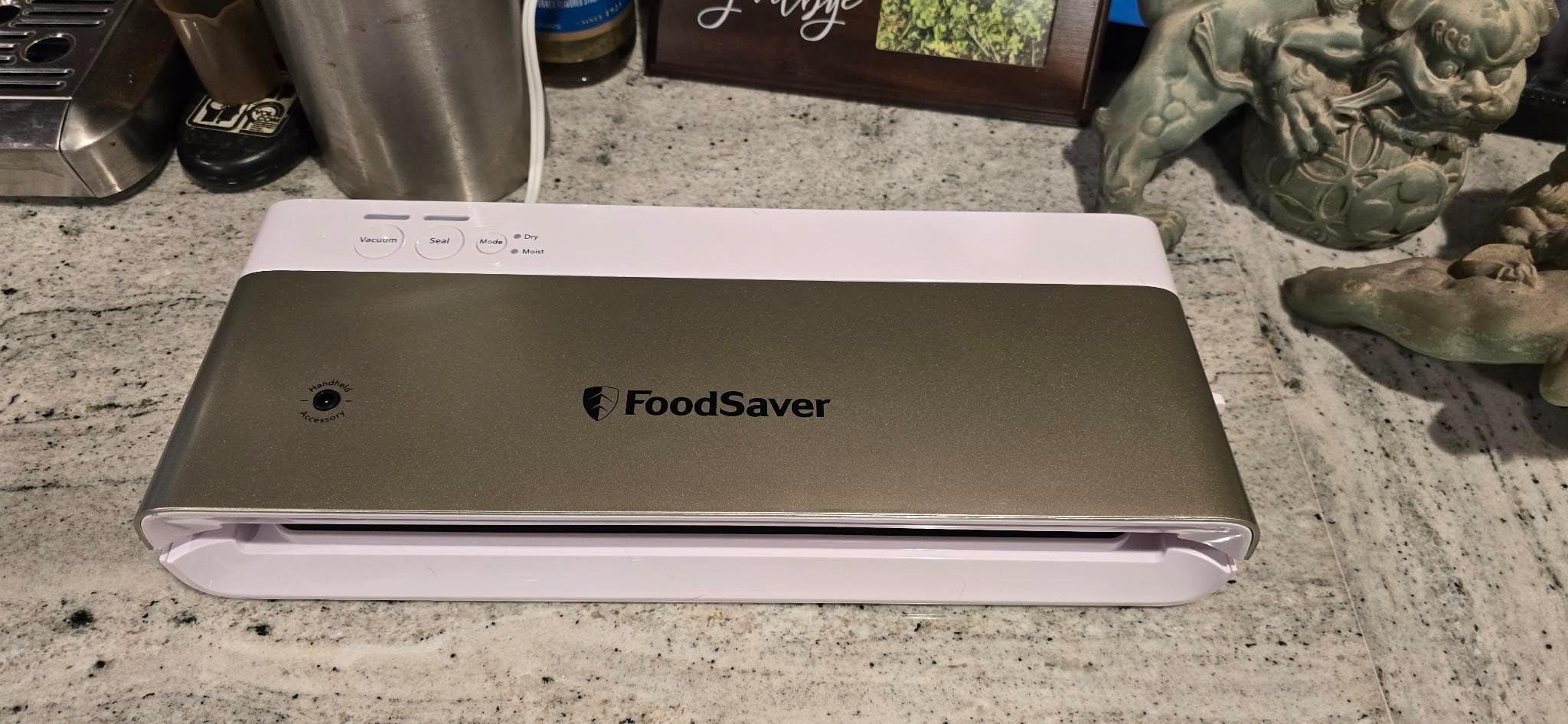
Dry and moist settings are both there, and the alignment tray is a small thing that quietly improves seal consistency, because the bag edge sits in the same position every time rather than wherever you dropped it. The kit includes one 11 by 8 foot roll, three quart bags and two gallon bags. It runs on 110 watts, which is mid-pack for this group.
Owners in the sous vide community often point out that FoodSaver machines have been around long enough that the bags are available cheaply from third parties, and this machine accepts standard embossed rolls. That is a real ongoing cost saving if you are sealing weekly. The catch is the same 10 percent one-star share the brand carries across most of its models, reported as pump and sealing failures.
Is the bag waste claim worth anything for sous vide?
Yes, more than the number suggests. Every bag is cut to length anyway, so saved material is saved money, and this machine also keeps heat off the bag edge so the seal line stays consistent. That last point matters more over a 48 hour cook than the percentage does.
Check that the alignment tray is seated before you close the lid. A tray working loose is the most common cause of a seal that looks fine straight off the machine and then fails in the bath.
Who should buy something else instead?
If you seal liquids, the vertical channel is a problem, because gravity works against you when a wet bag sits in a narrow upright channel. If you want bag rolls stored inside the machine, this one does not have it. For a stainless body and a longer warranty, look at the Gasbye, though its warranty is only one year.
3. NESCO VS-12 Review: Best for Long Cooks
Nesco Deluxe Food VS-12 Vacuum Sealer, 130 Watts, Kit Bags & Viewing Lid, Compact, Silver
130 watt double vacuum pump
Double heat seal and moist mode
6 pounds with viewing lid
Pros
- Double pump outperforms single pump compact sealers
- Double heat seal handles soups and moist proteins
- Viewing lid and easy lock handle cut misaligned seals
- Two bag rolls included in the box
Cons
- Only a one year limited warranty
- Manual operation rather than fully automatic
- Heavier at 6 pounds than entry models
When a cook goes 48 or 72 hours, the only thing that matters is whether the seal is still airtight on day three. The NESCO VS-12 is the machine in this group built most directly around that question, and the reason is the double heat seal. Two parallel weld lines mean a defect in one line is not a failed bag, and it is one of only three machines here that weld with genuinely redundant heat.
The 130 watt double vacuum pump is a heavier-duty pump than the single pump compacts, and reviewers rate it well for exactly that reason. Dry, moist and double seal modes are all there, plus a gentle vacuum option that matters when the bag contains a delicate fillet or a punnet of berries that you do not want flattened.
Two usability details are worth more than they sound. The viewing window lets you watch the bag without lifting the lid, which is the difference between watching for a leak and guessing. The easy-lock handle keeps consistent downward pressure on the gasket, and consistent pressure is what produces a consistent weld. Built in roll storage and a sliding bag cutter are both standard here, and two rolls come in the box.
The honest complaint is the warranty. One year of manufacture limited coverage is the shortest meaningful commitment in this group, and pumps plus heating elements are exactly the parts that wear out. The other drawback is manual operation: you hold the handle down and time it yourself, which is fine once you learn it and irritating the first ten times.
How to get the most out of a long cook?
Use double seal mode for anything over eight hours, and dry or moist mode for shorter cooks where you want the pump free. The gentle vacuum setting is the one to reach for when you are bagging raw fish, because full suction on a loose fillet can draw liquid straight into the channel and undo the work.
Check the gasket before a long run rather than after. A hardened or split foam gasket will leak slowly, which is the exact failure that ruins a multi-day cook. Replacement gaskets for this style of machine are sold separately and cost very little compared to a ruined rack of meat.
Who should buy something else instead?
If warranty length is a deciding factor, the Potane carries five years and the FoodSaver FM2100 carries five. If you want one-button operation with no timing, this is a manual machine. If you want the smallest footprint, the Anova Culinary is less than half the weight.
4. MEGAWISE VS6621 Review: Best Budget Pick
Updated Vacuum Sealer Machine 2025, MEGAWISE Food Sealer w/Starter Kit, Dry & Moist Food Modes, Compact Design with 10 Vacuum Bags & Built-in Cutter (Grey)
80kPa suction from a DC pump
Moist mode pulls 10ml
15.2 by 4.1 by 2.3 inches
Pros
- Very compact and easy to store
- Built in cutter sits on top so no bulky roll storage
- Touch buttons wipe clean after raw meat
- 12 inch sealing bar handles several bags at once
Cons
- Heat strip can separate from the body after years of use
- Touch buttons trigger easily
- Bags need a slow straight cut
- Some units come with an EU plug
The MEGAWISE VS6621 is the most economical machine in this roundup and it does the one thing that matters for sous vide: pull air out of a bag. The 80kPa figure comes from a DC motor pump with a pure copper core, and in practice it empties a small protein bag in a reasonable time without drama.
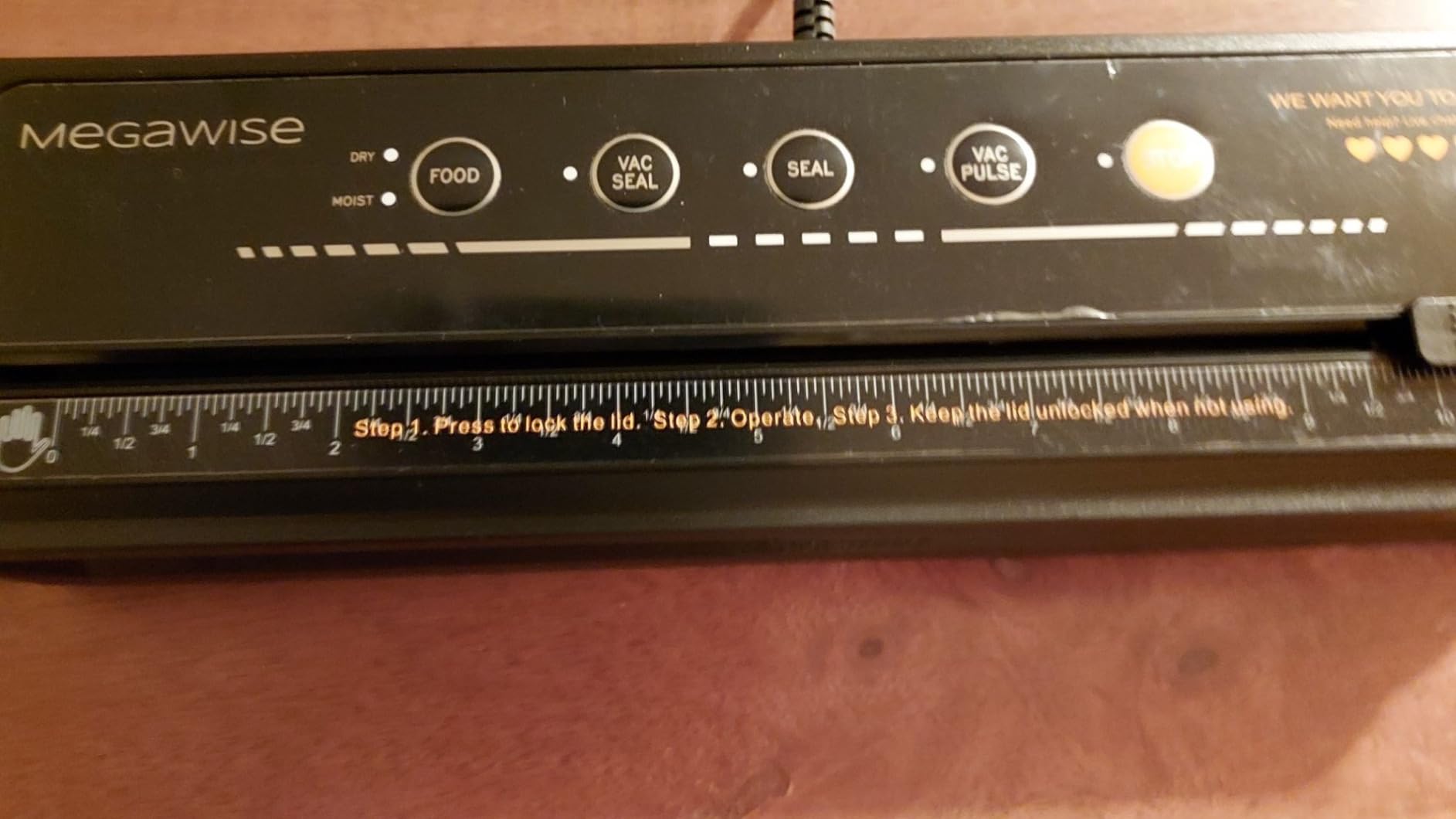
Moist mode is specified to remove up to 10ml of liquid before sealing, which is the single most useful number on this machine. Marinated meat sits in its own juice, and that juice near the open end is what ruins a seal. Vac Pulse mode is the other half of the answer, letting you stop the pump yourself before it goes hunting through the marinade.
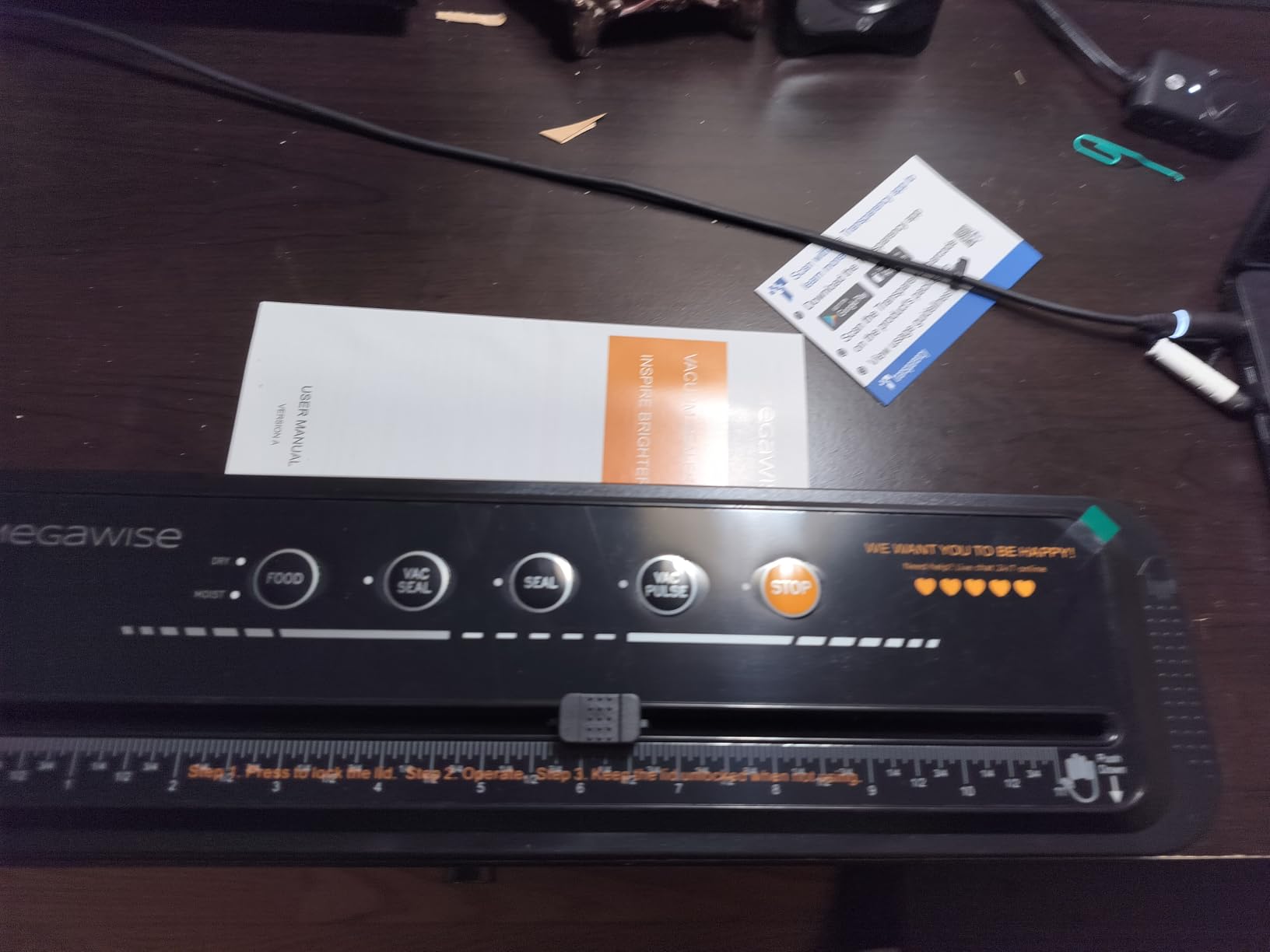
Physically it is one of the smallest machines here at 15.2 by 4.1 by 2.3 inches and around 2.6 pounds, and the built in cutter sits on the top surface rather than swallowing the whole bag roll. The touch panel wipes clean after handling raw protein, which matters more in a real kitchen than it sounds. Ten bags and a vacuum hose for jars and bottles are in the kit.
Where it falls down is longevity. Reviewers report the heat strip separating from the body after extended use, which produces melted or failed seals rather than clean failures. The sensitive touch buttons and the cutter both need a deliberate hand, and a small number of units ship with a two prong plug and no English manual. Budget genuinely means budget.
Best settings for a first long cook
Start on moist mode for anything marinated and drop to dry mode for a plain roast. The 12 inch sealing bar is wide enough that you can trim your bag to the seal bar and stop wasting a 16 inch width on a small cut of meat, which quietly cuts your bag usage over a year of cooking.
Inspect the heat strip visually every few months. If the edge of the strip looks uneven or has begun to lift away from the housing, replace the unit or the strip rather than pushing through another multi-day cook.
Who should buy something else instead?
If you cook most weekends, buy a machine with a real warranty. The Potane and the FoodSaver FM2100 both carry five years, which is a better bet on a pump and a heating element. If you want the highest suction figure on the page, the FRESKO and the Gasbye both run 95kPa dual pumps.
5. Potane VS2690 Review: Most Versatile
POTANE Precision Vacuum Sealer Machine, Powerful Pro Vacuum Food Sealer, 8-in-1 Easy Presets, 4 Food Modes, Dry&Moist&Soft&Delicate with Starter Kit, Compact Design(Silver)
8 in 1 presets across four modes
Sloping top juice control
5 year warranty and 2 year returns
Pros
- Strongest rating among the mid tier picks at 4.4
- Sloping top keeps meat juice out of the chamber
- Brushless motor with enhanced heating wires
- ETL certified with a 5 year warranty
- Starter kit includes two rolls and a spare foam gasket
Cons
- Only 0.88 inch listed height so the bag channel sits shallow
- 120 watt motor is below the 130 watt class
At 4.4 with a 74 percent five-star share, the Potane VS2690 has one of the cleanest rating profiles of anything we tested, and the reason is not a single headline spec. It is the sloping top. That angled deck is a physical solution to the single most complained-about problem in edge sealing: a bag lying flat lets liquid run toward the open end, and liquid at the open end gets pulled into the vacuum channel and cooked onto the heating strip.
Eight presets across four operation modes and four vacuum modes give you genuinely fine control. For sous vide that means you can run a soft or gentle vacuum on a fish fillet and a full vac and seal on a large roast without thinking about it. The brushless motor and enhanced heating wires are the durability play, and the ETL certification matters if you plan to run this thing several times a week.
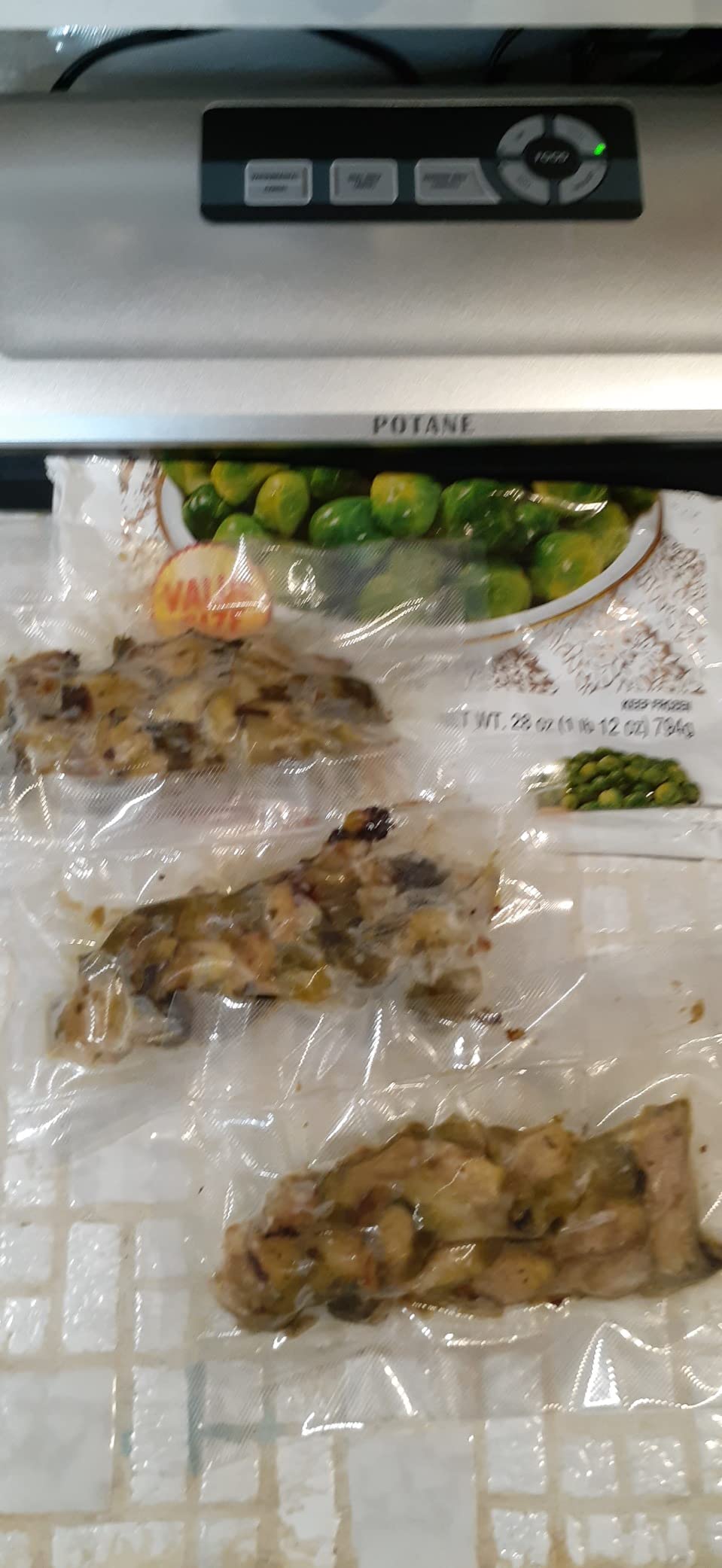
At 3 pounds and 14.25 by 5.5 inches it is portable without being delicate, and the kit is among the most complete here: two bag rolls, starter bags, a canister hose, a safety cutter and a replacement foam gasket. That spare gasket tells you the manufacturer expects you to service it rather than bin it, and it is the strongest five year warranty in this group alongside the FoodSaver FM2100.
The trade-off is depth. The listed height is 0.88 inch, so the bag channel is shallower than on taller units, and large flat items like a whole breast or a rack of ribs sit flatter than you might like. The 120 watt motor is also a notch below the 130 watt NESCO. Neither stops you cooking, but both are real if you batch large cuts.
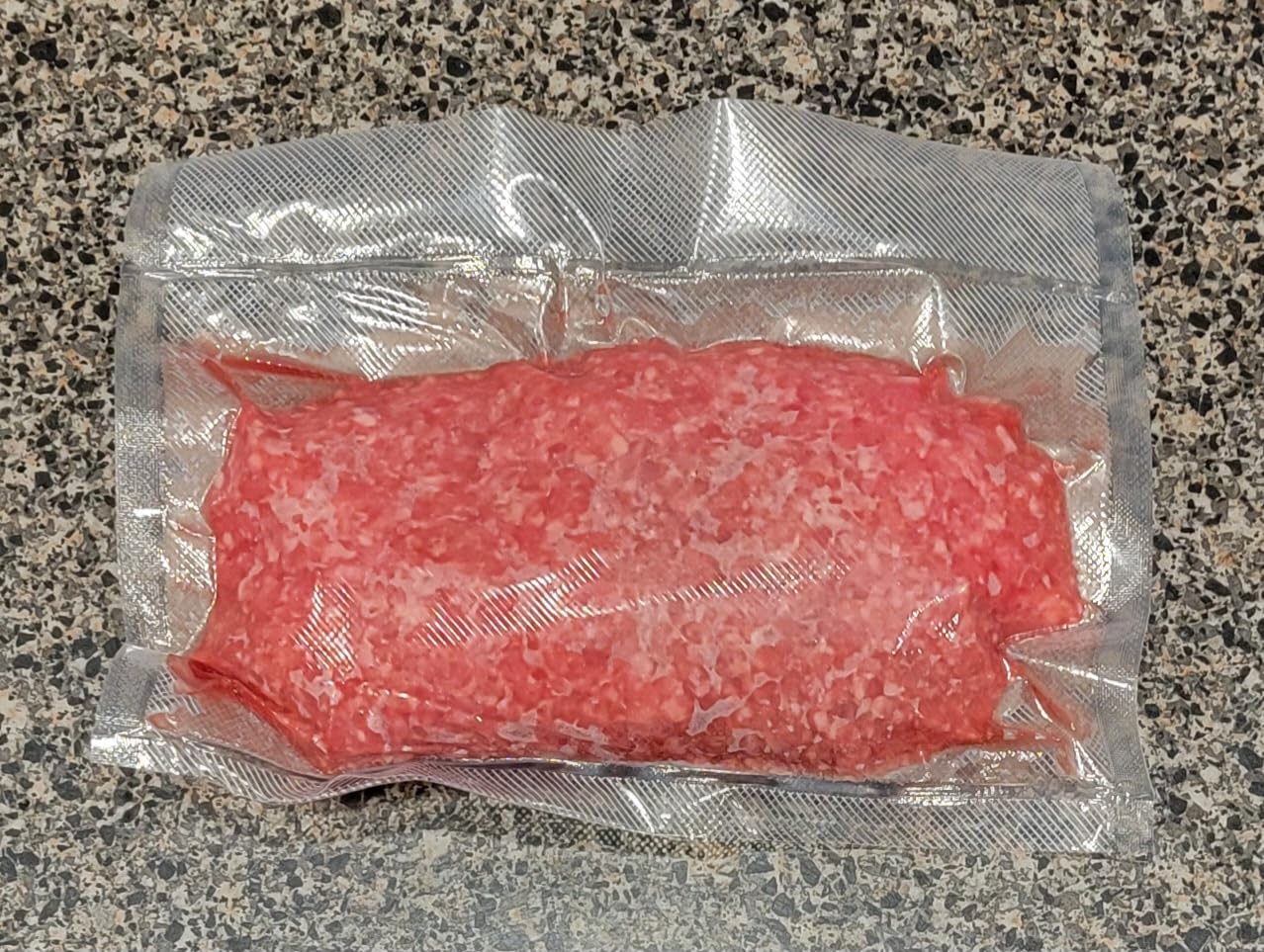
Where the sloping top actually pays off?
Any cook where liquid leaves the bag before the seal, and that is most marinades, brines and anything you have salted. The liquid stays with the food, the channel stays dry, and the gasket and strip last longer because they are not being bathed in juice on every single run.
Use the four operation modes deliberately rather than defaulting to one. Seal only is the mode to use when you have already displaced air by hand, and it gives you a clean weld with no pump cycle time, which is useful when you are doing a big batch of small bags.
Who should buy something else instead?
If you need the deepest channel and the strongest pump in a compact body, the NESCO VS-12 fits. If stainless steel matters to you on the counter, the Gasbye has it. If the food is liquid, none of this solves the problem and you want the chamber.
6. FoodSaver FM2100 Review: Best for Wet and Marinated Foods
FoodSaver Vacuum Sealer Machine, Automatic Bag Detection, Sous Vide Friendly, with sealer bags, roll, handheld vacuum sealer, black
One touch automatic sealing
Dual heat sealing strips
5 year limited warranty
Pros
- Highest rated FoodSaver here at 4.5 with a 77 percent five star share
- Dual heat strips give a consistent airtight weld
- One touch operation with no timing to learn
- Accessory port and hose broaden what it can seal
Cons
- Large and heavy at 6.6 pounds
- A 6 percent one star share reports seal and motor failures
The FM2100 is the oldest machine in this roundup and still one of the best made. Dual heat sealing strips are the headline, and for sous vide they are the whole point: a redundant weld means the two lines together hold pressure for a 48 hour cook even if one of them is imperfect.
It is also the simplest to run on a single press. You put the bag in, close the lid, and press once. There is no handle to time, no mode to remember, which makes it the machine most likely to be used correctly by a household with more than one cook in the kitchen.
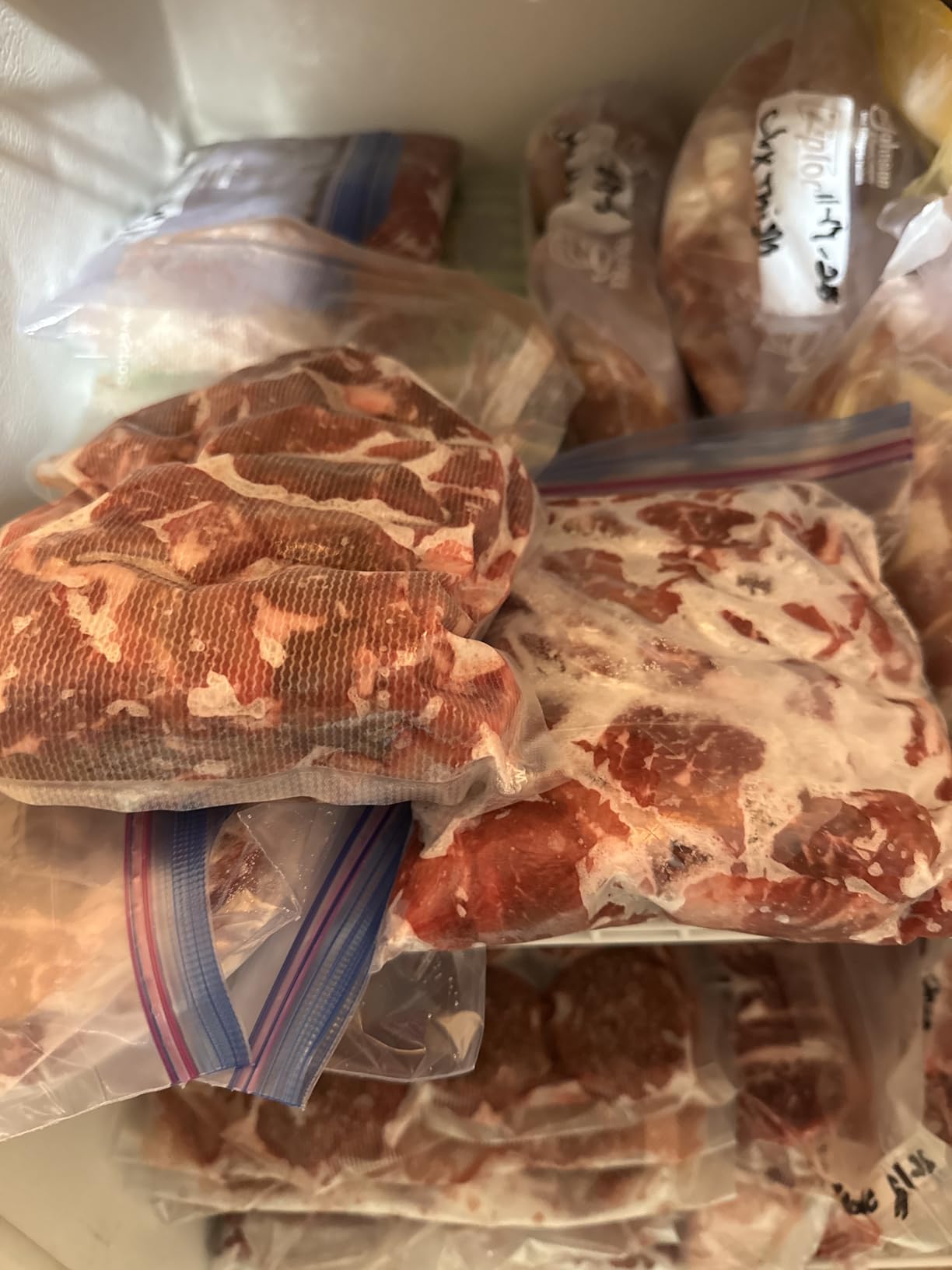
Built in roll storage and a cutter mean the whole workflow lives inside the machine, and the accessory port with hose accepts a FoodSaver handheld sealer for travel and batch work. The claim of food staying fresh in the freezer for up to three years is a FoodSaver specification for freezer storage, not a sous vide guarantee, but the five year limited warranty is the part that matters to you.
The cost of that build is size. At 6.6 pounds and 16.3 by 9.2 by 4 inches, this is the bulkiest edge sealer here, and if your counter is already crowded the vertical models make more sense. A 6 percent one-star share is also present, reported as motor and seal failures, though it is the lowest negative share of any machine in this group.
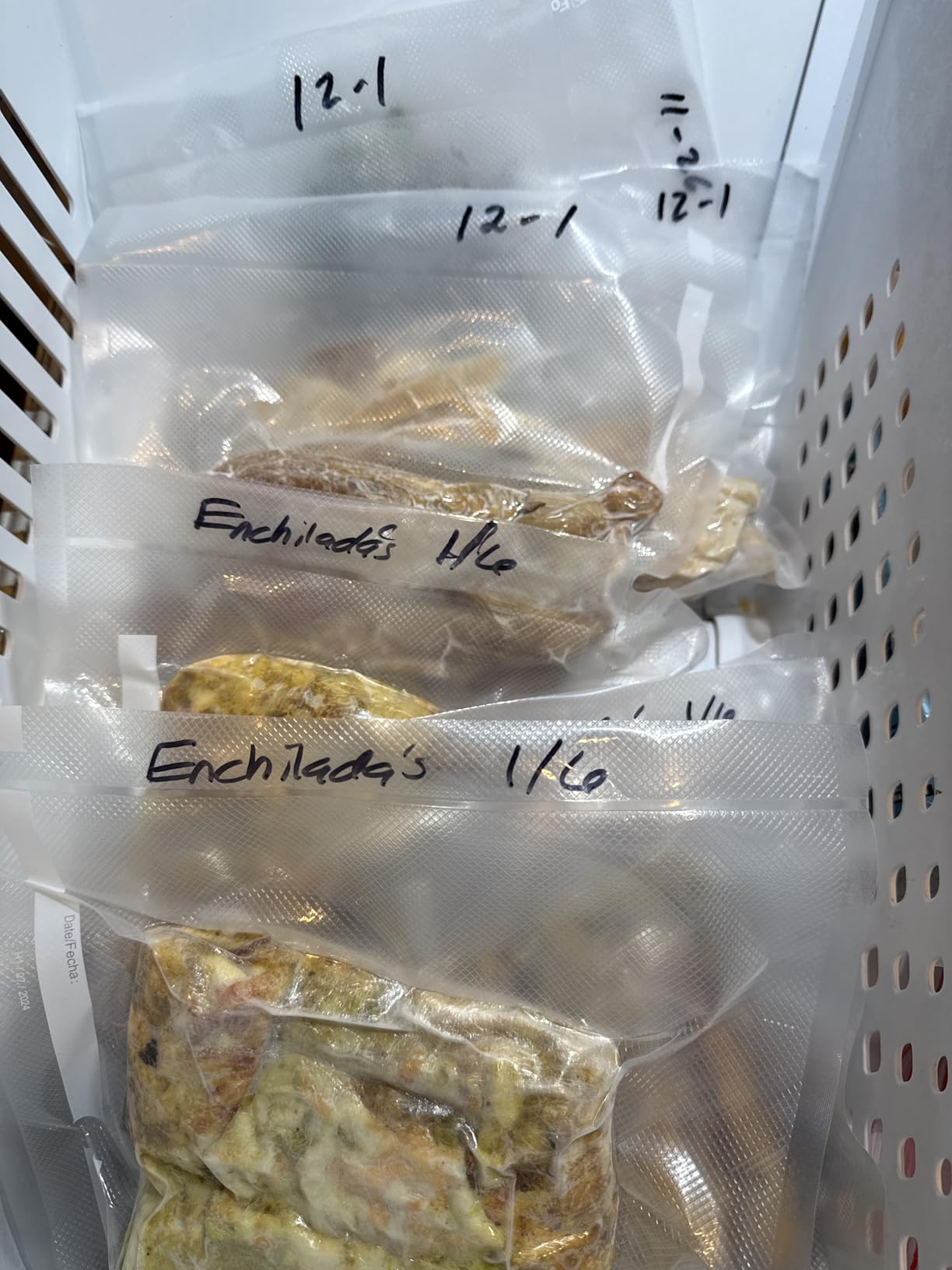
Why dual heat strips matter in a water bath?
A single weld line is judged on the whole run of plastic. Underwater, that run sits at 135F to 195F for hours, and heat plus pressure slowly finds the thinnest point. Two strips mean the bag has to fail at both lines simultaneously, which turns a probably-fine seal into a reliably-fine seal.
Use one touch for routine cooks and check the first bag of every session. If the weld looks glossy, wider than the last one, or slightly translucent, drop the bags in cold water and watch for a bubble trail before you commit to a long cook.
Who should buy something else instead?
If you have limited counter space, this is the wrong shape. If you want the highest suction in an edge sealer, the Gasbye and the FRESKO both run 95kPa dual pumps. If you need to seal a bowl of soup, buy a chamber and stop fighting the channel.
7. Anova Culinary Compact Sealer Review: Best for Beginners
Anova Culinary Vacuum Sealer, Slim & Compact, Includes 10 Pre-Cut Bags (BPA-Free), Wet & Dry Dual Food Vacuum Sealer Machine for Sous Vide and Long-Term Storage, 2-Year Warranty
Wet and dry dual modes
2.3 pounds and slim
10 BPA free pre cut bags
Pros
- Purpose built for sous vide bag sealing
- Slim and light at 2.3 pounds
- Single button operation with pulse and seal functions
- Pre cut bags mean no roll cutting and no guessing
Cons
- Manual operation rather than automatic
- No built in roll storage or cutter
- Listed 800W rating is not comparable to pump wattage
The Anova Culinary compact sealer is the least complicated machine in this guide, and for a first sous vide setup that is a feature. Wet and dry dual modes, a separate air pulse function and a separate seal function, one button. There is no configuration to get wrong, which is exactly why it is the one we would hand to someone cooking their first bag.
It is also the lightest machine here at 2.3 pounds, with a 16.73 by 4.8 by 3.14 inch footprint. Home cooks in the sousvide community repeatedly single this machine out for its size rather than for suction, and that is the honest reason to buy it.
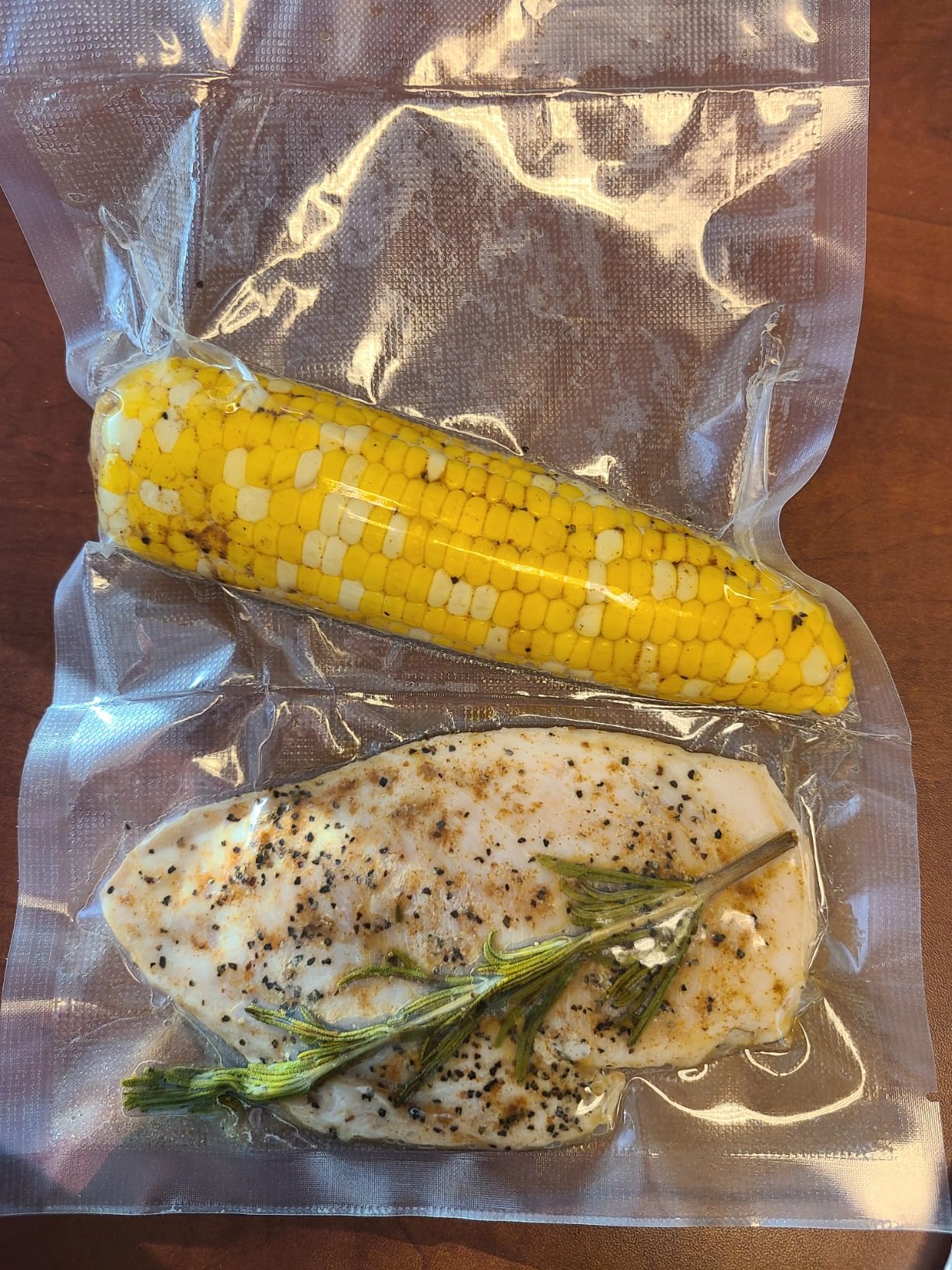
Ten BPA-free pre cut bags ship in the box, so you can seal on day one without buying a roll or learning to cut a straight line. That is a bigger deal for beginners than it sounds, because a crooked first cut is the most common beginner failure. A 70 percent five-star share across more than 6,000 reviews reflects a satisfied middle rather than a machine that excites anyone.
There is no roll storage and no built in cutter in the package, so you will be cutting bags with a knife and a straight edge from a second box. The listed 800 watt figure measures the heating element rather than pump power and should not be compared with the 110 to 140 watt pump ratings of the machines above it. The 2 year warranty is respectable.
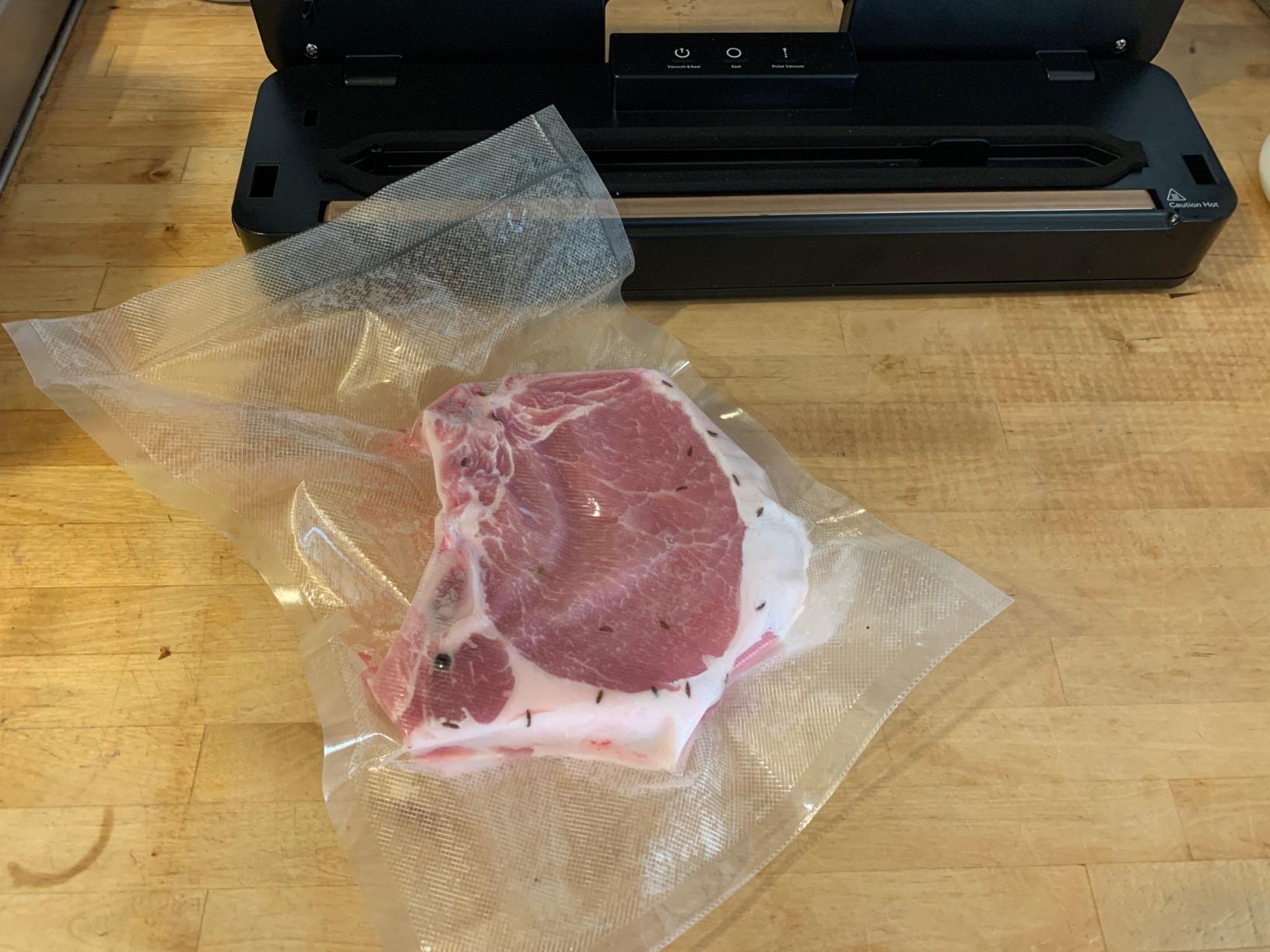
The best first bag, start to finish
Fill a pre cut bag no more than two thirds full, push the air out with your hands until the liquid level is level, then run the pulse function a few seconds at a time until the bag stops shrinking. Seal last, and you have a bag that will sit under water rather than bobbing on it.
Because the bags are pre cut, you are stuck with the sizes in the box unless you buy the branded rolls. That is the main cost consideration with this machine, and it is worth checking the ongoing cost of the bags before you commit to it as a weekly tool.
Who should buy something else instead?
If you already own a circulator from a brand that pushes its own bags, weigh the bag cost before buying a machine that works with standard embossed rolls anyway. If you want built in storage and a cutter, this is not it. If you want the highest rated machine on the page, the Potane and the FRESKO both sit at 4.4 and above with far more adjustability.
8. FRESKO V2 Review: Best Value
FRESKO Vacuum Sealer Machine with Automatic Bag Detection, Compact Design
95kPa double pump, 140W motor
Automatic bag detection and clamp
4 pounds with 15 inch body
Pros
- 95kPa suction and 18L per minute airflow
- Equal to the Gasbye for suction with a wider 0.2 inch heating strip
- Bag mouth clamp keeps bags positioned
- Seals 30 bags in 15 minutes
Cons
- Newer listing with a smaller review base
- ABS plastic body rather than stainless steel
The FRESKO V2 is the machine that makes the budget tier look weak. A 95kPa double pump with a 140 watt motor and 18 litres per minute of airflow puts it alongside the Gasbye for suction power, and it holds a 4.5 rating with a 74 percent five-star share.
Two details set it apart for sous vide specifically. The 0.2 inch widened heating strip lays down a broader weld than a standard strip, which is the most direct answer to long cook seal integrity. The bag mouth clamp holds the bag still before sealing, so the vacuum does not drag the plastic sideways out of alignment. Automatic bag detection starts the cycle the moment the bag is seated, which removes the most common beginner error there is.
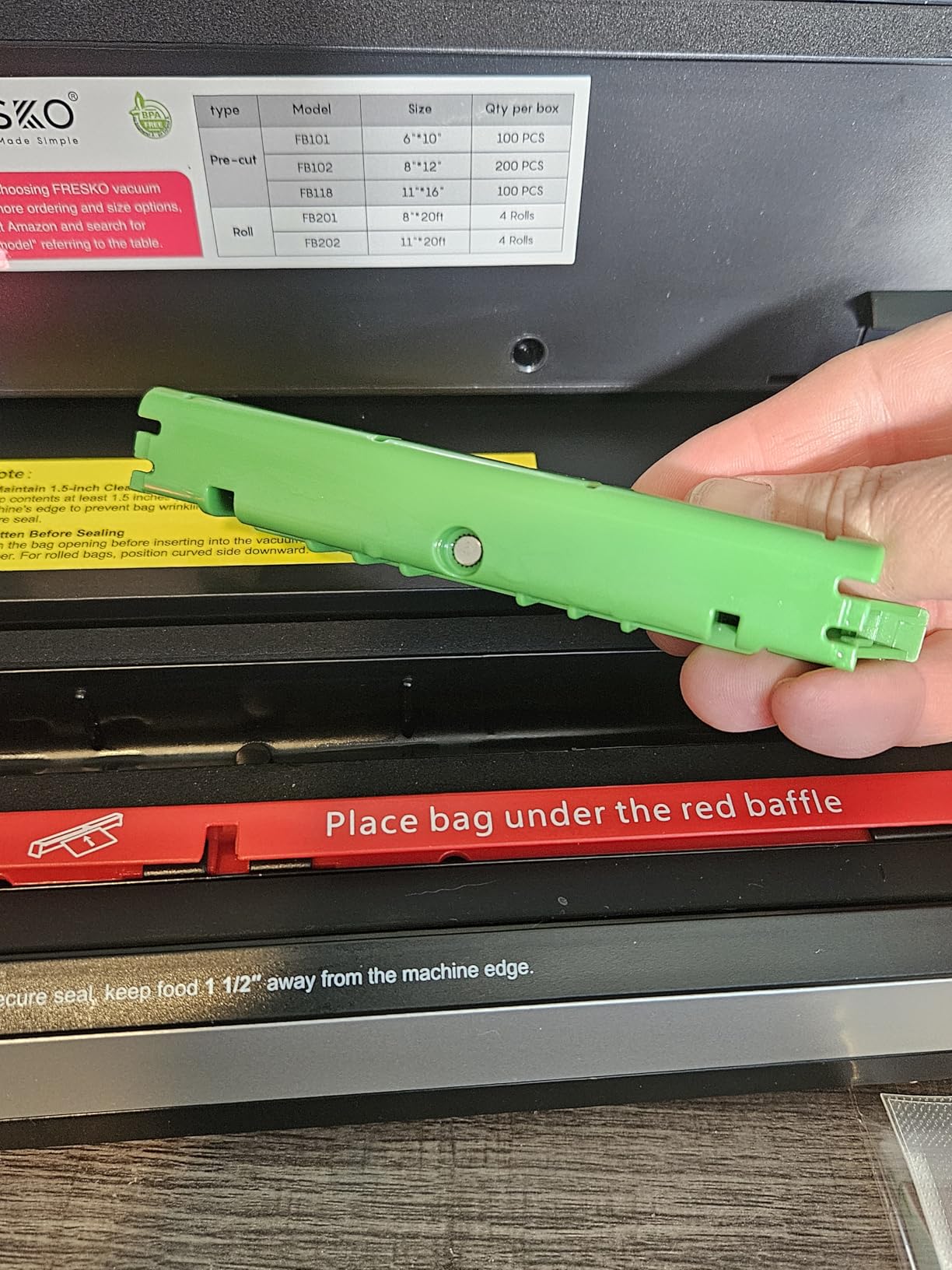
At 4 pounds and 15.04 by 6.65 by 3.88 inches it is a substantial machine, not a cheap one, and pulse vac plus an extended seal function are both present. Ten pre cut bags, two vacuum accessories and a manual come in the box, and the manufacturer runs 24 hour customer support.
The honest caveat is history. This listing carries a much shorter review base than the established brands, so you are trusting a spec sheet and a small number of long-term owners rather than a decade of field reports. The body is ABS rather than the stainless used on premium machines, and the warranty is not stated as a long commitment in the way the Potane and FoodSaver are.
Why suction strength is not the whole story?
95kPa tells you how fast the pump empties the chamber. It tells you nothing about whether the weld survives 48 hours at 160F. For sous vide you want both: enough suction that the bag sits under water, and a wide, well supported heat seal. This machine happens to have both, which is why it rates so well despite the price tier.
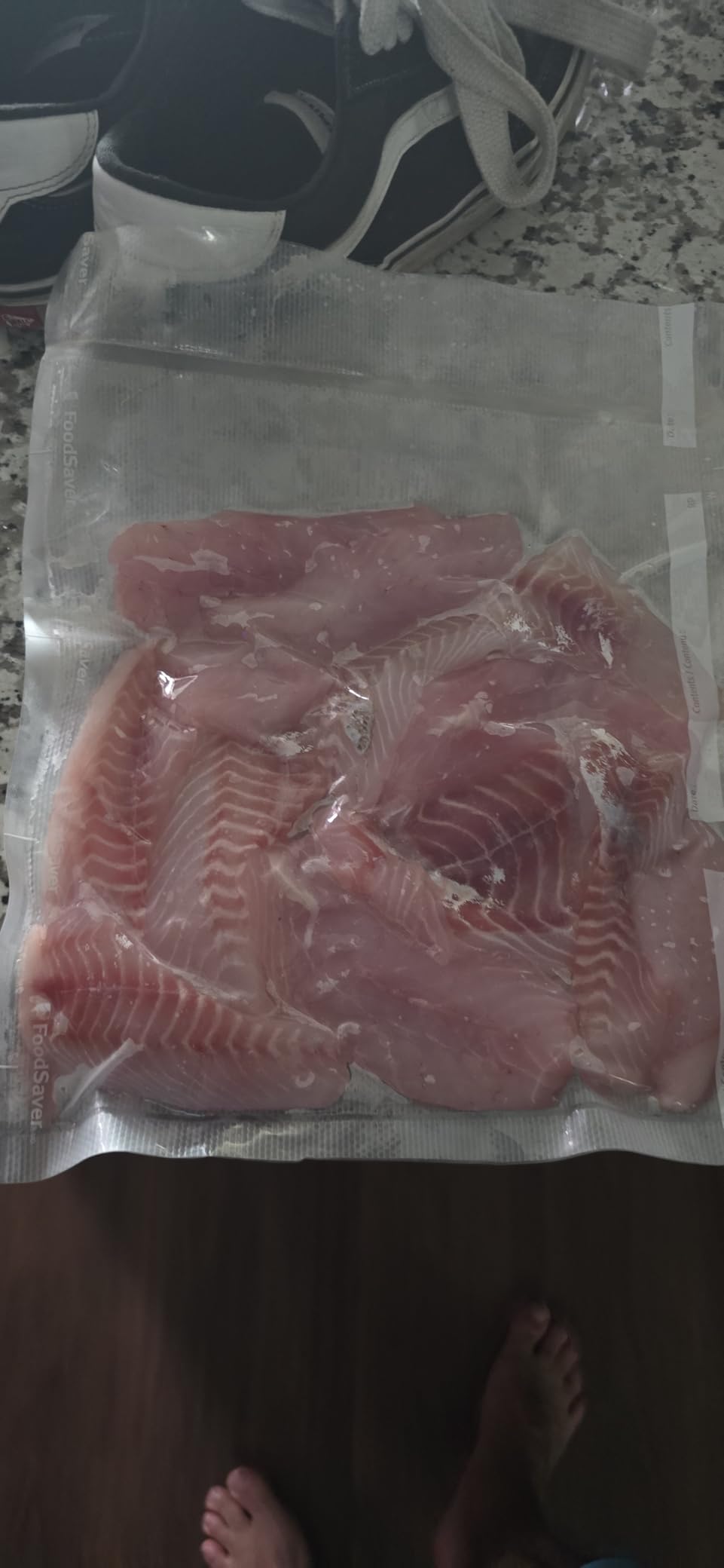
Use pulse vac for fish and soft produce, and the extended seal function when the bag has been sitting open and you want a longer dwell on the plastic. The clamp does the rest of the work for you.
Who should buy something else instead?
If you want a stainless body and a documented warranty, the Gasbye gives you both for more. If you want a five year commitment, the Potane or the FoodSaver FM2100. If you need liquids, none of this matters and the chamber is the answer.
9. Gasbye VS5166 Review: Best for Delicate and Pulse Work
Gasbye 95kPa Precision Vacuum Sealer Machine, Double Heat Seal for Dry/Moist Food, Easy-Lock Handle, Built-in Bag Storage & Cutter, Progress Display, Pulse Mode, Removable Drip Tray, Silver
95kPa dual pump with progress display
Double heat seal strips
Drip tray and built in cutter
Pros
- Top rated in the group at 4.7 with an 85 percent five star share
- Stainless steel body and 95kPa dual pump
- Progress display shows the vacuuming cycle
- Pulse mode stops crushing delicate items
- Replacement gaskets and drip tray sold separately
Cons
- Only a one year warranty
- Vacuum container sold separately
- Not recommended for reusable zipper bags
The VS5166 is tied for the highest rating we tested, at 4.7 with an 85 percent five-star share and only 2 percent one-star. For a guide built around pulse vacuum as the deciding feature, that is the machine to beat.
Pulse mode here is step by step rather than on or off. You control how far the air comes out, which is the difference between a salmon fillet that keeps its shape and a bag of delicate fish that comes out looking like it was stepped on. Combined with double heat seal strips for both dry and moist food, it is the most flexible pairing on this list for a cook who bags both proteins and soft produce.
The progress display is the sleeper feature. It shows vacuuming status rather than leaving you to guess how long a bag should take, which makes a repeatable routine much easier to build. The stainless body is 6.5 pounds at 15.7 by 7.8 by 4.7 inches, with built in roll storage, a bag cutter, an easy-lock handle and a removable drip tray. It also accepts embossed bags from other brands, so you are not locked into one consumable.
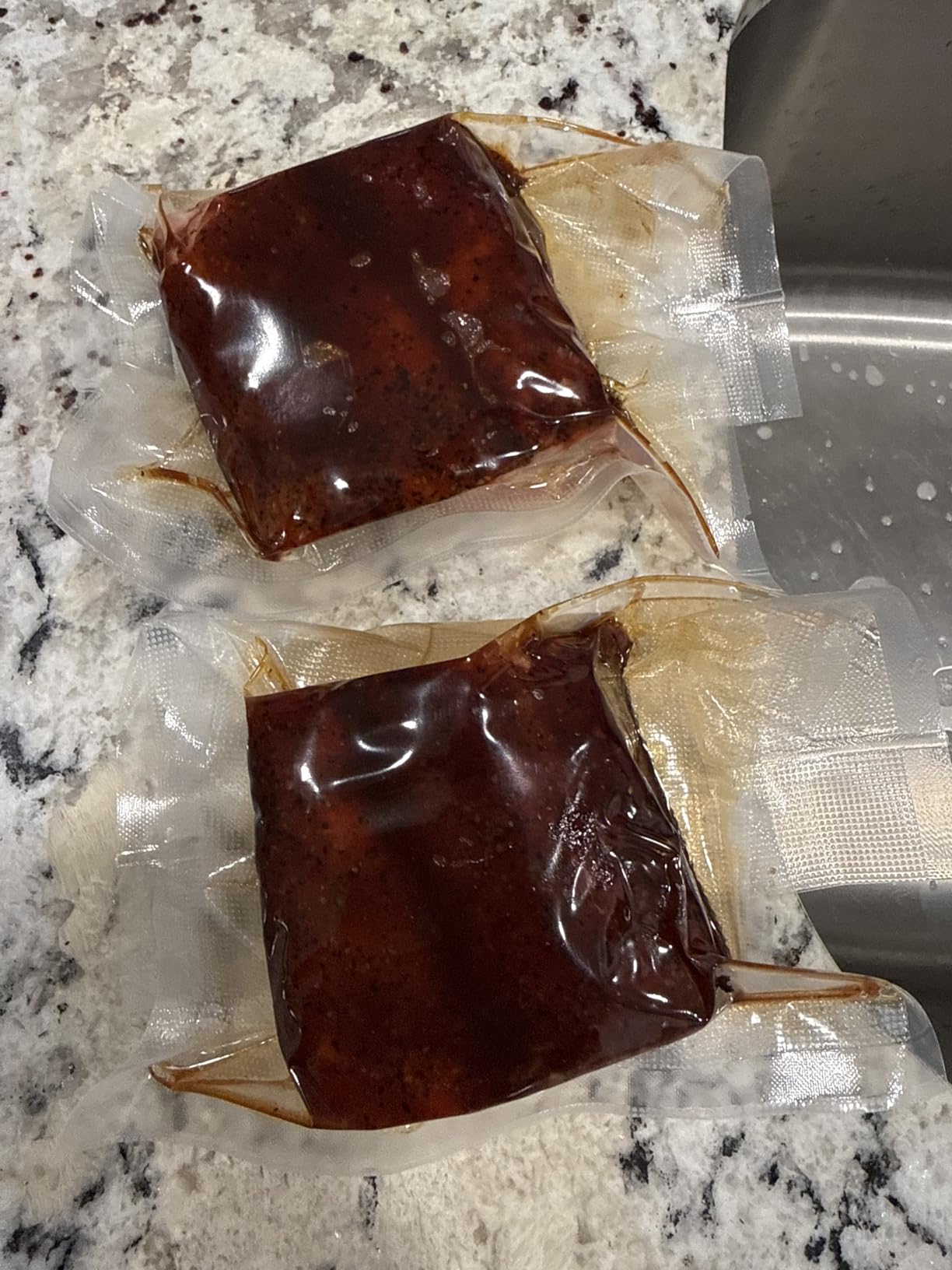
The starter kit is among the most generous in the roundup: two 11 by 10 foot rolls, five quart bags, two replacement foam gaskets and an external hose. Availability of cheap replacement parts, including the drip tray and cutter, is a genuine advantage over machines that become e-waste when a gasket ages. The drawbacks are a one year warranty, a vacuum container that is not included, and a recommendation against reusable zipper bags that will add to your ongoing consumable cost.
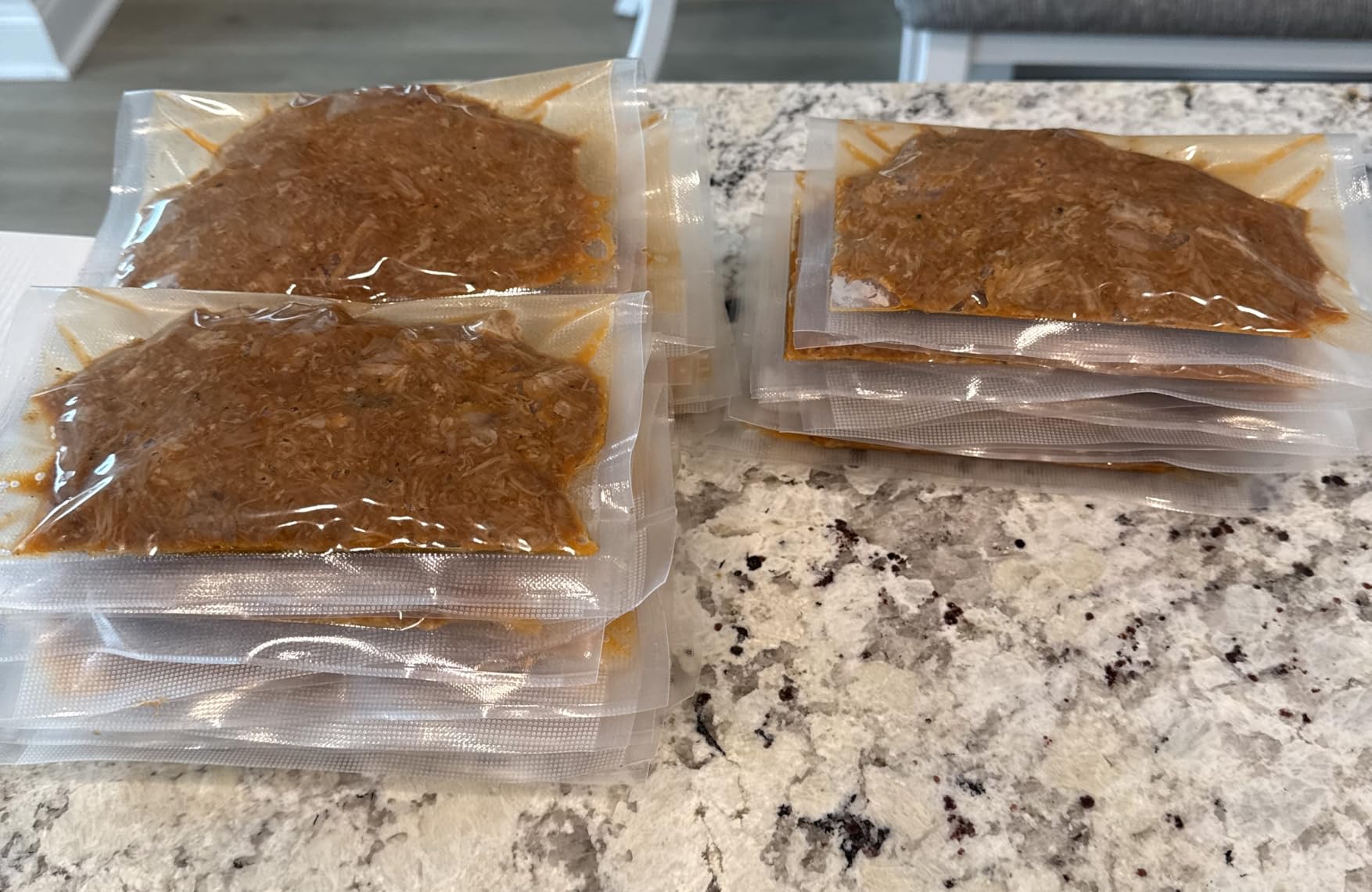
When pulse mode is worth the extra minute?
Run it in short bursts and watch the bag rather than the clock. Stop while the food still holds shape and the bag is still slightly puffed, because residual air is useful: a bag that is rock hard has nowhere to go when the food expands at temperature, and it is more likely to split at the seal.
Take the drip tray out and rinse it after every wet session. The tray catches what does escape the channel, and leaving marinade in it is how an otherwise clean machine starts smelling like a fish box.
Who should buy something else instead?
If warranty length decides it, this is not the machine, even with the best rating. The Potane and the FoodSaver FM2100 both carry five years. If you batch cook fifty bags at a time, the Avid Armor chamber will get there faster.
10. Avid Armor USV20 Review: Best for Liquids and Soups
Avid Armor USV20 Chamber Vacuum Sealer Machine – High-Volume 11.5” Sealer
Chamber vacuum system, 4L stainless
11.5 inch heating bar
17.3 pounds body
Pros
- Chamber design seals soups
- stews and marinades without pulling liquid into the machine
- Adjustable vacuum and seal timers give repeatable results
- User replaceable seal bar and jar capability
- Works with inexpensive smooth pouches
Cons
- Heaviest machine here at 17.3 pounds
- Three inch chamber cannot take a large roast or ham
- Needs smooth or chamber pouches rather than channel bags
The USV20 is the only chamber sealer in this roundup, and for anyone cooking a broth, a stock, a pulled pork shoulder with its braising liquid, or a rack of ribs with its rub and juices, it is the only one on the page that will not fight you. Chamber vacuum technology equalises pressure around the entire bag, so liquid never travels through the pump and the heat strip stays clean.
The chamber is 4 litres of stainless steel at 12.25 by 8.5 by 3 inches, fed by an 11.5 inch heating bar with a seal strip the user can replace. Adjustable vacuum time from 15 to 60 seconds and adjustable seal time are what make results repeatable, and a machine you can set is a machine you can use for a whole menu rather than one dish at a time.
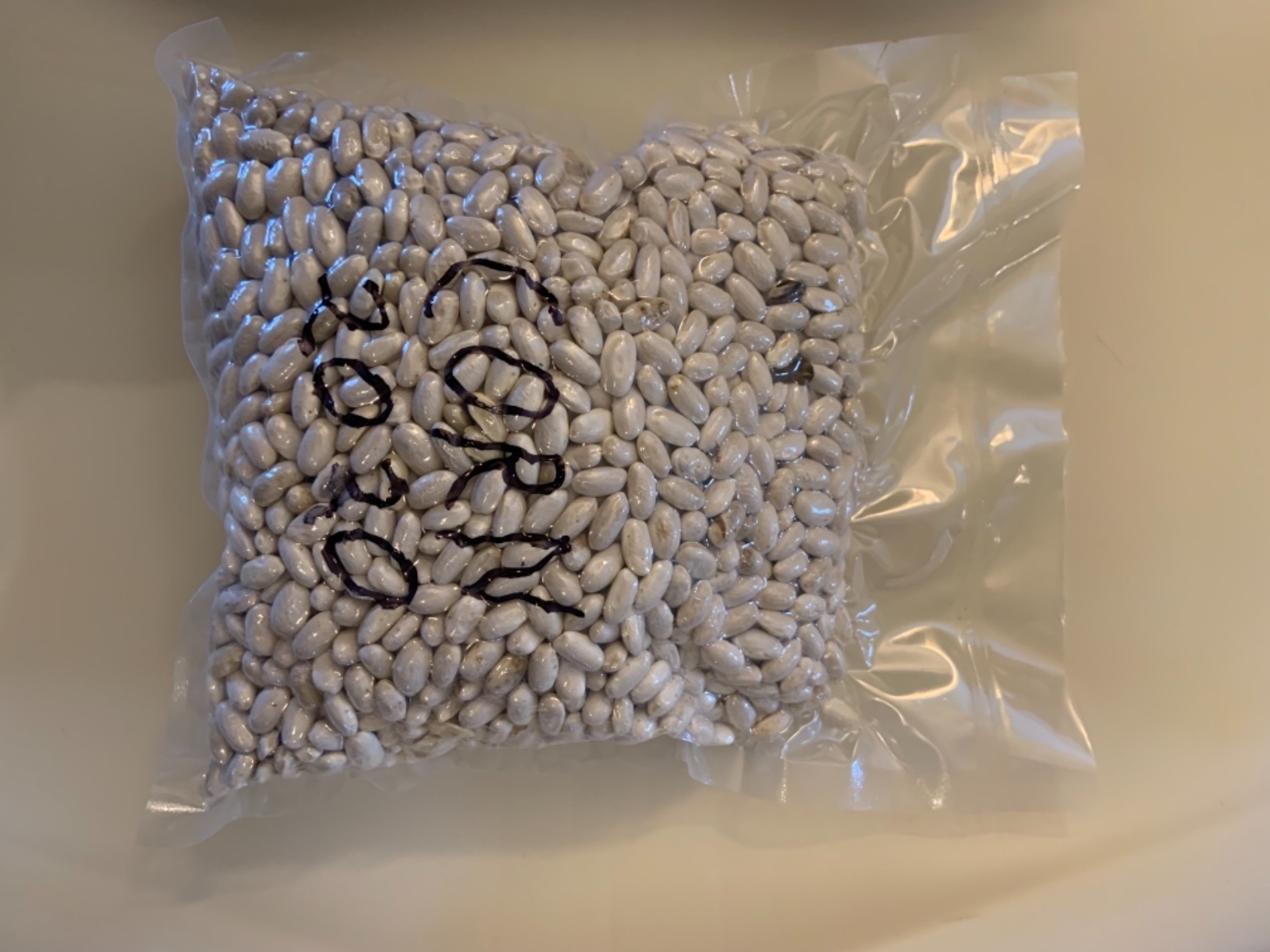
The money argument is the bags. Because the chamber works with smooth pouches up to 11 by 10 inches as well as standard embossed bags, the running cost of a bag drops well below what a channel bag costs, and it can also seal mason jars and canisters inside the chamber. If you are a [commercial vacuum sealer](https://www.thirstybear.com/best-commercial-vacuum-sealers/) shopper or run a small menu, that difference pays back quickly.
Now the honest part. At 17.3 pounds and 14 by 12 by 8.25 inches it is by far the largest machine here, and the 3 inch chamber depth will not accept a large ham or a big bone-in roast. It also wants smooth or chamber style pouches rather than relying on standard channel bags, and a small number of owners report buttons that need a power cycle. Reviewers who upgraded from FoodSaver style machines credit it with reliable liquid handling and cheaper consumables, but they are upgrading from a machine that was never built for soup.
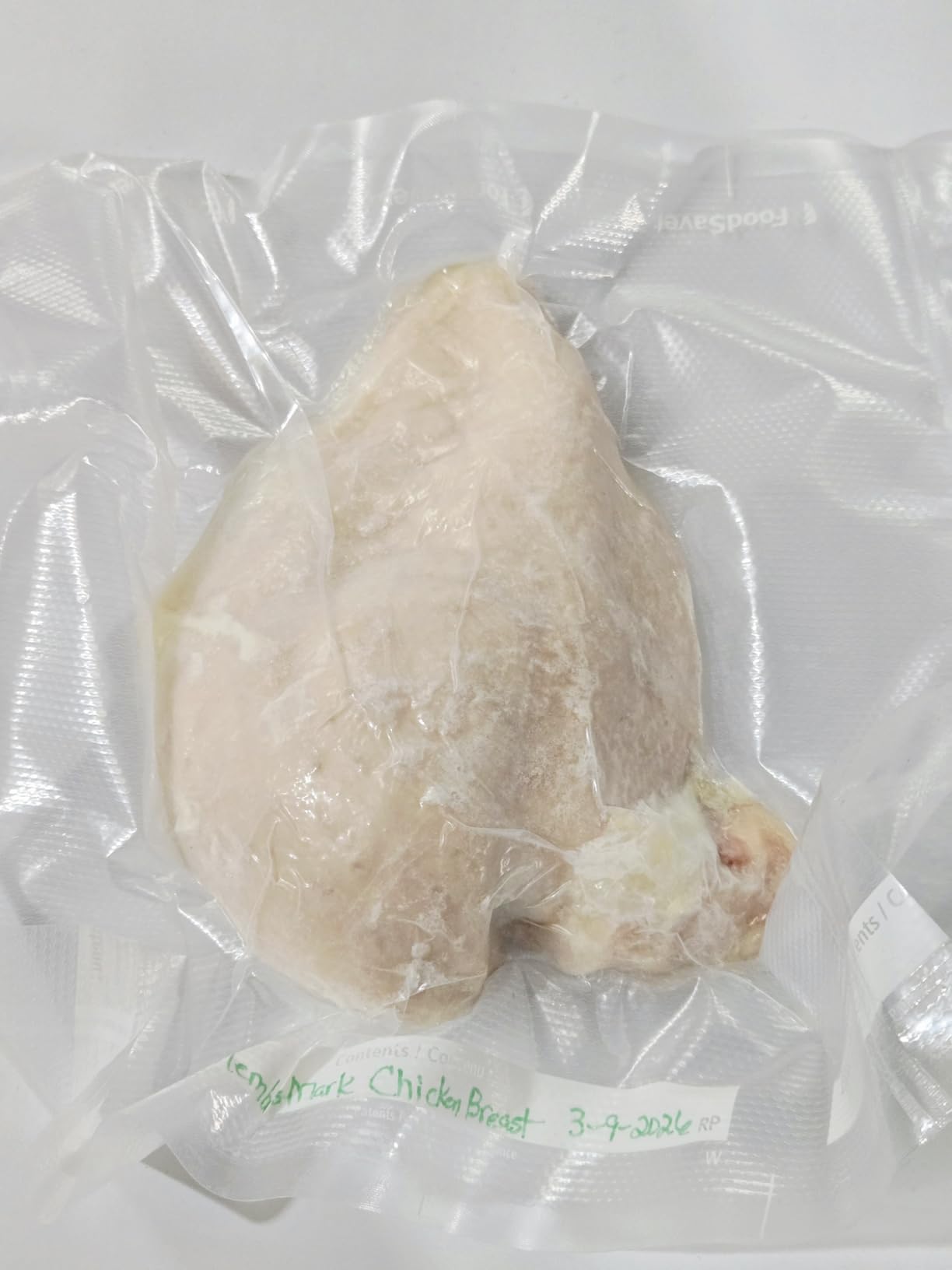
Is a chamber sealer worth it outside a professional kitchen?
Only if you seal liquid regularly. For steak, chicken, vegetables and fish, a good edge sealer gives you a more consistent seal in a fraction of the time, and you get it for a fraction of the outlay. If soups, sauces and brines are on your regular rotation, or you marinate in the bag, the chamber earns its counter space.
Give it its own shelf and check the chamber seal strip on a schedule. The replaceable strip is the entire argument for buying this over a cheaper chamber, so use it rather than running the machine until it fails.
Who should buy something else instead?
Almost everybody. If you have never tried to seal a liquid bag and the water displacement method works for what you cook, start with an edge sealer and upgrade only when a real menu demands it. Check that you can store 17 pounds somewhere before you commit.
Do You Actually Need a Vacuum Sealer for Sous Vide?
Short answer: no for most cooks cooking under four hours, yes for anyone going longer, marinating in the bag, or batching food for the week. The sealer is a nice-to-have rather than a necessity for the first six months of sous vide, and buying one before you understand your own cooking pattern is how people end up with a machine they use twice a year.
The forum consensus in the sous vide community, across years of threads rather than one post, is exactly this: water displacement works, and most regulars describe a sealer as a convenience until they start cooking twelve hours or more. That is worth believing because it is the most common purchase regret in the category.
Here is the decision rule, by cook duration:
Under 4 hours, solid foods such as steak, chicken breast, chops or firm vegetables: the water displacement method is enough. A freezer bag and a controlled steady water flow will hold the food under the surface, and you will not notice a difference in the finished result.
4 to 12 hours, or anything marinated, brined or in its own liquid: buy a sealer. This is the point where trapped air starts to matter, the bag starts to float, and liquid near the open end starts to get drawn into the channel. A machine with moist mode or pulse vacuum pays for itself in saved food, not in saved time.
24 to 72 hour cooks, batch meal prep, or any liquid: buy a proper machine, and if the liquid is a regular part of your cooking, look at a chamber. Long cooks are exactly when a mid-bath failure costs you the whole batch.
To use the water displacement method: put the seasoned food in a freezer bag with a little air left at the top, seal it, then lower it into a pot of cool water. As the water rises the air compresses and the bag sinks. Keep a gentle steady stream into the pot so displaced water leaves, and the bag stays under. It takes practice and it works.
What restaurants use is worth saying plainly. Professional kitchens almost always run a chamber sealer, because a menu that includes stocks, sauces and braises cannot be done on an edge machine. That is a production decision driven by liquid, not by suction power, and it is the same reason a home cook with a lot of soups should look at the chamber.
If you want the honest beginner path, read the [big spring sale sous vide machine roundup](https://www.thirstybear.com/best-big-spring-sale-sous-vide-machine-deals-on-amazon/) alongside this guide. Match the circulator to how much you will actually cook before spending on a bagging setup.
How to Test a Seal Before a Long Cook?
Five minutes of testing before a 48 hour cook is the difference between dinner and a bin of ruined meat, and it is the one step most guides skip. Do all five of these before the bag goes in.
1. Float test. Fill a large bowl or sink with water and submerge the sealed bag. If it floats or bobs to the surface, the vacuum is incomplete. Add a little more air out and reseal. A bag that sits fully under and stays there is ready.
2. Visual seam inspection. Hold the seal up to light. The weld should be a continuous, slightly wider band with no bubbles, no gaps, and no visible channel where the strip skipped over plastic. Two parallel lines mean double seal, and both should be continuous.
3. Squeeze test. Press gently along the length of the bag. If you can move air, the seal is not airtight. Pressing hard is not a valid test, because you can deform food that way; the bag should simply not compress anywhere along the seam.
4. Warm water check. Put the bag in a bowl of water at a temperature close to your cook temperature for a few minutes and watch the seam. Heat is what softens a marginal seal in the bath, and a ten minute pre-soak at temperature is a cheap preview of hour three.
5. Keep a spare. Bag a second portion of the same food and seal it with the same settings. If the first bag fails you have a replacement ready, and if the second also fails you know the problem is the machine or the bag rather than bad luck.
Do this once per machine, once per bag size, and any time you change seal settings. After that the routine takes under a minute and it is the cheapest insurance in the whole setup.
Sous Vide Vacuum Sealer Buying Guide
Once you know whether you need a sealer at all, the decision narrows quickly. These are the criteria that actually move the outcome for underwater cooking, ordered by how much they matter.
Chamber or edge sealer
This is the first decision and everything else follows from it. An edge sealer pulls air through the open end of the bag with a pump, which is fast and compact but will draw liquid into the channel if any is near the opening. A chamber sealer places the whole bag in a sealed chamber and equalises pressure around it, which is the only reliable way to seal soup, sauce or a marinade, and the only one that works with cheap smooth pouches. If you seal liquid weekly, chamber, and read our [chamber vacuum sealer guide](https://www.thirstybear.com/best-chamber-vacuum-sealers/) first. If you seal meat, fish and vegetables, an edge sealer is the correct answer.
Moist mode, pulse vacuum and liquid control
For sous vide specifically, this matters more than the suction number. Moist mode reduces the vacuum level or pauses it so liquid does not get pulled into the channel, and pulse vacuum gives you manual control in short bursts. Two physical designs also help: a bag mouth clamp that stops the plastic shifting, and a sloping top that keeps juice running away from the open end. The Potane’s sloping deck and the FRESKO’s clamp are both good examples.
You will still see the complaint that edge sealers suck liquid out of the bag, and it is the most repeated issue in the category. It is a design limit, not a fault, and the honest fix is a machine with pulse or moist control plus a bag filling habit that leaves the last two inches of the bag dry.
Seal width, double seal and what heat does
A wider heat seal is a more durable heat seal. The FRESKO’s 0.2 inch widened strip and the NESCO’s double heat seal technology are the two examples here, and the FoodSaver FM2100’s dual strips are the third. Underwater, a bag sits at 135F to 195F for hours and heat plus pressure finds the thinnest point in a weld, so redundancy and width are what carry a 48 hour cook. Look for a sealing bar at least as wide as the bag you intend to use, and check whether the strip is user replaceable.
Vacuum strength, in context
Suction is published as kPa, and 80kPa to 95kPa covers everything in this roundup. The gap between 80kPa and 95kPa is a few seconds per bag, not a different cooking result. Judge the pump instead on whether it can be pulsed and whether it copes with a wet bag. The 130 watt double pump in the NESCO is a good example of real pump class, and the 140 watt motor with 18 litres per minute airflow in the FRESKO is another.
Bags: compatibility, thickness and temperature rating
You can use any embossed vacuum bag with an edge sealer, regardless of brand, which is the single most useful fact about consumables in this category. The exception is the chamber, which works best with smooth or chamber style pouches and can also take embossed bags. Do use BPA-free multilayer bags for anything above 160F, and treat any bag with no stated temperature rating as unsuitable for long hot cooks. Reusable bags are a reasonable freezer storage option but they are a poor substitute for vacuum bags above 160F, and owners report they shrink a little every time they are cut, so frequent users end up buying a sealer anyway.
Counter space, weight and noise
Weight is a proxy for size and size is a real constraint. The FoodSaver PowerVac VS0150 stores vertically at about 5.6 inches deep on the counter. The Anova at 2.3 pounds and the MEGAWISE at roughly 2.6 pounds are the ones that move between cupboards. The Avid Armor chamber at 17.3 pounds gets its own shelf. Noise is harder to find, but a pump is loud enough to matter in an open-plan kitchen or a flat at 6am, and the machines with 130 watt or higher pumps are the noisiest.
Warranty and replaceable parts
Pumps and heating elements wear out, and the warranty is an honest proxy for how long the manufacturer expects one to last. Five years on the Potane and the FoodSaver FM2100, two years on the Anova, three years of spare parts coverage on the Bonsenkitchen, and one year on the NESCO, the Gasbye and the Avid Armor. A machine whose gasket, seal strip, drip tray or cutter can be bought separately will outlive one that cannot, which is the single best durability signal you can get.
When to buy?
Sealers and their bags are both discounted heavily in the same windows. Prime Day, Black Friday and Cyber Monday are the three predictable ones, and the same is true of the [Prime Day sous vide deals](https://www.thirstybear.com/best-amazon-prime-day-sous-vide-deals-2026/) if you are buying a circulator at the same time. Buy in one of those windows, buy the bags at the same time, and read the warranty terms before you do.
Frequently Asked Questions
Is a vacuum sealer necessary for sous vide cooking?
No, not for most home cooks. The water displacement method works reliably for solid foods cooked under about four hours. Buy a sealer once you go past four hours, start marinating or brining in the bag, batch cook for the week, or cook anything liquid.
Can I use a Ziploc bag instead of a vacuum sealer?
Yes, for short cooks. Seal a freezer bag, lower it into cool water and let the water pressure compress the air so the bag sinks. Keep a gentle stream running into the pot so displaced water leaves. Standard bags are not rated for very high temperatures, so check the stated rating before cooking above 160F.
What is the difference between chamber and external vacuum sealers?
An external edge sealer draws air out through the open end of the bag with a pump and then heat seals it, which is fast and compact but will pull liquid into the channel. A chamber sealer puts the whole bag inside a sealed chamber and equalises pressure around it, so it can seal soups, sauces and marinades safely and works with cheaper smooth pouches.
Can you use any vacuum bags for sous vide?
Yes. An external edge sealer accepts standard embossed bags from other brands, so you are not locked into one manufacturer’s consumables. Use BPA-free multilayer bags rated for your cook temperature, and avoid unsealed or unrated bags above 160F. A chamber sealer additionally accepts smooth pouches, which cost less per bag.
What vacuum sealer do professional chefs use for sous vide?
Professional kitchens generally use a chamber sealer, because a menu that includes stocks, sauces and braises cannot be sealed reliably on an edge machine. The upgrade is driven by liquid handling rather than by raw suction power. Home cooks who seal only meat, fish and vegetables do not need that capability.
Conclusion: The Best Vacuum Sealer for Sous Vide in 2026
The best vacuum sealer for sous vide in 2026 is the Bonsenkitchen VS2100-SLV. Four modes including pulse vacuum, an external port that runs a hose straight to a sous vide bag, a body light enough to live in a drawer, and the largest review base in this group, it covers more of the awkward cases than anything else we tested for the money.
Two alternatives earn their place. The Potane VS2690 carries the strongest rating in the group and a five year warranty, which makes it the smarter long-term buy if you cook most weekends. The NESCO VS-12 is the one to choose when you run 24 hour or longer cooks, because its double heat seal is the most redundant weld available in an edge machine.
Start with a bag, not a machine. Cook the water displacement method twice, see how often it frustrates you, and buy the sealer when it does. Last updated in 2026.