
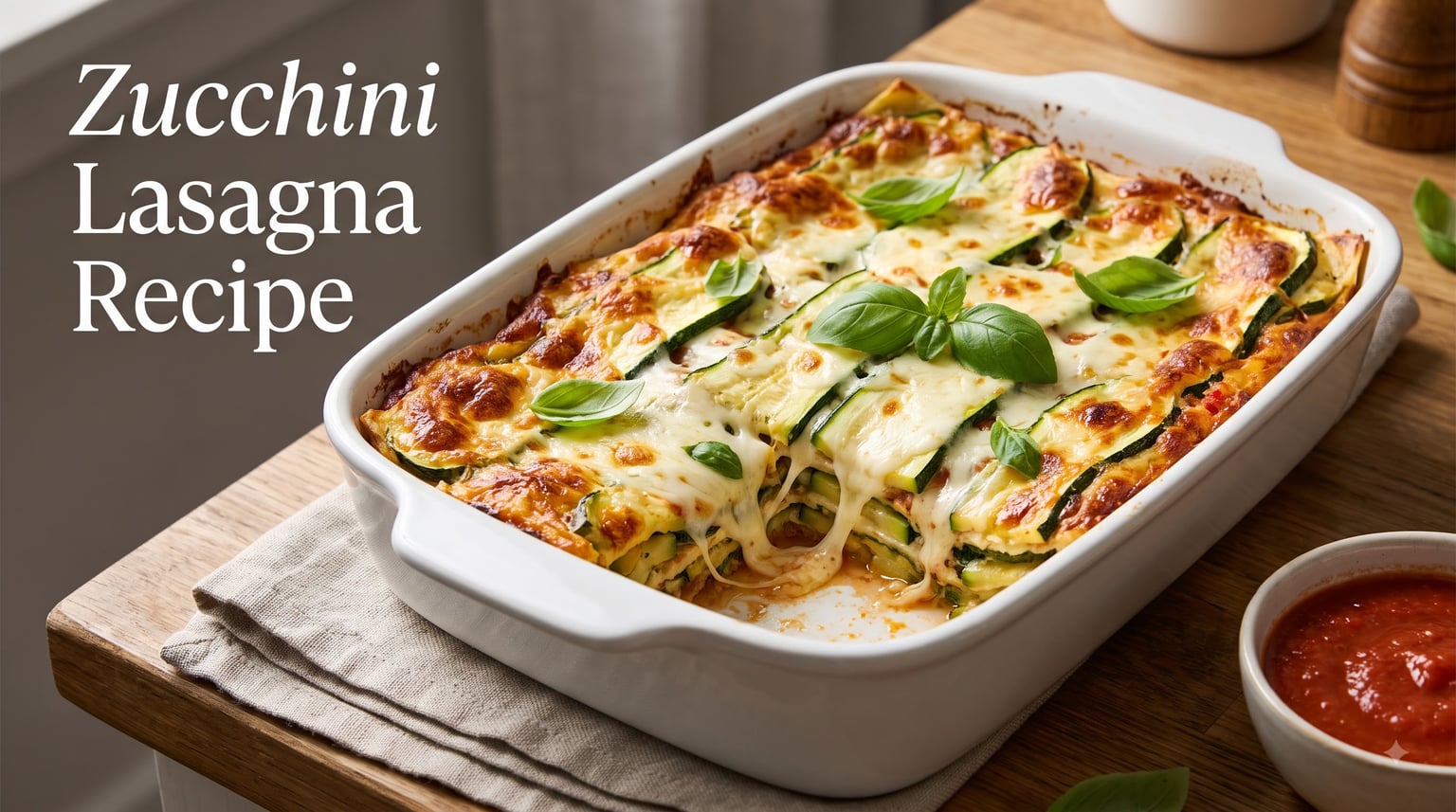
I’ve made zucchini lasagna more times than I can count, and I know exactly where it goes wrong: the zucchini dumps all its water into the dish and you end up with a soupy mess. This zucchini lasagna recipe fixes that problem for good.
After testing this recipe more than a dozen times in my own kitchen, I can promise you a slice that holds its shape, has distinct layers, and tastes every bit as rich as a traditional classic lasagna recipe — just without the noodles. It’s naturally gluten-free, low-carb, and perfect for anyone trying to use up a summer zucchini harvest.
You’ll learn exactly how to remove excess moisture, how to cut zucchini into uniform noodles, which cheese works best in the filling, and how to bake it so the top turns golden brown without weeping. If you follow the moisture-removal steps, you will never serve a watery zucchini lasagna again.
Table of Contents
Ingredients You Need for Zucchini Lasagna
These ingredients serve 8 generously, and I’ve called out every swap I’ve tried in my own testing. The measurements below are what I actually use at home.
For the zucchini noodles:
3 to 4 medium zucchini (about 2.5 to 3 pounds total)
2 teaspoons kosher salt, for drawing out moisture
2 tablespoons olive oil, for brushing
For the cheese filling:
15 ounces whole-milk ricotta cheese (or full-fat cottage cheese — see my cottage cheese vs ricotta comparison)
1 large egg
1/2 cup grated Parmesan cheese
2 cloves garlic, minced
2 tablespoons fresh basil, chopped
1 tablespoon fresh oregano (or 1 teaspoon dried)
1/4 teaspoon black pepper
For the sauce and assembly:
24 ounces marinara sauce (chunky, not watery)
16 ounces low-moisture mozzarella cheese, shredded
1/4 cup grated Parmesan, for the top
Fresh basil leaves, for garnish
Quick ingredient notes from my testing: skip the fat-free ricotta — it releases too much water and won’t set properly. The egg is what binds the filling so each slice holds together when you cut it.
How to Make Zucchini Lasagna Step by Step?
Here’s the full process. I’ve broken it into eight clear steps so nothing gets confusing. Expect about 30 minutes of prep and 50 minutes of baking.
Step 1: Slice the Zucchini into Thin, Even Sheets
Wash and dry the zucchini, then trim the ends. Slice lengthwise into 1/8-inch thick sheets using a mandoline slicer for the most uniform results. If you don’t have a mandoline, a sharp chef’s knife works — just take your time and keep the slices even so they cook at the same rate.
My rule after many rounds of testing: 1/8-inch slices give you the most “noodle-like” bite. Anything thicker than 1/4-inch stays too firm and bulky. Anything thinner than 1/16-inch turns to mush.
Step 2: Salt the Zucchini and Let It Rest
Lay the zucchini slices on a wire rack set over a baking sheet (or between layers of paper towels on a sheet pan). Sprinkle both sides generously with kosher salt. Let them sit for 15 minutes.
You’ll see beads of water forming on the surface — that’s the moisture leaving the cells. This single step removes more water than anything else you’ll do. Don’t skip it.
Step 3: Pat Dry and Pre-Bake the Zucchini
Preheat your oven to 400°F. Pat each slice firmly with paper towels until they feel dry to the touch. Arrange the slices in a single layer on parchment-lined baking sheets, brush lightly with olive oil, and bake for 10 minutes.
After this pre-bake, the slices should be flexible, not floppy. Let them cool slightly while you make the filling. I learned the hard way: layering raw zucchini straight into the lasagna is the #1 reason for a watery final dish.
Step 4: Make the Ricotta Filling
In a medium bowl, combine the ricotta, egg, 1/2 cup Parmesan, minced garlic, fresh basil, oregano, and black pepper. Stir until smooth. The egg is doing crucial work here — it sets as the lasagna bakes so the layers don’t slide apart when you slice.
If you want an extra-savory flavor boost, fold in 2 tablespoons of pesto. It’s an optional addition but one I now consider essential for weekend dinners.
Step 5: Build the Layers
Reduce the oven temperature to 375°F. Spread a thin layer of marinara (about 1/2 cup) on the bottom of a 9×13-inch baking dish. Now layer in this order:
Zucchini slices (overlap slightly to cover the sauce)
One-third of the ricotta mixture, dotted with a spoon
One-third of the remaining marinara
One-third of the mozzarella
Repeat twice more, ending with mozzarella on top. Sprinkle the final layer with the 1/4 cup of Parmesan.
Visual cue: distinct layers should still be visible from the side of the dish. If you can’t see them, your slices are too thin or your sauce is too runny.
Step 6: Bake Covered
Cover the dish tightly with aluminum foil and bake at 375°F for 30 minutes. The foil traps steam so the cheese melts and the flavors meld without over-browning the top.
Step 7: Uncover and Brown the Top
Remove the foil and bake another 15 to 20 minutes, until the cheese is melted, golden, and bubbly at the edges. If you’d like extra browning, run the dish under the broiler for 1 to 2 minutes — watch it the entire time, as cheese goes from golden to burnt fast.
Step 8: Rest Before Slicing
This is the step most people skip, and it’s the step that lets you serve clean slices. Let the lasagna rest on the counter for at least 20 minutes before cutting. The cheese and filling need that time to firm up so each piece holds together.
I usually rest it for 30 minutes. Cutting too early is the second most common reason lasagna falls apart — watery zucchini is the first.
How to Prevent Watery Zucchini Lasagna (Critical Steps)
If you only read one section of this whole recipe, make it this one. These are the steps that took my zucchini lasagna from “okay” to “perfectly sliceable,” and they address the most common complaint I see in home kitchens everywhere.
Salt and rest for 15 minutes. Salt pulls water out of the zucchini cells through osmosis. Wipe it off after.
Pat dry with paper towels. Don’t just pat once — blot each side firmly. You should see water transfer onto the towel.
Pre-bake at 400°F for 10 minutes. This extra step drives off surface moisture and concentrates the zucchini flavor.
Use low-moisture mozzarella. Fresh mozzarella is gorgeous on pizza, but it leaks water in baked dishes. Stick with the bagged, shredded variety.
Use chunky marinara, not watery sauce. A thick, herb-rich sauce holds the layers together. Thin tomato sauce runs straight to the bottom.
Don’t oversauce the layers. Each layer needs just enough sauce to coat the zucchini. Pools of sauce turn to water as the dish bakes.
Rest for 20 to 30 minutes before slicing. Hot lasagna is loose lasagna. The rest lets the cheese set up and bind the layers.
Why is my zucchini lasagna still watery after all that? In my experience, the two culprits are skipping the salt-rest step and using too much sauce. Cut both in half next time and you’ll see a dramatic difference.
Recipe Variations and Serving Suggestions
Once you’ve mastered the basic recipe, these variations make it easy to fit any diet or dinner table. I rotate through all of these depending on who’s coming over.
Meat Lover’s Version
Brown 1 pound of Italian sausage or lean ground beef, drain the fat, and stir it into the marinara before layering. You’ll add about 8 grams of protein per slice and get a heartier main course. Pork sausage adds the most flavor, while ground turkey keeps it lean.
Vegetarian Boost
Add a layer of sautéed spinach (squeezed very dry), cremini mushrooms, and roasted red peppers between the zucchini and sauce layers. The vegetables are technically optional, but they add depth and bulk to the slice. For more vegetable pasta alternatives, try swapping the zucchini for thin slices of eggplant.
Keto and Low-Carb Direction
This recipe is already naturally keto-friendly with about 9g of net carbs per serving. To take it further, replace the marinara with a low-carb tomato sauce or even a thick alfredo. For more keto recipes that deliver on comfort food without the carbs, browse our full collection.
White Zucchini Lasagna (No Tomato)
Swap the marinara for a garlic cream sauce made with 2 cups heavy cream, 4 cloves minced garlic, and 1/2 cup grated Parmesan thickened on the stovetop. Fold in chopped spinach for color. It’s decadent and a beautiful change of pace for special dinners.
Serving Suggestions
I serve this with a simple arugula salad tossed with lemon juice and olive oil — the peppery greens cut through the richness. Garlic bread is crowd-pleasing but not necessary. For a lighter plate, roasted asparagus or a cucumber tomato salad work beautifully.
For other ways to use up summer produce, try our summer squash recipes or finish the plate with a drizzle of homemade pesto sauce over the top before serving.
Storage, Freezing, and Make-Ahead Tips
One of the reasons I love this recipe is that it works beautifully for meal prep. Here’s how I handle leftovers and planned-ahead cooking.
Refrigerator Storage
Cover the baking dish tightly with foil or transfer slices to an airtight container. It keeps for 4 days in the fridge. The texture actually improves on day two as the flavors meld, so don’t be afraid to make it ahead for a dinner party.
Freezer Instructions
You can freeze the lasagna either fully baked or fully assembled but unbaked. Wrap the entire dish in two layers of plastic wrap and one layer of foil. Freeze for up to 3 months. Thaw overnight in the fridge before reheating, and add 10 to 15 minutes to the baking time if reheating from cold.
Reheating Without Sogginess
Reheat individual slices in a 375°F oven for 15 minutes, uncovered, on a baking sheet. The dry heat helps drive off any condensation. Avoid the microwave for reheating — it makes the zucchini rubbery and the cheese tough. A skillet over medium-low heat with a lid also works for single portions.
Make-Ahead Strategy
Assemble the entire lasagna up to 24 hours in advance, cover, and refrigerate. When ready to bake, let it sit at room temperature for 20 minutes, then bake as directed. You may need to add 10 minutes to the covered baking time since it starts cold.
Frequently Asked Questions
Do you cook zucchini before putting it in lasagna?
Yes, you should always pre-cook zucchini before layering it into lasagna. Raw zucchini releases a huge amount of water as it bakes inside the lasagna, which is the primary cause of watery, soupy lasagna. Salt the slices for 15 minutes, pat them dry, then pre-bake at 400°F for 10 minutes before layering. This two-step process removes most of the excess moisture and concentrates the zucchini flavor so the final dish slices cleanly.
How do I get my zucchini lasagna to not be so watery?
The four critical steps are: salt the zucchini slices and let them rest for 15 minutes, pat them thoroughly dry with paper towels, pre-bake them at 400°F for 10 minutes, and use a thick marinara sauce rather than a thin one. Also use low-moisture mozzarella instead of fresh, and resist the urge to oversauce each layer. Finally, let the baked lasagna rest for 20 to 30 minutes before slicing so the cheese sets up and binds the layers together.
What kind of sauce is best for zucchini lasagna?
A thick, chunky marinara sauce works best because it holds its structure between the zucchini layers. Avoid thin, watery tomato sauces, which will pool at the bottom and turn the dish soupy. Look for a sauce with visible chunks of tomato, herbs, and garlic. If you want a heartier lasagna, brown Italian sausage or ground beef and stir it into the marinara before layering. For a white version, a garlic cream sauce made with heavy cream and Parmesan is a great alternative.
Can you freeze zucchini lasagna?
Yes, zucchini lasagna freezes very well for up to 3 months. You can freeze it either fully baked or fully assembled but unbaked. Wrap the dish tightly in two layers of plastic wrap and one layer of foil. Thaw overnight in the refrigerator before reheating, and add 10 to 15 minutes of extra baking time since it will start cold. Reheat covered slices in a 375°F oven rather than the microwave to keep the texture from turning rubbery.
Final Thoughts
This zucchini lasagna recipe delivers a slice that holds together, has real Italian flavor, and skips the pasta entirely. The key is treating the moisture removal steps as non-negotiable — salt, pat dry, pre-bake, then layer. Skip any of those and you’ll be back to watery results.
Once you’ve made it a few times, you’ll find your own rhythm. Some weeks I add sausage, some weeks I keep it vegetarian with mushrooms and spinach. The base method is the same, and it works every single time. I hope this becomes a regular in your kitchen the way it has in mine.