
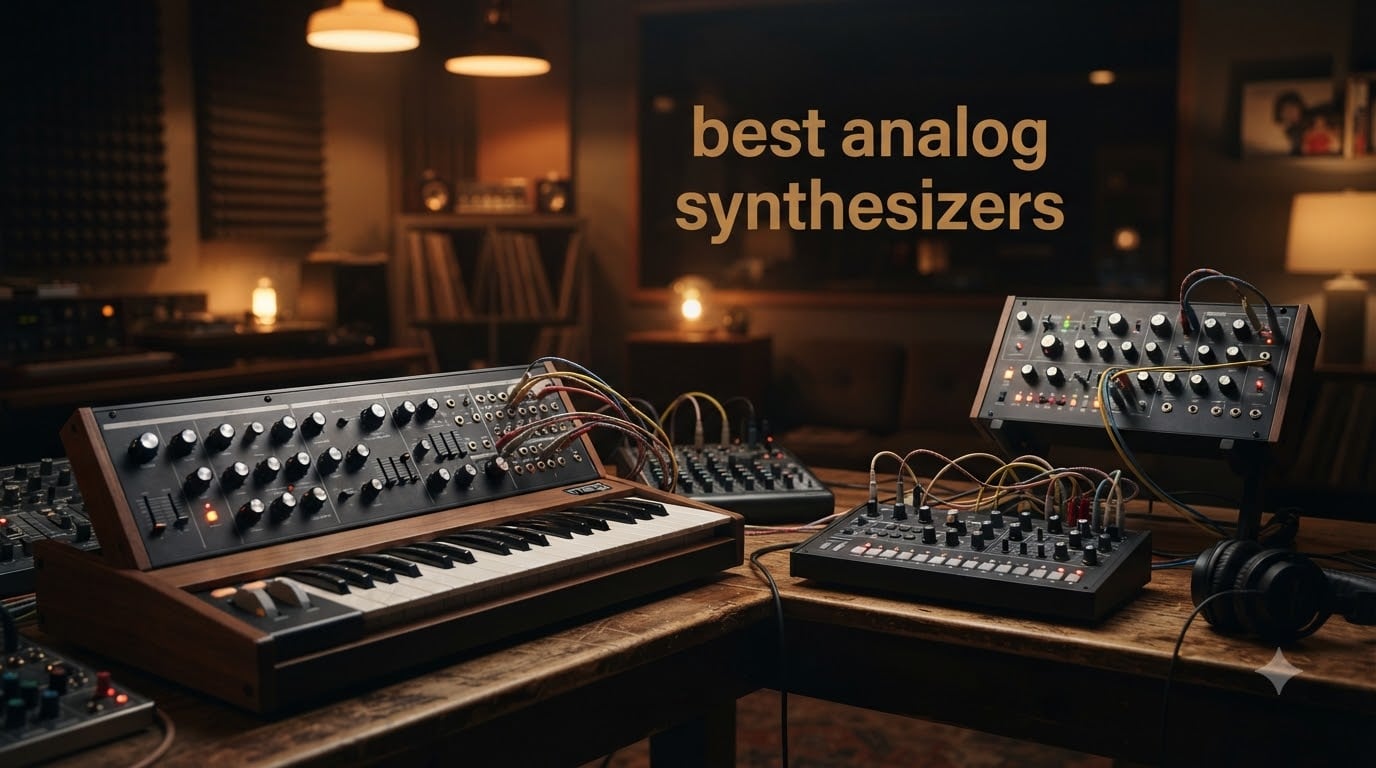
There is something special about twisting a cutoff knob on a real analog synthesizer and hearing the filter open up in a way no plugin has ever fully matched. After spending months testing hardware synths in my studio and comparing notes with producers across Reddit’s r/synthesizers and Gearspace, I narrowed down the best analog synthesizers worth your money in 2026.
Analog synths use voltage-controlled oscillators, filters, and amplifiers to generate sound through continuous electrical signals rather than digital samples. That signal path is what gives analog instruments their warmth, natural drift, and harmonic richness that so many producers chase.
Yes, software synths have gotten incredibly good. But the best analog synthesizers offer something a screen cannot: immediate hands-on control, happy accidents from real knobs, and a sound character with subtle imperfections that make each note feel alive. Whether you are hunting your first hardware synth or adding a flagship to a growing rig, this guide covers seven instruments spanning entry-level bass boxes to semi-modular classics.
Table of Contents
Top 3 Analog Synths at a Glance

Moog Messenger Monophonic Analog Synth
- 2 VCOs with FM
- 32 keys
- 64-step sequencer
- RES BASS compensation

Korg minilogue 4-Voice Analog Polysynth
- 4-voice polyphony
- OLED oscilloscope
- 16-step sequencer
- 200 presets
Arturia MicroFreak Hybrid Synth
- 17 paraphonic modes
- SEM analog filter
- poly aftertouch
- mod matrix
Best Analog Synthesizers in 2026
| Product | Specifications | Action |
|---|---|---|
| Moog Messenger Monophonic Synth |
|
Check Latest Price |
| Korg minilogue Polysynth |
|
Check Latest Price |
 Korg Volca Bass Korg Volca Bass |
|
Check Latest Price |
| Arturia MicroFreak |
|
Check Latest Price |
 Behringer Model D Behringer Model D |
|
Check Latest Price |
 Novation Bass Station II Novation Bass Station II |
|
Check Latest Price |
 Moog Grandmother Semi-Modular Moog Grandmother Semi-Modular |
|
Check Latest Price |
1. Moog Messenger – Next-Gen Monophonic Powerhouse
MOOG Messenger Monophonic Analog Synthesizer
2 VCOs with sync and FM
32 semi-weighted keys
64-step sequencer
256 presets
RES BASS compensation
Pros
- Classic Moog ladder filter sound
- Portable and well-built
- Deep sequencer with 256 presets
- 6 CV patch points for modular integration
Cons
- Monophonic only
- No battery power
- Premium price point
The Moog Messenger is the newest addition to the Moog family, and our team was genuinely excited to get hands-on with it. This monophonic synth builds on decades of Moog design philosophy while adding modern features that earlier Moogs never had.
I spent two weeks running the Messenger through bass duties, lead lines, and experimental sound design. The two VCOs with sync and FM give you far more tonal variety than you might expect from a mono synth. The sub-oscillator adds serious low-end weight that holds its own in any mix.
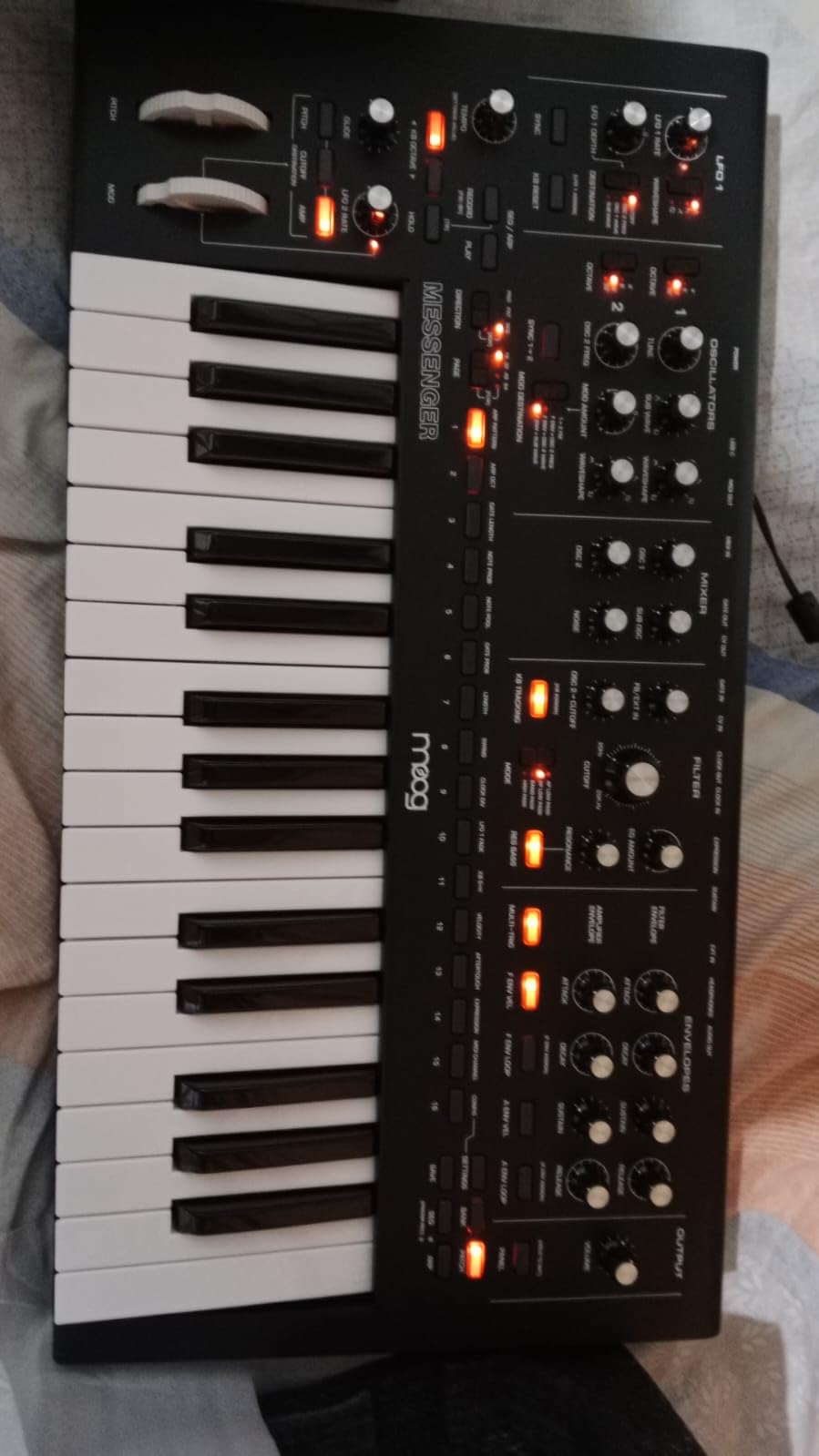
The standout feature for me is the RES BASS compensation circuit. Anyone who has pushed a Moog ladder filter into heavy resonance knows how quickly the low end disappears. Moog solved that here, keeping your bass frequencies intact even when the filter screams.
The 64-step sequencer with 256 preset slots means this is not just a performance instrument but a full compositional tool. The 32 semi-weighted keys feel premium, and six CV patch points let you integrate it with a modular rig. Connectivity covers USB-C, 5-pin DIN MIDI, expression pedal, and sustain pedal.
Who Should Buy the Moog Messenger
Bass producers and lead players who want authentic Moog tone in a portable, modern package will love this synth. The sequencer and preset storage make it ideal for live performers who need recallable sounds.
If you are already invested in the Moog ecosystem or want a mono synth that can grow with a modular setup, the Messenger is the obvious choice in 2026.
What to Watch Out For
The Messenger is monophonic, so it is not designed for chords or pads. If polyphony is essential for your style, look at the Korg minilogue below instead.
It also sits at a premium price point. You are paying for the Moog name and build quality, which some budget-conscious buyers may find hard to justify when excellent alternatives exist for less.
2. Korg minilogue – The Best First Analog Polysynth
Korg minilogue 37-key Polyphonic Analog Synthesizer w/ 16-step Sequencer
4-voice polyphony
37 slim keys
OLED oscilloscope
16-step polyphonic sequencer
200 presets
Tape delay
Pros
- True analog polyphony at a great price
- OLED oscilloscope is incredibly useful
- Lightweight and portable
- Excellent preset library
Cons
- Slim keys feel cramped for large hands
- Only 4 voices
- Plastic build
The Korg minilogue has been the default recommendation for a first analog polysynth for years, and that reputation is well earned. Forum users on r/synthesizers still consistently point beginners here despite newer options hitting the market.
What makes the minilogue special is that it gives you genuine four-voice analog polyphony without demanding flagship money. You can play chords, layer pads, and build rich sequences with a single instrument. The onboard OLED oscilloscope showing your waveform in real time is a feature I wish every synth had.
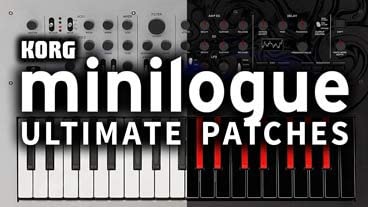
I used the minilogue for ambient pad work and found the 16-step polyphonic sequencer with motion recording to be a genuinely creative tool. The tape-style delay adds character without needing outboard effects, and 200 preset slots give you plenty of starting points.
The 37 slim keys keep the footprint small, making this one of the most portable polysynths available. At around five pounds, it is easy to take to rehearsals or studio sessions. The four voices will eventually feel limiting if you love dense chord voicings, but for most beginners and intermediate players, they are plenty.
Who Should Buy the Korg minilogue
Beginners shopping for their first analog polysynth should look here first. The combination of true polyphony, a useful sequencer, and that oscilloscope display makes the learning curve gentle and the payoff immediate.
It is also an excellent secondary synth for experienced producers who need a portable, inspiring instrument for sketching ideas away from the studio.
What to Watch Out For
The slim keys are divisive. Players with larger hands often find them cramped, and they lack the satisfying feel of full-size keys. If possible, try before you buy.
Four voices will run out if you hold sustained chords with long releases. Complex pad work with overlapping notes can steal voices in unexpected ways, which requires careful playing technique.
3. Korg Volca Bass – Portable Bassline Monster
Korg Volca Bass Analog Synthesizer w/Three Oscillators and 16-step Sequencer
3 VCOs
16-step Electribe sequencer
Battery powered
Built-in speaker
Slide function
Self-tuning
Pros
- Incredibly affordable
- True analog with 3 oscillators
- Battery powered and portable
- Built-in speaker for instant jamming
Cons
- Mini keys and tiny footprint
- No preset storage
- Limited connectivity
- No velocity sensitivity
The Korg Volca Bass is proof that real analog sound does not require a huge budget. This little unit delivers three analog oscillators and an aggressive filter in a package small enough to toss in a backpack.
I ran the Volca Bass through acid bass duties and was impressed by how punchy and present it sounded alongside drums. The Electribe-inspired 16-step sequencer with slide function makes programming 303-style basslines genuinely fun, and the self-tuning keeps your oscillators stable during long sessions.
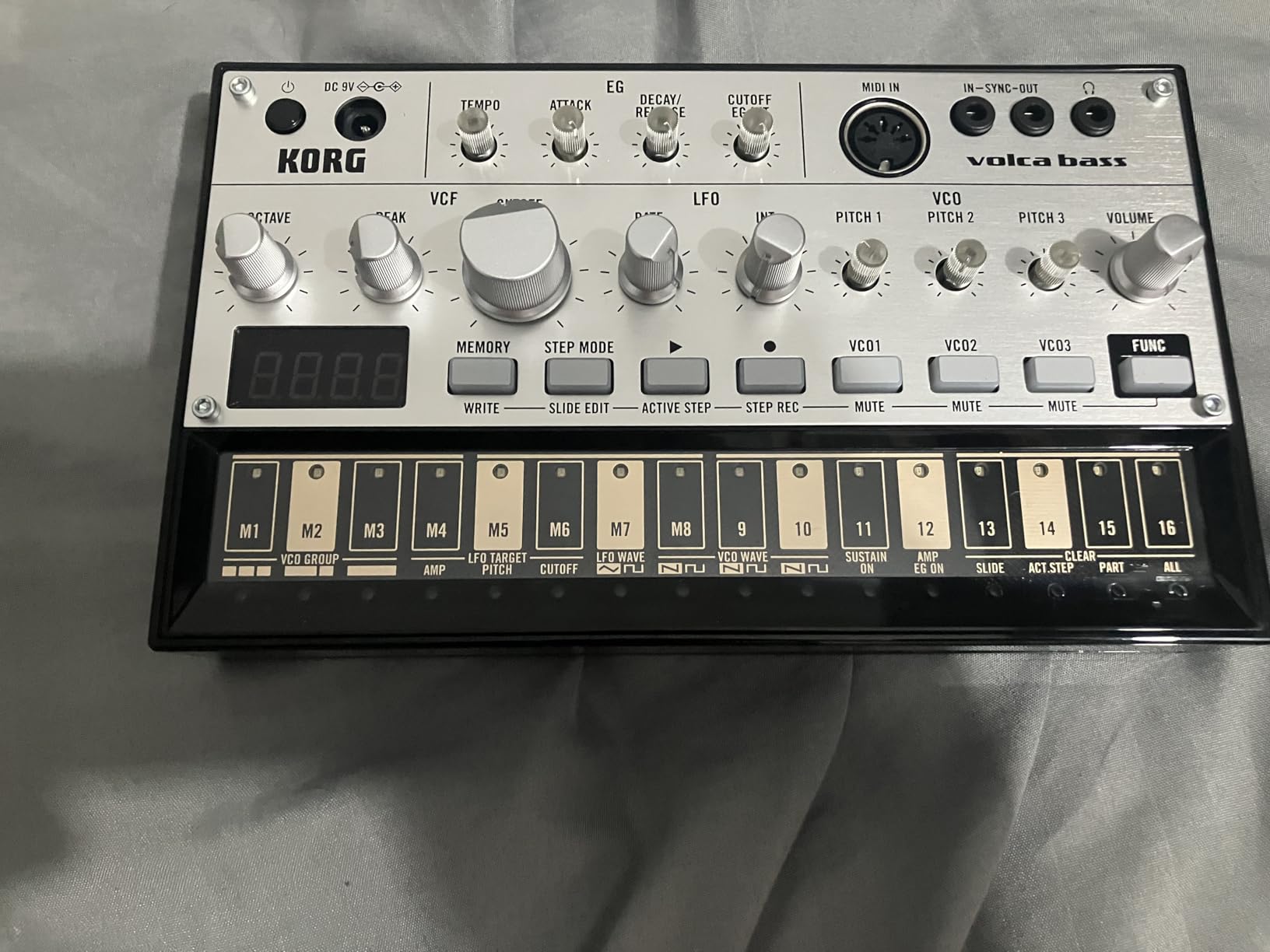
The built-in speaker is surprisingly useful for quick ideas and hotel-room jamming. Battery power means you can make music anywhere without hunting for an outlet. The SYNC jack lets you chain it with other Volcas for a portable modular setup.
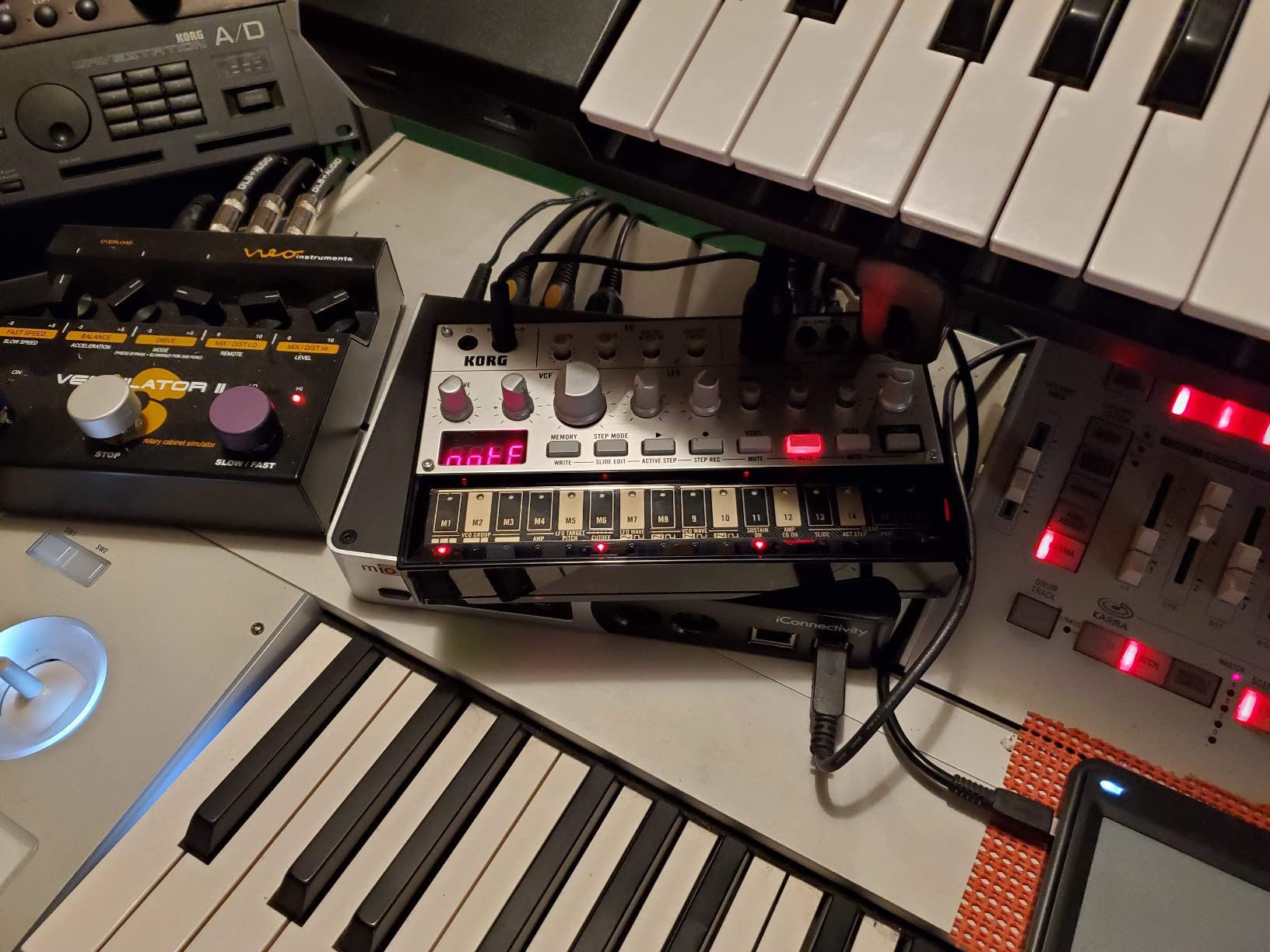
The single VCF, VCA, LFO, and envelope generator keep the architecture simple, which is both a strength and a limitation. You get instant gratification from the knob-per-function layout, but you will not find deep modulation options or preset storage here.
Who Should Buy the Volca Bass
Producers on a tight budget who want genuine analog bass tones should grab this immediately. It is also a fantastic first step into hardware synthesis for someone who is not ready to commit hundreds of dollars.
Live performers who want a portable bassline generator that can sync to other gear will find the Volca Bass endlessly useful. Many producers keep one permanently patched into their setup.
What to Watch Out For
There is no preset storage, so every sound you create lives only as long as you leave the knobs alone. If you need recallable patches, this is not your instrument.
The connectivity is limited to SYNC jack, MIDI IN, and a 3.5mm output. There is no USB audio interface, and the tiny controls can feel fiddly during fast live tweaking.
4. Arturia MicroFreak – Experimental Hybrid Powerhouse
Arturia MicroFreak Synthesizer Keyboard
17 paraphonic oscillator modes
Oberheim SEM analog filter
25 touch keys with poly aftertouch
5x7 mod matrix
Spice and Dice sequencer
Pros
- 17 oscillator engines for endless sound design
- Oberheim SEM analog filter sounds gorgeous
- Polyphonic aftertouch on touch keys
- CV and MIDI connectivity for modular rigs
Cons
- Flat capacitive keys feel unnatural
- No dedicated knob per parameter
- Learning curve for menu system
- Budget build quality
The Arturia MicroFreak is one of the most divisive synthesizers on the market, and I understand why. Forum users either love its experimental engines or hate its flat touch keys, with very little middle ground.
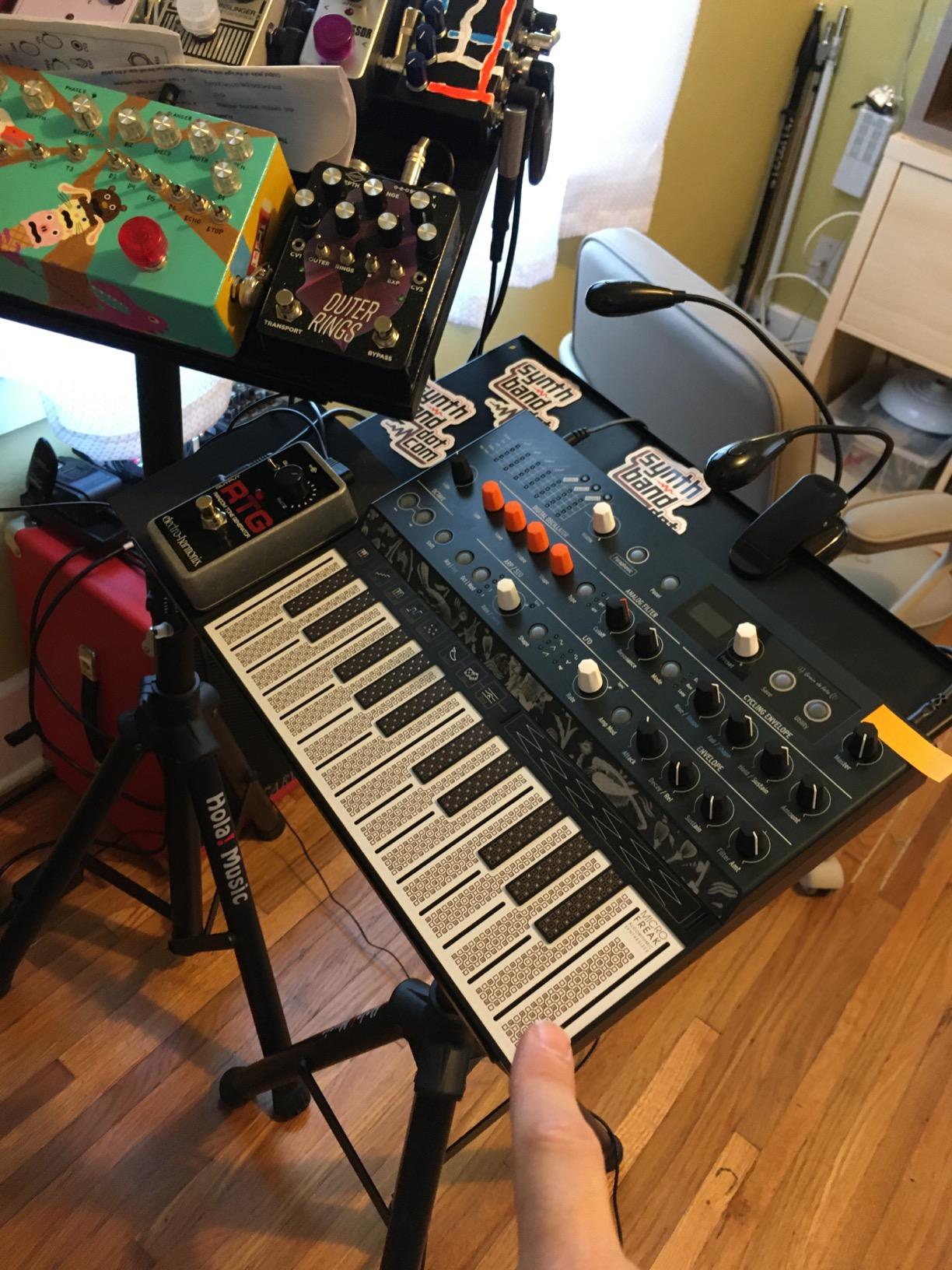
What makes the MicroFreak remarkable is the sheer variety of sound engines packed inside. You get 17 paraphonic oscillator modes drawing from Arturia, Mutable Instruments, and Noise Engineering designs. From wavetable to physical modeling to granular textures, this little synth covers sonic territory that instruments three times the price cannot match.
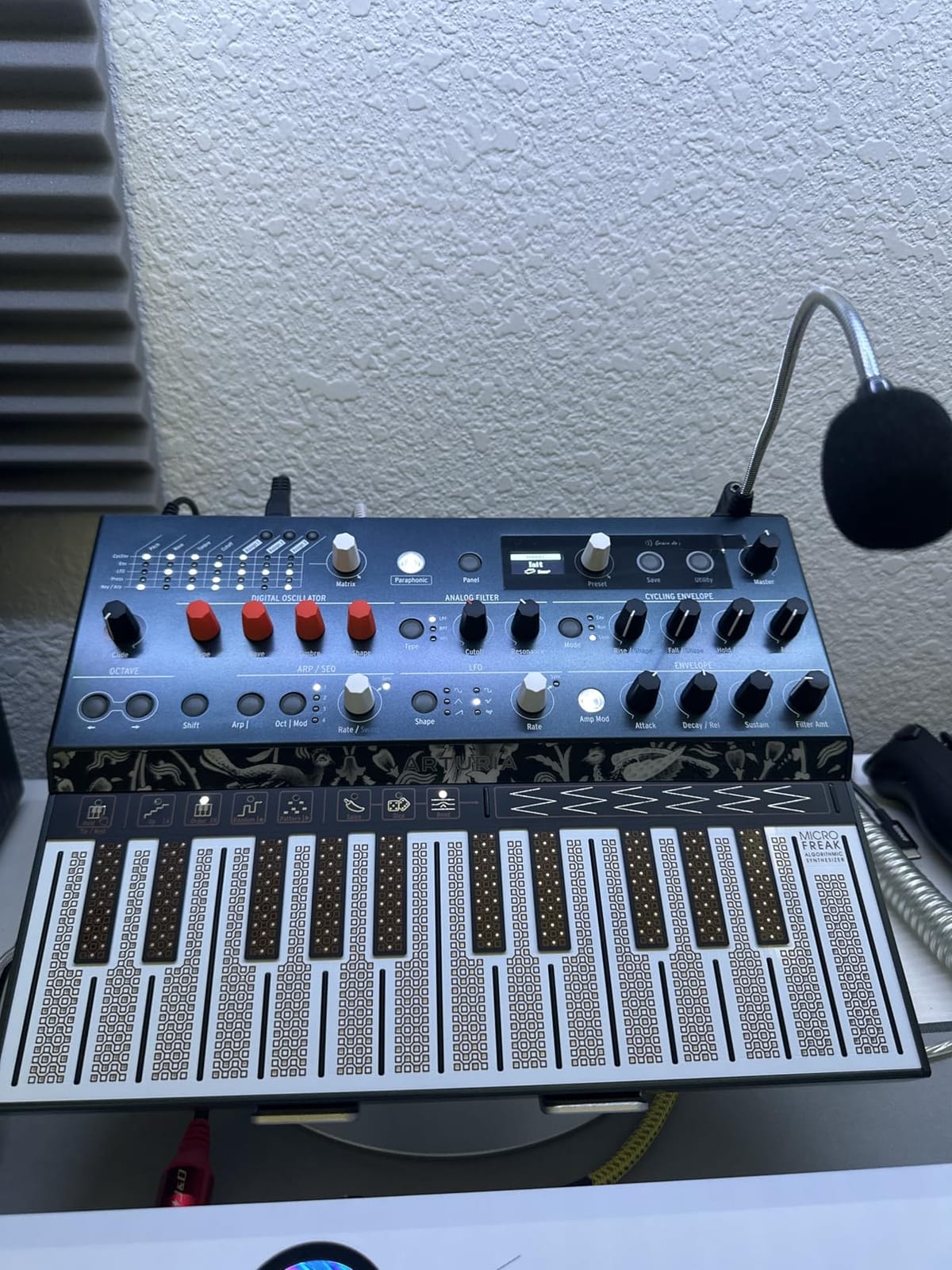
The 12dB Oberheim SEM analog filter is the secret weapon here. Digital oscillators run through a genuine analog filter path, giving you hybrid sound design that bridges two worlds. The 5×7 modulation matrix lets you route sources to destinations with surprising depth for this price tier.
I found the Spice and Dice sequencer genuinely inspiring for generating unpredictable patterns. The capacitive touch keys with polyphonic aftertouch add expression that monophonic synths cannot offer, though the playing feel takes getting used to.
Who Should Buy the Arturia MicroFreak
Sound designers and experimental producers who want maximum sonic variety per dollar should look no further. If you love exploring unusual textures and are comfortable with menu-based editing, this synth rewards curiosity.
Modular enthusiasts will appreciate the CV connectivity, which lets the MicroFreak serve as a powerful controller and sound source within a Eurorack ecosystem.
What to Watch Out For
The flat capacitive keys are the biggest complaint, and it is valid. They lack the tactile feedback of real keys, which makes expressive playing difficult. Many users add an external MIDI keyboard for serious performance.
Despite its analog filter, this is technically a hybrid synth, not a pure analog instrument. If your heart is set on an all-analog signal path, the MicroFreak will not satisfy that requirement.
5. Behringer Model D – Legendary Sound at a Fraction of the Cost
Behringer MODEL D Authentic Analog Synthesizer with 3 VCOs, Ladder Filter, LFO and Eurorack Format
3 VCOs with 5 waveforms
Ladder filter
Eurorack format
Matched transistors and JFETs
0.1% thin film resistors
MIDI USB
Pros
- Authentic Minimoog-style sound at budget price
- 3 VCOs with classic ladder filter
- Eurorack-compatible format
- Solid metal construction
Cons
- No keyboard included
- Knobs feel less premium than original
- Shipping delays reported by buyers
- No sequencer or presets
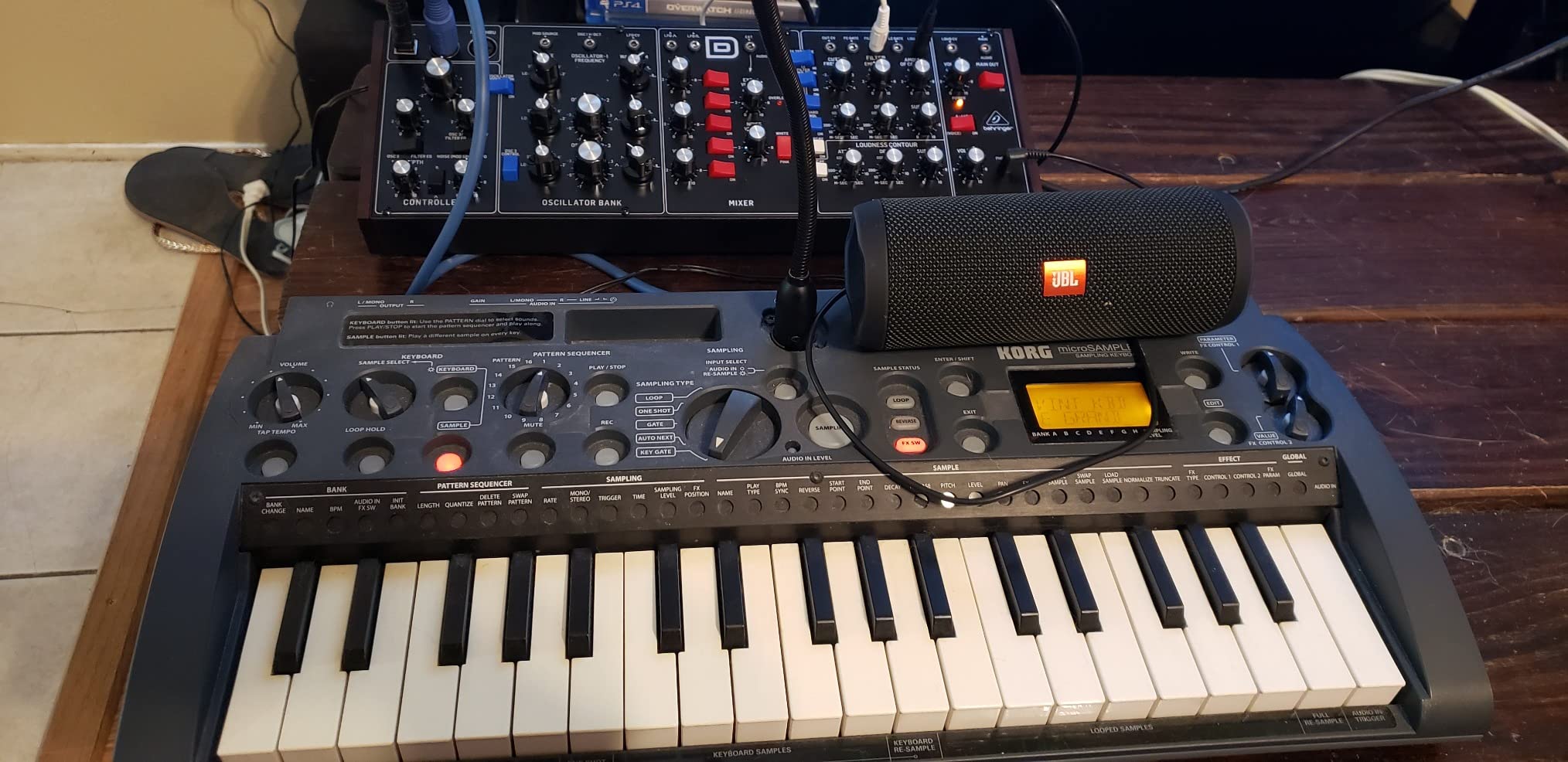
The Behringer Model D is a faithful reproduction of the legendary Minimoog circuitry, packed into a Eurorack-compatible desktop module. Our team was skeptical at first, but the sound quality genuinely surprised us.
Three VCOs with five oscillator shapes and variable pulse widths give you the building blocks of classic analog synthesis. The ladder filter, built with matched transistors and JFETs, delivers that unmistakable Moog-style warmth that defined decades of recorded music.
I compared the Model D side by side with recordings of original Minimoog units and was struck by how close the character matches. The 0.1% thin film resistors and polyphenylene sulphide capacitors show that Behringer took the circuit cloning seriously rather than cutting corners.
The Eurorack format means you can mount it in a modular case or use it as a standalone desktop module. MIDI over USB handles note input, though you will need to supply your own keyboard controller since there are no keys on this unit.
Who Should Buy the Behringer Model D
Producers who have always wanted a Minimoog but cannot justify the vintage market prices should seriously consider this. The sound is remarkably close to the original at a fraction of the cost.
Modular synth owners will find it fits naturally into a Eurorack setup, providing classic subtractive synthesis voices alongside more experimental modules.
What to Watch Out For
There is no keyboard, sequencer, or preset storage. You need an external controller to play it, and every sound exists only as long as you keep the knobs where you left them.
Some buyers have reported shipping delays, and the knob quality, while functional, does not match the premium feel of an original Moog. The Behringer brand also draws strong opinions in synth communities.
6. Novation Bass Station II – Bass and Lead Specialist
Novation Bass Station II Analog Monosynth
2 analog oscillators plus sub
Dual filter design
25 full-size velocity keys with aftertouch
Overdrive
Arpeggiator
Pros
- Dual filter design offers huge tonal range
- Full-size keys with aftertouch feel great
- Excellent bass and lead tones
- Built-in arpeggiator is intuitive
Cons
- Monophonic limits chord work
- Interface can feel cluttered
- Plastic chassis
- Limited modulation routing
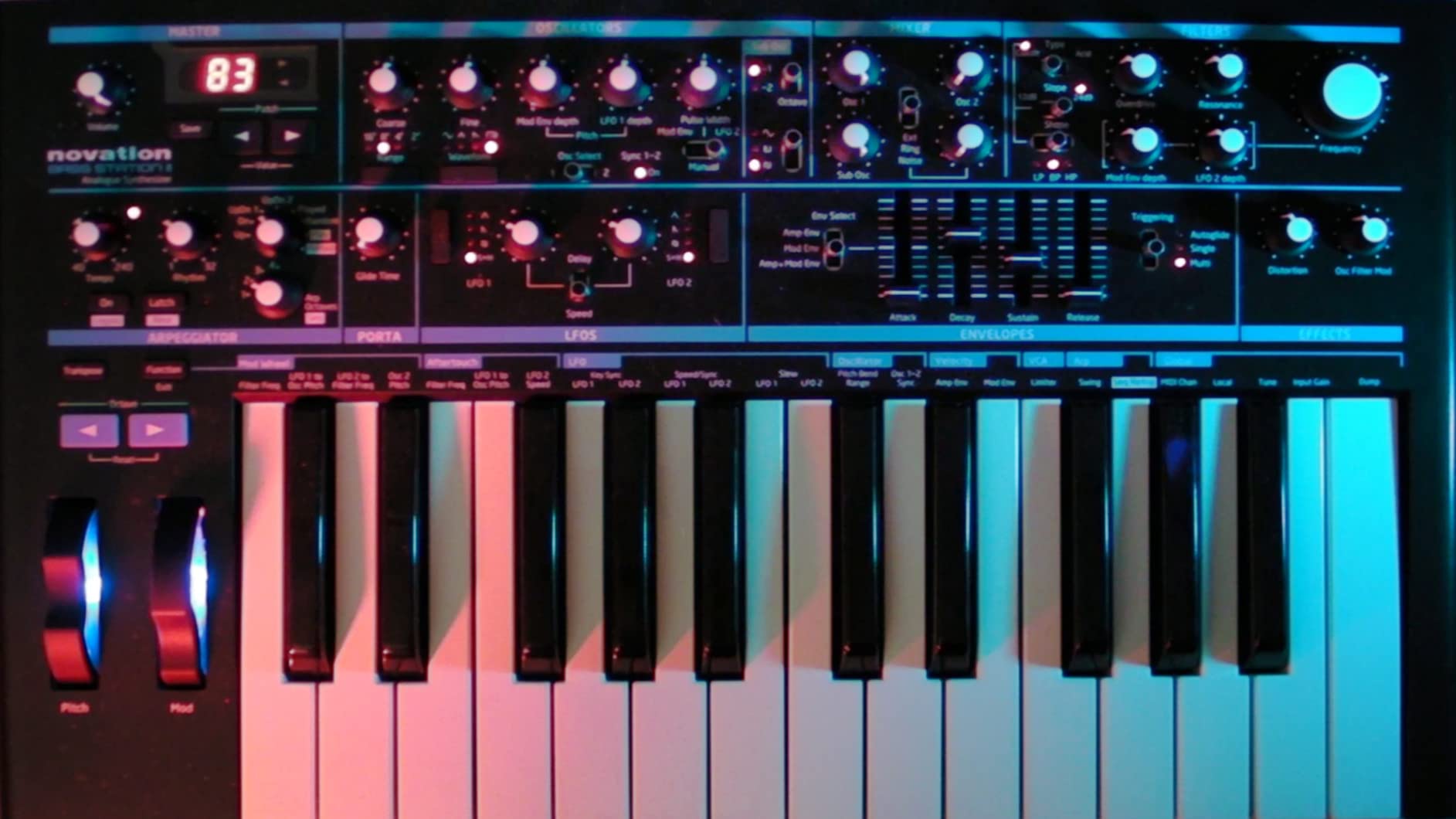
The Novation Bass Station II has been a workhorse monosynth for over a decade, and it remains one of the best analog synthesizers for bass-heavy production styles. I have used it extensively for electronic music and found its acid filter to be a standout feature.
The dual oscillator design with an additional sub-oscillator gives you massive low-end presence. The two filters are the real story here: a classic multi-mode filter handles general duties, while the dedicated 24dB acid filter delivers the squelchy, resonant tones that defined dance music.
The 25 full-size velocity-sensitive keys with aftertouch are a significant upgrade over the mini keys found on competitors at this price. The build quality feels solid despite the plastic chassis, and Novation includes a generous two-year warranty.
The onboard arpeggiator and overdrive circuit add performance options without needing external gear. MIDI and USB connectivity cover both modern and legacy setups, though there is no CV connectivity for modular integration.
Who Should Buy the Novation Bass Station II
Electronic music producers who live and die by bass and lead sounds will find this synth incredibly rewarding. The acid filter alone justifies the purchase if you produce house, techno, or any dance-adjacent genre.
Players who want full-size keys with aftertouch at a mid-range price should also look here, since this combination is rare in this tier.
What to Watch Out For
The monophonic architecture means no chords or pads. The front panel packs a lot of controls into a small space, which can feel cluttered during fast workflow.
There is no CV or gate connectivity, so modular integration is off the table. The modulation routing is also fairly basic compared to newer synths in this price range.
7. Moog Grandmother – Semi-Modular Vintage Soul
MOOG Grandmother Semi-Modular Analog Synthesizer
32 velocity-sensitive keys
Analog spring reverb
41 modular patch points
Built-in arpeggiator and sequencer
2 oscillators with selectable waveforms
Pros
- Genuine analog spring reverb sounds incredible
- 41 patch points for modular exploration
- Beautiful vintage-inspired design
- Excellent build quality
Cons
- Expensive for a semi-modular
- Heavy and not very portable
- Limited without patch cables
- No preset storage
The Moog Grandmother is a love letter to classic Moog design, combining vintage sound character with modern semi-modular flexibility. Playing it feels like operating a piece of musical history that happens to have contemporary connectivity.
The analog spring reverb tank is worth the price of admission on its own. I ran drum machines through the audio input just to hear them through that reverb, and the lush, organic tail is something no plugin has ever convincingly replicated.
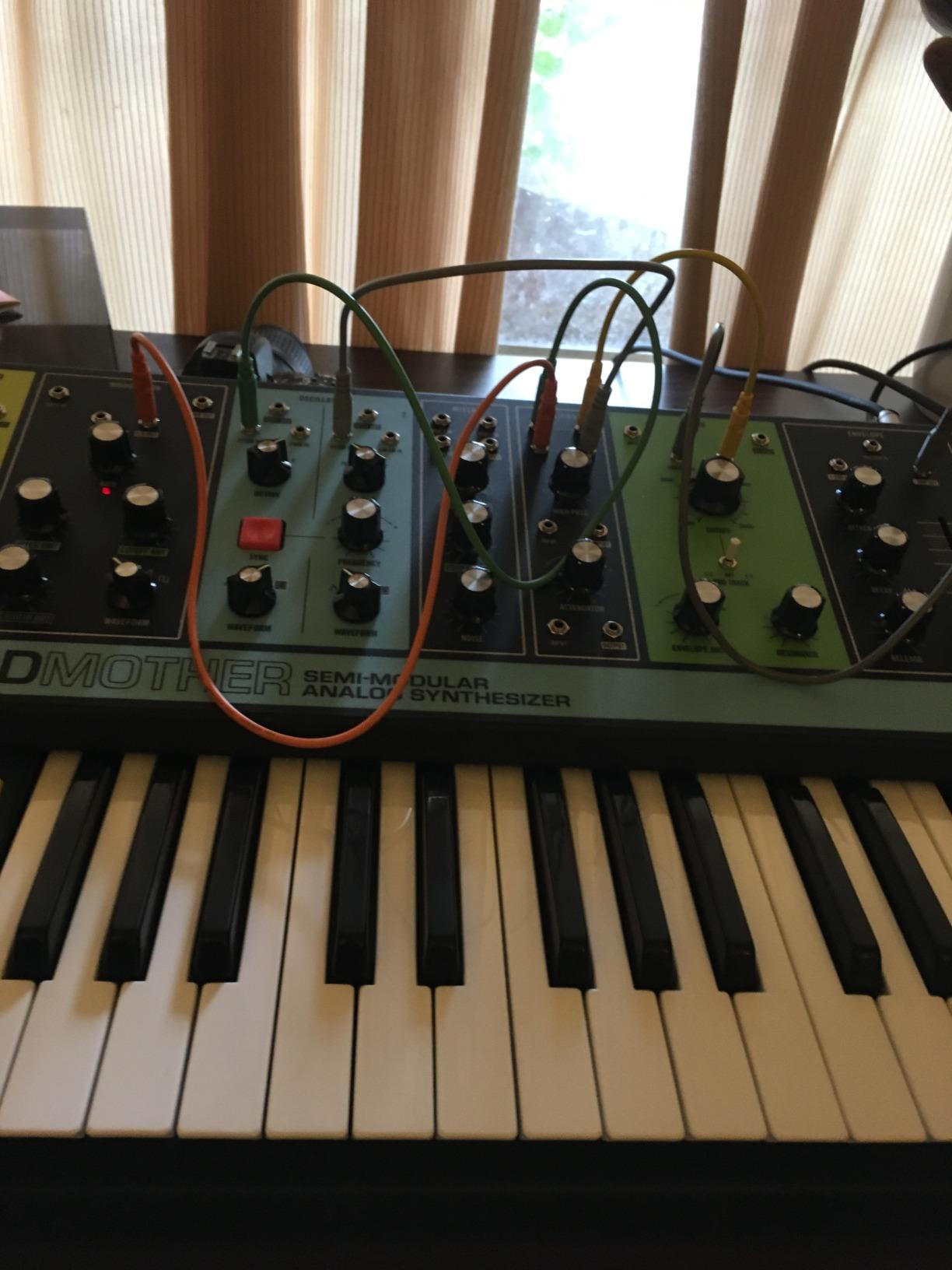
Two oscillators with selectable waveforms plus white noise give you the foundation for everything from warm basses to screaming leads. The 41 modular patch points let you reroute signals however you like, creating complex modulation paths that evolve over time.
The built-in arpeggiator and sequencer add compositional tools without cluttering the interface. The 32 velocity-sensitive full-size keys feel premium and responsive. Connectivity covers 5-pin DIN MIDI, USB, and quarter-inch audio in and out.
Who Should Buy the Moog Grandmother
Modular-curious producers who want a guided entry into patching should start here. The Grandmother works perfectly without any patch cables, so you can learn the signal flow gradually at your own pace.
Anyone who values organic, vintage-inspired sound character will appreciate the spring reverb and classic Moog filter tone. This synth excels at ambient, cinematic, and experimental genres.
What to Watch Out For
The price is significant, and without using the patch points you are not getting the full value. If you have no interest in modular patching, simpler synths may serve you better for less money.
At over 16 pounds, the Grandmother is not portable in any meaningful sense. There is also no preset storage, so your patches live only as long as the cables stay connected.
How to Choose the Best Analog Synthesizer
Choosing the right analog synth means understanding how a few key specifications affect your day-to-day playing experience. Here is what matters most when comparing options.
Polyphony: Mono vs Poly
Monophonic synths play one note at a time, making them ideal for basslines and leads. Polyphonic synths play multiple notes simultaneously, which you need for chords and pads. Decide what you want to play before anything else.
Paraphonic synths offer a middle ground, letting you play multiple notes that share a single filter and amplifier. The Arturia MicroFreak uses this approach to deliver broad polyphony at a low price.
Filter Type and Character
The filter defines the sonic personality of an analog synth more than any other component. Moog ladder filters deliver warm, smooth lows. Oberheim SEM filters offer a more open, vocal quality. Acid-style filters provide the resonant squelch that dance music demands.
Pay attention to whether a synth offers multiple filter modes (low-pass, band-pass, high-pass). The Moog Messenger includes all three, giving you maximum tonal flexibility.
Keybed Quality and Size
The keybed determines how the instrument feels under your fingers. Full-size velocity-sensitive keys with aftertouch, like those on the Novation Bass Station II and Moog Grandmother, provide the most expressive playing experience.
Slim keys, like those on the Korg minilogue, save space but can frustrate players with larger hands. Capacitive touch keys, like the MicroFreak’s, offer aftertouch but lack the tactile feedback of physical keys.
Connectivity Options
Modern synths should offer MIDI over USB at minimum, and 5-pin DIN MIDI remains important for connecting to legacy gear. CV and gate patch points let you integrate with modular synthesizers, which is essential if you plan to expand into Eurorack.
Audio input is a feature worth seeking. The Moog Grandmother’s audio input lets you run external sounds through its spring reverb and filter, effectively turning it into an effects processor.
Preset Storage vs Knob-per-Function
Synths with preset storage, like the Moog Messenger and Korg minilogue, let you save and recall sounds instantly. This is essential for live performance and studio recall.
Synths without presets, like the Volca Bass and Behringer Model D, force you to recreate sounds manually each time. This encourages deeper understanding of synthesis but can be frustrating when you need to reproduce a specific patch.
Value and Long-Term Resale
Forum discussions on r/synthesizers and Gearspace consistently highlight that proven, reliable instruments hold their value better than trendy newcomers. Moog instruments historically retain resale value well, while budget brands like Behringer and Korg Volcas depreciate more quickly.
Consider whether you want a synth as a long-term investment or a short-term learning tool. Both approaches are valid, but they point toward different purchases.
Frequently Asked Questions
What is the best analog synthesizer?
The best analog synthesizer overall is the Moog Messenger, which combines classic Moog sound with modern features like a 64-step sequencer, 256 presets, and RES BASS compensation. For polyphony, the Korg minilogue remains the best value analog polysynth, while the Moog Grandmother is the top choice for semi-modular flexibility.
Are analog synths still being made?
Yes, analog synthesizers are actively manufactured in 2026 by brands including Moog, Korg, Arturia, Behringer, Novation, and Sequential. The analog synth market is healthier than it has been in decades, with options ranging from budget bass synths under $150 to flagship polysynths over $3000.
What is the best analogue synth under $1000?
The best analog synths under $1000 include the Korg minilogue for polyphony, the Novation Bass Station II for bass and leads, the Arturia MicroFreak for experimental sound design, and the Behringer Model D for classic Minimoog-style tones. The Moog Grandmother at $999 is also an outstanding semi-modular option at the top of this budget tier.
What synth does Billie Eilish use?
Billie Eilish and her producer Finneas O’Connell have used a variety of synthesizers in their productions, including the Moog Subharmonicon, Sequential Prophet, and various software synths. Their sound relies less on any single instrument and more on creative sampling, layering, and processing across both hardware and software tools.
What is the best synthesizer of all time?
The most widely regarded synthesizers of all time include the Minimoog for its defining analog sound, the Yamaha DX7 for popularizing FM synthesis, the Roland Jupiter-8 for polyphonic warmth, and the Sequential Prophet-5 for bringing programmable polyphony to studios. Among current models, the Moog Grandmother and Arturia PolyBrute are frequently cited as modern classics.
Final Thoughts
The best analog synthesizers in 2026 span an impressively wide range of prices and capabilities. The Moog Messenger earns our editor’s choice for blending classic tone with modern features, while the Korg minilogue remains unbeatable for first-time polysynth buyers.
For bass-focused producers, the Novation Bass Station II and Korg Volca Bass deliver exactly what their names promise. Experimental sound designers will find endless inspiration in the Arturia MicroFreak, and modular explorers cannot go wrong with the Moog Grandmother’s 41 patch points and lush spring reverb.
Whatever you choose, the most important thing is to actually play the instrument. The best analog synthesizer is the one that pulls you away from your screen and into the kind of hands-on sound design that only hardware can inspire.