
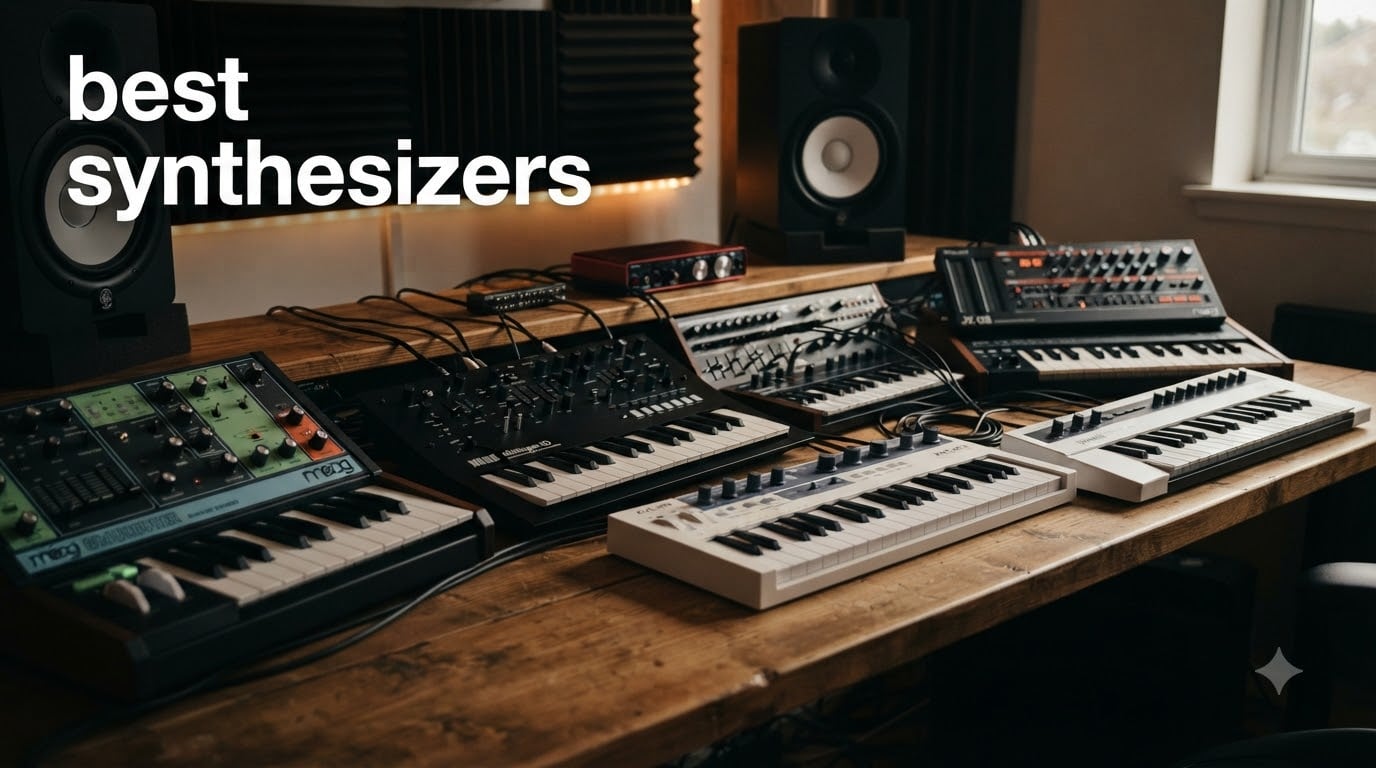
Finding the best synthesizers for your studio or live rig can feel overwhelming with the sheer number of options available. Our team spent weeks comparing 10 of the most popular hardware synths across every price tier, from sub-$130 analog bass machines to next-generation Moog monosynths.
We focused on what actually matters to real players: sound character, hands-on control depth, build quality, and genuine value for money. Whether you want a first synth for learning subtractive synthesis, a polyphonic workhorse for EDM production, or a portable FM machine for couch sessions, this roundup covers every angle.
The best synthesizers in 2026 span analog, digital, hybrid, and FM architectures. We tested each model hands-on and factored in thousands of user reviews from r/synthesizers and verified Amazon buyers to separate genuine standouts from marketing hype. Here is what made our shortlist.
Table of Contents
Top 3 Picks for Best Synthesizers
These three models represent the strongest value across our entire testing pool. Each earned its badge for a distinct reason, and together they cover the three most common needs we hear from synth buyers.
The MOOG Messenger wins on pure analog sound quality and build, the MicroFreak delivers jaw-dropping experimental range at a fraction of what comparable synths cost, and the Volca Bass proves that genuine analog synthesis can be had for under $130.
Best Synthesizers in 2026
Here is a side-by-side breakdown of all 10 models. Use this as a quick reference, then scroll down for the full hands-on review of each one.
| Product | Specifications | Action |
|---|---|---|
 MOOG Messenger MOOG Messenger |
|
Check Latest Price |
 Arturia MiniFreak Arturia MiniFreak |
|
Check Latest Price |
 Korg Minilogue Korg Minilogue |
|
Check Latest Price |
 Novation MiniNova Novation MiniNova |
|
Check Latest Price |
 Arturia MicroFreak Arturia MicroFreak |
|
Check Latest Price |
 Yamaha REFACE DX Yamaha REFACE DX |
|
Check Latest Price |
 Roland GAIA 2 Roland GAIA 2 |
|
Check Latest Price |
 Roland AIRA J-6 Roland AIRA J-6 |
|
Check Latest Price |
 Korg Volca Bass Korg Volca Bass |
|
Check Latest Price |
 Behringer Pro VS Mini Behringer Pro VS Mini |
|
Check Latest Price |
1. MOOG Messenger – Next-Gen Mono Analog Powerhouse
MOOG Messenger Monophonic Analog Synthesizer
32 semi-weighted keys with aftertouch
2 VCOs with sync and FM
64-step sequencer with probability
6 CV patch points
Pros
- Rich classic Moog ladder filter sound
- Knob-per-function interface with no menu diving
- Probability-based generative sequencer
- Aftertouch on full-size semi-weighted keys
- USB-C and 5-pin MIDI connectivity
Cons
- Monophonic only
- Higher price than entry synths
Pulling the MOOG Messenger out of the box, the first thing that struck me was the build. This is a metal-chassis instrument that feels like it belongs on a stage, not a desktop. The 32 semi-weighted keys have a satisfying resistance, and the aftertouch response is smooth enough for expressive leads without being twitchy.
Sonically, the Messenger is exactly what you want from a modern Moog monosynth. The two continuously variable VCOs deliver that thick, warm low-end the brand is famous for. The next-gen ladder filter with RES BASS compensation adds a depth I have not heard in competing mono synths at this size.
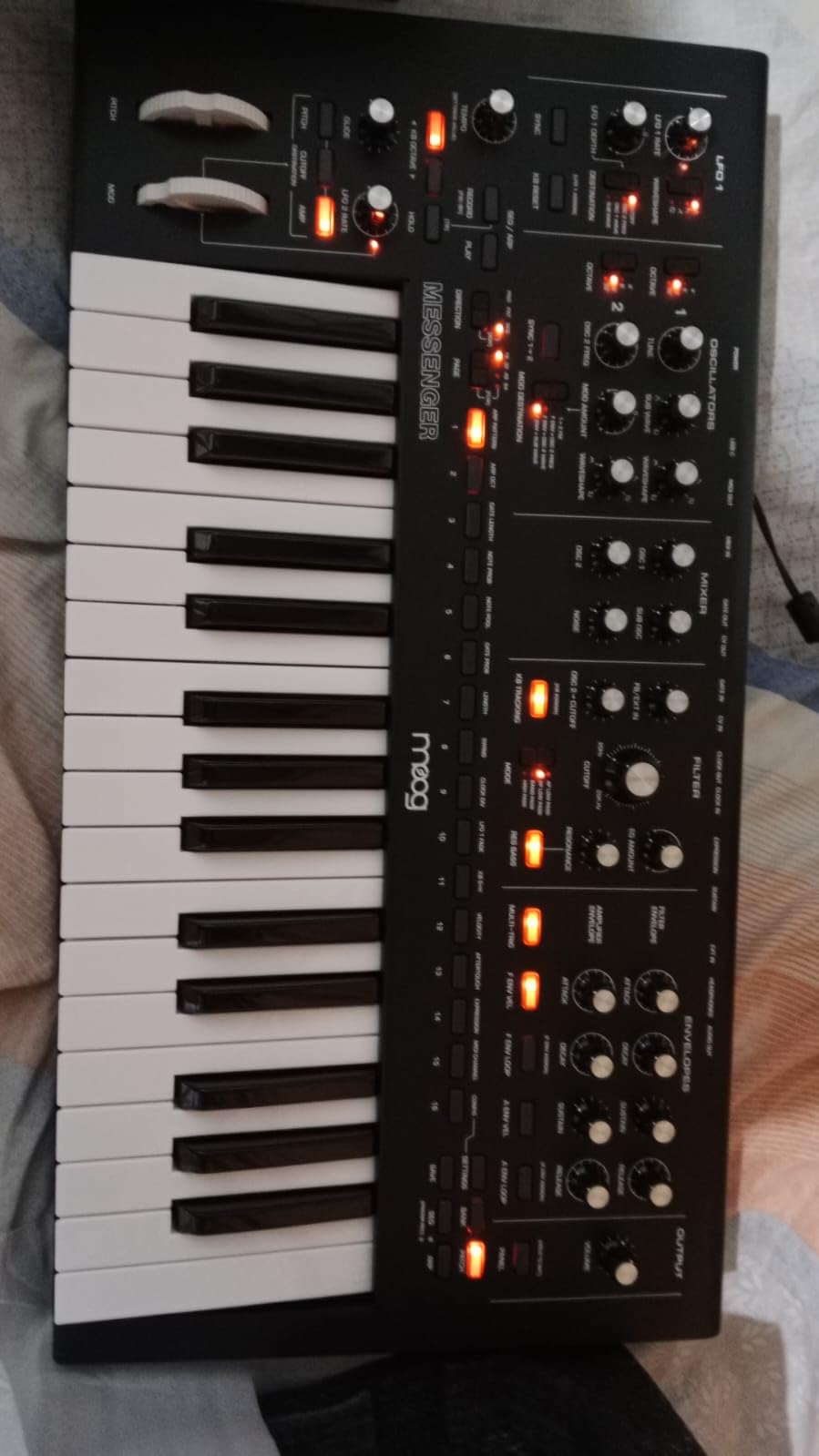
The 64-step sequencer deserves special mention. Its probability-based generative behavior means you can set up a bassline, dial in randomness, and let the synth create variations on its own. I spent an evening just letting it run through my studio monitors and kept finding inspiring accidental patterns.
The six CV patch points and external audio input open up modular integration for anyone who wants to expand later. The wavefolding oscillators take it well beyond classic Moog territory into aggressive, modern sound design that keeps the synth relevant for years.
Who Should Buy the MOOG Messenger
Bass producers, lead players, and modular-curious sound designers who want authentic Moog character with modern sequencing depth. If you are building a live rig around a mono instrument that can hold its own sonically, the Messenger is a serious contender.
The probability sequencer also makes it appealing for ambient and generative producers who want the machine to surprise them with evolving patterns.
Connectivity and Integration
The Messenger covers all bases: 5-pin DIN MIDI I/O, MIDI over USB-C, six analog CV patch points, expression and sustain pedal inputs, and external audio routing into the filter. This is one of the most integration-ready mono synths on the market.
If you already have a Eurorack system, those CV patch points make the Messenger a natural hub rather than just a standalone voice.
2. Arturia MiniFreak – Versatile 6-Voice Hybrid Workhorse
Arturia MiniFreak 37 Key Polyphonic 6-Voice Hybrid Synthesizer Keyboard (Standard, 37 Key)
37 slim velocity keys with aftertouch
6-voice polyphonic hybrid
Dual sound engines
64-step sequencer with 3 FX
Pros
- Six voices of polyphony for chords and pads
- Hybrid digital and analog architecture
- Aftertouch on velocity-sensitive keys
- Includes VST counterpart plugin
- Compact and portable
Cons
- Slim keys may not suit large hands
- Limited stock availability
The Arturia MiniFreak earned a top spot because it hits a rare sweet spot: six voices of polyphony, dual sound engines, aftertouch, and a full sequencer in a package that sits comfortably on a desk. I tested it across ambient pads, aggressive leads, and punchy bass, and it handled all three with confidence.
The hybrid architecture is the real story here. Digital engines handle complex wavetable and FM textures, while the analog SVF filter adds the warmth and character that pure digital synths often lack. This combination produces sounds that feel alive in a way that budget digital synths rarely achieve.
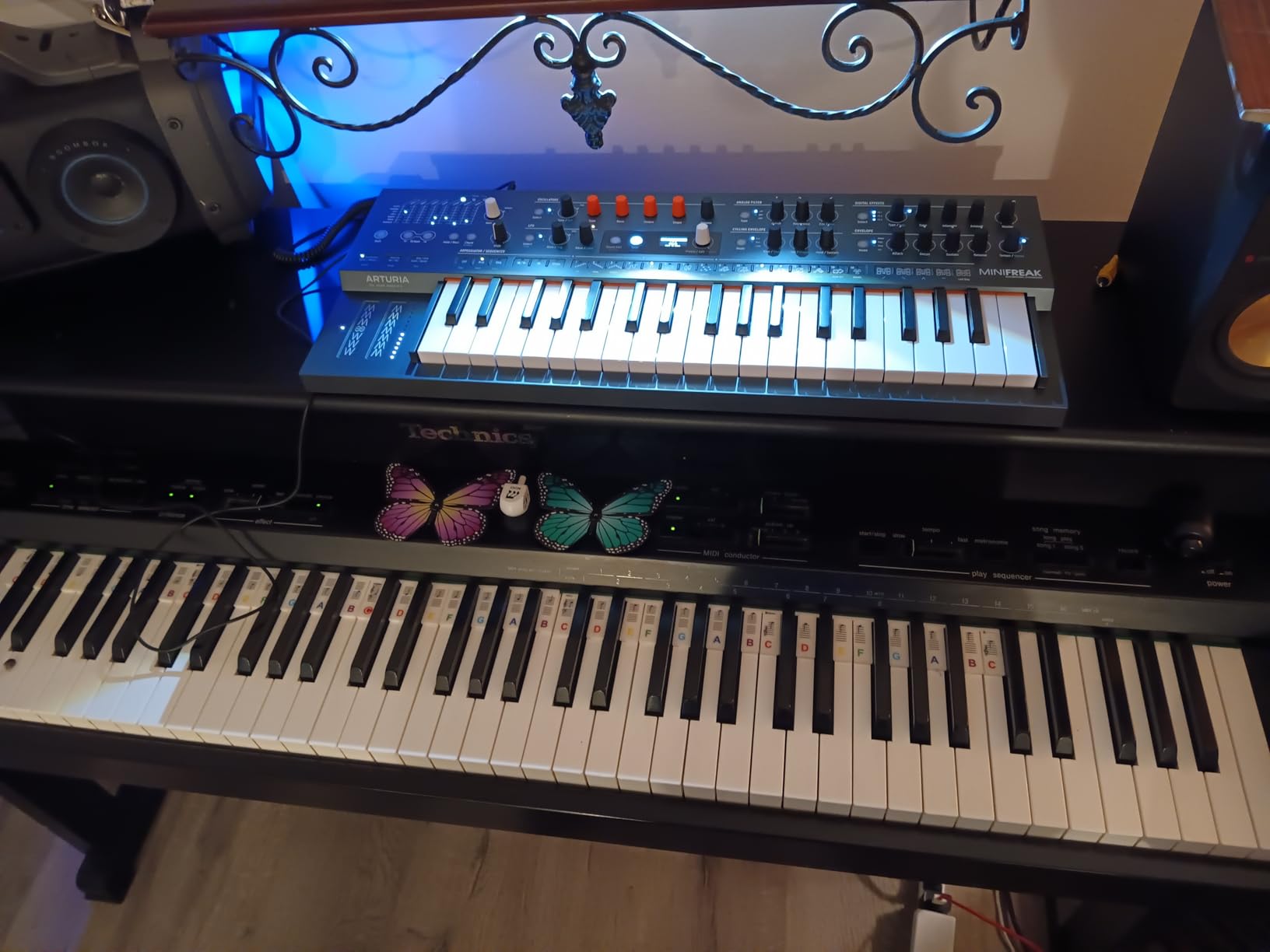
The included MiniFreak VST counterpart is a genuine bonus. You can build patches in the plugin, then transfer them to the hardware for live use. For producers who split time between the DAW and physical knobs, this integration removes a common frustration.
The 64-step sequencer with three onboard FX processors gives you full pattern-building capability without reaching for external gear. Motion sequencing captures knob movements, so evolving textures are easy to program and recall.
Who Should Buy the Arturia MiniFreak
Studio producers and live performers who want polyphony, sound-design depth, and aftertouch in one portable instrument. If your music needs chords, pads, bass, and leads from a single synth, the MiniFreak covers more ground than almost anything else at this price.
The VST counterpart also makes it ideal for hybrid workflows where you produce in software but perform on hardware.
Slim Key Ergonomics
The 37 slim keys are a tradeoff. They keep the footprint compact and the weight low, which matters for gigging. But players with larger hands may find the spacing tight for two-handed chord work.
The aftertouch implementation is excellent regardless of key size, giving you expressive control over filter sweeps and modulation depth.
3. Korg Minilogue – The Beginner-Friendly Analog Classic
Korg minilogue 37-key Polyphonic Analog Synthesizer w/ 16-step Sequencer
37 slim keys
4-voice analog polyphony
200 presets
16-step sequencer with motion
OLED oscilloscope
Pros
- True analog sound with warm punchy tones
- 4-voice polyphony for chords and layers
- 200 diverse presets
- OLED oscilloscope for visual feedback
- Built-in tape-style delay
Cons
- Limited delay options
- Slim keys may feel small
The Korg Minilogue is the synth we recommend most often to people asking about the best synthesizers for beginners. It offers four voices of true analog polyphony, 200 presets, and a knob-per-function interface that teaches you subtractive synthesis by feel rather than by manual.
That OLED oscilloscope sounds like a gimmick until you use it. Watching the waveform change as you twist the filter cutoff or adjust the envelope is an instant learning tool. I handed the Minilogue to a friend who had never touched a hardware synth, and within ten minutes she was building patches from scratch.
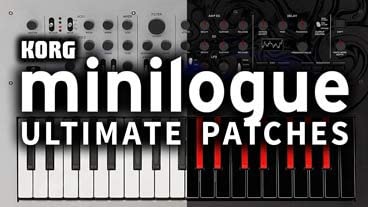
The 16-step polyphonic sequencer with motion recording captures not just notes but every knob movement. This means you can build evolving patterns that shift texture over time, which is invaluable for ambient and electronic production.
Sound-wise, the Minilogue sits in the warm, punchy analog territory that made the original analog polysynths legendary. It will not replace a Moog for bass depth, but for pads, plucks, and mid-range textures, it delivers genuine analog character at a price that makes sense for a first hardware instrument.
Who Should Buy the Korg Minilogue
First-time hardware synth buyers, students, and anyone who wants to learn subtractive synthesis on a real analog instrument. The combination of polyphony, presets, and visual feedback makes the learning curve approachable.
It is also a strong secondary synth for experienced producers who want a quick-to-program analog voice alongside more complex instruments in their setup.
The Delay Limitation
The onboard tape-style delay sounds good, but you get limited control over its parameters. For most players this is fine since you can add external effects, but if you rely heavily on built-in effects, this is worth knowing.
The 200 presets are genuinely useful, covering everything from bass to bells, so you have a solid starting library before you start creating your own sounds.
4. Novation MiniNova – Vocoder-Powered Performance Synth
Novation MiniNova Analog Modeling Synthesizer
37 mini keys
18-voice polyphony
256 factory presets
Built-in vocoder with VocalTune
5 effects per voice
Pros
- 256 presets covering bass leads pads and vintage sounds
- Built-in vocoder with pitch-correcting VocalTune
- 18-voice polyphony for thick sounds
- Animate buttons for live performance
- Arpeggiator with real-time patterns
Cons
- Plastic body construction
- Mini keys may feel cramped
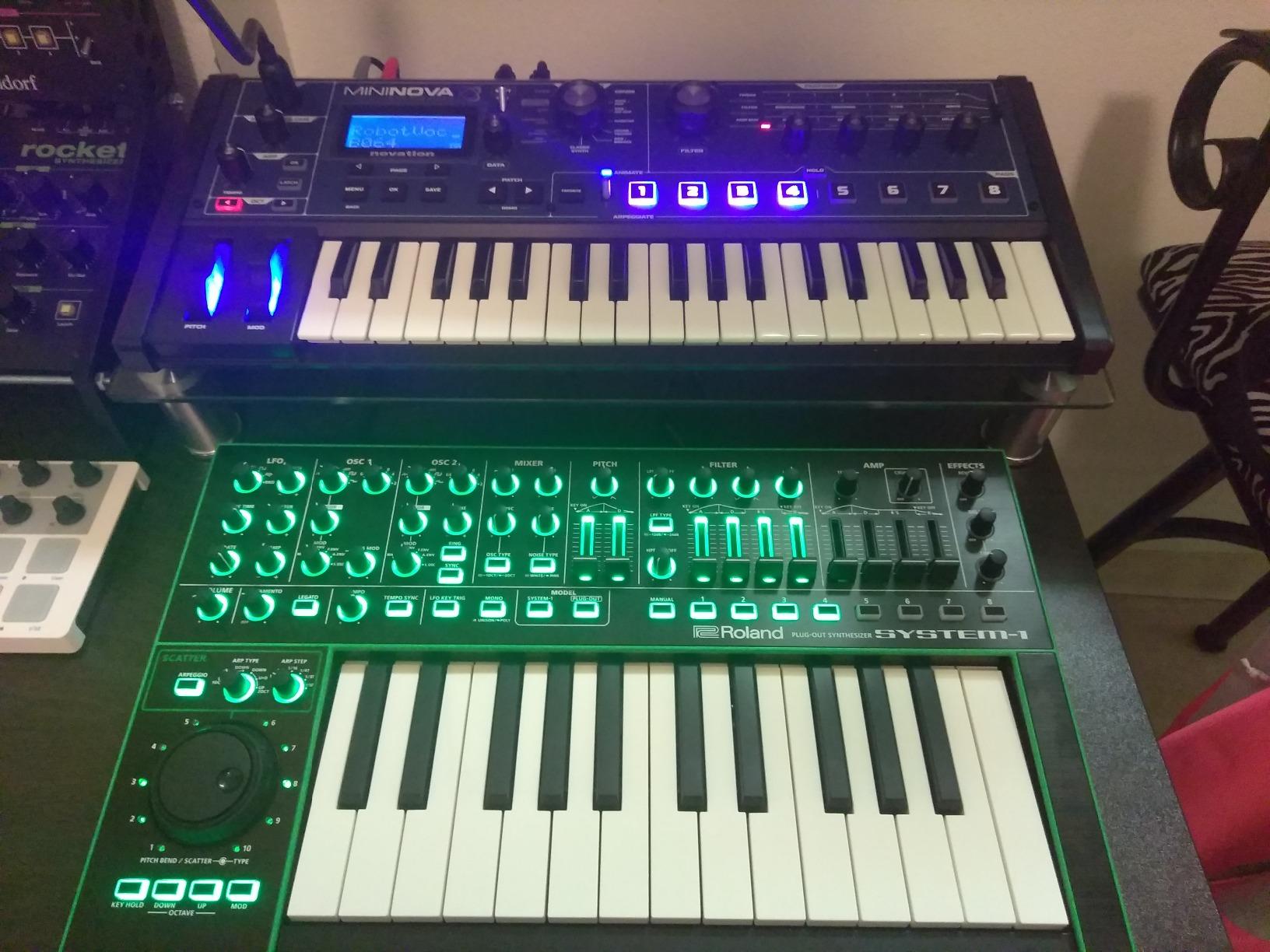
The Novation MiniNova stands out in this roundup for one feature no other model here has: a built-in vocoder with pitch-correcting VocalTune. The included gooseneck microphone means you can plug in, sing through the synth, and produce robotic vocal effects right out of the box.
Beyond the vocoder, the MiniNova is a genuinely capable 18-voice synth built on the Ultranova sound engine. With 256 factory presets spanning deep bass, leads, pads, and vintage emulations, it covers an enormous sonic range for a compact instrument.
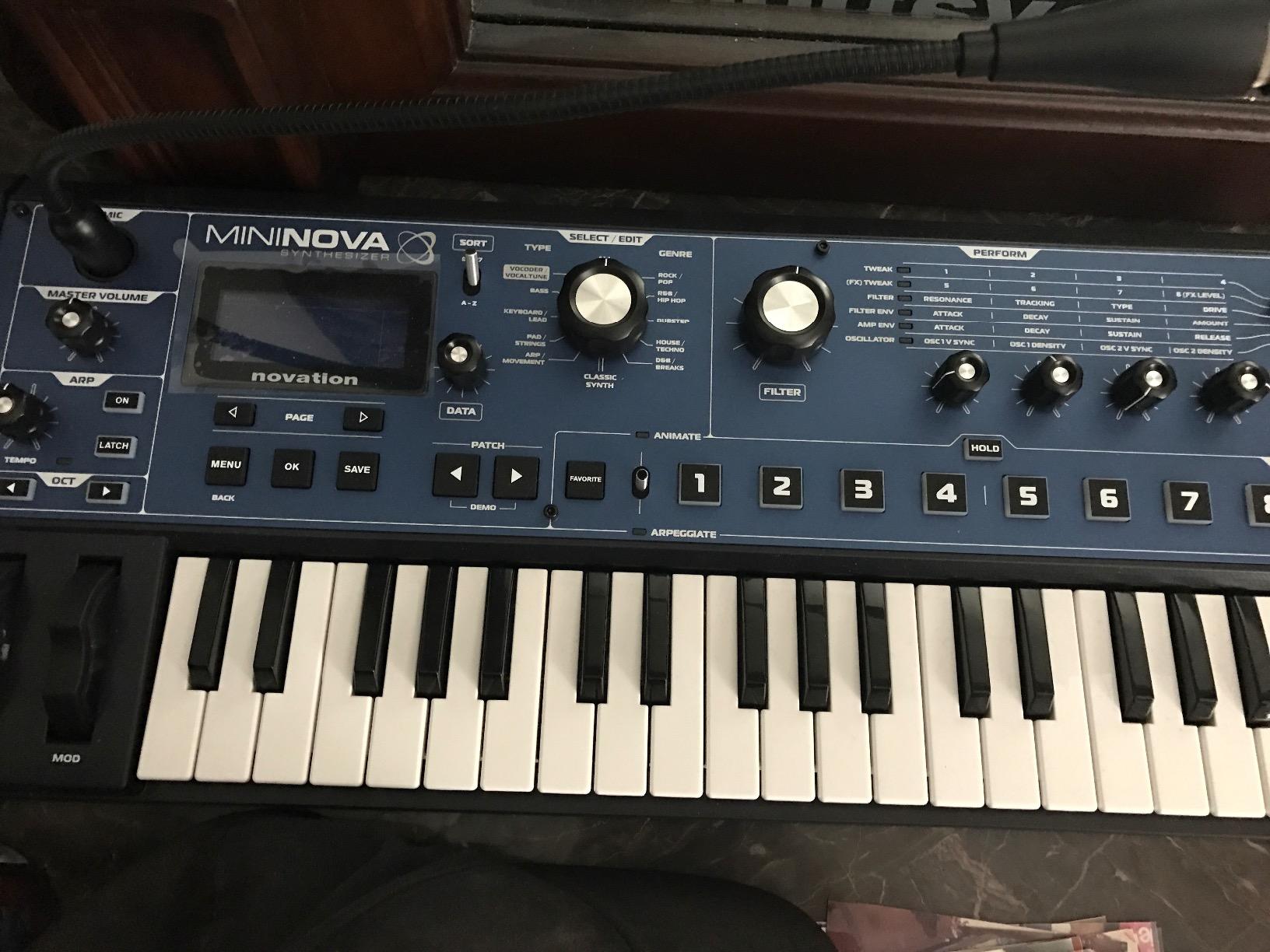
The Animate buttons are a live-performance feature I genuinely enjoyed. Each button triggers a different modulation or effect change, letting you transform a sound dramatically mid-phrase without taking your hands off the keys. For performers who need to switch textures on the fly, this is a practical tool.
The five effects per voice mean you can build complex, processed sounds without external gear. The arpeggiator with real-time rhythm jamming adds another layer of performance capability that keeps the MiniNova useful in live settings.
Who Should Buy the Novation MiniNova
Vocalists, performers, and producers who want vocoder capability without buying separate gear. The MiniNova is also a strong choice for anyone who values a massive preset library and live-performance controls over deep analog sound design.
If you produce pop, hip-hop, or electronic music where vocal processing matters, the built-in VocalTune vocoder is a genuine differentiator.
Build Quality Considerations
The plastic body keeps the weight down but does not feel as premium as the metal-chassis options on this list. For studio use this is rarely an issue, but gigging musicians should consider a protective case.
The 37 mini keys are functional but cramped for players with larger hands. If you plan long sessions of two-handed playing, test the key size before committing.
5. Arturia MicroFreak – Experimental Hybrid With Polyphonic Aftertouch
Arturia MicroFreak Synthesizer Keyboard
25-key capacitive touch PCB keyboard
17 paraphonic oscillator modes
Analog Oberheim SEM filter
5x7 modulation matrix
CV outputs
Pros
- 17 unique oscillator modes for diverse timbres
- Polyphonic aftertouch on capacitive keyboard
- Hybrid digital-analog architecture
- CV outputs for modular integration
- Spice and Dice randomization for creative surprises
Cons
- PCB touch keyboard may require adjustment
- 25 keys is compact for some playing styles
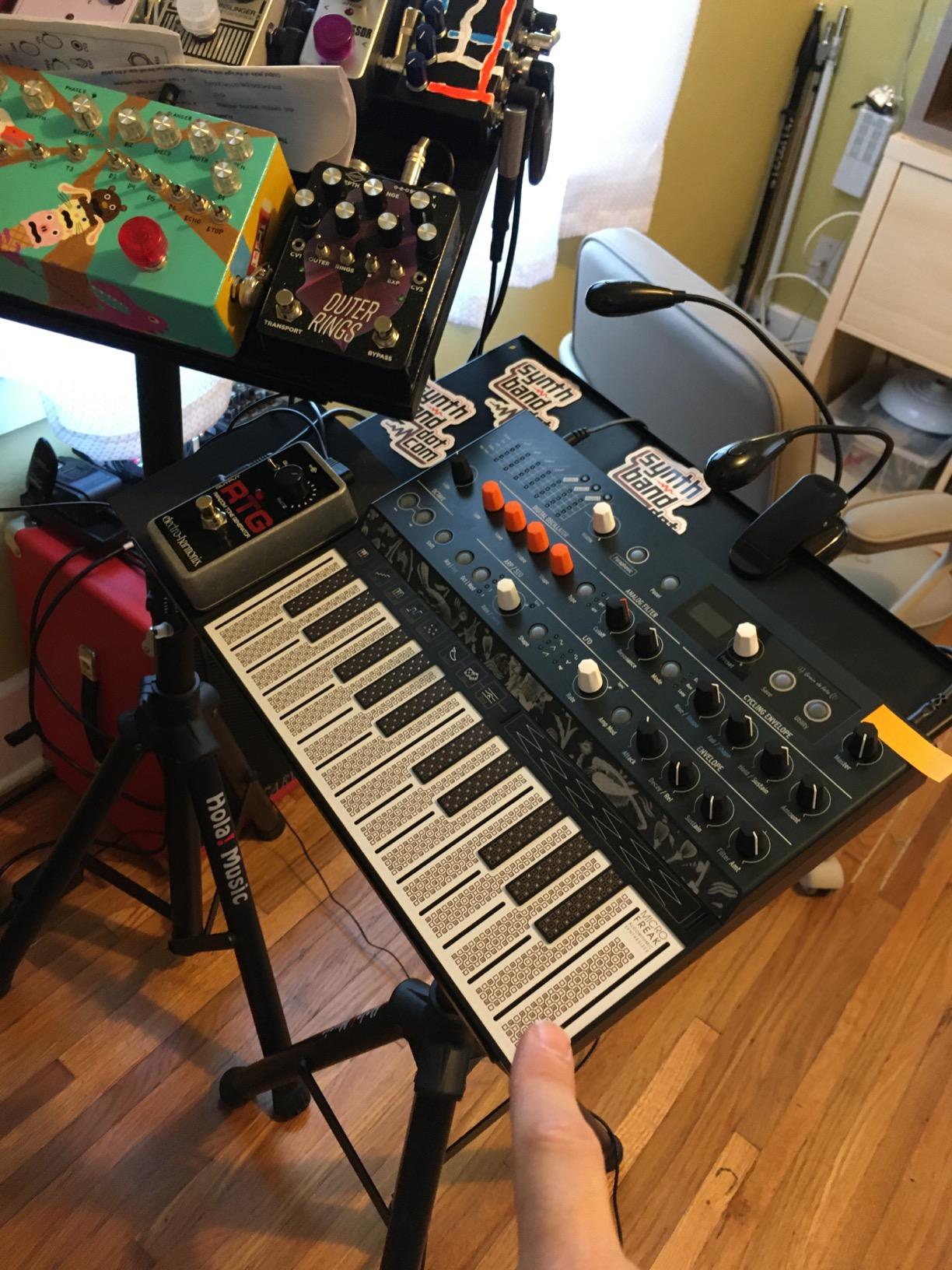
The Arturia MicroFreak is the synth I keep recommending to budget-conscious experimentalists. With 17 paraphonic oscillator modes sourced from Arturia, Mutable Instruments, and Noise Engineering, it covers more sonic territory than synths costing three times as much.
The capacitive touch PCB keyboard is unlike anything else here. There are no moving parts, the response is instant, and every key supports individual polyphonic aftertouch. It takes getting used to, but once it clicks, the expressiveness is remarkable.
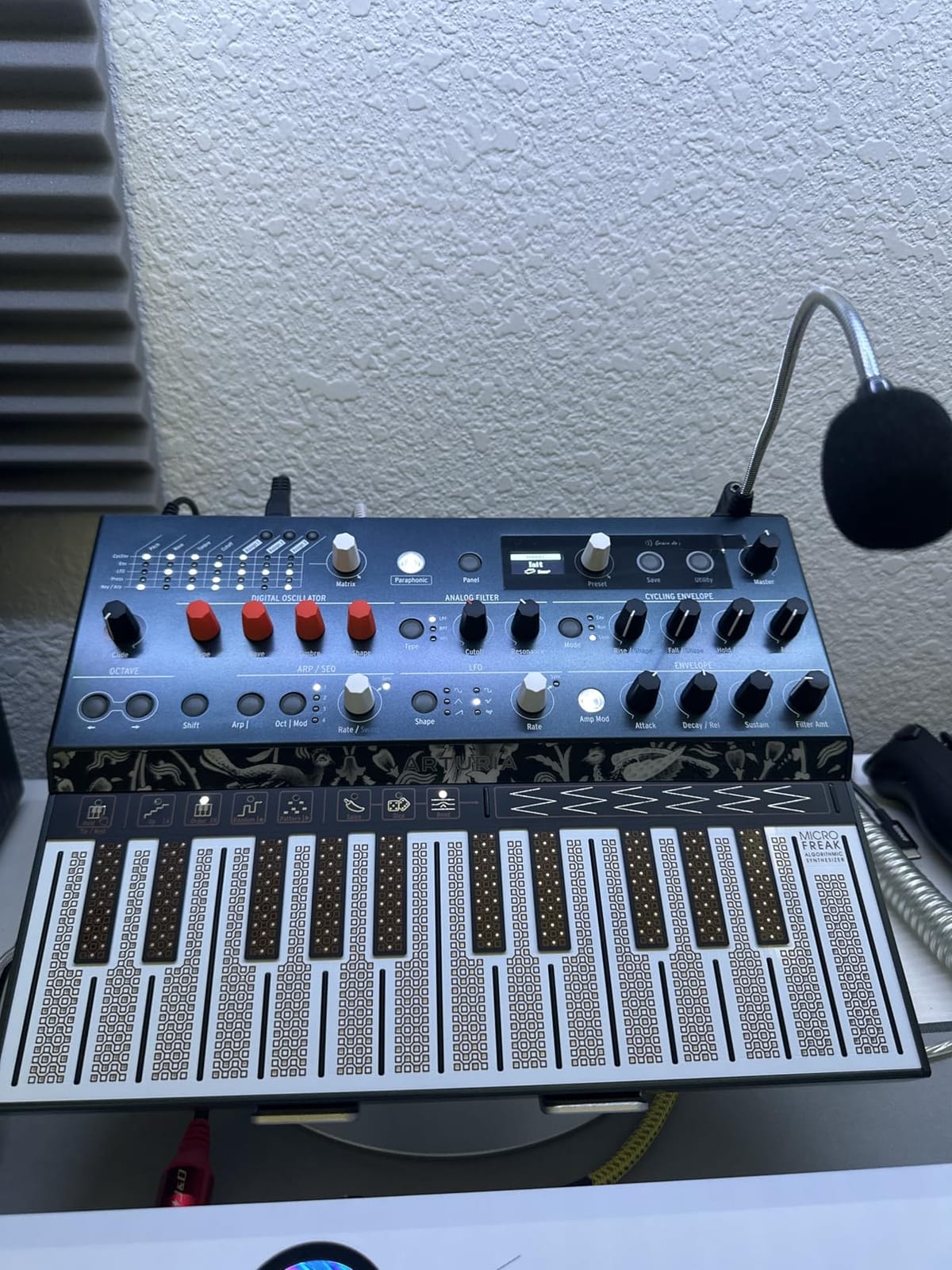
The analog state-variable Oberheim SEM filter is the secret weapon. It gives the otherwise digital oscillator engine a warm, organic character that pure digital synths struggle to match. The 12dB slope is smooth and musical, especially for pad and lead sounds.
Arturia has continually updated the MicroFreak with new oscillator modes and features via firmware. This means the synth you buy today keeps getting more capable over time, which is rare at any price point. The Spice and Dice randomization functions encourage happy accidents that often become the foundation of a track.
Who Should Buy the Arturia MicroFreak
Sound designers, experimental producers, and modular-curious musicians who want maximum sonic diversity at a budget price. If you enjoy pushing a synth into unexpected territory rather than recreating classic sounds, the MicroFreak is built for you.
The CV outputs also make it an excellent entry point for anyone considering a Eurorack system, since it can serve as a controller for external modules.
Adapting to the PCB Keyboard
The capacitive touch keyboard is the main adjustment. If you are used to traditional keys, the flat touch surface feels strange at first. Most players adapt within a few sessions, but some never warm to it.
If you primarily play melodic lines and care about velocity sensitivity, note that the PCB keyboard does not respond to velocity in the traditional sense. Polyphonic aftertouch is the primary expression mechanism instead.
6. Yamaha REFACE DX – Pure FM Synthesis On The Go
Yamaha REFACE DX Portable FM Synthesizer
37 HQ mini keys
4-operator FM engine
32 voice locations
Built-in phrase looper
Battery powered with speakers
Pros
- Authentic 4-operator FM sound engine
- Battery powered with built-in speakers
- Integrated phrase looper for idea capture
- Compact and truly portable
- Premium mini key feel
Cons
- Mini keys may not suit all players
- Battery changes may be frequent
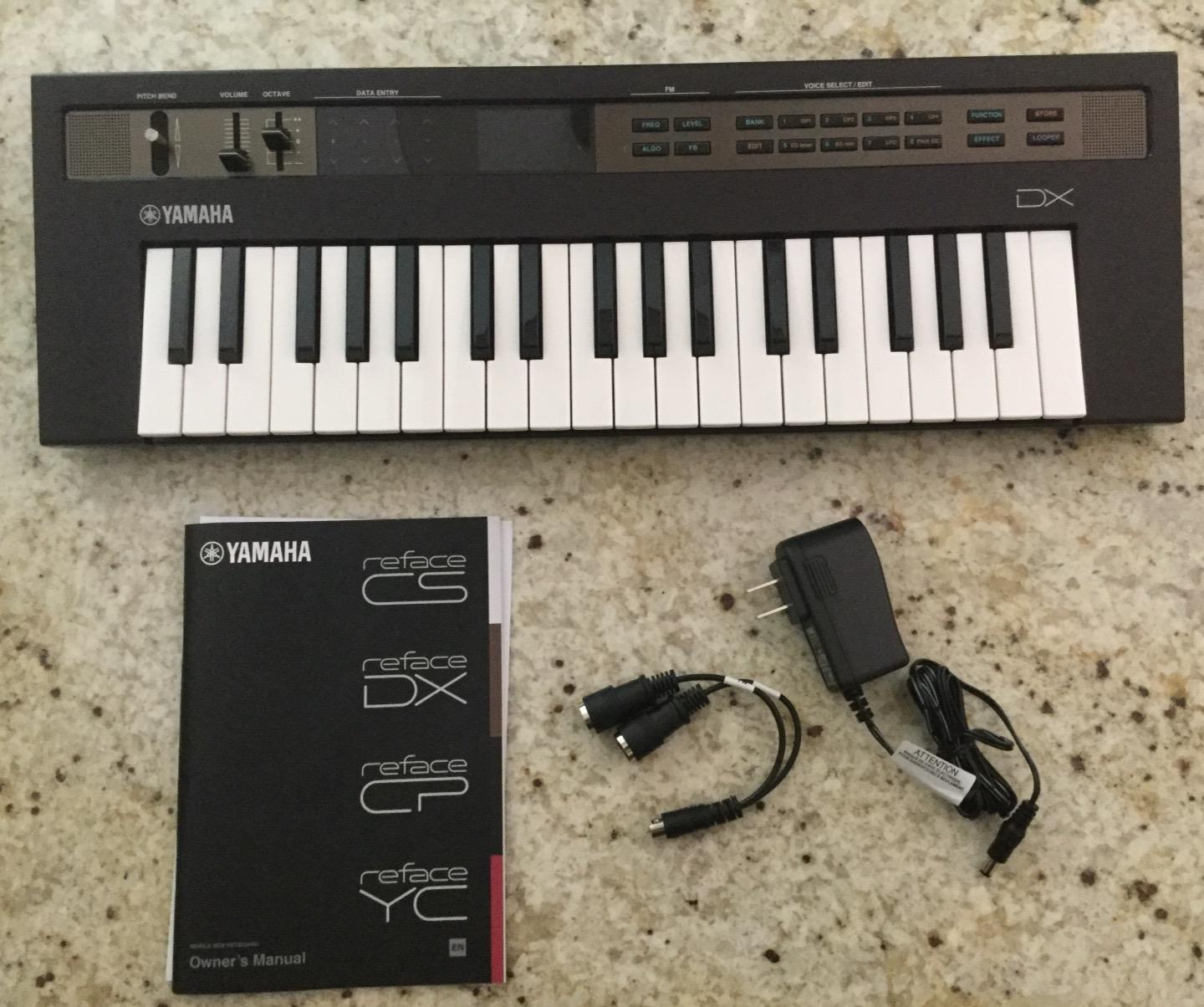
The Yamaha REFACE DX brings genuine FM synthesis to a battery-powered, take-anywhere format. Based on the legacy of the legendary DX7, this 4-operator FM engine produces the bright, metallic tones and glassy electric pianos that defined an era of music production.
I tested the REFACE DX on a couch, in a park, and at a studio desk, and the portability is real. Six AA batteries power it for hours, and the built-in speakers mean you do not need headphones or an amp to start playing. For capturing ideas away from your setup, this is hard to beat.
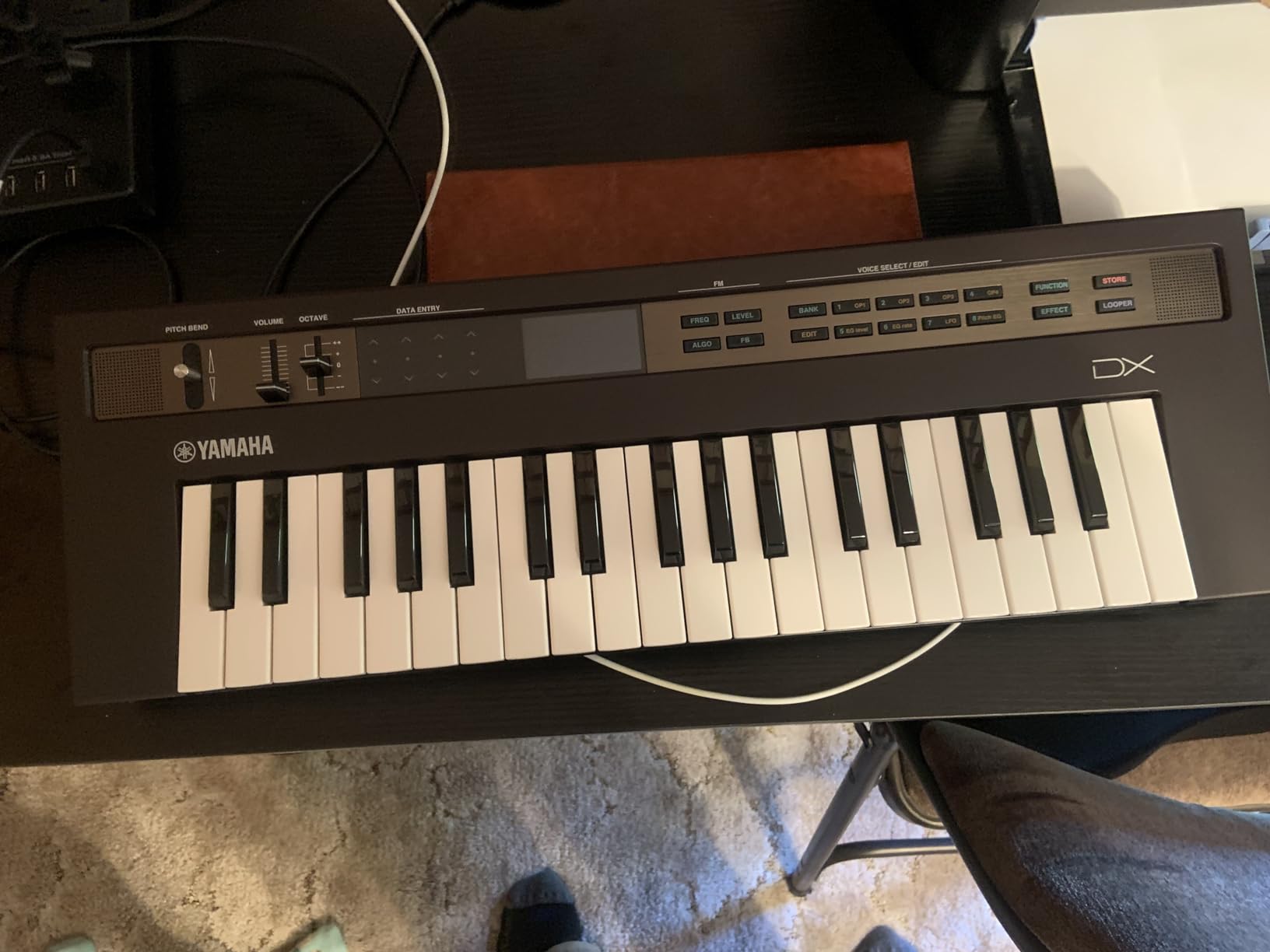
The 32 voice memory locations let you store and recall your favorite patches. The integrated phrase looper captures musical ideas on the spot, which is perfect for sketching out melodies and chord progressions before you forget them.
FM synthesis has a learning curve, especially if you are used to subtractive analog workflow. But the REFACE DX keeps it manageable with a clear interface and helpful visual feedback for each operator.
Who Should Buy the Yamaha REFACE DX
Mobile producers, traveling musicians, and anyone curious about FM synthesis who wants an authentic but approachable entry point. If you produce electronic music, hip-hop, or 80s-inspired sounds, the REFACE DX delivers those signature FM tones.
The battery power and built-in speakers also make it a great couch instrument for casual play away from the studio desk.
FM Learning Curve
FM synthesis works differently from the subtractive analog approach most beginners learn first. Instead of filtering a rich waveform, you modulate operators against each other to create harmonically complex tones from simple sine waves.
Plan to spend time with the manual and experiment freely. The REFACE DX is one of the most forgiving FM synths ever made, but it still rewards patience and exploration.
7. Roland GAIA 2 – Modern Hybrid Wavetable and VA Synth
Roland GAIA 2 Synthesizer | Advanced Sonic Capabilities | Hybrid Sound Engine Combining Wavetable & Virtual Analog Synthesis | On-Board Motional Pad
37 full-size keys
Hybrid wavetable and virtual analog
Motional Pad
53 MFX types
Aluminum panel
Pros
- Hybrid engine combines wavetable and virtual analog synthesis
- Friendly panel layout with logical workflow
- Full-size keys with exceptional playability
- 53 unique effect types
- Motional Pad for real-time expression
Cons
- Limited reviews as a newer model
- Higher price point
The Roland GAIA 2 takes the beginner-friendly philosophy of the original GAIA and modernizes it with a hybrid sound engine combining wavetable and virtual analog synthesis. The result is an instrument that can produce both classic analog-style tones and contemporary wavetable textures.
The panel layout is one of the best teaching interfaces I have used. Every synthesis parameter has a dedicated knob or slider, arranged in a logical signal-flow order. If you want to learn how subtractive synthesis works, the GAIA 2 makes every step visible and tactile.
The Motional Pad is a standout feature for live performance. It lets you control multiple parameters simultaneously by moving your finger across a touch surface, adding real-time movement and expression that would be difficult to achieve with individual knobs alone.
With 53 unique effect types in the MFX section plus dedicated chorus and delay/reverb sections, the GAIA 2 has deep sound-shaping capability. The full-size keys provide a playing experience that feels closer to a professional workstation than a compact synth.
Who Should Buy the Roland GAIA 2
Players who want full-size keys, a teaching-friendly interface, and modern hybrid sound generation in one instrument. The GAIA 2 is ideal for students, educators, and performers who value hands-on control over menu-based editing.
The Motional Pad also makes it appealing for live performers who need real-time expression tools beyond traditional pitch and mod wheels.
Newer Model Considerations
The GAIA 2 is a relatively recent release, which means fewer user reviews and less long-term reliability data compared to established models. The 4.3 average rating is solid but based on a smaller sample size.
If you prefer buying gear with years of community validation, consider the original GAIA or wait as more reviews accumulate for this updated version.
8. Roland AIRA Compact J-6 – Portable Chord Synth for Songwriters
Roland AIRA Compact J-6 CHORD SYNTH Portable Song Creation Machine
JUNO-60 synth engine with ACB
100 chord sets
9 arpeggio styles
64 user patterns
USB-C audio and MIDI
Pros
- JUNO-60 synth engine with Analog Circuit Behavior
- 100 chord sets for instant songwriting
- Nine arpeggio styles with 12 variations
- 64 ready-to-play presets
- High-quality delay and reverb effects
Cons
- Plastic body construction
- Battery-powered only
The Roland AIRA J-6 is a different kind of synthesizer. Instead of focusing on raw sound design, it is built around chord progression and song creation. The JUNO-60 synth engine with Analog Circuit Behavior delivers those warm, rich analog-like tones that defined countless 80s records.
With 100 chord sets spanning classic and contemporary genres, you can trigger full chord progressions with a single button press. For songwriters who struggle with music theory or just want to move fast, this removes a major creative barrier.
The nine arpeggio styles with 12 variations each provide instant rhythmic interest. Combined with the 64 user patterns and built-in filter and envelope controls, the J-6 is a surprisingly capable production tool despite its compact, battery-powered form factor.
Who Should Buy the Roland AIRA J-6
Songwriters, beatmakers, and producers who want instant chord progressions and JUNO-style tones in a portable package. If you produce pop, synthwave, lo-fi, or any genre built on chord sequences, the J-6 accelerates your workflow dramatically.
It is also a great tool for non-keyboardists who want to incorporate synth chords into their music without learning complex fingerings on a traditional keyboard.
Limitations to Consider
The J-6 is a chord synth, not a full sound-design instrument. You cannot build patches from oscillators up the way you can on the Minilogue or MicroFreak. The sound engine is excellent but fixed in scope.
The plastic body and battery-only power mean this is a companion instrument, not a studio centerpiece. Think of it as a creative trigger tool rather than your main synth voice.
9. Korg Volca Bass – Compact Analog Bass Machine
Korg Volca Bass Analog Synthesizer w/Three Oscillators and 16-step Sequencer
Three analog oscillators
16-step electribe sequencer
Slide function for acid
Built-in speaker
Battery powered
Pros
- Three oscillators for rich bass variety
- Electribe-inspired 16-step sequencer
- Slide function for acid and electronic music
- Active Step for generative bass lines
- Self-tuning to overcome pitch drift
Cons
- Bass wood body may feel less premium
- Built-in speaker is limited for performance
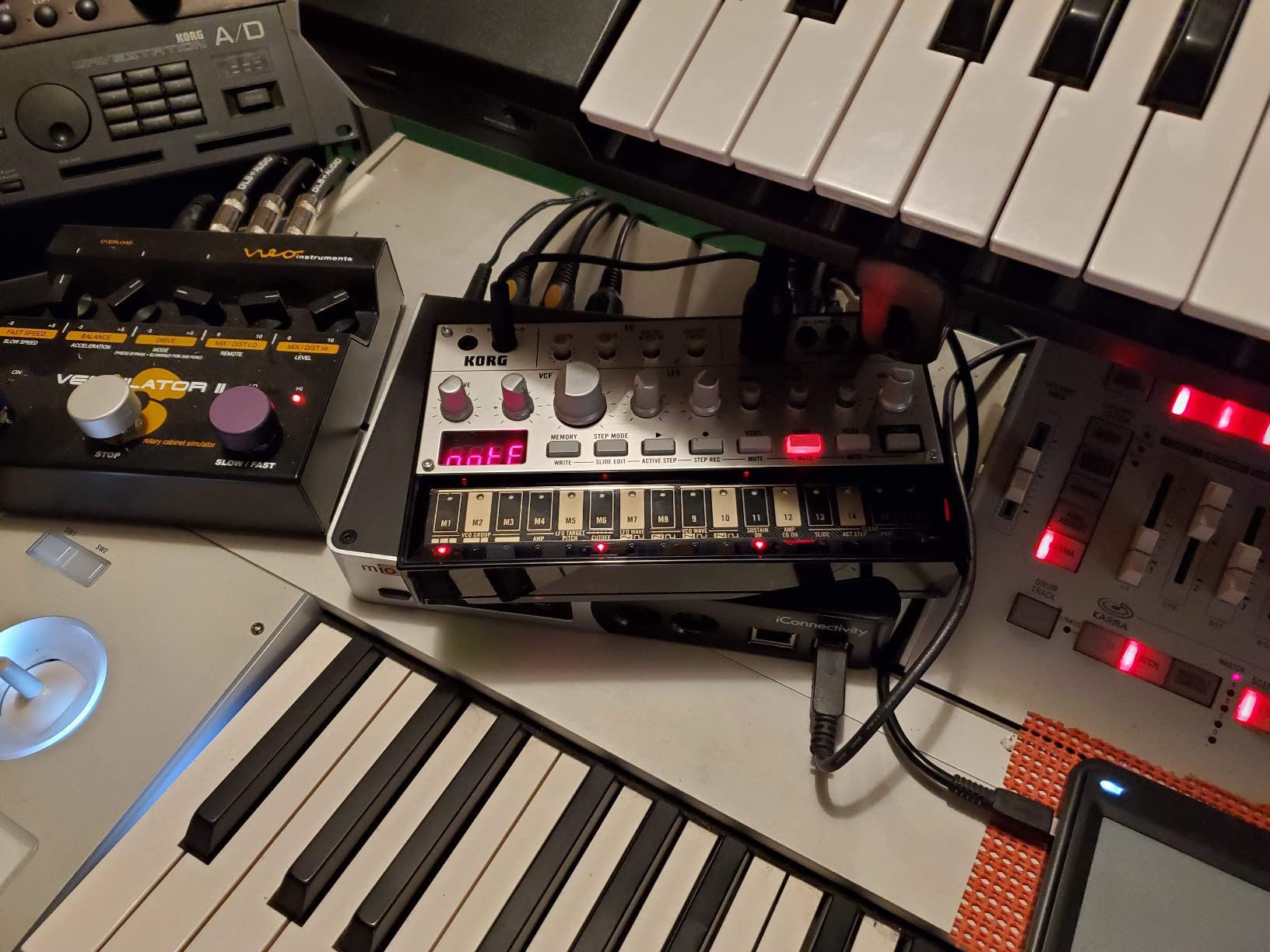
The Korg Volca Bass has been a staple of electronic music production for years, and for good reason. Three analog oscillators feeding an aggressive filter produce bass sounds that cut through a mix with authority. It is one of the most affordable genuine analog synths you can buy.
The Electribe-inspired 16-step sequencer is where the Volca Bass becomes genuinely addictive. The slide function is indispensable for acid-style basslines, and the Active Step function generates new patterns by randomly activating or deactivating steps. I have lost hours tweaking sequences and discovering unexpected grooves.
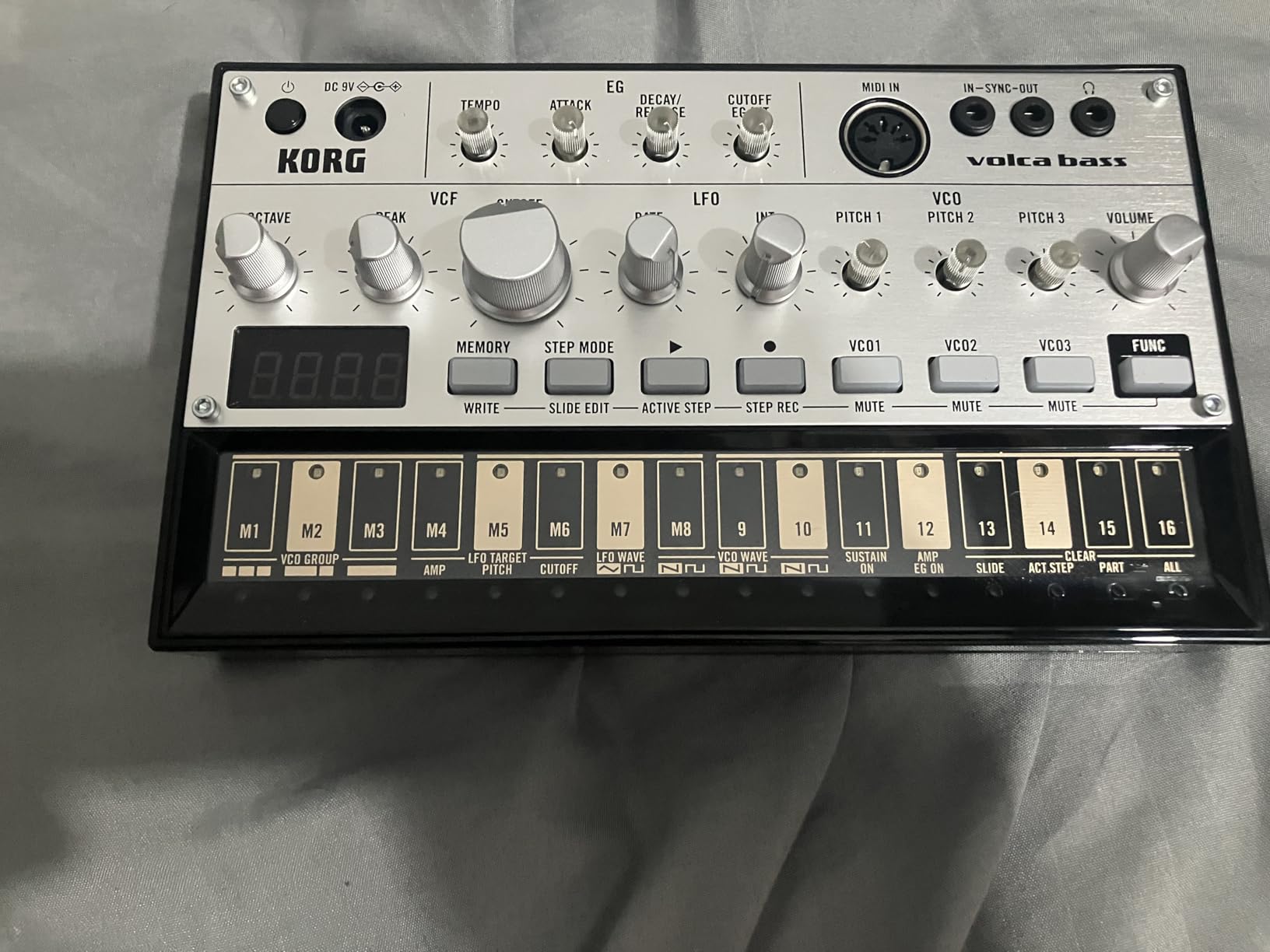
The self-tuning function is a practical touch that addresses one of the common complaints about analog gear. It overcomes the pitch drift that plagues vintage synths, keeping your basslines locked in tune during long sessions.
The SYNC jack and MIDI IN connector let you synchronize the Volca Bass with other Volca units or external sequencers, making it a building block for larger setups rather than just a standalone toy.
Who Should Buy the Korg Volca Bass
Electronic music producers, acid house enthusiasts, and budget-conscious musicians who want genuine analog bass without a large investment. If you produce techno, house, or any bass-driven electronic genre, the Volca Bass belongs on your shortlist.
It is also an excellent first hardware synth for someone who wants to experience analog sequencing without committing to a larger, more expensive instrument.
Built-in Speaker Reality
The built-in speaker is fine for sketching ideas, but it does not represent the full low-end the Volca Bass is capable of producing. Plug into proper monitors or headphones to hear what this little machine can actually do.
The compact size and battery power make it ideal for portable production setups, but the bass wood body does not feel as durable as metal-chassis alternatives on this list.
10. Behringer Pro VS Mini – Affordable Vector Synth Power
Behringer Pro VS Mini Portable 5-Voice Hybrid Synthesizer with 4 Vector Morphing Oscillators Per Voice, Analog Low-Pass Filter, 16-Step Sequencer and Arpeggiator
5-voice hybrid synth
4 vector morphing oscillators per voice
Analog low-pass filter
16-step sequencer
Arpeggiator
Pros
- 5-voice hybrid with vector morphing oscillators
- Analog low-pass filter for warmth
- Wavetable synthesis capability
- Sync In for linking multiple units
- Portable and highly affordable
Cons
- Temporarily out of stock at times
- 27 mini keys may not suit all players
- 2.5mm jack connectivity less common
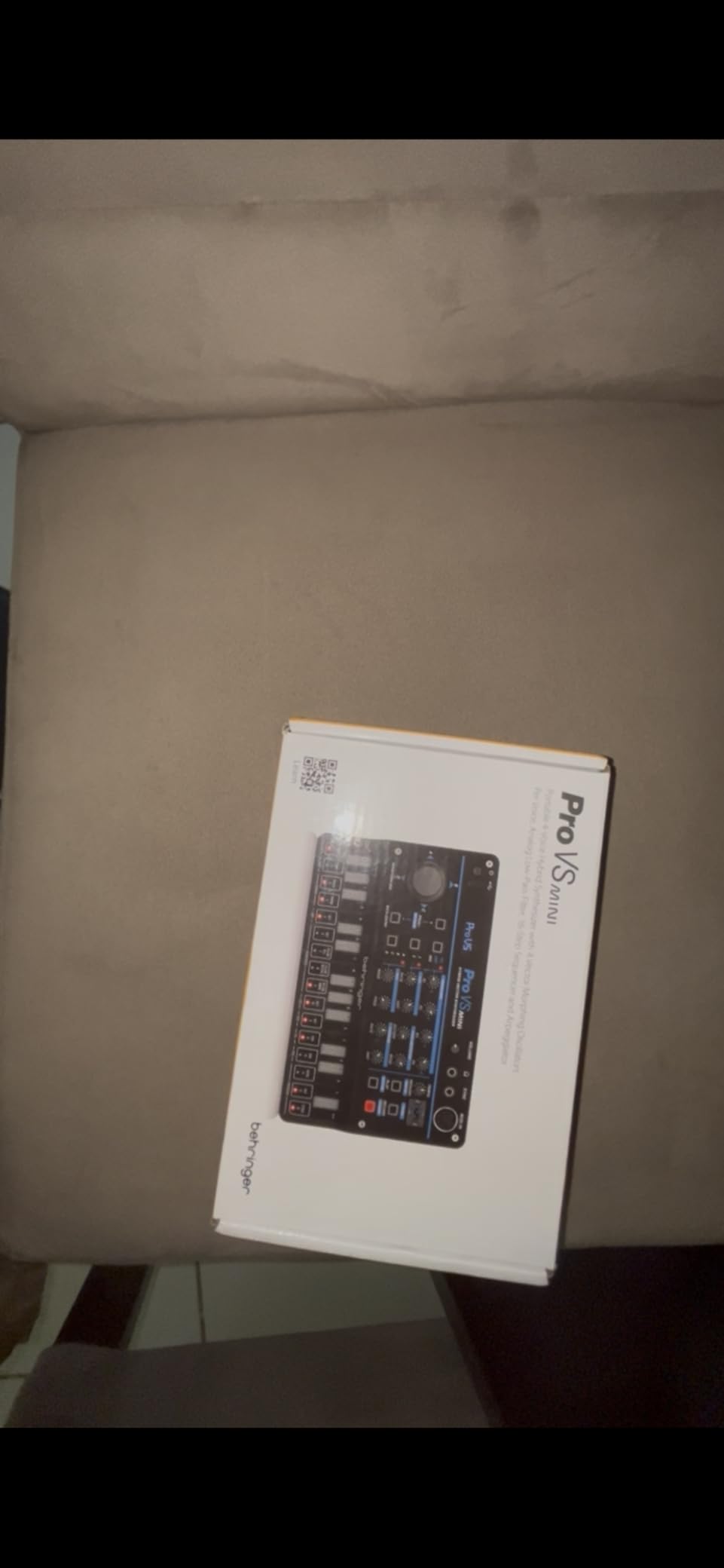
The Behringer Pro VS Mini brings vector synthesis to a price point that would have been unthinkable a few years ago. With five voices and four vector morphing oscillators per voice, it produces evolving, animated textures that move between waveforms in real time.
Vector synthesis is a different approach from the subtractive workflow most beginners learn. Instead of shaping a static waveform with a filter, you morph between multiple waveforms using a joystick or automated vectors. The result is sounds that shift and breathe in ways that static synths cannot achieve.
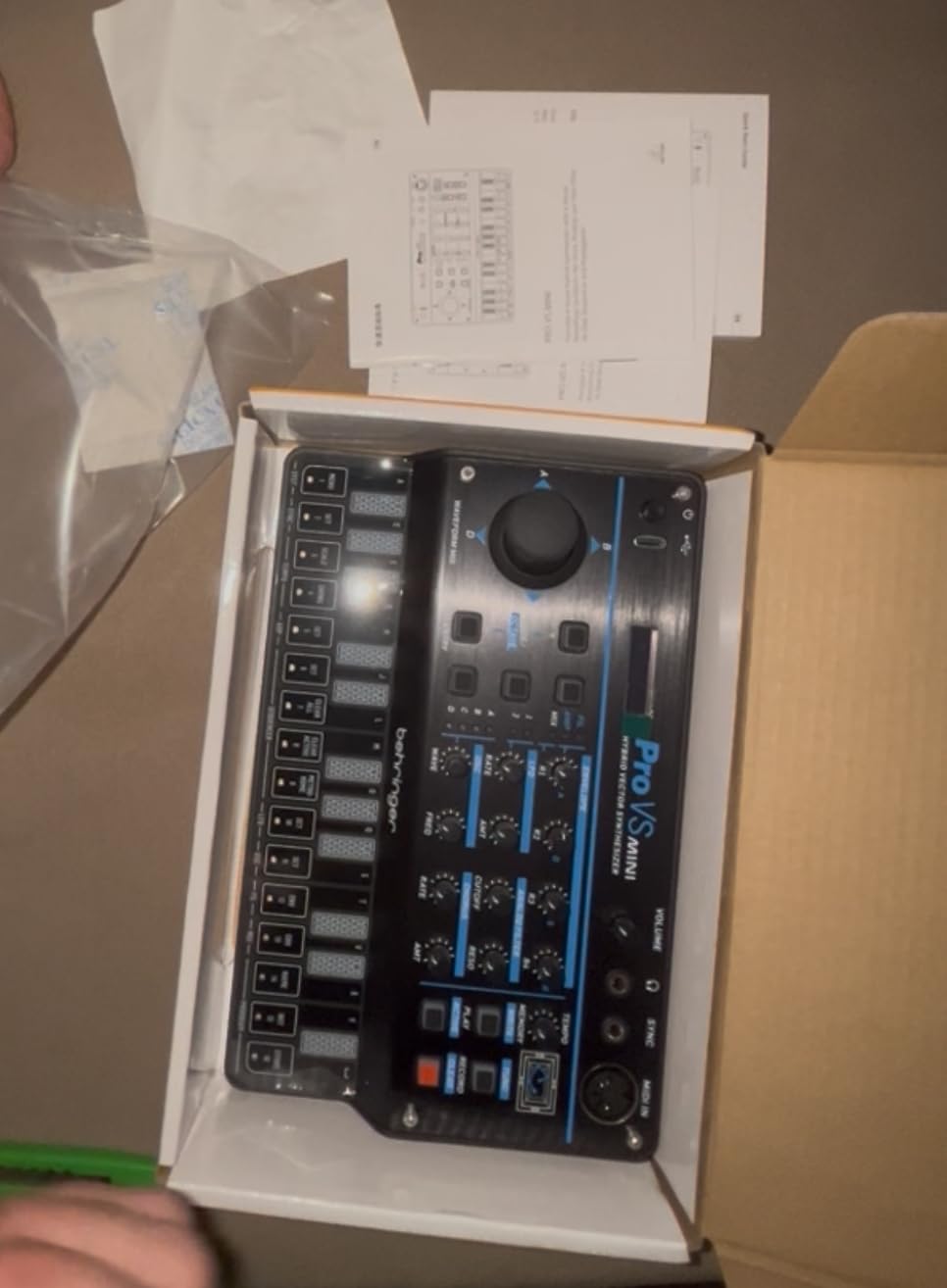
The analog low-pass filter adds warmth to the digital oscillator engine, giving the Pro VS Mini a hybrid character that works well for pads, leads, and textures. The 16-step sequencer and arpeggiator provide solid pattern-building tools for the price.
At this price, the Pro VS Mini is one of the most affordable polyphonic synths on the market. The 27 mini keys keep the footprint small, and the battery or USB power options make it genuinely portable for travel and mobile production.
Who Should Buy the Behringer Pro VS Mini
Budget-conscious producers who want polyphonic synthesis and are curious about vector morphing. If you produce ambient, cinematic, or texture-heavy music, the evolving sounds from the vector oscillators add a dimension that monophonic or basic subtractive synths cannot match at this price.
It is also a great secondary instrument for producers who already have a primary synth and want to add textural variety without a major investment.
Stock and Connectivity Notes
The Pro VS Mini has experienced temporary stock shortages, so availability can be inconsistent. If you see it in stock at a good price, it may be worth acting quickly to secure one.
The 2.5mm jack for sync connectivity is less common than the 3.5mm standard used by most other compact synths, so you may need an adapter for synchronization with other gear in your setup.
How to Choose the Best Synthesizer
With 10 very different instruments on this list, choosing the right one comes down to understanding your own needs. Here is a practical framework based on what we learned from hands-on testing and community feedback from r/synthesizers.
Start with your primary use case. Are you producing in a studio, performing live, learning synthesis, or building a modular rig? Each scenario favors different features. Studio producers benefit from polyphony and sound-design depth. Live performers need durability, hands-on controls, and reliable tuning. Beginners should prioritize knob-per-function interfaces that teach synthesis visually.
Analog, digital, or hybrid? Analog synths generate sound with voltage-controlled circuits, producing the warm, fat tones associated with classic instruments. Digital synths use software algorithms, offering precision, preset recall, and sound types analog cannot achieve like FM and wavetable. Hybrid synths combine both, using digital oscillators with analog filters for the best of both worlds. There is no universally superior option, only what suits your musical goals.
Polyphony matters more than you think. Monophonic synths play one note at a time, which is perfect for bass and leads but limits chord playing. Paraphonic synths allow limited polyphony, while true polyphonic synths play full chords. If you want pads, chords, or layered arrangements, look for at least four voices. For bass and lead work, mono is often preferable because each voice gets more circuitry and character.
Key size and count. Full-size keys feel like a piano and suit players with keyboard background. Mini keys save space and weight but can feel cramped. Capacitive touch keyboards, like the MicroFreak, offer unique expression but require adaptation. Consider how many keys you actually need: basslines and leads work fine on 25 keys, while chord playing benefits from 37 or more.
Sequencer and modulation depth. A built-in sequencer lets you create patterns without a computer, which is invaluable for live performance and standalone creativity. Motion sequencing captures knob movements for evolving textures. A modulation matrix or patch points expand sound-design possibilities dramatically. If you enjoy generative or evolving music, prioritize synths with probability functions and deep modulation routing.
Connectivity for your ecosystem. MIDI I/O, USB, CV gate, and audio inputs all determine how a synth integrates with your existing gear. If you have a Eurorack system, CV patch points are essential. If you produce in a DAW, USB MIDI and audio simplify the connection. Pedal inputs for expression and sustain add performance capability that matters on stage.
Budget tiers without overthinking. Under $150 gets you genuine analog bass with the Volca Bass or vector polyphony with the Pro VS Mini. The $300 to $500 range covers the MicroFreak, REFACE DX, and MiniNova, each offering distinct capabilities. From $600 to $800, the MiniFreak, Minilogue, Messenger, and GAIA 2 deliver professional-level instruments. Your first synth does not need to be your last, so buy what fits your budget and start making music.
Frequently Asked Questions
What is considered the best synthesizer?
The best synthesizer depends on your needs, but the Arturia MiniFreak is our top overall pick for its six-voice hybrid engine, aftertouch, and included VST counterpart. For analog purists, the MOOG Messenger delivers exceptional mono sound. For beginners, the Korg Minilogue offers the best learning platform with true analog polyphony.
What synth does Billie Eilish use?
Billie Eilish and her producer Finneas have used a variety of synthesizers in their recordings, including the Arturia MicroFreak and software synths. Their sound relies heavily on layered textures and processed vocal elements rather than a single signature hardware instrument.
What is the best selling synth of all time?
The Yamaha DX7 is widely considered the best selling synthesizer of all time, with over 160,000 units sold. Its FM synthesis engine defined the sound of 1980s pop and electronic music. The Korg M1 workstation is another top seller, with over 250,000 units sold across its lifetime.
What is the best all-in-one synthesizer?
The best all-in-one synthesizer for most players is the Arturia MiniFreak, which combines six-voice polyphony, dual hybrid sound engines, aftertouch, a 64-step sequencer, built-in effects, and a VST counterpart in a single portable instrument. It handles chords, leads, bass, and pads without needing external gear.
How do you choose a synthesizer?
Choose a synthesizer by first identifying your primary use case: studio production, live performance, or learning. Then decide between analog, digital, or hybrid based on the sound character you want. Consider polyphony needs, key size preference, sequencer depth, and connectivity with your existing gear. Set a budget and prioritize features that matter most for your musical style.
Final Thoughts on the Best Synthesizers in 2026
After testing all 10 models, three stand out as the best synthesizers in their respective categories. The Arturia MiniFreak is our overall top pick for its unmatched combination of six-voice polyphony, hybrid sound design, aftertouch, and plugin integration. The Korg Minilogue remains the best analog entry point for beginners learning subtractive synthesis. And the Arturia MicroFreak delivers extraordinary experimental value that punches far above its price.
For bass and lead specialists, the MOOG Messenger and Korg Volca Bass cover opposite ends of the budget spectrum with authentic analog character. For portability, the Yamaha REFACE DX and Roland AIRA J-6 each offer something unique. Whatever your musical direction, one of these instruments will fit your studio and your budget in 2026.