
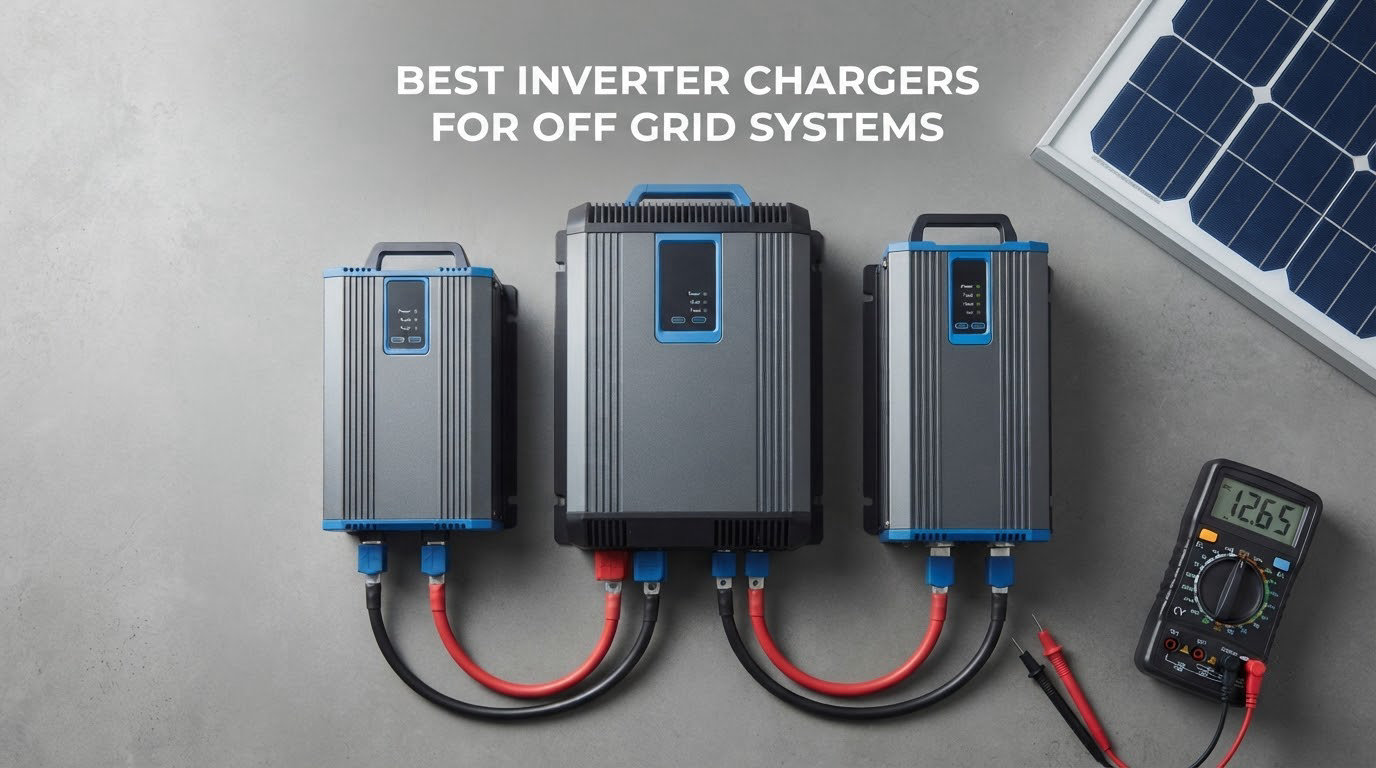
If you have ever stood in a garage with a panel array leaning against the wall and no idea what size box to buy, you are in the right place. Choosing the best inverter chargers for off grid systems comes down to three numbers: how much power your house actually draws, how fast you want the battery bank refilled, and what voltage you are building around. Get any of those wrong and the whole system either trips breakers on a sunny afternoon or sits half expensive for a decade.
Here is the short version. An inverter charger is a single box that combines three functions: an inverter, which turns battery DC into household AC, a battery charger, which pushes AC grid or generator power back into your bank, and a transfer switch, which moves your loads between the grid and the batteries automatically. Many of the units in this roundup add a fourth function on top, a built-in MPPT solar charge controller, which is why they are often called all-in-one inverter chargers.
Our team compared ten of the most requested inverter chargers for off grid systems across specs, owner reviews and failure patterns, and we grouped them by the job each one is genuinely good at rather than by price. We also worked through the sizing arithmetic that forum users keep hand-calculating in public, because the difference between a 3000W and a 5000W unit is a two hundred dollar lesson or a two thousand dollar one depending on your load list.
One note before we start: this is a buying guide, not an engineering reference, and we write about power hardware the same way we write about small-device chargers and top-off systems we test regularly. Every figure below comes from the manufacturer listing or from owner reviews. Where we did not measure something ourselves, we say so.
Table of Contents
Top 3 Best Inverter Chargers for Off Grid Systems

SRGFTS 3600W 24V All-In-One
- 3600W rated and 7200W peak
- Pure sine wave 120V output
- Built-in 120A MPPT and 100A AC charger

SGPWOSAY 5000W 48V UL1741
- 5000W pure sine wave at 48V
- 100A MPPT with 500V PV input
- Parallel up to six devices

SGPWOSAY 3000W 24V All-In-One
- 3000W continuous at 24V
- 80A MPPT and 40A AC charger
- Under 10ms transfer
Every Inverter Charger in This Roundup Compared
The table below lists all ten models in the order we recommend them. The most important column to read first is not wattage, it is battery voltage, because that decision constrains everything else including your cable gauge, your bank size and which panels will work with the built-in tracker.
| Product | Specifications | Action |
|---|---|---|
| SRGFTS 3600W 24V All-In-One |
|
Check Latest Price |
| SGPWOSAY 5000W 48V |
|
Check Latest Price |
| SGPWOSAY 3000W 24V |
|
Check Latest Price |
 VEVOR 3000W 24V Hybrid VEVOR 3000W 24V Hybrid |
|
Check Latest Price |
 AIMS Power 4000W 24V AIMS Power 4000W 24V |
|
Check Latest Price |
 Victron MultiPlus-II 48/3000 Victron MultiPlus-II 48/3000 |
|
Check Latest Price |
 AMPINVT 5000W 48V AMPINVT 5000W 48V |
|
Check Latest Price |
 SGPWATT 6500W 48V Split Phase SGPWATT 6500W 48V Split Phase |
|
Check Latest Price |
 LiTime 3500W 48V All-In-One LiTime 3500W 48V All-In-One |
|
Check Latest Price |
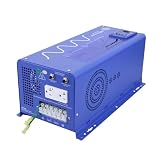 AIMS Power 2000W 48V AIMS Power 2000W 48V |
|
Check Latest Price |
1. SRGFTS ECO-LV 3.6KW PLUS – The Best All-In-One for Most First-Time Builders
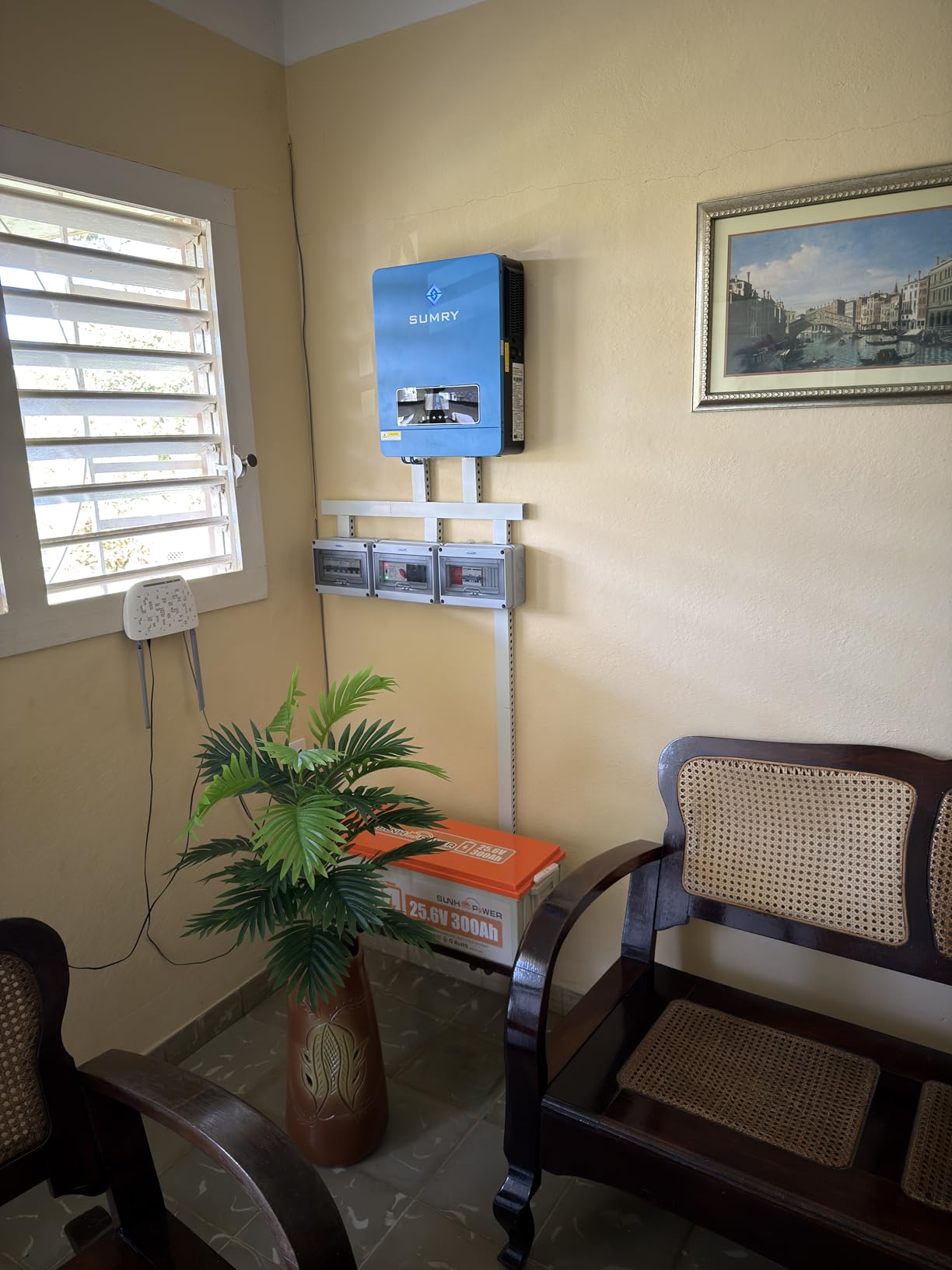
SUMRY Hybrid Solar Inverter Charger 3600W DC24V to AC110V Voltage Converter
3600W rated 7200W peak
24V to 120V pure sine
120A MPPT 60V-500V PV
100A AC battery charger
Pros
- Inverter 120A MPPT and 100A charger in one box
- 7200W surge for motors and tools
- Runs with or without a battery connected
- Menu-driven programming is clear
- Accepts AGM gel lead-acid lithium and LiFePO4
Cons
- Idle draw is noticeable so owners switch it off
- MPPT needs high panel voltage for short strings
- Only a one-year warranty
The SRGFTS ECO-LV 3.6KW PLUS is the box we keep coming back to. It is a 3600W rated inverter with a 7200W peak figure, a pure sine wave 120V output, and it fits in roughly the footprint of a large tower PC at 13.8 by 4.3 by 16.5 inches. At 8.5 kg you can wall-mount it yourself without recruiting a second person.
What makes it our top pick is the combination of functions rather than any single spec. The 120A MPPT accepts a 60V to 500V DC input window with up to 4200W of PV, and the 100A AC charger means your bank can be refilled from a generator or from the grid overnight. In a single enclosure that is four jobs done, and it is the kind of consolidation that saves real money on a first build.
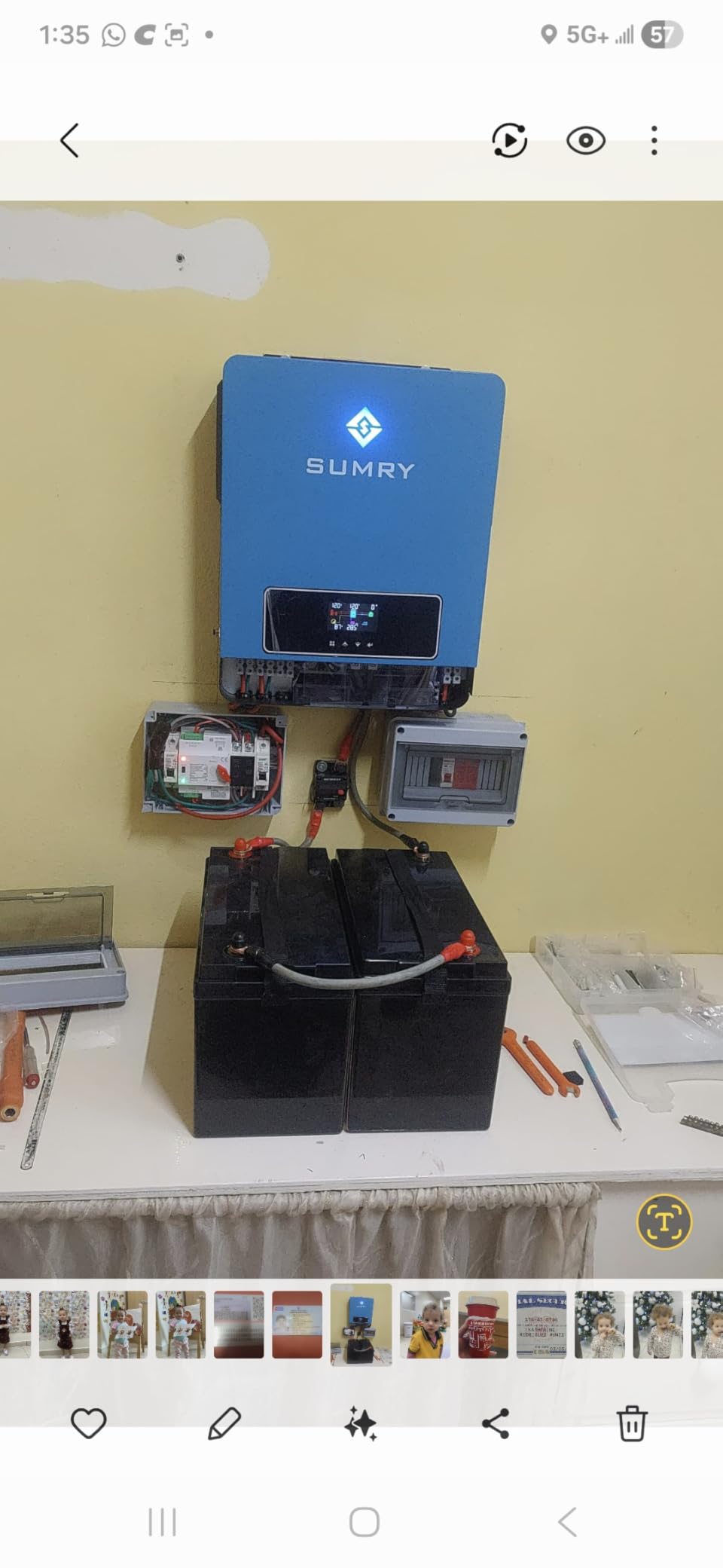
Owners consistently single out the 7200W surge capability. That is double the continuous rating, which is meaningful when a well pump or a table saw pulls a hard startup kick. A handful of reviews also note that the unit works with no battery connected at all, which is useful for a straight solar-to-AC setup, though the manual requires PV voltage above 120V in that mode.
The honest drawback is idle consumption. Several owners report that standby draw is high enough that they physically switch the unit off when nothing is running, which is fine in a shed and annoying in a house where the fridge cycles overnight. The other recurring reservation is that the internal MPPT wants a high-voltage string, so a short series or parallel panel set may need a separate controller.
How to check the PV input before you buy panels
The MPPT window on this unit runs from 60V to 500V DC with a stated 120V floor for battery-less operation. If your array is a short parallel string of two or three panels, you may sit near or below that floor once a load is applied and the tracker will drop out. Series wiring raises string voltage and is the usual fix.
One owner in the reviews describes exactly this scenario, comparing the unit favorably to costlier hardware while noting the standby behaviour. If your site is shaded at any point, check whether a single panel dropping out will take the whole string with it, because on a series string it will.
Who should pass on this unit
Skip it if your planned bank is smaller than the unit’s appetite. A 100A AC charger and a 120A MPPT both want a substantial bank behind them, and a small battery will see constant deep discharge. The listing also carries a one-year manufacturer warranty, which is the shortest cover in this group.
Also skip it if you need 120/240V split-phase output. This is a 120V-only design, so powering a well pump, a clothes dryer or a stove element means a separate transformer downstream.
2. SGPWOSAY SPH5048P – Best 48V All-In-One for Larger Homes and Future Growth
5000W DC 48V UL1741 Pure Sine Wave Solar Inverter,100A MPPT Solar Charger and 40A AC Battery Charger, 120V AC Output Solar Inverter Charger Manufactured by SunGoldPowerCo.,Ltd (Support Parallel)
5000W 48V pure sine
UL1741 listed
100A MPPT 500V max PV
40A AC charger, parallel ready
Pros
- Feature dense at 5000W with MPPT and AC charging
- Scales by running devices in parallel
- UL1741 listed for code-conscious installs
- 4HP motor starting capacity
- RS485 port for lithium BMS comms
Cons
- 9 percent one-star share points to a durability tail
- Priced above comparable 48V all-in-ones
- 40A AC charger is modest for a 5000W unit
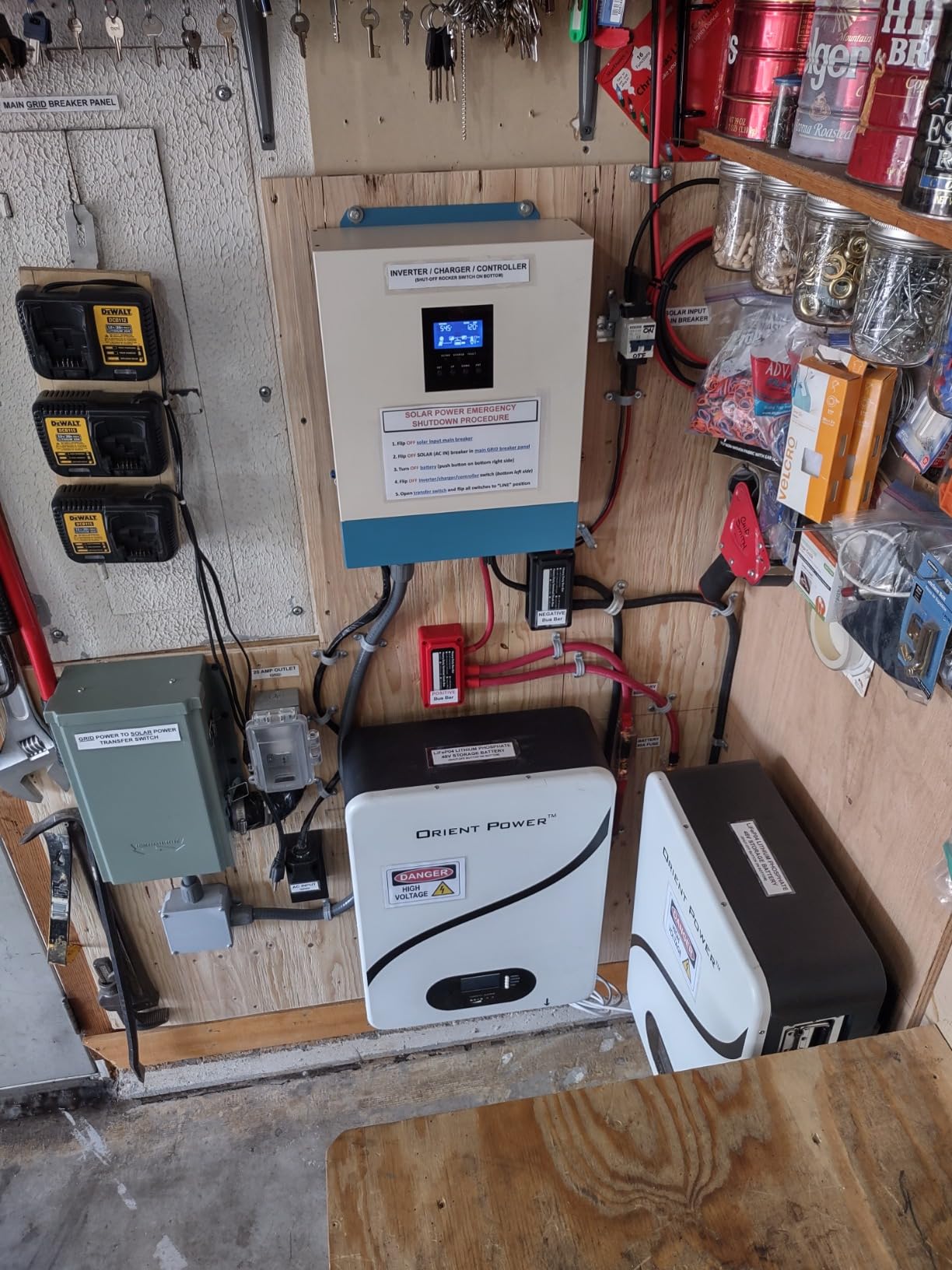
Where the ECO-LV sits at 24V, this SGPWOSAY model moves the whole architecture to 48V and 5000W. That is the more serious platform for a fixed home, a cabin or a homestead, because 48V banks move the same power with less current in the cables and less loss in the wiring run. The unit itself is a 28-pound box measuring 17.3 by 13.8 by 5.1 inches.
Reviewers repeatedly mention the feature density rather than any single feature. Inside one enclosure you get a 100A MPPT, a 40A AC charger, four charging modes and four output priority modes, plus a 4HP loaded motor capacity with overload protection. The listed 40 to 60V battery charging voltage range covers both 48V lead-acid and 48V lithium setups.
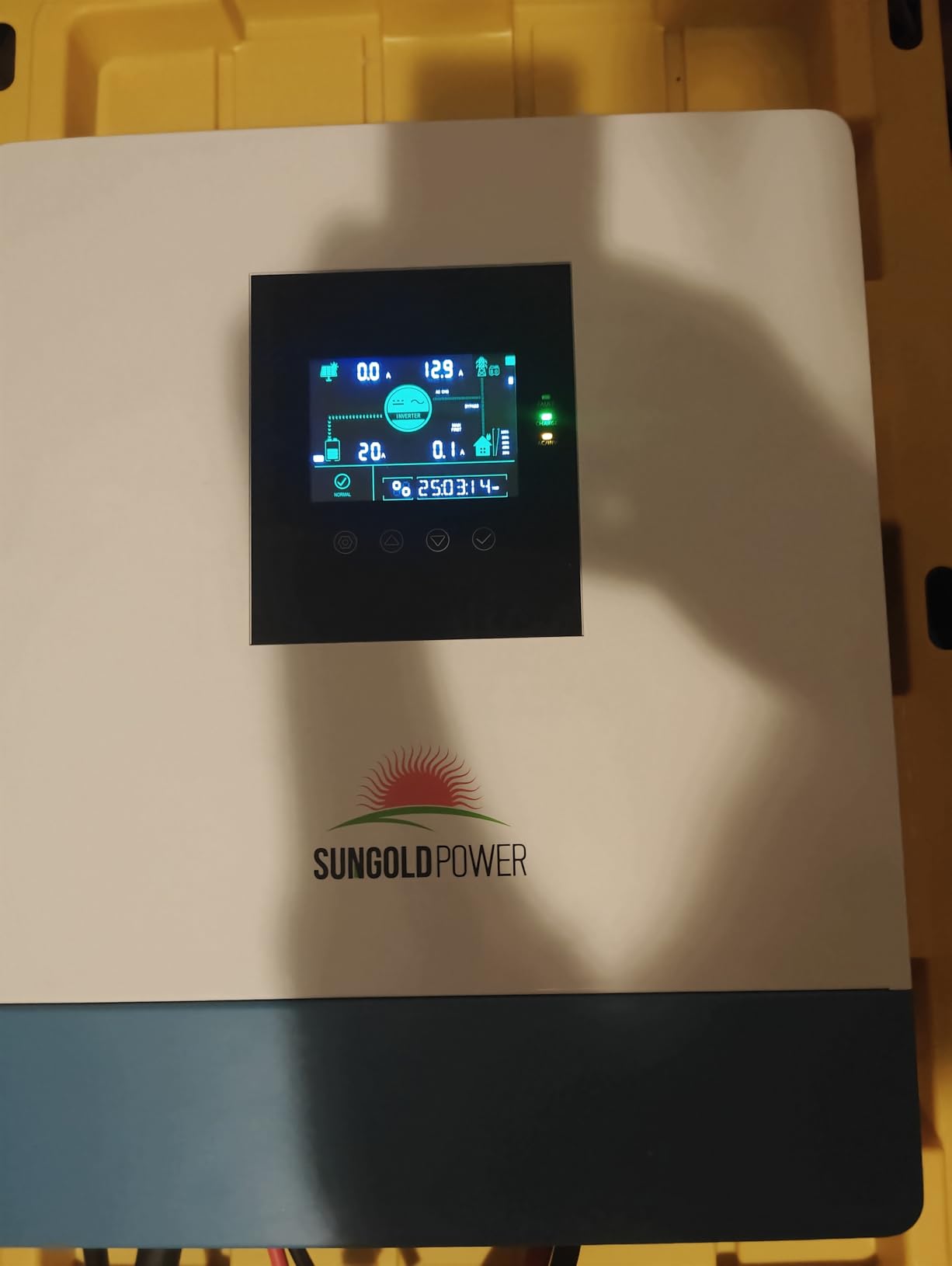
Growth is the reason this one earns the premium slot. The unit is rated for parallel operation up to six devices, and the listing notes that split phase output becomes available with more than two and 208V three phase with more than three. A system that starts at 5000W can therefore climb to 30kW without changing platforms, which is rare in this class.
The RS485 port for battery management system communication is another quiet win. If you run lithium with a BMS that speaks RS485, the inverter can read battery status directly rather than guessing from voltage alone.
What the 500V PV ceiling means for your array
The stated maximum array is 5500W at up to 500V, which is generous. The number that catches people is the open-circuit voltage ceiling rather than the wattage. Plan your series strings so that the summed cold-morning Voc stays under that limit, and leave headroom rather than running right at the edge.
For a 5000W inverter, roughly 3000W to 4000W of panel is a realistic daily production target, so a 5500W array is more than most sites need. Oversizing panels on a fixed array rarely increases yield, and it does increase the risk of hitting the voltage ceiling in cold weather.
Where the weak points are
Nine percent of reviews are one-star, and the analysis groups those under durability and support. That is a real tail for a device that people expect to run for a decade, and it is the main reason we do not rank this first despite the stronger power class.
The 40A AC charger is also modest next to the SRGFTS 100A. If you plan to refill the bank from a small generator overnight, a 40A charger at roughly 48V is about 1900W of input, so recovery takes longer than the inverter’s own output rating suggests.
3. SGPWOSAY SPH302480A – Best Value 24V Inverter Charger With a Real Transfer Speed
3000W DC 24V Pure Sine Wave Inverter with 80A MPPT Solar Charger (MPPT Voltage Range 120V-400Vdc), 40A AC Battery Charger, Solar Inverter Charger Manufactured by SunGoldPowerCo.,Ltd (Upgraded)
3000W 24V pure sine
80A MPPT 120V-400V DC
40A AC battery charger
Under 10ms transfer
Pros
- 80A MPPT and 40A charger in one 24V box
- Under 10ms transfer keeps electronics running
- Four charging modes and three output modes
- Two-year warranty with lifetime support
Cons
- 120V to 400V MPPT window blocks short panel strings
- 13 percent one-star share signals reliability risk
- Remote monitoring module sold separately
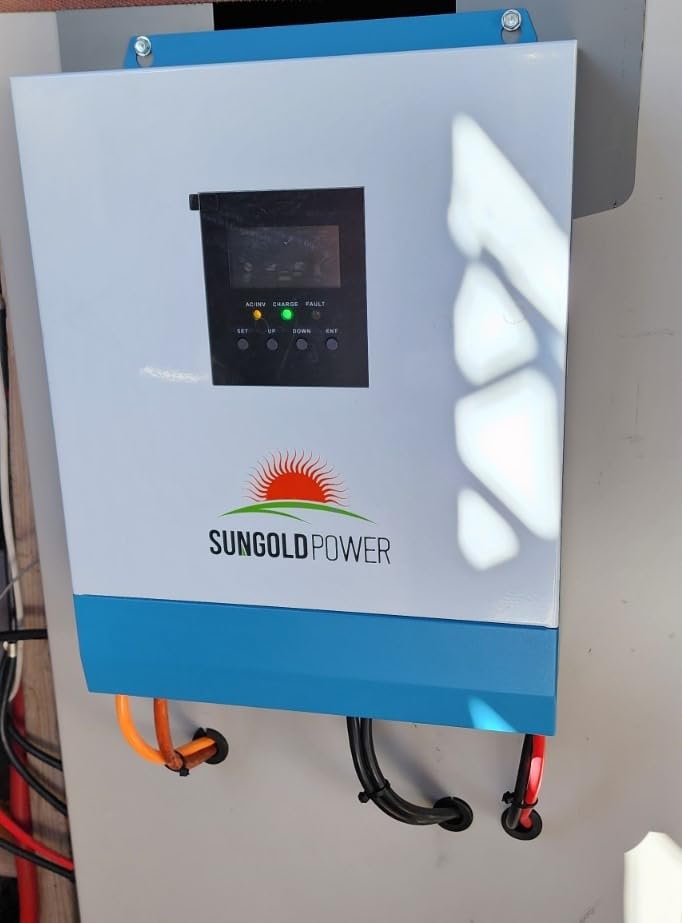
The SPH302480A is the value pick in this lineup, and the reason is the 80A MPPT paired with a 40A AC charger inside a single 3000W 24V enclosure. At 15.5 pounds and 15 by 11 by 3.9 inches it is a normal wall-mount size, and it carries a two-year manufacturer warranty with lifetime technical support listed.
The headline feature for anyone running a home office or a cabin is the transfer speed. The listing specifies a switch to battery in under 10ms on grid or generator loss, which is UPS territory. Computers, network gear and a router will ride through an outage without the sudden brownout that trips cheaper standby units.
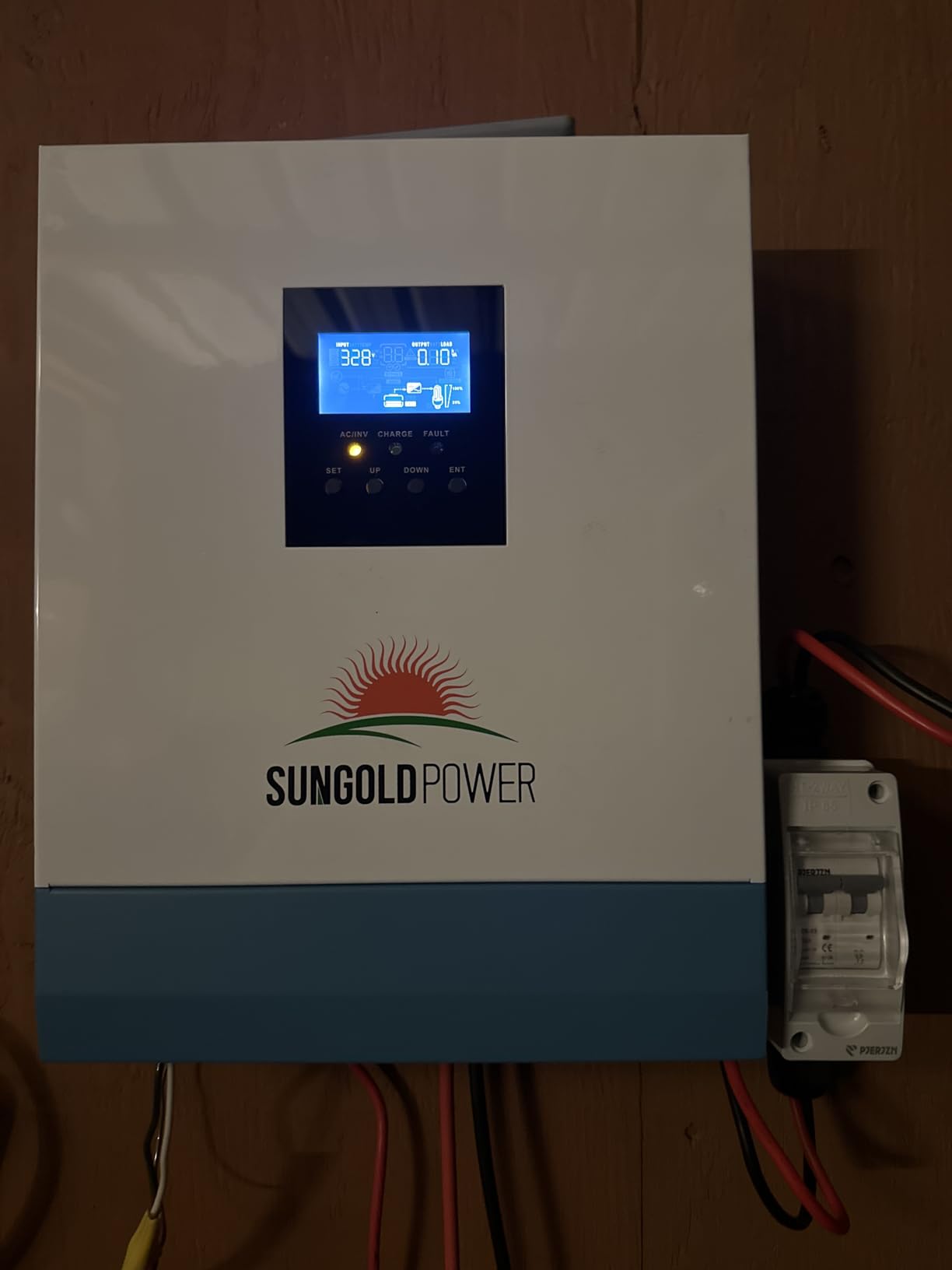
Owners also like the menu structure. Four charging modes cover AC priority, solar priority, solar only and a mains-plus-solar hybrid, and three output modes handle how the inverter behaves when power returns. Battery compatibility spans sealed AGM, gel, flooded and lithium, plus a user-defined profile for anything unusual.
Be aware that remote monitoring is an add-on. The optional WiFi or GPRS module costs extra, and the base unit has no network hardware, so plan on a local LCD readout unless you add the accessory.
Why the 120V MPPT floor trips people up
This is the single most common complaint in the reviews and it is a wiring issue, not a fault. A 120V to 400V DC input range means short panel strings will never reach the operating window. Two modern 400W panels in series might sit right at the edge in warm weather and fall below it under load on a hot day.
The fix is more panels in series or a separate charge controller with a lower floor. If your roof is shaded at all, series wiring is a risk too, because one shaded panel can pull the whole string below the floor and stop charging entirely. For unshaded roofs, series strings of four or more panels is the safe configuration.
Who this unit suits and who should wait
It suits van, cabin and small-home builds where the load list is mostly lights, a refrigerator, a laptop and a router. That is genuinely the most common off grid power system being built today, and a 3000W continuous rating covers it with room to spare.
Wait if you plan to run a well pump, a refrigerator compressor or power tools on the same box. The 13 percent one-star share in the reviews is the reliability signal to weigh, and a 3000W continuous class leaves no surge margin for motor starting.
4. VEVOR LVM3000-24L – Best Budget Hybrid With Built-In WiFi
VEVOR Hybrid Solar Inverter, 3000W, Single Phase Pure Sine Wave Power Inverter, 24V DC to 110/120V AC, with Built-in 100A MPPT Solar Charge Controller, for Off-Grid System Lead Acid Lithium Battery
3000W pure sine wave
24V DC to 120V AC
100A MPPT 4000W max PV
Built-in WiFi module
Pros
- 100A MPPT keeps the install compact
- Built-in WiFi with no separate accessory
- Clear button-driven mode controls
- Covers lithium and lead-acid with activation function
Cons
- WiFi app samples every five minutes not real time
- Not a grid-tie unit
- 4000W peak is modest for motor loads
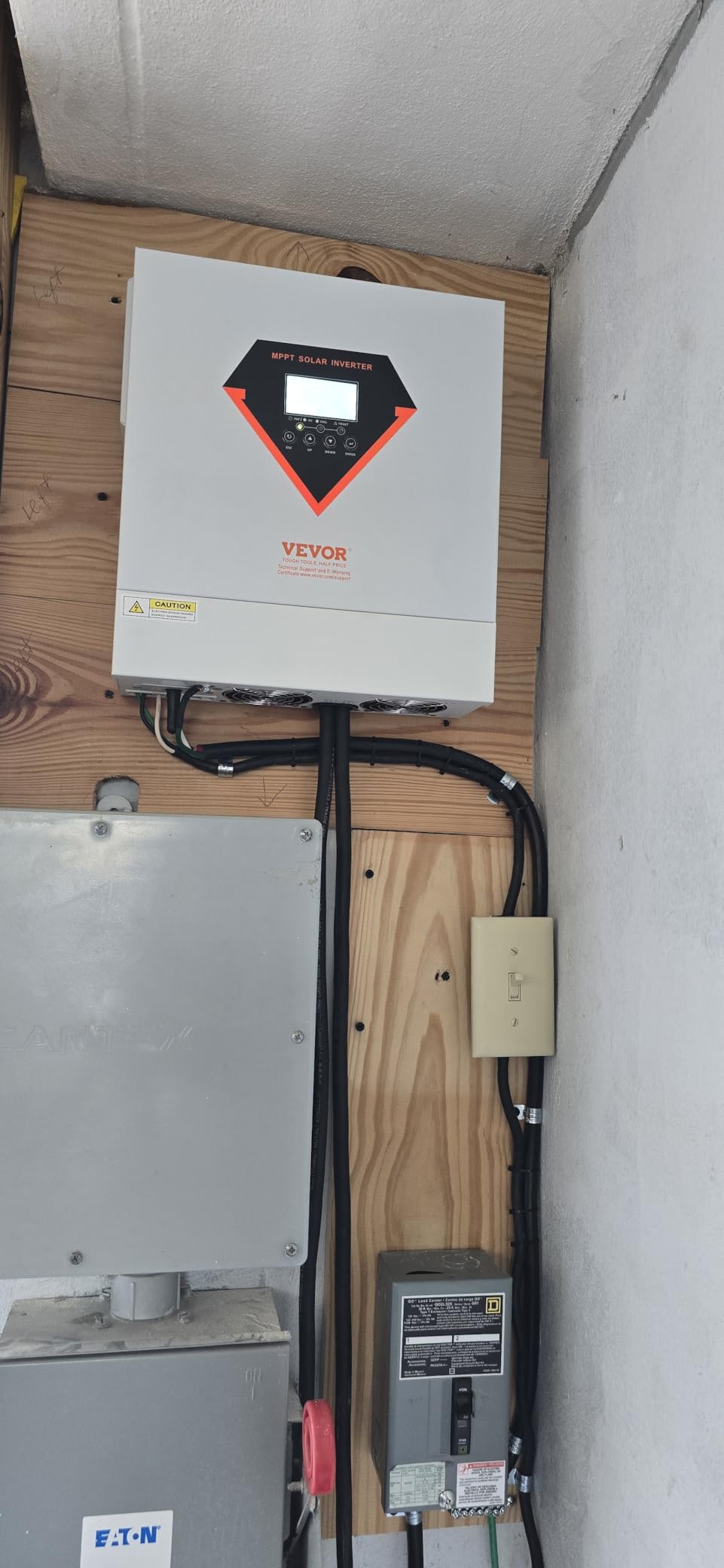
The VEVOR LVM3000-24L is the most straightforward 3000W hybrid in the group, and at 15.2 pounds in a 12.2 by 4.2 by 14.4 inch case it is easy to mount in a garage or a utility closet. The output is pure sine wave 120V, and the unit is rated for 4000W peak.
Two things stand out. The first is the integrated 100A MPPT with up to 4000W of PV across a 60V to 500V DC range, which is a lot of tracker for a budget box. The second is that the WiFi module is built in rather than sold separately, so you can check state of charge and output from a phone without buying an accessory.
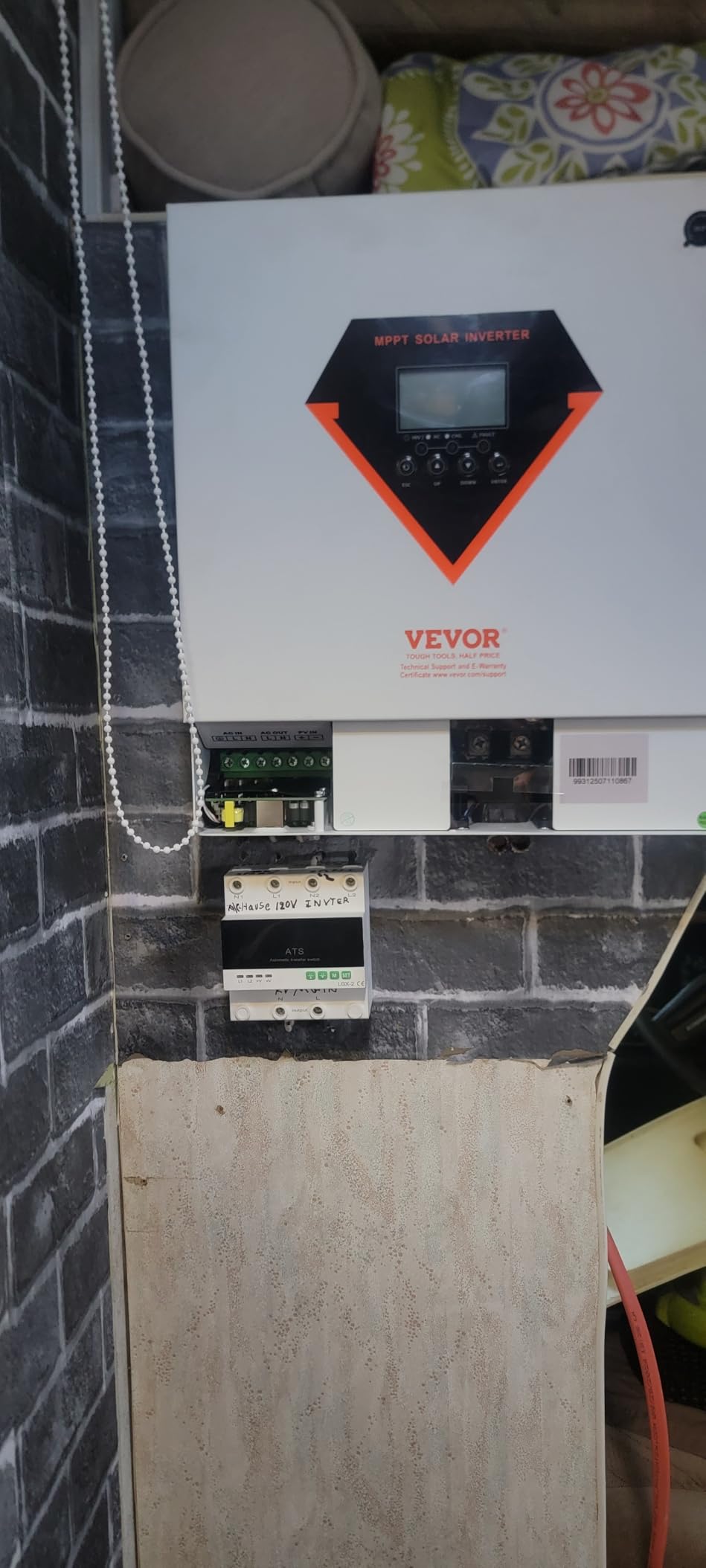
Controls are unusually clear for this class. Rather than digging through a menu, the unit has on-device buttons for charging mode, covering Solar Only, Mains Only and hybrid, and for output mode, with UTL, SOL, SBU and SUB positions. Protection circuitry covers over-temperature, over current, over voltage, under voltage, short circuit and overload.
The battery side is flexible too. Lead-acid, sealed, gel, flooded, lithium and custom profiles are all selectable, and there is a lithium activation function for cells that have dropped into a deep-sleep state.
What the five-minute app sampling actually means
Reviewers call this out more than anything else. The app polls roughly every five minutes rather than streaming in real time, so it is a reporting tool and not a live monitor. It is genuinely useful for checking state of charge before you drive out to the cabin, and useless for catching a fault the moment it happens.
That is a fair trade for a unit with built-in connectivity at this tier, but it changes how you should use it. If you want live battery data for a lithium bank with a BMS, you will need a separate shunt-based monitor.
Where the budget shows
First, 4000W peak on a 3000W continuous unit is a modest surge margin. A refrigerator compressor or a shop vac can momentarily ask for more than 4000W, and when the unit hits its ceiling it simply trips.
Second, this is strictly an off-grid device. It has no grid-tie function and cannot feed power back to the utility, which means it will not work as part of a hybrid rooftop system. If your plan includes net metering later, this is the wrong platform.
5. AIMS Power PICOGLF40W24V120V – Best for Surge Headroom on Motor and Compressor Loads
AIMS Power PICOGLF40W24V120V 4000 Watt Pure Sine Inverter Charger, 24Vdc to 120Vac Output, Remote Panel Available, Auto Frequency, Terminal Block, Multi Stage Smart Charger, 7 Battery Type Settings
4000W 24V to 120V pure sine
50A smart charger
12000W surge for 20 sec
Auto transfer switch
Pros
- Three-times surge handles compressors and AC units
- Quiet with clean output sensitive electronics run on
- Transfer switch works as a fast UPS
- Long service life reported by installers
- Adjustable charge rate with seven battery types
Cons
- Heaviest unit here at nearly 68 pounds
- Cannot charge the bank and run loads at the same time
- Small delicate controls and an audible transfer beep
This AIMS Power unit is the oldest design in the roundup and it behaves like it. At nearly 68 pounds it is by far the heaviest box here, and you should plan mounting and ventilation before you order it. The build quality is what you would expect from a power device that has been in continuous production for years.
What sets it apart is surge. The specification is three times continuous, taking 12000W for 20 seconds. On a system that starts a well pump, a washing machine or a room air conditioner, that headroom is the difference between a clean start and an immediate trip. The 50A smart charger with seven selectable battery types including lithium wake up adds to the flexibility.
Reviewers with the most detailed write-ups are installers running these in off-grid homes and motorhomes. They consistently describe quiet operation, clean output that sensitive electronics run on happily, and a transfer switch that acts as a fast uninterruptible supply with no visible load interruption.
Understanding the charge-and-invert limitation
The most consequential limitation here is that the unit cannot charge the battery bank and simultaneously run loads through the inverter. If shore power is connected and you turn on a heavy appliance, the charger has to back off. Users comparing units in this category should plan their charging windows around that behaviour rather than around a fixed schedule.
The second limitation is the power save mode. It needs a resistive load above roughly 50W to wake up, so a compressor cycling on and off will not reliably trigger it. For a system that mostly idles, plan to leave the unit in a normal low-draw state instead.
Who should buy this and who should not
Buy it if motor loads dominate your system and you have a mounting point that can carry the weight. A 68 pound unit on a plywood shelf in a hot closet will cook itself, so ventilation matters as much as the surge rating.
Skip it if you are building a small system and need to grow into larger power. There is no parallel scaling path here and no solar input, so a builder with panels needs a separate MPPT controller anyway. The three-year warranty is also conditional on buying from authorized sellers.
6. Victron MultiPlus-II 48/3000/35-50 – Best for Marine and Professional Installations
Victron Energy MultiPlus Inverter/Charger 120VAC 3000VA 48V 35A
3000VA 48V inverter charger
35A charging 50A variant
120V pure sine output
Under 20ms transfer
Pros
- Power Assist prevents overloading a small generator or shore feed
- Under 20ms transfer protects sensitive loads
- Only 4 percent one-star reviews
- Scales to six devices and three phase
Cons
- No built-in MPPT so a separate controller is required
- 2400W continuous is modest for the class
- 50 hertz frequency listed on the 120V model
The Victron MultiPlus-II 48/3000/35-50 is the closest thing to a professional reference design in this roundup. The listing describes it as suited to professional marine, yachting, vehicle and land-based off-grid applications, and the reviews are full of installers rather than weekend builders. At 10.5 by 5.5 by 19.6 inches it is a tall, narrow wall unit.
Two functions carry most of the value. Power Assist stops a small AC source from being overwhelmed, which is exactly what happens when a 2kW appliance starts while you are connected to a modest generator. And the transfer window is under 20ms, fast enough that most electronics never register the switch.
Owner sentiment on r/OffGrid and iRV2 consistently frames Victron hardware as the durable choice for smaller off-grid projects, with the back-feed capability called out as the feature that separates an inverter charger from a plain inverter. On iRV2 the MultiPlus family is repeatedly described as an outstanding inverter charger, and the quietness of Victron systems compared with all-in-one boxes is a recurring owner observation.
Scales well, too. Up to six MultiPlus-II units can run in parallel, and three of them can be configured for three phase, so a 3000VA starting point is a genuine floor rather than a ceiling. Only 4 percent of reviews are one-star, which is the strongest satisfaction signal among the units we tested at a comparable power level.
It is also the one unit here that is inverter-plus-charger only. There is no integrated MPPT, so a solar system needs a separate charge controller, which is a real added line item and a real added failure point.
Do you need a separate MPPT with this unit
Yes, if you run panels. The device accepts AC in, not PV DC in, so the solar path has to be handled by an external charge controller. This is not a flaw, it is an architectural choice that lets you match a controller sized for your array instead of living with whatever tracker is inside the box.
For a boat or a vehicle where space is tight, the tradeoff runs the other way. Those installs often have small panels, so a low-voltage external controller is cheap, and the reliability of a controller dedicated to one job can be worth the extra wiring.
The price objection and the warranty channel
The most common objection to this brand is cost, and the standard forum answer is that authorized dealer pricing tracks the marketplace anyway, so buying through a dealer rather than a marketplace listing does not have to cost more. What the dealer route does buy is warranty coverage that marketplace purchases may not carry.
That distinction matters more than most buyers expect. Several brands in this category state a warranty that applies only when purchased from authorized sellers, so check the terms before treating a marketplace listing as equivalent.
7. AMPINVT TEL-48502M100 – Best for Generator-Controlled Off-Grid Sites
Ampinvt Solar Inverter 5000 Watt 48V to 120V, inbuilt 100A MPPT Solar Charger, Max PV Input 5500W 500Vdc,Off Grid Pure Sine Wave Inverter Support up to 6 in Parallel for Lead Acid Lithium Battery
5000W 48V pure sine
100A MPPT 60V-500V Voc
Generator dry contact
Single split or three phase
Pros
- Inverter charger MPPT and transfer switch in one box
- Dry contact generator control is unusual at this tier
- 98 percent MPPT tracking efficiency
- Split phase and three phase output options
- RS485 and WiFi for battery management systems
Cons
- USB PC configuration needs a CH340T driver
- Dry contact relay limited to about 1A
- WiFi monitoring needs optional modules
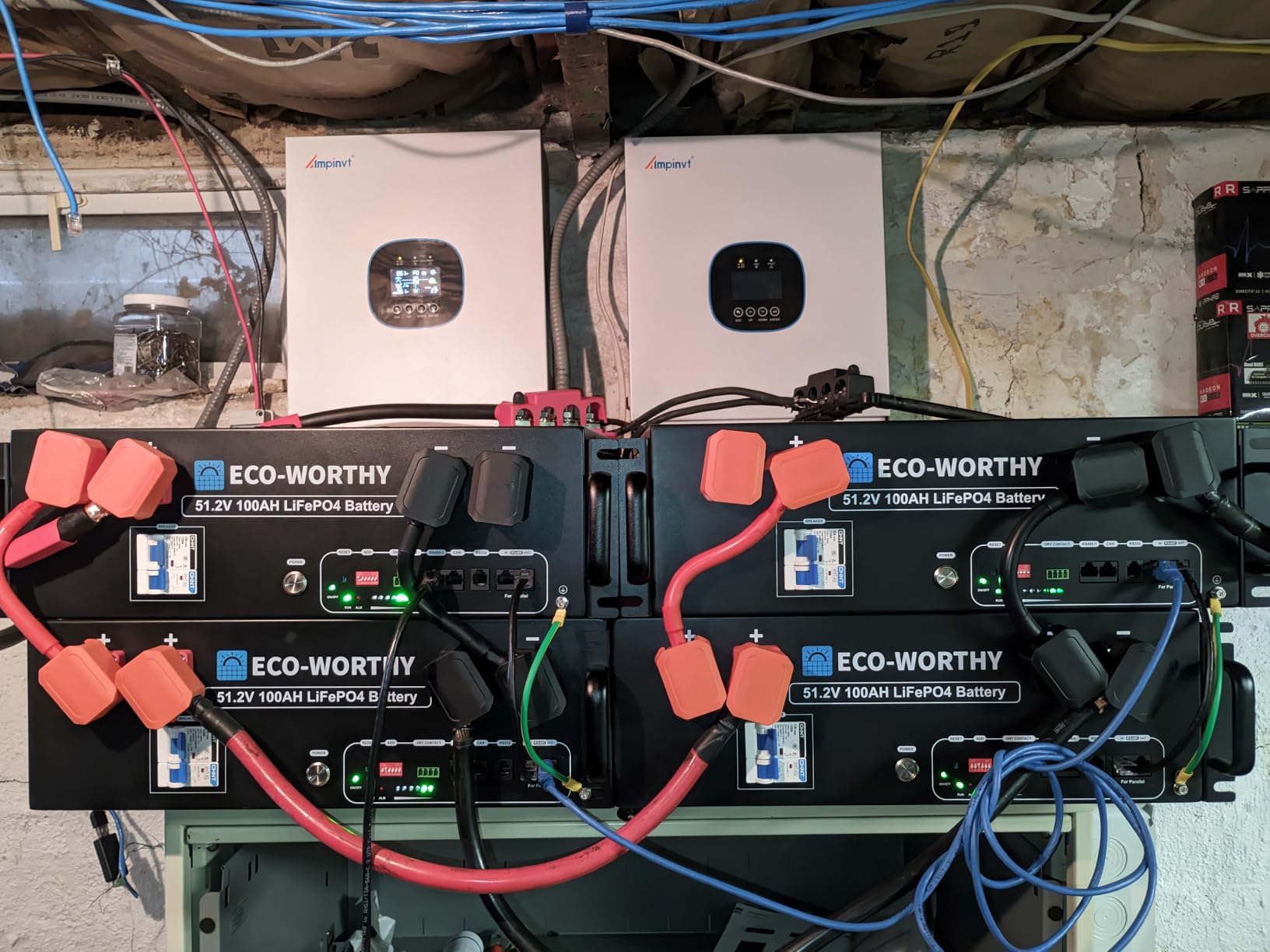
The AMPINVT TEL-48502M100 packs four functions into a 13.4 by 5.6 by 19.7 inch case: a 5000W pure sine inverter, an AC battery charger, a 100A MPPT and an automatic transfer switch. The tracker is rated for up to 5500W of PV across a 60V to 500V Voc window with 98 percent tracking efficiency, which is among the strongest numbers in this group.
What makes it interesting for off-grid sites is the dry contact relay for automatic generator start and stop. If your backup is a genset rather than a utility feed, a unit that can call the generator to life when the bank hits a low state of charge saves you from building that logic yourself.
Output is unusually flexible for a single box. Single phase, split phase and three phase 120, 208V and 240V AC are all supported, with transfer efficiency above 92 percent, and parallel operation is supported up to six devices. Battery support covers sealed, AGM, gel and flooded lead-acid alongside LiFePO4.
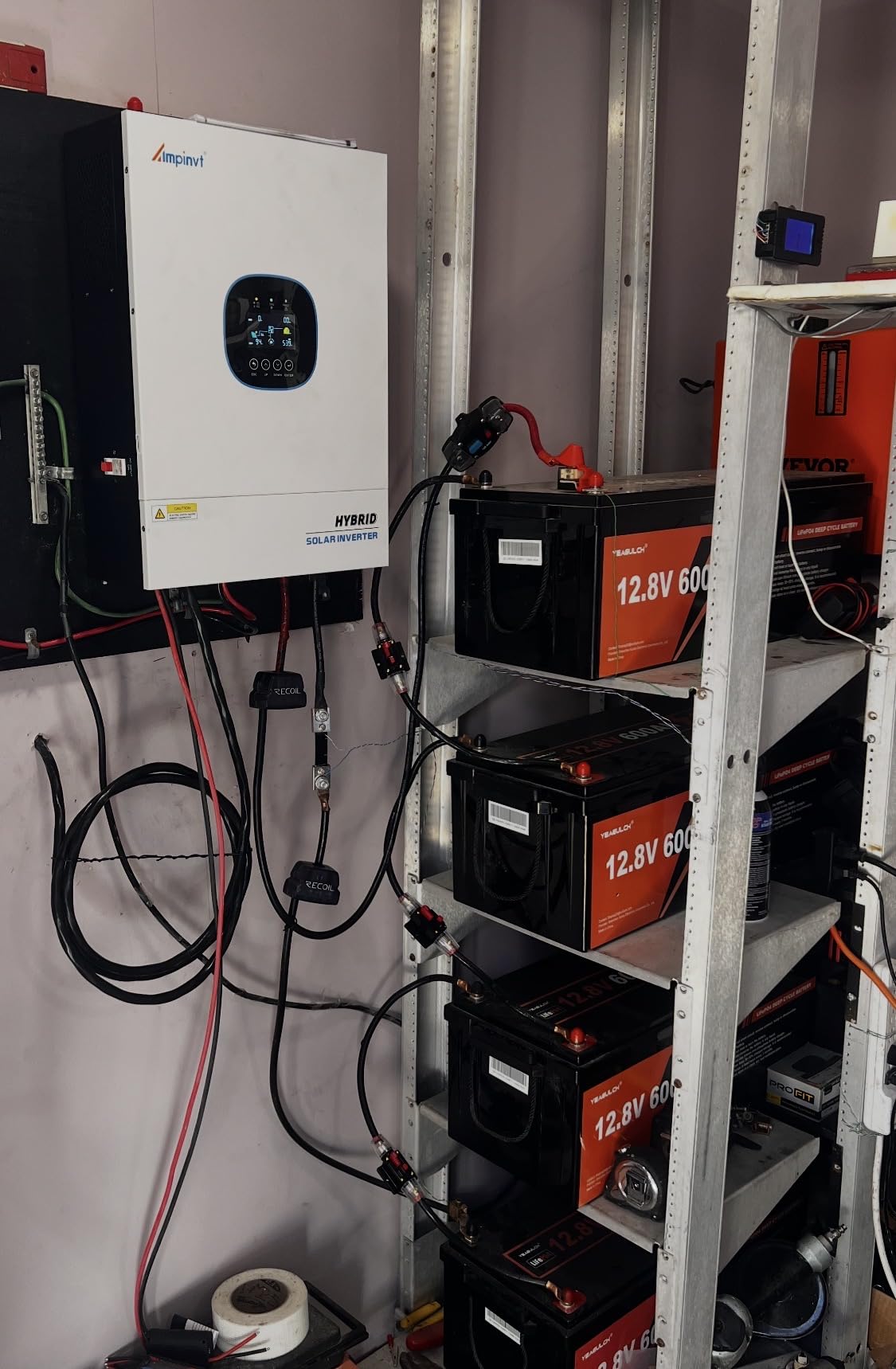
For lithium builders the communications layer is worth noting. RS485 and WiFi allow the unit to talk to a battery management system and to a phone app, and there is a dry contact relay alongside a USB port for direct configuration. Three work modes and four charging modes cover the usual operating profiles.
That same feature set is where the setup friction comes from. The most common complaint in the reviews is the configuration step, specifically the need to install a CH340T driver before the USB port will talk to a computer.
What the generator dry contact can and cannot do
Read the contact rating before you plan around it. It is specified at 125VAC and 1A, 230VAC and 1A, and 30VDC and 1A. That is enough to energise a relay coil or a generator controller input, and nowhere near enough to switch a generator contactor directly.
So the correct build is dry contact to starter relay to contactor to generator. Anyone expecting to wire a genset straight into that terminal will find it does not hold, and that mismatch is the single most useful thing to know before ordering this unit.
Where this one fits in a system plan
It suits sites where the loads are large and the solar array is fixed, because 5000W continuous with a 100A tracker covers a decent residential load list without needing a second device. The multi-phase capability means a future expansion to split phase does not require a different brand.
Buyers who dislike software steps should weigh that first. The 43-review sample is small, so treat the configuration friction as a planning item rather than a dealbreaker, and budget an evening for setup.
8. SGPWATT SPH6548P – Best for Split Phase and Dual MPPT Arrays
SUNGOLDPOWER 6500W 48V Solar Inverter, Split Phase,Built-in 2 MPPTs, Max 140A Battery Charging, AC Input/Output 120V/240V(settable),Pure Sine Wave Inverter(Parallel/BMS COMM) UL1741
6500W 48V pure sine
UL1741 listed
Dual MPPT 550VDC max
140A battery charging
Pros
- Highest average rating in this group at 4.7 with zero 1-star reviews
- Two independent MPPT trackers for mismatched arrays
- Split phase 120V and 240V output in one unit
- Time-slot charging scheduling for peak and valley tariffs
- WiFi module included
Cons
- Cannot feed power back to the grid
- Heavy at nearly 40 pounds
- Priced well above the 3000W to 5000W alternatives
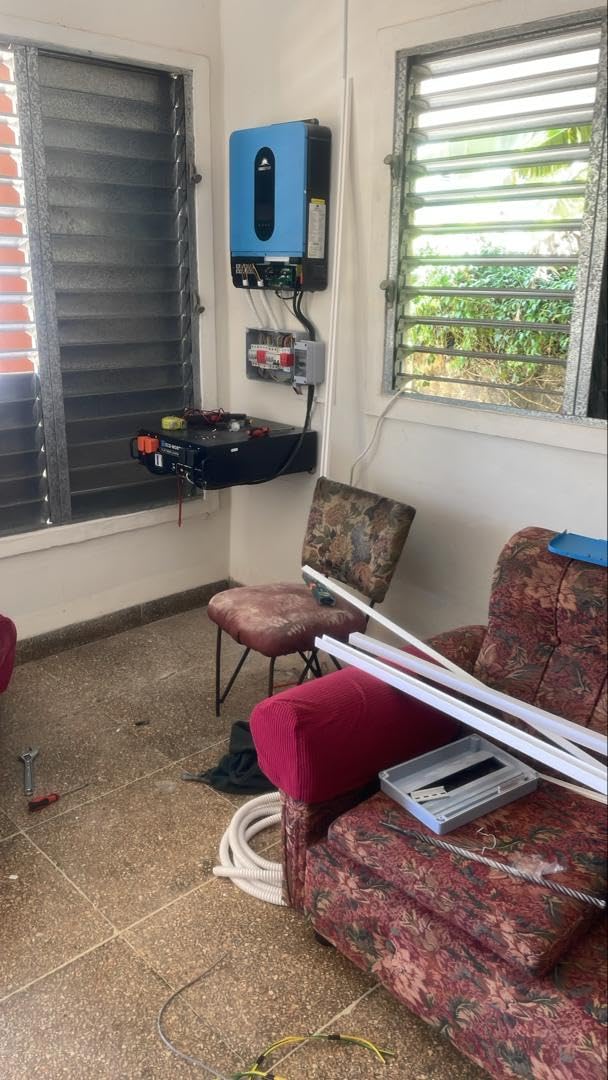
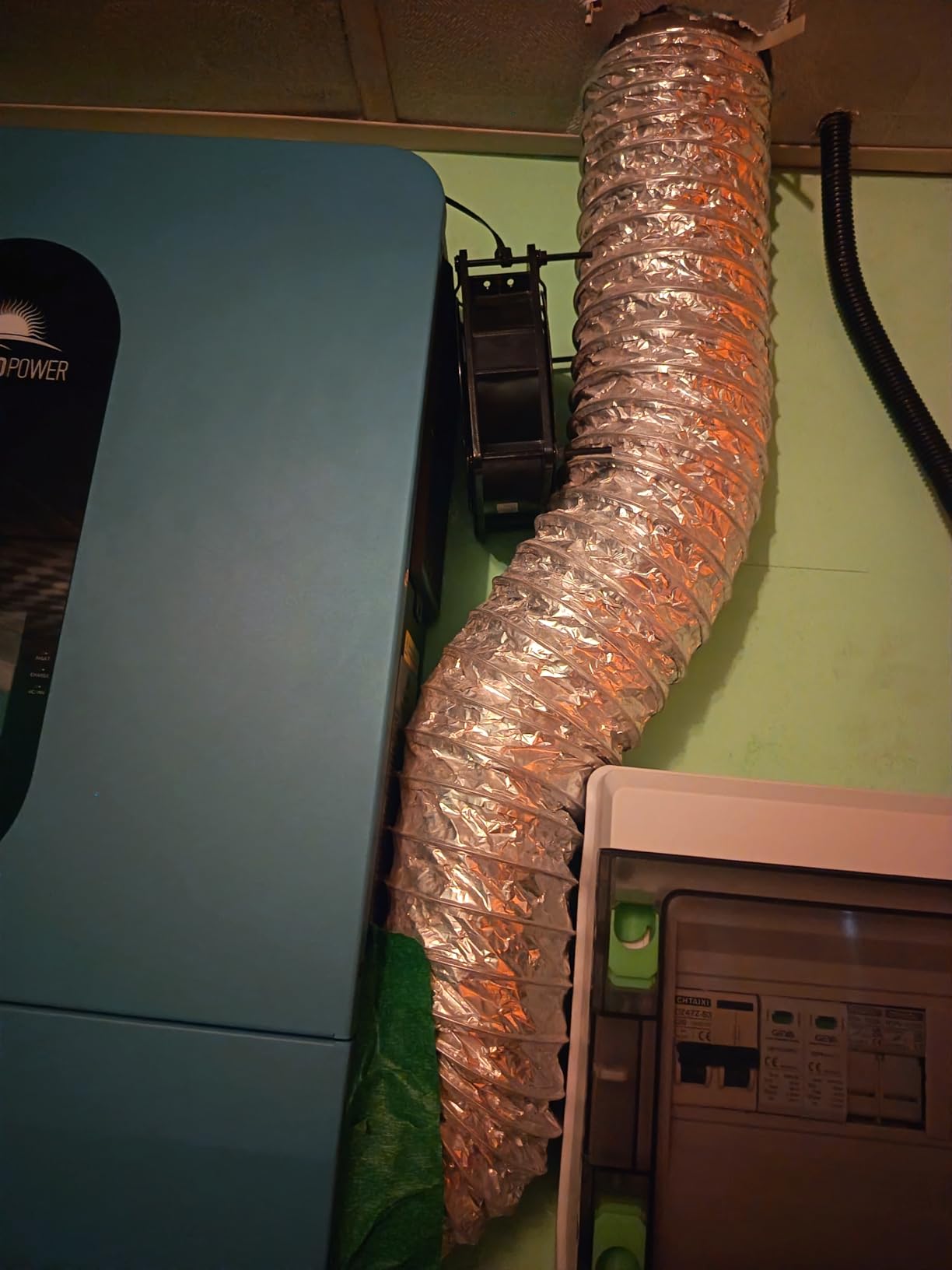
The SPH6548P is the most capable box in this roundup by a wide margin. It is rated at 6500W continuous on a 48V bank, produces 13000VA peak, and carries 4HP loaded motor capacity. The enclosure is 23 by 16.2 by 5.3 inches and weighs 39.7 pounds, so plan a proper wall and a lifting partner.
The dual MPPT architecture is the feature that separates it from every other unit here. Two independent trackers let you put panels on a south-facing roof and a west-facing wall and still get full yield from both, instead of forcing mismatched strings onto one tracker where the weakest array sets the pace. Maximum open-circuit voltage is 550VDC per the listing.
Split phase output of 120V and 240V is settable, which means a well pump, a clothes dryer or a range element can run without a separate transformer. Battery charging reaches 140A, the highest figure in this group, so recovery from a depleted bank is as fast as the array can drive it.
For anyone on a time-of-use tariff, the scheduling feature is a genuine asset. Time-slot charging and discharging lets the unit charge the bank during cheap off-peak hours and hold it back for the expensive evening window, which turns a battery into a rate arbitrage tool rather than just an outage hedge.
Communication options are broad. The WiFi module is included rather than sold separately, and CAN, USB and RS485 ports allow the unit to talk to compatible batteries directly. Battery-free operation is supported with lithium activation, and parallel operation extends to six devices.
Split phase output and what it unlocks
Split phase matters more than most first-time buyers expect. On a 120V-only system, anything that needs 240V requires an external transformer, and transformers are heavy, wasteful and a second thing to fail. Producing 120V and 240V from one enclosure removes that from the design entirely.
For an off-grid home that wants to run a well pump, this is the difference between a system that works and a system that fights you. The output is settable, so a single unit can run 240V loads and 120V circuits at the same time.
The dealbreakers to know about first
It cannot feed power back to the grid. If your long-term plan includes net metering or selling surplus, this unit does not do it, and you would be replacing the box in a few years rather than adding to it.
Second, at nearly 40 pounds and 23 inches wide it is not a van or a small boat install. Third, owner sentiment is the strongest here on satisfaction, with 86 percent five-star and no one-star reviews in the sample, but the review count is the smallest in this roundup at 35, so treat the rating as encouraging rather than settled.
9. LiTime 3500W 48V All-In-One – Best for Compact Installations With LiTime Batteries
LiTime 3500W Solar Inverter Charger, All-in-One 48V DC-120V AC, 80A MPPT
3500W 48V to 120V pure sine
80A MPPT auto tracking
6000W surge
Built-in UPS function
Pros
- Single-box design cuts panel wiring and component count
- Built-in UPS switchover is fast
- RS485 integration with LiTime ComFlex batteries
- Covered by AIG product liability insurance
Cons
- Only a one-year warranty
- 6000W surge is modest for 3500W continuous
- Monitored maximum charge current of 40A is below the 100A trackers
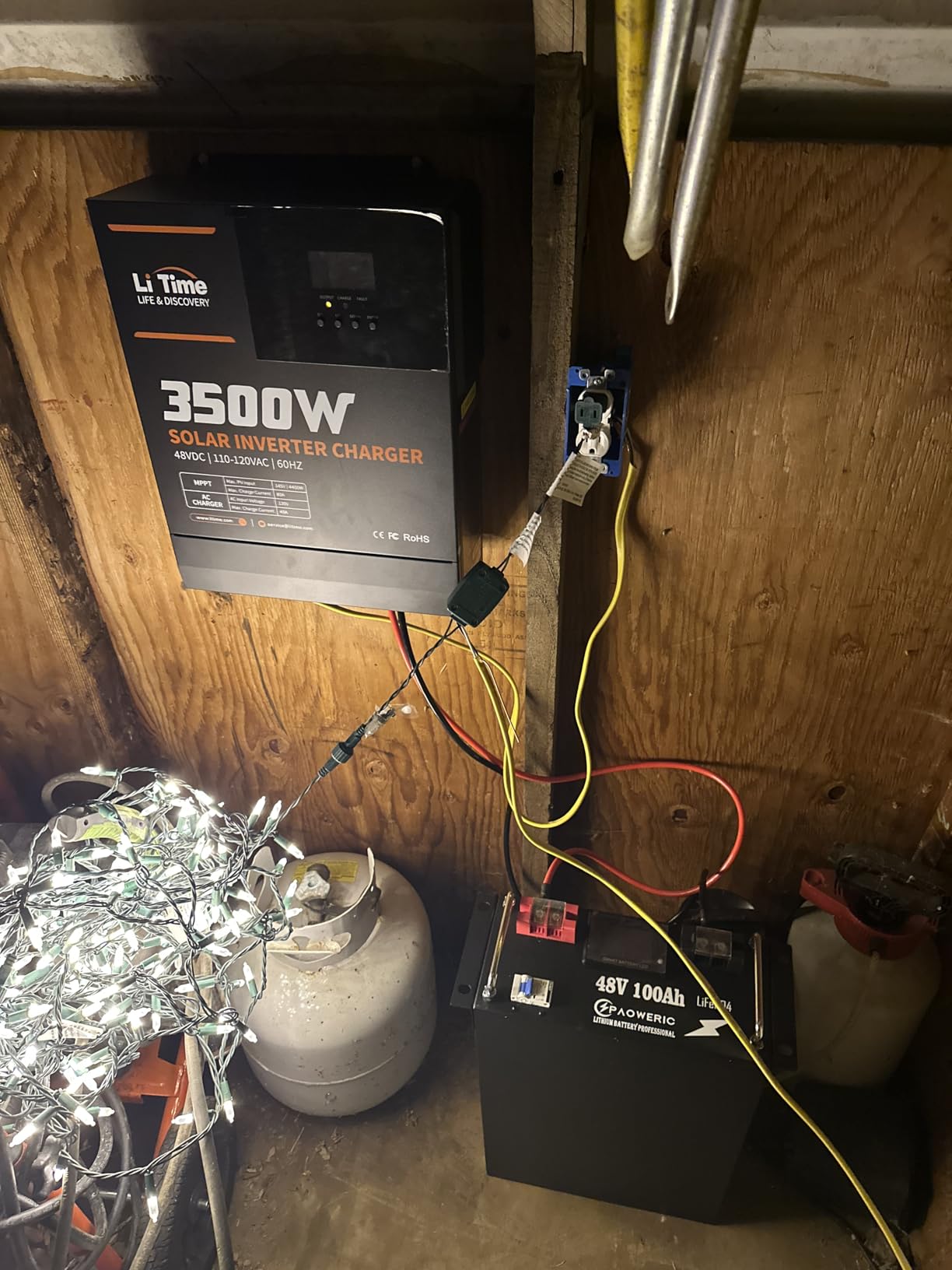
The LiTime 3500W is a 48V all-in-one in a black 16.77 by 13.22 by 4.88 inch case weighing 23.1 pounds. It delivers 3500W of continuous pure sine wave output with up to 6000W of surge, and the 4375VA inverter capacity figure sits between the two.
The argument for it is integration. The MPPT controller, inverter and charger live in one unit, which cuts wiring back to the panel and reduces the number of components that can fail. The 80A MPPT uses automatic solar tracking, and four charging modes cover Solar Only, Utility Priority, Solar Priority and Hybrid with multiple output priority modes on top.
Owners already running LiTime batteries get the most from it. RS485 battery status monitoring pairs directly with the LiTime 51.2V 100Ah ComFlex Edition, so state of charge is reported properly rather than inferred. The listing also notes coverage by AIG product liability insurance, which is unusual to see stated for a device at this tier.

The built-in UPS function is the sleeper feature. Millisecond-scale switchover to battery backup means a home office, a network rack or a medical device keeps running through a grid failure without the reboot that a standby inverter causes.
Battery chemistry support covers lead-acid, lithium and a user-defined mode, so the unit is not locked into a single ecosystem despite the RS485 advantage for LiTime cells.
Check the warranty length before you commit
The one-year warranty is the shortest in this roundup, and it is the reservation that shows up most often in the reviews. For a device expected to sit on a wall running a household for a decade, a twelve-month cover period is a meaningful gap compared with the two and three-year terms elsewhere in this list.
Warranty length also tells you something about expected service life. A manufacturer comfortable warrantying a unit for five years is telling you it expects the fans, relays and capacitors to hold. Treat the one-year term as a signal to factor in a possible replacement in year three or four.
Where the charge rate becomes the limiting factor
The monitored maximum charge current is 40A, which is well below the 100A trackers offered by several competitors in this list. At 48V that is roughly 1900W of charging, so a depleted 5kWh bank takes a few hours to refill even in full sun.
That is fine when solar is the primary source and the bank is rarely taken deep. It is less comfortable on off-peak grid arbitrage, where the whole point is moving as much energy as you can in a short cheap window.
10. AIMS Power PICOGLF20W48V120VR – Best Starter Step for Small Partial Loads
AIMS 2000W 48V Pure Sine Inverter Charger w/Transfer Switch 120V Backup
2000W 48V to 120V pure sine
6000W surge 20 seconds
30A transfer switch
20A smart charger
Pros
- Low idle consumption of roughly 26W to 27W for the class
- Quiet and cool running with a heavy solid feel
- ETL UL and CSA listed
- 10ms transfer handles grid and battery switching
Cons
- Startup surge response takes about a second causing dips
- Charger only starts reliably in auto mode with loads off
- Several reviewers report first-year failures
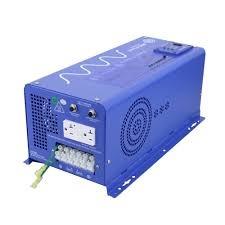
This 2000W AIMS unit is the smallest platform here, and that is exactly why it belongs in the list. It runs on a 48V bank, which lowers cable losses compared with 12V, and it is listed ETL, UL and CSA, which matters if an inspector looks at your paperwork.
The idle consumption figure is the headline. Reviewers report roughly 26W to 27W of self draw, which is modest for a device in this class, and owners running only lights, computers and a refrigerator overnight report that the bank holds up fine. On a 48V platform that is a sensible pairing, because 12V banks lose a lot of energy to cable resistance at small bank sizes.
Enthusiastic owners also describe it as quiet, cool running and solidly built at 43 pounds, with a built-in 30A automatic transfer switch that handles grid to battery switching with a typical 10ms transfer time.
The charger side is a 20A smart charger for gel, AGM, lead-acid and LiFePO4 with adjustable current from off to 100 percent, plus a lithium wake up function for over-discharged banks. That chemistry flexibility is useful if you are not committed to a battery type yet.
It is also where the criticism concentrates. Several reviewers report units failing after roughly a year, with smoke and sparks, and one reported recurring temperature trips. A small group describes flickering output.
The one-second surge response and why it matters
This is the specification to understand before you buy. Startup surge response takes about a second, which produces brief voltage dips that can reset sensitive electronics. A computer, a router or a medical device on the same circuit may reboot when a compressor starts.
If your load list includes anything that dislikes a momentary dip, either budget for a soft-start device on the motor load or step up to a unit with faster surge response. The 6000W surge for 20 seconds is ample headroom, but headroom is not the same as speed.
Where the charger behaviour frustrates owners
Two practical complaints recur. The charger will only start reliably in auto mode with loads switched off, so the first thing to do after a deep discharge is clear the circuits. And the charger tops out around 82 percent state of charge rather than fully absorbing the bank.
On top of that, the remote panel display is hard to read and lacks a low-battery audio annunciator, and several reviewers describe manufacturer support as poor. If you are not comfortable troubleshooting alone, that combination argues for a brand with a stronger support channel.
How to Size an Inverter Charger (Step by Step)
Most undersized inverter chargers are undersized because buyers size on a single big appliance instead of on a running load total. Work through it in this order and you will land on a model that fits your system instead of a system that fits a model.
List every running load in watts. Add up what is on at the same time, not what is installed. A refrigerator running 150W while the microwave runs 1200W and the well pump runs 400W is 1750W, and that is your continuous figure.
Add startup surge for motors and compressors. Multiply the largest motor-type load on the system by two or three. Compressors in refrigerators, air conditioners, well pumps and power tools routinely ask for several times their running wattage for the first fraction of a second.
Add 25 percent continuous headroom. Multiply your running total by 1.25. This covers inverter losses, code derating on high ambient temperatures and the margin you will wish you had the first time you add a microwave.
Pick the nearest model up, not down. If your calculation lands on 3800W, choose a 5000W unit. Unused capacity costs nothing, while insufficient capacity shows up as nuisance trips at the worst moment.
Then check the battery side. Your bank must support both the inverter output and the charger output. A 5000W inverter paired with a bank that cannot deliver 100A at 48V will voltage-sag every time a large load starts.
A worked example. A small off-grid cabin runs a 60W lighting circuit, a 150W refrigerator cycling 40 percent of the time, an 800W microwave, a 400W well pump and 200W of laptop and router load. Realistic running total, accounting for the cycling loads, comes to roughly 1150W. The well pump at three times for startup gives 1200W of surge demand. Adding 25 percent headroom puts you at 1440W continuous and 1200W surge, which lands squarely in the 2000W class rather than the 3000W class.
Now the same cabin adds a 1500W room air conditioner. The running total climbs to about 2650W, the compressor startup asks for up to 4500W, and with headroom you need roughly 3300W continuous. That is a 5000W model, and it is why we rank the 5000W and 6500W units near the top.
12V vs 24V vs 48V: Which Battery Platform Fits Your Build
Voltage is the decision that constrains everything else. The rule of thumb is simple: 12V for under 1000W, 24V for the 2000W to 3600W range, and 48V for anything at 3000W and above or any whole-home system.
Here is why. Current is what kills cables. Doubling voltage at the same power halves the current, and halving current means you can use thinner cable, run shorter distances and lose less energy as heat in the conductors. On a 12V system powering a 3000W load you are pushing 250A, which demands heavy gauge cable and careful connections.
Van and small trailer builds stay at 12V because space and simplicity beat efficiency, and 1000 to 1500W of load does not need more. The 24V platform covers the middle: the SGPWOSAY 3000W, the VEVOR 3000W and the SRGFTS 3600W in this roundup all sit there, and the SRGFTS unit still manages a 100A AC charger without the cable penalties a 12V design would carry.
Move to 48V for anything whole-home, for well pumps, and for any plan to grow later. Five of the ten units here run on 48V, and three of those support parallel operation so a single-unit system can become a 30kW system without changing platforms.
Do You Need an Inverter Charger or Just an Inverter?
You need an inverter charger if you want your battery bank to refill from the grid, from a generator or from shore power. A plain inverter only pushes power out of batteries, and once the bank is empty you are stuck until the sun comes back.
That grid-charging path is what makes an inverter charger different from an inverter, and it is the feature forum users describe as back-feeding. The transfer switch and the AC-side charger are what make automatic switchover possible, and the charger is what refills the bank from cheap off-peak electricity or from a genset during an outage.
A plain inverter still makes sense in one situation: a pure solar system where the array always covers the load and you never want grid interaction at all. Then an inverter plus a separate MPPT controller is simpler, has fewer failure points and costs less. If your build is mostly a phone, a router and a small panel set, the charging-side comparison in our charging roundups is a useful sanity check on the same sizing logic at a much smaller scale.
Solar input and grid input are two independent paths, and this trips up a lot of first-time builders. In every all-in-one in this roundup, the MPPT harvests panel DC directly and the battery charger takes AC from a source. They do not substitute for each other, and understanding that is what stops people expecting a unit to charge from the grid when no grid is wired in.
Pure Sine Wave vs Modified Sine Wave: What Not to Plug In
Every unit we recommend is pure sine wave, and that is not a preference. Modified sine wave output is a stepped approximation that is cheap to produce and genuinely problematic for certain loads, so the real question is which appliances care.
Never run a microwave on modified sine. Microwaves are the classic failure. They run slow, produce uneven heating and can damage the magnetron over time.
Avoid sensitive electronics. Medical devices, CPAP machines, audio equipment and some variable-speed drives behave erratically on stepped waveforms, and a modified supply can shorten the life of a power supply.
Expect noise and heat from motors and compressors. Refrigerators, fans and power tools run hotter and louder on modified sine, which shows up as shorter compressor life over years.
Expect audible buzz. Transformers and inductive loads announce a modified waveform clearly, and owners describe the sound as humming in anything with a motor.
Battery chargers need care. Lithium battery chargers in particular can misread a stepped input and shut down or refuse to charge.
The AIMS Power PICOGLF40W24V120V and the Victron MultiPlus-II here are pure sine, and so is every all-in-one in the roundup. The practical takeaway is that the waveform question has already been answered for you, and the remaining decisions are about size, voltage and surge.
Battery Bank Sizing: The Wh, DoD and Efficiency Math
Here is the runtime calculation people keep hand-deriving in forum threads. Multiply amp-hours by nominal voltage to get nameplate watt-hours, apply your depth of discharge, then multiply by inverter efficiency to get usable AC watt-hours.
Formula: usable watt-hours equals Ah multiplied by nominal volts, multiplied by depth of discharge, multiplied by inverter efficiency.
Worked example. A 48V 100Ah lithium bank gives 4800Wh nameplate. Lithium is typically taken to 80 or 90 percent depth of discharge, so use 80 percent and you have 3840Wh in the bank. At a realistic 90 percent inverter efficiency that leaves roughly 3450Wh of usable AC. Running a 1000W continuous load gives about three and a half hours before the low cutoff.
The same formula explains why 48V wins. A 12V 400Ah bank holds 4800Wh on paper, but at 250A of discharge the cable losses become a real percentage of that, and a 24V or 48V bank of the same capacity loses much less on the way to the inverter.
The forum version of this calculation is a good reality check. One owner computing 150Ah at 12.8V got 1920Wh nameplate, applied 80 percent depth of discharge for 1536Wh, then 85 percent inverter efficiency for about 1306Wh usable, and worked out that a roof-mounted air conditioner on a hot day would run for roughly an hour. That is the right way to think about it, and it is why we size banks generously rather than optimistically.
Grid Charging vs Solar Only: Which Architecture You Actually Need
These are two different products wearing similar names, and choosing wrong leaves you with capability you cannot use or a gap you cannot fill.
Solar only. The MPPT harvests panel DC and the inverter serves the loads. There is no AC input, so there is no transfer switch to speak of and no way to charge from anywhere but the sun. Simpler, fewer parts, and correct for a remote site that has never had grid power and never will.
Grid and solar. An AC input path and transfer switch are added. You can back-feed the bank from the grid or a generator, you can hold the fridge alive through an outage indefinitely, and with time-of-use tariffs you can charge cheap and discharge expensive. This is the architecture most home backup systems actually want.
Backup only. A pure inverter charger with no MPPT, which is the Victron MultiPlus-II configuration. You supply charging from a separate solar controller or from the grid, and the inverter charger handles transfer and AC-side charging. This is the professional split and it costs more in components but buys serviceability.
Note the SGPWATT 6500W supports time-slot charging and discharging scheduling, which is the arbitrage feature done properly. Most budget units charge from AC but give you no schedule control, so you end up watching the clock yourself.
Victron MultiPlus II vs the All-In-One 48V Boxes
This is the comparison that comes up on every forum for this category, so it is worth stating plainly. The Victron MultiPlus-II is an inverter plus charger plus transfer switch. The all-in-one 48V boxes add a fourth function, a solar tracker, and trade away something for it.
What the all-in-ones win on: one box instead of three, fewer points of failure, less wiring, and a lower total installed cost for a comparable power class. What they give up is serviceability. When a fan, a relay or the tracker fails inside a sealed all-in-one, you often replace the whole unit.
What the Victron wins on: owner-reported durability and quietness, Power Assist for limited AC sources, fast transfer, parallel scaling to six devices, and three-phase capability with three units. Owner sentiment on off-grid forums consistently treats Victron as the durable choice for smaller builds, and describes the MultiPlus family as an outstanding inverter charger.
What the Victron gives up: it has no built-in MPPT, so a solar build needs a separate controller, and its continuous output in this configuration is 2400W against a 3000VA class, which is modest next to competing units at similar cost.
For a first build on a budget, an all-in-one wins. For a boat, a vehicle, or a house that must not fail, the split architecture and the serviceability of the Victron are worth the extra parts.
Reliability, Warranty Channels and Where to Buy
Reliability is the biggest fear in this category, and it is a fair one. The recurring failure complaint on off-grid forums is a unit that hard-faults in full sun with no predictable pattern and does not auto-recover, which means a system goes down until someone drives out to power-cycle it.
Where to buy matters more here than in most consumer categories. Warranty terms on several brands in this roundup are conditional on purchase from authorized sellers, and iRV2 users are emphatic that buying certain premium brands through a marketplace listing can mean the manufacturer warranty may not apply. The standard counter-argument is that these brands hold their pricing, so an authorized dealer does not have to cost more.
On the design side, the single-point-of-failure pattern is what actually generates failures. An all-in-one puts the inverter, charger, transfer switch and MPPT in one un-serviceable box, so a tracker fault takes out your battery charging and your AC output at the same time. Split systems fail in more places but each failure is cheaper and more diagnosable.
Look for auto-recovery behaviour in the manual. A unit that restarts its charge cycle after an overload clears itself, while one that latches a fault and needs a manual reset will strand you. Weight is also a rough proxy for build quality, and the two heaviest units in this roundup are both long-running professional designs.
Whichever unit you choose, confirm whether the warranty attaches to the serial number or to the purchase channel before you order, and keep the receipt. Two-year terms are the norm in this group, the AIMS units state three years subject to authorized-seller purchase, and one LiTime unit carries a single year. Where the buyer’s real question is how a device behaves months after setup, our notes on long-term charging reliability cover the same warranty-versus-marketplace trade-off.
Safety and Installation Essentials Before You Power Up
DC arc risk is the reason professional installers take this seriously, and a DIY Solar Forum answer on these units makes the point clearly: high-voltage DC runs outside on a roof can arc, and DC does not self-extinguish the way AC does. Five items belong on your checklist before you energise anything.
PV isolator. A DC disconnect that lets you isolate the array for service. It is a different device from the AC breaker, and it must be rated for the DC voltage and current of your string.
High-voltage DC breaker. Protects the wiring between the panels and the inverter, close to the array so a fault is contained.
Do you need both? The forum answer is that they provide redundancy rather than serving identical purposes, and some Authority Having Jurisdiction requirements will ask for one or the other. Check with your local inspector before ordering.
Code-compliant conduit. Metal conduit for indoor PV runs is a code requirement in many areas, and exposed rooftop DC wiring needs appropriate protection from UV and weather.
Correct torque on every terminal. Battery connections carry high current and a loose lug becomes a heat source and then a fire. Torque to the manufacturer figure with a proper wrench.
Two more items that are easy to miss. A soft-start device on air conditioner and compressor circuits reduces the inrush that trips inverters, and it is far cheaper than replacing a unit for tripping. And series strings collapse if a single panel is shaded, so if your roof has any obstruction, plan on parallel strings with an MPPT that suits, or accept that a shaded afternoon costs you the whole array.
Finally, check whether your Authority Having Jurisdiction requires a licensed electrician for this work. The rules vary by location, and a permit conversation before you buy is much cheaper than a permit conversation after.
Frequently Asked Questions
What size inverter do I need for off-grid?
Size by your running load total, not your largest appliance. Add the continuous watts of everything on at once, multiply your largest motor or compressor load by two or three for startup surge, then add 25 percent headroom. A cabin running a refrigerator, lighting and a well pump lands in the 2000W class. Adding a microwave and a room air conditioner pushes you to 3500W continuous, which means a 5000W unit.
What is the best inverter charger?
The best inverter charger is the one whose continuous rating, surge headroom and battery voltage match your load list. In this roundup the SRGFTS ECO-LV 3.6KW PLUS leads on feature density and owner satisfaction, the SGPWOSAY SPH5048P leads for 48V systems and future parallel growth, and the SGPWATT SPH6548P leads for split phase output and dual MPPT tracking.
Which 48V inverter is the best?
For most 48V builds the SGPWOSAY SPH5048P is the strongest all-in-one, with 5000W of pure sine output, a 100A MPPT accepting up to 500V of PV, and parallel operation up to six devices. The SGPWATT SPH6548P is the choice when you need true 120V and 240V split phase or two independent trackers. The AIMS 2000W unit is the pick for a small partial-load system on a tight budget.
Are Victron inverters a good brand?
Yes, and owner reports back that up. Off-grid forum users describe Victron hardware as durable for smaller systems, repeatedly call the MultiPlus family an outstanding inverter charger, and note the quietness of Victron systems compared with all-in-one boxes. The standard objection is cost, and the common answer is that authorized dealer pricing tracks the marketplace. Buying from an authorized seller also protects the warranty.
What should you not plug into an inverter?
Avoid microwaves, medical devices, CPAP machines and audio equipment on any modified sine wave supply, and do not use a modified sine inverter with a lithium battery charger that may misread the input. On a pure sine wave unit the list shrinks sharply, but motor loads and compressors still benefit from a soft-start device to reduce inrush and avoid nuisance trips.
Do inverter chargers charge from the grid?
Yes, and that is the feature that separates an inverter charger from a plain inverter. When AC input is present the transfer switch passes grid power through to your loads and the charger uses it to top up the battery bank. With scheduling supported, as on the SGPWATT 6500W, you can deliberately charge during cheap off-peak hours and hold the bank for expensive peak periods.
The Bottom Line on Inverter Chargers for Off-Grid Systems
Start with the SRGFTS ECO-LV 3.6KW PLUS if you want one box that does everything, carry a 3600W continuous rating with 7200W of surge, and want the highest-rated, most-reviewed unit in this group. It is the best inverter charger for most first builds because it removes decisions rather than adding them.
Move to 48V when you are building a fixed home, running a well pump or planning to grow. The SGPWOSAY SPH5048P is the all-in-one to beat there, and the SGPWATT SPH6548P is the one to buy if you need 120V and 240V split phase or two independent solar trackers. For motor-heavy systems where surge headroom decides the outcome, the AIMS Power 4000W unit carries 12000W for 20 seconds.
Whatever you choose, size it with the load list, check the MPPT voltage window against your actual string, budget for a PV isolator and DC breaker, and buy from a channel that honours the warranty. That is the start here path for the best inverter chargers for off grid systems, and it will still be the right one in 2026.