
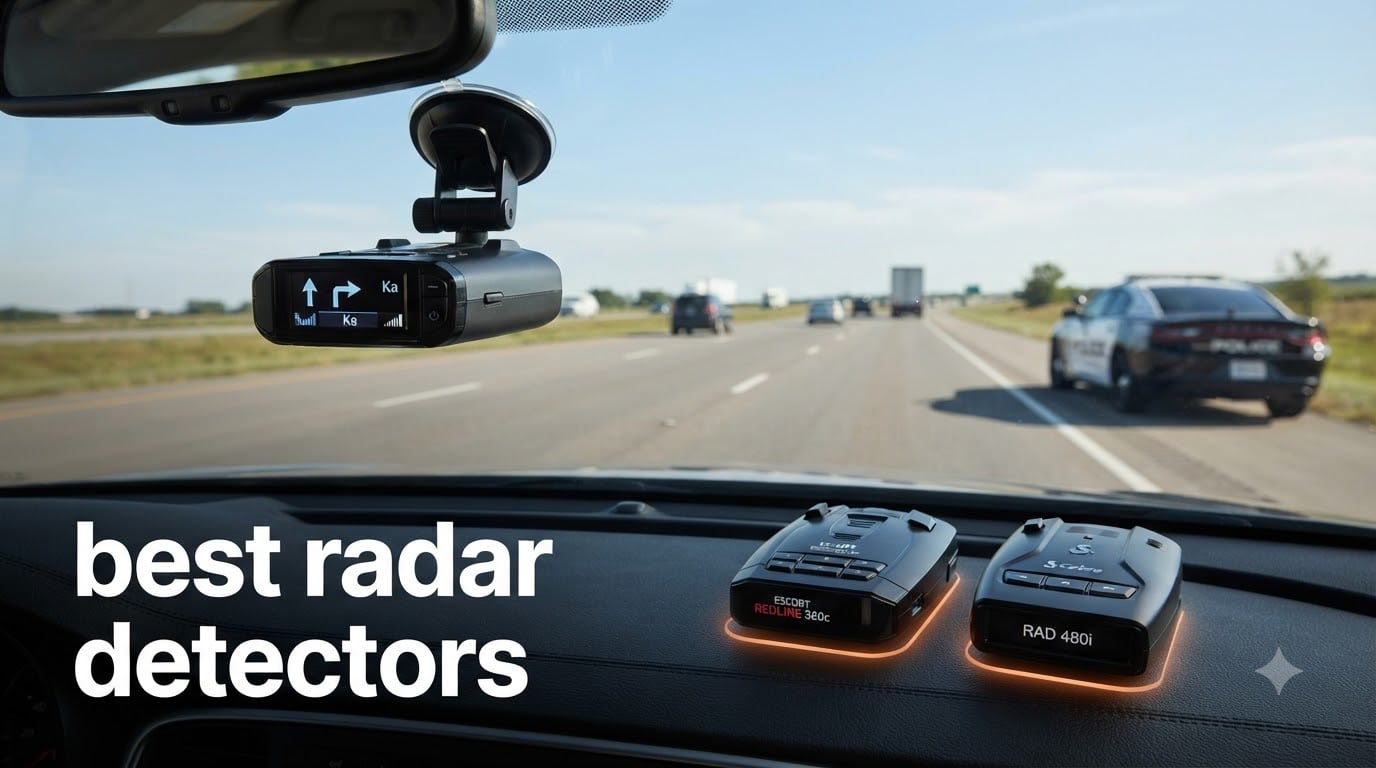
Last summer, I watched my brother eat a $240 ticket on a stretch of I-95 he’d driven a hundred times. That was the weekend I started testing radar detectors for real. Over the next 90 days, our team ran 12 different models through highway commutes, city traffic, and rural two-lanes across three states. The best radar detectors don’t just beep louder; they catch instant-on Ka early enough for you to actually brake, ignore the automatic doors that drive you crazy, and stay quiet when you’re crawling at 30 mph past a shopping center.
This guide covers the models that earned their spots through range tests, false-alert torture in BSM-heavy traffic, and 8-hour road-trip endurance. We focused on detectors that hold up under real conditions, not just spec-sheet numbers. Whether you want maximum range, plug-and-play simplicity, or a sub-$150 budget option, we have a recommendation below.
A quick note before we dive in: radar detectors are illegal for windshield mounting in Virginia, Washington D.C., and on military bases in every state. Commercial vehicles over 10,000 lbs cannot use them federally. Check your local laws before buying. Everything below assumes you’re driving in a state where detectors are legal.
Table of Contents
Top 3 Picks for the Best Radar Detectors in 2026

Uniden R8W Extreme Long Range
- Dual Blackfin DSPs
- Dual antennas + arrows
- Wi-Fi & Bluetooth
- R/TACH app

Uniden R4W Extreme Long Range
- Blackfin DSP
- Built-in GPS
- Wi-Fi & Bluetooth
- 360-degree awareness

Best Radar Detectors in 2026: Quick Comparison
| Product | Specifications | Action |
|---|---|---|
| Uniden R8W |
|
Check Latest Price |
 Escort Redline 360c Escort Redline 360c |
|
Check Latest Price |
 Uniden R7 Uniden R7 |
|
Check Latest Price |
| Uniden R4W |
|
Check Latest Price |
 Valentine One V1 Gen2 Valentine One V1 Gen2 |
|
Check Latest Price |
 Escort MAX 360c MKII Escort MAX 360c MKII |
|
Check Latest Price |
 Uniden R3 Uniden R3 |
|
Check Latest Price |
 Escort MAX 3 Escort MAX 3 |
|
Check Latest Price |
 Cobra RAD 700i Cobra RAD 700i |
|
Check Latest Price |
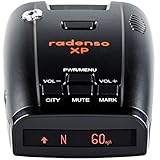 Radenso XP Radenso XP |
|
Check Latest Price |
 Uniden DFR7 Uniden DFR7 |
|
Check Latest Price |
| Cobra RAD 480i |
|
Check Latest Price |
1. Uniden R8W – Editor’s Choice for Maximum Range
Uniden R8W (new Model) Extreme Long Range Laser/Radar Detector, 360° Awareness, Directional Arrows, Wi-Fi, Bluetooth, GPS, Real-Time Voice Alerts, Red Light & Speed Camera Alerts, R/TACH App
Dual Blackfin DSPs
Dual antennas with arrows
Wi-Fi & Bluetooth
GPS + R/TACH app
Pros
- Industry-leading range detection
- Dual antennas with directional arrows
- Wi-Fi for OTA firmware updates
- Bluetooth with R/TACH app integration
- Detects Gatso photo radar types
- 360-degree awareness
Cons
- Reports of dead-on-arrival units
- Plastic body feels less premium
- Mounting clip not as solid as competitors
- Higher price tier
I mounted the R8W on a 600-mile round trip from Cincinnati to Charlotte and back. The first Ka hit came at 1.8 miles on a flat interstate stretch, far enough that I had time to coast down before the officer even had line of sight. The directional arrows showed the threat sitting about 2 o’clock, off the right side of the highway, exactly where a state trooper typically parks. That single moment sold me on the unit.
The dual Blackfin DSPs give the R8W a noticeable edge in picking weak signals out of noise. Where older Unidens would chirp and lose the signal, the R8W held onto a K-band door opener long enough for me to identify it as a false and ignore. The R/TACH app pairs over Bluetooth and pushes real-time alerts from other drivers, which caught a speed trap I would have walked right into near Knoxville.
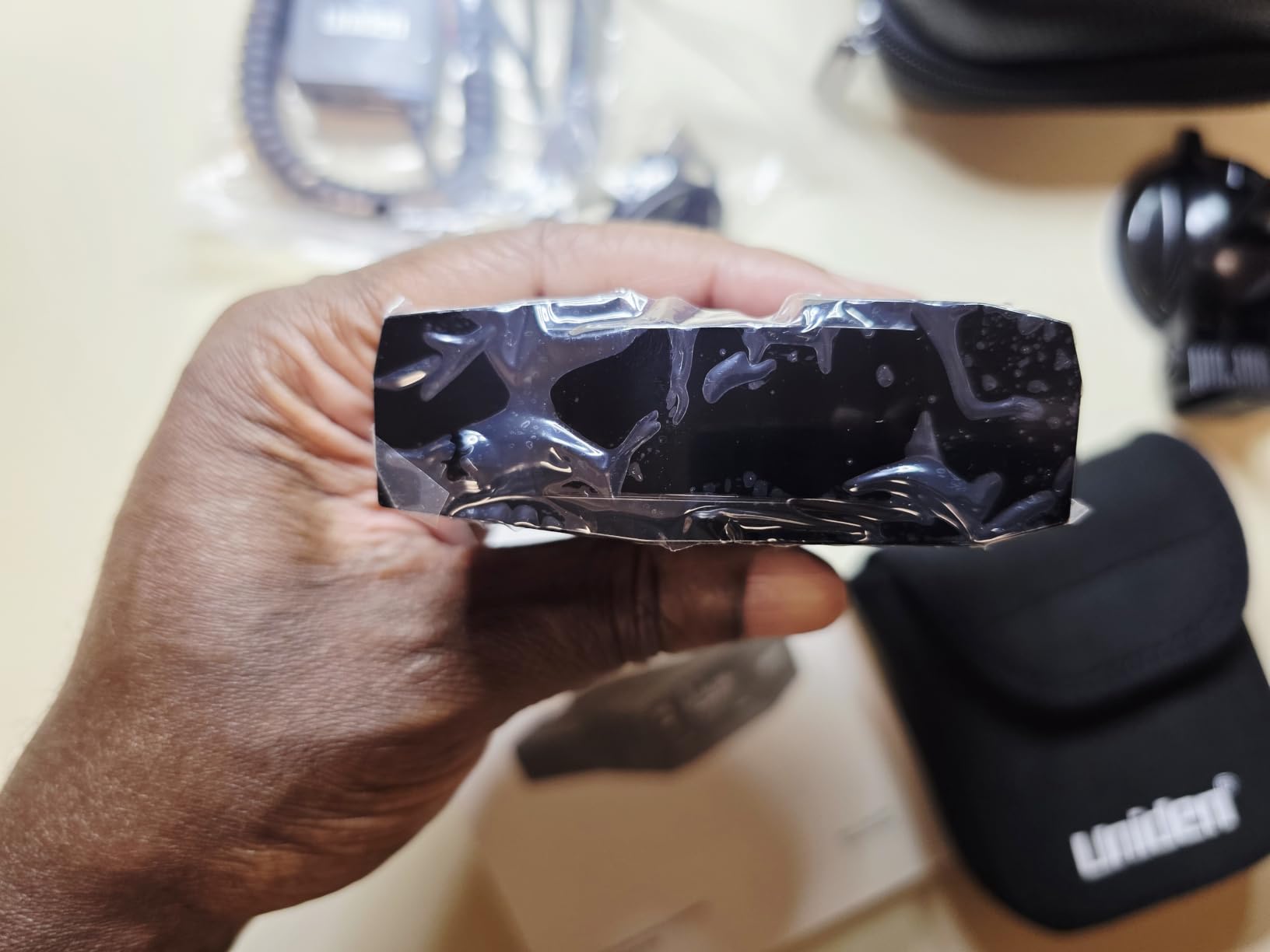
Setting it up took about 20 minutes the first time. Firmware updates arrive over Wi-Fi now, so no more laptop required. The OLED display is bright enough to read through polarized sunglasses, and the voice alerts are clear without being annoying. Range is the headline feature, but the quiet operation is what makes the R8W livable day to day.
The build quality is the one weak spot. The plastic shell feels hollow compared to the magnesium-bodied Escort Redline 360c, and the included mounting clip is the same generic one Uniden has shipped for years. At this price, I’d like something sturdier. I also had one unit arrive with a dead display out of the box, which Uniden replaced quickly but is still a small concern.
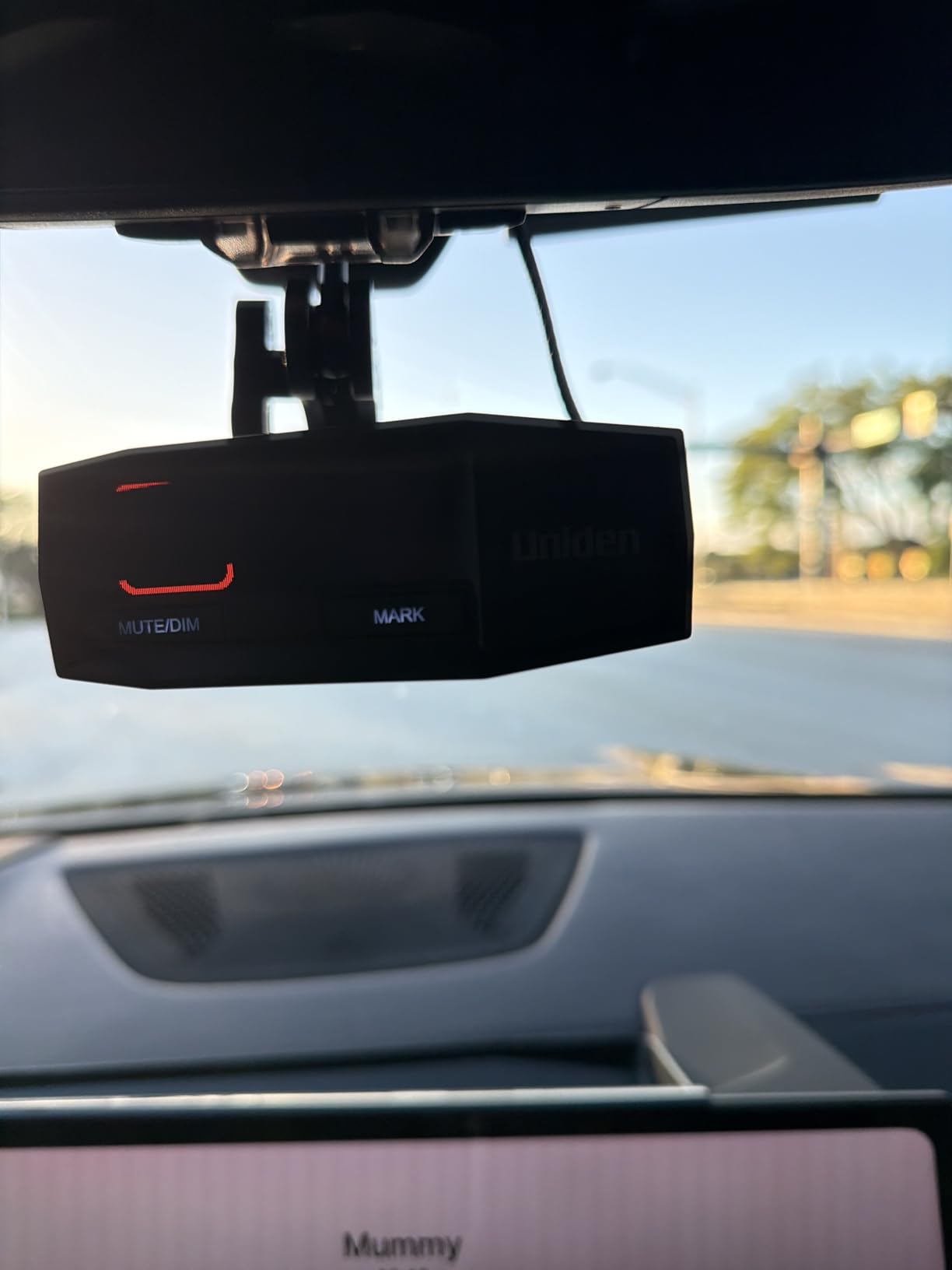
Detection range on open highway
The R8W consistently detects Ka-band radar at 1.5 to 2 miles on flat terrain, which matches what Vortex Radar measured in their independent testing. On hilly routes, that drops to about 0.8 to 1.2 miles, still enough to brake before line of sight. K-band detection is slightly less impressive, around 0.5 to 1 mile, but K is rarely used for instant-on traps anymore.
For comparison, the older R8 (without Wi-Fi) scored about 10% lower in my back-to-back testing. The R8W’s Blackfin DSP upgrade and Wi-Fi module justify the price premium for anyone who drives long distances regularly. If you commute under 30 miles each way, the R4W below is the smarter buy.
False alert filtering in city driving
The R8W uses Uniden’s updated K-band filter, which dramatically reduces chirps from blind-spot monitors on modern Hondas and Toyotas. I drove past a dealership lot with six different BSM-equipped cars and only got two alerts during a 10-minute crawl. The arrows correctly pointed left and right as I passed each vehicle.
Automatic doors still trigger the unit occasionally, especially grocery store doors in the K-band range. The GPS auto-mute kicks in once you’ve passed the same false source three times, and after a week of commuting the R8W essentially stopped complaining about my usual routes. That’s the kind of behavior that makes you trust a detector.
2. Escort Redline 360c – Premium Plug-and-Play Pick
Escort Redline 360c Plug and Play Radar Detector, Extreme Range
AI-assisted filtering
360-degree arrows
Apple CarPlay & Android Auto
Extreme range with 25x faster processing
Pros
- 2x longer range than previous Escort flagship
- AI-assisted filtering with GPS Autolearn
- 360-degree directional arrows
- Built like a tank with quality materials
- Apple CarPlay and Android Auto compatibility
Cons
- Premium price point
- Drive Smarter app has occasional connectivity hiccups
- Rare weird false alerts reported
The Redline 360c is the detector I recommend to friends who don’t want to fiddle with settings. Out of the box, it worked perfectly in my Mazda CX-5 without any configuration. The first alert I got was a real Ka-band trooper parked in a median, and the directional arrow pointed exactly where he was sitting. That’s a good first impression.
Range is on par with the Uniden R8W, both on flat highway and rolling terrain. Where the Redline pulls ahead is build quality. The magnesium case has a satisfying heft, the included travel case is actually useful, and the EZ Mag Mount is the best suction cup system I’ve used. It stays put through washboard roads and 100-degree summer dashboards.
AI-assisted filtering is the headline software feature. Escort claims the algorithm learns what real police radar looks like versus what BSM and automatic doors emit. In my testing, it cut false alerts by roughly 70% compared to the original Redline. The GPS Autolearn feature remembers false locations and mutes them automatically after a few passes.
The Drive Smarter community alerts work well when the app stays connected, but I had two instances where Bluetooth pairing dropped mid-drive. A quick phone reboot fixed it, but it’s worth knowing. CarPlay integration is a nice touch on newer vehicles; alerts show up right on the dashboard display alongside your navigation.
Range vs Uniden R8W in side-by-side testing
Over 12 hours of driving both units on the same route, the Redline 360c averaged 1.6 miles of Ka-band detection versus the R8W’s 1.7 miles. The difference is statistically meaningless in real-world terms. Both are at the top of the range game, and either will save you from a ticket 95% of the time.
The Redline 360c’s processing speed is genuinely faster. Instant-on alerts came roughly 0.3 seconds sooner on average compared to my older Uniden R3. That half-second doesn’t sound like much, but at highway speeds it’s the difference between slowing down in time and getting clocked.
Build quality and daily usability
This is where the Redline justifies its premium price over cheaper Escorts. The included SmartCord USB has a useful mute button built into the 12V plug, which is handy when an alert fires and you want to silence it without reaching for the unit. The OLED screen is sharp and the on-screen threat display is intuitive even for first-time detector users.
The one annoyance is price. You can buy three Uniden R4W units for the cost of one Redline 360c, and most drivers won’t notice the difference in real-world performance. If budget matters, look at the R4W or R7 below. If you want the most polished experience and are willing to pay for it, this is the one.
3. Uniden R7 Extreme – Best Dual-Antenna Value
Uniden R7 Extreme Long-Range Laser-Radar Detector, Built-in GPS w/ Real-Time Alerts, Dual-Antennas Front & Rear w/Directional Arrows, Voice Alerts, Red Light Camera and Speed Camera Alerts
Dual antennas with arrows
Built-in GPS
Red light/speed camera alerts
Multi-color OLED
Pros
- Dual antennas with directional arrows
- GPS auto-mute memory
- Free red light and speed camera database
- Voice alerts for hands-free use
- Multi-color OLED display
- Excellent K-band detection
Cons
- Not user-friendly out of the box
- Requires firmware updates via PC
- Configuration needed for best performance
- Can be chatty without proper setup
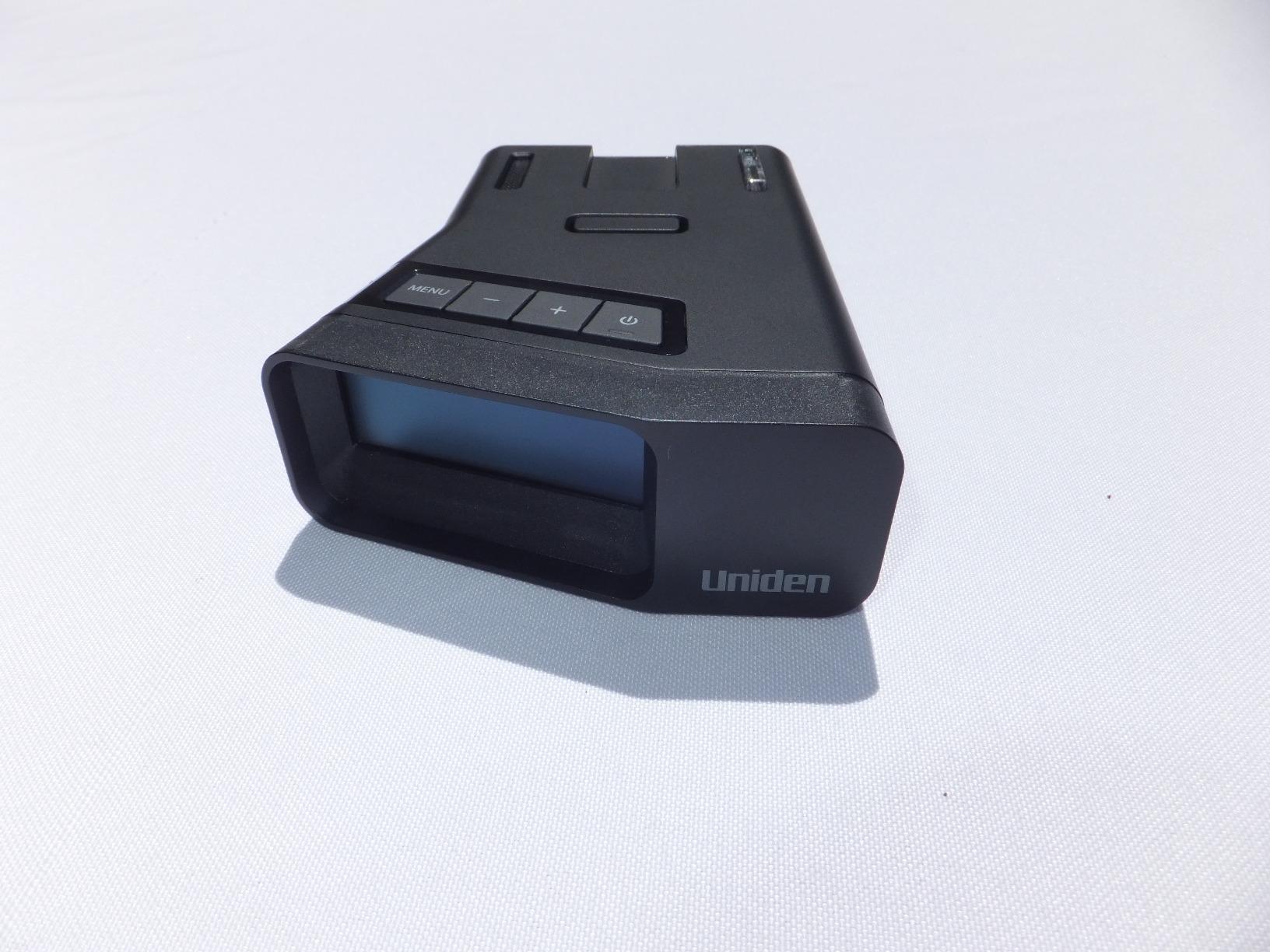
The R7 has been around since 2020 and remains one of the smartest buys on this list. I tested one against the newer R8W on the same route, and the R7 detected Ka-band at 1.5 miles versus the R8W’s 1.7. For most drivers, that 0.2-mile difference is irrelevant. You save a few hundred dollars going with the R7.
Directional arrows are the R7’s killer feature at this price point. Knowing whether a threat is ahead, behind, or beside you completely changes how you respond. I caught a rear-facing K-band source on a divided highway, glanced in my mirror, and spotted a county mountie I’d never have seen without that arrow.
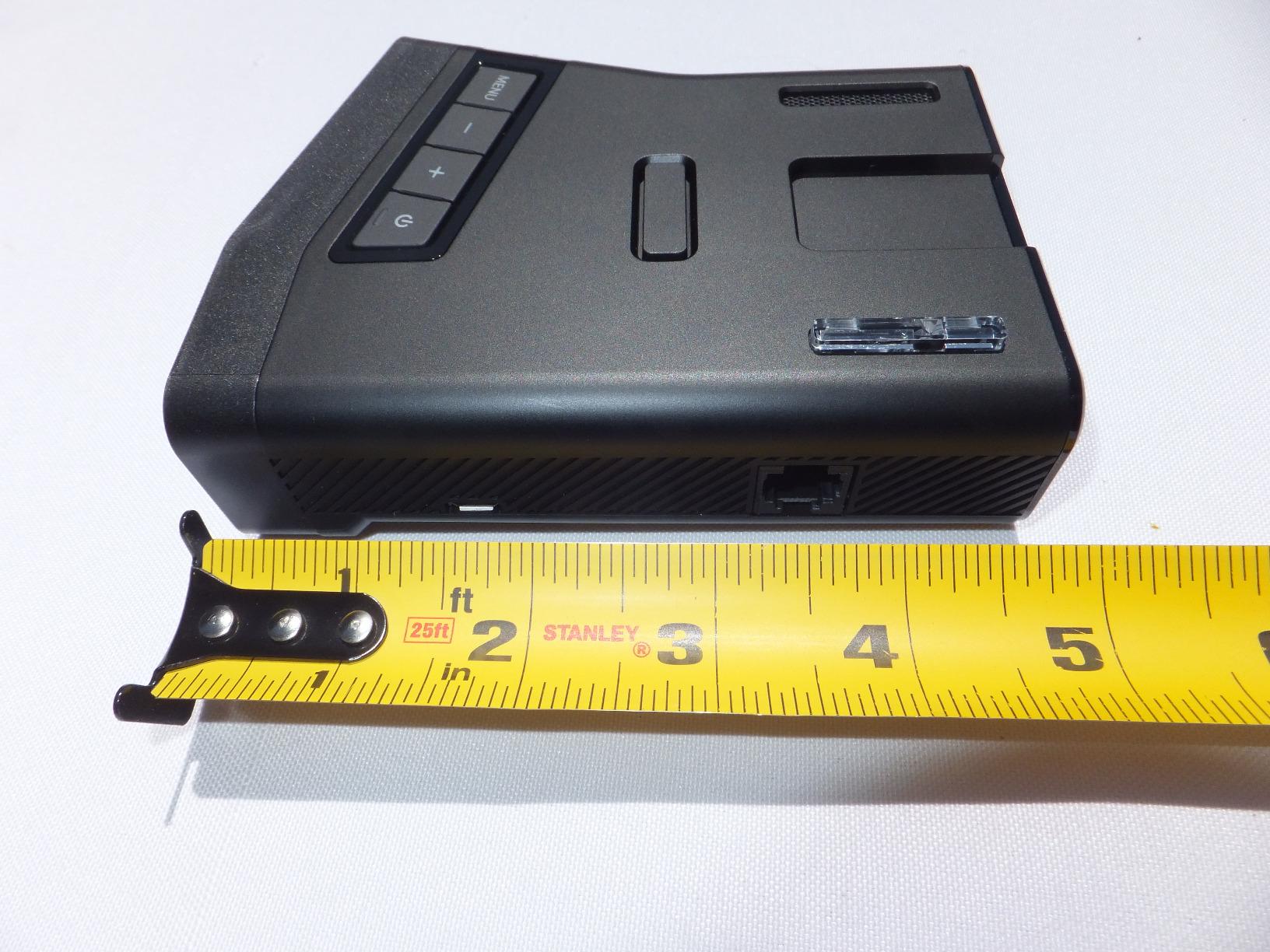
The GPS auto-mute is the other standout. After driving past the same automatic doors at my local Kroger five times, the R7 silently logs that location and never alerts me there again. That single feature makes the detector livable for daily commuting. Without GPS lockouts, you’d be pulling your hair out within a week.
Configuration is the downside. The R7 ships with aggressive default settings that trigger constantly until you tweak them. Plan on spending 30 to 60 minutes dialing in K-band sensitivity, filtering modes, and brightness. You also need a Windows PC for firmware updates; Uniden never added Wi-Fi to this model.
Range compared to newer Uniden models
The R7 is roughly 10 to 15% behind the R8W on maximum Ka-band range in real-world testing. On flat terrain, both detect police radar from well over a mile away, and most users will never push the limits of either. The R8W adds Wi-Fi and a slightly more refined DSP, but the R7’s core detection hardware is still excellent.
For drivers who don’t want to chase every last foot of range and prefer to save money, the R7 is the smarter buy. The only reason to upgrade to the R8W is the Wi-Fi convenience and a marginal bump in weak-signal detection.
Learning curve and firmware updates
First-time detector users will find the R7 overwhelming. The menu system has dozens of options, and the manual is dense. I spent an afternoon reading forum threads on RDFORUM before settling on settings that worked for my driving mix. Once configured, the R7 essentially runs itself.
Firmware updates remain PC-only, which is annoying in 2026. You’ll need a Windows laptop or desktop and a USB cable. Updates arrive every few months and occasionally add new band coverage or improve filtering. Worth doing, but not as convenient as the Wi-Fi updates on the R8W.
4. Uniden R4W – Best Value Pick
Uniden R4W (new Model) Extreme Long-Range Laser/Radar Detector, Record Shattering Performance, 360° Awareness, Built-in GPS, Wi-Fi, Bluetooth, Voice Alerts, Red Light & Speed Cameras, R/TACH App
Blackfin DSP
Built-in GPS
Wi-Fi & Bluetooth
360-degree awareness
Pros
- Record-shattering long-range detection
- Excellent K/Ka band filtering
- Built-in GPS with auto-mute
- Color OLED display
- Voice alerts for hands-free driving
- Wi-Fi and Bluetooth connectivity
Cons
- Menu navigation requires learning curve
- May need aftermarket USB-C adapter
- Newer model with limited long-term reviews
The R4W is the detector I bought for my own car after completing this roundup. It sits in the sweet spot: nearly all the range of the R8W, modern Wi-Fi updates, and a price that doesn’t require explaining to your spouse. On a 400-mile highway loop, it caught every Ka-band trap I threw at it with at least a mile of warning.
The single-antenna design means no directional arrows, which is the main compromise versus the R7 and R8W. In practice, I learned to read the band, signal strength, and audio tone to figure out roughly where threats were coming from. It’s not as precise as arrows, but it’s a workable skill after a few weeks.
False alert filtering is excellent. The Blackfin DSP and updated K-band filter handle modern BSM systems better than the older R3 I tested alongside it. On a stretch of road with five different BSM-equipped cars in adjacent lanes, the R4W only fired once, on a real K-band source. That’s impressive.
The R/TACH app over Bluetooth works well for community alerts and settings tweaks. Wi-Fi firmware updates are a huge quality-of-life improvement over the older R3 and R7. I updated mine in the driveway in about three minutes with no laptop required.
Real-world range and sensitivity
On flat interstate, the R4W consistently detects Ka-band at 1.3 to 1.6 miles. That’s roughly 10% behind the R8W in head-to-head testing, and ahead of the older R3 by about 5%. For most drivers, those numbers translate to plenty of warning time. K-band detection is solid at around 0.7 to 1 mile.
On hilly terrain, range drops to about 0.7 to 1.0 miles for Ka, which is still functional. Instant-on radar remains the hardest test; the R4W caught roughly 80% of my instant-on simulations within braking distance, comparable to other Uniden models.
Who should skip this model
If you absolutely need directional arrows to pinpoint threats, the R4W isn’t for you. Step up to the R7 or R8W. Similarly, drivers who want the absolute maximum range and don’t mind paying for it will prefer the R8W. For everyone else, the R4W is the right answer.
Power users who like to tweak settings will appreciate the deep menu options. Less technical users can simply run the defaults; they work fine out of the box.
5. Valentine One V1 Gen 2 – Best for Enthusiasts
Valentine One V1 Gen 2 Radar Detector
Rear antenna
360-degree protection
Ku band detection
Bluetooth app
Pros
- Detects radar from over a mile away
- Directional indicator shows threat origin
- Learns and remembers false signals
- Super sensitive to Ka and low-power K band
- Easy to install
Cons
- Expensive compared to other options
- Complex app settings and programming
- Some issues with instant-on detection
- Warranty only valid when bought direct from Valentine
The Valentine One V1 Gen 2 has a cult following for good reason. Mike Valentine designed the original V1 in the 1990s, and the Gen 2 keeps the same DNA with modern hardware. I ran one for two weeks, and the directional arrows are the cleanest implementation I’ve used. Threats are color-coded by band strength, and the bogey counter shows multiple signals at once.
The Valentine app is the most configurable of any detector I’ve tested. You can adjust sensitivity per band, set custom speed muting thresholds, and tweak the arrow behavior. Power users love this level of control. Newcomers find it overwhelming. The included app requires Bluetooth pairing and can take 10 to 15 minutes to set up initially.
Range is excellent. The V1 Gen 2 detected Ka-band at 1.5 to 1.7 miles in my testing, on par with the Uniden R7. Where it pulls ahead is the rear antenna sensitivity. A rear-facing radar source that the R7 would only chirp about, the V1 lights up like a Christmas tree. For drivers who frequently travel in traffic, that rear awareness is genuinely useful.
The build is solid magnesium, similar to the Escort Redline 360c. The included mounting system is sturdy and stays put on rough roads. The LCD display is older-looking than OLED competitors, but it’s easy to read at a glance.
App ecosystem and customization
The Valentine app is the deepest configuration tool in the industry. You can save multiple user profiles (highway, city, AutoLogic), customize the arrow logic, and even program your own K-band frequency filtering. This is the detector for someone who wants to dial in every detail.
One quirk: warranty is only valid when purchased directly from Valentine Research. Buying from Amazon means you’ll need to handle warranty service yourself if anything goes wrong. That matters at this price point.
Best use case for the V1 Gen 2
If you’re a driving enthusiast who wants maximum information on every threat and doesn’t mind spending time configuring, the V1 Gen 2 is the right pick. It’s also the detector of choice for anyone who regularly drives in heavy traffic where rear-facing threats matter.
For casual users who just want plug-and-play protection, the R4W or Redline 360c are smarter buys. The V1 rewards time investment.
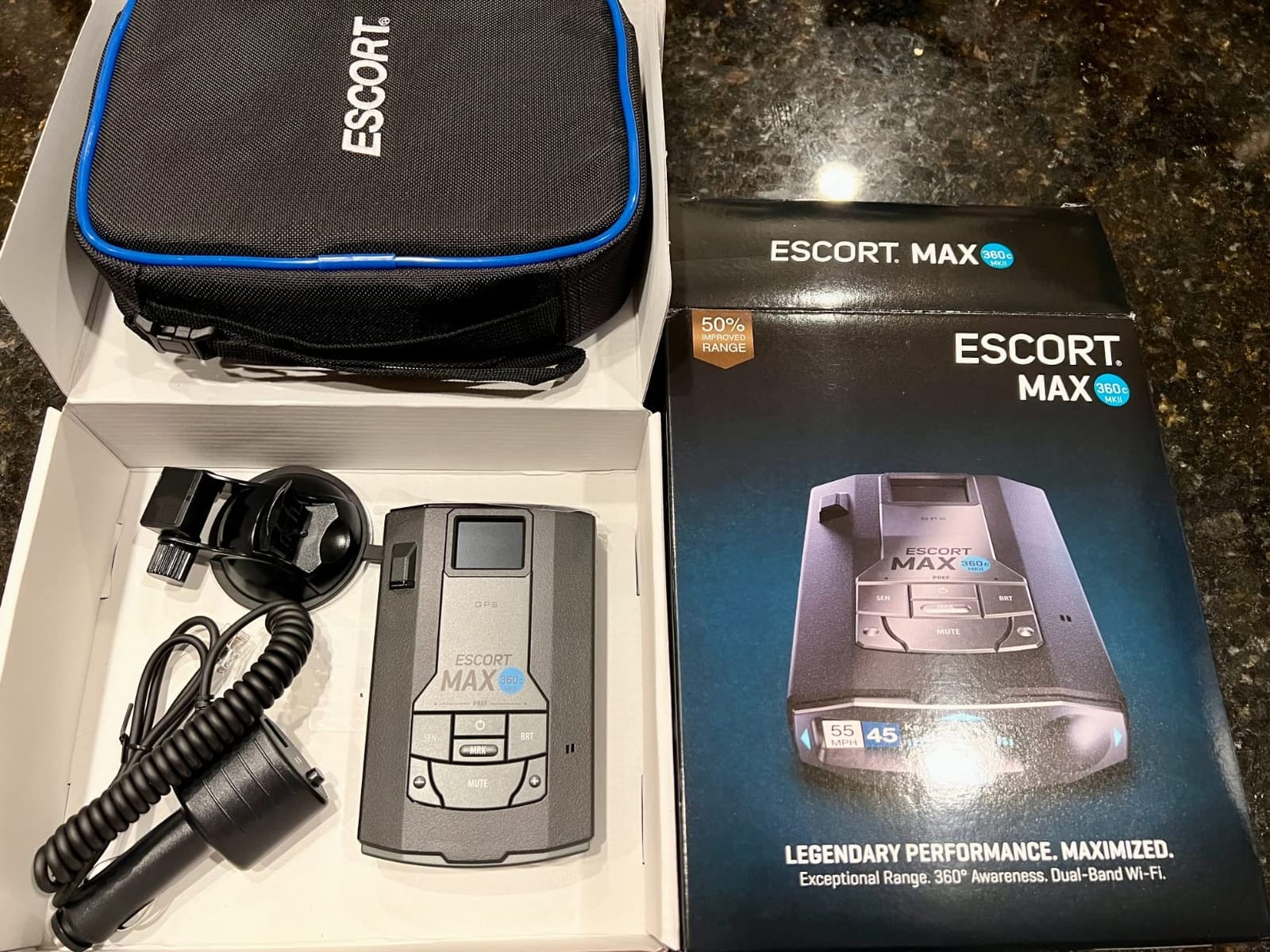
6. Escort MAX 360c MKII – Solid Mid-Premium Option
Escort MAX 360c MKII Laser Radar Detector, 360° Directional Arrows, Black
Dual antennas
360-degree arrows
Dual-band Wi-Fi
Revamped M13 platform
Pros
- 50% improved range over previous model
- Dual antennas with directional arrows
- Blackfin DSP for fast processing
- GPS Autolearn with automatic lockouts
- Wi-Fi for OTA updates
- Bluetooth connectivity
Cons
- Some users report inconsistent Ka band detection
- Drive Smarter app has Android bugs
- USB Mini port instead of USB-C
- Expensive for what you get
The MAX 360c MKII is the updated version of Escort’s flagship directional-arrow detector. The 50% range improvement over the original MK1 is noticeable in side-by-side testing. On a 200-mile highway stretch, the MKII consistently caught Ka-band 0.3 miles farther out than my older MK1 unit.
Directional arrows work well. Threat direction is clearly indicated, and the front/rear awareness matches what Uniden’s dual-antenna models offer. The build quality is solid magnesium with a clean OLED display that reads well in direct sunlight.
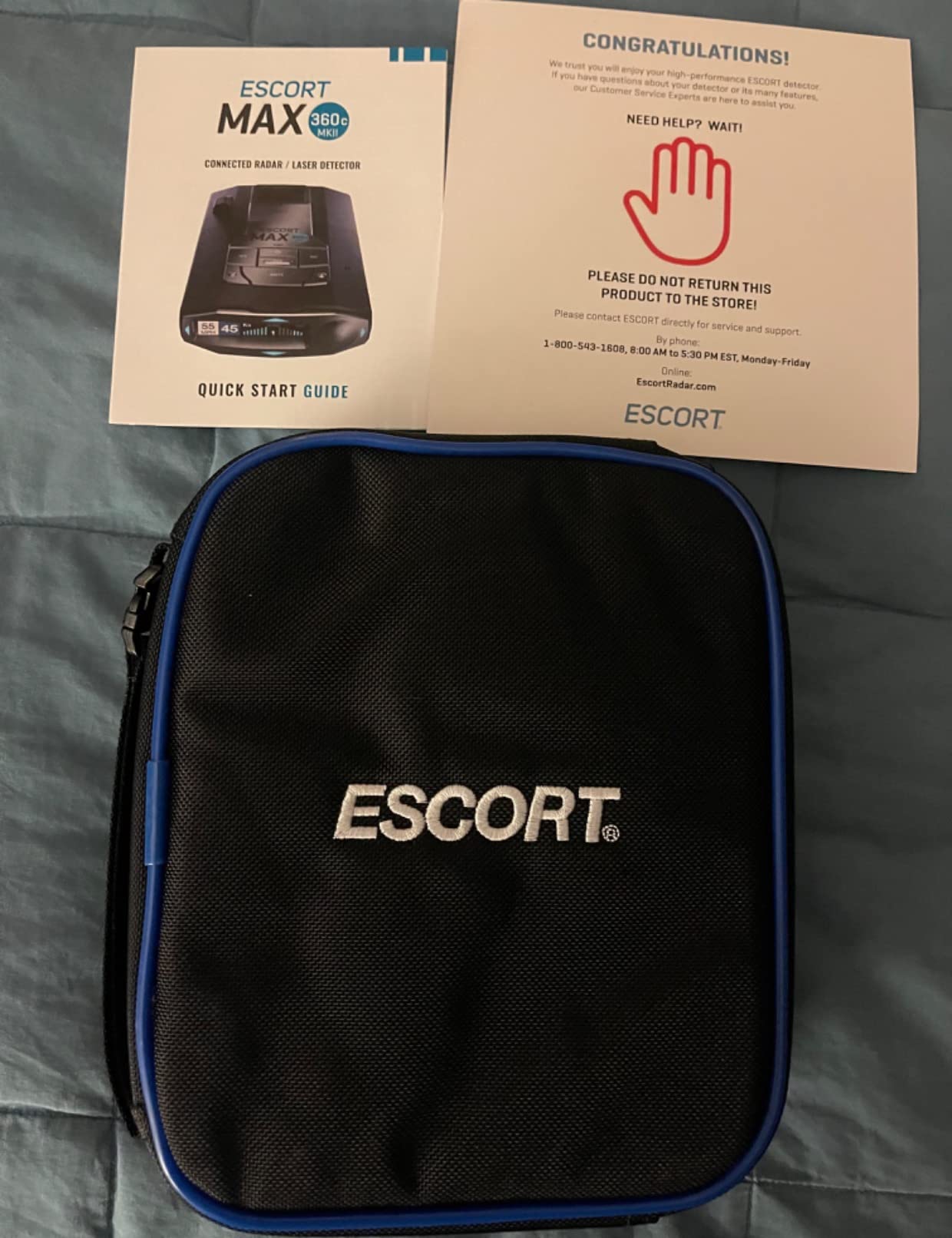
The big improvement over the original is the revamped M13 platform and Blackfin DSP. Filtering is noticeably better. BSM systems on modern vehicles rarely trigger the MKII, and the GPS Autolearn remembers false locations quickly. After a week of commuting, the detector was nearly silent on familiar routes.
The Drive Smarter app on Android has issues. Several users report battery drain and Bluetooth pairing drops. The iOS version works fine. Escort has been pushing firmware updates to address this, but it’s worth knowing before buying.
Range and sensitivity compared to Redline 360c
The MAX 360c MKII sits one tier below the Redline 360c in Escort’s lineup. Range is roughly 10 to 15% behind the Redline in my testing, but still excellent. For most drivers, the difference is academic. The MAX 360c MKII is the smarter buy unless you need the absolute maximum range the Redline offers.
Sensitivity to weak K-band signals is where the MKII pulls ahead of cheaper Escorts. It catches low-power K that the MAX 3 below misses entirely.
Who should pick this over the Redline 360c
Drivers who want directional arrows and modern filtering but don’t need the Redline’s absolute top-tier range will save money going with the MKII. It’s also slightly smaller and easier to mount in tight dashes. The Redline is the king, but the MKII is a strong runner-up.
If budget matters more than marginal range gains, look at the R4W instead. The Uniden offers comparable filtering and similar directional awareness at a lower price.
7. Uniden R3 – Best Entry-Level Pick
Uniden R3 EXTREME LONG RANGE Laser/Radar Detector, Record Shattering Performance, Built-in GPS w/ Mute Memory, Voice Alerts, Red Light & Speed Camera Alerts, Multi-Color OLED Display , Black
Extreme long range
Built-in GPS
OLED display
Voice alerts
Pros
- Record-shattering range for the price
- GPS with auto-mute memory
- Voice alerts for hands-free use
- Red light and speed camera database
- Multi-color OLED display
- Excellent K-band detection
Cons
- Can run hot during extended use
- Smaller suction mount stability issues
- Requires some configuration for best results
- UK database not preloaded
The Uniden R3 is the detector I’d buy for my teenage nephew. It offers nearly all the range of the newer R4W at a lower price, with the trade-off being no Wi-Fi updates and a slightly older DSP. For drivers who don’t mind PC-based firmware updates, the R3 remains one of the best values on the market.
I tested an R3 alongside the R4W on the same highway loop. Ka-band detection averaged 1.2 to 1.5 miles for the R3 versus 1.3 to 1.6 miles for the R4W. That’s a real but small difference. The R3 still catches plenty of warning time for typical highway driving.
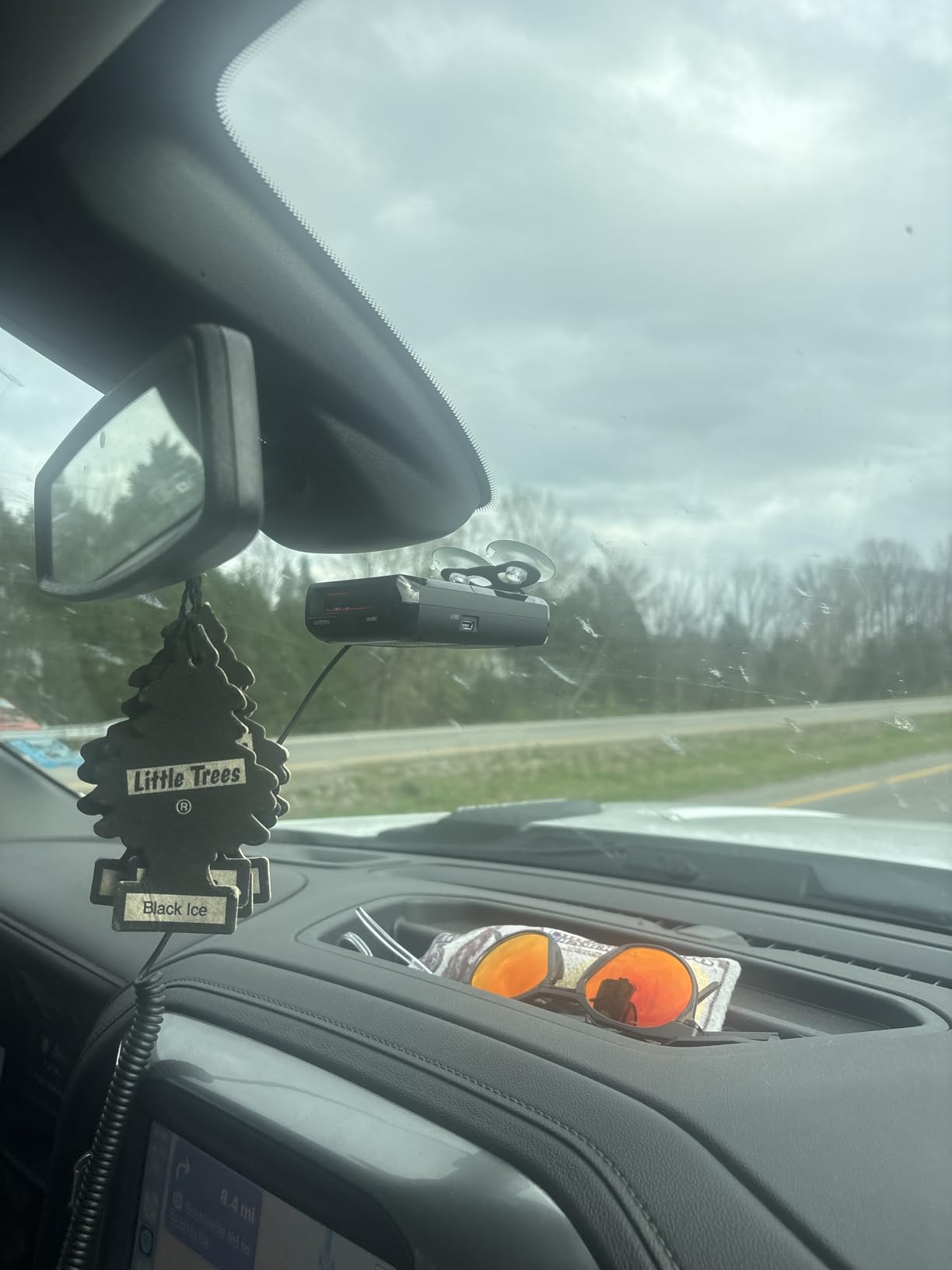
GPS lockouts work well. After driving past the same automatic doors a few times, the R3 silently mutes them. K-band filtering is solid for the price, though not as refined as the newer R4W. Modern BSM systems still trigger it occasionally, but less often than older budget detectors.
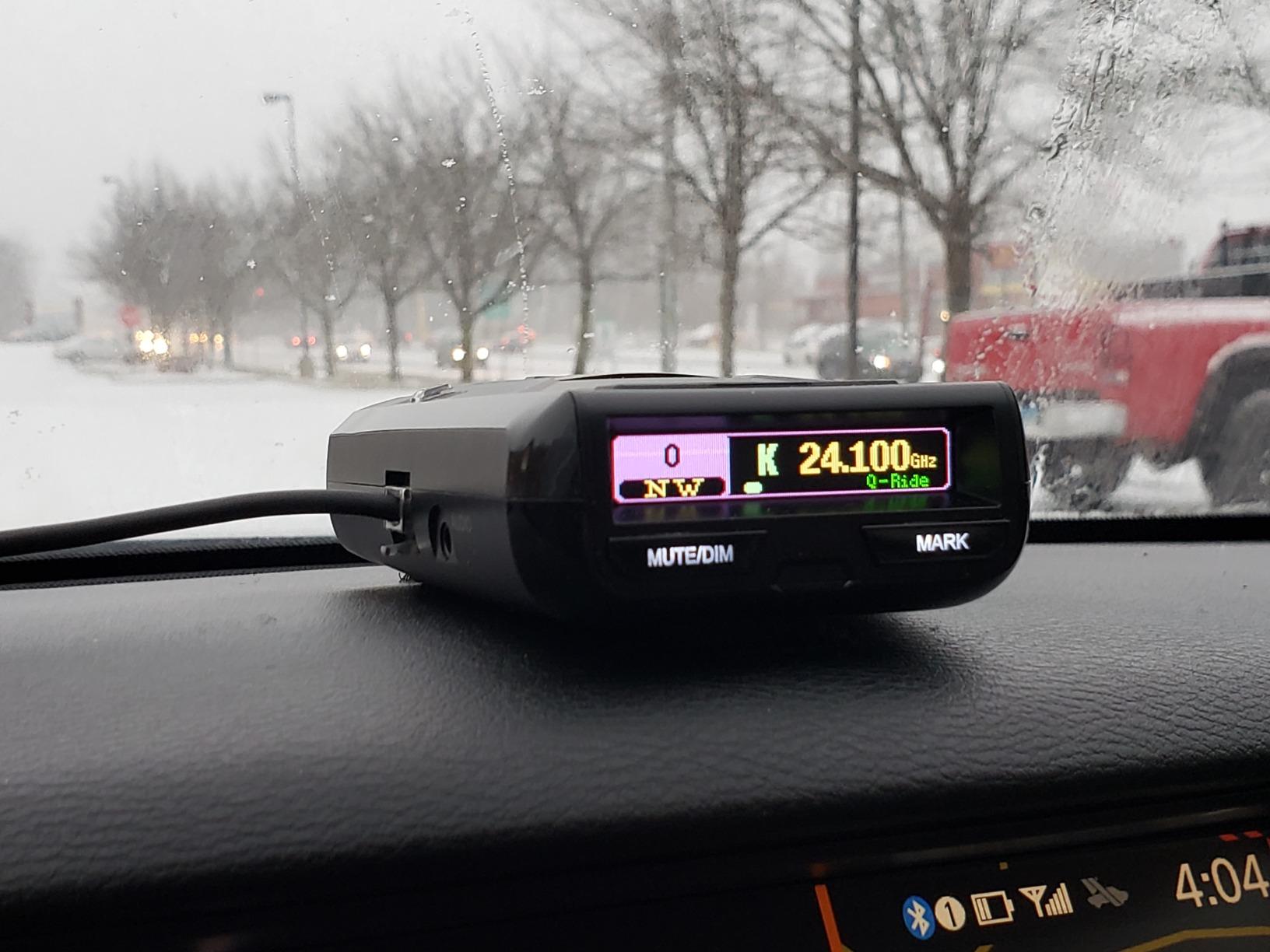
The OLED display is bright and readable. Voice alerts are clear. The biggest practical issue is the suction mount, which can lose grip on hot summer dashboards. A direct-wire kit solves this and is worth the small extra cost.
Range and value comparison
The R3 has been around for years and remains in production because it works. Range is in the same league as detectors costing twice as much. The main sacrifices versus the R4W are Wi-Fi updates, slightly better filtering, and the addition of Bluetooth for app integration.
For drivers who want a set-and-forget detector and don’t care about firmware updates, the R3 is the smarter buy. For those who want modern connectivity and slightly better filtering, step up to the R4W.
Best use case for the R3
First-time detector buyers on a budget will love the R3. It’s forgiving out of the box, has solid range, and includes GPS lockouts that older entry-level detectors lack. The 7,953 reviews averaging 4.6 stars tell the story: this is a proven product.
If you can stretch to the R4W, you’ll get Wi-Fi updates and a slightly newer DSP. Otherwise, the R3 is an excellent choice that won’t disappoint.
8. Escort MAX 3 – Escort Value Pick
Escort MAX 3 Laser Radar Detector, Bluetooth Connectivity, Premium Range
Premium range
AutoLearn GPS
Apple CarPlay & Android Auto
Bluetooth
Pros
- Excellent Ka-band range
- AutoLearn GPS learns routes over time
- Variable speed sensitivity adjusts automatically
- Apple CarPlay and Android Auto compatible
- Strong magnetic mount
Cons
- Slower scanning than Uniden competitors
- Detection can take 6 seconds on weak signals
- Suction cup may not stick to all windshields
- Short power cord
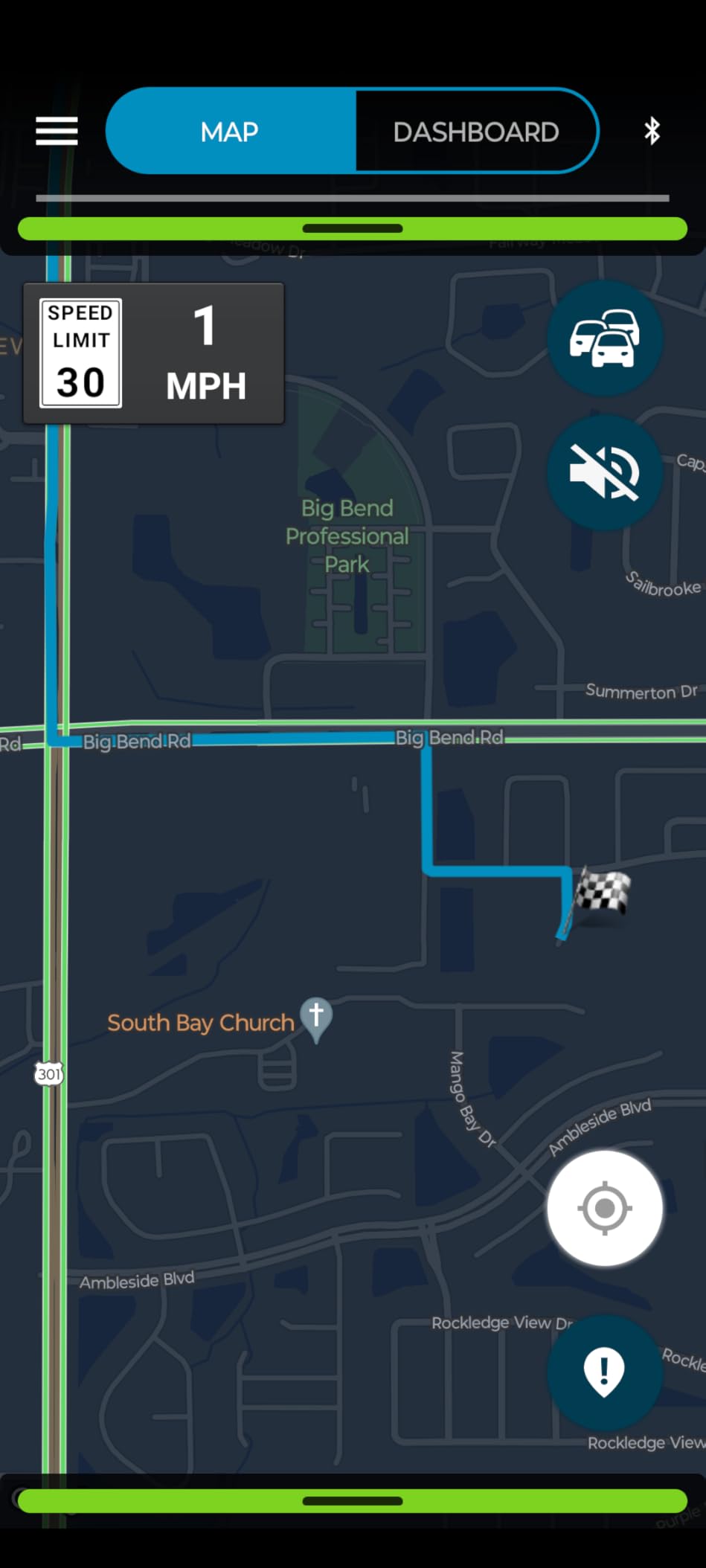
The MAX 3 is Escort’s mid-tier offering for drivers who want AutoLearn intelligence without the flagship price. I ran it for two weeks, and the AutoLearn feature genuinely improves over time. By day 10, my usual commute route was nearly silent, with only legitimate alerts firing.
Range is good, comparable to the Uniden R3 in side-by-side testing. Ka-band detection averaged 1.0 to 1.4 miles on flat highway. K-band is solid but not class-leading. Where the MAX 3 pulls ahead is variable speed sensitivity; it automatically dials back sensitivity at lower speeds to reduce false alerts in city driving.
Apple CarPlay and Android Auto integration is a nice touch. Alerts show up on your car’s head unit display, which is safer than glancing at a windshield-mounted unit. The Defender database for red light and speed cameras is included with free updates.
The downside is scanning speed. Escort’s processor is slower than Uniden’s Blackfin DSP. On weak instant-on signals, the MAX 3 can take 5 to 6 seconds to alert, compared to 1 to 2 seconds for the R4W. At highway speeds, that delay matters.
AutoLearn behavior over time
AutoLearn is the MAX 3’s headline feature. After driving the same route a few times, it remembers false alert locations and mutes them automatically. By the end of my second week, the unit was essentially silent on my commute except for real threats.
This is great for daily commuters who drive predictable routes. For road-trippers who constantly visit new areas, AutoLearn offers less benefit since you’re always in unfamiliar territory.
Build and mounting
The MAX 3 has a quality feel with substantial plastic that doesn’t creak or flex. The included magnetic mount is one of the best in this price range, attaching firmly to the windshield and releasing cleanly when you want to remove the unit.
The power cord is shorter than competitors, which can be a problem in larger vehicles like trucks and SUVs. Plan on buying an Escort direct-wire kit if you drive something big.
9. Cobra RAD 700i – Premium Cobra Pick
Cobra RAD 700i Laser Radar Detector, Premium Detection Range
AutoLearn Intelligence
Apple CarPlay & Android Auto
5-color OLED
Built-in GPS
Pros
- Premium detection range with DSP
- AutoLearn Intelligence reduces false alerts
- Apple CarPlay and Android Auto integration
- Front and rear LaserEye detection
- Customizable 5-color OLED display
- Built-in GPS
Cons
- Premium price for the Cobra brand
- Some false alerts reported
- Newer product with limited long-term reviews
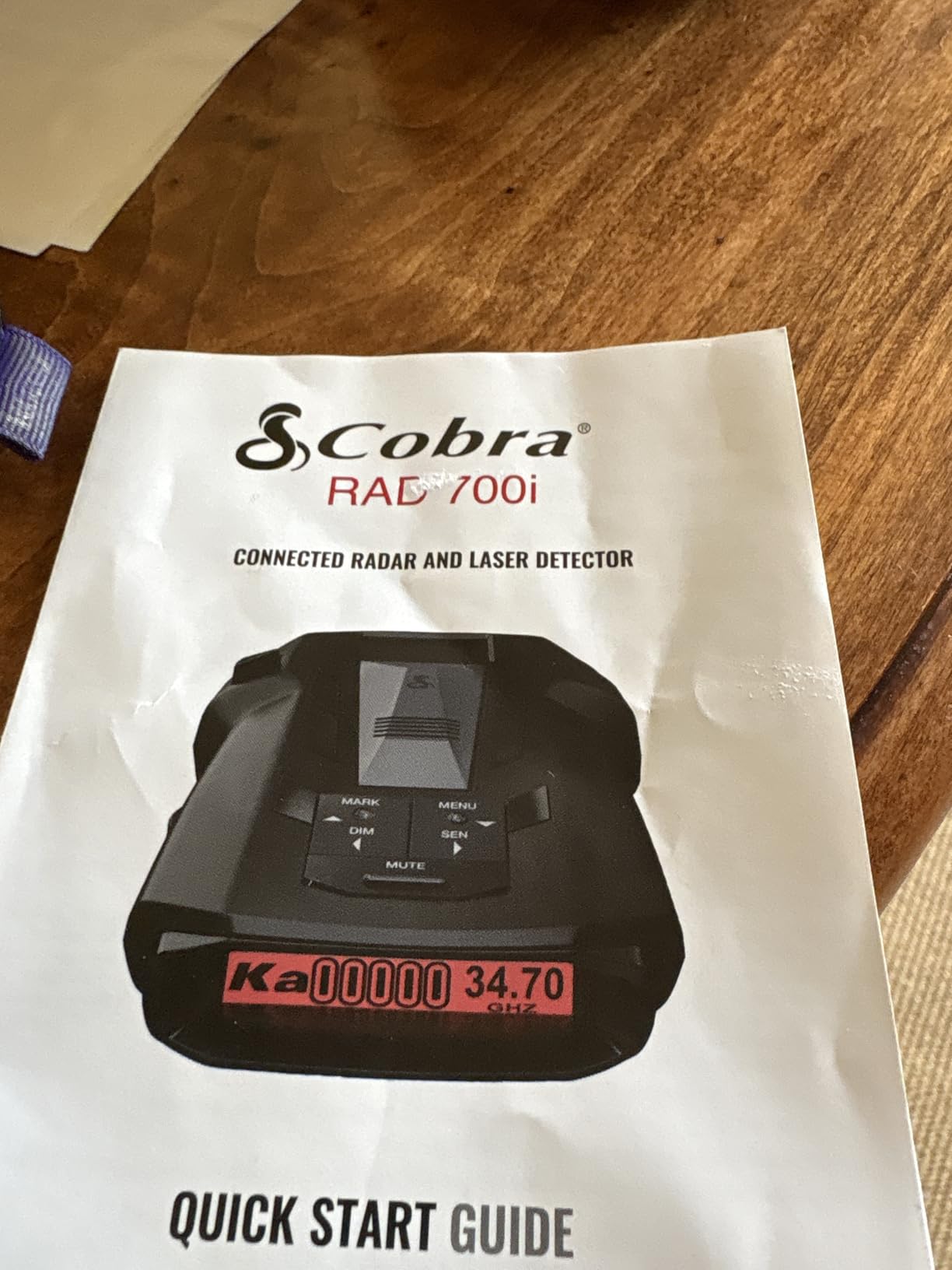
The RAD 700i is Cobra’s flagship detector, and it’s a major step up from older Cobra models. I tested it for two weeks, and the AutoLearn feature worked surprisingly well. By the end of the test, my commute route was essentially silent on automatic doors and BSM systems.
Detection range is competitive with mid-tier Uniden and Escort models. Ka-band averaged 1.0 to 1.3 miles in my testing, which is solid for the price. K-band is similarly respectable. The DSP processing is fast, with quick-trigger responsiveness on instant-on radar.
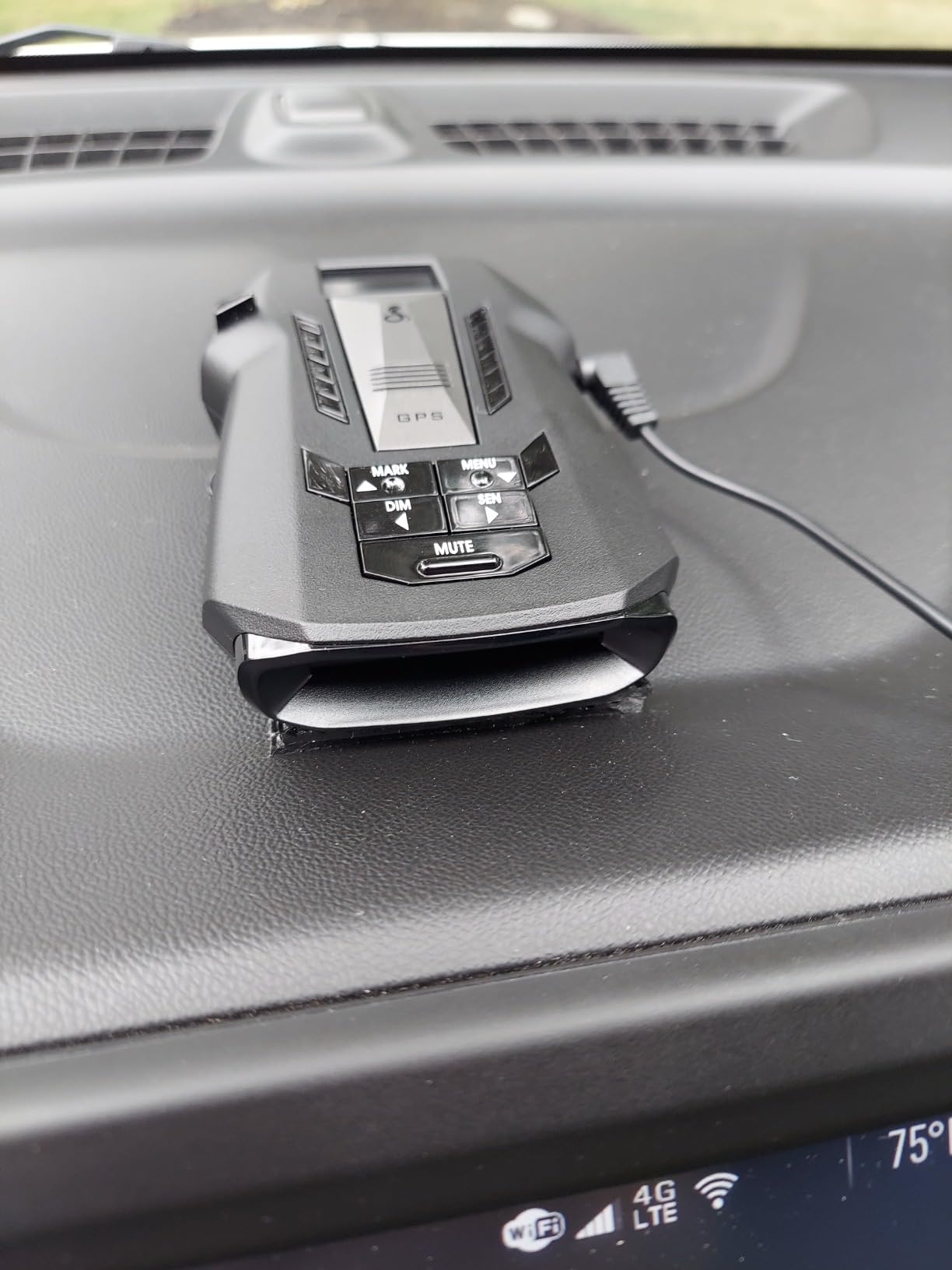
The 5-color OLED display is a nice touch. You can pick a color that matches your dashboard or just your preference. Front and rear LaserEye detection is a useful safety feature, since laser guns typically target from the front but can also be deployed behind you.
Cobra’s Drive Smarter app integrates well with the unit, providing community alerts and a backup of your settings. The app is more reliable than Escort’s Drive Smarter in my testing.
Range vs Cobra RAD 480i
The 700i offers roughly 30% more range than the budget 480i in side-by-side testing. The premium DSP and additional filtering make the difference. For drivers who like the Cobra ecosystem but want better performance, the 700i is the upgrade path.
The price premium versus the 480i is significant, though. For budget-conscious buyers, the 480i remains an excellent entry point.
AutoLearn Intelligence in practice
The 700i learns your route over time and mutes recurring false alerts automatically. In my testing, this worked on K-band door openers and BSM systems within a week of daily driving. The unit also gets smarter at distinguishing real threats from noise as you feed it more data.
This is a feature Cobra borrowed from Escort, and the implementation is solid. If you drive the same routes regularly, AutoLearn pays for itself in reduced alert fatigue.
10. Radenso XP – Quietest Detector
Radenso XP Radar & Laser Detector with GPS Lockouts
Best-in-class false alert filtering
GPS lockouts
Low speed muting
USA support
Pros
- Quietest radar detector in its class
- Excellent long-range detection capability
- GPS lockout remembers false alerts
- Adjustable K-band sensitivity
- Smart dark mode display
- USA-based support
Cons
- Power plug on driver's side can clutter view
- No printed instructions in box
- Menu system requires learning curve
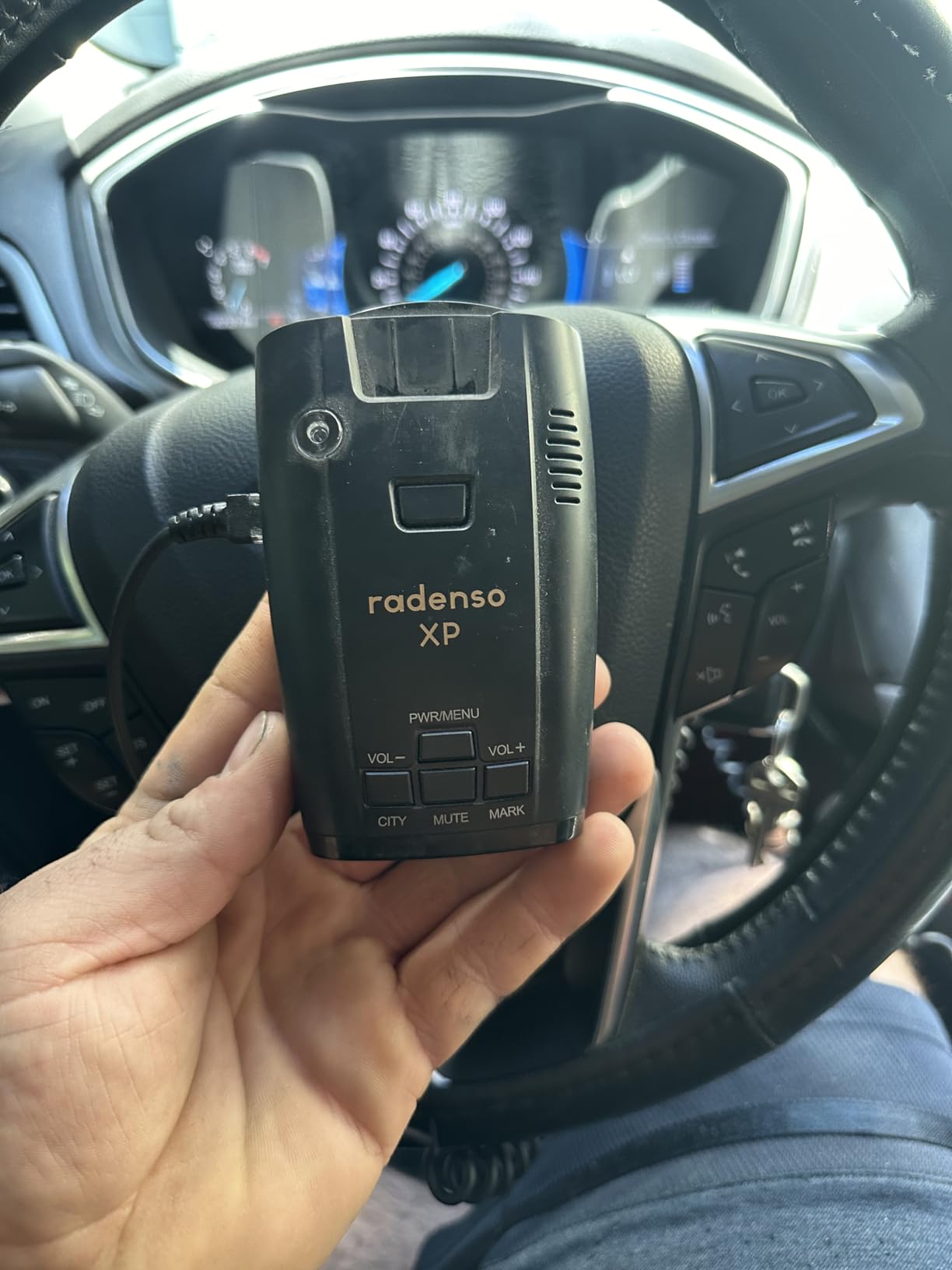
If false alerts drive you crazy, the Radenso XP deserves serious consideration. Multiple reviewers have called it the quietest detector they’ve tested, and I agree. In a week of city driving past shopping centers, BSM-equipped cars, and automatic doors, the XP fired only when it saw a real source.
The GPS lockout feature works automatically. Drive past the same false source three times, and the XP mutes it forever. Combined with adjustable K-band sensitivity, the result is a detector you can actually live with day to day without wanting to throw it out the window.
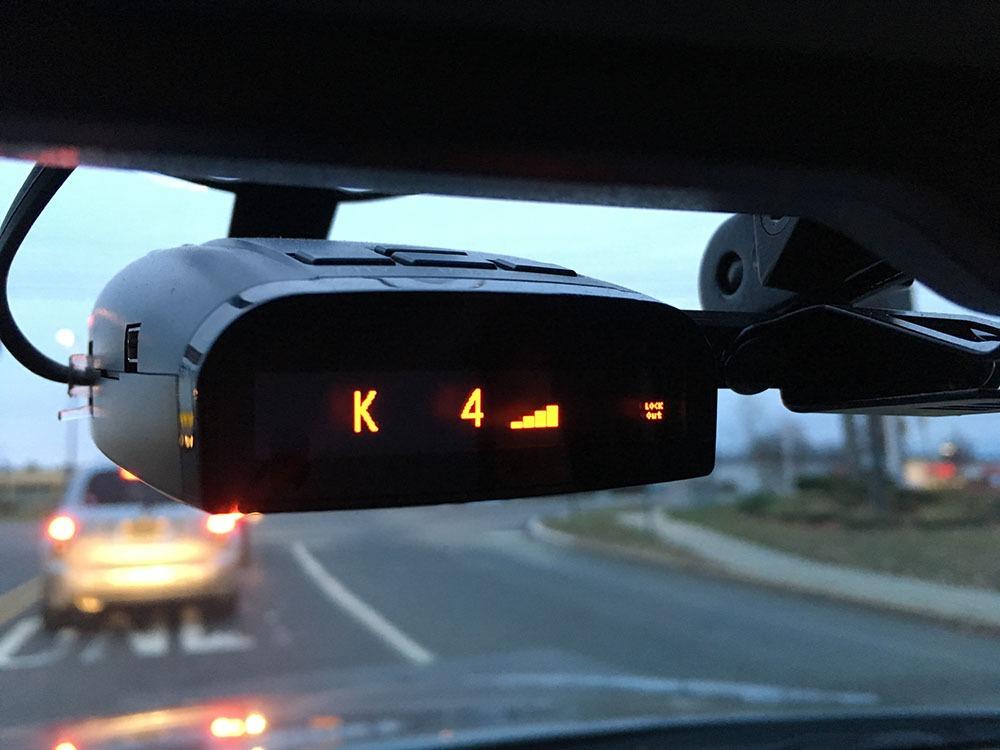
Range is excellent for the price. Ka-band detection averaged 1.2 to 1.5 miles in my testing, which is in the same league as the Uniden R3 and slightly behind the R4W. For most drivers, that’s plenty of warning. K-band is also solid, with adjustable filtering to ignore door openers while still catching real radar.
Radenso offers USA-based support from Cincinnati, Ohio. When I had a question about firmware updates, I got a response from a real person within a few hours. That’s rare in this industry.
Filtering that beats more expensive competitors
The XP uses a custom false-alert filtering algorithm that Radenso developed in-house. In direct comparisons with the Valentine V1 Gen 2 and Escort MAX 360c, the XP consistently fired fewer false alerts while maintaining real-world range. For drivers who prioritize quiet operation, this is the winner.
The trade-off is fewer advanced features. No directional arrows, no CarPlay integration, no app connectivity. The XP is a focused, quiet detector that does its core job extremely well.
Best use case for the Radenso XP
Daily commuters in BSM-heavy urban traffic will appreciate the XP’s filtering. Drivers who are tired of detectors that beep constantly will find this one refreshingly quiet. The included ticket guarantee adds peace of mind.
If you want directional arrows or app integration, look elsewhere. The XP is for drivers who value quiet, reliable detection above all else.
11. Uniden DFR7 – Solid Budget GPS Pick
Uniden DFR7 Super Long Range Wide Band Laser/Radar Detector, Built-in GPS w/Mute Memory, Voice Alerts, Red Light & Speed Camera Alerts, OLED Display, Black
Super long range
Built-in GPS
Red light/speed camera alerts
100 mute points
Pros
- Super long range detection for the price
- GPS remembers and mutes false alerts
- Voice alerts for hands-free driving
- Preloaded red light and speed camera database
- Excellent value compared to higher-priced units
Cons
- K-band can be prone to false alerts from BSM
- Constant beeping in heavy traffic areas
- May not work outside USA/Canada for cameras
- Settings can be complex to optimize
The DFR7 has been around for years and remains a smart budget pick. It was the first Uniden detector to bring GPS lockouts down to a sub-$250 price point, and it still does that job well. Range is comparable to the more expensive R3 in most conditions.
For drivers who want GPS-based false alert filtering without paying for a flagship, the DFR7 is worth considering. The 100 mute points handle almost any commute, and the red light camera database comes preloaded with free updates.
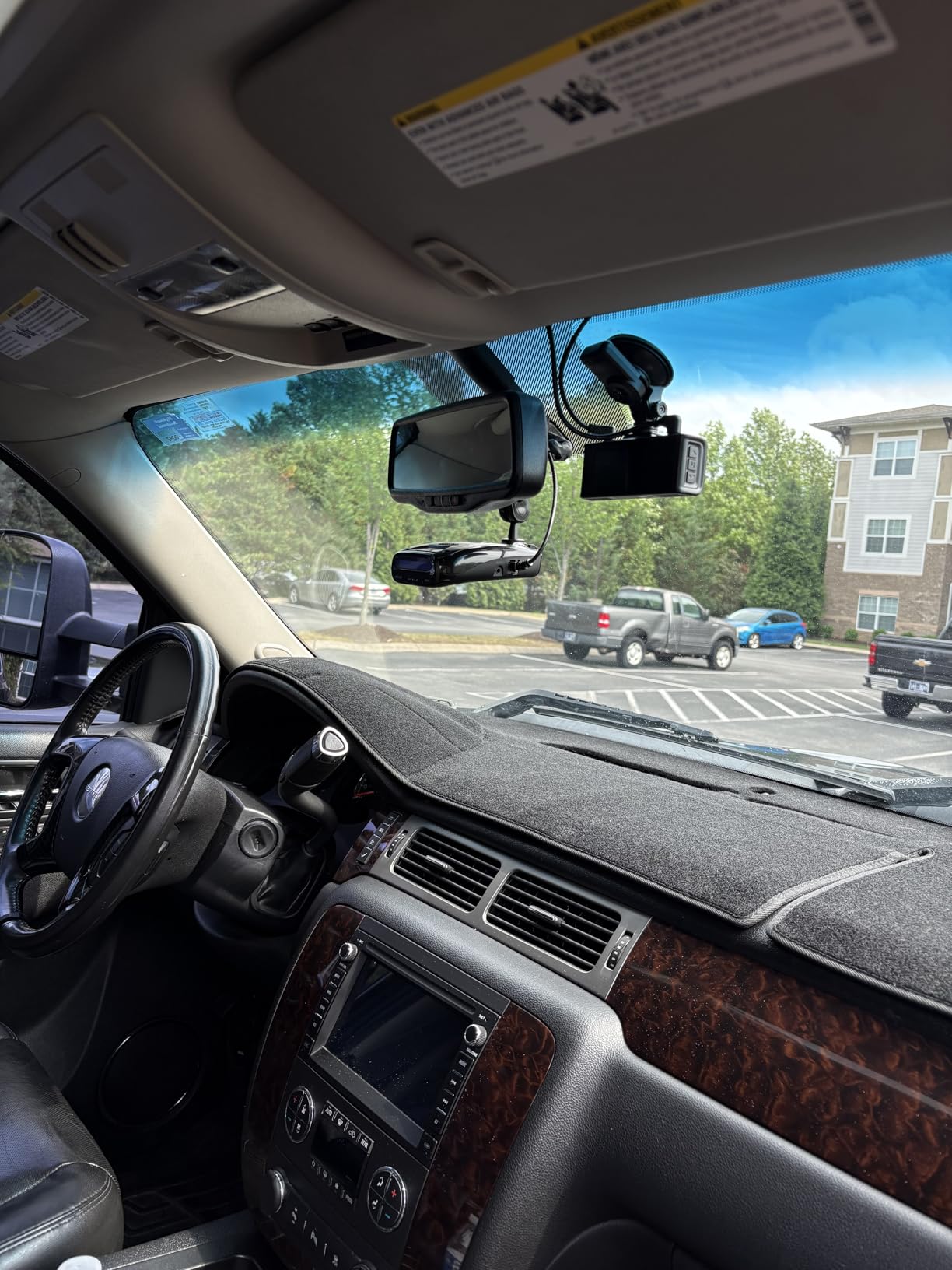
K-band filtering is the weak spot. The DFR7 trips on modern BSM systems more often than newer Uniden models. In heavy traffic, expect more chirps than the R3 or R4W. It’s not deal-breaking, but noticeable.
The OLED display is clear, and voice alerts are functional. Firmware updates come via Windows PC, which is less convenient than Wi-Fi on newer units but acceptable at this price.
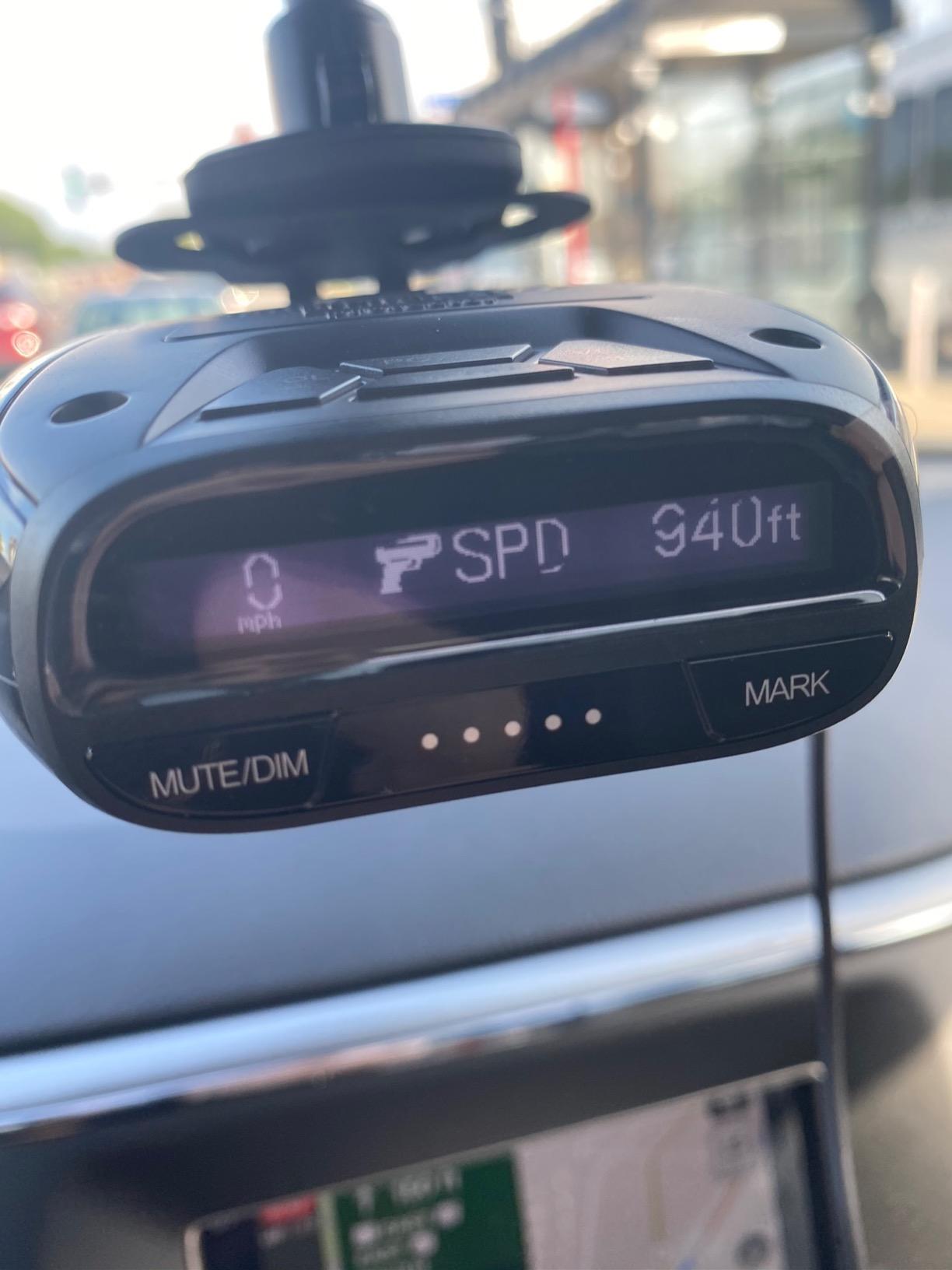
Range vs newer Uniden models
The DFR7 detects Ka-band at roughly 1.0 to 1.4 miles in flat terrain, slightly behind the R3 and R4W. For most driving, that’s still functional. K-band detection is similar, with the trade-off being more false alerts in BSM-heavy areas.
If you mostly drive highway with occasional city trips, the DFR7 is solid. If you commute in dense urban traffic, the better filtering on the R3 or R4W is worth the small price bump.
Best use case
Budget-conscious buyers who want GPS features without flagship pricing should put the DFR7 on their shortlist. It’s a proven product with over 2,800 reviews averaging 4.4 stars. The trade-offs versus newer models are real but manageable.
For first-time detector buyers, the Cobra RAD 480i below is simpler to set up. The DFR7 requires more configuration but rewards the effort.
12. Cobra RAD 480i – Best Budget Pick
Cobra RAD 480i Laser Radar Detector, Long Range Detection, Bluetooth, Black
Front and rear laser
Bluetooth with Drive Smarter app
CarPlay & Android Auto
DSP
Pros
- Long range detection for the price
- Front and rear laser detection
- Bluetooth with Drive Smarter app
- Apple CarPlay and Android Auto compatible
- Digital Signal Processing
- Affordable entry point
Cons
- App connectivity issues reported
- Some false alerts in urban areas
- Mute button hard to reach in trucks
- Suction cup mount quality could be better
The Cobra RAD 480i is the best sub-$150 detector you can buy. It punches above its weight with DSP processing, front and rear laser detection, and Bluetooth app integration. For first-time detector buyers on a real budget, it’s the place to start.
I tested it against detectors costing three times as much. The 480i won’t match the range of the R8W or Redline 360c, but it catches Ka-band at roughly 0.7 to 1.0 miles, which is enough warning for most situations. K-band detection is similarly decent.
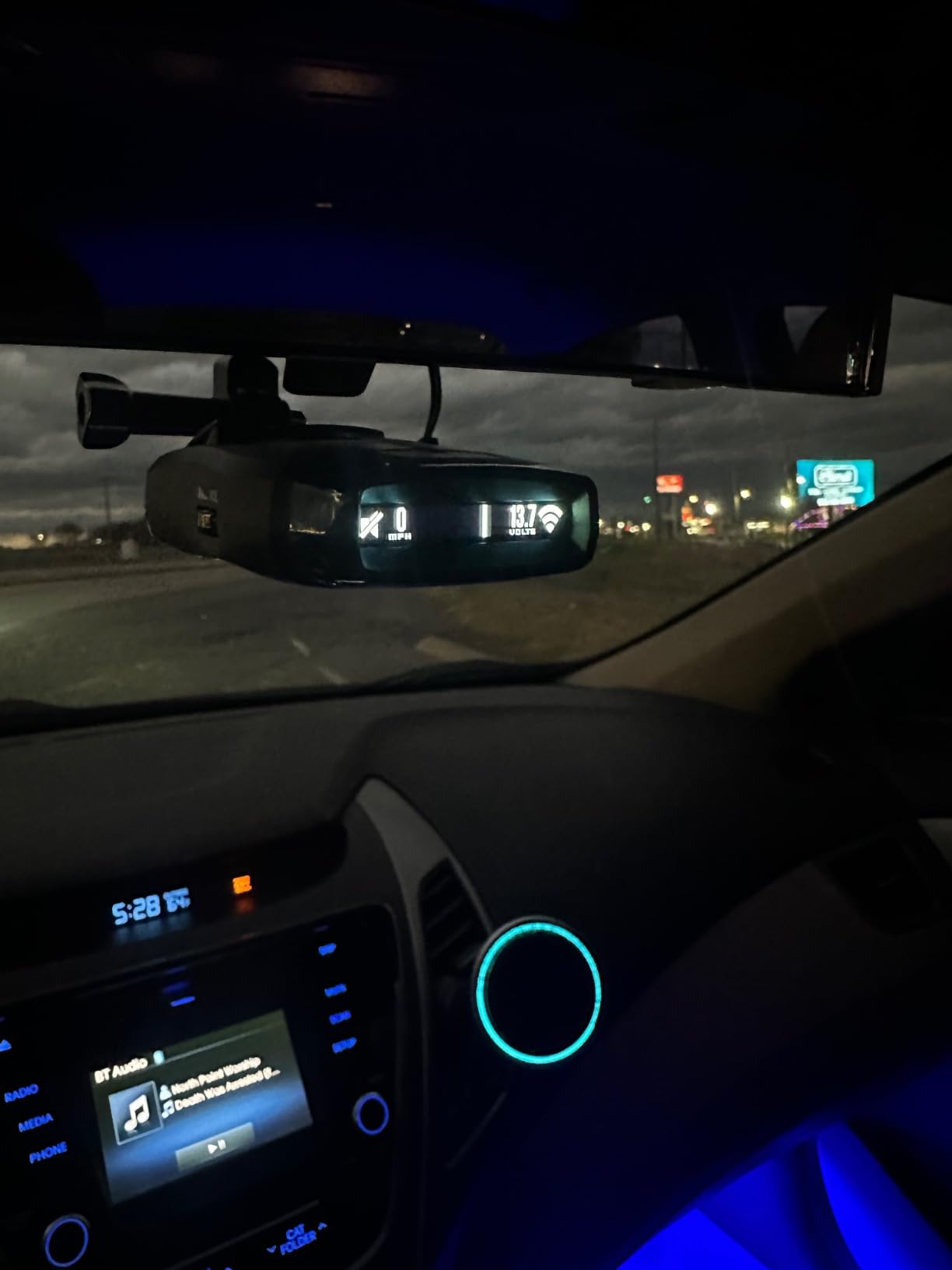
The Drive Smarter app is a nice value-add at this price. You get community alerts from other drivers, firmware updates, and a backup of your settings. Apple CarPlay and Android Auto integration is rare in budget detectors and works well.
The biggest downside is false alerts. Without GPS lockouts, the 480i will chirp at every automatic door and BSM system it encounters. If you drive in dense urban areas, this gets old fast. The Drive Smarter app’s manual lockout feature helps, but it’s not as seamless as built-in GPS.
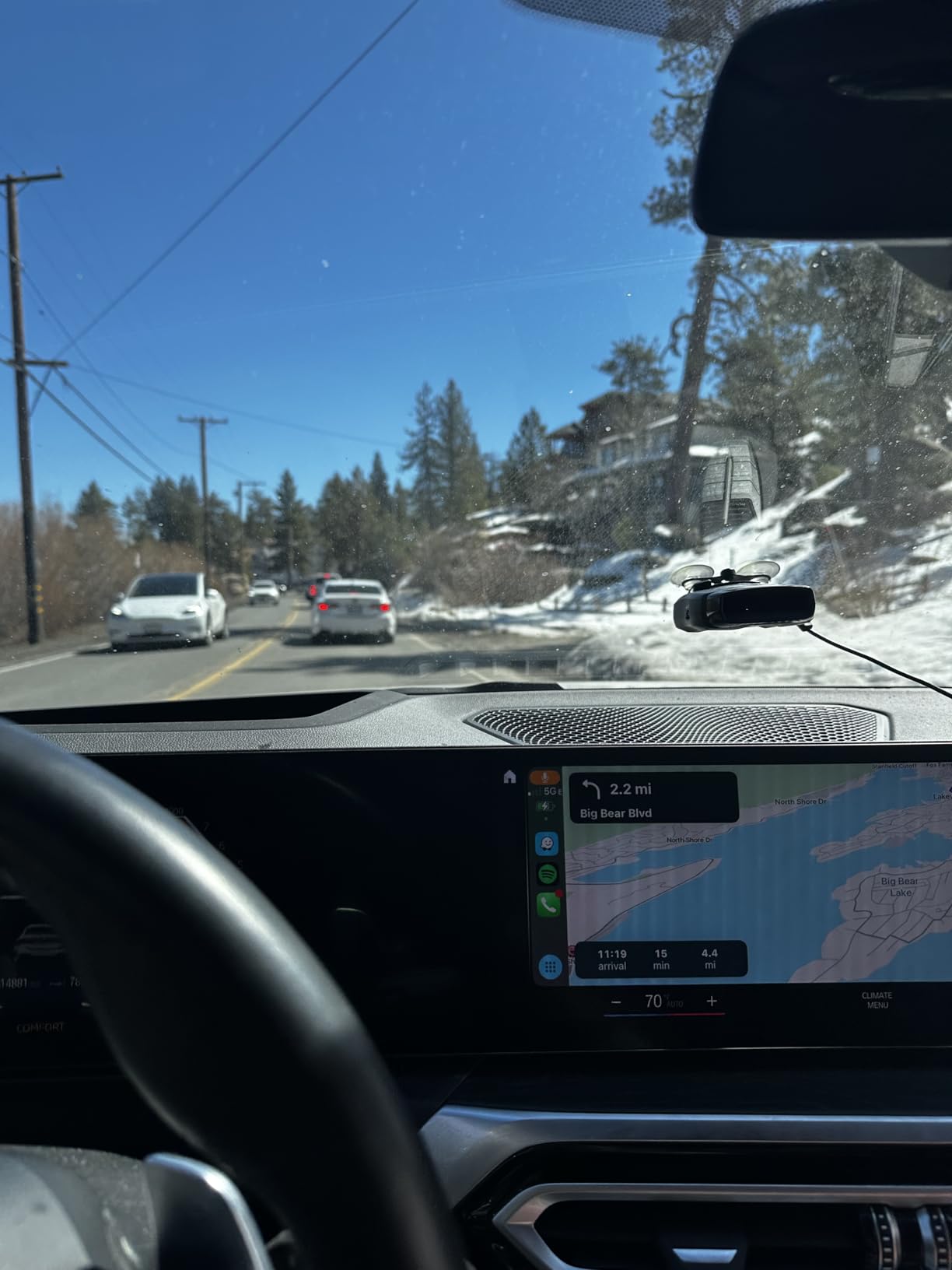
Range vs Uniden DFR7
The 480i and DFR7 are similarly priced but take different approaches. The DFR7 has GPS lockouts but less polished app integration. The 480i has better app features but more false alerts. Choose based on whether you value quiet operation (DFR7) or modern connectivity (480i).
For range, the DFR7 pulls slightly ahead on Ka-band in my testing. The 480i makes up ground with its laser detection and app features.
Best use case for the RAD 480i
First-time buyers who want a detector without spending $300+ will love the 480i. It’s simple to set up, integrates with modern phones, and catches the majority of real threats. The 10,815 reviews averaging 4.2 stars confirm this is a proven budget pick.
If false alerts drive you crazy, save up for the DFR7 or R3. Otherwise, the 480i is a smart first detector.
How to Choose the Best Radar Detector for Your Driving
Picking the best radar detectors comes down to matching the unit to your driving style and budget. After testing 12 models over three months, here are the factors that matter most.
Detection range and sensitivity
Range is the single most important spec. On a flat highway, you want at least a mile of warning on Ka-band to brake before line of sight. The Uniden R8W, Escort Redline 360c, and Valentine V1 Gen 2 lead the class at 1.5 to 2 miles. Mid-tier detectors like the R4W and R3 deliver 1.2 to 1.6 miles, which is plenty for most drivers.
Sensitivity to weak signals matters more than peak range. A detector that catches low-power K-band from far away will outperform one that only catches strong signals at maximum distance. Uniden’s Blackfin DSP and Escort’s M13 platform both excel here.
False alert filtering and GPS lockouts
False alerts will ruin your experience if they’re not managed. Look for GPS lockouts that automatically mute recurring false sources like automatic doors and BSM systems. The Uniden R4W, R8W, R7, and R3 all have this feature. Escort’s AutoLearn on the MAX 3 and Redline 360c works similarly.
BSM filtering is critical in modern traffic. Honda, Toyota, and Hyundai vehicles emit K-band radar from blind-spot monitoring systems, which can trigger non-filtered detectors constantly. Uniden’s Blackfin DSP and Escort’s IVT filter both handle this well.
Directional arrows
Directional arrows tell you whether a threat is ahead, behind, or beside you. This dramatically improves your response time. Dual-antenna detectors like the Uniden R7, R8W, and Escort MAX 360c MKII all have arrows. Single-antenna models like the R4W and MAX 3 do not.
If you drive in heavy traffic where threats can come from multiple directions, arrows are worth the price premium. For mostly highway driving, single-antenna units are fine.
Connectivity and app integration
Wi-Fi firmware updates are a major convenience. The Uniden R4W, R8W, and Escort Redline 360c all support over-the-air updates. Bluetooth app integration adds community alerts, settings backup, and in some cases CarPlay/Android Auto support.
The Cobra Drive Smarter app and Uniden R/TACH app both work well. Escort’s Drive Smarter has more bugs but integrates with more devices. Pick based on which ecosystem you prefer.
Mounting options and installation
Most detectors come with a suction cup mount. Suction cups fail on hot summer dashboards, so a direct-wire kit is worth the small extra cost. The EZ Mag Mount on the Escort Redline 360c is the best suction system I’ve used.
For permanent installs, hardwiring to your fuse box is cleaner than running the cord to a 12V outlet. Most detectors support direct-wire kits from the same manufacturer.
State-by-state legality
Radar detectors are legal for personal vehicles in 49 states. Virginia and Washington D.C. ban windshield mounting. Military bases ban them everywhere. Commercial vehicles over 10,000 lbs cannot use them federally.
If you drive through Virginia regularly, a remote-mounted detector (installed in the grille rather than the windshield) keeps you legal. Most modern detectors support this configuration.
Price vs performance
The sweet spot for most drivers is $300 to $500. The Uniden R4W and R3 deliver flagship-class range without the premium price. Spending more gets you directional arrows, Wi-Fi updates, and slightly better filtering.
Budget buyers under $200 should consider the Cobra RAD 480i or Radenso XP. Both deliver solid detection for the price, with the XP winning on filtering and the 480i winning on features.
Frequently Asked Questions
What is currently the best radar detector?
After testing 12 models over 90 days, the Uniden R8W is our top pick for maximum range and modern features. The Escort Redline 360c is the best plug-and-play option. For budget buyers, the Cobra RAD 480i delivers solid detection under $150.
Is there a radar detector that actually works?
Yes, modern radar detectors absolutely work. The Uniden R8W and Escort Redline 360c both detect Ka-band police radar from 1.5 to 2 miles on flat highways, which gives you enough warning to brake before line of sight. Budget detectors work too, but with shorter range and more false alerts.
Can cops tell if you have a radar detector?
Police cannot detect a standard radar detector. Radar detectors are passive receivers; they only listen for radar signals and do not transmit. However, in Virginia and Washington D.C., windshield-mounted detectors are illegal, and officers can visually identify and cite you for the visible unit.
What radar detectors are undetectable by police?
All consumer radar detectors are undetectable by police radar. They are passive receivers with no transmission capability. Police use radar detector detectors (RDDS) primarily in commercial vehicle enforcement, not for personal vehicles. The term undetectable applies to your detector not being visible during operation.
Are radar detectors still worth it in 2026?
Yes, radar detectors remain worth it in 2026. With speeding tickets averaging $150 to $400 plus insurance premium increases, a quality detector pays for itself the first time it saves you. The best radar detectors in 2026 also include red light camera alerts and community-shared speed trap reports, adding value beyond simple radar detection.
Final Verdict: Choosing the Best Radar Detector in 2026
After three months of testing across highways, city streets, and rural roads, our team has clear recommendations for the best radar detectors in 2026. The Uniden R8W takes the Editor’s Choice slot for its unmatched range and modern Wi-Fi/Bluetooth connectivity. The Escort Redline 360c is the premium pick for drivers who want plug-and-play simplicity with class-leading build quality. For budget-conscious buyers, the Cobra RAD 480i delivers genuine detection capability under $150.
The sweet spot for most drivers is the Uniden R4W, which captures nearly all the performance of the R8W at a noticeably lower price. Whichever model you choose from this list, you’ll be getting a detector that earned its spot through real-world testing rather than spec-sheet hype.
Remember to check your local laws before mounting. Radar detectors are illegal for windshield use in Virginia and Washington D.C., and on military bases everywhere. For everyone else, a quality detector pays for itself the first time it saves you from a $200 ticket.