
An auto-darkening welding helmet has a light-reactive lens that flips from a clear state to a dark filter in milliseconds when it senses an arc, so you can see your joint before and after welding without lifting the hood. That matters because a welding arc throws off intense ultraviolet and infrared radiation that can burn your retina and skin. The good news for anyone shopping on a budget is that the UV and IR filtering in an auto-darkening lens is passive and permanent, so it keeps working even if the batteries die.
After lining up the best auto darkening welding helmets under 200 dollars, the YESWELDER LYG-L600A takes the top spot. It carries a 1/1/1/1 optical rating, the same clarity class as helmets costing several times more, and it has more than 13900 reviews behind it, which makes it the most proven budget hood on the market right now. Our runner-up for pure view size is the TOOLIOM TL-M800D at 12.9 square inches, and our best brand-name option is the Hobart 770890. Every helmet on this list still sits comfortably below the 200 dollar ceiling as of 2026, which is the whole point of the roundup.
We compared eight helmets on the specs that change how a helmet actually performs in the booth: arc sensor count, viewing area converted to square inches, optical class, shade range, power source, weight and headgear. We also weighed review volume, warranty length and how easily you can buy a replacement cover lens. If you want the wider market rather than just the budget tier, our guide to the best welding helmets covers full-size hoods too. Prices in this category move constantly, so treat the figures below as tiers and use the buttons to check the current number.
Table of Contents
Top 3 Best Auto Darkening Welding Helmets Under $200 (October 2026)
Three picks stand out for the best auto darkening welding helmets under 200 dollars. The YESWELDER is the safest all-round buy, the TOOLIOM wins on viewing area, and the Hobart wins on brand, warranty and rating.

YESWELDER LYG-L600A
- 1/1/1/1 true color
- 3.64 by 1.67 inch view
- 2 arc sensors
- solar plus CR2450
All 8 Helmets at a Glance
Every helmet below stays under the 200 dollar ceiling and carries a recognized safety marking. Square inch view is the number most often oversold by manufacturers, so it is listed here rather than the marketing dimensions.
| Product | Specifications | Action |
|---|---|---|
| YESWELDER LYG-L600A |
|
Check Latest Price |
 ARCCAPTAIN SUN-5 ARCCAPTAIN SUN-5 |
|
Check Latest Price |
 TOOLIOM TL-M800D TOOLIOM TL-M800D |
|
Check Latest Price |
 Hobart 770890 Hobart 770890 |
|
Check Latest Price |
 ARCCAPTAIN RL-600LA ARCCAPTAIN RL-600LA |
|
Check Latest Price |
 Lincoln Electric K4983-1 Lincoln Electric K4983-1 |
|
Check Latest Price |
 ANDELI OPTIM LED Series Pro ANDELI OPTIM LED Series Pro |
|
Check Latest Price |
 Jackson Safety 47101 Jackson Safety 47101 |
|
Check Latest Price |
1. YESWELDER LYG-L600A – The Most Proven Budget Auto-Darkening Helmet
YESWELDER Auto Darkening Welding Helmet 1/1/1/1 True Color, LYG-L600A
View 3.64 by 1.67 inch
2 arc sensors
1/1/1/1 true color
Ansi Z87.1 and CSA Z94.3
Pros
- 1/1/1/1 optical clarity at a budget price
- Switches in 1/30000 second
- Spare battery plus inner and outer lenses included
- Cheater lens compatibility
Cons
- Small viewing window compared with panoramic models
- Shell and headgear feel light duty
- Some units arrive with the coin cell installed backwards
This is the helmet we keep coming back to. The lens is a true color filter rated 1/1/1/1, which means it passes the strictest optical class for both clarity and angle dependence, and owners consistently report reduced eye strain after a full shift of TIG and MIG work. Response is 1/30000 of a second with adjustable sensitivity and delay, so the darkening lands before your strike does even on a cold morning start.
What surprises people is how complete the box is. You get a CR2450 coin cell, one inner replacement lens, two outer replacement lenses, a storage bag and a manual. That matters more than it sounds, because a hood you cannot get a fresh inner lens for is effectively a disposable hood.
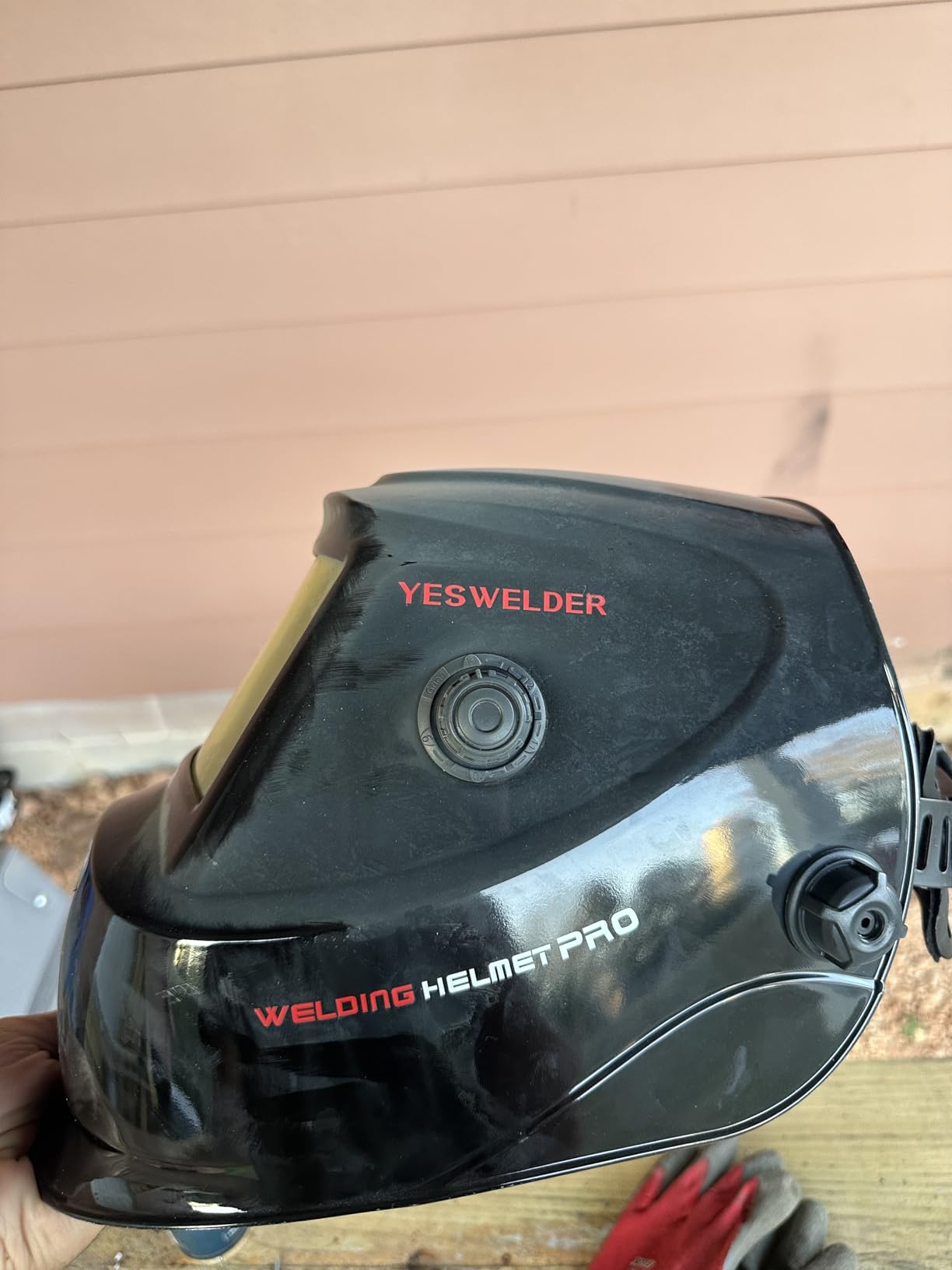
The headline shade range runs 3 for light TIG work through 7 to 13 for stick and flux core, plus a grind setting. Externally mounted shade and delay controls mean you are not fumbling inside the shell with a gloved hand, and the pivot-style headgear has enough room underneath to wear a respirator when the material calls for one.
Yeswelder is one of the names that comes up constantly in welding forum threads about budget helmets, and the feedback is consistent: people like the visibility and the price, and the objections are about build feel rather than protection. Our wider guide to the best welding helmets covers how this class of hood compares with larger full-face designs.
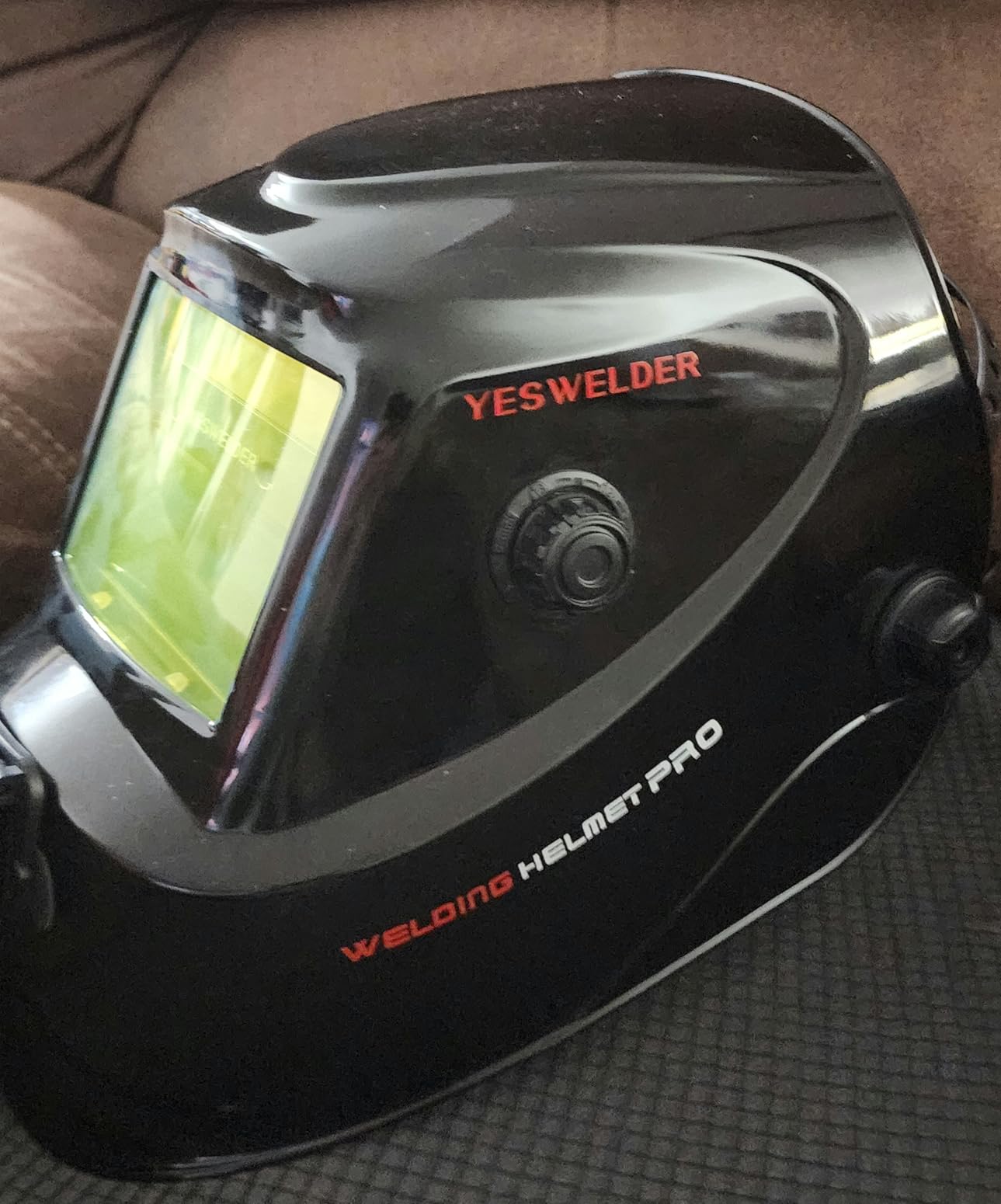
Who the YESWELDER LYG-L600A suits?
It suits a hobbyist buying a first welding helmet, a home garage welder doing occasional maintenance and repair work, and anyone who welds stainless at low amperage and needs a light shade to see the puddle. Two sensors are genuinely enough for flat and horizontal work in a lit shop.
It also suits anyone who wants to compare against the rest of the market on fit and comfort before spending more. Our picks for ski helmets and snow gear use similar headgear geometry, and the same head-shape notes apply.
Where the LYG-L600A falls short?
The 3.64 by 1.67 inch window works out to roughly 6 square inches, which is small next to the 12.9 square inch panel on the TOOLIOM. Overhead work and out-of-position passes need more peripheral view than that, and the shell and headgear do feel lighter duty than a name-brand hood.
There is also an odd failure at unboxing: some units arrive with the button battery seated backwards and already drained. Check it the day the helmet arrives, not the day you need it.
2. ARCCAPTAIN SUN-5 – Best Budget Pick With Four Sensors
ARCCAPTAIN Welding Helmet Auto Darkening, 1/25000s Response, Shade 4/9-13
4 arc sensors
1/25000 second response
3.86 by 1.69 inch view
Ansi Z87.1 and CSA Z94.3
Pros
- Four sensors for out-of-position work
- Clear 1/1/1/1 true color lens
- Grind mode keeps the helmet on between tasks
- 180-day warranty included
Cons
- Shell and build feel inexpensive
- A minority of units report slow or failing response
Four arc sensors on a helmet in this bracket is the standout feature. Sensor count is what lets the lens keep working when the arc is partly hidden behind your hand, your pipe or the workpiece itself, and four sensors is where most shops stop paying for premium optics. Switching happens in 1/25000 of a second with adjustable shade and sensitivity.
The lens is a 1/1/1/1 true color filter over a 3.86 by 1.69 inch window, a touch larger than the YESWELDER, and the marketing claims 200 percent longer service life from the solar cells plus a replaceable CR2450 lithium backup. The certification list is broad for the money, covering ANSI/ISEA Z87.1-2010, CSA Z94.3, DIN EN 175 and DIN EN 379.
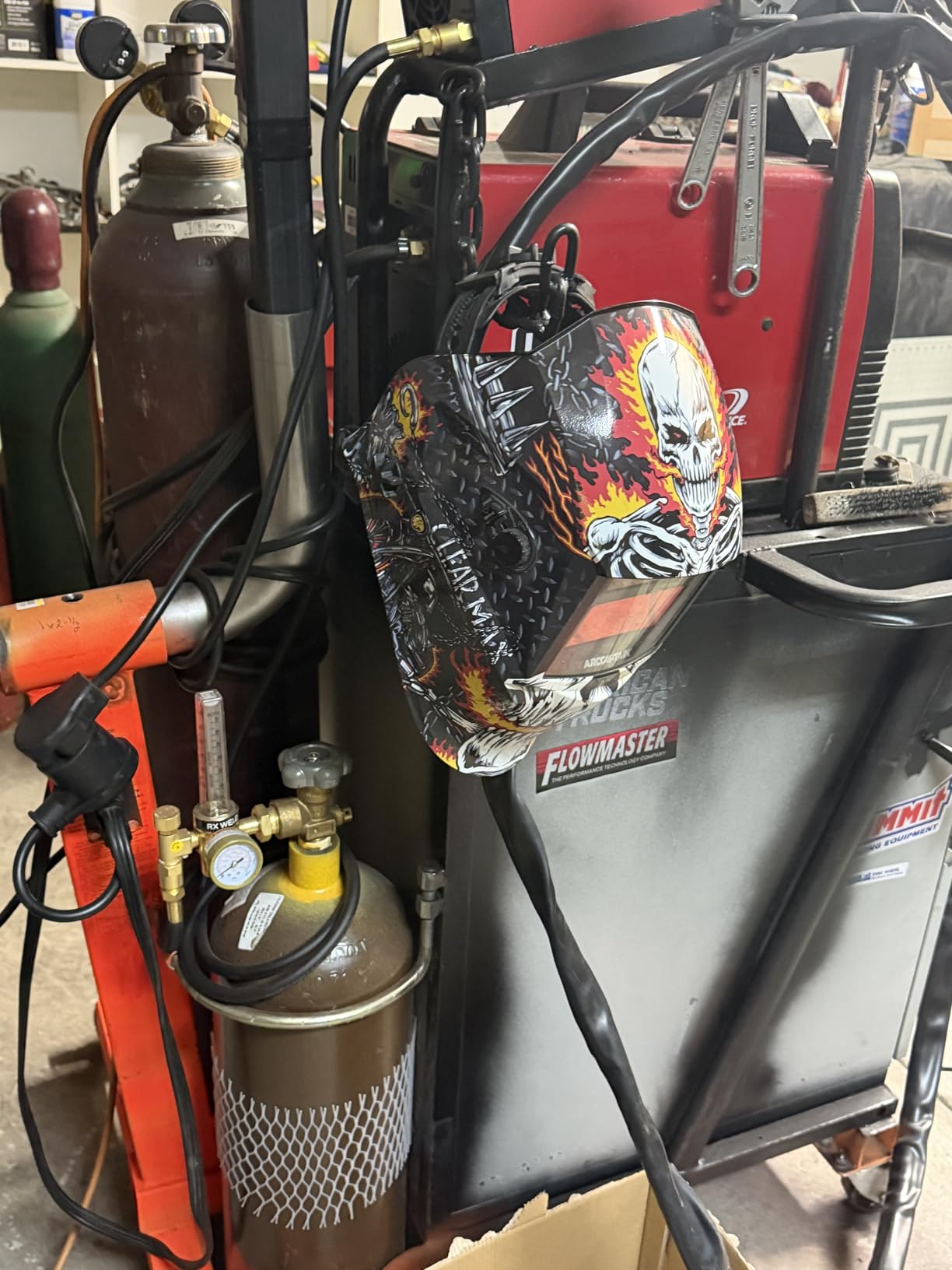
Dark state runs shade 4 and 9 to 13, so the low end is there for very light work and the top end covers stick and gouging. The 12-in-1 filter carries automatic DIN 16 UV and IR protection, and the padded adjustable headband stays put on long passes. The box includes a manual, the helmet and three replacement lenses.
It is a nylon shell rated at 120 MPa tensile strength, which sounds impressive on paper. In the hand it reads as a budget shell, and the fit of the headband rather than the shell material is what decides whether you can work a full day in it.
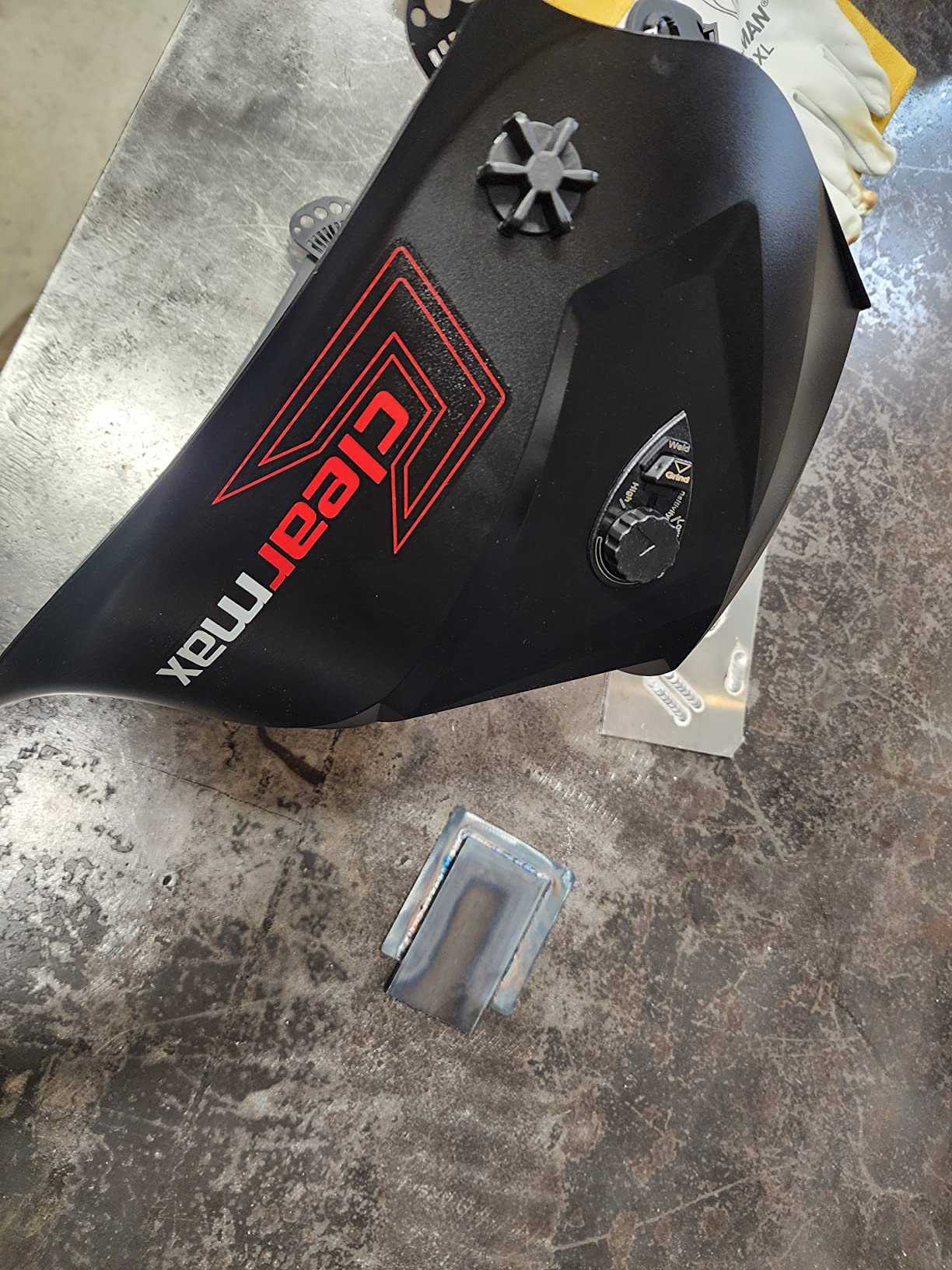
Who the ARCCAPTAIN SUN-5 suits?
It suits anyone who welds out of position regularly, does pipe work, or frequently grinds and welds in the same session. The grind mode means you keep the helmet on rather than flipping it up and down, and four sensors handle the times the arc is not pointed straight at you.
It also suits first-time buyers who want more sensors than the entry tier offers without stepping up to a major brand. Cheater lens compatibility is there if you need magnification for a stainless detail pass.
Where the SUN-5 falls short?
Reviewers repeatedly describe the shell and overall build as inexpensive, and that shows up in the headgear over a long session. There is also a small but real group of reports describing slow response or a lens that stops darkening after a few days, so test it fully before you depend on it for production work.
The listed item weight of 0.282 ounces is clearly a packaging error rather than a real figure, so do not plan your neck comfort around it. Judge fit in person instead.
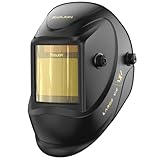
3. TOOLIOM TL-M800D – Best Value for the Largest Viewing Area
TOOLIOM True Color Auto Darkening Welding Helmet with Large View
12.9 sq inch view
4 arc sensors
1/1/1/1 true color
Weld cut and grind modes
Pros
- Exceptionally large viewing area for the tier
- 1/1/1/1 true color clarity
- Three operating modes in one lens
- Battery and both lens types included in the box
Cons
- Listed to ANSI Z89.1 rather than Z87.1
- Basic plastic shell
- No manufacturer warranty is stated
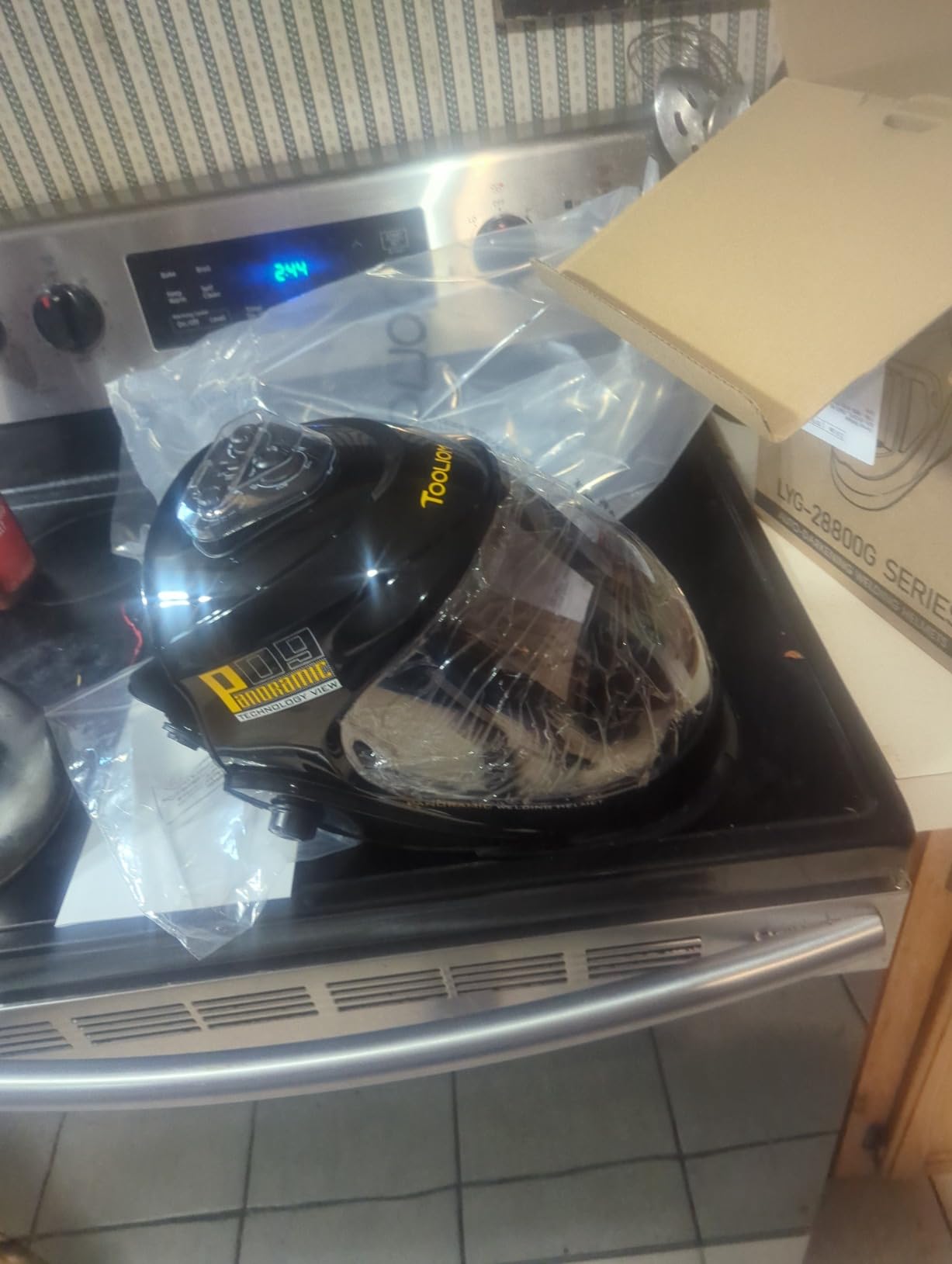
For most flat and horizontal work, seeing more of the workpiece is worth more than any other single spec. The TL-M800D gives you a 3.94 by 3.27 inch window, which converts to 12.9 square inches, and that is close to three times the light you get through the YESWELDER panel. Four arc sensors back it up.
The optics are still 1/1/1/1 with true color technology, so the large window does not cost you clarity. Owners point out that the extra view makes bead placement easier and reduces the head movement you would otherwise use to line up a pass.
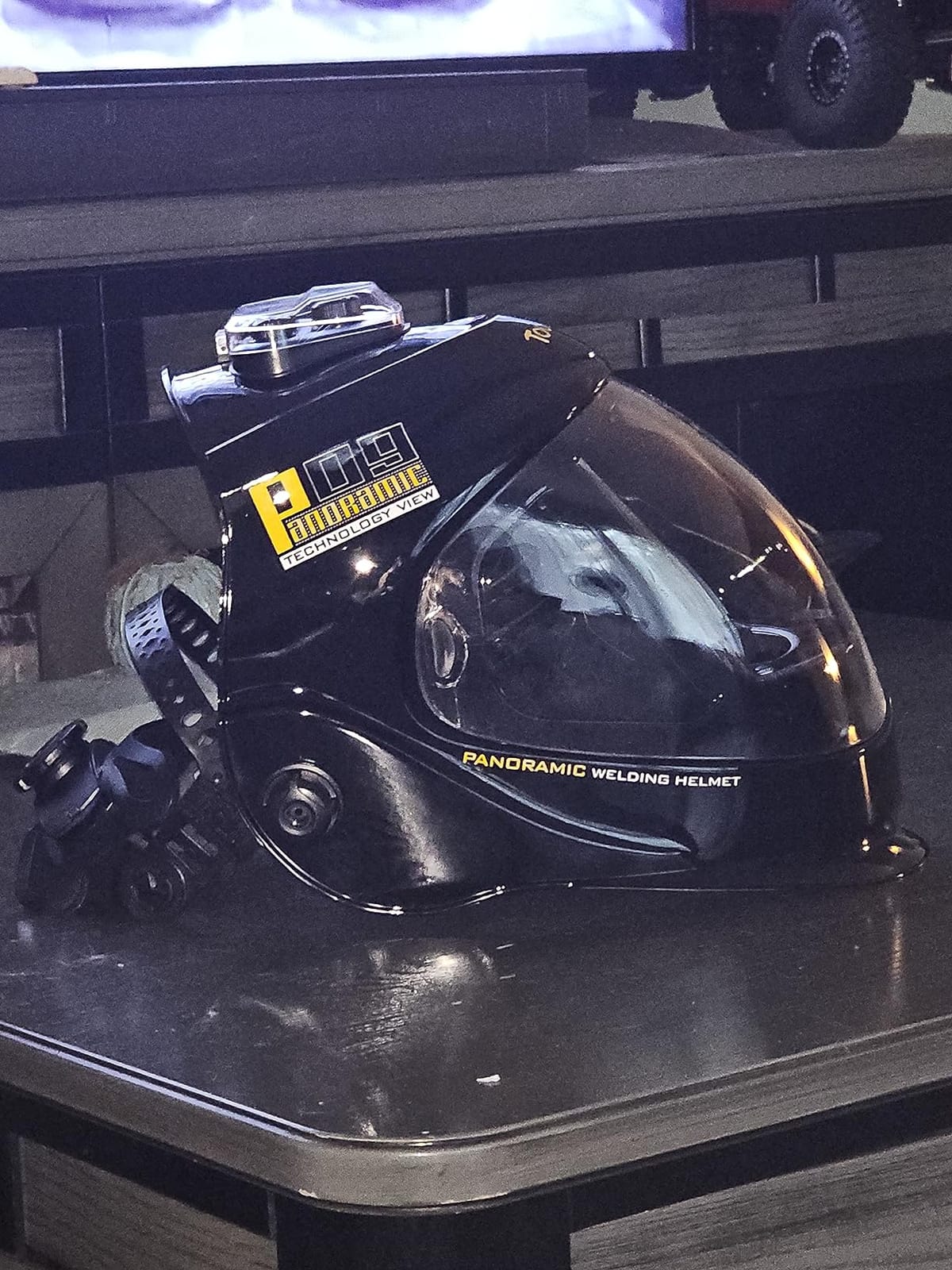
The lens handles three modes rather than two: shade 9 to 13 for welding, shade 5 to 9 for cutting and shade 3 for grinding. That cut mode is unusual in this bracket and saves you from swapping lenses between plasma work and welding. Delay and sensitivity are adjustable.
At 0.58 kg it sits in the middle of the weight range in this roundup, and the box includes the helmet, a replaceable battery, two replacement outer lenses and one inner lens. That spares inventory is a real advantage over budget models that include nothing spare.
Who the TOOLIOM TL-M800D suits?
It suits anyone who welds thin material, does a lot of fit-up and tack work, or spends time in awkward positions where a narrow window forces you to crane your neck. It is also a solid pick for someone who occasionally plasma cuts and does not want two separate hoods.
Beginners benefit from the view size because it makes it easier to see whether the puddle is where you think it is. The included spare lenses mean the first scratch will not end your day.
Where the TL-M800D falls short?
The listing states ANSI Z89.1, which is a different and less demanding standard than the Z87.1 rating carried by most competing helmets in this group. If your employer or a contract requires a specific marking, verify the label on the filter before you buy.
The construction is plain plastic and no manufacturer warranty is stated on the listing. It is also fixed-shade electronics with no memory recall, so you reset the controls each session rather than relying on saved profiles.
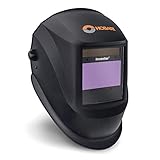
4. Hobart 770890 PureColor – Best Brand Name With a Two-Year Warranty
Hobart 770890 Auto-Darkening Welding Helmet, Large, Black
9.3 inch widescreen view
4 arc sensors
Analog shade and delay
Auto on and off power
Pros
- 4.7 stars across 880 reviews
- Tied for the highest rating in this group
- Large widescreen PureColor viewing area
- Limited two-year manufacturer warranty
Cons
- Wide price premium over the budget picks
- Only weld and grind modes with no cut mode
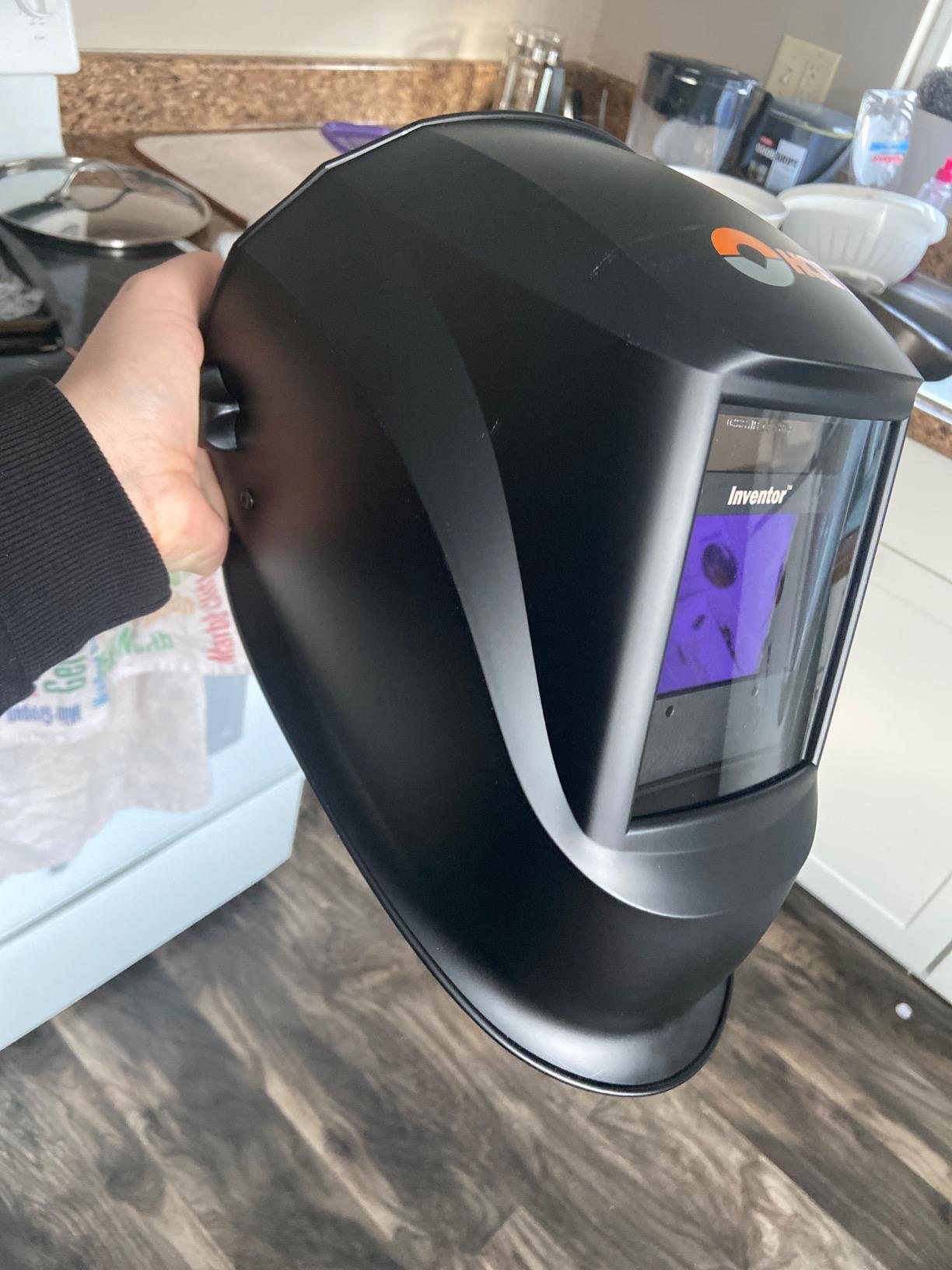
Brand recognition is worth something in this category, and Hobart is the one most experienced forum users keep naming when the question is which brand is the best for the money in the sub-200 dollar tier. This model backs that reputation up with a 4.7 star average across 880 reviews and a limited two-year manufacturer warranty, the longest coverage on our list.
The lens uses PureColor technology across a 9.3 inch widescreen viewing area, which gives a wide horizontal field without the bulk of a full panoramic shell. Four independent arc sensors handle detection, and the auto on and off power control triggers at the strike of an arc rather than running the electronics down between welds.
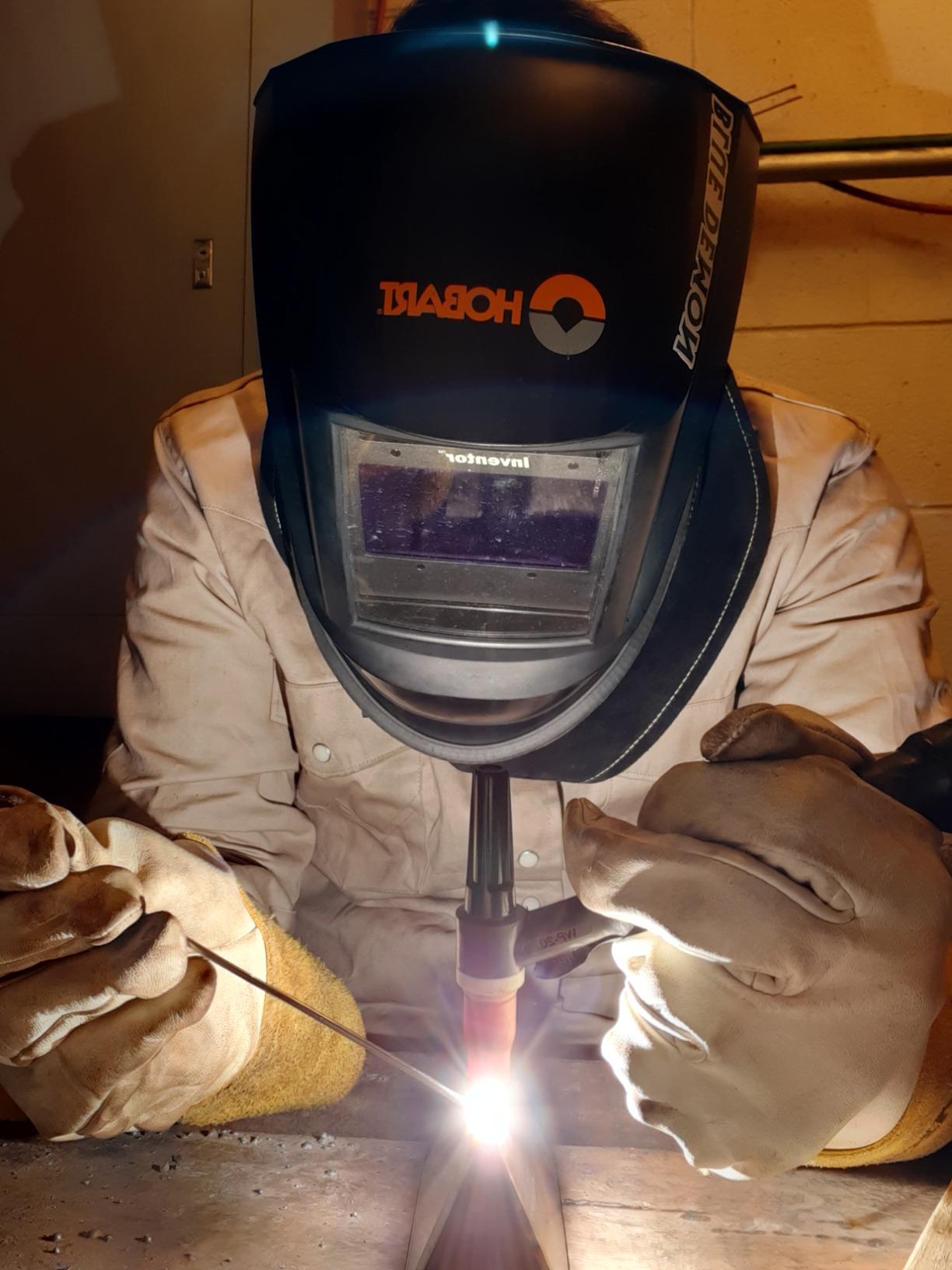
Controls are analog knobs for shade, sensitivity and delay. That is a genuine advantage over the digital panels on the feature-heavy helmets: a knob does not need a menu, works with gloves on and cannot lock up mid-pass. Switching between weld and grind happens without removing the helmet.
It weighs 1.25 pounds and the shell is polyamide nylon, which explains why it stays comfortable through a long shift. A CR2 lithium battery is included, and a protective lens kit is in the box as well.
Who the Hobart 770890 suits?
It suits a professional or a serious hobbyist who welds daily and wants parts support, a warranty and a recognised name on the shell. If your work travels between job sites, the brand name matters when a local supplier needs to source a lens or a headgear part.
It also suits anyone who prefers physical controls to touchscreen-style menus, and anyone who welds in a shop with mixed lighting where consistent sensor detection matters more than extra modes.
Where the Hobart 770890 falls short?
You pay a real premium for that brand and warranty, and the feature set is deliberately plain. There is only weld and grind mode with no dedicated cut mode, so plasma work means changing shade settings rather than switching a mode.
The view is wide but it is not panoramic, so side awareness on pipe and vertical work is still limited compared with the ARCCAPTAIN RL-600LA or the ANDELI.
5. ARCCAPTAIN RL-600LA – Best for Out-of-Position and Pipe Work
ARCCAPTAIN Intelligent Auto-Darkening Welding Helmet, 180° True Color Hood
180 degree panoramic view
7 arc sensors
Internal control screen
500mAh rechargeable battery
Pros
- Panoramic 7.2 by 3.2 inch total view
- Seven arc sensors with 1/30000s response
- Internal screen shows settings while worn
- Rechargeable battery with long standby
Cons
- Many settings add complexity for occasional users
- Electronics-heavy shell feels heavier
- Smallest review base in the roundup at 148
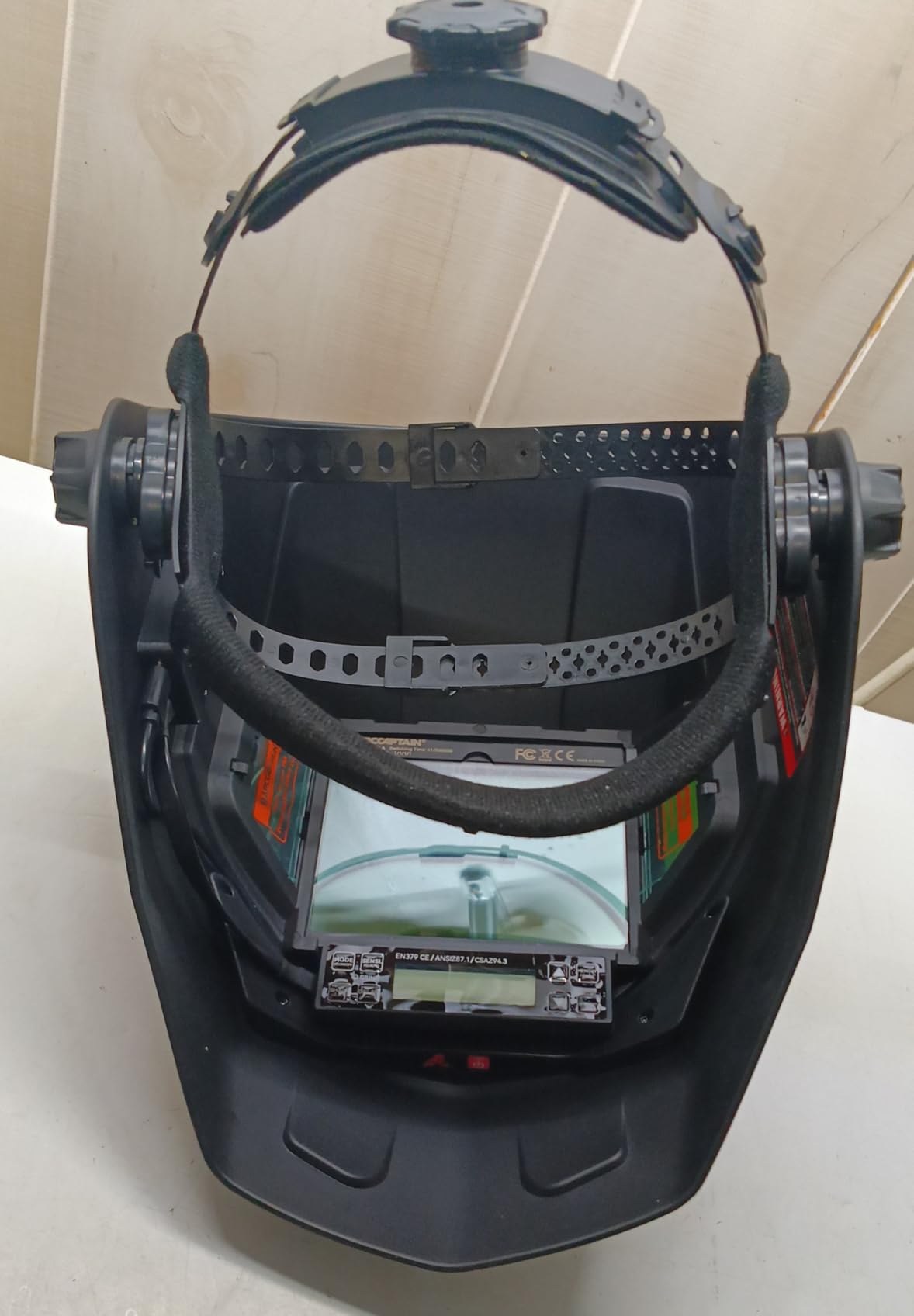
Seven arc sensors is more than any other helmet here, and paired with a 180 degree view it is the most confident pick for overhead and out-of-position welding. The main lens is 4.6 by 3.2 inches, flanked by two 1.3 by 2.5 inch side lenses, for 7.2 by 3.2 inches of total viewing area at 1/1/1/1 clarity.
The internal screen is the feature that changes daily work most. You can see shade, sensitivity and delay values and change them while the helmet is on, instead of flipping it up and dropping it to find a small dial. Up to nine memory modes plus gradient control on the light-to-dark transition let you save a setting per process.
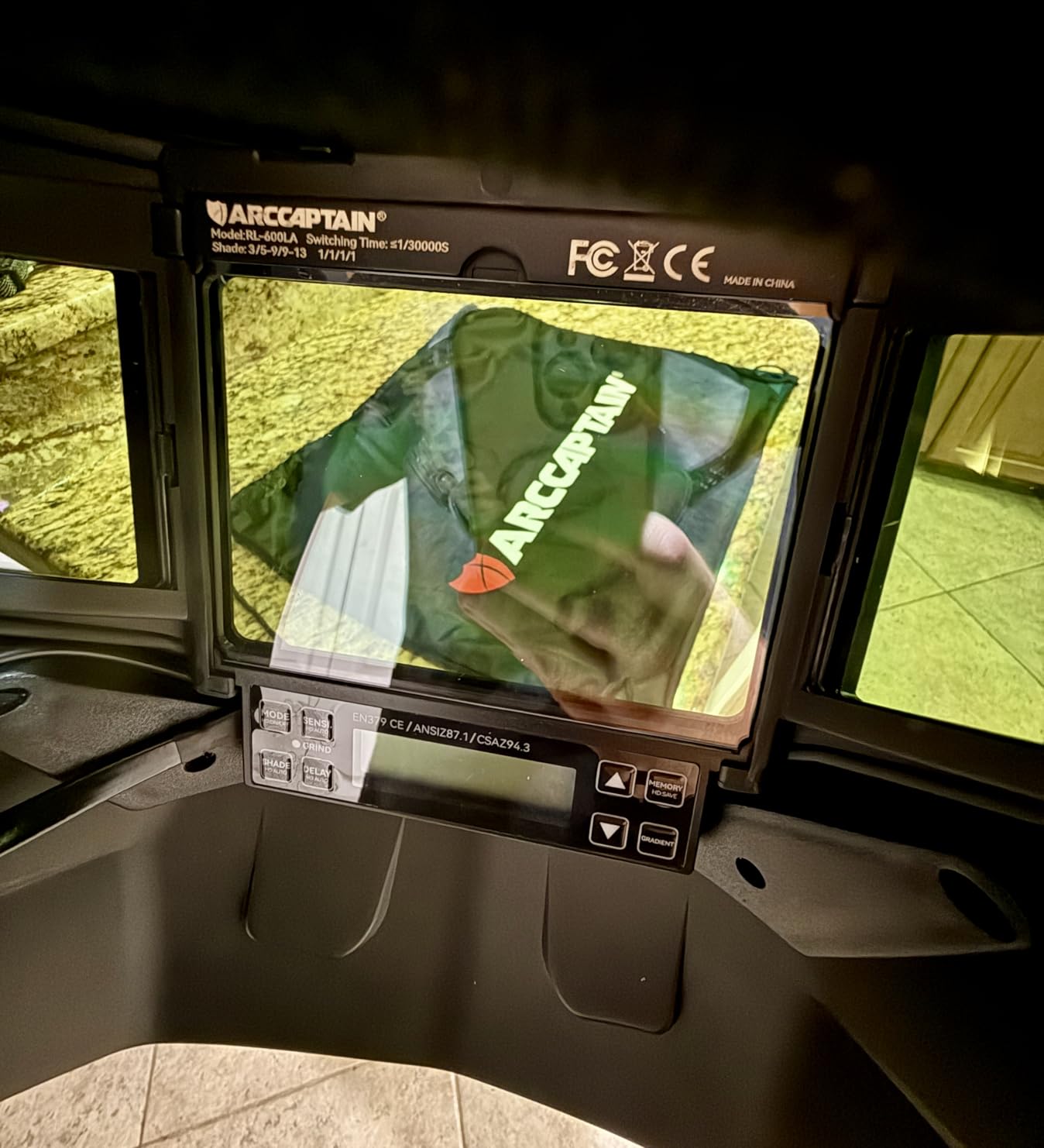
Power comes from a 500mAh rechargeable battery with solar assist, charging in roughly two and a half to three hours. Standby is quoted at about 16000 hours, and working runtime at up to 1200 hours without the LED or around 500 hours with it running. There is a built-in work light on a button below the internal screen.
Three selectable intelligent shade modes tune the response automatically, and shade plus delay are tunable within plus or minus nine levels. The box includes a storage bag, an inner replacement lens with side windows and two outer lenses, one of them blue-light filtering.
Who the ARCCAPTAIN RL-600LA suits?
It suits a fabricator doing pipe, vertical and overhead work, and anyone welding in a position where the arc is frequently partly blocked. The side windows are the difference between tracking a joint you can barely see and tracking it clearly.
It also suits multi-process shops where a saved mode per process removes the daily fiddle, and anyone working in a dim space who will use the built-in light to set up before striking an arc.
Where the RL-600LA falls short?
Feature density cuts both ways. Owners who weld occasionally find the number of adjustable settings more than they need, and there is a learning period before the memory modes start saving time rather than wasting it.
The shell carries more electronics than a simple budget hood and feels heavier in hand. At 148 reviews the long-term reliability record is thinner than the review counts behind the picks above, so we would treat it as a feature investment rather than a proven workhorse.
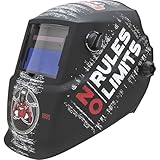
6. Lincoln Electric K4983-1 – Best Lightweight Helmet for Site Work
Lincoln Electric No Rules No Limits Welding Helmet K4983-1, Auto Darkening, Lightweight Weld Headgear, Shade 7-13, Grind Mode, Use for Stick, TIG, Pulsed TIG, MIG, Pulsed MIG, Flux Core, Gouging
Lightweight at 17.5 oz
Variable shade 7-13 plus grind
4.33 by 3.54 inch view
Ansi Z87.1 and hard hat compatible
Pros
- Lightest listed shell in this roundup
- Ratchet headgear with an oversized sweatband
- Hard hat compatible for site work
- Covers stick TIG MIG flux core and gouging
Cons
- Small viewing window of the larger models
- Only 119 reviews so far
- Solar power means a dim shop can be slower to trigger
At 17.5 ounces this is the lightest shell in the roundup, and on a long overhead job or a full day on a structural site that difference compounds. The ratchet headgear has six points of adjustment and an oversized absorbent sweatband, and it works with a hard hat.
The shade range is variable 7 to 13 plus a separate grind mode, and the TIG rating starts at 5 amps, so it handles low-current stainless TIG rather than only heavy work. Weldingweb members regularly describe Lincoln Electric 7-13 variable shade hoods as the reliable cheap option, and this is that formula.
The stated coverage is broad for a hood this light: stick, TIG, pulsed TIG, MIG, pulsed MIG, flux core and gouging from a single unit. Certification is ANSI Z87.1, and the shell is nylon.
Power is solar with battery backup, and two AAA batteries are included in the box along with the helmet and two extra lens sets, one inner and one outer. That spare lens count means a bad day on the scaffold does not cost you the job.
Who the Lincoln Electric K4983-1 suits?
It suits site welders, structural and pipeline work, and anyone whose day includes a lot of overhead reach. The hard hat compatibility is a genuine advantage where a bump cap or full hard hat is mandatory on the site.
It also suits anyone switching between many processes in one shift, since the 7-13 variable range plus grind covers the whole list without changing lenses.
Where the K4983-1 falls short?
The viewing area is the smallest of the larger models here at 4.33 by 3.54 inches, so you are giving up some of the view you would get from the TOOLIOM or Jackson at the same tier. Expect more neck movement on tight fit-up work.
With 119 reviews the long-term track record is less established than the picks with counts in the thousands, and solar-first power can be slow to trigger in a dim shop with a tired battery.
7. ANDELI OPTIM LED Series Pro – Best Helmet for Dim Shops
ANDELI Auto Darkening Welding Helmet 2 LED Lights Internal Digital Control
Two motion-activated LED lights
7.2 by 3.2 inch panoramic view
6 arc sensors
Digital panel with four modes
Pros
- Two motion-sensing work lights with two brightness levels
- Dedicated weld grind cut and lock modes
- Panoramic view with side windows
- 1000mAh battery with 1300+ hour runtime
Cons
- Heavier than simpler helmets over long sessions
- Digital interface has a learning curve
- Cover can drop forward with a quick nod
- Some units arrive with a reflective inner lens
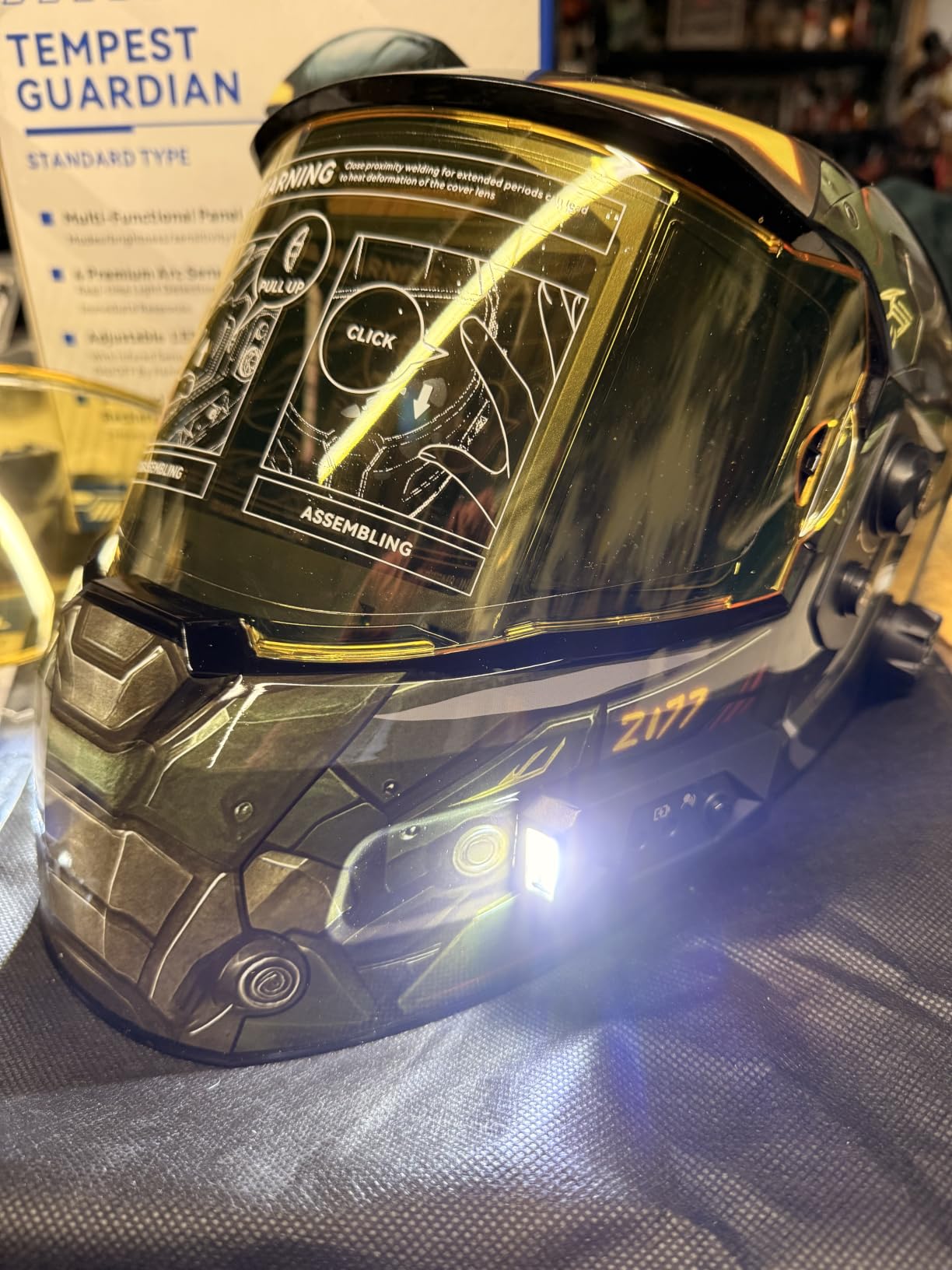
This is the pick for anyone welding in a poorly lit shop, a field repair or a trailer after dark. Two intelligent LED lights with a motion sensor mode and two brightness levels switch on when you move, so you can see the joint, the wire and the work area without lifting the hood.
Power is unusually generous. A 1000mAh rechargeable battery with solar assist runs 1300 or more hours without the lights and up to 600 hours with them on, and a dedicated 500mAh battery serves the LED separately so a drained light does not kill your auto-darkening.
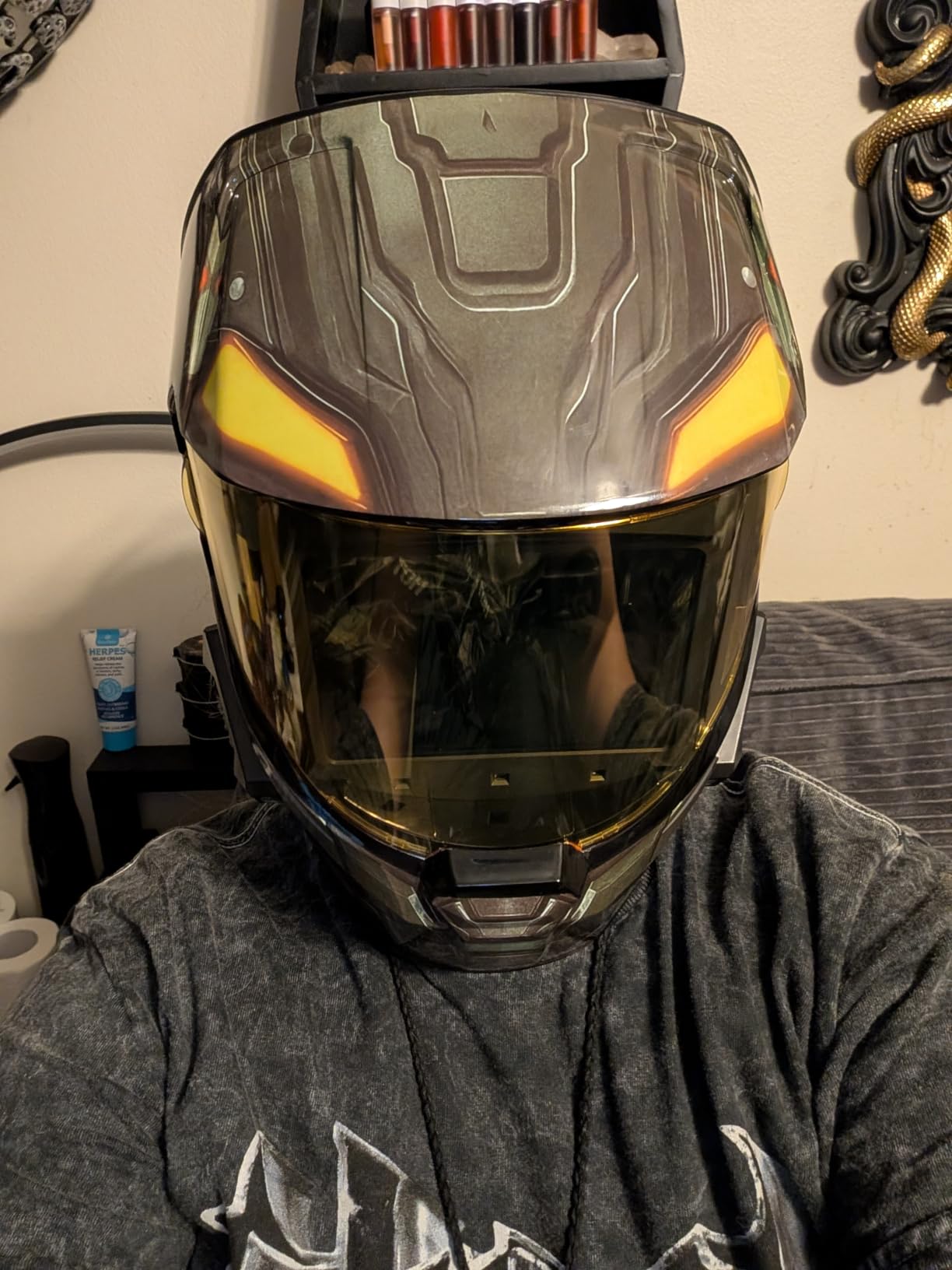
The view is 180 degrees and panoramic, 7.2 by 3.2 inches total at 1/1/1/1 clarity with 1/30000 second auto-darkening from six arc sensors. A digital panel shows shade, sensitivity and delay, with five-level adjustment on sensitivity and delay and a dedicated DIN 3, 5-9 and 9-13 shade control.
Four modes are available: weld, grind, cut and lock. There is a one-touch grinding mode, a high-strength nylon shell, a six-point pivot headgear with breathable padding and a triple-layer lens made of two LCD layers plus an integrated optical filter.
Who the ANDELI OPTIM LED Series Pro suits?
It suits field repair crews, mobile fabricators and anyone working in a garage with poor lighting, where setting up the workpiece is half the battle. Owners who upgraded from an older hood describe the clarity and lighting as a generational jump.
It also suits multi-process shops because the four dedicated modes replace manual shade hunting between welding, grinding and cutting.
Where the OPTIM LED falls short?
At 0.6 kg it is a heavier shell than the simple budget models, and some users notice that over long sessions. The digital panel also has a real learning curve if you only weld occasionally.
Two fit issues come up repeatedly: the cover can feel loose and drop forward with a quick nod, and some units arrive with a reflective inner lens that you should replace before working.
8. Jackson Safety 47101 Hellfire – Best for Lightweight Comfort and Neck Coverage
Jackson Safety Premium Graphic Welding Hood with ADF – Ultra Lightweight Auto Darkening Welding Helmet – ANSI Z87.1 (Multiple Styles)
1.26 lb balanced shell
14.34 sq inch viewing area
4 arc sensors
Ansi Z87.1+ and CSA Z94.3
Pros
- Very light at 1.26 lb with a balanced shell
- Large 14.34 sq inch clear viewing area
- Controls mounted inside the shell
- Easy to find CR2032 battery
- Two-year warranty
Cons
- Lowest average rating in the roundup at 4.2
- Weld and grind modes only
- Replacement inner lenses are hard to source
- Some units reported failing auto-darkening modules
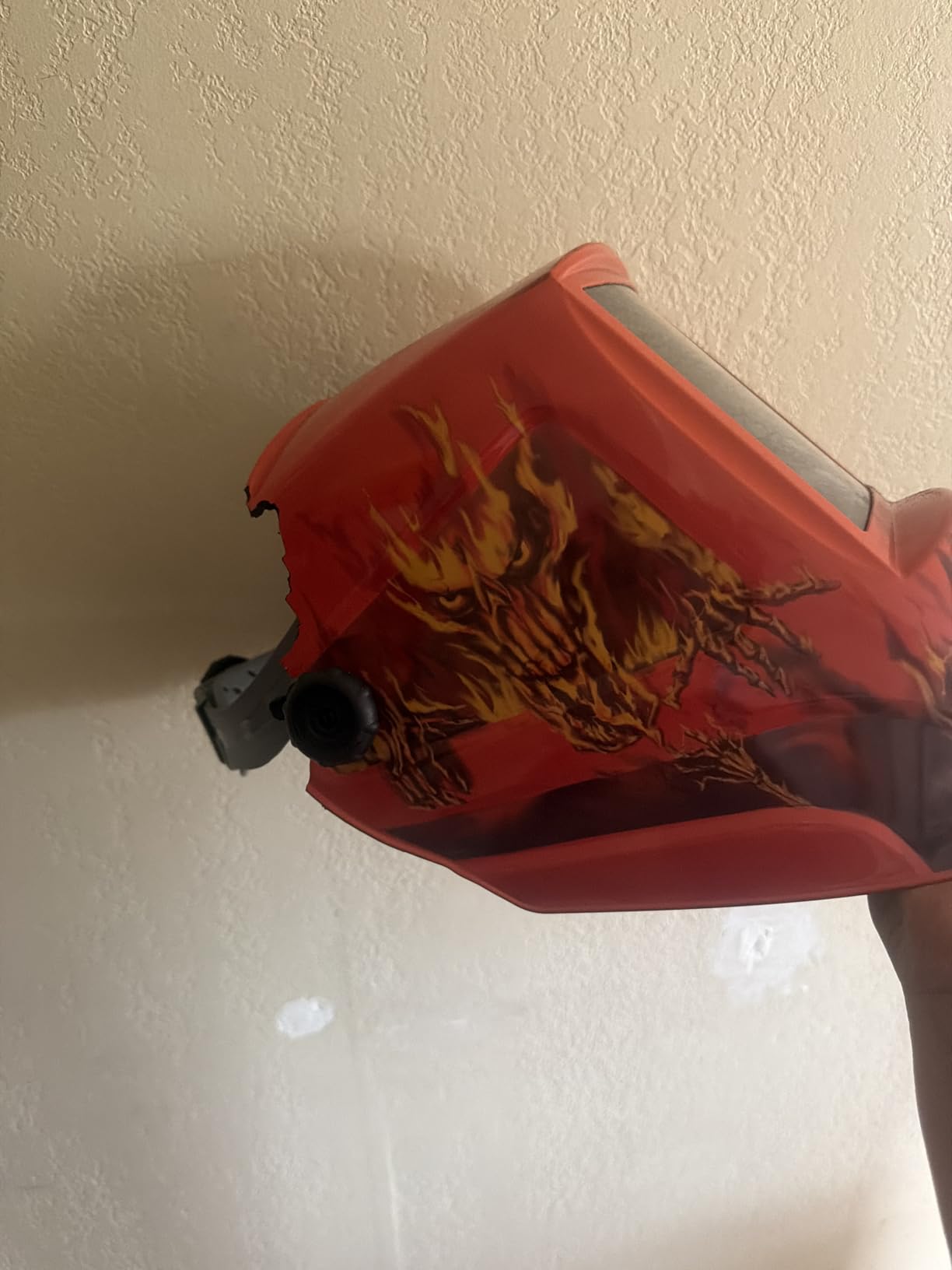
Jackson Safety is a name fabricators already know, and this hood is built around one priority: staying light. At 1.26 lb with an ergonomically balanced shell, it is built for people who put in a full shift and notice neck fatigue. The extended front also adds neck coverage that most shells in this range leave out.
The optics are 1/1/1/1 across a 14.34 square inch viewing area, with variable shade 3 and 5 through 13. Four arc sensors react in 1/20,000 of a second, and the patented 370 Speed Dial ratchet headgear with an Easy Grip-Easy Turn knob is one of the quicker adjustments in the category.
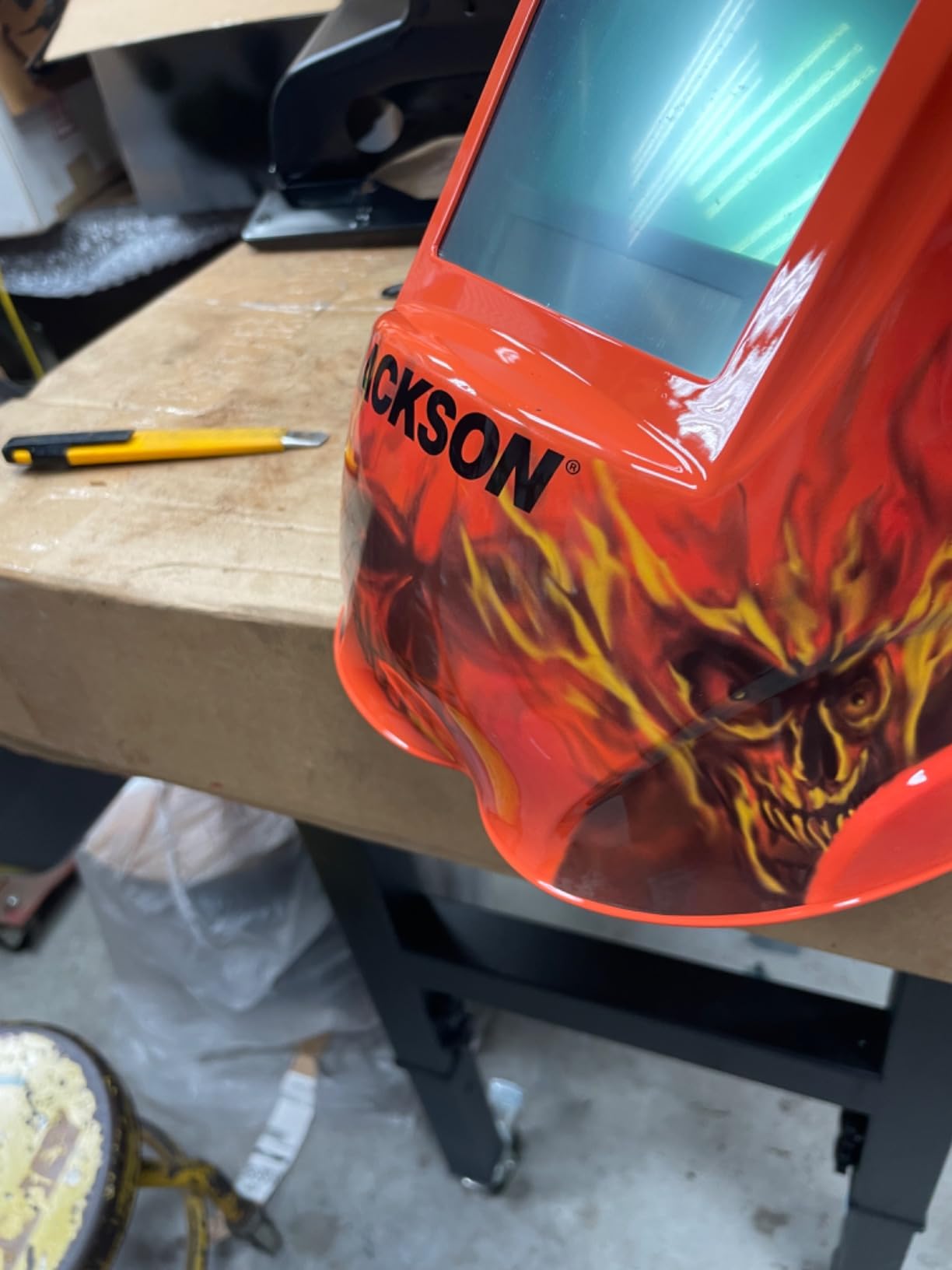
Controls sit inside the helmet, which keeps them away from liquid, spatter and knocks. That is a quiet safety win in a shop where the outside of a helmet takes the punishment. Power is solar with a CR2032 backup battery, and CR2032 cells are cheap and available almost anywhere.
Certification is broad, listing ANSI Z87.1+, CAN/CSA Z94.3 and CE, with a two-year warranty behind it. It is set up for welding, grinding, cutting and carbon arc gouging.
Who the Jackson Safety 47101 suits?
It suits professional welders who are sensitive to helmet weight, and anyone working where spatter and cutting fluid land on the outside of the hood. Interior controls and the extended front both point at shop work rather than weekend garage welding.
It also suits anyone who wants one hood to cover welding, grinding, cutting and gouging, and anyone who prefers to be able to buy a common coin cell battery rather than order a proprietary pack.
Where the 47101 falls short?
This is the lowest-rated pick in the roundup at 4.2 stars, and the feedback is split by unit: several owners report an auto-darkening module failing within weeks or headgear arriving damaged. Test it on arrival and keep the receipt.
The bigger practical problem is parts. Replacement inner lenses are hard to source and are described as made to measure, and the outer lens is awkward to remove while the protective film is on. A hood you cannot get a lens for ages you badly.
How to Choose an Auto-Darkening Welding Helmet?
Most buyers over-index on switching speed, which is the least useful number on the box. UV and IR filtering happens passively in the filter stack and does not depend on electronics, so a helmet with 1/30000 second response and one with 1/25000 second protect your eyes the same way. What the electronics do control is how reliably the lens notices the arc, and that is what you are really buying.
Arc sensors: why the count matters?
An arc sensor is a small photocell that detects the flash of the arc and tells the lens to darken. Two sensors are enough when the arc points straight at you, which covers flat and horizontal work in a lit shop. Four or more sensors matter when the arc is partly hidden, behind your hand, around a pipe or overhead, because two of the sensors can still see it.
So the honest answer to the question that comes up constantly on welding forums is that two sensors are fine if you mostly weld flat, and you want four if you do vertical, overhead or pipe work regularly. The jump from two to four costs very little on this list.
Viewing area: convert the marketing inches
Manufacturers quote the width and height of the window in inches, which sounds comparable but is not. Multiply the two dimensions to get square inches and the differences become obvious. On this list the range runs from roughly 6 square inches on the YESWELDER to 14.34 square inches on the Jackson, with the TOOLIOM at 12.9 square inches.
A wider view means fewer awkward neck positions, easier bead placement and better awareness when the arc is partly hidden. It is the single most useful upgrade you can buy inside this budget.
What does 1/1/1/1 mean on a welding helmet?
The four digits describe optical class: the first is clarity at a straight-on angle, the second is clarity at a 20 degree off-axis angle, the third is colour fidelity, and the fourth is how well the shade holds steady as you move your head. Shade is graded from 1 to 3, with 1 the best, so 1/1/1/1 is the top grade on all four measures.
Seven of our eight picks carry 1/1/1/1, including the budget models. That is the single most reassuring fact for anyone worried that a lower price means a less safe hood, because at this tier optical class is rarely where the money goes. You are paying for sensors, view size, headgear and warranty instead.
Solar power, batteries and the stopped-darkening fix
Solar-plus-battery is the norm in this category, and it causes the most common complaint: a helmet that will not darken. In almost every case the cause is not the electronics but a film of spatter or grinding dust on the sensor windows, or a cover lens that has gone opaque enough to starve the sensors of light.
So before you blame the helmet, take the inner lens out, hold it up to a bright light and check whether you can see clearly through it, then clean the small sensor windows with a dry cloth. Most reported failures resolve after that. Pick a model whose cover lens you can actually replace, because the inner lens is the part that always scratches.
Is shade 10 or 11 better for welding?
Shade 10 suits thinner material and lighter amperage, and it lets you see more detail in the puddle. Shade 11 gives a deeper, more comfortable filter for thicker material, higher amperage and longer sessions. Neither is better in general, because the right shade is set by your material and current, not by preference. Start at shade 10 for thin steel and mill scale, and move up toward 11 or 12 when you are running heavier amperage or welding for hours at a time.
Whatever shade you settle on, verify that the light state is shade 3 or lighter so you can find your work before you strike, and that the dark range reaches shade 13 for stick and gouging.
What you give up by staying under 200 dollars?
Staying below the 200 dollar ceiling costs you a few things: a narrower view than a premium panoramic shell, fewer saved modes, sometimes a shorter warranty, and thinner review history on newer models. It does not cost you optical class, arc sensing or passive UV and IR protection. Nearly every budget pick here carries 1/1/1/1 optics and four or more sensors.
Tiering the market helps. Below roughly 60 dollars you get two sensors, a compact window and thin headgear. Between 60 and 120 dollars you gain larger views, four sensors and included spare lenses. Between 120 and 200 dollars you reach big brand names, two-year warranties and panoramic shells. Anything above that adds industrial-grade comfort and modular headgear rather than a meaningful jump in protection.
How to Test a New Helmet Before You Rely On It?
Run these six checks the day the helmet arrives, well before you need it on a job.
1. Check the marking on the filter or the box against the standard your employer requires, such as ANSI Z87.1 or Z87.1+. If you work under a contract with a compliance clause, this is the step that decides whether the helmet is usable at all.
2. Look at the battery compartment and confirm the coin cell or battery pack is seated in the correct direction. A backwards cell is a common unboxing fault and leaves the helmet dead on first use.
3. Hold the inner lens up to a bright light and look through it. If you cannot see the light source clearly, the lens is scratched or pitted, and you should replace it before welding.
4. Darken the room, then use a flashlight or a phone light to test the sensors. Let the helmet settle, then trigger each sensor in turn with a narrow beam. Any sensor that does not respond is a sensor that will fail when the arc is partly hidden.
5. Turn the helmet on and off at the arc strike to confirm auto on and off behaviour, if the model has it, and cycle through every shade and mode setting while wearing it. Confirm you can reach the controls with a glove on.
6. Wear it for 30 minutes doing ordinary shop tasks and check for headgear slip. If the hood shifts on a nod, tighten the ratchet or pivot before you rely on it, because a shifting hood is what turns a small arc into an arc eye.
Frequently Asked Questions
What is the best affordable auto-darkening welding helmet?
For most people, the YESWELDER LYG-L600A. It carries a 1/1/1/1 optical rating with true color optics, switches in 1/30000 of a second, and has more than 13900 reviews behind it. Owners praise the clarity and the fast response, and the box includes a spare battery plus inner and outer replacement lenses.
What is the best welding helmet for value for money?
The TOOLIOM TL-M800D, because it gives you a 12.9 square inch viewing area with four arc sensors and 1/1/1/1 true color optics. It also includes a replaceable battery and spare inner and outer lenses, which cuts the running cost that usually catches budget buyers.
What are the best helmets under $200?
Our picks are the YESWELDER LYG-L600A for overall balance, the ARCCAPTAIN SUN-5 for four sensors at a budget price, the TOOLIOM TL-M800D for view size, the Hobart 770890 for brand and warranty, the ARCCAPTAIN RL-600LA for panoramic work, the Lincoln Electric K4983-1 for lightweight site work, the ANDELI OPTIM LED for dim shops, and the Jackson Safety 47101 for neck protection.
Is shade 10 or 11 better for welding?
Shade 10 suits thin material and lighter amperage because it shows more detail in the puddle. Shade 11 is deeper and more comfortable for thicker material, higher amperage and long sessions. Pick by material and current rather than preference, and make sure the light state is shade 3 or lighter so you can see before you strike.
Do I need 4 arc sensors on a welding helmet?
Only if you weld out of position often. Two sensors darken reliably when the arc points straight at you, which covers flat and horizontal work in a lit shop. Four or more sensors matter for vertical, overhead and pipe work where the arc is partly hidden, because extra sensors can still detect the flash.
Why does my auto darkening welding helmet stop darkening?
The usual cause is spatter or grinding dust on the sensor windows, or a cover lens that has become too opaque to pass light. Remove the inner lens, hold it up to a bright light, clean the sensor windows with a dry cloth and test again before assuming the electronics have failed.
Which Budget Welding Helmet Should You Buy?
Start with the YESWELDER LYG-L600A if you want one helmet that handles every process at a budget price with proven long-term reliability. Go for the TOOLIOM TL-M800D if seeing more of the workpiece changes how you work, the ARCCAPTAIN SUN-5 if you need four sensors without stepping up, and the Hobart 770890 if a two-year warranty and brand support are worth the premium. The rest of the list covers specific jobs: panoramic shells for out-of-position work, a lightweight shell for site days, and LED lighting for dim shops.
Whatever you pick, run the six checks above on arrival and then use the button below to see the current figure. Prices move, and the category is competitive enough that the difference between a good day and a cheap one is often timing.