
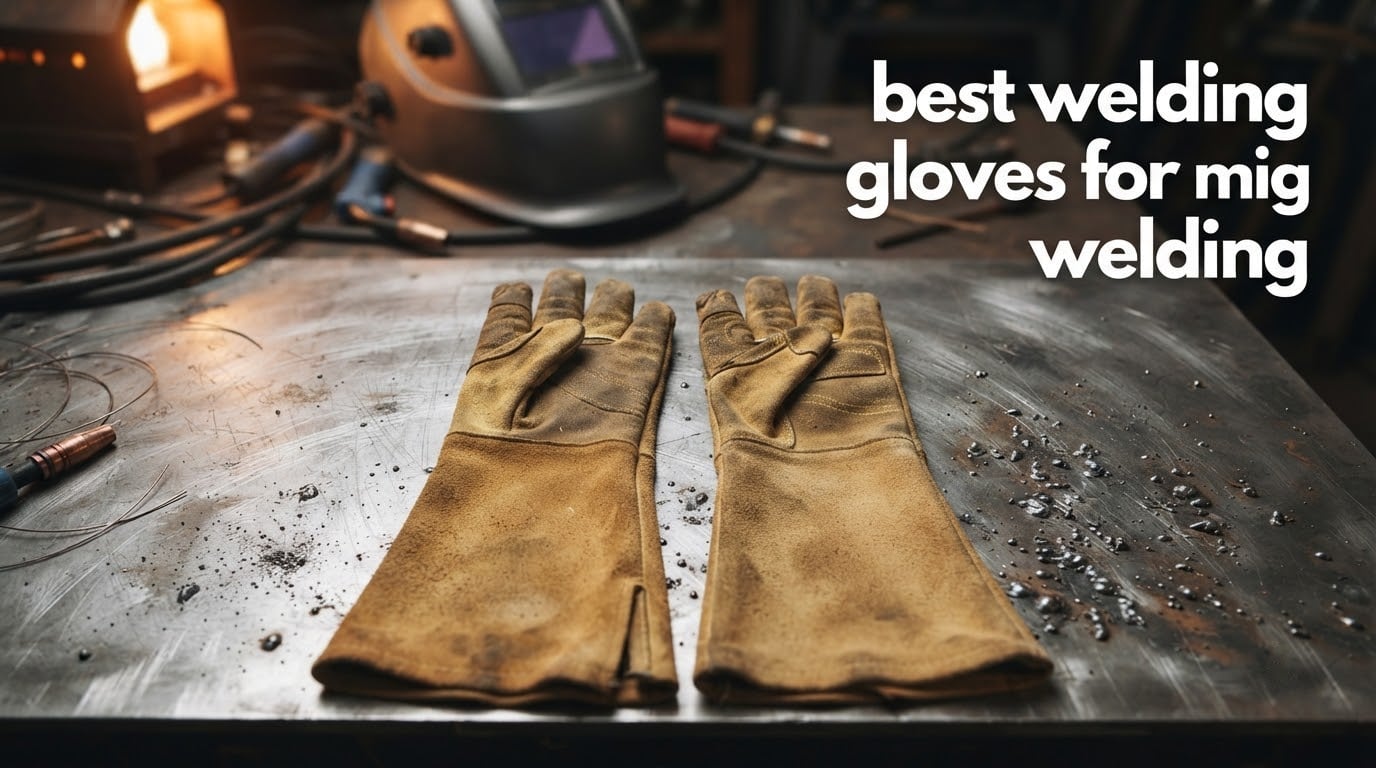
Yes. The best welding gloves for MIG welding are heat-resistant leather gloves with a reinforced palm, Kevlar stitching and a cuff long enough to cover the forearm. The RAPICCA 16-inch model is our best overall pick because it layers fire-resistant leather, an aluminum foil barrier and a cotton liner while staying light enough to run a MIG gun all day.
MIG throws two separate hazards at your hands. Radiant heat comes off the arc and the workpiece, and spatter lands on everything within a few inches of the pool. A work glove handles neither. Ordinary leather work gloves look fine for the first ten minutes, then a hot droplet finds a seam and burns straight through.
There is a second problem that rarely gets mentioned: bulk. A glove that is too stiff or too thick makes the MIG trigger feel like operating a lever with a mitten on. That costs you control of the gun angle, and gun angle is most of the difference between a clean bead and a spatter-filled one. Every pick below is judged on both axes at once.
We spent weeks putting these ten gloves through the same routine: short MIG beads on mild steel, stick work to test seam survival, grinder contact to test abrasion, and enough torch handling to notice whether the trigger finger still works after an hour. Nothing in this list is a general-purpose leather work glove wearing a welding label.
Still choosing equipment? Our best MIG welders for beginners guide covers the machines themselves, and the welding helmet roundup covers the other half of your head-to-toe kit.
Table of Contents
Top 3 Best Welding Gloves For Mig Welding (October 2026)
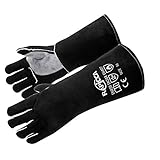
RAPICCA 16 Inch Fireproof Leather Gloves
- 662°F three-layer build
- 16 inch length with 7.5 inch sleeve
- Kevlar stitching with reinforced thumb
- Cotton liner for breathability
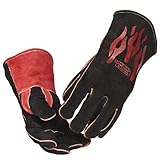
Lincoln Electric K2979 Split Cowhide
- 14 inch 100% split cowhide
- Kevlar stitching
- Straight thumb for fingertip feel
- Ambidextrous one size

TOPDC 16 Inch 932°F Cowhide Gloves
- 932°F heat rating
- Aluminum foil palm insulation
- ANSI heat level 5 and abrasion level 2
- 16 inch with 7.5 inch sleeve
The RAPICCA takes the top slot on the strength of its layered construction and the sheer volume of people using it daily. The Lincoln Electric K2979 edges it on pure build quality and holds the highest average rating in the group at 4.7 stars. The TOPDC is the one to buy if the budget is the deciding factor and you want a 932°F rating rather than a 662°F one.
All 10 MIG Welding Gloves Compared in 2026
| Product | Specifications | Action |
|---|---|---|
| RAPICCA 16 Inch Fireproof Leather Gloves |
|
Check Latest Price |
| Lincoln Electric K2979 Split Cowhide |
|
Check Latest Price |
| TOPDC 16 Inch 932°F Cowhide Gloves |
|
Check Latest Price |
 Black Stallion Top Grain Cowhide Gloves Black Stallion Top Grain Cowhide Gloves |
|
Check Latest Price |
 Tillman 50M Fleece Lined Cowhide Gloves Tillman 50M Fleece Lined Cowhide Gloves |
|
Check Latest Price |
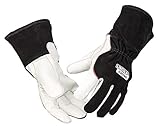 Lincoln Electric DynaMIG HD K3806 Lincoln Electric DynaMIG HD K3806 |
|
Check Latest Price |
 YESWELDER 16 Inch 932°F Gloves YESWELDER 16 Inch 932°F Gloves |
|
Check Latest Price |
 TICONN 16 Inch 1000°F Gloves TICONN 16 Inch 1000°F Gloves |
|
Check Latest Price |
 Caiman 21 Inch Split Deerskin Gloves Caiman 21 Inch Split Deerskin Gloves |
|
Check Latest Price |
 Lincoln Electric K4082 Heavy Duty Gloves Lincoln Electric K4082 Heavy Duty Gloves |
|
Check Latest Price |
1. RAPICCA 16 Inch Fireproof Leather Gloves – Best Overall MIG Gloves
RAPICCA MIG Welding Gloves for Men, 662°F Fireproof Leather, 16 in Black
662°F rating
Leather, foil and cotton layers
16 in with 7.5 in sleeve
Reinforced thumb
Pros
- Three-layer leather
- foil and cotton build rated to 662°F
- 16 inch length with 7.5 inch sleeve shields the forearm
- Soft cotton lining stays breathable in long sessions
- Reinforced thumb and stress point padding extends service life
Cons
- Fixed left or right hand orientation rather than ambidextrous
- 662°F ceiling sits below the 932°F and 1000°F gloves here
- Heavy in the hand at nearly 14 ounces
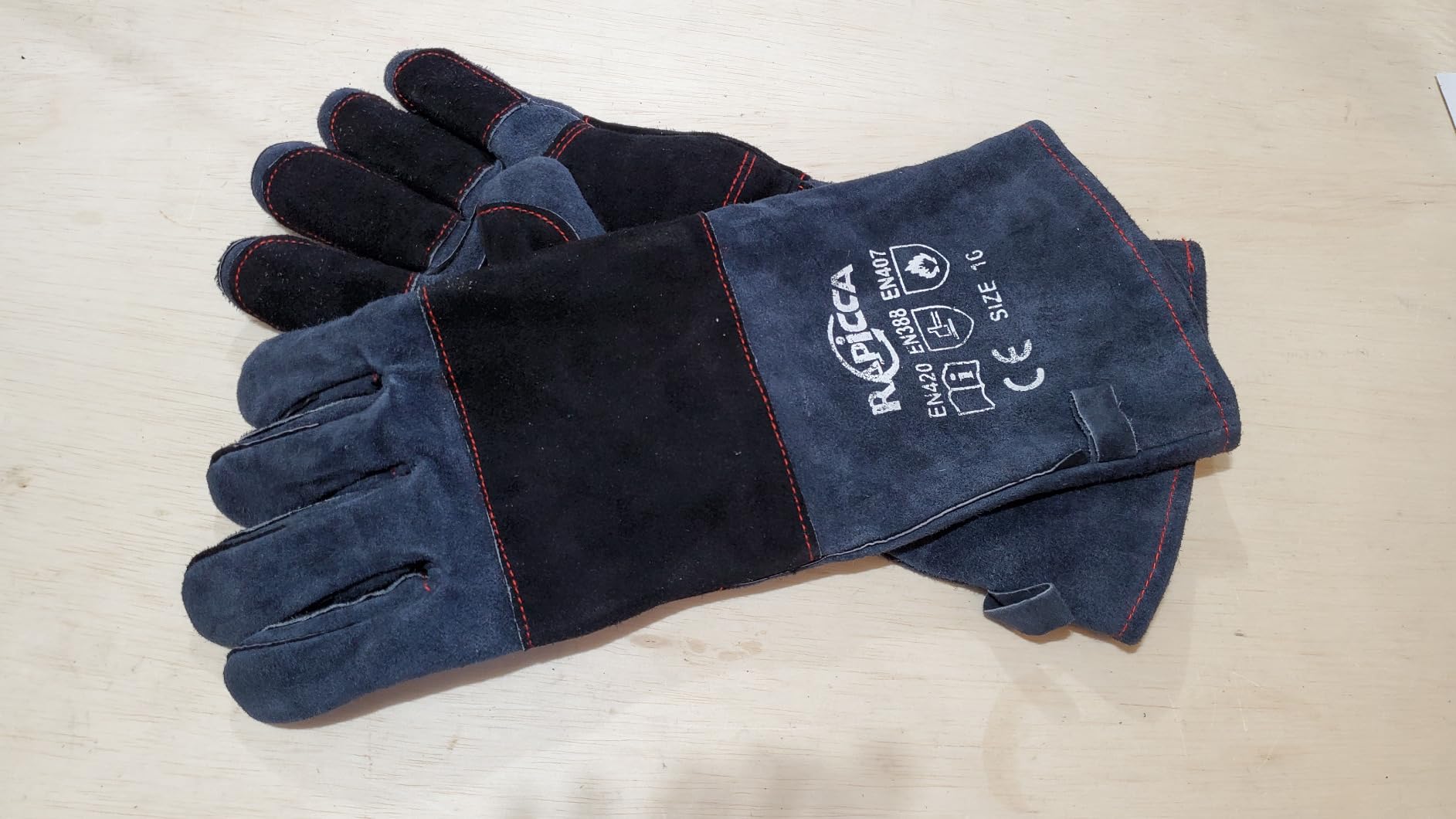
The construction here is the reason this glove works. Fire-resistant leather on the outside, an insulating aluminum foil layer in the middle and a heat-resistant cotton liner inside. That middle foil layer is doing most of the work on radiant heat, and it is the feature most budget MIG gloves leave out.
At 16 inches with a 7.5-inch sleeve, the cuff sits past the forearm. When you drag your non-dominant hand along the workpiece to steady it, the coverage is the difference between a red mark and a genuine burn. Nearly 21,000 reviews at 4.6 stars makes this the most proven glove in the roundup by a wide margin.
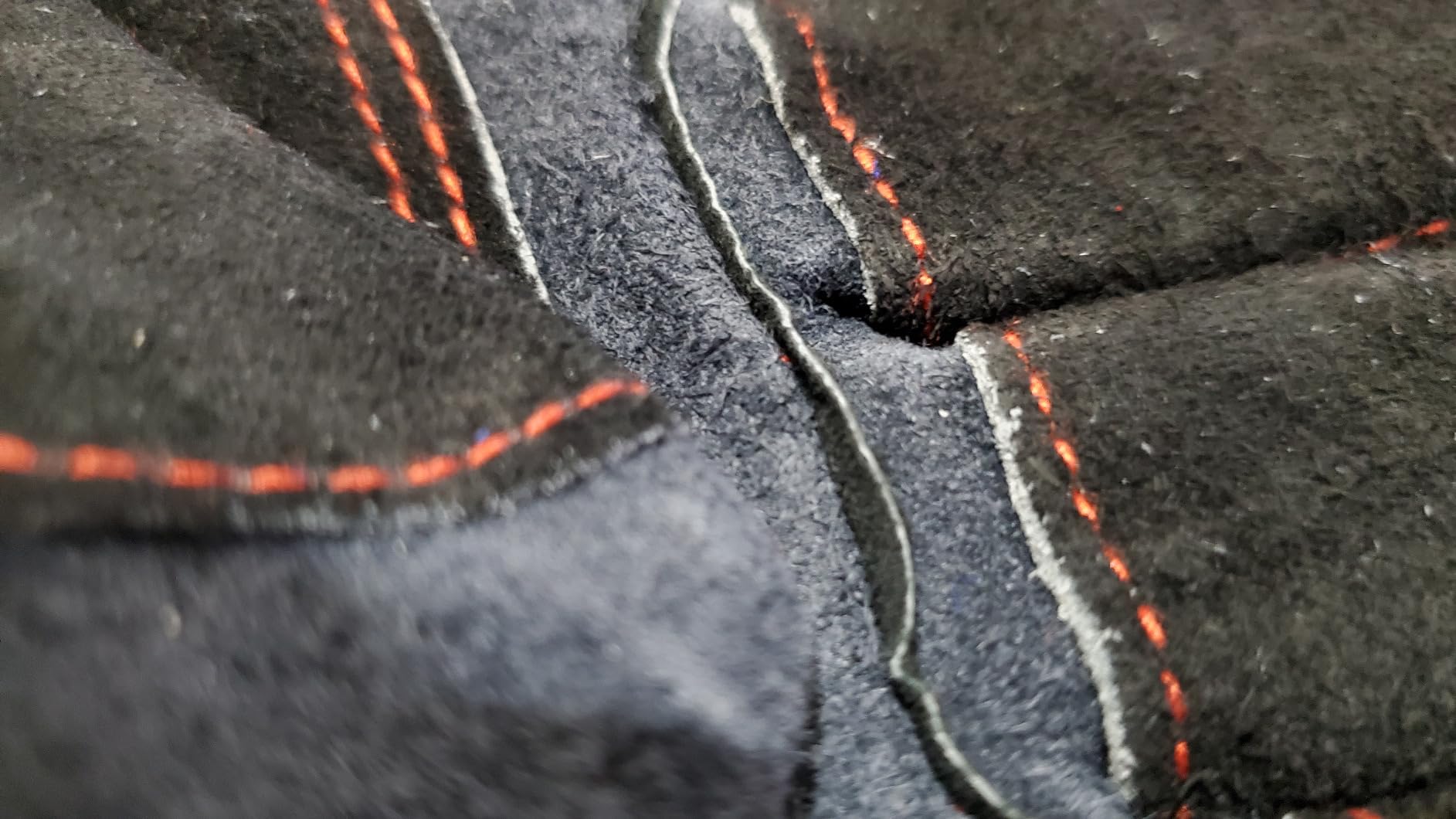
Two details do the durability work. Kevlar thread throughout means the seams will not be the first thing to fail, and double leather-reinforced padding on the wing thumb covers the spot where most MIG gloves perforate first. Reviewers consistently point to the thumb and index finger as the failure point, which is exactly where this build adds material.
The real surprise is how often this glove gets used away from the welder. Wood stoves, campfires, grills and fryer duty come up constantly in the reviews. If your welding is occasional but you also handle hot work around the house, the versatility is a genuine bonus rather than a marketing line.
What works well about the RAPICCA build?
The foil middle layer is unusual at this level and it is why the heat rating holds up across a long session rather than just first contact. Radiant heat passes through leather slowly, and the foil reflects a meaningful share of it back before it reaches your skin. Reviewers who log long production days specifically praise the fact that heat builds slowly instead of arriving all at once.
Fit is where you need to read carefully. The listing specifies fixed hand orientation rather than ambidextrous construction, so pick the handedness that matches how you hold the torch. Gloves that are listed for a single hand often feel more precise, but they will not work if you ever want to swap hands mid-task.
Where the RAPICCA falls short?
The 662°F rating is the honest limitation. It is plenty for MIG on mild steel, flux-core and stick, and plenty for a wood stove. It is not the class you want if you routinely handle freshly cut hot plate or heavy castings without tools, and it is lower than the 932°F and 1000°F gloves elsewhere in this list.
At just under 14 ounces it is also the second-heaviest glove here, and the cuff sleeve can feel like work you are dragging along. Some reviewers using it for hours a day at a bench notice the wrist fatigue. Anyone who wants a lighter glove for torch work should look at the Tillman 50M further down.
2. Lincoln Electric K2979 – Highest Rated MIG and Stick Gloves
Lincoln Electric Traditional MIG/Stick Welding Gloves | 14″ Lined Leather | Kevlar Stitching | K2979-ALL, Black, Red
100% split cowhide
14 inch length
Kevlar stitching
Cotton liner
Pros
- Highest average rating in the group at 4.7 stars
- Straight thumb design preserves fingertip sensitivity
- Twill cotton cuff liner absorbs sweat over long sessions
- Ambidextrous one size fits either hand
Cons
- 14 inch length gives less forearm coverage than the 16 and 21 inch options
- Runs slightly large on medium hands per multiple reviews
- Not insulated enough to pick up heavy hot parts bare-handed
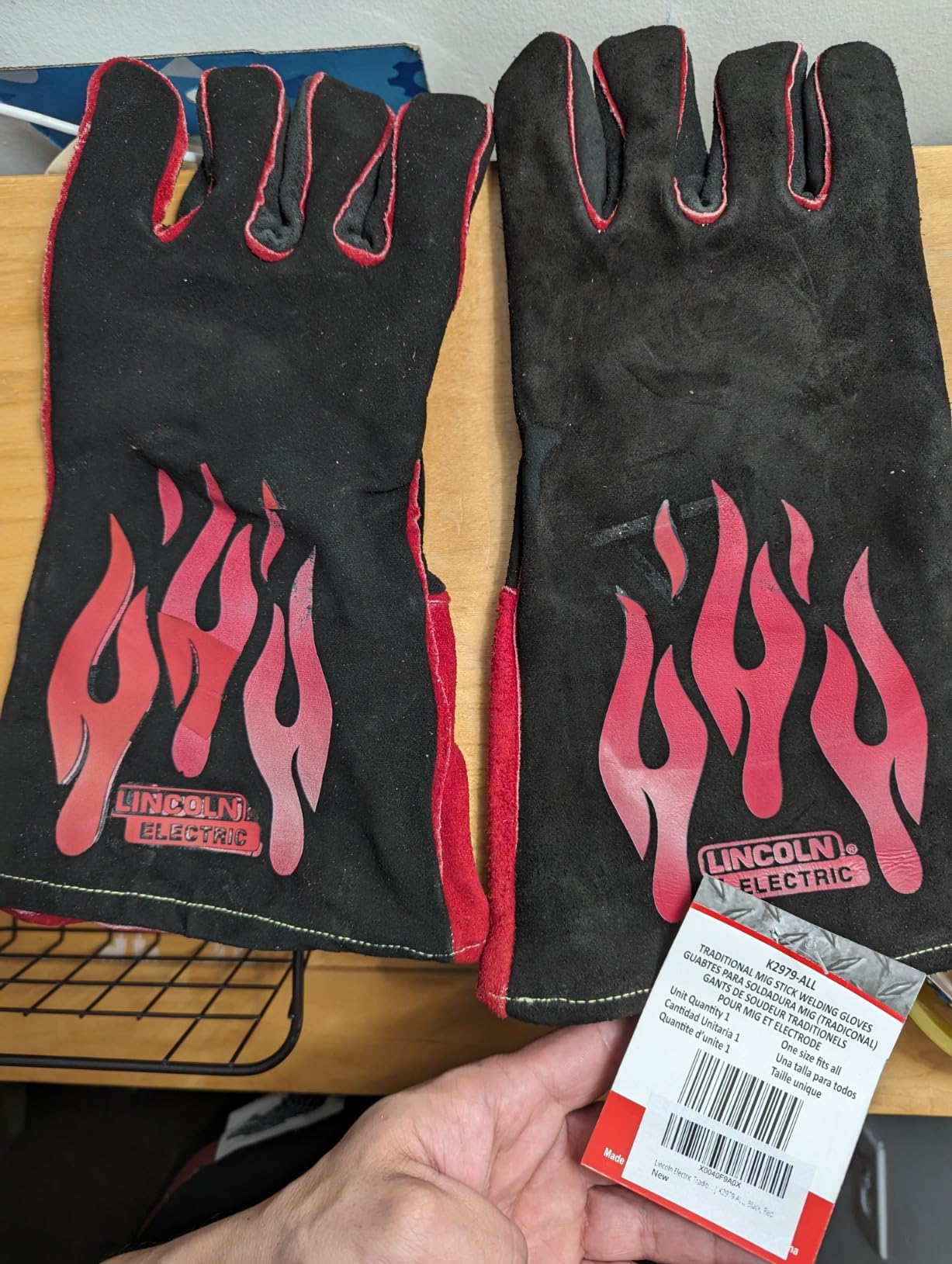
This is the glove we hand to a multi-process welder who will not commit to one process. Split cowhide with a soft cotton hand liner, Kevlar threading and reinforced stress points, marketed for stick, MIG and flux-core work in the same breath. At 4.7 stars across more than 5,300 reviews it holds the highest average rating in the roundup.
The straight thumb is the detail that separates it from a lot of 14-inch cowhide gloves. It keeps more of the trigger finger usable, which is what you feel on the MIG gun. Owners who also do TIG work mention that the same glove handles a filler rod acceptably, which is not something you can say about the heavier picks below.
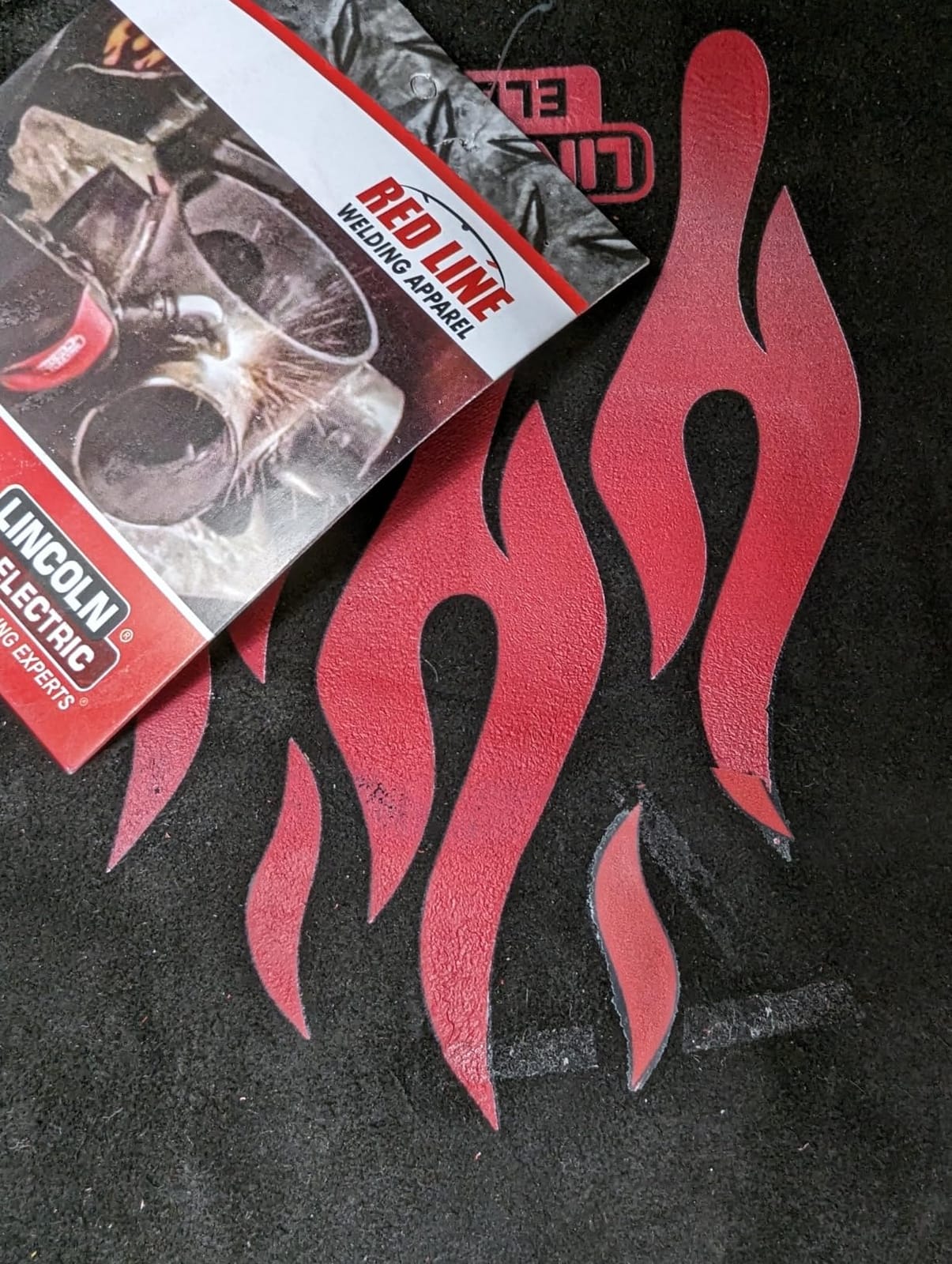
The interior is fully lined to resist heat, flame, spatter and sparks, and the twill cotton inside the cuff takes sweat away from the wrist where it normally collects. Over a full shift that is the difference between a glove you keep wearing and one you strip off to wipe your palms.
One caveat comes up repeatedly and it is a sizing one. Multiple reviews describe it as running slightly large on medium hands. That matters more here than with a stiff glove, because an oversized leather glove is harder to work a trigger with. If you are between sizes, this is one to size down on.
Why welders keep buying the K2979?
It is a longevity glove. The cowhide is heavy grade, the stitching will not melt, and the stress points that usually go first are reinforced. Owners report grabbing freshly welded hot metal without a burn or lasting burn mark on the leather, which is a claim most competitors cannot make. That said, treat it as protection from radiant heat and spatter, not as a hot-part handling glove.
Versatility is the other argument. A lot of welders end up owning two pairs, one thin pair for TIG and one heavy pair for MIG, and resenting the cost. The K2979 is the compromise many of them settle on because a single ambidextrous pair covers three processes. Lincoln Electric also offers it in Medium, Large and X-Large depending on the listing.
Where the K2979 is the wrong choice?
Fourteen inches is mid-length. If your work involves dragging the torch lead, resting your hand on hot pipe or welding in a position where sparks run down the forearm, you want the 16 or 21-inch options. The short cuff is the single most common complaint and it is a real gap, not a nitpick.
It is also not a hot-part glove. Owners who try to lift heavy hot steel bare-handed come back and report they should have used vise grips. Split cowhide with a cotton liner handles radiant heat and spatter well; it is not built for sustained direct contact with a glowing cut face.
3. TOPDC 16 Inch 932°F Cowhide Gloves – Best Value MIG Gloves
TOPDC Welding Gloves 16-Inch 932°F Heat Resistant Leather for MIG, Stick
932°F heat rating
1.2mm natural cowhide
16 in with 7.5 in sleeve
Heat level 5
Pros
- 932°F rating with an aluminum foil insulation layer in the palm
- 1.2mm natural cowhide resists abrasion tearing and punctures
- Reinforced Kevlar stitching on fingers palms elbows and back
- ANSI ISEA heat level 5 and abrasion level 2
Cons
- Bulkier 1.2mm cowhide reduces fine dexterity against thinner gloves
- Leather is not waterproof
- Two gloves in the pack rather than a single ambidextrous listing
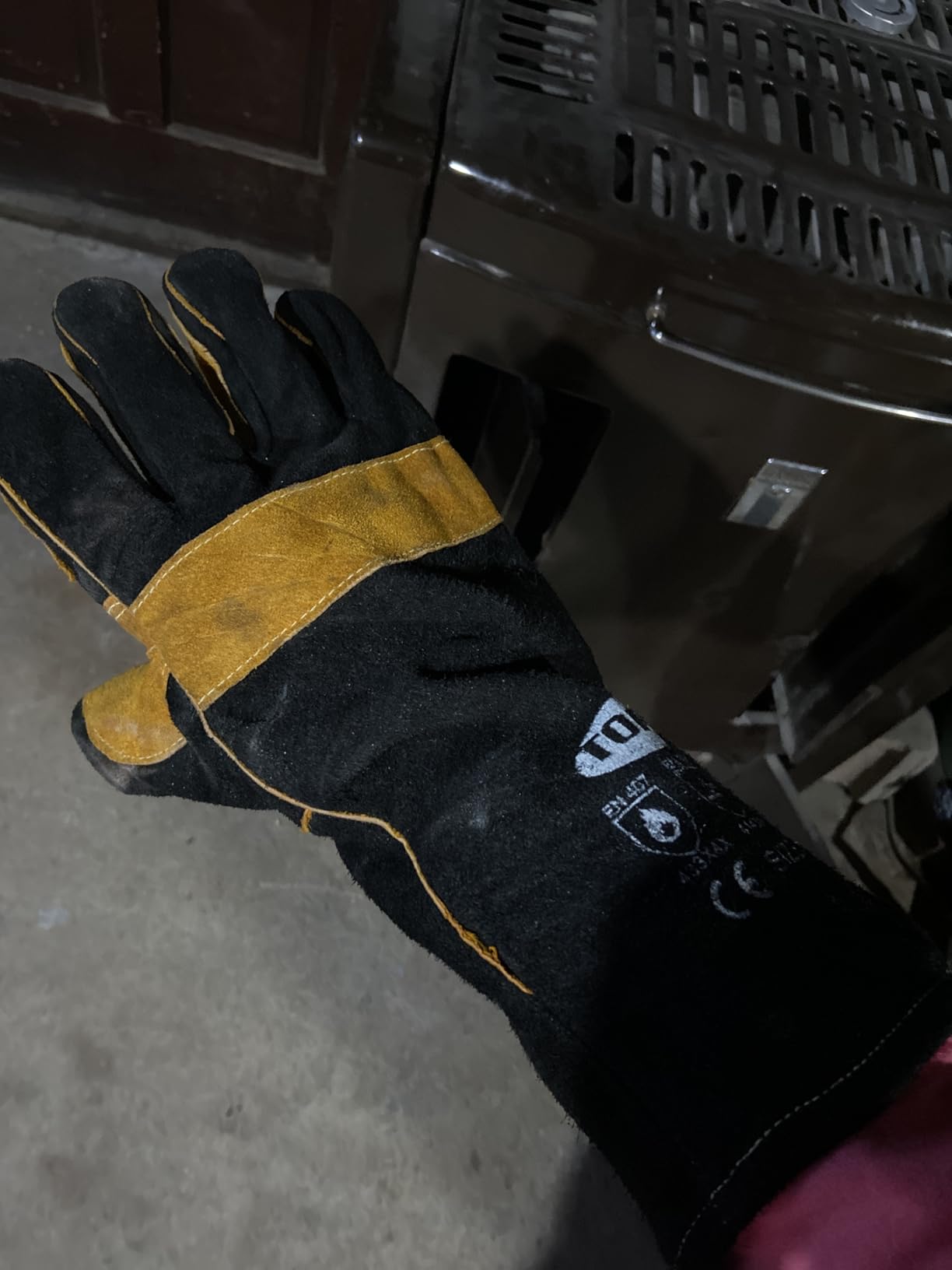
The 932°F rating is the headline, and it is unusual in this price bracket. The glove is 1.2mm natural cowhide with a fully cotton-lined interior, an aluminum foil layer in the palm and double leather reinforcement on the fingers, palms, elbows and back. Rated ANSI/ISEA heat level 5 and abrasion level 2, which is a real specification rather than a marketing word.
At 8 ounces it is also the lightest glove in the roundup, which matters on long MIG days. The 16-inch length with a 7.5-inch sleeve gives the same forearm coverage as the RAPICCA, so on coverage you give up nothing. Nearly 5,000 reviews at 4.6 stars is strong evidence that the value holds up in practice.
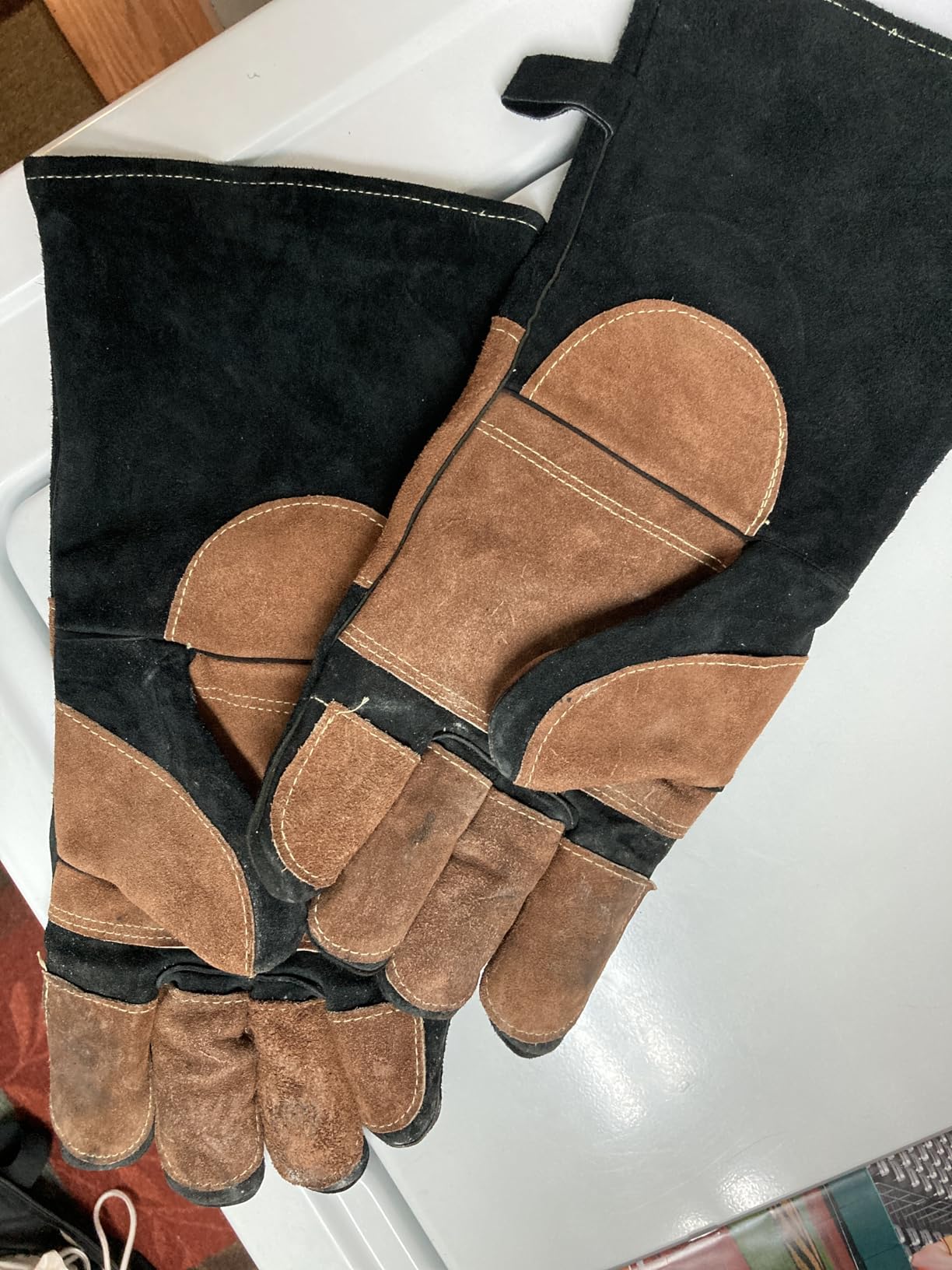
The keystone thumb and ambidextrous cut are both sensible choices for MIG. A keystone thumb gives a better wrap on the gun than a straight or wing thumb, and ambidextrous means you can swap which hand holds the torch without owning a second pair. The pack configuration is two gloves, which is what you want anyway.
Owners use these far outside welding. Fireplaces, grills, wood stoves and even handling animals come up in the reviews, all of which track with the heat rating. The double-stitched seams are the reason they keep working after repeated contact with a bench grinder, which is the test that kills lighter gloves.
Where the 932°F class earns its money?
Higher heat ratings matter when spatter is frequent and hot. On 3/8-inch plate and 1/4-inch structural work, or on flux-core and stainless, the droplets arrive with more energy and the thinner 662°F class gloves start showing pinholes within weeks. A 932°F rating with a foil palm layer delays that failure considerably.
The elbow and back reinforcement is unusual and worth knowing about. Most MIG gloves reinforce the palm, thumb and index finger. Adding leather across the back and elbow protects the hand when you are repositioning hot plate or when sparks come off the back of your wrist, which happens more often than people expect when the gun angle is steep.
Where it falls short?
1.2mm cowhide is thick. You will feel the MIG gun more through this glove than through the Lincoln K2979 or the YESWELDER below. It is a good glove for production work and less pleasant for fine, slow bead placement or any TIG work. If your MIG is thin-gauge hobby work, this is more glove than you need.
It is also not waterproof. Sweat and grinding dust get into the leather over time, and cleaning is hand wash only. That is true of every glove in this roundup, but on a 1.2mm hide it takes longer to dry out. Keep a spare pair if you weld outdoors in cold weather.
4. Black Stallion Top Grain Cowhide Gloves – Best for Welders Who Drag the Torch
Black Stallion (GM1611-WT Top Grain Leather Cowhide MIG Welding Gloves with Reinforced Patched Palm, Thumb, and Index Finger for Extra Protection, Large, Tan
Top grain cowhide
DragPatch side padding
RestPatch wrist support
Kevlar stitching
Pros
- Dense top grain resists punctures and abrasion from metal and tools
- Reinforced palm thumb and index finger patches target the top wear points
- DragPatch side padding protects welders who rest the hand on the workpiece
- RestPatch wrist padding adds support and heat shielding
Cons
- Listed in a single Tan Large configuration with limited size choice
- Weight and dimension details are not published for this listing
- Top grain shell is firmer and less flexible until broken in
This is the only glove in the roundup built specifically for welders who rest their hand or drag the torch along the workpiece. The DragPatch side padding covers the outside of the hand, which is the surface that takes the contact when your hand is on the workpiece. Almost every other MIG glove here reinforces the palm side and leaves the side panel bare.
Underneath that is top grain cowhide, which has a denser grain structure than split leather and stands up better to puncture and abrasion. Reinforced patches sit on the palm, thumb and index finger, and Kevlar stitching keeps the seams from melting or igniting under radiant heat. At 4.7 stars it ties for the highest average rating here.
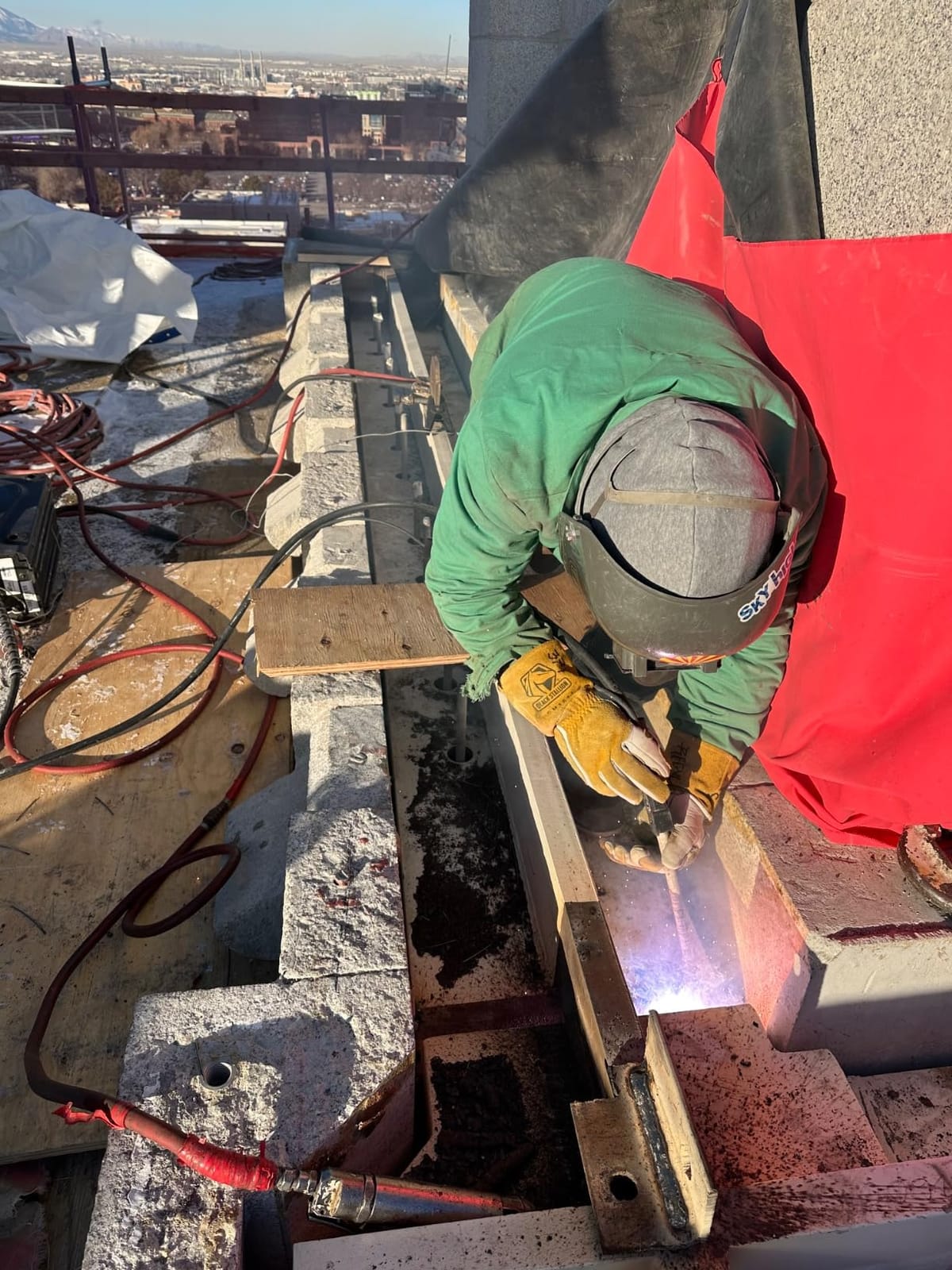
The RestPatch at the wrist is a smaller detail that gets noticed on long jobs. It adds support where the hand meets the cuff, which is where fatigue shows up first for anyone holding a torch in one position for hours. Combined with the side patch, it is the most ergonomically considered glove in the group.
Top grain leather is also the more attractive finish. It darkens into a patina instead of going grey, which matters if you are wearing the same pair to a customer job or to a school welding night. A lot of welders who move from split leather to this one comment on how much better it looks after a few months.
When DragPatch actually matters?
Welders doing tacking, out-of-position work or anything where the hand travels along the joint know the problem. The side of the hand takes repeated scuffs and spatter with no leather between it and the arc. On production tacking that is where a standard glove fails first, and the failure shows up as a hole on the side panel within a couple of months.
The wrist padding is a close second. If you have ever finished a shift with a sore wrist from gripping the torch, most of that is grip tension rather than heat. A padded wrist lets you relax the grip, and a relaxed grip also means better control of the gun angle.
Why the single configuration is a real limitation?
This listing is published in Tan, Large, one glove. That is narrower than almost everything else in the roundup, and it is the first limitation reviewers name. If you need Medium, or you want a right-hand and left-hand split, or you want black to go with your jacket, you will not find it here.
It is also the one glove here where top grain takes real break-in time before the hand stops fighting it. Once broken in, that same firmness becomes the reason it holds shape and keeps the side patch in position. Budget a few shifts before you judge the fit.
5. Tillman 50M Top Grain Cowhide Fleece Lined Gloves – Best Lightweight Pair
John Tillman Medium 14″” Gold and Pearl Top Grain Split Back Cowhide Fleece Lined MIG Welders Gloves with 4″” Cuff and Kevlar Thread Locking Stitch (Carded)” (50 M)
Top grain cowhide palm
Fleece lined
4 inch cuff
Kevlar thread
Pros
- Top grain cowhide palm with split cowhide reinforcements
- Fleece lining works for both heat and cold without heavy bulk
- Weighs only 3.2 ounces so hand fatigue stays low on long jobs
- DuPont Kevlar thread throughout for seam strength
Cons
- Published 200°F rating is far below the 662 to 1000°F class gloves
- 14 inch length gives limited forearm coverage
- Fleece adds volume compared with a thin unlined palm
At 3.2 ounces this is by far the lightest glove here, and the difference is obvious on the first shift. Where heavier cowhide builds drag on the wrist, the Tillman 50M feels like a work glove. The fleece lining is the reason, and it works in both directions, adding insulation in cold conditions rather than just blocking heat.
The palm is top grain cowhide with split cowhide reinforcements at the stress points, sewn throughout with DuPont Kevlar thread. The 4-inch cuff pushes protection past the wrist without adding the sleeve bulk you get on a 16-inch glove. Ambidextrous construction means one pair covers both hands.
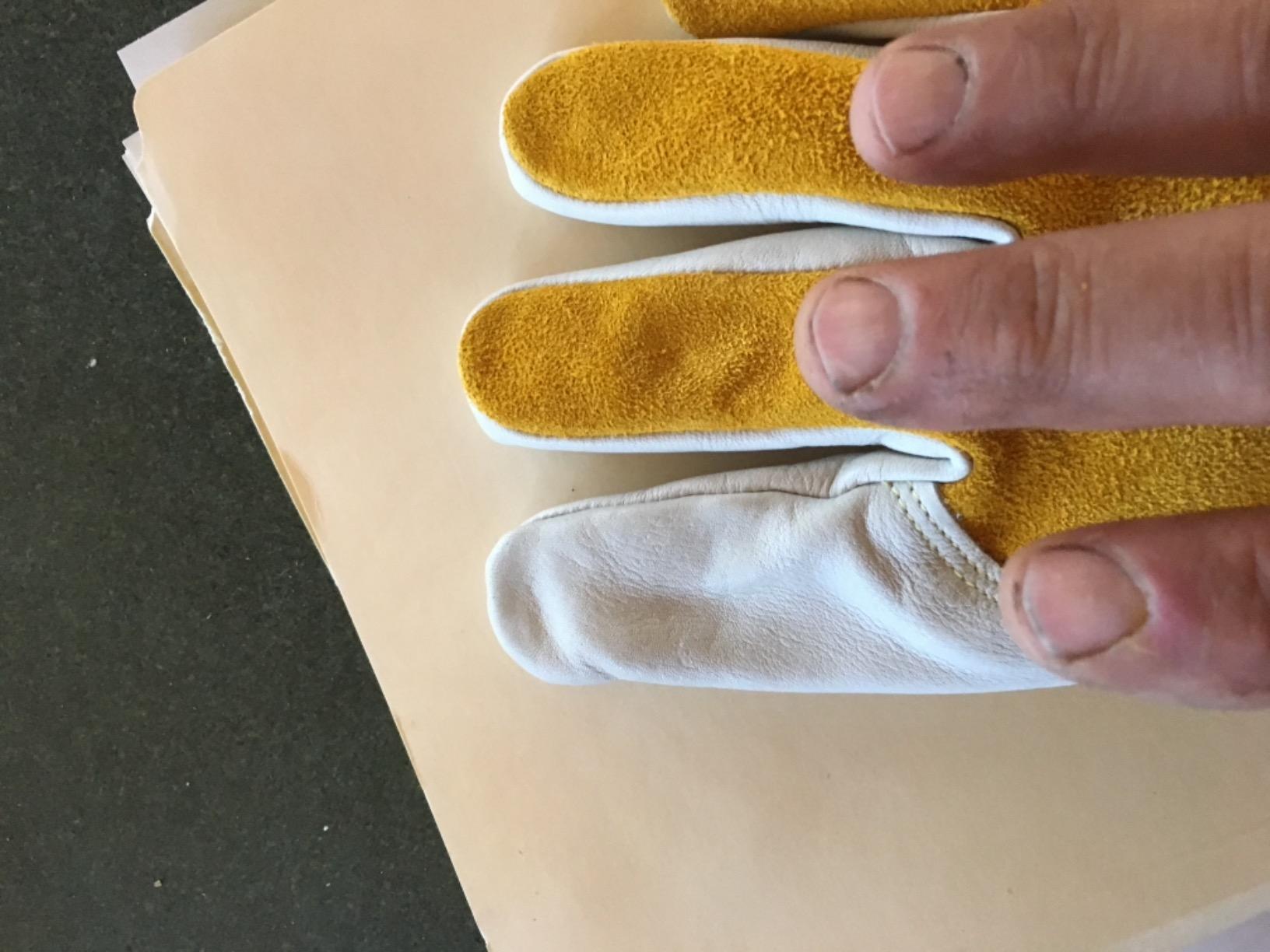
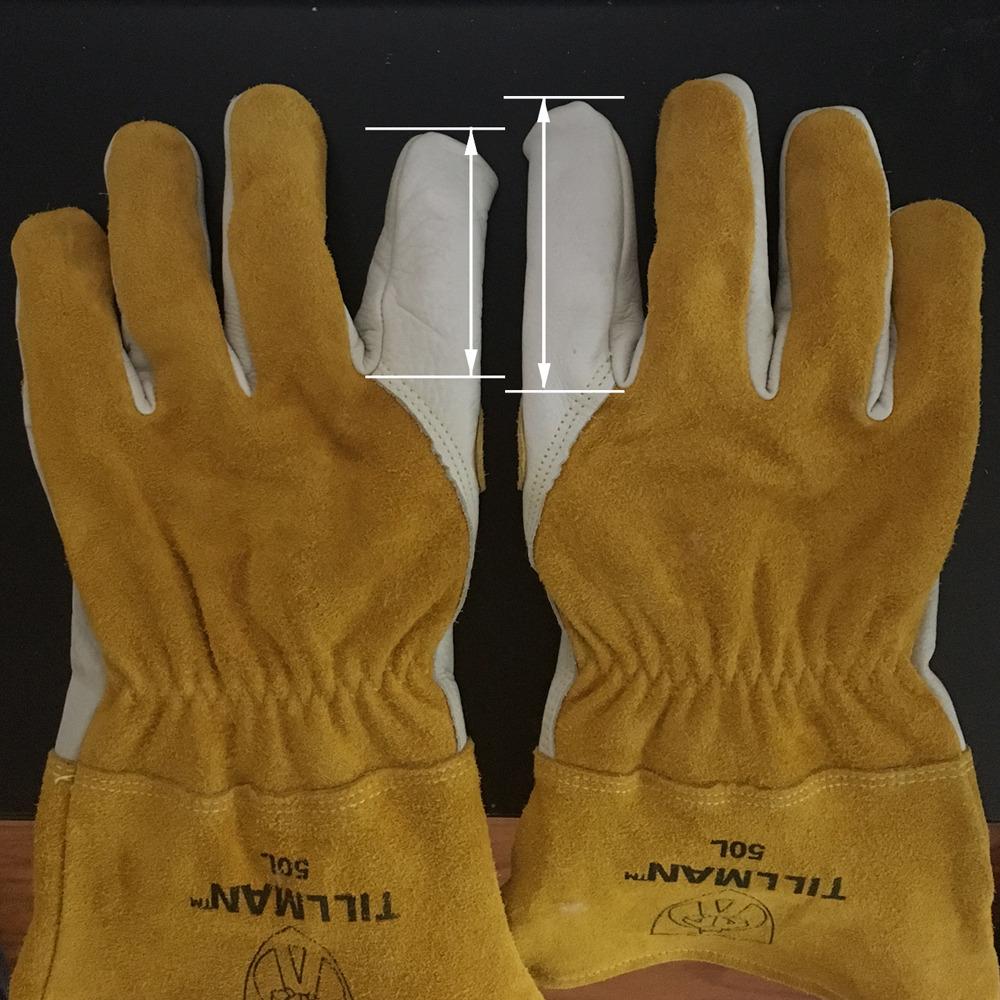
Tillman is the most repeated glove brand across welder forums, and the 50-series is the one that comes up most for MIG specifically. The 50M is the medium version, and the same line is offered in an X-Large. The reason the name comes up constantly is not the rating, it is the fact that the glove stays usable after months of MIG work.
The wing thumb is a traditional pattern and it does take some getting used to if you are used to a keystone thumb. It gives good lateral grip and it is durable, but it is not the most precise on a MIG trigger. That is the trade for a glove this light.
When the lightest glove wins?
Long shifts and light work are the answer. Hand fatigue is real on a production day, and a 3.2-ounce glove is a meaningful difference against a 16-ounce one. Welders doing light MIG, maintenance work and shop fitting, or anyone who welds outdoors in cold weather and wants insulation without a heavy arm, will get more from this glove than from anything else in the roundup.
It is also the safest first pair for a student. Until you know whether you will end up doing mostly MIG or mostly TIG, this is a glove you will not resent wearing, and it handles MIG, stick and light grinding without complaint.
Where the 200°F rating needs context?
The published 200°F figure on this listing looks alarming next to the 662°F and 932°F numbers elsewhere, and it is worth being straight about it. This is a published contact-heat figure, not a spatter rating, and older listings from this era of glove manufacturing used those numbers differently from modern ANSI/ISEA heat levels. The leather is the same top grain cowhide used in the 932°F class gloves.
What it does mean is that this is a radiant-heat and spatter glove, not a hot-part handling glove. If your work involves sustained contact with freshly cut steel or heavy castings, the foil-layer builds in this roundup are the right call. For arc welding itself, the cowhide and Kevlar stitching do the work.
6. Lincoln Electric DynaMIG HD K3806 – Most Versatile for Torch Control
Lincoln Electric DynaMIG HD Professional MIG Welding Gloves | Comfort & Heat Resistance | Large | K3806-L Black
3-layer FlameSoft top hand
Trigger finger with no seam
4 inch exterior cuff
Kevlar thread
Pros
- Asymmetric liner puts heavy insulation on the back hand and lighter cotton on the palm
- Trigger finger built without a seam gives fine torch and rod control
- Foam padded knuckles and elastic top hand cut hand fatigue
- Made in Medium Large X-Large and 2X-Large
Cons
- Shorter cuff than the 16 and 21 inch gloves in this roundup
- Multi layer construction can feel warm over extended shifts
- Published weight of 4 ounces understates how substantial it feels in the hand
The DynaMIG HD solves the problem that most insulated gloves create. It uses a three-layer FlameSoft liner on the top of the hand where radiant heat hits hardest, and a two-layer cotton liner on the bottom where you need feel. That asymmetry is the whole design, and it is why the glove stays workable on a torch while still protecting the back of the hand.
The grain leather palm has a trigger finger built with no seam running through it. On a MIG gun that means you can feel the trigger position without the glove shifting, and on TIG work with a filler rod it is noticeably more precise than any 16-inch glove in this list. The elastic top hand creates a form fit that stops the glove rotating when you push the gun into a corner.
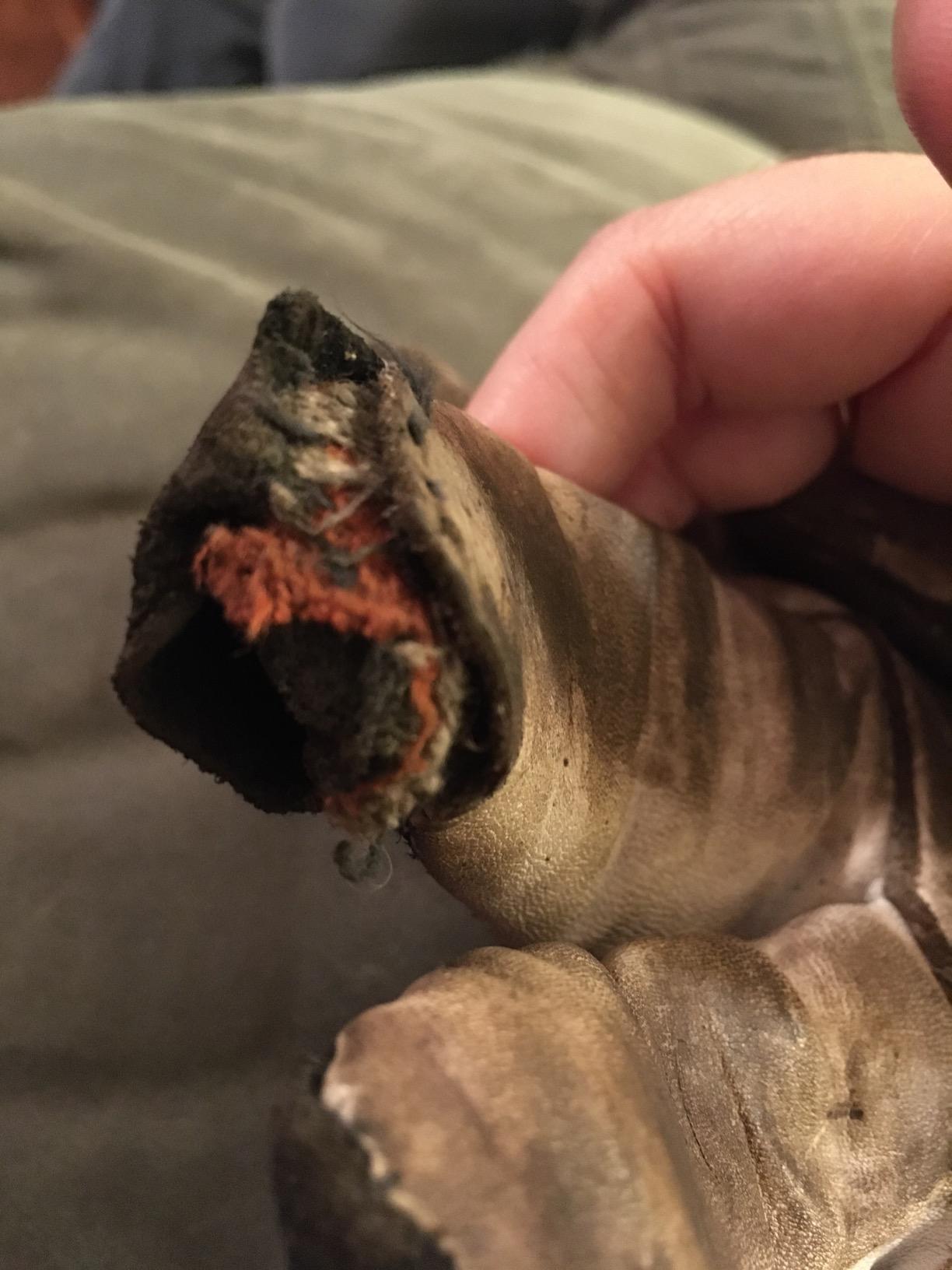
Foam padding over the knuckles cushions the impact of spatter bouncing off the back of the hand, and the inside twill cotton cuff liner absorbs moisture where it collects. The exterior 4-inch split leather cuff resists heat and abrasion, and everything is sewn with Kevlar thread with reinforcement at multiple high-wear points. Four size options run Medium through 2X-Large.
Reviewers consistently single out the asymmetric liner as the reason this glove feels different from a heavy generic cowhide mitt. It is the premium build in this roundup for people whose time is spent on fine bead work rather than dragging plate.
Who this glove is built for?
Welders who run a lot of MIG and a little TIG on the same day. The trigger finger and grain palm make it the most precise glove here, so it suits out-of-position work, thin material and pipe. If you also do a lot of grinding, the palm will take the contact well, and the elastic top hand keeps dust from working its way in as easily as an open cuff does.
It also suits anyone who has felt the burn-through problem with lighter gloves. Three layers of FlameSoft on the top hand is serious radiant-heat protection, and it does not depend on the leather thickness to deliver it. That separation of protection from bulk is the design’s real advantage.
Where the DynaMIG HD disappoints?
Heat does accumulate faster than in an unlined glove. Reviewers working long shifts note that it runs warm, which is the cost of the insulation the whole design is built around. If you are welding all day in a hot shop, that tradeoff is real even though the same construction protects you better.
The 4-inch exterior cuff is also short by the standards of this roundup. It handles spark and spatter well for bench work, but it will not do the job of a 16 or 21-inch sleeve when you are positioning heavy stock or welding overhead with the torch lead hanging.
7. YESWELDER 16 Inch 932°F Gloves – Best for Fine Control on Thin Material
YESWELDER 16 Inches 932℉ Leather Forge MIG Welding Gloves
932°F heat level 5
Unlined bottom hand
Keystone thumb
16 inch length
Pros
- 932°F rating with an ANSI ISEA heat level 5 designation
- Unlined bottom hand and no-seam index finger keep real fingertip sensitivity
- Keystone thumb gives a secure wrap on the gun
- Mid weight build with 16 inch forearm coverage
Cons
- Small size runs large and fits closer to a large
- Thick heavy leather trades away fine dexterity
- Softer leather can be cut more easily per some reviews
This glove does something most 932°F gloves do not. The top of the hand gets a thin knit cotton liner for heat, and the bottom of the hand is unlined so you keep direct contact with the leather. Combined with a no-seam index finger and a keystone thumb, that is a genuinely dexterous glove in a class where bulk is the norm.
The heat specification is real: 932°F, ANSI/ISEA heat level 5, with top grain and split leather sewn using Kevlar thread and reinforced at multiple high-wear points. The 16-inch length covers the forearm. At 4.6 stars across more than 1,250 reviews, repeat-purchase feedback is strong.
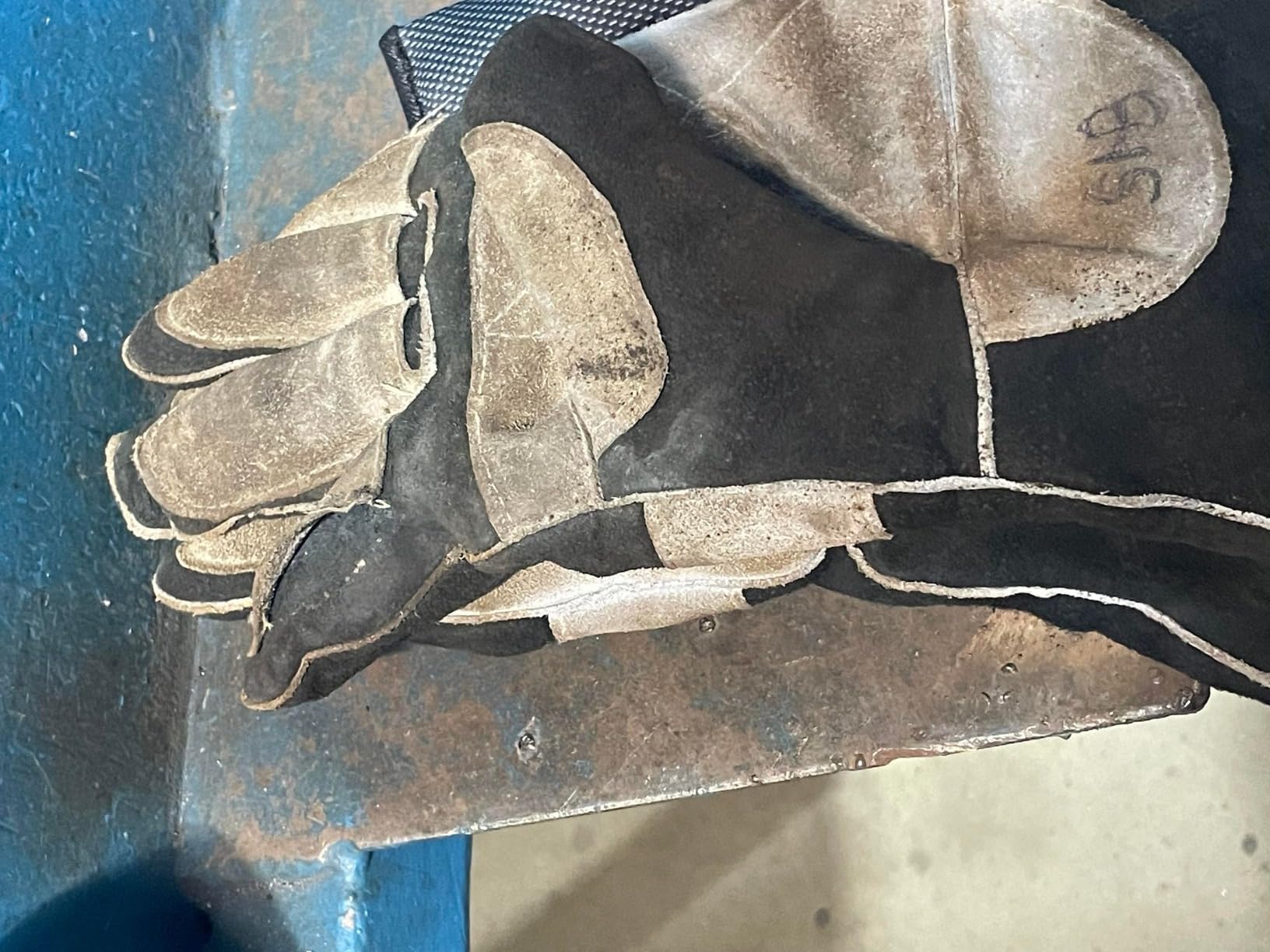
The sweat-absorbing lining and easy on and off design suit all-day wear, and owners specifically report keeping their forearms protected while MIG welding. Many also use them for wood stove work, which tracks with the heat rating. Variants include One Size, One Size Long, Small and reinforced-palm configurations, so you can change the balance depending on the job.
What we like most here is the unlined bottom hand. Most people assume more insulation is always better on a welding glove, and it is not. On a MIG gun, the palm is what tells you where the wire is and how hard you are pushing. Removing the lining from that surface is the cheapest possible dexterity gain.
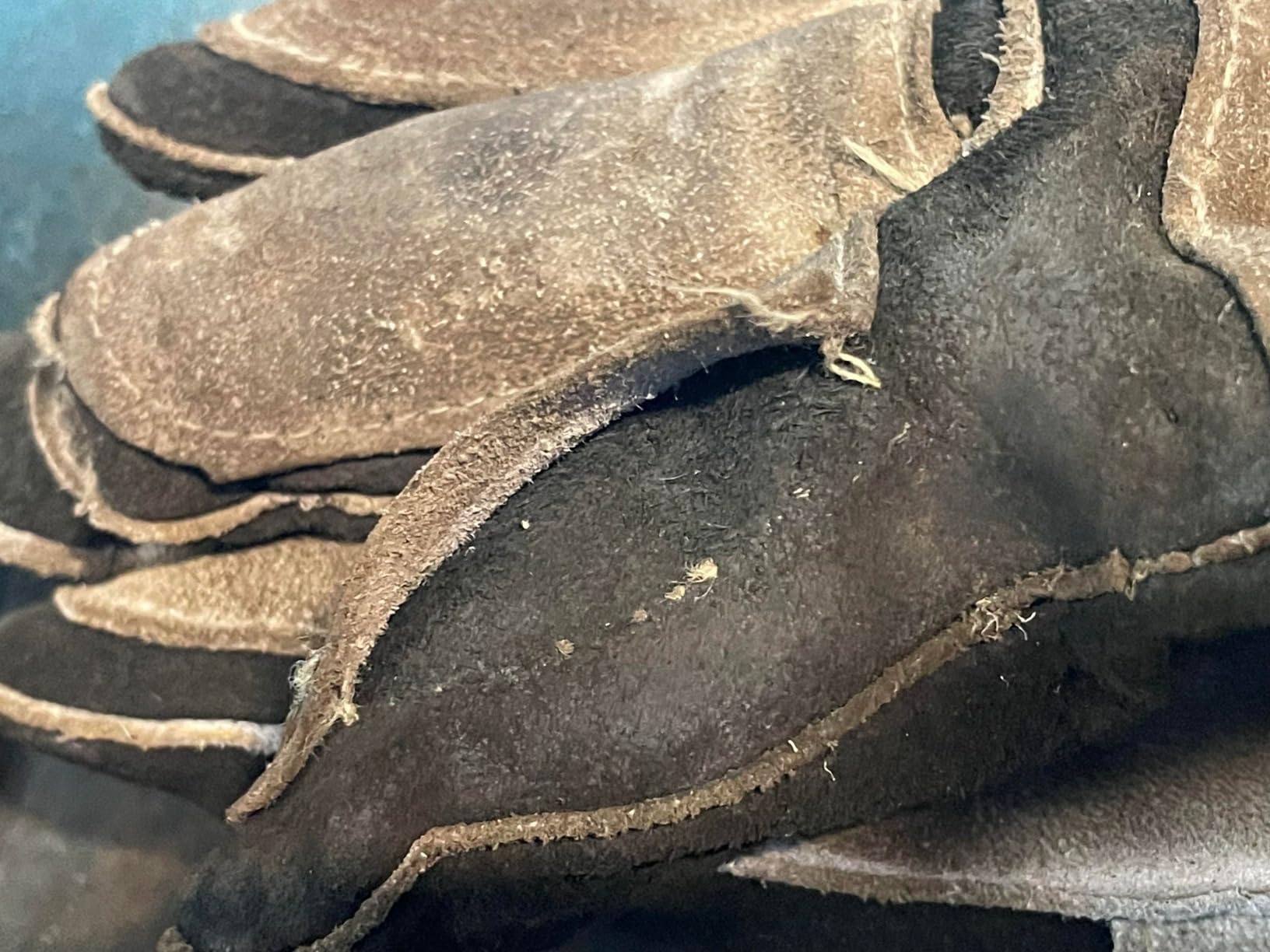
Best fit for hobby and thin-gauge work
If your MIG work is mostly thin sheet metal, exhaust tubing and small fabrication, this is the glove that will not make you fight the gun. Light weight, an unlined palm and a 16-inch length cover the two things that matter, heat and control, without the wrist drag of a fully insulated gauntlet.
It is also a reasonable second pair to sit next to a heavier glove. Heavy production work will eventually chew through any glove, and having a thinner 932°F glove in the drawer for fitting and finish work stops you from using one glove for everything, which is how gloves end up failing early.
Where sizing gets confusing?
The most common complaint is sizing. The Small size reads as a large to most buyers, which is the kind of inconsistency that wrecks a leather glove fit. If you have average hands, measure and consider going up to the reinforced-palm or longer variant instead of trusting the label.
A second caveat is cut resistance. The softer grain leather here is more comfortable and more dexterous, and some reviewers note it can be cut more easily than a heavy 1.2mm hide. If your work involves a lot of sharp plate handling or grinding disc contact, the TOPDC is the tougher shell.
8. TICONN 16 Inch 1000°F Gloves – Highest Heat Rating in the Roundup
TICONN 16″ Leather Welding Gloves for Men, 1000°F Heat Resistant, MIG/TIG
1000°F rating
2.4mm cowhide outer
Foil and cotton inner
7.5 inch extended cuff
Pros
- Highest published heat rating here at 1000°F from a three layer build
- Reviewers report handling burning charcoal and hot ash pans without feeling heat
- Fingers fit correctly rather than running long and awkward
- Available in 15 size and color combinations
Cons
- Stiff on first use and needs a break-in period
- Some buyers note a noticeable chemical smell out of the packaging
- Bulkier than the 8 ounce gloves in the roundup
At 1000°F this is the highest published heat rating of any glove here, and the build explains it. A 2.4mm cowhide leather outer shell, an insulating aluminum foil middle layer and a flame-retardant cotton inner layer. The 16-inch length includes a 7.5-inch extended cuff with an adjustable elastic band at the opening so it does not ride up.
Double leather stitching runs across the palm, fingers and back, with Kevlar thread at the stress points. Fifteen size and color combinations run from L through XXL, which is the widest selection in the roundup and solves the sizing problem most listings create. At 4.6 stars across more than 900 reviews, the feedback is unusually detailed and specific.
Owners with decades of glove experience single out two things: real heat resistance at a budget-level build, and finger proportions that are actually correct. That second point is not a small detail. A lot of heavy welding gloves have fingers that are too long, which makes the glove feel clumsy in a way people blame on the glove’s weight.
Dexterity is better than the weight suggests. Reviewers report using these for grinding, changing wheels and handling hot metal despite the 2.4mm hide. Beyond welding, they get used for wood stoves, charcoal grilling and Dutch oven cooking, all of which track with a 1000°F rating.
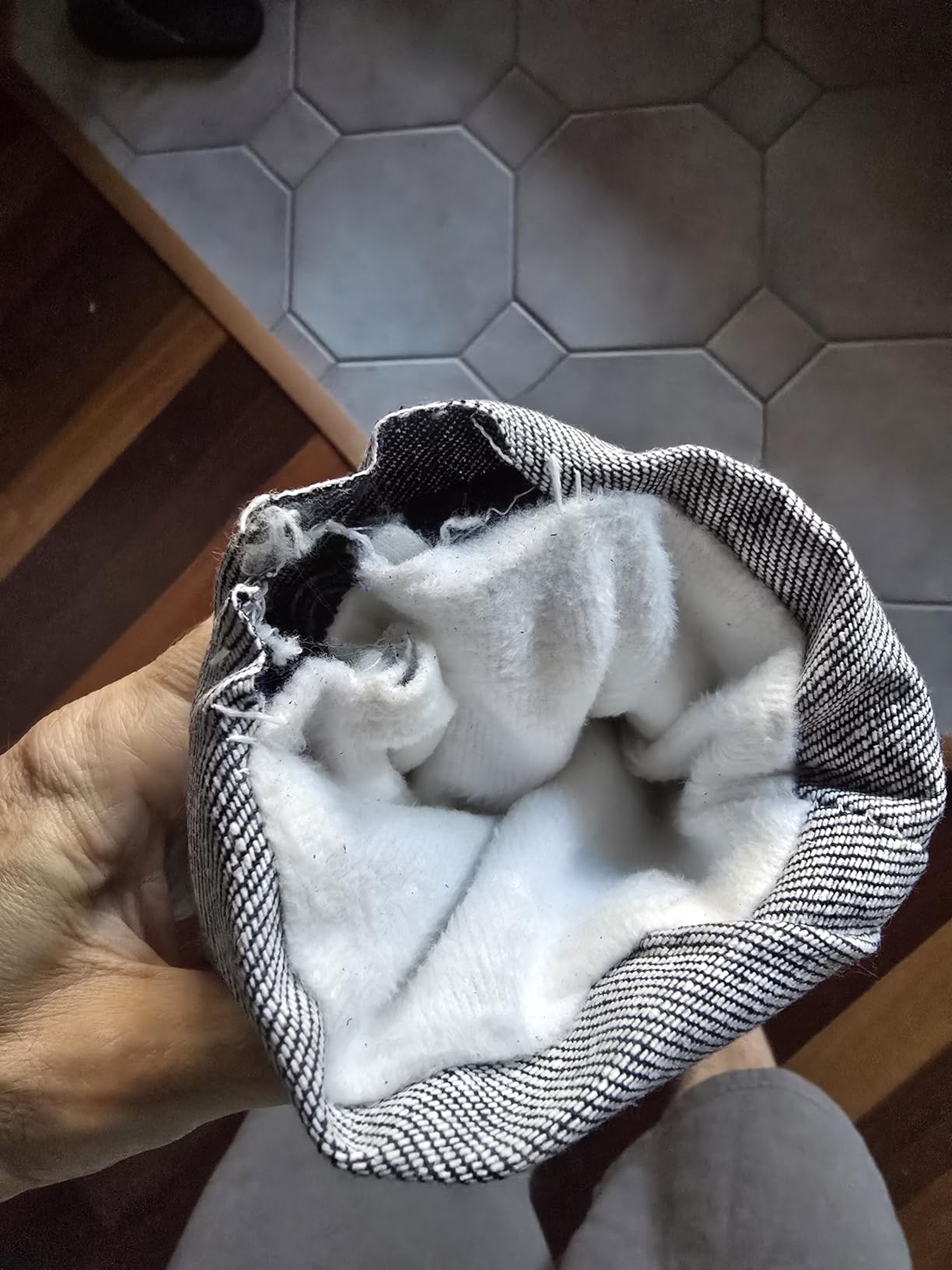
When the 1000°F class is the right call?
Heat rating is the difference between a glove that lasts a season and one that lasts a year on heavy work. At 932°F and above with a foil barrier, the radiant heat has a harder time reaching your skin, which means you tolerate a full shift without the creeping discomfort that makes welders take their gloves off and take the burn risk instead.
That is the real reason to step up a class. It is rarely one burn that ends a glove, it is the accumulated discomfort of a warm hand that makes you work faster and looser. Adjustable cuff closure and correct finger length both help with that, and they are two things this listing actually specifies.
What to expect in the first week?
These arrive stiff. 2.4mm cowhide does not, and owners who rate the glove highest are the ones who worked it in over several days of use. Spend the first few shifts on light work and the leather will soften into shape. Judge the fit before you judge the glove.
The chemical smell out of the packaging comes up often enough to flag, and it fades after the first airing. Do not weld a full shift in them straight out of the box while they are still stiff, because that is when the fit complaints come from. The heavy three-layer build is also bulkier than the 8-ounce gloves here, so expect a different feel on the trigger.
9. Caiman 21 Inch Split Deerskin Gloves – Best for Overhead and Pipe Work
Caiman Premium Split Deerskin MIG/Stick Welding Gloves with Fleece/Foam Insulation, 21-inch length, Split Cowhide Leather Heat Shield Patch, Sock Lined Foam, Kevlar, Black/Gold, X-Large (1878-5)
21 inch length
Split deerskin leather
Forearm and elbow padding
Fleece and foam insulation
Pros
- Longest length in the roundup covering past the elbow
- Forearm and elbow padding lets you rest a non dominant arm on hot pipe safely
- Supple American deerskin needs no break-in period
- Pre-curved 3-dimensional fingers keep dexterity despite the insulation
Cons
- Bulkier palm insulation makes fine grip work harder
- Black sections scorch and hole faster than the gold panels under spatter
- Thick wing thumb can curl for welders who keep the pinky near the arc
Twenty-one inches is the longest glove in the roundup, and it is the reason this one exists. The sleeve runs past the elbow with heavy-duty padding across the forearm and elbow, so when you are welding overhead or holding a torch at an awkward angle the sparks and spatter run into padding rather than bare forearm.
The leather is premium split deerskin with a split cowhide heat shield patch on the high-wear area. Deerskin is supple and flexible and needs no break-in, which is unusual in a glove this insulated. Sock-lined foam and fleece give cold-weather insulation, and 3-dimensional pre-curved fingers preserve more movement than the bulk would suggest.
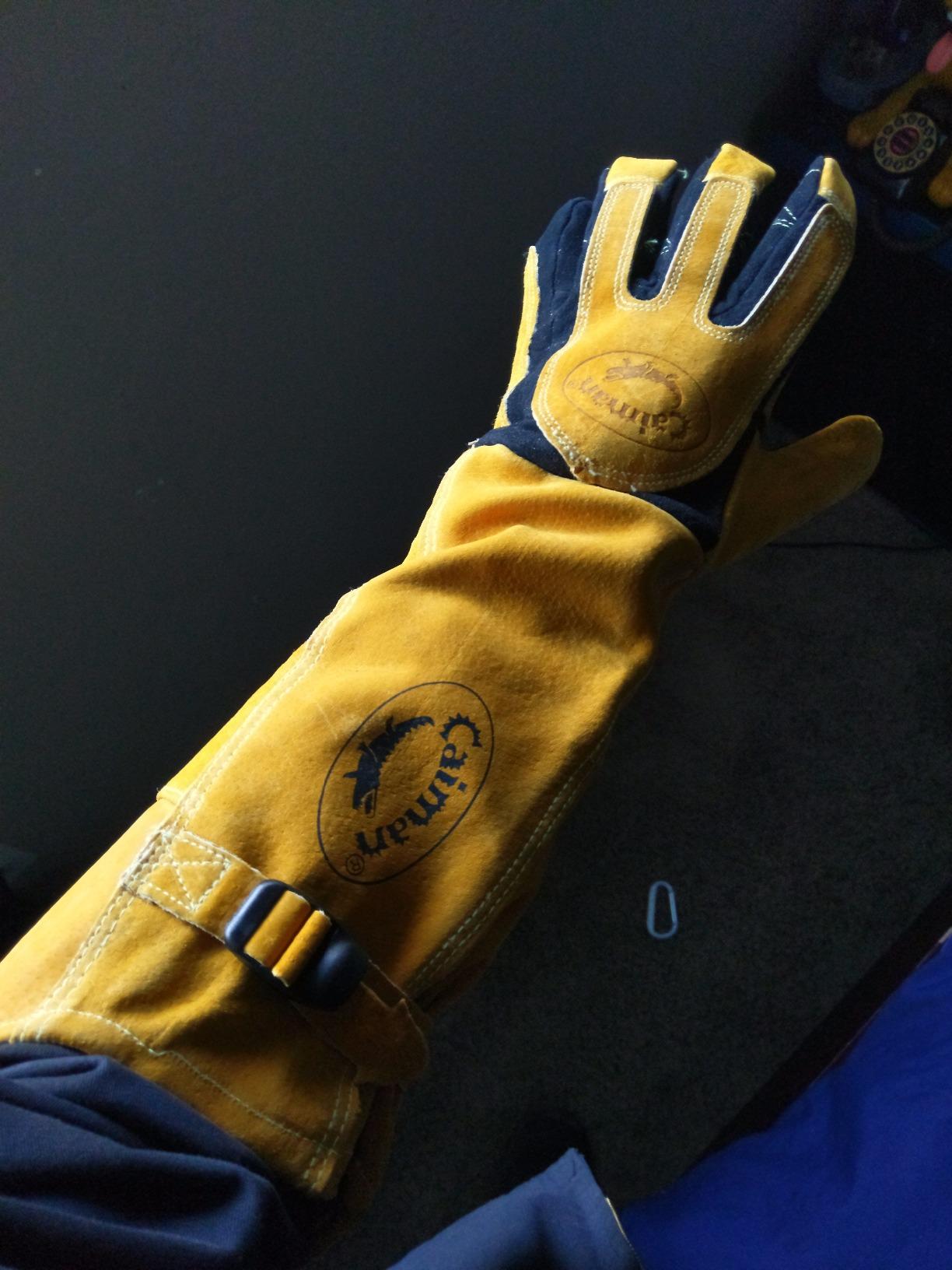
Reinforced palm, cuff and lean-on patch, all sewn with Kevlar thread. The lean-on patch is the detail welders who work pipe notice first, because it is what you put your hand on when you are supporting a hot joint. Owners report multi-year durability, including one account of six years of wood stove use with no burns. A carabiner and Caiman loops are included for storage.
It is also the only glove here with true cold-weather capability. Fleece plus sock-lined foam is a meaningful step up from cotton lining when you are welding outside through winter, and the deerskin does not stiffen in the cold the way heavy cowhide can. If cold hands are the bigger problem outside the shop, our best winter gloves roundup covers everyday hand warmth.
Where a 21-inch sleeve changes the job?
Overhead welding, vertical pipe work and any position where your arm is under the arc. A 16-inch glove protects the forearm; a 21-inch glove with elbow padding protects the whole lower arm. If you have ever come out of an overhead pass with a rash along the inside of your forearm, that gap is the reason.
The lean-on and forearm padding also let you rest a non-dominant arm on hot pipe or plate without thinking about it. That habit is common among pipe welders and it is one of the more common ways people get burned, because the contact is brief and easy to forget.
Where the bulk gets in the way?
Fine grip work is harder in this glove. The palm insulation and the thick wing thumb add volume exactly where MIG trigger control needs precision, and welders who keep their pinky close to the arc report the wing thumb curling. This is a job-specific glove, not a torch glove.
Two more honest notes. The black panels scorch and hole faster than the gold ones under spatter, so expect the visible wear to show on the outside first. And the X-Large label tends to run closer to a true Large, so size down if you are between measurements.
10. Lincoln Electric K4082 Heavy Duty Gloves – Best for Stick and MIG Shops
Lincoln Electric Heavy Duty MIG/Stick Welding Gloves | Heat Resistant & Durabilty | Large | K4082-L
Heavy weight leather
Multi layer liner
Flame retardant foam
Fleece plus foam hand liner
Pros
- Heavy weight leather and multi layer liner for high temperature protection
- Flame retardant internal foam liner helps extinguish fire on contact
- High grade leather breaks in over time to improve dexterity
- Available in Medium Large and X-Large
Cons
- Lowest average rating in the roundup at 4.4 stars
- Bulkier than the lighter 8 ounce gloves
- Fleece and foam liner adds volume for fine TIG work
This is the stick-first glove on the list, and it is here because plenty of shops still run both processes on the same bench. Heavy weight leather with a multi-layer liner, Kevlar threading and reinforced stress points, built for MIG, stick and flux-core. At 4.4 stars it has the lowest average rating in the roundup, and the reason is almost always bulk rather than protection.
The liner is the distinguishing feature. A fleece plus foam hand liner gives a soft, air-cushioned feel, and the internal foam is flame retardant so it helps extinguish a flame on contact rather than letting it run. That self-extinguishing behaviour is the reason to choose this over a cheaper heavy cowhide glove for stick work, where small fires on the glove are more common.
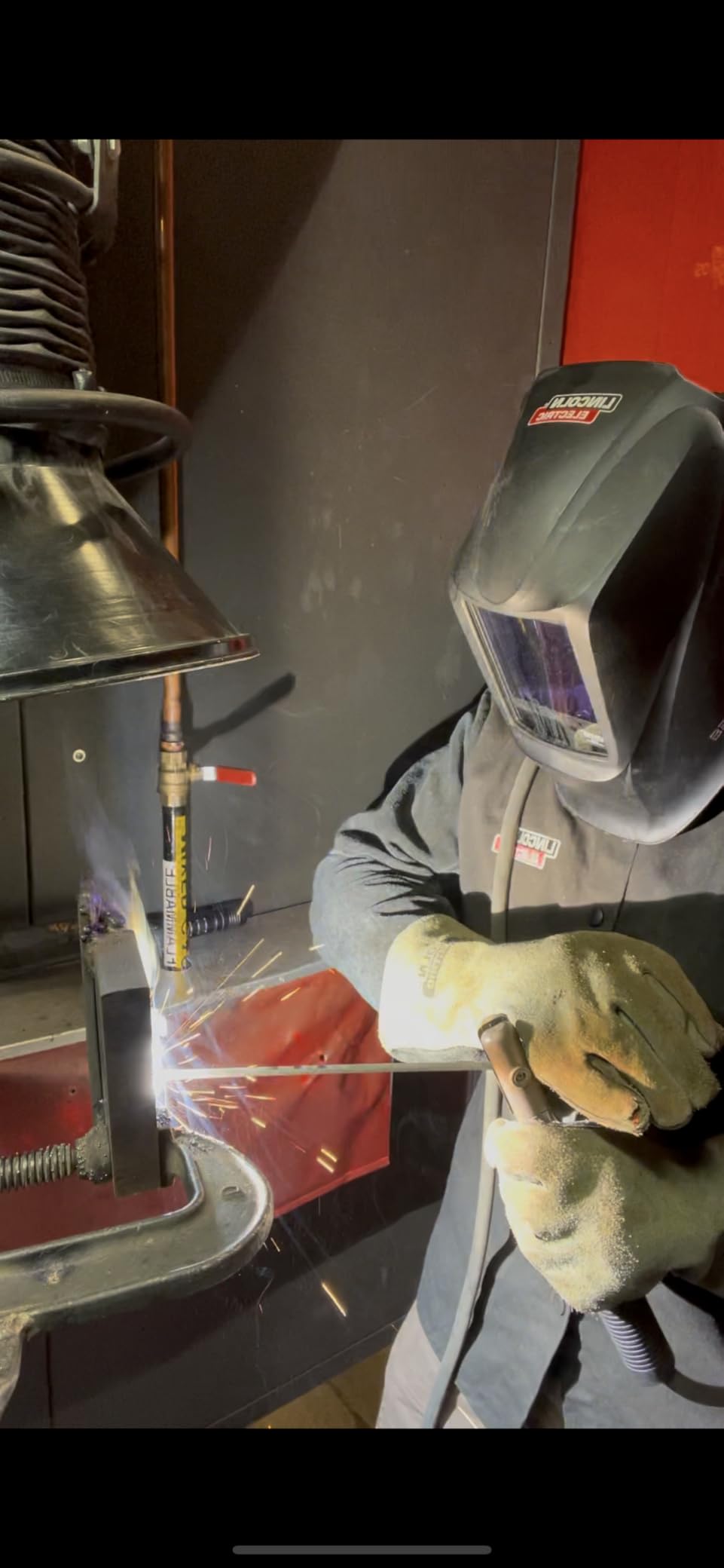
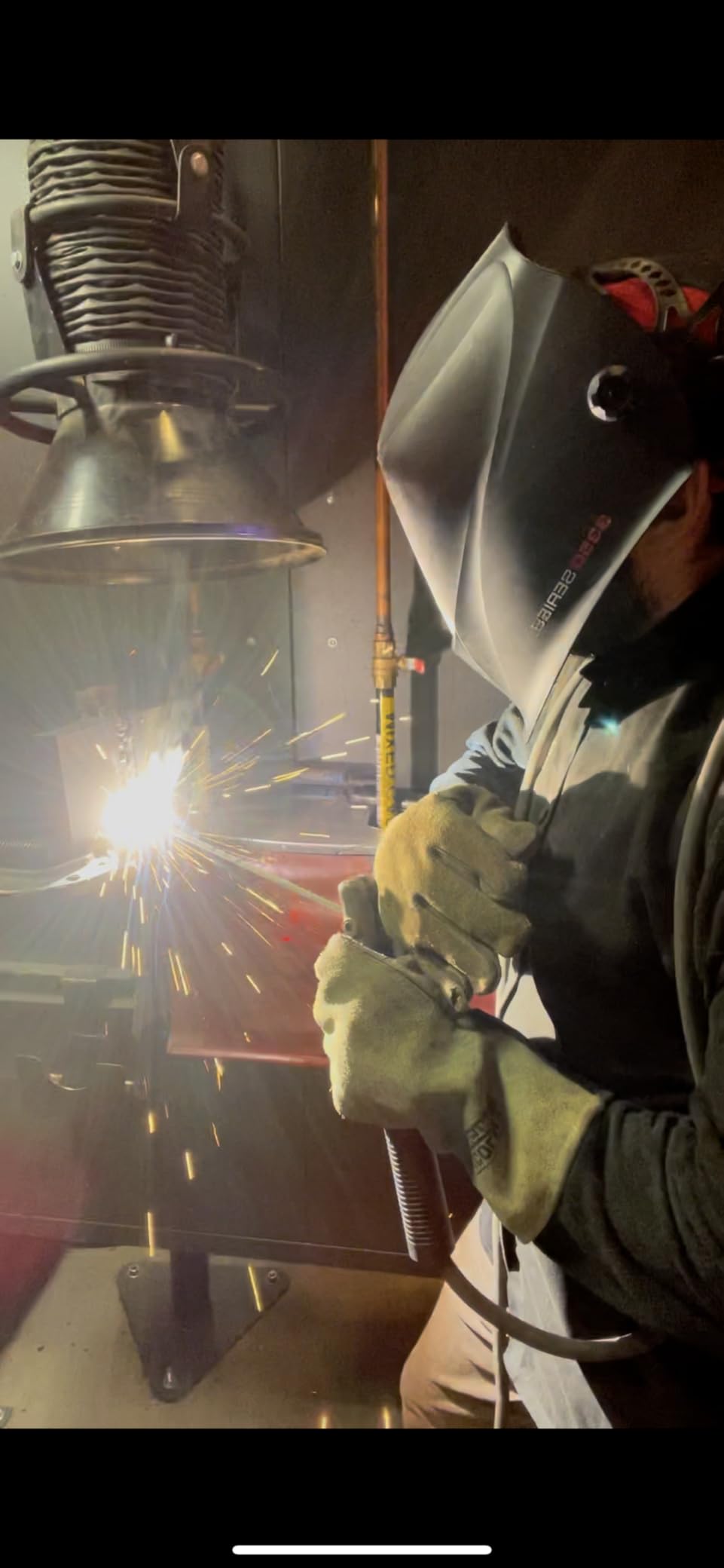
Lincoln describes the high grade leather as breaking in with usage for improved dexterity, and that is genuinely true here. The glove starts stiff and gets better over weeks rather than being comfortable on day one. Plan a pair as a season glove rather than a week glove, and rotate it with a thinner pair if you do MIG and TIG in the same week.
The reinforced palm and reinforced thumb are the parts that matter for a shop environment. Both sit on the two highest-wear points and both are doubled, which is what keeps a heavy glove from becoming a thin one after a couple of months of plate handling and grinding.
Why a shop still buys this glove?
Production shops running stick alongside MIG need one glove that will not be the weak link on a bad day. A flame-retardant foam liner that extinguishes a small fire and a fully lined interior give a margin of protection that lighter gloves cannot. Kevlar stitching with reinforced stress points is what makes that protection last through a full work year.
It is also a glove that improves with age rather than degrading from day one, which suits a shop that buys once and keeps the pair. The soft air-cushioned liner is something workers with long shifts mention positively, and the break-in behaviour means the glove ends up shaped to the hand that wears it.
Where the 4.4 rating comes from?
Volume. This is the most heavily insulated Lincoln in the roundup, and the fleece plus foam stack is a lot of material between your hand and the arc. On heavy MIG that is right. On thin-gauge work it makes the trigger feel distant, and on any TIG it is the wrong tool entirely.
It is also worth noting that the same insulating foam is what makes it excellent for cold shops and poor for hot ones. If your work is in a cold garage in winter, this is a strong choice. If it is in a fabrication shop in summer, pair it with a lighter glove for the summer months rather than working uncomfortable all year.
How to Choose MIG Welding Gloves?
Almost every bad glove purchase comes down to choosing on price or on appearance and ignoring how the glove will fail. The five questions below are the ones that actually separate a pair that lasts a season from a pair that lasts a year, and they are the same questions we use when we sort out which of the ten above fits a given job.
Leather types for MIG welding
Top grain cowhide has the densest grain structure and the best puncture and abrasion resistance. It is the toughest option and the firmest, and it takes a short break-in. Split cowhide is the same animal, split into two layers, which makes it lighter, softer and more flexible at the cost of some abrasion resistance. Most production MIG gloves use split leather for that reason.
Goatskin and deerskin are the thinnest and most tactile leathers. Deerskin in particular is a community favourite for MIG because it is supple, needs no break-in and stays comfortable in a long session. The catch is that it does not survive stick work or heavy spatter nearly as long as cowhide, and welders who do both processes usually end up with two pairs. Elkskin and pigskin are less common and sit in the same general territory as deerskin for MIG.
The practical rule we use: cowhide for production and heavy spatter, deerskin or goatskin for light MIG and mixed process work, and treat any leather choice as secondary to cuff length and reinforcement if you weld overhead or drag your hand along the workpiece.
Cuff length and gauntlet coverage
Cuff length is the most underrated spec on a MIG glove. The list above runs from 4 inches to 21 inches, and the difference is not about the hand at all, it is about the arm. Sparks and spatter run downhill. A 4-inch cuff protects the wrist, a 14-inch cuff covers most of the forearm, a 16-inch cuff with a 7.5-inch sleeve covers the forearm properly, and a 21-inch gauntlet covers past the elbow.
Match the cuff to the position. Flat and horizontal bench MIG work does not demand much. Overhead welding, vertical pipe and out-of-position work do, and so does any job where you steady the workpiece with your non-dominant hand. If you are unsure, the 16-inch length is the safe default and the one most of the picks in this roundup use.
Kevlar stitching and where seams fail first
Stitching is where MIG gloves die before the leather does. A glove can absorb heat through the hide indefinitely, but cotton thread melts, thins and lets the seam open, and once the seam opens the pieces of the glove separate and you lose the hand protection entirely. Every glove in this roundup is sewn with Kevlar thread for exactly this reason.
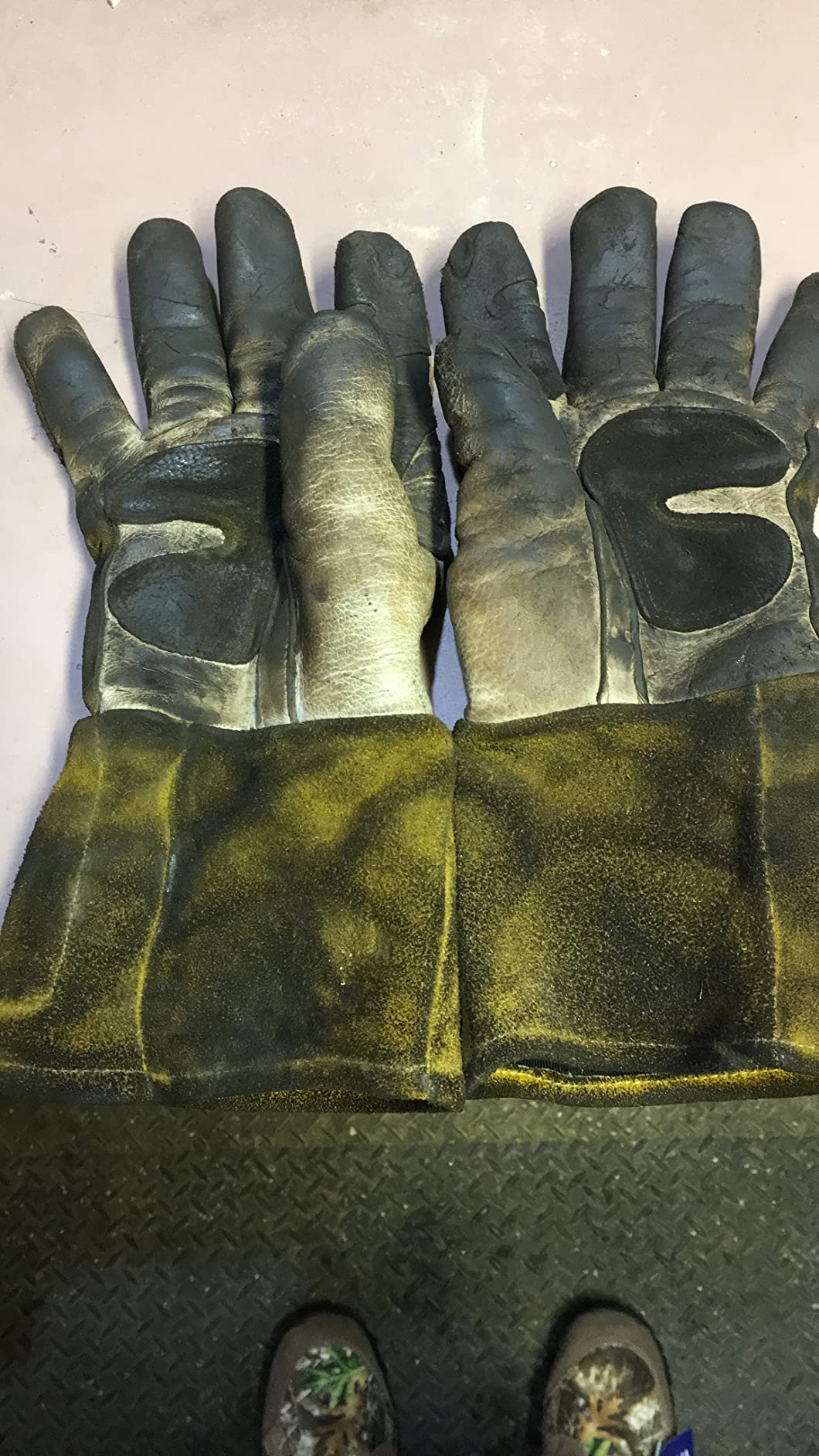
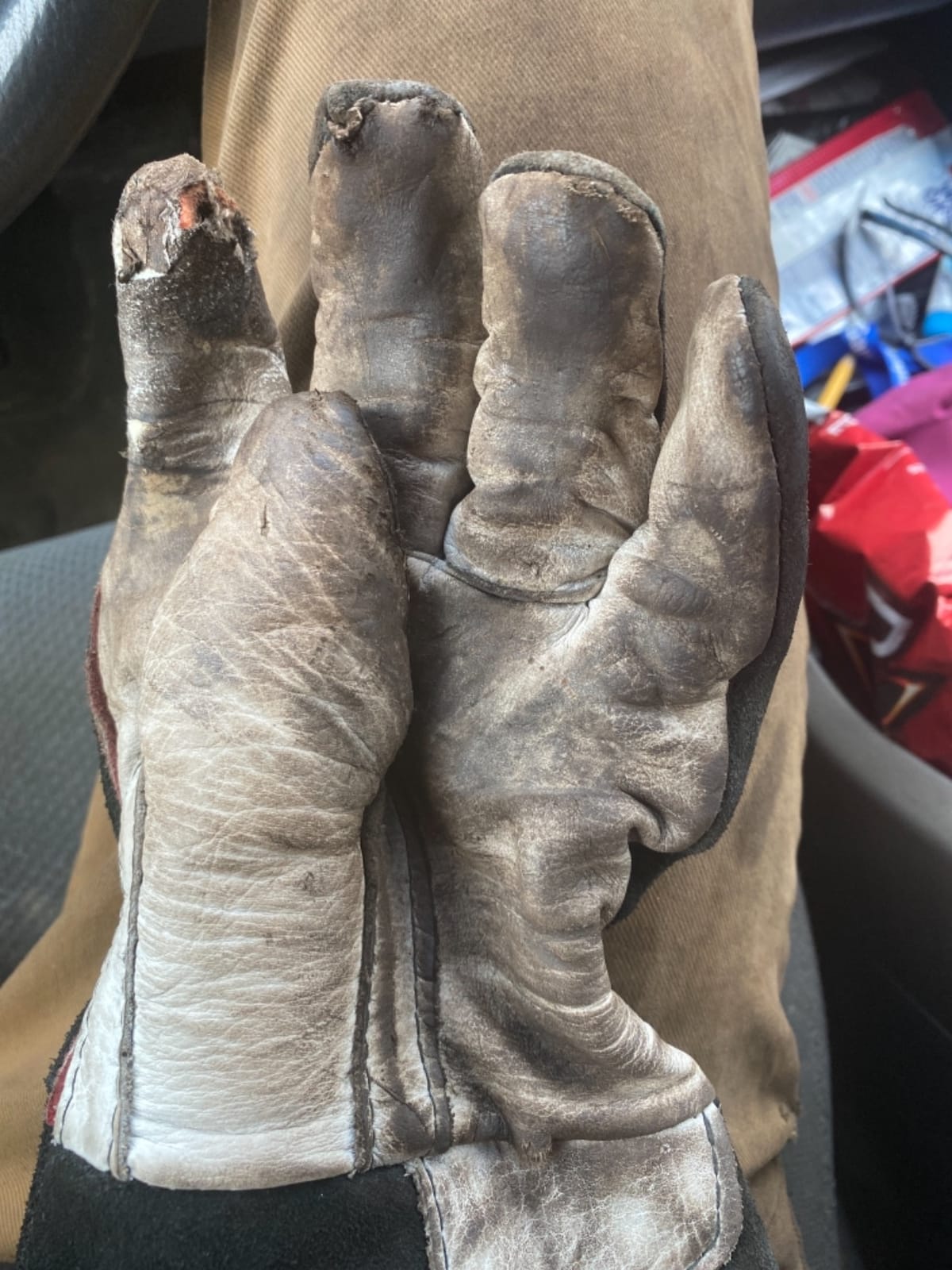
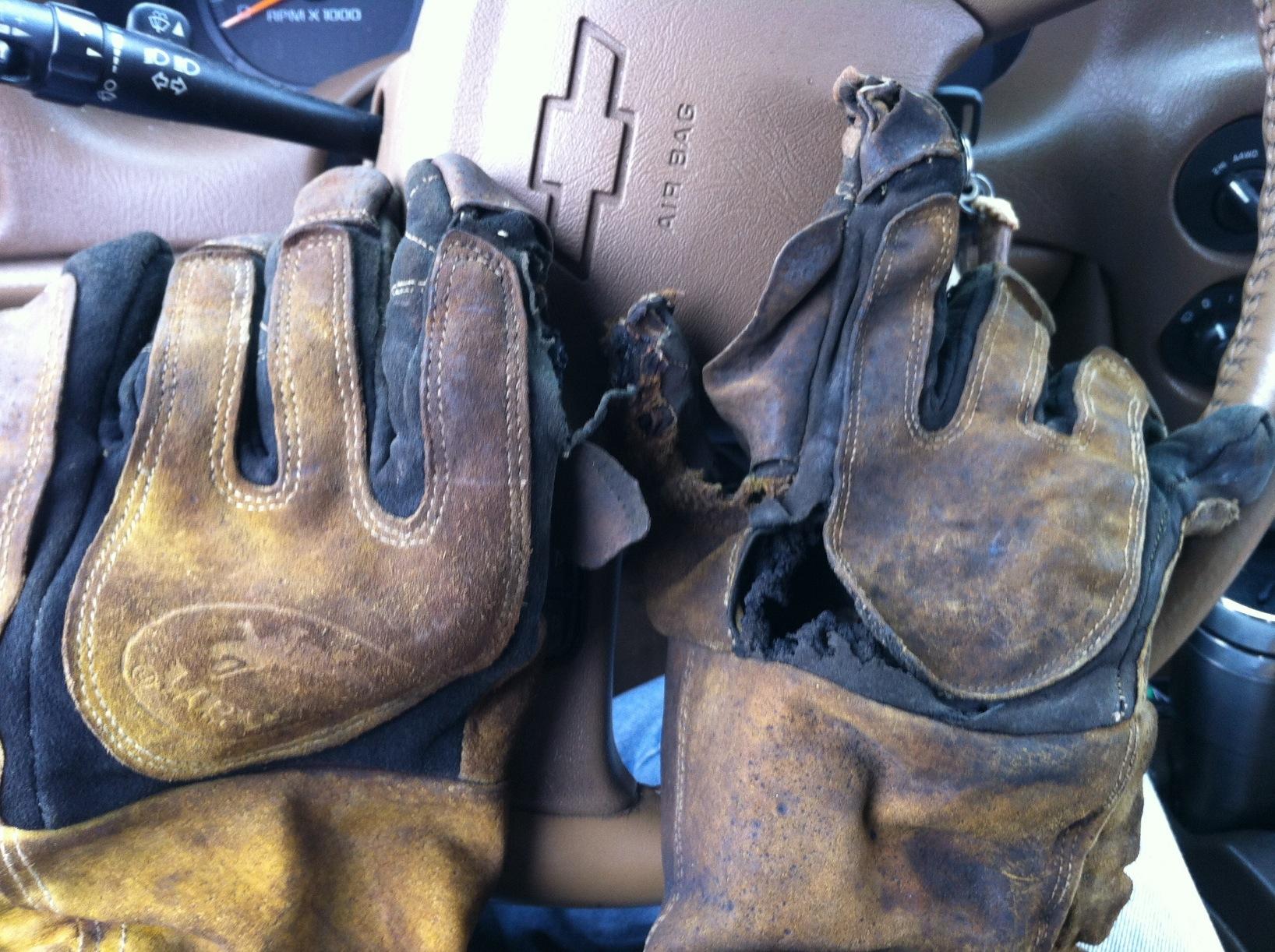
When a glove fails, the order is predictable. First the thumb, because it takes the most contact. Then the index finger and the side of the hand, because that is where the gun body and the workpiece both rub. Then the palm seam where the glove folds when you close your grip. A thumb hole in a pair of cowhide gloves after a semester of MIG work is not bad luck, it is the normal failure path.
Reinforcement zones and how spatter burns a glove out
Look for reinforcement on the palm, thumb, index finger and, if you drag the torch or rest your hand on the workpiece, the side of the hand. The Black Stallion in this list is the only one with dedicated side padding, and that is not a marketing decision, it is a response to where MIG spatter actually lands when the hand is on the joint.
Spatter failure does not look dramatic. It looks like a pinhole in the thumb, then a small hole, then a patch of leather gone. Once you see a pinhole you are done with that glove, because radiant heat reaches skin through a hole far faster than through intact hide. Inspect the thumb and the side of the hand before every shift rather than after a burn.
Fit and sizing: buy leather snug
Buy leather welding gloves snug. Leather breaks in over the first weeks and a glove bought tight will mould to your hand, while a glove bought loose stays loose and never improves. If you are between sizes, size down. Sizing across brands is inconsistent, so measure your palm width across the knuckles excluding the thumb and compare it to the published chart rather than trusting the letter.
Two other fit notes. Brands differ on direction, with some running large and others small, so if you know a brand runs big, size down. And a snug fit matters most at the trigger finger, because the MIG gun is the one tool you hold for every single weld. If you cannot feel the trigger position through the glove, the glove is too loose for the job.
What these gloves are not for?
No welding glove in this roundup is designed to let you pick up hot metal bare-handed, and the ones with the highest published heat ratings are rated for radiant heat and spatter, not for sustained direct contact with a glowing cut face. The distinction matters. A 1000°F rating describes how the glove performs against radiant heat and splatter; it is not permission to grab a freshly cut 3/8-inch plate.
For hot part handling, use a separate pair of dedicated heat-handling gloves or a pair of tongs and vise grips. This is the most common and most dangerous misconception in the category, and it is worth saying plainly even though several owners in this roundup report doing it. Gloves also will not protect you from UV exposure, so keep your sleeves down regardless of which pair you own.
Frequently Asked Questions
What gloves are most worn by welders?
Top grain and split cowhide are the most worn MIG welding gloves, followed by deerskin for lighter work. Cowhide wins because it balances puncture resistance, heat tolerance and break-in behaviour, and deerskin is common on the torch hand for light MIG because it is supple and needs no break-in. Tillman, Lincoln Electric, Black Stallion and Caiman are the brands welders name most often.
Do you need welding gloves for MIG?
Yes. MIG throws radiant heat from the arc and spatter from the pool, and both land on your hands. Ordinary work gloves absorb enough heat to burn through within minutes on anything thicker than thin sheet, and a pinhole in a leather work glove lets heat straight through. Gloves also improve control of the MIG gun trigger.
Are TIG gloves ok for MIG?
Not for sustained MIG work. TIG gloves are deliberately thin so you can feel the filler rod and the puddle, and that same thinness lets MIG spatter burn through in minutes. A deerskin glove is the closest compromise, since it is thin but tougher than a pure TIG glove. The reverse also holds: a MIG glove is too thick for TIG because it kills filler-rod feel.
What are the best hand gloves for welders?
For most welders the best general answer is a 14 to 16 inch split cowhide glove with Kevlar stitching, a reinforced palm and thumb, and a cotton or fleece liner. It covers MIG, stick and flux-core on the same bench without the bulk of a 21-inch gauntlet. If you weld overhead or rest your hand on hot stock, add cuff length over everything else.
What are the best gloves for MIG welding?
The best MIG welding gloves combine a heat-resistant cowhide or deerskin outer, Kevlar thread, reinforcement on the palm, thumb and index finger, and a cuff long enough to cover the forearm. The RAPICCA 16-inch glove is our best overall pick for its layered leather, foil and cotton build, while the TOPDC is the best value pick at a 932°F rating.
Is it better to have tighter or looser gloves?
Tighter, but not constricting. Leather breaks in over the first few weeks, so a glove bought snug moulds to your hand while a glove bought loose never improves and stays hard to work a MIG trigger with. If you are between sizes, size down. You want a trigger finger you can feel through, with no slack at the wrist.
What are the best welding gloves for both stick and MIG welding?
The Lincoln Electric K2979 is the strongest single-pair answer: 14-inch split cowhide, Kevlar stitching, a straight thumb for sensitivity and an ambidextrous fit, recommended by the manufacturer for stick, MIG and flux-core. For heavier shops the Lincoln Electric K4082 adds a flame retardant foam liner that helps extinguish a small fire, at the cost of bulk.
What are the top rated welding gloves?
Within this roundup the Lincoln Electric K2979 and the Black Stallion top grain cowhide glove tie for the highest average rating at 4.7 stars. On review volume the RAPICCA 16-inch glove leads by a wide margin at over 21,000 reviews and 4.6 stars, and the TOPDC follows with nearly 5,000 reviews at the same rating.
What are some good brands of welding gloves?
Tillman and Lincoln Electric are the two most recommended brands on welder forums, followed by Black Stallion from Revco, Caiman and Miller. Tillman is the most repeated name for multi-process work, Lincoln Electric covers the widest range from a 14-inch versatile pair to a 21-inch gauntlet, and Black Stallion is the pick for welders who drag the torch.
How long do welding gloves last?
It depends far more on hours of MIG work and spatter exposure than on months. Welders report thumb holes appearing after roughly one semester of steady MIG work on thinner gloves, while a reinforced cowhide glove with Kevlar stitching on heavy work lasts considerably longer. Replace a glove the moment you see a pinhole, not when the palm finally gives out.
Final Verdict on the Best Welding Gloves for MIG Welding
The best welding gloves for MIG welding in 2026 are the RAPICCA 16-inch fireproof leather gloves, with a three-layer build of fire-resistant leather, an aluminum foil barrier and a heat-resistant cotton liner, 16 inches of coverage with a 7.5-inch sleeve, and Kevlar stitching through a reinforced thumb. That combination of protection, coverage and reasonable weight is why it takes the top slot, and why it is the pair we would buy first.
Buy the Lincoln Electric K2979 if you want the highest-rated glove here and one pair that covers MIG, stick and flux-core. Buy the TOPDC if you want a 932°F rating and the lowest weight in the roundup. Buy the Black Stallion if you drag the torch or rest your hand on the workpiece, the YESWELDER if you want control on thin material, the TICONN if your work runs hotter than anything else on this list, the Caiman 21-inch if you weld overhead or in cold weather, and the Tillman 50M if hand fatigue matters more than heat rating.
Whatever you pick, buy the leather snug, check the thumb and the side of the hand for pinholes every week, and keep a separate pair for hot part handling. Those three habits do more for the life of your gloves than any spec on the label.