
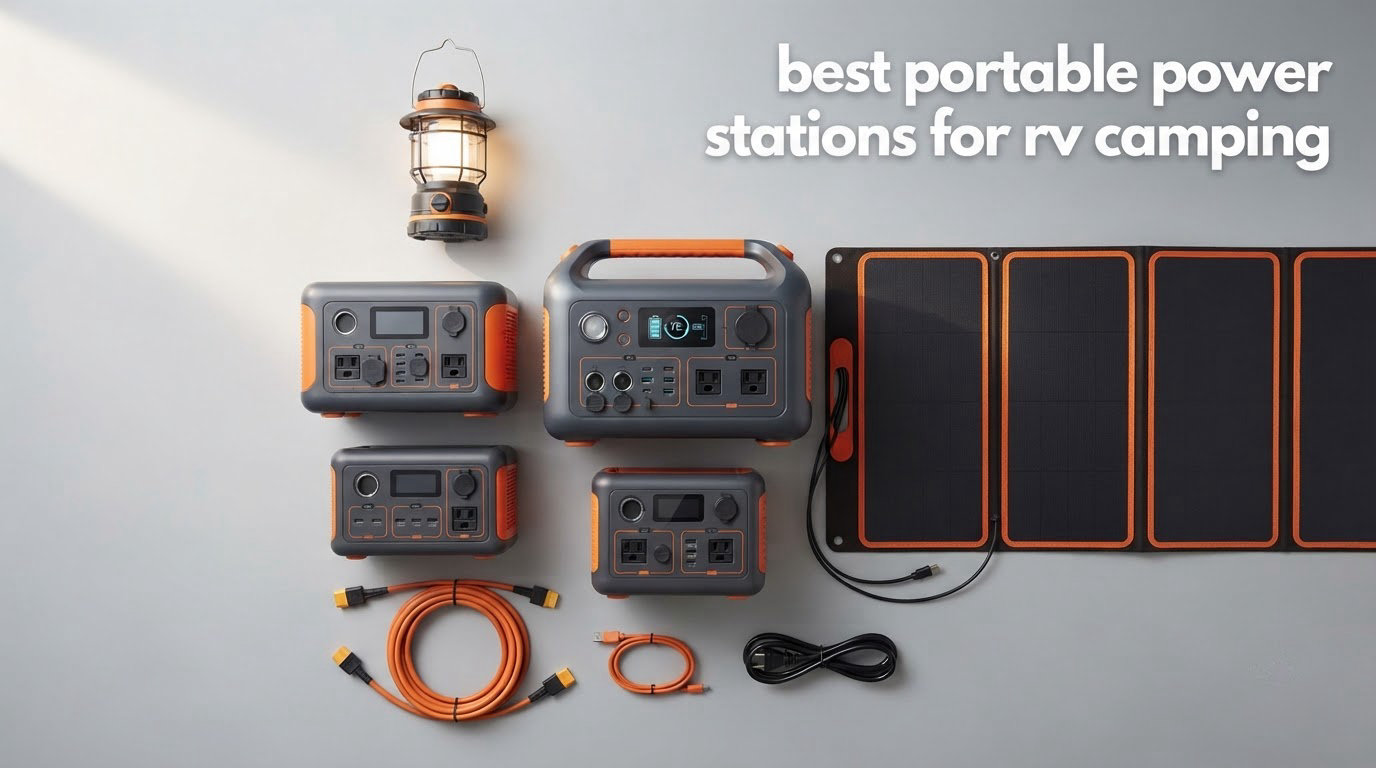
Yes, a portable power station can run an RV — but only up to a point. It will carry a compressor fridge, lights, fans, a laptop bank and even a small air conditioner for a night or two. It will not replace a 50-amp pedestal or a generator for a resistive load like a space heater on a cold desert night. Picking the best portable power stations for RV camping in 2026 comes down to two numbers: how many watt-hours you burn in a day, and how many continuous watts your worst appliance draws.
We spent weeks comparing ten of the strongest machines on the market right now, reading thousands of owner reviews, and matching every spec against the way real rigs actually get used. The field splits cleanly into three groups: 1kWh machines for weekend boondocking, 2kWh machines that carry a full appliance list, and 3kWh machines built around the RV’s own 30-amp shore power inlet.
If you want a broader view first, our general roundup covers the best portable power stations overall, and the best portable power stations under 500 page is worth a look if you are starting small. What follows is filtered specifically for RV rigs: boondocking power, TT-30 outlets, 12V fridge support, and weight you can actually lift into a truck bed.
Table of Contents
Our Top 3 Portable Power Stations for RV Camping

All 10 Portable Power Stations for RV Camping Compared
| Product | Specifications | Action |
|---|---|---|
| Jackery Explorer 1000 v2 |
|
Check Latest Price |
 BLUETTI AC180 BLUETTI AC180 |
|
Check Latest Price |
 Anker SOLIX C1000 Gen 2 Anker SOLIX C1000 Gen 2 |
|
Check Latest Price |
 OUPES Mega 1 OUPES Mega 1 |
|
Check Latest Price |
 Jackery Explorer 2000 v2 Jackery Explorer 2000 v2 |
|
Check Latest Price |
 Anker SOLIX C2000 Gen 2 Anker SOLIX C2000 Gen 2 |
|
Check Latest Price |
 Anker SOLIX S2000 Anker SOLIX S2000 |
|
Check Latest Price |
 Dabbsson 2000L Dabbsson 2000L |
|
Check Latest Price |
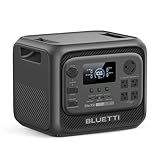 BLUETTI Elite 300 BLUETTI Elite 300 |
|
Check Latest Price |
 Jackery HomePower 3000 Jackery HomePower 3000 |
|
Check Latest Price |
Which Portable Power Station Is Best for a Motorhome?
For most Class C motorhomes and travel trailers, the Jackery Explorer 1000 v2 is the right first buy, and the Anker SOLIX C2000 Gen 2 is the right second buy. A motorhome carries more simultaneous load than a travel trailer — the 30-amp converter, a 12V fridge, a water pump and a CPAP machine all tend to be on at once — so the 2,048Wh C2000 Gen 2 with 2,400W of continuous output absorbs that overlap better than any 1kWh unit.
Where the rig is a fifth wheel with a 50-amp service, skip both and go straight to a 3kWh machine. Jackery HomePower 3000 and BLUETTI Elite 300 are the two machines here with a built-in TT-30 outlet, which means the station plugs straight into the RV’s shore power inlet with no adapter gymnastics.
1. Jackery Explorer 1000 v2 – Best Overall for RV Camping
Jackery Explorer 1000 v2 Portable Power Station,1070Wh,1500W
1070Wh LiFePO4
1500W AC, 3000W surge
23.8 lb
1-hour emergency charge
Pros
- Lightest 1kWh unit here at 23.8 lb with a foldable handle
- 1-hour emergency fast charge from the app
- 4000-cycle LiFePO4 pack rated past 10 years
- Seven outputs including three pure sine wave AC ports and 100W USB-C
- 30 dB quiet charging mode in the app
Cons
- Solar input works with Jackery-branded panels only
- 1070Wh runs out sooner than 2kWh machines on multi-day trips
The Explorer 1000 v2 is the machine I keep coming back to for weekend boondocking, and the reason is weight. At 23.8 pounds it is the lightest 1kWh unit in this roundup, and the only one most people can lift into a truck bed on their own — a detail that shapes everything else about how you use it.
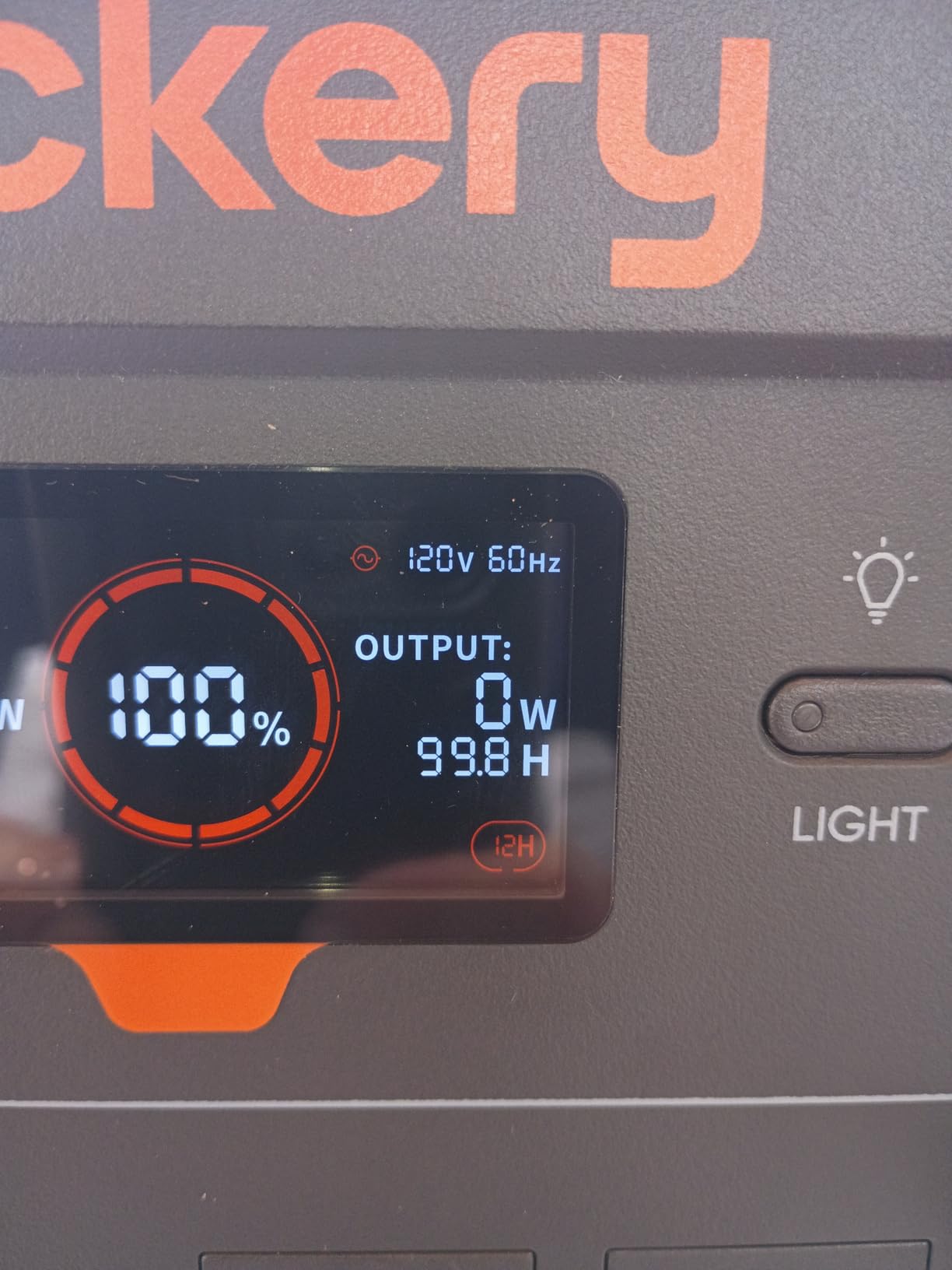
Capacity is 1,070Wh of LiFePO4 rated for 4,000 cycles to 70% capacity. Jackery backs the cells with a stated 10-year service life, which is the kind of number that matters if you keep the same rig for a decade rather than a single season.
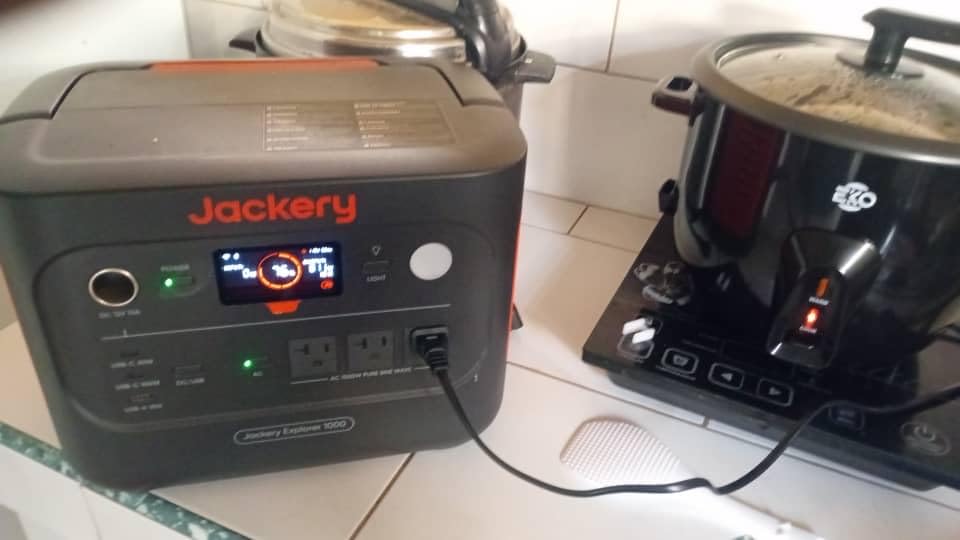
Output is 1,500W continuous with a 3,000W surge peak across three pure sine wave AC outlets, plus two USB-C ports at 100W, one USB-A and a DC car port. Seven outputs in total is more than most 1kWh competitors offer, and the pure sine wave inverter means a compressor fridge or a laptop charger will not mind what comes out of it.
Charging is the other headline. Default AC recharge takes 1.7 hours, but enabling emergency charging in the Jackery app drops a full cycle to about one hour — useful when you pull into a hookup site for dinner and want a full pack before you move on. The app also carries a quiet charging mode rated under 30 dB, which matters when the station is sleeping three feet from your bed.
Who the Explorer 1000 v2 suits
It suits weekend campers and anyone running a single-night load list: a 12V fridge, interior LEDs, a phone charger bank and a coffee maker in the morning. For a Class B van or a small travel trailer, that is genuinely the whole list.
It also suits anyone who is tired of hauling a 60-pound brick out of the truck. On iRV2 and r/GoRVing the most common regret among power station owners is not capacity — it is the lifting, and this is the unit that mostly solves it.
Where it falls short
Solar charging is locked to Jackery-branded panels, and that closed ecosystem is the single most common complaint across the reviews. If you already own third-party panels, or you want to buy the best-fitting foldable array rather than a brand-tied one, that frustration is real.
The 1,070Wh ceiling is the other limit. It covers one night comfortably and two if you are disciplined about the microwave. A compressor fridge cycling at roughly 50W will eat that pack faster than most people expect once you add a CPAP machine running all night.
2. BLUETTI AC180 – Best for Multi-Device Campers
BLUETTI AC180 Portable Power Station 1152Wh 1800W LiFePO4 Solar Generator
1152Wh LiFePO4
1800W rated, 2700W peak
Full charge in 1 hour
500W solar input
Pros
- Full recharge in about an hour at 1440W AC input
- Eight outlets plus a top-mounted wireless charging pad
- 20 ms UPS keeps routers and laptops alive through outages
- Detailed real-time app monitoring and output control
- 5-year warranty
Cons
- Roughly 37 lb so it is a two-handed move
- Reported inverter self-consumption cuts usable runtime on small loads
- Wireless charging pad often fails to hold a phone connection
The AC180 sits in the fast-recharging tier of the 1kWh class, and on a campground rotation that speed is worth real capacity. Full charge takes about an hour at 1,440W of AC input, so a dinner stop and a walk is enough to go from near-empty to full.
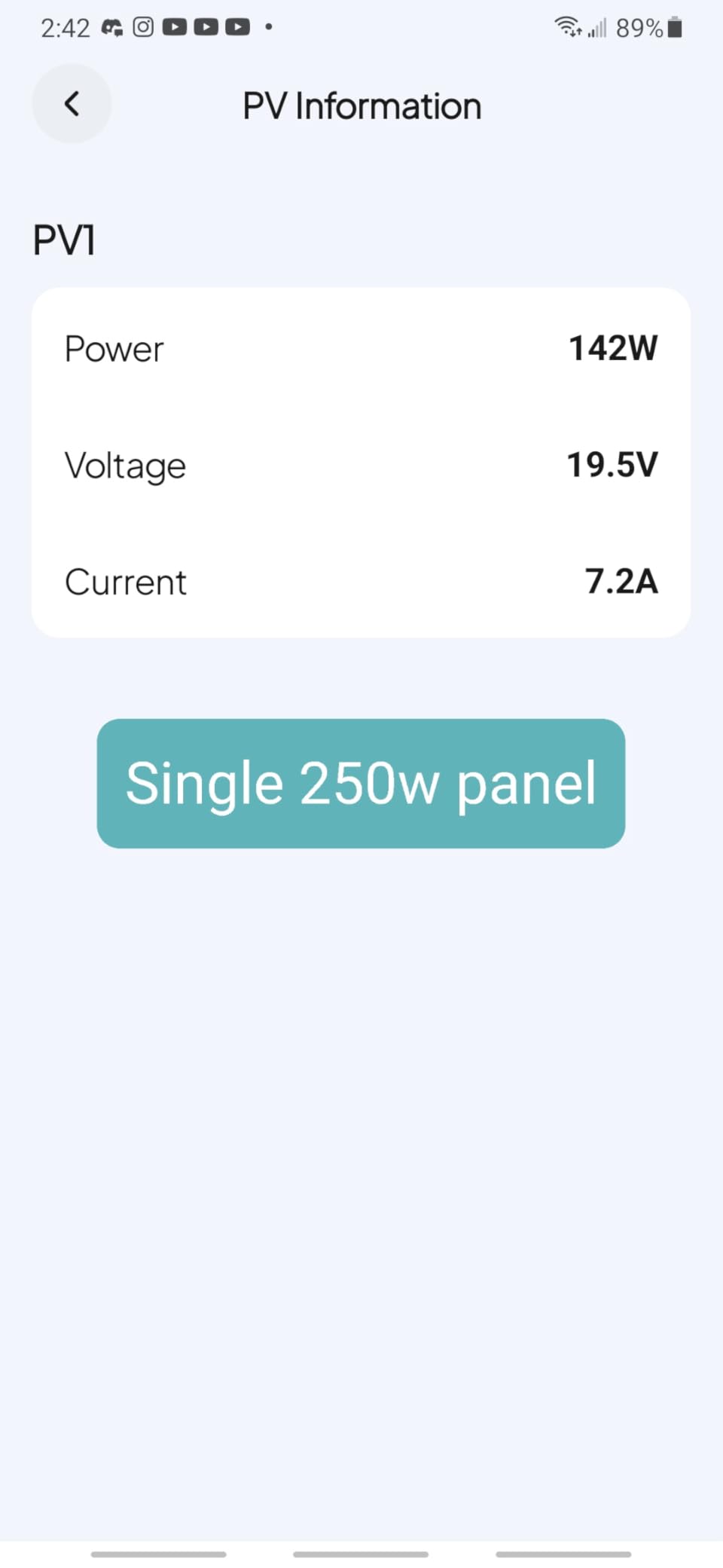
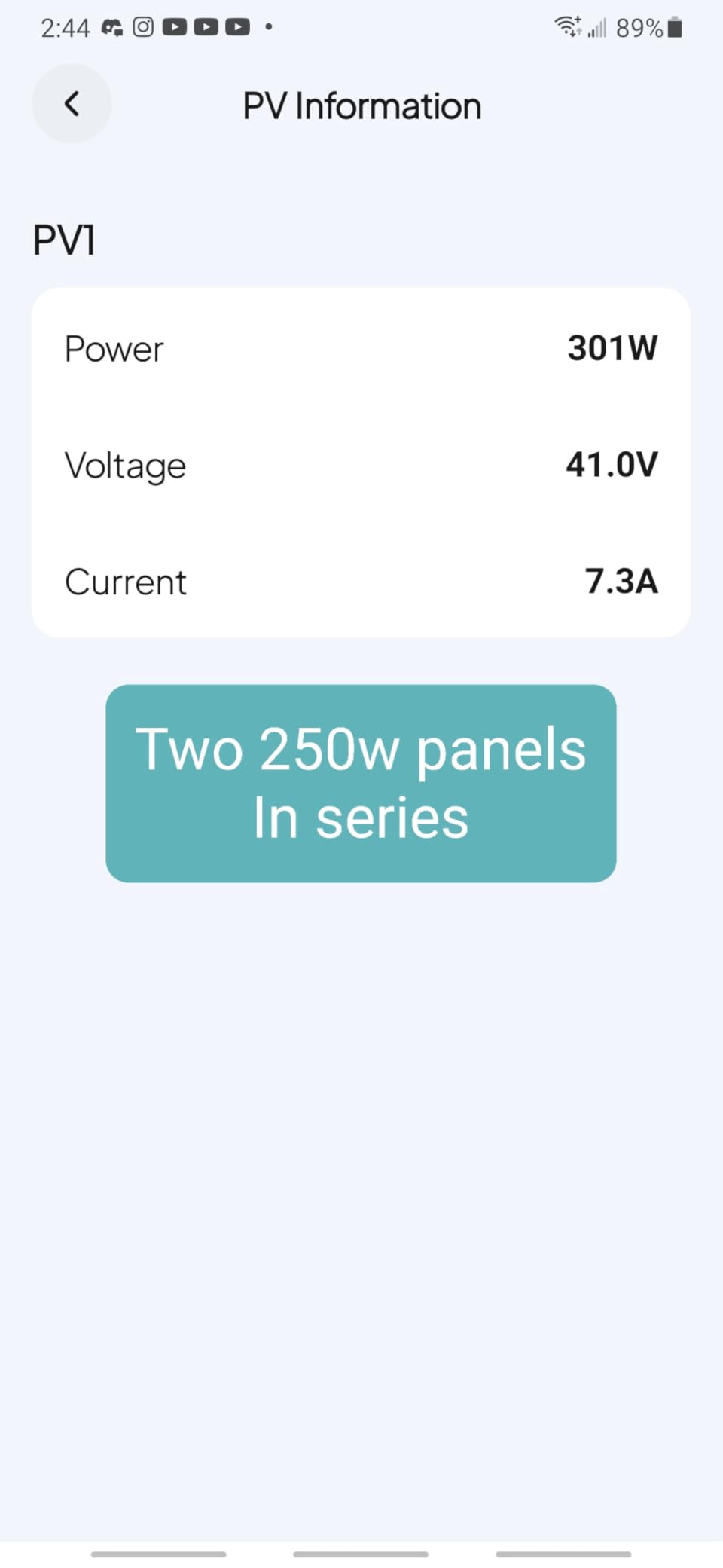
Solar input is capped at 500W, which translates to a 2.8 to 3.3 hour solar recharge in good conditions. That number is the manufacturer’s best case, and real-world panel output typically lands at a fraction of rated wattage depending on heat and angle, so plan on longer.
Output is 1,800W rated with a 2,700W peak, delivered across eight outlets: two AC, one USB-C, three USB-A, a DC car port and a wireless charging pad on top. The 20 ms UPS switchover is tight enough to carry a router and a laptop through an outage without a reboot.
The BLUETTI app is genuinely detailed, showing real-time wattage, input and output state, and giving you direct control over outlets rather than just a battery percentage. Reviewers repeatedly single out the display readability and the quiet operation as reasons the unit disappears into a camper.
Who the AC180 suits
It suits campers who move often and top up whenever they find a wall outlet — the “charge while you eat, charge while you shower” crowd. The one-hour turnaround changes the planning math compared with a unit that needs two hours.
It also suits anyone running electronics that care about clean power. The 20 ms UPS is short enough that network gear and a CPAP machine keep running through a transfer.
Where it falls short
Weight is the first issue. At roughly 37 pounds the AC180 is a two-handed move, and the difference between it and the Explorer 1000 v2 is exactly the difference between grabbing your own and asking for help.
The second is inverter self-consumption. Reviewers report meaningful standby draw that quietly shortens runtime on small loads — and a 12V fridge is exactly the small-load scenario where that overhead is most annoying, since the fridge is the one thing you never turn off.
3. Anker SOLIX C1000 Gen 2 – Best Value for RV Camping
Anker SOLIX C1000 Gen 2 Portable Power Station
1024Wh LiFePO4
2000W rated, 3000W peak
49-minute full recharge
600W solar input
Pros
- 49-minute full recharge
- the quickest in this roundup
- 2000W continuous output from a 1024Wh pack
- Ten ports power several devices at once
- 10 ms UPS protects routers laptops and CPAP machines
- Anker app with TOU mode for off-grid scheduling
Cons
- Gen 2 removed the expansion battery option found on earlier Anker models
- Some measured sine wave distortion on high-draw loads like a microwave
- No protective storage case included
- Heavier than it looks for the 1kWh tier
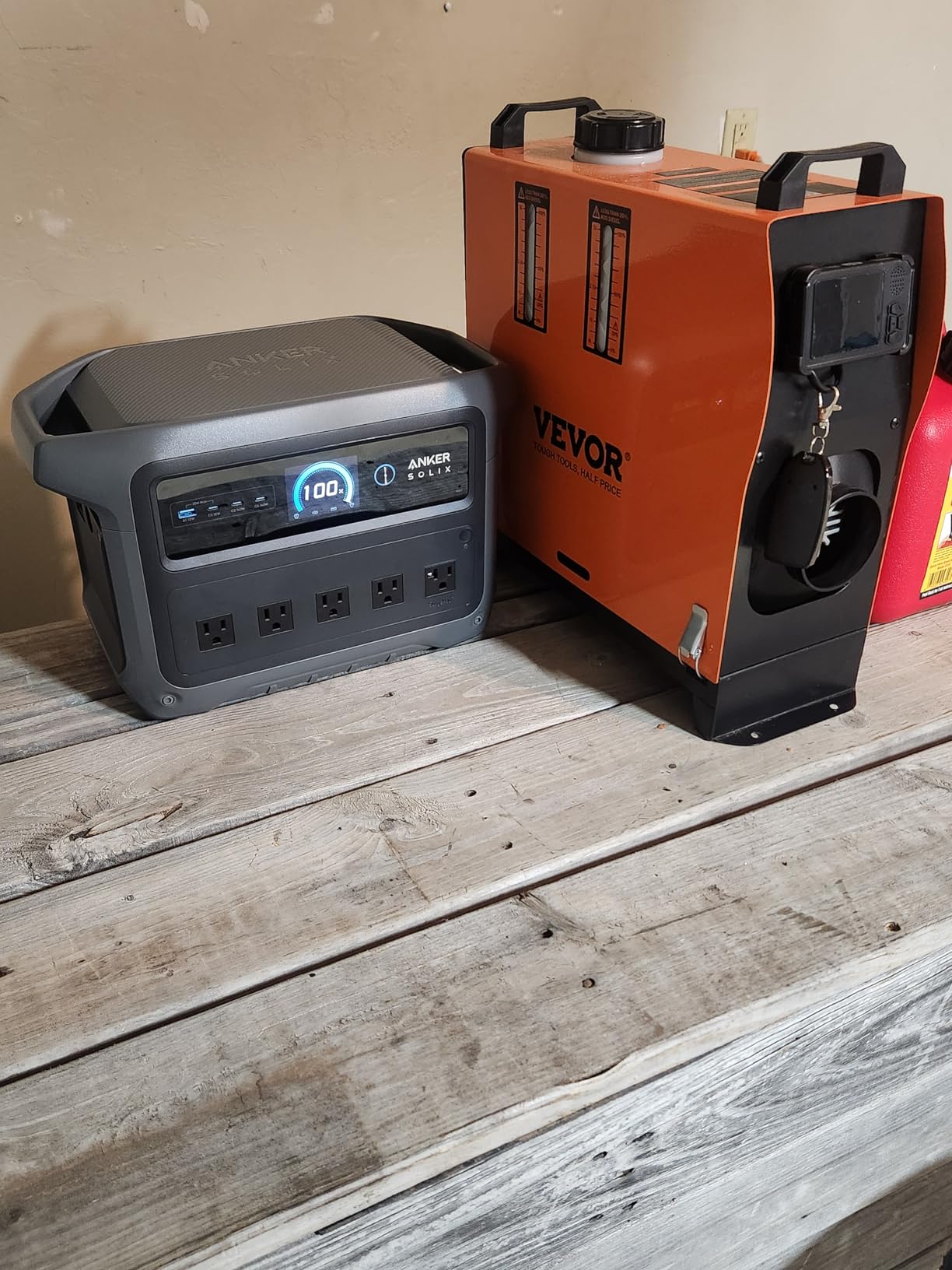
What makes the C1000 Gen 2 interesting for RV use is the ratio: 2,000W of continuous output from a 1,024Wh pack is unusual for this weight class. Most 1kWh machines are built for phones and laptops, and this one will start a compressor or run a small window unit.
The recharge figure is the number that impressed us most. Forty-nine minutes to full at 1,600W of AC input makes it the quickest unit in the roundup to go from empty to full, and the 600W solar input recharges in about 1.8 hours under good conditions — a far more forgiving solar ceiling than the 300W class typical at this capacity.
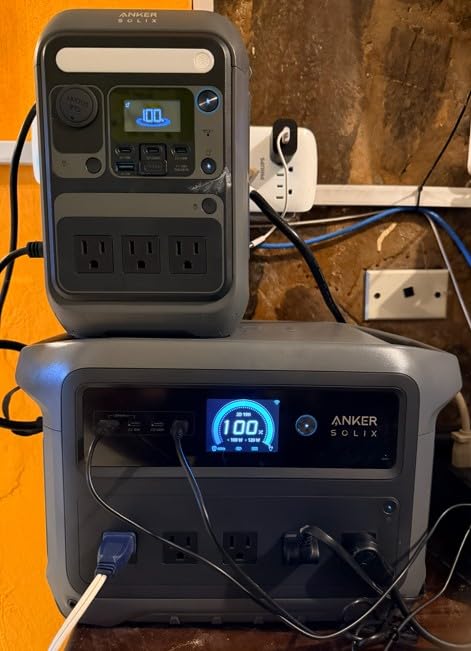
Ten ports means the whole household cabin can charge at once, and the 10 ms UPS switchover is short enough that medical gear and networking equipment never notice the transfer. The Anker app adds TOU mode, which lets you schedule when the station draws from a hookup and when it holds back.
Battery life is rated at 4,000 cycles to at least 80% of original capacity, backed by a 5-year warranty. Ten ports means the whole household cabin can charge at once, and owners describe covering 12-hour outages and running full-size fridges for 13-plus hours — consistent with a unit built to be left plugged in.
Who the C1000 Gen 2 suits
It suits anyone whose load list includes one high-draw item on top of the usual fridge-and-lights baseline. That might be a microwave, a coffee maker, a CPAP machine or a small air conditioner, and the 2,000W ceiling absorbs all of them.
It also suits people who want a 1kWh unit that can grow into solar charging quickly. A 600W panel fills it in under two hours, which is a much more forgiving setup than a 300W ceiling.
Where it falls short
The Gen 2 generation dropped the expansion battery option that earlier Anker models offered. That is a genuine loss if you were counting on stacking a second pack to stretch a trip — the ceiling is fixed at 1,024Wh.
Reviewers also report mild harmonic distortion on the output waveform when powering a microwave. It is not a practical problem for most appliances, but it is the reason we would not hang a sensitive medical device off this unit permanently.
4. OUPES Mega 1 – Best Expandable 1kWh Option
OUPES Mega 1 Portable Power Station 1024Wh 2000W (4500W Surge)
1024Wh expandable to 5120Wh
2000W continuous, 4500W surge
0-80% in 36 min
800W solar input
Pros
- 0-80% in 36 minutes on AC
- or 26 minutes with AC plus solar
- 2000W continuous from a 27.8 lb chassis
- Expands to 5120Wh with two B2 extra batteries
- Spaced AC outlets fit bulky plugs side by side
- Under 20 ms UPS with pass-through charging
Cons
- Advertised 4500W surge is not reached in practice
- Cooling fan runs continuously while charging
- Plastic housing offers little drop or weather protection
- Bluetooth app is very basic
The Mega 1 is the only unit in this roundup that starts at 1kWh and ends up at 5,120Wh. Two B2 extra batteries take it to five times its base capacity, which turns a weekend machine into something that can carry a long trip of boondocking.
It also posts a remarkably quick recharge: 0-80% in 36 minutes on AC alone, or 26 minutes with AC and solar running together. Dual charging at 1,400W AC plus 800W of MPPT solar input is the reason.
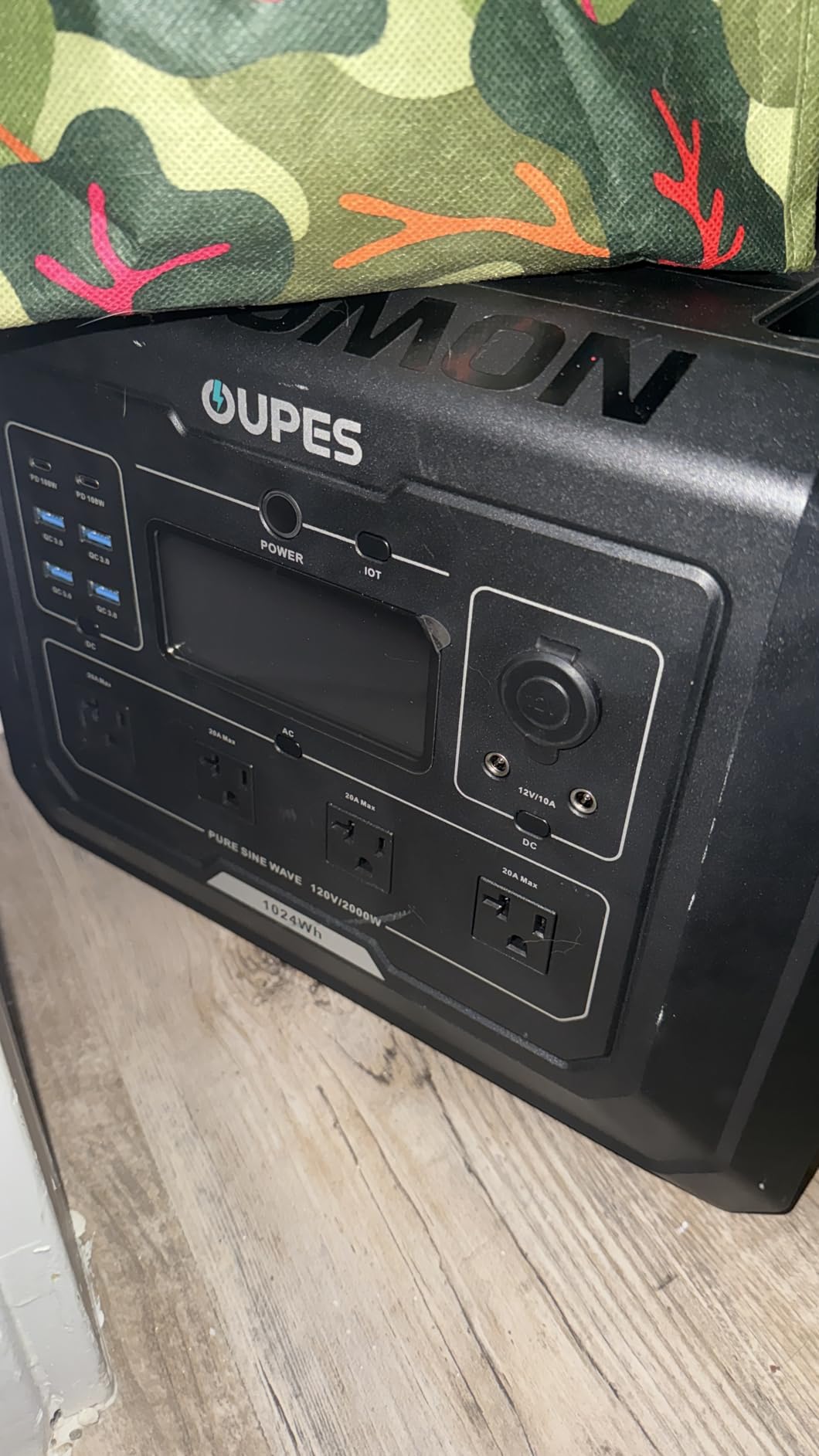
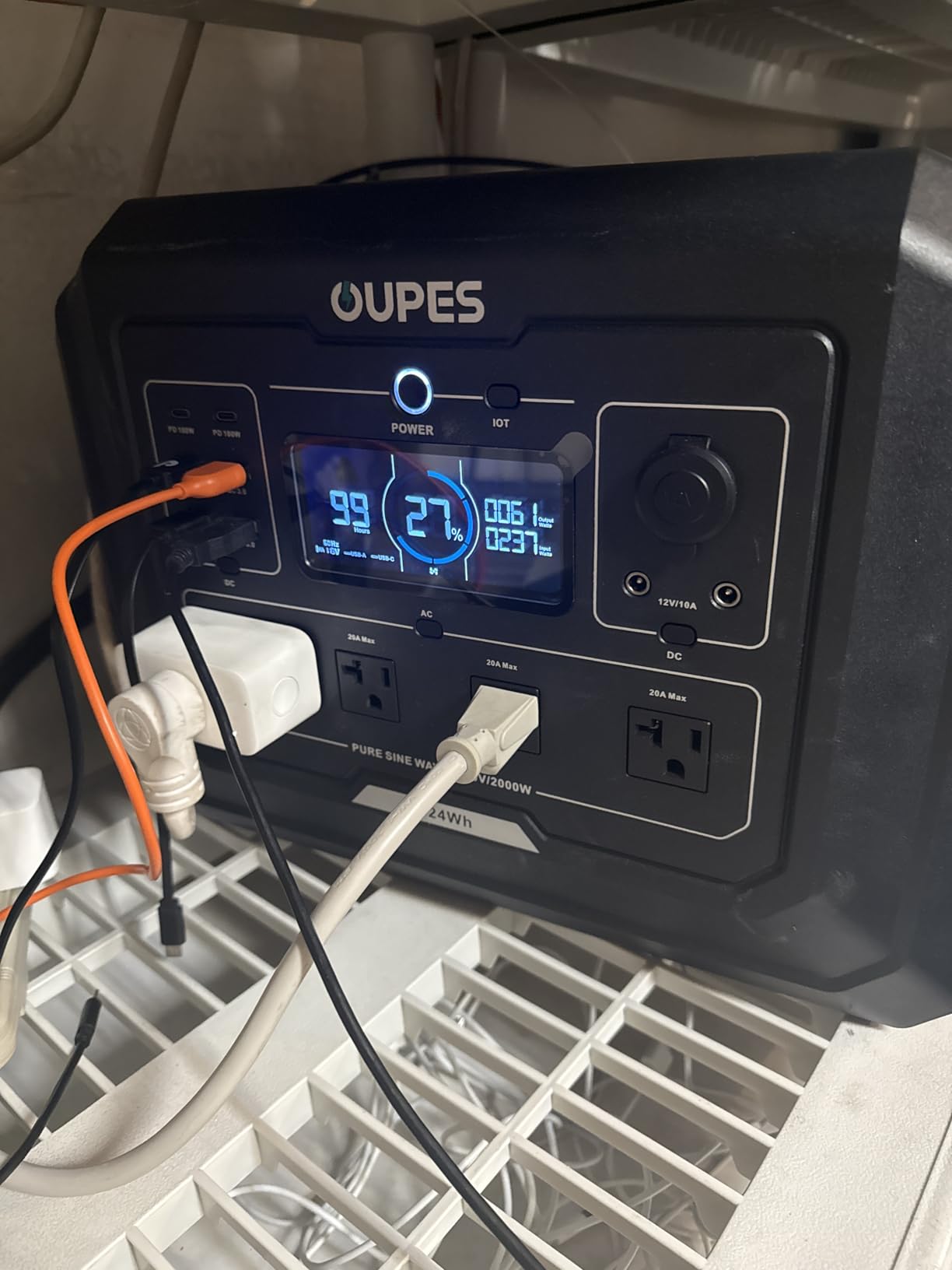
Output is 2,000W of continuous pure sine wave AC, and the four AC outlets are spaced across the front face so that bulky RV plugs can sit side by side without fighting for the same space. Two 100W USB-C PD ports and four QC3.0 USB-A ports cover the small electronics, and the 12V DC outputs handle a 12V fridge directly.
Battery life is rated at 3,500-plus cycles, which is a step below the 4,000-cycle figures on several rivals but still far beyond a typical lead-acid house bank. The 5-year warranty is in line with the field.
Who the Mega 1 suits
It suits boondockers who are not yet sure how far they will go. The base unit covers a normal weekend; the expansion batteries are the answer to a two-week desert loop you did not plan for in March.
It also suits anyone who wants 2,000W of continuous output without moving up to a 2kWh pack, particularly if the 27.8-pound chassis is a lift one person can manage.
Where it falls short
The advertised 4,500W surge figure is the weak point. Owners report machines tripping out around 2,050-2,200W in practice, so do not size a compressor fridge or a heavy inductive load against the headline number — size it against the 2,000W continuous rating instead.
The plastic housing is the other reservation. Reviewers describe it as light with little drop protection or weather resistance, and a station that lives in a truck bed through gravel roads deserves more than that. A small number of machines also needed replacement after BMS faults on a first deep discharge.
5. Jackery Explorer 2000 v2 – Best for Quiet Overnight Charging
Jackery Explorer 2000 v2 Portable Power Station, 2042Wh, 2200W AC Output
2042Wh LiFePO4
2200W AC across 3 ports
39.5 lb
0-80% in 66 min
Pros
- 39.5 lb and 34% smaller than typical 2kWh machines
- Cell-to-Body construction borrowed from EV packs
- 0-80% in 66 minutes with a sub-30 dB silent mode
- 20 ms UL1778-certified UPS switchover
- 10-year LiFePO4 battery life claim
Cons
- Solar charging limited to Jackery-branded panels
- 2200W continuous is modest beside other 2048Wh packs that push 2400W
- Tied for the lowest average rating here at 4.4
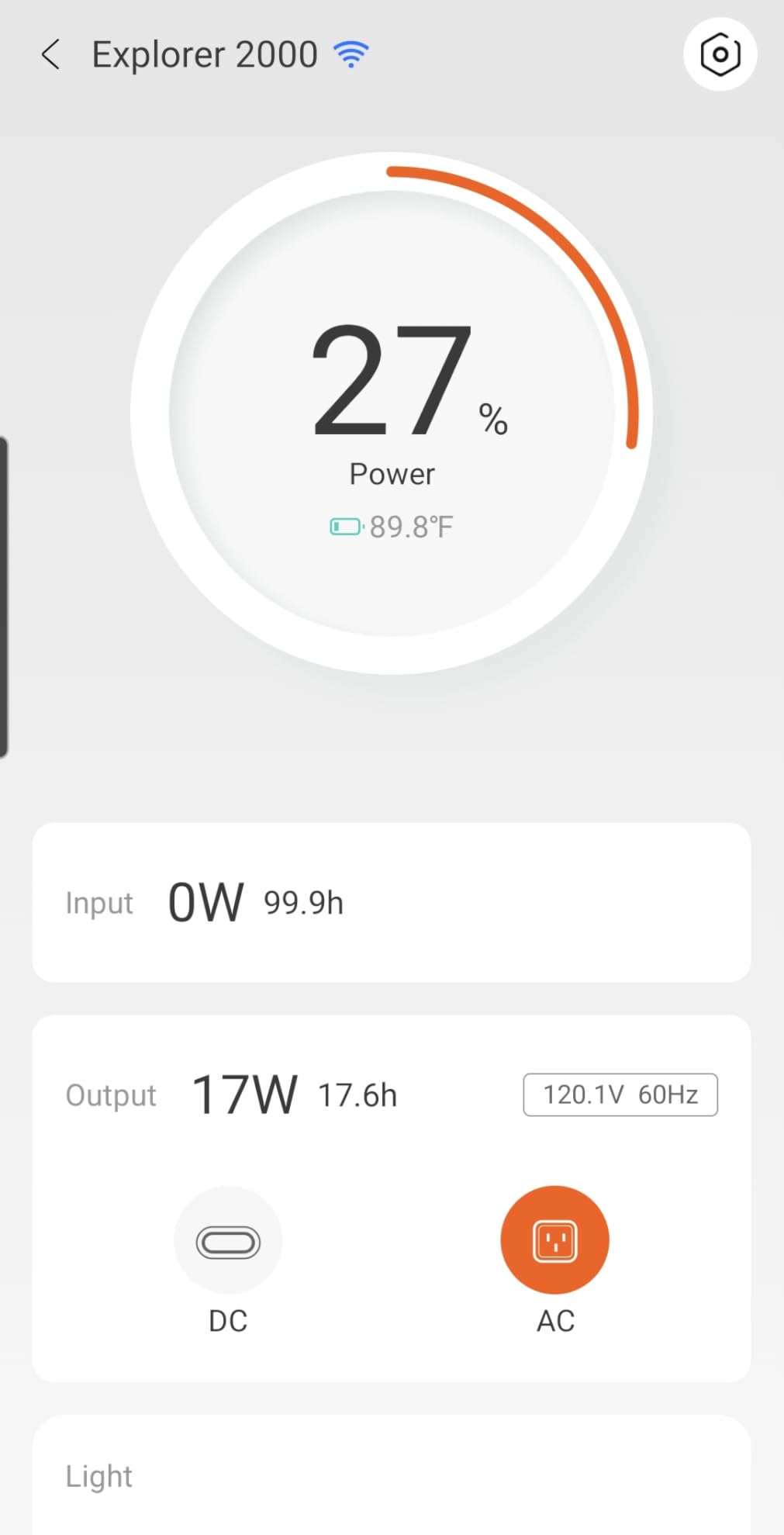
The Explorer 2000 v2 exists because 2kWh machines have traditionally been a two-person lift. At 39.5 pounds it sits at the light end of the 2kWh class, and it is roughly 34% smaller than typical 2kWh competitors — which matters as much as the weight in a travel trailer where storage volume is the scarcer resource.
Cell-to-body construction, borrowed from EV battery packs, is how it fits 2,042Wh of LiFePO4 into that footprint. The battery itself is rated for 4,000 cycles to 70% capacity with a 10-year service-life claim.
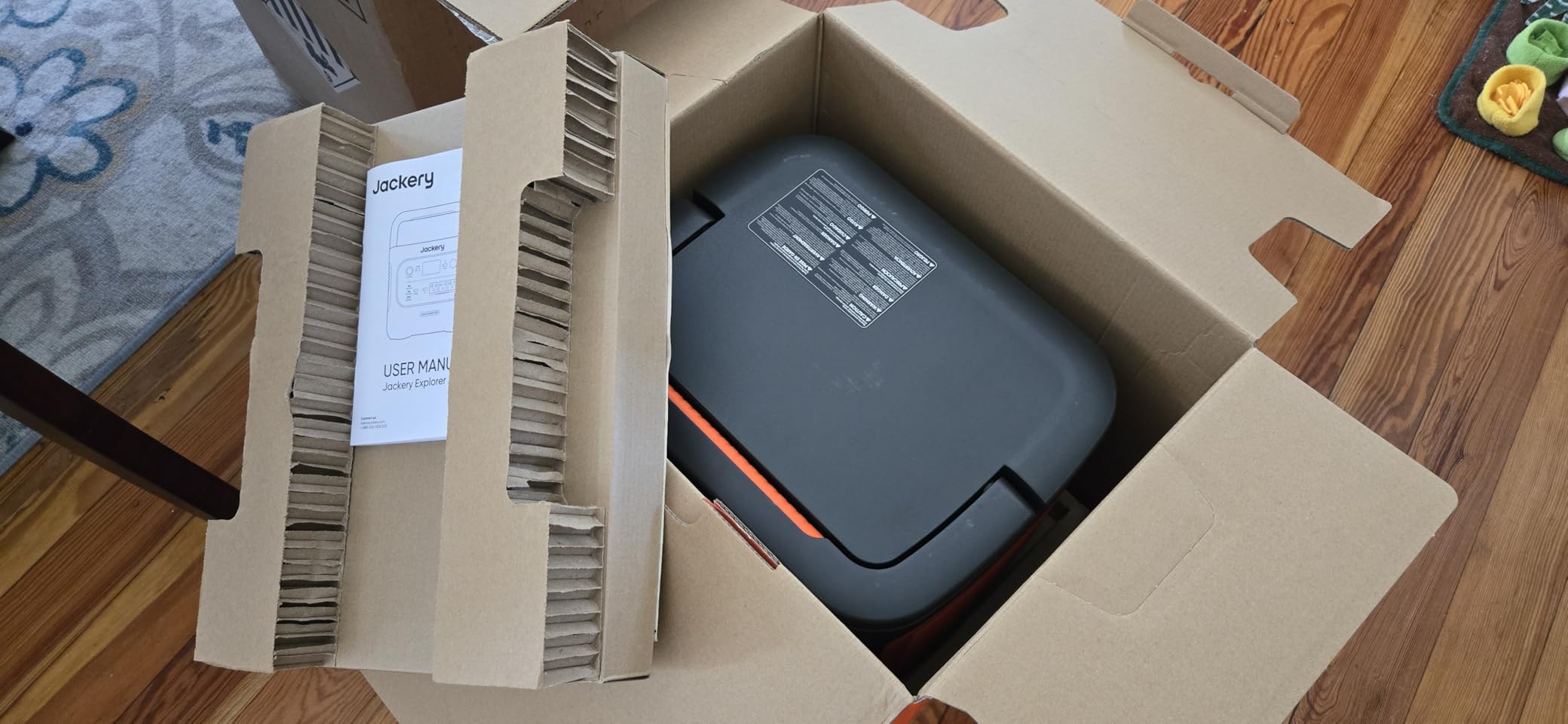
Recharge is 0-80% in 66 minutes on standard AC fast charge, or 102 minutes to full in Emergency Super Charging mode. Solar input is 400W, at the lower end of what the 2kWh machines here accept and a fair reason to look elsewhere if solar is your main recovery method.
Quiet operation is a genuine feature rather than a spec line. The silent charging mode sits under 30 dB, and the 20 ms UPS switchover is UL1778 test-certified, which is the standard that matters if you are keeping a network or a fridge alive through a switchover.
Who the Explorer 2000 v2 suits
It suits anyone who needs real 2kWh capacity but has to move the thing by themselves more than once a week. Class B van builds and truck campers in particular, where every pound counts against payload and where a 39.5-pound station is a carry rather than a lift.
It also suits light sleepers. A sub-30 dB charging mode is not marketing copy here — reviewers note it is what lets the station sit inside a camper overnight.
Where it falls short
Solar is the closed ecosystem again. Jackery panels only, and 400W of input ceiling. If you are building a roof or hitch array around third-party panels, this unit is the wrong door.
It also carries a 4.4 average with 8% of reviews at one star — a higher share than most of the field. And 2,200W of continuous output is modest beside other 2,048Wh packs that push 2,400W, so if you plan to run an air conditioner it is not the strongest choice at this capacity.
6. Anker SOLIX C2000 Gen 2 – Most Versatile for High Output
Anker SOLIX C2000 Gen 2 Portable Power Station, 2,048Wh, 2,400W, Camping
2048Wh LiFePO4
2400W rated, 4000W peak
9W idle draw
Recharge in 58 min
Pros
- 4000W peak comfortably covers window and RV air conditioners
- 58-minute full recharge on AC and solar
- 800W alternator charging fills it in 3 hours from a vehicle
- Only 9W standby draw for close to 32 hours of fridge runtime
- 41.7 lb
- 25% lighter and 29% smaller than comparable machines
Cons
- Expansion battery required to go beyond 2048Wh
- Long 18.1 inch footprint is harder to stow in tight compartments
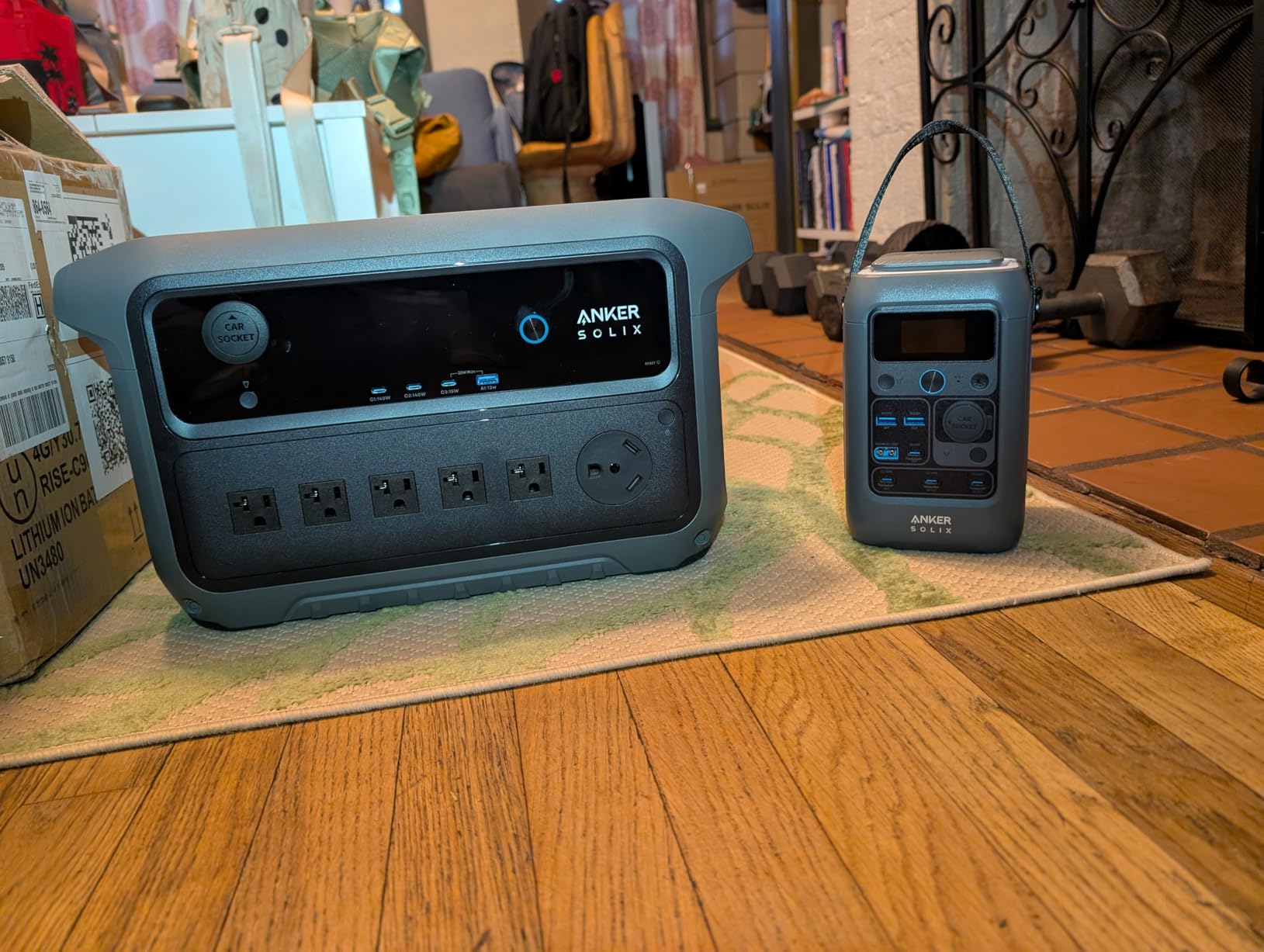
This is the 2kWh unit to buy for an RV, and the reason is output: 2,400W rated with a 4,000W peak is the highest verified peak figure in this roundup’s 2kWh tier, comfortably clearing a window or RV air conditioner — the load most often cited on RV forums as the reason people give up on battery power entirely.
The 9W idle draw figure is the sleeper feature. A compressor fridge cycling all night is exactly the scenario where parasitic drain quietly eats a pack, and at 9W standby the published runtime is up to 32 hours for a dual-door fridge, or 64 hours with an expansion battery attached.
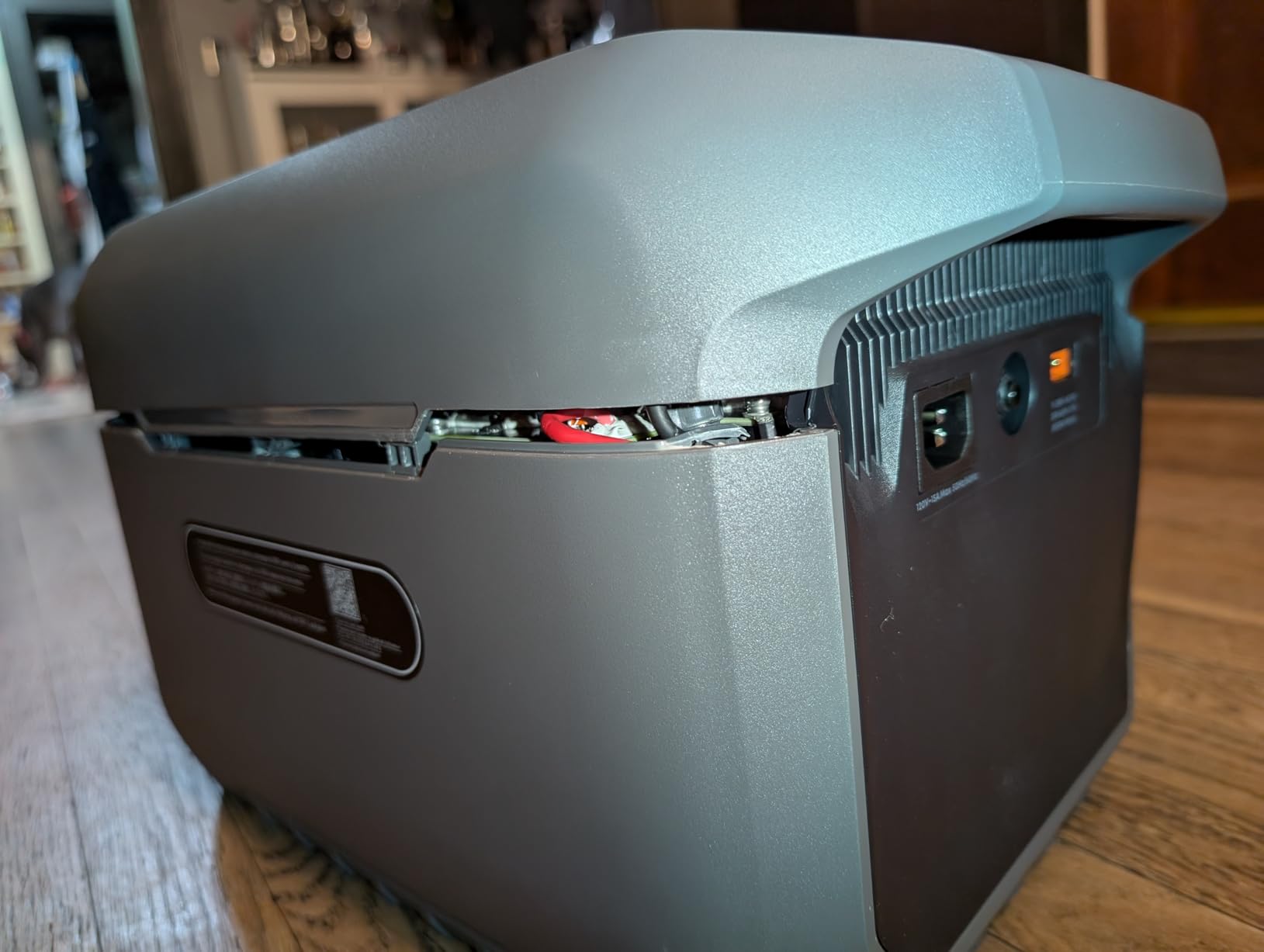
Recharge is 58 minutes to full on AC combined with solar, and the 800W alternator charging path tops it off from a vehicle in about three hours. For a road-trip boondocker that means the drive home is part of the charging cycle rather than dead time.
It expands to 4kWh with an expansion battery, carries a 5-year warranty, and at 41.7 pounds is 25% lighter and 29% smaller than comparable 2kWh machines. The main physical problem is length: at 18.1 inches deep it needs a real compartment, not a shelf.
Who the C2000 Gen 2 suits
It suits full-timers and serious boondockers whose load list has a heating or cooling item in it. 2,400W continuous is enough to run an air conditioner, a microwave and the fridge without sequencing everything around the clock.
It also suits anyone who drives between campsites, since alternator charging turns the tow miles into recharging hours. And for the fridge-always-on crowd, the 9W idle draw means the difference between packing for two nights and packing for four.
Where it falls short
Going past 2,048Wh requires a separate expansion battery, which adds both bulk and cost to a setup that was already the largest in this class. Plan the stowage before you plan the purchase.
The footprint is the other issue. At 18.1 inches long and 9.8 inches deep, this is the least forgiving dimension in the roundup to shoehorn into a Class B garage or a trailer pass-through storage bay.
7. Anker SOLIX S2000 – Best for Low Standby Draw
Anker SOLIX S2 Portable Power Station, 2,010Wh, 1,500W
2010Wh LiFePO4
1500W continuous, 3000W peak
6W idle draw
35 hr fridge runtime
Pros
- Only 6W standby draw
- the lowest idle consumption in the roundup
- 35.7 lb
- roughly 30% smaller than the 2kWh category average
- 10000-cycle and 15-year battery lifespan claim
- Front and rear outlet split keeps always-on appliances separate
- Under 10 ms UPS drawing about 3W in UPS mode
Cons
- 1500W continuous is the lowest ceiling for a 2kWh pack
- No 12V DC port
- which removes a common RV connection
- Cooling fan is noticeably loud at the 1200W charge rate
- First charge produced a strong burn-off odor
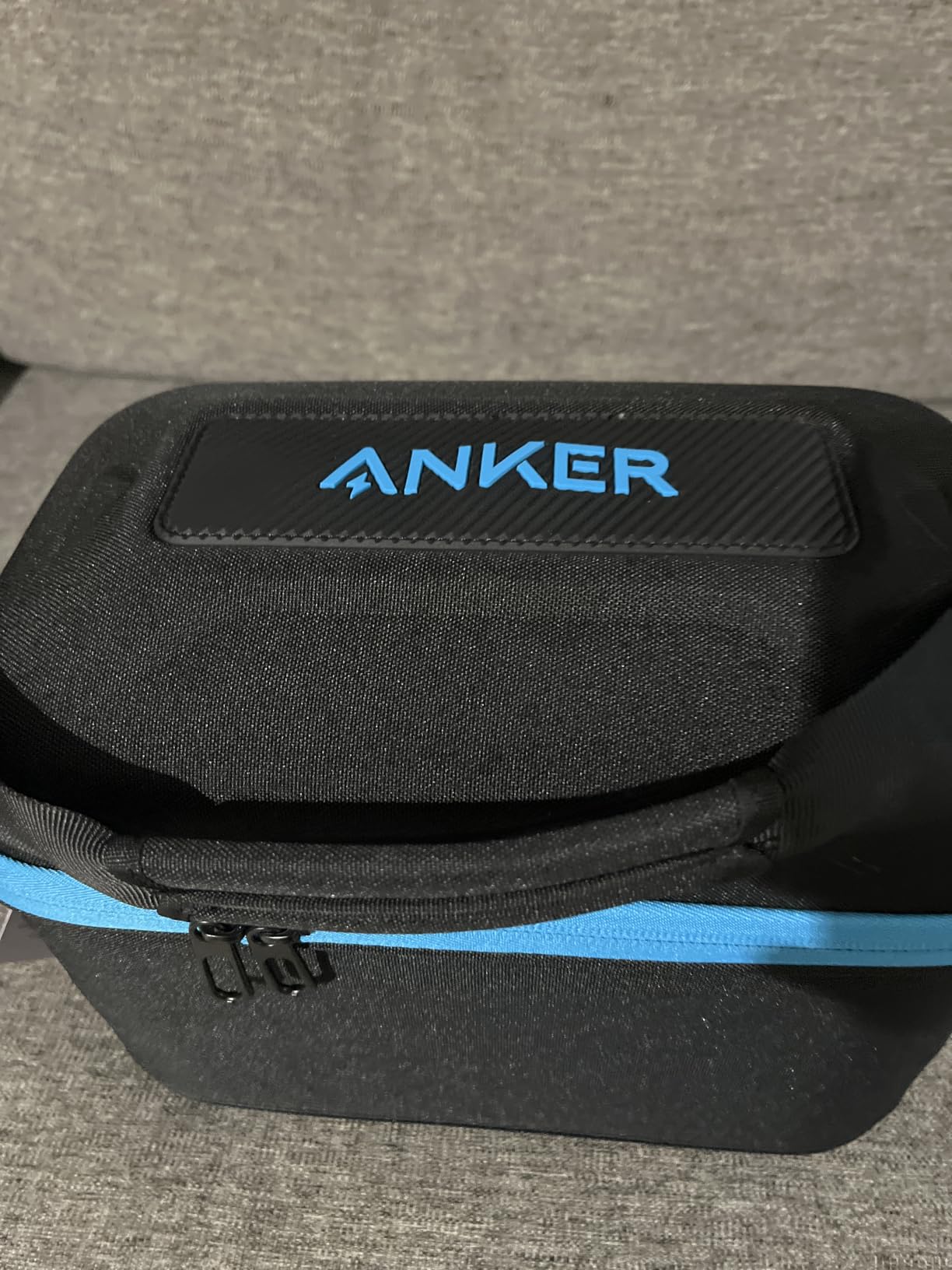
The S2000 is built around one number: 6W of standby draw, the lowest idle figure in this roundup. If your only permanent load is a fridge, that is the whole argument, and it translates to up to 35 hours of published fridge runtime.
At 2,010Wh built on 314Ah cells, it is a compact 2kWh option at 35.7 pounds, roughly 30% smaller than the category average. The battery is rated for 10,000 charge cycles over a 15-year lifespan claim, the longest in the group.
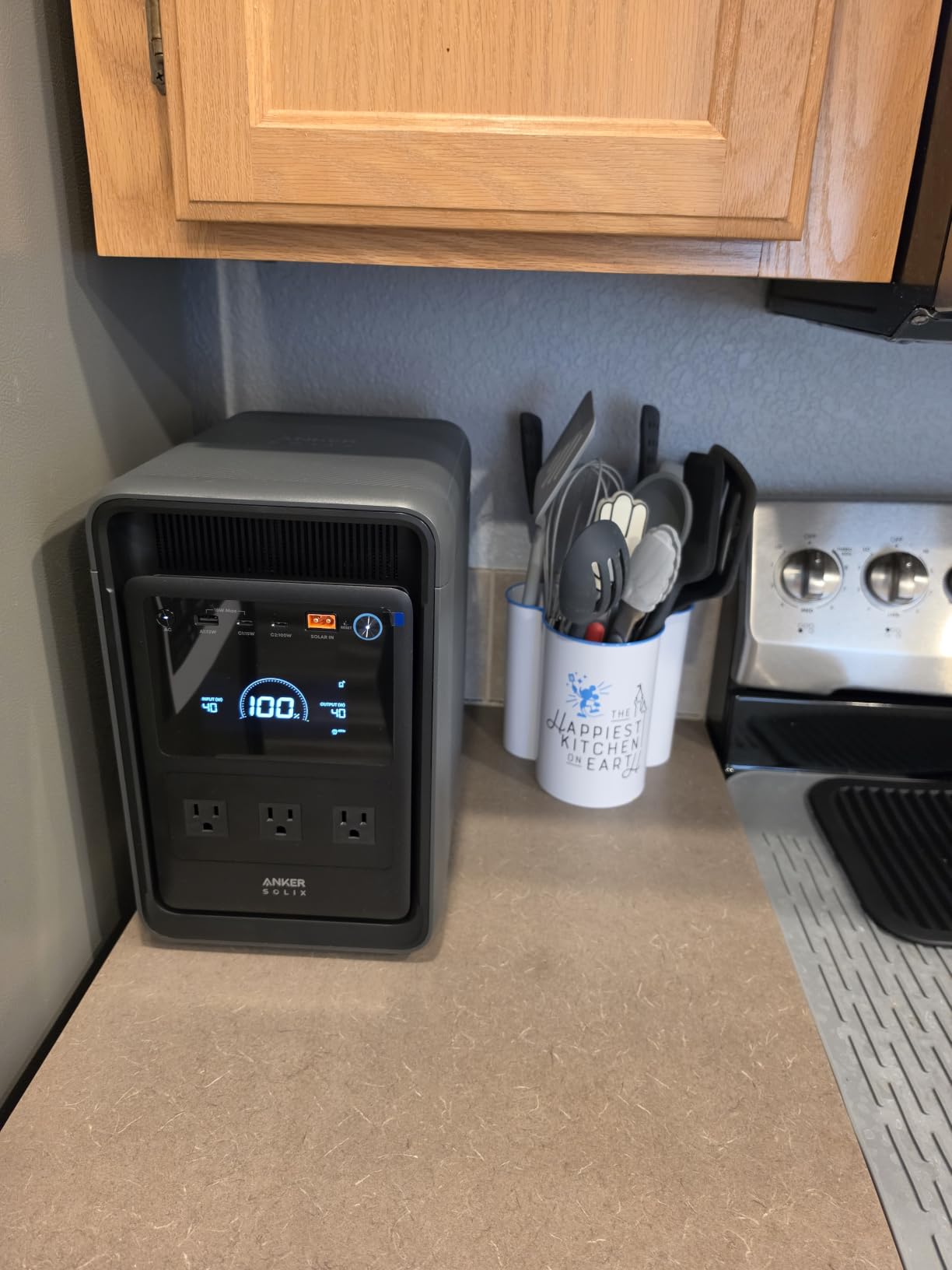
The port layout is designed for RV use specifically. Two outlets sit on the rear for always-on appliances, with a separate front bank for everything else, so you can leave the fridge circuit permanently connected without stringing cables across the living space.
Six recharge paths are offered: AC, solar up to 400W, wall, generator, alternator charger and car outlet. The under-10 ms UPS draws about 3W in backup mode, which owners note is both quieter and cheaper to leave running than a conventional UPS — reviewers report covering 12 to 13 hour outages on it.
Who the S2000 suits
It suits the fridge-always-on camper who wants maximum runtime per watt-hour of stored energy. Pair it with a compressor fridge on the AC outlets and you will get more nights per charge than any other 2kWh machine here.
It also suits anyone with a tight storage bay. At 35.7 pounds in a compact box, it is a 2kWh pack that disappears into a van build rather than dominating it.
Where it falls short
The 1,500W continuous ceiling is the lowest for a 2kWh pack in this roundup. That is plenty for lights, a fridge, a laptop and a CPAP machine, and not enough for an air conditioner or a microwave running alongside anything else.
There is also no 12V DC port, which removes one of the most natural RV connections on the list. And the cooling fan is noticeably loud at the 1,200W charge rate, so charging at full speed inside a sleeping cabin is not a good idea.
8. Dabbsson 2000L – Best for Semi-Solid Cells
DABBSSON Portable Power Station 2000L, 2048Wh Semi-Solid LiFePO4 Battery, 2200W AC Output 6, 3300W Power Boost, 1 Hr Fast Charge, Solar Generator for Home Backup, Camping & RVs (Solar Panel Optional)
2048Wh semi-solid LiFePO4
2200W rated, 3300W boost
1-hour AC recharge
800W MPPT solar
Pros
- Semi-solid LiFePO4 cells deliver longer runtime than standard LFP at the same capacity
- Verified output above 4000W peak
- One-hour AC recharge in a class where most take 1.5 to 2 hours
- 800W MPPT solar input and six AC outlets
- Customer service repeatedly praised for fast responses
Cons
- Fan cycles on and clicks audibly with no measurable load
- Wi-Fi app setup on 2.4 GHz is difficult
- App charge limits do not reliably apply
- Fewer USB-C ports and no USB-C charging input
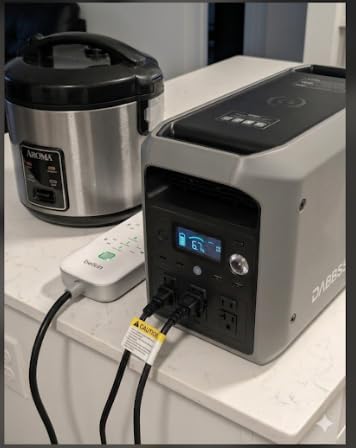
The 2000L is the only semi-solid LiFePO4 pack in this roundup, and the difference shows up as runtime. Semi-solid cells hold slightly more usable energy out of the same 2,048Wh nameplate, and owners running fridges and freezers report that extra headroom directly.
Output is 2,200W rated with a 3,300W power boost and 4,400W of starting wattage. Reviewers have verified output above 4,000W peak, enough to run a 1,500W kettle and a toaster at the same time — a test that trips a lot of otherwise comparable machines.
Charging is fast for the class: full in one hour on AC, with 800W of MPPT solar input and hybrid dual-input charging, plus 12V car charging. The switchover for backup use is under 15 ms, and the UL94-V0 flame-retardant housing is specified explicitly.
Six AC outlets plus a full USB-C, USB-A and DC port set is the most generous outlet count at this capacity. Battery life is rated at 4,000-plus deep cycles to 80% capacity, and the warranty runs 3 years standard with 2 years extended.
Who the Dabbsson 2000L suits
It suits campers who run a lot of small appliances rather than one big one. Six AC outlets, verified output past 4,000W peak and a 22-hour-plus published runtime cover the kitchen-heavy load list that a kettle-and-toaster morning produces.
It also suits buyers who value the semi-solid chemistry for its cycle behaviour. 4,000-plus deep cycles to 80% and a long warranty make it a unit you could leave installed year-round rather than pack away.
Where it falls short
App friction is the main complaint. Wi-Fi setup on 2.4 GHz is genuinely difficult, and when the unit falls back to Bluetooth only, key settings including charge and discharge limits are hidden — so the 80% limit you set may not be the limit the machine obeys.
The fan is also a noise source: it cycles on and clicks audibly even with no measurable load, and there is constant relay clicking on AC pass-through with a load attached. If the station sleeps next to your bed, that is a real problem.
9. BLUETTI Elite 300 – Best for 30-Amp RVs
BLUETTI Elite 300 Portable Power Station for RV & Home Backup 3014.4Wh
3014Wh LiFePO4
2400W output, 4800W surge
TT-30 RV outlet
12V 30A DC output
Pros
- Compact 3kWh footprint roughly 59% smaller than traditional large power stations
- TT-30 RV outlet and 12V 30A DC output built for RV fridges water pumps and diesel heaters
- True 20A right-angle blade outlets
- 10 ms UPS with 0-80% in as fast as 78 minutes
- XT60 solar input and an included grounding screw for RV bonding
Cons
- No battery expansion option
- capacity is fixed at 3014Wh
- Solar input capped at 60V and 20A
- Only the AC charging cable is included
- 58 lb makes this effectively a two-person carry
The Elite 300 is the one to buy if your rig’s shore power inlet is the main thing you want to power. It carries a genuine TT-30 RV outlet, so you plug the station into the trailer or motorhome the same way you would plug into a pedestal — no adapter, no adapter’s failure points.
That outlet is why multiple RV owners name it as the deciding feature. The companion 12V/30A high-current DC output is arguably just as useful, because it feeds a 12V fridge, a water pump or a diesel heater directly without involving the inverter at all.
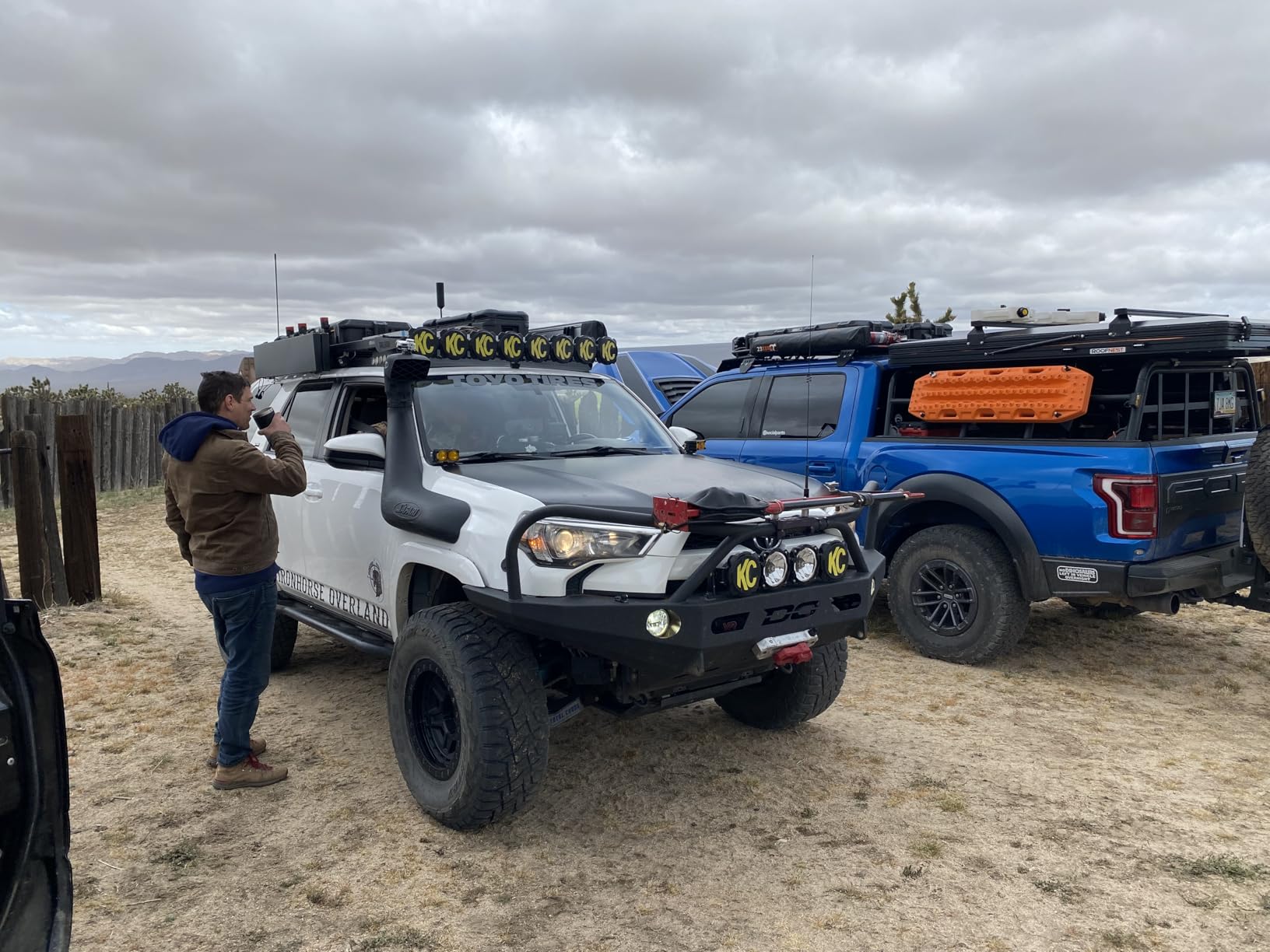
Capacity is 3,014Wh of LiFePO4 rated for more than 6,000 cycles, with 2,400W of output and 4,800W of surge. Charging runs 0-80% in as fast as 78 minutes using AC, solar or the car charger input, and the 10 ms UPS covers brief outages.
The build details are unusually RV-aware. The outlets are true 20A right-angle blade receptacles rather than mislabeled lower-rated sockets, the multicolor display reads at a distance, integral handles give a solid grip, and a grounding screw is included so you can bond it properly to the rig’s chassis.
Who the Elite 300 suits
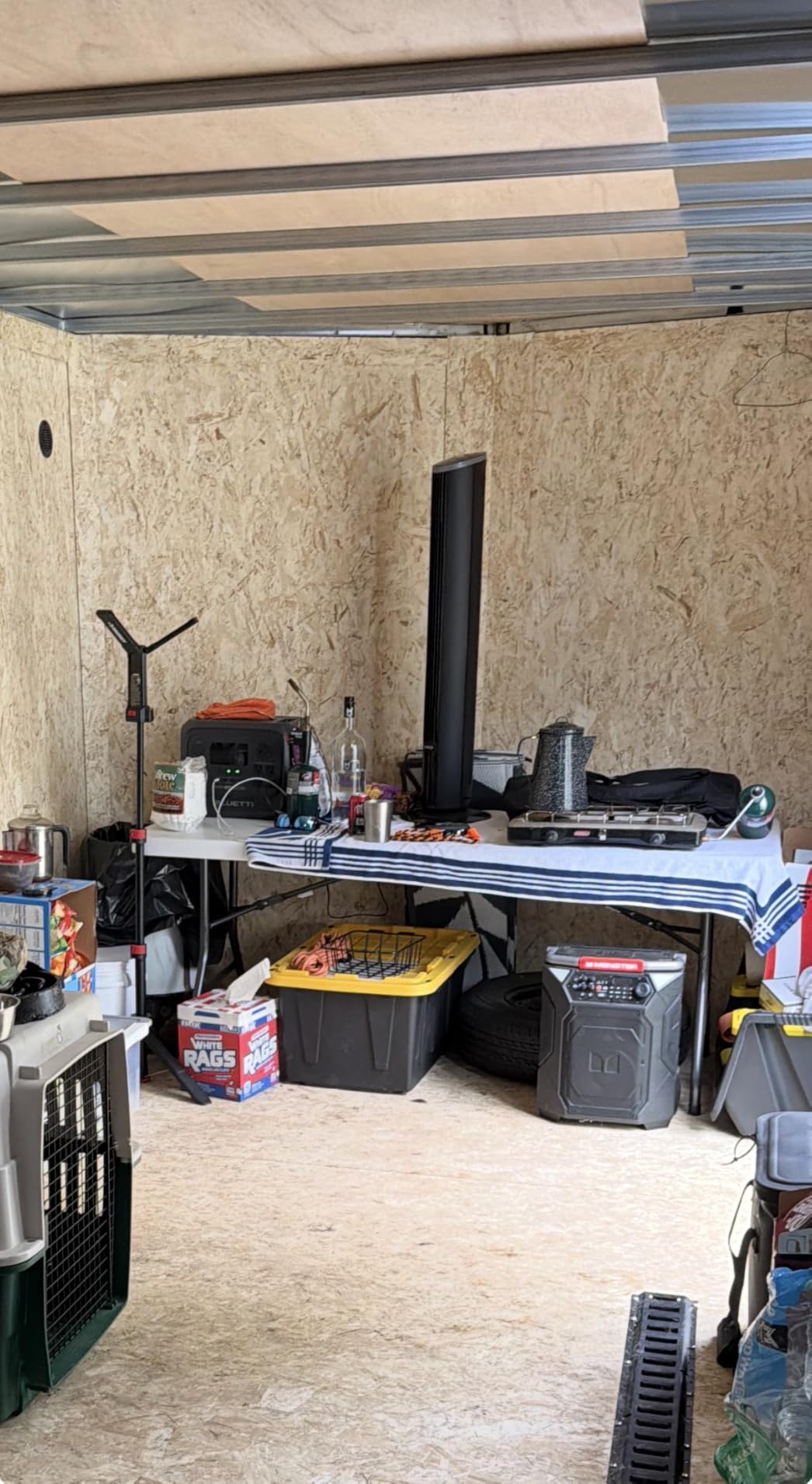
It also suits a motorhome that needs the whole rig fed from one box rather than a piecemeal list of appliances. Travel trailers, Class C motorhomes and truck campers with a TT-30 inlet are the natural homes for it.
Size is the quiet advantage. At 3kWh it is roughly 59% smaller than traditional large power stations, and that size is what lets it through an RV doorway and into a storage bay where a conventional 3kWh box simply will not go.
Where it falls short
There is no expansion battery. Capacity is fixed at 3,014Wh, so a three-night trip is fine and a two-week boondock is not — this is the unit to buy when you are confident your solar keeps up.
Solar input is capped at 60V and 20A, which means a high-voltage panel array needs a voltage limiter. Only the AC charging cable is included, everything else is sold separately, and at 58 pounds it is at the heavy end of this group. Measured round-trip throughput under a sustained 500W load is about 77%, lower than we would like to see.
10. Jackery HomePower 3000 – Best for Maximum Continuous Output
Jackery HomePower 3000 Portable Power Station, 3072Wh, 3600W AC Output
3072Wh LiFePO4
3600W continuous, 7200W surge
Built-in TT-30 RV port
1.7 hr hybrid recharge
Pros
- Highest continuous output in this roundup at 3600W with 7200W surge
- Built-in TT-30 RV port for direct plug-and-play hookup
- 1.7 hour hybrid AC and DC recharge
- Cell-to-Body design makes it 47% smaller and 43% lighter than comparable 3kWh models
- UL-certified UPS of 20 ms or less for cameras and medical fridges
Cons
- Solar charging requires Jackery SolarSaga panels
- 59.5 lb is effectively a two-person lift
- Tied for the lowest average rating here at 4.4
- with 10% one-star reviews
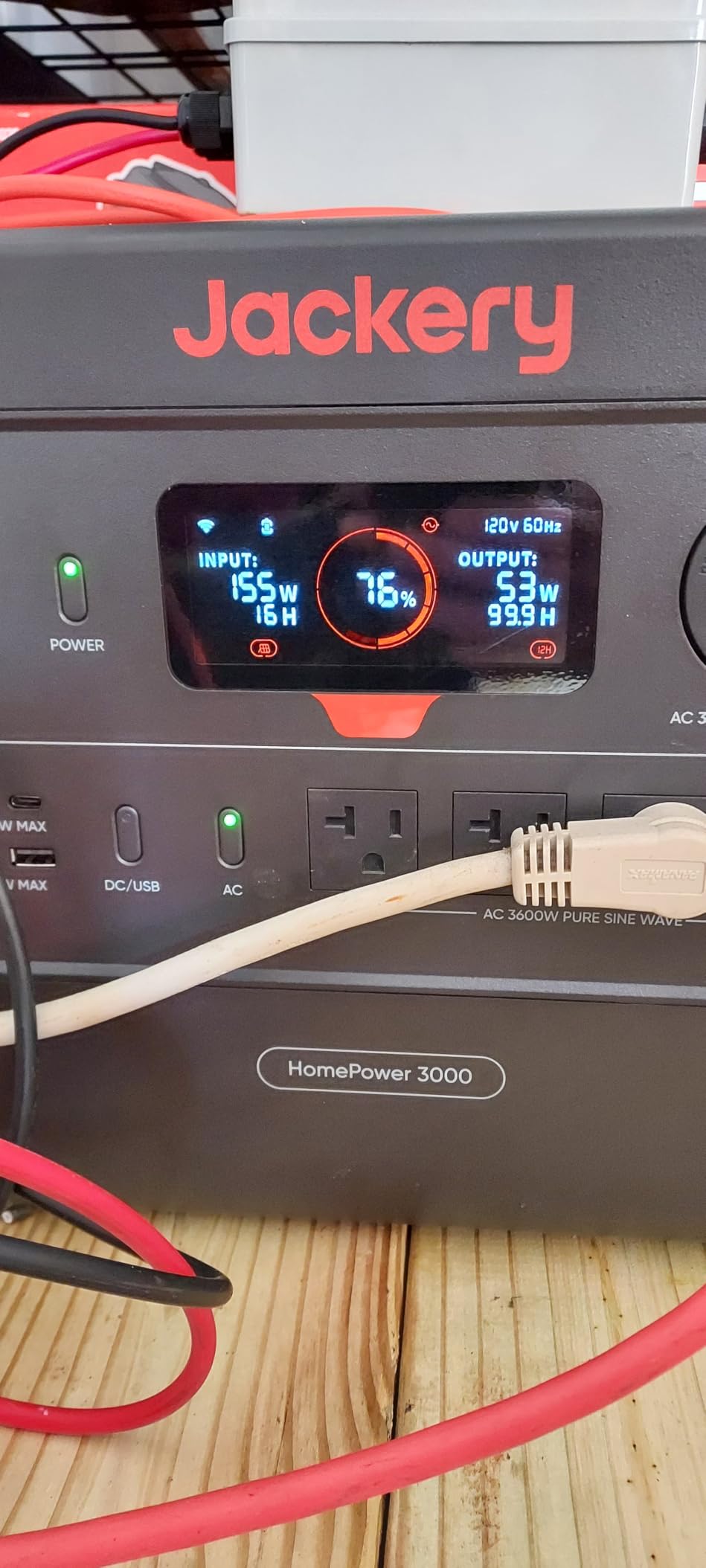
When the question is simply how much continuous power you can get from a box that fits in a garage, the HomePower 3000 wins outright. 3,600W continuous with a 7,200W surge is the highest output figure in this roundup, by a wide margin.
It also has a built-in TT-30 RV port, making it the other machine here that can feed a rig’s 30-amp shore power inlet directly. Four AC outlets, dual 100W USB-C PD, USB-A and a DC port take the port count to ten.
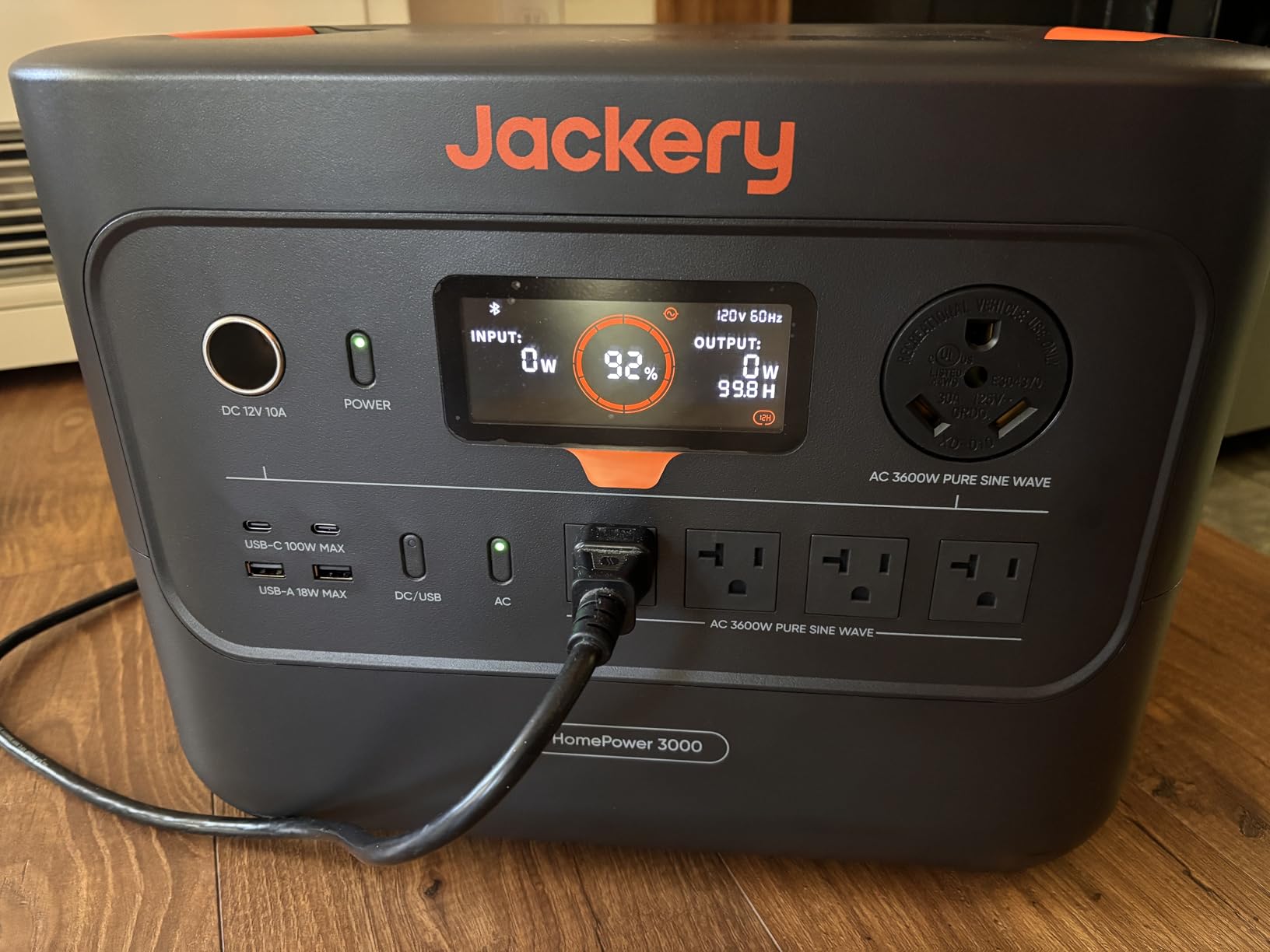
Charging is the fastest 3kWh path we saw: 1.7 hours on hybrid AC plus DC input, or 2.2 hours on AC alone. Two SolarSaga 200W panels reach 80% in about nine hours, and it also accepts 12V car and gas generator input for trips where a generator is already running.
Cell-to-Body construction is what keeps the weight down — 47% smaller and 43% lighter than comparable 3kWh models, at 59.5 pounds. The UL-certified UPS of 20 ms or less is aimed squarely at security cameras, medical fridges and network gear, and published runtime is up to 15 hours of household essentials or one to two days on a refrigerator.
Who the HomePower 3000 suits
It suits 30-amp rigs that want to run several large loads at once — a microwave, a coffee maker, a fridge and a CPAP machine without sequencing them. It also suits anyone adding a fifth wheel’s 30-amp pedestal leg, where sustained draw rather than peak matters.
It suits households using it as storm and outage backup as well as camping, which is the use the UL-certified UPS rating and the 3,072Wh capacity are really built for.
Where it falls short
At 59.5 pounds it is effectively a two-person lift, which undoes one of the main reasons people buy a big station in the first place. Budget for a second set of hands or a cart.
Solar is restricted to Jackery SolarSaga panels, and this machine’s 4.4 average is the joint lowest in the roundup. It is also the priciest option here, so the extra output is a real but not automatic win.
How to Size a Portable Power Station for Your RV
Sizing anxiety is the most common problem on RV forums, and it usually comes from skipping the arithmetic. Do it once, on paper, and you will know in about ten minutes whether you need a 1kWh unit or a 3kWh one.
Step 1: list your loads
Write down every appliance you intend to run and its running draw in watts. For a typical weekend rig that list is a 12V fridge (roughly 50-70W while cycling), interior and exterior lighting (30-60W), a laptop bank (60-100W), a CPAP machine (40-60W), a coffee maker (800-1,200W) and a microwave (1,000-1,500W).
Multiply each by the hours you expect to run it per day and add the results. That number is your daily watt-hour demand, and it is the only figure that should drive your battery decision.
Step 2: add startup surge
Compressor motors and inductive loads draw a large spike at startup, often three to five times their running draw. Size your continuous wattage against the largest single load plus a margin, and check that the unit’s surge rating clears the startup spike of anything you plan to switch on.
Step 3: apply a duty margin
Multiplying your continuous wattage requirement by roughly 1.5 gives you headroom for two large loads overlapping — a microwave finishing its cycle while the coffee maker starts, for instance. Continuous output is a hard ceiling that trips rather than throttles, so err high.
Rated capacity is not usable capacity
The 1,070Wh printed on a Jackery is not 1,070Wh available to your fridge. Inverter conversion losses, standby draw and the battery management system holding back a reserve typically put real usable capacity at 80-90% of the nameplate, and several machines in this roundup also carry meaningful idle self-consumption.
That is the second reason idle draw matters. The Anker SOLIX S2000’s 6W standby and the C2000 Gen 2’s 9W draw are the two lowest figures here, which is why they publish the longest fridge runtimes in the group.
Do You Need 30-Amp or 50-Amp Shore Power?
A TT-30 outlet is the three-prong, 30-amp RV connection found on most travel trailers, Class C motorhomes and older fifth wheels. Only two machines in this roundup have one built in: the BLUETTI Elite 300 and the Jackery HomePower 3000. That is a decisive feature, and it is the reason RV owners repeatedly single out machines that have it over ones that do not.
For a 30-amp rig, the arithmetic is comfortable. A 30-amp pedestal leg is 3,600W, and every station in this roundup that carries a TT-30 outlet delivers at least 2,400W continuous — so a 3kWh unit has both the plug and the headroom to serve the rig’s essentials without an adapter.
For a 50-amp rig, be realistic. A 50-amp pedestal leg is 12,000W across two legs, and no portable power station on the market is intended to backfeed one. What people do instead is use the station for the low-draw circuits — fridge, lights, electronics, water pump — and run the high-draw appliances off a generator or a hookup.
Two safety points matter here, and neither is optional. Never backfeed a campground pedestal, and do not run a portable station through the RV’s shore power wiring into its onboard converter unless the manufacturer explicitly documents it, because the converter is built to charge batteries, not to push current upstream. Use the dedicated TT-30 outlet, keep GFCI protection in the circuit, and bond the station to the rig’s grounding screw.
How Much Solar Your Power Station Really Needs
Solar is where expectations and reality diverge most. The wattage printed on a panel is its nameplate output under laboratory conditions, and real-world production typically lands somewhere between 30% and 51% of that number once heat, angle, shading and cable loss are accounted for. A 400W panel on a hot afternoon may be delivering closer to 150W.
So size to what you need to recover, not to what the panel promises. If your rig burns 500Wh a day and a single 400W panel realistically yields 180W, you need roughly three peak sun hours to put it back — and that is on a clear day with the panel correctly aimed.
The voltage window matters more than the wattage ceiling, and it is the spec most people miss. A station with a 60V and 20A solar ceiling, like the BLUETTI Elite 300, cannot accept a high-voltage array without a voltage limiter, even if the wattage math says it should. Higher-voltage inputs like the 800W on the Dabbsson 2000L and the 600W on the C1000 Gen 2 accept a wider range of panel configurations.
Buy a panel you can aim. A fixed panel on a hard trailer roof collects maybe an extra two hours of late-day sun in summer if you can angle it toward the west, and that single adjustment does more for your overnight charge than a larger panel mounted flat.
Jackery vs EcoFlow vs Bluetti vs Anker for RV Use
Jackery builds compact boxes with the widest owner-review base, but locks solar to its own panels on three of the four machines here. Anker posts the quickest full-recharge figures and the lowest idle draw numbers, at the cost of dropping expansion on the C1000 Gen 2. BLUETTI spans the widest range, from the 1kWh AC180 to a 3kWh machine with a real TT-30 outlet.
Which brand is most reliable?
Reliability tracks the review base more than the badge. The Jackery Explorer 1000 v2 with 3,623 reviews and the Anker SOLIX C1000 Gen 2 with 1,632 are the two deepest owner-review pools here, which means their failure modes are actually known rather than hypothetical — and in both cases the reported complaints are about closed solar ecosystems and app behaviour, not battery death.
The BLUETTI Elite 300 has the smallest review count in this roundup at 118, and one owner on r/camping mentions an older MaxOak Bluetti unit still running years later, which speaks to the chemistry but not to this specific model. For warranty support, the field splits between 5-year coverage on the BLUETTI and Anker machines, 5 years on the Jackery HomePower and 2000 v2, and 3 years plus a 2-year extension on the Dabbsson.
Do I need a generator or a power station?
Most campers end up needing both, for different jobs. A power station wins on silence, low maintenance and indoor placement — no fuel, no exhaust, no campsite noise complaints while you run a compressor fridge and a laptop all evening.
A generator still wins on sustained high-wattage resistive heating, and nothing in this roundup changes that. If your cold-weather plan involves a space heater, keep a generator in the plan for those weeks.
Our home backup power station guide covers the outage side in more detail, and the complete battery backup guide goes deeper on runtime math if you want to see how far a pack stretches.
Frequently Asked Questions
Can a portable power station run an RV?
Yes, for most RV loads. A station will run a compressor fridge, lights, fans, a laptop bank, a CPAP machine and even a small air conditioner for a night or two. It will not replace a 50-amp pedestal or a generator for a space heater. Check that the station’s continuous output clears your largest single appliance, and that rated capacity covers your daily watt-hour demand.
How many watts do I need to run an RV on a power station?
For a weekend rig running a 12V fridge, lights, a laptop and a CPAP machine, 1,500W of continuous output covers the running loads. Add headroom for a coffee maker or microwave and 2,000W is safer. Rigs running an air conditioner need 2,400W or more, and a 30-amp service wants 3,600W.
Which portable power station is best for a motorhome?
The Jackery Explorer 1000 v2 suits lighter motorhome loads, while the Anker SOLIX C2000 Gen 2 is the better pick for most Class C rigs because 2,400W of continuous output absorbs the converter, fridge, water pump and CPAP machine running at once. For a fifth wheel on 30-amp service, choose a 3kWh unit with a built-in TT-30 outlet.
Do I need a generator or a portable power station for RV camping?
Most campers need both for different jobs. A power station runs quietly with no fuel and handles fridges, lights, electronics and small air conditioners. A generator still wins for sustained resistive heating such as a space heater in cold weather, since no portable station replaces that. If your trips are summer boondocking, a station alone is usually enough.
Is there a better brand than Jackery?
It depends on the feature you are shopping for. Jackery builds the lightest machines and the widest review base but restricts solar charging to its own panels. Anker offers the fastest recharging and the lowest idle draw figures. BLUETTI covers the widest capacity range and is the only brand here with a 3kWh unit built around a true TT-30 RV outlet. EcoFlow and BLUETTI are the most common alternatives named on RV forums.
How long does a portable power station last on one charge?
It depends entirely on your load and the unit’s idle draw. A 2,010Wh pack with 6W standby draw is rated for up to 35 hours running a fridge, while a 2,048Wh pack with 9W standby draw is rated near 32 hours for a dual-door fridge. Remember that usable capacity is typically 80-90% of the rated watt-hour figure.
Bottom Line: Which Portable Power Station for RV Camping Should You Buy?
For most RVs, the best portable power stations for RV camping in 2026 come down to weight and the biggest appliance you plan to run. If you carry the box yourself and your load list tops out at a microwave, the Jackery Explorer 1000 v2 is the pick — at 23.8 pounds it is the lightest machine in this roundup and carries the deepest owner-review base.
If you run more than one large appliance at once, step up to the Anker SOLIX C2000 Gen 2 for 2,400W of continuous output and 4,000W of peak headroom, or the S2000 if a fridge is the only thing that ever runs overnight. If your rig has a 30-amp shore power inlet, the BLUETTI Elite 300 and Jackery HomePower 3000 are the only two here with a native TT-30 outlet, and that is worth paying for on its own.
Whichever you choose, size it with the arithmetic rather than the nameplate. If you are still building out the rest of the campsite kit, our picks for the best portable camping grills cover the other half of the setup.